Volume 2007, Article ID 34378,11pages doi:10.1155/2007/34378
Research Article
Adaptive Bandwidth Management and Joint Call
Admission Control to Enhance System Utilization and
QoS in Heterogeneous Wireless Networks
Olabisi E. Falowo and H. Anthony Chan
Department of Electrical Engineering, University of Cape Town, Private Bag X3, Rondebosch 7701, South Africa
Received 30 May 2007; Accepted 18 September 2007
Recommended by Athanasios V. Vasilakos
The coexistence of different cellular networks in the same area necessitates joint radio resource management for enhanced QoS provisioning and efficient radio resource utilization. We propose adaptive bandwidth management and joint call admission con-trol (JCAC) scheme for heterogeneous cellular networks. The objectives of the proposed adaptive JCAC scheme are to enhance average system utilization, guarantee QoS requirements of all accepted calls, and reduce new call blocking probability and handoff call dropping probability in heterogeneous wireless networks. We develop a Markov chain model for the adaptive JCAC scheme and derive new call blocking probability, handoffcall dropping probability, and average system utilization. Performance of the proposed adaptive JCAC scheme is compared with that of nonadaptive JCAC scheme in the same heterogeneous wireless network. Results show an improvement in average system utilization of up to 20%. Results also show that connection-level QoS can be significantly improved by using the proposed adaptive JCAC scheme.
Copyright © 2007 O. E. Falowo and H. A. Chan. This is an open access article distributed under the Creative Commons Attribution License, which permits unrestricted use, distribution, and reproduction in any medium, provided the original work is properly cited.
1. INTRODUCTION
The coexistence of different cellular networks in the same
geographical area necessitates joint radio resource
manage-ment (JRRM) for enhanced QoS provisioning and efficient
radio resource utilization. The concept of JRRM arises in
or-der to efficiently manage the common pool of radio resources
that are available in each of the existing radio access
tech-nologies (RATs) [1,2]. In heterogeneous cellular networks,
the radio resource pool consists of resources that are avail-able in a set of cells, typically under the control of a radio network controller or a base station controller.
Not many approaches to JRRM are available in the liter-ature. The interest has been mainly focused on architectural aspects of JRRM, and not many specific algorithms have been
provided to investigate JRRM among different RATs, even in
simple scenarios [3]. Therefore, this paper focuses on joint
call admission control (JCAC) algorithm which is one of the JRRM algorithms.
Call admission control (CAC) algorithm is one of the radio resource management (RRM) algorithms. The tradi-tional call admission control (CAC) algorithms for
homo-geneous cellular network determine whether or not a user may be admitted into the network. Many CAC algorithms have been developed for homogeneous cellular network, and
a review of these CAC algorithms appears in [4,5]. However,
homogeneous CAC algorithms do not provide a single solu-tion to address the heterogeneous architectures which
char-acterize next generation wireless network [6]. This
limita-tion of homogeneous CAC algorithms necessitates the devel-opment of JCAC algorithms for heterogeneous wireless net-works.
However, unlike homogeneous CAC algorithms, JCAC algorithms do not only decide whether an incoming call can be accepted or not. They also decide which of the available radio access networks is best suited to accommodate the in-coming call. JCAC algorithms must manage individual ser-vices and technologies, and ensure that the QoS require-ments of all admitted calls are satisfied while at the same time making the best use of the total resources available in the het-erogeneous network.
Gelabert et al. [7] study the impact of load balancing
among different RATs in heterogeneous cellular networks.
algorithm deals with initial RAT selection only for new calls. Moreover, no analytical model is presented in the study.
Pillekeit et al. [8] propose a forced load balancing
al-gorithm for heterogeneous UMTS/GSM network with colo-cated cells. In their approach, all the cells in the heteroge-neous network are classified into two groups: over-loaded cells and under-loaded cells. The load balancing algorithm is triggered when a certain load threshold is exceeded in
or-der to balance the traffic load in the heterogeneous network.
However, the algorithm treats both new calls and handoff
calls alike. In practice, it is necessary to keep handoff call
dropping probability below new call blocking probability. Moreover, no analytical model is presented in the study.
Romero et al. [9] propose a service-based RAT selection
policy for heterogeneous wireless networks. They illustrate the selection policy using heterogeneous network compris-ing GERAN and UTRAN, and a mix of voice and interactive users (e.g., www browsing). Examples of the service-based
selection policies are defined in the following [9].
(i) VG (voice GERAN) policy: this policy has only the service class as input and allocates voice users into GERAN and other services into UTRAN.
(ii) VU (voice UTRAN) policy: this policy acts in the op-posite direction as VG and allocates voice users to UTRAN and interactive users to GERAN.
In the previous works mentioned above, no analytical model has been developed for JCAC algorithms in order to investigate connection-level QoS parameters in heteroge-neous cellular networks. Therefore, this paper models and analyzes a JCAC algorithm in heterogeneous cellular net-works.
We propose adaptive bandwidth management and JCAC (AJCAC) scheme to enhance system utilization and connec-tion-level QoS in heterogeneous cellular networks support-ing multiple classes of calls such as voice and video. The pro-posed AJCAC scheme is designed to simultaneously achieve, the following objectives:
(1) distribute traffic load uniformly among available RATs
to improve average system utilization,
(2) guarantee the QoS requirement of all admitted calls,
(3) prioritize handoffcalls over new calls,
(4) adapt the bandwidth of ongoing calls to improve connection-level QoS and system utilization.
Uniform distribution of traffic load among multiple
RATs in heterogeneous wireless network allows for a better utilization of the radio resources. QoS requirements of all admitted calls are guaranteed by allocating to each of the
calls at least the minimum bandwidth needed. Handoffcalls
are prioritized over new calls by using different call rejection
thresholds for new and handoffcalls, and also by using
dif-ferent bandwidth adaptation mechanism for new and
hand-offcalls. To the best of our knowledge, developing a scheme
that achieves the above objectives at the same time in hetero-geneous wireless network is a novel work.
The contributions of this paper are twofold. Firstly, we combine adaptive bandwidth management and JCAC scheme to enhance system utilization and connection-level QoS in heterogeneous wireless networks. Secondly, we
de-RAT 1 RAT 2
1a 2a
MT
1b
2b 1c
2c
A group of co-located
cells
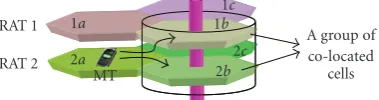
Figure1: Two-RAT heterogeneous cellular networks with colocated cells.
velop an analytical model for the AJCAC scheme, derive
aver-age system utilization, new call blocking probability, handoff
call dropping probability, and examine the tradeoffbetween
new call blocking and handoffcall dropping.
The rest of this paper is organized as follows.Section 2
presents the system model for heterogeneous wireless
net-works. InSection 3, the components of the AJCAC scheme
are described.Section 4presents the Markov chain model of
the AJCAC scheme. InSection 5, we investigate the
perfor-mance of the AJCAC scheme through simulations.
2. SYSTEM MODEL AND ASSUMPTIONS
We consider a heterogeneous cellular network which
con-sists of J number of RATs with colocated cells, similar to
[7,8]. Cellular networks such as GSM, GPRS, UMTS, and
so forth can have the same and fully overlapped coverage, which is technically feasible, and may also save installation
cost [10].Figure 1illustrates a two-RAT heterogeneous
cel-lular network.
In heterogeneous cellular networks, radio resources can be independently or jointly managed. We consider a situa-tion where radio resources are jointly managed in the
het-erogeneous network and each cell in RAT-j (j = 1,. . .,J)
has a total ofB jbasic bandwidth units (bbu). The physical
meaning of a unit of radio resources (such as time slots, code sequence, etc.) is dependent on the specific technological
im-plementation of the radio interface [11]. However, no matter
which multiple access technology (FDMA, TDMA, CDMA, or OFDM) is used, we could interpret system capacity in
terms of effective or equivalent bandwidth [12–14].
There-fore, whenever we refer to the bandwidth of a call, we mean the number of bbu that is adequate for guaranteeing the de-sired QoS for this call, which is similar to the approach used
for homogeneous networks in [14–16].
It is assumed that packet-level QoS is stochastically
as-sured by allocating at least the minimum effective
band-width required to guarantee a given maximum probability
on packet drop, delay, and jitter [17].
Our approach is based on decomposing heterogeneous cellular network into groups of colocated cells. As shown in
Figure 1, cell 1a and cell 2a form a groupof colocated cells. Similarly, cell 1b and cell 2b form another group of colo-cated cells, and so on. Based on the following assumption-commonly made in homogeneous cellular networks, we
as-sume that the types and amount of traffic are statistically the
same in all cells of each RATs [14,15,18,19]. Therefore, the
types and amount of traffic are statistically the same in all
A newly arriving call will be admitted into one of the cells in the group of colocated cells where the call is located. When a mobile subscriber using a multimode terminal and having an ongoing call is moving from one group of colocated cells to another group of co-located cells, the ongoing call must be handed over to one of the cells in the new group of
colo-cated cells. For example (Figure 1), an ongoing call can be
handed over from cell 2a to cell 2b or from cell 2a to cell 1b. Note that the handover consists of both horizontal and verti-cal handovers.
The correlation between the groups of colocated cells
results from handoffconnections between the cells of
cor-responding groups. Under this formulation, each group of co-located cells can be modeled and analyzed individually. Therefore, we focus our attention on a single group of colo-cated cells.
The heterogeneous network supportsK classes of calls.
Each class is characterized by bandwidth requirement,
ar-rival distribution, and channel holding time. Each class-i
call requires a discrete bandwidth value,bi,w, wherebi,w
be-longs to the set Bi = {bi,w} for i = 1, 2,. . .,K andw =
1, 2,. . .,Wi.Wiis the number of different bandwidth values
that a class-icall can be allocated.bi,1(also denoted asbi,min)
andbi,Wi (also denoted asbi,max) are, respectively, the
min-imum and maxmin-imum bandwidth that can be allocated to a
class-icall. Note thatbi,w < bi,(w+1) fori = 1, 2,. . .,K and
w=1, 2,. . ., (Wi−1).
The requested bandwidth of an incoming class-icall is
denoted bybi,req, wherebi,req ∈Bi. Letmi,j andni,j denote,
respectively, the number of ongoing new class-i calls and
handoffclass-icalls, in RAT-j with 1 ≤ c ≤ mi,j (for new
calls) and 1≤c≤ni,j(for handoffcalls). Letbi,assignedc
de-note the bandwidth assigned to callcof class-iin RAT-jin
the group of colocated cells, wherebi,assignedc ∈Bi. A callc
of class-iis degraded ifbi,assignedc < bi,reqwhereas the call is
upgraded ifbi,assignedc> bi,req.
If a class of calls (i.e., class-icalls) requires a fixed number
of bbu (i.e. constant bit-rate service), it becomes a special
case in our model in whichbi,min =bi,maxand the setBihas
only one element. However, it will not be possible to upgrade or degrade this class of calls.
Following the general assumption in cellular networks,
new and handoffclass-icalls arrive in the group of colocated
cells according to Poisson process with rate λni andλhi,
re-spectively. The call holding time (CHT) of a class-icall is
as-sumed to follow an exponential distribution with mean 1/μi
[18,19].
To characterize mobility, the cell residence time (CRT), that is, the amount of time during which a mobile terminal stays in a cell (same as the time, it stays in a group of colo-cated cells) during a single visit, is assumed to follow an
ex-ponential distribution with mean 1/h, where the parameter
hrepresents the call handoffrate. We assume that the CRT is
independent of the service class.
The channel holding time is the minimum of the CHT and the CRT. Because minimum of two exponentially dis-tributed random variables is also exponentially disdis-tributed
[20], the channel holding time for new class-i calls, and
for handoffclass-icall, is assumed to be exponentially
dis-tributed with means 1/μn
i and 1/μhi, respectively.
Note that this set of assumptions has been widely used for homogeneous cellular networks in the literature, and is found to be generally applicable in the environment where the number of mobile users is larger than the number of
channels [20].
3. PROPOSED AJCAC SCHEME
In this section, we describe the proposed AJCAC scheme which consists of the following three components: joint call admission controller, threshold-based bandwidth reserva-tion unit, and bandwidth adaptareserva-tion (BA) controller. These components are described in the following.
3.1. The joint call admission controller
The joint call admission controller implements the JCAC algorithm. The basic function of the JCAC algorithm is to make call admission decision and uniformly distribute traf-fic load among all the available RATs in the network.
During call setup, a multimode mobile terminal request-ing a service sends a request to the joint call admission con-troller which implements the JCAC algorithm. The service request contains the call type, service class, and bandwidth
requirements. The JCAC procedure is shown in Figure 2,
wherexi,jandyi,jdenote, respectively, the residual bbu
avail-able in RAT-j for new and handoffclass-icalls. Whenever
a call arrives, the JCAC attempts to allocate the maximum
bbu for this call (i.e., set bi,req = bi,max) provided that the
available bbu in the selected RAT is greater than or equal to
bi,max. If the available bbu in the selected RAT is less than
bi,max but greater than or equal tobi,req, the call will be
as-signed a bandwidth betweenbi,reqandbi,max. If the available
bbu is less thanbi,reqbut greater than or equal tobi,1(bi,min),
the call will be assigned a bandwidth betweenbi,1andbi,req.
If the available bbu in all the RATs is less than bi,1, BA
al-gorithm (BAA) will be invoked to reduce the bandwidth of some ongoing call(s) in the chosen RAT. If the available bbu
is still less thanbi,1for all available RATs, the call will be
re-jected.
For new class-icalls, letCni,jdenote the total bbu available
in RAT-j,αi,jthe fraction of bbu available in RAT-jover the
summation of bbu available in all RATs,xi,jthe residual bbu
available in RAT-j, andLni,j the current load in RAT-j. For
handoffclass-icalls, the corresponding values areChi,j,βi,j,
yi,j, andLhi,j. Then
αi,j=
Cn i,j
J
j=1C
n i,j
∀i,j,
J
j=1
αi,j=1 ∀i.
Reject class-icall
Yes call into theAdmit class-nith
RAT and allocatebi,min
Select thenthRAT
and apply BAA
n=1
call in the
nthRAT
and allocate
bi,req
Select thenthRAT
Sort RATjfor alljin
increasing order of current
loadLh
i j, and setn=1
(Handoffcall) No
Arrival of class-icall
New call? Yes
Reject class-icall
Yes
call into the
nthRAT
and allocate
bi,min
Select thenthRAT
and apply BAA
n=1
call into the
nthRAT
and allocate
bi,req
Select thenthRAT
Sort RATjfor alljin
increasing order of current
loadLn
i j, and setn=1
Figure2: Proposed adaptive load-based JCAC algorithm.
λni
Figure3: Splitting of the arraival process in the group of colocated cells.
When a new or handoffcall arrives into a group of colocated
cells, the JCAC algorithm selects the least loaded RAT avail-able for the incoming call. The action of selecting a RAT for
each arriving new or handoffcall in the group of colocated
cells leads to splitting of the arrival process. Figure 3
illus-trates the splitting of the arrival amongJnumber of RATs in
the group of colocated cells.
As shown inFigure 3, the arrival rate in the group of
colo-cated cells is split among all the available RATs. Each RAT has
a fraction of the arrival rate (λni). Due to the
uniform-load-distribution action of the JCAC algorithm, the mean arrival
rates of class-icalls into each RAT in the group of collocated
cells are as follows:
RAT 1 RAT 2 Access networks
Av
ai
la
b
le
band
w
idt
h B
1=t21 t 11
t01
B2=t22
t12
t02
Figure4: Accessible bandwidth for a two-class, two-RAT system.
whereλni andλhi denote the arrival rates of new class-icalls
and handoffclass-icalls, respectively, into the group of
co-located cells.λni,jandλhi,jdenote the arrival rates of new
class-icalls and handoffclass-icalls, respectively, into RAT-jin the
group of colocated cells.
The arrival rates of a split Poisson process are also
Pois-son [21]. Therefore, given that the mean arrival rate of
class-icalls into the group of colocated cells is Poisson, the mean
arrival rates of the split class-icalls into RAT-1, RAT-2,. . .,
RAT-Jare also Poisson.
3.2. Threshold-based bandwidth reservation unit
In order to maintain lower handoffdropping probability, the
bandwidth reservation unit implements a bandwidth
reser-vation policy that uses different thresholds for new and
hand-offcalls.Figure 4shows the bandwidth reservation policy for
a two-class, two-RAT system.
The policy reserves bandwidth for aggregate handoff
calls, thus gives them priority over new calls. The policy also
prioritizes among different classes of handoffcalls according
to their QoS constraints by assigning a series of bandwidth
thresholdst1,j,t2,j,. . .,tk,j, for handoffcalls such that
t0,j≤t1,j≤ · · · ≤ti,j≤t(i+1),j≤ · · · ≤tk,j=Bj ∀j,
(5)
wheret0,j denotes the total number of bbu available for all
new calls in RAT-j, andti,jdenotes the total number of bbu
available for handoffclass-icalls in RAT-j.Bj denotes the
total number of bbu available in RAT-j.
3.3. Bandwidth adaptation controller
The bandwidth adaptation controller executes the BAA which is triggered when a new call arrives or when a call is completed. Most multimedia applications are adaptive. For example, voice can be encoded at 16 kbps, 32 kbps, 64 kbps, and 128 kbps by choosing appropriate encoding mecha-nisms. Similarly, video applications can be made rate adap-tive by using, for instance, a layered coding method. In layer coding method, the lowest layer (i.e., the base layer) con-tains the critical information for decoding the image se-quence at its minimum visual quality. Additional layers pro-vide increasing quality. All these encoded layers may be trans-mitted when the network is underutilized. However, when the network resources are being fully utilized, only based
layer(s) which contain critical information may be transmit-ted.
As an illustration, if one would watch a 30-minute video clip encoded at 256 kbps and 64 kbps respectively. At 256 kbps, one will see better pictures with better resolution than at 64 kbps. Therefore, the bandwidth adaptation af-fects the quality of the real-time applications rather than the transmission time. However, the minimum requested QoS is maintained by ensuring that the bbu of the calls are not de-graded below the required minimum.
In the proposed AJCAC scheme, when the system is
un-derutilized, all arriving new and handoffclass-icalls are
ad-mitted by the JCAC algorithm with the highest bandwidth
level (i.e.,bi,max) for the calls. This approach increases
band-width utilization for the heterogeneous wireless network. However, when the network resources are being fully utilized, bandwidth adaptation controller is invoked to execute BAA
on arrival of a new or handoffcall.
The BAA is triggered whenever there is a call arrival event or a call departure event. The BAA performs two main procedures: downgrades and upgrades ongoing calls. The downgrading procedure is activated in the arrival epoch (i.e.,
when a new or handoff arrives to an overloaded group of
colocated cells). BAA reduces the bandwidth of some on-going call(s) randomly selected in the system to free just enough bbu to accommodate the incoming call. Note that
an adaptive class-i call is never degraded below the
mini-mum bbu necessary to guarantee its minimini-mum QoS require-ments. The upgrading procedure is activated in the departure epoch.
In the arrival epoch, the BAA downgrading procedure can be implemented in two ways. In the first implementa-tion, only ongoing new calls can be downgraded to accom-modate an incoming new call whereas both ongoing new
and handoffcalls can be downgraded to accommodate an
in-coming handoffcall. This approach further prioritizes
hand-offcalls over new calls, in addition to the prioritization
ob-tained by using different rejection thresholds for new and
handoffcalls. In the second implementation, both new and
handoffcalls can be downgraded to accommodate an
incom-ing new (or handoff) call. In this implementation,
prioriti-zation of handoffcalls over new calls can only be achieved
by using different rejection threshold for new and handoff
calls.
In the departure epoch, when a call departs from a RAT in the group of colocated cells, some of the ongoing call(s) randomly selected in RAT of the group of colocated cells may be upgraded by the BAA algorithm.
4. MARKOV CHAIN ANALYSIS OF THE AJCAC SCHEME
The AJCAC policy described inSection 3is a
multidimen-sional Markov chain. The state space of the group of
co-located cells can be represented by a (2∗K∗J)-dimensional
vector given as
Ω=mi,j,ni,j: i=1,. . .,k, j=1,. . .,J
The nonnegative integermi,jdenotes the number of
on-going new class-icalls in RAT-j, and the nonnegative integer
ni,j denotes the number of ongoing handoffclass-icalls in
RAT-j. LetSdenote the state space of all admissible states of
the group of colocated cells as it evolves over time. An
ad-missible statesis a combination of the numbers of users in
each class that can be supported simultaneously in the group of colocated cells while maintaining adequate QoS and
meet-ing resource constraints. The stateSof all admissible states is
given as
The constraints simply state that the sum of the
band-width units of all admitted class-icalls cannot be more than
the total bandwidth units available for that class of calls.
Given that the system is in the current state,s, for the
AJ-CAC scheme, the state transition could be triggered by any of the following events.
(1) Admission of a new class-icall into RAT-j with the
successor states+1
1 and transition rateq(s,s+11 ). It follows that
qs,s+1 1
=λni,j, s,s+11 ∈S. (8)
(2) Admission of a handoffclass-icall into RAT-j with the
successor states+12 and transition rateq(s,s+12 ). It follows that
qs,s+1 2
=λhi,j, s,s+12 ∈S. (9)
(3) Departure of a new class-icall from RAT-jwith the
successor states−1
1 and transition rateq(s,s−11). It follows that
qs,s−1 1
=mi,jμni, s,s−11∈S. (10)
(4) Departure of a handoffclass-icall from RAT-jwith
the successor states−1
2 and transition rateq(s,s−21). It follows
The decision epochs are the arrival or departure of a new
or handoffcall. Joint call admission decisions are taken in
the arrival epoch. Every time a new or handoffclass-i call
arrives in the group of colocated cells, the JCAC algorithm decides whether or not to admit the call, and in which RAT to admit it. Note that call admission decision is made only at the arrival of a call, and no call admission decision is made in the group of colocated cells when a call departs. When the
system is in states, an accept in RAT-j/reject decision must
be made for each type of possible arrival, that is, an arrival of
a new class-icall, or the arrival of a handoffclass-icall in the
group of colocated cells. The following are the possible JCAC decisions in the arrival epoch.
(1) Reject the class-icall (new or handoff) in the group
of collocated cells, in which case the statesdoes not evolve.
(2) Admit the class-icall into RAT-j without adapting
the bandwidth of ongoing call(s) in the RAT, in which case
(3) Admit the class-icall into RAT-j after adapting the bandwidth of ongoing call(s) in the RAT, in which case state
sevolves.
Thus, the call admission action spaceAcan be expressed
as follows:
whereani denotes the action taken on arrival of a new class-i
call within the group of colocated cells, andahi denotes the
action taken on arrival of a handoffclass-icall from an
adja-cent group of colocated cells.an
i (orahi)=0 means reject the
new class-i(or handoffclass-i) call.an
i (orahi)=+1 means
ac-cept the new class-i(or handoffclass-i) call into RAT-1
with-out adapting the bandwidth of existing call(s).an
i (orahi)=
−1 means accept the new class-i(or handoffclass-i) call into
RAT-1 after adapting (degrading) the bandwidth of existing
call(s).an
i (orahi)=+jmeans accept the new class-i(or
hand-offclass-i) call into RAT-jwithout adapting the bandwidth
of existing call.an
i (orahi)=−jmeans accept the new class-i
(or handoffclass-i) call into RAT-j after adapting
(degrad-ing) the bandwidth of existing call(s).
In the departure epoch, the bandwidth adaptation unit makes the decision to adapt (upgrade) or not to adapt the bandwidth of ongoing call(s). Thus, the call departure action
spaceWcan be expressed as follows:
W=w=0, 1, (14)
wherew=0 means do not adapt the bandwidth of the
ongo-ing call(s) andw=1 means adapt the bandwidth of ongoing
call(s).
Based on its Markovian property, the proposed AJCAC
scheme can be model as a (2∗K∗J)-dimensional Markov
chain. Letρnewi,j andρhani,jdenote the load generated by new
class-icalls and handoffclass-icalls, respectively, in RAT-j.
Then,
From the steady-state solution of the Markov model, per-formance measures of interest can be determined by
sum-ming up appropriate state probabilities. LetP(s) denotes the
steady-state probability that the system is in states(s ∈S).
From the detailed balance equation,P(s) is obtained as
P(s)= 1
whereGis a normalization constant given by
G=
4.1. New call blocking probability
A new class-icall is blocked in the group of colocated cells if
none of the available RATs has enough bbu to accommodate the new call with the minimum bandwidth requirement after
degrading the ongoing new calls. LetSbi ⊂Sdenote the set
of states in which a new class-icall is blocked in the group of
colocated cells. It follows that
Sbi =
Thus the new call blocking probability (NCBP),Pbi, for a
class-icall in the group of colocated cells is given by
Pbi =
s∈Sbi
P(s). (19)
4.2. Handoff call dropping probability
A handoffclass-icall is dropped in the group of colocated
cells if none of the available RATs has enough bbu to
accom-modate the handoffcall with the minimum bandwidth
re-quirement after degrading the ongoing new calls and handoff
calls. LetSdi ⊂Sdenotes the set of states in which a handoff
class-icall is dropped in the group of colocated cells. It
fol-lows that
Thus the handoff call dropping probability (HCDP) for a
class-icall,Pdi, in the group of colocated cells is given by
Pdi =
s∈Sdi
P(s). (21)
4.3. Average system utilization
The average utilization of the heterogeneous wireless net-work can be obtained by summing up for all the admissible
states(s∈S), the product of the system utilization in a
par-ticular states(s∈S), and the probabilityP(s) of the system
being in that state. The average utilizationUof the
heteroge-neous cellular network can be derived as follows:
U=
5. SIMULATION RESULTS
Table1: Simulation parameters.
Parameters Class-1 call Class-2 call
Class-icall bbu set {2, 3, 4} {3, 5, 7}
Call arrival rate 0
Pb1 of AJCAC Pb2 of AJCAC
Pb1 of NAJCAC Pb2 of NAJCAC
Figure5: Effect of varying the call arrival rate on the new call block-ing probability.
handoffcall dropping probability, and average system
utiliza-tion. The results of the proposed AJCAC scheme are com-pared with that of the NAJCAC scheme. The system
param-eters used are shown inTable 1.
The arrival rate of handoffclass-i calls in the group of
colocated cells is assumed to be proportional to the arrival
rate of new class-icalls byλhi =(h/μi)λ
n
i wherehis the
hand-offrate.
For comparison, we also model a JCAC algorithm with-out adaptive bandwidth allocation in heterogeneous cellular network and derive NCBP and HCDP for the nonadaptive JCAC scheme.
Figures 5 and 6 show the performance of the AJCAC
scheme compared with that of NAJCAC. As shown in
Figure 5, the NCBP of each class of calls increases with the call arrival rate. The NCBP, Pb1 is always less than the NCBP, Pb2 because class-2 calls require more bbu than class-1 calls.
Thus class-2 calls may be blocked due to insufficient bbu to
accommodate it whereas class-1 calls may still be accepted into the network. However, for both classes of calls, the NCBP for the AJCAC scheme is always less than the corre-sponding NCBP for the NAJCAC scheme. Note that lower NCBP of the AJCAC scheme implies that its connection-level QoS is better than that of the NAJCAC scheme. The reason why the NCBP of the AJCAC scheme is less than the NAJCAC scheme is as follows. When the total bbu
al-8
Call arrival rate 0
Pd1 of AJCAC Pd2 of AJCAC
Pd1 of NAJCAC Pd2 of NAJCAC
Figure6: Effect of varying the call arrival rate on the handoffcall dropping probability.
located to new calls is being fully utilized, incoming new calls are rejected by the NAJCAC scheme whereas the AJ-CAC scheme adapts (degrades) the bandwidth of some of the ongoing adaptive calls to free just enough bbu to accom-modate the incoming new calls. Consequently, the NCBP of the AJCAC is less than that of the NAJCAC. However,
an adaptive class-i call is never degraded below the
mini-mum bbu necessary to guarantee its minimini-mum QoS require-ments.
Figure 6shows a similar trend for the HCDP for each class of calls, which increases with the call arrival rate. The HCDP, Pd1 is always less than that the HCDP, Pd2, because class-2 calls require more bbu than class-1 calls. However, for both classes of calls, the HCDP for the AJCAC scheme is always less than the corresponding HCDP for the NAJCAC scheme. The reason why the HCDP of the AJCAC scheme is less than the NAJCAC scheme is as follows. When the system
is being fully utilized, incoming handoffcalls are rejected by
the NAJCAC scheme whereas the AJCAC scheme adapts (de-grades) the bandwidth of some of the ongoing adaptive calls to free just enough bbu to accommodate the incoming
hand-offcalls. Consequently, the HCDP of the AJCAC is less than
that of the NAJCAC.
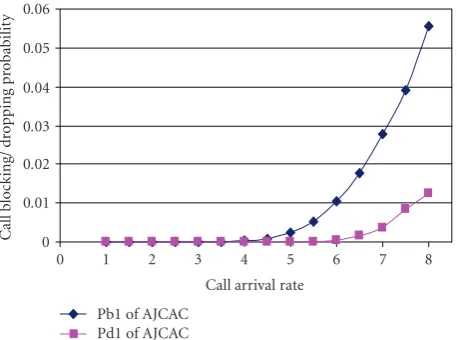
Figures7and8compare NCBP and HCDP of the AJCAC
for class-1 and class-2 call, respectively. One of the objectives
of the AJCAC scheme is to prioritized handoffcalls over new
calls. Figure 7shows that the HCDP, Pd1 of the AJCAC is
always less than the Pb1. Similarly, it can be seen inFigure 8
that the HCDP, Pd2 is always less that the NCBP, Pb2. This
shows that handoffcalls are prioritized over new calls. This
prioritization of the handoffcalls over new calls is achieved
by making the handoffcall rejection thresholds higher than
the new call rejection thresholds.
Figures9and10show the effect of varying the new call
rejection threshold,T0 on the NCBP and HCDP of the
AJ-CAC and NAJAJ-CAC schemes for class-1 calls and class-2 calls, respectively. The additional system parameters used are as
follows:T01 =T0,T02=2T0,T0 =[0, 30],λn1 =λ
n
8
Call arrival rate 0
Pb1 of AJCAC Pd1 of AJCAC
Figure 7: Effect of varying the call arrival rate on the new call blocking probability and handoffcall dropping probability of class-1 calls.
Call arrival rate 0
Pb2 of AJCAC Pd2 of AJCAC
Figure 8: Effect of varying the call arrival rate on the new call blocking probability and handoffcall dropping probability of class-2 calls.
shown inFigure 9, at low threshold values, the NCPB, Pb1
for the two JCAC schemes is high whereas the HCDP, Pd1 is
low. As the threshold value,T0 increases, Pb1 decreases
be-cause new calls are given more access to the available
band-width. On the other hand, the handoffdropping probability,
Pd1 increases as a result of the higher degree of sharing
be-tween the new and the handoffcalls. However, Pb1 and Pd1
of the AJCAC are always less than the corresponding Pb1 and Pd1 of the NAJCAC.
Figure 10shows a similar trend for class-2 calls. At low threshold values, the NCPB, Pb2 for the two JCAC schemes is high whereas the HCDP, Pd2 is low. As the threshold value,
T0increases, Pb2 decreases whereas handoffdropping
prob-ability, Pd2 increases. However, Pb2 and Pd2 of the AJCAC are always less than the corresponding Pb2 and Pd2 of the NAJCAC.
New call rejection threshold,T0
1E−04
Pb1 of NAJCAC Pd1 of NAJCAC
Pb1 of AJCAC Pd1 of AJCAC
Figure9: Effect of varying the new call rejection threshold,T0on the new call blocking probability and handoffcall dropping proba-bility of class-1 calls.
30
New call rejection threshold,T0
1E−04
Pb2 of NAJCAC Pd2 of NAJCAC
Pb2 of AJCAC Pd2 of AJCAC
Figure10: Effect of varying the new call rejection threshold,T0on the new call blocking probability and handoffcall dropping proba-bility of class-2 calls.
Figure 11shows the normalized average system utiliza-tion for heterogeneous wireless network. The normalized av-erage system utilization of the AJCAC is higher that the nor-malized average system utilization for the NAJCAC. The rea-son for improvement in system utilization of the AJCAC scheme over NAJCAC scheme is as follows. When the sys-tem load is low, the AJCAC allocates maximum bbu to all admitted calls, thereby improves the average system utiliza-tion whereas the NAJCAC allocates just the requested bbu to all admitted calls in the same class regardless of whether
the traffic load is low or high. However, when the system is
operating at the full capacity, the AJCAC algorithm degrades the bbu of some ongoing calls and frees just enough bbu to
accommodate incoming new calls.Figure 11shows that the
11
Call arrival rate 0
Figure11: Impact of varying the call arrival rate on the normalized average system utilization.
6. CONCLUSIONS
We propose adaptive bandwidth management and JCAC scheme to enhance system utilization and connection-level QoS in heterogeneous cellular networks. The adaptive JCAC scheme improves average system utilization by adapting the
bandwidth of calls based on current traffic condition and by
uniformly distribute traffic load among the available RATs.
The adaptive JCAC scheme guarantees the QoS requirements of all accepted call and reduces both new call blocking
prob-ability and handoffcall dropping probability in the
heteroge-neous wireless networks. It prioritizes handoffcalls over new
calls by using different call rejection thresholds for new and
handoffcalls. We develop a Markov chain model which
en-ables us to derive new call blocking probability, handoffcall
dropping probability, and average system utilization for the adaptive JCAC scheme. Performance of the adaptive JCAC scheme is compared with that of nonadaptive JCAC scheme in the same heterogeneous cellular network. Results show
that new call blocking probability and handoffcall dropping
probability can be significantly reduced by using the adap-tive JCAC scheme. Moreover, the adapadap-tive JCAC scheme im-proves the system utilization by up to 20% of the nonadap-tive JCAC scheme.
REFERENCES
[1] A. T¨olli, P. Hakalin, and H. Holma, “Performance evaluation
of common radio resource management (CRRM),” in
Proceed-ings of the IEEE International Conference on Communications (ICC ’02), vol. 5, pp. 3429–3433, New York, NY, USA, April-May 2002.
[2] J. P´erez-Romero, O. Sallent, R. Agust´ı, and M. A. D´ıaz-Guerra,
Radio Resource Management Strategies in UMTS, John Wiley & Sons, New York, NY, USA, 2005.
[3] R. Agust´ı, O. Sallent, J. P´erez-Romero, and L. Giupponi, “A fuzzy-neural based approach for joint radio resource manage-ment in a beyond 3G framework,” inProceedings of the 1st In-ternational Conference on Quality of Service in Heterogeneous
Wired/Wireless Networks (QSHINE ’04), pp. 216–224, Dallas, Tex, USA, October 2004.
[4] R. M. Rao, C. Comaniciu, T. V. Lakshman, and H. V. Poor, “Call admission control in wireless multimedia networks,”
IEEE Signal Processing Magazine, vol. 21, no. 5, pp. 51–58, 2004.
[5] M. H. Ahmed, “Call admission control in wireless networks: a comprehensive survey,”IEEE Communications Surveys & Tu-torials, vol. 7, no. 1, pp. 49–68, 2005.
[6] D. Karabudak, C.-C. Hung, and B. Bing, “A call admission control scheme using genetic algorithms,” inProceedings of the ACM Symposium on Applied Computing (SAC ’04), pp. 1151– 1158, Nicosia, Cyprus, March 2004.
[7] X. Gelabert, J. P´erez-Romero, O. Sallent, and R. Agust´ı, “On the suitability of load balancing principles in heterogeneous wireless access networks,” inProceedings of the Wireless Per-sonal Multimedia Communications (WPMC ’05), Aalborg, Denmark, September 2005.
[8] A. Pillekeit, F. Derakhshan, E. Jugl, and A. Mitschele-Thiel, “Force-based load balancing in co-located UMTS/GSM net-works,” inProceedings of the 60th IEEE Vehicular Technology Conference (VTC ’04), vol. 6, pp. 4402–4406, Los Angeles, Calif, USA, September 2004.
[9] J. P´erez-Romero, O. Sallent, and R. Agust´ı, “Policy-based ini-tial RAT selection algorithms in heterogeneous networks,” in
Proceedings of the 7th IFIP International Conference on Mobile and Wireless Communications Networks (MWCN ’05), Mar-rakesh, Morroco, September 2005.
[10] H. Holma and A. Toskala,WCDMA for UMTS, John Wiley & Sons, New York, NY, USA, 2nd edition, 2001.
[11] V. Pla, J. M. Gim´enez-Guzm´any, J. Mart´ınez, and V. Casares-Giner, “Optimal admission control using handover prediction in mobile cellular networks,” inProceedings of the 2nd Interna-tional Working Conference on Performance Modelling and Eval-uation of Heterogeneous Networks (HET-NETs ’04), Ilkley, West Yorkshire, UK, July 2004.
[12] G. Kesidis, J. Walrand, and C.-S. Chang, “Effective band-widths for multiclass Markov fluids and other ATM sources,”
IEEE/ACM Transactions on Networking, vol. 1, no. 4, pp. 424– 428, 1993.
[13] M. Ga¸bowski, M. Stasiak, A. Wi´sniewski, and P.
Zwierzykowski, “Uplink blocking probability calculation for cellular systems with WCDMA radio interface, finite source population and differently loaded neighbouring cells,” inProceedings of the 11th Asia-Pacific Conference on Commu-nications (APCC ’05), pp. 138–142, Perth, Western Australia, October 2005.
[14] N. Nasser and H. Hassanein, “Dynamic threshold-based call admission framework for prioritized multimedia traffic in wireless cellular networks,” inProceedings of the IEEE Global Telecommunications Conference (GLOBECOM ’04), vol. 2, pp. 644–649, Dallas, Tex, USA, November-December 2004. [15] Y. Guo and H. Chaskar, “Class-based quality of service over
air interfaces in 4G mobile networks,”IEEE Communications Magazine, vol. 40, no. 3, pp. 132–137, 2002.
[16] S.-P. Chung and J.-C. Lee, “Performance analysis and over-flowed traffic characterization in multiservice hierarchical wireless networks,”IEEE Transactions on Wireless Communi-cations, vol. 4, no. 3, pp. 904–918, 2005.
[17] F. Houeto and S. Pierre, “Characterization of jitter and admis-sion control in multiservice networks,”IEEE Communications Letters, vol. 8, no. 2, pp. 125–127, 2004.
for integrated service-based wireless mobile networks,”IEEE Transactions on Mobile Computing, vol. 2, no. 1, pp. 65–75, 2003.
[19] X. Bo and Z. Chen, “On call admission and performance
eval-uation for multiservice CDMA networks,”ACM SIGMOBILE
Mobile Computing and Communications Review, vol. 8, no. 1, pp. 98–108, 2004.
[20] P. V. Orlik and S. S. Rappaport, “On the handoffarrival process in cellular communications,”Wireless Networks, vol. 7, no. 2, pp. 147–157, 2001.