direction of Denis Gray, PhD.)
The purpose of this research was to examine the relationship between teachers’ attitudes toward technology and its implementation while their schools are undergoing a large-scale technology infusion in the state of North Carolina. The eleven treatment schools were selected through a grant writing procedure, high technology needs and Title I status. A detailed procedure was used to identify and recruit comparison schools. Treatment schools were provided with almost $1.5 million over three years to purchase educational technology, train their teachers and staff two full-time technology related positions: Media Coordinator and Technology Facilitator. In addition, schools were required to develop and integrate a Media Technology Advisory Committee (MTAC) to oversee planning and budgeting issues related to technology. Utilizing a quasi-experimental pre-post design, this study analyzed teacher attitude changes for treatment and comparison groups over year-one. Attitude and instructional practices were compared with pre-measure data to assess a baseline comparison of groups. Changes in group scores over time were conducted using RMANCOVA and differences were found between groups for two attitude subscales and for four instructional practices. The largest effect was found for technology implementation. Exploratory
by
DOMINICK SHATTUCK
A thesis submitted to the Graduate Faculty of North Carolina State University
in fulfillment of the requirements for the Degree of
Master of Science
PSYCHOLOGY
Raleigh March 22nd, 2006
APPROVED BY:
________________________________ _________________________________
Jason Osborne, PhD Roger Mitchell, PhD
________________________________ Chair of Advisory Committee
ii
Interest Program was only possible through the support of family, friends and the instructors at NC State. There are two people in particular who provided inspiration toward the
completion of this thesis.
First, my wife Kristen provided a daily foundation of love and dedication that enabled the completion of this document. During the last few years our development of a home and family has garnered its own sense of community that has enabled me to excel personally and academically. Her example of professional and academic excellence has pushed me to take on this program with vigor. I am excited to tackle any challenges the future may hold with her and together we will provide a life of discovery and accomplishment for our daughter Harper.
iii
iv
Public Interest Program. His influence on this thesis is derived from both completed course work and advising sessions. Equally important to his academic influences is his ability to relate to my experiences, questions and concerns, both academic and personal. I could not have been provided with a more appropriate advisor in this program. There is no question that his guidance has enabled my successes at NC State.
Another member of my advisory committee who has contributed substantially to the development of this paper is Roger Mitchell, PhD. His helpful comments have challenged me to look beyond the statistics of the study and develop real-world applications for the research. He has been receptive to research in a variety of areas and applied his wealth of experience in practical ways, enhancing the process of this thesis.
Also, I would like to acknowledge the contribution of the Primary Investigator Jason Osborne, PhD in the completion of this work and advice in this and other papers and
presentations that I have generated through this project. Also, the opportunity to work on a large-scale project has provided me with an exceptional chance to integrate academic and real-world experiences. Additionally, I would like to thank the other members of the
v
LIST OF TABLES………. ix
PRESENT STATE OF TECHNOLOGY IN AMERICAN SCHOOLS…..……... 1
ADOPTION OF INNOVATION LITERATURE: RELEVANCE TO EDUCATIONAL IMPLEMENTATION LITERATURE …..……….. 9
Perspectives……… 10
Environment………...……… 11
Linear Chain-Link Models……….……… 12
Rogers’ Diffusion of Innovations..……… 13
Innovation………..……… 13
Communication……….. 13
Time..………. 13
Social System..………... 15
BIG ISSUES & CONCERNS……..……… 20
Digital Divide……….………...…………... 20
IMPLEMENTATION: THE IMPORTANCE OF ADOPTION OF INNOVATION………..………….... 26 Implementation……..……….... 26
RELEVANT LITERATURE: IMPLEMENTATION OF EDUCATION TECHNOLOGY……….... 31 Descriptive Research……….. 34
Qualitative Anecdotal Comparison Studies.……….. 38
Comparison Group Studies…..……….…. 46
Correlational Studies……….. 54
Ecological Perspective..………. 60
Skills & Implementation Study……….. 63
Summary……… 66
METHODS………….………... 68
Background……… 68
The IMPACT Evaluation Effort……… 68
Research Questions……… 70
Participants………. 73
IMPACT Treatment………... 76
Technology Facilitator & Media Coordinator………... 77
Flexible Scheduling & Collaboration……… 78
vi
Attitudes………. 82
Implementation……….. 85
Summary……… 86
RESULTS…………..……… 88
Attrition Analyses ………. 88
Instrument Analyses………... 89
Pre-Measure Analyses……… 98
Pre-Measure Comparisons………. 100
Longitudinal Analyses………... 101
Summary……… 110
DISCUSSION…………...………. 111
REFERENCES..………. 123
APPENDICES………... 130
Appendix A: TAC Communality Estimates..……… 131
Appendix B: Activities of Instruction Initial Factor Loadings..……… 132
Appendix C: ANCOVA Results - TAC subscales: CIDEO, Affective, Email………. 133
vii
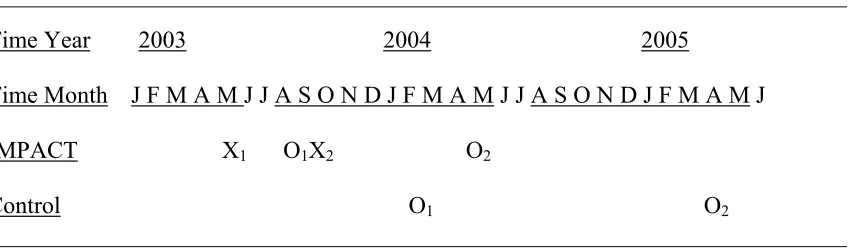
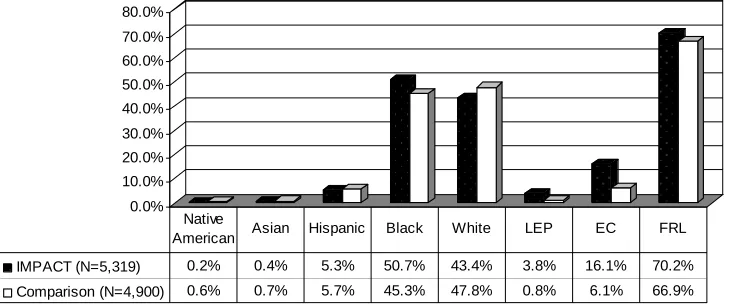
Figure 1. IMPACT Research Design………. 69 Figure 2. IMPACT & Comparison School Demographics, 2003-04………... 76
RESULTS Figure 3. Activities of Instruction: Item Response & Numeric Values…………... 97
Figure 4. IMPACT Research Design………. 101 Figure 5. RANCOVA: Computer’s Influence on Instructional Delivery & Educational
Outcomes - CIDEO……… 104 Figure 6. RANCOVA: Email Productivity in the Classroom……… 104 Figure 7. Repeated Measures: Individual Learning Activities, IMPACT vs.
Comparison Teacher..………. 108 Figure 8. Repeated Measures: Constructivist Methodology, IMPACT vs.
Comparison Teachers……….. 108 Figure 9. Repeated Measures: Teacher Centered Activities, IMPACT vs.
Comparison Teachers……….. 109 Figure 10. Repeated Measures: Technology Implementation, IMPACT vs.
Comparison Teachers……….. 109
DISCUSSION Figure 11. Repeated Measures: Technology Implementation, lessons using
viii
Figure 13. Repeated Measures: Technology Implementation, media presentation
ix
Table 1. Table of Organizational Use of Technology……… 6
RELEVANT LITERATURE: IMPLEMENTATION OF EDUCATIONAL TECHNOLOGY Table 2. Items Selected from the View of Learning Math as a Rule - Based Subject……….. 48
Table 3. Variables from Redmann & Kotrilk (2004)………. 57
METHODS Table 4. Number of Respondents at Each Data Collection ………... 75
RESULTS Table 5. Attrition Rates: IMPACT & Comparison Teachers………. 89
Table 6. TAC Subscale Intercorrelations………... 92
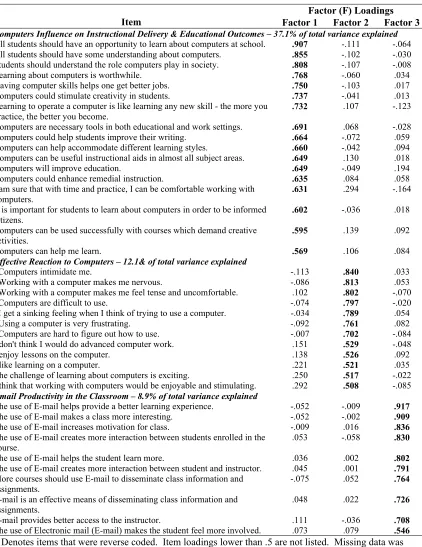
Table 7. EFA Teachers’ Attitudes toward Computers, Factor Loadings………... 93
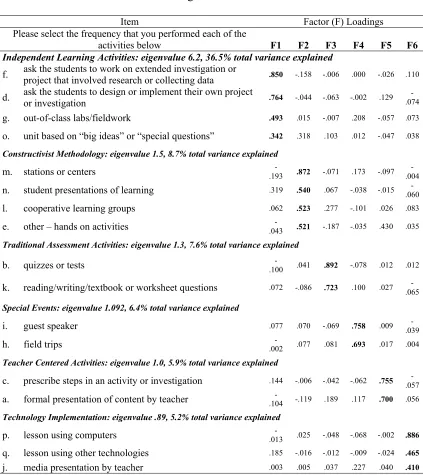
Table 8. EFA Activities of Instruction Factor Loadings……… 95
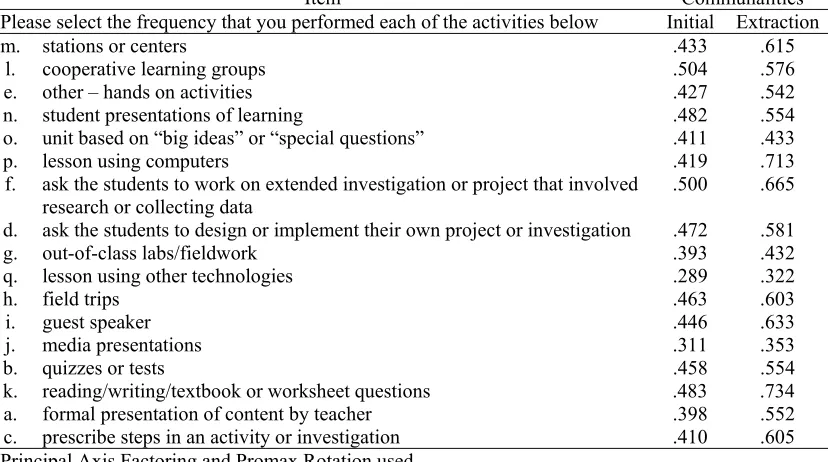
Table 9. Activities of Instruction Communalities……….. 96
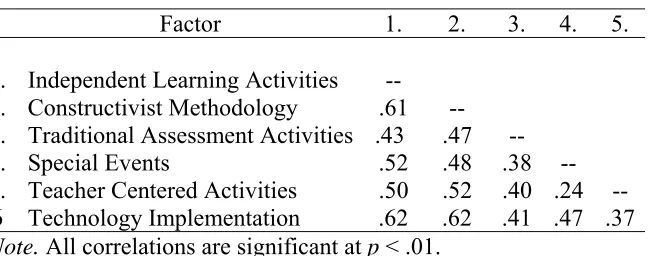
Table 10. Activities of Instruction Subscale Intercorrelations………... 98
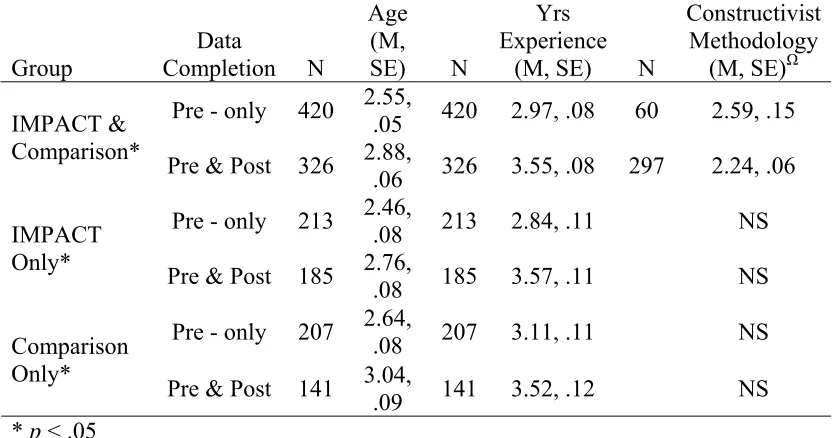
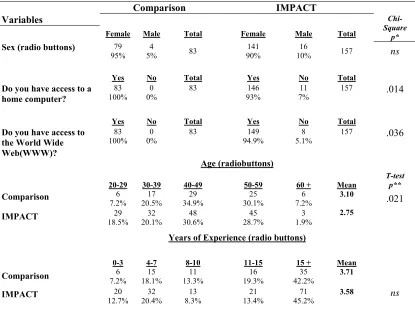
Table 11. Demographic Characteristics: IMPACT vs. Comparison Teachers……….. 99
x
Table 14. RMANCOVA: Activities of Instruction Subscales………... 106
Table 15. RANCOVAs: Activities of Instruction Subscales………. 107
Present State of Technology in American Schools
John Dewey proclaimed that schools are dynamic social institutions, which are
asked to provide students with “a process of living and not a preparation for future living
(Dewey, 1897)” This seamless transition from educational setting to adult life requires
the ability to problem solve in multiple areas as well as utilize tools necessary for
success. Recently, computers, the internet and several technology-based “gadgets” have
become the hard-technology tools that many legislators, administrators and teachers are
attempting to incorporate into classroom curricula to enable Dewey’s process of living.
Different parties are influential in the drive to place more technology resources in
classrooms and enable teachers to better implement their use effectively. Parents may
initially push the process by expressing their interest in having their children learn in a
manner could be more engaging and provide access to skill sets relevant to today’s job
market. Administrators may hope to address the wave of standardized testing with
higher rates of achievement that some researchers are claiming can come through
technology-rich curricula. And teachers may examine the use of technology in two
contrasting ways: first, as an additional challenge to their job which is different and
exciting, or second, as a mandated change from administrative personnel.
The relevance of technology resources and their implementation in schools is
far-reaching. The federal No Child Left Behind (Education, 2000) legislation mandates
technology literacy for students and calls for more empirical methodologies when
designing school research projects. States have addressed technology education by
providing resources in the form of technology, manpower and training for teachers at
In an attempt to clarify the scope of the issue of technology education, Meade &
Dugger (2004) conducted a national survey to assess the efforts of state legislatures.
Using a sample of all fifty states and the District of Columbia they distributed a four
question survey to state supervisors regarding how they account for technology
education within the framework for their state. The results revealed that thirty-eight
states are including technology in their state educational framework (up 8 states from
2001) and five of those states indicated that technology education was part of a career
preparation framework. Five other states indicated that technology was delivered to
students as part of core subject classes. In a change from a 2001 survey, the researchers
found that all fifty states responded that technology education was a requirement (or that
the requirement is pending) for their students either at the state level or within their local
school administrative area.
This raises the question of who will provide teachers and students with the
expertise needed to successfully integrate technology? Meade and Dugger (2004) also
looked at the number of technology education teachers within each state and found that
there was a decrease across the nation when comparing their data with other recent
surveys. They did not speculate on the reasons behind this decrease, which could
suggest reprioritizing of personnel within schools. Meade and Dugger (2004) also
addressed the application of national technology standards with state supervisors. Their
results show that forty-one states are using standards. These standards are either the
adoption of Standards for Technology Literacy (ITEA, 2000/2002) or the application of
standards developed from this basis. The integration of technology into the state policies
and reflects the rising value that is being placed on the topic of technology within
The value of technology in schools can also be underscored by examining the
resources actually available to teachers and students across the US. The May, 2004
issue of Education Week (edweek.org, 2005) reported that across the U.S. for every one
school computer connected to the internet, there are 4.3 students. At the classroom
level, that number increases to 8.4 students for every computer connected to the internet.
This difference is likely attributed to computer labs in the US schools that are used by
classes or groups of students at a time and teachers’ computers. They continue to report
that 92% of the schools in the US have internet access and of those schools 74% of the
teachers use the internet for instruction. These rates further emphasize the importance
placed on computers and technology within schools by shedding some light on the
resources allocated, but they do not reflect the entire picture of technology usage.
Despite the seemingly high rate of technology availability, Peck, Cuban and Kirkpatrick
(2002) reported that in 1999 the typical teacher provides students with fewer than 10
opportunities to use computers during a school year.
The mosaic of research surrounding implementation of technology in schools has
been developing, but a complete picture has not been developed. Research frequently
looks at smaller-scale initiatives, fragmented by a narrow focus. There is also a great
deal of research-design variability and the inability to apply findings across
environments. These differences have limited our understanding of the process related
to technology adoption and implementation in schools.
Over the last twenty years the state of educational technology has evolved, but
more effective means of implementation have not developed at the same pace. Cuban
(1999) claims that the advice from experts in the field is contradictory, changing with the
implementation is a pressing issue, but previous research focus, sampling issues and the
designs often limit the ability to generalize the findings. This section reviews some of
the literature which reflects the increasing importance and shortcomings of the research
which accompanied this educational development.
An early example of the literature related to instructional technology within
schools was done by Williams and Brown (1991). In their review of the literature, they
conclude that computers and other technologies can sometimes be used to teach more
effectively than a typical classroom teacher but other times not. This vague conclusion
displays the inconclusive nature of their literature summary. Their focus was on
inclusive technologies which attempted to substitute teachers with computers and
software. Although relevant to public fears at the time, this threat is no longer of
substantial consideration within the educational technology literature. One of the major
themes of their paper emphasizes that “those who have conducted research on various
aspects of computer teaching have been more comfortable with computers than with
research methodology, and thus even published studies often contain serious design
flaws (Williams & Brown, 1991, p. 40).” Williams and Brown continue to elaborate on
the failure of researchers to establish important research questions and conditions for
their studies. One suggestion provided in their paper is the need to tie the research to
educational theories of learning and then to build from this point to develop a new
understanding of how students learn by utilizing this new classroom tool. Their
recognition of technology’s potential utility and the failure of associated research were
later echoed by the federal government’s Panel of Education and Technology.
David Shaw (1998) summarized the findings and recommendations of the Panel
Strengthen K-12 Education in the United States.” Looking at both the effect of
technology and the related financial considerations the Panel described the research in
this area as being unable to generalize across samples despite previous efforts, “we are
not yet able to answer this question (nor, indeed, even to define it precisely)…from a
public policy perspective. (Shaw, 1998, p. 117).”
Shaw’s summary of the Panel’s findings continues to suggest that research is the
best way in which to learn more about the use of technology in schools and continues to
identify three areas as most important in future school technology research:
1. Basic research in various learning-related disciplines and fundamental
work on various educationally relevant technologies;
2. Early-stage research aimed at developing new forms of educational
software, content, and technology-enabled pedagogy;
3. Empirical studies designed to determine which approaches to the use of
technology are in fact most effective; (Shaw, 1998, p. 120).
Complementing the list, the Panel proposes three characteristics of the research
from this field. They suggest that the research uses large samples, that it can be
generalized to other educational settings and that the findings are widely disseminated
through professional journals. This attempt at proactive guidelines for educational
technology research has provided a framework for the literature during the last seven
years. Unfortunately, the same questions are still unanswered and the criticisms of the
research implemented before the Panel meeting are still unresolved, as many articles are
limited to a small sample size and are not able to be generalized across settings and do
One study that attempted to apply the panel’s suggestions looked at a national
sample and the outcomes related to technology usage in schools. Using data drawn from
the National Assessment of Educational Progress (NAEP), the Educational Testing
Service (ETS, 1998) published a summary of findings which reflected the state of
computers and technology within American schools. The data used for analysis was
based on a national sample of fourth and eighth graders and the use of computers in their
mathematics classes. They looked at four indicators of organizational use of technology
and two educational outcomes (Table 1).
Table 1
Indicators of Organizational Use of Technology
Organizational use Indicators Educational Outcomes
- Frequency of school computer use for mathematics tasks
- Access to home computers/frequency of home computer use
- Academic achievement – as measured by mathematics test scores
- Professional development of
mathematics teachers in technology use - Higher-order and lower-order uses of computers by mathematics teachers and their students
- Social environment – measured by bringing together various indicators of teacher and student reports
Educational Testing Service. (1998). Does It Compute? The Relationship Between Educational Technology and Student Achievement in Mathematics. Princeton, NJ
Their findings reflected a large number of issues that appear in the present
literature on school technology. The present-day hot topic “Digital Divide” is discussed
in this report. ETS found that eighth-grade Black students were less likely to be exposed
to higher-order uses of computers than whites and both eigth & fourth-grade Black
students were less likely to own computers than Whites. Also, they found that students
school (This topic will be discussed more below.). They highlighted the relationships
between teacher training with computers and student computer use for higher-order
thinking skills as positive indicators of student advancement beyond their peers.
Highlighting the value that technology has added to education, their study offers
three suggestions for policy makers. First, they suggest additional teacher training to
assist in the implementation of technology in classrooms. Second, computers should be
used in a somewhat complementary manner to address some of the higher-order thinking
skills. Also, teachers may want to use computers to complement concepts that were
previously learned elsewhere. Third, the primary focus of technology integration should
be in the middle schools. Their suggestions are based on the effect size of their results,
which showed the greatest gains associated with technology happened in mathematics
classes of middle school students. If other subjects were the focus of this research (i.e.;
Reading, History), their findings may have displayed other levels of integration and
resulted in different suggestions.
This ETS study is important to the overall panorama of educational research
because it reflects two areas in which some studies have focused: teacher training and
subject area. Teacher training has received a great amount of attention for many years
and provides a straightforward design using pre and post treatment values from which to
make conclusions. The frequent shortcoming of the research in this area is that actual
classroom implementation data is not provided. This may be due to the research
constraints, but the disconnect between training someone within the setting of a
workshop and finding out whether they implement technology in their everyday practice
implementation provides insight into how adoption and implementation affect outcomes
across settings.
Also, this study provides a large scale look at mathematics teachers and their
students, not a comprehensive picture of technology usage across the entire educational
environment. Their examination of Social Environment as an outcome variable
expresses the idea that technology usage permeates the entire school community.
However, they focus only on mathematics and not other subjects in which those students
are also taking part in during their school day.
Educational technology has merited a great deal of attention by academics,
legislators, parents and school administrators. As this subject develops, our
understanding of it becomes more fragmented as a result of the assortment of research
designs used and increasing pressures put on schools to show tangible outcomes related
to the financial commitments within school budgets. Cuban (1985) refers to the issues
surrounding technology education as the acknowledgement of a practical dilemma,
which forces teachers, administrators and parents to look at the choices before
themselves and decide how to strike a balance with this change. Without focusing on
the activities of teachers within their classrooms and the ecological levels within schools,
the research will not synthesize all pieces of the puzzle (Lim, 2002). This study is a
small component to the larger intervention study, the IMPACT project, that addresses
both ecological levels of analysis, teacher activities and tangible outcomes for students
Adoption of Innovation Literature:
Relevance to Educational Implementation Literature
Although many technologies are important in education, such as television or non-hardware-based instructional techniques, for many people, social emphasis on the computer has made it take on almost iconic significance as a device that has come to represent Technology in Education (Doty, 1992).
Doty’s comments regarding the social implications of technology ring loud and
true in the new millennium. Computers provide us with a physical object that represents
progress and the inherent challenges of updating as they become smaller, faster and
more connected. We want and expect to see computers used everyplace, especially in
schools. Keeping abreast of this mechanistic and social progress provides ample fodder
for parents, teachers and policy makers as they decide what is, and isn’t appropriate for
classroom use. Present perspectives on innovation evolved from the familiarization of
society with devices such as toasters, microwaves and MP3 players, as well as, cultural
connections to technology through the chess competitor Big-Blue, and home computing
with the Apple II. Studying cultural transitions to full-scale implementation of various
innovations provide case studies of overwhelming successes (Sony Walkman) and sheer
disappointments (video laser discs).
Most innovation researchers will cite any number of editions of Everett Rogers’
(1995) Diffusion of Innovations as distantly relevant but fail to use relevant models and
develop frameworks that can be generalized across school settings. In contrast, starting
with individual perspectives on the process of adopting innovations moving through
top-down and chain link models and then using Rogers’ work as a lens, this section hopes to
provide examples of other relevant research that should pertain to the process of
Perspectives
Starting with our perspectives on technological innovations will provide a
foundation from which to move into relevant models. Ernest House (1981) claimed
three general perspectives held by individuals about innovations: technical, political and
cultural. The first is a more technical view of innovations, which separates the process
into functions based on rational analysis and empirical research (The technical and
political perspectives are combined in the work of van den Berg, & Sleegers (1999) and
referred to as the structural-functional perspective.). Reflecting our need to answer the
questions: How and why will we use this new technology? This perspective enabled
systemization and replication of adoption techniques that enable end users to implement
the innovation. House mentions this as the most dominant of the three perspectives and
reflects our penchant to reduce learning to a set of measurable, and teachable, tasks. A
direct relationship can be made between understanding this perspective and that of a
school teacher who is asked to implement a new tool within the classroom. Without the
proper connections being made between the curricula and the classroom activities, the
technology is rendered useless.
The political perspective is the second influencing factor on society’s view of
innovation. House categorizes innovation as, “…a matter of conflicts and compromises
among factional groups.” This parallels communication concerns stated in Rogers’
(1995) and provides basis for the more recent ecological focus on implementation of
technologies by Zhao (2001) by identifying the complexities present in school
Building from the political perspective House suggests that combating cultural
norms is critical in implementing innovation (van den Berg, et al., 1999, also recognizes
the cultural-individual perspective of innovations.). In his cultural perspective, the
values and norms of stakeholders present challenges which need resolution. Finding
cohesive understandings and expectations for the innovation in question will require
significant work and flexibility on the part of each party to find a reasonable middle
ground for the use of the innovation. There can be environments which are more prone
to adjust to changes in their activities than others. Fusing these three perspectives
together provides the necessary foundation for exploring the adoption of innovation
literature and focusing on the processes involved.
Environment
Baskerville and Pries-Heje (2001) identify two channels through which
information may come to a user: genealogical and ecological. The genealogical view of
diffusion of innovation is developed around consensus building and regulation of a
particular organization. Often authority comes from a central source where initial
innovative decisions are made. Diffusion patterns within an organization may not be
transferable to another company in the same industry due to the differences such as size
or demographics. This is an issue that arises continually in educational research as no
two school districts are exactly alike. Often, factors such as community wealth/poverty
and history/culture may contaminate the application of research findings. Clearly, issues
such as leadership style/effectiveness can impede or excel the diffusion of some
ecology. This channel emphasizes the themes of conflict and competition and is more
applicable across organizations by determining the climate for change. Focusing on
organizational direction through interdependent relationships utilizes various needs to
find optimal outcomes. Although some best practices may be transferred from
organization to organization, their application will need consistent adjustment to be
effective. The literature surrounding the implementation of innovations identifies the
structure of decision making and feedback as components that enable organizations and
researchers to locate discontinuities in the implementation process.
Linear & Chain-Link Models
Kline and Rosenberg (1986) outline the linear and chain-link models of the
innovation process and their shortcomings. The linear model, or top-down approach,
originates from the research arena, flowing through development, production and
marketing. Without feedback loops from users of the innovation, the model neglects
valuable information that could enhance the adoption process. This prescription process
is one used commonly in both political and education settings. Policy handed down
from upon high frequently infers that success in particular schools or settings are
immediately transferable to all schools and should be implemented. Unfortunately,
policy makers often believe this to be the optimal framework for implementing change.
In fact, it may lead to high levels of implementation, but can often be characterized as
low quality workmanship and short-term change with the relaxation of leadership.
Evolving from the linear model is the chain-linked model. Incorporating various
preponderantly at the beginning of a typical innovation, but rather extends all through
the process – science can be visualized as lying alongside development processes, to be
used when needed” (Kline & Rosenberg, 1986 p. 290). As mentioned in later areas of
this paper, the symbiotic relationship between various components of the models is
required to create an innovation appropriate for the market or end user(s).
Rogers’ Diffusion of Innovations
Everett Rogers’ (1995) diffusion of innovation model is classified as an
ecological model that focuses on the influences people have on one another through a
better understanding of the innovation, communication channels, the effects of time, the
social system and the role of leaders as change agents. Focus will be paid to these
aspects of Rogers’ diffusion process as it relates to schools with complementary research
from other leaders in this area.
Innovation
An innovation can take several forms provided it is perceived as “new” to the
users. In the school setting, this could take the form of a computer, data projector or an
interactive Smartboard. Importantly, the innovation could also be a social process or
device such as a computer software enabling a teacher to submit his/her attendance
through the computer rather than a paper form (Tornatzky & Fleisher, 1990). Each of
these new innovations will carry an undetermined intrinsic value for the user. As
culture/climate of the environment or access to resources. Novelty may play into the
perception of the user, influencing implementation decisions, but the nature of the
innovation itself will be a key determinant in its use.
Communication
Mentioned previously, communication channels will also influence the
implementation of the innovation. Peer influences, availability of resource personnel or
training will either enable or hinder usage. Users who learn of the innovation from
people like-minded to themselves are more likely to have positive perceptions of the
innovation (Kanter, 1988; Rogers, 1995). Teachers who share the same subject matter
may become very influential in the potential adoption of the innovation by other teachers
in their department. Also, Kanter suggests that adoption could be aided by
communication of school leadership and examples set by upper management’s usage of
the technology in question (p. 190). Communication also compliments the ecological
considerations of the process in the form of distance (Zhao, 2001). Often distance is
referring to physical space, but like the situation with teachers of the same subject
matter, it can be the perceived distance from their original topic to the technology itself.
Without the proper framing of the innovation, teachers may not recognize its relevance
Time
Time will also play a crucial role in the level of the sustained adoption of the
innovation, the creativity involved in the use of that innovation and the rate of adoption
by the users (Rogers, 1995). As mentioned by Kline and Rosenberg (1986), success
demands not only selecting the right costs and performance, but also judging just when
the timing is right for the product’s introduction.
The influence of time on the process of innovation is not just in the urgency of
adoption, but also relevant to the users’ ability to organize time for the adoption of the
innovation. Ely (1991) states that the number one reason why technology is not
integrated into curriculum is the lack of planning time for teachers. This notion is
supported by both Cuban (1999) and Becker (2000) as well.
Introducing new technologies within schools creates forces teachers to recreate
the processes of performing their jobs, which is a large undertaking. If resources are
provided at inconsistent rates or without understanding the optimal training and time it
could result in creating an unstable environment and negative experiences for teachers,
pushing them back to practice as usual rather than implementing the innovation.
Social System
Lastly, the social system in which people are asked to use the innovation will
impact adoption levels. Factors such as the division of units within the organization,
opinions of leaders, the types of innovative decisions that have been made in the past
Rogers (1995) mentions three types of equilibrium states that may occur within an
organization: stable equilibrium, dynamic equilibrium and disequilibrium.
Understanding that stable equilibrium and disequilibrium are undesirable, a facilitative
body (individual change agent or organized committee) will need to promote dynamic
situations with both the individuals involved and the innovations. This requires both
feedback mechanisms and coordinated focus of individual teachers.
Change agents should try to promote a dynamic state of equilibrium that
encourages the social system to accept the change at a pace appropriate to the climate of
the organization. Kanter (1988) mentions that systems requiring mid-level employees to
report to a project and functional boss would increase communication levels and
promote increases in collaborative decision making. Within the school setting, teachers
often are responsible to their department head as well as directly interacting with either
media coordinators (librarians) or administrative staff on various issues related to their
broad range of responsibilities, but are more than often autonomous developers of their
classroom activities. This provides a conundrum for the role of leadership within
schools that tugs at the cultural fabric of its organization and intrinsic values of teachers.
Increases in collaboration become decreases in autonomy for teachers. Leadership
becomes the lead innovator who must balance this delicate cultural change.
Dougherty (1996) mentions that multidisciplinary teams help innovators create
commitment by providing a sense of inclusion, regardless of status. As suggested by
Kanter (1988), this could promote entrepreneurial behavior on the part of the teachers,
encouraging them to be resourceful, build coalitions and gain various perspectives on
procedural issues of the innovation. She continues to state that, “…restructuring of the
example of this reassignment can be seen in the IMPACT project as librarians are
renamed “media coordinators” and the creation of the position, “technology facilitator.”
Both changes occurred due to the increase of technological innovations housed in school
libraries and the need to have a staff member assist with the implementation of and
maintain technology within the schools.
Mentioned briefly above, collaboration between teams is one dynamic activity in
which leadership can help facilitate implementation of innovations. In an attempt to
avoid discouragement and less adoption of innovation leaders may look to promote less
isolation of work-groups and discontent with supervisory decisions. Dougherty (1996)
emphasizes the integration of work groups across an organization to enable development
of innovative ideas beyond a single project area. Managing the link between the
customer needs (teachers and students) with the organizations technical capabilities must
permeate the entire organization, since a specific product must draw on resources around
the organization, and all those resources must accommodate multiple sets of market –
technology linkages. These factors of the diffusion of innovation are central to the
long-term decision making processes of the organizations. Within a school setting, this takes
the form of collaboration time for teachers from various disciplines and levels to create
strategies and solve similar problems. Collaboration can come from a variety of places.
Increasing technology capacities enable teachers to look to more non-traditional
resources to aid in communication and the enhancement of their lessons.
Lastly, the notion of access to resources and the development of dynamic
organizations are addressed by Tushman and Rosenkopf’s (1992) identification of closed
and open systems. These classifications are used as means by which we determine how
end users. A set of simple products that are linked together through a linkage interface,
defines a closed system. Examples of the closed system are textbooks, overheads and
televisions and video cassette recorders. These technologies are traditionally available
to teachers and implemented, but are reliant on the individual teacher and limit the
utilization of resources outside of the classroom. Today, teachers are incorporating
additional technology, which reflects an open system of resources. Students can research
topics on the internet or possibly practice language and math skills on an interactive
website. These activities are examples of open systems that have no boundaries
(although schools often put search restrictions on internet access) and require users to
interface on various levels of the process. The “networked” components of these
activities are working together over both physical and virtual distance. Technological
interdependencies are present and varying in capacity for both the student and teacher.
Information is shared (in a linear sense, this is where the model fails me) and the
instruction of the teacher in combination with the effort of the student and the quality of
the information provide a dynamic system of exchange.
Tushman et al. (1997) refer to this dynamic organization style as managing
innovation streams and suggest that organizations must learn to control these streams in
a proactive manner to avoid stifling their potential growth. Their “creation of luck”
provides the backdrop for diverse approaches which can later be altered and built upon
by those involved. Applying this concept within the structures of schools may be
challenging but can provide the ability to generalize frameworks across populations.
Unfortunately, the overall application of innovation models to school settings has
been limited and the research surrounding this topic is stymied by small sample size or
to integrate the two bodies of literature and develop the field of technological
Big issues & Concerns
Digital Divide
Rosemary Sutton’s (1991) review of the literature on the state of educational
technology provides three consistent issues: access, process and outcomes. These issues
are confronted in the more recent literature and have generated hot debate in the field.
This section will review research related to technology access as it pertains to
socio-economic level, race and gender in schools. Then the debate regarding process and
outcomes will be addressed briefly by looking at articles by Larry Cuban and Henry
Becker, two major figures in the field of Educational Technology, and their findings
related to technology usage in the classroom.
Today, the notion of technology access is often stated in the media as the digital divide. Research on the topic confronts the realities of variations in technology access
within US schools. The variety of resources is often associated with the socio-economic
status of a community. As wealthier schools acquire more current technologies, students
in poorer schools are often forced to use outdated resources or none at all. Access is not
only a concern when dividing student populations by socio-economic levels, but also
when considering the role of female students within wealthy and less wealthy
communities. As the role of technology evolves and connectivity increases it provides
the opportunity to examine the relationship between the technology and its social
ramifications.
The digital divide provides a real-world example of both positive and negative
influences and variations of fidelity that may occur through the adoption of an
innovation (Rogers, 1995; Tornatzky & Fleisher, 1990). Rogers makes two
groups. He states that they usually tend to widen the socioeconomic gap between the
audience segments of earlier and later adopter and previously high and low
socioeconomic status (1983). Considering the conclusions of research in this area
schools are attempting to address the digital divide by bringing technology to
communities that may not otherwise have access to computers and training in computer
literacy, and in turn help develop individual skills for technology related jobs. This
“trickle-up” model uses public education as the vehicle to address lifelong skills and the
digital divide.
Timothy Morse (2004) looks more closely at access by citing statistics on
minority group home computer access from the U.S. Department of Commerce. They
found that nationally 51% of households reported owning a computer, yet the
percentages were different for Hispanic (33.7%) and Black (32.6%) households (White
households are aggregated into the overall American population.). Household internet
access was reported at 41.5% for the entire nation and 56.8% for Asian and Pacific
Islander American households, yet only 23.6% for Hispanic and 23.5% for Black
households. Also, Morse cites Department of Commerce statistics for parental
demographics that reveal 2 parent households (60.6%) are almost twice as likely to have
Internet access than single-parent households (male-headed 35.7%, female-headed
30.0%). An extension of these statistics are provided by the work of Clark and Gorski
(2001) who found that internet access is found more frequently in schools with less than
10% racial minority than schools which have enrollments comprised of more than 50%
or more of the student body. These statistics provide an opportunity for educators to
development for students. Questioning that role has been under debate for more than
twenty-five years.
Sutton’s research looked at studies conducted during the 1980s, a time when
home computing was beginning to flourish and eager schools looked for ways to equip
themselves with machinery to teach programming and keyboarding. Studies cited by
Sutton ranged in focus from measuring national access and ownership of home
computers to rates of any computer usage. One 1985 – 1986 example equated that 78%
of White students versus 65% of Black and 69% of Hispanic students had used a
computer which supports the notion that schools can promote equity, technology access,
and skill development opportunities to their students.
Literature reviews reveal important differences in access as it relates to gender.
A study by Becker and Sterling (1987) found that female participation in computer usage
at 30% at the elementary level, while rising to 50% for high school aged females. This
adjustment in participation suggests that gender roles may be imposed by teaching staff
until female students are able to assert interest in this area.
More recently, a German study (Tully, 2004) reported that 52.7 percent of males
between the ages of 15 – 26 were “Technology Fans” compared to only 9.3 percent of
female respondents. Conversely, 69.3 percent of the girls were reflected in his other
category entitled, “Technology Grouches.” His study reflected a possible negative
perception or attitude of female students. Losh (2004) further supports the notion of
gender technology divisions and presents evidence that highly educated males are more
likely to use email and internet related services at home than women. Looking at the
effect that access to technology may have on gender differences Mammes (2004) used a
differences in interest toward technology education for girls and boys. During the
introduction of technology class to the students, interest levels were measured and
showed that they are somewhat different in their level of technical interests, frequency of
dealing with technical objects and their emotional relationship with technological
objects. Following the technology education class all of gender related differences in
these areas were substantially diminished. Mammes study provides a strong case for the
introduction of technology education at a young age and the notion that the relationships
between students and technology can be fostered within schools. Looking at this body
of literature, the gender division exists, but there is a potential treatment to balance the
early development of negative attitudes.
Solutions addressing the issue of the digital divide in both gender and racial
terms are greatly varied, but all call for the increase in technology available to students.
As suggested by Morse (2004), students could have access to technology in the form of
evening, weekend and summer courses, technology camps, technology clubs and
through the public libraries or through donations by businesses. His suggestions are not
without merit, but putting these suggestions into practice come with additional cost and
resources that many school districts may not be able to afford.
In support of these efforts, research in the area of digital divide has traditionally
come with serious limitations. Across the literature, Sutton (1991) found a fair amount
of research attributed to access, but those studies were limited by their small sample size
and basic design questions. She wrote that there were few studies on equity and school
computer use that examine simultaneously race/ethnicity, social class, and gender. This
occurs in schools. Without proper research design, the recommendations of the Panel of
Education and Technology (Shaw, 1998) will largely go ignored.
In one study which utilized large samples that can stand the challenge of
generalization, Van Dijk and Hacker (2003) traced the concept of the digital divide
through both the Netherlands and the US in hopes to identify who actually had access to
computers and how they were gaining that access. Looking at computer possession as
the critical element of the study, Van Dijk and Hacker applied a statistical approach to
deciphering whether the gaps would widen over time. They found that when looking at
income, education, occupation, age, gender, ethnicity and geographic location the
current trends as they relate to computer ownership would not continue, yet the universal
ability to purchase the most recent technology supports Rogers’ previous claim that new
innovations will widen social gaps over the long haul. Their logic rests in the idea that
over time most individuals and families will possess computers and have access to the
internet. The focus is placed on providing those people in “lower” categories with a
chance to catch up, while keeping an eye on the latest trends.
Of the factors associated with the current state of the digital divide, they found
that the data from both the US and the Netherlands revealed an independent effect
between income, education and employment when controlling for the other factors.
These findings can be associated with adoption of innovation literature and the notion
that early adopters of innovations will typically be wealthier and more highly educated.
The question arises about whether the front end growth of new technologies and
advancements will progress at a slower rate than the overall population’s ability to
acquire that technology. This logic can be applied to schools. As schools attempt to
to the internet in every classroom), the schools who are behind have legislative support
to make positive strides. Whether standards will enable all schools to remain close to
the front-end of the curve remains to be seen.
Access to technology may be moving toward higher levels of inclusion for our
society, but with greater levels of access another issue arises for teachers who now
become the facilitators of educational technology. Classroom usage can take several
forms and occur at several different frequency levels depending on characteristics of
teachers, types of technology present and subject taught. Larry Cuban and Henry Becker
have become the central figures in the debate on teacher implementation of technology.
The next portion reviews some of their research findings and positions on the topic of
Implementation: Importance of Adoption of Innovation
Implementation
Larry Cuban (2001) has promoted the notion that educational technology is
infrequently used and may not fit appropriately with the responsibilities and demands
placed on teachers in American schools (1985). This notion is supported by his studies
on high schools in California’s Silicon Valley, which he uses to represent typical
American demographics and teaching practices (Cuban et al. 2001).
Cuban’s 1998 research claimed that only 25% of teachers are occasional users
and only 10% are serious users of technology. His studies have further contributed to
the notion of extremely low technology implementation rates for teachers and a level of
disenfranchisement of teachers toward the use of technology. Cuban et al. (2001) found
that inconvenience and the unreliability of situated technology were the two contributing
factors which explained why teachers did not incorporate technology into their curricula.
Finding the time and energy to review software, develop new lesson plans and integrate
the technology into quality pedagogical activities were also difficulties for teachers.
Despite their results, they are not without hope that technology will eventually permeate
American classrooms.
Cuban et al. (2001) suggest that behind the issue of time constraint is the notion
that computer usage in the classroom will take place incrementally and follow a slow
period of gradual change. Their other finding centers on structural constraints which
limit teachers from acquiring the needed staff development, their practice of working in
isolation, departmental mores and daily demands. In support of their conclusions, they
repeat that the teachers at the two subject high schools had non user rate of two-thirds
usage only provides a portion of the picture. Cuban argued that values influenced
teachers’ implementation of technology.
Cuban (1999) suggested that school communities have values that influence
acceptance of technology. First, teaching is a unique type of work. He states that it is an
intertwining of emotional and intellectual bonds that gives tone and texture to teaching
and learning unlike what occurs in other work environments. The addition of a
computer could change the social relationship between a teacher and student. Second,
schools have many purposes, which are part of creating an individual who will become a
productive and caring adult. The increasing reliance on technology could become
threatening to teachers who feel that their role is not only to teach, but also to nurture the
student’s progression through life. Third, Cuban states that technology is flighty. By
this he is referring to technology as something which changes regularly and requires a
great deal of initial investment (time and effort) to learn not only the technology it self,
but then how to implement it effectively in the curricula. Shortly after teachers master
particular technologies, systems may change and skills become obsolete. This provides
support for the need to assess attitudes of teachers as they pertain to technologies and
their implementation in the classroom.
Cuban’s combination of values related to teachers and the practical constraints of
the profession provide one version of the issue related to technology implementation.
Henry Becker provides somewhat complementing results on the topic as his 1999 study
showed that there were other levels of teacher attributes which may also contribute to the
future implementation of technology.
Becker (1999) found that there was a relationship between teacher attitudes
pedagogical orientation. He found that social studies, science and humanities teachers
used the internet for student research more often than other teachers within a school. He
also found that the distance of technology from the subject matter and the type of
technology used are all relative to what fits best for teachers.
Becker (2000) followed the study above with a national study, using more than
4,000 teachers in over 1,100 schools across the US. From this sample, he found that
there were four major factors that contributed to increased computer use in the
classroom: subject matter, the presence of five computers in the classroom, teachers
having an average level of expertise and the teacher scoring highly on a constructivist
teaching methodology scale. He also found that about three quarters of the teachers
surveyed use word processing programs and that block scheduling was present in
situations where technology implementation was more prevalent.
From this large study, Becker agrees with Cuban’s claims regarding the extent of
computers in schools and both agree with the notion that computers are not presently
being used as a central vehicle of instructional activities. Despite their agreement,
Becker’s sample provides a more comprehensive depiction of American schools and the
use of technology within classrooms. He also found that the majority of computer use
for instruction in schools is done outside of typical academic classes. This implies that
teachers may be using them as resources for planning, but not integrating them within
the classroom activities for students. From his study, he looked at student computer
usage of more than twenty times during the school year and found that only 24% of
English teachers, 17% of science teachers, 13% of social studies teachers and 11% of
math teachers used technology at this level. Becker then attempts to delve deeper into
approach to this area of interest was to pair the idea of technology implementation with
the teacher characteristic of using constructivist methodology.
Implementing a constructivist methodology in a classroom requires teachers to
take into consideration the interests of students when developing lessons, enabling a
number of activities to occur at the same time within a classroom and facilitating group
work that encourages personal experiences and opinions. Alone, constructivist
methodologies require a great amount of planning time and effort. Becker examined
whether there were links between teachers using this methodology in conjunction with
higher computer usage rates. Looking at 152 schools within the National School
Network he found relatively more technology than average schools, participated
technology initiatives developed within the schools and schools had a climate that
supported curricular and instructional change. Becker (2000) sampled 441 teachers and
found that teachers who reported regular use of computers with students over a three
year period were almost twice as likely to report having made constructivist-oriented
changes in their practice as were teachers who did not use computers. These findings
imply that using computers in the classroom promotes more constructivist activities.
Becker (2000) also mentions that where teachers are personally comfortable and
moderately skilled with computers and provided ample time and resources, computer
activities flow seamlessly alongside other learning tasks…and are becoming a valuable
and well-functioning instructional tool.
Cuban’s and Becker’s research supports the idea that technology is being
implemented at generally low levels across school subjects and with inconsistent
methodological support. Using the work of Cuban and Becker as a foundation for low
interventions can be examined. Implementation is not often reflected in the literature,
but the follow section contains examples of relevant research, its design and
Relevant Literature: Implementation of Educational Technology
Traditionally, schools are passive recipients of technology. Neither schools nor
their teachers are the developers of the technology they use and often final decisions
about specific purchases are done at the district level. This is a critical hurdle in the
adoption and implementation of technology in schools. Purchases of technology are
placed in the hands of administrators who are seldom in schools and less frequently in
actual classrooms. This atmosphere provides an opportunity to observe the adoption and
implementation of technology within an environment complicated with teacher
responsibilities and administrative objectives.
As stated previously, the implementation of physical technologies comes with
social-structural considerations. The process of structural reorganization for an
innovation facilitates the embedded use of technology within a school and is reflective of
both the technology itself as well as the changes in social networking (Cooper, 1998;
Damanpour, 1987; Tornatzky and Fleisher, 1990). Becker and Ravitz (2001) predict that
computers’ importance will rise over the next ten years, yet understanding the method of
integrating technology into school curriculum is a complex, poorly-understood
undertaking (Cooper, 1998). Ten years ago, mainframes, school websites and
web-quests were not issues that school administrators and district heads considered, but today
they are asked to integrate visionary technology policies with initiatives to continually
replenish the supply of infrastructure for their schools. In conjunction with the
refiguring of school-wide policies is a procedural change in the classroom.
Previously, pedagogical practice was centered on teacher based activities.
Today, with the increasing procurement of computers and internet access, technology
relationship, Tornatzky and Fleischer (1990) wrote, “The balance of physical and
behavioral elements in any given technology is subject to readjustment.” This evolution
requires teachers to integrate the internet and new technologies into classroom activities
as well as redefine their role in the educational process. This reevaluation influences the
level of teachers’ commitments and is reflected in their attitudes toward the technology.
In an attempt show the relationship between teacher and technology, Zhao and Frank
(2003) explain the communal benefits of technology integration at the teacher and
student levels:
When a teacher uses computers for her own purposes it benefits her directly at the micro level as an organism, perhaps making her more efficient or engaging her interest. On the other hand, students are the common resource of the system. Thus, when a teacher facilitates student uses of computers, she contributes more directly to systemic value, which may have less direct and immediate personal benefits…student uses benefit everyone in the school, whereas teacher uses benefit the individual teacher. (p. 814)
To establish an understanding of the literature centered on the relationship
between teachers’, their attitudes toward technology and their level of technology
implementation, electronic databases were used to further investigate this topic. Three
databases: ERIC, PSYCH INFO, and Web of Science were used to search for relevant
articles using combinations of the keywords: “teachers”, “attitudes”, “technology”,
“computers”, and “implementation”. Initial results from this search included a large
number of studies related to the keywords in various ways, but only a limited number of
studies directly relevant to the topic of interest. Empirical studies were later evaluated to
include a treatment group of teachers and an evaluation of their attitudes toward
As mentioned above, there are a myriad of areas associated with this process and
with that comes a vast range of research styles and perspectives implemented in this
field. Included here are articles which review large scale initiatives using descriptive
statistics such as Cole’s (2000) assessment of technology integration in Kentucky
schools and the identification of teachers’ technology perspectives by Kersaint et al
(2003). Next, qualitative anecdotal research is reflected in Sandholtz’s (2001)
comparison of privately organized technology training versus training provided by a
school district and Beyerbach & Walsh’s (2001) action research designed study of
student teachers’ perceptions and confidence levels toward technology integration in
their future classrooms. Comparison group analyses are presented below by the work of
Gningue’s (2003) analyses of long-term versus short-term technology training initiatives
for math and science teachers and Koszalka’s (2001) research on the effect of virtual
collaboration chat-rooms on teacher attitudes toward technology implementation. Other
studies described below are the correlational studies of Baylor & Ritchie (2002) who
examined teachers’ perceived technology skills and attitudes using a large sample of
teachers from four different US states and Redmann & Kotrolik’s (2004) research on
technology integration as it relates to Career Technical Education courses taught in
Louisiana. Last, the Zhao & Frank’s (2003) ecological perspective uses both qualitative
and quantitative approaches to better understand technology within schools and its
relationship with the environment it is influencing. These studies provide a strong
depiction of the research surrounding implementation of technology in schools and the
Descriptive Research
Shannon Cole (2000) provided an assessment of technology integration within
Kentucky schools. She surveyed district level technology coordinators across the state
to develop an understanding of the attitudes of Kentucky teachers toward technology.
Surveys about the level of technology used in the classroom, the amount and type of
technology training teachers received and skill levels of the typical teacher in the
districts were distributed to these administrative level staff. This research was conducted
on the heels of a 218% change in the funding for the state’s Master Technology Plan
(1998-2000) and the implementation of “Standard 10,” which provided guidelines for
teacher technology competence expectations. This research does not utilize a pre-post
design and only focuses on describing the teachers within the state.
Interestingly, this article neglects to interview the teachers involved in the
technology implementation, and instead looks at district-level administrative staff
member who typically do not frequent schools, and is even less likely to step into a
classroom. This indirect assessment of teacher attitudes does not reflect the true
attitudes of the teachers of Kentucky.
Cole assesses Kentucky administrative perceptions of the state’s teachers’ skill
levels as above average and continues by focusing on the lack of technology
implementation within schools. She suggests that three variables can be identified as
influential in Kentucky teachers’ failure to implement technology. First was the lack of
teacher participation in training. She cites averages taken from a 1998 Milken report on
the state of technology training within American schools. The variables she reports are
technology was in the middle of the five technology training types at (3.9 hours).
Second was the lack of incentives for teachers. Coles sites Couch (1999) as finding that
the number one reason why teachers do not attend the technology trainings, despite their
interest in the subject is their lack of time. She mentions that the initiatives may be
taken to provide stipends, release time or aligning training with advancements or
rewards. Her third variable was the lack of training to integrate technology in the
classroom. She states that this is the most important of the variables as understanding
how to use the tools will enable teacher implementation. In an attempt to address the
concerns of teachers in Kentucky, the state has begun to implement the Technology
Institute 2000, which incorporates feedback from teachers in objectives as well as
logistical concerns that teachers may have, which runs contrary to the method used in
assessing teachers in this study.
This article is helpful in establishing some understanding about the stated
perceived attitudes that a large group of teachers may have, but the sampling technique
and failure to make direct connections between the states initiatives and implementation
as an outcome show weaknesses in the research. One area that could be expanded upon
through more research about the Master Technology Plan is the longitudinal effect of
this legislation on technology in within the Kentucky’s schools. It would be interesting
to learn more about whether the financial and criterion changes have met the challenge
of assisting teachers with implementing technology in the classroom.
Also focusing on the attitudes toward technology of those instructors who train a
particular a subject area, Kersaint et al. (2003) surveyed 305 mathematics teachers
educators (MTE, those professionals who train mathematics teachers) for their