Seismic Tests on HTR-PM Reactor 1:3 Side Reflector Model
Shigang Lai1, Libin Sun2, Li Shi3, Zhengming Zhang4, Zhensheng Zhang51PhD Student, Institute of Nuclear Energy and New Energy Technology, Tsinghua University
Collaborative Innovation Centre of Advanced Nuclear Energy Technology, China
Key Laboratory of Advanced Reactor Engineering and Safety, Ministry of Education of China 2-3 Associate Researcher, Institute of Nuclear Energy and New Energy Technology, Tsinghua University
Collaborative Innovation Centre of Advanced Nuclear Energy Technology, China
Key Laboratory of Advanced Reactor Engineering and Safety, Ministry of Education of China 4-5 Researcher, Institute of Nuclear Energy and New Energy Technology, Tsinghua University
Collaborative Innovation Centre of Advanced Nuclear Energy Technology, China
Key Laboratory of Advanced Reactor Engineering and Safety, Ministry of Education of China
ABSTRACT
The internals of HTR-PM, which consist of graphite/carbon bricks and metal components, exhibit nonlinear characters under seismic loads. In order to investigate the dynamic response of the core of HTR-PM, a seismic experiment of 1:3 scaled side reflector has been conducted at INET Tsinghua University. The graphite bricks and carbon bricks were connected by graphite dowels and keys with gaps between components. Metal components were designed to provide supports and constrains to the graphite internals. Three models which include lower-barrel without ceramic balls, lower-barrel with ceramic balls and whole model with ceramic balls were tested with random loads, OBE loads and SSE loads respectively. The test results, including modes, acceleration dynamic amplification factors, and displacement dynamic responses were obtained. According with safety standards, these experiments confirmed the integrity of the HTR-PM reactor core internals.
INTRODUCTION
HTR-PM (High Temperature Reactor-Pebble bed Modules) reactor core structure which is composed of graphite bricks, carbon bricks and keys/dowels, is recognized as multi-body structure. The graphite internals form the core cavity and the channels for the pebble balls, helium, control rods and absorber balls. This multi-body structure represent non-linear characteristic under seismic loads, because of the gaps between components. A seismic experiment was carried out to investigate the dynamic response of this structure.
Seismic designs were not introduced until the construction of AGR Heysham II nuclear plant, UK. The seismic criteria SSE and OBE were considered when the analytical program FLUNSH was employed,
23rd Conference on Structural Mechanics in Reactor Technology Manchester, United Kingdom - August 10-14, 2015 Division V
An equivalent static force analytical method had been adopted to assess the integrity of HTR-10 test reactor graphite core structure. The single reflector column model for HTR-PM with various boundary conditions was tested on shaking table, Wang et al. (2010). Furthermore, basing on similarity laws, the double-layer graphite core structure model was researched under seismic excitations to reveal the dynamic response of 1:2 HTR-PM side reflector core structure, Sun et al. (2012).
This paper present the seismic tests on 1:3 HTR-PM core side-reflector model basing on similarity laws conducted in 2012. Random motion loads, seismic load including SSE&OBE loads were applied. The magnitude of random motion loads ranging from 0.1g to 0.2g. Thus acceleration data from detective spots were achieved and analysed.
SEISMIC TESTS TARGETS
These tests were conducted by China Academy of Building Research (CABR), aiming at:
(1) Achieving dynamic response of side reflector, including natural frequencies, modes of vibration, damping ratio, model under various seismic excitations.
(2) Investigating deformation, stiffness and displacement of graphite structure. Verifying the integrity and safety of graphite structure.
(3) Inspecting the stress and strain level of the keys/dowels and graphite components.
(4) Analysing the reliability of numerical model developed to investigate the dynamic response of side reflector model.
TEST MODEL AND LOAD CONDITIONS
Some simplification and modification of models were applied: (a) the models were 1:3 scaled, (b) notches were placed on the brick for the installation of acceleration sensors, (c) carbon bricks and graphite were the same in material, which is Chendu Tansu (NG-CT-01). The material properties are shown in table 1.
Table 1: Graphite material properties
Dencity [kg/m3] 1.85×10³
Poison ratio 0.14
Young’s modulus [GPa] 11.5
Friction ratio (graphite-graphite) 0.20 Friction ratio (graphite-metal) 0.15
The tests comprised of three conditions, shown in Table2.
Table 2: Test conditions
Condition Model height [m]
Graphite layers
Carbon
layers Balls
1 2.0 20 15 Without balls
2 2.0 20 15 With balls
3 3.6 36 27 With balls
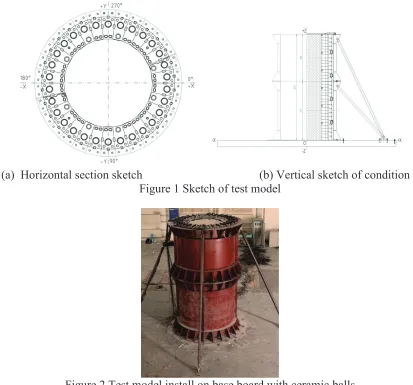
and with 36 layers graphite bricks and 20 layers carbon bricks in condition 3, shown in Figure 1. Upper layer bricks were connected with lower bricks via dowels. Graphite bricks and carbon bricks are connected by keys in the same way with tests conducted formerly, see Sun et al. (2012) and Lai et al.
(2014). The steel barrel, with bricks built in, were installed on the base board. Anti-distortion keys were
placed in the gap between carbon bricks and steel barrel to avoid rotation of the bricks assembly. The fasten belts were applied to prevent radial displacement of bricks. Ceramic ball scaled in size and density, filled the pebble bed formed by bricks, to simulate the fuel balls, shown in Figure 2.
(a) Horizontal section sketch
(b) Vertical sketch of condition 3
Figure 1 Sketch of test model
Figure 2 Test model install on base board with ceramic balls
SEISMIC EXCITATIONS
The model was installed on the shaking table provided by CABR. The seismic excitations for each condition are:
(1) Random motion tests. On purpose to explore the natural frequencies, shape of vibration and damping ratio, the magnitude of excitations is 0.1g in each direction (X, Y and Z), and 0.2g in each horizontal direction (X and Y). Loading time lasted over 2min.
23rd Conference on Structural Mechanics in Reactor Technology Manchester, United Kingdom - August 10-14, 2015 Division V
(3) Random motion tests II. To explore the dynamic characteristic after seismic loads. To show the frequency and shape of vibration difference between before and after seismic loads.
SENSORS DISTRIBUTION
Acceleration sensors were mounted in notched graphite bricks, in which acceleration data can be achieved in three directions (radial, tangential and vertical). Detective spots located on the 12th, 18th, 24th, 30th, 36th layer. Five detective spots were mounted on each layer every 72ein circular direction. Note that, 2 additional detective spots were mounted on 6th layer. So, there were 12 detective spots mounted in condition 1-2, when only 20 layers graphite bricks were installed. And there were up to 27 detective spots mounted in condition 3.
FREQUENCIES
The frequency response showed similar results under X and Y excitations, due to symmetrical model layout. The results are shown in Table 3. Frequency decreased significantly after seismic excitations under condition 1 and condition 3. Frequency decreased slightly and increased after seismic excitations under condition2.
Table 3: Natural frequencies of the model
Condition Random motion [g]
Frequency X [Hz]
Frequency Y [Hz]
1
0.10 20 18
0.20 15 12
0.20 5 6
2
0.10 15 13
0.20 13 12
0.20 14 13
3
0.10 15 14
0.20 12 11
0.20 9 10
DISSCUSION
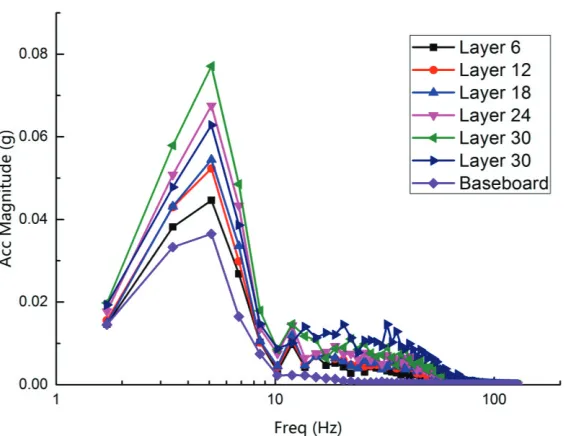
Figure 3: Acceleration frequency response on 36th layer
Figure 4: Vertical acceleration frequency response
23rd Conference on Structural Mechanics in Reactor Technology Manchester, United Kingdom - August 10-14, 2015 Division V
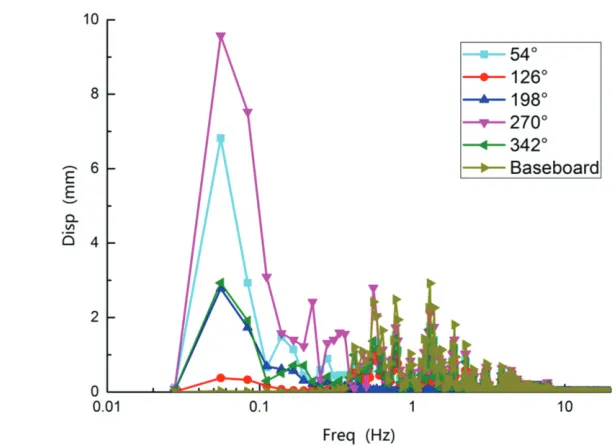
Figure 5: Displacement frequency response on 18th layer
CONCLUSIONS
The test achieved dynamic response of the model under various excitations. The natural frequencies decreased after the application of seismic loads. The stiffness the model decreased. Displacement and deformation of the model was analysed. Integrity and safety of graphite structure was confirmed.
ACKNOWLEDGEMENTS
This work has been supported by the National S&T Major Project (Grant No.ZX06901). The authors would like to thank this project for financial support and the permission to present this paper.
REFERENCES
Allen, C.F., (1989). "Seismic design of the Heysham 2 advanced gas cooled reactor nuclear power station," In IAEA Specialists' Meeting on "Seismic Behavior of Gas Cooled Reactor Component", Gif-Sur-Yvette, France: IAEA.
Dihoru, L., Crewe, A., Taylor, C. & Horgan, T., (2013). "Shaking Table Experimental Programme," pp. 91-98.: The Royal Society of Chemistry.
Ikushima, Honma & Ishizuka, (1982). "Seismic Research on Block-type HTGR Core," Nuclear Engineering And Design, (71), 195-215.
Lai, S., Sun, L., Shi, L. & Zhang, Z., (2014). "Seismic test on double-layer model of HTR-PM graphite structure," vol. 1 pp. Nuclear Engineering Division. Prague, Czech Republic: American Society of Mechanical Engineers (ASME).
Sun, L., Shi, L., Wang, H., Wang, H., Hu, Y. & Zhang, Z., (2012). "SEISMIC TEST AND ANALYSES ON DOUBLE-LAYER MODEL OF HTR-PM GRAPHITE STRUCTURE," In 20th International Conference on Nuclear Engineering and the ASME 2012 Power Conference, Anaheim, CA, US: ASME.
Theymann, W., Kemter, F. & Schmidt, G., (1989). "Seismic Behavior of the Core Structure in a Medium-Sized HTR," In SMiRT 10, Anheim,CA,USA.