SpotWeb: Characterizing Framework API
Usages Through a Code Search Engine
Suresh Thummalapenta1
and Tao Xie2
Department of Computer Science, North Carolina State University, Raleigh, USA.
1
Abstract. The essentials of modern software development (such as low cost and high efficiency) demand software developers to make intensive reuse of the existing open source frameworks or libraries (generally re-ferred as frameworks) available on the web. However, developers often face challenges in reusing these frameworks due to several factors such as the complexity and lack of proper documentation. In this paper, we pro-pose a code-search-engine-based approach that tries to detecthotspots
in a given framework; these hotspots are the APIs that are frequently reused. Hotspots can serve as starting points for developers in under-standing and reusing the given framework. Our approach also detects
deadspots, which are the APIs that are rarely used. Deadspots serve as caveats for developers as there can be difficulties in finding related code examples and are generally less exercised compared to hotspots. We de-veloped a tool, called SpotWeb, for frameworks or libraries written in the Java programming language and used our tool to detect hotspots and deadspots of eight open source frameworks including JUnit, Log4j, Grappa, JGraphT, OpenJGraph, JUNG, BCEL, and Javassit.
1
Introduction
Reuse of existing open source frameworks or libraries (referred as frameworks) has become a common practice in the current software development process due to several factors such as low cost and high efficiency. However, existing frameworks or libraries often offer complex procedures that may also involve call backs (such as GUI libraries), making these procedures complex for effec-tive reuse. This complexity also makes the documentation of the framework a vital resource. However, the documentation is often missing for many existing frameworks and even if such documentation exists, it is often outdated [9].
In general, frameworks expose certain areas (APIs) of flexibility that are intended for reuse by their users. Software developers who reuse APIs of these frameworks must be aware of these flexible areas for effective reuse of frameworks. These areas of flexibility are often referred ashotspots. As described by Pree [12] ⋆⋆ This work is supported in part by NSF grant CNS-0720641 and Army Research
and Flores et al. [2], hotspots depict a framework’s flexibility and proneness to reuse. The foundations of hotspots are built upon the Open-Closed principle by Martin [10]. The Open-Closed principle encompasses two main definitions: the “closed” and the “open” parts. The “open” parts represent areas that are flexible and variant, whereas the “closed” parts represent areas that are immutable in the given framework. The “closed” parts are commonly referred as “templates” and the “open” parts are referred as “hooks” as the users can redefine the behavior of these parts. The combination of templates and hooks, referred as hotspots, supports adherence to the Open-Closed principle of Martin.
Hotspots are useful to both users and developers of the framework in several ways. First, new users can browse and inspect hotspots to understand commonly reused APIs and find out the APIs that the users want to reuse. Second, users may have more confidence or tendencies in reusing hotspots because generally bugs in these hotspots may be fewer (or more easily exposed previously) than the ones in non-hotspots; we can view the code reusing hotspots to be a spe-cial type of test code that can help expose bugs in hotspots. Third, developers or maintainers of these frameworks can choose to invest their improvement ef-forts (e.g., performance or quality improvement) on these hotspots because the resulting returns on investment may be substantial.
In contrast to hotspots, we call a framework’s areas that are rarely used by users as deadspots. The concept of deadspots is introduced by our approach and these deadspots can serve as caveats to users of the given framework. As deadspots represent the rarely used APIs, there can be difficulties in identifying related code examples that can help users in reusing those APIs. Moreover, deadspots are generally less tested compared to hotspots with regards to the “testing” conducted by API client code as test code.
! " # $
" %
! " "
#
# $ % & ' (
& ) % ! $ * " "
&
+ & ' & '
' ' % ! $ (
% ! ), & , & -
( $ " ( & )
' . # % ' '
/ 0 1 2
! " " 3 4 5 6 / 6 2
0 5 5 5 /
7& 8 !
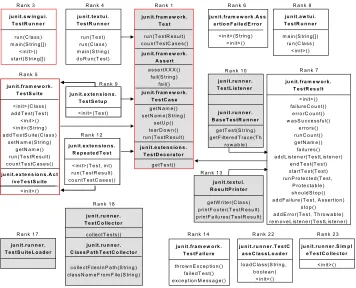
Fig. 1.Hotspots identified in the JUnit framework
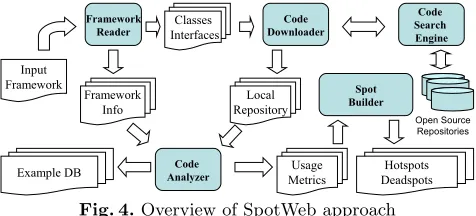
In particular, SpotWeb accepts a framework as input and extracts the API information of the input framework. SpotWeb interacts with a CSE to gather rel-evant code samples for all classes and interfaces of the input framework. SpotWeb analyzes these code samples statically and computes a heuristic called UsageMet-ric that quantitatively evaluates APIs of the input framework. The computed
UsageMetrics capture metrics related to classes, interfaces, and methods of the input framework. For example, the UsageMetrics for a class capture how often the class is instantiated or extended by the client applications. SpotWeb struc-turally propagates the computed information through five phases for detecting hotspots of the input framework. For each hotspot, SpotWeb also gathers rela-vant code examples that can assist the framework users in identifying how to reuse the detected hotspots.
We used SpotWeb to identify hotspots and deadspots of eight widely used open source frameworks or libraries including JUnit, Log4j, Grappa, JGraphT, OpenJGraph, JUNG, BCEL, and Javassit, which differ in size and application purpose. We show that SpotWeb can give a high recall while detecting hotspots and the detected hotspots of Log4j and JUnit are consistent with the starting points described in the documentation for these frameworks.
de-01: public class ShipReleaseDAOTestCase extends TestCase {
02: private ShipReleaseDAO dao = null; ...
03: public ShipReleaseDAOTestCase() { super(); ... }
04: protected void setUp() throws Exception { ...
05: dao = (ShipReleaseDAO)context.getBean("shipReleaseDAO"); ...}
06: public void tearDown() throws Exception { dao = null; }
07: public void testF() { ... }
08: public void testB() { ... }
09: ...}
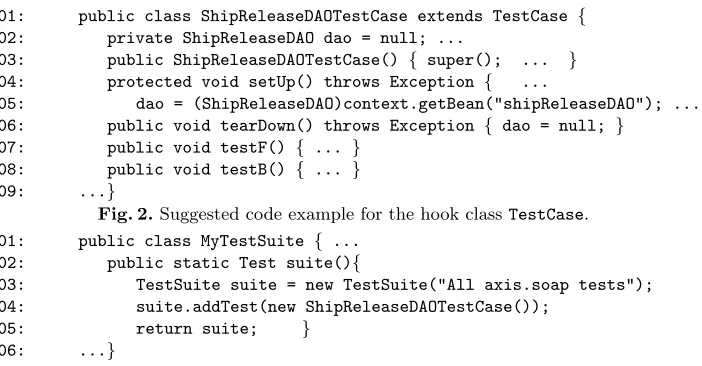
Fig. 2.Suggested code example for the hook classTestCase. 01: public class MyTestSuite { ...
02: public static Test suite(){
03: TestSuite suite = new TestSuite("All axis.soap tests"); 04: suite.addTest(new ShipReleaseDAOTestCase());
05: return suite; }
06: ...}
Fig. 3.Suggested code example for the template classTestSuite.
scribes our approach. Section 5 discusses evaluation results. Section 6 discusses threats to validity. Finally, Section 7 concludes.
2
Example
We next use an example to explain our approach and show how the detected hotspots and deadspots can be used by the framework users. We use JUnit [6], thede factostandard unit testing framework for the Java programming language, as an illustrative example for explaining our approach.
SpotWeb accepts an input framework, say JUnit, and extracts Application-Info from the framework. TheApplicationInfo includes all classes, all interfaces, public or protected methods of each class and interface, and inheritance hierar-chy among classes or interfaces of the framework. SpotWeb constructs different queries for each class or interface and interacts with a CSE such as Google Code Search [4] to gather relevant code samples from existing open source projects that use the APIs of the input framework. For example, SpotWeb constructs a query such as “lang:java junit.framework.TestSuite” for gathering related code samples of the TestSuiteclass. The gathered code samples are referred as aLocalRepository for the input framework. SpotWeb analyzes the gathered code samples statically and computesUsageMetricsfor classes, interfaces, and public or protected methods of all classes and interfaces. For example, the UsageMet-rics computed for theTestSuiteclass show that the class is instantiated for 165 times and is extended for 32 times. Similarly, theUsageMetricscomputed for the method addTest of the TestSuiteclass show that the method is invoked for 95 times. SpotWeb also gathers code examples for each class or method and stores these code examples in a repository, referred as ExampleDB. Then SpotWeb uses the algorithm shown in Figure 6 for detecting hotspots from the computed
UsageMetrics.
as hotspot methods. The detected hotspot methods are then clustered into their declaring classes, detected as hotspot classes. These hotspot classes are ranked based on the minimum rank of the hotspot methods declared by these classes. SpotWeb classifies the hotspot classes into two categories (templates and hooks) based on heuristics described in the algorithm. The hotspot classes of each category are further clustered into hierarchies based on their inheritance relationships. For example, SpotWeb detected classes Assert and TestCase as hook hotspots in the JUnit framework. As TestCase class extendsAssert class, SpotWeb clusters both the classes into the same hierarchy. SpotWeb assigns a rank to each hierarchy based on the minimum rank of the hotspot classes con-tained in the hierarchy. For example, consider that theAssertclass has Rank 3 and the TestCase class has Rank 6, then the clustered hierarchy of the Assert andTestCaseclasses is assigned with Rank 3. The rank attribute uniquely iden-tifies a hierarchy among all other hierarchies. Hierarchies with lower ranks have more preference or importance to the hierarchies with higher ranks.
Figure 1 shows the hotspot hierarchies detected in the JUnit framework. The hierarchies that are referred in the succeeding description are highlighted with a red border. The figure also shows ranks assigned to each hierarchy. As the rank attribute uniquely identifies a hierarchy, we use the rank as an identity for describing a hierarchy. Each hierarchy includes one or more hotspot classes and is shown as pairs of class and its methods. For example, Hierarchy 1 (hierarchy with Rank 1) has classesTest,Assert,TestCase, andTestDecorator. Hierarchy 1 also shows that the classTestincludes hotspot methodsrunandcountTestCases. We show template hierarchies in white and hook hierarchies in gray. For example, Hierarchy 1 is a hook hierarchy and Hierarchy 3 is a template hierarchy.
Methods inside each class of each hierarchy are sorted based on their com-puted UsageMetrics. Sorting of methods of a class can assist the framework users in quickly identifying the methods that are often used inside a given hotspot class. For example, consider the TestSuite class shown in Hierarchy 5. The TestSuite class has three constructors <init>(Class), <init>(), and <init>(String). However, the constructor<init>(Class)is often used compared to the other two constructors. In the class Assert of Hierarchy 1, the method nameassertXXXindicates different assertion methods such asassertEqualsand assertTrueof the classAssert.
The figure also displays dependencies among hotspot hierarchies (shown as arrows between hierarchies). SpotWeb tries to capture the usage relationships among hotspot classes through dependencies. For example, if a template class, say X, has a constructor that requires an instance of another template class, say Y, then SpotWeb captures dependency of the form “X → Y”, which
hook hotspot before using the template hotspot. For example, Hierarchy 5 has a TEMPLATE HOOK dependency with Hierarchy 1. This dependency indicates that to reuse methods such asaddTestof the classTestSuitein Hierarchy 5, the user has to define a new behavior for the classes in Hierarchy 1.
We next describe how the hotspots detected by SpotWeb can be used by the framework users to reuse the APIs of the JUnit framework. After reviewing the hotspots shown in Figure 1, consider that a framework user wants to start with the method addTest of the template class TestSuite in Hierarchy 5. Figure 1 shows that Hierarchy 5 of theTestSuiteclass has a TEMPLATE HOOK dependency with the Hierarchy 1. This dependency indicates that the user may need to de-fine a new behavior for the associated hook hierarchy. SpotWeb recommends the code example shown in Figure 2 for the hook class TestCase, which is a part of Hierarchy 1. The code example exhibits several aspects that needs to be han-dled by the user while extending theTestCase class. For example, in the SetUp method the user can write code for setting up the environment such as instanti-ating necessary variables, and in thetearDown method the user can destroy the created variables. Also, the code example shows that names of the test methods in the extended class of theTestCaseshould start with the prefixtest. SpotWeb also recommends code example foraddTest method and the recommended code example is shown in Figure 3. The code example shows that the user has to create an instance of the TestSuite class and then add test cases through the addTest method.
An API is identified as a deadspot if that API is neither used directly nor used indirectly by the gathered code samples. The complete algorithm used for detecting deadspots is shown in Figure 7. SpotWeb identified 20 classes such as Swapper, TestRunListener, andExceptionTestCase as deadspots in the JUnit framework. However, deadspots are only suggestions for users unfamiliar to that framework or library and SpotWeb does not intend to recommend users not to reuse those deadspot classes. Sometimes, deadspots can also be helpful to the framework developers in distributing their maintenance efforts, because the framework developers can give a low preference to the deadspot classes.
3
Related Work
Detecting hotspots in a given framework is an interesting area of research for many years and is addressed by several previous approaches. However, SpotWeb is the first approach that leverages a code search engine for gathering the knowl-edge of how the input framework APIs are reused by other client applications. As SpotWeb uses a CSE, SpotWeb can mine a much larger scope of code bases compared to other approaches.
Fig. 4.Overview of SpotWeb approach
from code samples gathered from a CSE. Therefore, the results of SpotWeb can be more precise compared to the results of Hotspotter.
Baxter et al. [1] proposed an approach to discover the structure of Java pro-grams and the way that the classes relate to each other through inheritance and composition. Their study is useful for the framework developers who can evalu-ate the structural features of their own programming practice and optimize their performance. Instead, SpotWeb is useful for the framework users in effectively reusing the APIs of the framework.
Mendonca et al. [11] proposed an approach to assist framework instantiation and to understand the intricate details surrounding the framework design. How-ever, their approach requires users to have knowledge regarding a specific process language, called Reuse Definition Language, proposed by their approach. Other several previous approaches [3, 5] also claim to facilitate framework instantia-tion. However, these approaches need an additional effort from the framework developers. Unlike these approaches, SpotWeb does not need any additional ef-fort from the framework developers. Our approach tries to gather the required additional information from code samples gathered through a CSE.
Our previous approaches MAPO [14] and PARSEWeb [13] also exploit CSEs for gathering related code examples. However, these previous approaches are developed for assisting the users in effectively reusing a given API. Instead, SpotWeb assists the framework users by detecting hotspots that can serve as starting points for reusing the framework.
4
Approach
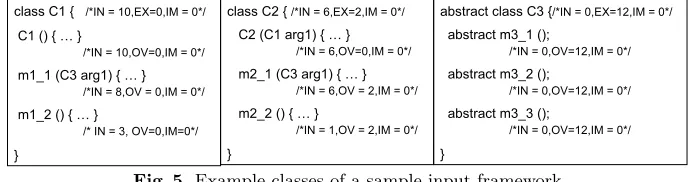
Fig. 5.Example classes of a sample input framework
4.1 Framework Reader
The framework reader component accepts the input framework and gathers en-tire API information, referred as FrameworkInfo. The FrameworkInfo includes the set of package names, all classes, all interfaces, and public or protected methods of all classes and interfaces. The framework reader also gathers the inter-method calls of the input framework; these inter-method calls give the set of other public and protected methods invoked by each method of the class and are used while identifying deadspots. The framework reader also extracts inheritance hierarchy among classes or interfaces of the input framework.
4.2 Code Search Engine
Code Search Engines (CSE)1
are primarily used by programmers to search for relevant code samples. As CSE can search in billions of lines of open source code available on the web, CSE can serve as powerful resources of open source code. Therefore, we used a CSE in our approach to gather relevant code samples of the given framework. In our approach, we used Google Code Search (GCS) [4] for collecting relevant code samples, partly because GCS provides convenient open APIs for third-party tools to interact with and it has been consistently improved and maintained. However, our approach is independent of the underlying CSE and can be extended easily to any other CSE.
4.3 Code Downloader
The code downloader accepts a set of classes and interfaces as input from the framework reader component. The code downloader constructs different queries for each element in the set and interacts with the CSE to gather relevant code samples. For example, the code downloader constructs the query “lang:java junit.framework.TestSuite” to collect code samples related to the TestSuite class of the JUnit framework. The gathered code samples are stored in a Local-Repository and serve as input to the code analyzer component. Along with code samples, the code downloader also stores the project information associated with each code sample.
4.4 Code Analyzer
The code analyzer accepts theFrameworkInfofrom the framework reader and the
LocalRepository from the code downloader as inputs, and analyzes the gathered code samples stored in theLocalRepository statically to computeUsageMetrics
for all classes and methods of the input framework. 1
TheUsageMetrics capture several ways of how often each class or interface or a method of the input framework is used by the gathered code samples. For example, a class can be instantiated to invoke its methods or the class can be extended to define a new behavior. Similarly, a method of a class can be either invoked or overridden. Furthermore, some methods such as constructors or factory methods may be invoked only once in a client application and other methods may be invoked several times. For example, in the JUnit framework, the TestSuiteobject may be created once but theaddTest method may be invoked several times for adding test cases to the test suite. Therefore, computing metrics without considering the associated project information can result in a higher biased preference to the addTest method instead of the actual starting point, which is the constructor call of theTestSuiteclass. Therefore, the code analyzer computes the usage for a class or a method only once for a client application. For example, consider that the addTest method is used 20 times by a client application. But the code analyzer considers that the addTest method is used only once by the client application.
TheUsageMetrics for a class include the number of created instances (more precisely, the number of constructor call sites) and the number of times that the class is extended. For an interface, the UsageMetrics include the number of times that the interface is implemented. We use notations I Nj, EXj, and I Mj for the number of instances, the number of extensions, and the number of implementations, respectively. The consolidated usage metric U Mj for a class or an interface is the sum of all the three preceding metrics. The code analyzer computes three types ofUsageMetrics for methods: Invocations, Overrides, and Implements. TheInvocations metric gives the number of times that the method is invoked by the code samples. TheOverridesmetric gives the number of times that the method is overridden by the code samples to define a new behavior. TheImplementsmetric, specific for interfaces, gives the number of times that the method is implemented. For constructors, the code analyzer computes only the
Invocations metric. We use notations I Ni, OVi, andI Mi for invocations, over-rides, and implementations, respectively. The overall usage metric for a method is the sum of all the three preceding metrics.
The code analyzer also gathers code examples for each class or method and stores these code examples in a repository, referred asExampleDB. TheExampleDB is used for suggesting related code examples for a class or a method requested by the user. The related code examples can further assist users in making an effective reuse of APIs of the input framework.
4.5 Spot Builder
The spot builder component (SBC) accepts the computed UsageMetrics and detects hotspots and deadspots by structurally propagating the computed infor-mation through five phases. We next describe how SBC identifies hotspots and deadspots.
Input: UsageMetrics of classes and methods, HT percentage Output: Hotspot hierarchies and their dependencies
SortedMET= Sort methods based on their usage metric values; for (M ETiinSortedM ET){
if(U Mi6= 0){
if(Position ofM ETi ≤(H T * Size ofSortedM ET)){
SetM ETitype asH OT SP OT;}
else{
SetM ETitype asW EAKSP OT;}
}
CTj = ClusterH OT SP OT M ETi into related classes; Rank ofCTj= Minimum rank of allM ETi of theCTj;
//ClassifyCTjinto templates and hooks Switch(CTj){
Case (Interface): SetCTjtype toH OOK; Case (Abstract Class): SetCTjtype toH OOK;
Other :{
if(EXj ofCTj > I MjofCTj){
SetCTjtype toH OOK;}
else{SetCTj type toT EM P LAT E;}}
ClusterCTjof the same category into hierarchies based on inheritance;
Associate hook hierarchies to template hierarchies; Define dependencies between template hierarchies;
Fig. 6.Algorithm for detecting hotspots through the computed UsageMetrics
through an illustrative example shown in Figure 5. The figure shows three classes C1, C2, and C3 and their declarations. The class C3 is an abstract class. The
figure also shows the computed usage metrics for each class and its methods. For example, the class C1 is instantiated for 10 times (shown as IN=10) and
the abstract classC3 is extended for 12 times (shown asEX=12). Similarly, the
method m2 1 is invoked for 6 times and is overridden for 2 times.
Initially, SBC sorts all methods such asm1 1 andm2 1 based on their
com-puted usage metric values. SBC uses a threshold percentage, referred as H T, and selects the top H T methods, whose usage metric is non-zero, as hotspots. For example, for aH T of 7%, SBC identifies the methods asm3 1,m3 2, m3 3,
c1, and so on as hotspot methods. SBC traverses the hotspot methods and
clus-ters them into their declaring classes. The clustered classes are sorted based on the minimum rank among their methods. In the current example, the clustering process results in classes C3 (methods: m3 1, m3 2, and m3 3), C1 (methods:
c1 and m1 1), and C2 (methods: c2 and m2 1). After clustering, SBC uses the
computed metrics of classes to classify these classes further into templates and hooks. The criteria used for classifying hotspot classes into templates and hooks are shown in the algorithm. For the current example, SBC identifies class C3
as a HOOKclass and classes C1 and C2 as TEMPLATE classes. SBC further tries to
cluster the classes of the same category based on their inheritance relationship. For example, if C1 has a parent classP1 and both the classes are classified as
Input: A methodMiof a classCj
Output: Is the method a dead spot or not? if (U Mi6= 0){Return false;}
if (Cj is an interface){
//verify all implemented methods ofMi
if (All implemented methods ofMi are deadspots){Return true;}
else{Return false;}}
if (Miis abstract){
//Verify all overridden methods ofMi
if (All overridden methods ofMiare deadspots){Return true;}
else{Return false;}}
if (All callers ofMiare deadspots){Return true;}else{Return false;}
Fig. 7.Algorithm for detecting whether a method is a deadspot.
SBC identifies dependencies among the detected hotspot hierarchies based on the arguments passed to methods of the classes. SBC identifies two kinds of dependencies:TEMPLATE HOOKandTEMPLATE TEMPLATE. ATEMPLATE HOOK depen-dency defines a relationship between a template hierarchy and a hook hierarchy. SBC identifies that a template hierarchy is dependent on a hook hierarchy if methods in the template hierarchy accept the classes of the hook hierarchy as arguments. Such a dependency describes that the users have to first define a new behavior for those related hook classes, say extend the class, and use the in-stances of those classes as arguments. In the given code example, SBC identifies that classC1 has aTEMPLATE HOOKdependency with the classC3 as the method
m1 1requires an instance ofC3as an argument. Similarly, the spot builder
iden-tifiesTEMPLATE TEMPLATEhierarchies, when a template hierarchy is dependent on another template hierarchy. For example, class C2 has aTEMPLATE TEMPLATE
de-pendency with the classC1. In SpotWeb implementation, we used theH T
per-centage as 25%, which is based on our evaluations with frameworks JUnit and Log4j.
Identification of deadspots:SBC identifies APIs of the input framework that are rarely or never used by the gathered code samples as deadspots. How-ever, detecting deadspots based on only the UsageMetrics can give many false positives. For example, the UsageMetrics for an abstract method defined in a class can be zero, as the gathered code samples reference the concrete implemen-tation provided by some of the classes’s subclasses. In this case, this abstract method is not a deadspot as the method is indirectly referenced through the subclasses. Therefore, to reduce the number of false positives while identifying deadspots, the code analyzer uses a recursive algorithm shown in Figure 7. The last step shown in the algorithm (related to callers) is performed to identify indirect usages of a method of the input framework. SBC clusters the detected deadspot methods into their declaring classes.
5
Evaluation
Subject # Classes # Methods # Samples # KLOC URL
Log4j 207 1543 9768 2064 logging.apache.org/log4j
JUnit 56 531 8891 1558 www.junit.org
JGraphT 177 931 289 30 jgrapht.sourceforge.net
Grappa 44 561 2071 1978 www.graphviz.org
OpenJGraph 210 1365 1076 113 openjgraph.sourceforge.net
JUNG 461 3241 2390 353 jung.sourceforge.net
BCEL 357 3048 5225 1219 jakarta.apache.org/bcel Javassit 249 2149 3226 631 www.csg.is.titech.ac.jp
/chiba/javassist Table 1.Subjects used for evaluating SpotWeb.
Subject # Classes Hotspots Deadspots
# Classes % # Templ # Hooks # Depend #Classes %
Log4j 207 74 35.74 49 13 44 101 48.79
JUnit 56 23 41.07 11 5 11 20 35.71
JGraphT 177 41 23.16 20 9 0 125 70.62
Grappa 44 16 36.36 9 2 2 19 43.18
OpenJGraph 210 43 20.47 25 10 21 145 69.04
JUNG 461 228 49.45 144 29 225 144 31.23
BCEL 357 153 42.85 95 12 74 81 22.68
Javassit 249 77 30.92 60 8 27 126 50.60
Table 2.Evaluation results showing the detected hotspots and deadspots.
of hotspot and deadspot classes among the total number of classes? This re-search question helps to characterize the usages of a framework. Second, what is the effectiveness of our hotspot detection in terms of precision and recall? The subjects used in our evaluation and their characteristics such as the number of classes and methods are shown in Columns “Classes” and “Methods” of Table 1. Column “Samples” of Table 1 shows the number of code samples gathered and Column “KLOC” shows the total number of kilo lines of Java code analyzed by SpotWeb for identifying hotspots and deadspots. One of the major advantages of SpotWeb compared to other approaches is the large number of analyzed code samples that can help detect hotspots and deadspots effectively.
5.1 Statistics of Hotspots and Deadspots
We used SpotWeb to detect hotspots and deadspots of all subjects and the results of our evaluation are shown in Table 2. Column “Subject” shows the name of the input framework. The sub-columns “Classes” and “%” of Column “Hotspots” show the number of hotspot classes and their percentages among the total number of classes. Columns “Templ”, “Hooks”, and “Dependen” give the number of template hierarchies, hook hierarchies, and their dependencies, respectively. The sub-columns “Classes” and “%” of Column “Deadspots” show the number of deadspot classes and their percentages.
Fig-Hotspots and Deadspots
0 20 40 60 80
Log4j JUnit JGraphT Grappa OpenJGraph JUNG BCEL Javassit
Subjects
P
e
rc
e
n
ta
g
e Hotspots
Deadspots
Neutral
Fig. 8.Distribution of hotspot and deadspot percentages in all subject frameworks.
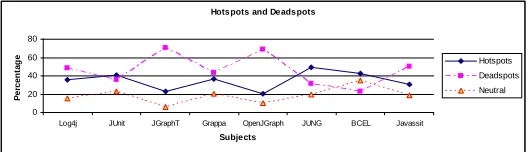
ure 8 presents the distribution of hotspot and deadspot percentages of all sub-jects. The distribution chart shows that OpenJGraph and JGraphT frameworks have the lowest percentage of hotspots and the highest percentage of deadspots. In the figure, we also show a new classification called “Neutral”, which represents classes that do not belong to either the hotspot or deadspot category. The graph shows that the percentage of classes in the Neutral category is relatively low for all subjects except BCEL. This characteristic indicates that a class is either reused heavily or is never reused, and only in a few cases a class is occasionally reused.
5.2 Effectiveness of Hotspot Detection
We next analyze the effectiveness of hotspot detection using the evaluation re-sults with Log4j and JUnit frameworks. The primary reason for selecting Log4j2
and JUnit3
for analysis is the availability of their documentation that can help validate the detected hotspots.
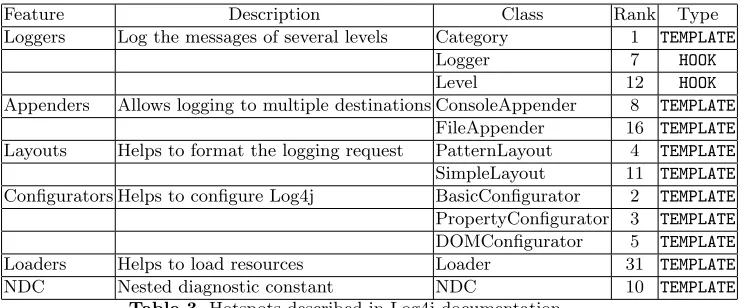
Log4j provides several features such as Appenders and Layouts, and for each such feature, Log4j provides several classes such as ConsoleAppender and JDBCAppenderfor the appender feature. Among those several classes provided for each feature, a few classes are much more often used than other classes. The fea-tures described in the documentation of Log4j are shown in Columns “Feature” and “Description” of Table 3. Column “Class” shows the commonly used classes for each feature. Each of these classes serves as starting points for using those features.
SpotWeb identified 74 classes as hotspots in the Log4j library, and these classes captured all 12 starting points described in the documentation resulting in a recall of 100%. In constrast, the precision is 16.21%. But the real hotspots could be beyond the starting points described in the documentation and our real precision could be much higher than the one calculated based on the documen-tation. Ideed, although the precision calculated based on the documentation can be increased by decreasing the H T threshold percentage used in our approach, we prefer to have a high recall. The primary reason is that SpotWeb sorts the detected hotspot classes based on their importance and ranks each class. Col-umn “Rank” of Table 3 presents the rank among the total number of hotspots detected by SpotWeb. Column “Type” shows whether the detected hotspot is
2
http://logging.apache.org/log4j/docs/manual.html 3
Feature Description Class Rank Type Loggers Log the messages of several levels Category 1 TEMPLATE
Logger 7 HOOK
Level 12 HOOK
Appenders Allows logging to multiple destinations ConsoleAppender 8 TEMPLATE FileAppender 16 TEMPLATE Layouts Helps to format the logging request PatternLayout 4 TEMPLATE SimpleLayout 11 TEMPLATE Configurators Helps to configure Log4j BasicConfigurator 2 TEMPLATE PropertyConfigurator 3 TEMPLATE DOMConfigurator 5 TEMPLATE
Loaders Helps to load resources Loader 31 TEMPLATE
NDC Nested diagnostic constant NDC 10 TEMPLATE
Table 3.Hotspots described in Log4j documentation.
a TEMPLATE or a HOOK. Although SpotWeb has low precision, except the Loader class, all other 11 hotspot classes are ranked among the top 16 classes of the total 74 classes. Therefore, a user who plan to reuse APIs of the Log4j library can refer to the first 16 classes suggested by SpotWeb to identify where to start reusing the framework.
SpotWeb also captured the dependency information that is described in the documentation. For example, the appender classes of the Log4j library require layout classes. SpotWeb correctly identified aTEMPLATE TEMPLATEdependency be-tween appenders and layouts. The dependency describes that the user needs an instance of layouts such asPatternLayoutorSimpleLayoutto create an instance of appenders such asConsoleAppenderor FileAppender.
We used the cookbook provided with the JUnit framework to verify the de-tected hotspots. Hotspots dede-tected in the JUnit framework are shown in Figure 1. SpotWeb identified all hotspot classes described in the cookbook resulting in a recall of 100%. The cookbook describes only six classes resulting in a precision of 26.08%. However, due to the sorting mechanism of SpotWeb, five of the hotspot classes described in the documentation are ranked among the top seven hotspot classes detected by SpotWeb. In addition, similar to the case in the documen-tation of the Log4j library, the real hotspots of JUnit could be beyond the ones described in the JUnit cookbook and our real precision could be higher than the one calculated based on the cookbook.
6
Threats to Validity
deadspots. To reduce these threats, we inspected some code samples gathered from the CSE to double check the metrics computed by SpotWeb for these code samples.
7
Conclusion
In this paper, we proposed an approach called SpotWeb that tries to assist soft-ware developers in reusing APIs of an existing framework by detecting hotspots and deadspots of the framework. Hotspots serve as starting points for reusing the framework, whereas deadspots serve as caveats. SpotWeb tries to address major problems faced by earlier related approaches by not requiring any addi-tional efforts from the developers and by collecting relevant code samples through a code search engine. We evaluated our approach through eight popular open source frameworks and showed that SpotWeb can give a high recall while de-tecting hotspots and the detected hotspots of Log4j and JUnit frameworks are consistent with the starting points described in the documentation for these frameworks.
References
1. G. Baxter, M. Frean, J. Noble, M. Rickerby, H. Smith, M. Visser, H. Melton, and E. Tempero. Understanding the shape of Java software. InProc. OOPSLA, pages 397–412, 2006.
2. N. Flores, D. Soares, H. Ferreira, and M. Rodrigues. HotSpotter: a JavaML-based approach to discover Framework’s Hotspots. InProc. XATA, 2005.
3. G. Froehlich, J. Hoover, L. Liu, and P. Sorenson. Hooking into object-oriented application frameworks. InProc. ICSE, pages 491–501, 1997.
4. Google Code Search Engine, 2006. http://www.google.com/codesearch. 5. R. Johnson. Documenting frameworks using patterns. InProc. OOPSLA, pages
63–76, 1992.
6. Junit, 2001. http://www.junit.org.
7. The Koders source code search engine, 2005. http://www.koders.com. 8. The Krugle code search for developers, 2006. http://www.krugle.com.
9. T. Lethbridge, J. Singer, and A. Forward. How software engineers use documen-tation: The state of the practice. InIEEE Software, pages 35–39, 2003.
10. R. Martin. The Open Closed Principle. j-C-PLUS-PLUS-REPORT, 8(1):37–43, 1996.
11. M. Mendonca, P. Alencar, T. Oliveira, and D. Cowan. Assisting aspect-oriented framework instantiation: towards modeling, transformation and tool support. In
Proc. OOPSLA, pages 94–95, 2005.
12. W. Pree. Meta Patterns - A Means For Capturing the Essentials of Reusable Object-Oriented Design. InProc. ECOOP, pages 150–162, 1994.
13. S. Thummalapenta and T. Xie. PARSEWeb: A Programmer Assistant for Reusing Open Source Code on the Web. InProc. ASE, 2007.
14. T. Xie and J. Pei. MAPO: Mining API usages from open source repositories. In