DEVELOPMENT OF A PROTOTYPE FOR JOHORE TOURISM INFORMATION SYSTEM IN WEB ENVIRONMENT
LEE YEN SOO
This project report is submitted as a partial fulfillment for the conferment of a Master of Science (Information Technology - Management)
Faculty of Computer Science and Information Systems Universiti Teknologi Malaysia
DEDICATION
Dedicated to my beloved,
iv
ACKNOWLEDGEMENTS
The author wishes to extend her grateful appreciation to all those who have contributed directly and indirectly to the preparation of this project. Specially the author wishes to extend her thanks to Associate Professor Dr. Mohd. Noor bin Md. Sap, Project Supervisor, for his advice, guidance and encouragement throughout the preparation of this project.
Special thanks to the Deputy Dean (Postgraduate Studies) Associate Professor Dr. Rose Alinda Alias for her untiring support, and to classmates for making this study a wonderful experience.
ABSTRACT
vi
ABSTRAK
Industri pelancongan merupakan suatu industri yang amat berorientasikan maklumat di mana daya saingnya semakin dipengaruhi oleh kemampuan atau keupayaan untuk menggunakan kaedah yang inovatif bagi menangani sifat industri pelancongan yang dinamik dan memberi perkhidmatan yang tambah-nilai kepada pelancong. Oleh yang demikian, projek ini bertujuan untuk mengkaji dan
mengemukakan cadangan bagi meningkatkan lagi kecekapan pengurusan sistem maklumat pelancongan Johor yang sedia ada dan mencadangkan perkhidmatan yang tambah-nilai untuk menarik lebih ramai pelancongan dating ke Johor melalui
TABLE OF CONTENTS
CHAPTER TITLE PAGE
TITLE i
DECLARATION STATEMENT ii
DEDICATION iii
ACKNOWLEDGEMENTS iv
ABSTRACT v
ABSTRAK vi
TABLE OF CONTENTS vii
LIST OF TABLES xi
LIST OF FIGURES xiii
LIST OF ACRONYMS xvi
LIST OF APPENDICES xvii
CHAPTER TITLE PAGE
I INTRODUCTION
1.1 Project Background Introduction 1
1.2 Background of The Problem 2
1.3 Statement of The Problem 3
1.4 Objectives of Study 4
1.5 Scope of Study 5
1.6 Theoretical Framework 6
1.7 Contribution of Study 8
1.8 Limitation of Study 8
viii
1.10 Report Organization 9
II LITERATURE REVIEW
2.1 Introduction 11
2.2 Tourism System 11
2.2.1 Tourism Related Definition 12 2.2.2 The Tourism System Concept 14 2.2.3 Trends In Tourism Industry 15
2.3 Information System Concept 17
2.3.1 Management Information System 17 2.3.2 Decision Support System 19
2.3.3 Internet 22
2.3.4 World Wide Web 23 2.3.5 Web-based Application 23 2.4 Case Study on Tourism Information System 25
2.5 Chapter Summary 26
III RESEARCH METHODOLOGY
3.1 Introduction 27
3.2 Operational Framework 27
3.2.1 Research Proposal 28 3.2.2 Current System Analysis 29 3.2.3 Literature Review 29
3.2.4 System Development Methodology Selection
29
3.2.5 System Development 31 3.2.6 Report Writing 31 3.3 JTIS System Development Process In Detail 32 3.3.1 JTIS Requirement Analysis 33 3.3.2 JTIS Detailed Design 34 3.3.3 JTIS Implementation 35
3.4 Subject And Data Sources 36
3.6 Chapter Summary 39
IV CURRENT SYSTEM ANALYSIS
4.1 Introduction 40
4.2 Background of Current System Scenario 40 4.3 Problem with Existing Management System 43 4.4 Proposed Problem-Solution 47
4.5 Chapter Summary 48
V SYSTEM DESIGN FOR JTIS
5.1 Introduction 49
5.2 JTIS Architecture 49
5.2.1 Tourist Module 50 5.2.2 Tourism Service Provider Module 56 5.2.3 Administration Module 62
5.3 JTIS Component 67
5.3.1 Navigation and Search 67
5.3.2 Trip Planner 67
5.3.3 User Interface 75 5.3.4 ASP Script Engine 78 5.3.5 Multimedia Support 78 5.3.6 JTIS Database 79
5.3.7 User 80
5.4 JTIS Requirement Analysis And Design 80 5.4.1 JTIS Requirement Analysis Phase 80 5.4.2 JTIS Detailed Design 82
5.5 Chapter Summary 93
VI JTIS IMPLEMENTATION
6.1 Introduction 94
6.2 JTIS Modules Development 94
x
6.2.3 Report Submodule 98 6.2.4 Content Editor Submodule 99 6.2.5 Edit Information Services Submodule 100 6.2.6 Plan Trip Submodule 104
6.3 Chapter Summary 114
VII JTIS TESTING
7.1 Introduction 116
7.2 JTIS Program Debugging 116
7.3 Input Testing 119
7.4 Output Testing 121
7.5 JTIS Testing Over Network 122
7.6 JTIS Usability Testing 123
7.7 Chapter Summary 133
VIII DISCUSSION
8.1 Introduction 134
8.2 Overall JTIS Development Discussion 134
8.3 JTIS Advantages 135
8.4 JTIS Limitation 137
8.5 Recommendations 138
8.6 Chapter Summary 142
IX CONCLUSION 143
REFERENCES 145
LIST OF TABLES
TABLE TITLE PAGE
3.1 Types of tourism service provider 37
3.2 Minimum hardware requirement for server and client 37 5.1 Hyperlink for each place of interest in place summary interface 52 5.2 Report display format 65
5.3 Video specifications 79
5.4 Image specifications 79
5.5 Analysis object of JTIS 82
5.6 Implementation environments of JTIS 83
5.7 Object-relation mapping 86
5.8 Navigation class 88
6.1 Code extraction of UserValidator 95
6.2 Code extraction of application form 97
6.3 Code extraction of generating a place report 98
6.4 Code extraction of ContentEditor 100
6.5 Code extraction of saving place information 101
6.6 Code extraction for saving lodging information 103
6.7 Code extraction of cart class 105
6.8 Code extraction of TripGenerator class for processing input 107
6.9 Code extraction of TripGenerator GeneratePlan method 107
6.10 Code extraction of TripGenerator CheckDirect method 110
6.11 Code extraction of TripGenerator CheckInter method 111
6.12 Code extraction of TripGenerator CheckCross method 112
6.13 Code of TripPlannerResult_IncludeFunctionCrossArea.asp 114
7.1 Example of program debugging using response.write method 117
xii
7.3 Rating scale for usability questionnaire 123
7.4 JTIS usability questionnaire result for tourist role 125
7.5 Average mean value of usability criteria for tourist role 126
7.6 JTIS usability questionnaire result for tourism service provider role 128
7.7 Average mean value of usability criteria for tourism service provider role 129
7.8 JTIS usability questionnaire result for tourism department officer role 131
LIST OF FIGURES
FIGURE TITLE PAGE
1.1 Current promotion strategies 3
1.2 Theoretical framework 7
2.1 Functioning tourism system 15
2.2 Functional components of TIScover 25
3.1 Operational framework 28
3.2 Use-case driven object-oriented system development approach 30
3.3 Road map of JTIS development methodology 32
4.1 Current business process modeling 43
4.2 Current system use-case diagram 44
5.1 JTIS architecture 50
5.2 Hierarchy of tourist module 51
5.3 Navigation flow of Place submodule interfaces 51
5.4 User interface of place summary 52
5.5 User interface of lodging in Johor Bahru 53
5.6 Plan trip user interface 54
5.7 Example of user interface for trip planner result 54
5.8 User interface of search submodule 55
5.9 Search result interface 55
5.10 User interface of “Colorful Culture” tourism information 56
5.11 Hierarchy of tourism service provider module 57
5.12 Registration process 57
5.13 User interface of membership application form 58
5.14 Tourism service provider login submodule 59
5.15 Hierarchy of edit service information submodule 60
xiv
5.17 User interface of presentation page of hotel in Johore 61
5.18 User interface for editing place information 61
5.19 User interface of upload facility 62
5.20 Hierarchy of administration module 62
5.21 Administrator login interface 63
5.22 User interface of viewing list of application 64
5.23 User interface of choosing report type 64
5.24 User interface of content editor 66
5.25 User interface for editing keyword 66
5.26 Trip planner 68
5.27 Process flow of town database setup 69
5.28 Example of connection type between town A and town B, (a) direct connection, (b) indirect connection with single
intermediate town 69
5.29 Area determination 70
5.30 Processing algorithm of route generator 71
5.31 Overall hierarchy of main user interface of JTIS 76
5.32 User interface of JTIS homepage 76
5.33 User interface of administration control panel 77
5.34 User interface of lodging service provider main menu 77
5.35 Execution of ASP script engine 78
5.36 Several use-cases of JTIS 81
5.37 Part of design object diagram of JTIS 84
5.38 Sequence diagram for login use-case 85
5.39 Example of class design for (a) UserValidator and
(b) Administrator 86
5.40 Navigational structure model of tourist 89
5.41 Example of navigation using keywordQuery 89
5.42 Navigational structure model for place member 90
5.43 Navigation structure model for lodging member 91
5.44 Navigation structure model for tourism department officer 91
5.45 Presentational model of PlaceByCategory context 92
7.3 Example of error message for input testing 120
7.4 Example of server-side input testing for invalid password 121
7.5 Example of output testing 122
7.6 Mean for tourist role usability questionnaires result 124
7.7 JTIS evaluation based on tourist role 126
7.8 Average mean score of usability criteria for tourist role 127
7.9 Mean for tourism service provider role usability questionnaires result 127
7.10 JTIS evaluation based on tourism service provider role 129
7.11 Average mean score of usability criteria for tourism service provider role 130
7.12 Mean for tourism department officer role usability questionnaires result 132
7.13 JTIS evaluation based on tourism department officer role 132
7.14 Average mean score of usability criteria for tourism department officer role 133
8.1 More types of tourism service provider 139
8.2 Possible improvement on current JTIS prototype 140
xvi
LIST OT ACRONYMS
ASP - Active Server Pages
CGI - Common Gateway Interface CRS - Computer Reservation System GDS - Global Distribution System HTML - Hypertext Markup Language MIS - Management Information System DBMS - Database Management System
DMSP - Destination Management Service Provider DSS - Decision Support System
IIS - Internet Information Services IT - Information Technology JSP - Java Server Pages
JTIS - Johore Tourism Information System LSP - Lodging Service Provider
OOSE - Object-oriented Software Engineering TPS - Transaction Processing System TSP - Tourism Service Provider TV - Television
WWW - World Wide Web
LIST OF APPENDICES
APPENDIX TITLE PAGE
A Data Specification 148
B Use Case Model 152
C Analysis Object Model 159
D Design Object Model 164
E Sequence Diagram 168
F Database Design 183
G Presentational Model 188
H Usability Test Questionnaires 190
I User Manual 196
J Supporting Documents 208
CHAPTER I
INTRODUCTION
1.1 Project Background Introduction
Tourism is one of the most important income sources for the nation.
Malaysia, with its natural wonders as well as man-made attractions, has the edge to become a premier tourist destination in Asia despite fierce competition from neighboring countries. Latest reports indicated that tourist arrivals to Malaysia in 1999 has increased 42.9% to 7, 931, 149 persons compared to 5, 550, 748 in 1998 (Tourism Malaysia, 1999). This higher arrival of foreign tourists can be attributed to the aggressive campaigns undertaken by the government that had been in place in the last few years. The allocation for the development of the tourism industry has also been steadily increased in view of Malaysia's vast potential in the business. Indeed, tourism is a big business as it was already the third biggest foreign exchange earner in Malaysia, after the export of industrial goods and primary commodities (NEAC-MTEN, April 2000). Realizing this, the government is sparing no effort in promoting the tourism industry by granting various development and tax incentives to boost the sector, which is fast becoming a lucrative venture for local entrepreneurs.
As information is the life-blood of the travel industry (Sheldon, 1994), effective use of technology is fundamental to the tourism sector. In this new era of digital technology, there is a need for the tourism industry to evolve from the
traditional way of operation to digital way of management. With the effective use of the computer technology, a computerized tourism system can increase the
Hence, in this project, the study aims to bring about the changes,
development and better improvement to the current Johore tourism system through the effective use of computer technology in terms of information management to provide both value and service to attract more tourists coming to Johore.
1.2 Background of The Problem
Tourism industry in Johore plays a vital role and carries heavy responsibilities which need to be given immediate attention. With the rapid
development in the tourism industry in this country, Johore Department of Tourism has been given the authority and responsibilities to encourage and promote Johore as a popular tourists destination.
As tourism is a very information-intensive industry as in few other areas of activity, the generation, gathering, processing, application and communication of information are important for day-to-day operations as they are for the tourism industry (Poon, 1993).
3
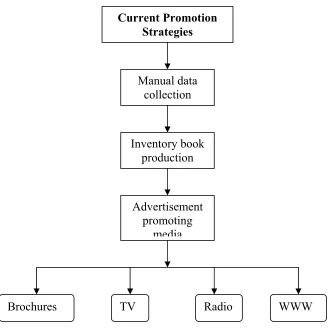
Figure 1.1: Current Promotion Strategies
Due to many problems and lack of efficiency in providing information, especially by traditional and manual methods, there is a need to develop a
computerized tourism system to increase the efficiency of information management of the department. Furthermore, by utilizing the most advance technology offered by the Internet, a web-based tourism system is another alternative to stand alone
computer based information system to provide high quality and accurate information to the worldwide tourist.
1.3 Statement of The Problem
Concluding from the background of the research problem, the whole scenario can be presented by the following main research question:
Current Promotion Strategies
Manual data collection
Inventory book production
Advertisement promoting
media
Can we develop a complete tourism system in the web environment that could increase the efficiency of information management of the current Johore Tourism system and provide a higher value-added service to the potential tourist?
By following the main research question, there are a few supporting research questions that need to be addressed:
i) What improvement could be made to the current tourism information system managed by Johore Department of Tourism?
ii) What are the possible solution to address or reduce the current problem faced by the department?
iii) What type of value-added service can be provided to the tourist?
iv) What methodology or approach should be followed for the development of the system?
v) What features, in terms of content, are useful to a potential tourist visiting the tourism web site?
By adhering strictly to the main research question and the supporting research question listed above, an applicable solution to the problem would be produced, which would increase the efficiency of information management and provide value-added service to the potential tourist.
1.4 Objectives of Study
As a guideline to conduct this research, the objectives for this study are outlined as the following:
i) To design and build a prototype for Johore Tourism System in the web environment in order to improve the efficiency of the current tourism information management system.
5
elements to promote Johore tourism
iii) To develop a trip planner tool which incorporates decision support system characteristic to aid the potential tourist in direction for traveling in Johore.
1.5 Scope of Study
In order to be able to achieve the objectives stated above, the scope of the study is limited to the following:
i) The study involves conducting research and analyzing the current operating tourism information management system managed by Johore Department of Tourism in order to identify and suggest improvement to the current tourism information system.
ii) The study involves research on literature background regarding the Decision Support System (DSS), Management Information System (MIS), web-based application and tourism system.
iii) The system is intended for the usage of potential tourist, management staff of the Johore Department of Tourism and tourism service provider including lodging and destination services provider.
iv) The system is designed to involve the management and handling of the databases and also included the report generation by the management staff of Johore Department of Tourism.
v) The system is designed to provide a value-added service based on the
characteristic of Decision Support System in which it will able to provide the potential user to generate a customize trip plan based on their
selected destination, departure location, and budget. This features targeted non-package tour tourist that has interest to travel and explore by themselves. vi) The study involves the requirement analysis, design, development and testing
of the prototype to evaluate its usability.
By determining the scope of the study, the subsequent processes in developing the proposed system as the solution to the research problem would be more easier and has clearer defined boundary, which in turn act as a guideline in developing the system.
1.6 Theoretical Framework
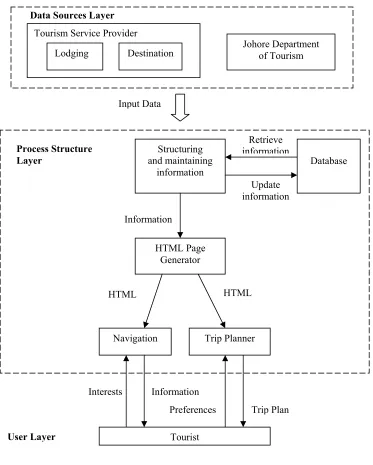
Figure 1.2 illustrates the theoretical framework of this study which is consists of three layers: data sources layer, process structure layer and user layer. Each of these layer will describe as below:
i) Data Sources Layer
The data sources layer consists of two main components, which are tourism service provider and the Johore Department of Tourism acting as the destination marketing organization for the government. The tourism service provider included in this study is comprised of two categories, which are lodging provider and destination management services provider. The types of data input from these data sources are further discussed in Section 3.4 under Subject and Data Sources.
ii) Process Structure Layer
The process structure layer presents the structure of the system functionality on how the inputs from the data sources layer are being transformed into the desired output. By using interactive web forms to input data, the data are retrievable,
7
Figure 1.2: Theoretical Framework
iii) User Layer
The targeted user layer for this tourism information system is the public Internet user which might be the potential tourist of Johore.
Lodging Destination Tourism Service Provider
Johore Department of Tourism Data Sources Layer
Structuring and maintaining
information
HTML Page Generator
Database
Tourist Input Data
Preferences Trip Plan Navigation
Information
Update information
Retrieve information
Trip Planner
HTML HTML
Interests Information Process Structure
Layer
1.7 Contribution of Study
This study intend to help and facilitate part of the management work by Johore Department of Tourism. An understanding on how the current system works to promote tourism in Johore is important in order to identify and suggest
improvement that could be achieved by taking the full advantage of the computer technology. Generally, this research study tries to contribute to the following aspects:
i) To facilitate, improve and thus reduce the cost of the information management system of the Johore Tourism Department.
ii) To further promote the growth of tourism industry in Johore by implementing the web-based system to provide fast, accurate information and value-added service to the worldwide tourist.
1.8 Limitation of Study
For this study, the tourism system is designed to be as effective as it can be in terms of providing high quality of content to the web site user. However, due to time factor, only substantial amount of data will be collected for constructing and
evaluating the usability of the prototype. Sources of data will be based on the fastest and most convenient method that is available. These include the sources from the Johore Department of Tourism and web sites of the tourism service provider
involved. Hence, the actuality and reliability of the data collected might be affected, as real-time data have to rely on frequent update from the sector involved.
9
1.9 Constraint of Study
In this study, there are few constraints that are unavoidable in developing the system. First, the constraint lies with the data security aspect. The detail of what exactly data collection required by Johore Department of Tourism are not being described fully. This might affect the usability of the proposed system as it is based on interpretation on the explanation and some documents to develop the system.
Another constraint lies with the department’s objectives and functionality. For this study, the tourism system is designed to be as effective as it can be as a comprehensive tourism guide for the web site user. However, as to conform to the Johore Department of Tourism objective and functionality, the proposed system should act as the information provider on behalf of the state government only and does not include any commercial activity or business transaction. Besides, e-commerce in Malaysia has not reach its mature stage yet. Thus, what the proposed system can do is only to combine the information available and link them to the desired web sites that do provide such outstanding features for the interested user. However, another constraint do exist as to be an effective web site, it depends greatly on the respective tourism sector whether they could provide such powerful features such as online checking for availability and booking features for their prospective customer.
1.10 Report Organization
The organization of this report is mainly divided into nine chapters. Chapter One is the introduction to give an overall view of what this study is all about. This includes; the background of the problem, the statement of the problem, the objective and scope of the study, the theoretical framework of this research, the contribution, limitation and constraints of the study and terms of references used in this report.
and review on Management Information System (MIS), Decision Support System (DSS), internet, web-based application, tourism system concept, and case study on existing tourism system.
Chapter Three, discusses the methodology of the research that will be used to develop the proposed system while Chapter Four will present and discuss about the analysis of the current system and based on the analysis, the architecture of the proposed system is constructed. Chapter Five will go into detail of the development process of the proposed system while Chapter Six discuss about the system
REFERENCES
Bahrami, A. (1999), “Object-oriented Systems Development: Using The Unified Modeling Language”, McGraw-Hill Inc., Singapore.
Barry, M. L., Cerf, V. G., Clark, D. D. (2000), “A Brief History of The Internet”, Internet Society (ISOC), All About The Internet,
http://www.isoc.org/internet-history/brief.html
Bloch, M., Pigneur, Y., Steiner, T. (1996), “The IT-enabled Extended Enterprise: Applications In The Tourism Industry”, Proceedings of the ENTER’96 conference in Innsbruck, Spring.
Buhalis, D. (1996), “Information Technology As A Strategic Tool For Tourism And Hospitality Management In The New Millennium”, Tourism Review
Magazine, No. 2 pp. 34-36.
David M. Kroenke and Kathleen A. Nolan (1987), “Business Computer Systems”, 3rd Ed. Santa Cruz, Calif.: Mitchell.
FUNET (2000), http://www.funet.fi/index/FUNET/history/www.htm
Jacobson, I., Chirsterson, M., Jonsson, P., Overgaard, G. (1992), “Object-Oriented Software Engineering: A Use Case Driven Approach”, Addison-Wesley, U.S.
146
James A. F. Stoner (1982), “Management”, 2nd Ed., Englewood Cliffs, N. J.: Prentice Hall.
James O. Hicks, Jr. (1987), “Management Information Systems, A User Perspective”, 2nd Ed., St. Paulm Minn.: West.
Larry Long (1989), “Management Information Systems”, Englewood Cliffs, Prentice Hall, New Jersey.
McIntosh, Robert W., and Goeldner, Charles R. (1986), “Tourism Principles, Practices, Philosophies”, John Wiley & Sons, Inc.. New York.
NEAC-MTEN (April 2000), “Statements – FMM: Maintains Ringgits Level Another Year.”
Poon, A. (1993), “Tourism, Technology and Competitive Strategies”, CAB International, Oxford.
Pröll, B., Retchitzegger, W., Wagner, R. R., Ebner, A. (1998), “Beyond Traditional Tourism Information Systems – The Web-Based Approach TIScover”, Journal of Information Technology in Tourism, Vol. 1, Inaugural Volume, Cognizant Corp., USA.
Ralph H. Sprague, Jr. (1980), “ A Framework for the Development of Decision Support Systems,” MIS Quarterly, Vol. 4, No. 4.
Robert, C. M. (1997), “The Tourism System”, 3rd Ed., Kendall/Hunt Publishing of Dubuque, Iowa.
Robert G. Murdick (1986), “MIS Concepts and Design”, 2nd Ed., Englewood Cliffs, N.J.: Prentice Hall.
147
South Africa (1996), White Paper: “The Development And Promotion of Tourism In South Africa”, Government of South Africa, Department of Environmental Affairs and Tourism.
Steven Alter (1996), “Information Systems: A Management Perspective”, 2nd Ed., The Benjamin/Cummings Publishing Company, Inc., Canada.
Texas Agricultural Extension Service and Texas Department of Economic Development (1999), “Developing Tourism In Your Community”.
Tourism Malaysia, Statistical Report Tourist Arrival: January to December 1999, http://www.tourism.gov.my
Turban, E. (1998), “Decision Support System And Intelligent System”, 5th Ed. Prentice Hall.