GUERDAT, KATE GOOSSEN. An Exploratory Examination of the Relationship Between Learning Organization and the Perceived Ethical Climate. (Under the direction of Dr. Timothy Hatcher.)
Throughout the past decade, the increasing lack of ethical behavior in the workplace has manifested itself as creation of challenging ethical climates, stimulating the research on ethics in organizations. Higher education institutions are no exception, as colleges and universities are being scrutinized for how they handle ethical dilemmas (Campbell, 1995; Grunewald, 2008). The lack of systematic frameworks and forums for addressing ethical dilemmas challenges the values that underpin higher education institutions (Felicio & Pieniadz, 1999) as well as opportunities for engagement through outreach arms of higher education, specifically within Cooperative Extension. The concept of learning has been discussed in the literature as a tool to develop ethical climates (Verbos, Gerard, Forshey, Harding & Miller, 2007), however the relationship between the concepts of ethics and learning in organizations had not been empirically examined. The goal of this exploratory study was to determine whether or not there is a significant relationship between the two dimensions of a learning organization (an organization’s connection to the environment and providing strategic leadership for learning) and the employees’ perspectives of the
organization’s ethical climate. The objectives of the study: 1) to identify what types of ethical climates are perceived by the Cooperative Extension Service (CES) employees, 2) to determine if CES employees perceive two dimensions of a learning organization to be part of their organizational structure, and 3) to determine the predictive value of the learning organizations’ dimensions on the perceived ethical climates.
between learning organization dimensions and ethical climates, the concepts of both ethical climate and learning in organizations are each individually perceived in Cooperative
Perceived Ethical Climate
by
Kate Goossen Guerdat
A dissertation submitted to the Graduate Faculty of North Carolina State University
in partial fulfillment of the requirements for the Degree of
Doctor of Education
Adult and Community College Education
Raleigh, North Carolina 2011
APPROVED BY:
_____________________________ _____________________________ Dr. Julia Storberg-Walker Dr. James Bartlett
Biography Education
June 1998 High School Diploma
Fairfield High School Fairfield, CT
May 2002 Bachelor of Arts
Fordham University New York, NY Psychology/ History
May 2005 Master of Science
UNC Chapel Hill
Recreation Administration & Business Management Professional Experience
2000-2002 Project director
National Aphasia Association New York, NY
2000-2002 Program Director
Urban Dove, LLC New York, NY 2002-2003 Head Teacher Northside Center for
Development New York, NY
2003-2004 Therapeutic Home Coordinator
Carolina Choice, LLC Raleigh, NC
2005-Present Extension Associate
Acknowledgements
As the old adage says: it takes a village to complete a dissertation. I have been fortunate to have the guidance, support, and love of my family, friends and colleagues throughout this journey.
In addition to a wonderful academic support team, I am very appreciative of my North Carolina Cooperative Extension family. From an exceptionally supportive program leader to an encouraging field faculty, I appreciate the support for my research. To Dr. D, I can only hope that I will one day carry the reputation of “paper napkin conceptual
framework extraordinaire’ as you do. To Dr. Mitzi Downing, thank you for the constant reminders to not sweat the small stuff. Dr. Ed Maxa, without your back deck sessions I would have lost sight on what is truly important, growing not only myself but also my family.
I am lucky to have the support of friends that have constantly encouraged me to stay on track, tease me about having one more thing on my plate, and kept me laughing.
However without the support of one amazing friend, Dr. Diane Chapman this venture would never had happened. Thank you for the motivation to try, the opportunities to vent, and for celebrating the little things with me. Your ability to turn 36 slides into 20 not only helped keep me focused, but reminded me that I really did know what I was talking about.
A doctoral program is never complete without classmates to cheer you on, gripe about professors, and compare course war stories. Michael, Karen, Meredith and Dan; without you this experience would have been so much more painful- from stat chats to end of semester celebratory beverages, your collegiality fueled me throughout this degree, but your
friendship will last a lifetime. I have a piñata waiting for us all.
The unconditional love and support of my family leaves me without words- they have patiently watched me be kicked out of nursery school, almost expelled from an
degree that I was warned about: Dissertation before diapers (D.B.D.). Throughout it all, my loving parents and siblings helped me stay on course, supportive of any path I chose to take. This degree is largely due to the amazing traits I inherited from my parents; my patty-dad’s ability to look past the rough spots, my mother’s strength and perseverance, and my father’s ability to grow and learn from life’s lessons. I love you all to the moon and back.
While you did not make your appearance towards the end of my degree, my sweetest gift of all, my daughter Cadence- your presence in this world was the daily reminder that I not only needed to finish this degree, but do it with gusto.
One always saves the best and hardest acknowledgement for last. To my loving and devoted husband, your endless support has brought me to tears many times and at this moment leaves me speechless. Thank you for being there not only for me but our family during the stressful and complicated moments over the past 5 years. While I knew that fateful day in August of 2003 that I had met someone special, I had no idea how fortunate I was. I have a true soul mate, a partner in life that loves me in my moments of weakness and strength. This degree is not just mine it’s ours, as it is yet another brick in our foundation for the life we are building together. I love you.
Table of Contents
List of Tables………...………ix
List of Figures………...………x
CHAPTER 1 ...1
Ethical climate ...2
The Ethical Climate of Cooperative Extension...4
Managing Ethical Dilemmas...7
Learning in organizations ...9
Relating ethical climate to learning organization ...14
Statement of the Problem ...16
Purpose and Objectives of the Study...17
Significance of the Study...17
Theoretical Frameworks ...20
Ethical Climate Theory...20
Learning Organization...21
Conceptual Frameworks ...22
Research Hypotheses...24
Limitations of the Research...27
Assumptions ...27
Definitions of Terms...27
Summary...28
CHAPTER 2 ...29
Literature Review ...29
Summary...77
CHAPTER 3 ...79
Research Design ...79
Population & Sample Plan...79
Response Rate...81
Instrumentation and Measurement ...81
Pilot & Pre- Data Analysis ...85
Data Collection ...87
Data Analysis...88
Summary...90
CHAPTER 4 ...91
Pilot Examination ...91
Pre- Data Analysis ...92
Hypothesis 1 ...96
Hypothesis 2 ...97
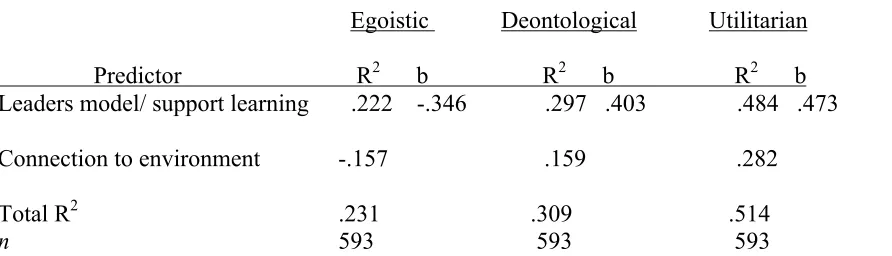
Hypotheses 3a, 3b, & 3c...98
Hypothesis 4-8...100
Summary...101
CHAPTER 5 ...103
Hypothesis 1 ...104
Hypothesis 2 ...109
Hypothesis 3 ...113
Hypotheses 4-8 ...117
Summary:...119
References ...121
APPENDICES ...137
APPENDIX A...138
Permission for Ethical Climate Questionnaire ...138
APPENDIX B...140
Permission for Dimensions of Learning Organization Questionnaire...140
APPENDIX C...143
Ethics and Learning Survey...143
APPENDIX D...148
IRB Application...148
APPENDIX E ...155
Informed Consent Letter...155
APPENDIX F ...158
IRB Exempt Approval ...158
APPENDIX G...160
Memorandum of Support to Extension Directors...160
APPENDIX H...162
Participation Solicitation E-mail ...162
APPENDIX I ...164
Confirmatory Factor Analysis: Learning Organization Dimensions...164
APPENDIX J...166
List of Tables
Table 1. Dimensions of Learning Organizations by Marsick and Watkins ...11
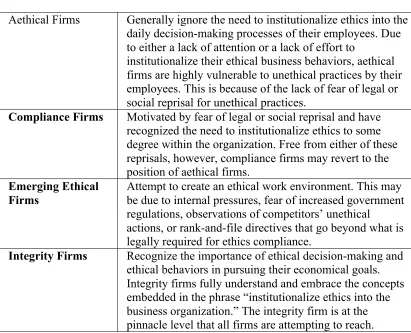
Table 2. Identifying Ethical Firms ...42
Table 3. Response Rate of Research Participants ...79
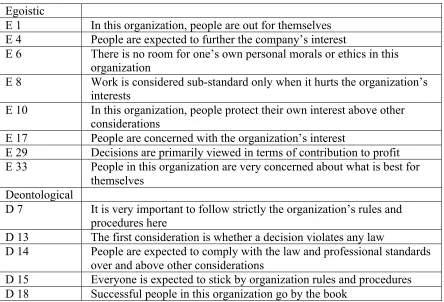
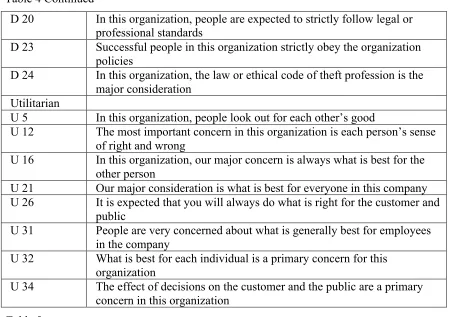
Table 4. ECQ Items Included in Climate Factors ...92
Table 5. ECQ Items not Included in Climate Factors ...93
Table 6. Participant Characteristics...94
Table 7. Descriptive Statistics for Hypothesis 1 ...96
Table 8. Descriptive Statistics for Hypothesis 2 ...97
List of Figures
CHAPTER 1 Introduction
Throughout the past decade, the increasing lack of ethical behavior in the workplace has manifested itself as creation of challenging ethical climates, stimulating the research on ethics in organizations. The literature addressing ethical behavior in organizations has varied in approaches ranging from the establishment of ethical codes (Hayes & Allinson, 1998; Marnburg, 2000; Moore, 2006; Trevino & Weaver, 2003) to creating teachable lessons on ethics in the workplace (Callahan, 1980; Falkenberg & Woiceshyn, 2008; Jurkewicz, Giacolone, and Knouse, 2004; Shaw, 2008; Trevino & Nelson, 2007). Codes require employees to learn specific rules and guidelines, adhering to policy established by
administration. With structured lessons, individuals are expected to study what is considered ethical and act accordingly. Within both of these scenarios, learning is presented as one of the underlying strategies for addressing ethical dilemmas within organizations.
While learning as a tool to sculpt ethical climates has been briefly referred to in the literature (Verbos, Gerard, Forshey, Harding & Miller, 2007), the relationship between the concepts of ethics and learning needs further examination. Each concept has been
researched individually (Armstrong & Foley, 2003; Dodgson, 1993; Valentine &
organization. Each concept is explored in the literature related to ethics and learning and then discussed in terms of a potential relationship between ethical climates and learning organizations.
Ethical climate
Ethical climates are best understood as a group of prescriptive climates reflecting the organizational procedures, policies, and practices which lead to moral consequences (Victor & Cullen, 1988). These climates arise when members of the organization firmly believe that certain forms of ethical reasoning or behavior are the expected standards or norms for decision making within the organization. Ethical climate can often be perceived as that which constitutes “right behavior”, and thus becomes a psychological mechanism through which ethical issues are managed. Through their research, Victor and Cullen (1998) concluded that organizations exhibit distinct ethical climate types which influence 1)
managerial behavior, 2) how ethical conflicts are identified, and 3) the process by which the conflicts would are resolved (Forte, 2004).
In the present workplace, ethical climates are being challenged in a variety of context. Martin and Cullen (2006) reported that as the corporate landscape becomes
is standardized policy and written code rather than what organizational leadership deems ethically appropriate. Hood (2003) states that the growing lack of confidence in ethical practices coupled with the current emphasis on quality of life has resulted in increased focus on ethical behavior within organizational structures. Scandals in companies such as Enron, Tyco, and other businesses facilitated the enactment of the Sarbanes Oxley Act (Grunewald, 2008), requiring many organizations to develop and adhere to ethical reporting systems (Weber, 2006).
Higher education institutions (HEIs) are not exempt from ethical dilemmas, either. According to Kelley and Chang (2007), HEIs that have not experienced major ethical scandals tend to neglect the need for an established ethical culture and the need for promoting ethical initiatives. The ethical climates of non-profit organizations including colleges and universities are being scrutinized for how they are addressing ethical dilemmas, such as questionable accounting practices with public resources (Campbell, 1995), as well as selection and retention of university presidents (Grunewald, 2008). One of the gravest concerns with unethical issues within higher education is the nature of the deep and lasting values underpinning higher education institutions (Moore, 2006; CIHE, 2005). According to Moore, higher education is a public as well as a private good, and ethical awareness and practice does and should be reflected in everything institutions are and do. Essentially, Moore views the university as having a responsibility to portray a positive ethical climate because of its influential status in modern day society.
centers of innovation and change” (p. 34). Procario-Foley and Bean (2002) proposed that those institutions of higher education that model the ethics and values proclaimed in their mission statements are more likely to produce graduates who are highly valued and sought by ethical organizations. In its role as a transmitter of a society’s values, a higher education institution establishes the connection between higher education and economic growth, as well as social progress and a responsible citizenry. Land-grant universities were established with specific responsibilities that promote scholarship and engagement with their external environments (Boyer, 1996; Campbell, 1995). The Morrill Act of 1862, charged land grant universities with providing all members of the community with accessible public and practical education as well as teaching, research and public service (Mc Dowell, 2001; Iverson, 2008).
Within the land-grant university Cooperative Extension was developed as a result of the Smith-Lever Act of 1914 in an effort to aid in disseminating useful and practical
information on subjects related to agriculture and home economics and encouraging the application of knowledge learned. Over the past several decades, Cooperative Extension has become the major outreach component of the Land-grant University whose capacity have expanded beyond agricultural and home economics to community development and sustainability (Campbell, 1995; Iverson, 2008; Kellogg Foundation, 1999) and created a strong sense of human ecology through the interactions of humans and their local environments.
The Ethical Climate of Cooperative Extension
Extension is to promote learning through the extension of knowledge by focusing on the needs of the community to build knowledge and sustainability while also promoting growth (Retrieved from www.usda.gov). Cooperative Extension is a unique organization, as it operates with principles similar to the corporate world: it treats the community as the consumer, is classified as a federally supported organization through a major governmental agency (USDA), and it is attached to a higher education institution, more specifically the land-grant university. The organizational model of Cooperative Extension is grassroots oriented, with the needs of the community dictating the services developed and provided. However, even with a grassroots effort, organizational leadership plays a large role in Extension. Each state has an Extension Director who oversees the entirety of the state’s Extension program. There are individual program areas such as 4-H, Family Consumer Sciences (FCS), and Agriculture, whose individual missions are driven by the community, despite mandates by federal level agencies. State-level professionals are responsible for interpreting the needs of the surrounding communities and developing resources for support. Each program area (i.e. 4-H, FCS, Agriculture) employs field faculty throughout the state to deliver programs to address area needs. Extension is responsible for ensuring that the needs communicated by the locality.
However with great responsibilities and transfer of information from state level administration to county operations often come conflicting values and viewpoints, creating potential ethical dilemmas. These ethical dilemmas are often magnified due to the
higher education systems (Herzfeld, 2001). In response to the scrutiny being placed on the land-grant university system, Cooperative Extension adopted a model of educational
program development developed by the USDA called Issues Programming. The model was an attempt to address issues that were being raised in conjunction with the philosophy, ethics, and accountability of Cooperative Extension (Herzfeld, 2001). Issues were defined as matters of extensive public concern arising out of complex human problems and were identified in an effort to assist with prioritizing Extension educational programs from internal academic disciplines to external public discourse (Dalgaard, Brazzel, Liles,
Sanderson, & Taylor, 1988). Issues Programming was a result of an increase in demand for public accountability and sound ethical practices in the Extension service for receiving public resources, as historically CES had not received public resources as a public service.
Force, 2010). From a higher education institution, and more specifically a land-grant university perspective, the tenets of engagement aim to develop ethical and practical solutions to social, health, economic and other environmental issues. (Glassick, Huber, & Maeroff, 1997; Keckes, 2006; Kellogg Commission, 1999).
As the land-grant university, and more specifically Cooperative Extension, pursues additional acts of engagement, there is greater potential for ethical dilemmas (Blewett, Keim, Leser, & Jones, 2008; Holland, 2001). As a strong component of the higher education system, Cooperative Extension’s challenges impact the academic community, as well as the local, regional and national communities they serve.
Managing Ethical Dilemmas
Although the missions of colleges and universities do not necessarily include
improving the bottom line, the goal of enhancing development of people and society results in ethical dilemmas very similar to those within the corporate sector (Moore, 2006).
Through a review of the literature, Moore found that corporate solutions to ethical dilemmas are just as applicable and transferable to higher education. Felicio and Pieniadz (1999) found there is a lack of systematic forums and frameworks for attempting to resolve ethical
dilemmas in higher education. A review of the literature revealed that there have been no more recent researchers filling the gap that Felicio and Pieniadz described.
introduced a company code of ethics in the early 1900s (Trevino & Weaver, 2003).
However while codes establish a set of expectations for an individual’s behavior, there is no guarantee that individual’s behavior will change. Despite established codes of ethics, the need for enforcing policies on ethical decision making is often overlooked until something undesirable happens. Marnburg (2000) tested the differences in ethical attitudes among employees in companies with and without a code of ethics. The study found that there is no significant difference, exhibiting that members of many organizations that have ethical codes still exhibit unethical behaviors.
In terms of the higher education institution, Moore (2006) proposed that an institution-wide ethical policy framework beyond the traditional focus on an ethical code and policy is required to embrace all of the institution’s activities. In Schein’s (2004) work on organizational culture, he found that institutional factors such as the environment, organizational culture and leadership have the potential to be as important, if not more important, in determining the ethical climate. A positive relationship between the
organization and its environment is established when organizations systematically align their major organizational components (such as structure, technology, systems, people, and culture), with the external environment (Fiol & Lyles, 1985; Nadler, 1987). Intentionally aligning organizational culture with the external environment is essential for organizations such as Land-grant Universities and ultimately Cooperative Extension, whose mission is ingrained in grassroots efforts.
Intentionally establishing an organization- environment relationship not only
Gerard, Forshey, Harding and Miller’s (2007) theory of Positive Organizational Scholarship (POS) provides a framework for that change that involves both learning and ethics. POS posits that ethical organizational identity emerges from the interaction of authentic leadership, aligned organizational processes, organizational learning, and an ethical organizational culture. Within their theory, Verbos et al. introduce the possibility that ‘learning’ has a role in the development of an ethical climate, as ethical climate is an
essential component of the organizational culture. In order for growth and change to occur in the culture of Cooperative Extension, the perceived ethical climate needs to be understood and the learning in Extension’s culture needs to be examined.
Learning in organizations
The literature surrounding learning in organizations recognizes that organizations learn when individual members or substantial fractions of them learn (Ortenblad, 2002; Agryris & Schon, 1996; Senge, 1990). Thus, learning in organizations is a complex concept (Tsang, 1997) as the nature of some organizations are considered to be socially constructed, blurring the lines between what is considered an individual phenomenon and what is
organizational (Akgun, Lynn, & Byrne, 2003). Agryris and Schon (1996) capture the collective process of learning through their definition of organizational learning: the process of creating or capturing knowledge and then retaining it in a form that is useful to the
learned, there is a prescriptive structure in which the learning occurs.
While organizational learning is viewed as the process involved in individual and collective learning inside organizations (Ortenblad, 2002), the learning organization is viewed as the tangible product that promotes the learning process. Marsick and Watkins (2003) frame the learning organization as the entity that possesses specific diagnostic and evaluative methodological tools which can help to identify, promote and measure the quality of the learning process inside the organization.
Within learning organizations, knowledge structures are developed through
interactions. Organizational members are expected to communicate their knowledge to both the organizational and external community (Akgun, Lyyn, & Byrne, 2003). As a result the learning experience becomes part of the organizational culture. Senge (1990) explains that a learning organization is one that facilitates the learning of all if its members and where people continually expand their capacity to create desired results. Within the learning organization, new and expansive patterns of thinking are nurtured, collective aspirations are set free, and people are continually learning how to learn together (Marsick & Watkins, 2003). The collective capacity to learn becomes an essential part of the process and enables the action orientation taken to diagnose and measure the learning processes.
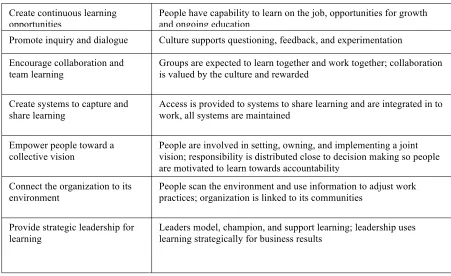
learning organization. The dimensions were developed through a review of the literature on learning organizations that have the capacity to learn, adapt and change (Yang, Watkins, & Marsick, 2004). The dimensions include several perspectives including systems thinking (Senge, 1990), the learning perspective (Pedler, Burgoyne, & Boydell, 1991), and the strategic perspective (Garvin, 1993). The learning organization dimensions are Marsick and Watkins “integrative perspective”, proposing that learning organizations integrate two main organizational constituents: people and structure (Yang et al., 2004). Table 1.1 describes each of the seven dimensions of the learning organization as described by Marsick and Watkins.
The Dimensions of a Learning Organization Questionnaire (DLOQ) was created to examine the theory of the learning organization and provides a framework for studying learning dimensions and their relations with other organizational performance variables (Yang, Marsick, & Watkins, 2004). The DLOQ was developed by Watkins and Marsick after a review of previously developed instruments and research.
conducted on how Extension resembles a learning organization (Rowe, 2010). Table 1
Dimensions of Learning Organizations by Marsick and Watkins (2003)
Examining Cooperative Extension as a learning organization
As discussed by Rowe (2010), with a rapidly changing environment Cooperative Extension must become more flexible by adopting the principles of a learning organization. Extension uses a variety of educational methods and tools in an effort to meet the needs of a constantly changing society. Two of the seven learning organization dimensions reflect the processes engrained in Cooperative Extensions mission; Connection to the environment and providing strategic leadership for learning. These two dimensions revealed strong
similarities between the content of each dimension and the organizational model and
Leaders model, champion, and support learning; leadership uses learning strategically for business results
Provide strategic leadership for learning
People scan the environment and use information to adjust work practices; organization is linked to its communities
Connect the organization to its environment
People are involved in setting, owning, and implementing a joint vision; responsibility is distributed close to decision making so people are motivated to learn towards accountability
Empower people toward a collective vision
Access is provided to systems to share learning and are integrated in to work, all systems are maintained
Create systems to capture and share learning
Groups are expected to learn together and work together; collaboration is valued by the culture and rewarded
Encourage collaboration and team learning
Culture supports questioning, feedback, and experimentation Promote inquiry and dialogue
People have capability to learn on the job, opportunities for growth and ongoing education
mission of Cooperative Extension.
Within the dimension of ‘connection to the environment’, organizational members are responsible for scanning the environment in an effort to promote organizational change (Marsick & Watkins, 2003). Environmental scanning, a common practice in Cooperative Extension, allows the organization to effectively align with local communities (Boyce, 2003; Campbell, 1995). As research has shown, active scanning of the internal and external
environment allows for organizations to shape their responses (Senge, 1990), and change or transform (Cavaleri, 2004) enabling organizations such as Cooperative Extension to address community needs.
The second dimension, provide strategic leadership for learning, suggests that leaders model, champion, and support learning throughout the organization (Marsick & Watkins, 2003). Within this dimension, learning is strategically designed to promote specific outcomes and results. Research has shown the influential nature of leaders throughout the learning process (Ford, 2006; Leith, Harrison, & Burgoyne, 1996; Ortenblad, 2004). Within the organizational model of Extension, leaders are responsible for enabling transference of information in the organization. From mission mandates to promoting scholarship and engagement amongst faculty, Extension leaders have the capacity to set the tone for learning throughout the internal and external environment.
learning, each dimension reflects the unique qualities of higher education institutions that have potential to support and shape the ethical climate within the organization.
Relating ethical climate to learning organization
The concepts of ethics and learning have been eluded in the literature through the process of organizational change. While organizational change is not a central tenet of this study, it is discussed as an example of how learning in organizations potentially shifts an organization’s ethical climate. Hayes and Allinson’s (1998) framework on organizational standards and learning implies that for ethical norms to completely shift within an
organizational climate the organization on a whole needs to shift as well, ultimately creating organizational change. Boyce (2003) compares the process of organizational learning to that of organizational change. The collective vision of organizational members becomes
responsible for diagnosing the organization’s predicament (i.e. ethical dilemmas) ultimately integrating their perceptions into shared, learned mental models. The end result has the potential to establish a foundation for modifying and managing the ethical decisions that support the ethical climate.
climate is effectively being managed as well. Relating Moore’s model of managing ethics to Watkin and Marsick’s dimensions of learning organizations illustrates possible connections between learning and ethics in organizations. For example, Marsick and Watkins (2003) state that the promotion of inquiry and dialogue is a key component of a learning
organization. Moore’s model of managing ethics in HEI supports open discourse through openly discussing and acknowledging ethical issues within the organization.
The potential relationship between ethics and learning expands beyond creating a learning and management system for managing ethical climates. From a theoretical foundation perspective, both concepts have similar grounding in disciplines such as
sociology, psychology, and education and have been associated with theoretical frames such as Institutionalization theory as a way to sustain change (i.e. Boyce, 2003 for Learning in organizations and Foote and Ruona, 2008 for Ethical climates).
Through the lens of the practitioner, the learning organization has the potential to help scan the organizational environment (Easterby-Smith & Araujo, 1999) for areas of ethical distress in hopes of promoting new knowledge. Within learning organizations the open process of sharing information, as well as open organizational systems (Konthoghiores, Awbrey, & Feurig, 2005) has the potential to influence ethical climate perceptions as well. For example, Schneider’s (1975) discussion on Functionalism embraces the concept of adaptation by organizational systems, essentially creating a homeostatic balance within the organizational environment. The open organizational systems that results from the creation of a learning organization also has the potential to influence the perceived climates
Although despite the connections highlighted in the literature there is limited
empirical support for ethical climates and learning organizations. In addition, both concepts of the learning organization and ethical climates have been explored individually within the context of higher education institutions, however the concepts have not been examined in relationship to each other within the Cooperative Extension environment. Due to the lack of empirical support for the overarching context of this study, the present study is an
exploratory examination of how ethical climates are related to learning organization dimensions.
Statement of the Problem
As previously discussed, a significant gap in the literature emerges on prevention as well as intervention approaches to supporting positive ethical climates in organizations. Through a review of the literature, learning has surfaced as an underlying theme in addressing ethical dilemmas within organizations, however there is a lack of empirical support for the relationship between the concepts of ethical climate and learning.
paternalistically change skills, attitudes, and behaviors of individuals for the predetermined individual’s good or the public’s good or both. Through CES educational programs there is an expectation that the public will develop democratically rather than advance
predetermined community, state, or national goals for the common good (Blewett, Keim, Leser. & Jones, 2008). The greater diversity in audience served is likely to result in a wider range, and possibly conflicting sets of values and ethical assumptions regarding the utility of public institutions (Iverson, 2008).
Purpose and Objectives of the Study
The goals of the proposed exploratory study are to determine whether or not there is a perceived significant relationship between two specific elements of a learning organization (per the DLOQ) and the organization’s ethical climate. The objectives included in the study are to 1) determine what types of ethical climates are perceived by Southern Region
Cooperative Extension Agents , 2) determine if Cooperative Extension Agents perceive two dimensions of a learning organization to be part of their organizational structure, and 3) determine the predictive value of the learning organizations’ dimensions on the perceived ethical climate(s).
Significance of the Study
The results of this exploratory study have multiple implications for Higher Education Institutions, specifically land-grant universities, as well as the field of Human Resource Development as a whole.
ultimately supporting the development of organizational learning strategies that may support ethical climates. HRD professionals will have a better understanding of the relationship between these two constructs and potentially use results to support the development of training programs, professional development opportunities, and effective assessments of ethical climates within the organization. HRD practitioners have an opportunity to develop, implement and sustain activities that align with the underlying ethical tenets of the
organization (Foote & Ruona, 2008; Hatcher, 2002; White, 1990).
Building the organization’s body of knowledge is another advantage that comes with the application of a learning organization. Through knowledge creation, the process of learning and change enables an organization to continuously transform itself (Leitch, Harrison, Burgoyne, & Blantern, 1996; Cavaleri, 2004). The knowledge development process provides the opportunity to create a clear vision and mission, promoting not only competitiveness in the corporate world, but will also promote development of employees, developing all staff to their full potential. Jones and Hendry (1992) found that an
organization that has a reputation for knowledge building attracts some of the best employees, is known for exemplary human resource procedures, and is more adept at accommodating tensions and changes in policy.
On a macro-level scale the study provides the potential to strengthen the organizations’ relationship to the external environment as it relates to issues of social
stronger strategic partner in all forms of organizations by thoroughly understanding the significance of ethical theory and by emphasizing the importance of ethical practices and cultures through ethics training and education. Within the possible relationship between the learning organization and organizational ethics education, organizations such as CES have the opportunity to reinvent themselves through establishing dimensions of the learning organizations. HRD has the potential to help shape the organization’s climate through understanding and appreciating the growing emphasis on ethics in professional
organizations, higher education, and by shaping ethical corporations through training and development (Gedro, 2008). More importantly, HRD can help ethics education become an essential element of organizational learning.
From a practitioner’s perspective, relating organizational ethics to the dimensions of learning organizations provides potential, teachable strategies to help strengthen ethical climates within organizations. In 2006, Ritter explored whether or not Business Ethics is a topic that is trainable, essentially questioning whether or nor ethics education can be taught effectively. Callahan (1980) argues that not only can ethics be taught, but that it also
The results of this study will make valuable contributions to the HRD body of knowledge in relation to learning and ethics in organizations, providing insight into both theoretical and empirical relationships between the two concepts.
Theoretical Frameworks
For the purpose of this study, substantive theories are being used to establish the theoretical framework. According to Camp (2001), substantive theories offer explanations in a restricted setting and are limited in scope, often being expressed as propositions or
hypotheses. Substantive theories begin with a supportable premise, extending that premise through a logical path of reported research (Creswell, 2003). Substantive theories are being used due to the exploratory nature of this study and the framework upon which the
theoretical frames are constructed. The theoretical frameworks used to guide this study are ethical climate theory and organizational learning theory. Each of the following theories is further grounded in macro-level frameworks such as cognitive and behavior psychology, sociology and moral philosophies as discussed in the review of the literature.
Ethical Climate Theory
Ethical climate theory as developed and published by Victor and Cullen (1988) represents a descriptive map of ethical decision-making and actions within an organization (Martin & Cullen, 2006). Victor and Cullen’s Ethical Climate theory expands on
Kohlberg’s (1984) theory of moral development, specifically the concept of ‘moral atmosphere’ and the ‘just community’. The concept of moral atmosphere represents “the prevailing norms of a specific group and not only the individuals’ level of moral
was too narrow, as it did not address the context of the work climate. From Victor and Cullen’s perspective, each climate is a type of work climate that is best comprehended as a collection of prescriptive climates reflecting organizational procedures, policies, and practices with moral consequences. Positive ethical climates arise when organizational members believe that certain forms of ethical reasoning or behavior are expected standards for addressing ethical dilemmas within the organization (Cullen, Parboteeah, &Victor, 2003).
Learning Organization
Watkins and Marsick’s, (1993,1996, 2004) concept of learning organizations (LO) served as the learning framework for this study, however it is grounded in the theoretical frame of organizational learning. Organizational learning theory states that an organization has the ability to create and capture knowledge (Agryis & Schon, 1996). Agryis and Schon believe that there must be a learning product, such as the learning organization. The learning organization is built on the premise that the organization has the capacity to learn, adapt, and change (Watkins & Marsick, 1993). Within the LO framework, different perspectives are included such as systems thinking, learning, and strategic and integrative perspectives. In addition to the multiple perspectives, the dimensions of learning organizations address the learning actions and strategies at each of four organizational levels: individual, team, organization, and global.
Watkins and Marsicks’ frame for learning organizations was chosen because it captures the principles of a learning organization while also establishing measurable,
the purpose of the present study, the two of the seven dimensions will be used. The dimension of an organization’s connection to the environment reflects the organizations environmental scan process used to address community needs while the dimension of organizational leaders’ model and support learning .emulates Extension’s leaders responsibility for enabling transference of information in the organization. The study is examining how often Extension agents perceive Extension as an organization supports the two chosen learning organization dimensions.
From the proposed theoretical frameworks, the following assumptions are posited:
- the organization’s perceived ethical climate shapes the standard for ethical behaviors and decisions throughout the organization and it’s environment
- through supporting dimensions of a learning organization the organization itself has the potential to adapt and influence change throughout
- despite those two assumptions, limited research has been conducted to examine the predictive relationship between learning and ethics.
The conceptual framework developed for this study is based on the need for research on the relationship between ethical climates and the learning organization.
Conceptual Frameworks
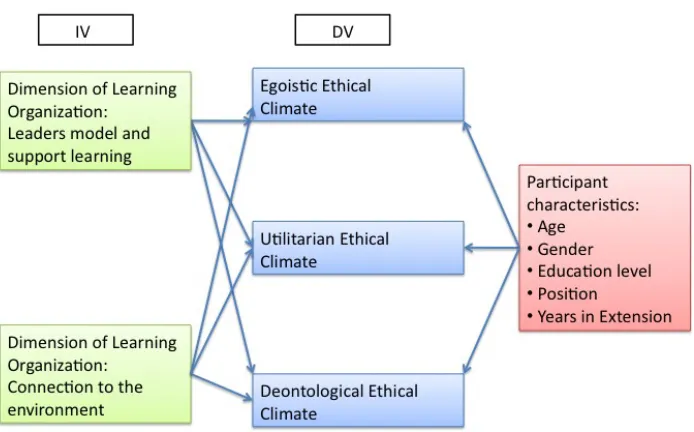
towards a collective vision). As previously discussed, these two dimensions were chosen for the commonalities reflected in the sample organization (Cooperative Extension) and for the emphasis on the individual’s perspective on organizational actions.
Watkins and Marsick’s framework was chosen for its ability to examine both individual and organizational levels as well as its inclusive definition of the learning organization construct. The dependent variables are the following three types of ethical climates as developed by Victor and Cullen (1988); the egoistic perspective, the benevolent (utilitarian), and the deontological. The researcher theorized that two of the seven
Figure 1. Conceptual Framework of the Exploratory Relationship between Ethics and Learning in Organizations
Research Hypotheses
In order to understand the relationship between learning organization dimension and ethical climate research hypotheses are used to establish and describe the relationship and to guide the research.
The research hypotheses guiding this study are:
H1: Cooperative Extension Agents will perceive utilitarianism as the highest level of ethical
climate within Cooperative Extension.
H0 :m egoistic = m utilitarian = m deontological
predetermined community, state, or national goals for the common good (Herzfeld, 2001). Although research is lacking on the perceived ethical climate of Cooperative Extension, its engagement with public citizenry supports the notion that the climate is structured for the good of the whole community.
H2: Cooperative Extension Agents will perceive their organization to support learning more
often through the organization’s connection to the environment than through providing strategic leadership for learning.
H0 :m Connection to their environment = m Empowerment towards a collective vision
Within Marsick and Watkin’s dimension that connect the organization to its environment, organizational members are expected to scan the environment and use
information to adjust work practices, linking the organization to the community. The stated CES mission, to promote learning through the Extension of knowledge by working through the needs of the community (retrieved from www.usda.gov), strongly aligns with the strategy of connecting the organization to its environment.
H3a : There is no predictive relationship between the learning organization predictor
variables (connection to the environment and providing strategic leadership for learning) and egoistic ethical climates
H3b: There is a predictive relationship between the learning organization predictor
variables (connection to the environment and providing strategic leadership for learning) and utilitarian ethical climates.
H3c : There is no predictive relationship between the learning organization predictor
variables (connection to the environment and providing strategic leadership for learning) and deontological ethical climates.
hypothesis. However while there is a gap in research on the connection between ethical climates and learning in organizations, some studies have shown the importance of aligning organizational systems as they pertain to ethics and learning (Ford, 2006; Hayes & Allinson, 1998; Verbos, Gerard, Forshey, Harding & Miller, 2007). It is the goal of this exploratory research to determine the empirical significance of the relationship between concepts of ethical climates and learning organizations.
H4: Gender will exhibit a significant effect on the type of organizational ethical climate.
H5: Age will exhibit a significant effect on the type of organizational ethical climate.
H6: Level of formal education will exhibit a significant effect on the type of organizational
ethical climate.
Previous studies on the influence of participant characteristics such as gender, age and education level on types of ethical climates have resulted in both significant (i.e Parboteeah, Hoegl, & Cullen, 2008) and not significant results (i.e. Van Sandt, 2001). The present study examined the influence to determine potential moderating effects on the research population.
H7: Extensionposition will exhibit a significant effect on the type of organizational ethical
climate
H8: Position tenure will exhibit a significant effect on the type of organizational ethical
climate
Limitations of the Research
1) Due to the difficulty in measuring actual ethical climates, participants’ perceptions were measured. Victor and Cullen (1988) recognized that the various ethical climate types are dependent upon what is perceived by the members as ethical.
2) The research questionnaire was self-reporting; therefore no verification of responses were available.
3) The research was conducted as a one-shot study design; therefore only providing a snapshot of current perspectives.
4) The present study is considered exploratory since the relationship between ethical climate and learning organization had not been previously empirically established.
5) The sample population were all from one kind of organization (governmental non-profit) within one industry (higher education) therefore limiting the scope of application for results.
Assumptions
1) The theoretical frame being used provides perspectives on philosophical ideals and therefore may be difficult to accurately measure the existing ethical climate
2) Perceptions of the respondents are good indicators of the concepts being measured. 3) Respondents will answer the questions honestly and truthfully.
Definitions of Terms
Ethical Climate- a type of work climate that is best understood as a group of prescriptive climates reflecting the organizational procedures, policies, and practices with moral consequences (Victor & Cullen, 1988.) Positive climates such as these arise when members believe that certain forms of ethical reasoning or behavior are expected standards or norms for decision-making within the organization. The ethical climate is the perception of what constitutes right behavior- and thus becomes a psychological mechanism through which ethical issues are managed. A “poor” ethical climate suggests that ‘right behavior’ is less than ethical.
Learning Organization- an organization that learns continuously and transforms itself, as learning is a continuous, strategically used process- integrated with and turning parallel to work (Watkins and Marsick, 1997.)
Summary
This chapter aimed to describe the rationale and significance for the research study. The main concepts of the study, ethical climates and learning organizations were discussed, grounding each concept in the context of Cooperative Extension. The research hypotheses designed for the study were provided, as well as the conceptual framework developed for the guiding the study. Theoretical frames and definition of terms were briefly explained. The following chapter provides the literature base for each of the concepts as well as a
CHAPTER 2 Literature Review
A cross-disciplinary approach has been taken to review and select literature for the support of this study. Sociology, business, education and psychology are a few of the areas of study that have been explored. Due to the extensive nature of each of the concepts, ethics and learning, a visual depiction has been provided as a guide for the context for literature support. Prior to explaining the literature base for the relationship between the two concepts, each framework will be presented independently in this chapter order to establish a strong research and literary body of knowledge.
In order to establish the frame for ethical climates within organizations, three bodies of literature were explored: within the ethics literature, organizational culture was
examined, from which organizational climate was derived; organizational ethics are discussed as a component of organizational climate; and the ethical climate emerges from the examination of organizational ethics, and in turn, is established as an influential factor to the overall organizational culture
climates and learning organizations is limited. A major goal of research is to contribute to the body of empirical research and support.
Ethics in organizations: Organizational culture
In establishing the literature base for ethics in organizations, one of the strongest conceptual roots lies within the realm of organizational culture. Organizational culture has often been regarded as the primary influence upon corporate behavior (Weber, 1993) and is often defined as the social or normative glue holding the organization together.
Organizational theorists posit that it influences all aspects of operations within an
organization, including ethics, and it often provides the collective norm about what is and what is not appropriate action (Trevino, 1990). Although the terms “climate” and “culture” have been used interchangeably (Weber, 1993), the literature about culture gives more emphasis to the organization as a whole and does not emphasize strongly enough the influence of the individual’s perspective on the organization’s overall culture. Denison (1996) articulated the value of organization organizational culture:
Organizational culture refers to the deep structure of organizations, which is rooted in the
values, beliefs, and assumptions held by organizational members. Meaning is established
through socialization to a variety of identity groups that converge in the workplace.
Interaction reproduces a symbolic world that gives culture both a great stability and a
certain precarious and fragile nature rooted in the dependence of the system on individual
cognition and action (p. 624).
Organizational theorists share common language when defining ”culture” within the
set of common understandings that are expressed in language (Rousseau, 1990). Thompson and Luthans (1990) portrayed organizational culture as a complex part of the organizational environment with no standard definition. The only commonality is the perspective that organizational culture is considered a pattern of shared basic assumptions. Schein argued that the assumptions are learned by a group as it solved its problems of external adaptation and internal integration; these assumptions have worked well enough to be considered valid and therefore to be taught to new members as the culture of the correct way to perceive, think, and feel in relation to those problems (Schein, 1983; Schein, 2004).
From a theoretical standpoint, Thompson and Luthans (1990) point out that there are two perspectives from which to define organizational culture; the behavioral and the
cognitive. The behaviorist approach is grounded in behavioral psychology (Bandura, 1977; Davis &Luthans, 1980; Skinner, 1983), where behavior is a function of consequences and is strongly associated with learning. The cognitive approach is system of shared knowledge or beliefs, in which culture is generated by the human mind. (Agryris & Schon, 1978; Rossi & O’Higgins, 1980; Smircich, 1983). Schein (1984, 2004) combined the cognitive and
When applied to Extension, Schien’s three levels move from the underlying
assumption that the organization is built upon democratic principles (Blewett, Keim, Leser, & Jones, 2008), to the organizational mission to extend knowledge throughout the
organization and it’s surrounding communities (Campbell, 1995), to the traditional program efforts that brands Extension as community-based, grassroots organization (Herzfeld, 2001). Schein’s holistic approach to organizational culture provides a foundation for understanding the influence of culture on organizational members and ultimately the climate that they perceive.
Ethics in organizations: Organizational climate
As suggested by Denison (1996), organizational climate is highly subjective in nature, as it depends on the description of forms and styles of behaviors in organizations.
Organizational environments are rooted in the organization’s value system, but tend to
present social environments in static terms, describing them in terms of a fixed set of
dimensions. Thus climate is often considered as relatively temporary, subject to direct
control, and largely limited to those aspects of the social environment that are consciously
perceived by organizational members (p. 624).
(Schneider, 1975). Gestalt theory states that it is the role of the perceiver to instill order, especially in a situation that has a direct implication for behavior. Organizations have no choice but to create and apprehend order as there are cues that dictate responsive behaviors, resulting in the tendency of individuals to behave in a meaningful way.
A second common theory applied to organizational climate is based on the tenets of Functionalism. Schneider (1975) explains that Functionalism requires order to be
apprehended and created so that people can function adaptively in their world, with a great deal of emphasis placed on the act of adaptation. Adaptation often occurs by organizational systems adapting to be in homeostatic balance with their environment with the hope that as people adapt to their environment, they perceive, explore, and think about their
environment.
A third theoretical foundation discussed in the organizational climate literature is Kurt Lewin’s (1951) field theory. Lewin’s basic concept lies in the relationship between individuals and their social environments and is represented in the equation B=f(P,E) in which B is behavior, E is environment, and P represents the person (Denison, 1996). According to Lewin’s theory, within the organizational climate the ones who create the climate is often physically separated from the environment, but they do have some
it.
In empirical research, the impact of the organizational climate on attitudes or behaviors has been explored.(Fleischman, 1953; Fredericksen, Jensen, & Beaton, 1972; Schneider, 1975). Fleishman’s (1953) research is an example of early empirical research on organizational climates. Fleischman explored how foremen adapted their behavior to the prevailing climate in a factory by behaving not as they were taught in a human relations program but in a style that fit their work climate, i.e., the way their supervisors behaved. Similar findings exist in research on aspects of organizational ethics: researchers (Brown, Trevino, & Harrison, 2005; Song, Kim, & Kolb, 2009) have found that ethical leadership influences the behavior of subordinates.
Fredericksen, Jensen, and Beaton’s (1972) study examined how supervisory styles in specific organizational climates influenced employees’ performance. Individuals who worked within a “rules” climate tended to look to supervisors for support while those who were included in the “innovative” conditions took novel approaches and used assistance from their peers. By manipulating administrative procedures and supervisory styles under which people worked, Fredericksen, et al. (1972) created experimental climates, resulting in defined consistent and inconsistent climates with depictions of patterns of performance, as well.
certain kinds of beliefs about what kind of consequences will follow from various actions. From their research, Litwin and Stringer concluded that organizational climate properties can be perceived by members of an organization and reported on when given an appropriate questionnaire. Their work supports the belief that individuals’ perceptions are often accurate portrayals of the organizational climate
Organizational climate & organizational culture
Within the literature there is an overlap between the constructs of organizational climate and organizational culture (Denison, 1996; Dickson, Smith, Grojean, & Ehrhart, 2001). Both concepts attempt to explain the process by which formal and informal rules develop to guide and govern behavior in organizations“” Empirical studies have also blurred the lines between the concepts of organizational culture and climate. Dennison (1996) provides the example of Chatman’s (1991) research, which asked questions about risk taking as an organizational trait, framing the research in organizational culture;Litwin and Stringer (1968) asked similar questions with regard to risk taking, labeling their study within the context of organizational climate. The interchangeable use of terms makes it difficult to ascertain a specific path for empirical and theoretical growth for organizational culture, as many of the early studies were rooted in organizational climate. However, the difficulty with distinction of the two terms was not always the case. As stated by Schwartz and Davis (1981), a good way to understand what culture is, is to understand what culture is not.
beliefs, values, and assumptions (Denison, 1996). It is within the theoretical foundations of each that the most significant differences can be found. Despite both concepts being
ingrained in the social sciences, the climate literature is heavily grounded in the field theory of Kurt Lewin (1951), while the culture literature is strongly identified with theories of symbolic interaction and social construction (Denison, 1996; Schein, 1984). More
specifically, culture literature focuses on how social contexts develop as a result of social interactions and behavior adaptations within organizations, while the climate literature focuses on the perception of social contexts and their impacts on the organization.
A review of the literature revealed that organizational culture researchers were more concerned with the evolution of socials systems (Schein, 1984; Smircich, 1983), while climate researchers were concerned with the impact of organizational systems on groups and individuals (Dickson, Smith, Grojean, & Ehrhart, 2001; Schneider, 1975). Culture
researchers sought to explain the deeper understanding of underlying assumptions,
Organizational ethics
“”The term “ethics” evokes multiple interpretations. Ethics is commonly referred to as a philosophical term; it is derived from the Greek word “ethos,” meaning character or custom (Sims, 2003). In addition to the common theoretical frame for organizational ethics, there are two common approaches to ethics within organizations as well: the normative and the empirical. The normative approach draws from philosophy, theology, and political and social theory, requiring prescription, description, and analysis of the ethical situation. The empirical approach to ethics is strongly rooted in the Functionalist paradigm, emphasizing objective epistemology and the use of metaphysics. The normative approach focuses on what “ought to be” rather than “what is”.
According to Trevino and Weaver (2003), ethics in the organizational context has been strongly centered around the normative approach, focusing on ethically proper practices rather than solely relying upon the empirical or philosophical realms. Within research on business organizations, taking a strictly empirical approach would result in definable, measurable, and concrete strategies; the results are forced into categories, which does not allow much room for assumptions or interpretations. While a normative approach to ethical organization studies prescribe what is considered ideal by providing morally better alternatives, those alternatives are simply suggestions without empirical support and so may not provide effective management strategies.
In an effort to address both the approach of using a moral ideal and of using
relationships that have been constructed in order to explain how the two approaches interact (i.e., parallel relationships, symbiotic relationships); however, it is the theoretical integration of normative and empirical ethics that will provide a structure for this study. In order to frame the approach to business ethics used here, which demonstrates the duality of its structure, this study used an applied approach to ethics through the support of Giddens “ structuration theory”. The duality is that, although structure supports intentional and meaningful actions, organizations also feel constrained by circumstantial factors.
From the structuration viewpoint, empirical theorizing must recognize that there is a mutual influence between agency and structure so that any relationship discovered could be different under a normatively different social and cognitive order. In turn, normative
theorizing must recognize that its applicability may be limited, although it is possible for social and cognitive orders to be restructured to enhance applicability and feasibility of a particular normative ideal.
The notion of structure does not only involve framing the approach to business ethics; structure also influences how ethics are viewed as they are carried out within the organization. Over the past two decades, factors such as leadership development and formalized systems have built the structural view of ethics being implemented within organizations. Depending on the context and source, the foundation of ethics in the
workplace can range from the leader who role models desired behaviors to the formalization of ethics through codes of conduct, whistle-blowing mechanisms, and compliance-based accountability measures (Foote & Ruona, 2008.) Although the focus for ethics in
intervention, organizations are more often likely to treat ethical issues as they arise. Scholars and practitioners are supporting the notion that organizations need to move past
complacency and maintaining the status quo for compliance and instead focus on developing ethics that will be sustained in the organizations. Research suggests that by aligning the culture, climate, and ethics of organization chances of sustainability are improved (Verbos et al, 2007).
The clearest definition of organizational ethics comes from the individual, in that Trevino, Weaver, and Brown (2008) found that the perceptions of organizations vary depending upon the level in an organization. While their research did not have a specific theoretical foundation for organizational ethics, Trevino et al. used social structural theories of identity (identity theory and social identity theory) to highlight the influence on
perceptions of identity provided by a person’s position in a social structure.
Grounding much of the literature on ethical theory is Kohlberg’s theory of cognitive moral development (Forte, 2004; Martin & Cullen, 2006; Trevino, 1986; Trevino,
Butterfield, & McCabe, 1998; Victor & Cullen, 1988). Kohlberg’s theory addresses how the cognitive or reasoning processes of moral development becomes more complex and
sophisticated over time (Kohlberg, 1969; Trevino & Weaver, 2003). Kohlberg’s theoretical framework for moral development proposes that individuals sequentially pass through stages in a uni-directional progression from lower to higher levels of moral development (Forte, 2004; Kohlberg, 1969; Kohlberg, 1984). At the highest level of moral development, individuals are capable of using abstract, universal principles for moral reasoning.
explain organizational ethics, some theorists emphasize components of an organization’s ethical identity. In discussing an organization’s ethics, Verbos, Gerard, Forshey, Harding, and Miller (2007) identify the components of an organization that create the its ethical identity as the organization’s leaders, formal and informal organizational processes, and the organizational culture, which includes the ethical climate. Verbos et al.’s (2007) posits that organizational identity emerges from the multiplicative interaction of authentic leadership, aligned organizational processes, and ethical organizational culture. As a result of the positive development of organizational ethics, ethical practices are modeled and promoted through leaders, infused through a positive organizational context in formal and informal structures, and the ethical practices are sustained in the organizational culture.
As discussed previously, the organizational culture and organizational climate set the stage for the ethical behaviors (Froelich & Kottke, 1991). Behavioral aspects of the
organizational ethics are expected to align with the cognitive and affective aspects of organizational culture. The relationship between organizational culture and organization’s ethics becomes apparent as there is a heightened sense of ethical awareness within the organization and there is a positive ethical climate.
For the purpose of this study, employee’s perspectives of their organization’s ethical climate will be analyzed rather than the ethical culture in an effort to capture the “local” approach to ethical decisions, as described by Dickson et al. (2001). As discussed by Schneider (1975), through relying upon individual’s perceptions, a sense of ownership is created. “If homeostasis is important and if people strive for homeostasis with their
for people to resist going along with a climate they perceive and 2) changing climate
perceptions and changing behavior should be very difficulty tasks” (Schneider, 1975, p.453). The reluctance to change suggests that people need some form of reference to maintain and that climate perceptions are functional simply because they provide that frame of reference.
Ethical climate
Ethical climate is a type of work climate that is best understood as a group of prescriptive climates reflecting the organizational procedures, policies, and practices with moral consequences (Victor and Cullen, 1988). Work climates are framed broadly in terms of organizational norms and conventions that are seen by organizational members to exist within the structure and procedures of the organization.
Ethical climates arise when organizational members believe that certain forms of ethical reasoning or behavior are expected standards for decision-making within the firm (Cullen, Parboteeah, & Victor, 2003). Essentially, the ethical climate is what is perceived as the right behavior with an individual’s actions being rooted in his or her own psychological mechanisms. Within all climates, ethical decision making is a complex process that is often influenced by a multitude of individual, organizational, situational, and external
environmental factors (Jose & Thibodeaux, 1999).
Institutionalization theory is often applied to ethical climate as it explains and supports the systematic nature of ethical climates within organizations. Purcell and Weber originally discussed the concept of institutionalization of ethics within business in a
is to integrate ethics into all daily decisions making and work practices for all employees. Weber’s multi-component model to Institutionalize Ethics in business suggests how ethics can infiltrate an organization, becoming an innate part of the entire organizational system. The model has gradually built its reputation from the theory’s ability to explain the degree to which an organization explicitly and implicitly incorporates ethics into its decision-making process (Foote & Ruona, 2008; Scott, 1995). By implicitly incorporating ethics, the presence of ethical behavior within an organization’s culture is implied. While the behavior is not directly expressed, the impact of the behavior is understood as crucial. Explicitly incorporating ethics involves ethical behavior that is formally expressed without vagueness and is more apparent within the organization (Singhapakdi & Vitell, 2007). Both forms of incorporating ethics require influence from organizational leaders as well as
possibly behavior change on part of the organizational members.