Decision Making within the Built Environment as a Strategy for Mitigating the Risk of Malaria and other Vector-Borne Diseases
Esther Obonyoa Sumit Pareekb, Dawit Wolduc
Penn State Universitya,b, University of Houston Clear Lakec, USA [email protected], [email protected], [email protected]
Abstract
Although significant efforts have been made to combat the spread of vector-borne
diseases (VBDs), they still account for more than 17% of all infectious diseases. According to
the World Health Organization (WHO), there were 216 million estimated cases in 2016, which is
a 9.3% decrease from the estimated cases reported one decade earlier. It is known that the built
environment, through features such as openings, can propagate the spread of malaria. There have
been some significant efforts directed at addressing this risk. This notwithstanding, there are
some knowledge gaps that have resulted in a missed opportunity for synergistically tackling the
problem of vectors through leveraging design decisions made by built environment
professionals. This work assesses the extent to which design decisions in the built environment
can have a positive impact on the efforts directed at mitigating the risk of malaria based on
selected cases from East Africa. Secondary data derived from relevant urban health journals as
well as repositories curated by leading health agencies such as WHO were synthesized and
analyzed using a web of causation approach. The outcome of the analysis is a schema of primary
and secondary source (risk) factors. The use of the web of causation approach revealed the
existing factor-to-factor interactions that could have a reinforcing effect. This information was
used to identify the critical linkages and interdependencies across different factors. The outcome
of the analysis was mapped against risk factors that can be linked to decisions made during the
six primary phases of the construction life cycle: preliminary phase, conceptual design, detailed
design, construction, facilities management, and end of life/disuse. The findings of the research
have established that 1) there is, in fact, a built environment–related opportunity that can be
leveraged to advance the impact of malaria mitigation effort; 2) cross-disciplinary synergies are
critical to managing the interdependencies and complexity of malaria risk factors that have a
reinforcing effect; and 3) a knowledge-management framework that serves as a decision support
tool would be valuable for sharing data under a push-and-pull mechanism, in which data shared
in real time can address the timeliness of mitigating the spread of malaria at the earliest stages
for the greatest impact. Based on the findings, a conceptual architecture for a decision support
framework has been proposed. This will be developed into a knowledge-management platform in
subsequent efforts.
Contextual Background
The overarching goal for this research is to assess the extent to which design decisions in
the built environment can have a positive impact on the efforts directed at mitigating the risk of
malaria, based on selected cases from East Africa. Key findings show the presence of
interactions among risk factors that could have a reinforcing effect. These risk factors could
propagate the prevalence of malaria during the construction life cycle. There is an interest in
designing a conceptual architecture for a decision support framework to combat the increased
costs and infections related to the disease. This tool incorporates features that would bridge
professionals together to prevent malaria cases and decrease costs during the construction life
cycle.
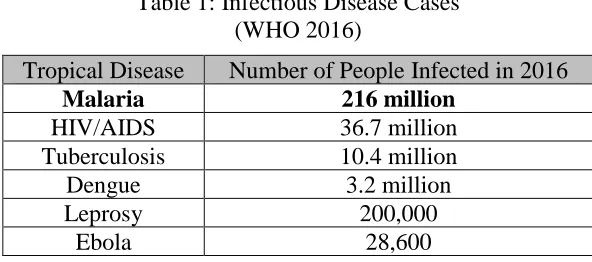
In 2016, there were an estimated 216 million cases of malaria in 91 countries (World
Health Organization), which surpasses the prevalence of other tropical or neglected diseases such
Table 1: Infectious Disease Cases (WHO 2016)
Tropical Disease Number of People Infected in 2016
Malaria 216 million
HIV/AIDS 36.7 million
Tuberculosis 10.4 million
Dengue 3.2 million
Leprosy 200,000
Ebola 28,600
Around 445,000 deaths occurred in 2016 as a result of this disease. The World Health
Organization (WHO) Global Malaria Program, in collaboration with governments from endemic
countries and regulatory authorities, has factored in safety and surveillance, drug efficacy, and
financial burden in their efforts directed at accelerating progress towards malaria elimination
(Global Technical Strategy for Malaria, 2015). According to the WHO 2016 World Malaria
Report, there was a 9.3 % decrease in the number of reported cases between 2006 and 2016. The
Global Fund, one of the largest malaria prevention organizations, disbursed over USD 9.1 billion
in 2016, a 90% increase from the funding that was provided a decade earlier (Global Fund,
2017). The opposing trends of decreasing estimated cases per year and increasing costs for
malaria prevention (see Figure 1) underscore the need for new strategies for mitigating of the
Figure 1: Relationship between Global Spending Trends and Estimated Cases of Malaria (WHO World Malaria Report, 2010 and 2017; Global Fund Malaria Financials, 2017)
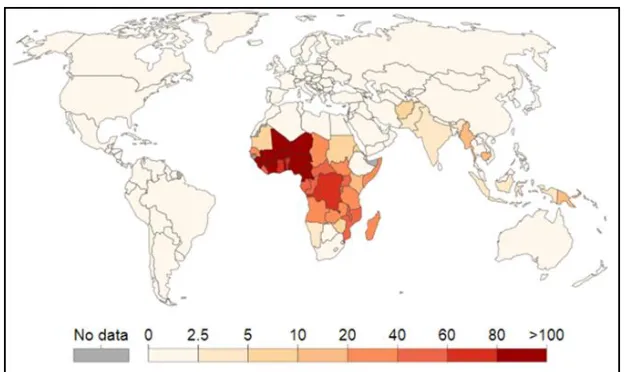
Regions of South America, South and South-east Asia, and Sub-Saharan Africa had a
stable prevalence of malaria in 2009, as shown in Figure 2. Regions closer to the equator had
higher prevalence, and regions farther away were either formerly malarious or never malarious.
Seven years later, the larger number of deaths from malaria was concentrated in sub-Saharan
Africa, as shown in Figure 3. Based on this report, although the number of cases may have
decreased in some developed nations, malaria is still severe in countries that are in low and
emerging economies. Currently, international agencies such as the USAID, WHO, Wellcome
Trust, Roll Back Malaria Group, and the Presidential Malaria Initiative (PMI) have invested
millions of dollars to prevent and decrease the spread of malaria in sub-Saharan Africa.
Professionals in medicine, entomology, epidemiology, the built environment, and public health
policy have contributed towards the development of international programs and scientific
Figure 2: Severity of Malaria Prevalence in 2009 (World Bank, 2016)
Theoretical Background
It is known that effective design and construction of buildings and other assets can help
combat the spread of vector-borne diseases (Tusting et al., 2015; Menger et al., 2014; Marshall
and De Silva, 2012; Gamage-Mendis, 1991). This is evident from the malaria intervention
program that was implemented during the construction of the Panama Canal. According to the
Centers for Disease Control and Prevention (CDC), built environment–related strategies such as
pool drainage near homes, bush cutting, and building screening resulted in a decrease in the
percentage of the workforce hospitalized because of malaria from 9.6 % to 1.6 % between 1905
and 1909 (CDC, 2016).
There are several interventions that have leveraged lessons learned from the Panama
Canal project. Examples include modification of building envelopes through reducing the size
and/or number of openings such as windows (Ogoma et al., 2009). These reduce the ease with
which mosquitoes gain access to a building. Other efforts focus on material selection given that
there is a positive correlation between the use of traditional building materials and techniques,
and the prevalence of malaria (Tusting et al., 2015). There is also evidence of a relationship
between management of existing drainage systems and larval control (Tizifa et al., 2018), in
which poor drainage can provide ideal conditions for breeding the malaria-causing mosquito.
Although these types of intervention programs have resulted in some positive effects with
respect to malaria prevention, the authors contend that their impact is limited because they are
largely driven from a public health perspective.
A comprehensive review of published literature did not reveal any evidence of built
environment professionals responsible for critical decision-making responsibilities featuring
the overlap between the public health champions of housing modification for the control of
malaria and the built environment stops at the level of construction trades.
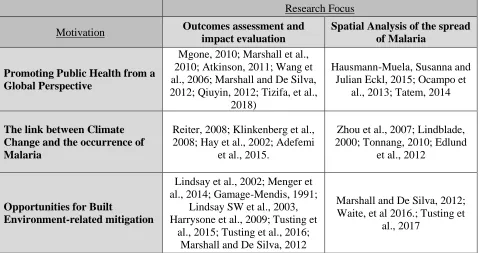
Table 2: Categorization of Literature Reviewed
Research Focus
Motivation Outcomes assessment and
impact evaluation
Spatial Analysis of the spread of Malaria
Promoting Public Health from a Global Perspective
Mgone, 2010; Marshall et al., 2010; Atkinson, 2011; Wang et al., 2006; Marshall and De Silva, 2012; Qiuyin, 2012; Tizifa, et al.,
2018)
Hausmann-Muela, Susanna and Julian Eckl, 2015; Ocampo et
al., 2013; Tatem, 2014
The link between Climate Change and the occurrence of Malaria
Reiter, 2008; Klinkenberg et al., 2008; Hay et al., 2002; Adefemi
et al., 2015.
Zhou et al., 2007; Lindblade, 2000; Tonnang, 2010; Edlund
et al., 2012
Opportunities for Built
Environment-related mitigation
Lindsay et al., 2002; Menger et al., 2014; Gamage-Mendis, 1991;
Lindsay SW et al., 2003, Harrysone et al., 2009; Tusting et
al., 2015; Tusting et al., 2016; Marshall and De Silva, 2012
Marshall and De Silva, 2012; Waite, et al 2016.; Tusting et
al., 2017
There is evidence of cross-disciplinary collaboration in efforts focusing on investigating:
1) clinician-versus-patient perception of malaria diagnosis (Chandler et al., 2008); 2) impact of
different public health models on policymaker and developer decisions (Nunes et al., 2013); 3)
the role of bioinformatics modeling techniques (Suhanic, 2009); 4) the role that social
entrepreneur and community sector organizations can play in improving both the diagnosis of
malaria and the implementation of interventions (Allen et al., 2010); and 4) the development of
strategic partnerships between the public and private sectors (Njau et al., 2009). There have been
some positive outcomes arising from such efforts. However, there is still a need for more work to
be done to fully leverage the existing opportunity to increase the impact of mitigating the risk of
malaria through focusing on built environment-related factors. According to a meta-analysis and
significant risk factor for malaria. There is, therefore, a critical need to generate actionable
insights on both the magnitude and complexity of this problem.
The nature of the problem involves a public health aspect, built environment aspect, and a
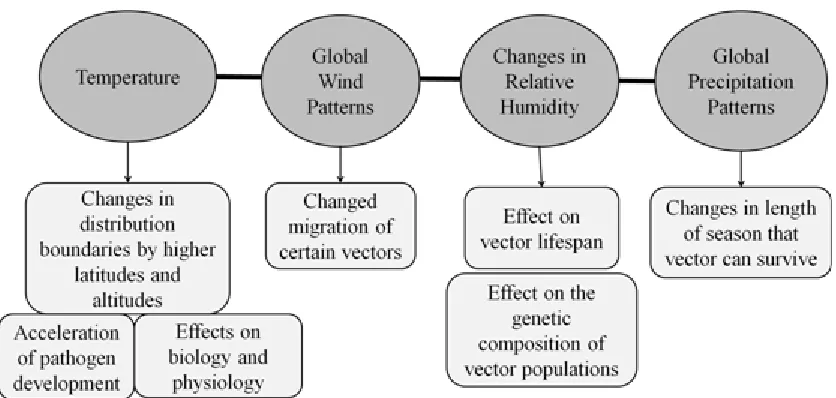
bridge between both fields. In particular, climate change is expected to create environmental
conditions that have adverse effects on the incidence of VBDs (see Figure 4). For example,
abiotic factors such as wind pattern, precipitation pattern, and relative humidity can influence
vector migration, seasonal population density, and genetic composition of vector populations
(Climate Nexus, 2016).
Figure 4: Direct Effects of Climate Change on Disease Vectors
Adapted from (Columbia Earth Institute Climate Nexus, 2015)
Themes that may share an indirect link towards built environment health may also factor
into increased risk of malaria propagation. Such examples include social determinants of health,
partnerships, and healthcare access. For instance, one socio-cultural factor that influences the
prevalence of malaria, particularly in children, is the hierarchical structure of families among
communities with social stratification in parts of Nigeria (Adefemi et al., 2015). Children under
five years of age have a greater need than adults for nutritiously balanced meals because they do
not have a strong built-in immunity. In areas where food is scarce, fathers hold the right to the
best meal, and children are often left with food that does not permit adequate growth and
development for their age (Adefemi et al., 2015). Additionally, some barriers to effective
intervention strategies that involve a cross-disciplinary consideration include access to public
health information and level of spirituality. Some communities may have limited access to
information in print or electronic media. Adefemi et al. (2015) noted that the presence of malaria
under the compass of ill-health is often related to the presence of demons or evil spirits, which
require herbal and spiritual remedies or behavioral changes.
The Built Environment Opportunity
Mitigating the risk of VBDs should be one of the design objectives for buildings in
countries with a high incidence of malaria. An existing built environment–driven, healthy
building movement that can provide the starting point for the proposed approach (Dodge Data
and Analytics, 2016). Common issues explored in such initiatives include indoor pollutants,
particularly those that arise from the use of toxic chemicals in paint and other building finishes
(SmartMarket Report, 2016). Some efforts focus on investigating the risk of respiratory illness
that can be linked to moisture-related problems such as mold. It is worth noting that the existing
healthy building initiatives are championed by stakeholders in western countries. The focus,
Canada, the U.K., and Australia that do not have a big problem with respect to VBDs. There are
also some significant opportunities for education with respect to the different types of diseases
that have a built environment-related contributing factor. In its comprehensive study of the
interface between buildings and health, Dodge Analytics (2016) specifically underscored the
need for more research and data on how to improve building health impacts and more public
awareness campaigns on the significance of this interface. In addition, the economic constraints
associated with generating public awareness should be noted. Proper economic measures, such as
having the resources necessary to create an environment protective against malaria, are key
factors towards enhancing the impact of public awareness on malaria mitigation.
There is a critical need to increase awareness of the different ways through which the
main activities undertaken throughout the life cycle of a construction project can propagate the
spread of malaria. Design professionals are either directly responsible for or uniquely positioned
to influence decision making in each of these phases. The missed opportunities for them to
contribute to the risk of malaria is outlined below:
1) Preliminary Phase: Selection of a site near an open surface water body may increase the
number of breeding sites for the malaria vector.
2) Conceptual Design: The placement and size of openings as well as the orientation of the
building envelopes affects the vector accessibility both into and out of the building.
3) Detailed Design: Certain types of material on housing features such as mud walls,
thatched roofs, and earth, sand, dung, and stone flooring increase vector attraction into
the site (Wanzirah, 2015).
4) Construction: Excavation work results in opportunities for several pools of stagnant
5) Facilities Management: Drains and ditches are common habitats for mosquitoes to breed
(Mattah, 2017). Poorly installed pipes and drain blockage can lead to poor sanitation or
reduced water flow. The accumulated stagnant water can become a favorable habitat.
6) End of Life/Disuse: Construction and demolition waste contributes to the environmental
problem of landfills.
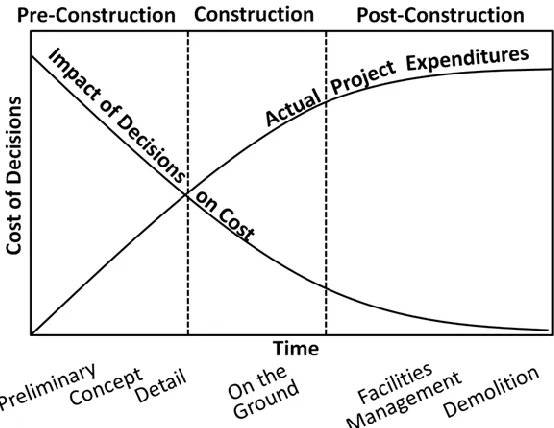
As shown in Figure 5, the largest window of opportunity for making an impact in an
effective and efficient manner is during the conceptual design phase. There is a cost associated
with changes made in subsequent phases that increases with time. Therefore, it is economically
more beneficial to engage with professionals responsible for making critical design decisions
during the formative stage of a project.
Figure 5: Cost-Benefit Curve — Early Decision Making in Construction Life Cycle Adapted from (American Institute of Steel Construction, 2018)
There is a sense of urgency with respect to addressing the missed opportunity to leverage
design decisions because of rapid urbanization rates. Half of humanity, 3.5 billion people, live in
cities (United Nations, 2018), and it is estimated that by 2030, almost 60 percent of the global
the world that are more adversely affected by malaria are going to experience the highest
urbanization rates in the next several decades. In fact, there is a strong, positive correlation
between increased urbanization and increased number of malaria infections (Donnelly et. al
2005). This is also apparent from the reported trends for malaria-prone regions in urban Kenya
and Tanzania. Based on UN projections, Tanzania’s population is expected to grow by 22%
between 2014 and 2050, peaking at an estimated 68.5 million people (World Bank, 2018).
During the same timeframe, Kenya's urbanized population is expected to grow by 19%, resulting
in an estimated 42.6 million urban inhabitants. Rapid urbanization comes with increased
construction activities because of growing demands for housing.
There is a growing urban slum population in both Kenya and Tanzania that is expected to
increase seeing that the demand for housing is significantly much higher than the formal
construction sector can supply. This is exemplified by the situation in Tanzania where the
housing deficit is as high as 3 million (Kimani, 2017). There is a positive correlation between
inadequate housing and the risk of malaria. Slum conditions such as poorly monitored land use
and urban agricultural practices result in higher mosquito biting rates (Patz et al., 2004). Areas of
low socioeconomic status, often at the periphery of cities, are more likely to have poor quality
housing, unpaved roads, and reduced access to healthcare. These factors, combined with rapid
urban expansion and ever-increasing city boundaries, result in increased transmission of malaria
that town planners are unable to keep up with (De Silva and Marshall, 2012). Without
considering the lessons learned from the development of the Panama Canal, the economic,
medical, and social costs are expected to persist in the future. There is evidence of an opportunity
effective decision support tool could utilize the knowledge of both public health and design and
construction collaboratively.
The extent to which built environment-related factors can be used to mitigate the spread
of malaria during the construction life cycle requires a deeper understanding of several risk
factors present during the entire construction life cycle. Changes in global wind pattern and
increased rainfall are examples of risk factors that propagate the spread of the disease. The risk
of malaria infection is higher at night, given that the Anopheles mosquitoes in Sub-Saharan
Africa mainly bite between 10 p.m. and 4 a.m. when most people are indoors (Tusting et al.,
2016). Weather-related factors such as increased precipitation, relative humidity, and
temperature conditions can also create a more suitable habitat for the malaria vector (Climate
Nexus, 2015). A study focusing on land use and malaria transmission in Uganda found that for
every 1 °C increase in average minimum temperature, there was a 77% increase in Anopheles
gambiae per each model house (Lindblade, 2000). When such favorable conditions coincide with
the construction phase of a project, the breeding potential for malaria-causing mosquitoes also
increases significantly. The construction phase is characterized by pools of stagnant water
developing in areas of intense excavation (Reiter, 2008) and work areas with earth removal work
(Lipscomb, 2006). The sources of the water can be leakages from temporary water supply points
and storm water that is not drained promptly (Yhdego and Majura, 1988).
Some of the ways through which the built environment contributes to the risk of malaria
transmission become more apparent during the facility use phase. Malaria-causing mosquitoes
access the building through the inlets and outlets included in the design of the building envelope
to allow air exchanges between the exterior and the interior. The malaria mitigation initiatives
focusing on reducing the size and number of openings (Sternberg, 2016). It is critical to engage
built environment design professionals to ensure that the desired building modifications do not
result in undesirable effects. Because indoor air quality (IAQ) and comfort of the occupants
predicates directly on having optimal air exchanges, changes to the openings can result in
unfavorable conditions for humans (Huizenga et al., 2006). Building occupants in malaria-prone
areas rely on natural ventilation to attain optimal IAQ. Reducing air exchanges has a direct
impact on thermal comfort of the occupants encouraging them to spend more time outdoors,
particularly in evenings, where they have a much higher risk of being bitten by a malaria-causing
mosquitoes. It is also known that poor IAQ can increase the risk of respiratory diseases (Ezzati
and Kammen, 2002). Having the right IAQ is also important for managing air-borne pathogens.
Therefore, it is important to align all decisions that affect the size, exact location, and number of
openings with the principles of building physics. Ensuring that optimal ventilation rates are
attained requires an in-depth understanding of the building as a system of system. Mitigating the
risk of malaria from a built environment perspective is, therefore, a complex undertaking. Each
decision has many associated linkages and interdependencies. Outside of working in a
synergistic manner with the experts in the design and construction of buildings, any
building-related intervention will be based on a partial view of what constitutes a healthy building.
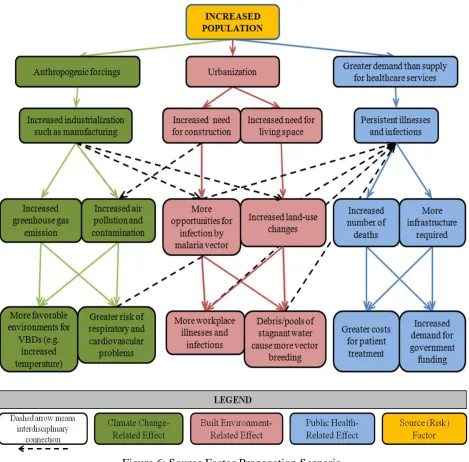
The complexity of mitigating the risk of malaria transmission through managing built
Figure 6: Source Factor Propagation Scenario
Rapid increase in population results in increased demand for the Earth’s energy budget.
Human activities such as agriculture and transportation technology serve as factors that increase
greenhouse gas emissions and contaminate the atmosphere with pollutants. These risks increase
the number and severity of human health complications such as respiratory and cardiovascular
illnesses. Air contamination also causes factors such as temperature, rainfall, and precipitation to
sites and faster maturation times for mosquito larvae (Nabi and Qader, 2009). The effect of
weather-related factors are thus compounded by climate change. Population increase will
continue to propagate the spread of malaria due to its association with climate change-related
risk factors.
Rapid population growth results in increased demand for housing. Given that the
population is growing more rapidly in the already congested urban areas, the population density
is also increasing rapidly. The rapid growth in population ultimately results in land use changes
with previously forested areas being cleared to make room for human habitation. More events in
the construction life cycle create more opportunities for vector–human interaction. This
association, propagated by factors like debris and stagnant water pools, can cause more illness as
more land is used for construction. As population in villages and towns and the building of dams
increases, humans will get closer to mosquito breeding grounds (Nabi and Qader, 2009). This
increase in infection will persist because of the relationship between the built environment and
malaria.
An increase in population results in more health problems due to increased human–
human contact and human–environment contact. Greater demand for healthcare services puts
additional pressure on the health care system in malarious regions that are already
resource-constrained. The increase in population contributes to an increase in the number of reported
VBD-related illnesses and deaths. There is also an increases in the cost of healthcare that can be
attributed to rapid population growth rates. This could partially explain the escalating expenses
associated with malaria prevention that were discussed in the introductory chapter.
The complexity of the mitigation of malaria is captured by the interdisciplinary nature of
associated with climate change such as coal mining and energy consumption from transportation
and trade affect the built environment. This is due to deforestation and changes in land use,
which are influential components of the primary stage of the construction life cycle. Increased
construction creates greater opportunities for workplace illnesses that can increase the demand
for public health resources. This reinforces the cause and effect relationships that persist under
the public health context described above. Each risk factor propagates within and across
disciplines in unique pathways. Cross-sectoral collaboration is an effective tool for
understanding the complexity of these system-in-system interactions.
As previously stated, there has been a significant increase in the amount of money spent
in mitigating the risk of contracting malaria with, for example, Global Fund spending as much as
USD 9.1 billion in 2016, a 90% increase from the funding that was provided from 2006 to 2016
(Global Fund Malaria Financials, 2017). During this period, the population of world grew from
6.60 billion to 7.44 billion. For Kenya and Tanzania, the population grew from 36 to 48 million
and 39 to 55 million, respectively (World Bank, 2018). The resulting increased exposure to the
Anopheles vector increases the pressure on healthcare resources through expenses such as
hospital utilities, medical supplies, and government spending for research funding, which has a
direct bearing on the development timeline for new antimalarial drugs that combat antibiotic
resistance.
Population growth is one of many source factors that can trigger consecutively larger
impact at scale across sectors. The wide range of risk factors involved require a similarly wide
framework for successful intervention. The use of a decision network tool can address these
industries to discuss the pertinent issues in a way that mutually reinforces what each discipline is
uniquely positioned to do both efficiently and effectively.
Discussion and Recommendations
Because the built environment is a complex system of systems, there are some significant
opportunities for education regarding malaria mitigation efforts that need to be addressed before
interventions such as building envelope modification can have impact at scale in a sustainable
manner. Bridging the existing knowledge gaps requires collaboration across several disciplines.
One of the initial priority action items has to be identifying and dissemination information on the
specific areas where working in disciplinary silos has resulted in missed opportunities for
synergistic action. The work presented in this thesis is directed at doing just that. There is also a
need for characterization of the nature of relationships that exists across the known source
factors. To the best of the authors’ knowledge, this is the first study that has examined the
sources factors from the perspective of built environment-related design decisions with the goal
of mapping existing interlinkages and interdependencies. This can be achieved using the
metaphor and model of the web of causation, which is an approach that has been used by
epidemiologists in health studies to map primary and secondary factors as well as existing
factor-to-factor interactions that may have a reinforcing effect. The authors applied this approach to the
built environment–related factors that contribute to the propagation of malaria. The outcome of
this endeavor is summarized in Table 3.
Table 3: Opportunities for Collaboration with Leaders from Diverse Areas
Thematic Area Decision Team Members
Urbanization and Environmental
Sustainability Urban Planners and Designers
Climate Change Researchers and Advocates
Land Use and Development Architects and Engineers
Repairs and Retrofits Engineers, Designers, and Builders
New and Emerging Technologies Innovators and Humanitarian Entrepreneurs
Leading Global Organizations WHO, PMI, Global Fund, USAID
Permit Requirements Code Approvers
Healthy Placemaking Public Health Scientists
Social Determinants of Health Social Epidemiologists Scientific and Medical Research Clinical Professionals Government Advocacy and Policy
Funding Budget Planners
The analysis done as part of this research revealed a number of thematic area-specific
opportunities for informed design decision making within interdisciplinary teams of overlapping
industries. Examples of specific opportunities include collaboration with policy professionals,
urban planners, research scientists, and epidemiologists. Table 3 also highlights areas in which
built environment specialists are uniquely positioned to make an impactful contribution. For
example, public health professionals who specialize in healthy placemaking can champion the
exchange of knowledge with built environment professionals by participating in the now
commonly run pre-project planning workshop. This would encourage the entire design team to
prioritize on the selection of project sites for construction that reduce the risk of malaria
propagation.
The analysis also established that there was a need for a knowledge sharing and
dissemination platform promoting the kind of cross-disciplinary deliberations that can promote
synergy in malaria prevention efforts. The envisioned platform would promote cross-disciplinary
collaboration in knowledge creation, while also increasing opportunities through which relevant
information could be pushed and/or pulled into a decision support tool for built environment
The information on specific ways through which the built environment can make a
positive contribution to malaria prevention should be made available during the conceptual
design phase. The impact with respect to cost savings is higher during this phase. There are still
other ways through in which a more intentional emphasis on making mitigating the risk of VBDs
a priority for design professionals can translate to cost savings in subsequent stages of the
construction process. The design of a built asset is often based on some assumptions being made
because of unknown variables. There is an expectation that some changes will be made
throughout the entire construction phases as more information becomes available (Motawa et al.,
2007). This results in requests for revisions to the contract documents that are communicated to
the design team through change orders. Information on ways through which design decisions can
be leveraged for impact in the fight against malaria can be customized to match the opportunities
within the specific construction phase associated with a requested change order.
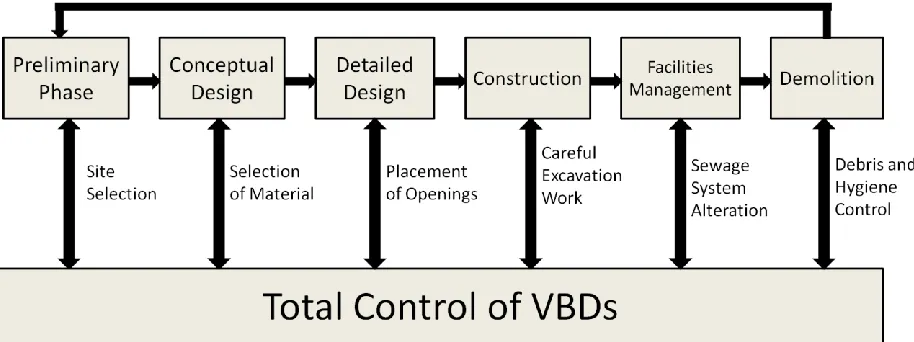
Clearly, there is a need for knowledge to be shared across different disciplines. The
authors contend that this need can be addressed through developing a knowledge management
framework with the features depicted in Figure 7. This conceptual architecture for what will be
used as knowledge management platform once fully developed, is based on the exemplary
sources factors for the risk of VBDs that can be linked to decision making during the design and
Figure 7: A Knowledge Management Framework for Professionals with Influence in Exchanging Information about VBD Risk Mitigation
Site selection is an important course factor that can be leveraged in malaria mitigation
efforts. Project sites that have close proximity to dams, buildings that are dilapidated, and
swamps increase disease prevalence. Creating a systematic procedure and checklist to capture all
source factors can encourage the design team and building owners to consider the surroundings
of potential project sites before any decision that cannot be easily reversed is made.
The appropriate selection of material can address the observed problem of buildings
having been constructed using traditional materials and becoming more susceptible to mosquito
intrusion. It is worth noting that traditional material are considered to be more sustainable,
considering their carbon footprint. The authors recommend that rather than encouraging their
disuse, efforts should be invested in researching ways through which material science can be
used to address the reasons why mosquitoes prefer buildings that have been constructed using
traditional materials.
The existing knowledge on specific ways through which openings can increase ease with
optimization strategy used to specify the size and location of windows, doors and vents in new
building envelopes.
The development of a strategy for managing pools of stagnant water that form in
excavated areas will increase number of favorable sites for mosquito larvae to mature. Having a
robust strategy for promptly draining stagnant pools can be factored into existing dewatering
strategies. Foundation work usually has a budget for pumping out water during excavation to
allow for the construction of foundation elements following heavy rains.
Retrofits, repairs, and building modifications focused on malaria mitigation should
consider the impact of indoor air quality and human comfort on the risk of malaria. The facilities
management phase also models successful VBD control when material of construction and
surrounding moisture are considerations. A knowledge management framework would provide
value by sharing proper techniques for installation and appropriate materials for piping in order
to ensure long lifespan and minimal need for repair.
The impact of the demolition of a building on the risk of VBD can vary significantly
depending on whether or not there is an interest in salvaging some of the material. In general,
construction and demolition waste often ends up in landfills, which presents several
environmental problems including the creation of favorable breeding conditions for mosquitoes.
There is growing interest in shifting the construction industry to a more circular economy
through encouraging both recycling and upcycling. The proposed knowledge management
platform can leverage this interest to promote awareness on the link between how demolition
waste is managed and the risk of VBDs.
Because malaria is a complex problem, it must be addressed through both a bottom-up
as outlined in the preceding paragraphs, there will be a need for the proposed knowledge
management platform to have linkages to portals where professionals working in institutions and
organizations that have a regional, national and global influence exchange information. These
include: 1) Public health forums such as those managed by WHO, PMI, and USAID, which
provide worldwide funding and support for actionable intervention methods like SETs, ITNs,
and IRSs; 2) Government programs in, for example, the Ministry of Health initiatives that have a
presence at both the national and regional level; 3) Professional organizations such as the
Architectural Association of Kenya, which have convening power required to disseminate
information at scale through conferences, workshops and continued professional educational
programs; and 4) Donor organizations and funding agencies such as the Bill and Melinda Gates
Foundation, which are increasingly advocating for cross-disciplinary synergies in the fight
against malaria.
While the presented study is important, this paper does not address the cultural ideas of
the built environment. Each culture understands and perceives the suggested recommendations
differently, so it is crucial to bridge the empirical, historical knowledge that exists within social
experience and ecological structures of the locations under study with the knowledge gained
from literature to generate the most sustainable form of impact.
Our study recognizes economic constraints have a domino effect in making a sustainable
social development and vector-borne free built environment. Therefore, the proposed built
environment strategy will be more successful if performed in conjunction with risk mitigation
efforts such as poverty addressing initiatives, educational campaigns, sustainable public health
Works Cited
Adefemi K, Awolaran O, Wuraola C. "Social and environmental determinants of malaria in
under five children in Nigeria: a review." International Journal of Community Medicine
and Public Health. 2. 4. (2015): 345-350. Print. 17 Mar 2018.
Allen, Lisa K, et al. " Using the social entrepreneurship approach to generate innovative and
sustainable malaria diagnosis interventions in Tanzania: a case study." Malaria Journal.
9. 42. (2010) Print. 17 Mar 2018.
Atkinson, J.A. et al." The architecture and effect of participation: a systematic review of
community participation for communicable disease control and elimination. Implications
for malaria elimination." Malaria Journal. 10. 225. (2011). Print. 17 Mar 2018.
Chandler, Clare IR. et al. "Guidelines and mindlines: why do clinical staff over-diagnose malaria
in Tanzania? A qualitative study." Malaria Journal. 7. 53. (2008) Print. 17 Mar 2018.
"Climate Risk and Spread of Vector-Borne Diseases." Climate Nexus. Columbia Earth Institute,
n.d. Web. 18 Dec 2016.
"Dengue and severe dengue." World Health Organization. World Health Organization, n.d. Web.
20 Sept 2017.
"Disbursements 2002-2017." Financials. The Global Fund. 20 Jun 2017. Web. 18 Mar 2017.
“Ebola virus disease.” Media Centre. World Health Organization, Jan 2017. Web. 20 Sept 2017.
Edlund, Stefan, et al. " A global model of malaria climate sensitivity: comparing malaria
response to historic climate data based on simulation and officially reported malaria
Ezzati, Majid and Daniel M. Kammen. "The Health Impacts of Exposure to Indoor Air Pollution
from Solid Fuels in Developing Countries: Knowledge, Gaps, and Data Needs."
Environmental Health Perspectives. 110. 11. (2002): 1057-1068. Web. 17 Mar 2018.
"Fact sheet - Latest statistics on the status of the AIDS epidemic." The Joint United Nations
Program on HIV/AIDS (UNAIDS). UNAIDS, n.d. Web. 9 Jan 2017.
"Fact sheet about Malaria." Malaria. World Health Organization, n.d. Web. 23 Mar. 2017.
"Fact sheet about Malaria." World Health Organization. World Health Organization, n.d. Web.
23 Mar 2017.
Gamage-Mendis, Asoka C. et al. "Clustering of malaria infections within an endemic population:
risk of malaria associated with the type of housing construction." American Journal of
Tropical Medicine and Hygiene. 45. 1. (1991): 77-85. Print. 17 Mar 2018.
“Global Leprosy Program.” Global Leprosy Program. WHO South-East Asia Regional Office,
n.d. Web. 20 Sept 2017.
"Global Technical Strategy for Malaria 2016-2030." Malaria. World Health Organization, 22
Jan. 2016. Web. 19 Mar 2018.
"Goal 11: Make cities inclusive, safe, resilient and sustainable." Sustainable Development Goals:
17 Goals to transform our world. United Nations. 18 Feb 2018. Web. 17 Mar 2018.
Harrysone, Atieli. et al. " House design modifications reduce indoor resting malaria vector
densities in rice irrigation scheme area in western Kenya." Malaria Journal. 8. 108.
(2009) Print. 17 Mar 2018.
Hausmann-Muela, Susanna and Julian Eckl. "Re-imagining malaria – a platform for reflections
to widen horizons in malaria control." Malaria Journal.14. 180. (2015) Print. 17 Mar
Hay, Simon I. "Climate change and the resurgence of malaria in the East African highlands."
Nature. 415. 905-909. (2002) Print. 17 Mar 2018.
"Healthy Buildings Core Purpose." Dodge Data and Analytics. Healthy Buildings International,
n.d. Web. 17 Mar 2018.
Huizenga, C. et al. "Air quality and thermal comfort in office buildings: Results of a large indoor
environmental quality survey." Indoor Environmental Quality (IEQ). Proceedings of
Healthy Buildings. 3. (2006): 393-397, Lisbon, Portugal. Web. 17 Mar 2018.
Kimani, Eric. "Tanzania’s housing deficit at three million units." Construction Review Online.
Africa for Africa. 4 Feb 2017. Web. 17 Mar 2018.
Klinkenberg, Eveline. et al. " Impact of urban agriculture on malaria vectors in Accra, Ghana."
Malaria Journal. 7. 151. (2008) Print. 17 Mar 2018.
Lindblade, Kim A. et al. "Land use change alters malaria transmission parameters by modifying
temperature in a highland area of Uganda." Tropical Medicine and International Health.
5.4. (2000): 263-274. Print. 17 Mar 2018.
Lindsay, SW, PM Emerson, and JD Charlwood. " Reducing malaria by mosquito-proofing
houses." Trends in Parasitology. 18. 11. (2002): 510-514. Print. 17 Mar 2018.
Lindsay, SW. et al." Changes in house design reduce exposure to malaria mosquitoes." Tropical
Medicine and International Health. 8. 6. (2003): 512-517. Print. 17 Mar 2018.
Lipscomb, Hester J, et al. "Injuries from slips and trips in construction." Applied Ergonomics.
37. 3. (2006): 267-274. Print. 17 Mar 2018.
Lucy S. Tusting, Barbara Willey, and Jo Lines. "Building malaria out: improving health in the
Marshall, John. M. et al. "Perspectives of people in Mali toward genetically-modified
mosquitoes for malaria control." Malaria Journal. 9. 128. (2010):S5. Print. 17 Mar 2018.
Menger, DJ, et al. "A push-pull system to reduce house entry of malaria mosquitoes." Malaria
Journal. 13. 119. (2014) Print. 17 Mar 2018.
Mgone, Charles S. " Strengthening of the clinical research capacity for malaria: a shared
responsibility." Malaria Journal. 9. Suppl 3. (2010):S5. Print. 17 Mar 2018.
Nabi, SA and SS Qader. "Is Global Warming likely to cause an increased incidence of Malaria?"
Libyan Journal of Medicine. 4. 1. (2009): 18-22. Web. 17 Mar 2018.
Njau, Ritha, et al. "Implementation of an insecticide-treated net subsidy scheme under a
public-private partnership for malaria control in Tanzania – challenges in implementation." 8.
201. (2009) Print. 17 Mar 2018.
Nunes, Julia K et al. “Modeling the Public Health Impact of Malaria Vaccines for Developers
and Policymakers.” BMC Infectious Diseases. 13. 295. (2013) Print. 17 Mar 2018.
Ocampo, Alex J. et al. " Using search queries for malaria surveillance, Thailand." Malaria
Journal. 12. 390. (2013) Print. 17 Mar 2018.
Ogoma, Sheila B., et al. "Window screening, ceilings and closed eaves as sustainable ways to
control malaria in Dar es Salaam, Tanzania." Malaria Journal. 8. 221. (2009). Print. 17
Mar 2018.
Prathiba M. De Silva and John M. Marshall. “Factors Contributing to Urban Malaria
Transmission in Sub-Saharan Africa: A Systematic Review.” Journal of Tropical
Medicine, 2012. 819563. (2012) Print. 18 Mar 2018.
"Project Delivery Methods." Why Steel. American Institute of Steel Construction, n.d. Web. 17
Qiuyin, Qi, et al. "The effects of urbanization on global Plasmodium vivax malaria
transmission." Malaria Journal. 11. 403. (2012) Print. 17 Mar 2018.
Reiter, Paul. “Global Warming and Malaria: Knowing the Horse before Hitching the Cart.”
Malaria Journal. 7. Suppl 1. (2008): S3. PMC. Print. 17 Mar 2018.
Roser, M. "Malaria." Our World In Data. Our World In Data, 2016. Web. 23 Mar 2017.
Sternberg, Eleanore D. et al."Eave tubes for malaria control in Africa: initial development and
semi-field evaluations in Tanzania." Malaria Journal. 15. 447. (2016) Print. 17 Mar
2018.
Tatem, Andrew J. et al. "Integrating rapid risk mapping and mobile phone call record data for
strategic malaria elimination planning." Malaria Journal.13. 52. (2014) Print. 17 Mar
2018.
“10 facts on HIV/AIDS.” World Health Organization. World Health Organization, n.d. Web. 20
Sept 2017.
"The Drive Toward Healthier Buildings 2016: Tactical Intelligence to Transform Building
Design and Construction." SmartMarket Report. SmartMarket Drive Towards Healthy
Buildings, 2016. Web. 17 Mar 2018.
"The Panama Canal." Centers for Disease Control and Prevention. Centers for Disease Control
and Prevention, 15 Sept. 2015. Web. 9 Jan 2017.
Tizifa, Tinashe A., et al. "Prevention Efforts for Malaria." Curr Trop Med Rep. 5. 1. (2018):
41-50. Print. 20 Apr 2018.
Tonnang, Henri EZ. "Predicting and mapping malaria under climate change scenarios: the
potential redistribution of malaria vectors in Africa." Malaria Journal. 9. 111. (2010)
"Tuberculosis (TB)." World Health Organization. World Health Organization, n.d. Web. 20 Sept
2017.
Tusting Lucy S., et al. "The evidence for improving housing to reduce malaria: a systematic
review and meta-analysis." 14. 209. (2015). Print. 17 Mar 2018.
Tusting, Lucy S., et al. "Housing Improvements and Malaria Risk in Sub-Saharan Africa: A
Multi-Country Analysis of Survey Data." PLoS Med. 14. 2. (2017): e1002234. Print. 17
Mar 2018
Waite, Jessica L., Penelope A. Lynch, and Matthew B. Thomas. "Eave tubes for malaria control
in Africa: a modelling assessment of potential impact on transmission." 15. 1. (2016):
449. Print. 17 Mar 2018.
Wang, Shr-Jie. et al. " Rapid Urban Malaria Appraisal (RUMA) III: epidemiology of urban
malaria in the municipality of Yopougon (Abidjan)." Malaria Journal. 5. 26. (2006).
Print. 17 Mar 2018.
Wanzirah, Humphrey, et al. "Mind the Gap: House Structure and the Risk of Malaria in
Uganda." 10. 1. (2015): e0117396. Print. 17 Mar 2018.
West Suhanic, Ian Crandall and Peter Pennefather. "An informatics model for guiding assembly
of telemicrobiology workstations for malaria collaborative diagnostics using commodity
products and open-source software." Malaria Journal. 8. 164. (2009) Print. 17 Mar 2018.
World Bank. "Population, Total." 2018. Web. 3 Mar 2018.
World Malaria Report 2010. Geneva: World Health Organization; 2010.
World Malaria Report 2014. Geneva: World Health Organization; 2014.
World Malaria Report 2015. Geneva: World Health Organization; 2015.
World Malaria Report 2017. Geneva: World Health Organization; 2017.
Yhdego, Michael and Paul Majura. "Malaria Control in Tanzania." Environment International.
14. 6. (1988): 479-483. Print. 17 Mar 2018.
Zhou, Guofa, et al. "Changing Patterns of Malaria Epidemiology between 2002 and 2010 in
Western Kenya: The Fall and Rise of Malaria." PLoS ONE. 6. 5. (2011) Print. 17 Mar