Type of the Paper (Article)
1
Enhancing Student Employability in Cloud
2
Computing Through Industry Collaboration: A Case
3
Study with AWS Academy
4
Gokop L. Goteng
5
Queen Mary University of London, Mile End Road, London, UK; [email protected]; +442078825555
6
7
8
9
10
11
12
13
14
15
16
17
18
19
20
21
Abstract: The continuous increase in tuition fees in university education in many countries requires justification by the university authorities through improved learning resources that can guarantee employment opportunities for the students through hands-on industry training. This paper describes the design of curriculum of cloud computing module in collaboration with Amazon Web Services (AWS) Academy to include industry-based practical hands-on labs in the curriculum to improve the employability of Internet of Things (IoT) engineering students. This study introduces industry best practices and hands-on labs in cloud computing and discovered that students’ understanding and learning experience in the subject increase when exposed to real-life applications. The study blends academic theories in cloud computing with their applications as obtained in industry to enable students to have both the theoretical and practical skills that will prepare them for careers in cloud computing. To achieve this, cloud computing lecturers were trained by AWS Academy as a prerequisite to ensure that the tutors themselves acquire hands-on proficiency in cloud computing technologies. The study finds that students tend to be more engaged and learn better when academic theories and concepts are combined with real-world applications as obtained in the industry.
Keywords: Amazon Web Services Academy; Cloud computing; Employability.
22
23
1. Introduction
24
The investments in education by governments, parents and the industry keep increasing to
25
ensure that high quality education is given to students. This effort is more visible in disruptive and
26
fast changing engineering and science disciplines [1-3]. Cloud computing, Internet of Things (IoT)
27
and telecommunication technologies are some key disciplines that are witnessing substantial
28
interest in investments due to their economic potentials. Thus, encouraging universities to include in
29
their curriculums knowledge that offers skills that improve employability of students after
30
graduation [4][5][6]. A pedagogical approach that links knowledge with practical competence is
31
what employers are looking for in graduates of universities [7]. This is more so in technologically
32
disruptive disciplines such as cloud computing and IoT as the curriculum needs to be constantly
33
updated to meet current engineering and technological requirements of the industry [5]. The author
34
collaborated with AWS Academy to design the curriculum of cloud computing module that
35
incorporates latest cloud technologies lecture materials and labs [8]. In most science and engineering
36
disciplines, it is important to blend face-to-face classroom lectures with digital interactions to
37
improve the digital skills of the students as they embark on real-world work experiences [9][10]. For
38
example, in cloud computing work place, almost 70% of the skills required in technical areas are
39
based on virtual resources that have to deal with purely digital interfaces [10][11][12][13].
40
Engineering and technology related subjects are better learned with greater results in terms of
41
knowledge and application of the knowledge in real-life situations through creating and making
42
artefacts and prototypes during the learning and teaching process [14]. AWS Academy provides
43
e-learning resources in the form of lecture materials, videos, labs and assessments in their learning
44
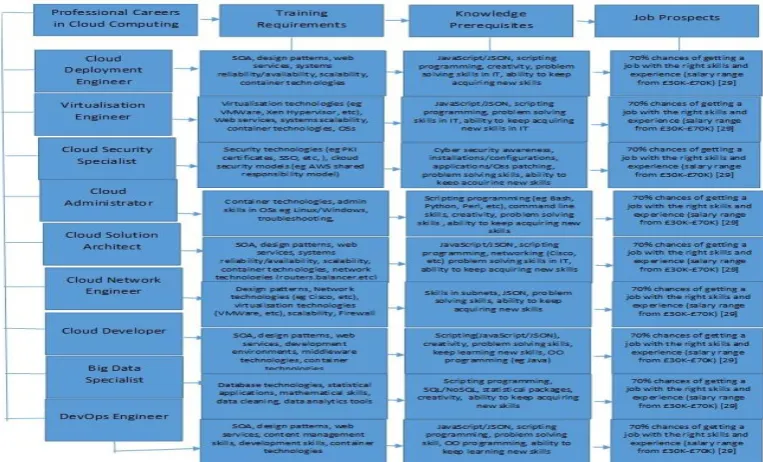
management system (LMS) that is used in cloud computing industry [8][15-18][20-21].
45
The success of including industry hands-on skills in any university curriculum depends on how
46
well defined the skills set requirements are generated and the sources from which they emerged
47
[22-26].
48
2. Materials and Methods
49
In designing the curriculum of a module of a degree program, it is important to consult the
50
vision and mission statements of the university in addition to the core topics that are taught in
51
similar modules by other universities. In this study, Queen Mary University of London (QMUL) has
52
an established Teaching Excellence Framework (TEF) and strategic aims [27]. There are six main
53
aims under the QMUL strategy namely people, research, education, international, public
54
engagement and sustainability. Of these six strategic aims, the ones that fit into QMUL’s
55
collaboration with AWS Academy are people, education, public engagement and sustainability.
56
QMUL’s aim for people means recruiting staff and students with great talents and potentials and
57
nurturing these talents for greater and successful careers. This paper concentrated on identifying the
58
talents and potentials of students and using the AWS Academy to nurture their future careers
59
through hands-on practical skills that will make them readily employable. To provide quality
60
education, state-of-the-art technology in cloud computing are adopted using the AWS Academy
61
LMS, which is the most widely used cloud platform and largest cloud provider in the world [21].
62
There are three labs designed to test students’ understanding of virtualization, scalability,
63
availability, big data, data analytics and monitoring systems in cloud computing environments.
64
These labs bring the theoretical classroom lectures to hands-on practical implementation and enable
65
students to better understand the theoretical concepts as applied in real-life. The labs and the test on
66
the labs constitute 25% of the total exam marks.
67
On QMUL’s international and public engagement, the author engaged AWS to help deliver
68
world-class industry-based lectures using videos and assessments in a face-to-face classroom
69
lectures as well as using AWS and QMUL’s online LMS platforms. The study looked at similar
70
curricula taught in cloud computing in other universities around the world. In most cases, there are
71
three main areas covered in the documents the author consulted. These are core distributed topics
72
such as scalability, computer cluster, data center design, virtualization, MapReduce/Hadoop and big
73
data/data analytics. Figure 1 shows the key cloud computing professions linked to the skills and
74
pre-requisites that students need to obtain to be successful in such professions. This is a concept that
75
provided students with a roadmap in their journey towards employment after graduation. This
76
maps each professional career path to skills requirements and how to acquire those skills. The
77
professional career paths in cloud computing are so many that this study cannot exhaust the list in a
78
diagrammatical form, but only presented the most popular career paths in this paper. Figure 1
79
shows popular professional paths in cloud computing that the study emphasized in teaching for
80
82
Figure 1. Career Paths and Skills Requirements in Cloud Computing.
83
84
The study observed that the common requirements for all the professional paths are creativity,
85
problem solving skills and ability to keep acquiring new skills. These common attributes are
86
emphasized during teaching as cloud computing is constantly evolving. By doing this, the students
87
are already thinking of what they want to do after graduation. In addition, there is a logical
88
justification for the increase in tuition fees as the students have a better understanding of the
89
earnings they may expect in the future.
90
AWS Academy has put in place criteria for any university to use their teaching and learning
91
materials. The first stage is the registration of the lecturer(s) into the AWS Academy Cloud
92
Foundations (ACF) programme. The author registered for the course and spent about 12 weeks
93
studying the lecture materials. After feeling confident with the materials and hands-on practical
94
labs, the author registered for the AWS Certified Cloud Practitioner practice exam using AWS free
95
voucher. In the first attempt, the author got 92% out of 100% in the practice exam. Using the 50%
96
discount AWS voucher for the exam, the author took the exam and passed and immediately
97
registered QMUL as an accredited AWS Academy. Having gone through the certification training
98
themselves, lecturers not only have the confidence in delivering lectures and labs to their students,
99
but have the confidence of their students as they display their certification qualification and logos.
100
This is similar to the recommendation that UK university lecturers need to acquire the Fellowship of
101
Higher Education Academy (FHEA) qualifications as an indication of their proficiency in learning
102
and teaching. This also justifies the increase in tuition fees as it will be seen by parents and students
103
that the university only recruits academically and professionally qualified lecturers which is an
104
indication of the quality of education they are providing to the students.
105
The next stage is choosing the AWS teaching and lab materials to be included into the
106
curriculum of cloud computing module. To do this, a survey on the most important skills that are
107
needed in cloud computing was carried out. Based on the outcome of this survey, at least 70% of
108
respondents said that practical hands-on implementation of cloud solutions is what industries are
109
looking for in cloud computing graduates. These areas included administration and management of
110
Elastic Compute Cloud (EC2) instances, cloud network skills, cloud security, scalability and load.
111
These areas in AWS Academy were included into the lecture slides and labs and about 25% of the
112
examination questions and coursework that final year IoT Engineering students took were taken
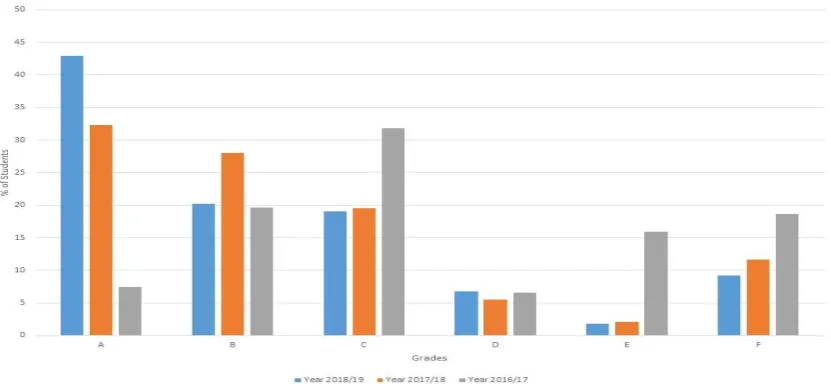
113
from the AWS materials that were included into the curriculum. This proved to be effective in the
114
examination results as there was an improvement of about 3% in the passing rate and reduction of
115
The AWS Academy LMS has an area where digital certificates are stored when any student or
117
instructor writes any of the certification exams and passed. This makes the students not only to think
118
about the training, but also the certifications that will lead to a potential future career in cloud
119
computing. Cloud computing module at QMUL consists of 3 labs and 1 test as part of the
120
coursework. The coursework constitutes 25% of the total marks while the final exam is 75%.
121
In addition to using QMPlus, the AWS Academy LMS is used for teaching, conducting
122
assessments and labs. Because QMUL is an accredited AWS Academy, a dedicated virtual classroom
123
and labs have been created for QMUL lecturers and students. The lecturer, who must be an AWS
124
Certified professional, is given administrative privileges to activate and deactivate classrooms and
125
labs and can view the progress of students on the lecture materials, videos and labs. The students
126
can register in a class or lab using their QMUL’s email addresses only. Over 174 QMUL students
127
were registered for the AWS Cloud Foundations course.
128
AWS Cloud Foundations has five modules with corresponding five labs and additional one lab
129
with titles starting with ACF Lab 1 to ACF Lab 6 as shown in Figure 2. Each lab lasts for two hours.
130
AWS Academy issues students with credits (valued in US dollars) that allow them to do the labs.
131
132
Figure 2. AWS Academy Cloud Foundations Virtual Labs for QMUL Lecturers and Students [8].
133
134
The labs are customized in a way that the instructions that the students need to follow to do the
135
labs are presented on one tab and the actual labs in another tab that are completely on separate web
136
pages. This makes navigating between the two web pages sometimes problematic. To get around
137
this problem, this study developed a simple script that calls the application programming interfaces
138
(APIs) of these two web pages and present them as one web page with the instructions on the left
139
side and the labs on the right side, This innovation has improved the ease of use and reduce the time
140
normally taken to finish the labs by 10%.
141
The cloud computing labs have been going for the past five years now. When the module was
142
created in 2014, the lecturers were using physical servers that Teaching Assistants (TAs) need to
143
install open source software for the students to do their labs. This usually takes long time and most
144
of the OSSs always need upgrades. But with the adoption of the AWS ACF platform, there are no
145
more issues with updates or upgrades of software or hardware and this has saved 50% of the time
146
usually spent on installations and udates. In addition, students do not need to come to the physical
147
labs to do their labs, but can do it anywhere they have access to the internet.
148
The idea of introducing industry hands-on practical skills and best practices of the state-of-art
149
in cloud computing into the academic curriculum is to make students at QMUL stand out in the
150
keeping up with the fast changing technologies, collaborating with the world’s largest provider of
152
cloud computing services and using their materials to teach students not only justifies the increase in
153
tuition fees, but gave the students the confidence they need to go out there and start working
154
without any experience. The first confidence boost comes from the fact that the lecturers/tutors that
155
are teaching the students have themselves gone through training by AWS Academy. Passing the
156
exams means the lecturers know the theories as well as the practical applications as the labs are
157
tailored to be hands-on to complement the theoretical lectures. During lectures, the professional
158
certification and some key professional paths as created by AWS Academy are emphasized to create
159
that awareness of employability routes in the students’ minds as shown in Figure 3.
160
161
162
Figure 3. Amazon AWS Certification and Career Routes [8].
163
164
AWS ACF is the training that helps the students prepare to take the AWS Certified Cloud
165
Practitioner examination. This is the foundational certification that serves as the prerequisite for
166
other higher certifications. The other certifications after passing this foundational exam as shown in
167
Figure 4 are the associate level AWS Certified Solution Architect, AWS Certified Developer and
168
AWS Certified SysOps Administrator certifications. At the professional level, there are the AWS
169
Certified DevOps Engineer and AWS Certified Solutions Architect certifications. Others at the
170
specialty level include AWS certifications in Advanced Networking, Big Data, Security, Machine
171
Learning and Alexa Skill Builder. These certification routes are emphasized to the students and the
172
skills required with incentives and remunerations enjoyed by these professionals that work for AWS
173
and other companies. The idea is to prepare and stimulate the students’ ambitions towards getting
174
those jobs of their dreams by combining both academic and professional qualifications. With the
175
inclusion of 25% of the lecture materials and two out of the six labs of AWS ACF into the cloud
176
computing curriculum, the students already have about 25% of training in the AWS Certified Cloud
177
Practitioner exam materials. However, this is not sufficient enough for the students to pass this
178
exam. To ensure that the students are trained to the level that they can obtain the certificate of course
179
completion as well as to be able to confidently sit for the AWS Certified Cloud Practitioner exam, the
180
author arranged extra training sessions for the students, which is completely outside the normal
181
teaching and learning requirements of the university. This is necessary if students must acquire both
182
academic and professional knowledge and skills in technology-driven qualifications that will earn
183
them certifications in different professional paths. The extra time put in paid off as the students
184
appreciated it and this effort endeared the lecturer to the students as they have more confidence in
185
When students complete the AWS ACF training, they automatically receive electronic
187
certificates of completion sent to them in the transcript area of AWS LMS. The satisfaction of getting
188
a certificate from the biggest cloud services provider in the world gave the students additional
189
satisfaction and the urge to go ahead and write the practice and final exams. At the end of the
190
training, about 18% (30 out of 163) of the students registered their interest to be given the free AWS
191
Academy vouchers to write the AWS Certified Cloud Practitioner practice exam. All the 20 students
192
that wrote this exam passed. This performance further justifies the efforts put into the training and
193
goes a long way in making the students to appreciate the increase in tuition fees. This gave the
194
lecturer the confidence to recommend the students for internship positions with Alibaba Cloud and
195
other tech companies. The recommendation for the internship is meant to give the students the
196
opportunity to put into practice the skills they have acquired and also to prepare them for real-life
197
professional careers in the future.
198
3. Results
199
The inclusion of AWS Academy Cloud Foundations in the curriculum of Cloud Computing
200
module had a positive impact in the performance of the students as shown in the results of the
201
examination. The final marks for the exam consists of three parts-the examination, labs and class test.
202
The examination constitutes 75% and the labs and test constitute 25%. A total of 166 students wrote
203
the exam and 90.80% passed the exam and only 9.20% failed. Of this result, 42.94% got distinctions
204
(A grades). Because this is the first time that AWS materials were introduced into the cloud
205
computing curriculum, this study conducted a comparative analysis of the performance with the
206
two previous years’ results. Fig. 4 shows the results of this comparison. From Fig. 4, more students
207
(42.94%) got grades A (distinctions) in 2018/19 academic year than the two previous academic years
208
2017/18 (32,32%) and 2016/17 (7.4%) respectively. The results also showed that the failure rate in
209
2018/19 reduced to 9.20% compared to the two previous years which had 11.59% and 18.60% failure
210
rates for 2017/18 and 2016/17 academic years respectively. The improvement in performance and
211
reduction in the rate of failure in the module is attributed to the fact that the students now have both
212
the theoretical and hands-on practical real-life applications. This study and other studies show that
213
students can easily relate exam questions to what they have done in the labs and the real-life
214
scenarios and can easily remember the answers in an examination situation [31.
215
216
217
Figure 4. A Comparison Chart of 3 Years Results of Cloud Computing Module.
218
219
Two questionnaires were administered to students when the AWS Academy Cloud
220
Foundations was introduced in the 2018/19 academic year. The first was issued to students using the
221
questionnaire. The first questionnaire was designed and issued immediately after the lectures and
223
labs in cloud computing module. This questionnaire aims at finding the opinions of students on the
224
inclusion of the AWS course into the cloud computing curriculum and whether the students will be
225
interested in completing all the course materials so that it can enable them to prepare and write the
226
AWS Certified Cloud Practitioner exam. Out of the 166 students that were sent the survey via their
227
email addresses, 58% responded to the questionnaire. This is quite good, but it took time to achieve
228
this through constant reminder to the students to complete the questionnaire. From the respondents,
229
83% of the students think that the inclusion of AWS course into the curriculum of cloud computing
230
has increased their learning experience and also enhanced their understanding of the module while
231
45% said that they now know the career paths to take in cloud computing. 72% of the students want
232
more of the AWS contents included in the cloud computing module and because of this 43% said
233
that they will like to attend the additional AWS lectures and labs after their exams so that they will
234
be able to prepare for the AWS Certified Cloud Practitioner exam. Because AWS Academy has
235
offered 100% discount to all the students that want to take the practice exam (not the actual final
236
exam), 38% of the students said they want to write the practice certification examination.
237
The second questionnaire was administered after the students have written their cloud
238
computing module exam. After the exam, the remainder of the AWS materials that were not
239
included in the cloud computing curriculum and were not taught to the students were delivered to
240
students that opted to attend all AWS lectures so that they can acquire the knowledge that will
241
enable them to write the AWS Certified Cloud Practitioner exam. This questionnaire as stated earlier
242
was a manual paper-based format and administered to only the 30 students that attended the extra
243
AWS Academy Cloud Foundations lectures. As expected, there was 100% response as the
244
questionnaires were distributed immediately on the last day of the one week (5 days) extra lectures.
245
The students filled in the questionnaires and submitted to the tutor that same day in form of a
246
feedback. There were also 10 questions as in the SurveyMonkey online questionnaire. 80% of the
247
respondents said they are now more confident in using cloud computing resources and technologies
248
after attending the all AWS lectures and another 83% said they now know more about cloud
249
computing career paths. 90% of the respondents said they would like to write the final AWS
250
Certified Cloud Practitioner exam if they passed the practice exam. A question on the justification of
251
increase in tuition fees featured and 70% of the students said that if most courses can include
252
hands-on practical and professional contents that enhances the quality of the education which
253
improves their confidence and employability, then the increase in tuition fees is justifiable. 90% of
254
the students said they would like to be recommended for internship where they can put what they
255
have learnt in the AWS training into practices and 85% of them think that cloud computing has a
256
very promising future for students that can acquire cutting edge training in cloud computing.
257
4. Discussion
258
The results as shown in the questionnaires and examination performances for three years as
259
shown in Fig. 4, clearly demonstrated that students tend to understand science and technology
260
courses better when they are exposed to both the theoretical and practical real-life applications of the
261
scientific and technological theories behind the applications. In Fig. 4, the number of students that
262
got grade A (distinction) when the AWS Academy curriculum and practical hands-on labs were
263
introduced, increased by 10.62% and the number of students that failed the course (that got grade F),
264
decreased by at least 2.39% compared to the two previous years (2016/17 and 2017/18 academic
265
sessions). However, the number of students that got grade B in 2018/19 academic session decreased
266
by 7.8% compared to the students that got B grades in 2017/18 academic year. This is because more
267
students that could have ended up with B grades have now moved to A grades as a result of
268
introducing industry applications to the cloud computing module. But the contradiction is that the
269
number of students that got grade C in 2018/19 and 2017/18 are almost the same, so more efforts
270
needs to be put in place to improve this trend in future work. Future work will include the AWS
271
Cloud Architecting curriculum which is more advanced than the AWS Academy Cloud Foundations
272
5. Conclusions
274
This paper explores the opportunities in collaborating with the industry to have access to
275
cutting edge cloud computing technologies for inclusion into the cloud computing curriculum.
276
Amazon AWS is the largest cloud provider in the world and its AWS Academy provides training to
277
educators around the world to become certified cloud practitioners. The author had this training and
278
registered QMUL as an accredited AWS Academy and used AWS Academy digital LMS, lecture and
279
labs materials in teaching cloud computing module. This experiment resulted in better performance
280
in the results of the module compared to the examination results of two previous years. Two
281
questionnaires were conducted and the results showed that the students have more confidence in
282
using cloud technologies and they think that the increase in tuition fees is justifiable after the
283
inclusion of AWS Academy Cloud Foundations into the cloud computing curriculum. The students
284
also think that the hands-on practical skills they have acquired in the AWS Academy labs has
285
increased their employability.
286
This paper concludes that working with the industry to design the curriculum of cloud
287
computing has improved the skills and confidence of the students in using cloud technologies. In
288
addition, the students performed better in examination when exposed to the real-life practical aspect
289
of cloud computing and now know the career paths in cloud computing when they graduate.
290
291
Funding: This research received no external funding.
292
Acknowledgments: The author wishes to thank the Joint Program between QMUL and BUPT for given him the
293
opportunity to include the AWS course into the curriculum of Cloud Computing module. The author also
294
wishes to acknowledge the huge contribution of AWS Academy in the UK for the training and support given
295
to him which enabled QMUL to become an AWS accredited Academy. Worthy of mention are the team
296
members at AWS namely Jenni Jones, Paul Smart and Undeleeb Din for their invaluable support throughout the
297
program. The contribution of AWS Academy to this program runs into hundreds of thousands of pounds if
298
quantified in monetary value.
299
Conflicts of Interest: The author declares no conflict of interest.
300
References
301
1. Bolton, P. Tuition Fees Statistics, UK House of Commons Library, Briefing Paper, No. 917, 19 Feb. 2018.
302
2. Baldassarre, M. T.; Caivano, D.; Dimauro, G.; Gentile, E.; Visaggio, G. Cloud Computing for Education: A
303
Systematic Mapping Study, IEEE Trans. Edu. 2018 Vol. 61, pp. 234-244, 10.1109/TE.2018.2796558.
304
3. Dȩbiec, P. Effective Learner-Centered Approach for Teaching an Introductory Digital Systems Course,
305
IEEE Trans. Edu. 2018, Vol. 61, pp. 38-45, Feb. 2018, 10.1109/TE.2017.2729498.
306
4. Pillutla, R. S. An Approach to Design Curricula to Build Competencies for Employability - A Case for IT
307
Industry, IEEE Conf. on ITHET, 11-13 Sept. 2014,York, UK, 10.1109/ITHET.2014.7155688.
308
5. Hameed, S.; Nileena, G. S. IEEE Student Quality Improvement Program: To Improve the Employability
309
Rate of Students, IEEE Int. Conf. on MOOC-MITE, 19-20 Dec 2014, Patiala, India,
310
10.1109/MITE.2014.7020275.
311
6. Hoic-Bozic, N.; Mornar, V.; Boticki, I. A. Blended Learning Approach to Course Design and
312
Implementation, IEEE Trans. Educ. 2009, Vol. 52, pp, 19-30, Feb. 2009, 10.1109/TE.2007.914945.
313
7. Zhang, Y.; Dang, Y.; Amer, B. A Large-Scale Blended and Flipped Class: Class Design and Investigation of
314
Factors Influencing Students' Intention to Learn, IEEE Trans. Edu. 2016, Vol. 59, pp, 263-273, Nov. 2016,
315
10.1109/TE.2016.2535205.
316
8. The AWS Academy Program Guide, 2018 (https://aws.amazon.com/training/awsacademy/).
317
9. Govaerts, S.; Holzer, A.; Kocher, B.; Vozniuk, A.; Garbinato, B.; Gillet, D. Blending Digital and Face-to-Face
318
Interaction Using a Co-Located Social Media App in Class, IEEE Trans. Learning Tech. 2018, Vol. 11, pp.
319
478-492, Dec. 2018, 10.1109/TLT.2018.2856804.
320
10. Andujar, J. M.; Mejias, A.; Marquez, M. A. Augmented Reality for the Improvement of Remote
321
Laboratories: An Augmented Remote Laboratory, IEEE Trans. Educ. 2011, Vol. 54, pp, 492-500, Aug. 2011,
322
11. Riojas, M.; Lysecky, S.; Rozenblit, J. Educational Technologies for Precollege Engineering Education, IEEE
324
Trans. Learning Tech. 2012, Vol. 5, No. 1, pp. 20-37, Jan. 2012, 10.1109/TLT.2011.16.
325
12. Shuman, G. S., T. R.; Cook, K. E. Comparing the Effectiveness of an Inverted Classroom to a Traditional
326
Classroom in an Upper-Division Engineering Course, IEEE Trans. Educ. 2013, Vol. 56, pp. 430 - 435, Nov.
327
2013, 10.1109/TE.2013.2249066.
328
13. He, J.; Lo, D. C.; Xie, Y.; Lartigu, J. Integrating Internet of Things (IoT) into STEM Undergraduate
329
Education: Case Study of a Modern Technology Infused Courseware for Embedded System Course," IEEE
330
Frontiers in Educ. Conf. FIE, 12-15 Oct. 2016, Erie, PA, USA, USA, 10.1109/FIE.2016.7757458.
331
14. Charlton, P.; Avramides, K. Knowledge Construction in Computer Science and Engineering when
332
Learning Through Making, IEEE Trans. Learning Tech. 2016, Vol. 9, No. 4, pp. 379-390, Oct. 2016,
333
10.1109/TLT.2016.2627567.
334
15. Chatarajupalli, S.; Venkatswamy, G.; Aryasri, A.R. Leveraging e-Learning for Enhancing Employability of
335
Students, IEEE Conf. on Dev. in E-systems Engr., 6-8 Sept. 2010, London, UK, 10.1109/DeSE.2010.25.
336
16. Marques, M.; Ochoa, S. F.; Bastarrica, M. C.; Gutierrez, F. J. Enhancing the Student Learning Experience in
337
Software Engineering Project Courses, IEEE Trans. Educ. 2018, Vol. 61, pp. 63-73, Feb. 2018,
338
10.1109/TE.2017.2742989.
339
17. Chin, K.; Lee, K.; Chen, Y. Impact on Student Motivation by Using a QR-Based U-Learning Material
340
Production System to Create Authentic Learning Experiences, IEEE Trans. Learning Tech. 2015, Vol. 8, No.
341
4, pp. 367-382, Dec. 2015, 10.1109/TLT.2015.2416717.
342
18. Pardo, A.; Han, F.; Ellis, R. A. Combining University Student Self-Regulated Learning Indicators and
343
Engagement with Online Learning Events to Predict Academic Performance, IEEE Trans. Learning Tech.
344
2017, Vol. 10, pp. 82-92, Jan. 2017, 10.1109/TLT.2016.2639508.
345
19. Blas, N. D.; Bucciero, A.; Mainetti, L.; Paolini, P. Multi-User Virtual Environments for Learning:
346
Experience and Technology Design, IEEE Trans. Learning Tech. 2012, Vol. 5, No. 4, pp. 349-365, Oct. 2012,
347
10.1109/TLT.2012.16.
348
20. Pengnate, W. Needs of employability skill characteristics based on employers' perception, IEEE Intl. Conf.
349
on Bus. and Ind. Research, 17-18 May 2018, Bangkok, Thailand, 10.1109/ICBIR.2018.8391268.
350
21. Abadi, D. J. Data Management in the Cloud: Limitations and Opportunities, IEEE Intl. Conf. on Data
351
Engr., Mar. 2009, Vol. 32 No. 1.
352
22. Le, N.; Loll, F.; Pinkwart, N. Operationalizing the Continuum betweenWell-Defined and Ill-Defined
353
Problems for Educational Technology, IEEE Trans. Learning Tech. 2013, Vol. 6, No. 3, pp. 258-270, Jul. 2013,
354
10.1109/TLT.2013.16.
355
23. Schwendimann, B. A.; Rodrıguez-Triana, M. J.; Vozniuk, A.; Prieto, L. P.; Boroujeni, M. S.; Holzer, A.;
356
Gillet, D.; Dillenbourg, P. Perceiving Learning at a Glance: A Systematic Literature Review of Learning
357
Dashboard Research, IEEE Trans. Learning Tech. 2017, Vol. 10, No. 1, pp. 30-41, Jan. 2017,
358
10.1109/TLT.2016.2599522.
359
24. Conijn, R.; Snijders, C.; Kleingeld, A.; Matzat, U. Predicting Student Performance from LMS Data: A
360
Comparison of 17 Blended Courses Using Moodle LMS, IEEE Trans. Learning Tech. 2017, Vol. 10, No. 1, pp.
361
17-28, Jan. 2017, 10.1109/TLT.2016.2616312.
362
25. Santana, Gonzalez, P. C.; F. J.; Garcia, M. A.; Ordaz, A.; Magana, M. A. Social Cloud Computing: an
363
Opportunity for Technology Enhanced Competence Based Learning, IEEE Latin America Trans. 2015, Vol.
364
13, Jan. 2015, 10.1109/TLA.2015.7040669.
365
26. August, S. E.; Hammers, M. L.; Murphy, D. B.; Neyer, A.; Gueye, P.; Thames, R. Q. Virtual Engineering
366
Sciences Learning Lab: Giving STEM Education a Second Life, IEEE Trans. Learning Tech. 2016, Vol. 9, No.
367
1, pp. 18-29, Jan. 2016, 10.1109/TLT.2015.2419253.
368
27. Queen Mary University of London, Strategy 2014 - The Next Five Years, 2014.
369
28. Smith, D. Cloud Computing Primer for 2019, Gartner Report, 24 January 2019, ID: G00375766.
370
29. Carlstroem, P. Cloud Computing Continues Growing and so are Skilled Tech Salaries, Report by Cloud
371
Academy, 27 April 2016, https://cloudacademy.com/blog/cloud-computing-jobs-and-salaries/.
372
30. Hilgendorf, K. Analyzing the Role and Skills of the Cloud Architect, Gartner Technical Professional
373
Advice Report, 2016.
374
31. Santos, M. E. C.; Chen, A.; Taketomi, T.; Yamamoto, G.; Miyazaki, J.; Kato, H. Augmented Reality
375
Learning Experiences: Survey of Prototype Design and Evaluation, IEEE Trans. Learning Tech. 2014, Vol. 7,
![Figure 2. AWS Academy Cloud Foundations Virtual Labs for QMUL Lecturers and Students [8]](https://thumb-us.123doks.com/thumbv2/123dok_us/8016850.1333098/4.595.104.533.302.516/figure-academy-cloud-foundations-virtual-labs-lecturers-students.webp)
![Figure 3. Amazon AWS Certification and Career Routes [8].](https://thumb-us.123doks.com/thumbv2/123dok_us/8016850.1333098/5.595.109.519.213.450/figure-amazon-aws-certification-career-routes.webp)