An Effective Self-Taught Learning Low-Rank Coding Using
Mm-Alm Algorithms
K.Sreenivasulu
& Mr.S
. ChoudaiahPG Scholar, Dept of MCA, SIDDHARTH INSTITUTE OF ENGHINEERING & TECHNOLOGY, Puttur, A.P. Head of the Department, Dept of MCA, SIDDHARTH INSTITUTE OF ENGINEERING&TECHNOLOGY, Puttur, A.P.
ABSTRACT--The absence of labeled data presents a typical test in numerous computer vision and machine learning tasks. Semisupervised learning and transfer learning methods have been created to handle this test by using auxiliary samples from the same area or from an alternate space, respectively. Self-taught learning, which is a special kind of transfer learning, has less restrictions on the decision of auxiliary data. It has shown promising execution in visual learning. Be that as it may, existing self-taught learning methods usually overlook the structure information in data. In this paper, we focus on building a self-taught coding framework, which can viably use the rich low-level pattern information abstracted from the auxiliary space, so as to describe the high-level structural information in the target area. By utilizing a high-quality dictionary learned across auxiliary and target domains, the proposed methodology learns expressive codings for the samples in the target space. Since numerous types of visual data have been demonstrated to contain subspace structures, a low-rank constraint is acquainted into the coding objective with better portray the structure of the given target set. The proposed representation learning framework is called self-taught low-rank (S-Low) coding, which can be detailed as anonconvex rank-minimization and dictionary
learning problem. We devise an efficient
majorization– minimization augmented Lagrange multiplier algorithm to solve it. Based on the
proposed S-Low coding mechanism, both
unsupervised and supervised visual learning algorithms are determined. Extensive experiments on five benchmark data sets demonstrate the effectiveness of our methodology.
Index Terms-- Data clustering, image classification, low-rankcoding, self-taught learning (STL), transfer learning.
I.INTRODUCTION
Generally, this problem was halfway addressed by semi-supervised learning [10] or transfer learning methods [11]– [14]. Semisupervised learning makes use of some labeled samples and a bigger set of unlabeled samples, which are drawn from the same space with the same distribution, to prepare a model. At the end of the day, semi-supervised learning can just solve learning problems in the same space. In transfer learning, this restriction is loose to some degree. The labeled samples and the auxiliary samples in transfer learning are drawn from various domains with various distributions. Be that as it may, transfer learning requires that two domains should be similar to one another. Many transfer learning algorithms assume that two domains share a similar information structure. In a word, both semisupervised learningand transfer learning put strong restrictions on auxiliary (source) data, which constrained their pertinence. As of late, a rising machine learning worldview of self-taught learning.(STL) [15]– [21] using unlabeled data with less restrictions holds significant promise in terms of upgrading the execution of image clustering and classification.
auxiliary area. The instinct behind STL is that arbitrarily selected visual data in an auxiliary space can still contain the basic visual patterns (such as edges, corners, and nuclear shapes), which are fundamentally the same as those in the target area. The adaptability of STL makes it especially potential to the regularly increasing gigantic measure of unlabeled visual data. Existing STL methods, be that as it may, simply disregard the structure information in the target space, which is basic in the visual learning tasks, such as image classification.
In this paper, we propose a novel self-taught low-rank (S-Low) coding framework for visual learning. By utilizing a high-quality dictionary abstracted from the abundance of information behind the auxiliary area, we expect to learn expressive high-level representations for the target space. Since numerous types of visual data are all around described by subspace structure [6], [23], we present a low-rank constraint to make use of the worldwide structure information in the target space. Emphasizing such sort of structure information through low-rank constraints could significantly profit wide visual learning tasks. Specifically, our methodology is entirely suitable for addressing the tasks that influence on the misuse of basic data structure, such as item acknowledgment, scene classification, face acknowledgment, and image clustering. Especially when the target data set is small, our methodology is still ready to separate viable feature representations by temperance of huge scale unlabeled data in the auxiliary space. In the interim, the low-rank constraint is equipped for expelling noise or outliers from data [24]– [26], which helps us adapt increasingly robust representations in the target area.
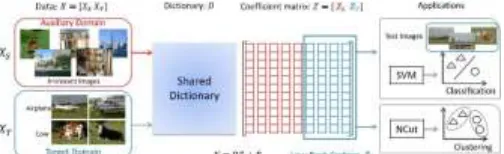
Fig. 1. Diagram of the S-Low coding framework. A small target data set XT is usually not sufficient to
extract effective features. By utilizing the auxiliary data set XS , the proposed S-Low framework learns a
shared dictionary D from two domains and enforces a low-rank constraint on the coefficient matrix of target domain ZT that is considered as new feature
representations. Finally, the NCut algorithm can be utilized for image clustering, and the SVM can be trained on ZT for image classification.
Fig. 1 shows a chart of our methodology. Naturally, we extricate useful building blocks from the auxiliary space in terms of a decent portrayal of hidden structure in the target area. An expressive dictionary is found out by displaying both the auxiliary space and the target area. In this process, the structure information in the target area is upheld using low-rank constraints. All the more specifically, our methodology can be expressed as a rank-minimization and dictionary learning problem. We design a powerful majorization– minimization enhancement algorithm to get familiar with the low-rank codings and dictionary mutually. At long last, the adapted low-rank codings correspond to the target space can be straightforwardly used for clustering, or can be utilized to prepare a supervised model like support vector machines (SVMs) for classification.
Besides, some limitations of existing STL methods can be addressed by the proposed methodology. First, existing methods either loosely consolidate representation learning with the last learning tasks [15], or tailor the algorithms to specific applications [19]. Our methodology could be easily connected to both supervised and unsupervised learning tasks by and large. Second, existing STL methods adapt new representations autonomously for each sample in the target space, where the vital worldwide structural information in the given set is simply overlooked. Our methodology could viably use the rich low-level pattern information abstracted from the auxiliary space to describe the high-level structure information in the target area. It closely links the coding method to the learning tasks.
1) With the assistance of rich information from the auxiliary area, we learn viable feature representations, S-Low codings, by fusing low-rank constraints in the target space.
2) The proposed STL approach is a general framework that is suitable for various visual learning scenarios. In this paper, we present point by point algorithms for unsupervised learning and supervised learning.
3) Instead of using the biased estimators like l1 standard and the atomic standard in much low-rank representation (LRR) algorithms, we supplant the l0 standard and the rank capacity in our model by the minimax concave punishment (MCP) standard and the network γ - the standard that is considered as unbiased estimators. A compelling majorization– minimization enhancement algorithm is created to solve our model. We also exactly illustrate the assembly property of the improvement algorithm. 4) Extensive trial results on five benchmark data sets show that our methodology consistently out-performs several representative low-rank learning and STL methods.
II.RELATED WORK
Please In this section, we discuss two related topics, including STL and low-rank learning.
A. Self-Taught Learning
In some certifiable visual learning tasks, the assumption of sufficient preparing data may not always hold. Thus, including extra data resources to conquer the shortage of preparing data becomes a vital problem. Most representative solutions incorporate semisupervised learning [10] and transfer learning [11]. The previous solution addresses this problem by using a lot of unlabeled data from the same space with the same distribution to fabricate better classifiers, while the last one tries to use labeled data from related homogenous tasks. In any case, neither unlabeled data with the same distribution nor labeled data from homogenous tasks are easy to get.
As of late, there has been a surge of interest in the
theme of STL, by including unlabeled data without the above restrictions [15]– [19]. Raina et al. first proposed the idea of STL by applying the sparse coding mechanism to construct a higher level representation from the unlabeled data [15], [18]. Lee et al. [16] broadened Raina's work by presenting a speculation of sparse coding module, which could be suited to show other data types drawn from an exponential family distribution. From the application perspective, Dai et al. [17] proposed a clustering algorithm in the spirit of STL by allowing the feature representation from the auxiliary data to impact the target data through a typical set of features. Kuen et al. [21] utilized the center thought of STL, and transferred stacked autoencoders for visual following. In any case, existing STL methods don't exploit any worldwide structure information in the target set, as they encode each information signal autonomously. Besides, a generalizable schema of STL for both supervised and unsupervised learning tasks has not been all around studied yet.
The most applicable technique in the writing is robust and discriminative STL (RDSTL) [19]. RDSTL is a classification algorithm with self-taught nature by using supervision information in the target space to discover the ideal dictionary basis vectors. There are significant differences among RDSTL and our methodology. First, RDSTL does not consider the worldwide structure information in the target area, which is cautiously displayed by means of low-rank constraints in our methodology. Second, RDSTL is designed for classification. We present both clustering and classification algorithms using our framework.
B. Low-Rank Learning
Low-rank learning is a functioning research theme lately [28], with numerous successful applications in various domains [29]– [34]. Robust PCA [24] is ready to decompose
XL + E. RPCA assumes that data are drawn from a single subspace. Besides, LRR aims to recoup clean data from noisy observations that are drawn from different subspaces [6].
The objective capacity of the LRR is as follows:
where rank() denotes the rank capacity, Z ∈ RN ×N is the low-rank coding grid for X, E ∈ Rd× N is the reconstruction mistake lattice, E 0 denotes the l0 standard of network E, and λ1 is a tradeoff parameter. The above problem is hard to solve because of the nonconvexity of rank capacity and l0 standard. Usually, they can be changed over into follow standard (i.e., atomic standard) and l1 standard, respectively, and after that, numerous advancement algorithms can be connected to solve the problem. Numerous algorithms have been proposed to improve the execution of LRR. For instance, pursuing powerful bases for LRR is an essential problem [35]. As of late, a bound together multiscale LRR approach is designed for image segmentation [36]. The low-rank constraint can also be utilized to learn robust sub-space [37], to learn compelling on the web metrics [38], to construct solid graphs [39], to help ensemble clustering [40], or to distinguish outliers in multiview settings [41].
There are significant differences between our S-Low coding methodology and the previously mentioned low-rank learning methods:
1) they just focus on a single space, while our methodology seeks assistance from the auxiliary area and 2) existing work like [30] and [42] learns a dictionary just from the target area, and all other existing low-rank methods don't learn dictionaries. Nonetheless, our methodology learns a dictionary from both auxiliary and target domains in the STL set.Some ongoing works brought low-rank constraints into transfer learning problems [12], [13], [43]. Low-rank transfer subspace learning technique imposes a low-rank constraint on a low-dimensional
subspace shared by source and target domains [12], and low-rank space adjustment strategy aims to diminish the area distribution disparity using LRRs [13]. An inert low-rank transfer learning approach is proposed to handle the missing methodology acknowledgment problem [44]. Our methodology differs from them in three aspects. First, these methods have restrictions in terms of using related homogenous tasks in source and target domains, while our methodology relaxes such restrictions. Second, they can't learn dictionaries because of their problem settings. Third, the learning across various domains is transferred through a shared subspace, while our methodology transfers information by means of a dictionary.
III.PROPOSAL METHODOLOGY
SELF-TAUGHT LOW-RANK CODING
This In this section, we figure the proposed self-taught low-rank coding framework and build up our methodology systematically. At that point, we present a viable enhancement algorithm to solve the model.
A. Inspiration
We will probably take advantages of the rich unlabeled data, so as to improve the coding execution for various visual learning tasks. To accomplish this objective, we propose a S-Low coding framework, by utilizing a high-quality dictionary abstracted from the abundance of information behind the auxiliary area. Our instinct is that numerous types of visual data are very much portrayed by subspace structure, and in this way, it is possible to use on such information from both auxiliary and target domains, lastly learn expressive high-level representations for the target space. Specifically, we present a low-rank constraint in our framework to exploit worldwide structure information in the target space. Emphasizing such sort of structure information through low-rank
learning tasks especially clustering and classification, in which perceiving the hidden structure of a given sample set is our definitive objective. The low-rank constraint is also equipped for expelling noise and outliers from data [24], [25], which leads to robust data representations.
B. Problem Formulation
Considering the STL problem, we are given a set of plenteous, unlabeled samples, XS = {x S1, . . . , xSm } ∈ Rd×m, in the auxiliary area (or source space), and we also have constrained samples in the target area, XT = {xT 1, . . . , x T n } ∈ Rd ×n. Our methodology aims to learn expressive codings, in which the subspace structural information is encoded, for the samples in the target space. Like other STL methods, we don't assume that the data from auxiliary and target domains share the same (or similar) distributions. Moreover, we don't necessitate that the samples are labeled in the target area. In this way, our methodology can be performed in either unsupervised or supervised fashions, which differs from the problem settings in [15] and [19]. We will show that our methodology could manage clustering problem if labels are inaccessible in the target space, or classification problem with labeled samples.
Customarily, the sparse coding [2], [3], dictionary learning [4], [5], or low-rank learning [6], [7] methods around represent the samples in a single space (i.e., the target area)
XT ≈ DT ZT (2)
where ZT ∈ Rr×n is the representation coefficient grid and DT ∈ Rd×r is a dictionary. r is the size of a dictionary. Here,
Z T is usually expected to be sparse or low-rank, as per the application scenario. Note that the dictionary DT is frequently set as the sample set in some sparse representation and low-rank learning methods [3], [6], [7] (i.e., DT = XT ), which may suffer the insufficient sampling problem.
With the assistance of the auxiliary space, we can get familiar with an increasingly educational
dictionary, and furthermore handle the insufficient data sampling problem.
First, we can take in the dictionary from all the accessible samples in two domains. The entire sample set is X =[ X SXT ]. We plan to represent all samples in X using a dictionary D ∈ Rd×r. In this way, we present the constraint [ XS XT ] =D[ ZS ZT ] + [ ES ET ], where Z S ∈ Rr×m and ZT ∈ Rr×n are the coefficient matrices corresponding to the auxiliary area and target space, respectively. ES ∈ Rd×m and ET ∈ Rd×n are the sparse noise matrices that display the reconstruction errors in auxiliary and target domains. The noise matrices ES and ET are regularly constrained using the surrogate of l0 norms, such as l1 or l2,1 norms. In all actuality, target samples may contain various types of noise. Considering the sparse noise matrices in the model enables us to become familiar with a robust dictionary.
Second, for some vision problems like clustering or classification, samples in the target area usually lie in several basic subspaces. Numerous ongoing research efforts [6], [7], [45] have shown that upholding low-rank constraint is a powerful method to discover the hidden subspace structure. Utilizing such structure information can incredibly profit visual learning tasks. In light of this observation, we impose a low-rank constraint on the coefficient grid ZT in the target space, where the learning tasks are performed. At that point, our objective capacity is planned as follows:
where rank(•) denotes the rank capacity, • 0 is the l0 standard, and λ1 and λ2 are two tradeoff parameters.
Third, the dictionary is mutually gained from both auxiliary and target domains, so as to transfer useful learning from the auxiliary area.
C. Advancement
In this section, we design a majorization-minimization augmented Lagrange multiplier (MM-ALM) algorithm to solve (7). We first present the summed up shrinkage administrator Dγ, W and the summed up singular esteem shrinkage administrator Sτ, [46] The MM-ALM algorithm contains an internal circle and an external circle. In every emphasis, the external circle utilizes the locally direct estimate (LLA) of the first nonconvex problem and forms a weighted curved problem for advancement. In the inward circle, we receive the vague augmented Lagrangian multiplier (ALM) algorithm.
In the internal circle, the inaccurate ALM algorithm is utilized to solve (11). Given an instated dictionary D, we refresh different variables J, Z S, ZT, ES, and ET .
where • F is the Frobenius standard, Y ∈ Rd×m, Q ∈ Rd×n, and R ∈ Rr×n are Lagrange multipliers, and μ is a positive punishment parameter.
IV. LEARNING WITH S-LOW CODING
In this section, we present two learning algorithms based on our S-Low coding methodology, including clustering and classification.
A. S-Low Clustering
Given an unlabeled sample set X = [ X S XT ] in the STL scenario, the objective of our S-Low clustering algorithm is to accurately recoup the fundamental subspaces in the target area.
The low-rank codings ZT for the target space are used to characterize a partiality grid of an undirected diagram G. As indicated by the low-rank subspace recuperation hypothesis, every segment in coefficient lattice Z could serve as another representation for a sample, and afterward, the connection coefficient of each pair of samples would be a decent decision for weighting the corresponding edge in the undirected diagram [29].
B. S-Low Classification
At the point when mark information is accessible in the target space, we design a classification algorithm based on our S-Low coding way to deal with train a classifier. At that point, with the assistance of the educated dictionary D, our algorithm could classify new test samples. As discussed in Section III-A, low-rank codings ZT can be considered as new representations of the target sample set XT
Fig. 2. Sample images in the auxiliary domain (top) and the target domain (bottom).
Algorithm 2 S-Low Clustering Algorithm
Input: data matrixX= [XSXT], nearest
neighborsK,number of clusters C 1: Obtain the low-rank representation matrix
2: Build an undirected graph G based on ZT
(using (19)), where the edges are weighted using correlation coefficients of each pair of samples;
3: Prune graph G by removing some edges with small weights (keep K nearest neighbors for each node);
4: Use NCut to generate C clusters.
Output: clustering index vectorL
Algorithm 3 S-Low Classification Algorithm
Input: data matrixX= [XSXT], class labels
ofXT,test sample y
1: Obtain the low-rank representation ZT and
dictionary D using Algorithm 1; 2: Train an SVM classifier using ZT;
3: Calculate sparse representation of y using (20); 4: Predict class label of y.
Output: predicted class labelcity
Without the loss of consensus, we can prepare any classifier using ZT. In this paper, we embrace the normally used classifier, SVM [49], to anticipate the class mark of y. Algorithm 3 summarizes every one of the procedures in our S-Low classification algorithm.
V.CONCLUSION
In this paper, we proposed a novel self-taught low-rank coding approach for visual learning. Our methodology mutually took in a dictionary by prudence of rich information from the auxiliary area, and robust LRRs for the target space. We inferred both unsupervised and supervised learning algorithms for subspace clustering and image classification, respectively. Trial results on five benchmark data sets demonstrated the effectiveness of our algorithms contrasted and the state-of-the-craftsmanship STL methods. There stay several interesting directions for our future work: 1) given preparing set in the target space, we may consequently choose samples from the auxiliary area and 2) we would give fast solutions to our framework by using the partition and-vanquish strategy..
VI.REFERENCES
[1]Y. Bengio, A. Courville, and P. Vincent, “Representation learning: A review and new perspectives,” IEEE Trans. Pattern Anal. Mach. Intell., vol. 35, no. 8, pp. 1798–1828, Aug. 2013. [2]H. Lee, A. Battle, R. Raina, and A. Y. Ng, “Efficient sparse coding algorithms,” in Proc. 19th Annu. Conf. Neural Inf. Process. Syst., 2006,pp.801–808.
[3]J. Wright, A. Y. Yang, A. Ganesh, S. S. Sastry, and Y. Ma, “Robust face recognition via sparse representation,” IEEE Trans. Pattern Anal. Mach. Intell., vol. 31, no. 2, pp. 210–227, Feb. 2009. [4]M. Yang, L. Zhang, X. Feng, and D. Zhang, “Fisher discrimination dictionary learning for sparse representation,” in Proc. 13th IEEE Int. Conf. Comput. Vis., Nov. 2011, pp. 543–550.
[5]L. Ma, C. Wang, B. Xiao, and W. Zhou, “Sparse representation for face recognition based on discriminative low-rank dictionary learning,” in Proc. 25th IEEE Conf. Comput. Vis. Pattern Recognit., Jun. 2012,
pp.2586–2593.
[6] G. Liu, Z. Lin, S. Yan, J. Sun, Y. Yu, and Y. Ma, “Robust recovery of subspace structures by low-rank representation,” IEEE Trans. Pattern Anal. Mach. Intell., vol. 35, no. 1, pp. 171–184, Jan. 2013. [7] R. S. Liu, Z. Lin, F. De la Torre, and Z. Su, “Fixed-rank representation for unsupervised visual learning,” in Proc. 25th IEEE Conf. Comput. Vis. Pattern Recognit., Jun. 2012, pp. 598–605.
[8] S. Li and Y. Fu, “Learning robust and discriminative subspace with low-rank constraints,” IEEE Trans. Neural Netw. Learn. Syst., vol. 27, no. 11,pp.2160–2173, Nov. 2016.
[9] Y. Fu, J. Gao, D. Tien, Z. Lin, and X. Hong, “Tensor LRR and sparse coding-based subspace clustering,” IEEE Trans. Neural Netw. Learn. Syst., vol. 27, no. 10, pp. 2120–2133, Oct. 2016.
[10] X. Zhu, “Semi-supervised learning literature survey,”
[11] S. J. Pan and Q. Yang, “A survey on transfer learning,” IEEE Trans. Knowl. Data Eng., vol. 22, no. 10, pp. 1345–1359, Oct. 2010.
[12] M. Shao, C. Castillo, Z. Gu, and Y. Fu, “Low-rank transfer subspace learning,” in Proc. 12th IEEE Int. Conf. Data Mining, Dec. 2012, pp. 1104–1109. [13] I.-H. Jhuo, D. Liu, D. T. Lee, and S.-F. Chang, “Robust visual domain adaptation with low-rank reconstruction,” in Proc. 25th IEEE Conf. Comput. Vis. Pattern Recognit., Jun. 2012, pp. 2168–2175. [14] N. Patricia and B. Caputo, “Learning to learn, from transfer learning to domain adaptation: A unifying perspective,” in Proc. 27th IEEE Conf. Comput. Vis. Pattern Recognit., Jun. 2014, pp. 1442–1449.
[15] R. Raina, A. Battle, H. Lee, B. Packer, and A. Y. Ng, “Self-taught learning: Transfer learning from unlabeled data,” in Proc. 24th Int. Conf. Mach. Learn., 2007, pp. 759–766.
[16] H. Lee, R. Raina, A. Teichman, and A. Y. Ng, “Exponential family sparse coding with applications to self-taught learning,” in Proc. 21st Int. Joint Conf. Artif. Intell., 2009, pp. 1113–1119.
[17] W. Dai, Q. Yang, G.-R. Xue, and Y. Yu, “Self-taught clustering,” in Proc. 25th Int. Conf. Mach. Learn., 2008, pp. 200–207.
[18] R. Raina, “Self-taught learning,” Ph.D. dissertation, Dept. Comput. Sci. Stanford Univ., Stanford, CA, USA, 2009.
[19] H. Wang, F. Nie, and H. Huang, “Robust and discriminative self-taught learning,” in Proc. 30th Int. Conf. Mach. Learn., 2013, pp. 298–306.
[20] C.-A. Hou, M.-C. Yang, and Y.-C. F. Wang, “Domain adaptive self-taught learning for heterogeneous face recognition,” in Proc. 22nd Int. Conf. Pattern Recognit., Aug. 2014, pp. 3068–3073. [21] J. Kuen, K. M. Lim, and C. P. Lee, "Self-taught learning of a deep invariant representation for visual tracking via temporal slowness principle," Pattern Recognit., vol. 48, no. 10, pp. 2964–2982, Oct. 2015. [22] V. M. Patel, R. Gopalan, R. Li, and R. Chellappa, “Visual domain adaptation: A survey of recent advances,” IEEE Signal Process. Mag., vol. 32, no. 3, pp. 53–69, May 2015.
[23] V. Zografos, L. Ellis, and R. Mester, "Discriminative subspace clustering," in Proc. 26th
IEEE Conf. Comput. Vis. Pattern Recognit., Jun. 2013,pp. 2107–2114.
[24] E. J. Candès, X. Li, Y. Ma, and J. Wright, “Robust principal component analysis?” J. ACM, vol. 58, no. 3, p. 11, May 2011.
[25] G. Liu, H. Xu, and S. Yan, “Exact subspace segmentation and outlier detection by low-rank representation,” J. Mach. Learn. Res.-Proc. A track, vol. 22, pp. 703–711, 2012.
[26] S. Li, M. Shao, and Y. Fu, “Locality linear fitting one-class SVM with low-rank constraints for outlier detection,” in Proc. Int. Joint Conf. Neural Netw., Jul. 2014, pp. 676–683.
[27] S. Li and Y. Fu, “Unsupervised transfer learning via low-rank coding for image clustering,” in Proc. Int. Joint Conf. Neural Netw., Jul. 2016,pp.1795– 1802.
[28] F. R. Bach, “Consistency of trace norm minimization,” J. Mach. Learn. Res., vol. 9, pp. 1019–1048, Jun. 2008.
[29] S. Li and Y. Fu, "Low-rank coding with the b-matching constraint for semi-supervised classification," in Proc. 23rd Int. Joint Conf. Artif. Intell., 2013, pp. 1472–1478.
[30] L. Li, S. Li, and Y. Fu, “Learning low-rank and discriminative dictionary for image classification,” Image Vis. Comput., vol. 32, no. 10,pp.814–823, 2014.
[31] X. Liu, G. Zhao, J. Yao, and C. Qi, “Background subtraction based on low-rank and structured sparse decomposition,” IEEE Trans. Image Process., vol. 24, no. 8, pp. 2502–2514, Aug. 2015.
[32] P. Zhou, Z. Lin, and C. Zhang, “Integrated low-rank-based discriminative feature learning for recognition,” IEEE Trans. Neural Netw. Learn. Syst., vol. 27, no. 5, pp. 1080–1093, May 2016. [33] Y. Yang, Y. Feng, and J. A. K. Suykens, "Robust low-rank tensor recovery with regularized redescending M-estimator," IEEE Trans. Neural Netw. Learn. Syst., vol. 27, no. 9, pp. 1933–1946, Sep. 2016.
[35] G. Liu and P. Li, "Recovery of coherent data via low-rank dictionary pursuit," in Proc. Annu. Conf. Neural Inf. Process. Syst., 2014,
pp. 1206–1214.
[36] X. Liu, Q. Xu, J. Ma, H. Jin, and Y. Zhang, “MsLRR: A unified multiscale low-rank representation for image segmentation,” IEEE Trans. Image Process., vol. 23, no. 5, pp. 2159–2167, May 2014.
[37] S. Li and Y. Fu, “Robust subspace discovery through supervised low-rank constraints,” in Proc. SIAM Int. Conf. Data Mining, Apr. 2014,pp. 163– 171.
[38] Y. Cong, J. Liu, J. Yuan, and J. Luo, "Self-supervised online metric learning with the low-rank constraint for scene categorization," IEEE Trans. Image Process., vol. 22, no. 8, pp. 3179–3191, Aug. 2013.
[39] S. Li and Y. Fu, “Learning balanced and unbalanced graphs via low-rank coding,” IEEE Trans. Knowl. Data Eng., vol. 27, no. 5, pp. 1274– 1287, May 2015.
[40] Z. Tao, H. Liu, S. Li, and Y. Fu, “Robust spectral ensemble clustering,” in Proc. 25th ACM Int. Conf. Inf. Knowl. Manage., 2016, pp. 367–376.
[41] S. Li, M. Shao, and Y. Fu, “Multi-view low-rank analysis for outlier detection,” in Proc. SIAM Int. Conf. Data Mining, 2015, pp. 748–756.
[42] Y. Zhang, Z. Jiang, and L. S. Davis, “Learning structured low-rank representations for image classification,” in Proc. 26th IEEE Conf. Comput. Vis. Pattern Recognit., Jun. 2013, pp. 676–683. [43] Z. Xu, W. Li, L. Niu, and D. Xu, “Exploiting low-rank structure from latent domains for domain generalization,” in Proc. 13th Eur. Conf. Comput. Vis., 2014, pp. 628–643.
[44] Z. Ding, M. Shao, and Y. Fu, “Latent low-rank transfer subspace learning for missing modality recognition,” in Proc. 28th AAAI Conf. Artif. Intell., 2014,
About authors:
Mr.K.Sreenivasuluis currently pursuing MCA Dept, in Siddharth Institute of Engineering & Technology, Puttur,
Andhra Pradesh, India.