SOIL MOISTURE CONSERVATION, CROPPING SYSTEMS AND SOIL FERTILITY EFFECTS ON SOIL AND MAIZE PERFORMANCE IN
MACHAKOS COUNTY, KENYA
NGIE MWENDE (B. Sc. [Hons], M. Sc.) Reg. No: A99/29362/2014
A Thesis submitted in Fulfillment of the Requirements for the Award of Degree of Doctor of Philosophy in Dryland Agriculture in the School of Agriculture and Enterprise Development of Kenyatta University.
iii
DEDICATION
I dedicate this Thesis to my loving husband Dr. Laban Mutwiri Muriithi (PhD) and dear son, Wise Munene Mutwiri for their prayers, moral support and
iv
ACKNOWLEDGEMENTS
I would wish to express my heartfelt gratitude and appreciation to my supervisors Dr. Benjamin Danga and Dr. Jayne Mugwe for their selfless guidance and contribution towards successful completion of this Doctor of Philosophy thesis. Their support and constant demand to get the best out of me, made my thesis write up progress as scheduled.
Further gratitude goes to the Kenyatta University for the financial support through payment of tuition fees, research grant and enabling me to work as I studied. In addition, I would like to appreciate the Government of Kenya through National Research Fund (NRF) for facilitating partially my research work. Additional gratitude goes to The Association for Strengthening Agricultural Research in Eastern and Central Africa (ASERECA) through Kenya Agricultural and Livestock Research Organization (KALRO), Katumani who supported my research work. Special thanks go to Dr. Kwena Kizito who administered the ASERECA grant through KALRO, Katumani. This list will not be complete without mentioning the many KALRO Katumani employees who participated directly or indirectly in the research work.
v
TABLE OF CONTENTS
DECLARATION ... Error! Bookmark not defined.
DEDICATION ... iii
ACKNOWLEDGEMENTS ... iv
TABLE OF CONTENTS ... v
LIST OF TABLES ... ix
LIST OF FIGURES ... xi
LIST OF APPENDICES ... xii
ABBREVIATIONS AND ACRONYMS ... xiii
ABSTRACT ... xiv
CHAPTER ONE: INTRODUCTION ... 1
1.1 Background Information ... 1
1.2 Statement of the Problem ... 4
1.3 Research Objectives ... 5
1.4 Research Hypotheses ... 6
1.5 Conceptual Frame work ... 6
1.6 Significance of the Study ... 8
1.7 Definition of Terms ... 9
CHAPTER TWO: LITERATURE REVIEW ... 10
2.1 Introduction ... 10
2.2 Effect of Tied-Ridging on Soil Moisture Conservation ... 11
2.3 Effect of Farm Yard Manure Application on Nutrient Availability and Soil Moisture Content ... 14
2.4 Effect of Nitrogen Fertilizer and Farm Yard Manure on Crop Yields ... 18
vi
2.4.2 Effect of inorganic fertilizers on crop production ... 22
2.4.3 Effect of fertilizer micro-dosing on crop yields ... 23
2.4.4 Effect of organic and inorganic fertilizer application on crop nutrient uptake .. 24
2.5 Effect of Soil Organic Carbon on Soil Fertility ... 26
2.6 Effect of Cropping Systems on Crop Yields ... 27
2.7 Effect of Soil Management Practices on Profitability in Crop Production ... 31
2.8 Summary of the Literature Review and the Study Gaps Identified ... 32
CHAPTER THREE: MATERIALS AND METHODS ... 34
3.1 Site Description ... 34
3.2 Experimental Treatments and Design ... 36
3.3 Characterization of the Farm Yard Manure used in the Experiment ... 37
3.4 Characterization of Soils in the Experimental Site ... 38
3.5 Seedbed Preparation and Planting of Maize ... 40
3.6 Data Collection ... 41
3.6.1 Rainfall data ... 41
3.6.2 Determination of soil moisture content ... 41
3.6.3 Maize growth measurements ... 42
3.6.4 Soil sampling and analysis of the soils in the experimental site ... 44
3.6.5 Determination of soil pH ... 44
3.6.6 Determination of total nitrogen, organic carbon, available phosphorus, calcium and potassium in the soil ... 45
3.6.7 Determination of profit margin ... 45
3.7 Statistical Data Analysis ... 47
CHAPTER FOUR: RESULTS AND DISCUSSION... 49
vii
viii
4.5 Effect of Farm Yard Manure, Nitrogen Fertilizers and Cropping Systems on
Maize Crop Nitrogen Content ... 84
4.6 Effect of Tied Ridges, Farm Yard Manure, Nitrogen Fertilizers and Cropping Systems on Yield and Yield Components of Maize ... 86
4.6.1 Effect of tied ridges, farm yard manure, nitrogen fertilizers and cropping systems on yield and yield components of maize (Short rains 2014) ... 87
4.6.2 Effect of tied ridges, farm yard manure, nitrogen fertilizers and cropping systems on yields and yield components of maize (Long rains 2015) ... 90
4.6.3 Effect of tied ridges, farm yard manure, nitrogen fertilizer and cropping systems on yields and yield components of maize (Short rains 2015) ... 92
4.6.4 Effect of tied ridges, farm yard manure, nitrogen fertilizers and cropping systems on yields and yield components of maize (Long rains 2016) ... 97
4.7 Effect of Tied Ridges, Farm Yard Manure, Nitrogen Fertilizer and Cropping Systems on Maize Profitability ... 104
4.7.1 . Effect of tied ridges, farm yard manure, nitrogen fertilizer and cropping systems on maize profitability (Short rains 2015) ... 104
4.7.2 . Effect of tied ridges, farm yard manure, nitrogen fertilizer and cropping systems on maize profitability (Long rains 2016) ... 109
CHAPTER FIVE: CONCLUSIONS AND RECOMMENDATIONS ... 112
5.1 Conclusions ... 112
5.2 Recommendations ... 115
REFERENCES ... 117
ix
LIST OF TABLES
x
xi
LIST OF FIGURES
xii
LIST OF APPENDICES
Appendix 1: Experimental plot lay out ... 148
Appendix 2: Treatment combinations ... 149
Appendix 3: Determination of Nitrogen content in plant samples ... 150
Appendix 4: Determination of soil organic carbon ... 151
Appendix 5: Determination of available Phosphorus in the soil ... 152
ABBREVIATIONS AND ACRONYMS ANOVA Analysis of Variance
ASALs Arid and Semi - Arid Lands CAN Calcium Ammonium Nitrate
DEAP District Environmental Action plan FAO Food Agricultural Organization FYM Farm Yard Manure
GDP Gross Domestic Product GOK Government of Kenya
GRIWAC Gansu Research Institute for Water Conservancy ICRAF International Centre for Research on Agro-Forestry KALRO Kenya Agricultural and Livestock Research Organization KNBS Kenya National Bureau of Statistics
LGP Length of Growing Period LSD Least Significant Difference LR Long Rains
RCBD Randomized Complete Block Design SR Short Rains
SSA Sub Saharan Africa TSP Triple superphosphate
ABSTRACT
CHAPTER ONE: INTRODUCTION 1.1 Background Information
In Sub - Saharan Africa (SSA), food insecurity is a threat and will persist to be so for a long time unless changes are effected to the present trends of food production (SDSN, 2013). About 95% of the world’s population is found in the developing countries where the rural economy relies on rain-fed agriculture (Rockstrom et al., 2003). In semi-arid and dry sub- humid Sub Saharan African countries, more than 95% of the agricultural farm land is rain-fed hence, and there is a likelihood that, farmers in these regions will continue to depend on rain-fed agriculture for future crop production (Classens et al., 2012).
The climatic zones in SSA normally have limited water availability with an annual average rainfall of between 300 to 900mm while the potential evapotranspiration is 1.5 to 4 times higher than precipitation. This makes the amount of water in the root zone usually rather limited. As a result, this reduces the variety and quantity of crops produced by the small-scale farmers. The low and unreliable rainfall together with low use of production inputs has led to low crop yields and food insecurity (Barron, 2005). The low crop yields are also linked to inadequate and extreme fluctuations in the availability of water required for plant growth. The impact of erratic rainfall on crop yield is important and therefore, efficient rain water management could be a major solution in the semi-arid areas (Haibu et al., 2006).
within the reach of small scale farmers (Vanlauwe et al., 2010). The small scale farmers apply inadequate inputs, which result to quick depletion of nutrients in the soil. In order to minimize the effect of these challenges, adoption of integrated soil fertility and water management (ISFWM) needs to be embraced by small scale farmers in arid and semi-arid lands.
Semi-arid areas are characterized by temporal and spatial variability of rainfall resulting to risk of serious drought (Demeke, 2003; Snyder and Tartwski, 2006). The annual total rainfall ranges between 200 and 600mm, with potential evapotranspiration of 5-8mm/day. The semi-arid environments are susceptible to hazards that affect agricultural production. In addition, the infiltration rates are low due to surface sealing and low organic matter content (Rockstrom et al., 2003). This reduces the yields by up to 75% (Barron et al., 2005). As a result, farmers in these regions have developed strategies to reduce risks and guard themselves against unfavorable weather conditions (Cooper et al., 2008).
production in Machakos County, interventions such as contour bunds, semi-circular bunds, water bunds, spreading basins and road run-off harvesting have been used (GoK, 2010).
Soils in semi–arid eastern Kenya are low in fertility (Macharia et al., 2010). This has led to very low crop yields even when the rainfall is non–limiting. The decline in soil fertility has been attributed to continuous cultivation without adequate addition of nutrients in addition to nutrient loss through erosion and leaching (Gachimbi et al., 2005). Therefore, there is need to come up with appropriate soil and water management practices to conserve the available soil moisture in these areas.
Farmers in Machakos County have experienced declining crop yields in recent decades. The average maize production is less than 0.5 t/ha which is only 1/3
of the expected potential (NEMA, 2013). The population growth rate in Machakos County is high. The current population is estimated at about 1.1 million people from 264,500 households and with an annual population growth rate of 1.7% (KNBS, 2018). Consequently, there is increased demand for food consumption and increased chronic food insecurity is a common phenomenon (NEMA, 2013). The food security situation is worsened in this County by the continued poor crop performance due to inadequate rainfall. The County experiences erratic and unpredictable rains (less than 500mm annually) (NEMA, 2013).
1.2 Statement of the Problem
Most of the past studies in Machakos County focused on a single water harvesting technology without integration with soil management practices. In addition, there is limited knowledge on the interaction of different soil and water management practices and their effects on crop production. A lot of efforts have been made in breeding improved crop varieties but this has not succeeded in achieving the expected potential in crop production.
As much as farmers have carried out soil fertility amendments through application of both organic and inorganic fertilizers, little attention has been paid on their effects on the soil properties. Also, information on economic performance of the various soil and water management practices is inadequate. This could make the farmers inconsistent in carrying out soil and water conservation practices in each season. The effectiveness of different soil and water management practices is affected by variations in seasonal rainfall creating a need to identify appropriate technologies. Due to variability of rainfall in arid and semi-arid areas, identification and recommendation of specific soil and water management practices remains a challenge, hence need to develop tailor made practices for Machakos County.
1.3 Research Objectives
The specific objectives of this research were to:
(i) Determine the effect of tied ridges, farm yard manure, nitrogen fertilizer and cropping systems on soil moisture content in different soil depths.
(ii) Evaluate the effect of tied ridges, farm yard manure, nitrogen fertilizer and cropping systems on growth parameters and yield of maize.
(iii) Determine the effect of farm yard manure, nitrogen fertilizer and cropping systems on soil pH, organic carbon and crop nitrogen content.
(iv) Evaluate the profit margin of different soil and water management practices in maize yields.
1.4 Research Hypotheses
The research hypotheses of this study were:
(i) H0: Tied ridges, farm yard manure, nitrogen fertilizer and cropping systems have
no significant effect on soil moisture content in different depths.
(ii) H0: Tied ridges, farm yard manure, nitrogen fertilizer and cropping systems have
no significant effect on growth parameters and yield of maize.
(iii) H0: Farm yard manure, nitrogen fertilizer and cropping systems have no
significant effect on soil pH, soil organic carbon and crop nitrogen content.
(iv) H0: There are no significant economic implications of using different soil and
water management practices in maize production.
1.5 Conceptual Frame work
rainfall intensity, frequency, spatial and temporal distribution. As a result, this in turn speeds up soil erosion and finally soil nutrient loss. High temperatures due to climate variability increases oxidation of organic matter affecting soil aggregate stability. The reduced soil aggregate stability makes soil highly vulnerable to erosion and finally leads to nutrient loss. These factors work together to lower agricultural productivity.
Figure 1.1 Conceptual framework showing the effects of soil and water
Inadequate soil moisture and low soil fertility in Machakos County are portrayed in low maize yields. By integrating various soil and water management practices it is expected that, soil moisture content and soil properties will be
Farmyard Manure and Nitrogen Fertilizer Application
IMPROVED MAIZE YIELDS
P RO B L E M
Inappropriate Soil Management Practices
Declining Soil Organic Carbon Altered Soil pH Low Aggregate Stability
Unreliable Rainfall Inadequate Soil
Moisture Content
Decreased Maize Yields
INT E RV E N T IO N S S
Use of tied ridges and Cropping Systems E F F E C T S O N SO
IL Improved Soil Organic Carbon Appropriate Soil pH
Increased Aggregate Stability
Adequate Soil Moisture Content
CAUSE
improved. This will lead to improved maize yields. In addition, determining the profitability of different soil and water management practices will help the farmers in choosing the best cost effective technology to adopt. To overcome these challenges, there is need for proper understanding of good soil and water management practices based on their interactions with rainfall. This may increase maize production and reduce poverty levels in Machakos County.
1.6 Significance of the Study
The results of this study will provide guidelines on integration of different soil and water management practices (tied ridges, farm yard manure, nitrogen micro-dosing and cropping systems). This will probably lead to increased yields and make the livelihoods of the small scale farmers better. In view of Kenya Vision 2030; regarding food production increase, this study may contribute to food security.
Information on the effects of various treatments on the soil properties will guide the farmers on use of most appropriate soil management practices which will maintain optimum soil properties. Economic analysis will assist the farmers in making sound production choices which will maximize the profits. The research is expected to contribute to suitable, sustainable and effective soil and water management practices aimed at increasing maize productivity in Machakos County. The findings will also contribute to scientific knowledge and give suggestion on viable coping mechanisms for future climate variability for farmers in the study area as well as contribute additional knowledge to research. The targeted beneficiaries will be farmers, policy makers, researchers in soil science and students/researchers.
1.7 Definition of Terms
Dry spell: A dry spell refers to two to four weeks long day without rainfall during the cropping period.
Cropping systems: Cropping systems refers to crops and crop sequences and the management technique employed in a particular field over a period of time.
Flat bed planting: Normal tillage without imposing water conservation structures Tied ridging: Tied ridging is a water conservation practice that involves growing of crops on small ridges; established on the contour while blocking the furrows with cross –ties to retain rain water
Micro-dosing: Application of small quantity of mineral fertilizer together with seeds of the target crop in the planting hole at sowing or 2-4 weeks after sowing Short rains: Short rains refer to cropping season which occurs between October and February in Machakos County
Long rains: Long rains refer to Cropping season which occurs between March and September in Machakos County
CHAPTER TWO: LITERATURE REVIEW 2.1 Introduction
Small scale farmers in semi-arid Sub-Saharan Africa (SSA) usually experience food shortages. This is due to declining crop yields, inadequate and extreme fluctuations in the availability of water for plant growth (Baron et al., 2005). Water scarcity is more pronounced in semi-arid regions of SSA where agriculture is rain-fed and faces threat from frequent dry spells and drought (Rockstrom et al., 2003).
Nyssen et al. (2009) stated that, nearly all tropical highlands face land degradation problems. In addition, inadequate plant nutrients due to land degradation are a major cause of low crop productivity and food insecurity (Samchez et al., 2004). This is common where rain-fed agriculture is dominant. Failure by small scale farmers to intensify agricultural production in a manner that maintains soil productivity is the major cause of land degradation in Sub-Saharan Africa. Bossio et al. (2010) reported that, soil nutrient depletion and other forms of land degradation reduce water productivity, nutrient use efficiency and finally agricultural productivity.
soil and water conservation measures can lead to imbalanced soil hydrology (Araya, 2012). Proper soil and water conservation measures combined with appropriate soil fertility management practices can improve crop yields (Rockstrom et al., 2010).
In semi-arid areas, massive runoff and soil erosion is a common occurrence in small scale farms resulting to decline in crop production (ICRISAT and UNEP, 1986). As a result, farmers realized that, failure to adopt appropriate water conservation techniques for rain-fed agriculture led to loss of rain water and frequent crop failures. To overcome these soil erosion challenges, several cost effective, indigenous soil and water conservation techniques have been used in different areas (Wakindiki and Ben- Hur, 2002).
Soil impoverishment in Machakos County is as result of poor farming practices and high costs of inorganic fertilizers (Shisanya et al., 2009). This has led to continued decline in soil fertility and land productivity. In addition, nutrient loss and water deficit especially at the plant root zone is an important factor that affects crop productivity (Bossio et al., 2010). Increased soil moisture storage at the root zone (insitu rain water conservation) technology reduces runoff and soil loss (Ngigi et al., 2006).
2.2 Effect of Tied-Ridging on Soil Moisture Conservation
evaporation during the growing period. Rain storms are usually experienced during the rainy season in semi-arid areas. Soils in these areas normally cannot absorb the quantity of water which falls in such a short time resulting to surface runoff (Justine et al., 2003).
The prevailing climatic conditions in semi-arid regions require economic use of the limited quantity of rainfall as efficiently as possible. Water harvesting is one of the methods which can be used to make proper use of surface runoff. Another method is increasing infiltration and storage of rain water. When there is increased amount of water available for crops’ use, this results to improved yields (Justine et al., 2003). In arid and semi-arid regions, inadequate water is usually a serious limiting factor for vegetative growth.
In dry land areas, surface and ground water sources are usually too saline for irrigation. This leaves precipitation as the major source of water for plant growth (Xiao et al., 2006). Establishment of vegetative growth is normally slow due to prevailing critical moisture stress conditions emanating from low and erratic rainfall. Some studies which were done in the dry sloping land of Sub-Saharan Africa indicated that, about 5-10% of the precipitation is lost as runoff while 45-50% is transpired by plants and 45-50% evaporates. In order to make maximum use of the available rainfall, there is need to adopt more efficient soil management practices which can retain surface runoff and reduce evaporation. Micro-catchment water harvesting and moisture conservation practices like mulching and tillage have been used to increase yields in crops like wheat, sorghum and trees (Zhang et al., 2006).
soil and water conservation practice that when aligned parallel to the contour lines controls soil erosion and surface drainage (FAO, 2008). Imposing tied ridges enhances soil moisture conservation which improves crop production in arid and semi - arid regions (Jensen et al., 2003, Motsi et al., 2004, McHugh et al., 2007, Araya and Stroosnijder, 2010).
In Eastern Africa, tied ridging has been a common practice for a long time (Baron et al., 2005). In countries like Ethiopia, traditionally, tied ridging is usually done 4-6 weeks after planting maize in order to break the soil surface crusts and enhance infiltration (Biazin and Stroosnijder, 2012). Use of tied ridges has been practiced successfully in parts of Tanzania for a couple of years in marginal areas to conserve water (Dagg and Mac Carberry, 1986). In relation to soil and water conservation, tied ridges have the ability to substantially improve crop production. Maize yield with tied ridging in years with dry to near normal rainfall was improved by 42% even without addition of nutrient inputs (Jensen et al., 2003).
Studies in the semi-arid Ethiopia have indicated that, tied ridges on slopes less than 3% reduced runoff by more than 75% compared with control practice.Tied ridges are more advantageous with less steep terrain and more permeable soils where they may increase capture and infiltration of water (Giller et al., 2009). Biazin and Stroosnijder (2012) reported that, tied ridges enhanced rain water harvesting and improved maize production.
and on gentle slopes (< 7%) as compared to wet areas or humid areas (Araya and Stroosnijder, 2010). The effectiveness of tied ridging depends on soil type, slope, rainfall and design characteristics (Floor et al., 2000). Njihia (1979) as cited by Karuma et al. (2014) who worked in Machakos County Kenya, reported that, use of tied ridges made it possible to produce maize in low rainfall years when flat planted crops gave no yields. In some parts of Botswana, use of tied ridges showed negative effects on productivity as a result of adverse weather conditions. According to DLFRS, (1984), the failures of the tied ridges may have been as a result of the higher soil temperatures created within the ridge. This may lead to negative impact on seed germination and shallow penetration of moisture into the soil as compared to that on flat soil when the rainfall is light.
2.3 Effect of Farm Yard Manure Application on Nutrient Availability and Soil Moisture Content
water. In addition, it also minimizes compaction and soil erosion (Bloom et al., 1999).
In sandy soils, the organic matter promotes the formation of soil granules which results to improved water and nutrient retaining capacity of the soils. Humus has the ability to impart black color to the soil making it to absorb increased amount of radiation. This helps to maintain suitable soil temperatures for microbial activities (Chandy, 2010). According to Bloom et al., (1999), addition of farm yard manure to silt clay with high organic matter contents enhances macro-aggregation which inhibits structural degradation. Application of farm yard manure improves soil physical properties and reduces the energy required for tillage. It also promotes seedling emergence and crop root penetration. Reports by Nareeed et al. (2010) showed that, application of farm yard manure significantly reduced the soil bulk density and improved circulation of air in the soil, water holding capacity and porosity.
Shirani et al. (2002) reported that, total porosity of a soil increases with the incorporation of farm yard manure. Farm yard manure also facilitates water percolation and reduces soil crusting and compaction. In addition, it reduces surface run off during the initial stages of rainfall hence minimizing the rate of soil erosion (Biamah et al., 2003). Application of farm yard manure leads to rapid increase in chemical activities of the soil. During the decomposition of farm yard, various organic acids are released and synthesized. The carbon oxide produced during the decomposition dissolves in water to form hydro carbonic acid. This makes the soil solution to become acidic for a short period (Chandy, 2010).
environmental, soil factors and the composition of the substrate. The C/N ratios play an important role in decomposition. Those plant and animal residues that have C.N ratios of 30:1 and above have little nitrogen to allow for rapid decomposition. This implies that, micro-organisms will take NH4+ and NO3- out of the soil to facilitate decomposition; removing these elements from the soil. On the other hand, plant and animal residues with low C/N ratios (20:1 and less) have enough nitrogen for the micro-organisms to break down the residues without removing it from the soil (Goings, 1999).
Nahm (2004) observed that, decreasing the C/N ratio accelerates nitrogen mineralization rate. At C/N ratios below 15:1, he observed an increase in net mineralization and also discovered that organic materials with C/N ratio of 15:1 or more had a likelihood of causing net immobilization. Ghoshal (2002) reported that, application of farm yard manure improves the rate of supply as well as pool size of available nitrogen in the dry land. It also sustains the enhanced nitrogen pool throughout the annual cycle. Farm yard manure conserves nitrogen during the first phase of crop cycle. This decreases nitrogen loss and provides better synchronization of nitrogen availability and crop demand in the final stages of the growth cycle. According to Mohanty et al. (2010) nitrogen mineralization from crop residues is affected by the concentration of N, hemicelluloses, lignin and C/N ratio. They also observed that, the quality of farm yard manure depends on the type of crop residues used since their composition is different. Farm yard manure constitutes a complex of animal excreta and plant residues with different mineralization kinetics ranging from relatively resistant lignin to readily available NH4+ and volatile fatty
The value of farm yard manure as a source of nutrient or soil amendment is known but the ability of farm yard manure to neutralize soil acidity is less understood (Chandy, 2010). Long term field and greenhouse studies have shown that, farm yard manure has a buffering effect on H + production and release from soil complex (Bloom et al., 1999). The organic matter produced by farm yard manure develops buffering capacity in the soil which in turn decreases the effect of pH on plant growth. Continuous application of farm yard manure for a number of years can play a key role in amending saline and alkaline soils (Chandy, 2010; Keshavarz et al., 2012).
Use of farm yard manure can raise soil pH since it buffers H+ ions, and releases nutrients like calcium and magnesium present in the manure. This means that, application of farm yard manure supplies nutrients needed for plant growth and also lowers soil acidity. This improves the availability of phosphorus and decreases Al toxicity (Bloom et al., 1999). Ashiono et al. (2006) reported that, application of farm yard manure increased electrical conductivity of the soil, organic carbon and soil moisture content of cold tolerant sorghum in the dry highlands of Kenya.
2.4 Effect of Nitrogen Fertilizer and Farm Yard Manure on Crop Yields
The main objective of integrated nutrient management is to maintain soil fertility and plant nutrient supply to an optimum level. This sustains crop productivity and minimizes nutrient loses to the environment. Usually this can be achieved through efficient management of all nutrient sources such as soil minerals, decomposing soil organic matter, mineral and synthetic fertilizers, animal manures and composts, by- products and wastes, plant residue and biological N-fixation (Sign et al., 2002).
In order to maintain sustainable crop production, combined use of chemical and organic fertilizers has been found to be greatly beneficial. Various researchers in their studies have argued that, integrating chemical and organic fertilizers to overcome the deficiency of several micronutrients in crop fields is advantageous. Other studies have also pointed out that, combining organic and inorganic fertilizers led to increased yields in comparison to sole organic or inorganic fertilizers (Briggs et al., 2002). In relation to grain yield, Vanlauwe et al. (2010), reported an increase of up to 400% over the control as a result of using both organic and inorganic fertilizers.
Inorganic fertilizers are usually used to supplement the natural soil nutrient supply to provide nutrients required by the crops. Nitrogen is one of the primary macro–nutrients which plays a key role in obtaining the maximum economic yields. However, it’s normally one of the most limiting factors in soils for improved crop production. Plants absorb nitrogen in large amounts in comparison to other primary macro–elements (Kotschi, 2013). Nitrogen ought to be balanced with other nutrients. In most plants, nitrogen is taken up inform of nitrate ion (NO3-) and to a
improves when a combination of ammonium and nitrate nitrogen is used (Wopereis et al., 2006).
Combining inorganic fertilizers together with farm yard manure has been reported to improve the soil structural index, infiltration rate and water retention characteristics (Chandy, 2010). Inorganic fertilizers increase the amount of readily available nutrients to plants. Integrating inorganic fertilizers with organic manures promotes soil health and improves soil fertility (Iqbal et al., 2012). When organic wastes are combined with inorganic fertilizers they improve both soil fertility and plant quality. Composted organic wastes can be used to substitute 25% of inorganic nitrogen fertilizers (Mahound et al., 2009).
Mohsin et al. (2010) reported that, integrating inorganic and organic materials led to sustainable crop production and concluded that, combining inorganic fertilizers and farm yard manure is essential in improving crop yields. Mwangi et al. (2010) observed an increase in maize yields as a result of combining farm yard manure and inorganic fertilizers. Studies done by Achieng et al. (2010) in Western Kenya showed that, farm yard manure had 108% grain yield increase as compared to sole inorganic fertilizer. They also observed that, farm yard manure had 4% grain yield advantage over inorganic fertilizer on Ultisols during the dry season and attributed this to its ability to improve the water holding capacity of the soil.
found out that, NP fertilizers and farm yard manure significantly increased grain yields.
Gikonyo and Smithson (2004) stated that, there was a significant increase in yields by 0.46 to 1.3 t/ha in their experiments in high and medium rainfall areas of Kenya. Studies done by Ouedrago and Mando (2010) revealed that, integrating organic materials and inorganic fertilizers increased yields. This is in comparison to when nitrogen fertilizer in form of urea was applied alone. Alemu and Bayo (2005) observed that, sorghum grain yield ranged from 0.54 t/ha in the control to a maximum of 3.77 t/ha with the application of 120 kg N/ha. This accounted for an increase of 3.23 t/ha yields in comparison to the control treatment.
Kogbe and Adediran (2003) observed that, maize grain yield increased with rise in nitrogen rates while the control recorded the least yields. Average corn yield in U.S A was predicted to decline by 41% without use of inorganic fertilizers (Stewart, 2003). Cakmak et al. (2010) and Solhi et al. (2012) found that, application of nitrogen was the most influential in relation to increasing crop production. They also reported that, nitrogen played a key role in plant nutrition.
2.4.1 Effect of organic fertilizers on crop production
material, the soils’ organic matter pool to which they contribute as well as on site features (Magid and Kjaer guard 2001; McNair Bostick et al., 2007).
The effect of organic inputs on soil organic matter dynamics can be resilient, temporary or slightly long term. Organic materials of high stability with low carbon - nitrogen ratio are gotten as a result of composting (McDonagh et al., 2001). The nature of the material used and the extent of decomposition determine the type of compost (Mishra et al., 2001). Those composts whose origin is from cereal crop residue release nutrients slowly into the soil over longer period as compared to crop residues (Mando et al., 2001); Sanchez et al., (2004) and Ouedraogo, (2004).
Compost can also act as a soil ameliorant which is capable of changing the pH, moisture content, structure and nutrient contents of the soil (Semple et al., 2001). Compost is a source of carbon hence; it helps to improve the cation exchange capacity, physical and biological characteristics of the soil. When compost is applied to the soil, it retards crust formation, reduces runoff and effectively combats degradation of the structure of those soils which are highly unstable (Albiach et al., 2001; Bresson et al., 2001). In addition, compost also increases soil microbial biomass and earthworm population (Carpente–Bogs et al., 2000). Compost enhances bioremediation. This is because it can support diverse populations of micro-organisms (bacteria and fungi) with the potential to degrade a number of pollutants (Kapanen and Itavaara, 2001).
structure, water retention and biological activity. However, these sources are not adequate to sustain soil fertility. Therefore organic fertilizers ought to be used in combination with other sources of nutrients (Mahmound et al., 2009).
2.4.2 Effect of inorganic fertilizers on crop production
Nutrient deficiency is one of the major limiting factors in the development of an economically profitable agriculture (Fageria and Baligar, 2005). It is estimated that, 30 to 50% of the increase in world food production since 1950’s was due to use of inorganic fertilizers (Higgs et al., 2002). However, majority of the farmers rarely use these type of fertilizers. This is because of the high costs, uncertainty about economic returns to fertilizing food crops and also lack of information on the types and rates of fertilizers to be applied (Hopkins et al., 2008).
Amongst the three primary macro-nutrients (NPK), nitrogen is the most important plant nutrient. This is because it is the primary raw material required for plant growth. In addition, it has been found to be an essential constituent of metabolically active compounds like amino-acids, proteins, enzymes and co-enzymes to some non-proteinous compounds (Brandy and Weil, 2002). Nevertheless, it is the most frequently deficient compared to phosphorus and potassium (Hopkins et al., 2008). Maximum nitrogen uptake by the maize plant takes place a month just before tasseling and silking (Hammons, 2009).
abortion and low grain yield. Maize requires higher amounts of nitrogen fertilizer compared to other cereals (Dinnes et al., 2002). However, high nitrogen applications increase the cost of production. It also results to serious problems of nitrate build up in surface and ground water. To ensure efficient use of nitrogen in cropping systems, it has to be applied as per the recommendations (Hopkins et al., 2008).
2.4.3 Effect of fertilizer micro-dosing on crop yields
Micro-dosing refers to the application of small amounts of fertilizer next to the emerged plant starting from 3 to 6 weeks after the plant has emerged. This is usually done after weeding and when there is enough moisture in the soil. Fertilizer micro -dosing can also be defined as point application of relatively small amounts of fertilizer (2-6g/ hill) in cereal crop production (Ali and Raouf, 2012). The fertilizer may be applied together with the seed at planting time or as a top-dress 3 to 4 weeks after germination. Micro-dosing significantly reduces the recommended amount of fertilizer that small scale farmers ought to apply per hectare (ICRISAT, 2009).
2012). In addition, fertilizer micro- dosing can also improve the harvest index (Hayaishi et al., 2008).
Plant height was significantly increased from 19 to 31% through fertilizer micro-dosing (Aune and Ousman, 2011). Crops under micro-dosing perform better under water stress conditions. This is because the crops larger root systems are more efficient at exploiting moisture at greater depths. This mostly happens later in the season when soil moisture at the surface of the soil is low (ICRISAT, 2009). Any small doses which are capable of correcting soil essential nutrients deficiencies can make the root systems to develop and capture more water increasing the yields. Micro - dosing enhances more rapid growth. As a result, this helps to avoid early season drought reducing the impact of end of season drought while increasing crop yields (Tarkalson et al., 2009).
2.4.4 Effect of organic and inorganic fertilizer application on crop nutrient uptake
The ability of plants to take up nutrients and efficiently utilize them is genetically determined. However, this can be modified by plant interaction with the environmental factors (Baligar et al., 2001). When nutrient inputs are balanced with crop removal, this minimizes the accumulation of nutrients and reduces the cost involved in soil fertility management. The nutrient uptake and removal is influenced by crop yield, variety and soil fertility. Climatic conditions also affect crop nutrient uptake. Low soil moisture, poor aeration, low soil temperature and nutrient imbalances limit plant nutrient uptake (CFI, 1998).
in the initial stages of plant development lowers nutrient amount for the seed. This affects both yield and quality. Therefore, the application of nutrients should be timed such that, they are available before the peak of crop nutrient requirement (Jones et al., 2011).
Adequate supply of nutrients during the early stages of plant growth enhances maximum crop yields. Nutrient uptake is also determined by the ability of the roots to absorb nutrients and the concentration at the root’s surface (Jones and Jacobsen, 2001). During the plant growth, roots spread out both laterally and vertically. This enables them to benefit from the areas within the soil that contain more water and nutrients. When the soils are dry, plants have problems in absorbing nutrients. This is because plants absorb nutrients in ionic forms whereas most nutrients are elemental. This implies that, during the dry spells, nutrient levels in plant tissues may be lower than normal (Sanchez et al., 2004).
Tillage practices affect soil temperature, moisture and aeration. This in turn influences nutrient uptake (Jones et al., 2011). Fertilizer placement method may increase or reduce nutrient uptake in relation to the prevailing conditions (Jones et al., 2011). Phosphorus uptake increased with increasing rates of nitrogen and phosphorus application at different stages of maize growth (Mahmound et al., 2009). When Phosphorus content was between 0.15% and 0.22% with nitrogen rates at 5 to 200 kg /ha, the nitrogen content of maize grain was between 1.36% and 1.75%. The amount of nitrogen content in maize grains also increased with increasing nitrogen application (Malathesh, 2005).
When farm yard manure was applied at a rate of 12 t/ha together with fertilizer levels of up to 60 kg N /ha, 30 kg P2O5 /ha and 30 kg K2O /ha, it
crops was consistent when compost was applied together with nitrogen fertilizer (Malathesh, 2005). The response of crops to phosphorus application was affected by the availability of phosphorus in the soil solution and the ability of the crop to absorb it (Mahmound et al., 2009).
2.5 Effect of Soil Organic Carbon on Soil Fertility
Soil organic carbon determines soil quality since it affects soil structure. In turn, the soil structure influences soil stability and water holding capacity of the soil. One of the most important components of soil organic matter is carbon. When soil micro-organisms break down organic matter, nutrients are released. These nutrients are used up by the crops. The process of decomposition also gives humus, which increases the level of carbon in the soil (Fu et al., 2004)).
A positive relationship between levels of soil carbon and microbial levels in the soil was reported by Fang et al. (2008). They attributed this to the fact that, humus is a product of soil microbial activity. Environmental factors such as topography, parent material, soil depth and land use affects soil organic carbon (Fu et al., 2004). Soil carbon is also affected by precipitation and temperature that are influenced by topography (Tsui et al., 2004). During the rainy season, the soil microbial biomass is usually higher in comparison to the dry season. According to Fang et al. (2008), soil organic carbon is affected by the clay content in the soil. In addition, the amount of soil organic carbon increases with increase in soil temperature.
nitrogen. This leads to improved soil fertility which in turn increases soil carbon (Conant et al., 2001). Alvarez (2008) reported that, application of nitrogen fertilizer resulted to increased carbon sequestration to the system. However, Sebetha (2005) stated that, soil organic carbon was not affected by application of nitrogen fertilizer. Studies by Russel et al. (2009) revealed that, application of nitrogen fertilizer offset gains in carbon inputs to the soil in such a way that, soil carbon sequestration was zero even with 48 years of nitrogen application.
2.6 Effect of Cropping Systems on Crop Yields
Cropping system can be defined as crops and crop sequences and the management techniques employed in a particular field over a period of years (Ghanbari et al., 2010). On the other hand, monocropping refers to the growing of only one crop on a piece of land in a cropping season. Repetition of this practice year after year becomes monoculture. The growing of two or more crop species simultaneously on the same field during a growing season is termed as intercropping (Dahlmann and Von Fragstein, 2006). In order to improve food security, the current major emphasis in the use of land resources is aimed at improving the productivity and sustainability of different cropping systems.
Monocropping and crop rotation have been reported to give higher yields than mixed cropping by some researchers. However, crop rotation of maize and cowpea performed better than mixed cropping of maize and cowpea (Hardter et al., 1991). When crops are grown in rotation, they improve soil fertility and increase yields as compared to those grown as mono crops. Therefore, in order to achieve long-term agricultural productivity and sustainability, it is advisable to combine crop rotation with other fertility management practices (Snyman, 2003).
Several studies have suggested that, reduced yields have occurred due to continuous monocropping of cereals. A significant yield decline in maize monocropping system over a period of several cropping seasons was reported by Zhang et al., (2003). This was attributed to the allelopathic effects and the phytotoxic substances produced during decomposition of the maize plant residues in the soil which made the growth of the succeeding crop stunted reducing crop yields (Horst and Hardter, 1991).
The adverse effects of monocropping on yield could partly be addressed through nitrogen and phosphorus application (Hardter, 1991). Studies done by Twomlow et al. (2010) showed that, maize grain yield was increased in monocropping when 17 kg N /ha ammonium nitrate fertilizer was applied. Continuous cropping reduced soil fertility and resulted to lower exchangeable Ca, K, mg, organic carbon, total nitrogen contents, enzyme activities and effective cation capacity. Soil acidification with lower pH values and higher exchangeable Al and Mn were reported as a result of continuous maize mono cropping (McCown et al., 2012).
reducing disease causing micro-organisms (Dahlmann and Von Fragstein, 2006). Competition for growth requirements may occur in intercropping systems. To overcome this challenge, it is important to select crops which are compatible (Zhang et al., 2006; Seran and Brintha, (2009). Legume-cereal intercropping especially maize-bean intercropping is common throughout Eastern and Southern Africa (Giller, 2009). The small scale farmers in East Africa usually intercrop maize with grain-legume. Common beans are often replaced by cowpea or groundnut in drier areas (Mucheru – Muna et al., 2010).
Most intercropping systems have been found to be better than mono crops in relation to yield increase (Zhang et al., 2010). The main objective of intercropping is to maximize crop yields through efficient use of labor and land (Mucheru -Muna et al., 2010). Incorporating legumes in a cereal cropping system is important. This is because they improve soil fertility and the productivity of the succeeding cereal crops (Ghosh et al., 2007). Intercropping is a common practice in most rain-fed areas of the world and in the tropics (Tsubo et al., 2005; Dhima et al., 2007). The reason being that, intercropping helps in soil conservation, weed control, prevents lodging and increases the yield (Chen et al., 2004; Poggio, 2005).
nitrogen from the atmosphere and therefore do not compete with maize for soil nitrogen (Vesterager et al., 2008).
In addition, cowpeas supply protein for human and livestock consumption and acts as an insurance cover against total crop failure. Maize cowpea intercrop also increases the amount of the primary macro-nutrients compared to maize mono crop (Dahmardeh et al., 2010). Those legumes with effective biological fixation can be grown with less fertilizer application. The advantages of intercropping can be increased by applying the correct amount and type of fertilizer (Vanlauwe et al., 2010).
Studies done in the semi-arid areas of Kenya by Karuma et al., (2014) showed that, maize mono crop produced significantly higher weights (8.51 kg/ha) while the intercrop recorded 7.59 kg/ha. The intercropping also significantly reduced the mean yields by 11% (from 3.71 to 3.31 kg/ha) in maize grain. The biomass was also reduced by 7.3% (from 8.18 to 7.59 kg/ha). Intercropping has several environmental advantages like mitigation of runoff and erosion, improvement of soil properties, increase in bio-diversity and reduction of herbicide use (Celette et al., 2010).
Other short comings related to intercropping include the extra labor required in sowing, weeding and harvesting the seed mixture (Lithourgidies et al., 2011). It is also expensive especially when the two intercrops require different types of chemicals and fertilizers. There is also the extra work involved in separating the mixed grains, unreliable market for the mixed grains, lodging problems and losses of grain during harvesting (Carruthers et al., 2000).
2.7 Effect of Soil Management Practices on Profitability in Crop Production The integration of profit margin in soil and water management practices is a research area which has not been fully exploited (Basso et al., 2011). The challenges of soil and water management practices are costs, adaptability and effectiveness. These in turn affects the level of adoption by farmers (Babalola et al., 2007). The costs involved in various operations and the returns from the produce can be used to estimate the true value of relative benefits and cost of various agricultural land and water management options (Dresch et al., 2004). In order to be able to suggest viable recommendations for improving soil fertility management practices to the small scale farmers, there is need to identify the available organic materials and nutrients within their reach (Dresch et al., 2004).
reported that, intercropping was more profitable than mono cropping because of the yield advantage of the two crops.
2.8 Summary of the Literature Review and the Study Gaps Identified
The review of the existing literature shows that, studies done on the effect of tied ridges on soil moisture has conflicting results. Some of the researchers reported increased soil moisture due to tied ridges while in other studies, the tied ridges conserved less soil moisture as compared to the normal tillage practiced by the farmers. However, most of the studies have indicated success of tied ridges especially during the seasons when rainfall was low.
The studies which have reported failure of tied ridges to conserve soil moisture are mostly during the seasons when rainfall is high. Most of the past studies on the effectiveness of tied ridges were not season specific resulting to conflicting information regarding their efficiency. As a result, there is no clear documented literature regarding the effectiveness of tied ridging as a water conservation method in relation to seasonal variations in rainfall. Farmers in semi-arid areas are not consistent in adopting the use of tied ridges due to these conflicting findings. The integration of cropping systems, organic and inorganic fertilizers to soil and water management practices has not been exhaustively researched on.
fertilizers and cropping systems on soil properties and maize yields as well as finding out the profitability of integrating different soil and water management practices.
CHAPTER THREE: MATERIALS AND METHODS 3.1 Site Description
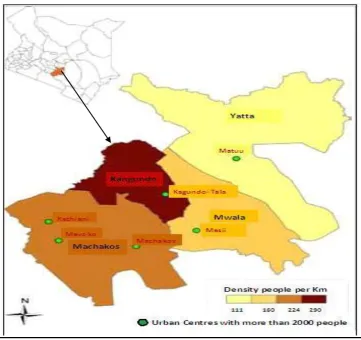
The experiment was carried out in Kenya Agricultural and Livestock Research Organization (KARLO) Katumani in Machakos County which is located in the Eastern part of Kenya. The County boarders Nairobi and Kiambu Counties to the West, Embu County to the North, Kitui County to the East and Makueni County to the South (Jaeztold et al., 2006) (Figure 3.1). The County covers a total area of 6,208 km2; with an estimated population of 1,098,584 people (GoK, 2011).
Figure 3.1: Map of Kenya showing the study area (NEMA, 2013)
the sea level (Claessens et al., 2012). The climate in Machakos County is characterized as semi-arid with bimodal rainfall pattern, giving two unique rainy and dry seasons. The mean annual rainfall in Machakos County ranges between 500-900 mm; with a high inter-seasonal rainfall variation and the co-efficient of variation is 28% ((Mora-Vallejo et al., 2008). There are two rainy seasons: short rainy season from October / November up to January / February and the long rainy season from March to August / September (Mora-Vallejo et al., 2008). About 80% of the mean annual rainfall falls in the two rainy seasons (Rao and Okwach, 2005).
Southward and Northward movements of inter tropical convergence zone results in two rainy seasons in a year (Anyah and Semazzi, 2007). The rainy seasons can be completely wet and mostly late or sudden resulting in floods and inundation. A general increase in the intensity of high rainfall events related in part with the increase in atmospheric water vapor is a common phenomenon in the semi-arid region of Eastern Kenya (Christensen et al., 2007).
County supports a variety of agricultural activities occupying almost half of the County’s total surface area (Mora-Vallejo et al., 2008).
The common land use systems are rain-fed and mixed crop-livestock farming systems which support mainly the small scale semi-subsistence sector (Muhammed et al., 2010). The most key staple crop is maize (Zea mays L.). Other crops grown include: common beans (Phaseolus vulgaris L.), cowpea (Vigna unguculata L.), pigeon pea (Cajanus cajan L.), bulrush millet (Pennisetum americanum L.) and sorghum (Sorghum biclor L.). Some farmers also grow vegetables, fruit trees and tuber crops like cassava (Manihot esculata L.). Coffee (Coffea arabica L.) and cotton (Gossypium spp L.) are grown in the County as cash crops. However, the yields of these crops are generally low and crop failure is a common occurrence (Claessens et al., 2012).
In Machakos County, majority of the soils reflect largely metamorphic parent rock and rainfall patterns which play a key role in their formation. The dominant soils are Alfisols, Ultisols, Oxisols and Lithic soils (FAO, 1970). These soils have low fertility and are highly susceptible to erosion. In addition, less than 20% of the soils are well drained. The most common vegetation in this County is dry bush with trees and in the higher areas, savannah with scattered trees. Katumani is located in agro-ecological zone IV and is dominated by chromic Luvisols (Siderious and Mucheru, 1977).
3.2 Experimental Treatments and Design
treatments were tied ridges, flat bed planting, farm yard manure 0 t/ha, farm yard manure 5 t/ha, 20 kg N/ha, farm yard manure 5 t/ha + 20 kg N/ha, maize mono crop and maize cowpeas intercrop. This gave a total of 16 treatment combinations. The treatments were replicated 4 times (Table 3.1).
Table 3.1 Experimental treatments
Main Treatments Fertilizers Cropping Systems
Tied ridges (W2) Farm yard manure 0 t/ha (F1) Maize mono crop (C1)
Maize cow peas intercrop (C2) Farm yard manure 5 t/ha (F2) Maize mono crop (C1)
Maize cowpeas intercrop (C2) Nitrogen fertilizer 20 kg N/ha
(F3)
Maize mono crop(C1)
Maize cow peas intercrop (C2) Nitrogen fertilizer 20 kg N/ha +
farm yard manure 5 t/ha (F4)
Maize mono crop (C1)
Maize cow peas intercrop (C2) Flat bed planting
(W1)
Farm yard manure 0 t/ha (F1) Maize mono crop (C1)
Maize cow peas intercrop (C2) Farm yard manure 5 t/ha (F2) Maize mono crop (C1)
Maize cow peas intercrop (C2) Nitrogen fertilizer 20 kg N/ha
(F3)
Maize mono crop (C1)
Maize cow peas intercrop (C2) Nitrogen fertilizer 20 kg N/ha +
farm yard manure 5 t/ha (F4)
Maize mono crop (C1)
Maize cow peas intercrop (C2)
The spacing of the tied ridges was 90cm tied at 2.5 m interval. The ridges were 30 cm high and ties (cross ridges) 20 cm high. The size of each plot was 5.4 m x 3.6 m with a net plot of 3.4 m x 1.6 m. The plots were laid out in the field in 4 blocks with each block having 16 treatments randomized within the block; making a total of 64 plots (Appendix 1). The distance between the blocks was 2 m and between the plots 1 m.
3.3 Characterization of the Farm Yard Manure used in the Experiment
Mn, Fe and Zn) following the procedures outlined by Okalebo et al., (2002). The results are presented in Table 3.2.
Table 3.2 Chemical composition of the farm yard manure used in the experiments
% Cmol/ kg Ppm
Seasons pH N OC K Ca Mg P Mn Fe Zn
Short rains 2015
8.96 1.26 7.40 13.50 18.5 8.5 785 258.3 160.84 30.25 Long rains
2016
7.94 1.00 6.35 14.58 15.4 6.9 730 245.2 164.48 41.15
The analysis revealed that, the pH for the farm yard manure applied during the SR 2015 had a higher pH value (8.96) compared to that used during the LR (7.94). However, in both seasons, the pH of the manure used was slightly alkaline (pH > 7.0). This indicated that, the concentration of the hydroxyl (OH-) ions was higher than the concentration of the hydrogen (H+) ions. The % nitrogen content in the farm yard manure was high during the SR (1.26%) in comparison to LR (1.00%) while the organic carbon was also higher during the SR (7.40%) compared to LR (6.35%) (Table 3.2).
3.4 Characterization of Soils in the Experimental Site
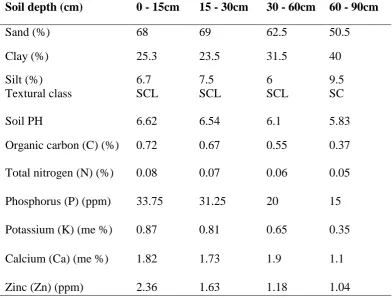
The total soil nitrogen (N) was low since it ranged between 0.05 to 0.08%. The phosphorus (P) range was between 15-33% which is rated as medium (Brennan et al., 2013). The potassium (K) content was low with a range of 0.35 to 0.87. Similarly, calcium (Ca) and zinc (Zn) were in the low range (Table 3.3). The soil organic carbon content was also low since the range was between 0.37- 0.72% which was below the recommended amount of 1% (Brennan et al., 2013).
Table 3.3 Textural and chemical properties of soils in the study site Soil depth (cm) 0 - 15cm 15 - 30cm 30 - 60cm 60 - 90cm
Sand (%) 68 69 62.5 50.5
Clay (%) 25.3 23.5 31.5 40
Silt (%) Textural class
6.7 SCL
7.5 SCL
6 SCL
9.5 SC
Soil PH 6.62 6.54 6.1 5.83
Organic carbon (C) (%) 0.72 0.67 0.55 0.37 Total nitrogen (N) (%) 0.08 0.07 0.06 0.05
Phosphorus (P) (ppm) 33.75 31.25 20 15
Potassium (K) (me %) 0.87 0.81 0.65 0.35
Calcium (Ca) (me %) 1.82 1.73 1.9 1.1
Zinc (Zn) (ppm) 2.36 1.63 1.18 1.04
3.5 Seedbed Preparation and Planting of Maize
Seedbed preparation was done by slashing the vegetation manually using slashers and later dug using forked jembes. The soil clods were broken in order to obtain a medium tilth. This was followed by the field being lined and pegs put to demarcate the blocks and plots. Tied ridges were imposed during seed bed preparation. The first planting was on 4th October 2014, the second on 25th March 2015, the third on 6th November 2015 and the fourth on 14th April 2016 at the onset of the rains. The test crop was maize var. KDV1 (a short duration seed recommended for dry areas) which was planted at a spacing of 90cm between the rows and 30cm within each row. The cowpea variety planted was K80. Two seeds were sown per hill at a spacing of 30 cm in between the maize rows in the plots.
At planting, phosphorus was applied as Triple super phosphate (TSP, 20.75% phosphorus) at a rate of 15 kg /ha. Farm yard manure was applied at a rate of 5 t/ha three weeks before planting in the plots where manure was a treatment. The basis for these quantities was on the recommended rate for the study area (Mora-Vallejo et al., 2008). Four weeks after planting, top dressing was done using Calcium ammonium nitrate (C.A.N) at a rate of 20 kg N/ha in the plots where nitrogen fertilizer was a treatment. The fertilizer was applied as a micro-dose. This was done when there was enough moisture in the soil. Weed control was manually done using a garden hoe. Weeding was done twice during the growing period to ensure a weed free field.
ingredient: 35% Carbosulfan) was used to control aphids. The pesticides were sprayed four times during the growing period at an interval of 14 days.
3.6 Data Collection 3.6.1 Rainfall data
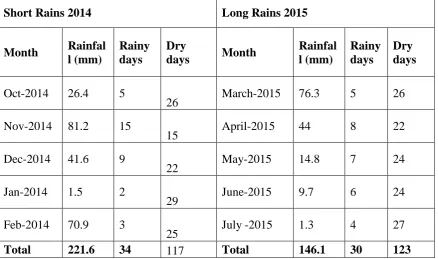
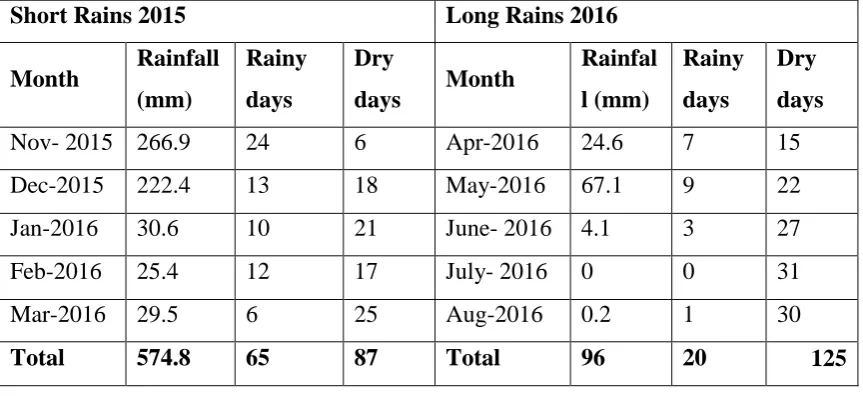
The rainfall data was recorded on daily basis using a rain gauge installed at Katumani Research Station meteorological department. The monthly averages were then computed. The total amount of rainfall received for each season was also calculated.
3.6.2 Determination of soil moisture content
The soil moisture content was determined at planting and thereafter at an interval of two weeks up to the 8th week of the experiment. The soil moisture content
3.6.3 Maize growth measurements
Data for the maize growth parameters was obtained by measuring the plant height, number of leaves per plant, leaf length, leaf width and leaf area. The growth data was collected at 40, 60 and 80 days after planting in all the cropping seasons and the averages computed. When collecting data on the number of leaves per plant, ten maize plants were randomly selected and tagged from the middle row in each plot leaving out the boarder plants. The total numbers of leaves per plant were then counted and their averages calculated. For the maize plant height, ten plants were randomly selected and tagged from the middle row leaving out the boarder plants in each plot. The height was then measured using a meter ruler starting from the soil surface to the tip of the plant in meters. The averages were then calculated for all seasons.
For the maize leaf length and width, ten plants from the middle row were randomly selected and the third leaf from each plant was tagged for length and width measurements. The length was taken using a meter rule from the base to the tip while the same leaf was measured at the middle part for the width. The measurements were recorded in meters. To get the plant leaf area index, the collected data on the maize leaf length and width from the ten randomly selected plant leaves were used. The plant leaf area was calculated in m2 using the formula (Equation 1):
To determine the yield and yield components of maize, the following data were collected at maturity stage during harvesting: cobs weight, number of ears per plant, stover yield, dry biomass yield, grain yield and harvest index. The grain and straw harvesting was done at the end of each cropping season. From a net plot of 3.4 x 1.6 m, the whole plants were harvested (apart from the border rows) by cutting at the ground level using a panga. The plants were then weighed as total biomass using an electronic weighing balance and the weight recorded.
The sub samples were then separated into ears (cob and grains) and stover (stem, leaves and husks). The plant parts (ears and stovers) were weighed using an electronic balance and recorded as fresh weight. This was followed by drying the samples, shelling and threshing after which the ears were further separated into cobs and grains. The dry weight was taken using an electronic weighing balance. All the weights were converted and calculated on a dry basis. The total yield from each plot was converted into tones/ha (Equation 2).
Total crop yield (ton/ha) = grain yields (ton/ha) + dry matter yields (ton/ha)...Eq. 2
Harvest index can be defined as the ratio of the economic yield (grain yield) to the total crop yield at harvest (grain and biomass yields). Harvest Index of the maize crop was calculated by the method described by Bange et al. (1998) (Equation 3).
Harvest
Index =
Economic yield
………..Eq. 3 Total crop yield
3.6.4 Soil sampling and analysis of the soils in the experimental site Soil sampling was done prior to the experiment in order to characterize the soils in the study site. At the end of the cropping season, soil sampling and analysis was also done. The textural and chemical properties of the soil were determined. This was done by taking soil samples at 0-15 cm depth, 15-30 cm depth, 30-60 cm depth and 60-90 cm depth. The soil samples were taken using a soil auger diagonally. The collected soil sub-samples were then put into a container. The soil clods were broken down and the soil sub-samples thoroughly mixed to get a composite soil sample. The soil samples were then taken for laboratory analysis at KALRO headquarters in Nairobi. In the laboratory, part of the soil samples was air-dried, crushed using a wooden mortar and pestle; then sieved through a 2 mm mesh. Physical and chemical properties of the soil were determined using standard procedures outlined by Rowell (1993).
At the end of the cropping season, soil sampling and analysis was also done. Soil samples were taken diagonally using a soil auger from the bases of ten plants selected randomly from each plot. In plots with maize cowpea inter crop, the soil samples were taken between the maize and cowpea rows. The samples from each plot were thoroughly mixed to get a composite sample which was packed and taken for laboratory analysis. In the laboratory, pH and organic carbon were determined from the soil samples.
3.6.5 Determination of soil pH
The soil pHwater was measured in a 1:2.5 soil water ratio using a glass
of distilled water was added to the soil. This was followed by stirring the soil-water solution thoroughly after which, the solution was allowed to stand for 30 minutes. The pH meter was then calibrated with buffers of pH 4.01 and 7.00, then the pH was read by immersing the electrode into the upper part of the soil solution; the pH values were then read and recorded.
3.6.6 Determination of total nitrogen, organic carbon, available phosphorus, calcium and potassium in the soil
Total N was determined by modified micro-Kjeldahl method (Bremner, 1996) (Appendix 3) and organic carbon by using modified Walkley and Black wet oxidation procedure described by Ryan et al., (2001) (Appendix 4). Phosphorous was extracted by Mehlich-1 method (Sonon, 2008; Savoy, 2009) (Appendix 5). Calcium and potassium in the soil was determined by using, Mehlichl double acid extraction method (Kissel and Sonon, 2008; Savoy, 2009) (Appendix 6).
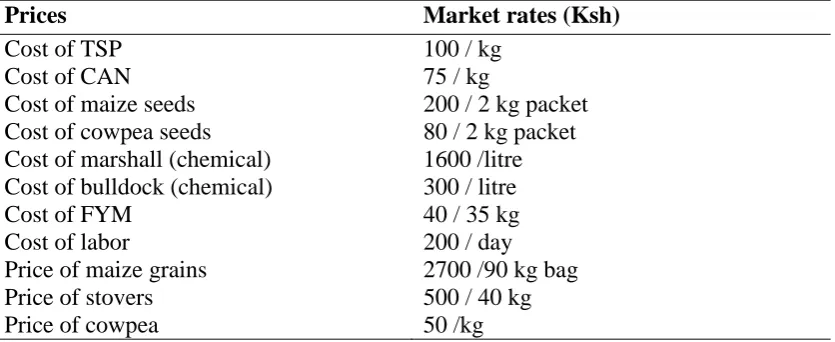
3.6.7 Determination of profit margin