Type of the Paper (Article)
1
ISO 14001 and 26001, agents of change in the SMEs
2
Luis Enrique Valdez-Juárez 1, Elba Alicia Ramos-Escobar1 and Dolores Gallardo-Vázquez 2,
3
Edith Patricia Borboa-Álvarez1,*
4
1 Faculty of Business Administration, Technological Institute of Sonora, Guaymas Sonora 85400, Mexico
5
2 Department of Financial Economics and Accounting, Faculty of Economics and Business, University of
6
Extremadura, 06006 Badajoz, Spain 2; [email protected]
7
* Correspondence: [email protected]; Tel.: +52 622 10033 Ext. 6068
8
9
Abstract: At present, business strategies in SMEs (Small and medium enterprises) are crucial for
10
consolidation in highly competitive markets, in achieving a better image and in business
11
profitability. One of the strategies that have the most success and business success are sustainable
12
practices and social responsibility such as: ISO 14001 and ISO 26001. The literature related to
13
sustainable business is based mainly on the theory of resources and capabilities, and in theory
14
based on Stakeholders. These currents state that companies should focus on profitable strategies to
15
ensure significant and long-term results, in order to achieve organizational and financial results for
16
stakeholders. In this work, the sample consists of 215 companies from the commerce, services and
17
industry sectors, located in the southern region of the State of Sonora in Mexico. The objective of
18
the work is to analyze the influence of ISO 14001 and 26001 standards on the image and
19
profitability of SMEs. The statistical analysis of the data has been carried out through the linear
20
regression technique by OLS (Ordinary Least Squares). The findings prove that the ISO 14001
21
standard is the one that most influences the improvement of the business image and the level of
22
profitability of the SME. In addition, we discovered that ISO 26001 has a partial influence on the
23
image and profitability of the SME.
24
Keywords: ISO, Social Responsibility, Image, Profitability, SMEs.
25
26
1. Introduction
27
Since the appearance of the industrial revolution and with the changes in economic systems,
28
companies have been in constant movement towards learning, standardization of their processes
29
and the ongoing struggle for competitiveness [1,2]. To this type of organizations that live in
30
environments with technological advances and economic obstacles, they are called as visionary,
31
strategic and innovative [3]. One of the effective strategic actions that in recent years has been
32
generating value within and outside organizations, has been the implementation of certification
33
standards related to quality management, environmental management and social responsibility
34
practices [4,5]. These regulations are controlled by the international organization for standardization
35
(ISO-International Organization for Standardization), with the purpose of improving the internal
36
processes of organizations [6,7]. Due to strong international regulations on the subject of process
37
improvement, the quality of products and services, and the control of natural resources, companies
38
are becoming more aware and rational [8,9]. Theories such as resources and capabilities
39
(RBV-Resource Based View) have considered these business practices as a trigger for growth,
40
improvement of corporate image, increased innovation and significant financial returns for their
41
stakeholders[10,11]. However, this philosophy focuses its efforts on the social and economic aspect,
42
often bordering on the theme of sustainability [12]. From another perspective, some scholars have
43
exposed that sustainability and social practices have penetrated with force in their organizational
44
results [13]. Stakeholders theory (interest groups) has been one of the main axioms taken as reference
45
by specialists in the subject to support that sustainable businesses with social and environmental
actions achieve significant organizational and financial benefits [14]. These benefits usually focus on
47
investors, internal customers, external customers, suppliers and residents of communities. This is
48
achieved through collaborative work between the different actors involved in the social economy
49
[15,16]. Undoubtedly, these two theories conceive that the ISO 14001 standard focused on the
50
sustainability of business can contribute more to the reputation and business image [17]. In the same
51
direction, the ISO 26001 standard, focused on the management of social responsibility, has recently
52
been a business practice of great value for business [6]. Among the most significant benefits of these
53
regulations, is that they help to standardize processes, improve the quality of products (sustainable),
54
improve collaborative work, strengthen productive work, reduce costs, increase image and
55
strengthen the organizational reputation [18]. However, in the case of the SME (small and medium
56
enterprises), the implementation of these standards has been a complicated and pending issue. The
57
main barriers faced by these organizations to incorporate these practices, mainly focus on the lack of
58
financial budget (high implementation and monitoring costs), the short-term vision of managers and
59
the lack of commitment of investors and employees [6,19,20]. Derived from the above, we have
60
defined that the main objective of this work is to empirically analyze the effect of the environmental
61
standard ISO 14001 and the social responsibility standard ISO 26001, on the image and profitability
62
of SMEs in the southern region of the State of Sonora in Mexico. The research questions we present
63
and try to answer are: 1) Does the SME that focuses its resources and capacities on the
64
implementation of the ISO 14001 standard obtain higher results of image and corporate
65
performance? 2) The SME that focuses its resources and capacities on the implementation of the ISO
66
26001 standard obtains higher image results and business performance? This work contributes to the
67
literature of the resources and capacities and to the theory the groups of interest from two
68
perspectives. First, analyzing the ability of companies (SMEs) in the application of human and
69
financial resources in terms of standardization and standardization of their processes, with the firm
70
purpose of strengthening their image and increase their performance in competitive markets. In the
71
literature there is a considerable number of empirical studies that analyze the business,
72
environmental and financial benefits that are achieved through the standardization of their
73
processes [21–23]. However, these works mostly focus on the study of large companies with
74
international scope [22,24,25]. Second, from the perspective of the Stakeholder theory, we analyze
75
the benefits that occur within the SME, derived from the application of environmental standards and
76
CSR (Corporate Social Responsibility) practices in global markets. In this same direction, we have
77
detected that a large number of researchers have studied these variables in multinational companies,
78
leaving aside the impacts of these variables within the SME. The research has been structured
79
through: 1) literature review, and development of hypotheses for analysis; 2) the second section
80
describes the methodology, the sample and the justification of the variables under study; 3) the third
81
section examines the results obtained and 4) finally the main conclusions and discussions are
82
presented.
83
84
2. Literature Review and Development of the Hypothesis
85
2.1. ISO 14001 and 26001 standards, in the business image
86
Some theoretical currents, such as the Stakeholders and the RBV, have concluded that there are
87
companies of different sizes that have achieved success through the implementation of quality and
88
environmental standards [26,27]. Taking sustainability as a reference, businesses are adopting
89
economic models that will lead them to improve their profitability [28]. For this, companies have a
90
greater occupation for the environmental care issue, for the satisfaction of internal and external
91
customers [29,30]. For example, recently some scholars have concluded that an effective way to
92
generate wealth for investors, is improving the working conditions of employees, improve quality
93
processes and care for the environment, this through the so-called circular economy [31,32]. The
issue of sustainability and social responsibility in the last decade has been a business strategy aimed
95
at improving innovation, reputation, image and contributes to the business leadership of the
96
business [16,33,34]. A large number of studies in Europe and North America have concluded that
97
SMEs have a serious problem when implementing environmental management systems, this has
98
caused disinterest and a null value added [35–37]. On the other hand, several studies have
99
confirmed that the implementation of standards focused on sustainable and environmental actions,
100
help in the design and innovation of products, control their production processes, improve the
101
strengthening of the image, improve the perception of the community (customers) and the benefits
102
for investors are maximized [27,38]. In the subject of social responsibility, the regulation for
103
companies through the standard 26001 is currently a business practice that is mostly applied as a
104
marketing strategy [39]. This is because it is adopted for convenience and not for conviction (ethics
105
and moral) [7]. Some research in the field of SMEs from countries with developed and emerging
106
economies have exposed that these practices generate a greater projection of the commercial image
107
of companies, increase the satisfaction of their stakeholders and increase the business reputation
108
[12,40]. From the theoretical and empirical analysis we have developed the following hypotheses:
109
Hypothesis 1a (H1a). A greater focus (implementation) in the ISO 14001 standard, the SME becomes
110
an innovative company.
111
Hypothesis 1b (H1b). A greater focus (implementation) in the ISO 14001 standard, the SME is
112
consolidated as a leader in its sector.
113
Hypothesis 1c (H1c). A greater focus (implementation) in the ISO 14001 standard, the SME is
114
consolidated as a safe company.
115
Hypothesis 1d (H1d). A greater focus (implementation) in the ISO 14001 standard increases the
116
business image in the SME.
117
Hypothesis 2a (H2a). A greater focus (implementation) in the ISO 26001 standard, the SME becomes
118
an innovative company.
119
Hypothesis 2b (H2b). A greater focus (implementation) in the ISO 26001 standard, the SME is
120
consolidated as a leader in its sector.
121
Hypothesis 2c (H2c). A greater focus (implementation) in the ISO 26001 standard, the SME is
122
consolidated as a secure company.
123
Hypothesis 2d (H2d). A greater focus (implementation) in the ISO 26001 standard increases the
124
business image in the SME.
125
126
2.2. The norms ISO 14001 and 26001, in the business profitability
127
128
The theory of resources and capabilities has exposed during the last two decades that
129
organizations that focus their efforts on strategies based on business sustainability, manage to
130
develop products and services with greater value, increase innovation, improve profitability and
131
strengthen their administrative processes and productive [3,13]. Numerous studies developed in
132
large organizations have explained that environmental management and CSR are correlated and
133
that, in addition, they generate significant financial returns [20,41]. In the field of SMEs, some
in a development phase [42,43]. But in this last decade, there is a greater interest in putting them
136
into practice by small businesses, this because of the benefits that are achieved [44]. For example,
137
scholars in the subject have exposed that the SMEs that carry out these practices and/or business
138
strategies manage to improve their processes, manage to efficiently manage logistics, and
139
standardize products and services. These actions lead them to more competitive markets and to the
140
total satisfaction of their customers [34,45]. In addition, with strategies aimed at environmental
141
sustainability and commitment to stakeholders, companies achieve the improvement of the
142
business image, innovation is increased, they manage to penetrate new markets with greater force,
143
they manage to increase the level of customers, they increase their sales, competitiveness increases
144
and consequently the financial and economic profitability increases [46–49]. After reviewing the
145
theoretical and empirical context, the following hypotheses have been developed:
146
147
Hypothesis 3a (H3a). A greater focus (implementation) in the ISO 14001 standard increases the
148
market share in the SME.
149
Hypothesis 3b (H3b). A greater focus (implementation) in the ISO 14001 standard increases the level
150
of satisfaction of the SME's customers.
151
Hypothesis 3c (H3c). A greater focus (implementation) in the ISO 14001 standard increases the
152
profits of the SME.
153
Hypothesis 3d (H3d). A greater focus (implementation) in the ISO 14001 standard increases the
154
profitability of the SME.
155
Hypothesis 4a (H4a). A greater focus (implementation) in the ISO 26001 standard increases the
156
market share in the SME.
157
Hypothesis 4b (H4b). A greater focus (implementation) in the ISO 26001 standard increases the level
158
of satisfaction of SME customers.
159
Hypothesis 4c (H4c). A greater focus (implementation) in the ISO 26001 standard increases the
160
profits of the SME.
161
Hypothesis 4d (H4d). A greater focus (implementation) in the ISO 26001 standard increases the
162
profitability of the SME.
163
164
165
166
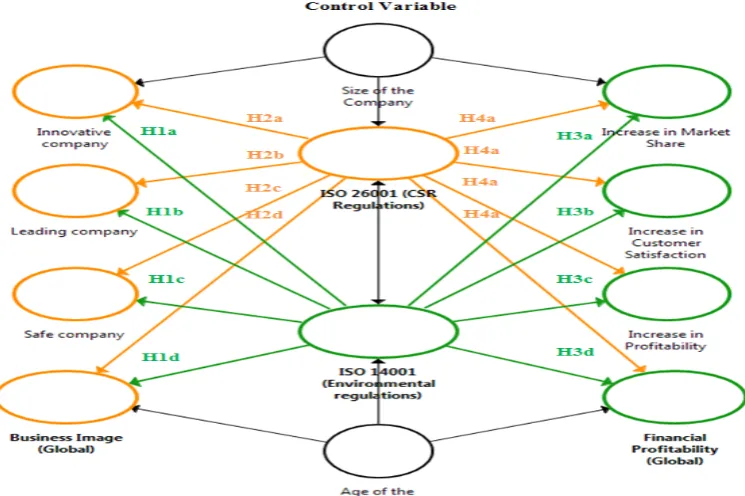
In Figure 1, we can observe the theoretical model proposed for this investigation. This model
167
has been developed based on the premises of stakeholder theory and sustainable business.
170
Figure 1. Theoretical operational model
171
3. Methodology
172
The structure and determination of the sample has been developed based on the principles
173
of stratified sampling for finite populations. The population of companies is segmented according to
174
the business activity (see table 1). The companies in the commerce, services and industrial sectors are
175
the participants in the research. The total number of companies established in the southern region of
176
the State of Sonora in Mexico. Each one of the built sectors has been obtained from the information
177
provided by the economic census of the National Institute of Statistics and Geography [50].
178
Companies with 10 to 100 workers are included in the sample. The sample size was determined to
179
ensure that the maximum margin of error for the estimation of a proportion was less than 0.03 points
180
with a confidence level of 95%. The technique for collecting the information was through a personal
181
interview (questionnaire) addressed to the manager of the companies. The fieldwork for data
182
collection was carried out during the months of May to September 2016. Finally, a sample of 215
183
companies was obtained, which have had experience with the implementation of ISO 14001 and
184
26001 standards (see table 1 and 2).
185
186
187
Table 1. Conformation of the population.
188
Sector Total companies Small Companies Medium Companies % Total
Commerce 176 81 95 49.7
Services 101 39 62 28.5
Industrial 77 14 63 21.8
Total 354 134 220 100.0
Source: Own elaboration
Table 2. Structure of the sample.
191
Sector Total companies Small Companies Medium Companies % Total
Commerce 88 35 53 40.9
Services 55 24 31 25.6
Industrial 72 9 63 33.5
Total 215 68 147 100.0
Source: Own elaboration
192
3.1. Measurement of Variables
193
3.1.1. Exogenous Variables
194
195
ISO 14001, 26001. The literature has exposed that the norms and/or environmental regulations
196
and corporate social responsibility, are generators of innovation, growth, image, reputation and
197
financial profitability in organizations [20], [51]. From the theoretical and empirical review, a series
198
of structured questions were developed in a questionnaire addressed to SME managers.
199
Respondents were asked to indicate if in their company they had introduced environmental
200
management (ISO 14001) and ISO (26001) social responsibility standards in their internal processes.
201
To the values given for the positive answers (yes), the 1 was assigned and for the negative answers
202
(no) the value of 0 was assigned.
203
204
3.1.2. Endogenous variables
205
206
The Business Image. In this study, the managers answered the questions of the questionnaire
207
to assess the degree of importance of the results obtained in the corporate image in terms of
208
environmental regulations and social responsibility practices during the last two years. This
209
variable was measured with 3 items that comprise it: 1. Innovative company, 2. Leader company
210
and 3. Secure company. In addition, the business image variable was also measured through the
211
average of the three items that build it. For this, a Likert scale of 5 points was used with 1 = Not
212
important and 5 = Very important. The questions were elaborated based on the studies ofSarbutts
213
[52], Jenkins [53] y Lee [54], observe table 3.
214
Table 3: Reliability and validity.
Variable (Global image)
In the last 2 years: LF Validation of the variable
An innovative company 0.804*** CA = 0.670, Factorial: 1: KMO: 0.678
A leading company 0.815*** Explained variance: 60.09%, Sig. Bartlett: 0.000
A safe company 0.677***
Source: Own elaboration. LF, Load Factor; CA, Cronbach's Alpha; KMO, Kaiser-Mayer-Olkin,
215
Financial profitability. To measure this variable, we have considered the relationship and
216
influence that financial results receive from ISO standards, social responsibility practices and
217
corporate image [55,56]. In this study, the managers answered the questions of the questionnaire to
218
classify the degree of importance of the profitability of the SME obtained in the last two years. The
219
variable was measured with 3 items: 1. Increase in market share, 2. Increase in customer
220
satisfaction, and 3. Increase in profits. In addition, this variable was also measured globally by
221
building an average of the three components that make up the business profitability of the SME. For
222
this, a Likert scale of 5 points was used with 1 = Poor performance and 5 = High performance. These
223
questions have been developed taking as reference the studies developed by Orlitzky, Schmidt, &
224
Rynes [57] and byMelnyk & Tobias [58], see table 4.
225
226
Table 4: Reliability and validity.
227
Variable (Global Financial profitability)
In the last 2 years:
LF Validation of the variable
Increase in market share 0.780*** CA= 0.776, Factorial: 1: KMO: 0.787
Increase in customer satisfaction 0..833*** Explained variance: 57.20%, Sig. Bartlett: 0.000
Increase in profits 0..754***
Source: Own elaboration. LF, Load Factor; CA, Cronbach's Alpha; KMO, Kaiser-Mayer-Olkin, *** p<
228
0.001.
229
3.2 Control Variables
230
Frequently the structural size and age of the company are seen as a determining factor in the
231
generation of economic and financial performance for organizations [59]. The size of the company, this
232
variable was measured with the natural logarithm of the total of the employees of the year 2016. The
233
age of the company, in the literature and in empirical studies this variable is used in the research
234
models to analyze the financial influence and economic growth that is generated in organizations
235
during a given period of time[60]. The age of the company determines the degree of consolidation and
236
maturity within a market, results that are explained through the evolutionary theory [1]. This
237
variable is measured based on the start of the operation and up to the current activities of the
238
companies, see table 5.
239
240
Table 5. Age and Size of the company.
Characteristic Minimum Maximum Average SD
Age of the company (in years) 1 36 14.00 15,456
Size of the company (number of employees) 10 96 18.00 27,332
3.3 Reliability and Validity
242
For the evaluation of the reliability and validity of the endogenous variables of the instrument,
243
an Exploratory Factor Analysis (EFA) was performed through the maximum likelihood method,
244
using the SPSS software version 21. The reliability of the measurement scales was evaluated using
245
the Cronbach's alpha, the percentage of variance explained, the KMO (The Kaiser-Meyer-Olkin test)
246
and the factorial loads. Cronbach's alpha is considered satisfactory above .60 and/or close to 0.70
247
[61]. Our results are within the values of 0.670 and 0.776, demonstrating an acceptable reliability
248
between the constructs. The KMO is measured in a range of 0 to 1. To consider an acceptable
249
measure and a satisfactory interrelation between the items is recommended to obtain a value close
250
to and/or equal to 0.700 [61]. Our results are in a range of 0.678 and 0.787, indicating good reliability.
251
With respect to the variance explained, our values are 57% and 60%. For this indicator it is
252
recommended that the factorial solution explain, at least, 50% of the total variability of the test
253
response [62,63]. With regard to factor loads, the results obtained are 0.677 and 0.833, this indicator is
254
convenient to provide results above 0.600 as suggested by [61,64]. Other authors recommend that
255
these values be close to or above 0.707 as proposed by Carmines & Zeller [65] yChristmann &
256
Steinwart [66]. The validity of the scales has been carried out through the theoretical and empirical
257
review (content validity). With the previous analyzes it is concluded that the theoretical model has
258
an adequate consistency, validity and reliability among all the constructs.
259
260
4. Results
261
To validate the hypotheses presented in the research and verify the effect that environmental
262
and social responsibility standards have on the corporate image and profitability, the linear
263
regression model by OLS was used. To test the hypothesis, four linear regression models were
264
developed with the following equations. The first equation represented in model 1, outlines the
265
influence that the business image (βo) receives from ISO14001 (β1), the size of the company (β2)
266
and the age of the company (β3) + £ (error). In model 2, the designed equation symbolizes the effect
267
that the business image (βo) receives from ISO26001 (β1), the size of the company (β2) and the age
268
of the company (β3) + £ (error). In model 3, the equation is observed indicating the influence that
269
business profitability (βo) receives from ISO14001 (β1), the size of the company (β2) and the age of
270
the company (β3) + £ (error). In the last structured equation represented in model 4, we observe the
271
influence that business profitability (βo) receives from ISO26001 (β1), the size of the company (β2)
272
and the age of the company (β3) + £ (error).
273
274
1. Model 1. Business imagei =βo + β1 x ISO14001 i+β2 x size of the company + β3 x age of the company +
275
£.
276
2. Model 2. Business imagei = βo + β1 x ISO26001 i +β2 x size of the company + β3 x age of the company
277
+ £.
278
3. Model 3. Financial profitabilityi = βo + β1 x ISO14001i +β2 x size of the company + β3 x age of the
279
company + £.
280
4. Model 4. Financial profitabilityi = βo + β1 x ISO26001 i +β2 x size of the company + β3 x age of the
281
company + £.
Table 6. Hypothesis test results.
Endogenous
variables
Exogenous Variables IC LC SC GI
ISO 14001 0.198***
(3.483)
0.213***
(3.677)
0.174***
(3.059)
0.238**
(4.195)
ISO 26001 0.002
(.008)
-0.073
(-1.225)
0.117**
(2.007)
-0.066
(-1.137)
Age of the Company 0.033 (.626)
-0.012
(-.218)
0.017
(.321)
0.075
(1.387)
Size of the Company 0.122*** (2.154)
0.002
(0.035)
-.0103*
(-1.819.)
0.027
(.609)
Highest VIF 1.29 1.29 1.29 1.28
Value of F 4.641*** 2.745*** 1.928*** 5.611***
R2 adjusted 0.059 0.035 0.070 0.064
Source: Own elaboration. IC: Innovate Company; LC, Leading Company, SF, Safe Company; GI,
284
Global Image. The value of the standardized coefficients and below them in parentheses the Student
285
t value is observed, the values of the Highest VIF, the value of f, and the value of R2 adjusted. *: p <
286
0.05, **: p < 0.01, ***: p < 0.001.
287
288
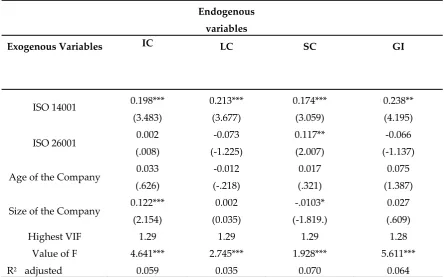
Table 6 presents the regression results of model 1 and 2. This equation represents the
289
relationship between ISO 14001 and ISO 26001, with the corporate image. The results show empirical
290
support for H1a, H1b, H1c, H1d, and H2c. However, for H2a, H2b and H2d we did not find
291
empirical support. The hypotheses H1a, H1b, H1c and H1d have a strong and significant positive
292
influence on the corporate image according to the values of (β=0.198, p<0.001), (β=0.213, p<0.001),
293
(β=0.174, p<0.001) y (β=0.238, p<0.001). This allows us to assume that the implementation of ISO
294
14001 in the SME increases the corporate image. The H2c, indicates that the ISO 26001 has a positive
295
and significant influence on the corporate image, according to the value of (β=0.117, p<0.05). With
296
this the SME is perceived as a safe company. In relation to the control variables introduced in both
297
models, the results indicate that only the size of the company has a positive and significant influence
298
on the variable innovative company according to the value of (β=0.122, p<0.001). On the contrary, we
299
find that the size of the company with a significant and negative effect exerts an influence on the
300
variable of a secure company, according to the value of (β=-0.103, p<0.01). In order to validate the
301
linear regression models of the hypothesis, the R2 adjusted with a value of (0.059), (0.035), (0.070)
302
(0.064) and the values in F of (4.641***), (2.745***), (1.928***) and (5.611***). In addition, the
303
independent variables of the linear regression model show the variance inflation factor (VIF) close to
304
the unit of (1.29), (1.29), (1.29) and (1.28), with this we rule out the presence of multicollinearity.
Table 7. Hypothesis test results.
310
Endogenous variables
Exogenous Variables IMS ICS IP GFP
ISO 14001 -0.170***
(-2.970)
0.200***
(3.521)
0.142***
(2.453)
0.182**
(3.352)
ISO 26001 0.128**
(2.166)
0.061
(1.038)
-0.028
(-.477)
0.121**
(2.064)
Age of the Company -0.032 (-0.605)
-0.012
(-0.218)
0.013
(0.238)
-0.015
(-0.279)
Size of the Company 0.126*** (2.158)
0.002
(0.035)
0.047
(0.811)
-0.034
(-0.628)
Highest VIF 1.29 1.28 1.29 1.28
Value F 3.657*** 5.151*** 2.594*** 5.485***
R2 adjusted 0.047 0.070 0.037 0.062
Source: Own elaboration. IMS: Increase in market share; ICS, Increase in customer satisfaction, IP,
311
Increase in profitability; GFP, Global financial profitability. The value of the standardized
312
coefficients and below them in parentheses the Student t value is observed, the values of the Highest
313
VIF, the value of f, and the value of R2 adjusted. *: p < 0.05, **: p < 0.01, ***: p < 0.001.
314
315
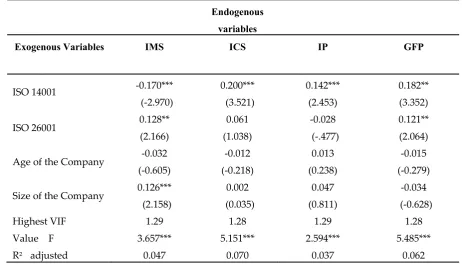
Table 7 shows the regression results of model 3 and 4. This equation represents the relationship
316
between ISO 14001 and ISO 26001, with the financial profitability of the company. The results show
317
empirical support for H3a, H3b, H3c, H3d, H4a and H4d. However, for H4b, and H4c, we do not
318
find empirical support. The hypotheses H3a, presents significant and negative effects according to
319
the value of (β=-0.170, p<0.001), Indicating that less importance in the implementation of
320
environmental standards, the company achieves less market share. The hypotheses H3b, H3c and
321
H3d present a strong and significant positive influence on the financial profitability according to
322
the values of (β=0.200, p<0.001), (β=0.142, p<0.001) y (β=0.182, p<0.001). This allows us to assume
323
that the implementation and execution of ISO 14001 in the SME increases the financial profitability.
324
H4a and H4d indicate that ISO 26001 has a positive and significant influence on market share and
325
overall profitability, according to the values of (β=0.128, p<0.05) y (β=0.121, p<0.05). In relation to
326
the control variables introduced in the statistical models, we have detected that only the size of the
327
company has a positive and significant influence on the variable market share according to the
328
value of (β=0.126, p<0.001). To validate the linear regression models of the hypothesis, the R2
329
adjusted with a value of (0.047), (0.070), (0.037) (0.062) and the values in F of (3.657***), (5.151***),
330
(2.594***) y (5.485***). In addition, the independent variables of the linear regression model show
331
the variance inflation factor (VIF) close to the unit of (1.29), (1.28), (1.29) and (1.28), ruling out the
332
presence of multicollinearity.
333
4. Discussion
335
The results of the research are derived from the analysis of a sample of 215 SMEs from the
336
services, trade and industrial sectors. The study has been developed in a context plagued by strict
337
environmental regulations, commercial uncertainty and complicated international financial markets
338
[67–69]. The results confirm that SMEs established in the southern region of the State of Sonora in
339
Mexico have placed greater interest in compliance with environmental regulations imposed by
340
government institutions and have been minimizing CSR actions. The main contribution of the study
341
is to corroborate that the SMEs established in this region, which are part of the business fabric of a
342
country submerged in the development and economic growth, are in an initial phase and on the
343
right path towards the implementation of environmental practices and of social responsibility. In
344
this section, we discuss our results in the context of the literature on the influence exerted by the
345
ISO standards of environmental management and social responsibility, on the image and business
346
profitability that is manifested in the SME. This research first shows that the SMEs that guide their
347
resources and capabilities in environmental actions significantly improve their image, particularly
348
in: 1) the perception of an innovative company, 2) a leading company in the market, 3) and as a safe
349
company. In addition, these sustainable strategies contribute to: 1) increase in customer satisfaction
350
and 2) increase in business profits. Secondly, we corroborate that SMEs that practice social
351
responsibility actions achieve significant results in: 1) being viewed as a safe company, 2) in
352
increasing market share and 3) in the overall profitability of the SME. With the above we have given
353
answers to the questions and the objective of the investigation.
354
5. Conclusions
355
Analyzing our results in greater depth, we show relevant empirical evidence on the influence
356
of ISO 14001 on the image and profitability of SMEs. First, the result with greater strength is located
357
in the regression model 1, demonstrating that environmental management standards have a
358
positive and significant impact on the image of SMEs. These results are aligned with the literature
359
related to environmental management (Stakeholders) and with the theory of resources and
360
organizational capabilities [25,70]. In this same direction with an important force the regression
361
model 3, states that environmental management significantly influences the profitability of SMEs,
362
results that align with the Stakeholder literature and sustainability and, in addition, with some
363
empirical studies [13,27,34]. Regarding model 2, we observe that there is a smaller influence
364
between ISO 26001 and the business image. These findings have a similar behavior with model 4,
365
which indicates that there is a significant but smaller relationship between ISO 26001 and the
366
profitability obtained in the SME. This allows us to argue that these types of businesses are not
367
adopting these strategies in their entirety, this is mainly due to their limitations and barriers they
368
face in global markets and economies of scale, as enunciated by different theoretical and empirical
369
studies [23,71,72]. From the above, it can be deduced that SMEs must focus their resources and
370
capacities on sustainable business and models, on the adoption of ISO standards for environmental
371
management and even more on implementing CSR practices through ISO 26001. These strategic
372
actions they can lead to competitiveness in global terrains and to sustained profitability for all
373
interest groups that participate directly or indirectly in the business. On the other hand, it has been
374
detected that the control variable size of the company has a significant impact on the size and
375
profitability of the SME. In other words, when companies grow in structure and capacities, they
376
strengthen their level of innovation and increase their market share, penetrating more dynamically
377
and aggressively its sales strategy towards the client [73,74]. But these results also indicate that the
insecure from the point of view of the organizational structure (complexity of resource
380
management) [75,76]. Results that are aligned with the theory of resources and capabilities and with
381
evolutionary economic theory [1,3].
382
ϝ
383
The research exhibits some limitations and on the other hand it opens the door to continue
384
developing future lines of research. The first limitation refers to the fact that the information can
385
stimulate the bias of the results, this because the data were obtained from subjective perceptions
386
issued by the managers and/or managers of the SME. Second, the sample has only been focused on
387
companies in the southern zone of the State of Sonora in Mexico, and may be extended to other
388
geographical areas of the country. The last limitation considered in this paper is about the type of
389
statistical analysis carried out for the verification of hypotheses (linear regression). In order to face
390
these limitations, it is important to consider, in the future, the consolidation of the conceptual
391
model on the subject of sustainability, social responsibility, image and profitability through the
392
inclusion of a greater number of constructs. With this, we intend to strengthen the analyzes through
393
the use of the structural equations technique (variance and/or covariance). To continue in this same
394
direction and develop high value studies, it is advisable to continue with this type of studies
395
considering variables such as: 1) innovation 2) sustainable entrepreneurship and 3) the supply chain
396
in SMEs.
397
398
Author Contributions: Contributions of the author: L.E.V.J. Developed the operational model of the research,
399
developed the objective and the approach of the hypotheses, supervised the work of gathering information to
400
the managers through a questionnaire, contributed in the development of the literature, in the analysis of the
401
results and wrote the conclusions of this document and has made the final revision of the entire document.
402
E.R.E. Contributed in the development of the literature review, in the justification of the hypotheses and
403
supported writing part of the conclusions of this document and reviewed the translation from Spanish to
404
English. D.G.V. and E.P.B.A. They contributed with the validation of the instrument and discussions of the
405
document. All the authors declare to have contributed in the development of this work. In addition, the authors
406
report having read and approved the final version of this document.
407
Funding: This project received funding for its development and publication by the Program for Strengthening
408
Educational Quality (PFCE, 2018) of the Secretariat of Public Education of Mexico.
409
Conflicts of Interest: The authors declare no conflict of interest.
410
References
411
(1) Nelson, R. R. An Evolutionary Theory of Economic Change; Harvard University Press,
412
Cambridge, MA. USA, 2009.
413
(2) Drucker, P. Managing in the Next Society; Taylor & Francis, 2012.
414
(3) Barney, J. B.; Ketchen, D. J.; Wright, M. The Future of Resource-Based Theory: Revitalization
415
or Decline? J. Manage. 2011, 37 (5), 1299–1315.
416
(4) Rego, A.; Cunha, M. P. e; Polónia, D. Corporate Sustainability: A View From the Top. J. Bus.
417
Ethics 2017, 143 (1), 133–157.
418
(5) Bernal-Conesa, J. A.; de Nieves Nieto, C.; Briones-Peñalver, A. J. CSR Strategy in Technology
419
Companies: Its Influence on Performance, Competitiveness and Sustainability. Corp. Soc.
420
Responsib. Environ. Manag. 2017, 24 (2), 96–107.
421
(6) Moratis, L.; Cochius, T. ISO 26000: The Business Guide to the New Standard on Social
422
Responsibility; Taylor & Francis, 2017.
(7) Jagd, J. T. Investor Oriented Corporate Social Responsibility Reporting; Taylor & Francis, 2014.
424
(8) Rajeev, A.; Pati, R. K.; Padhi, S. S.; Govindan, K. Evolution of Sustainability in Supply Chain
425
Management: A Literature Review. J. Clean. Prod. 2017, 162, 299–314.
426
(9) Finkbeiner, M.; Schau, E. M.; Lehmann, A.; Traverso, M.; Finkbeiner, M.; Schau, E. M.;
427
Lehmann, A.; Traverso, M. Towards Life Cycle Sustainability Assessment. Sustainability 2010,
428
2 (10), 3309–3322.
429
(10) Barney, J. B. Purchasing, Supply Chain Management and Sustained Competitive Advantage:
430
The Relevance of Resource-Based Theory. J. Supply Chain Manag. 2012, 48 (2), 3–6.
431
(11) Sharma, S.; Vredenburg, H. Proactive Corporate Environmental Strategy and the
432
Development of Competitively Valuable Organizational Capabilities. Strateg. Manag. J. 1998,
433
19 (8), 729–753.
434
(12) Jayanti, R. K.; Rajeev Gowda, M. V. Sustainability Dilemmas in Emerging Economies. IIMB
435
Manag. Rev. 2014, 26 (2), 130–142.
436
(13) Freeman, R. E.; Harrison, J. S.; Wicks, A. C.; Parmar, B. L.; de Colle, S. Stakeholder Theory: The
437
State of the Art; Cambridge University Press, 2010.
438
(14) Freeman, R. E. Strategic Management: A Stakeholder Approach; Pitman Series in Business and
439
Public Policy; Cambridge University Press, 2010.
440
(15) McWilliams, A.; Siegel, D. S.; Wright, P. M. Corporate Social Responsibility: Strategic
441
Implications. J. Manag. Stud. 2006, 43 (1), 1–18.
442
(16) McWilliams, A.; Parhankangas, A.; Coupet, J.; Welch, E.; Barnum, D. T. Strategic Decision
443
Making for the Triple Bottom Line. Bus. Strateg. Environ. 2016, 25 (3), 193–204.
444
(17) Bansal, P.; Hunter, T. Strategic Explanations for the Early Adoption of ISO 14001. J. Bus. Ethics
445
2003, 46 (3), 289–299.
446
(18) Su, H.-C.; Dhanorkar, S.; Linderman, K. A Competitive Advantage from the Implementation
447
Timing of ISO Management Standards. J. Oper. Manag. 2015, 37, 31–44.
448
(19) Ho, K. L. P.; Nguyen, C. N.; Adhikari, R.; Miles, M. P.; Bonney, L. Exploring Market
449
Orientation, Innovation, and Financial Performance in Agricultural Value Chains in
450
Emerging Economies. J. Innov. Knowl. 2017.
451
(20) Aagaard, A. Sustainable Business:; RIVER PUBLISHERS SERIES IN MULTI BUSINESS
452
MODEL INNOVATION, TECHNOLOGIES AND SUSTAINABLE BUSINESS; River
453
Publishers, 2016.
454
(21) Dobers, P. Corporate Social Responsibility: Management and Methods. Corp. Soc. Responsib.
455
Environ. … 2009, 16 (4), 185–191.
456
(22) Chin, W. W.; Dibbern, J. Handbook of Partial Least Squares; 2010.
457
(23) Hahn, R. Standardizing Social Responsibility New Perspectives on Guidance Documents and
458
Management System Standards for Sustainable Development. IEEE Trans. Eng. Manag. 2012,
459
59 (4), 717–727.
460
(24) Christmann, P. Multinational Companies and the Natural Environment : Determinants of
461
Global Environmental Policy Standardization Published by : Academy of Management
462
Stable URL : Http://Www.Jstor.Org/Stable/20159616 Linked References Are Available on
463
JSTOR for This Arti. Acad. Manag. 2004, 47 (5), 747–760.
464
(25) Hahn, R.; Kühnen, M. Determinants of Sustainability Reporting: A Review of Results,
(November 2013), 5–21.
467
(26) Barney, J.; Wright, M.; Ketchen, D. J. The Resource-Based View of the Firm: Ten Years after
468
1991. J. Manage. 2001, 27 (6), 625–641.
469
(27) Ferrón-Vílchez, V. Does Symbolism Benefit Environmental and Business Performance in the
470
Adoption of ISO 14001? J. Environ. Manage. 2016, 183, 882–894.
471
(28) Neil A. Morgan; Anna Kaleka; Katsikeas, C. S. Antecedents of Export Venture Performance:
472
A Theoretical Model and Empirical Assessment. J. Mark. 2004, 68 (1), 90–108.
473
(29) Camilleri, M. A. Corporate Sustainability, Social Responsibility and Environmental Management:
474
An Introduction to Theory and Practice with Case Studies; CSR, Sustainability, Ethics &
475
Governance; Springer International Publishing, 2017.
476
(30) Khan, M.; Chang, Y.-C.; Khan, M. I.; Chang, Y.-C. Environmental Challenges and Current
477
Practices in China—A Thorough Analysis. Sustainability 2018, 10 (7), 2547.
478
(31) Witjes, S.; Lozano, R. Towards a More Circular Economy: Proposing a Framework Linking
479
Sustainable Public Procurement and Sustainable Business Models. Resour. Conserv. Recycl.
480
2016, 112, 37–44.
481
(32) McCormick, K.; Kautto, N. The Bioeconomy in Europe: An Overview. Sustainability 2013, 5
482
(6), 2589–2608.
483
(33) Salim, H. K.; Padfield, R.; Hansen, S. B.; Mohamad, S. E.; Yuzir, A.; Syayuti, K.; Tham, M. H.;
484
Papargyropoulou, E. Global Trends in Environmental Management System and ISO14001
485
Research. J. Clean. Prod. 2018, 170, 645–653.
486
(34) Cantele, S.; Zardini, A. Is Sustainability a Competitive Advantage for Small Businesses? An
487
Empirical Analysis of Possible Mediators in the Sustainability–financial Performance
488
Relationship. J. Clean. Prod. 2018, 182, 166–176.
489
(35) Hillary, R. Environmental Management Systems and the Smaller Enterprise. J. Clean. Prod.
490
2004, 12 (6), 561–569.
491
(36) Heras, I.; Arana, G. Alternative Models for Environmental Management in SMEs: The Case of
492
Ekoscan vs. ISO 14001. J. Clean. Prod. 2010, 18 (8), 726–735.
493
(37) Valdez-Juárez, L.; Gallardo-Vázquez, D.; Ramos-Escobar, E.; Valdez-Juárez, L. E.;
494
Gallardo-Vázquez, D.; Ramos-Escobar, E. A. CSR and the Supply Chain: Effects on the
495
Results of SMEs. Sustainability 2018, 10 (7), 2356.
496
(38) Granly, B. M.; Welo, T. EMS and Sustainability: Experiences with ISO 14001 and
497
Eco-Lighthouse in Norwegian Metal Processing SMEs. J. Clean. Prod. 2014, 64, 194–204.
498
(39) von Weltzien Hoivik, H. Embedding CSR as a Learning and Knowledge Creating Process:
499
The Case for SMEs in Norway. J. Manag. Dev. 2011, 30 (10), 1067–1084.
500
(40) Poveda, C. A.; Young, R. Potential Benefits of Developing and Implementing Environmental
501
and Sustainability Rating Systems: Making the Case for the Need of Diversification. Int. J.
502
Sustain. Built Environ. 2015, 4 (1), 1–11.
503
(41) Porter, M. E.; Kramer, M. R. Creating Shared Value. Harv. Bus. Rev. 2011, No. February, 63–77.
504
(42) Moore, S. B.; Manring, S. L. Strategy Development in Small and Medium Sized Enterprises
505
for Sustainability and Increased Value Creation. J. Clean. Prod. 2009, 17 (2), 276–282.
506
(43) Lueg, R.; Radlach, R. Managing Sustainable Development with Management Control
507
Systems: A Literature Review. Eur. Manag. J. 2016, 34 (2), 158–171.
508
(44) Jamali, D.; Karam, C. Corporate Social Responsibility in Developing Countries as an
Emerging Field of Study. Int. J. Manag. Rev. 2018, 20 (1), 32–61.
510
(45) Graafland, J. Does Corporate Social Responsibility Put Reputation at Risk by Inviting Activist
511
Targeting? An Empirical Test among European SMEs. Corp. Soc. Responsib. Environ. Manag.
512
2018, 25 (1), 1–13.
513
(46) Torugsa, N. A.; O’Donohue, W.; Hecker, R. Capabilities, Proactive CSR and Financial
514
Performance in SMEs: Empirical Evidence from an Australian Manufacturing Industry
515
Sector. J. Bus. Ethics 2012, 109 (4), 483–500.
516
(47) Ageron, B.; Spalanzani, A. Sustainable Supply Management: An Empirical Study. Int. J. Prod.
517
Econ. 2012, 140 (1), 168–182.
518
(48) Dey, P. K.; Petridis, N. E.; Petridis, K.; Malesios, C.; Nixon, J. D.; Ghosh, S. K. Environmental
519
Management and Corporate Social Responsibility Practices of Small and Medium-Sized
520
Enterprises. J. Clean. Prod. 2018, 195, 687–702.
521
(49) Gianni, M.; Gotzamani, K.; Tsiotras, G. Multiple Perspectives on Integrated Management
522
Systems and Corporate Sustainability Performance. J. Clean. Prod. 2017, 168, 1297–1311.
523
(50) INEGI. Economic Census, Summary of the Final Results.; Mexico, 2014.
524
(51) Masurel, E. Why SMEs Invest in Environmental Measures: Sustainability Evidence from
525
Small and Medium-Sized Printing Firms. Bus. Strateg. Environ. 2007, 16 (3), 190–201.
526
(52) Sarbutts, N. Can SMEs “Do” CSR? A Practitioner’s View of the Ways Small- and
527
Medium-Sized Enterprises Are Able to Manage Reputation through Corporate Social
528
Responsibility. J. Commun. Manag. 2003.
529
(53) Jenkins, H. A Critique of Conventional CSR Theory: An SME Perspective. J. Gen. Manag. 2004,
530
29 (4), 37–57.
531
(54) Lee, M.-D. P. A Review of the Theories of Corporate Social Responsibility: Its Evolutionary
532
Path and the Road Ahead. Int. J. Manag. Rev. 2008, 10 (1), 53–73.
533
(55) Wood, D. J. Measuring Corporate Social Performance: A Review. Int. J. Manag. Rev. 2010, 12
534
(1), 50–84.
535
(56) Carroll, A. B.; Shabana, K. M. The Business Case for Corporate Social Responsibility: A
536
Review of Concepts, Research and Practice. Int. J. Manag. Rev. 2010, 12 (1), 85–105.
537
(57) Orlitzky, M.; Schmidt, F. L.; Rynes, S. L. Corporate Social and Financial Performance: A
538
Meta-Analysis. Organ. Stud. 2003, 24 (3), 403–441.
539
(58) Melnyk, S. A.; Tobias, J. Is Performance Measurement and Management Fit for the Future?
540
Manag. Account. Res. 2014, 25 (2), 173–186.
541
(59) Penrose, E. T. The Theory of the Growth of the Firm; Oxford University Press, 2009.
542
(60) Benitez-Amado, J.; Walczuch, R. M. Information Technology, the Organizational Capability
543
of Proactive Corporate Environmental Strategy and Firm Performance: A Resource-Based
544
Analysis. Eur. J. Inf. Syst. 2012, 21 (6), 664–679.
545
(61) Hair, J.; Black, W.; Babin, B.; Anderson, R.; Tatham, R. Multivariate Data Analysis Vol.6;
546
Prentice Hall, 2006; Vol. 6.
547
(62) Hair, J. F., Anderson, R. E., Tatham, R. L., and William, C. Multivariate Data Analysis.; 1998.
548
(63) Reio, T. G. The Threat of Common Method Variance Bias to Theory Building. Hum. Resour.
549
Dev. Rev. 2010, 9 (4), 405–411.
550
(64) Bagozzi, R. P.; Yi, Y. On the Evaluation of Structural Equation Models. J. Acad. Mark. Sci. 1988,
(65) Carmines, E. G., & Zeller, R. A. Reliability and Validity Assessment. Sage Publ. 1979, 17.
553
(66) Christmann, A.; Steinwart, I. Consistency of Kernel-Based Quantile Regression. Appl. Stoch.
554
Model. Bus. Ind. 2008, 24 (2), 171–183.
555
(67) Revell, A.; Stokes, D.; Chen, H. Small Businesses and the Environment: Turning over a New
556
Leaf? Bus. Strateg. Environ. 2009, 19 (5), n/a-n/a.
557
(68) Tasdemir, C.; Gazo, R.; Tasdemir, C.; Gazo, R. A Systematic Literature Review for Better
558
Understanding of Lean Driven Sustainability. Sustainability 2018, 10 (7), 2544.
559
(69) Gunningham, N.; Sinclair, D.; Sinclair, D. Leaders & Laggards; Routledge, 2017.
560
(70) McWilliams, A.; Siegel, D. Corporate Social Responsibility: A Theory of The Firm
561
Perspective. Acad. Manag. Rev. 2001, 26 (1), 117–127.
562
(71) Lee, K.-H.; Herold, D. M.; Yu, A.-L. Small and Medium Enterprises and Corporate Social
563
Responsibility Practice: A Swedish Perspective. Corp. Soc. Responsib. Environ. Manag. 2016, 23
564
(2), 88–99.
565
(72) Lepoutre, J.; Heene, A. Investigating the Impact of Firm Size on Small Business Social
566
Responsibility: A Critical Review. J. Bus. Ethics 2006, 67 (3), 257–273.
567
(73) Aras, G.; Aybars, A.; Kutlu, O. Managing Corporate Performance. Int. J. Product. Perform.
568
Manag. 2010, 59 (3), 229–254.
569
(74) Davis, P. S.; Babakus, E.; Englis, P. D.; Pett, T. The Influence of CEO Gender on Market
570
Orientation and Performance in Service Small and Medium-sized Service Businesses. J. Small
571
Bus. Manag. 2010, 48 (4), 475–496.
572
(75) Teece, D. J.; Pisano, G.; Shuen, A. Dynamic Capabilities and Strategic Management. Strateg.
573
Manag. J. 1997, 18 (7), 509–533.
574
(76) Teece, D. J. Explicating Dynamic Capabilities: The Nature and Microfoundations of
575
(Sustainabile) Enterprise Performance. Strateg. Manag. J. 2007, 298 (13), 1319–1350.