EXPORT PERSONNEL PERCEPTIONS OF EXPORT PERFORMANCE TO
CHINA MARKET
FARSHID MOVAGHAR MOGHADDAM
EXPORT PERSONNEL PERCEPTIONS OF EXPORT PERFORMANCE TO CHINA MARKET
FARSHID MOVAGHAR MOGHADDAM
A thesis submitted in the fulfilment of the requirements for the award of the degree of
Doctor of Philosophy (Management)
Faculty of Management and Human Resource Development Universiti Teknologi Malaysia
DEDICATION
To the God
iv
ACKNOWLEGEMENTS
So many things have helped me in fulfilling my dreams in earning a PhD. This research would never have come to fruition the aid and support of god, my many mentors, colleagues, teachers, friends, supervisors, and family.
First and foremost, I would like to thanks sincerely Ahoramazda, who is the most merciful and gracious, for he has blessed me with the understanding, determination and guidance during my graduate studies.
Secondly, I would like to thank all those who have contributed in so many ways in the completion of this thesis. I would like to express sincerely my gratitude and appreciation to my supervisor Prof. Dr. Abu Bakar Abdual Hamid, for his endless and valuable guidance, wisdom, friendship and great support during my entire academic years at UTM. The completion of this thesis would not be possible without his assistance and encouragement. All these are highly appreciated. In addition, I would like to thank the chairperson and members of the committee for their valuable comments and suggestions made on my thesis.
I am particularly thankful to my parents who have continuously prayed for, supported and encouraged me through tout the journey in completing my study. My parents support and encouragement have helped me a great deal, and have played a vital part in helping me to achieve my biggest goals and dreams.
ABSTRACT
vi
ABSTRACT
TABLE OF CONTENTS
CHAPTER TITLE PAGE
DECLARATION ii
DEDICATION iii
ACKNOWLEGEMENTS iv
ABSTRACT v
ABSTRAK vi
TABLE OF CONTENTS vii
LIST OF TABLES xi
LIST OF FIGURES xiv
LIST OF ABBREVIATIONS xv
LIST OF APPENDICES xvii
1 INTRODUCTION 1
1.1 Introduction to Study 1
1.2 Background of Study 12
1.3 Problems Statement 14
1.4 Research Objectives 21
1.5 Research Hypothesis and Questions 21
1.6 Scope of Study 23
1.7 Significance of Study 24
1.8 Guide to the Thesis 25
1.9 Summary 26
2 LITERATURE REVIEW 27
2.1 Introduction 27
viii
2.2.2 Measure of Export Performance 29 2.2.2.1 Objective Measurement 39
2.2.2.2Subjectively Measurement 41
2.3The Determinants of Export performance 46
2.4Conceptual Framework of Research 70
2.5Marketing Strategy 76
2.5.1Definition of Strategy 77
2.5.2 Hierarchy of Strategy 80
2.5.2.1Corporate level of Strategy 80 2.5.2.2Business or Competitive Level Strategy 81 2.5.2.3Functional- Level Strategy or Operational-level
Strategy 82
2.5.2.4Marketing Strategy or Export Marketing Strategy 82
2.6 Export marketing Strategy Elements 83
2.6.1 Product Marketing Strategy 84
2.6.2 Promotion Marketing Strategy 87
2.6.3 Place Marketing Strategy 89
2.6.4 Price Marketing Strategy 90
2.7 Internal Factors 95
2.7.1 Firm Characteristics 96
2.7.2 Managerial Characteristic 107
2.7.2.1 Attitudinal Characteristics (Orientation and
Perception) 108
2.7.2.2 Skill Based Characteristics 111
2.8 External Factors in Environment 119
2.8.1 Export Market Characteristics 120
2.8.2 Domestic Market Characteristics 124
2.9 Emerging Market 132
2.10Iran Petrochemical Industry 137
2.11Summary 140
3 RESEARCH METHODOLOGY 141
3.1 Introduction 141
3.2.1 Quantitative Method 143
3.3 Sampling Design 145
3.3.1Target Population 147
3.4Data Collection 149
3.4.1 Survey 150
3.4.2 Questionnaire 152
3.5Goodness of Measures 156
3.5.1 Validity 156
3.5.1.1 Face validity 157
3.5.1.2Content validity 158
3.5.1.3 Criterion validity 159
3.5.1.4 Construct validity 159
3.5.2 Reliability 164
3.6 Data Analysis 166
3.7 Evaluation of PLS Path Model Results 169 3.7.1 Assessment the Measurement Models 170 3.7.2 Assessment of the Structural Model 175
3.8 Summary 176
4 DATA ANALYSIS 178
4.1 Introduction 178
4.1 Descriptive Statistics 179
4.1.1 Job Title of Respondents 179
4.1.2 Experience of Respondents 181
4.1.3 Education level and Field of Study of Respondents 183
4.1.4 Manager English Proficiency 185
4.1.5 Firm Establishment 185
4.1.6 Type of Firms 186
4.1.7 Total Marketing Staffs 187
4.1.8 Sale of Firms 188
4.1.9 Means, Standard Divisions and Variances of Variables 189
4.2 Normality Tests 192
x
4.2.2 Skewness and Kurtosis Test 194
4.3Multicollinearity Test 196
4.4 Hypothesis Results 198
4.4.2 Export Marketing Strategy 200
4.4.3 External and Internal Factors 200
4.4.3.1 External Factors 201
4.4.3.2 Internal Factors 202
4.5 PLS Model Evaluating 210
4.6 Measurement Model 210
4.6.1Reliability Test 210
4.6.2 Validity Test 213
4.6.2.1 Convergent Validity 214
4.6.2.2 Discriminant validity 218
4.6.2.3 Construct Validity 221
4.6.3 Structural Model 221
4.7 Summary 229
5 FINDINGS AND CONCLUSION 230
5.1 Introduction 230
5.2 Research Findings 230
5.3First Objective 232
5.4Second Objective 233
5.4.1 External Factors 234
5.4.2 Internal Factors 236
5.5 Third Objective (Key Success Factors) 240
5.6 The conceptual model 245
5.7 Research Contribution 247
5.8 Managerial Implications 250
5.9 Limitation of Study 253
5.10 Suggestion for Future Research 254
5.11 Summary 256
REFERENCES 257
LIST OF TABLES
TABLE NO. TITLE PAGE
1.1 GDP of the world 5
1.2 Main Partners of Iran's Non-Oil Exports (March 2007- March
2008) 6
1.3 Total Petrochemical Product Export to China 8 1.4 Trade Balance of non- oil products 9 1.5 Share of Non-oil Export Value 10 1.6 Main Exportable Items, March 21 – February 21 (2008) 10 2.1 Classification Studies Methods for Export Performance
Measurement 35
2.2 Table 2.1 Continued 36
2.3 Table 2.2 Continued 37
2.4 Table 2.3 Continued 38
2.5 Classification of Export Performance Measures 43
2.6 Table 2.5 Continued 44
2.7 Table 2.6 Continued 45
2.8 Influence of the Independent Variables on Export Performance 68
2.9 Table 2.8 Continued 69
2.10 Summary of Strategy Definition 79 2.11 The Proposed Determinants by Literatures for Export Marketing 93
2.12 Table 2.11 Continued 94
2.13 Table 2.12 Continued 95 2.14 The Proposed Determinants by Literatures for Internal Determinants
115
2.15 Table 2.14 Continued 116
xii
2.17 Table 2.16 Continued 118
2.18 Table 2.17 Continued 119
2.19 The Proposed Determinants by Literatures for External
Determinants 130
2.20 2.19 Continued 131
3.1 Summary of Objective and Method Used 142 3.2 The Characteristics of Quantitative Approaches 145 3.3 The Specifications of the Survey Research 151 3.4 Strengths and Weaknesses of Questionnaire 153
3.5 The Variety of Questions 154
3.6 Assessing Reflective Measurement Models 174 3.7 Assessing Structural Models 176 4.1 Questionnaire Response Rate 179
4.2 Job Title of Respondents 180
4.3 Managers and Non-Managers 180
4.4 Experience of Respondents 181
4.5 Education Level 183
4.6 Field of Study 184
4.7 Manager English Proficiency 185
4.8 Firm Establishment 186
4.9 Type of Firm 187
4.10 Total Marketing Staff 188
4.11 Sale of Firms 188
4.12 Means, Standard Divisions and Variances of Variables 190 4.13 Means, Standard Divisions and Variances of Variables for
Domestic Market Characteristics 190
4.14 Means, Standard Divisions and Variances of Variables for Export
Market Characteristics 190
4.15 Means, Standard Divisions and Variances of Variables for Firm
Characteristics 191
4.16 Means, Standard Divisions and Variances of Variables for
4.17 Means, Standard Divisions and Variances of Variables for Skill-
Based Characteristics 191
4.18 Means, Standard Divisions and Variances of Variables for Marketing
Startegies 191
4.19 Normality Test with Kolmogorov-Smirnov 193 4.20 Normality Test with Skewness and Kurtosis 195
4.21 Multicollinearity Test 196
4.22 Variance Explain 197
4.23 Path Coefficient 199
4.24 Standard Error and Regression Coefficient of Variables 206 4.25 Sobel Test Statistic for Mediator Variable 207 4.26 Summary of Hypotheses Testing 208 4.27 Reliability Analysis of Variables 211 4.28 Weights, Loadings, Composite Reliability, Average Variance
Extracted 215
4.29 Table 4.28 Continued 216
4.30 Table 4.29 Continued 217
4.31 Discriminant Validity Coefficient 219 4.32 Cross-Loadings for the Measurement(Outer)Model 219
4.33 Table 4.32 Continued 220
xiv
LIST OF FIGURES
FIGURE NO. TITLE PAGE
1.1 Iran map 1
2.1 Cavusgil and Zou model, (1994) 48
2.2 Brodrechtova Model 49
2.3 Fizebakhsh Model 51
2.4 Thirkell and Dau model (1998) 53
2.5 Baldauf et al., model, (2000) 54
2.6 Leonidou et al. model (2002) 56
2.7 O’Cass and Julian model, (2003) 57
2.8 Mavrogiannis et al. Model, (2008) 61
2.9 Nazar and Saleem Model (2009) 63
2.10 Sousa et al. Model, (2008) 65
2.11 Determinates of Export Performance 67
2.12 Theoretical Framework of Research 75
2.13 The hierarchy of strategy 80
2.14 Emerging market countries classification 135
3.1 Methods of data collection 150
3.2 A Two-Step Process of PLS Path Model Assessment 170
4.1 Emprical Model 209
4.2 Structural Model 222
LIST OF ABBREVIATIONS
EP - Export Performance
EMCI - Export Market Competitiveness Intensity PMS - Product Marketing Strategy
PRIMS - Price Marketing Strategy PROMS - Promotion Marketing Strategy PLMS - Place Marketing Strategy EMS - Export Marketing Strategy EMB - Export Market Barrier
EMLPE - Export Market Legal and Political Environment DMPA - Domestic Market Political Aspect
DMB - Domestic Market Barriers
DMEA - Domestic Market Export Assistance EMA - Export Market Attractiveness ECS - Export Culture Similarity DMA - Domestic Market Attractiveness AFDI - Attraction Foreign Direct Investment
FB - Firm Bureaucracy
FRC - Firm Relationship Commitment
FTL - Firm Technology Level
FI - Firm Information
FCN - Firm Connectedness
FCO - Firm Conflict
FIE - Firm Information Experience
FA - Firm Age
FS - Firm Size
FEMO - Firm Export Market Orientation
FC - Firm Characteristics
MCS - Manager Commitment and Support
PRE - President
VP - Vice President
MM - Marketing Manager
EM - Export Manager
PM - Product Manager
PM - Product Manager
xvi
SM - Sale Manager
IM - International Manager
MD - Managing Director
CM - Commercial Manager
SM - Senior Manager
SE - Sale Executive
ME - Marketing Executive
EE - Export Executive
ED - Executive Director
SD - Supply Chain Director
QM - Quality Director
ID - Industrial Director
PD - Product Director
SED - Service Director
QEC - Quality and Environment Coordinator
PRE - President
MPTEOT - Management Perception Toward Export Opportunities and Threat
MIO - Management International Orientation MCO - Management Customer Orientation
MPTC - Management Perception Toward Competiveness MAC - Management Attritional Characteristics
MTEEO - Manager Total Export Experience to Overseas MTEEC - Manager Total Export Experience to China MEO - Manager Experience in Overseas
MFLP - Manager Foreign Language proficiency MEL - Manager Education Level
LIST OF APPENDICES
APPENDIX TITLE PAGE
A Survey Questionnaire: English Version 283
B Survey Questionnaire: Persian Version 292
CHAPTER 1
INTRODUCTION
1.1 Introduction to Study
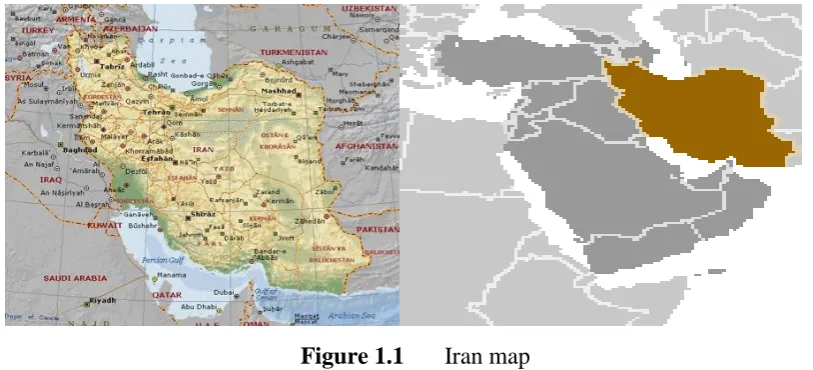
Iran is located in the Middle East, bordering the Persian Gulf, the Gulf of Oman, and the Caspian Sea, with an area of, 648,195 sq km slightly smaller than Alaska (CIA, 2009). Iran has the second largest population, after Egypt, in the Middle East and North Africa region. Most of its 73 million people are young (World Bank, 2009). Approximately, one-third lives in rural settlements and two-third in urban population centers (Atiehbahar, 2004). Population density in 2008 was 43 people per square kilometer (Centre of Iran Statistic, 2009). The working populations of Iran in 2009 were 24.3 million people and the literacy percentage among the population with age range from 6 to 29 years old in 2008 was 95.6 percent. The unemployment rate of Iran in 2009 was 11.3 percent (Centre of Iran Statistic, 2010).
Figure 1.1 Iran map
Iran’s economy is characterized by over dependence on the oil sector.
Because of this dependency, the oil sector is part of the state sectors and thus, it is highly controlled by the government. Generally, the economy of the Islamic Republic of Iran consists of three sectors: state, cooperative, and private (Atiyehbahar, 2004). Iran's growth performance has been robust in recent years, benefiting from high oil prices, regional growth, and a strong policy stimulus. Real GDP growth was estimated to have increased from 6.2 percent in 2006/2007 to 6.6 percent in 2007/2008. The growth and external prospects for 2008/09 were good, but on current policies, inflation was expected to remain high. Real GDP growth was projected at 5.7 percent in 2008/09 (International Monetary Fund, 2008). Iranian economy recorded real GDP growth of 6.9 percent with oil and 7.6 percent without oil in 2008 (Central Bank of Iran, 2009). In addition, from 22 June until 21 September in 2009 Iran economy recorded real GDP growth of 2.3 percent with oil and 2.7 without oil (Central Bank of Iran, 2010). Iran has diversified economic structure. The main sectors of the economy are hydrocarbon, agriculture, industry and services. Hydrocarbon sector contributed 26.5%, agriculture (10.4%), industry (17.1%), services (46.0%) of GDP (International Monetary Fund, 2007). The Iran Government is attempting to expand its economy well- being by investing revenues in other sectors. These sectors are aerospace industries, car manufacturing, consumer electronics, nuclear technology, and petrochemicals (Central Bank of Iran, 2009).
Petrochemical industry is one of the significant components of oil industry and is one of the principal industries in IRAN. Petrochemical industry has an influential role in IRAN’s economy because it can fulfill the demands of many domestic industries, productions and export petrochemical products, and creating more job opportunities for the unemployed. Thus, it is a remarkable source for bringing in money to the country (Vakhshri, 2006). Iran has enormous reserves of oil and natural gas. The oil reserves are estimated at 130 billion barrels, and natural-gas reserves are estimated at 20 trillion cubic meters (Library of Congress, 2008, p, 9). With the existence of the world’s nine percent of oil sources and 16 percent of gas
3
remarkable domestic and global markets, existing access to sea roads and global highway, experienced and expert staffs are some of the advantages of the Iranian petrochemical industry. Hence, Iran can play the surprising role in the world petrochemical industry (Vakhshri, 2006). The high world oil price has helped the government in public investment, especially in petrochemicals industry and recently, Iran has come out with proficient planning for the petrochemical industry, and it has been given priority in development (Fizebakhsh, 2002). Iran has invested in many petrochemical plants in the past years. Domestic Investment in petrochemical products in 2005, 2006, 2007 and 2008 were 8743 million, 15,852 million, 9,314 million and 12,352 million Rials respectively. The finance investment in petrochemical industry in the same period was $1.486.000, $972 million, $1,019,000 and $1,094,000 respectively.
Iran’s petrochemical production was 25.3% of Middle East petrochemical
production in 2008, and it was 16.2% in 2005. Iran also specified a share of 2.14% of petrochemical products in the international market to itself, and it was 1.08% in 2005. This shows 9.7% growth in these four years. It can be observed that the production indicators in the last four years reveal the petrochemical production has reached 26.523 million tons in 2008, and it was 15.7 million ton in 2005. Iran Petrochemical Industry share of world petrochemical product's basket, non-oil exportation and industrial products were 2.14%, 38.6%, and 42.5% respectively in 2008 (Iran Oil Ministry, 2009). Whole production of National Iranian Petrochemical Company reached 27.8 million tons in 2008. In reference to the establishment of new petrochemical complexes along with developing the current ones, it is predicted that total petrochemical products will reach 38.9 million tons in 2009 (Iran Oil Ministry, 2009).
Ministry, 2009). The price of gas has fixed rate most of the time compared to the price of oil. As a result, Iranian petrochemical can have a fixed price in the international market (Vakhshri, 2006). The competition with petrochemical firms that use gas as first material becomes stiff (Vakhshri, 2006). Europe’s share of the world production of petrochemical product decrease from 31 to 27%, as Asia’s
production increases from 23% to 31%. The predictions reveal that producing 126 million ton of petrochemical products with $50 billion investment per year; Iran will be able to specify 34% of Middle East and 6.3% of international petrochemical product market (Iran Oil Ministry, 2009).
Today emerging markets are very important issue in international trade that provides substantial opportunities for companies. Multinational corporations (MNCs) due to the saturation in the developed markets, have begun to focus their attention on emerging economies, which offer considerable potential for the consumption of goods and services (Enderwick, 2007; London & Hart, 2004). The reason for the MNCs to be attracted to emerging market more is that emerging markets are addressed as a source of new customers and resource and not simply locations of lower cost production (Enderwick, 2007). Emerging markets are identified as developed economies in the transition among financial markets and advanced economies but less than fully mature countries (Das, 2004). Furthermore, Meyer and Tran, (2006) characterized the emerging market as not having the sophistication of the institutional structure seen in developed countries, having economic with high development economic or development potential, and having high alteration in their institution, structure of industry, and the macro-economy. The four common emerging markets are Brazil, Russia, India, and China (Enderwick, 2007). The economy of these BRIC countries (Brazil, Russia, India and China) is developing very fast that in future it will affect most of the current developed countries (Souse et al, 2008).
5
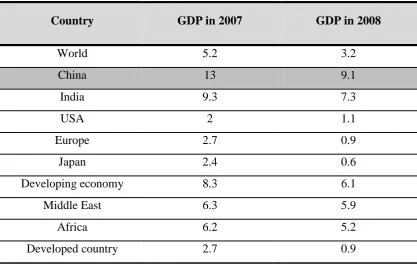
nation has been resulted from the admiration through fear to downright hostility (Enderwick, 2007; Enright et al., 2005). Moreover, obtaining new opportunities is the reason that international companies start or extend their business in China (Hofer and Ebel, 2006). China had the biggest GDP in the word in 2007 and 2008 (Iran Trade Promotion Organization, 2009) as mentioned in the following Table 1.1. Therefore, China has been described as the world's largest power region, obtaining economic growth rates that exceed those of most industrialized and developed countries, and China is anticipating becoming larger even faster in the coming years (Hofer and Ebel, 2006).
Table 1.1 :GDP of the world
Country GDP in 2007 GDP in 2008
World 5.2 3.2
China 13 9.1
India 9.3 7.3
USA 2 1.1
Europe 2.7 0.9
Japan 2.4 0.6
Developing economy 8.3 6.1
Middle East 6.3 5.9
Africa 6.2 5.2
Developed country 2.7 0.9
Source: Iran Trade Promotion Organization, (2009), Page 24
Customs Administration, 2009). Iran and China cooperate in many sectors, including energy, construction, trade, and tourism. UAE, Iraq, and China are the main importers of Iranian goods (Iran’s Customs Administration, 2008). Based on the statistics issued by Iran’s customs administration during the first quarter of the
current Iranian year (started from March 21), China has acquired the second rank among the countries that import goods from Iran (Iran Customs Administration, 2009). A China’ import is worth USD 122, 911, 000, 00 and UAE’s is worth USD
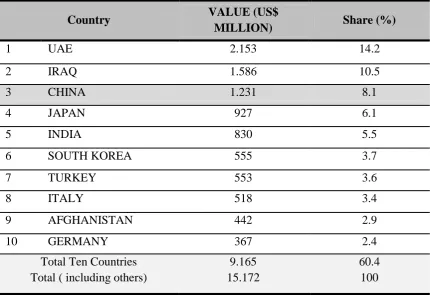
122, 251, 000, 00 between March 21 and April 21 2008. The top export destinations of Iranian products are the United Arab Emirates, Iraq and China. These three countries are then followed in succession by Japan, India, South Korea, Turkey, Italy, Afghanistan and Germany (Iran Trade Promotion Organization, 2009). UAE, Iraq and China scored the first, second and third main importers of Iranian Goods Company between March 21 to January 21 (Iran Customs Administration, 2009). The principal partners of Iran’s non-oil exports are mentioned in Table 1.2.
Table 1.2 :Main Partners of Iran's Non-Oil Exports (March 2007- March 2008)
Country VALUE (US$
MILLION) Share (%)
1 UAE 2.153 14.2
2 IRAQ 1.586 10.5
3 CHINA 1.231 8.1
4 JAPAN 927 6.1
5 INDIA 830 5.5
6 SOUTH KOREA 555 3.7
7 TURKEY 553 3.6
8 ITALY 518 3.4
9 AFGHANISTAN 442 2.9
10 GERMANY 367 2.4
Total Ten Countries 9.165 60.4
Total ( including others) 15.172 100
7
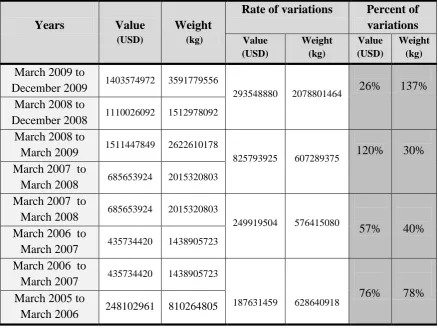
Table 1.3 :Total Petrochemical Product Export to China
Years Value
(USD)
Weight
(kg)
Rate of variations Percent of variations Value (USD) Weight (kg) Value (USD) Weight (kg)
March 2009 to
December 2009 1403574972 3591779556 293548880 2078801464 26% 137% March 2008 to
December 2008 1110026092 1512978092 March 2008 to
March 2009 1511447849 2622610178 825793925 607289375 120% 30% March 2007 to
March 2008 685653924 2015320803 March 2007 to
March 2008 685653924 2015320803 249919504 576415080
57% 40% March 2006 to
March 2007 435734420 1438905723 March 2006 to
March 2007 435734420 1438905723
187631459 628640918 76% 78%
March 2005 to
March 2006 248102961 810264805
Source: Iran Trade Promotion Organization, (2009), Page 34
Exporting is the most important issue in an economy of countries and most governments attempt to improve the exporting due to improve the condition of domestic market. One of the solutions for the dependency of IRAN’s economy on oil revenue is the development of products that can improve the condition of domestic economy and extend an export to foreign markets (Zarin Negar and Vazife Dost, 2009). The goal of the economic development plan of Iran has focused on expanding the trade interaction with the global community and trying to be an active member in the international market (Vakhshri, 2006). Nowadays, one of the important strategies in the Iran economy development plan is to expand the non-oil exports (consist of all product exports without oil and gas) (Atiyehbahar, 2004). Iran has diversified exports and imports. The principal exports are petroleum, chemicals and petrochemical products, fruits and nuts, and carpets. Iran’s main imports are
9
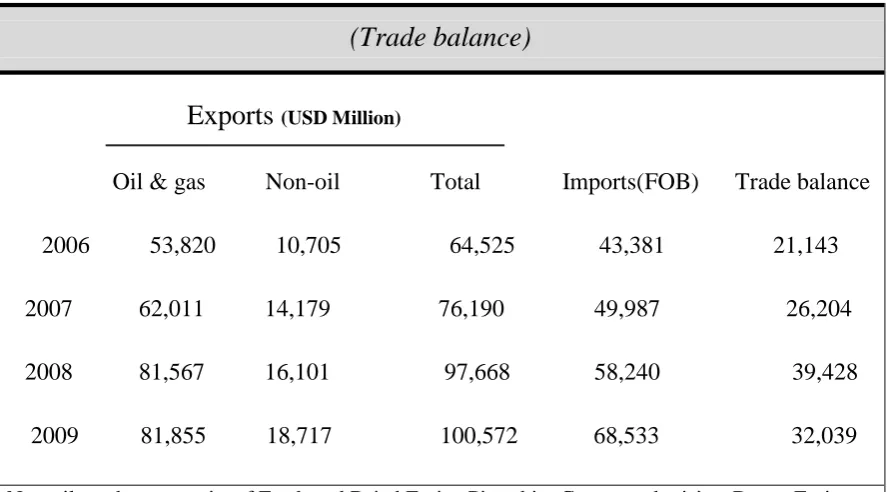
annual non-oil exports was USD15.2 billion during Marcexportto March 2008Billionating a growth of 15.1% compared to the same period of the previous year (excluding USD5.8 billion liquid gases) (Iran Customs Administration, 2009). Total non- oil products exports of Iran are depicted iproduct's.4 as following.
Table 1.4 :Trade Balance of Non- oil Products
(Trade balance)
Exports
(USD Million)
Oil & gas Non-oil Total Imports(FOB) Trade balance
2006 53,820 10,705 64,525 43,381 21,143
2007 62,011 14,179 76,190 49,987 26,204
2008 81,567 16,101 97,668 58,240 39,428
2009 81,855 18,717 100,572 68,533 32,039
Non-oil products: consist of Fresh and Dried Fruits, Pistachio, Grapes and raisins, Dates, Fruit, Hand-woven carpets, Live animals, All kinds of hide and leather, Saffron, and Petrochemical products (without oil and gas).
Source: Central Bank of IRAN, (2009), Page 12
Table 1.5 :Table 1.5: Share of Non-oil Export Value
Rank Export products Percentage of total non-oil export
1 petrochemical sector 38.6%
2 industrial sector 32.2%
3 agricultural sector 13.1%
4 mineral sector 5.4%
5 carpets and handicrafts 3.3%
Total 100%
Source: Iran trade promotion organization, (2009), Page 14
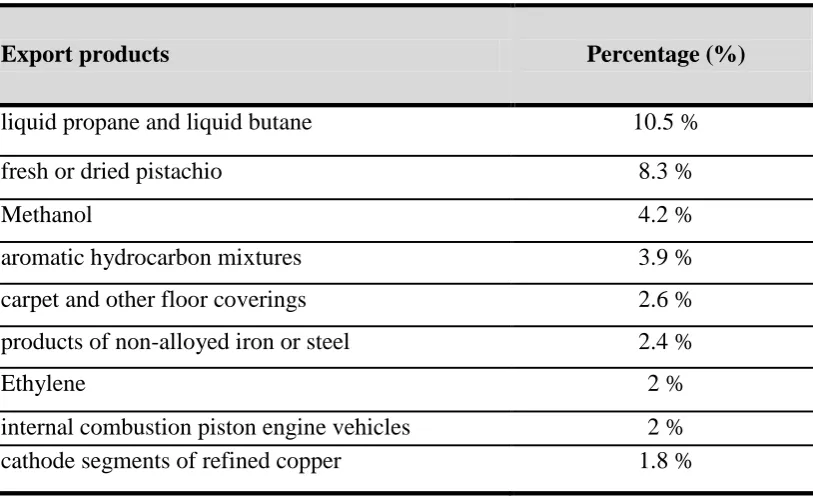
In addition, the main exportable items between March 21 and February 21 2008 (the first three months of Iranian calendar) are in Table1.6 as following. In this Table, it is also shown that petrochemical products have the highest percentage of exporting products.
Table 1.6 :Table 1-6: Main Exportable Items, March 21 – February 21 (2008)
Export products Percentage (%)
liquid propane and liquid butane 10.5 %
fresh or dried pistachio 8.3 %
Methanol 4.2 %
aromatic hydrocarbon mixtures 3.9 %
carpet and other floor coverings 2.6 %
products of non-alloyed iron or steel 2.4 %
Ethylene 2 %
internal combustion piston engine vehicles 2 %
11
Source: Iran’s Customs Administration, (2009), Page18
Petrochemical product's exports have increased in the recent years because of the substantial Iran government’s investment in petrochemical projects (Iran Oil
Ministry, 2009). Petrochemical Industry share of non-oil exports was 38.6% in 2008 (Iran's oil ministry, 2009). In the first quarter of the current Iranian calendar year (started on March 21), Iran has exported propane, butane, pentane, ethylene, benzene, para xylene, and other petrochemical products. Petrochemical products are exported to many countries such as Japan, UAE, India, China, South Korea, Italy, Singapore, Taiwan, China and others (Iran trade promotion organization, 2009). Saudi Arabia, Singapore, India, Spain, Taiwan, the Netherlands, Belgium, Indonesia, Malaysia, Qatar, Japan, China, South Korea and France are also among the major targets for the Iranian products (Iran Oil Ministry, 2009). Iran Petrochemical Commercial Company (IPCC) (the governmental commercial firm that is responsible to export products of the governmental firms) exported 3,791,000 tons of petrochemical products to international markets in the first four months of the current Iranian calendar year. According to reports, the exported goods estimated to worth $1,879 billion. It was $1,392 million in the first three months of the current year. 924,000 ton -a lion share- of exported goods consisted of propane and butane. It is predicted that 15,500,000 tons of produced petrochemical products – worth $5.8 billion are to be exported in this Iranian calendar year.
Exports of petrochemical product's value, selling worth value and added value showed 30%, 28% and 40% of growth respectively in the first four years (Iran Oil Ministry, 2009). In addition, Iran has comparative advantages in seeking for investments into the petrochemical industry. This is because Iran is located within the boundary of Persian Gulf, and it is near to China and India, whereby both countries’ markets that are the biggest consumer markets of petrochemical products.
products value is to account for 34% of Middle East’s and 6.3% of the world’s petrochemical products market.
Briefly, it is important for Iranian petrochemical firms to have better understanding of the determinants of export performance in order to increase their export substantially.
1.2 Background of Study
The expansion of global trade and sales activity in the world market has increasingly accentuated the importance of exporting for firms and countries. Exporting plays a vital role in the world and has countless benefits for firms and countries. Julian and O’Cass, (2003); Julian and O’Cass, (2002); Lages, (2003);
13
productivity, supplies employment and creates new job opportunities. Therefore, the usual goal in most firms and national governments is to expand the export, and this goal is appealing in most of the viewpoint of countries and firms.
Cooper, (1985); Zou and Stan (1998); Baldauf et al., (2000); Lages,(2003); Ahmed et al., (2004); and Haahi et al., (2005) also noted that within the past 30 years or so, due to the increasing liberalization and integration of the total trade, factors that determine the success of exports have become the focus of many researchers. In addition to this, the recognition that exporting receives as an interesting method of tapping international market opportunities with minimum business risk and high flexibility of movement too has triggered the interest of many scholars. Thus, a large number of researchers have conducted studies to identify the factors influence the export performance of firms. As mentioned earlier, the reason for this is due to the evaluation of influencing factors, the impact of export success and export performance, in which they make valuable guidelines for implementation of pointed marketing strategies, public policy and economic development. In addition, recognizing the elements affect on export performance is a considerable strategic concern for export managers to act quickly in the international trading (Cavusgil, 1984; Lages, 2003; Haahi et al., 2005). Determinants of export performance are very important for company’s survival and growth of country's economy (Sousa et al.,
2008).
Cooper, (1985); Baldauf et al., (2000); Cicic et al., (2002); and Leonidou et al., (2002) explained that most previous research of export performance had assumed that export performance depends on firms’ structure or internal factors, international
environment or external factors, and marketing strategy. In addition, Thirkell and Dau, (1998) reminded that the factors in determining the success of export have become the focus of renewed survey interest in recent years. Diamantopoulos, (1999) noted that export performance had long been a construct of central interest in the foreign marketing literature.
marketing strategy, R&D strategy, human-resource strategy and operation strategy. Corporate strategy provides the direction to the company’ mission, the kinds of business it should be in, and its growth policies. Business strategy primarily addresses how a business will compete in its industry. Each marketing strategy provides a plan for pursuing the company’s objectives within a specific market
segment (Walker, Orville, 2008; Hill and Jones, 2007).
The high rate of world oil prices has caused the Iran government to have public investment, especially in petrochemicals industries, and they obtain rapid grow. According to the economic development plan, the Iran government tries to increase petrochemical output and because of this, the industry has received substantial foreign investment. As a result, they doubt over the government’s hope to establish 47 petrochemical operations by the end of the fifth five-year profitable development plan in 2015, adding a total of 43mn tones per annum (tpa) of capacity (Central Bank of IRAN, 2009). According to officials, once the projects become operational, Iran will represent at least 6.3% of global petrochemical output and 34% of Middle Eastern production. In the past, all Iranian petrochemical companies exported the products of Iran's petrochemical commercial company (IPCC) but today because of privatization in Iran, most of them export their products directly.
1.3 Problems Statement
Many researchers such as Nazar and Saleem, (2009); Gertner et al., (2006); Ogunmokun and Ng, (2004); Ahmed et al., (2004); Julian and O’Cass, (2003); Julian and O’Cass, (2002); Baldauf et al., (2000); Thirkell and Dau, (1998);
Diamantopolous, (1999); Cooper, (1985); Zou and Stan (1998) have mentioned that the main problem of the export performance is the recognition of effective determinants of export performance, creation of comprehensive integrated model and fragmentary or often having been conflicting with knowledge about determinants of export performance. Nazar and Saleem, (2009); Lopez and Coelho, (2008), Navarro
15
Therefore, the unlike findings on studies are difficult to compare and to recognize what are the determinants of export performance. Furthermore, Sousa et al., (2008); Gertner et al., (2006); Shamsuddoha, (2004) emphasized that a lake of coherence and agreement among researchers on the parameters of an export performance model resulted from the large number and fragmented nature of independent variables included in export performance studies. The result of these problems is a creation of complex, confusing and conflicting findings and still fragile theoretical framework for researching the export performance phenomenon (Gertner et al., 2006; Thirkell and Dau, 1998; Cooper, 1985; Zou and Stan 1998; Baldauf et al., 2000; Julian, 2003; Lages, 2003; Ahmed el al., 2004).
demonstrate a positive impact on marketing strategy of total export performance, the variety of conceptualization and performance measurement has led to inconsistent and opposing findings (Aaby and Slater, 1989; Baldauf et al., 2000; Leonidou et al., 2002; Lee and Griffith, 2004). In addition, the lack of detailed analysis on dimensions of export marketing strategy is a popular problem inherent in the previous studies (Leonidou, et al., 2002).
Mohamad, (2009); Souse et al., (2008); Calantone et al., (2006); Lee and Griffith (2004); Theodosiou and Leonnidou, (2003); Julian and O’Cass, (2002);
Baldauf et al., (2000); Aulakh et al., (2000); Katsikeas, (1996); Dominguez and Brenes, (1997) emphasized that vast majority of the research had focused on the exporters from highly industrialized countries or developed economy (e.g. United states, Canada and Western European countries) with very little attention to developing countries, and it may be misleading to infer such findings, marketing issues, and evidence of exporters in developing countries. Given the differences between developed and developing economies and unique conditions of exporting in developing countries, the earliest research about exporters in developed economy context is not appropriate for firms in a developing country (Aulakh et al., 2000; Lee and Griffith 2004; Julian and O’Cass, 2002). In addition, a study by Souse et al.,
(2008) that review earlier studies revealed that scholars received little or no attention to research about export performance certain parts of Asia, South and Central America, and Africa. As a result, there is a void in the literature related to these countries. There is a need to evaluate whether our current knowledge can be generalized to these countries, especially the developing ones. Thus, assessment of the theories across different countries with various economic, cultural and technological settings is advised by researchers (Souse 2004; Souse et al., 2008).
17
are successful and others are unsuccessful, and firm level does not take into account the variability of performance as total export performance of firms (lages and lages, 2004; Sousa, 2004). In addition, firm level is suitable for small companies that have only one product line and inaccurate measure of strategy and performance variables will result if medium and large firms with diversified business portfolios use as a unit of analysis (Cavusgil and Zou, 1994; Zou and Stan, 1998). Furthermore, different strategy that is applied by export venture in various market places has failed to capture by firm level analysis (Sousa et al., 2008; Morgan et al., 2004). On another hand, deeper insight into the overall, long-term export performance of the firm is inapplicable in using export venture as a unit of analysis (Cavusgil and Zou, 1994; Sousa, 2004). Therefore, due to these problems, most-recent researchers analyzed the firm’s main export venture (MEV) in their studies (Lages and Montgomery, 2004,
Mavrogiannis et al., 2008). Firm typically develop specific strategies for the main export venture and most of the managers' design marketing strategy or defined consequence of strategy only for MEV but many of the secondary export ventures have no defined strategy (Lages and Montgomry, 2004). Major export venture should be selected deliberately to ensure maximum representativeness, while a random selection should be applied to the remainder (Morgan, 2000; Sousa, 2004). Therefore, a limited study found main export venture (MEV) should be used as the unit of analysis in specific market or as main products in specific market place. In this research, we will mention respondents (as unit of analysis) to answer the questions with refer to main export venture to China's market.
work has neglected the influence of industry-specific characteristics on internal export factors (Leonidou et al. 1998; Leonidou et al. 1998; Suarez-Ortega and Alamo-Vera, 2005). Suarez-Ortega and Alamo-Vera, (2005) noted, “the effect of industry-specific characteristics on internal export factors has been isolated through
the selection of one industry in one country for empirical research”. It is interesting
to focus on the single and related-industry. This is because this kind of approach would allow scholars to have control on the industry-specific influences such as technology of product, type of production, industry concentration and level of competition (Sousa et al., 2008). Export literature underlines the importance of isolating the effect of external variables when the aim is evaluating firms’
characteristics (Suarez-Ortega and Alamo-Vera, 2005). So, some of the researchers believe that each industry has different situation and condition that influence on the determinants of export performance. For instance, a study done by Contractor et al., (2005) found a different results about the relationship of export performance and experience of managers that can be explained because of the characteristics of the industry used in this research (Sousa et al., 2008). The controlling for country-specific and industry-country-specific influences constitutes relevant elements that have been abandoned in the research and whose omission reduces the validity of findings (Suarez-Ortega and Alamo-Vera, 2005). The review of previous studies showed that majority of researchers use multi industry for data collection, and it is interesting to focus on single and related- industry that allows scholars to control the industry-specific influence (Sousa et al., 2008). Therefore, a limited number of studies used single and related-industry as sample for data gathering.
19
on the main export venture (MEV), single and related-industry, and multiple informants.
Iran’s economy depends on oil revenue extremely. One of the solutions for
the dependency of Iran’s economy on oil revenue is the development of products that can improve the condition of domestic economy and extend an export to foreign markets (Zarin Negar and Vazife Dost, 2009). Therefore, nowadays one of the important strategies of the Iran economy development plan is the expansion of non-oil exports, especially petrochemical products. Petrochemical industry plays an influential role in IRAN’s economy because it is a remarkable source for bringing in money to the country. The high world oil price has helped the government in public investment, especially in petrochemicals industry and recently, Iran has invested in many petrochemical plants. Iran's petrochemical industry shares of non-oil exportation were 36.6 % in 2008 (Iran's oil ministry, 2009). Iranian petrochemical's exports reached 11.2 million tons in 2008/09, which are 1.8 mn tones below the target (Central Bank of Iran, 2009). Survey done on the status of China’s import
London and Hart, (2004), Enderwick, (2009) noted that emerging markets (China market) are increasingly becoming the growth drivers of the global economy and with a vast population and increasing income, emerging economies provide an enormous market for goods and services. It is asserted that emerging economies are likely to become the new battleground for international business (IB) competition, and that researchers need to pay careful attention to the institutional context in which IB activities take place ( London and Hart, 2004). China has been described as the world's largest power region, obtaining economic growth rates that exceed those of most industrialized and developed countries, and China is anticipating becoming larger even faster in the coming years (Hofer and Ebel, 2006). Iran and China cooperate in many sectors, including energy, construction, trade, and tourism. China is the second largest buyer of Iranian products (Iran’s Customs Administration, 2009) and China imports many petrochemical products due to its restricted petrochemical production. In the recent year, China's market is indelible customers for Iranian petrochemical firms (Vakhshri, 2006). In addition, China is one of the principal target markets for Iranian's petrochemical Firms, and it is third main non-oil partner of Iranian products. Koksal, (2008) revealed the studies in the literature report that the lack of information about foreign markets is one of the most common reasons that preventing companies from exporting. Furthermore, Navarro et al., (2009); Koksal, (2008); Lages, (2003); Julian and O’Cass, (2003); Julian and O’Cass, (2002) mentioned that the extent of information about marketplace impact
directly on export performance. So, despite China being one of the important target markets for IPCs (Vakhshri, 2006), they do not have sufficient information about influences of determinants on export performance in export to China's market.
21
1.4 Research Objectives
Considering the importance of petrochemical products export in Iran, this study attempts to achieve the following objectives that based on the problem statements:
To determine the influence of export marketing strategy on export performance of Iranian petrochemical firms in China's market.
To recognize which external factors and internal factors are associated with export performance and export-marketing strategy of Iranian petrochemical firms in exporting to China's market.
To analyze critically the key success factors and improvement for Iranian petrochemical firm’s export performance in China's market.
1.5 Research Hypothesis and Questions
This study will seek answers to tree principal research questions, and eleven hypotheses, which are:
Q1. How do the export marketing strategy influence on export performance?
H1. There is a significant relationship between export marketing strategy and export performance.
Q2. How do the external variables influence on marketing strategy and export performance?
H2b. There is a significant association between export market characteristics and export marketing strategy.
H3a. There is a significant association between domestic market Characteristics and export performance.
H3b. There is a significant association between domestic market Characteristics and export marketing strategy.
Q3. How do the internal variables influence on marketing strategy and export performance?
H4a. There is a significant relationship between skill-based characteristics of manager and export performance.
H4b. There is a significant relationship between skill-based characteristics of manager and export marketing strategy.
H5a. There is a significant relationship between attitudinal characteristics of manager and export performance.
H5b. There is a significant relationship between attitudinal characteristics of manager and export marketing strategy.
H6a. There is a significant association between firm characteristics and export performance.
23
1.6 Scope of Study
The scope of this research revolves around exploring the export performance determinants of Iran's petrochemical industry in export to the China markets. The petrochemical industry has been chosen because it is most important and strategic export product to international market. Besides that, the petrochemical companies plan to penetrate into global markets in the future.
Iran has many small and huge petrochemical companies. These companies can belong to the government or the private sector. However, the huge companies are mostly belonged to the government. It is important to mention that in the past, the products of the governmental Iranian petrochemical companies exporting via Iran's petrochemical commercial company (IPCC) because the petrochemical companies were governmental. Even though, post privatization plan in Iran, most of the private petrochemical firms that previously were governmental attempted to export their production directly. The focus of this study is on both governmental and private companies, which export their products to China's market directly, sufficiently and continuously.
1.7 Significance of Study
The significant of study is one of the main parts of each research. Researchers explain the importance of their study in the significant of study. Firstly, based on the previous studies, this is the first empirical study concerning determinants export performance by Iranian petrochemical firms in export to the emerging markets. No study, which focused on the exports’ external and internal factors, marketing
strategies in penetrating the emerging markets, has been done before. Moreover, the result of this survey will help to develop an integrated empirical model of export performance to evaluate the significant relation between export performance and determinants. This study provides more integrated understanding on export performance than many of the partial studies that are found in the previous literature. The proposed framework provides important insights into the key factors, thus, this will enable managers to gain more experience and better understanding on the impressive factors influencing their export performance in the emerging markets and then the empirical models for the Iranian petrochemical product exporters will be applied. Understanding the effective factors on export performance of petrochemical industry may provide a reference point for exporters in other Iranian industries. In addition, this information will always be useful for industries, especially for those firms that are planning to implement export to the international market. Furthermore, extensive research on the current practice of export performance will help the Iran government to program export plans in order to enhance the Iran economy. This study also helps Iranian companies to prepare the situation of join to WTO.
25
exports and market share with attention given to effective factors and their competitive advantage in the international market.
This research explores profound information regarding exporting to the China markets. Firm is informed the determinants influence export performance before they commit resources to emerging markets. Moreover, this survey supplies data for researchers to address the unique situation of exporting in developing economies. The developing countries have different economic situation in compare to other markets.
Nevertheless, the lack of evidence indicating that research on factors that influences on performance of petrochemical industry in export to emerging markets have consequently, prompted the researcher to embark on this survey. While most of the previous studies focus on the impact of one or two set of limited factors on export performance, the present study includes a variety of internal, external and marketing mix strategy determinants. Hence, this study is expected to pose distinct new knowledge to the academicians, managers, and practitioners.
Consequently, this research increases the available collection of the literature about the marketing mix strategy elements, external factors, internal factors, emerging market, and petrochemical industry. Finally, it offers a potential ground for future research within the export performance fields and other fields relating to petrochemical industry and emerging market.
1.8 Guide to the Thesis
in the second chapter have been used in different context and are proposed here as means for studying the influencing factors on export performance. Besides that, this chapter includes description and evaluation of these theories, and finally, it ends with a conceptual framework of the study.
Chapter 3 discusses the research design, the data collection method, the sample design and the data analyses are discussed. Chapter 4 will discuss data analysis and the results. Finally, the fifth chapter provides a discussion of the results and explains the theoretical, methodological and managerial implications. The limitations and directions for future research will be discussed in this last chapter.
1.9 Summary
257
REFERENCES
Aaby, N. E., and Slater, S. F. (1989). Management influence on export performance: a review of the empirical literature 1978-1988. Journal of International Marketing Review, 6(4), 7-26.
Aaker, D. (1988), Strategic Market Management, 2th Edition, John Wiley and Sons, New York.
Abdul Adis, A. and Md. Sidin, S. (2010). Export performance on the Malaysian Wooden Furniture Industry: An Empirical Study. Journal of International Food and Agribusiness Marketing, 22(1&2), 52-69.
Abell, D.F. and Hammond, J.S. (1979). Strategic Market Planning Problems and Analytical Approaches. USA: Prentice Hall, Inc.
Ahmed, Z. U., Julian, C. C., Baalbaki, I., and Hadidian, T. V. (2004). Export barriers and Firm internationalisation: A study of Lebanese Entrepreneurs. Journal of Management & Morld Business Research, 1(1), 45-58.
Akar, D. (1988). Strategic Market Management. (second Ed.). New York: John Wiley and Sons.
Akyol, A., and Akehurst, G. (2003). An Investigation of Export Performance Variation Related to Corporate Export Market Orientation. European Business Review, 15(1), 5-19.
Alvarez, R. (2004).Source of Export-Success in Small and Medium Sized Enterprises: The Impact of Public Program. International Business Review, 13(1), 383-400.
Anderson, J. C., & Gerbing, D. W., (1988). Structure Equation Modeling in Practice: A Review and Recommended Two-Step Approach. Journal of Psychological Bulletin, 103(3), 411-423.
Ambler, T., Witzel, M., and Xi, C. (2009). Doing Business in china. London and New York: Routledge, Taylor and Francis Group.
Atiehbahar Consulting: Iran Country Profile and Business Guide. (2004). from www.Atiehbahar.com.
Atuahene-Gima, K. (1995). The Influence of New Product Factors on Export Propensity and Performance: An Empirical Analysis. Journal of International Marketing, 3(2), 11-28.
Aulakh, P.S., Kotabe, M. and Teegen, H. (2000). Export Strategies and Performance of Firms from Emerging Economies: Evidence from Brazil, Chile, and Mexico.
Academy of Management Journal, 43(3), 342-61.
Axinn, C.N. and Matthyssens, P., (2002), “Limits of Internationalization Theories in an Unlimited World”, International Marketing Review, 19 (5), 436-449.
Baldauf, A., Cravens, D. W., and Wagner, U., (2000). Examining Determinants of Export Performance in Small Open Economies. Journal of world business research, 35(1), 61-79
Bang, V. V., and Joshi, S. L. (2008). Conceptualization of Market Expansion Strategies in Developing Economies. Journal of Academy of Marketing Science, 12(4), 1-26.
259
Babakus, E., Yavas, U., and Haahti, A. (2006). Perceived Uncertainty, Networking and Export Performance. Journal of European Business review, 18(1), 4-13.
Beamish, P. W. (2000). Asia-pacific Cases in Strategic Management. USA: Mc Graw-Hill.
Beamish, P. W., Craig, R., and Mclellan, K. (1993). The Performance Characteristics of Canadian Versus UK Exporter in Small and Medium-Sized Firms. Journal of Management International Review, 33(2), 21-137.
Birjandi, P., and Mosallanejad, P. (2005). Research Methods and Principle. (Second Ed.). Mahdavi Publications.
Birkinshaw, J., Morrison, A., and Hulland, J. (1995). Structural and Competitive Determinants of a Global Integration Strategy. Strategic Management Journal,
16 (8), 637-655.
Bonaccorsi, A. (1992); On the Relationship Between Firm Size and Export Intensity.
Journal of International Business Studies, 23(4), 605-612.
Bowman, C. (1998). Strategy in Practice. UK: Prentice Hall Europe.
Bodur, M. (1994). Foreign Market Indicator, Structure Resource and Marketing Strategies as Determinants of Export Performance. Journal of Advance in International Marketing, 6, 183-205.
Brodrechtova, Y. (2008). Determinants of Export Marketing Strategies of Forest Product Companies in The Context of Transition: The Case of Slovakia. Journal of Forest And Economies, 10(1), 450-459
Brencic, M. M., Ekar, A., and Virant, V. (2008). The Influence Of Relationship Marketing Components on Export Performance. Journal of Nase Gospodarstvo, 54(5/6), 9-18.
Brouthers, L. E., and Nakos, G. (2005). The Role of Systematic International Market Selection on Small Firm’s Export Performance. Journal of Small Business
Bryman, A. (2004). Social Research Methods. UK: Oxford University Press
Bramall, B. (2009). Chinese Economic Development. London and New York: Routledge, Taylor and Francis Group.
Brown, T. J., Mowen, J. C., Donavan, D. T., and Licata, J. W. (2002). The customer Orientation of Service Workers: Personality Trait Determinants And Effects on Self-And Supervisor Performance Ratings. Journal of Marketing Research, 39(1), 110–119.
Brannen, J. (1992). Mixed methods: Qualitative and Quantitative Research. England: Avebury Publisher.
Buckley. P. J., Clegg, J., and Wang, C. (2002). The Impact of Inward FDI on the Performance of Chinese Manufacturing Firms. Journal of International Business Studies, 33(4), 637-655.
Burns, R. B. (2000). Introduction to Research Methods, London: Sage publisher.
Burnett. J. L., and Williams, L. J. (2005). Structural Equation Modeling (SEM): An Introduction to Basic Techniques and Advanced Issues. In R. A. Swanson & E. Holton (Eds), Research in Organizations: Princible and Methods of Inquiry. San Franciso: Berrett-Koehler.
Cavusgil, S.T., and Kirpalani, V.H. (1994). Marketing Strategy-Performance Relationship: An Investigation of The Empirical Link in Export Market Ventures.
Journal of Marketing, 58(1), 1-21.
Camp, C. V., (2005). The future of the Petrochemical Industry in Europe. from www.elsevier.com.
Cavusgil, S.T., and Zou, S. (1994). Marketing Strategy-Performance Relationship: an Investigation of The Empirical Link in Export Market Venture. Journal of marketing, 58(1) 1-21.
261
Cavusgil, S.T. (1984). Organizational Characteristics Associated with Export Activity. Journal of Management Studies, 21(1), 3-22.
Cadogan, J. W., Diamantopoulos, A., and Siguaw, J. A. (2002). Export market-Oriented Activities: Their Antecedents and Performance Consequences. Journal of International Business Studies, 33(3), 615-626.
Cadogan, J. W., Sundqvist, S., Salminen, R. T., and Puumalainen, K. (2005). Export Marketing, Inter-Functional Interaction, and Performance Consequences. Journal of Academy of Marketing Science, 33(4), 520-535.
Calantone, R.J., Kim, D., Schmidt, J.B., and Cavusgil, S. T. (2006). The Influence of Internal and External Firm Factors on International Product Adaption Strategy and Export Performance: A Three-Country Comparison. Journal of Business Research, 59(3), 176-185.
Castaldi, R. M., Sengupta, S., and Silverman, M. (2003). Improving export performance: the case of the US wine industry. Journal of Global Marketing , 17(1), 45-56.
Carver, R.H. and Nash, J.G. (2000). Doing data analysis with SPSS 10.0. Pacific Grove CA: Duxbury.
Center of Iran statistic. (2010). Annually Report About Population of IRAN, from www.amar.org.ir
Chetty, S. K., and Hamiltone, R. T. (1993). Firm-level Determinants Of Export Performance: A Meta-Analysis. Journal of International Marketing Review,
10(3).
Chin, W. W., (1998). The Partial Least Squares Approach to Structural Equation Modeling. In: G. A. Marcoulides (Ed.), Modern Methods for Business Research (pp. 295-358). Mahwah, NJ: Lawrence Erlbaum Associates.
Central Bank of Iran. (2009): Annually Economy Report About Iran Economy. From http://www.cbi.ir./.
Churchill, G.A, (1988). Basic Marketing Research. Chicago: Dryden Press.
Chudnovsky, D., and A. Lopez (2004), ‘Transnational Corporations’ Strategies and
Foreign Trade Patterns in MERCOSUR Countries in the 1990s’, Cambridge Journal of Economics, 28(50), 635–652.
China institute. (2006). Information About Business Between Iran And China. From http://www.china.ualberta.ca/publication.cfm.
Chin, W.W. (1998), The Partial Least Squares approach to Structural Equation Modeling, In Modern Methods for Bussiness Research , G.A. Marcoulides, ed. Mahwah, NJ: Lawrence Erlbaum Associates, 295-336.
Cicic, M., Patterson, and P., Shoham, A. (2002). Antecedents of International Performance: A service firms’ perspective. European Journal of marketing,
36(9/10), 1103-1118.
CIA. (2009). Information about Iran. from: www.cia.gov/library.
Contractor, F. J., Hsu, C. C, and Kundu, S. K. (2005). Explaining export performance: A Comparative Study of International New Ventures In Indian and Taiwanese Software Industry. Journal of Management International Review, 45(1), 83-110
Cooper, R. G., and Kleinschmidt, E. J. (1985). The Impact of Export Strategy on Export Performance. Journal of International Business Studies, 16(1), 37-55.
Coakes, S. J. and Ong, C. (2010). SPSS 18 version for windows: Analysis Without Anguish. Wiley publisher.
263
David, M. and Sutton, C.D. (2004). Social Research: The Basics. Sage Publications Ltd.
Das, D. K. (2004). Financial Globalization and the Emerging Market Economies. (First ed.). London: Routledge, Taylorard and Francies Group.
Das, M. (1994). Successful and Unsuccessful Exporters From Developing Countries: Some Preliminary Findings. European Journal of Global Marketing, 28(12), 19-23.
Da Rocha, A. and Christensen, C.H. (1994). The Export Experience Of A Developing Country: A Review of Empirical Studies of Export Behavior And The Performance Of Brazilian Firms, 12(2), 23-28.
De Luz, M., (1993). Relationship Between Export Strategy Variables And Export Performance for Brazil-Based Manufactures. Journal of Global Marketing, 7(1), 87-110.
Diamantopoulos, A., Winklhofer, H. (1999). The Impact of Firm Export Characteristics and The Accuracy of Export Sales Forecasts: Evidence from UK exporters. International journal of forecasting, 15(1), 67-81.
Diamantopoulos, A., and Schlegelmilch, B. B. (1994). Linking Export Manpower To Export Performance: A Canonical Regression Analysis of European And US Data. Journal of Advances In International Marketing, 6(1), 161-181.
Diamantopoulos, A., and Kakkos, N. (2007). Managerial Assessments of Export Performance: Conceptual Framework and Empirical Illustration. Journal of International Marketing, 15(3), 1-31.
Diamantopoulos, A. (1999). Export performance measurement: reflective versus formative indicators”, Journal of international marketing review, 16(6), 444-457.
Drucker, P. F. (2007). The Practice Of Management. Revised Edition. Butterworth-Heinemann Publications. New York.
Drtiz, R. F., and Lombardo, G. F. (2009). Influence of The Capabilities of Top Management on The Internationalization. Entrepreneurship & Regional Development Journal, 21(2), 131-154.
Duenas-Caparas, T. S., (2006). Determinants of Export Performance in The Philippine Manufacturing Sector. Discussion Paper, Series No.18, Philippine Institute For Development Studies.
Duncan, R.B. (1972). Characteristics of Organizational Environments and Perceived Environment Uncertainty: Administrative Science Quarterly, 17(3), 313-27.
Duarte P. A., and M. L. B., Raposo, (2010), A PLS Model to Study Brand Preference: An Application to the Mobile Phon Market, Handbook of Partial Least Squares Concepts Methods And Application, Springer.
Dorraj, M., and Currier, C. L. (2008). Lubricated with oil: IRAN-China relationship.
Journal of Middle East Policy. XV(2), 66-80.
Dominguez, L.V., and Brenes, E. (1997). The Internationalization ofLatin-American Enterprises and Market Liberalization In The American: A Vital Linkage.
Journal of Bussiness Research, 38(2), 3-16.
Dobson, P., and Strategy, K., (1993). The Strategic Management Blueprint, UK, Blackwell Publishers.
Enright, M. J., E. E. Scott, and K. Chang. (2005). Regional powerhouse: The Greater Pearl River Delta And The Rise of China. New York: John Wiley.
Enderwick, P. (2007). Understanding Emerging Markets: China and India. USA: Routledge Publishing.
265
Eusebio, R., Andreu, J. L., and Belbeze, M.P.L. (2007). Management Perception And Marketing Strategy in Export Performance. Journal of Fashion Marketing And Management, 11(1), 24-40.
Falk, R. F. & Miller, N. B. (1992), Aprimer for Soft Modeling. Ohio: The University of Akron Press.
Faver-Bonte, V.r., and Giannelloni, j.L. (2007). l’ Influence Des Caracteristiques De Personnalite Du Dirigeant De Pme Sur La Performance A L’ Export”, AIMS,
Montreal, Quebec, 7-9 June.
Ferguson, G. A. (1976). Statistical Analysis in Psychology and Education, New York: McGraw Hill.
Fizebakhsh, A.H., (2002). Investigation of Effective Factors on Increase Export of Iran Petrochemical Commercial Company (IPCC) Products. Doctor Philosophy, Unpublished, Tehran University, IRAN.
Fornell, C., Larcker, D. F., (1981). Structural Equation Models With Unobservable Variables and Measurement Error: Algebra And Statistics. Journal of Marketing Research, 18(3), 328-388.
Fornell, C., and Cha, J. (1994). “Partial least squares”. In Bagozzi, R.P. (Ed.),
Advanced Methods of Marketing Research . Basil Blackwell: Cambridge, MA.
Garthwaite, P. H. (1994). An Interpretation of Partial Least Squares. (425), 122-127.
Gable, G. G. (1994). Integrating Case Study And Survey Research Methods: An Example In Information Systems. European Journal of Information System, 3(2), 112-126.
Geisser, S. (1975). The Predictive Sample Reuse Method With Applications. Journal of the American Statistical Association, 70(350), 320–328.