ImmunoTargets and Therapy 2016:5 9–20
ImmunoTargets and Therapy
Dovepress
submit your manuscript | www.dovepress.com
9
R e v I e w
open access to scientific and medical research
Open Access Full Text Article
Current and emerging treatment options in
the management of lupus
Natasha Jordan
1David D’Cruz
21Department of Rheumatology,
Cambridge University Hospitals NHS Foundation Trust, Cambridge,
2Louise Coote Lupus Unit, Guy’s and
St Thomas’ Hospital NHS Foundation Trust, London, UK
Correspondence: Natasha Jordan Department of Rheumatology, Cambridge University Hospitals NHS Foundation Trust, Hills Road, Cambridge CB2 0QQ, UK Tel +44 1223 216 217 Fax +44 1223 586 931
email natasha.jordan@addenbrookes. nhs.uk
Abstract: Systemic lupus erythematosus (SLE) is a complex autoimmune disease with vari-able clinical manifestations. While the clearest guidelines for the treatment of SLE exist in the context of lupus nephritis, patients with other lupus manifestations such as neuropsychiatric, hematologic, musculoskeletal, and severe cutaneous lupus frequently require immunosuppres-sion and/or biologic therapy. Conventional immunosuppressive agents such as mycophenolate mofetil, azathioprine, and cyclophosphamide are widely used in the management of SLE with current more rationalized treatment regimens optimizing the use of these agents while mini-mizing potential toxicity. The advent of biologic therapies has advanced the treatment of SLE particularly in patients with refractory disease. The CD20 monoclonal antibody rituximab and the anti-BLyS agent belimumab are now widely in use in clinical practice. Several other biologic agents are in ongoing clinical trials. While immunosuppressive and biologic agents are the foundation of inflammatory disease control in SLE, the importance of managing comorbidi-ties such as cardiovascular risk factors, bone health, and minimizing susceptibility to infection should not be neglected.
Keywords: hydroxychloroquine, mycophenolate mofetil, azathioprine, cyclophosphamide, rituximab, belimumab
Introduction
Systemic lupus erythematosus (SLE) is a complex autoimmune disease, with variable
clinical manifestations, that follows an unpredictable relapsing remitting course. In
the past, the main causes of death in SLE patients were uncontrolled inflammatory
disease activity and infection due to immunosuppression.
1While patients may still
succumb to these complications, early atherosclerotic disease has become a major
cause of morbidity and mortality in patients with SLE.
2It is now well recognized that cumulative organ damage, in particular renal
damage, is an important predictor of mortality in SLE.
3Recurrent flares of disease
activity such as lupus nephritis are associated with poor long-term outcomes.
4,5There
remains an unmet clinical need in SLE, particularly in patients with disease refractory
to conventional immunosuppressive therapies. Another key issue in the therapeutic
management of SLE is the longstanding overreliance on corticosteroid therapy which
contributes substantially to damage accrual and patient mortality. In this review, we
focus on therapeutic advances in the management of SLE with a discussion of recent
optimizations in the use of established immunosuppressive therapies and an overview
of new biologic agents.
ImmunoTargets and Therapy downloaded from https://www.dovepress.com/ by 118.70.13.36 on 22-Aug-2020
For personal use only.
Number of times this article has been viewed
This article was published in the following Dove Press journal: ImmunoTargets and Therapy
Dovepress
Jordan and D’Cruz
Conventional immunosuppressive
agents in the management of SLE
Induction and maintenance therapies
in lupus nephritis
Immunosuppressive treatment of lupus nephritis is divided
into induction and maintenance phases. There are a number
of existing guidelines for the treatment of lupus nephritis
including the American College of Rheumatology and
Euro-pean League Against Rheumatism guidelines, which are in
agreement on some areas of lupus nephritis management,
but differ in others.
6,7The aims of induction therapy in lupus nephritis are to
ini-tiate immunosuppressive therapy without delay and achieve
remission of renal disease in terms of proteinuria and renal
function as promptly as possible. Definitions of partial and
complete renal response vary somewhat in different treatment
guidelines and as endpoints in clinical trials.
The aims of maintenance therapy in lupus nephritis are
consolidation of renal response achieved during induction
therapy, prevention of disease flares, and prompt identification
of disease relapse, ultimately leading to long-term
preserva-tion of renal funcpreserva-tion. There are no data to guide the
appro-priate duration of maintenance therapy beyond 3 years and
hence treatment should be tailored to the individual patient.
Ideally, corticosteroid should be tapered and when possible
withdrawn before immunosuppression is tapered. In both the
induction and maintenance phases of lupus nephritis
manage-ment, avoidance of treatment-related toxicity is essential for
improved quality of life and patient survival.
The main therapeutic options for induction therapy of
lupus nephritis are mycophenolate mofetil (MMF) and
cyclophosphamide (CYC), which are generally given with
concurrent corticosteroid therapy. MMF and CYC are
consid-ered equivalent in terms of efficacy and frequency of adverse
events based on clinical trials.
8–10Unlike CYC, MMF does not
adversely affect fertility, although both agents are absolutely
contraindicated in pregnancy due to teratogenicity. Patients
of different ancestral backgrounds may respond differently
to therapy with evidence that African and Hispanic lupus
nephritis patients respond less well to intravenous CYC than
Caucasian or Asian patients, thus MMF may be a more
prefer-able choice for induction therapy in these groups.
8,11,12It should be noted that the response to treatment with
MMF versus CYC seems to be very dependent upon the
treatment center. Some centers have consistently good results
with MMF but poor results with CYC, while the opposite
holds true in other centers. Some physicians adjust the CYC
dose according to the trough white cell count 10–14 days
after the infusion to ensure that the therapeutic benefit of
the drug is achieved.
There are two widely used regimens of intravenous
CYC as induction therapy for lupus nephritis; the low-dose
Eurolupus regimen (500 mg once fortnightly for 3 months),
and the high-dose NIH regimen (500–1,000 mg/m
2intrave-nously monthly for 6 months).
13–15The long-term results of
these CYC regimens are comparable in terms of safety and
efficacy.
16–18The Eurolupus regimen may be preferable in
patients of European ancestry.
The main choices for maintenance therapy in lupus
nephritis are azathioprine (AZA) or MMF, which have been
shown to have similar efficacy and frequency of adverse
events in clinical trials, although one large study showed
superiority of MMF over AZA.
13,16,19As part of the
decision-making process as to which maintenance therapy to use, the
patients’ future desire to become pregnant must be considered
as MMF is known to be teratogenic whereas AZA is widely
used in pregnancy.
20The optimal duration of maintenance
therapy in lupus nephritis before tapering or withdrawal is
as yet unknown and is currently at the treating physician’s
discretion.
Calcineurin inhibitors may provide a useful adjunctive
therapy in lupus nephritis. A recent Chinese study comparing
MMF in combination with tacrolimus was proven to be superior
to intravenous CYC in terms of achieving complete renal
remis-sion.
21In a previous study, tacrolimus was found to be
noninfe-rior to MMF when combined with prednisolone for induction
therapy of active lupus nephritis.
22When followed by AZA
maintenance for 5 years, a trend toward higher incidence of
renal flares and decline in renal function was observed in those
who received tacrolimus induction therapy.
23Tacrolimus may be
particularly useful as adjunctive therapy in patients with
persis-tent proteinuria despite other therapies, and in the management
of lupus nephritis in pregnancy.
24Immunosuppression in nonrenal lupus
Neuropsychiatric lupus
The approach to the management of neuropsychiatric
lupus depends on the underlying etiology which may be
inflammatory, thromboembolic, or neurotoxic in origin.
Clinical manifestations such as cerebral vasculitis, aseptic
meningitis, optic neuritis, transverse myelitis, refractory
seizures, acute confusional state, and psychosis are
fre-quently driven by inflammation and may be managed with
immunosuppression. Unlike lupus nephritis, there is a
ImmunoTargets and Therapy downloaded from https://www.dovepress.com/ by 118.70.13.36 on 22-Aug-2020
Dovepress Current treatment options for SLe
paucity of randomized controlled trials in neuropsychiatric
lupus given the heterogeneity of clinical manifestations and
lack of standardization of outcome measures. In 2010, the
European League Against Rheumatism published
recom-mendations for the management of neuropsychiatric
mani-festations in SLE.
25On the basis of published case series,
one nonrandomized clinical trial, and numerous case reports,
intravenous CYC is the treatment of choice for severe
neuropsychiatric lupus manifestations.
26–33Similar to lupus
nephritis, AZA and MMF are frequently used as maintenance
therapies for neuropsychiatric lupus.
34,35Inflammatory arthritis and myositis related to lupus
Hydroxychloroquine and corticosteroids remain first-line
therapies for musculoskeletal manifestations of SLE;
however, patients with severe inflammatory arthritis and
myositis may require further management with
immuno-suppressive or biologic agents for inflammatory disease
control.
Methotrexate (MTX), which is the disease-modifying
therapy of choice in rheumatoid arthritis, has been shown
to be effective in controlling inflammatory arthritis related
to lupus in clinical trials, case series, and several case
reports.
36–39In patients unable to tolerate MTX, leflunomide
may be considered for treatment of inflammatory arthritis
related to lupus.
40,41MMF and to a lesser degree AZA have
shown efficacy in the treatment of inflammatory myositis
in SLE patients and have demonstrated a steroid sparing
effect.
42–44In severe lupus-related inflammatory myositis
refractory to corticosteroids and other immunosuppression,
intravenous CYC has been used with some success.
42,45Severe cutaneous lupus
Severe cutaneous lupus may present as acute, subacute lupus
erythematosus, discoid lupus erythematosus, lupus
pannicu-litis, and lupus cutaneous vasculitis. Topical corticosteroids
and immunomodulators such as topical tacrolimus and
pimecrolimus, antimalarials such as hydroxychloroquine or
mepacrine, and corticosteroids remain first-line therapies.
A number of randomized controlled trials and case series
have shown the effectiveness of MTX in managing severe
cutaneous lupus at doses ranging from MTX 10 to 25 mg
per week.
46–49Both AZA and MMF have been used to good
effect in cases of recalcitrant cutaneous lupus.
50–54Dapsone, an immunomodulatory agent, has been shown
to be effective in a number of cutaneous lupus forms
includ-ing bullous lupus erythematosus, lupus panniculitis, subacute
lupus erythematosus, and discoid lupus erythematosus.
55Dapsone can cause dose-related hemolysis and patients
should be screened for glucose-6-phosphate dehydrogenase
deficiency prior to commencing this medication.
Thalidomide has also been used with some success in
the treatment of cutaneous lupus.
56Thalidomide is known
to be teratogenic and hence female patients of childbearing
age need to be taking an effective form of contraception
while on this medication.
Biologic therapies, particularly rituximab and belimumab,
have shown good promise in treating cutaneous lupus
unre-sponsive to conventional immunosuppression and will be
discussed in detail further on in this review.
Severe hematologic manifestations of SLe
Immune-mediated cytopenias such as thrombocytopenia,
leucopenia, and hemolytic anemia frequently occur in lupus
patients. Corticosteroids and immunosuppressive agents
may be prescribed to manage these hematological
manifesta-tions of SLE. AZA and MMF have both been used to good
effect in severe refractory lupus-related thrombocytopenia,
leucopenia, and hemolytic anemia, with a steroid-sparing
effect.
57,58Intravenous CYC has been used with success in
the treatment of autoimmune thrombocytopenia
unrespon-sive to standard treatment.
59,60Intravenous immunoglobulin
has been shown to have a good therapeutic response in SLE
patients with hematologic manifestations such as
autoim-mune thrombocytopenia and hemolytic anemia.
61,62Biologic
agents particularly rituximab have been used in refractory
cases of hematologic lupus. The BLISS-52 and BLISS-76
Phase III trials of belimumab in SLE have shown efficacy
in treating hematologic manifestations of SLE and will be
discussed in detail later in this review.
The advent of biologic therapies
in the management of SLE
In recent years, an increased understanding of the
etiopatho-genesis of SLE has led to the introduction of a number of
biologic agents that specifically target disease pathways
underlying the development and progression of lupus. These
biologic agents can be broadly categorized into those directed
at B-cells and non-B-cell targets. Some of these therapies
such as rituximab and belimumab have entered the realm of
clinical practice while others are in ongoing clinical trials.
B-cell depletion with rituximab
Rituximab is a chimeric monoclonal antibody which
selectively targets B-cells with the surface marker CD20.
Rituximab is widely used for the treatment of SLE in clinical
ImmunoTargets and Therapy downloaded from https://www.dovepress.com/ by 118.70.13.36 on 22-Aug-2020
Dovepress
Jordan and D’Cruz
practice but remains unlicensed. It has been found to be
particularly useful in SLE patients with recalcitrant disease
including renal, hematologic, and cutaneous manifestations.
A number of published case series and open label trials of
rituximab in SLE patients have demonstrated beneficial results
in these areas.
63–67However, it is unclear whether rituximab
is exclusively working via B-cell depletion, as it may have
additional effects via binding of Fc gamma receptor IIB on
B-cells and macrophages, thus inhibiting their activation.
A significant setback to the more widespread
accep-tance of rituximab in the treatment of SLE was the failure
of two pivotal randomized controlled trials. Both the
EXPLORER study of rituximab in nonrenal SLE and the
LUNAR study in lupus nephritis failed to achieve their
primary endpoints.
68,69On a more positive note, a recent
prospective observational study of rituximab as part of a
corticosteroid sparing regimen in lupus nephritis has shown
encouraging results.
70Clinical experience to date has found rituximab to be
gener-ally safe and well tolerated. However, infusion reactions,
aller-gic or anaphylactic reactions, severe or recurrent infections,
and progressive multifocal leuco-encephalopathy have been
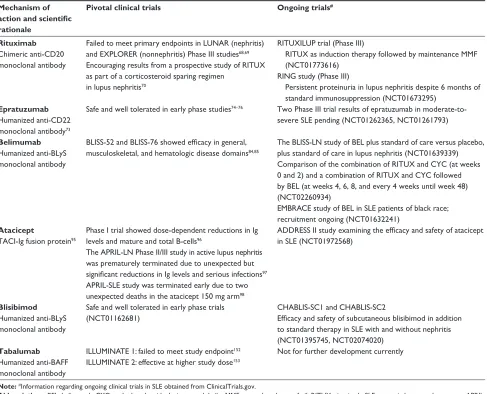
reported in rituximab-treated SLE patients (Table 1).
71,72Targeting B-cell survival with belimumab
B lymphocyte stimulator (BLyS), also known as B-cell
acti-vating factor (BAFF), and a proliferation-inducing ligand
(APRIL) are members of the tumor necrosis factor (TNF)
ligand superfamily and play key roles in the regulation of
B-cell proliferation, differentiation, and immunoglobulin
secretion.
77,78BLyS exists in both membrane bound and
soluble forms and is expressed by cells of the innate immune
Table 1 B-cell targeted biologic therapies in SLe
Mechanism of action and scientific rationale
Pivotal clinical trials Ongoing trials#
Rituximab
Chimeric anti-CD20 monoclonal antibody
Failed to meet primary endpoints in LUNAR (nephritis) and eXPLOReR (nonnephritis) Phase III studies68,69
encouraging results from a prospective study of RITUX as part of a corticosteroid sparing regimen
in lupus nephritis70
RITUXILUP trial(Phase III)
RITUX as induction therapy followed by maintenance MMF (NCT01773616)
RING study (Phase III)
Persistent proteinuria in lupus nephritis despite 6 months of standard immunosuppression (NCT01673295)
Epratuzumab
Humanized anti-CD22 monoclonal antibody73
Safe and well tolerated in early phase studies74–76 Two Phase III trial results of epratuzumab in
moderate-to-severe SLe pending (NCT01262365, NCT01261793)
Belimumab
Humanized anti-BLyS monoclonal antibody
BLISS-52and BLISS-76showed efficacy in general, musculoskeletal, and hematologic disease domains84,85
The BLISS-LN study of BeL plus standard of care versus placebo, plus standard of care in lupus nephritis (NCT01639339) Comparison of the combination of RITUX and CYC (at weeks 0 and 2) and a combination of RITUX and CYC followed by BeL (at weeks 4, 6, 8, and every 4 weeks until week 48) (NCT02260934)
eMBRACestudy of BeL in SLe patients of black race; recruitment ongoing (NCT01632241)
Atacicept
TACI-Ig fusion protein95
Phase I trial showed dose-dependent reductions in Ig levels and mature and total B-cells96
The APRIL-LN Phase II/III study in active lupus nephritis was prematurely terminated due to unexpected but significant reductions in Ig levels and serious infections97
APRIL-SLe study was terminated early due to two unexpected deaths in the atacicept 150 mg arm98
ADDRESS II study examining the efficacy and safety of atacicept in SLe (NCT01972568)
Blisibimod
Humanized anti-BLyS monoclonal antibody
Safe and well tolerated in early phase trials (NCT01162681)
CHABLIS-SC1 and CHABLIS-SC2
Efficacy and safety of subcutaneous blisibimod in addition to standard therapy in SLe with and without nephritis (NCT01395745, NCT02074020)
Tabalumab
Humanized anti-BAFF monoclonal antibody
ILLUMINATe 1: failed to meet study endpoint152
ILLUMINATe 2: effective at higher study dose153
Not for further development currently
Note:#Information regarding ongoing clinical trials in SLe obtained from ClinicalTrials.gov.
Abbreviations: BeL, belimumab; CYC, cyclophosphamide; Ig, immunoglobulin; MMF, mycophenolate mofetil; RITUX, rituximab; SLe, systemic lupus erythematosus; APRIL, a proliferation-inducing ligand; BLyS, B lymphocyte stimulator; TACI, TNF transmembrane activator and calcium modulator and cyclophilin ligand interactor; TNF, tumor necrosis factor; BAFF, B-cell activating factor.
ImmunoTargets and Therapy downloaded from https://www.dovepress.com/ by 118.70.13.36 on 22-Aug-2020
Dovepress Current treatment options for SLe
system such as monocytes, macrophages, and dendritic cells.
BLyS can bind to three receptors, all of which are expressed
by B-cells, including TNF transmembrane activator and
calcium modulator and cyclophilin ligand interactor (TACI),
B lymphocyte maturation antigen (BCMA), and BAFF/BLyS
receptor 3 (BR3).
79,80Plasma and peripheral blood leukocyte
mRNA BLyS levels have been shown to correlate with disease
activity and autoantibody levels in SLE patients.
81,83Belimumab is a monoclonal antibody targeting BLyS
that has been shown to be safe and efficacious in two large
randomized controlled trials in SLE, the Belimumab
Inter-national SLE Studies, BLISS-52, and BLISS-76.
84,85Both
of these studies excluded SLE patients with active lupus
nephritis or neuropsychiatric disease.
A post hoc analysis of the organ domain scores combining
both BLISS studies showed that clinical improvement with
belimumab treatment was most evident in musculoskeletal
and mucocutaneous domains. Less worsening of disease
activity with belimumab therapy was seen in hematologic,
immunological, and renal domains.
86Another pooled post hoc
analysis was performed of the BLISS studies to determine the
effect of belimumab on patients with renal involvement and
showed that those receiving MMF, or those with serologic
activity at baseline, had a greater improvement in renal
dis-ease with belimumab than with placebo.
87In a further post
hoc analysis of the BLISS trials, greater clinical efficacy with
belimumab was seen in SLE patients who were
serologi-cally more active and had higher clinical disease activity as
defined as SELENA-SLEDAI (Safety of Estrogens in Lupus
Erythematosus National Assessment) (Systemic Lupus
Ery-thematosus Disease Activity Index)
.
10.
88On the basis of the BLISS clinical trial results, the US
Food and Drug Administration and the European Medicines
Agency approved belimumab (10 mg/kg) for use in addition
to standard of care in autoantibody positive SLE patients with
moderate-to-severe disease activity, with the exception of
those with active lupus nephritis or neuropsychiatric lupus.
Safety and tolerability data following 7 years of
beli-mumab patient exposure have been published showing that the
most common adverse events reported were mild-to-moderate
infections particularly upper respiratory tract infections.
89One
case of progressive multifocal leuco-encephalopathy has been
reported to date in a belimumab-treated SLE patient.
90Therapies targeting T-B lymphocyte
interactions with abatacept
Immunological tolerance may be induced by the blockade
of costimulatory interactions between T- and B-cells. CD28
is a T-cell costimulatory ligand that interacts with the
recep-tors B7-1 (CD80) and B7-2 (CD86). CTLA4 on activated
T-cells interacts with B7 with greater affinity than CD28
resulting in a negative feedback loop that inhibits T-cell
activation.
95–97Abatacept is a fusion protein comprised of
CTLA-4 (cytotoxic T-lymphocyte antigen) combined with
the Fc portion of human IgG1 (CTLA-4-Ig). CTLA-4-Ig has
been shown to slow progression of lupus nephritis in murine
models of disease.
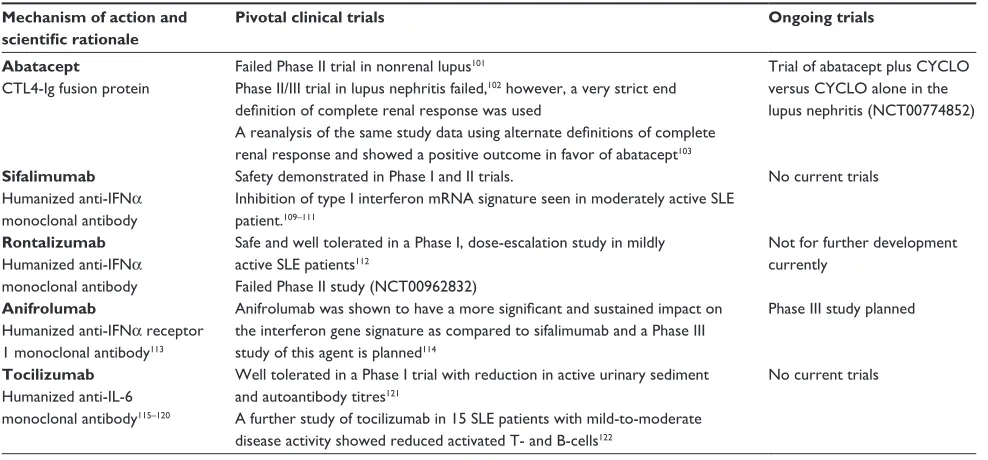
98–100Clinical trials of abatacept in SLE
are summarized in Table 2.
Table 2 Non-B-cell targeted biologic therapies in SLe
Mechanism of action and scientific rationale
Pivotal clinical trials Ongoing trials
Abatacept
CTL4-Ig fusion protein
Failed Phase II trial in nonrenal lupus101
Phase II/III trial in lupus nephritis failed,102 however, a very strict end
definition of complete renal response was used
A reanalysis of the same study data using alternate definitions of complete renal response and showed a positive outcome in favor of abatacept103
Trial of abatacept plus CYCLO versus CYCLO alone in the lupus nephritis (NCT00774852)
Sifalimumab
Humanized anti-IFNα monoclonal antibody
Safety demonstrated in Phase I and II trials.
Inhibition of type I interferon mRNA signature seen in moderately active SLe patient.109–111
No current trials
Rontalizumab
Humanized anti-IFNα monoclonal antibody
Safe and well tolerated in a Phase I, dose-escalation study in mildly active SLe patients112
Failed Phase II study (NCT00962832)
Not for further development currently
Anifrolumab
Humanized anti-IFNα receptor 1 monoclonal antibody113
Anifrolumab was shown to have a more significant and sustained impact on the interferon gene signature as compared to sifalimumab and a Phase III study of this agent is planned114
Phase III study planned
Tocilizumab
Humanized anti-IL-6 monoclonal antibody115–120
well tolerated in a Phase I trial with reduction in active urinary sediment and autoantibody titres121
A further study of tocilizumab in 15 SLe patients with mild-to-moderate disease activity showed reduced activated T- and B-cells122
No current trials
Note: Information regarding ongoing clinical trials in SLe obtained from ClinicalTrials.gov.
Abbreviations: CYCLO, cyclophosphamide; IFN, interferon; Ig, immunoglobulin; IL, interleukin; mRNA, messenger RNA; SLe, systemic lupus erythematosus.
ImmunoTargets and Therapy downloaded from https://www.dovepress.com/ by 118.70.13.36 on 22-Aug-2020
Dovepress
Jordan and D’Cruz
Targeting type I interferon in SLe
The type I interferon family plays a key role in innate
immu-nity and host viral defense. It is well established that SLE
patients have high serum levels of interferon-
α
which
corre-late with disease activity.
104–106In addition, SLE patients have
an interferon gene expression signature in peripheral blood
mononuclear cells, particularly in the early stages of their
disease course.
107,108A number of anti-interferon-
α
therapies
have been investigated in SLE patients with promising results
and these clinical studies are outlined in Table 2. It should be
noted that to date the main finding in SLE patients treated
with anti-interferon-
α
therapies has been a decrease in the
interferon gene expression signature and clinical response to
these agents has yet to be fully determined. Phase III studies
are now planned to investigate this further.
Adjunctive therapies in SLE
While immunosuppressive and biologic agents are the
cor-nerstone of inflammatory disease management in SLE, the
importance of managing comorbidities such as
cardiovascu-lar risk factors, bone health, and minimizing susceptibility
to infection should not be neglected.
The role of antimalarials in SLe
Hydroxychloroquine, while most ostensibly used in the
symp-tomatic treatment of musculoskeletal and cutaneous features
of SLE, has a plethora of unseen beneficial effects. Low serum
levels of hydroxychloroquine, suggesting poor medication
adherence, have been found to be predictive of disease flares
in SLE patients.
123Furthermore, SLE patients with quiescent
disease who are taking hydroxychloroquine are less likely
to have a clinical flare if they are maintained on the drug.
124Hydroxychloroquine usage is associated with a reduced risk of
damage accrual in SLE patients and has a protective effect on
renal damage.
125,126In addition, hydroxychloroquine has been
shown to have a beneficial effect on patient survival.
127Hydroxychloroquine has been shown to have a
posi-tive effect on lipid profiles in SLE patients with significant
reductions in total cholesterol, low density lipoprotein, and
triglycerides and significant increases in high density
lipo-protein levels.
128–130Hydroxychloroquine may also play a
role in reducing cardiovascular and thrombotic risk in SLE
patients.
131–133Both current and past use of
hydroxychloro-quine have been associated with a beneficial effect on bone
mineral density, with higher mean bone mineral density of
the spine and the hip.
134,135Patients receiving hydroxychloroquine are at risk of
developing retinopathy. While this complication is rare, it is
recommended that patients have a baseline eye visual field
examination. Thereafter, in low risk patients, no further
testing is required for the next 5 years. After the first 5 years
of therapy, an annual eye examination is recommended. In
high risk patients, those with macular degeneration, retinal
dystrophy, or greater than 5 year’s duration of
hydroxychloro-quine therapy, yearly eye examinations are recommended.
136Patients with severe renal or hepatic impairment are at greater
risk of toxicity related to hydroxychloroquine due to reduced
clearance of the drug and dose adjustment should be
consid-ered in such individuals.
Managing cardiovascular risk in SLe
Atherosclerosis has become a leading cause of morbidity and
mortality in SLE patients. The risk of cerebrovascular and
coronary heart disease-related events is 5–10 times higher in
those with SLE as compared to the normal population.
137–140SLE patients are known to have an increased prevalence of
cardiovascular risk factors such as hypertension and
dys-lipidemia, and often tend to have a sedentary lifestyle.
137–142Furthermore, SLE patients frequently receive corticosteroid
therapy which may exacerbate their cardiovascular risk
factors. In addition to an excess of traditional risk factors,
it has been established that SLE patients have an inherent
increased risk of cardiovascular disease and premature
atherosclerosis.
143–145Cardiovascular risk factors in SLE patients should ideally
be assessed at baseline and during follow-up on an annual
basis and should include a smoking assessment, review
of vascular events (cerebral/cardiovascular), and levels
of physical activity, and family history of cardiovascular
disease. Lipid profile, glucose, and blood pressure should
be monitored and treated accordingly. All patients with SLE
should have antiphospholipid antibody markers measured at
diagnosis and confirmatory testing at least 12 weeks later
per-formed if the baseline tests are positive. Those on long-term
corticosteroids may require more frequent monitoring.
146Minimizing infection risk in SLe
Patients with SLE are at high risk of infections both as a
consequence of their disease and the infection therapies used
in their clinical management. The administration of
inacti-vated vaccines, particularly the inactiinacti-vated influenza vaccine
and the 23-valent polysaccharide pneumococcal vaccine, is
strongly encouraged in SLE patients on immunosuppression.
Vaccines should ideally be given before commencing B-cell
depleting therapy such as rituximab, or at least 6 months
after the start of therapy but 4 weeks before the next course.
ImmunoTargets and Therapy downloaded from https://www.dovepress.com/ by 118.70.13.36 on 22-Aug-2020
Dovepress Current treatment options for SLe
Live attenuated vaccines should be avoided in
immunosup-pressed patients.
147Bone health in SLe
The prevalence of osteoporosis in SLE varies from 4% to
24% and vertebral fracture prevalence ranges between 7.6%
and 37%.
148,149Several factors may contribute to reduced bone
mineral density in a patient with SLE including persistently
active disease and chronic inflammation, reduced physical
activity, vitamin D deficiency, ovarian failure, and renal
failure.
150With this in mind, all patients with SLE should
be assessed for adequate calcium and vitamin D intake and
supplemented if necessary. Existing guidelines for the
treat-ment and prevention of osteoporosis should be followed for
postmenopausal women and those on corticosteroids.
Conclusion
The management of SLE has progressed enormously in the
last 10 years and we are now in the era of biologic therapies
for this complex disease. While there are currently two such
agents available in some developed countries (belimumab
and rituximab), intensive efforts are underway to develop
further biologic therapies to address a major unmet need in
patients refractory to conventional therapies. Funding for
these therapies remains a major limitation to availability for
patients. For example, while belimumab is widely used in
North America, its use has been limited on the grounds of
cost-effectiveness in many European countries.
The indications for the use of B-cell depletion therapies
remain uncertain and they are currently used in patients with
very active disease who have failed one or more
immunosup-pressive therapies. However, as in rheumatoid arthritis, there
may be a case for introducing biologic therapies very early in
the disease course to prevent disease progression and
dam-age accumulation. Selecting appropriate patients for biologic
therapies is very challenging and, unless done accurately,
risks over treating patients who could have responded well
to conventional approaches.
Designing and delivering clinical trials in SLE remains
exceptionally challenging given the complexity of the
dis-ease, the variability of clinical features between patients,
and the high usage of concomitant corticosteroids and
effective immunosuppressive therapies. Other challenges
include defining outcome measures for clinical trials –
the choice of outcome can make or break a clinical trial
as demonstrated in lupus nephritis.
102,103There have been
∼
20 industry led trials of 16 molecules in patients with
SLE, with only two successful studies (BLISS-52 and
BLISS-76). Nevertheless, several ongoing studies have
been outlined in this review with some grounds for
cau-tious optimism.
Biosimilar monoclonal antibodies are becoming available.
The US patent for rituximab expires in 2016 and the European
patent expired in 2013. There are at least 20 pharmaceutical
companies investigating rituximab biosimilars in rheumatoid
arthritis and lymphoma and many of these studies are direct
comparisons with MabThera/Rituxan branded rituximab. To
our knowledge, there are no studies of biosimilar rituximab
molecules in SLE.
Overreliance on corticosteroid therapy remains an
impor-tant issue in the management of SLE and contributes
sig-nificantly to cardiovascular risk, long-term damage accrual,
and mortality.
151A recent prospective observational study
of rituximab as part of a corticosteroid sparing regimen in
lupus nephritis patients has shown encouraging results.
70The RITUXILUP multicenter randomized controlled trial
of rituximab and MMF with limited corticosteroid for the
treatment of lupus nephritis is ongoing.
Hydroxychloroquine use remains the first-line agent in
the treatment of SLE and evidence continues to accumulate
attesting to its benefits in improving morbidity and mortality.
Equally important is the fundamental need for each patient
to participate in a chronic disease management program to
minimize comorbidities such as infection, cardiovascular
risks, bone health, and the detection and early management
of disease flares to limit damage accumulation.
Disclosure
D D’Cruz reports participation in advisory boards and
consultancies for Human Genome Sciences and Roche
and has received consulting fees and/or has participated in
clinical trials for GlaxoSmithKline, Bristol Myers Squibb,
TEVA, Merck Serono, and Eli-Lilly. The authors have no
other relevant affiliations or financial involvement with any
organization or entity with a financial interest in or financial
conflict with the subject matter or materials discussed in the
paper apart from those disclosed.
References
1. Merrell M, Shulman LE. Determination of prognosis in chronic dis-ease, illustrated by systemic lupus erythematosus. J Chronic Dis. 1955; 1(1):12–32.
2. Bernatsky S, Boivin JF, Joseph L, et al. Mortality in systemic lupus erythematosus. Arthritis Rheum. 2006;54(8):2550–2557.
3. Bruce IN, O’Keeffe AG, Farewell V, et al. Factors associated with damage accrual in patients with systemic lupus erythematosus: results from the Systemic Lupus International Collaborating Clinics (SLICC) Inception Cohort. Ann Rheum Dis. 2015;74(9):1706–1713.
ImmunoTargets and Therapy downloaded from https://www.dovepress.com/ by 118.70.13.36 on 22-Aug-2020
Dovepress
Jordan and D’Cruz
4. Moroni G, Quaglini S, Maccario M, Banfi G, Ponticelli C. “Nephritic flares” are predictors of bad long-term renal outcome in lupus nephritis.
Kidney Int. 1996;50(6):2047–2053.
5. Danila MI, Pons-Estel GJ, Zhang J, Vilá LM, Reveille JD, Alarcón GS. Renal damage is the most important predictor of mortality within the damage index: data from LUMINA LXIV, a multiethnic US cohort.
Rheumatology (Oxford). 2009;48(5):542–545.
6. Bertsias GK, Tektonidou M, Amoura Z, et al. Joint European League Against Rheumatism and European Renal Association–European Dialysis and Transplant Association (EULAR/ERA-EDTA) recom-mendations for the management of adult and paediatric lupus nephritis.
Ann Rheum Dis. 2012;71(11):1771–1782.
7. Hahn BH, McMahon MA, Wilkinson A, et al. American College of Rheumatology guidelines for screening, treatment, and management of lupus nephritis. Arthritis Care Res. (Hoboken). 2012;64(6):797–808. 8. Appel GB, Contreras G, Dooley MA, et al. Mycophenolate mofetil
versus cyclophosphamide for induction treatment of lupus nephritis.
J Am Soc Nephrol. 2009;20(5):1103–1112.
9. Chan TM, Tse KC, Tang CS, et al. Long-term study of mycophe-nolate mofetil as continuous induction and maintenance treatment for diffuse proliferative lupus nephritis. J Am Soc Nephrol. 2005;16: 1076–1084.
10. Ginzler EM, Dooley MA, Aranow C, et al. Mycophenolate mofetil or intravenous cyclophosphamide for lupus nephritis. N Engl J Med. 2005;353(21):2219–2228.
11. Isenberg D, Appel GB, Contreras G, et al. Influence of race/ethnicity on response to lupus nephritis treatment: the ALMS study. Rheumatology
(Oxford). 2010;49(1):128–140.
12. Dooley MA, Hogan S, Jennette C, Falk R. Cyclophosphamide therapy for lupus nephritis: poor renal survival in black Americans. Glomerular Disease Collaborative Network. Kidney Int. 1997;51(4): 1188–1195.
13. Contreras G, Pardo V, Leclercq B, et al. Sequential therapies for pro-liferative lupus nephritis. N Engl J Med. 2004;350(10):971–980. 14. Houssiau FA, Vasconcelos C, D’Cruz D, et al. The 10-year follow-up
data of the Euro-Lupus Nephritis Trial comparing low-dose and high-dose intravenous cyclophosphamide. Ann Rheum Dis. 2010; 69(1):61–64.
15. Houssiau FA, Vasconcelos C, D’Cruz D, et al. Immunosuppressive therapy in lupus nephritis: the Euro-Lupus Nephritis Trial, a random-ized trial of low-dose versus high-dose intravenous cyclophosphamide.
Arthritis Rheum. 2002;46(8):2121–2131.
16. Houssiau FA, D’Cruz D, Sangle S, et al. Azathioprine versus myco-phenolate mofetil for long-term immunosuppression in lupus nephri-tis: results from the MAINTAIN Nephritis Trial. Ann Rheum Dis. 2010;69(12):2083–2089.
17. Mok CC, Ho CT, Chan KW, Lau CS, Wong RW. Outcome and prognos-tic indicators of diffuse proliferative lupus glomerulonephritis treated with sequential oral cyclophosphamide and azathioprine. Arthritis
Rheum. 2002;46(4):1003–1013.
18. Wofsy D, Appel GB, Dooley MA, et al. Group AS. Aspreva Lupus Management Study (ALMS): maintenance results. Arthritis Rheum. 2010;62(Suppl 10):2085.
19. Dooley MA, Jayne D, Ginzler EM, et al; ALMS Group. Mycophenolate versus azathioprine as maintenance therapy for lupus nephritis. N Engl
J Med. 2011;365:1886–1895.
20. Hoeltzenbein M, Elefant E, Vial T, et al. Teratogenicity of mycophenolate confirmed in a prospective study of the European Network of Teratology Information Services. Am J Med Genet. 2012; 158(3):588–596. 21. Liu Z, Zhang H, Liu Z, et al. Multitarget therapy for induction
treatment of lupus nephritis: a randomized trial. Ann Intern Med. 2015;162(1):18–26.
22. Mok CC, Ying KY, Yim CW, et al. Tacrolimus versus mycopheno-late mofetil for induction therapy of lupus nephritis: a randomised controlled trial and long-term follow-up. Ann Rheum Dis. Epub 2014 Dec 30.
23. Yap DY, Ma MK, Mok MM, et al. Long-term data on tacrolimus treatment in lupus nephritis. Rheumatology (Oxford). 2014; 53(12): 2232–2237.
24. Webster P, Wardle A, Bramham K, Webster L, Nelson-Piercy C, Lightstone L. Tacrolimus is an effective treatment for lupus nephritis in pregnancy. Lupus. 2014;23(11):1192–1196.
25. Bertsias GK, Ioannidis JP, Aringer M, et al. EULAR recommendations for the management of systemic lupus erythematosus with neuropsychi-atric manifestations: report of a task force of the EULAR standing com-mittee for clinical affairs. Ann Rheum Dis. 2010;69(12):2074–2082. 26. Trevisani VF, Castro AA, Neves Neto JF, Atallah AN. Cyclophosphamide
versus methylprednisolone for treating neuropsychiatric involvement in systemic lupus erythematosus. Cochrane Database Syst Rev. 2006;(2):CD002265.
27. Trevisani VF, Castro AA, Neves Neto JF, Atallah AN. Cyclophosphamide versus methylprednisolone for treating neuropsychiatric involvement in systemic lupus erythematosus. Cochrane Database Syst Rev. 2013;2:CD002265.
28. Neuwelt CM, Lacks S, Kaye BR, Ellman JB, Borenstein DG. Role of intravenous cyclophosphamide in the treatment of severe neu-ropsychiatric systemic lupus erythematosus. Am J Med. 1995;98(1): 32–41.
29. Barile-Fabris L, Ariza-Andraca R, Olguin-Ortega L, et al. Controlled clinical trial of IV cyclophosphamide versus IV methylprednisolone in severe neurological manifestations in systemic lupus erythematosus.
Ann Rheum Dis. 2005;64(4):620–625.
30. Leung FK, Fortin PR. Intravenous cyclophosphamide and high dose corticosteroids improve MRI lesions in demyelinating syn-drome in systemic lupus erythematosus. J Rheumatol. 2003;30(8): 1871–1873.
31. McCune WJ, Golbus J, Zeldes W, Bohlke P, Dunne R, Fox DA. Clinical and immunologic effects of monthly administration of intravenous cyclophosphamide in severe systemic lupus erythematosus. N Engl J
Med. 1988;318(22):1423–1431.
32. Ramos PC, Mendez MJ, Ames PR, Khamashta MA, Hughes GR. Pulse cyclophosphamide in the treatment of neuropsychiatric systemic lupus erythematosus. Clin Exp Rheumatol. 1996;14(3):295–299.
33. Mok CC, Lau CS, Wong RW. Treatment of lupus psychosis with oral cyclophosphamide followed by azathioprine maintenance: an open-label study. Am J Med. 2003;115(1):59–62.
34. Tomietto P, D’Agostini S, Annese V, De Vita S, Ferraccioli G. Mycophenolate mofetil and intravenous dexamethasone in the treatment of persistent lupus myelitis. J Rheumatol. 2007;34(3):588–591. 35. Riskalla MM, Somers EC, Fatica RA, McCune WJ. Tolerability of
mycophenolate mofetil in patients with systemic lupus erythematosus.
J Rheumatol. 2003;30(7):1508–1512.
36. Carneiro JR, Sato EI. Double blind, randomized, placebo controlled clinical trial of methotrexate in systemic lupus erythematosus.
J Rheumatol. 1999;26(6):1275–1279.
37. Islam MN, Hossain M, Haq SA, Alam MN, Ten Klooster PM, Rasker JJ. Efficacy and safety of methotrexate in articular and cutaneous manifestations of systemic lupus erythematosus. Int J Rheum Dis. 2012;15(1):62–68.
38. Rahman P, Humphrey-Murto S, Gladman DD, Urowitz MB. Efficacy and tolerability of methotrexate in antimalarial resistant lupus arthritis.
J Rheumatol. 1998;25(2):243–246.
39. Winzer M, Aringer M. Use of methotrexate in patients with systemic lupus erythematosus and primary Sjogren’s syndrome. Clin Exp
Rheumatol. 2010;28(5 Suppl 61):S156–S159.
40. Remer CF, Weisman MH, Wallace DJ. Benefits of leflunomide in systemic lupus erythematosus: a pilot observational study. Lupus. 2001;10(7):480–483.
41. Wu GC, Xu XD, Huang Q, Wu H. Leflunomide: friend or foe for sys-temic lupus erythematosus? Rheumatol Int. 2013;33(2):273–276. 42. Distad BJ, Amato AA, Weiss MD. Inflammatory myopathies. Curr
Treat Options Neurol. 2011;13(2):119–130.
ImmunoTargets and Therapy downloaded from https://www.dovepress.com/ by 118.70.13.36 on 22-Aug-2020
Dovepress Current treatment options for SLe
43. Pisoni CN, Cuadrado MJ, Khamashta MA, Hughes GR, D’Cruz DP. Mycophenolate mofetil treatment in resistant myositis. Rheumatology (Oxford). 2007;46(3):516–518.
44. Majithia V, Harisdangkul V. Mycophenolate mofetil (CellCept): an alternative therapy for autoimmune inflammatory myopathy.
Rheumatology (Oxford). 2005;44(3):386–389.
45. Kono DH, Klashman DJ, Gilbert RC. Successful IV pulse cyclophos-phamide in refractory PM in 3 patients with SLE. J Rheumatol. 1990; 17(7):982–983.
46. Kuhn A, Specker C, Ruzicka T, Lehmann P. Methotrexate treatment for refractory subacute cutaneous lupus erythematosus. J Am Acad
Dermatol. 2002;46(4):600–603.
47. Bohm L, Uerlich M, Bauer R. Rapid improvement of subacute cutaneous lupus erythematosus with low-dose methotrexate. Dermatology. 1997; 194(3):307–308.
48. Wenzel J, Brahler S, Bauer R, Bieber T, Tüting T. Efficacy and safety of methotrexate in recalcitrant cutaneous lupus erythematosus: results of a ret-rospective study in 43 patients. Br J Dermatol. 2005;153(1):157–162. 49. Malcangi G, Brandozzi G, Giangiacomi M, Zampetti M, Danieli MG.
Bullous SLE: response to methotrexate and relationship with disease activity. Lupus. 2003;12(1):63–66.
50. Callen JP, Spencer LV, Burruss JB, Holtman J. Azathioprine. An effective, corticosteroid-sparing therapy for patients with recalcitrant cutaneous lupus erythematosus or with recalcitrant cutaneous leuko-cytoclastic vasculitis. Arch Dermatol. 1991;127(4):515–522. 51. Shehade S. Successful treatment of generalized discoid skin lesions
with azathioprine. Arch Dermatol. 1986;122(4):376–377.
52. Kreuter A, Tomi NS, Weiner SM, Huger M, Altmeyer P, Gambichler T. Mycophenolate sodium for subacute cutaneous lupus erythe-matosus resistant to standard therapy. Br J Dermatol. 2007; 156(6):1321–1327.
53. Schanz S, Ulmer A, Rassner G, Fierlbeck G. Successful treatment of subacute cutaneous lupus erythematosus with mycophenolate mofetil.
Br J Dermatol. 2002;147(1):174–178.
54. Gammon B, Hansen C, Costner MI. Efficacy of mycophenolate mofetil in antimalarial-resistant cutaneous lupus erythematosus. J Am Acad
Dermatol. 2011;65(4):717–721.
55. Chang AY, Werth VP. Treatment of cutaneous lupus. Curr Rheumatol
Rep. 2011;13(4):300–307.
56. Chen M, Doherty SD, Hsu S. Innovative uses of thalidomide. Dermatol
Clin. 2010;28(3):577–586.
57. Abu-Shakra M, Shoenfeld Y. Azathioprine therapy for patients with systemic lupus erythematosus. Lupus. 2001;10(3):152–153. 58. Mok CC. Mycophenolate mofetil for non-renal manifestations of
sys-temic lupus erythematosus: a systematic review. Scand J Rheumatol. 2007;36(5):329–337.
59. Boumpas DT, Barez S, Klippel JH, Barlow JE. Intermittent cyclophos-phamide for the treatment of autoimmune thrombocytopenia in systemic lupus erythematosus. Ann Intern Med. 1990;112(9):674–677. 60. Walport MJ, Hubbard WN, Hughes GR. Reversal of aplastic anaemia
secondary to systemic lupus erythematosus by high-dose intravenous cyclophosphamide. Br Med J. 1982;285(6344):769–770.
61. Levy Y, Sherer Y, Ahmed A, et al. study of 20 SLE patients with intravenous immunoglobulin – clinical and serologic response. Lupus. 1999;8(9):705–712.
62. Maier WP, Gordon DS, Howard RF, et al. Intravenous immunoglobulin therapy in systemic lupus erythematosus-associated thrombocytopenia.
Arthritis Rheum. 1990;33(8):1233–1239.
63. Lu TY, Ng KP, Cambridge G, et al. A retrospective seven-year analysis of the use of B cell depletion therapy in systemic lupus erythematosus at University College London Hospital: the first fifty patients. Arthritis
Rheum. 2009;61(4):482–487.
64. Terrier B, Amoura Z, Ravaud P, et al. Safety and efficacy of rituximab in systemic lupus erythematosus: results from 136 patients from the French AutoImmunity and Rituximab registry. Arthritis Rheum. 2010;62(8): 2458–2466.
65. Catapano F, Chaudhry AN, Jones RB, Smith KG, Jayne DW. Long-term efficacy and safety of rituximab in refractory and relapsing systemic lupus erythematosus. Nephrol Dial Transplant. 2010;25(11): 3586–3592.
66. Diaz-Lagares C, Croca S, Sangle S, et al. Efficacy of rituximab in 164 patients with biopsy-proven lupus nephritis: pooled data from European cohorts. Autoimmun Rev. 2012;11(5):357–364.
67. Pepper R, Griffith M, Kirwan C, et al. Rituximab is an effective treat-ment for lupus nephritis and allows a reduction in maintenance steroids.
Nephrol Dial Transplant. 2009;24(12):3717–3723.
68. Merrill JT, Neuwelt CM, Wallace DJ, et al. Efficacy and safety of rituximab in moderately-to-severely active systemic lupus erythema-tosus: the randomized, double-blind, phase II/III systemic lupus ery-thematosus evaluation of rituximab trial. Arthritis Rheum. 2010;62(1): 222–233.
69. Rovin BH, Furie R, Latinis K, et al. Efficacy and safety of ritux-imab in patients with active proliferative lupus nephritis: the Lupus Nephritis Assessment with Rituximab study. Arthritis Rheum. 2012; 64(4):1215–1226.
70. Condon MB, Ashby D, Pepper RJ, et al. Prospective observational single-centre cohort study to evaluate the effectiveness of treating lupus nephritis with rituximab and mycophenolate mofetil but no oral steroids. Ann Rheum Dis. 2013;72(8):1280–1286.
71. Diaz-Lagares C, Perez-Alvarez R, Garcia-Hernandez FJ, et al. Rates of, and risk factors for, severe infections in patients with systemic autoimmune diseases receiving biological agents off-label. Arthritis
Res Ther. 2011;13(4):R112.
72. Calabrese LH, Molloy ES. Progressive multifocal leucoencephalopathy in the rheumatic diseases: assessing the risks of biological immunosup-pressive therapies. Ann Rheum Dis. 2008;67(Suppl 3):64–65. 73. Jacobi AM, Goldenberg DM, Hiepe F, Radbruch A, Burmester GR,
Dörner T. Differential effects of epratuzumab on peripheral blood B cells of patients with systemic lupus erythematosus versus normal controls. Ann Rheum Dis. 2008;67(4):450–457.
74. Dorner T, Kaufmann J, Wegener WA, Teoh N, Goldenberg DM, Burmester GR. Initial clinical trial of epratuzumab (humanized anti-CD22 antibody) for immunotherapy of systemic lupus erythematosus.
Arthritis Res Ther. 2006;8(3):R74.
75. Wallace DJ, Gordon C, Strand V, et al. Efficacy and safety of epratuzumab in patients with moderate/severe flaring systemic lupus erythematosus: results from two randomized, double-blind, placebo-controlled, multicentre studies (ALLEVIATE) and follow-up.
Rheumatology (Oxford). 2013;52(7):1313–1322.
76. Wallace DJ, Kalunian K, Petri MA, et al. Efficacy and safety of epratuzumab in patients with moderate/severe active systemic lupus erythematosus: results from EMBLEM, a phase IIb, randomised, double-blind, placebo-controlled, multicentre study. Ann Rheum Dis. 2014;73(1):183–190.
77. Moore PA, Belvedere O, Orr A, et al. BLyS: member of the tumor necrosis factor family and B lymphocyte stimulator. Science. 1999; 285(5425):260–263.
78. Schneider P, Mackay F, Steiner V, et al. BAFF, a novel ligand of the tumor necrosis factor family, stimulates B cell growth. J Exp Med. 1999;189(11):1747–1756.
79. Gross JA, Johnston J, Mudri S, et al. TACI and BCMA are receptors for a TNF homologue implicated in B-cell autoimmune disease. Nature. 2000;404(6781):995–999.
80. Thompson JS, Bixler SA, Qian F, et al. BAFF-R, a newly identified TNF receptor that specifically interacts with BAFF. Science. 2001; 293(5537):2108–2111.
81. Cheema GS, Roschke V, Hilbert DM, Stohl W. Elevated serum B lymphocyte stimulator levels in patients with systemic immune-based rheumatic diseases. Arthritis Rheum. 2001;44(6):1313–1319. 82. Petri M, Stohl W, Chatham W, et al. Association of plasma B lymphocyte
stimulator levels and disease activity in systemic lupus erythematosus.
Arthritis Rheum. 2008;58(8):2453–2459.
ImmunoTargets and Therapy downloaded from https://www.dovepress.com/ by 118.70.13.36 on 22-Aug-2020
Dovepress
Jordan and D’Cruz
83. Collins CE, Gavin AL, Migone TS, Hilbert DM, Nemazee D, Stohl W. B lymphocyte stimulator (BLyS) isoforms in systemic lupus erythematosus: disease activity correlates better with blood leukocyte BLyS mRNA levels than with plasma BLyS protein levels. Arthritis
Res Ther. 2006;8(1):R6.
84. Navarra SV, Guzman RM, Gallacher AE, et al. Efficacy and safety of belimumab in patients with active systemic lupus erythematosus: a randomised, placebo-controlled, phase 3 trial. Lancet. 2011; 377(9767):721–731.
85. Furie R, Petri M, Zamani O, et al. A phase III, randomized, placebo-controlled study of belimumab, a monoclonal antibody that inhibits B lymphocyte stimulator, in patients with systemic lupus erythematosus.
Arthritis Rheum. 2011;63(12):3918–3930.
86. Manzi S, Sánchez-Guerrero J, Merrill JT, et al. BLISS-52 and BLISS-76 Study Groups. Effects of belimumab, a B lymphocyte stimulator-specific inhibitor, on disease activity across multiple organ domains in patients with systemic lupus erythematosus: combined results from two phase III trials. Ann Rheum Dis. 2012;71(11):1833–1838. 87. Dooley MA, Houssiau F, Aranow C, et al. Effect of belimumab
treat-ment on renal outcomes: results from the phase 3 belimumab clinical trials in patients with SLE. Lupus. 2013;22(1):63–72.
88. Van Vollenhoven RF, Petri MA, Cervera R, et al. Belimumab in the treatment of systemic lupus erythematosus: high disease activity predictors of response. Ann Rheum Dis. 2012;71(8): 1343–1349.
89. Ginzler EM, Wallace DJ, Merrill JT, et al; LBSL02/99 Study Group. Disease control and safety of belimumab plus standard therapy over 7 years in patients with systemic lupus erythematosus. J Rheumatol. 2014;41(2):300–309.
90. Fredericks C, Kvam K, Bear J, Crabtree GS, Josephson SA. A case of progressive multifocal leukoencephalopathy in a lupus patient treated with belimumab. Lupus. 2014;23(7):711–713.
91. Dillon SR, Harder B, Lewis KB, et al. B-lymphocyte stimulator/a proliferation-inducing ligand heterotrimers are elevated in the sera of patients with autoimmune disease and are neutralized by atacicept and B-cell maturation antigen-immunoglobulin. Arthritis Res Ther. 2010;12(2):R48.
92. Dall’era M, Chakravarty E, Wallace D, et al. Reduced B lymphocyte and immunoglobulin levels after atacicept treatment in patients with systemic lupus erythematosus: results of a multicenter, phase Ib, double-blind, placebo-controlled, dose-escalating trial. Arthritis
Rheum. 2007;56(12):4142–4150.
93. Ginzler EM, Wax S, Rajeswaran A, et al. Atacicept in combination with MMF and corticosteroids in lupus nephritis: results of a prematurely terminated trial. Arthritis Res Ther. 2012;14(1):R33.
94. Isenberg D, Gordon C, Licu D, Copt S, Rossi CP, Wofsy D. Efficacy and safety of atacicept for prevention of flares in patients with moderate-to-severe systemic lupus erythematosus (SLE): 52-week data (APRIL-SLE randomised trial). Ann Rheum Dis. 2015;74: 2006–2015.
95. Scheipers P, Reiser H. Role of the CTLA-4 receptor in T cell activation and immunity. Physiologic function of the CTLA-4 receptor. Immunol
Res. 1998;18(2):103–115.
96. Reiser H, Stadecker MJ. Costimulatory B7 molecules in the patho-genesis of infectious and autoimmune diseases. N Engl J Med. 1996; 335(18):1369–1377.
97. Brunet JF, Denizot F, Luciani MF, et al. A new member of the immuno-globulin superfamily-CTLA-4. Nature. 1987;328(6127):267–270. 98. Daikh DI, Wofsy D. Cutting edge: reversal of murine lupus
nephritis with CTLA4Ig and cyclophosphamide. J Immunol. 2001; 166(5):2913–2916.
99. Cunnane G, Chan OT, Cassafer G, et al. Prevention of renal damage in murine lupus nephritis by CTLA-4Ig and cyclophosphamide. Arthritis
Rheum. 2004;50(5):1539–1548.
100. Finck BK, Linsley PS, Wofsy D. Treatment of murine lupus with CTLA4Ig. Science. 1994;265(5176):1225–1227.
101. Merrill JT, Burgos-Vargas R, Westhovens R, et al. The efficacy and safety of abatacept in patients with non-life-threatening manifesta-tions of systemic lupus erythematosus: results of a twelve-month, multicenter, exploratory, phase IIb, randomized, double-blind, placebo-controlled trial. Arthritis Rheum. 2010;62(10):3077–3087.
102. Furie R, Nicholls K, Cheng TT, et al. Efficacy and safety of abatacept in lupus nephritis: a twelve-month, randomized, double-blind study.
Arthritis Rheumatol. 2014;66(2):379–389.
103. Wofsy D, Hillson P, Diamond B. Comparison of alternative primary outcome measures for use in lupus nephritis clinical trials. Arthritis
Rheum. 2013;65(6):1586–1591.
104. Hooks JJ, Moutsopoulos HM, Geis SA, Stahl NI, Decker JL, Notkins AL. Immune interferon in the circulation of patients with autoimmune disease. N Engl J Med. 1979;301(1): 5–8.
105. Ytterberg SR, Schnitzer TJ. Serum interferon levels in patients with systemic lupus erythematosus. Arthritis Rheum. 1982;25(4): 401–406.
106. Bengtsson AA, Sturfelt G, Truedsson L, et al. Activation of type I interferon system in systemic lupus erythematosus correlates with dis-ease activity but not with antiretroviral antibodies. Lupus. 2000;9(9): 664–671.
107. Bennett L, Palucka AK, Arce E, et al. Interferon and granulopoi-esis signatures in systemic lupus erythematosus blood. J Exp Med. 2003;197(6):711–723.
108. Baechler EC, Batliwalla FM, Karypis G, et al. Interferon-inducible gene expression signature in peripheral blood cells of patients with severe lupus. Proc Natl Acad Sci U S A. 2003;100(5): 2610–2615.
109. Merrill JT, Wallace DJ, Petri M, et al. Safety profile and clinical activ-ity of sifalimumab, a fully human anti-interferon alpha monoclonal antibody, in systemic lupus erythematosus: a phase I, multicentre, double-blind randomised study. Ann Rheum Dis. 2011;70(11): 1905–1913.
110. Petri M, Wallace DJ, Spindler A, et al. Sifalimumab, a human anti- interferon-alpha monoclonal antibody, in systemic lupus erythematosus: a phase I randomized, controlled, dose-escalation study. Arthritis
Rheum. 2013;65(4):1011–1021.
111. Khamashta M, Merrill JT, Werth VP, et al. Safety and efficacy of sifalimumab, an anti IFN-alpha monoclonal antibody, in a phase 2b study of moderate to severe systemic lupus erythematosus (SLE).
Arthritis Rheum. 2014;66(Suppl):L4 (Late Breaking Abstract).
112. McBride JM, Jiang J, Abbas AR, et al. Safety and pharmacodynamics of rontalizumab in patients with systemic lupus erythematosus: results of a phase I, placebo-controlled, double-blind, dose-escalation study.
Arthritis Rheum. 2012;64(11):3666–3676.
113. Peng L, Oganesyan V, Wu H, Dall’Acqua WF, Damschroder MM. Molecular basis for antagonistic activity of anifrolumab, an anti-interferon-α receptor 1 antibody. MAbs. 2015;7(2):428–439. 114. Morehouse C, Chang L, Wang et al. Target modulation of a type I
interferon (IFN) gene signature with sifalimumab or anifrolumab in systemic lupus erythematosus (SLE) patients in two open label phase 2 Japanese trials. 2014 ACR/ARHP Annual Meeting; November 14–19; 2014; Boston, MA.
115. Ryffel B, Car BD, Gunn H, Roman D, Hiestand P, Mihatsch MJ. Interleukin-6 exacerbates glomerulonephritis in (NZB x NZW)F1 mice. Am J Pathol. 1994;144(5):927–937.
116. Yang G, Liu H, Jiang M, et al. Experimental study on intramuscular injection of eukaryotic expression vector pcDNA3-IL-6 on BXSB mice. Chin Med J. 1998;111(1):38–42.
117. Liang B, Gardner DB, Griswold DE, Bugelski PJ, Song XY. Anti-interleukin-6 monoclonal antibody inhibits autoimmune responses in a murine model of systemic lupus erythematosus. Immunology. 2006;119(3):296–305.
118. Mihara M, Takagi N, Takeda Y, Ohsugi Y. IL-6 receptor blockage inhibits the onset of autoimmune kidney disease in NZB/W F1 mice.
Clin Exp Immunol. 1998;112(3):397–402.
ImmunoTargets and Therapy downloaded from https://www.dovepress.com/ by 118.70.13.36 on 22-Aug-2020