Scholarship@Western
Scholarship@Western
Electronic Thesis and Dissertation Repository
4-23-2014 12:00 AM
Computational Techniques to Predict Orthopaedic Implant
Computational Techniques to Predict Orthopaedic Implant
Alignment and Fit in Bone
Alignment and Fit in Bone
Seyed Kamaleddin Mostafavi Yazdi The University of Western Ontario Supervisor
Dr. Remus Tutunea-Fatan
The University of Western Ontario Joint Supervisor Dr. James Johnson
The University of Western Ontario
Graduate Program in Mechanical and Materials Engineering
A thesis submitted in partial fulfillment of the requirements for the degree in Doctor of Philosophy
© Seyed Kamaleddin Mostafavi Yazdi 2014
Follow this and additional works at: https://ir.lib.uwo.ca/etd
Part of the Biomechanics and Biotransport Commons
Recommended Citation Recommended Citation
Mostafavi Yazdi, Seyed Kamaleddin, "Computational Techniques to Predict Orthopaedic Implant Alignment and Fit in Bone" (2014). Electronic Thesis and Dissertation Repository. 1998.
https://ir.lib.uwo.ca/etd/1998
This Dissertation/Thesis is brought to you for free and open access by Scholarship@Western. It has been accepted for inclusion in Electronic Thesis and Dissertation Repository by an authorized administrator of
(Thesis format: Integrated)
by
Seyed Kamaleddin Mostafavi Yazdi
Graduate Program in Mechanical and Materials Engineering
A thesis submitted in partial fulfillment of the requirements for the degree of
Doctor of Philosophy
The School of Graduate and Postdoctoral Studies The University of Western Ontario
London, Ontario, Canada
ii
Abstract
Among the broad palette of surgical techniques employed in the current orthopaedic
practice, joint replacement represents one of the most difficult and costliest surgical
procedures. While numerous recent advances suggest that computer assistance can
dramatically improve the precision and long term outcomes of joint arthroplasty even in the
hands of experienced surgeons, many of the joint replacement protocols continue to rely
almost exclusively on an empirical basis that often entail a succession of trial and error
maneuvers that can only be performed intraoperatively. Although the surgeon is generally
unable to accurately and reliably predict a priori what the final malalignment will be or even
what implant size should be used for a certain patient, the overarching goal of all
arthroplastic procedures is to ensure that an appropriate match exists between the native and
prosthetic axes of the articulation.
To address this relative lack of knowledge, the main objective of this thesis was to
develop a comprehensive library of numerical techniques capable to: 1) accurately
reconstruct the outer and inner geometry of the bone to be implanted; 2) determine the
location of the native articular axis to be replicated by the implant; 3) assess the insertability
of a certain implant within the endosteal canal of the bone to be implanted; 4) propose
customized implant geometries capable to ensure minimal malalignments between native and
prosthetic axes. The accuracy of the developed algorithms was validated through
comparisons performed against conventional methods involving either contact-acquired data
or navigated implantation approaches, while various customized implant designs proposed
iii
It is anticipated that the proposed computer-based approaches will eliminate or at least
diminish the need for undesirable trial and error implantation procedures in a sense that
present error-prone intraoperative implant insertion decisions will be at least augmented if
not even replaced by optimal computer-based solutions to offer reliable virtual “previews” of
the future surgical procedure. While the entire thesis is focused on the elbow as the most
challenging joint replacement surgery, many of the developed approaches are equally
applicable to other upper or lower limb articulations.
Keywords
Computer-assisted surgery; total elbow arthroplasty; flexion-extension axis; implant
malalignment; humerus; computed tomography; insertion trajectory; implant design;
iv
Co-Authorship Statements
Chapter 1: Kamal Mostafavi - sole author.
Chapter 2: Kamal Mostafavi - study design, analysis, wrote manuscript; Evgueni
Bordatchev – data collection, reviewed manuscript; James Johnson – study
design, reviewed manuscript; Remus Tutunea-Fatan – study design, reviewed
manuscript.
Chapter 3: Kamal Mostafavi - study design, analysis, wrote manuscript; Emily Lalone –
data collection, reviewed manuscript; Graham King - study design, reviewed
manuscript; James Johnson – study design, reviewed manuscript; Remus
Tutunea-Fatan- study design, reviewed manuscript.
Chapter 4: Kamal Mostafavi - study design, analysis, wrote manuscript; James Johnson –
study design, reviewed manuscript; Remus Tutunea-Fatan – study design,
reviewed manuscript.
Chapter 5: Kamal Mostafavi - study design, analysis, wrote manuscript; James Johnson –
study design, reviewed manuscript; Remus Tutunea-Fatan- study design,
reviewed manuscript.
v
Acknowledgments
I would first and foremost like to thank my supervisors Dr. Remus Tutunea-Fatan and Dr.
James Johnson. During my Ph.D they have always supported and encouraged me to progress
in my research. I would also like to thank them for dedicating their time for having individual
weekly meetings, their great comments and contribution in my research and toward
progressing my thesis. They always provided invaluable feedback in every single step of my
work and helped me in various ways to solve the issues I faced during this research.
I would like to further thank Dr. Tutunea-Fatan for his great contribution during my research,
for his time that spent every single day from the beginning of my research and being a
wonderful supervisor all the time supporting me.
I would also like to thank Emily Lalone for her great support in providing information and
data on specimens all the time and also helping me in understanding this information and
answering my questions. Thank you to Colin McDonald for his great feedbacks and support
through the experimental setup and corresponding information.
At the end I would like to thank my lovely wife, Fatemeh, for always being there for me and
providing love, support and guidance and helping me a lot during my Ph.D. Thank you to my
mom and dad who dedicated their lives to their children. You are my inspiration and my
vi
Table of Contents
Abstract ... ii
Co-Authorship Statements ... iv
Acknowledgments... v
Table of Contents ... vi
List of Tables ... x
List of Figures ... xi
Chapter 1 ... 1
1 Introduction ... 1
1.1 Overview ... 1
1.2 Joints and Implants ... 1
1.3 Elbow ... 2
1.3.1 Anatomy and Biomechanics ... 2
1.3.2 Motion and kinematics ... 7
1.3.3 Disorders ... 9
1.4 Medical Imaging ... 10
1.4.1 Radiographs ... 10
1.4.2 Computed Tomography ... 12
1.4.3 Digital Imaging and Communication in Medicine (DICOM) ... 12
1.4.4 Edge Detection Methods ... 15
1.5 Total Elbow Arthroplasty ... 19
1.5.1 Surgical Techniques ... 21
1.5.2 Implant Types ... 21
1.5.3 Complications ... 23
vii
1.7 Thesis Rationale ... 27
1.7.1 Motivation ... 27
1.7.2 Objectives and Hypothesis ... 28
1.7.3 Contributions... 29
1.7.4 Outline... 30
1.8 References ... 32
Chapter 2 ... 38
2 B-Spline-Based Representations of Humeral Bone ... 38
2.1 Overview ... 38
2.2 Introduction ... 38
2.3 Segmentation of Bone Contours ... 42
2.4 Planar B-Spline Fitting Through Deformable Control Polygon Technique ... 49
2.4.1 Closed B-Spline Formulation ... 50
2.4.2 Determination of the Control Polygon ... 53
2.4.3 Robustness of the Proposed Approach ... 58
2.5 Accuracy of the Proposed Bone Reconstruction Technique ... 64
2.5.1 Pair-wise Registration of Point Datasets ... 65
2.5.2 Comparison with Contact-Acquired Data ... 67
2.6 Conclusion ... 77
2.7 References ... 79
Chapter 3 ... 82
3 Determination of Elbow Flexion-Extension Axis Based on Planar and Closed B-Splines ... 82
3.1 Overview ... 82
3.2 Introduction ... 82
viii
3.3.1 Detection of Outer Cortical Bone Contours ... 87
3.3.2 Planar and Closed B-Spline Fitting by Control Polygon Deformation ... 89
3.3.3 Automated Detection of Relevant Features through Local Curvature Analysis... 96
3.4 Conventional Voxel-based Determination of FE axis ... 99
3.5 Results and discussion ... 100
3.6 Conclusions ... 104
3.7 References ... 104
Chapter 4 ... 107
4 Assessment of the insertability of a certain implant within the endosteal canal of the bone ... 107
4.1 Overview ... 107
4.2 Introduction ... 107
4.3 Genetic Algorithm Based Search on the feasibility of the Implant Insertion ... 114
4.3.1 Materials ... 114
4.3.2 Elbow Implants ... 116
4.3.3 Bone Geometry Reconstruction ... 119
4.3.4 Genetic Algorithm ... 123
4.3.5 Experimental Setup ... 133
4.4 Result ... 133
4.5 Discussion ... 149
4.6 References ... 151
Chapter 5 ... 153
5 On the Design of Customized Implant Geometries ... 153
5.1 Overview ... 153
5.2 Introduction ... 153
ix
5.3.1 Stem-Focused Optimization... 160
5.3.2 Spool-Focused Optimization ... 164
5.3.3 Overall Implant Optimization ... 167
5.3.4 Customized Implant Design ... 172
5.4 Result ... 176
5.5 References ... 186
Chapter 6 ... 188
6 Conclusion ... 188
6.1 Overview ... 188
6.2 Limitations ... 192
6.3 Future Direction ... 194
6.4 References ... 196
x
List of Tables
Table 2.1: The comparison of the proposed B-Spline method against uniform, chordal and
centripetal methods ... 62
Table 3.1: Quantitative comparisons between B-Spline and voxel-based methods ... 102
Table 5.1: Summary of the best three implant designs with minimum malalignment
developed by the stem-focused optimization method. ... 177
Table 5.2: Summary of the best three implant designs with minimum malalignment
developed by the spool-focused optimization method. ... 177
Table 5.3: Summary of the best three implant designs with minimum malalignment
developed by the overall implant optimization method. ... 178
Table 5.4: Summary of the best three implant designs with minimum malalignment
xi
List of Figures
Figure 1.1: Elbow anatomy: (a) anterior view of right arm, showing the three elbow bones:
humerus, radius and ulna, and (b) the three joints of elbow: radiohumeral, humeroulnar and
radioulnar joints. ... 4
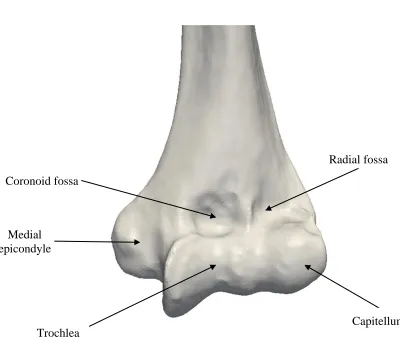
Figure 1.2: Anterior view of the distal humerus. ... 6
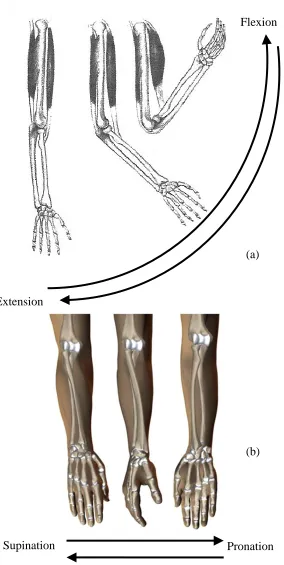
Figure 1.3: Motion of the elbow: (a) flexion-extension movement, and (b)
supination-pronation movement. ... 8
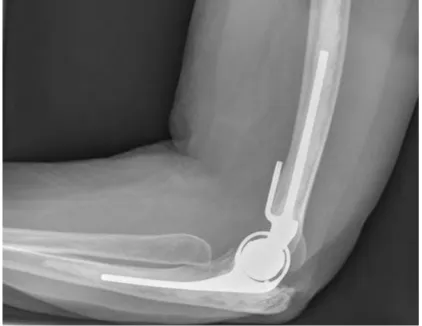
Figure 1.4: X-ray of a total elbow arthroplasty. ... 11
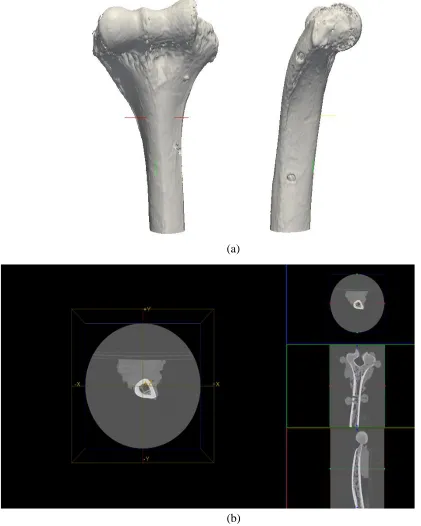
Figure 1.5: (a) 3D representation of distal humerus acquired by CT scanner, and (b) the distal
humerus cross section in transverse, sagittal and coronal planes. ... 14
Figure 1.6: Comparison of different edge detection techniques; (a) original sample image,
adapted from [http://en.wikipedia.org/wiki/Statue_of_Liberty], (b) Prewitt, (c) Canny, (d)
Sobel, (e) Roberts, and (f) LOG methods. ... 18
Figure 1.7: (a) Anatomical features of the native elbow joint, and (b) elbow joint after total
elbow arthroplasty with prosthetic components. ... 20
Figure 2.1: Segmentation of the bone contours: a) overall positioning of the analyzed axial
CT slice, b) raw DICOM image of the axial slice, c) thresholded outer and inner bone
contours, and d) detailed bone contour data points... 44
Figure 2.2: 2D pixel intensity mapping in CT slices. ... 46
Figure 2.3: Bone contours extracted through the proposed approach from representative: a)
middle, and b) extreme distal cross sections of the humerus. ... 47
Figure 2.4: Comparison of the proposed segmentation (blue and green contours) against
conventional edge detection methods: a) Canny, b) Prewitt, c) Laplacian of Gaussian, d)
xii
Figure 2.5: Parametric formulation of a closed B-Spline. ... 51
Figure 2.6: Control polygon deformation through global modification. ... 56
Figure 2.7: Control polygon deformation through local modification. ... 58
Figure 2.8: Closed B-Spline fitting through control polygon deformation: a) to ..) global modification; …) to h) local modification. ... 59
Figure 2.9: Local behavior of closed B-Spline approximants: a) outer, and b) inner bone
contours. ... 60
Figure 2.10: Graphical comparison between the tested closed B-Spline fitting methods. ... 63
Figure 2.11: Pair-wise registration of two correlated point datasets. ... 66
Figure 2.12: Separation of humeral fragment of interest: a) approximate location of detached
humeral segment within the overall distal humerus, and b) detail view of the reduced humeral
specimen. ... 69
Figure 2.13: Typical cross sections through reduced humeral specimen as obtained in
principal CT planes. ... 70
Figure 2.14: Contact data acquisition setup: a) overview of Kugler CNC measurement
system, and b) kinematics of the measurement process. ... 72
Figure 2.15: Comparison between contact-acquired data and proposed bone reconstruction
method: a) CMM point dataset, b) B-Spline fitting technique, and c) overlay of the two
datasets. ... 74
Figure 2.16: Deviation between reconstructed geometry and contact-acquired data: a) sample
of relative positioning between CMM points and parametric curves; and b) variation of the
deviation around outer contour circumference. ... 76
Figure 3.1: Anatomical position and orientation of the flexion-extension axis: (a) medial, (b)
xiii
Figure 3.2: Representative axial cross sections through distal humerus: (a) raw CT slices, and
(b) parametric curve-approximated outer bone contours. ... 88
Figure 3.3:Progressive adaptation of the fitted B-Spline curve shape: (a) initial set of
segmented CT points, (b) approximating curve after one global modification iteration (one
Step 2), (c) approximating curve at the end of the global modification phase (end of Step2),
and (d) final shape of the approximating curve (end of Step 3). ... 95
Figure 3.4: Sample of local curvature pattern along distal humeral B-Splines. ... 96
Figure 3.5: Determination of the geometric characteristics of FE axis through least squares
fitting. ... 98
Figure 3.6: Qualitative comparisons between the resulting point datasets obtained through
B-Spline (green) and conventional (blue) approaches achieved through: (a)-(d) combined fitted
features and bone overlay, (e)-(h) direct result overlay. ... 102
Figure 4.1: : Latitude implant configurations: (a) unlinked, and (b) linked versions ... 115
Figure 4.2: Implant Components: (a) small, medium, large and X-large spool sizes, (b)
anterior, centered and posterior offset spools, (c) different stem locations based on offset
spools, and (d) small, medium and large stem sizes. ... 117
Figure 4.3: 3D representations of the humeral implant and the distal humerus: (a) Latitude
humeral portion components containing humeral implant, spool and screw, and (b) anterior
view of the distal humerus. ... 118
Figure 4.4: Relative position of Latitude humeral implant in: (a) medial-lateral (ML) view (b)
anterior-posterior (AP) view of the distal humerus, and (c) 3D model of implant position in
medullary canal of the humerus. ... 120
Figure 4.5: (a) Implant penetration into the humerus due to improper fitting, and (b) 3D
model of implant penetration, showing interference areas in red. ... 121
Figure 4.6: Reconstruction of the distal humerus geometry: (a) DICOM images of the
xiv
images using developed control polygon technique, and (c) full 3D model of the humerus
from contours. ... 122
Figure 4.7: Reconstructed bone model: (a) control polygon form and (b) selection of three
critical cross sections as the GA input. ... 125
Figure 4.8: Selection of two distal and proximal ends of humeral implant stem as the GA
input. ... 126
Figure 4.9: Genetic algorithm iteration in generating populations and selecting proper. ... 127
Figure 4.10: Bone and implant coordinate systems: (a) three critical bone cross sections in
local Bone Coordinate System (BCS) and implant position in local Implant Coordinate
System (ICS). BCS is located in centroid of bone bottom cross section while ICS is at the
implant capitellum center, and (b) Implant position in BCS. In order to position the implant
in initial position for GA technique, the centroid of implant bottom cross section should
match the centroid of bone top cross section. ... 128
Figure 4.11: Implant Coordinate System (ICS) orientation with respect of Bone Coordinate System (BCS) over: (a) θ rotation about XBCS axis, (b) ω rotation about YBCS axis, and (c) ϕ
rotation about ZBCS axis. ... 129
Figure 4.12: Geometric interpretation of implantation malalignment: (a) 3D view of implant
position in bone cavity showing the translation error dCC, (b) anterior-Posterior view of
implant insertion showing varus-varus angulation error αVV, (c) medial-lateral view of
implant insertion showing flexion-extension angle αFE and (d) distal-proximal view of
implant insertion showing internal-external angulation error αIE. ... 132
Figure 4.13: Implant insertion procedure using GA technique: (a) 3D view of the humeral
implant from initial to final position, and (b) intermediate steps of implant insertion. ... 135
Figure 4.14: Schematic presentation of GA algorithm. ... 136
Figure 4.15: Validation of the developed method results in comparison with experimental
setup results: (a) implant alignment error in translation (mean + 1 standard deviation) for
xv
three directional components of medial-lateral (MED) error, anterior-posterior (ANT) error
and proximal-distal (PROX) error while Total represents square root of error components,
and (b) implant alignment error in rotation (mean + 1 standard deviation) for both developed
method and experimental setup. Rotational malalignment was reported in two components of
varus-valgus (VV) error and internal-external (IE) error while Total represents square root of
error components in rotation. ... 138
Figure 4.16: Definition of minimum implant distance to bone: (a) d1 to d4 represent the
distances of each implant corner to bone inner boundary in one cross section while d1
denotes the minimum implant distance to bone, (b) relation between slice numbers and bone
model, and (c) minimum implant distance to bone in each cross section from distal to
proximal end of the bone. ... 141
Figure 4.17: Definition of area ratio: (a) A1 denotes implant area while A2 represents bone
area delimited within the parametric definition of bone inner boundary in one cross section,
(b) relation between slice numbers and bone model , and (c) Area ratio of implant to bone
behaviour from distal to proximal end of bone. ... 143
Figure 4.18: Impact of implant/spool size change in objective function value and final
implant position ... 145
Figure 4.19: Repeatability test: (a) implant alignment error in translation (mean + 1 standard
deviation) for developed method starting from the same implant position in 5 runs, and (b)
implant alignment error in rotation (mean + 1 standard deviation) for developed method
starting from the same implant position in 5 runs. ... 146
Figure 4.20: Sensitivity to initial implant position in the developed GA technique: (a) implant
alignment error in translation (mean + 1 standard deviation) for developed method starting
from different implant orientation in 5 runs, and (b) implant alignment error in rotation
(mean + 1 standard deviation) for developed method starting from different implant position
and orientation implant position in 5 runs. ... 148
Figure 5.1: Stem-focused optimization variables: (a) Stem Coordinate System (SCS) located
in the centroid of distal implant cross section, and (b) and (c) represent two translational and
xvi
Figure 5.2: Spool-focused optimization method representation: (a) change in the position of
the capitellum and trochlea centers of the current shape of the implant, (b) current design of
the implant with its FE axis, and (c) new design for the implant distal part (where spool is
attached) with new FE axis. ... 165
Figure 5.3: Overall implant optimization method representation: (a) change in the positions
of the capitellum and trochlea centers and also centroids of the distal and proximal cross
sections of stem for current shape of the implant, (b) current design of the implant with its
current FE axis and current stem shape and (c) new design for the implant with new FE axis
and new stem shape. ... 168
Figure 5.4: Schematic chart of the first three methods (stem-focused, spool-focused and
overall implant optimization) for optimizing the shape of the implant. ... 171
Figure 5.5: Customized implant design method representation: (a) finding the proper 3D axis
that represents the largest common area of the bone cross sections, and (b) the resultant
envelope along the 3D axis. ... 174
Figure 5.6: Comparison of the developed implant design in the stem-focused optimization
method versus current design (green): (a) 3D view, and (b) side views of this comparison
implant designs. ... 180
Figure 5.7: Comparison of the developed implant design in the spool-focused optimization
method versus current design (green): (a) 3D view, and (b) side views of this comparison
implant designs. ... 181
Figure 5.8: Comparison of the developed implant design in the overall implant optimization
method versus current design (green): (a) 3D view, and (b) side views of this comparison
implant designs. ... 182
Figure 5.9: Comparison of the developed implant design in the customized implant design
method versus current design (green): (a) 3D view, and (b) side views of this comparison
xvii
Figure 5.10: Comparison of the four developed implant designs versus current design
(green): (a) 3D view, and (b) side views of the comparison of all implant designs. ... 184
Chapter 1
1
Introduction
1.1 Overview
This introductory chapter reviews elbow anatomy, elbow disorders and total elbow
arthroplasty. This chapter also highlights the challenges involved in total elbow
arthroplasty.
1.2 Joints and Implants
Joints articulate with bones of the human body and are responsible for movement. Joints
can be classified functionally and structurally based on the range of motion and type of
joint, respectively. Functionally, joints can be classified into three classes; 1) synarthrosis
joints with no movement, (2) amphiarthrosis or joints with slight amount of movement,
and (3) diarthrosis or freely movable joints. The last group of joints such as the elbow,
knee, shoulder and hip are more prone to different dislocations and injuries.
Orthopedic implants are incorporated to restore normal kinematic and range of
motion of the diseased joint. Although employing these implants reduces the pain and
replicate the motion of the damaged joint, they may loosen, wear or break in place.
Proper and efficient positioning of an implant into the cavity of the bone of a joint, not
only contributes to suppressing all these defects, but it also helps to reform the normal
functional joint.
In the recent years, computer-assisted surgery has been employed clinically in
some centers for the placement of the implants to improve the accuracy and precision of
movable joints of the human body vary markedly in terms of degrees of freedom,
complexity, overall size, bone structure and also canal shape. The current research which
investigates the interaction between the implant and bone focuses on the elbow joint and
the humeral canal with a more kinematic complexity, complicated canal shape and
smaller size. However, the general methodology related to implant-bone contact/collision
of this research is applicable to all other joints of the body.
1.3 Elbow
1.3.1 Anatomy and Biomechanics
The elbow joint, one of the most complicated joints of the body, connects the upper arm
to the forearm [Bernardino, 2010]. The humerus of the upper arm, and the ulna and radius
from the forearm, are three bones that form this synovial hinge joint. Structurally, the
elbow joint is a synovial joint, while functionally behaves as a hinge joint. As a synovial
joint, which is the most common and movable type of joints in human body, the elbow is
capable of achieving movement at the contact point of the articulating bones. In order to
ease this movement, articular cartilage covers the surfaces of the bones where they meet
and acts as a smooth substance which protects the bones during movement. As one of the
characteristics of synovial joints, all remaining surfaces inside the elbow joint are also
covered by a thin smooth tissue, called synovial membrane. Muscles, ligaments, and
tendons hold the elbow structure together to provide stability.
The human elbow is comprised of 3 articulations/joints; The humeroulnar joint in
which trochlear notch of the ulnar articulates with trochlea of the humerus, the
articulates with capitulum of the humerus, and the radioulnar joint in which the head of
the radius articulates with radial notch of the ulna (Figure 1.1). Although there are three
joints performing in the elbow, they provide two different motions only. The first two
joints (humeroulnar and radiohumeral joints) are in fact two hinge joints, which together
function as a hinge joint, providing flexion-extension movement for the elbow, while the
radioulnar joint is a pivot joint and responsible for supination-pronation motion.
Traditionally, the two hinge joints of the elbow are considered as the representation of the
elbow because the major task of the joint is to properly place the hand in space, while the
radioulnar joint does not have any share in this functionality [Palastanga and Soames,
Humerus
Ulna Radius
Radiohumeral joint
Humeroulnar joint
Radioulnar joint
(a)
(b)
Figure 1.1: Elbow anatomy: (a) anterior view of right arm, showing the three elbow bones: humerus, radius and ulna, and (b) the three joints of elbow: radiohumeral, humeroulnar and radioulnar joints.
The humerus is the longest bone in the upper limbs consisting of a body and two
extremities, which connects to shoulder joint from upper (proximal) side and to the elbow
joint from lower (distal) side. The body is composed of a cylindrical compact cortical
bone, thicker at the center while the structure of the two extremities is cancellous tissue
covered by a thin and compact layer. The cylindrical shaft contains an inner endosteal
medullary canal that runs along the length of the diaphysis. Cross-sections of the humerus
for both the periosteal shaft and medullary canal are not circles since the humerus is
wider in medial-lateral direction rather than in anterior-posterior, especially close to the
elbow.
The inner shape of endosteal canal is significantly important in positioning of the
humeral implant during elbow replacement surgeries. On the other side, the lower
extremity (distal) of the humerus plays a crucial role in surgical exposures since it
contains several anatomical features that help surgeons to identify native regions of the
elbow joint. These landmarks include two lateral and medial epicondyles which are
located on each side of the distal humerus, two articular surfaces which are capitellum
and trochlea, and three fossae comprised of the radial fossa, coronoid fossa and olecranon
fossa (Figure 1.2). The articular surfaces are a bit lower than (distal to) the epicondyles.
The lateral portion of the articular surfaces is a smooth rounded feature named the
capitellum, while the medial part is a hyperbolic concaved surface, named the trochlea,
which is separated by a groove called the trochlea sulcus. The capitellum articulates with
the radius to form the radiohumeral joint. The trochlea of the humerus articulates with the
ulna to represent the humeroulnar joint [Morrey and Bryan, 1982]. As reported
of the load applied to the hand is transmitted through the radiohumeral joint and the rest
is transmitted through the humeroulnar joint [Bernardino, 2010].
Medial epicondyle
Capitellum Trochlea
Coronoid fossa
Radial fossa
1.3.2 Motion and kinematics
The motions of the elbow joint consists of the flexion-extension movement provided by
the humeroulnar and radiohumeral hinge joints and the pronation-supination movement
provided by the radioulnar pivot joint (Figure 1.3). The flexion-extension motion occurs
over an axis of rotation which is in fact the axis of the elbow hinge joint. In order to study
the exact location of this axis, concurrent study of the centers of motions for both
engaged joints (humeroulnar and radiohumeral joints) is required. The center of motion
for the humeroulnar joint was reported to coincide with the center of trochlea sulcus arc
for the majority of the flexion-extension range of motion, while the center of motion for
the radiohumeral joint was reported to almost match the center of capitullum arc. As a
result, the flexion-extension axis is a unique line that passes through arc centers described
by trochlea sulcus and capitellum, except at extremes of flexion and extension [London,
Figure 1.3: Motion of the elbow: (a) flexion-extension movement, and (b) supination-pronation movement.
Adapted from [http://www.eorthopod.com/content/adolescent-osteochondritis-dissecans-of-the-elbow; http://www.arn.org/docs/glicksman/eyw_040901.htm]
Extension
Flexion
Supination Pronation
(a)
1.3.3 Disorders
The study of biomechanics of the elbow can help surgeons to plan surgeries and apply
suitable treatments in difficult clinical problems, similar to other joints of the body. Many
routine activities highly depend on the performance and functionality of the elbow joint,
which is affected by both osseous and soft tissue structures. In the occurrence of different
types of disorders, the large ranges of motion are subject to significant losses and they
can impair the functionality of the elbow [Amis et al., 1982]. There are three major
groups of elbow disorders consisting of different types of arthritis, tumors, fractures, and
dislocations.
Arthritis involves inflammation in the joint. Swelling, joint stiffness, difficulty
with moving the joint, and muscle ache are other symptoms. One typical treatment option
with overall satisfactory results for patients with osteoarthritis is total elbow arthroplasty,
however, depending on the age and stage of the disease other treatment options might be
recommended [Baksi, 1998; Throckmorton et al., 2010]. Fractures can also lead to joint
replacement. Radial head and neck, olecranon, coronoid, the distal humerus, and condylar
fractures are common elbow fractures. In adults radial head fracture is the most common
fracture, while distal humerus fracture can be more challenging in elderly patients,
especially when associated with previous damages such as rheumatoid arthritis [Antuna
et al., 2012]. As one of the first studies, Cobb et al. [Cobb and Morrey, 1997] suggested
total elbow arthroplasty for elderly patients with the distal humerus fractures and reported
successful results after the surgery. As a result, replacement surgeries are more and more
accepted for the elbow as the use of hip replacement surgeries for elderly patients with
of complications for open reduction and internal fixation, total elbow arthroplasty as a
treatment decision for extensively comminuted fractures of the distal humerus is highly
recommended. The rate of this type of surgery for these patients is increasing due chiefly
to the rise in elderly population [Ali et al., 2010].
1.4 Medical Imaging
Medical Imaging is an important tool in the diagnosis and planning for joint replacement.
There are different methods, processes and instruments involved in creating the medical
images, among which X-ray, Computed Tomography (CT), Magnetic Resonance
Imaging (MRI), and ultrasound are the most common techniques.
1.4.1 Radiographs
In the X-ray technique, a source emits X-rays to the human body and on the other side a
recording film produces X-ray images from the patient. Depending on the absorption rate
of the different parts of the body, rays are absorbed or reflected and therefore the
X-rays that reach the recording film make the film dark. In this way, the recording film
records the attenuation of the X-rays, passing through human body. The resolution of the
image depends on the amount of energy generated by X-ray source, tube current, and
Figure 1.4: X-ray of a total elbow arthroplasty.
1.4.2 Computed Tomography
Computed Tomography (CT) is a non-invasive medical examination procedure that uses
specialized X-ray equipment to produce cross-sectional images of the body. The
difference between CT and ray is that CT produces multi-sliced 3D images, while
X-ray is a 2D representation of the human body (Figure 1. 5). In this technique, a detector
rotates around the patient and as a result takes images at different angles. All the images
are processed and reconstructed into multiple cross sectional (slices) images. Obviously,
3D image comparing to a 2D image delivers larger amount of information.
In orthopedics-related CT applications [Wang, 2009], accurate representation of
the endosteal cavity of the humerus is a mandatory and preliminary step for positioning
of the humeral implants during total elbow arthroplasty. Furthermore, this information is
critical in determination of optimized implant stem. This calls for an accurate geometric
representation of the cortical bone as one of the decisive premises of successful
reconstruction.
1.4.3 Digital Imaging and Communication in Medicine (DICOM)
In 1983, the American college of Radiology (ACR) and National Electrical
Manufacturers Association (NEMA) introduced the first standard named Digital Imaging
and Communication in Medicine (DICOM), capable of storing, handling, and
transmitting information in medical imaging. DICOM became the global format for
different scanners, work-stations, and servers from multiple manufacturers into a Picture
Archiving and Communication System (PACS).
Each DICOM file contains grids of pixels which depending on the density of the
tissue forms a grayscale spectrum (Figure 1.5). One of the applications of DICOM files in
orthopedics field is to extract the 3D geometry of the bone from a stack of DICOM slices.
In order to accomplish this, pixels belonging to outside and inside boundaries of the
cortical bone are detected in each single DICOM file and then these boundaries are
(b) (a)
1.4.4 Edge Detection Methods
Edge detection aims at identifying points/pixels in a digital image at which sharp changes
in image intensity occurs. Edge detection techniques benefit from a set of mathematical
methods to locate the boundaries of objects within an image which are characterized by
abrupt discontinuities due to change in image brightness [Nadernejad et al., 2008; Maini
and Aggarwal, 2009]. Edge detection filters and keeps important structural properties
(i.e., boundaries of objects). Detecting the edges/boundaries is an essential step in image
segmentation and image reconstruction. All the methods in edge detection employ either
gradient-based method which searches for maximum or minimum in first derivative of an
image, or Laplacian-based technique which employs zero crossings in the second
derivative of an image.
Canny, Sobel, Prewitt, Robert, and Laplacian of Gaussian are the major edge
detection techniques in image processing. The Canny edge detector method [Canny,
1986] is known as the standard technique. The Canny algorithm is based on converting
the edge detection problem into a signal processing optimization problem in which there
is a minimum deviation between the distance of the edge pixels, found by the algorithm,
and the actual edge [Canny, 1986; Maini and Aggarwal, 2009]. As the first step of this
algorithm, the Canny algorithm smoothens the image with a two-dimensional Gaussian to
eliminate the noise, and then calculates the gradient of the image in both directions to
identify regions with high spatial derivatives. Since edges occur at points where the
generated gradient is a maximum, Canny applies a non-maximum suppression to
eliminate non-maximum pixels. Canny then uses high and low thresholds (named as
simple 3*3 convolution kernels to create a series of gradients in both x and y directions.
These magnitudes of gradients are plotted at the end to represent edges/boundaries of an
image. The main characteristic of Sobel technique is that it is incredibly sensitive to
noises in images. Prewitt technique [Seitz et al., 2010; Shirvakshan, 2012] is similar to
the Sobel algorithm in terms of kernels involved in generating gradient values. Unlike
Sobel technique, the Prewitt operator is a fast operator that does not put emphasis on
pixels that are close to the center of the masks and therefore it is only suitable for
well-contrasted noiseless images. The Roberts algorithm [Roberts, 1965] benefits from 2*2
convolution kernels to calculate 2D spatial gradient measurements. The Roberts
technique highlights regions of high spatial frequency which at the end correspond to
edges. The most common use of this technique is its application on grayscale images as
input and output [Shirvakshan, 2012]. Laplacian of Gaussian function known as LOG
function employs a smoothening filter, performed by convolution with a Gaussian
function and followed by a derivative operation. The LOG operator is a 2D isotropic
measure of the 2nd derivative of an image, which is sensitive to noises [Juneja and
Sandhu, 2009].
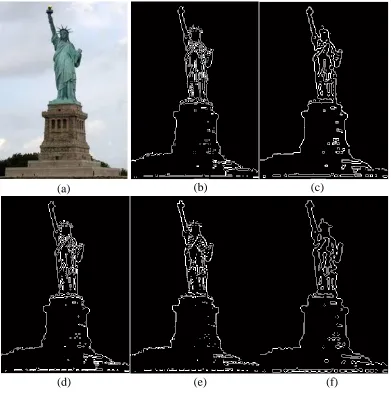
It is really essential to understand the differences between different edge detection
techniques, their advantages, disadvantages, and their special applications (Figure 1.6).
Typically, gradient-based algorithms such as Prewitt are sensitive to noise although they
might work faster than others. It is reported in [Juneja and Sandhu, 2009] that under
noisy conditions, Canny, Robert, and Sobel represent better performance respectively.
The other factor, which is important, is the quality of output images, which under these
methods. Canny algorithm depends heavily on adjustable factors such as standard
deviation for the Gaussian filter and threshold values. Although Canny method is
computationally more expensive comparing to the others, it performs accurate edge
detection on images [Miani and Aggarwal, 2009; Juneja and Sandhu, 2009; Nadernejad et
Figure 1.6: Comparison of different edge detection techniques; (a) original sample image, adapted from [http://en.wikipedia.org/wiki/Statue_of_Liberty], (b) Prewitt, (c) Canny, (d) Sobel, (e) Roberts, and (f) LOG methods.
(b)
(d)
(c) (a)
1.5 Total Elbow Arthroplasty
Total Elbow Arthroplasty (TEA) involves replacement of the damaged elbow joint with
artificial components (implants) aiming at restoring elbow function and relieving pain in
the patient (Figure 1.7). Operatively, surgeons identify the native articulation axis and
remove diseased portions of the elbow and then prosthetic replacement is performed for
the humeral and ulnar sides. Implant stems are inserted into the medullary canals of the
corresponding bones and fixed by cement while surgeon ensures the flexion-extension
axis best matches the native articulation axis of the elbow [Brownhill, 2007]. The implant
configuration/alignment inside the bone canals affects the kinematics and load transfer of
the elbow after surgery. The crucial issue here is to replicate the same kinematics and
load transfer system as accurate as possible to avoid potential failure [Bauer and Schils,
Native flexion-extension axis
Capitellum Medial
edpicondyle
Radial head
Lateral edpicondyle
Trochlea sulcus
sulcus
Humeral stem
Implant flexion-extension axis
(a) (b)
Figure 1.7: (a) Anatomical features of the native elbow joint, and (b) elbow joint after total elbow arthroplasty with prosthetic components.
1.5.1 Surgical Techniques
Following joint exposure, component sizing is performed by comparing humeral spool
size with articulation of the distal humerus from medial to lateral since the width of the
component is more important than spool diameter. The size of the spool determines the
size of the humeral, ulnar, and radial head components [Marsh and King, 2013; Gramstad
et al., 2005]. The flexion-extension axis is then determined by a line from the center of
the capitellum to the anterior-inferior aspect of the medial epicondyle. The humeral
implant is then inserted into the canal and the ulnar component is implanted into the ulnar
medullary canal. When trial components are in place and linked together to form the trial
elbow joint, the elbow is placed through a range of motion and tested for stability [Marsh
and King, 2013; Gramstad et al., 2005]. The spool is fixed to the humeral stem first by a
screwdriver and the radial head is snapped onto the stem.
1.5.2 Implant Types
Implants used in total elbow arthroplasty can be divided into two general categories;
linked (coupled) and unlinked implants. The distinction between these two groups is the
way humeral and ulnar implants are linked [Little et al., 2005; Sanchez-Sotelo, 2011].
For linked implants, humeral and ulnar components are connected via a physical linking
(i.e. screw) to avoid further dislocation between them. Linked implants can also be
divided into two groups; fixed hinge/constrained implants that are early generations of
linked implants and sloppy hinge implants that are current type of linked implants. Since
the main kinematic characteristic of the elbow is the flexion-extension movement, early
designs for linked implants were considered to contain a simple fixed hinge joint as
such design are transmitting higher stresses to implant/cement and cement/bone
interfaces and also high rate of failure in total elbow arthroplasty [Little et al., 2005;
Sanchez-Sotelo, 2011]. As reported in [Little et al., 2005], the overall functionality of
fixed hinge implants is lower than sloppy hinge or unlinked implants with higher
loosening rate of 11% and lower successful results of 73%. The majority of loosening
comes from the humeral stem rather than the ulnar component, which might be increased
to 25%, due to high amount of forced transferred to the joint [Morrey and Bryan, 1982].
Therefore, current linked implants are semi-constrained implants with sloppy hinge of
linking mechanism, which allows internal-external rotational laxity and varus-valgus play
of 50-100 degrees [Baksi, 1998; Hastings, 2004; Lee et al., 2005; Little et al., 2005].
Since rotational and varus-valgus forces in a native elbow joint are dispersed through
surrounding soft tissue and not the articulation mechanism, sloppy hinge implants are
designed to replicate this semi-constrained native kinematics of the elbow and to reduce
the amount of forces being applied on joint articulation [Gramstad et al., 2005; Morrey
and Bryan, 1982; Little et al., 2005]. It is believed that semi-constrained implants lead to
a long-term fixation due to less transmission of stress to implant articulation interfaces
and also more and more advances in geometric and mechanical design [Sanchez-Sotelo,
2011]. Coonrad-Morrey, Discovery, GSB III, Norway, Pritchard Mark II, and Pritchard
Walker are common linked implants available for total elbow arthroplasty, among which
Coonrad-Morrey is the major one in this type of group and widely used in current TEA
[Sanchez-Sotelo, 2011; Prasad and Dent, 2008; Mansat et al., 2013; Gill and Morrey,
Unlike semi-constrained implants, unlinked/resurfacing implants (also termed
unconstrained implants) do not have a mechanical connection between the humeral and
ulnar components. The articulation consists of two curved surfaces that slide on each
other to replicate the elbow motion. The stability of unlinked implant is achieved by
accurate positioning of each component, ligament integrity and muscle stability
[Sanchez-Sotelo, 2011]. Theoretically, unlinked implants lead to a lower loosening rate
comparing to linked implants due to lower implant/cement and cement/bone interfaces
stresses [Kamineni et al., 2005]. As a contradiction to unlinked implants, extensive loss
of bone for implant preparation and ligamentous support can be a source of instability for
this type of implant. Capitellocondylar, iBP, Kudo, Norway, Pritchard II, Sorbie and
Souter-Strathclyde are current options for unlinked implants to be used in total elbow
arthroplasties among which Kudo, Sorbrie and Souter-Strathclyde are the more common
from other options [Sanchez-Sotelo, 2011; An, 2005; Kamineni et al., 2005].
The new generation of implants are termed convertible implants due to the fact
that these new types of implants can be both linked and unlinked implants depending on
the intra-operative decision of surgeon in terms of stability for TEA. Comparing to
existing linked and unlinked implants, convertible implants include a better bearing
surface design and a geometrical design with the focus on anatomic reconstruction. The
Latitude is the major available option for these convertible implants [Sanchez-Sotelo,
2011; Gramstad et al., 2005].
1.5.3 Complications
Despite of the advancements in implant designs and surgical techniques, the rate of
while some studies show a high rate of 45% [Gschwend et al., 1996]. Studies on
complications after TEA vary in terms of number of patients, number of months followed
after surgery, indication of TEA, age of patients, year of surgery and patients referral to
the same hospital for revision surgery and as a result a wide range of complication rate is
reported in different studies [Voloshin et al., 2011; Gschwend et al., 1996; Seitz et al.,
2010; Wright et al., 2000; Morrey and Bryan, 1982; Mansat et al., 2013]. However,
common complications are aseptic loosening, deep infection, ulnar nerve lesions, bushing
wear/failure, implant fracture, dislocation and intra-operative fractures. As previously
indicated, these can be attributed to varied extents to implant alignment in bone.
Aseptic loosening is the most prominent complication occurring mostly about
humeral component due to insufficient bone stock, ligament instability, improper cement
fixation and failure of bone/cement interface [Voloshin et al., 2011; Gschwend et al.,
1996]. Unlike semi-constrained implants, unlinked prostheses lead to less aseptic
loosening due to reductions in stress at the cement-bone interface.
Several studies investigated the intrinsic constraints and attributes of various types
of implants utilized in total elbow arthroplasty through cadaveric studies [An, 2005;
Kamineni and Morrey, 2008; Brownhill, 2007].These studies can help surgeons to decide
which implant types better replicate the kinematics of the elbow, despite of various
geometric designs and in vitro biomechanical behavior of implants.
1.6
Component Alignment and Collision Detection
The final position of humeral implant in the humeral canal during TEA determines the
the optimal insertion path of the implant into the intramedullary convoluted canal with no
collision is the challenging step in implantation. Determination of the optimal insertion
trajectory is a part of classical peg-in-hole path planning problem, in which the primary
goal is to determine a collision-free trajectory of a moving object (peg) from an outside
position to the final inside position within confined spaces (hole). This is where
calculation of collision detection is relevant. This is a fundamental problem in
Computer-Aided Design and Machining (CAD/CAM), robotics, automation,
manufacturing, computer graphics, animation and computer simulated environments. The
major goal of collision detection is to identify a geometric contact when collision is about
to occur [Lin and Gottschalk, 1998]. As an example, in robotics, motion planning of
robots depends highly on collision detection technique aiming at maneuvering the robot
away from obstacles. Generally speaking, determination of a collision-free trajectory
involves identification within the pool of instantaneously possible object position and
orientations (i.e. poses or postures) of those who are characterized by a non-overlapping
status with neighboring objects.
Typically, various model representations define collision detection algorithms,
however the desired query types and simulation environments are essential parameters.
There are many model representations in CAD/CAM, while polygonal models,
constructive solid geometry, implicit surfaces and parametric surfaces are important ones.
Most of earlier studies in collision detection focused on algorithms for convex polytopes
[Dobkin and Kirkpatrick, 1990; Gilbert et al., 1988; Seidel, 1990; Lin and Gottschalk,
Gottschalk et al. introduced RAPID algorithm in which collision detection was
based on oriented bounding boxes. K-DOPs method was introduced by Klosowski et al.
which used discrete orientation polytopes for approximating bounded geometry. In the
context of non-polygonal models, there are several attempts for computing the
intersection of surfaces represented as splines or algebraic surfaces [Krishnan and
Manocha, 1997]. We can divide non-polygonal models into three groups; 1) Constructive
Solid Geometry (CSG) models, (2) Parametric surfaces and (3) Implicit surfaces. In CGS
models, efficient and accurate computation of the boundary is a challenging area.
S-bounds were introduced by Cameron to speed up the intersection testing by one or two
orders of magnitude on CSG systems, using limited sample points [Cameron and Culley,
1986]. In the Duff approach [Duff, 1992] interval arithmetic was used to evaluate implicit
function in box-like regions which is in fact extended version of classical point
classification scheme. By using this technique, he could determine whether regions lie
inside or outside or lay across the boundaries.
Four techniques are common algorithms for collision detection in parametric
surfaces: subdivision methods, analytic methods, lattice methods and tracing methods.
Subdivision methods subdivide the domain of two surface patches in tandem and then
inspect the relationship between these patch subsections [Snyder et al., 1993]. Lattice
methods try to find specific points on the preimage curve of the intersection curve of two
surfaces in the domain of both surfaces. In this method, many isoparametric curves are
defined to criss-cross the surface like a lattice-work [Prasad and Dent, 2008]. Tracing
methods start from a given point on the intersection curve of two surfaces and then try to
methods, the parametric representation of the curve is substituted for the implicit function
to end up with a scalar function in terms of parametric variables. The locus of roots of
this scalar function maps out the preimage intersection curve of two surfaces [Manocha
and Canny, 1991]. To accomplish collision detection for implicit surfaces, [Pentland and
Williams, 1989] used point samples and implicit functions to represent the shape of the
intersection curve.
1.7 Thesis Rationale
1.7.1 Motivation
Implant alignment is a critical factor in replicating native kinematics of the elbow and
durability of the artificial components. In order to better position the implant into
medullary canals of the elbow bones, both anatomical understanding of the bones and
biomechanical properties should be considered [Schunid et al., 1995; Figgie et al., 1986].
Brownhill and colleagues [Brownhill et al., 2012a] studied the anatomical perspective of
the distal humerus and derived geometric features of the distal humeral canal, to better
investigate implant positioning. It was shown that the anteriorposterior curvature of
medullary canal of the distal humerus along with FE axis anterior offset from axis of this
canal play an important role in the design and implantation of distal humerus implants
[Brownhill et al., 2012b].
Collision detection can have broad applications in medical area and so many
studies were conducted in this area. In a study by Tutunea-Fatan et al. [Tutunea-Fatan et
al., 2010], collision detection was utilized to assess the insertability of the stem in the
accomplish the insertion. As another application, collision detection was used in virtual
surgery simulators in [Lombardo et al., 1999] to train surgeons on virtual patients.
Nowadays, since non-invasive surgeries contain a majority of surgeries, practicing with
various tools during surgery is essential in which surgical simulators can be a great help.
Successful clinical outcome of surgical joint arthroplasty is decisively influenced
by the pre-operative planning procedures aiming to establish an optimized implant
insertion trajectory into the bone cavity. Since computation of the insertion path of a
body into a cavity represents a traditional instance of a path planning problem often
encountered in robotics field, the proposed research is expected to reinforce the
importance of engineering approaches in the context of Computer-Aided Orthopaedic
Surgery (CAOS). The use of collision detection algorithms – involving advanced
geometric representations and/or computations will enable the determination of optimal
implant insertion trajectory with significant implications with respect to preoperative
prediction of implant alignment and optimal implant design.
1.7.2 Objectives and Hypothesis
The main objective of the proposed research is to develop a library of numerical
algorithms that will constitute the core of a computationally-intensive geometry
visualization module capable of achieving accurate predictions related to implant
insertability into the bone’s endosteal canal as defined by patient-specific CT scans.
The methods to be developed within the scope of the proposed research will
permit the replacement of error-prone implant insertion decisions made preoperatively by
least diminish the need for unreliable and undesirable trial and error validation
procedures. Over the long term, it is expected that the knowledge generated through this
study will be incorporated into a complex virtual total arthroplasty training simulator that
will integrate these geometry-based modules with elements of haptic feedback.
The central hypothesis of the proposed research is that by analyzing
preoperatively the implant and medullary canal geometries involved in total elbow
arthroplasty, an accurate prediction can be made with respect to their relative fit. To
address this hypothesis, the objectives are:
1) To develop a computer-aided method capable to reconstruct with minimal user
intervention accurate parametric-based representations of the bone geometry starting
from computer tomography (CT) data;
2) To assess the insertability of particular implant geometry in the context of a
specific humeral specimen by means of numerical techniques; and
3) To use the developed numerical algorithms as validation tools for new implant
stem geometries.
1.7.3 Contributions
The major contributions emerging from this thesis are related to the development
of several numerical techniques of performing aforementioned tasks. Indeed, the
developed techniques within the scope of this study were aimed to automatically
optimal insertion trajectory pre-operatively to serve surgeons have an efficient plan for
intra-operative surgery.
This work is one of the first attempts in the context of implant insertion into the
cavity of bone with minimum malalignment benefiting from a computer-assisted
technique. As such, by utilizing the developed technique surgeons can assess insertability
of different implant sizes while investigating malalignment between native FE axis and
bone implant axis to achieve optimal final position for implant and consequently better
final outcome of TEA.
1.7.4 Outline
Chapter 2 outlines a numerical algorithm developed initially for a highly accurate and
automatic conversion of source CT data into parametric (B-Spline/NURBS-based) data.
The automatic DICOM to B-Spline conversion entails determination of an appropriate
thresholding method, to be followed by an edge detection procedure required to establish
inner and outer cortical bone boundaries.
Chapter 3 contains a numerical algorithm to determine the theoretical/ideal
location of the flexion-extension (FE) axis of the humeral bone based on reconstructed
geometry of the bone. The output of this algorithm was compared and validated against
conventional FE axis determination methods employing marching cube approaches
followed by least square fitting methods through extracted VTK data points.
Chapter 4 is focused on the final posture of the implant to match the natural FE
axis of the bone, provided that this constitutes a feasible solution for analyzed bone canal
initial) in order to reduce the amount of computational time required to detect
inaccessible final implant orientations located – most likely – towards the end of the
insertion trajectory.
Chapter 5 explores new geometry for stems by benefiting from the previously
developed computational tool in conjunction with various implant stem geometries and a
broad variety of humeral bones in an optimization process.
Chapter 6 provides the conclusion of the thesis.
1.8 References
Ali, A., Shahane, Sh., and Stanley, D. (2010) Total elbow arthroplasty for distal humeral fractures: Indications, surgical approach, technical tips, and outcome.
J.Shoulder.Elbow.Surg. 19, 53-58.
Amis, A.A. (2012) Biomechanics of the elbow. In: Stanley D, Trail I, editors.Operative elbow surgery. Edinburgh: Churchill Livingstone Elsevier. 29-44.
Amis, A.A., Hughes, S. J., Miller, J. H., and Wright,V. (1982) A functional study of rheumatoid elbow. Rheumatology and Rehabilitation, 21, 151-157.
An, K.N. (2005) Kinematics and constraint of total elbow arthroplasty.
J.Shoulder.Elbow.Surg. 14[1 Suppl S], 168S-173S.
Antuna, S.A., Laakso, R.B., Barrera, J.L., Espiga, X., and Ferreres, A. (2012) Linked total elbow arthroplasty as treatment of distal humerus fractures. Acta Orthop. Belg.78, 465-472.
Athwal, G.S., Chin, P.Y., Adams, R.A., and Morrey, B.F. (2005) Coonrad-Morrey total elbow arthroplasty for tumours of the distal humerus and elbow. J. Bone Joint Surg. Br.87[10], 1369-1374.
Baksi, D.P. (1998) Sloppy hinge prosthetic elbow replacement for post-traumatic ankylosis or instability. J.Bone Joint Surg.Br. 80[4], 614-619.
Bauer, T.W. and Schils, J. (1999) The pathology of total joint arthroplasty.II. Mechanisms of implant failure. Skeletal Radiol. 28[9], 483-497.
Bernardino, S. (2010) Total elbow arthroplasty: history, current concepts, and future. Clin Rheumatol ,29,1217–1221.
Boone, D.C. and Azen, S.P. (1979) Normal range of motion of joints in male subjects.
J.Bone Joint Surg.Am. 61 [5], 756-759.
Brownhill, J.R. (2007) The Development of Computer-Assisted Techniques for Total Elbow Arthroplasty. PhD The University of Western Ontario.
Brownhill, J.R., King, G.J., and Johnson, J. A. (2007) Morphologic analysis of the distal humerus with special interest in elbow implant sizing and alignment.
J.Shoulder.Elbow.Surg. 16[3 Suppl], S126-S132.
Brownhill, J.R., McDonald, C.P., Ferreira, L.M., Pollock, J.W., Johnson, J. A., and King, G.J. (2012a) Kinematics and laxity of a linked total elbow arthroplasty following computer navigated implant positioning. Computer Aided Surgery, 17[5], 249– 258.
Cameron S., and Culley, R. K. (1986) Determining the minimum translational distance between two convex polyhedra. Proceedings of International Conference on Robotics and Automation, 591-596.
Canny, J. (1986) A computational approach to edge detection. IEEE Transactions on pattern analysis and machine intelligence, 8[6], 679-698.
Cesar, M., Roussanne, Y., Bonnel, F., and Canovas, F. (2007) GSB III total elbow replacement in rheumatoid arthritis. J.Bone Joint Surg.Br. 89[3], 330-334.
Celli, A., Morrey, B.F. (2009) Total elbow arthroplasty in patients forty years of age or less. The Journal of Bone and Joint Surgery,91, 1414-1418.
Chan, R.K.W.,and King, G.J. (2012) The management of the failed total elbow arthoplasty. In: Stanley D, Trail I, editors. Operative elbow surgery; Elsevier,
665-694.
Choo, A., and Ramsey, M.L. (2013) Total elbow arthroplasty; Current options. J Am Acad Orthop Surg. 21, 427-437.
Cobb, T.K., Morrey, B.F. (1997) Total elbow arthroplasty as primary treatment for distal humeral fractures in elderly patients. The Journal of Bone and Joint Surgery, 826-832.
Deland, J.T., Garg, A., and Walker, P.S. (1987) Biomechanical basis for elbow hinge distractor design. Clin. Orthop.Relat Res. [215], 303-312.
Dobkin, D. P., and Kirkpatrick, D. G. (1990) Determining the separation of preprocessed polyhedral. Lecture Notes Comput. Sci., 443,400-413.
Duck, T.R., Dunning, C.E., Armstrong, A.D., Johnson, J.A., and King, G.J. (2003) Application of screw displacement axes to quantify elbow instability.
Clin.Biomech. (Bristol, Avon.) 18[4], 303-310.
Duff, T. (1992) Interval arithmetic and recursive subdivision for implicit functions and constructive solid geometry. ACM Computer Graphics, 26(2),131-139.
Ericson, A., Arndt, A., Stark, A., Wretenberg, P., and Lundberg, A. (2003) Variation in the position and orientation of the elbow flexion axis. J.Bone Joint Surg.Br. 85[4], 538-544.
Ferlic, D.C., and Clayton, M.L. (1995) Salvage of failed total elbow arthroplasty. J ShoulderElbow Surg, 4, 290-297.
Fevang, B.S., Lie, S.A., Havelin, L.I., Skredderstune, A., Furnes, O. (2009) Results after 562 total elbow replacements: A report from the Norwegian Arthroplasty
Register. J ShoulderElbow Surg, 18, 449-456.
Figgie, H.E., Inglis, A.E., and Mow, C. (1986) A critical analysis of alignment factors affecting functional outcome in total elbow arthroplasty. J Arthroplasty, 1, 169-173.