Abstract
LEE, SANGYUM. Investigation of the Effects of Lime on the Performance of HMA using Advanced Testing and Modeling Techniques. (Under the direction of Dr. Y. Richard Kim.)
Investigation of the Effects of Lime on the Performance of HMA
using Advanced Testing and Modeling Techniques
by Sangyum Lee
A dissertation submitted to the Graduate Faculty of North Carolina State University
in partial fulfillment of the requirements for the degree of
Doctor of Philosophy
Civil Engineering
Raleigh, North Carolina
2007
APPROVED BY:
___________________________________ Dr. Y. Richard Kim
Chair of Advisory Committee
___________________________________ Dr. Roy H. Borden
Co-Chair of Advisory Committee
___________________________________ Dr. Murthy N. Guddati
Dedication
iii
Biography
Acknowledgments
I would like to start by thanking my committee for their time and effort. In particular, I am so grateful that I have Professor Y. Richard Kim as my advisor, and I cannot begin to thank him enough. He is truly a great mentor not only in research but also in everyday life. I would like to thank him for his direction, guidance, time, and endless patience. His efforts and help have meant a tremendous amount to me.
Also I would like to appreciate my committee cochair, Dr. Borden for his unfailing support and guidance during my doctoral program. The members of my dissertation committee, Dr. Guddati, and Dr. Weems, have generously given their time and expertise to better my work. I thank them for their contribution and their good natured support.
There are so many people who helped to make life as a graduate student easier, but I would like to mention a few. To Dr. Jusang Lee: thank you for your ceaseless support and guidance. Shane Underwood: thank you. Without your help, I could not have done much of my research. Also I would like to express my deep gratitude to my fellow members: Jaejun, Taeyoung, Andrew, Fadi, Ardalan, Naresh, Dr. Joon, Dr. Moon, and Dr. Young.
I would like to acknowledge the financial support from The Chemical Lime Company, Southern Transportation Center and, in particular, the assistance of Cheol Min Baek.
Table of Contents
List of Tables ...x
List of Figures...xii
Chapter 1 Introduction ...1
1.1 General Statement ...1
1.1.1 Current status of Superpave volumetric mix design...1
1.1.2 Benefits of lime ...3
1.2 Research Objectives and Approaches...5
Chapter 2 Literature Review ...8
2.1 Adhesion ...8
2.1.1 Physical bonds ...8
2.1.1.1 Ionic bonds...8
2.1.1.2 Electrodynamic interactions through the Van der Waals force...9
2.1.2 Chemical bonds ... 10
2.1.2.1 Interactions through electron pair sharing...10
2.1.2.2 Interactions through contributions of electrons from both entities...10
2.1.2.3 Donor-acceptor interactions...10
2.2 Adhesion in Asphalt Concrete ...11
2.2.1 Chemical composition of the asphalt binder ...11
2.2.2 Influence of aggregate characteristics on adhesion ...15
2.2.3 Mineral fillers ...17
2.3 Physical and Chemical Properties of Lime ... 19
2.3.1 Definition of hydrated lime ...19
2.3.2 Physical properties of hydrated lime ... 20
2.3.3 Chemical properties of hydrated lime ... 21
2.4 Benefits of Lime in Asphalt Concrete ...22
2.4.1 Mechanisms of the lime-asphalt interaction...22
2.4.2 Moisture damage ...24
2.4.2.1 Moisture damage due to physico-chemical properties... 24
2.4.2.2 Moisture damage with environmental characteristics (heat, heavy rains, freeze/thaw cycles, and traffic)...26
2.4.3 Rutting...28
2.4.4 Cracking from fatigue and low temperatures ...29
2.4.4.1 Types and causes of cracking...29
2.4.4.2 Fatigue cracking (load-associated)...30
vii
2.4.4.4 Reflection cracking...31
2.4.4.5 Oxidation and aging that cause brittle pavement...32
2.5 Methods of Introducing Hydrated Lime into Mixes ...33
2.5.1 Addition of dry hydrated lime to dry aggregate ...33
2.5.2 Addition of dry hydrated lime to wet aggregate...35
2.5.3 Addition of hydrated lime in the form of slurry...35
2.6 Asphalt Concrete Mix Design...38
2.6.1 Historical methods ...39
2.6.1.1 Marshall mix design...39
2.6.1.2 Hveem mix design...39
2.6.2 Superpave volumetric mix design ...40
2.6.3 Performance-related mix design...42
Chapter 3 Theoretical Background ...43
3.1 Linear Viscoelasticity ...44
3.2 Viscoelastic Continuum Damage ...47
3.2.1 Correspondence principle...47
3.2.2 Viscoelastic continuum damage ...49
3.3 VECD-FEP++ Analysis for Pavements...54
3.3.1 Introduction ...54
3.3.2 Constitutive model...55
3.3.3 Damage model... 57
3.3.4 Finite element implementation ...58
Chapter 4 Experimental Program ...61
4.1 Materials ...62
4.2 Sample Preparation... 63
4.2.1 Specimen fabrication for performance tests...63
4.2.2 Target air voids ... 63
4.3 Testing Setup and Program...64
4.3.1 Testing systems... 64
4.3.2 Testing program... 67
4.3.2.1 Dynamic modulus testing...67
4.3.2.2 TRLPD tests... 72
4.3.2.3 Constant crosshead rate tension tests...76
4.3.2.4 VECD-FEP++ for fatigue damage simulation...77
Chapter 5 Determining the Effects of Hydrated Lime on the Dynamic Modulus of Typical North Carolina Mixtures ...80
5.1 Introduction...80
5.2 Experimental Design ... 81
5.2.1 Mixture selection ...81
5.2.2 Mix designs with hydrated lime ...85
5.2.3 Dynamic modulus tests ...87
5.4 Statistical Analysis ... 95
5.5 Summary and Conclusions ...97
Chapter 6 Effects of the Lime Introduction Method on the Performance of the Mixtures ...98
6.1 Introduction...98
6.2 Experimental Design ... 99
6.3 Performance Tests and Analysis of Results... 102
6.3.1 Dynamic modulus tests and statistical analysis... 104
6.3.2 TRLPD test results... 108
6.3.3 Constant crosshead rate monotonic results ... 112
6.4 VECD-FEP++ Simulation Results ... 116
6.5 Summary and Conclusions ... 124
Chapter 7 Evaluation of the Effects of Hydrated Lime on Moisture Damage...125
7.1 Introduction... 125
7.2 Experimental Program ... 127
7.2.1 Sample preparation ... 127
7.2.2 Moisture conditioning process ... 128
7.3 Results of Performance Tests and Statistical Analysis... 130
7.3.1 Dynamic modulus test... 130
7.3.2 TRLPD test results... 137
7.3.3 Constant monotonic crosshead strain rate tests and analysis ... 142
7.3.4 VECD-FEP++ simulation results ... 145
7.4 Summary and Conclusions ... 151
Chapter 8 Performance-based Evaluation of Lime-modified Hot Mix Asphalt Mixtures ...153
8.1 Introduction... 153
8.2 Experimental Program ... 154
8.3 Results of Performance Tests and Statistical Analysis... 154
8.3.1 Dynamic modulus test results... 154
8.3.2 TRLPD test Results and Statistical Analysis ... 160
8.3.3 Constant Crosshead Rate Monotonic Test Results... 170
8.4 VECD-FEP++ Simulation Results ... 175
8.5 Determining optimum asphalt content based on performance... 185
8.5.1 Rutting performance indicator... 190
8.5.2 Fatigue performance indicator... 193
8.5.3 Optimal asphalt content based on performance tests... 196
8.6 Summary and Conclusions ... 201
Chapter 9 Verification Test with Field-Produced Mixture ...203
9.1 Field Construction ... 203
9.2 Field Conditions of the Production Process... 205
ix
9.4 Asphalt Pavement Analyzer (APA) Rut Test and Results... 210
9.5 Summary and Conclusions ... 213
Chapter 10 Conclusions and Recommendations...214
List of Tables
Table 2.1 Lime Addition Techniques...37
Table 3.1 Fundamental Elements of the Work Potential Theory ...50
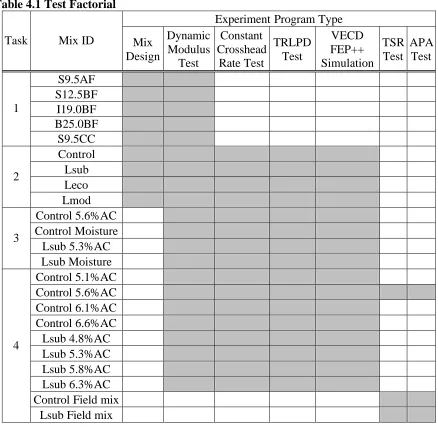
Table 4.1 Test Factorial...62
Table 4.2 General Controlled Crosshead Testing Matrix for VEPCD Characterization in Tension ...77
Table 5.1 Guidelines for Superpave Mixes in North Carolina ...82
Table 5.2 Aggregate Gradations of Selected Mixes for Dynamic Modulus Study ...83
Table 5.3 Specifications of Selected Mixes for Dynamic Modulus Study ...85
Table 5.4 Mix Design Results for Dynamic Modulus Study ...87
Table 5.5 Statistical Analysis of the Impact of Lime on the Dynamic Modulus...96
Table 6.1 Mix Design Results of the Lime Introduction Methods ... 101
Table 6.2 Gradation Information for the Lime Modification Methods... 102
Table 6.3 Statistical Analysis of the Effects of the Lime Introduction Method on the Dynamic Modulus ... 108
Table 6.4 Statistical Analysis of the Effects of the Lime Introduction Method on the Permanent Deformation Resistance ... 111
Table 6.5 Statistical Analysis of the Effects of the Lime Introduction Method on Fatigue Resistance ... 114
Table 6.6 Ranking of Various Lime Introduction Methods ... 123
Table 7.1 The Level of Saturation for the Moisture Conditioning Process ... 129
Table 7.2 Results of Statistical Analysis and Dynamic Modulus Ratio (DMR) with the Moisture Damage at Various Reduced Frequencies ... 134
Table 7.3 Statistical Analysis and Permanent Strain Ratio (PSR) with Moisture Damage at Various Numbers of Load Cycles ... 141
Table 7.4 Statistical Analysis and Damage Characteristic Ratio (DCR) with the Moisture Damage at Various Damage Levels ... 144
Table 8.1 Statistical Analysis of the Effect of Asphalt Content on the Permanent Deformation Resistance of the Lime-Modified Mixture... 165
Table 8.2 Statistical Analysis of the Effect of Asphalt Content on the Permanent Deformation Resistance of the Unmodified Mixture... 165
Table 8.3 Statistical Analysis of the Effects of Asphalt Content on the Resistance to Damage for the Lime-modified Mixture with Varying Asphalt Contents ... 174
Table 8.4 Statistical Analysis of the Effects of Asphalt Content on the Resistance to Damage for the Unmodified Mixture with Varying Asphalt Contents... 174
Table 8.5 Results of the Volumetric Properties of the Lsub Mixture... 200
Table 9.1 Field Gradation Information for Lime Modification Study ... 205
List of Figures
Figure 1.1 Schematic flow of the research approaches...7
Figur e 2.1 Molecular fragments of aliphatic carbon, aromatic carbon, and a combination of the two, respectively (Robertson 1991)...11
Figure 2.2 Pyridine and benzothiophene (Robertson 1991) ...11
Figure 2.3 Ketones (Robertson 1991) ...12
Figure 2.4 (a) Carboxylic acids; (b) sodium and calcium salts (Robertson 1991) ...12
Figure 2.5 Carboxylic anhydrides, typically called anhydrides (Robertson 1991)...13
Figure 2.6 (a) Phenols; (b) quinolones; and (c) sulfoxides (Robertson 1991) ...13
Figure 2.7 Porphyrins, metals in asphalts (Robertson 1991)...14
Figure 2.8 Classification of aggregates (Mertens et al. 1959)...16
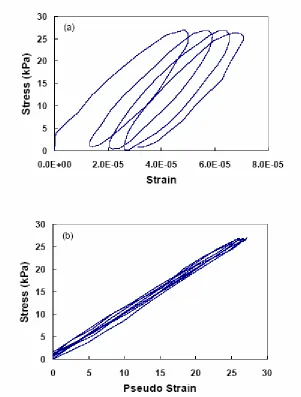
Figure 3.1 (a) Stress–strain behavior for mixtures under LVE cyclic loading; (b) stress-pseudo strain behavior for same data (Daniel 2001)...49
Figure 4.1 LVDT mounting and spacing for: (a) dynamic modulus test; (b) monotonic constant crosshead rate test; and (c) and (d) TRLPD test...66
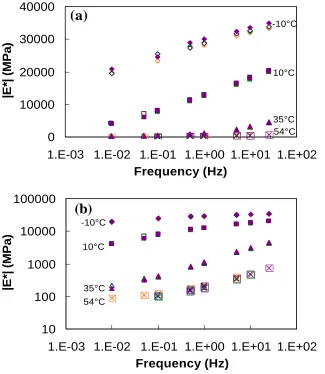
Figure 4.2 Typical unshifted dynamic modulus in: (a) semi-log space; and (b) log-log space ... 69
Figure 4.3 Typical dynamic modulus mastercurve in: (a) semi-log space; and (b) log-log space ...70
Figure 4.4 Log shift factor function for a typical mixture...70
Figure 4.5 Typical relationship between total cumulative plastic strain and number of load cycles: (a) plotting on arithmetic scale; (b) plotting on log-log scale with regression constants a, b...74
Figure 4.6 Structure of pavement used for the damage simulation ...78
Figure 5.1 Gradation chart for selected mixtures... 84
Figure 5.2 |E*| comparison between unmodified and lime-modified mixtures (S9.5AF) ... 89
Figure 5.3 |E*| comparison between unmodified and lime-modified mixtures (S12.5CF)...90
Figure 5.4 |E*| comparison between unmodified and lime-modified mixtures (I19.0BF) ...91
Figure 5.5 |E*| comparison between unmodified and lime-modified mixtures (B25.0BF) .... 92
Figure 5.6 |E*| comparison between unmodified and lime-modified mixtures (S9.5CC) ...93
Figure 5.7 Comparison of the |E*| of lime-modified and unmodified measured data in: (a) semi-log; and (b) log-log space...94
xiii Figure 6.1 Gradation chart for the lime-modified mixtures ... 100 Figure 6.2 Effects of the lime introduction method on the |E*| in: (a) semi-log and (b) log-log space ... 105 Figure 6.3 Effects of the lime introduction method on the phase angle... 106 Figure 6.4 Effects of the lime introduction method on the permanent strain accumulation in
TRLPD tests... 109 Figure 6.5 Damage characteristic relationships for Control, Lsub, Leco, and Lmod mixtures
... 112 Figure 6.6 Comparison of the Damage Contour Plots at Various Load Cycles for the
Different Lime Addition Methods... 117 Figure 6.7 Overall comparison of the fatigue performance based on: (a) % Crack area: and
(b) Average C... 120 Figure 6.8 Discrete comparison of fatigue performance based on (a) % Crack area and (b)
Average C at various cycle stages ... 122 Figure 7.1 Dynamic modulus mastercurves for the Control mixture with conditioning in: (a)
semi-log space; (b) log-log space; and (c) the phase angle ... 131 Figure 7.2 Dynamic modulus mastercurves for the Lsub mixture with conditioning in: (a)
semi-log space; (b) log-log space; and (c) the phase angle ... 132 Figure 7.3 Dynamic modulus ratio (DMR) as a function of reduced frequency... 136 Figure 7.4 Permanent strain results with and without moisture conditioning for: (a) Control
mixture; and (b) Lsub mixture in arithmetic scale ... 138 Figure 7.5 Permanent strain results with and without moisture conditioning for: (a) Control
mixture; and (b) Lsub mixture in log scale ... 139 Figure 7.6 Permanent strain ratio between conditioning and unconditioning for the Control
mixture and the Lsub mixture ... 141 Figure 7.7 Effect of the moisture damage on the damage characteristic curves for the (a)
Control mixture; and (b) Lsub mixture... 143 Figure 7.8 Comparison of the damage contour plots at various load cycles with and without
moisture damage ... 147 Figure 7.9 Discrete comparison of fatigue performance of the Control mixture with and
without moisture damage based on: (a) % Crack area; and (b) Average C at various cycle stages ... 149 Figure 7.10 Discrete comparison of fatigue performance of the Lsub mixture with and
without moisture damage based on: (a) % Crack area; and (b) Average C at various cycle stages ... 150 Figure 8.1 Effect of asphalt content: (a) |E*| in semi-log space; (b) |E*| in log-log space; (c)
phase angle (lime-modified mixture) ... 157 Figure 8.2 Effect of asphalt content: (a) |E*| in semi-log space; (b) |E*| in log-log space; (c)
phase angle (unmodified mixture)... 158 Figure 8.3 Comparison between Control and Lsub mixtures: (a) |E*| in semi-log space; (b)
|E*| in log-log space; (c) phase angle ... 159 Figure 8.4 Effect of asphalt content on permanent strain accumulation with the lime-modified
Figure 8.5 Effect of asphalt contents on permanent strain accumulation with the unmodified mixture: (a) arithmetic scale; (b) log-log scale ... 163 Figure 8.6 Effect of asphalt content on permanent strain accumulation in (a) arithmetic scale; (b) log-log scale... 168 Figure 8.7 The relative permanent strain ratio regarding the effect of lime on permanent
strain accumulation in (a) arithmetic scale; (b) log-log scale ... 169 Figure 8.8 Effect of asphalt content on the fatigue resistance of the lime-modified mixture in
(a) arithmetic scale; (b) semi-log scale at early stage of damage ... 172 Figure 8.9 Effect of asphalt content on the fatigue resistance of the unmodified mixture in (a) arithmetic scale; (b) semi-log scale at early stage of damage... 173 Figure 8.10 Comparison of the damage contour plots at various load cycles for the
lime-modified mixtures... 176 Figure 8.11 Comparison of the damage contour plots at various load cycles for the
unmodified mixtures... 177 Figure 8.12 Discrete comparison of fatigue performance of the lime-modified mixtures with
varying asphalt contents based on: (a) % Crack area; and (b) Average C at various cycle stages ... 178 Figure 8.13 Discrete comparison of fatigue performance of the unmodified mixtures with
varying asphalt contents based on: (a) % Crack area; and (b) Average C at various cycle stages ... 179 Figure 8.14 The overall trends of the % Crack area of mixtures with varying asphalt contents in semi-log scale for the (a) lime-modified mixture; (b) unmodified mixture ... 182 Figure 8.15 The changes in % Crack area at each cycle as a function of asphalt content: (a)
lime-modified mixture; (b) unmodified mixture... 184 Figure 8.16 Concept of the performance related mix design methodology in case of (c)
volumetric optimum above the optimum candidate range; and (d) no optimum candidate range ... 188 Figure 8.17 Relationship between the total cumulative plastic strain and the number of load
cycles using a regression line in log-log scale ... 191 Figure 8.18 Rutting indicator b as a function of asphalt content for: (a) lime-modified
mixture; and (b) unmodified mixture ... 192 Figure 8.19 Potential fatigue minimum criteria and rutting maximum criteria as a function of
asphalt content for (a) lime-modified mixture; and (b) unmodified mixture ... 195 Figure 8.20 Balanced optimal asphalt contents for (a) lime-modified mixture; and (b)
unmodified mixture ... 198
Figure 8.21 Volumetric propeties of the Lsub and Control mixture... 199 Figure 9.2 Loading frame used for measuring indirect tensile strength... 207 Figure 9.3 Comparison of loss in tensile strength values for lime-modified and unmodified
mixtures (TSR tests for NCSU Lab mix and Field mix were done by DOT and Field lab, respectively.) ... 208 Figure 9.4 Comparison of loss in tensile strength values for lime-modified and unmodified
mixtures (TSR tests for Field mixes were done by DOT and field Lab.)... 209 Figure 9.5 Comparison of loss in tensile strength values for lime-modified and unmodified
Chapter 1
Introduction
1.1
General Statement
1.1.1
Current status of Superpave volumetric mix design
2 Although performance information from full-scale test tracks such as WesTrack and MnRoad was used to define the relationships between material properties and pavement performance, results from other experimental construction projects and some accelerated tests questioned whether the Superpave volumetric mixture design procedure alone is sufficient for determining the acceptance or rejection of HMA mixtures under current traffic and climatic conditions. Without additional general strength tests to complement the volumetric mix design method, the more traditional Marshall and Hveem mixture design methods remain the only current means to assess HMA mixture performance. In addition, industry demands necessitate a simple performance-related test that can provide reliable performance data of the HMA mixture during the volumetric mixture design process using the Superpave Gyratory Compactor.
A Simple Performance Test (SPT) is defined as a test method that accurately and reliably measures a mixture response characteristic or parameter that is highly correlated to the occurrence of pavement distress (cracking and rutting) over a diverse range of traffic and climatic conditions. One of the requirements for a SPT is that it can measure a fundamental engineering property that can be linked to the advanced material characterization methods of the detailed distress prediction models, which include the permanent deformation model, the fatigue cracking model, and the thermal cracking model (Witczak et al. 2000).
design procedure.
1.1.2
Benefits of lime
Hydrated lime is acknowledged as a superior additive for asphalt concrete and has an extensive track record nationally. The beneficial nature of this material in asphalt concrete is related to both the particular chemistry of the system and the mechanical nature of fine particles in an asphalt binder matrix. Numerous studies over the years detail the benefits of hydrated lime as both (1) a filler and (2) as an agent to reduce moisture-induced stripping (Little et al. 2005, Petersen et al. 1987a, b, Plancher et al. 1976, Collins 1988, Sebaaly et al. 2003, Tunnicliff 1977, Welch et al. 1977).
First, the use of mineral filler (lime is an example) for improving the performance of asphalt concrete mixtures has been repeatedly demonstrated over the years (Little et al. 2005, Anderson 1973, Tayebali et al. 2000). With regard to fatigue performance, properly selected fillers, which have physico-chemical characteristics compatible with the asphalt binder and aggregate particles, act as bond-strengthening and crack-arresting agents (Little et al. 2005, Craus et al. 1978). Similarly, compatible mineral fillers aid in reducing permanent deformation by increasing the viscosity of the mastic, thus improving the plastic and viscoplastic characteristics of mixtures (Petersen et al. 1987b, Craus et al. 1978, Mohammad 2006). The observed benefits of hydrated lime range from very significant as active filler, to less significant but still useful filler, i.e., similar to more standard inert fillers such as baghouse fines (Little et al. 2005).
4 aggregate breaks down due to the presence of moisture. Certain types of aggregates are particularly susceptible to stripping. In addition to stripping as a chemical phenomenon, environmental characteristics, such as heat, heavy rains, freeze/thaw (F-T) cycles, and traffic, also play a major role in stripping. When lime is added to HMA, it reacts with the aggregates, strengthening the bond between the bitumen and the aggregate. At the same time that lime treats the aggregate, it also reacts with the asphalt itself. Lime reacts with highly polar molecules that can otherwise react in the mix to form water-soluble soaps that promote stripping. When those molecules react with lime, they form insoluble salts that no longer attract water (Petersen et al. 1987).
In addition, the dispersion of hydrated lime throughout the mix makes the mix stiffer and tougher, thereby reducing the possibility that the bond between the asphalt cement and the aggregate will be broken mechanically, even if there is no water effect.
The benefits of using hydrated lime in asphalt cements can be summarized as follows.
• Hydrated lime improves stiffness and, therefore, reduces rutting.
• Hydrated lime reduces cracking.
• Hydrated lime reduces oxidation and aging.
• Hydrated lime improves resistance to moisture sensitivity.
for lime addition is not an important factor at all (Collins 1988, Gardiner et al. 1987), whereas others clearly demonstrate that differences in material properties are evident when the lime addition method changes (Sebaaly et al. 2003, Button et al. 1983, Kennedy et al. 1983). The conflicting results from the literature indicate that further study is needed on this topic.
1.2
Research Objectives and Approaches
The primary objectives of this study are to investigate the effect of lime modification on the fundamental behavior of asphalt concrete mixtures and to examine ways in which the lime introduction procedure can further influence these behaviors using different volumetric mix designs. In addition, the effect of lime on moisture susceptibility is evaluated by comparing the fundamental behaviors of various asphalt mixtures.
Figure 1.1 Schematic flow of the research approaches
l Task IV: Investigation of the effects of lime on performance
• Performance testing with mix selected from Task II at various asphalt contents (%)
ü Dynamic modulus test
ü Monotonic constant crosshead rate test
ü TRLPD test
• Volumetric optimum, optimum ±0.5%, optimum +1%
• Statistical analysis (ANOVA, Bonferroni multiple pairwise comparison)
• VECD-FEP++ simulation
l Task III: Effects of lime modification on moisture sensitivity
• Performance testing with mix selected from Task II at the volumetric optimal asphalt content (%) after freeze/thaw (F-T) cycling
ü Dynamic modulus test
ü Monotonic constant crosshead rate test
ü TRLPD test
• Statistical analysis (t-test) • VECD-FEP++ simulation
l Task I: Evaluation of the effect of lime on optimal asphalt content (%)
• Superpave volumetric mix design of typical North Carolina mixtures • The effect of lime on the dynamic modulus (|E*|)
• Statistical analysis (t-test)
l Task II: Selection of the best lime addition method
• Superpave volumetric mix design of various lime-modified mixes • Performance testing at the volumetric optimal asphalt content (%)
ü Dynamic modulus test
ü Monotonic constant crosshead rate test
8
Chapter 2
Literature Review
The literature review includes the following topics: 1) Adhesion;
2) Adhesion in asphalt concrete;
3) Physical and chemical properties of lime; 4) Benefits of lime in asphalt concrete;
5) Methods of introducing hydrated lime into mixes; and 6) Asphalt concrete mix design.
2.1
Adhesion
2.1.1
Physical bonds
2.1.1.1Ionic bonds
In a discussion of chemical bonding, Companion (1979) states:
ion (cation) and negative ion (anion), as charged particles, attract each other whereby the ion pair gains classical electrostatic stabilization energy.
2.1.1.2Electrodynamic interactions through the Van der Waals force
The Van der Waals force is the sum of three interactions that include dipole-dipole interactions, dipole-induced dipole interactions, and induced dipole-induced dipole interactions (Butt et al., 2003).
a) Dipole-dipole interactions. A molecular dipole exists when an atom of high electronegativity at one end of the molecule draws electrons more to that end than the other, resulting in a partial separation of the charge. The magnitude of these virtual charges and the distance separating them characterize a dipole moment. When two dipoles interact, the oppositely charged ends of the dipoles attract, while the other ends naturally repel, which changes their relative spatial orientation.
b) Dipole-induced dipole interactions. In neutral atoms or symmetric molecules, with no dipole moment, the nuclei and electron clouds are attracted in opposite directions when exposed to an electrical field or dipole; i.e., polarization takes place.
10
2.1.2
Chemical bonds
2.1.2.1Interactions through electron pair sharing
Whereas interactions facilitated by weak electrical forces that result from oscillating charges are regarded as physical bonding, a union of two species through the sharing of an electron pair is often referred to as chemical bonding. Chemical interactions take place through the rearrangement of bonding electrons within the interacting entities in order to establish balanced electron distributions among them.
2.1.2.2Interactions through contributions of electrons from both entities
In this type of interaction, each atom contributes one of the shared electrons to form a new molecule. A bond formed in this way is called a covalent bond. A physical accumulation of electrons that occupy overlapping orbitals in the space between nuclei takes place.
2.1.2.3Donor-acceptor interactions
2.2
Adhesion in Asphalt Concrete
2.2.1
Chemical composition of the asphalt binder
An explanation of asphalt composition is helpful because the structure of asphalt molecules influences the bonding of the asphalt to the aggregate.
The chemical properties and composition of asphalt are summarized in a SHRP report by Robertson (1991). The proposed bitumen functional groups that influence bonding are shown in Figure 2.1 to Figure 2.7. Asphalt binder is composed of various hydrocarbon molecular fragments, such as aliphatic carbon, aromatic carbon, and a mixture of both aliphatic and aromatic carbon fragments.
Figure 2.1 Molecular fragments of aliphatic carbon, aromatic carbon, and a combination of the two, respectively (Robertson 1991)
Pyridine is a carbon molecular fragment containing heteroatom nitrogen, and sulfur is a benzothiophene.
12 Certain types of carbon in asphalt are susceptible to oxidation. An aliphatic carbon next to an aromatic ring is known as a benzyl carbon and is an example of a readily oxidizable site. Ketones are formed by the oxidation.
Figure 2.3 Ketones (Robertson 1991)
More severe oxidation can form carboxylic acids. Carboxylic acids, whether present in their original crude form or formed upon oxidation, can be converted to sodium (Na) salts or calcium (Ca) salts by appropriate reaction with sodium or calcium inorganic compounds.
Figure 2.4 (a) Carboxylic acids; (b) sodium and calcium salts (Robertson 1991)
Carboxylic acid anhydrides may be formed upon oxidation when two benzyl carbons are present on adjacent aromatic rings.
Benzyl carbon
(a)
Figure 2.5 Carboxylic anhydrides, typically called anhydrides (Robertson 1991)
Another type of oxygen-containing molecule that may be present in asphalt is a functional group known as phenols, where oxygen is attached directly to an aromatic ring. Another important class of compounds typically found in aged asphalts is quinolones. Many sulfur compounds are also susceptible to oxidation and typically form sulfoxides.
Figure 2.6 (a) Phenols; (b) quinolones; and (c) sulfoxides (Robertson 1991)
Metals are also present in asphalts, again in varying amounts and distributions. The most common metals are vanadium, nickel, and iron, although other metals may also be present. Typically, metals are present as organo-metallic materials, specifically as porphyrins, as shown in Figure 2.7.
14
Figure 2.7 Porphyrins, metals in asphalts (Robertson 1991)
2.2.2
Influence of aggregate characteristics on adhesion
Roberts et al. (1991) state:
Aggregates typically provide a heterogeneous surface onto which specific bitumen chemical functionalities preferentially adsorb by interacting with aggregate adsorption sites. The forces of interfacial interaction depend on the type and surface activities of the aggregate, which themselves depend on the nature of minerals and metallic ions present. Common minerals in aggregates include silica, feldspars, ferromagnesian, limestone and clay minerals.
Petersen et al. (1998) explain that silica mineral (SiO2), abundant in quartz, constitutes
the bulk of quartzites and granites. Silica is important due to its natural abundance of siliceous surfaces in most aggregates used in practice. Active sites on these surfaces range from surface hydroxyl groups of varying acidities to hydrogen bonding sites of high acidity. Also, Jones et al. (2004) note that feldspar minerals have mobile species within their crystal structures. Limestone is comprised mainly of CaCO3 which, after crushing, exposes calcium
16 surface. Yoon et al. (1988) report that some of the aggregate physical properties that influence moisture damage include surface roughness, porosity, shape, friability and the presence and nature of adsorbed coatings. Good bonding is promoted by rough-textured aggregate surfaces. A general, and traditional, classification of aggregates based on surface charge is presented in Figure 2.8.
2.2.3
Mineral fillers
Mineral fillers have traditionally been used in asphalt mixtures to fill the voids between the larger aggregate particles. Generally, the aggregate material passing the No.200 sieve is referred to as filler. In ASTM D242, mineral filler is defined as consisting of finely divided mineral matter, such as rock dust, slag dust, hydrated lime, hydraulic binder, fly ash, loess, or other suitable mineral matter. Other materials, such as carbon black and sulfur, have been used primarily to modify asphalt binder properties, but they do have a role as filler, also. Typically, an increase in filler lowers the optimal asphalt content, increases the density, and increases the stability (Brown et al. 1989).
Tunnicliff (1967) and Puzinauskas define mineral fillers as the portion of the mineral aggregate generally passing the No. 200 sieve and occupying void spaces between the coarser aggregate particles in order to reduce the size of these voids and provide contact points between larger aggregate particles, thereby strengthening the mixture. Further, when mixed with the asphalt, mineral fillers form a high consistency binder or matrix of colloidal suspension in the asphalt binder and become mastic with a stiffer consistency to hold larger aggregate particles together.
Fillers may be used to:
• fill voids and, hence, reduce the optimum asphalt content;
• meet specifications for aggregate gradation;
• increase stability; and
18 Mineral fillers have been used primarily to fill in the voids between the aggregate particles and to meet specified gradations for HMA. However, it has been documented extensively in the literature that mineral fillers such as baghouse fines do affect the behavior of asphalt binders and HMA mixtures (Kandhal 1981, Anderson 1987). Mineral fillers cause a general stiffening or reinforcing effect in HMA mixtures. However, the extent of the stiffening effect is generally dependent upon the Rigden void content (i.e., voids between the fine particles in a dry compacted state) which, in turn, is affected by mineralogic type, size distribution, particle shape, and surface texture of the mineral fillers (Kandhal 1981). Some baghouse fines, primarily those containing clay, can increase the potential for stripping in HMA mixtures.
size when evaluating whether an excessive amount of fine material is present in a mix that is being designed or controlled in the field (Roberts et al. 1996).
Some specifications place limits on the dust-to-asphalt cement ratio. A typical specification requires the dust-to-asphalt cement ratio to be between 0.6 and 1.2 by weight. An ideal specification should require that such a ratio based on volume should take into account the Rigden voids (which generally control the stiffening effect). However, stiffer consistency mastic may create brittle mixtures that lead to adverse effects such as cracks in pavements under low temperature conditions. However, based on the study of Chen (1998), the asphalt-mineral filler mastics show an increased tensile strength and tensile failure strain with the addition of mineral fillers; these findings are valid for limited mastic systems, and the moisture effects were not considered. Nonetheless, the effects of active filler, through its chemical interaction with an asphalt-aggregate system, can compensate for the adverse effects of inert filler.
2.3
Physical and Chemical Properties of Lime
2.3.1
Definition of hydrated lime
Quicklime (CaO) is produced by calcining high quality limestone at a temperature (1315°C) that is long and high enough to dissociate the carbonates, thus volatizing the carbon dioxide (CO2) by half the weight of the limestone. Hydrated lime (Ca(OH)2) is a dry powder
20 magnesium carbonate in the limestone), which is less reactive with soil than high calcium lime (0% to 5% of magnesium carbonate in the limestone).
The following chemical diagrams explain the reaction of high calcium and dolomitic quicklime:
Limestone + Heat ? High Calcium Quicklime + Carbon Dioxide CaCO3 + (~1315°C) ? CaO + CO2
Dolomitic Limestone + Heat ? Dolomitic Quicklime + Carbon Dioxide CaCO3·MgCO3+ (~1315°C) ? CaO·MgO + CO2
The hydration process that transforms quicklime to hydrated lime is as follows: High Calcium Quicklime + Water ? Calcium Hydroxide + Heat
CaO + H2O ? Ca(OH)2 + Heat
Dolomitic Quicklime + Water ? Hydrated Lime + Heat
CaO·MgO + H2O ? Ca(OH)2·MgO or Ca(OH)2·Mg(OH)2 + Heat
2.3.2
Physical properties of hydrated lime
The substantial physical properties of lime for soil stabilization, as discussed by Boynton (1979), are specific gravity, bulk density, particle size, heat of hydration and solubility of hydrated lime.
The range of specific gravities and bulk-specific gravities for different hydrates are 2.3 to 2.9 and 400 to 640 kg/m3, respectively. The molecular weight of CaO and Ca(OH)2 are
56.08 and 74.10, respectively, due to the extra H2O molecule attached. The equal amounts of
grades of hydrated lime have 75% to 95% passing the No. 200 sieve. High calcium lime provides more available calcium for stabilization than Mg(OH)2 because Ca(OH)2 is about
100 times more soluble. Also, MgO in dolomitic quicklime may retard the rate of reaction of lime that results in expansion after compaction due to its slow hydration, even though it does not affect the solubility of Ca(OH)2.
2.3.3
Chemical properties of hydrated lime
The destabilizing effect of quicklime and hydrated lime can be influenced by moisture and CO2 , respectively. Specifically, carbon dioxide results in the reformation of calcium
carbonate (CaCO3).
The pH of lime-water solutions gradually rises, and sharply increases with the addition of low concentrations of Ca(OH)2 up to the pH value of 11. Due to its reactivity with soil
minerals at high pH levels, which results in a cementitious product, the high pH of solutions is important in stabilization. Also, the rate of lime solubility increases with the higher specific surface areas of hydroxide particles.
A pozzolan is defined by ASTM as:
A siliceous or siliceous and aluminous material, which by itself possess little or no cementitious value, but will, when in a finely divided form and in the presence of moisture, chemically react with calcium hydroxide at ordinary temperature to form compounds possessing cementitious properties.
22 Ca++ + OH- + Soluble Clay Alumina). Clay is a possible source of silica and alumina for a pozzolanic reaction.
The addition of lime provides a high pH to dissolve the silica and alumina. Lime also provides the available calcium divalent cation (Ca++) to combine with the silica and alumina supplied by the clay to produce a pozzolanic reaction.
2.4
Benefits of Lime in Asphalt Concrete
2.4.1
Mechanisms of the lime-asphalt interaction
Hydrated lime has the potential to perform as a multifunctional modifier in asphalt. Lime improves the rheological properties of asphalt binders as inert filler. As inert filler, lime imparts a stiffening of the asphalt mixture and an improvement in resistance to permanent deformation. Lime also has an active filler effect, which is the unique ability to reduce age-hardening characteristics of asphalt mixtures by interacting with reactive polar compounds in the binder, thus reducing the carboxyl-type oxidation products formed during aging and reducing the ratio of asphaltenes to oxidation products formed upon oxidation.
Lime is also well known and widely used in asphalt for its ability to substantially reduce the deleterious effects of moisture. Moisture in asphalt promotes loss of strength and loss of aggregate. The mechanism responsible for the ability of hydrated lime to reduce the effects of moisture damage is synergic to the reduction of the age-hardening process and the ability of lime to improve the bond between the binder and the aggregate (Little 1996).
FHWA contract) studied the mechanisms of acid-base complex formation and its effect on mixes; its research focused on the role of carboxylic acids (2003).
Calcium carbonate reacts with weak acids, carboxylic acids, in bitumen (Logaraj 2002). At mixing temperatures, an insoluble salt of carboxylic acid, water, and carbon dioxide is produced.
CaCO3 + 2RCOOH ? (RCOOH-)2 + H2O + CO2
When hydrated lime (or calcium hydroxide, Ca(OH)2) is present in the absence of carbonates, water is the only reaction product formed.
Ca(OH)2 + 2RCOOH ? (RCOO-)2Ca + 2H2O
Logaraj (2002) states that when aggregates are exposed to a direct flame in the HMA plant, temperatures up to 700°C can be encountered, at least for a brief moment. Under these conditions, the calcium carbonate surface can decompose into calcium oxide (CaO, or quicklime) and carbon dioxide. Furthermore, calcium oxide, which is a strong base, reacts instantaneously with the acids in the bitumen, as depicted in the following reaction.
CaO + 2RCOOH ? (RCOO-)2 + H2O
24 Some specific types of HMA pavement distress modes affect pavement performance and are related to the rheological properties of asphalt cement.
2.4.2
Moisture damage
Moisture damage can occur when the bond between asphalt cement and aggregate breaks down due to the presence of moisture on the interface of the asphalt-aggregate system, thus causing the binder to separate from the aggregate surface. This failure causes loss of strength, stiffness and durability in an asphalt mixture. Usually moisture damage is considered as a premature failure, and often occurs within a few years after construction.
Loss of adhesion and moisture damage occur together. While loss of adhesion causes a serious moisture damage problem, a different type of moisture damage may also occur more slowly. In such a case, stripping may not be obvious, but the integrity of the mix performance, which relates to the resistance to fatigue cracking and rutting, is gradually diminished by moisture. The former case is directly related to the physico-chemical properties of the material (i.e., internal factors) and the latter relates to external factors, such as heat, heavy rains, F-T cycles, and traffic-induced premature stripping, that affect the in-place properties of HMA pavements. Most research has focused on the first type of failure, and less attention has been given to the second case.
2.4.2.1Moisture damage due to physico-chemical properties
promotes the attraction of the polar in the asphalt to the polar in the surface of the aggregate, adhesion occurs.
Based on the observations of Petersen and Plancher (1998), the specific chemical types on the aggregate surface are carboxylic acids and anhydrides, sulfoxides, 2-quinolone types, ketones, phenolics, and nitrogen compounds. At the molecular level of asphalt, it has been observed that basic nitrogen compounds (pyridines) tend to adhere strongly to aggregate surfaces. Carboxylic acid salts tend to be removed from the aggregate more easily, but this tendency varies with the type of salt. Monovalent cation salts, such as sodium or potassium, of acids tend to be removed from aggregate quite easily. Calcium or other divalent salts of acids are much more resistant to the action of water.
Results from a dry benzene extraction experiment indicate that the strongly adsorbed asphalt fractions that are not extracted with benzene exist on the aggregate surface as a single molecule monolayer in thickness (Petersen et al. 1982).
Carboxylic acids and 2-quinolone types are found to be the compound types most strongly adsorbed on an aggregate surface, and also most easily displaced from most aggregates by moisture. Sulfoxides are also adsorbed on the aggregate surface in high concentrations, and usually are sensitive to water displacement.
26 of carboxylic acid components of the asphalts by the siliceous aggregate creates an asphalt-aggregate interface sensitive to disruption by the action of water (Petersen et al. 1998).
Water is a highly polar material and is transported into the asphalt due to the attraction of polar water molecules to polar asphalt components. In the presence of moisture in the asphalt, moisture affects the mechanical properties of the asphalt, such as softening the asphalt. This occurrence typically results in strength reduction and further permanent deformation or other distresses.
Aged asphalts more tend to incorporate water than virgin asphalts due to their given greater amounts of polar. The probability of moisture presence increases with pavement age. However, aged pavements are also stiffer than their new pavement, thus the effects of moisture and oxidation somewhat counteract each other.
2.4.2.2Moisture damage with environmental characteristics (heat, heavy rains, freeze/thaw cycles, and traffic)
Inadequate pavement drainage creates water or moisture vapor, which induces stripping. Extensive research has been conducted at the University of Idaho into the mechanisms of asphalt stripping; it is reported that:
. . . . air voids in asphalt concrete may become saturated with water even from vapor condensation due to water in the subgrade or subbase. A temperature rise after this saturation can cause expansion of the water trapped in the mixture voids resulting in significant void pressure when the voids are saturated.
the void spaces under the pressure developed by the rise in temperature and, in time, relieve that developed pressure. If not, then the tensile stress resulting from the pressure may break the adhesive bonds and the water could then flow around the aggregates, thus causing stripping. Lottman (1971) states in his research on moisture mechanisms:
The stripping damage due to void water pressure and external cyclic stress (by traffic) mechanism is internal in the specimens, the exterior sides of the specimens do not show stripping damage unless opened up for visual examination.
Majidzadeh and Brovold (1966) state that the pore pressure from traffic-induced stresses can also cause failure of the binder-aggregate bond. Initially, the traffic stresses may further compact the mixture and trap or greatly reduce the internal water drainage. Therefore, the initial water is in frequent motion (cyclic), and considerable pore pressure builds up under the action of the traffic.
Further, other factors that cause premature stripping are: inadequate compaction of HMA; excessive dust and clay coatings on the aggregate, which can inhibit the necessary intimate contact between the asphalt cement and aggregate and can provide a channel for penetrating water; inadequate drying of the aggregate, thus causing a high residual moisture content in the mineral aggregate; weak and friable aggregate under heavy traffic, thus causing the degradation or delamination that exposes new uncoated aggregate surfaces that are susceptible to moisture absorption; and overlay on deteriorated concrete pavement (Kandhal 1992).
28 also reacts with the asphalt itself. Lime reacts with highly polar molecules that can otherwise react in the mix to form water-soluble soaps that promote stripping. When those molecules react with lime, they form insoluble salts that no longer attract the water (Petersen et al. 1987). In addition, the dispersion of the tiny hydrated lime particles throughout the mix makes the mix stiffer and tougher, thereby reducing the possibility that the bond between the asphalt cement and the aggregate will be broken mechanically, even if water is not present.
2.4.3
Rutting
Rutting is a permanent deformation of the asphalt, caused when elasticity is exceeded by the progressive movement of materials under repeated loads either in the asphalt pavement layers or the underlying base. This phenomenon can occur either through consolidation or plastic flow (Roberts et al. 1996).
Consolidation is the further compaction of HMA pavements by traffic after construction. When compaction is poor, the traffic provides a repeated kneading action in the wheel track areas and completes the consolidation to the designed air voids. A substantial amount of rutting can occur if very thick asphalt layers are consolidated by the traffic.
aggregate, angular and rough-textured aggregate, and providing adequate compaction at the time of construction.
The viscosity of asphalt cement plays a relatively small role in the rut resistance of HMA if well-graded, angular and rough-textured aggregates are used. Some increased resistance to rutting can be obtained by using stiffer asphalt cements. However, stiffer asphalt cements are more prone to cracking during winter in cold regions, especially if they are used in the surface courses. Certain mineral fillers (such as baghouse fines) also increase the apparent viscosity of asphalt cement and, thus, make the mix more resistant to rutting. However, use of excessive fines should be avoided.
Hydrated lime significantly improves the performance of asphalt in this respect. Unlike most mineral fillers, lime is chemically active rather than inert. It reacts with the bitumen, removing undesirable components at the same time that its tiny particles disperse throughout the mix, thus making it more resistant to rutting and fatigue cracking (Petersen et al. 1987).
The stiffening that results from the addition of hydrated lime can increase the performance grade (PG) rating of asphalt cement. Moreover, the addition of the lime does not cause the mix to become more brittle at lower temperatures. At low temperatures, the hydrated lime becomes less chemically active and behaves like any other inert filler (Little et al. 2005).
2.4.4
Cracking from fatigue and low temperatures
2.4.4.1Types and causes of cracking
30 engineers have categorized cracking into two phenomenological groups, load-associated and nonload-associated.
Causes associated with cracking in asphalt pavements are varied, depending to some extent on the type of cracking. Probably the most common associations are made with the following factors: structural design, asphalt properties, asphalt concrete mix design, construction procedures, aggregate properties, asphalt and aggregate durability, subgrade support, the condition of the underlying pavement (for overlays), temperature, drainage (or lack of drainage) and traffic (Finn et al. 1976).
2.4.4.2Fatigue cracking (load-associated)
Load-associated cracking has been described as fatigue cracking, which is fracture under repeated or fluctuating stress having a maximum value less than the tensile strength of the material. It is generally suggested by researchers that any pavement will eventually exhibit fatigue cracking. Exactly when such cracking will occur depends on the fatigue properties of the pavement section. It is pertinent to note that other types of load-associated cracks exist, e.g., those caused by a single excessive load, slippage, lateral movements in fills due to traffic, and excessive strains associated with rutting. Reflection cracking can also be considered at least partially load-associated. Fatigue cracking can be minimized by controlling several variables, such as aggregate gradation, asphalt content with rough-textured aggregate, air voids, and water content.
2.4.4.3Low temperature cracking (nonload-associated)
tends to shrink. The tensile stresses build up to a critical point when a crack is formed and partial stress relief occurs. These cracks can be initiated by traffic, cycles of temperature changes, and then propagated by a large drop in temperature. The most significant effects on crack formation and propagation are aging and moisture. The current Superpave specification attempts to address this issue by specifying a limiting low temperature for the asphalt binder.
2.4.4.4Reflection cracking
Reflection cracking can be described as the surface replication of the joints and cracks that are located in the underlying layers of the pavement and foundation materials. Reflection cracking includes the cracking of a surface course of the original pavement due to the reflection of a joint or crack originating in a base course or subgrade, as well as cracking of an overlay.
32 preventing the microcracks from growing together into macrocracks that can cause pavement failure.
Little et al. (2005) evaluated the stiffening effect of fillers through a fracture toughness test at low temperatures using the complex modulus (E*) that accounts for the viscoelastic effects. The lower the temperature, the more closely hydrated lime-treated mastic (bitumen + filler) behaves as classical filler in the asphalt binder.
2.4.4.5Oxidation and aging that cause brittle pavement
Aging is actually considered as a conditioning step that may be beneficial for a soft mixture that has the potential to rut and deform, or it can be detrimental in terms of excessive hardening that has the potential to crack under traffic loading and thermal stress. Oxidative hardening, which increases the amounts of polarities present among asphalt molecules, creates permanent hardening in asphalt, whereas the organizational hardening caused by temperature and molecular orientation is reversible.
Based on the SHRP report by Robertson (1991), the greater polarity and larger amounts of the molecules impart a propensity for the molecules to associate themselves due to stronger attraction. However, the aging process in a pavement is very slow due to the high viscosity of the asphalt; eventually the molecules find the best orientation to reach a thermodynamic equilibrium state, which results in a stiffer material.
From their experimental research, Plancher et al. (1976) proposed that lime reduces the formation of oxidation products in asphalt by the removal of polar compounds (carboxyl acids and 2 quinolones) that react with the products of oxidation to form viscosity-building associations (asphaltenes). That is, lime reduces the sensitivity of the asphalts. Further, the more polarized molecules, including quinolones and carboxylic acids, and the higher asphaltene content in bitumen, which indicates high viscosity and aging characteristics, interact more intensively with hydrated lime because of an increase in specific surface, the nature of calcium hydroxide, or a combination of both. The effects of these interactions in the hydrated lime improve low temperature flow properties and aging characteristics (Petersen et al. 1987, Hoffman et al. 1998, Little et al. 2005).
2.5
Methods of Introducing Hydrated Lime into Mixes
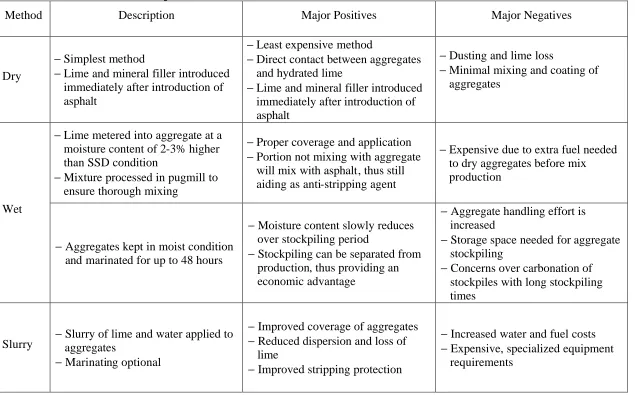
Even though it has been shown repeatedly that the use of hydrated lime in asphalt concrete mixtures is beneficial, confusion still exists as to the best method for adding lime to asphalt mixtures. In general, contractors and/or transportation departments have adopted one or more of three popular techniques that incorporate lime into HMA. The three techniques, along with a brief description of each and the major positive and negative features of each, are listed in Table 2.1 (Button et al. 1983).
2.5.1
Addition of dry hydrated lime to dry aggregate
2.5.2
Addition of dry hydrated lime to wet aggregate
Adding dry hydrated lime to wet aggregate is the most general method of adding hydrated lime to asphalt mixes. In this method, hydrated lime is metered into aggregate that already has a moisture content of 2% to 3% over its saturated-surface-dry (SSD) condition. After hydrated lime is added to the wet aggregate, the lime-aggregate mix is processed in a pugmill to insure thorough mixing. The advantages of introducing dry hydrated lime to wet aggregate are that the asphalt mixture provides better coverage and allows for proper application as compared to the method that adds dry hydrated lime to dry aggregate. These advantages are possible because moisture ionizes lime and helps distribute it on the surface of the aggregate. The portion of hydrated lime that does not adhere to the aggregate eventually gets mixed with the asphalt, thus contributing to the same improvements that are inherent of the dry method. The main disadvantage of this method is the extra effort and fuel required to dry the aggregates before mix production. When using this method of adding hydrated lime, many states require that the lime-aggregate mix marinate for about 48 hours.
2.5.3
Addition of hydrated lime in the form of slurry
Table 2.1 Lime Addition Techniques
Method Description Major Positives Major Negatives
Dry
−Simplest method
−Lime and mineral filler introduced immediately after introduction of asphalt
−Least expensive method
−Direct contact between aggregates and hydrated lime
−Lime and mineral filler introduced immediately after introduction of asphalt
−Dusting and lime loss
−Minimal mixing and coating of aggregates
−Lime metered into aggregate at a moisture content of 2-3% higher than SSD condition
−Mixture processed in pugmill to ensure thorough mixing
−Proper coverage and application
−Portion not mixing with aggregate will mix with asphalt, thus still aiding as anti-stripping agent
−Expensive due to extra fuel needed to dry aggregates before mix production
Wet
−Aggregates kept in moist condition and marinated for up to 48 hours
−Moisture content slowly reduces over stockpiling period
−Stockpiling can be separated from production, thus providing an economic advantage
−Aggregate handling effort is increased
−Storage space needed for aggregate stockpiling
−Concerns over carbonation of stockpiles with long stockpiling times
Slurry −Slurry of lime and water applied to aggregates
−Marinating optional
−Improved coverage of aggregates
−Reduced dispersion and loss of lime
−Improved stripping protection
−Increased water and fuel costs
38
2.6
Asphalt Concrete Mix Design
The objectives of HMA concrete mix designs are to develop an economical blend of aggregates and asphalt that meet design requirements as a function of traffic levels and climate conditions.
An effective HMA mix design must include:
• Sufficient asphalt to ensure a durable pavement;
• Sufficient stability under traffic loads;
• Sufficient air voids (with an upper limit to prevent excessive environmental damage, such as water and aging, and a lower limit to allow room for initial densification due to traffic); and
• Sufficient workability.
Typically, mix design methods consist of three basic steps: aggregate selection, asphalt binder selection, and optimal asphalt binder content determination corresponding to 4% air voids with specific compaction efforts.
To enhance understanding of this idea, three mix design methods are discussed in the following subchapters.
2.6.1
Historical methods
2.6.1.1Marshall mix design
The earliest version of the Marshall mix design was developed by Bruce Marshall for the Mississippi Highway Department in the late 1930s. The Corps of Engineers Waterway Experiment Station (WES) began a study in 1943 to develop a simple apparatus for airfield pavements with increased wheel loads during World War II. These engineers also evaluated various compaction efforts, such as impact compaction, and produced densities in the laboratory that were similar to those achieved in the field. In addition, they simulated aircraft loadings in order to select the proper, optimal asphalt content. The number of blows and the foot design for the compactor were determined as a standard. Initial criteria were established and upgraded for increased tire pressures and loads. Stability testing (for stability and flow) was also performed to check if the optimal asphalt binder content passed the requirements.
The advantages of the Marshall mix design include that it is easy to use and control and that it uses relatively light, portable and inexpensive equipment. Also, the Marshall mix design pays proper attention to voids, strength, and durability. However, disadvantages include problems that stem from the impact compaction method and the disregard for the shear strength and the axis of compaction perpendicular to the applied load.
2.6.1.2Hveem mix design
40 the late 1920s and 1930s. This mix design is still being used in a few west coast states. It addresses similar design considerations as the Marshall mix design. It considers asphalt absorption by the aggregate and uses a kneading compactor to prepare specimens. The shear strength and horizontal deformation of samples under loading along the axis of compaction are measured using the Hveem stabilometer to determine stability. Then, the selected optimum asphalt content corresponding to 4% air voids can be checked as to whether it passes the requirements of stability and cohesion.
The advantages of the Hveem mix design include attention to air voids, strength, and durability as well as the use of the kneading compactor, which simulates field conditions. Also, the Hveem mix design provides a strength parameter, i.e., a direct indication of the internal friction component of shear strength. However, the disadvantages include that it is expensive, employs equipment that is not easily portable, and it does not offer a wide range of stability measurements.
2.6.2
Superpave volumetric mix design
(SGC) was selected as the compactor because it orients the aggregate particles in a way similar to that observed in the field.
The mix design method uses volumetrics to select the optimal asphalt content. Mixtures are compacted in the laboratory to provide a density equal to the estimated density in the field after various levels of traffic. The number of gyrations is varied to simulate anticipated traffic. The air voids at Ninitial, Ndesign, and Nmaximum are measured to evaluate the mixture quality. The mixture should have a certain level of minimum air voids at each gyration number.
42
2.6.3
Performance-related mix design
The performance-balanced mix design has been studied for a long time by other researchers (C. L. Monismith, J. A. Epps, F. N. Finn, R. Leahy, R. G. Hicks). When rutting problems occurred in the 1980s, reducing rutting became a predominant issue. As a consequence of using coarse gradation, extra filler, and hard-grade asphalt binder, and reducing the asphalt binder content, this problem of rutting has diminished markedly. However, improved rutting resistance has brought about a negative result for fatigue resistance, such as early cracking, insufficient durability with increased air voids, and poor workability with the use of stiffer asphalt concrete mixtures (Brown 2005).
Chapter 3
Theoretical Background
The development of a SPT for assessing fatigue performance has been less successful than the development of such a protocol for permanent deformation performance (Witczak et al. 2000). Further, work at North Carolina State University (NCSU) has led to the development of the Viscoelastoplastic Continuum Damage (VEPCD) model for asphalt concrete behavior. Based on the fundamental, mechanistic basis of this model and the ease with which it can be characterized (i.e., linear viscoelastic (LVE) characterization and constant crosshead rate tests at multiple rates and temperatures), it was decided to utilize the VEPCD model to assess the fatigue performance of the mixtures in this study.
44 The theory of linear viscoelasticity describes the constitutive behavior of time-dependent materials, such as asphalt concrete. Characterization of LVE behavior in the VEPCD model is accomplished using |E*| tests. On the simplest level, continuum damage mechanics considers a damaged body with some stiffness as an undamaged body with a reduced stiffness. Thus, the goal of continuum damage mechanics in the VEPCD model is to quantify the amount of damage that has occurred in the sample and determine the impact of this damage on the material behavior. For quantifying the damage occurring in the material, an internal state variable, S, based on Schapery’s work potential theory, is utilized. The relationship between S and material integrity is termed the damage characteristic curve, or C vs. S curve, and represents the fundamental resistance of a mixture to damage.
3.1
Linear Viscoelasticity
The theory of viscoelasticity has been successfully applied by many researchers to describe the characteristics of asphalt concrete. As a viscoelastic (VE) material, asphalt concrete is time- and rate-dependent. The response of a VE material depends not only on the current state of input, but also on all past history of input; that is, the material has a memory for all past input. The response of a LVE body to any loading history may be expressed in terms of a convolution integral. To check if the system is linear, the following two conditions should be satisfied:
a) homogeneity: R{AI}=A{RI} and (3.1)
where I, I1, I2 = input histories; R = response; and A = arbitrary constant. The brackets { } indicate that the response is a function of the input history. The homogeneity, or proportionality condition, essentially states that the output is directly proportional to the input; i.e., if the input is doubled, the response doubles as well. The superposition condition states that the response to the sum of two inputs is equivalent to the sum of the responses from the individual inputs.
For LVE materials, the input-response relationship is expressed through the hereditary integral as
( )
0 , t H dIR R t d
d
τ τ
τ
=
∫
, (3.3)where RH is the unit response function. With a known unit response function, the response to
any input history can be calculated. Equation (3.3) is applicable to an aging system in which time zero is the time of fabrication rather than the time of load application. In this research, it is assumed that the asphalt concrete behavior is that of a non-aging system; thus, Equation (3.3) reduces to
(
)
0
t
H
dI
R R t d
d
τ τ
τ
=
∫
− . (3.4)For uniaxial loading, the non-aging constitutive relationships for LVE materials are typically expressed in the convolution integral form, as shown in Equations (3.5) and (3.6):
(
)
0
t
d
E t d
d ε
σ τ τ
τ
=
∫
− and (3.5)(
)
0
t
d
D t d
d σ
ε τ τ
τ
=
∫
− , (3.6)46 and D(t) are referred to as LVE response functions that include the complex modulus, E*, which relates the stresses and strains of a LVE material subjected to sinusoidal loading. The E* is composed of the |E*| and the phase angle ? . To calculate the |E*|, Equation (3.7) is used:
* *
*
E σ
ε
= , (3.7)
where |s *| is the stress amplitude and |e*| is the strain amplitude of sinusoidal loading. The phase angle (?) is calculated using Equation (3.8):
? = 2pf? t, (3.8)
where f is the loading frequency and ? t is the time lag between the stress and strain response. Viscoelastic response functions can be determined through experiments conducted in the LVE range or through interconversion from other known response functions. LVE properties can be obtained from very short times and small amounts of LVE behavior. Thus, the time-dependent modulus values, i.e., the relaxation modulus and the creep compliance, are oftentimes difficult to obtain because of constraints that stem from the experiments themselves. However, the LVE properties can be measured within a wide range of frequency domains without inducing damage in the specimen; such measurements can be obtained from the E* of a material loaded in a steady-state cyclic sinusoidal manner, which approximates loading histories in many engineering applications. It is then possible, through the theory of linear viscoelasticity, to convert this frequency-dependent property, i.e., the E*, to E(t) and