© 2014, IJCSMC All Rights Reserved 700 Available Online atwww.ijcsmc.com
International Journal of Computer Science and Mobile Computing
A Monthly Journal of Computer Science and Information Technology
ISSN 2320–088X
IJCSMC, Vol. 3, Issue. 10, October 2014, pg.700 – 709
RESEARCH ARTICLE
Cross Layer Based Energy Aware Routing and
Congestion Control Algorithm in MANET
1
E.Natarajan,
2L.Devi
1
Research Scholar, Muthayammal College of Arts and Science, Rasipuram, TamilNadu, India
2
Assistant Professor, Department of PG Computer Science, Muthayammal College of Arts and Science, Rasipuram, TamilNadu, India
Abstract: In a Mobile Ad hoc Network, the mobility of a node is unpredictable. The mobility is considered as one of the characteristics of a wireless network. In addition, the energy limit of the nodes must also be taken into consideration when designing routing protocols. This is an essential issue since energy consumption reduces the wireless network connection lifetime. In mobile link packet are often more significant than congestion losses. Congestion avoidance results in a very low utilization of the link when there is an appreciable rate of losses due to link errors. This issue is very significant for wireless links. In this paper to overcome network performance problems, a cross layer design which helps in allotment the information while the layers separation at the design level is still maintained is proposed. This minimizes data retransmissions and losses by analyzing and reacting appropriately to different events occurring at lower layers. This not only helps to sustain the communication with the lowest chance of interruption, but also prolongs the network lifetime due to the lowest possible consumption of energy for a given communication. This article also evaluates the performance of different adhoc routing protocols such as DSDV, AODV, DSR, TORA and AOMDV in terms of energy efficiency and it also proposes a new routing algorithm that modifies AOMDV and it provides better performance compared to all the above protocols.
Keywords: Energy constraint, energy consumption, Congestion, node selection, MANET, Cross Layer
I. INTRODUCTION
© 2014, IJCSMC All Rights Reserved 701
data packets from source to destination. Single Path routing protocols learn routes and select a single best route to each destination. These protocols are incapable of load balancing traffic. Multi-path routing protocols learn routes and can select more than one Multi-path to a destination. These protocols are better for performing load balancing[1].
II. LITERATURE REVIEW
Cross layer is like the revolution in the area of Wireless sensor networks. A lot of work has already been done on it but some aspects still need to be covered. MMSPEED [1] works on the network and the MAC layer. It promised to provide the reliable and timeliness delivery. In routing layer it performs the task of selecting the next node in the route based on the speed of the next neighbor node. It has adopted the idea of virtual separation of the speed layers so that the higher speed data do not experience the delay because of the low speed data. This work is carried on the routing layer. And to provide the reliability to access the shared channel based on the priority and to measure the average delay MAC support has been taken. But this paper does not consider the power consumption by the nodes which is the greatest threat for the wireless sensor networks
K. Srinivas et.al [2] have proposed A MAC layer level congestion detection mechanism, that includes energy efficient congestion detection, Zone level Congestion Evaluation Algorithm
[ZCEA] and Zone level Egress Regularization Algorithm [ZERA], which is a hierarchical cross layer based congestion detection and control model in short we refer this protocol as ECDC(Energy Efficient Congestion Detection and Control). ECDC derived a cross layered congestion detection mechanism with energy efficiency as primary criteria that included as congestion detection mechanism to “Two step cross layer congestion routing”. The proposed algorithm aims to deliver an energy efficient mechanism to quantify the degree of congestion at victim node with maximal accuracy[3,4]. Packet loss in network routing is primarily due to link failure and congestion. Most of the existing congestion control solutions do not possess the ability to distinguish between packet loss due to link failure and packet loss due to congestion[5,6,7].
© 2014, IJCSMC All Rights Reserved 702
Zeng (2008) described Opportunistic Routing in Multi-hop Wireless Networks: Capacity, Energy Efficiency, and Security studied geographic opportunistic routing (GOR), a variant of OR which makes use of nodes‟ location information.
Wang (2005) presented p-MANET: Efficient Power Saving Protocol for Multi-Hop Mobile Ad Hoc Networks proposes an efficient power saving protocol for multi-hop mobile ad hoc networks, called p-MANET. Our design is expected as a new foundation MAC layer power saving protocol.
The authors of [10] have proposed a general framework for multi path routing scheme for ad hoc network. The framework provides high reliability of routing for the mobile nodes. A multi path routing protocol for ad hoc networks using directional antenna is proposed by the authors of [11].
III. Characteristics of Nodes with Constrained Energy
Each node in a Mobile adhoc Networks serves as a host and/or router generate, consuming or forwarding information. These nodes are fitted with and power-driven by batteries. The weakening of participating nodes‟ battery power in a routing path will shorten the network lifetime. As charging or replacing batteries on site is a difficult operation, it is essential to use the available energy resourcefully to extend the lifetime of the nodes. Developing an energy efficient routing method is one way of achieving optimized performance of nodes.
Nodes consume energy while transmitting beacon signals to neighboring nodes for the purpose of detecting their survival or transmitting data to a different node. When an intermediary node has been selected as a router, it consumes more energy than an idle node as it is dynamically involved in communication[7,8,9]. Thus, the nodes‟ residual energy is important in determining the path to successfully completing data transfer without interruption. Hence a routing protocol that considers the nodes‟ residual energy will perform better than the protocols that do not.
Advantages of Mobile Ad hoc Networks
(a) Low cost of deployment: Mobile Ad-Hoc Networks can be deployed on the fly, thus it not requires any expensive infrastructure such as copper wires, data cables, etc or not any central administration to support the network.
(b) Fast deployment: ad hoc networks are very convenient and easy to deploy, when it compared to WLANs because it requires less manual intervention.
© 2014, IJCSMC All Rights Reserved 703
IV. CROSS LAYER IN MANET
There is straight combination between the lower layer and the upper layers in the traditional protocol stack which is not sufficient for mobile networks. Cross-layer design method is an active research area to improve mobile network performance, where the information is exchanged between different protocol layers dynamically. In a MANET physical layer, MAC layer and routing layer together compete for the network resources. MAC and routing, transport layers are affected by transmission power and rate of the physical layer. Scheduling and allocating the wireless channel is responsibility of the MAC layer which finally determines the available bandwidth of the transmitter. Bandwidth also affects the decision at the routing layer to select the link. The links are selected by the routing layers to transfer the packets to the destination. Contention level at the MAC layer, and the physical layer parameters are affected by the routing decision at the routing layer. Congestion at the transport layer is controlled by the proper information of the percentage of redundancy at the routing layer which is possible when the aggregation is performed at the routing layer. Channel errors are avoided by the proper modulation and demodulation of the data. Signal to noise ratio can decrease total transmit over the links. Cross-layer design can therefore play an important role for the upcoming systems designed for the various applications, featured by all IP-based protocol stack, various access networks, and multimedia data traffic. One obvious shortcoming of the two classical network reference models, OSI and TCP/IP, is the lack of information sharing between the protocol layers. This does not allow optimal performance of the networks, because sharing of information between different layers can lead to the optimization of the MANET. Cross layer allows us to design new kinds of applications [12]. A major difference lies between the working of wired architecture and the wireless. The protocols defined for the wired are not suitable for the proper working of the wireless network which causes the problems like packet loss, delay etc.
V. Energy Efficient Congestion Detection Mechanism
The aim of the proposed congestion detection mechanism is to capture degree of congestion at relay hop level node with maximal accuracy. In proposed model, the detection mechanism is decoupled from other activities of the MAC layer such as link reliability analysis and buffer size analysis. The detection model extended to detect the congestion at traffic level, which is based on the degree of congestion measurement at relay hop level node.
Measuring degree of congestion at Relay hop level node:
© 2014, IJCSMC All Rights Reserved 704
functional values supports to decouple the congestion measuring process from other MAC layer activities.
The degree of channel loading, packet drop rate and degree of buffer utilization together provide a scope to predict the congestion due to inappropriate ratio between collision and retransmission count. When retransmissions compared to collision rate are significantly low then egress delay of relay hop node will increase proportionally, which leads to congestion and reflected as congestion due to buffer overflow.
Minimize Energy consumed/packet
This is one of the more obvious metrics. To conserve energy, we want to minimize the amount of energy consumed by all packets traversing from the source node to the destination node. That is, we want to know the total amount of energy the packets consumed when it travels from each and every node on the route to the next node. The energy consumed for one packet is thus given by the equation:
1 1 1) , ( k i i i n n T Ewhere n1 to nk are nodes in the route while T denotes the energy consumed in transmitting and receiving a packet over one hop. Then we find the minimum E for all packets.However, this metric has a drawback and that is nodes will tend to have widely differing energy consumption profiles resulting in early death for some nodes.
Minimize Cost/Packet
For this metric, the idea is such that paths selected do not contain nodes with depleted energy reserves. In other words, this metric is a measurement of the amount of power or the level of battery capacity remaining in a node and that those nodes with a low value of this metric are not chosen (unnecessarily) for a route. This metric is defined as the total cost of sending one packet over the nodes, which in turn can be used to calculate the remaining power. It is given by the equation:
1 1 ) ( k i i i x f Cwhere xi represents the total energy expended by node i so far and f is the function that denotes the cost. Then we find the minimum C for all packets.
© 2014, IJCSMC All Rights Reserved 705
Minimize Maximum Node Cost
The idea here is to find the minimum value from a list of costs of routing a packet through a node. The costs themselves are maximized value of the costs of routing a packet at a specific time. The equation for this metric is:
Minimize Ĉ(t), for all t >0,
Where Ĉ(t) denote the maximum of the Ci(t)s and Ci(t) is the cost of routing a packet through node i at time t.
Algorithm for Modified AOMDV
Step 1 If the Source node S wants to send data to the destination node D, it will first send REQ messageto all its neighbor nodes.
Step 2 When neighbor nodes receive REQ message they will check their Route_Cache, if this packet‟s ID is already in their Route_Cache then packet will be discarded.
Step 3 Otherwise, node will calculate its power by using: Pnew = Ptx - Pr + Pth + Pm + Power and send this value as a reply to source node.
Step 4 Source node will calculate the mean value of all the values of Pnew of all the nodes and send a RREQ message to the node whose Pnew value is nearest to the mean value.
Step 5 When the node receives a RREQ message it will send REQ message to its own neighbors and this process will be continued till the destination node reaches.
Step 6 When destination node will receive the RREQ message it will send the RREP message back with the same route.
Step 7 RREP process is same as in Modified AOMDV.
VI. SIMULATION ENVIRONMENT
© 2014, IJCSMC All Rights Reserved 706
Power Consumed/ Packet
The power consumed by the network interface when a host sends, receives or discards a packet can be described using a linear equation Power = m × size + b
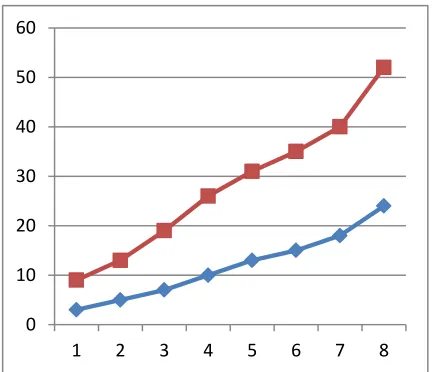
Fig 1 shows the power consumption by single node to transfer a packet. It is the minimum power consumption using multihoping concept in the MANET system. The loss of energy in nodes can affects the communication activities in network. For MANETs, optimization of power consumption has greater impact as it directly corresponds to lifetime of networks and hence the creation of an energy efficient system.
Response Time
The response time of data packets is the interval between the data packet generation time and the time when the last bit arrives at the destination. Fig 3 shows the average response time which shows that as the traffic increases, system response also increases.
Fig:1 Comparision of AODV vs AOMDV
Average end-to-end delay
This is the overall average delay required by a packet to travel from source node to its
destination node. The average total path end-to-end results given by simulation observe that
Efficient TAODV packet delay is less delay than TAODV in all of the scenarios considered for the
simulations in Figure 6. The delay is significantly lower in the 16 node network configuration
where there is a considerable network traffic load. In both, the high mobility and the low mobility
scenario sets, the delay shown by Efficient TAODV is at least 200 ms lower.
0 10 20 30 40 50 60
© 2014, IJCSMC All Rights Reserved 707
Fig:2 Delay comparison
Fig:3 Delay performance with TAODV scheme.
VII. CONCLUSION
© 2014, IJCSMC All Rights Reserved 708
order to give importance to the sensors energy, even though they are not very efficient. Despite these solutions for the energy problem, violating the layered communication stack has proven to result in better gains for MANETs. This technique is called cross-layer design and it has been used to overcome not only energy limitations, but also to increase network throughput and to improve quality of service. Protocols can be developed which can deal both delay and the reliability together which are contradict to each other.
During low mobility, the average delay is dominated by network congestion due to data traffic. During high mobility, it is dominated by route changes in the simulation results. Our scheduling algorithms that give higher weight to data packets with smaller numbers of hops or shorter geographic distances to their destinations reduce average delay significantly without any additional control packet exchange. The weighted-hop scheduling algorithm is used for modified AODV. Result show considerably smaller delay than the other scheduling algorithms.
REFERENCES
[1] M. K. Marina and S. R. Das, "Ad hoc On-demand Multipath Distance Vector Routing," Computer Science Department, Stony Brook University, 2003.
[2] E. Felemban, C. Lee, E. Ekici, “MMSPEED Multipath Multi-SPEED Protocol for QoS Guarantee of Reliability and Timeliness in Wireless Sensor Networks”, IEEE TRANSACTIONS ON MOBILE COMPUTING, Vol-5, No-6, 2006, pp738-754, DOI-10.1109/ TMC.2006.79
[3] Sanjay Kumar Dhurandher1, Sudip Misra, Mohammad S. Obaidat, Vikrant Bansal, Prithvi Raj Singh and Vikas Punia “EEAODR: An energy-efficient ad hoc on-demand routing protocol for mobile ad hoc networks”, International Journal of Computer Information Systems, pages: 789–817, Issue No:22, 2009.
[4] Suvarna P. Bhatsangave and V. R. Chirchi, “OAODV Routing Algorithm for Improving Energy Efficiency in MANET”,International Journal of Computer Applications,pages-0975– 8887, Volume 51, August 2012.
[5] R.Madhanmohan, K.Selvakumar, “An Adaptive Power Aware Routing in MANETs” Journal of Computing, pages- 2151-9617, volume 4, issue 8, august 2012.
[6]Dr.A.Rajaramand J.Sugesh, “Power Aware Routing for MANET Using On-demand MultipathRouting Protocol”,International Journal of Computer Science Issues, Pages- 1694-0814, Vol. 8, Issue 4, No 2, July 2011.
[7]Shipra Gautam, Rakesh Kumar, “A Review of Energy-Aware Routing Protocols in MANETs”, InternationalJournal of Modern Engineering Research (IJMER), Pages-1129-1133, Vol.2, Issue.3, May-June 2012.
[8]Dr. Aditya Goel & Ajaii Sharma, “Performance Analysis of Mobile Ad-hoc Network Using AODV Protocol”, International Journal of Computer Science and Security (IJCSS), pages-334-43, Volume (3): Issue (5).
© 2014, IJCSMC All Rights Reserved 709
[10] Wei Liu, Chi Zhang, Guoliang Yao and Yuguang Fang,” DELAR: A Device-Energy-Load Aware Relaying Framework for Heterogeneous Mobile Ad Hoc Networks”, IEEE-Journal On Selected Areas In Communications, Vol. 29, No. 8, September 2011
[11] S.Hussain and A.W. Matin, Energy Efficient Hierarchical Cluster-Based Routing for Wireless Sensor Networks, Jodrey School of Computer Science Acadia University Wolfville, Nova Scotia, Canada TR-2005:1-33, http://cs.acadiau.ca/research /technical_reports/files/tr-2005-011.pdf
[12] Xiaolong Li; Yousefi'zadeh, Homayoun, "A Hybrid Cross-Layer Routing Protocol for MANETs," Computer Communications and Networks (ICCCN), 2011 Proceedings of 20th International Conference on , vol., no., pp.1,6, July 31 2011-Aug. 4 2011.
[13] Sisodia, S.; Raghwanshi, S., "Performance evaluation of a Table driven and On-Demand Routing protocol in Energy Constraint MANETs," Computer Communication and Informatics (ICCCI), 2013 International Conference on , vol., no., pp.1,8, 4-6 Jan. 2013.
[14] Kathiravelu, T.; Sivasuthan, S., "A hybrid reactive routing protocol for Mobile Ad-hoc Networks," Industrial and Information Systems (ICIIS), 2011 6th IEEE International Conference on , vol., no., pp.222,227, 16-19 Aug. 2011.
[15] K Fall and K. Varadhan, The NS Manual, November 18, 2010,available on http://www.isi.edu/nsnam/ns/doc/ns_doc.pdf. 25 July 2010.
[16] C.-K. Toh, “Associativity Based Routing for Ad Hoc Mobile Networks”, Wireless Personal Communication Journal, Special Issue on Mobile Networking and Computing Systems, vol. 4, no. 2, March 1997.
[17] C.-K. Toh, “Maximum Battery Life Routing to Support Ubiquitous Mobile Computing in Wireless Ad Hoc Networks”, IEEE Communications Magazine, 39:138-147, June 2001.
[18] C.K. Toh, H. Cobb and D. Scott, “Performance Evaluation of Battery-Life-Aware Routing Schemes for Wireless Ad Hoc Networks”, Proceedings of IEEE ICC‟01, June 2001.
[19] Y.-C. Tseng and T.-Y. Hsieh, “Fully power-aware and location-aware protocols for wireless multi-hop ad hoc networks”, Proc. 11th Int‟l Conf. on Computer Communications and Networks, Oct. „02, pp.608-613.