POSITIVE REGULATION IN A EUKARYOTEy A STUDY OF
THE
uaY GENE OF ASPERGZLLUS NZDULANS: I. CHARACTERIZATIONOF ALLELES, DOMINANCE AND COMPLEMENTATION STUDIES, AND A FINE STRUCTURE
MAP
OFTHE u ~ Y - O X ~ A CLUSTER
CLAUDIO SCAZZOCCHIO, NICHOLAS SDRINl AND GLORIA ONG2
Department of Biology, University of Essex, Wiuenhoe Park, Colchester, CO4 3SQ, Essex, England
Manuscript received September 29, 1980
Revised copy accepted November 9, 1981
ABSTRACT
In this paper we characterize genetically a positive eukaryotic regulatory gene: the uuY gene of the ascomycete Aspergillus nidulans. Several steps in the uptake and degradation ‘of purines are under the control of the uuY gene (sum- marized in SCAZZOCCHIO and GORTON 1977). In the present paper 12 uuY- mutations are characterized with respect to their inducibility for adenine deaminase, xanthine dehydrogenase (purine hydroxylase I) and urate oxidase and by the absence of the uric acid-xanthine permease scored in vivo by re- sistance to 2-thiouric acid. While 10 mutations are uniformly unleaky, two others are almost wild type f o r the induction of urate oxidase. A fine structure map of the uaY gene shows that the two “leaky” mutations are not clustered. The fine structure mapping unambiguously positions six uuY alleles and pro- vides preliminary but interesting trends regarding the pattern of gene con- version in the uaY gene. The enzyme levels in all uaY-/uuY+ heterozygous diploids are intermediate between the corresponding UUY-/uuY- and uaY +/ uaY+ homozygous diploids, suggesting that one functional copy of the uuY gene is able to mediate the complete induction of only one set of structural genes. No complementation was found between any two uuY- alleles. This es- tablishes that the mutations showing either of the phenotypes are alleles in the same gene; it fails to provide evidence for intracistronic complementation. A mutation, oxpA5, causes resistance to the xanthine analogue oxypurinol (4. 6-
dihydroxypyrazolo- (3, 4-d) -pyrimidine) and partial ronstitutivity of adenine deaminase, xanthine dehydrogenase (purine hydroxylase I) and urate oxidase. The constitutive phenotype is suppressed by mutations blocking the synthesis
of intracellular inducers. The mutation is recessive and complements fully with the 11 uaY- mutations tested. It maps to the left of all 12 uuY mutations to which it has been crossed. The data indicate that both the resistance and constitutivity arise from one mutational event in a gene, oxpA, different from uaY and possibly adjacent to it. We propose that the oxpA gene codes for a protein involved in limiting the flow of inducers into the cell nucleus. Thus orpA and uuY constitute a regulatory gene cluster, indicating that uaY is the regulatory gene.
1 Present address: Pastra’s High School, Pastra, Cephalonia, Greece.
2 Present address: Imperial Cancer Research Fund, Burtonhole Lane, Mill Hill, London N.W.7.
186 C. SCAZZOCCHIO, N. S D R I N A N D G. O N G
INCE the seminal work of JACOB and MONOD (1961), the establishment of
regulatory circuits has depended on the identification of regulatory muta- tions and the study of their interactions. Regulatory genes can be defined when pleiotropic mutations resulting in noninducibility or constitutivity can be iden- tified. However, genetic evidence is generally insufficient to establish the level at which the product of a regulatory gene acts. Rather than directly affecting transcription or translation, the product of a putative regulatory gene could be involved in a step that catalyzes the synthesis of the true co-inducer (or CO- repressor). The insufficiency of the purely genetic approach i s especially mani- fest when a putative regulatory mutation results in apparent noninducibility. This phenotype could also arise from mutations in genes coding for common subunits, enzymes involved in a common cofactor synthesis o r in post-transla- tional modification common to several proteins. Identifying a regulatory muta- tion becomes a n almost intractable problem at the formal genetic level when the putative regulatory gene affects the induction or repression of only one ac- tivity.
The ability to obtain mutations with opposite phenotypes (noninducible and constitutive, or derepressed and nonderepressible) is strong circumstantial evi- dence for a true regulatory gene. Noninducible and constitutive mutations have
been described for some regulatory genes in simple eukaryotes (for example
nirA, PATEMAN and COVE 1967; apZA, SCAZZOCCHIO,
HOLL
and FOGUELMAN 1973; SCAZZOCCHIO, et al. 1978; qa-a VALONE, CASE and GILES 1971). In only one case has a fine structure map proved conclusively that the constitutive mu- tations map within the putative regulatory gene as defined by the noninduciblemutations (gal-4, MATSUMOTO et
al.
1980).On the other hand the inability to obtain mutations of opposite phenotype
does not per se preclude a regulatory role. In some cases, one of the phenotypes
might be impossible ( SCAZZOCCHIO, unpublished).
In this paper and elsewhere (PHILIPPIDES and SCAZZOCCHIO 1981) a positive
regulatory gen- a s c c
This is the uaY gene necessary for the induction of several of the enzymes of
purine degradation and at least one permease (SCAZZOCCHIO and DARLINGTON
1967, 1968; SCAZZOCCHIO, HOLL and FOGUELMAN 1973; SCAZZOCCHIO and GOR-
TON 1977; SCAZZOCCHIO and ARST 1978). While a regulatory role was postulated
as far back at 1965, strong evidence of the direct regulatory role of uaY has only recently been obtained ( SCAZZOCCHIO and A R ~ T 1978).
In strains carrying uaY- mutations, xanthine dehydrogenase (purine hy-
droxylase I), urate oxidase and the uric acid-xanthine permease are noninduci-
ble (Zoc. c i t . ) . These activities are induced i n the wild type by uric acid and
some of its thio-analogues ( SCAZZOCCHIO and DARLINGTON 1968; SCAZZOCCHIO
1973; SEALY-LEWIS, SCAZZOCCHIO and LEE 1978, ARST and SCAZZOCCHIO 1975).
Allantoinase and allantoicase are inducible in the wild type by both uric acid
and allantoin; uaY- mutations are noninducible by uric acid but inducible by
allantoin (SCAZZOCCHIO and
DARLINGTON
1968). Recently it was shown thatu a y REGULATORY GENE 187
control and we presented indirect evidence that the xanthine alternative path-
way is under
uaY
control.It
has been seen that only uric acid and its 2- and8-thio analogues are effective inducers of the activities under uaY control
(SEALY-LEWIS, SCAZZOCCHIO and LEE 1978) Figure 1 shows the purine degrada-
tion pathway and Table 1 lists all the characterized genes presumed to be under
uaY control.
THE PURINE DEGRADATION PATHWAY
Hypoxanthine
xa
n
t
h
i
n e
de h yd rog en ase
xa nt h i ne dehydrogenase
1
i
i
Xanthine
Uric Acid
urate oxidase
CI
xanthin e
a
It
ern
at
i
ve path way
allantoinase
Allantoin
Allantoic acid
al
lantoicase
;
:
I
U
reidoglycol late
Ureidoglycollase
U
rea
U rease
A mmoniu
m
188 C. SCAZZOCCHIO. N . S D R I N A N D G . O N G
-
0 UE
-
k a ?b s
8
d h
4 4
‘0
UClY REGULATORY G E N E 189
a
2
B
I
.- r
0
-
W d
3
m w * r ' C 5 w m b 4 U) 0.2.- a s E J?3
+%2
" G g % + m B &g 4
Q h % % T d . A o)
.
B 2 a a a - Q
M + f i h U ) E o $&G
*
2 m x $ m X i 3w - E / % w E E
oss5
E c o " N$54
.-
f i S U O P $ vi s w
w t ;:q
* a ~. - o < m p J + p 2 o f i
s $ e
msm
E
fi . E + * -U + " @ ~ hN qU E ~ ~ ~ ~Q T $ p # E q
S $ i.e--.-
" " y g w g 3 g M y Z p k 3 . 3:
U ?$.8$
i ; $ + $ s g E
m El m- 42?- . B P P QG2J
g
g;
wh p
x
; p . z.
mg
.-2h
a 0 0-
2
;:$p
m 2 E 8 @E- w m w m m : : l " m & - m $
$a
d.-.c k a E c 2 *j 5E ' d g.2 m u--'3 Q
g E $
h 3 * ' ; ' : 2 4
;
p,.;.
5 22
2
.!3N*
w . 2 g m 8 2 3 2 g o s i
4.2
;:$&r+ z.3 -a mc? 4 0 a , u w Z 25-; & e c y Q , z
E&
U 3 2:z
;s
"
::
;-
0-d
E
U Qv, b m E c $ g $
C N L O
mc2
S H:
O8
z,z
o d u hg 2 s
1
32
2
0:
a , a j2.0
E
-
" " m a g-8::
;@
g"-.
g
82
E
E.2
g Y 2 8 %
g
;+<-
5 4 28
E
._Z.Sg
;",
H p , h j &gaz.5
g
5
::A5
a, U)* U a d w G 2"-a" a.. 0 & n P & g
E
h'r 2 0 2 3 $ & - l S = E H
"
22
g
;
E
$
O Z ~ , > O U m$
F
g$ $ g g . z :
E
$42
E * S A8z
034
2
E.?B
,a OX- m $ + & z < 0 4
E 3 m M* D a
22%$$$3
9;
m . 2 fia a c w
$ b.. a-.?
A W u U E 5 u W Z w - P
*
m $ at; F: x . 3 !2 : A",.; mU)o$m-a4..ic'-
E
E":
- $ e p + $ J g
&$.r p & - T h o m w 2E
2" P
"3 %
~ $ : ~ . ~ ~ 2
:
k 2 sas-<-"-.
2.2 2 ;$! 3 s ua.+ < m 0
$ 4
cs.s
q z ; 2
3;ENE;
. 2 2 x . o w w a g s
g
"';&
U 0 > Q l 32!wj,$& a s 2 g.5 h+2 2
M * o %'E
8
05fifiS'SZ-E:NPM U)a n
w
" 9
0 0
s-8 U m -
2-2 5 m 3 2 e, 0 m
s me; E g H H c 4
2
U; 0 8.5.. m Q mgH
3 E m
m M h E40 0
m E u . O 5 h ~~,~~
3
9
23~
E-C33
MU)", $, y . S ' - d 4 * 2
2
*
E m d o E HM U E a Z g & : . S F $ " %
*-
3 U190 C. SCAZZOCCHIO, N. S D R I N A N D G. O N G
W e characterize 12 uaY- alleles by phenotype, dominance, complementation
relationships, and position in a fine structure map. We also describe a n ap-
parently constitutive mutation, ozpAS, closely linked to the uaY gene, and
present evidence that the o z p A gene specifies a mechanism that restricts the ac-
cessibility of the product of the uaY gene by ictracellular inducers.
The data presented here are compatible with uaY acting as a positive regulatory
gene. Evidence of this conclusion will be presented elsewhere (SCAZZOCCHIO, unpublished), and the isolation of a protein likely to be coded by the uaY gene
has been published (PHILIPPIDES and SCAZZOCCHIO 1981).
MATERIALS A N D METHODS
Strains: All the strains were isolated in a biA-I background (auxotrophic for biotin); uaY2 was isolated after UV mutagenesis while uaY4, 5, 6, 7, 8, 9 and 12 were isolated by diethyl sulphate mutagenesis. The latter originally were called UA-2, 4, 5, 6, 7, 8, 9, and 12 (DARLING-
TON, SCAZZOCCHIO and PATEMAN 1965); HARTLEY (1969) isolated uaY205 and uaY207 by the selection procedure of ALDERSON and SCAZZOCCHIO (1967) after diepoxybutane mutagenesis. Both strains were reported not t o revert (HARTLEY 1969), but while this was confirmed for uaY207 ( PHILIPPIDES and SCAZZ~CCHIO 1981), uaY205 was reverted by N-methyl-"-nitro-N- nitrosoguanidine treatment (SCAZZOCCHIO, unpublished). These strains were called respectively D U 5 and DU7 in HARTLEY'S thesis (1969); uaY109 and u aYll0 are mutations isolated by
HARTLEY (1969) after nitrous acid mutagenesis and originally called AH9 and AH10. In con- trast to other uaY mutations, these result in only slight impairment of the utilization of uric acid as sole nitrogen source (see RESULTS) and map inside the uaY gene. The o x p A 5 was selected in a biAl (auxotrophic for biotin) strain after diethyl sulphate mutagenesis (ALDERSON and SCAZZOCCHIO 1967) on a minimal medium (COVE 1966) containing uric acid as nitrogen source in the presence of 250 pg/ml oxypurinol (4,6 dihydroxypyrazolo (3, 4-d)- pyrimidine). Uric acid was used as nitrogen source to eliminate uaY- mutants, which themselves are somewhat resistant to oxypurinol due to the noninducibility of the uapA permease (SCAZZOCCHIO and ARST
1978). Sodium deoxycholate was included in the medium to induce compact growth (MACKIN-
TOSH and PRITCHARD 1963). On this medium, wild-type strains produce very small nonconidiat-
ing colonies. Resistant mutants can be easily distinguished as strongly growing, fully conidiating colonies. Of approximately 40,000 colonies, 22 resistant strains were isolated. One, carrying a mutation oxpA5 (previously named ozpT-5; COVE 1970, SCAZZOCCHIO, HOLL and FOCUELMAN
1973, SCAZZOCCHIO and GORTON 1977), was constitutive for xanthine dehydrogenase (purine hydroxylase I, LEWIS, et al. 1978) and urate oxidase and was selected for further work.
Growth tests: These were done on Aspergillus minimal medium supplemented with adenine, hypoxanthine, xanthine, uric acid, urea or ammonium d-tartrate as nitrogen sources, as indi- cated by ARST and COVE (1973). Purines were added at a final concentration of 0.1 mg/ml. The presence of an active uric acid-xanthine permease was investigated by the effect of 2-thioxanthine and 2-thiouric acid on conidial pigmentation. Resistance to 2-thiouric acid results from a block in the uric acid-xanthine permease. Resistance to 2-thioxanthine results from a block in either the permease o r xanthine dehydrogenase as 2-thioxanthine is taken up by the same permease as 2-thiouric acid (DARLINGTON and SCAZZOCCHIO 1967) but has to be oxidized to 2-thiouric acid oia xanthine dehydrogenase t o be effective (ALDERSON and ScAzzoccHro 1967). This was tested by DARLINGTON and SCAZZOCCHIO (1967) and ALDERSON and SCAZZOCCHIO (1967).
uay REGULATORY GENE 191
zolium stain described by SCAZZOCCHIO, HOLL and FOGUELMAN (1973) and urate oxidase by the
histochemical technique of GRAHAM and KARNOVSKY (1965). Strong staining for either enzyme was obtained with the wild type only when inducers (SEALY-LEWIS, SCAZZOCCHIO and LEE 1978) were included in the medium. On medium without inducers, strains carrying oxpA5 stained strongly for both xanthine dehydrogenase and urate oxidase. The clearest results were obtained using L-arginine as sole nitrogen source, and in the case of xanthine dehydrogenase, inducing compact growth with sodium deoxycholate.
Construction of diploids: Nonleaky complementing markers were used to force hetero- karyons. The markers used were biAl, pyroA4, p~ntoB100, pabaAl, puA2, riboC5, (auxotrophies resulting in biotin, pyridoxine, pantothenic acid, p-aminobenzoic acid, putresrine and ribo- flavine respectively). The conidial color markers yA2 (yellow), wA4 (white) and fwAl (fawn) were also used. Diploids were selected following the usual procedures employed in Aspergillus
(CLUTTERBUCK 1974).
Fine sfructure mapping: This was done by conventional crosses between either oxpA5 and a given uuY mutation or between two given uaY mutants. Alleles were ordered using the external markers cbzC34 (carboxin resistance, GUNATILLEKE, ARST and SCAZZOCCH~O 1975) and fpaD43 (p-fluorophenylalanine resistance, SINHA 1969) mapping respectively to the left and the right of the oxpA5-uaY cluster in the Aspergillus conventional map of linkage group VIII.
Determination of enzyme activities: The growth of mycelia in liquid culture, preparation of cell-free extracts and enzyme assays have been described i n detail (SCAZZOCCHIO, HOLL and
FOCUELMAN 1973; SEALY-LEWIS, SCAZZOCCHIO and LEE 1978). A 50 mM, pH 7.4, sodium phos- phate extraction buffer, 100 ELM in Na4 EDTA and 100 p~ in dithiothreital was used when adenine deaminase was assayed. The determination of xanthine dehydrogenase cross-reacting material was as described by SEALY-LEWIS, SCAZZOCCHIO and LEE (1978).
RESULTS
Characterization of the mutations-growth tests: Growth tests subdivide the
uaY alleles into two groups. Mutations in the group comprising uaY2,4, 6, 7, 8,
9, 12, 205 and 207 result in equally poor growth on adenine, hypoxanthine,
xanthine or uric acid as nitrogen source. This growth is equivalent t o the re-
sidual growth of the wild type on medium without addition of a usable nitrogen
source. The second group, comprising uaY109 and uaYl10, grows slightly better
than any member of the previous group on adenine, hypoxanthine and xanthine ar?d only slightly less well than the wild type on uric acid. All strains are equally resistant to 2-thioxanthine and 2-thiouric acid, which indicates a similar impair-
ment of the uric acid-xanthine permease, The slight impairment of growth on
uric acid as nitrogen source resulting from the uaY109 and u a Y l l 0 mutations
is comparable to the impairment found in strains that carry mutations in the u a p A gene specifying a uric acid-xanthine permease under uaY control (ARST
and SCAZZOCCHIO 1975; SCAZZOCCHIO and ARST 1978).
Characterization of the Mutations-enzyme levels: Table 2 shows the xan-
thine dehydrogenase (purine hydroxylase I) activity, xanthine dehydrogenase
cross-reacting material and urate oxidase activity levels that result from a se-
lection of uaY mutations when noninduced o r induced with the physiological
%
3
:
0 U U -a U U h-
. Y U:
eo t.-.
U2
? **
- 2
g .
o1 Y e
%l
5 %
I4 5 3
E9
ga
2
6 24
.s
$ 8
2
!i
g
s
3
hzx -U" < ._
5
-a x:
%
e %192 C . SCAZZOCCHIO, N. S D R I N A N D G . O N G
a z w a a g
3 0 U h 4m::
%:2
2 3 2 2 0
2
2.-
+4 5 2; +?
"4
E:.E$].sw.o
g < o
7 3 & ~ ~ 3 m m m m y 5
2zszT3 a
$2
.g&-.
2 . 5 ; E.2
2
2T3"ggs
, ? % ? & E $ 5
g.22
$2
E 35 ?*E$ $ q " W , ;
a s a s o 0
y XQ E . G a
a ' o ^ . g
232
; g @ j k m c 0a;wW % c%-*-J
:
E ' B p . 2 7
.6, klh&,+l2 Curu: A O K )
::
2ozz
;
:
=s
.9
x
+?
;%6
. s u m
ZbnbE ' Z 5 5% E 2 s s 3 5 hc.sv)^
P
-2z.s
E v1&.F.-
\;
*z
7
.&
3
, ~ m s o 3 I
s;
:
$?;
2
5:-
23s
U $.s
q . 2
5
&
5 3 g . m h -3E2s.6,
- 5 4
0.-.s
E 0.5 fixg
tau) c, $:;$
.s
E:kz
w 0 m 3 , h U Z v ) ~-a
as-
E-CG.5 E E.9
m m m a m
2s
*
g.2 3:z gz
E I - a ~ S * ~
-
g.4';:;*
5
&B
g a t 1E"
3%"
0 . 9+
,.za
8.0 Ebg s S ; : &
2;z 8 F
$ 2
v)
2.g
@'S.g
333.5
k&:E
U ;:$3?j
0"
9
<'$
-$
m \*
u b a, 0 m
a 2 8 m i \ C J
m m 5 w -
z F M 3 0 W
h o ' z a, v) 0 U mrc. h
r0 M&$fly'.
".- U &. U G 5
+- CAuim-5
U a p
z k3.o 2G.Z U
m w z G.Z
w . c x m m r r
UCLY REGULATORY GENE 193
TABLE 3
Enzyme activities of uaY alleles*
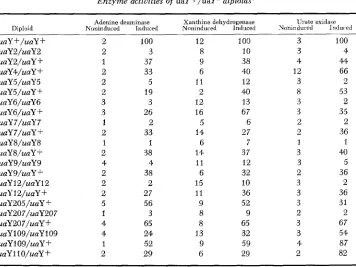
Adenine deaminase Xanthine dehydrogenase Urate oxidase Mutation Noninduced Induced Noninduced Induced Noninduced Induced uaY +
uaY2 uaY4 uaY5 uaY6 uaY7 uaY8 uaY 12 uaY205 uaY207 uaYlO9 uaYll0 4 7 2 5 3 2 7 7 3 5 3 5 100 2 6 4 6 7 3 18 2 1 29 47 12 10 14 14 8 12 12 3 12 9 9 6 100 7 16 10 8 14 16 2 11 12 27 39 3 1 1 2 2 3 4 2 1 2 2 1 100 1 1 1 1 4 4 2 2 1 63 70
* All procedures are as in Table 2 except that the results are expressed in percent of the wild type induced with 2.7 , p2-thiouric acid, grown, extracted and assayed in parallel. “Induced” ~
refers to induction with 2.7 JLM 2-thiouric acid.
group (uaY109 and uaY110) are clearly less affected for the induction of urate oxidase than for adenine deaminase or xanthine dehydrogenase and its cross- reacting material.
Dominance: Heterozygous diploids carrying each of the 12 uaY- mutations
and the uaY+ allele were constructed. All the uaY- mutations appeared reces- sive in growth tests and for 2-thioxanthine and 2-thiouric acid resistance; all heterozygous diploids can utilize adenine, hypoxanthine, xanthine, or uric acid
as nitrogen source, and are sensitive to 2-thioxanthine and 2-thiouric acid. In
each case the relevant uaY-/uaY- homozygous diploids and a uaY+/uaY+
diploid were included as controls in the same plate as each uaY-/uaY+ hetero- zygous diploid.
Table
4
shows the adenine deaminase, xanthine dehydrogenase, and urateoxidase activities of all 12 heterozygous diploids noninduced or induced
with
2-thiouric acid. Most of the uaY-/uaY- homozygous diploids are also included
as controls in Table 4. For all three enzymes the heterozygous diploids show
levels intermediate between the uaY-/uaY- and uaY+/uaY + homozygous dip-
loids; there seems to be strict dependence on the dosage of the uaY product.
Compllementation: Preliminary crosses showed that all the remaining 11 uaY-
mutations map at less than 0.2 centimorgans from uaY9. uaY9 was mapped in
linkage group VI11 between cbzC (carboxin resistance, GUNATILLEKE, ARST and
SCAZZOCCHIO 1975) and pfaD (p-fluorophenylalanine resistance, SINHA 1969).
We have stated that uaY9, while complementing in diploids with mutations in three genes under putative uaY control, hxAl, hxB13 and uaZ11, fails to
complement in heterokaryons ( SCAZZOCCHIO and DARLINGTON 1967). Comple-
mentation with these three mutations has been investigated for uaY5 and uaY7.
194 C. SCAZZOCCHIO, N. SDRIN A N D G. O N G
TABLE 4
Enzyme activities of uaY +/uaY- diploids*
Diploid
uaY +/uaY + uaY2/uaY2 uaY2/uaY + uaY4/uaY + uaYS/uaY 5
uaY5/uaY + uaY6/uaY6 uaY6/uaY + uaY 7/uaY 7 m Y 7/uaY + uaY 8/uaY8 uaY 8/uaY + uaY9/uaY9 uaY 9/uaY + uaY 12/uaY 12
uaY 12/uaY + uaY205/uaY + uaY207/uaY207 uaY207/uaY
+
uaY109/uaY109 uaYl O9/uaY + uaY 11 O/uaY +4denine deaminase Noninduced Induced
Xanthine dehydrogenase Noninduced lnduced
2 100
2 3
1 37
2 33
2 5
2 19
3 3
3 26
1 2
2 33
1 1
2 38
4 4
2 38
2 2
2 27
5 56
1 3
4 65
4 24
1 52 2 29
12 100
8 10
9 38
6 40
11 12 2 40
12 13
16 67
5 6
14 27
6 7
14, 37
11 I 2
6 32
15 10 11 36
9 52
8 9
8 65
13 32
9 59
6 29
Urate oxidace
Yoninduced Irrdur ed
3 100
3 4
4 44
12 66
3 2
8 53
3 2
3 35
2 2
2 36
1 1
3 40
3 5
2 36
3 2
3 36
3 31
2 2
3 67
3 54
4 87
2 82
* The enzyme specific activities are expressed in percent of a uaY+ homozygous diploid in- duced with 2.7 pw 2-thiouric acid. “Noninduced” mycelia grown for 20 h r on 5 mM urea, “induced” grown of 5 mM urea for 20 h r and induced after 15 h r growth with 2.7 PM 2-thiouric acid. Some of the diploids were also tested after induction with the natural inducer (300 PM uric acid) with substantially the same results.
characteristic of uaY mutations and could be ifiterpreted either as a genuine nuclear restriction o r as a result of the dose effect seen in Table 4 (SCAZZOCCHIO and DARLINGTON 1967; SCAZZOCCHIO, HOLL and FOGUELMAN 1973). This ap- parent nuclear restriction makes it necessary to investigate the complementation of mutations that show the uaY phenotype in diploids rather than heterokaryofis.
A complete diploid complementation grid among the 12 uaY mutations ir,
this work would involve obtaining 66 heterozygous diploids. W e failed to ob-
tain uaY2OS/uaY4, uaY205/uaY207, uaY109/uaY205, uaY 110/uaY205, and uaY 109JuaY207. The remaining 61 heterozygous diploids were tested for growth on adenine, hypoxanthine, xanthine and uric acid as sole nitrogen source, and for sensitivity to 2-thioxanthine and 2-thiouric acid. Each uaY-/uaY- heterozy-
gous diploid was tested on the same plates
with
both relevant uaY-/uaY- homo-zygous diploids, both relevant uaY-/uaY+ heterozygous diploids and a uaY
+/
UClY REGULATORY GENE 195
than the nonleaky mutations on adenine, hypoxanthine, or xanthine; this allows
complementation to be scored in diploids carrying these alleles. Pairs comprising
uaY109 or uaYl10 and any of the other nonleaky uaY mutations grew somewhat less than u a Y 109/uaY 109 or uaY 1 1 O/uaY 1 10 homozygous diploids and were
resistant to 2-thioxanthine and 2-thiouric acid. The heterozygous diploid uaY 109/
uaYl10 grew as leakily on uric acid as the corresponding homozygous diploids and failed to show complementation on any other medium. All diploids grew normally on urea and ammonium d-tartrate as nitrogen sources.
Thus, no complementation is apparent between any two mutations that show
either the complete or the partial (uaY109 and uaY110) uuY- phenotype.
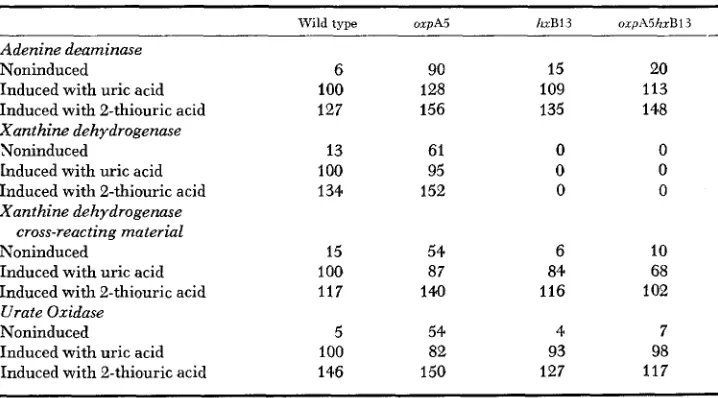
Constitutiuity of oxpA5: Table 5 shows that the mutation oxpA5 results in partial constitutivity of adenine deaminase, xanthine dehydrogenase and its cognate cross-reacting material, and urate oxidase.
Further induction is afforded by both the natural inducer uric acid and its analogue 2-thiouric acid. The introduction of mutations resulting in loss of
xanthine dehydrogenase activity, hxAl mapping in the structural gene (
SCAZ-
ZOCCHIO and SEALY-LEWIS 1978) and hxB13 (SCAZZOCCHIO 1973) result in loss
of the constitutive phenotype for adenine deaminase and urate oxidase. The
hxB13 mutation maps in a gene necessary for xanthine dehydrogenase activity,
TABLE 5 The constitutiuity of oxpA5
Wild type OXPAS h B 1 3 orpA5hxB13
Adenine deaminase Noninduced
Induced with uric acid Induced with 2-thiouric acid Xanthine dehydrogenase Noninduced
Induced with uric acid Induced with 2-thiouric acid Xanthine dehydrogenase
cross-reacting material Noninduced
Induced with uric acid Induced with 2-thiouric acid Urate Oxidase
Noninduced
Induced with uric acid Induced with 2-thiouric acid
6 100 127 13 100 134 15 100 117 5 100 146 90 128 156 61 95 152 54 87 140 54 82 150 15 109 135 0 0 0 6 84 116 4 93 127 20 113 148 0 0 0 10 68 102 7 98 117
* All strains carry the biAl marker resulting in biotin auxtmphy. Specific activities are ex- pressed in per cent of the wild type induced with uric acid assayed, grown, extracted and assayed in parallel with each set of determinations. Each value is an average of a t least three determinations. Xanthine dehydrogenase cross-reacting material determined as in Table 2. “Non-
196 C. S C A Z Z O C C H I O , N . S D R I N A N D G . O N G
but does not affect the presence of the xanthine dehydrogenase protein (SCAZ-
ZOCCHIO 1973, 1980). This allows us to establish that the constitutivity of this
protein also depends on the presence of xanthine dehydrogenase activity.
The double mutants h x A l oxpA5 and hxB13 oxpA5 conserve the resistance
to oxypurinol toxicity, which indicates that the constitutivity of the enzymes
of the purine degradation pathway is not a prerequisite for the expression of the
resistance. This is also true in the cases of hxB2O oxpA5 double mutants and
strains carrying oxpA5 plus any of the follcwing cofactor mutations leading t o
loss of xanthine dehydrogenase activity (PATEMAN et al. 1964) : cnxA9, cnxC5,
cnxF8, cnxG4, and cnxH3.
Cosegregation of the constitutive phenotype with the oxypurinol resistance:
A strain carrying oxpA5 was crossed to a wild type and 455 progeny were scored
f o r oxypurinol resistance and the constitutivity of xanthine dehydrogenase and urate oxidase by the in situ staining technique. No exception to the cosegregation of the three phenotypes was observed.
While these results do not exclude the possibility that the resistance and the constitutivity result from tightly linked mutations rather than from the same mutational event, another experiment makes this interpretation unlikely. Using the in situ staining f o r xanthine dehydrogenase, three colonies showing the con-
stitutive phenotype were isolated from approximately 28,000 colonies screened
after mutagenesis with N-methyl-N'-nitro-N-nitrosoguanidine. The three strains
are oxypurinol resistant and one of them, when crossed to oxpA5, gave n o wild-
type recombinants in the 350 progeny tested. I t is thus probable that the same
mutational evept results in constitutivity and in oxypurinol resistance.
Recessivity of oxpA5 and complementatio'n of oxpA5 and uaY mutations: As
oxpA5 was shown to be very tightly linked to uaY alleles, complementation be-
tween oxpA5 and uaY2, uaY4, uaY5, uaY6, uaY7, uaY9, u a Y l 2 , uaYlO9,
u a Y l 1 0 , uaY205 and uaY207 was tested. The oxpA5 uaY+/oxpA+ uaY- diploids were constructed and tested on adenine, hypoxanthine, xanthine and uric acid as sole nitrogen sources, for 2-thioxanthine and 2-thiouric acid resistance and for re-
sistance t o oxypurinol. They were compared in each case with the correspond-
ing uaY- oxpA+/uaY- oxpA+; uaY+ oxpA5/uaY+ oxpA5; uaY+ oxpA+/uaY+ oxpA+ homozygous diploids and uaY- oxpA+/uaY+ oxpA+ and uaY+ oxpA5/ uaY + oxpA+ heterozygous diploids. These growth tests showed that the oxpA5
mutation was completely recessive (i.e., a uaY+ oxp A5JuaY+ o x p A f diploid is
as sensitive to oxypurinol as the uaY+ oxpA+/uaY+ oxpA+ wild-type homozy-
gous diploid), and that all the uaY- mutations complement with oxpA5. All
heterozygous diploids grow on adenine, hypoxanthine, xanthine and uric acid as nitrogen sources and are sensitive to 2-thioxanthine, 2-thiouric acid and oxy- purinol.
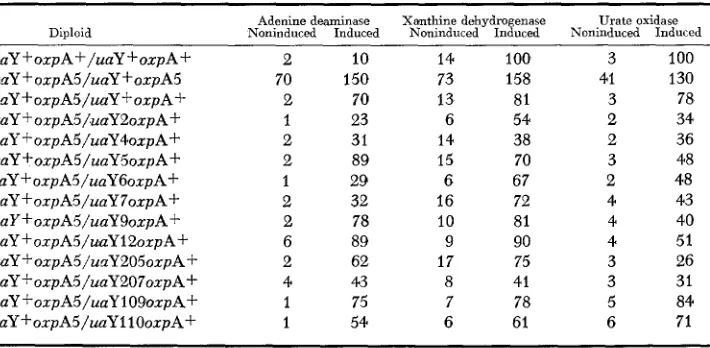
Table 6 shows that the constitutivity resulting from the oxpA5 mutation is
completely recessive to the wild type and that in no case is oxpA5 dominant to
a uaY- mutation, i.e., in n o case a uaY+ oxpAS/uaY- oxpA+ heterozygous dip-
loid is constitutive. In most cases, uaY- oxpA+/uaY + oxpA5 heterozygous dip-
loids show a dose effect vis-2-uis inducibility of the three enzymes tested; the
uay REGULATORY GENE 197
TABLE 6
Complementation of oxpA5 and uaY- mutations*
Diploid Noninduced Adenine deaminase Induced Xanthine dehydrogenase Noninduced Induced Noninduced Urate oxidase Induced
uaY +oxpA f / u a Y +oxpA f
uaY +oxpAS/uaY +oxpA5 uaY +oxpA5/uaY +oxpA+ uaY + oxpA5/uaY2oxpA+ uaY+ oxpA5/uaY4oxpA+ uaY+oxpA5/uaYSoxpA+ uaY+ oxpA5/uaY6oxpA+ uaY + oxpAS/uaY 70xp A+ uaY +oxpA5/uaY9oxpA+ uaY f oxpA5/usiY12oxpA+
uaY+oxpA5/urrY205oxpAf uaY f oxpA5/uaY207oxpA+
uaY ~oxpA5/uaY109oxpA+ uaY+oxpA5/uaY1 10oxpA+
2 10
70 150
2 70
1 23
2 31
2 89
1 29
2 32
2 78
6 89
2 62
4 43
1 75
1 54
14 100 73 158
13 81
6 54
14 38
15 70
6 67
16 72
10 81
9 90
17 75
8 41
7 78
6 61
3 100
41 130
3 78
2 34
2 36
3 48
2 48
4 43
4 40
4 51
3 26
3 31
5 84
6 71
* All procedures are as in Table 2 except that the results are expressed in percent of the wild- type diploid induced with 2.7 PM 2-thiouric acid, grown and assayed in parallel. "Induced" refers to induction with 2.7 p~ 2-thiouric acid. Only the relevant genotype of the diploids is included, forcing markers have been omitted.
Fine structure map indicating that oxpA5 maps to the left of 6 uaY- mutations:
Preliminary crosses showed the order of markers in the region of linkage group
VI11 comprising uaY to be cnxB, cbxC, uaY, fpaD. The distance between cbxc
and uaY was approximately 0.5 CM and the distance between uaY and
fpaD
was approximately 6 cM. In preliminary crosses, oxpA5 mapped approximately
0.1 cM from uaY9, and between cbxC and fpaD (cbxC carboxin resistance,
GUN ATILLEKE, ARST and SCAZZOCCHIO 1975; fpaD p-fluorophenylalanine re-
sistance, SINHA 1969). To establish the relative order of oxpA5 and mY2, uaY5, uaY8, uaYIO9 and uaYllO the following strategy was used. The cbxC34 oxpA5 and fpaD43 uaY- double mutants were constructed by crossing. Recombinants in the cbxC34-pfaD43 interval were selectcd by plating ascospores from crossed fruiting bodies on minimal medium containing urea as nitrogen source and 50 ,ug/ml carboxin and 10 pg-ml p-fluorophenylalanine. Only events that result from an odd number of crossovers i n this interval are detected by this procedure.
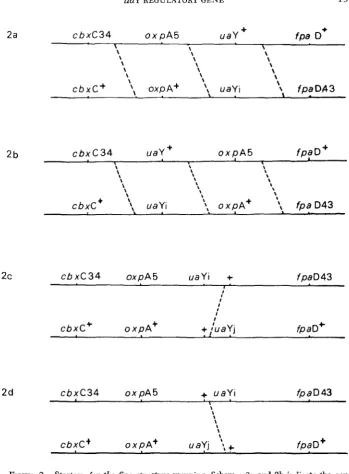
Let uaYi be any one uaY- mutation. If the order is cbxC34, oxpA5 uaYi
fpaD43 single crossovers could yield oxpAf uaY-, OXPA- uaY- and OXPA- uaY+
progeny but a triple crossover would be necessary to obtain oxpA+ uaY+ prog-
eny. Conversely, if the order is cbxC34 uaYi oxpA5 fpaD43 the triple crossover
class would be uaY- OXPA-. We did not know a priori whether a uaY- OXPA- re-
combinant could be distinguished phenotypically from uaY- oxpA+, but the
presence or absence of uaY + oxpA+ wild-type recombinants would have sufficed
198 C. SCAZZOCCHIO. N. S D R I N A N D G. O N G
every cross and were easily distinguished from uaY- oxpA+ strains. In several
cases the genotype of the double mutants was confirmed by outcrossing and
recovering uaY+ oxpA- strains. The strategy for the mapping of oxpA is illus-
trated in Figure 2.
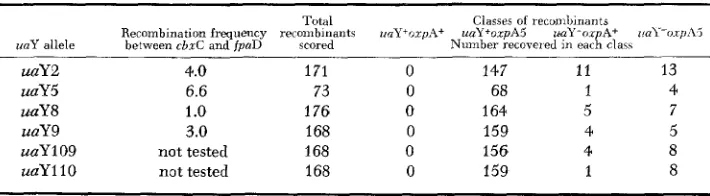
Table 7 gives the results of the six crosses. These crosses establish for each
alle1e the order cbxC34 oxpA5 uaYi fpaD43. Taking 4.8 cM as the unweighted
mean distance between cbxC34 and fpaD93 the recombination frequency be-
tween cbxC34 and oxpA5 would be 0.3 cM and the mean recombination fre-
quency between oxpA5 and uaY 0.5 cm.
Fine structure mapping, the order of the uaY- alleles: The uaY alleles were
placed in a linear order by crosses involving external markers in a manner
analogous to that used by PRITCHARD (1955) in his classical mapping of the adE
locus of A . nidulans. We isolated strains carrying uaY2, uaY5, uaYlO9 and
uaY 11 0 in coupling with cbxC34, oxpA5 and fpaD43 (cbxC carboxin resistance,
oxpA oxypurinol resistance, jpaD p-fluorophenylalanine resistance, above).
These were crossed to cbxC+ oxpA+ fpaD+ stsains carrying a different uaY
mutation. The uaY+ recombinants were selected on minimal medium with the appropriate supplements and hypoxanthine as sole nitrogen source on which uaY- mutants do not grow. The order of the genes in this region of linkage group VI11 is cbxC o x p A uaY fpaD (see above). Let uaYi be a mutation in coupling
with cbxC34, oxpA5, and fpuD43 and uaYi, a different uaY mutation in repul-
sion. If the order is cbxC oxpA uaYi uuYj f p D wild-type recombinants result-
ing from single crossover events will be cbxC+ Q X ~ A + uaY+ fpaD43; if the
order is cbxC oxpA uaYj uaYi fpaD single crossover events in the same interval
would result i n strains of genotype cbzC34 oxpA5 uaY+ fpaD+. In each case,
TABLE 7
Location of oxpA5 relatiue to uaY alleles
Total Classes of rccumLinants
Recombination frequency recombinants ~inY+oxpA+ uaYtoxpA5 w Y - o x p A + i!a\l-o.iphj
unY allele between cbxC and fpaD scored Number recovered in each clacs
uaY2 4.0 171 0 147 11 13
uaY5 6.6 73 0 6s 1 4
uaY8 1 .o 176 0 164 5 7
uaY9 3.0 168 0 159 4 5
uaY 1 09 not tested 168 0 156 4 8 u a Y l l 0 not tested 168 0 159 1 8
2 a
2b
2c
2d
uay REGULATORY GENE 199
fDa
o+
+
c b x C 3 4 o x p A 5 uaY
\ \ \
\ \ \ \ \
\
\ \ \
\ \
\
\ \
\ \
\
c b x C + oxpA+ \\ uaYi \ fpaDA3
c b x C 3 4 uaY + o x p A 5 f p a D +
\
\ \ \
\ \ \
',
\\ \ \
\ \
\ \ \
\ \ \ \ *
cbxC'
.
uaYi 1', OXPA+ \, f p a D43c b x C 3 4 o x p A 5 uaYi
+
fpaD43,
I
I
I I
I
I
cbxC+ oxpA'
+
fuayi fDaDCc b x C 3 4 o x p A 5 + uaYi fpaD43
\
\ \
\
\
\
\ !
cbxCt OXPA+ uayj 'B, fpaD+
200 C- %AZZOCCHIO, N . S D R I N A N D G . O N G
the reciprocal class would necessitate a triple cross-over event. This strategy is illustrated in Figure 2.
Gene conversion (and double crossover) events would result in strains with
parental configuration of flanking markers (cbxC34 oxpA5 uaY+ fpaD43 or
cbxC+ oxpA+ uaY+ fpaD+)
.
Only single crossover events are used to establishthe order of any two markers. Possible reversion events (or wild-type contam-
inants) would contribute only to the gene conversion class and would not affect the establishment of a n order. Nevertheless, to gain information on the pattern
of gene conversion, we attempted to prevent contamination and monitored the
reversion rate. No uaY- allele tested to date reverts spontaneously with a fre-
quency higher than 1
x
The reversion rate was also investigated in crosseshomozygous for uaY2, uaY5, uaY109 and uaYllO and heterozygous for the
external markers. Between 620,000 and 1.755.000 progeny were plated with no
wild-type revertants recovered. For clarity, we assumed in the above argument
that oxpA5 maps to the left of every
my-
allele. This has been rigorously estab-lished previously only for uaY2, uaY5, wY8, uaY9, uaY109 and uaY110. If in
any cross the order is uaYj oxpA5 uaYi two types of uaY+ recombinants could
be obtained, with, respectively, a parental and a recombinant configuration of
cbxC and oxpA alleles. In all the crossover progeny scored in all the crosses per-
formed, oxpA and cbxC alleles were in a parer?tal configuration, placing oxpA5
to the left of all uaY alleles tested ( U & infra).
Thirty-four crosses were performed i n which a given uaY allele in coupling
with c b x C f , o x p A f and fpaD+ was crossed with either uaY2, uaY5, ~ 1 0 9 or
uaY 1 1 0, these alleles in coupling with cbxC34, oxpA5 and fpaD43. These crosses
allowed us to place any uaY allele in one of the five intervals defined by the four
“test” mutations. A sample of these crosses is shown in Table 8. The single cross-
over classes generate a consistent unambiguous order of the uaY alleles, as shown
in Figure 3. Six alleles, uaY110, uaY5, uaY7, uaY2, uaYlO9 and u a Y l 2 have
been placed in a linear order. Three alleles, uaY8, uaY205 and uaY207 map to
the left of uaYl10, uaY6 and uaY9 map in between uaY5 and uaY109 while
uaY4 is anywhere to the left of uaY2. The following points can be established:
1. It is possible to locate unambiguously. by conventional crosses with flank-
ing markers on both sides, every uaY allele. The map derived from the procedure
detailed above (MATERIALS AND METHODS) is without exception self-consistent.
I n each cross only one class of u a Y f recombinants showing recombination of ex-
ternal markers has been recovered. This was true even when a considerable
number of recombinants wcre scored (uaY2
x
uaY207, uaY5 x uaY205,uaY109 x u a Y 2 ) . This and the self-consistency of the map allowed us to order
two alleles (uaY5 and uaY7) on the basis of only one recombinant obtained in
crosses with uaY 110 and uaY5 respectively.
2. Recombination frequencies are not a useful parameter f o r fine structure
mapping in this system. While some agreement between the map in Figure 3
t D
2
2
I
5
2
=
a , ?
c l 2
aa
-2 &
$
2
-U
g
B
s
d
.L U
g
uay REGULATORY GENE 201
b M
8.S
a5.5
P g
7 5 3 U ) c )
54
2 8.;J
z.52-3
ti3
? 2
B O25 Q
E b
a <
$2
$ “ :$
, E.-“
$ 8
z a.!3G
% g
47
z u- 2 E
$2
2 3
: ?J
2 5
$2
’2e $
B
q A
$ a,
.z
.e c $g g m a
3 b a e . 2
$ 3
5 4ztls
23
G G &,S$2
* 3+
g g
vj
& j
asu
z
.2 34-2 m - 3 m 8 am . 9
*
” 2m
nza
%:U
8 0 0
2% x +
u 5 . - E 3
z :
$2;
2 8
3 2 %c)s
‘ 0 8 .“0‘
2-0
m 3$ 2 3
8 2
*-.ss
P
&yg.2
$ 2 G a l2,a2
$* ~ alG
a m h a c
& E ‘ $ B O
W c O
& ‘ S E
5;* “ o m3% 6 0 - .2.22?$=
9
-Su)
E-?$
2i;’&C 3 6
2.2
h o m 148
3 ,
“S
.rl 3::
5 M c y
g.5 ? Z
+ a
’@ $
” $ 0
9 8
B - 4 5 m ” a
- . 3 s!-
E T
9:
.$$
zm
202 C . SCAZZOCCHIO, N. S D R I N A N D G . O N G
c b x c oxpA uaY fpa D
- - -
-
uaY8 uaYll0 uaY5 uaY7 uaY2 uaY109 uaY12
uaY205
ua Y207
FIGURE S.-Fine structure map of the uaY gene. The uaY alleles have been placed in the order derived from 34 crosses described in the text and in the legend to Table 8. The alleles have been placed equidistantly, ignoring recombination frequencies (see text). The uaY8, uaY205 and uaY207 map t o the left of uaYllO (Table 4) and have not been mapped in relation t o each other; uaY6 and uaY9 have not been mapped in relation to uaY2 and have thus been positioned between uaY5 and uaYlO9. The uaY4 has only been mapped in relation t o uaY2 and uaY109 and can map anywhere to the left of uaY2. The left of the drawing indicates arbitrarily the cbzC oxpA side (centromere proximal) and the right the fpaD side (centromere distal).
using the reassortment of external markers and recombination frequencies. Thus we ignored recombination frequencies and derived qualitatively the map order
shown in Figure 3 exclusively from the class of progeny showing recombination
of external markers in each cross.
3 . As anticipated, all uaY- alleles map to the right of o x p A 5 . W e have shown that uaY8 maps to the right of o x p A 5 . The only alleles that could map to the
left of uaY8 are uaY4, uaY205 and uaY207. Thus, only these three alleles could
map to the left of o z p A 5 . uaY4 was crossed to uaY2 and uaY109; a total of nine
uaY + recombinants showing reassortment of external markers was obtained.
In all of these the cbxC and o x p A markers remained in the parental configura-
tion. Strains carrying uaY205 and uaY207 have been crossed to the four map-
ping strains and a total of 28 and 41 uaY+ straim showing recombination of
external markers were obtained, respectively. In all cases the cbxC and oxpA
markers remained i n the parental configuration, providing evidence that these alleles map also to the right of o x p A 5 .
4. uaY207 is a nonrevertible allele (HARTLEY 1969) ; it recombines with uaYl10
and maps to the left of it. Assuming that the mutant alleles represent a random
population along the gene, if uaY207 is a deletion it is probably a relatively short one.
5. The two mutations that show a partial uaY phenotype, uaYlO9 and u a Y l l 0
are clearly within the uaY gene. They do not seem to be clustered as they are
separated by a t least five different sites able to mutate to the more stringent uaY
phenotype.
6. In most crosses, besides uaY+ recombinants showing reassortment of ex-
ternal markers, a class of uaY+ strains nonrecombinant for external markers
uay REGULATORY GENE 203
conversion” class, without prejudgement as to the mechanism underlying their appearance.
DISCUSSION
Twelve uaY alleles have been characterized for their adenine deaminase,
xanthine dehydrogenase and urate oxidase activities. The ten nonleaky alleles
uaY2, 4, 6 , 7 , 8, 9, 12, 205 and 207 show uniform noninducibility of the three
enzymes. In contrast uaYIO9 and uaY1IO are somewhat inducible for adenine
deaminase and xanthine dehydrogenase, but highly inducible for urate oxidase.
Preliminary results of PERMAUL and SCAZZOCCHIO (unpublished) suggested that
adenine deaminase was noninducible in uaY- mutations. This has now been
confirmed for all 12 uaY alleles. All mutations result in similar impairment in
uptake, as judged qualitatively by resistance to 2-thiouric acid.
The “leaky” alleles uaY 109 and
uaY
1 10 are particularly interesting. Finestructure mapping established that uaY109 and u a Y l l 0 map within the uaY
gene and are not clustered, as they are separated by uaY5, uaY7, uaY2, uaY6
and uaY9. An interpretation of the properties of these alleles would be that they
are affected in the DNA (or RNA) binding site of the uuY protein, the specific
differences in inducibility being related to differences in the cis-acting regions adjacent to the structural genes.
The intermediate levels of enzyme activity in uaY-/uaY f diploids are indica-
tive of a dose effect and provide no evidence of the mode of control. In fact, when
coupled with a dose effect, either a positive or a negative mode of control could
give the results in Tables 4 and 5. A similar dose effect was found by COVE
(1969) for the nirA gene and by SCAZZOCCHIO, HOLL and FOGUELMAN (1973)
for the uplA gene of Aspergillus nidulans.
The phenotype of deletions in the uaY gene, the frequency of mutations t o the
uaY- phenotype and the reversion pattern of uaY point mutants show that the
uaY- phenotype arises from loss of function, i.e. that uaY+ acts by eliciting rather
than preventing the expression of structural genes ( SCAZZOCCHIO unpublished).
Thc dominance data for our 12 alleles are thus consistent with a positive mode
of control in which the concentration of uuY regulatory protein in hetero-
zygous diploids is lower than needed to elicit the full expression of two sets of
structural genes.
In previous work (DARLINGTON, SCAZZOCCHIO and PATEMAN 1965; ALDERSON
and SCAZZOCCHIO 1967; ALDERSON and HARTLEY 1969) mutations were assigned
to the uaY gene on the basis of a double stab heterokaryon complementation test.
This is invalid as the action of uaY is limited to the nucleus (SCAZZOCCHIO and
DARLINGTON 1967; SCAZZOCCHIO and ARST 1978). In this publication we have
shown that the 12 alleles tested belong to the same complementation group. Our
complementation grid included two alleles ( m y 1 09 and uaY 1 I O ) separable by
recombination that necessarily have a partially functional uaY product. Intra-
cistronic complementation could be expected if the uaY product were present
as an oligomer as is the case for the lac (RIGGS and BOURGEOIS 1968) and
204 C. SAZZOCCHIO. N . SDRIN A N D G . O N G
complementation grid provides strong evidence that mutations with either the
“unleaky” or “leaky” uaY phenotypes represent events that affect the same
gene; the absence of intracistronic complementation is not significant in a sample
of this size.
The nature of the pseudoconstitutive mutation oxpA5 merits some discussion.
Xanthine dehydrogenase catalyzes the oxidation of hypoxanthine to xanthine
and of xanthine to uric acid. The necessity for a n active xanthine dehydrogenase
(purine hydroxylase I, LEWIS, et al. 1978) for the constitutive phenotype Qf
oxpA5 to be expressed could be rationalized by proposing that a pleiotropic effect
of this mutation was to make the control system respond to low concentrations
of uric acid produced through the noninduced levels of xanthine dehydrogenase
(approximately 10% of the wild type induced level; see for example Tables 3
and 6). As uric acid induces xanthine dehydrogenase a shift upward in the sensi- tivity to uric acid induction would result in production of more uric acid until a new steady state is achieved through the induction of urate oxidase. An equiv- alent proposal would be that oxpA5 modifies the control system making it sensi-
tive to low concentrations of xanthine also produced via xanthille dehydrogenase
catalysis.
An alternative possibility is that the same kind of autogenous regulation
(GOLDBERGER 1974; COVE 1974) exists by which the xanthine dehydrogenase
protein is involved in its own induction and that of the other enzymes of the pathway. A large number of xanthine dehydrogenase structural gene mutants
are normally inducible for the other enzymes of the pathway (see for example
DARLINGTON, SCAZZOCCHIO and PATEMAN 1965 and SCAZZOCCHIO and DARLING-
TON 1968). The mutation used in this study, hxB13, is a totally unleaky, re-
vertible, complementing, mutation mapping in the hxB gene ( SEALY-LEWIS,
LEE and SCAZZOCCHIO, unpublished) .The hxB gene codes either for a small
subunit common to both xanthine dehydrogenase and purine hydroxylase I1
(SCAZZOCCHIO, HOLL and FOGUELMAN 1973) o r for a mmmoR post-translational
modification ( SCAZZOCCHIO 1980). The xanthine dehydrogenase present i n
hxBl3 strains is immunologically identical to the wild-type protein, has the
same molecular weight and conserves the ancillary NADH dehydrogenase ac-
tivity. Even the less leaky hxB mutations seem to affect only the ability to hy-
droxylate the specific substrates ( SCAZZOCCHIO 1980, SEALY-LEWIS. LEE and
SCAZZOCCHIO, unpublished). Thus all the evideme points to the role of xan-
thine dehydrogenase in the expression of the constitutivity that results from the oxpA5 mutation as being entirely metabolic.
An attractive early hypothesis (discussed in COVE 1970) was that oxpA5 repre-
sents a mutation in uaY resulting in tighter binding of uric acid (or xanthine).
The tight linkage between oxpA5 and uaY- mutations was thought to be con-
sistent with this hypothesis. This hypothesis is difficult to reconcile with the
data presented here. The mapping of oxpA5 to one side of every uaY- allele
tested is necessary but not sufficient evidence to place oxpA5 in a gene different
from uaY. The uniform complementation of oxpA5 with all the uaY- alleles
tested, provides compelling evidence for the existence of a new locus. If oxpA5
uay REGULATORY GENE 205
function it should be dominant to the wild type and at least to some uaY alleles,
noticeably to the putative deletion uaY207, a mutation that results in the absence
of any effector binding protein ( PHILIPPIDES and SCAZZOCCHIO 1981 )
.
We propose that oxpA5 defines a gene different from uaY and possibly ad-
jacent to it and that constitutivity and oxypurinol resistance are the pleiotropic expression of the same mutational event. The resistance to oxypurinol is not a
result of the constitutivity of any enzyme or permease under uaY control as
even oxpA5 uaY- double mutants are fully resistant. The fact that they are dis-
tinguishable from oxpA+ uaY- strains indicates that oxpA+ is functional in uaY-
strains, in other words oxpA is not stringently ucder the control of uaY. This
result also argues against oxpA5 being a new kind of allele in the uaY locus (vide
supra).
The frequency of mutation of the OXPA- phenotype (whether selected by oxy-
purinol resistance or by constitutivity) and its complete recessivity to oxpA+ indicate that both oxypurinol resistance and the constitutive phenotype are the result of loss rather than modification of function.
It can be proposed that the oxpA gene specifies a function resulting in a re- duction of the local concentration of inducer in a cellular compartment to which
the uaY product is restricted. Nuclear limitation of the uaY product has been
proposed on the basis of entirely different evidence (SCAZZOCCHIO and DARLING-
TON 1967; SCAZZOCCHIO and ARST 1978) ; and both uric acid and xanthine are
toxic to the cell when allowed to accumulate
(DARLINGTON
and SCAZZOCCHIO1967; LEE and SCAZZOCCHIO unpublished). If this hypothesis is correct, we need
to explain why oxpA5 results in increased sensitivity to induction by endogenous
uric acid (or xanthine) while resulting in efficient exclusion of the xanthine analogue oxypurinol. It could be argued that the target of oxypurinol toxicity
lies outside the compartment containing the target of induction, e.g., that induc-
tion occurs in the nucleus, while oxypurinol toxicity occurs in the cytoplasm. Alternatively, it could be proposed that a permeation mechanism acting in both directions, according to the concentration gradient, is absent in oxpA5, and that
this results in accumulation of inducer (s) and exclusion of oxypurinol from the
same cellular compartment. Previous work has established that uric acid but
not xanthine is an efficient inducer of activities under uaY control ( SEALY-LEWIS,
SCAZZOCCHIO and LEE 1978). Our in uiuo experiments did not establish whether xanthine is an inefficient inducer because it is not a ligand of the uaY protein o r because it is efficiently excluded from the nucleus, while uric acid is not. The
recent isolation of a protein likely to be coded by WY (PHILIPPIDES and SCAZZOC-
CHIO 1981) and the construction of oxpA5 strains completely blocked in xan-
thine breakdown (SEALY-LEWIS, SCAZZOCCHIO and LEE 1978) will allow a direct
answer to this question.
The fine structure mapping of the uaY alleles show some preliminary trends
bearing on the pattern of gene conversion within the uaY gene. While in at least
one case (uaYIO9 x uaY2) both alleles seem to convert with similar frequencies,
in others strong bias is observed. The three “leftward” alleles-uaY8, uaY205