THE DEVELOPMENT OF GENERIC COMPETENCES IN
MALAYSIAN CIVIL ENGINEERING PROGRAMMES:
A CASE STUDY
YUSMARWATI YUSOF
A thesis submitted in partial fulfilment of the requirements of the CASS School of Education and Communities, University of East London for the
Degree of Doctor of Philosophy
ii
A
CKNOWLEDGEMENTSMy supervisors:-
Professor John Joseph Preston who gave me the support, advice,
encouragement and patience in order to complete this thesis.
Professor Peter Wesley Martin, my late supervisor who not only acted as a
supervisor but also as a friend and colleague who always give support and
motivation to me in order to complete the study.
Dr. John Michael Trushell and Dr. Mathias Urban
Whose guidance, support, help and advice were very important to me.
And:-
Mrs Veronica A. Burton who was not just a research administrator who helped
me with administration issues but also was a friend who never refused to help me
when I needed her support. Also appreciation goes to Professor D.C.
Wijeyesekera, who never refused to help in my research study when I needed
him.
All my colleagues at University of East London and Universiti Tun Hussein Onn
DEDICATION
“ALHAMDULILLAH”
This thesis is dedicated to my lovely husband (Adnan), my children
(Nurbatrisyia, Danish and Darwisy) who were always with me in what ever
situation. Thanks a lot for your patience and support.
Not forgetting to my late Father (Hj.Yusof), my Mum (Hjh. Mardziah), my
Father in law (Hj. Zainorabidin), my Mother in law (Hjh. Mahanom) and all
family members who gave me support, encouragement and motivation during my
iv
Abstract
This study focuses on generic competences that have been considered to be lacking in graduates from Malaysian polytechnics specifically their problem solving, critical thinking, communication skills, and team building. The argument concerning generic competences has focused upon teachers' pedagogical approaches and their relation to students' learning. There is therefore a need to explore innovative learning environments which will help students to improve their attitudes and skills as well as their learning achievements, with regard to these generic competences. The creation of a hybrid teaching approach was proposed in order to consider whether this would enhance students’ generic competences, as well as to enhance their academic achievements. This study is significant and original in that it aimed to establish an alternative pedagogical approach in teaching engineering subjects at polytechnics and assesses its validity. The approach was based on the combination and integration of collaborative learning and metacognitive strategies to produce a hybrid system (HybCoMet Strategy). A central objective of this study was to investigate the effectiveness of the instructional module using the HybCoMet Strategy compared to the more traditional approaches. The study used both quantitative and qualitative approaches in order to obtain the data including: questionnaires distributed to students, pre and post-test quasi-experiments design, diary methods and semi structured interviews with lecturers. The quantitative data was used to support the qualitative data in order to triangulate the study. The First Semester Students in Civil Engineering Courses from three polytechnics and lecturers who were teaching the selected engineering subject were selected as a sample. Findings from this study show that the pattern of teaching and learning processes in the majority of polytechnics under investigation were more traditionally focused with an emphasis on teacher-centred approaches. By introducing the HybCoMet Strategy, students considered that the hybrid classroom helped to establish an atmosphere in which they felt more valued and more comfortable. Above all, it helped students to think critically; solve complex problems; write and speak effectively; have respect for others; be able to adapt to change and be ready to engage in lifelong learning. The HybCoMet Strategy, it is considered, can challenge students in their learning so that, in employment, they will be able to transfer this learning to workplace environments.
TABLE OF
C
ONTENTSCONTENT PAGE
SPECIMEN TITLE PAGE i
ACKNOWLEDGEMENTS ii
DEDICATION iii
ABSTRACT iv
TABLE OF CONTENTS v
LIST OF TABLES xi
LIST OF FIGURES xiv
LIST OF ABBREVIATIONS xvi
LIST OF APPENDIX xviii
CHAPTER 1: INTRODUCTION
1.1 Overview of the Study: The Malaysian Context and the Need for ‘Hybridity’
1
1.2 Personal Perspective and Experience 5
1.3 Statement of the Problem 6
1.4 Aim and Objectives of the Study 10
1.4.1 Aim
1.4.2 Objectives
10 11 1.5 Significances of the Study 11 1.6 Key Concepts in this Study 12
1.6.1 The Teaching Approach
1.6.2 Collaborative Learning 1.6.3 Metacognitive Strategies 1.6.4 The Hybrid Approach and its Relavance to the Study
1.6.5 Generic Competences
vi
CONTENT PAGE
CHAPTER 2: TECHNICAL AND VOCATIONAL EDUCATION (TVE) IN MALAYSIA: THE NEED FOR GENERIC
COMPETENCES
2.1 Introduction 25
2.2 Country Context 27
2.3 The Malaysian Education System 28
2.3.1 The Development of the Education System 2.3.2 The National Curriculum
28 31 2.4 Technical and Vocational Education (TVE)
36 2.4.1 Development of the Tecnical and Vocational Education and
Training (TVET) System
2.4.2 Malaysian Polytechnics: Programmes and Structures
37 43
2.5 Generic Competences : Contextual Issues and Conceptual Perspectives
45
2.5.1 The Need for Generic Competences
2.5.2 The Concept and Definition of Competences 2.5.3 Core Perspectives on Competences
2.5.4 The Malaysian Qualification Framefwork (MQF) 2.5.5 Competences and Workplace Learning
2.5.6 Generic Competences and Learning Theories
45 48 50 52 53 56 2.6 Conclusion 59
CHAPTER 3 : LITERATURE REVIEW AND CONCEPTUAL FRAMEWORK OF ‘HYBRIDITY’
3.1 Introduction
60
3.2 Pedagogical Approaches 61
3.2.1 Approaches to Learning 3.2.2 Approaches to Teaching
3.2.3 Common Teaching Approaches in Polytechnic 3.2.4 Traditional Teaching Methods
61 65 66 67
3.3 Collaborative Learning 72
3.3.1 Collaborative Learning and Team Building Skills 3.3.2 Collaborative Learning and Communication Skills
CONTENT PAGE
3.3.3 Collaborative Learning and Critical Thinking and Problem Solving Skills
3.3.4 Potential and Limitation of Collaborative Learning
3.3.5 Combining Collaborative Learning with Other Approaches
75 76 78
3.4 Metacognitive Strategies 79
3.4.1 Core Concepts of Metacognition 3.4.2 Metacognitive Strategies for Successful Learning: Evidence
From Literature
81 83
3.5 A Hybrid Conceptual Framework : Bringing Together Collaborative and Metacognitive Strategies
85
3.5.1 Justification for Proposing a Hybrid of Collaborative and Metacognitive (HybCoMet) Strategy
86
3.6 The Development of the HybCoMet Strategy 89 3.6.1 Towards the Development of the HybCoMet Instructional
Module
3.6.2 The Potential Beneficial and Limitation of the HybCoMet Strategy
91 95
3.7 Conclusion 96
CHAPTER 4: RESEARCH METHODS AND INSTRUMENTATION
4.1 Introduction 98
4.2 Research Design 99
4.2.1 Case Study
4.2.2 Quasi Experimental Design within the Case Study
99 101
4.3 Selection of Samples 103
4.3.1 Case Study Locations 4.3.2 The Course Module
4.3.3 Respondents and Sampling Procedure 4.3.4 Ethical Issues
103 105 105 107
4.4 Selections of Research Methods 110
4.5 Research Plan and Data Collection Process 119
viii
CONTENT PAGE
4.6.1 Survey
4.6.2 Semi Structured Interviews 4.6.3 Pre Test and Post Test 4.6.4 Students Diaries 4.6.5 Triangulation of Data
123 126 127 128 130
4.7 Data Analysis and Administration 130
4.7.1 Questionnaires
4.7.2 Semi-structured Interviews
4.7.3 Pre-Test, Post- Test and Students’ Log Sheet
132 132 133
4.8 Access and Research ‘Journey’ 134
4.9 Conclusion 139
CHAPTER 5: FINDINGS 1: CURRENT TEACHING PRACTICES IN MALAYSIAN POLYTECHNICS
5.1 Introduction 141
5.2 Analysis of Current Teaching Approaches: Lecturers’ Perspectives 142 5.2.1 Lecturers’ Background
5.2.2 The Most Common Teaching Methods and Materials/Aids Employed by Lecturers
5.2.3 Challenges Faced by the Lecturers in the Quest for Better Teaching Practice and Barriers to the Use of Alternative Approaches to Teaching and Learning
142 147 150
5.2.4 Lecturers’ Views on Improving Teaching
5.2.5 Discussion on Lecturers’ Teaching Practices in Polytechnic
160 162 5.3 Analysis of the Current Teaching Approaches: Students’ Perspective 163
5.3.1 Demographic Details and Backgrounds of the Students 5.3.2 The Most Common Teaching Approaches Employed in
Polytechnics
5.3.3 Analysis of the Current Teaching Materials/Aids Employed in Polytechnics
5.3.3.1 Discussion on the Most Common Teaching Materials/ Aids Used in the Polytechnics
166 173 174
178 5.3.4 Analysis of the Current Teaching Methods at Polytechnic 180
5.3.4.1 Discussion on the Most Common Teaching Methods Employed in the Polytechnics
CONTENT PAGE
5.3.4.2 Factor Analysis on the Most Common Teaching
Approaches (Methods and Materials/Aids) Employed in the Selected Polytechnics
5.3.4.3 Analysis of the Relationship between the Teaching and Learning Strategies
184
188
5.3.5 Students’ Perceptions on Lecturers’ Teaching Strategies 191 5.3.5.1 Discussion on the Teaching Delivery Strategies
5.3.5.2 Factor Analysis on Lecturers’ Teaching Strategies
197 199 5.3.6 Analysis on the Element of Students’ Generic Competences 202
5.3.6.1 Discussion on the Element of Students’ Generic Competences
5.3.6.2 Analysis of the Relationship between the Variables
208 210 5.4 Students’ Views on Improving Learning 212
5.5 Summary 217
CHAPTER 6: FINDINGS 2: THE EFFICACY OF THE HybCoMet STRATEGY IN IMPROVING GENERIC COMPETENCES AND LEARNING PERFORMANCE.
6.1 Introduction 221
6.2 Analysis of the Application of the HybCoMet Strategy towards Improving Students’ Generic Competences.
222
6.2.1 Students Demographic
6.2.2 Influence of the HybCoMet Strategy to the Improvement of Students’ Generic Competences.
223 224
6.2.2.1 Discussion on the Influence of the HybCoMet Strategy in Improving Students’ Generic Competences.
6.2.2.2 Comparison of Students Level of Generic Competence Before and After the Intervention with the HybCoMet Strategy.
231
232
6.3 The Effectiveness of the HybCoMet Strategy in Improving Generic Compentences and Attitudes towards Learning.
235
6.3.1 Students Attitude towards Learning. 6.3.2 Students’ Level of Generic Competences
x
CONTENT PAGE
6.3.3 Discussion on the Effectiveness of the HybCoMet Strategy in Improving Generic Competences and Attitudes towards Learning.
242
6.4 The Differences In Responses Between Polytechnics. 244
6.5 Students Levels of Generic Compentencies Through the HybCoMet Strategy: Triangulation from the Diary Method
249
6.6 Comments and Suggestion to Improve the HybCoMet Strategy 252 6.6.1 The Positive Qualities of the HybCoMet Strategy
6.6.2 The Negative Qualities of the HybCoMet Strategy
252 254 6.7 Analysis on the Application of the HybCoMet Strategy in Improving
Learning Performance.
256
6.8 Summary 262
CHAPTER 7: REFLECTIONS ON THE RESEARCH STUDY: DISCUSSION AND CONCLUSIONS
7.1 Introduction 264
7.2 Research Overview: The Importance of a Hybrid Approach
265 7.3 Discussion of the Findings with Regard to the Research Questions 267
7.3.1 The Current Teaching Approaches in Polytechnics 7.3.2 Traditional Approaches versus the HybCoMet Strategy 7.3.3 The Contribution of HybCoMet Strategy to the Development
of Generic Competences
268 269 271
7.4 Policy Implications: The Used of the Hybcomet Strategy in a Centralised System.
273
7.5 Practice Implications: Generic Competences for Lifelong Learning 275
REFFERENCES 280
L
IST OFT
ABLESNO. OF TABLE
TITLE PAGE
Table 2.1 The Seven Skill Groups. 46
Table 2.2 MQF Domains of Learning Outcomes 53 Table 2.3 Learning Theories: Four Orientations to Learning 57 Table 4.1 Models of Research Methods and Instruments in
Metacognition
111
Table 4.2 Models of Research Methods and Instruments in Collaborative Learning
114
Table 4.3 Data Collection Methods and its Purpose. 118
Table 4.4 Structure of Questionnaires 124
Table 4.5 Coefficient Reliability for Questionnaire. 126 Table 4.6 Summary of Data Collection Process 137 Table 5.1 Lecturers’ Biographical Background 143 Table 5.2 Structure of Questionnaire (Set 1) 164
Table 5.3 The Average Mean Group 165
Table 5.4 Distribution of Samples from Each Polytechnic 165 Table 5.5 Final Distribution of Samples from Each Polytechnic 166 Table 5.6 Distribution of Gender for the Student Sample 167 Table 5.7 Distribution of Ethnicity for the Student Sample 168 Table 5.8 Distribution of Students’ School Stream Backgrounds 169 Table 5.9 The Most Difficult Subject Learnt at the Polytechnic 171 Table 5.10 Aids/Materials Most Frequently Employed in the Classroom 175 Table 5.11 Ranking by Students of the Ten Most Popular Methods Used
by Lecturers when Delivering Classroom Lectures
181
xii NO. OF
TABLE
TITLE PAGE
Table 5.13 Summary of Items Loaded on each Theme 187 Table 5.14 Component Correlation Matrix for Teaching Approaches 189 Table 5.15 Variety of Strategies Utilised while Teaching 192 Table 5.16 Methods of Assessment and Evaluation of Students’ Learning
Performance
194
Table 5.17 Some Activities Conducted During the Learning Session 195 Table 5.18 Rotated Components Matrix (a) 200 Table 5.19 Correlations of New Component Matrix 201 Table 5.20 Level of Teamwork and Communication Skills 203 Table 5.21 Elements of Problem Solving and Critical Thinking 205 Table 5.22 Influence of the Institution’s Environment on the Future Life
of Students
207
Table 5.23 Comments & Suggestions to Improve the Teaching and Learning Process
213
Table 6.1 The Structure of Questionnaire (Set 2) 223
Table 6.2 Level of Agreement 223
Table 6.3 Students Abilities on Teamwork and Communication 226 Table 6.4 Critical Thinking and Commitment towards Learning 228 Table 6.5 Students Capability to Solve the Given Task 230 Table 6.6 Descriptive Statistics of Traditional Approaches and the
HybCoMet Strategy
233
Table 6.7 Paired Samples Statistics and Paired Sample Test for HybCoMet Strategy and Traditional Approaches
234
NO. OF TABLE
TITLE PAGE
Table 6.12 Descriptive Statistics for Students Learning Strategies and the HybCoMet Strategy.
245
Table 6.13 ANOVA for Learning Strategies and the HybCoMet Strategy 246 Table 6.14 Post Hoc Test for Student Learning Strategies 247 Table 6.15 Post Hoc Test for the HybCoMet Strategy 248 Table 6.16 Descriptive Statistic for the Level of Generic Competencies of
Students in Every Learning Task.
250
Table 6.17 What Students Liked About the HybCoMet Strategy 253 Table 6.18 What Students Disliked About the HybCoMet Strategy 254 Table 6.19 Paired Samples Statistics and Paired Sample Test for Control
Groups
260
Table 6.20 Paired Samples Statistics and Paired Sample Test for Experimental Groups
xiv
L
IST OFF
IGURESNO. OF FIGURES
TITLE PAGE
Figure 1.1 Conceptual Framework. 19
Figure 2.1 Map of Malaysia 27
Figure 2.2 The Relationship between National Policies, the Education System and Development.
35
Figure 2.3 The Education System in Malaysia 39 Figure 2.4 TVE and Training System Mapping 41
Figure 3.1 Corresponding Teaching Style 62
Figure 3.2 Kolb’s Learning Cycle 63
Figure 3.3 Two System View of Metacognition by Nelson and Narens 82 Figure 3.4 Concept for the Implementation of the HybCoMet Strategy 88 Figure 3.5 Structures of the HybcoMet Instructional Module 91 Figure 3.6 HybCoMet Learning Tasks (activities). 93 Figure 4.1 Diagram of Example Non-equivalent (Pre-test and Post-test)
Control Group Design.
102
Figure 4.2 A Sampling Procedure. 106
Figure 4.3 Research Methods Employed 118
Figure 4.4 Flowchart for Research Plan and Procedure 120 Figure 5.1 Lecturers Academic Qualification 144 Figure 5.2 Lecturers Experience in Teaching 144 Figure 5.3 Most Common Teaching Methods used 148 Figure 5.4 Most Common Teaching Aids and Materials used 149 Figure 5.5 Factors that Influenced Lecturers’ Choice of Teaching
Approaches.
151
Figure 5.6 Students’ Grade Achievements in the SPM 170 Figure 6.1 The Different Score Between Pre and Post Test in Control
Groups.
NO. OF FIGURES
TITLE PAGE
Figure 6.2 The Different Score Between Pre and Post Test in Experimental Groups.
259
Figure 7.1 The Relation Between Teachers, Students, Future Life, and the HybCoMet Strategy.
xvi
L
IST OFA
BBREVIATIONS7MP The Seventh Malaysian Plan
ADDIE Analysis, Design, Develop, Implement and Evaluate ADTEC Advanced Technology Centres
ANOVA Analysis of Variance
ASEAN Assocation of Southeast Asian Nations AQF Australian Qualifications Framework
CIAST Centre for Instructor and Advanced Skills Training
DPCCE Department of Polytechnic and College Community Education EFA Education for All
GCE General Certificate of Education HOT Higher Order Thinking
HybCoMet Hybrid of Collaborative and Metacognitive
IKBN Institut Kemahiran Belia Negara (National Youth Institution) ILO International Labour Office
LCD Liquid Crystal Display LOT Lower Order Thinking
MDG2 Millennium Development Goals MOE Ministry of Education
MOHE Ministry of Higher Education MQF Malaysian Qualification Framework
NCVER National Centre for Vocational Education Research NEP National Education Philosophy
OHP Overhead Projector PA Academic Advisor PBL Problem-Based Learning PCA Principal Component Analysis
RN Rukun Negara SD Standard Deviation
SMT Sekolah Menengah Teknik (Technical school) SMV Sekolah Menengah Vokasional (Vocational school)
SPM/MCE Sijil Pelajaran Malaysia (Malaysian Certificate of Education) SPSS Statistical Packages for Social Science
STAM Sijil Tinggi Agama Malaysia (Higher Malaysian Certificate for Religious
Education)
STPM Sijil Tinggi Pelajaran Malaysia (Malaysia Higher School Certificate
Examination)
TVE Technical and Vocational Educational (programmes) TVET Technical Vocational Education and Training (sector) UEL University of East London
UNESCO United Nations Educational, Scientific and Cultural Organization
UNEVOC International Centre for Technical and Vocational Education and Training UNDP United Nations Development Programme
xviii
L
IST OFA
PPENDICESNO. OF APPENDIX
TITLE
APPENDIX A The Design and Development of the HybCoMet Teaching Instructional Module.
APPENDIX A-1 Students Classroom Learning Time Table
APPENDIX 2-A List of Courses that Offered in Malaysian Polytechnics APPENDIX 2-B Syllabus and Curriculum for Concrete Technology APPENDIX 4-A Questionnaire Set 1
APPENDIX 4-B Questionnaire Set 2 APPENDIX 4-C Pre and Post Tests APPENDIX 4-D Interview Schedule APPENDIX 4-E Example of Log Sheet
APPENDIX 4-F Ethics Approval from the University of East London (UEL)
APPENDIX 4-G Approval Letter from the Malaysian Government (EPU) APPENDIX 5-A Correlation on Students Learning Strategies
APPENDIX 5-B Factor Analysis Test APPENDIX 6-A Example of Test Score
CHAPTER 1
INTRODUCTION
1.1 OVERVIEW OF THE STUDY: THE MALAYSIAN CONTEXT AND THE
NEED FOR ‘HYBRIDITY’
Malaysia is rapidly moving towards becoming an economically developed nation, with ‘Vision 2020’ highlighting the principal industrial and developmental aims that the government wishes to achieve by 2020. With a vision of becoming an industrialised nation by 2020 it is considered that Malaysia must be prepared to develop a well-educated, skilled and competitive workforce (Mustapha and Abdullah, 2001). From the perspective of education, this entails educating a highly-skilled and multi-skilled workforce, consisting of individuals who will have global mobility and who should be highly competitive, flexible, independent and critical thinkers who are able to use their knowledge as a commodity to survive within a context of intense global competition (Sipon, 2003).
Vision 2020 was proposed by former Prime Minister, Mahathir Mohamad, for future development in the country. The vision highlighted nine key challenges through which Malaysia would achieve the status of an industrialised and developed country. These challenges were expressed in terms of economy, national unity, social cohesion, social justice, political stability, system of government, quality of life, social and spiritual values, national pride and confidence (Mohd Kassim, 1992).
2
Accordingly, the MOE has always been concerned with both the quality and quantity of technical and vocational education (TVE), in order to produce more “knowledge workers” (Sipon, 2003, p. vi).
In its efforts to train sufficient numbers of young Malaysians to meet the challenges of 2020, a nationwide system of postsecondary education and training establishments (known as polytechnics) has been established. However, Malaysia now needs to further explore and understand an approach to teaching that will actively promote a learning environment which will help students improve not only their learning achievements but also their generic skills and attitudes. As discussed below, generic as well as narrow competences are increasingly important for economic development. Therefore a more expansive education system is needed with the students taking responsibility for their own learning in order to achieve a more generically skilled workforce capable of adapting to changing technologies and work demands (Abu Hassan and Navi Bax, 2003).
Students at any level of education should find their learning meaningful, seeing education as a continuing process in their lives that can prepare them for future needs. For example, Meng (2003) states that, with the vast changes in technology acquisition, skills knowledge is becoming much more important than the acquisition of content knowledge, adding that the traditional way of teaching and learning, i.e. rigid and expository teaching and passive learning, may no longer be effective in meeting the demands of students with “higher analytical and cognitive skills” (p. 31). As such, fundamental changes must be made to the teaching and learning process, in order to improve the teaching to students and subsequently increase their learning outcomes. A variety of approaches is available which may be useful in upgrading students’ understanding of learning concepts, and ultimately make the learning activities more meaningful to them (Tilestone, 2000). This particular research focuses upon the creation of a hybrid learning environment which provides the means to improve learning and enhance students’ generic competences (particularly those of problem-solving, critical thinking, communication skills and team building) that will be critically needed in the Malaysian workplace of the 21st century (Yusof, 2010).
The concept of ‘hybridity’ is particularly important to this study. Outside of the biological metaphor, in engineering terms an example of ‘hybridity’ is that of hybrid cars that are powered by a combination of electricity and a motorised engine. The conception of hybridity presented in this thesis is not dissimilar, being a combination of two or more substances (i.e. methods and materials, or learning technologies) with the aim to produce a more effective output (being generic skills). However, in the educational field, the term refers to a deeper meaning, as it focuses upon humans, not objects. In the education field, ‘hybrid’ refers to instructional strategies that incorporate several teaching methods/methodologies into the classroom learning process.
4
theoretical knowledge with practical skills, while incorporating social and generic skills, with the aim of promoting the active involvement of students and thus creating learners who are more independent. It is a vocational learning innovation that arises through my own professional practice. The strategy will be implemented and evaluated in the context of concept learning in technical and vocational education, focusing on engineering subjects at the polytechnic level. The aim of the study is not only to design and develop a hybrid instructional approach but to evaluate whether such a hybrid system helps to enhance students’ generic competences as well as their achievements and attitudes towards learning. The study will compare this new hybrid system with an existing teaching approach - that of the traditional teaching system employed at polytechnics. This is an original approach which has more general applications for learning in technical and vocational subjects.
The study sample consisted of first semester students studying Civil Engineering courses from three polytechnics. From this study sample, experimental and control groups were determined by stratified purposive random selection to create a quasi-experimental setting. The study was constructed utilising both a qualitative and quantitative approach, in order to obtain a comprehensive data set. The methods included a survey with two set of questionnaires, pre- and post-tests, evaluation of the students’ diaries and semi-structured interviews with the lecturers.
The development of the hybrid system is presented along with how it might be considered as an effective alternative to help overcome this problem. Finally, the aims and objectives of the study are presented, along with definitions of specific terms used and the overall structure of the thesis.
1.2 PERSONAL PERSPECTIVE AND EXPERIENCE
“Learning is not finding out what other people already know, but is solving our own problems for our own purposes, by questioning, thinking, and testing until the solution is a new part of our life” (Charles, cited in Meng, 2003, p.30).
After several years of teaching the technical subject; Water Supply Resources and Sanitary Systems, a course offered at the University of Tun Hussein Onn, Malaysia, I began to suspect that certain factors hindered my students’ performance. Students would attend a 50 minute lesson for every session in a week. The course content was delivered by lectures as the primary teaching method, with formative assessments consisting of assignments, projects, paper based assessment; quizzes, tests and final examinations at the end of the semester.
6
At the end of the semester, following the examinations, I could see that the results were not as positive as I had hoped for. Only a few students scored an “A” - the majority scored a “B” and the remainder mainly obtained a “C”. The students failed to effectively reach the wider goals of learning; basically, they just learned enough to be able to obtain a pass mark in their examinations. Consequently, I felt this learning environment needed to be changed. The quotation at the beginning of this section, inspired me to look reflexively at my own teaching problems, to find solutions for my own teaching purposes and to question myself as to “what needs to be changed?”, “have the objectives been met?”, “what are the students’ reactions?” and “was the content clear and did it enhance learning and necessary skills?”. These questions motivated me to look at alternative pedagogical approaches to the course which would promote more active learning, contribute to students’ higher achievements in learning the subject and enhance the generic competences that will be necessary for their successful life when leaving the university.
This forced me to think and consider the adoption of new innovative approaches to enable learning to be carried out in a more effective and meaningful way, which could possibly replace the current (more rigid) teaching practices.
1.3 STATEMENT OF THE PROBLEM
According to Juri et al., (2006), in an era of globalisation and rapid technology changes, lifelong learning is a necessity for all. Therefore, the Technical Vocational Education and Training (TVET) sector should develop and upgrade its potential for providing workers who are not only knowledgeable, but also who are skilful and adaptive to the demands of the job.
In simple terms, a qualification is a grade on a piece of paper, while competence is what is demonstrated in the workplace. I will, of course, consider the distinction between various types of competence at length in this thesis.
Malaysian polytechnics, as one group of TVET institutions, are actively utilising specific strategies to prepare their graduates for employment situations that call for qualified and competent employees, with a proper attitude to work. It is recognised to an increasing degree that a well-rounded educated individual also needs to have cultivated the correct attitudes to work, as well as possessing the competences to perform particular tasks in the workplace. To fulfil this need for competent workers, Sipon (2003) suggests that technical content should be included with “competencies in planning, design and communication, methods of problem solving, teamwork and social networking” (p. 4). Hence, theoretical knowledge and practice, as well as learning and working, have to be integrated. The more traditional ways of teaching and learning, that separates theoretical knowledge from practical aspects, should merge these two aspects.
Cheung and Wong (2006) show that the traditional method of teaching and learning has always been academically oriented with a focus on further education, but little focus on students’ further career aspirations. There is a need, therefore, to narrow the gap between the education system and the workplace, and the aim should be to help students understand and face a variety of issues and challenges they will meet in their future working lives.
8
Kasa (2006) suggests that instructional strategies and materials should be designed to help students learn in “appropriate stages through development of simple to complex skills, and from low factual recall to higher level intellectual skills”( p. 2). This suggestion is supported by Sipon (2003) in that to develop a professionally competent worker, curriculum content for any TVET programme must encompass “the knowledge, skills and attitudinal aspects of the individual student” (p. 5). Kasa (2006) adds that the curriculum should be designed to meet the demands of industries, as well as employers and labour markets. This distinction is important as a focus on the broader skills required by an industrial sector (rather than by an individual employer or by a temporary demand for labour) provides a more expansive view of learning.
Many research studies consider that employers would like to see an employee who has both work skills and personal qualities, who is a “team player, respectful of others and [has] good communication skills” (Sipon, 2003, p. 5).
The importance of generic skills and work attitudes should be emphasised, as well as “analytical reasoning, lateral thinking, practical orientation, interpersonal sensitivity, motivation, planning, decision making, leadership and emotional sensitivity” (Cheung and Wong, 2006, p. 101). Amongst employers, there is criticism that young people lack the skills necessary for the workplace, and many employers complain that the school system does not prepare youth for employment (Zemsky, 1994). Both UK and US studies, for example, show that the present vocational education system is inadequate to train students effectively for workplace demands (Brown, 1998; Disler, cited in Mustapha and Greenan, 2002). School and institutional courses should be designed to be more career-oriented to help students acquire the necessary skills for the workplace.
Nevertheless, such skills were found to be sorely lacking in today’s graduates (Yusof, 2004), where students in technical education found it difficult to acquire the required amount of knowledge effectively and therefore did not achieve higher order cognitive abilities. They were also seen to lack important generic skills, such as communication, thinking and interpersonal skills. Mustapha and Greenan (2002) also report that technical and vocational graduates were not the only ones who faced the problem of inadequate acquisition of these skills - graduates from non-technical vocational programmes also faced similar problems. Both groups were dissatisfied regarding their motivation and entrepreneurial skills. Chung (2001) states that young school leavers, without skills, professional qualifications or work experience, will hold negative views about their future careers.
This clearly suggests that employability and the use of those skills should be integrated into all educational programmes of study in any country, but most particularly for technical and vocational education which is expected to produce an educated, skilled and motivated workforce in the near future (Mustapha and Greenan, 2002).
10
This may mean the reform of current practices and, in some cases, replacing them with new approaches to teach that will create a learning environment in which the student is comfortable, yet intellectually challenged.
Even less research has been conducted on the design and content of the curriculum with relation to generic competences (Sipon, 2003; Kasa, 2006). Curriculum content cannot be delivered, nor the aim of the curriculum achieved, without appropriate pedagogical approaches, instructional delivery methods and materials.
Hence, this study will focus upon the creation of hybrid teaching strategies as an alternative pedagogical approach to the existing curriculum of a technical subject in Malaysian polytechnics.
It is believed that the hybrid approach could enhance the development of the competences needed as well as improving learning in response to workplace needs for a more active, effective and systematic structure of learning. This hybrid approach will aim to create a learning environment which will expand the students' learning experiences and capabilities from individual insight to collective intelligence. Again, this is in line with Vision 2020, which aims to enhance students' intellectual development, growth and academic performance (Mohd Kassim, 1992), which will then contribute to the country's need for skilled and educated manpower.
1.4 AIM AND OBJECTIVES OF THE STUDY
The purpose of this study is to achieve the following research aim and objectives.
1.4.1 Aim
aimed at helping students improve their generic competences and attitudes when learning civil engineering course at polytechnic level, in Malaysia.
1.4.2 Objectives
The objectives of this study are to:
1. analyse and evaluate current teaching approaches in civil engineering programmes in Malaysian polytechnics.
2. determine the effectiveness of a hybrid teaching approach compared to the more ‘traditional’ approaches.
3. identify how a hybrid learning environment may help students to improve their generic competences and learning attitudes.
1.5 SIGNIFICANCE OF THE STUDY
Malaysia aims to become a fully industrialised country and regional hub of educational excellence by 2020. Therefore, as suggested by Sipon (2003), it is essential to produce a competent workforce based on the requirements of the labour market. Accordingly, educational and training programmes (especially at polytechnic and community college levels) need to be planned and managed using a systematic approach to fulfil workplace demands. This has implications beyond Malaysia as many ASEAN countries, of which Malaysia is a member, are currently faced with a reassessment of how education should be delivered to meet the needs of a changing economic order that will demand more skilled and knowledgeable workers, with such workers having lifelong learning skills, displaying skills flexibility and showing self-motivation in a more autonomous and team-orientated working environment (Maier and Warren, 2000).
12
It will also emphasize the positive impacts of a wide range of generic competences that are critically needed in today’s workplace, specifically in the areas of communication, problem-solving, critical thinking and team building. Finally, the hybrid instructional module that has been developed and will be tested is expected to provide a comprehensive both an academic reference point and guidance to academics and will be of significant benefit to those interested in technical and vocational education (Yusof, 2010).
An innovative feature of this study is the creation of a pedagogical approach using the hybrid system for teaching an engineering subject. So far, the majority of hybrid systems have been applied to teaching the sciences (i.e.: Levin, and Levin, 2002), digital technology (i.e.: Deniman et al., 2004) and computing (i.e.: Meiszner and Moustaka, 2008). Furthermore, these systems have previously been delivered in asynchronous learning modes, and not synchronous, as will be presented in this study. Therefore, this study is significant in that it provides the basis for a more effective and systematic structure for the teaching and learning process at polytechnic level, with the aim to fulfil current demands as well as the potential demands for the workforce of the near future.
1.6 KEY CONCEPTS IN THIS STUDY
1.6.1 The Teaching Approach
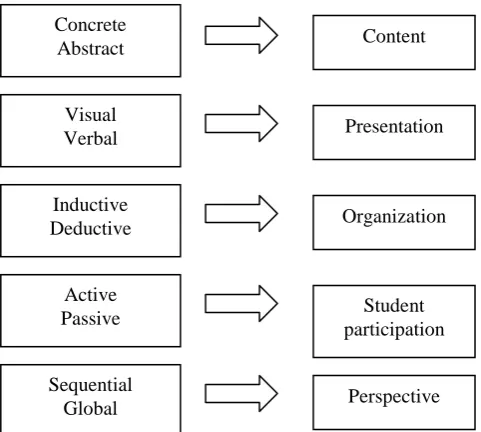
A teaching approach refers to how a curricular subject is managed, planned, resourced and taught within the school context; being seen as a continuous system (Beverton et al., 2005). It guides the type of support and direction that the teacher receives from subject co-ordinators and the emphasis given to a subject within a school’s policies and development planning. We all have preferred learning styles and effective teachers attempt to match their teaching approaches to the learning styles of their students.
The ‘traditional’ approach can be described as a common method often used in the classroom that does not take into account differences in learning styles. Traditional teaching commonly focuses on a number of elements including lectures, case studies, and, to a lesser extent, team projects (Tilestone, 2000). In this approach, learning is conducted in a synchronous environment, meaning that the students must be in the same place at the same time in order to learn. Students derive motivation mainly from the teacher and sometimes from the other students (ibid). The current concern with assessment based upon factual knowledge and understanding has led to a preference for ‘chalk and talk’ approaches that underpin teacher accountability and promote pedagogic ‘tidiness’, with learners covering the same material at the same pace. These approaches also simplify the relationship between the teacher and those taught, because the teacher controls the learning process and the students simply become passive recipients of this process (Bernstein, cited in Glover and Law, 2002). Instruction is often delivered in a rigid, expository and passive manner (Meng, 2003). It needs to be stressed that the way a person learns, what an individual can learn, and how they learn it, is strongly influenced by the model of teaching and learning that is available to them.
14
As is discussed in chapter 2, in the post-colonial context, Malaysian education became increasingly centralised due to policy drivers for strong state formation and rapid industrialisation. This is a fairly recent development in Malaysian education history. Therefore, a ‘traditional’ approach to education is not necessarily associated with distant historical periods but rather with rigid and didactic methods of transmission.
1.6.2 Collaborative Learning
The concept of collaborative learning, being the grouping and pairing of students for the purpose of achieving an academic goal, has been widely researched and advocated throughout the professional literature. Collaborative learning is a method of teaching and learning in which studentswork together to explore a significant question or create a meaningful project. The term ‘collaborative learning’ refers to an instructional method, whereby students at various performance levels work together in groups towards a common goal (Gokhale, 1995). At a general level, collaborative learning involves students working together as part of a cooperative effort to understand the material or complete a task. When cooperative groups are guided by clear objectives, students engage in numerous activities that improve their understanding of the subject (Idrus, 1993). The collaborative learning medium provides students with the opportunity to analyse, synthesize and evaluate ideas cooperatively (Gokhale, 1995), fostering the development of critical thinking through discussion, clarification of ideas and evaluation of others’ ideas, all of which have been found to be effective in gaining factual knowledge. Collaborative learning offers an extremely valuable approach for encouraging active and student-centred learning within the classroom (Walker, 1997).
1.6.3 Metacognitive Strategies
Metacognitive refers to an organising cognitive principle through which individual cognitive processes are controlled. Metacognitive components that consist of self awareness, monitoring and evaluating, might enhance a student’s ability to be a better problem solver. They are mental operations, which direct the cognitive function of a person and support problem solvers during the solution process, improving their ability to achieve the goal (Mevarech and Kapa, 1996). Mazzoni and Nelson (2000) refer to the term ‘metacognition’ as being the knowledge concerning one’s own cognitive processes and products or anything related to them. However, Flavell (1979) prefers the definition of ‘metacognition’ as one’s knowledge concerning one’s own cognitive processes and awareness of a learning problem, which is involved in the processes of planning, monitoring and evaluation of a specific problem solution.
The benefits of the metacognitive teaching approach lies in the ability to transfer responsibility for monitoring learning from the teachers to the students, and in promoting positive self-perception and motivation among the students (Phelps, Graham and Kerr, 2004). A metacognitive system also facilitates the planning, reflection and self-evaluation of the students, making them less dependent on the teacher’s guidance. It assists students to become more aware of their current attitudes towards the learning goal. In this study, metacognitive strategies refer to the actual processes and strategies that guide the student in how to think about a particular problem, what the student knows about his or her cognition and, above all, the student’s ability to control these cognitions.
1.6.4 The Hybrid Approach and its Relevance to the Study
16
Therefore, in this study, metacognitive skills will become one of the key components in this hybrid approach, because the application of metacognititve skills is believed to help students enhance their higher levels of cognitive thinking whilst working as a group (Haller et al., 1988). Students are capable of performing at higher intellectual levels when asked to work in a collaborative situation rather than when asked to work individually. Group diversity in terms of knowledge and experience contributes positively to the learning process. Students can share strengths and also develop their weaker skills. They also develop their interpersonal skills and learn to deal with conflict, which enables them to realise their full potential to be part of a competent and qualified workforce. It is hoped to inculcate this learning mode into students’ educational environments to prepare them for real-life situations, where collaborative working and learning is more the norm than the exception.
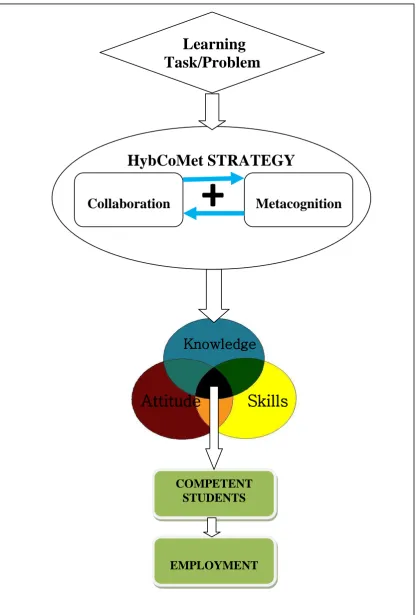
The hybrid system was chosen as an alternative approach in this study, because the learning of new concepts and the application of already-known concepts will take place primarily within the course and it will incorporate characteristics of both traditional and hybrid classroom settings. Deniman et al., (2004) suggested some of the particular benefits of a hybrid classroom setting, which helps to:
establish an atmosphere in which learners feel comfortable;
encourages learners to consider that learning needs to focus on factors that contribute to solving significant problems or achieving significant results; provides a meaningful context for learning fundamental concepts; and
The integration of metacognitive components might additionally enhance students’ abilities to be better problem solvers. It is fundamentally a mental operation which directs the cognitive functions of a person and supports learning conceptualisation (Mevarech and Kapa, 1996), which can help students in the problem solving process and improve their ability to achieve learning goals. The integration of these approaches might also be effective in pointing teachers towards individual learning objectives.
It is hoped that the strategy could assist students to become more aware of their current attitudes towards learning. An understanding of the development of metacognition may help define useful learning and recall strategies, which could best be applied in engineering subjects. Also, the integration of collaborative learning and metacognitive strategies not only could help students achieve their learning goals, but also helps to inculcate this learning mode into the students’ other educational environments. This would therefore better prepare them for real-life situations and provide opportunities for their optimal intellectual and academic development, as well as provide generic competences to students. This has the wider aim of providing a workforce of the standard required by the workplace and job market.
1.6.5 Generic Competences
Competence is one of the major concerns in this study. Competence, as defined by Daelmans et al., (2005), is the ability of a professional to handle complex situations or problems using professional knowledge, skills and attitudes in an integrative way. On the other hand, generic skills are conceptualised as being skills applicable to different situations after initial teaching/learning and capable of slight adaptation to suit the varying needs of the new situation (Cornford, 2005).
18
In this study, generic competences are concerned with the meaningful objectives and content of learning that will engender the personal development of students and position them within the domain of knowledge that can best prepare them for learning, employment and future life.
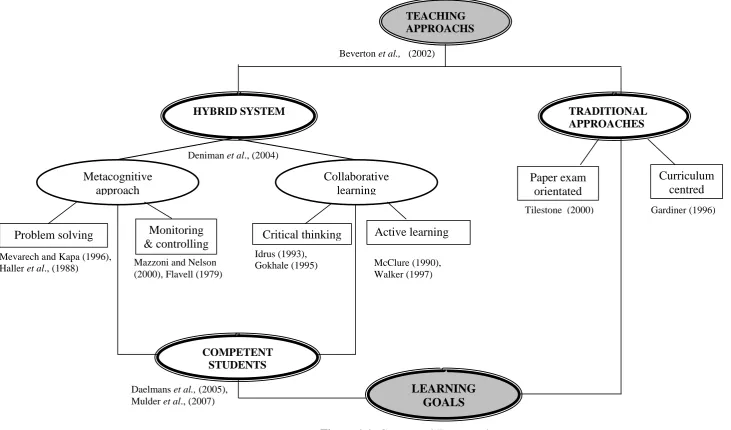
Figure 1.1: Conceptual Framework.
Gardiner (1996) Metacognitive
approach
TRADITIONAL APPROACHES
Problem solving Monitoring & controlling
Paper exam orientated
Curriculum centred
LEARNING GOALS Idrus (1993),
Gokhale (1995)
Beverton et al., (2002)
Mevarech and Kapa (1996),
Haller et al., (1988) Mazzoni and Nelson (2000), Flavell (1979)
Collaborative learning
Critical thinking Active learning
Tilestone (2000)
McClure (1990), Walker (1997)
TEACHING APPROACHS
HYBRID SYSTEM
Deniman et al., (2004)
COMPETENT STUDENTS
20
1.7 ORGANISATIONAL STRUCTURE OF THE THESIS
Chapter 2 situates the study within the social and cultural context of Malaysia. This
includes a brief explanation of the Malaysian education system and also of the development of the education system starting with the pre-colonial, colonial and post-colonial periods through to more modern times. The background is important as it sets the backdrop for the development of the education system in Malaysia. In particular, the Technical and Vocational Educational (TVE) programmes and structures are focused upon and this includes education at polytechnic level. This chapter then discusses the problems faced at the teaching/learning interface in Malaysia, as some of these challenges can be country-specific. Several research studies which address this issue are included in this section, drawn from both the Malaysian and international perspective.
The concept and contextual issues of competency and its importance are then described along with the relationship of this concept to the TVET system. Competency has influenced both education practice and the labour market, including teaching strategies that are relevant to the TVE system. This part begins with a discussion of the neccessity for generic competences to fulfil employment demands, and then explores the different terms and definitions used to refer to competences as viewed by different countries. The particular considerations that are important in the design of the TVE programme in Malaysia are also highlighted. The discussion also considers the main issues related to preparing the nation’s youth for future employment, not only in terms of their knowledge but also in terms of their generic competences.
Chapter 3 critically reviews the literature on collaborative learning and meta-cognitive
approaches. This chapter is divided into three interrelated parts.
The first part explores the concept of teaching and learning, and discusses the mismatch between the pedagogical contents that have produced students who are perceived to possess inadequate competences.
The next two parts present the key concepts which are integrated in this study - collaborative learning and metacognitive strategies. The applicability of these concepts to different disciplines in the classroom is teased out in the context of relevant studies that have been conducted in Malaysia and similar studies that have been undertaken in other countries. The literature focuses on the application of those strategies to the development of generic competences.
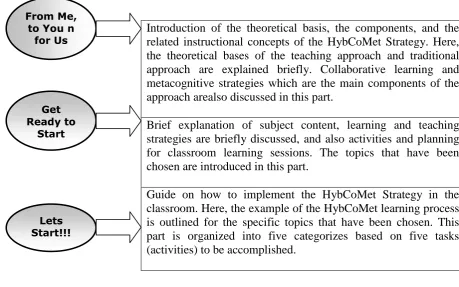
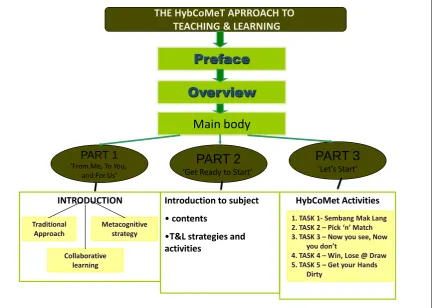
Part three provides an explanation of the hybrid approach that is the focus of this study, highlighting the paucity of research in this area to date. Attention is given to the key characteristics of this approach and how it translates to actual classroom practice. The complete information on the development of the new alternative approach (HybCoMet Strategy), and how it can be used and brought to classroom teaching practice are explained in the final part. Through this analysis, the benefits of the hybrid approach, where collaborative learning and metacognitive strategies are integrated, are brought to the fore.
Chapter 4 describes the research design, methods and instruments employed in this
study. The chapter is divided into two principal parts. The first part begins by explaining the research design and provides a rationale for the choice of case study with an embedded small scale quasi-experimental design. In this respect, the rationale for the use of both qualitative and quantitative approaches is provided.
22
The second part describes how the methodologies of previous studies illuminate the full range of methodological choices that could be used in a study such as this. Details on the methods and instruments and procedures for data collection are then presented. The final section outlines the way in which triangulation will be used in this study, and also briefly considers how data will be analysed. This section also explores the researcher experience and “journey” to the field work during data collection process along with the administration of obtained data.
The focal theme in Chapter 5 is on the data obtained from the interview sessions with lecturers from polytechnics in different areas of Malaysia. The discussion focuses on lecturers’ reflections of their careers to date and their current teaching practice in a classroom learning session. This chapter also reviews the lecturers’ perspectives about students and their learning behaviour at polytechnic level.
The data gathered also presents the respective lecturers’ backgrounds as well as their teaching experiences. The principal source of information is from the interview transcripts. The transcripts have been analysed by thematic coding, and a discussion of resulting themes and concepts shows both the lecturers commitment to existing teaching frameworks and their desire for change. This part focuses on an analysis of the teaching approaches that are currently implemented at polytechnics and the issues surrounding the choice of these approaches. Lecturers’ choices of teaching approaches, how to improve their teaching, and problems encountered while performing their jobs will be highlighted as well.
This chapter then presents the results in succinct form. The analysis starts with the students’ demographic and academic backgrounds, followed by an analysis of their experiences in learning at polytechnic level. The central units of analysis are the teaching methods and materials that are regularly applied by lecturers to deliver a subject. An evaluation of teaching strategies with regard to students’ perspectives is presented in the third part of this chapter. The analysis focuses on how often a lecturer delivers a lesson using named strategies. The fourth section of this chapter describes students’ reflections on their learning using specific strategies. The analysis focuses on their preferred learning techniques and how the institution’s environment might help the learning process. This chapter looks at the students’ opinion of how the strategy can be improved upon to help them to improve their specific skills.
Chapter 6 analyses the collated data in order to evaluate the effectiveness of the new
strategy (HybCoMet) in helping students with their learning process after the intervention phase, focusing on the extent to which the core hybrid process of learning impacts on the students’ learning. Of particular significance is how well students can work as a team and how they develop a team rapport between themselves, as well as how they relate to each other on a whole class basis. Of critical importance will be the need to identify students’ attitudes and commitment towards learning and their generic competences. Another issue of interest will be to determine how students can work individually and independently, without relying too heavily on their lecturers.
24
the final section. This chapter also presents the findings obtained from the pre- and post-treatment tests that were administered to both control and experimental groups, before and after the treatment process, and discusses the different levels of achievement using both traditional and HybCoMet Strategies.
CHAPTER 2
TECHNICAL AND VOCATIONAL EDUCATION (TVE) IN
MALAYSIA: THE NEED FOR GENERIC COMPETENCES
2.1 INTRODUCTION
26
Acknowledging the historical embeddeness and reciprocal influence of structural and conceptual aspects of the Malaysian (in fact any) national education system, this chapter brings together two main perspectives on the Malaysian TVE system.
It opens by offering a historical overview over the development of Malaysian education policies, and the institutions shaped by these policies from pre- to post-colonial times. This structural and institutional perspective is then complemented by a discussion of conceptualisations of ‘competence’ and ‘learning’ as they play out in the Malaysian TVE context. Combining these two perspectives allows for an in-depth understanding of the conceptual, curricular and didactic challenges facing the system today and provides a necessary multi-dimensional contextualisation of the hybrid instructional approach, which is the focus of this study.
The first section of the chapter provides an overview of the social and cultural context of Malaysia. Section two focuses on the education system in Malaysia. It outlines the historical perspective and the genesis of the educational infrastructure in Malaysia. The historical background is important to the development of the education system in Malaysia, as this history is a catalyst for the direction, goals and philosophy of education in the nation and the development of the education system in Malaysia today which is moving the direction of the development towards industrialisation.
The final section concludes by considering the need for generic competences and stresses the rationale for alternative pedagogical approaches to be designed to counteract the perennial problems that attend the teaching/learning interface in Malaysian TVE.
2.2 COUNTRY CONTEXT
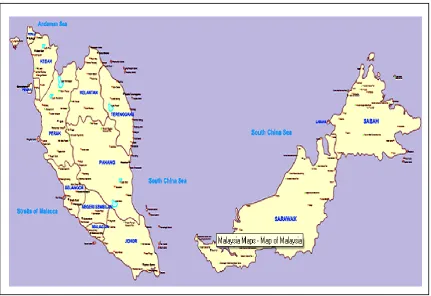
[image:45.595.118.550.441.737.2]Malaysia is best described as a “multi cultural, multi ethnic and multi religious society’ (Wong and James, 2000, p. 209). Malaysia comprises thirteen states divided geographically into two parts, separated from each other by the South China Sea; Peninsular Malaysia (also known as West Malaysia) and East Malaysia (also known as Malaysian Borneo, comprising Sabah and Sarawak). Malaysia has a total landmass of 329,845 square kilometres (127,354 sq mi). Kuala Lumpur is the official capital and largest city of Malaysia, while Putrajaya is the federal administrative capital, the seat of the federal government. Malaysia is bordered by close neighbours, which are Indonesia, Singapore, Brunei and Thailand. It is near the equator and has a tropical climate with warm weather all year round. Figure 2.1 displays the location of each state in Malaysia.
28
As reported in the ASEAN Statistical Yearbook 2008 (ASEAN Secretariat, 2009), the population in Malaysia in 2008 is estimated at 27,863 millions. In West Malaysia the majority of the population are Malay citizens who comprise 55.25% of the population, followed by 33.0% Chinese and 10.2% Indians (Wong and James, 2000).
There is a different structure in East Malaysia, where the population is made up of Dayaks and Kadazan, the native tribes, and the Chinese population, which exceeds that of the Malays (ibid, p. 209).
A diversity of ethnic groups has influenced the languages spoken in Malaysia. However, as a result of education policy, Bahasa Malaysia is the national language and the major means of communication among the different ethnic groups today, but English is widely spoken as are a number of Chinese dialects. Various other languages are spoken and East Malaysia features several other indigenous languages. According to Asmah cited by Wong and James (2000), no fewer than eighty languages are spoken in this country. Islam is the official religion but all other religions (i.e.: Hindu, Christian and Buddhism) are practised freely.
With such a diverse ethnic, linguistic and religious population in Malaysia, education is seen as a way of developing a single national identity. The education system in Malaysia, and in other South East Asian societies, is used as a unifying force for social cohesion and nation state formation, as discussed by Green (1997). National education systems play a role as a route to transforming what Wong and James, (2000) call a “heterogeneous traditional plural society” (p. 211) into one with a shared common national identity and shared economic goals.
2.3 THE MALAYSIAN EDUCATION SYSTEM
2.3.1 The Development of the Education System
Education in Malaysia has gone through various stages: pre-colonial, colonial and post-colonial (Pasca Merdeka). One can see that rather than representing a break with the past, the emphasis on values education and skill formation was evident in earlier (pre-colonial) formations of the Malaysian education system.
In fact, it was only in the colonial period that the education system was not unified and orientated towards a common curriculum. However, the colonial period did usher in the importance of skill formation which remains a central objective to this day.
In the pre-colonial period (before 1824), education was generally non-formal in nature. Education was provided mainly by religious schools with an emphasis on Quranic teaching, spiritual knowledge and apprenticeship in agriculture (UNESCO-UNEVOC, 1995). Pondok and madrasah schools were set up by Islamic scholars to provide instruction in the broader fields of knowledge. Philosophy of education in this era was intended to produce respectable manners as well as skills for life. Religion played a major role in education of this era. The pre-colonial emphasis on education for well being, high moral standards and belief in God has been adapted in the National Education Philosophy (NEP) and in the current national curriculum through Islamic Studies and Moral Studies. We can therefore see some elements of the current orientation of the Malaysian education system, towards strong moral values, in the pre-colonial period.
30
Accordingly, this encouraged provision of education in the vernacular, and the education system was fragmented. Whilst the school system created social division, economically it helped stimulate the creation of the plantation system and commercialization of agriculture, the framework for the present-day transportation system, the introduction of English and an educational system, multiracialism and modern political institutions (ibid).
Since Malaysia gained its independence from Britain in 1957 (the post colonial period), the education system has been orientated towards the goal of state formation. The government controlled and standardized the entire educational system, and made a provision to make Malay the official national language, and ultimately the language of instruction in the educational system (Lee, 2004) to ensure a united, if multiracial, society (UNESCO-UNEVOC, 1995). This era also brought about a paradigm shift in the national education system with curricular reforms and the increasing use of educational technology that enhanced the quality of education (ibid). The orientation of education in this period was to rapidly narrow the inequalities that had arisen from the colonial education system and to consolidate ethnic divisions, with the introduction of Malay language, as one language to unite the different ethnicities, classes and religions. Green (1997) believed that the unification led to the development of mass education. However, the didactic and hierarchical structure of education inherited from the colonial period “has remained basically unchanged” (Lee, 2004, p. 9) and only at primary level has there been progress towards a less didactic system (MDG2 Full Report, 2004). This has been a rapid change. Since colonial dependency, the education system has been reviewed, revised and eventually reformed to create Malaysia’s own national educational model that can be adapted to serve particular circumstances and needs.
According to this document, between 1960-70, education was utilized as a social tool to integrate and restructure the three different ethnic groups (Malay, Chinese and India). It continued to play the same role from 1971-1990 but was also aimed at increasing participation of all Malaysians in national development. Education expanded its role for human resource development in 1991-2000, to play a part in leading Malaysia towards becoming an industrially leading country as envisaged in the Vision 2020. From 2001 to 2010, education was also expected to serve “lifelong learning to raise the quality of life, enhancing access to tertiary education, and using knowledge based education as a tool for employment restructuring” (MDG2, Full Report, 2004, p. 75).
One of the current priorities focuses on improving the delivery system in line with technology change and creating knowledge based education system (ibid). In addition to improving the quality of education, the Malaysian government is also committed to improving the curriculum, especially at school level, to meet the changing needs of the economy. It must be noted that this occurs in the context of a particularly Malaysian model of development. It might be considered that it is difficult to impose what are seen as ‘Western’ models of education (for example, the imposition of generic skills) on East Asian economies. For example, Thelen (2004) considers that path dependencies in vocational education systems mean that ‘policy borrowing’ or ‘impostion’ of policy will fail. This is because the reform of vocational education system is a protracted process. However, Green (1997) considers that nation formation (in terms of European economies, but most recently for East Asian economies) is a strong driver for change in education systems even given historical trajectories. Rather than ‘impositions’ such ‘Westernising’ of curricular can be driven by strong nation state and industrial policy drivers.
2.3.2 The National Curriculum