Towards a E-learning Integration Meta-Framework
Ettaib Khalid
LIROSA Faculty of Sciences University Abdelmalek EssâadiAammou Souhaib
LIROSA Faculty of Sciences University Abdelmalek EssâadiKhaldi Mohamed
LIROSA Faculty of Sciences University Abdelmalek EssâadiABSTRACT
In this paper, we describe an E-learning Integration Meta-Framework (ECIMF), which offers a modeling language, methodology, and prototype tools for all e-learning users to achieve secure interoperability of the service regardless of system platforms and without major adjustments of existing systems. The main purpose of this meta-framework is to facilitate the interoperability by mapping the concepts and contexts between different existing e-learning frameworks, across multiple architectural layers.
General Terms
E-learning, Meta-Framework et Interoperability.
Keywords
E-learning, Meta-Framework, Semantic Translation et Interoperability.
1.
INTRODUCTION
There have been many standardization activities in the area of e-learning communication. The standard bodies and industry groups in multi-national levels have been promoting several standards. Some of these, with long-standing tradition (like IMS variants), have gained significant acceptance, especially among large industry players. However, these standards are often criticized for their complexity, high implementation cost, multitude of local variants, and extensive demand for expertise knowledge.
However, the proliferation of mutually incompatible standards and models for conducting e-learning resulted in even more increased demand for interoperability and expert knowledge.
These issues slow down the spreading of e-commerce applications, and for this reason the industry is looking for methods to meet the exploding demand in the “new economy” to offer increased QoS, reduction of manual labor and cost, and to meet the requirements of nearly real-time reaction to changing market demands. At the same time the industry is aware that existing e-commerce frameworks require costly adjustments in order to fit their Learning model to that of specific frameworks, with the perspective that similar costs will follow if the Learning player wants to participate in other frameworks as well.
In response to these concerns from the industry, we propose the E-Learning Integration Meta- Framework (ELIMF): A meta-framework, which offers a methodology, a modeling language and prototype tools for all e-learning users to achieve secure interoperability of the service regardless of system platforms and without major adjustments of existing systems.
There are strong reasons for preferring the "enable" instead of "enforce" approach:
Educational partners may have already made significant investments in building interfaces conforming to some standard(s).
Commonly used integration methodologies are focused on data translation, which results in complex and inflexible solutions. Changing such integration solutions to accommodate new standards is often infeasible.
For these reasons, the interoperability-enabling methodologies, such as the ELIMF approach, will play an increasingly vital role in the e-learning communication.
The meta-framework is understood as a combination of methodology, modeling notation (meta-models) and guidelines for aligning different aspects of e-learning – hence the name “meta-framework”, because using these artifacts the users will be able to build concrete integration frameworks.
The main purpose of this meta-framework is to facilitate the interoperability by mapping the concepts and contexts between different existing e-learning frameworks, across multiple architectural layers.
As a consequence of this premise, we propose using a top-down approach to the comparative analysis of the e-learning frameworks, which starts from the educational context level [1].
The approach presented here also addresses integration of internal learning processes and applications with external e-learning interfaces required to conduct e-learning electronically, whichever standard they conform to. This is just a special case of interoperability between differing frameworks. However, this case is crucial for companies in adoption of any e-learning standard.
2.
GENERAL METHODOLOGY
2.1
Overview
The ELIMF proposal deliverables consist of a recommended methodology, presented in this article, and base tools needed to prepare specific comparisons of concrete frameworks.
2.2
Layered Approach
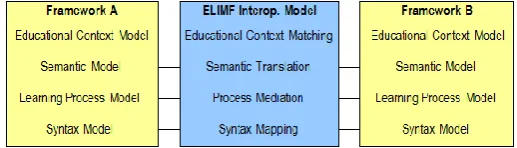
[image:2.595.318.577.81.155.2]The proposed methodology for analysis and modeling of the transformations between the e-learning frameworks follows a layered approach.
Fig 1: ELIMF layers of integration
This approach means that in order to analyze the problem domain one has to split it into layers of abstraction, applying top-down technique to classify the entities and their mutual relationships [2]:
First, to establish the scope of the integration task in terms of a Learning context – based on the economic aspects of the partners’ interactions,
Then, to identify the top-level entities and the contexts in which they occur (the data model), and how these contexts affect the semantic properties of the concepts,
Then, to proceed to the next layer in which the interactions (conversation patterns, Learning processes) between the partners are analyzed.
Then, to go to the lowest, the most detailed level to analyze the messages and data elements (syntactic level) in communication between the partners.
Starting from the top-most level, the contexts in which the interactions occur are analyzed and collected, and these contexts affect the semantics of the interactions occurring at the lower layers.
The second dimension of the proposed approach conforms to the Meta-Model Architectures, as described in the MOF standard, introducing the meta-model, model and instance (data) layers. This means that ELIMF will be used to define:
The modeling notation: a set of modeling concepts with their graphical and XML representation to model the transformations,
The models: concrete transformations between concrete frameworks
And the model instances of transformations, as realized by an ELIMF- compliant runtime.
Figures 1 and 2 present the ELIMF layers, and how they are applied to define the interoperability model between two incompatible frameworks.
Fig 2: ELIMF methodology – interoperability layers
The ELIMF methodology addresses the following four layers of interoperability:
Educational Context Matching: this aspect deals with setting up the scope of the integration task – we assume that preparing a complete integration specification for all possible interactions might not be feasible (even if it were possible at all), so the task needs to be limited to the scope needed for solving a concrete educational case.
Semantic Translation: in this step the key concepts and their semantic correspondence is established, so that they can be appropriately transformed whenever they occur in contexts of each of the frameworks (which is also known as “semantic calibration” [3]).
Learning Process Mediation: in this step the necessary mediation logic is defined, by introducing an intermediary agent that can transform conversation flow from one framework to that of the other, while preserving the learning semantics.
Syntax mapping: in this step the mapping between data elements in messages is defined, based on the already established semantic correspondence and translation rules defined in the first step. Also, the transport protocol and packaging translation is specified.
2.3
Conceptual Navigation – ELIMF
Navigator
In order to navigate through the framework models and concepts, during the initial stages of the project a prototype tool named Conzilla was introduced, which in later stages of the project was to be augmented with other modules (like data format translating software, automatic generation of interfacing state machines, routing and packaging translators, etc). This extended toolset is called ELIMF Navigator, and its intended use is presented on the Figure 3.
The ELIMF will be use an extension of Conzilla (see http://ww.conzilla.org for more information about the Conzilla project) as a prototype tool for browsing and comparing different e-learning framework models. One of the goals of the ELIMF was to extend this tool by necessary backend(s) for producing abstract machine-readable interoperability guides (MANIFEST recipes), expressed in ECIML language.
[image:2.595.101.239.130.273.2]the support for parts of ELIMF methodology has been implemented as Protégé module.
Fig 3: The ELIMF concept of frameworks transformation and alignment
2.4
Top-Down, Iterative Process
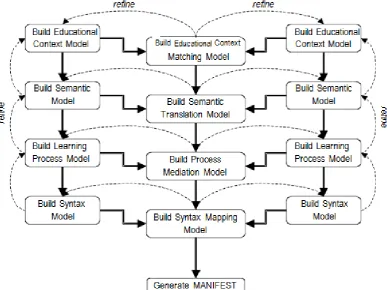
The ELIMF uses a classic top-down approach for solving the interoperability issues, but combined with an iterative process of refining the higher level models based on the additional information gathered in the process of modeling the lower levels (Fig. 4).
The main objective of the ELIMF is to provide clear guidelines and methodologies for building interoperability bridges between different incompatible e- learning standards.
The guideline has been divided into several steps, to be performed sequentially and iteratively, as needed. The steps follow the methodology described in the previous section – the layers on the top are addressed first, since they give the broadest context necessary for understanding of the lower-level data transformations. The successful completion of all steps will result in a set of interoperability rules, enforced by a framework mediating agent, which will allow parties using different frameworks to cooperate towards common learning goals.
[image:3.595.107.495.441.731.2]The guideline has a modular structure, reflected in the fact that in each step several so-called alternative procedures have been defined. Each alternative procedure refers to a well-defined unit of work that needs to be done (a part of integration step), and allows you to replace or extend the approach suggested for that step with other methods of your choice, as long as they provide you with similar results (artifacts) as the input to the next step. The boundaries of each alternative procedure are clearly marked, and the input/output deliverables are specified [4].
You can also find a common meta-model defined in each of the steps, which serves as a common vocabulary (shared ontology) for understanding the incompatible frameworks.
One important thing to note here is that the integration modeling between two frameworks is asymmetric, i.e. the integration model will usually contain two elements that refer to the same individual model elements, but defined differently depending on the direction in which the data is traveling.
2.5
The Modeling Notation
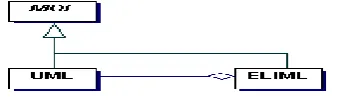
[image:4.595.86.258.396.447.2]The ELIMF proposes to use an extended UML modeling notation (a UML profile) to express relationships between the semantics and models of the e-learning frameworks. This E-Learning Integration Modeling Language (“ELIML”) will be a concrete instance of the OMG’s MOF meta-meta-model, at the same time re-using as many concepts from standard UML as possible. This puts it in the following relationship to the standard modeling approaches.
Fig 5: Relationship between the ELIML and UML standards
Consequently, one of the original goals of this research was to define a suitable set of modeling constructs to more adequately address the needs of meta-framework modeling and transformations. However, due to limited resources this part has not been completed.
3.
LEARNING CONTEXT MATCHING
3.1
Educational Context – Definition and
Role
IT infrastructure exists to support learning goals: IT systems don’t exist in a void, but they play specific roles in the learning.
Educational context is therefore crucial: information is useful only when considered in the right educational context. It is the educational context that ultimately determines the meaning of data and information exchange.
Educational flow should therefore be considered before technical flow.
Educational Context is a collection of:
Agreements / Contracts defining the Commitments
Collaboration Patterns (using Learning Processes) to execute commitments
Learning Objects with their semantics, lifecycle and state, which encapsulate learning data and learning rules
3.2
Educational Context Matching Rules
3.2.1
Rationale
Traditional Education partners’ agreements: both partners need to agree on:
The type of resources exchanged
The timing (event sequences/dependencies)
The persons/organizations/roles involved
Also, each of the partners needs to follow the commitments under legal consequences
3.2.2
Matching Rules
Educational partners involved in an integration scenario need to consider first whether their learning goals and expectations match, before they start solving the technical infrastructure problems. For that purpose, they can create two (or more) educational context models, one for each party involved in the integration scenario. The interoperability of the e-learning scenario, as implemented by two different partners, requires that these models match.
A successful completion of this step means that we have established a common educational context for both parties. We have also identified the events that need to occur, and the collaborations between agents that support these events. This in turn determines the communicational boundaries for each activity.
4.
SEMANTIC TRANSLATION
4.1
Overview
In general, the concepts underlying the foundations on which the IT infrastructures are built, differ between not only the industry sectors, or geographical regions, but even between each company within the same sector. This phenomenon – of different semantics, and different ontologies – causes many complex problems in the area of system integration, and in the area of e-learning integration specifically [5].
One of the most common cases that require semantic translation to be performed is when each learning party uses a different product catalogue (this situation is sometimes referred to as the “catalog integration”, or “catalog merging” problem).
4.2
Semantic Translation Meta-Model
Figure 6 presents the meta-model for capturing the rules of semantic correspondence between concepts belonging to two different ontologies. This meta-model has been developed based on the principles of contextual navigation, which means that the proper understanding of a concept requires considering the context in which it occurs.
Ontology: the original full domain ontology (external)
Concept: concepts defined in the original Ontology (external)
Mapping: a top-level container for the semantic mapping rules, applicable to a pair of ontologies, as specified by the OntologyRef. (The Mapping is marked green in the diagram as the starting point for reading the whole meta-model.)
OntologyRef: a URN uniquely identifying the referred ontology (possibly allowing to access it remotely).
ConceptRef: a namespaced reference to individual Concept-s defined in the original Ontology. A URN, which possibly allows to access remotely the concept definition in the original ontology.
Context: built on the basis of the original Ontology (refersTo), consists of related concepts represented by ConceptRef, which are considered relevant to the given transformation rule (the exact and full relationship of the Concepts is defined in the original ontology - Context captures just the fact that they are related for the purpose of mapping).
ContextSet: a group of one or more Context-s referring to the same Ontology.
Rule: a rule that defines how to translate between the concepts in a ContextSet from one ontology, to the corresponding concepts in a ContextSet from the other ontology. A Rule consists of exactly two ContextSet, each one referring to respectively one of the ontologies, and a set of Formula-s, which define the valid transformations on these ContextSet.
Formula: a formal expression defining how translation is performed between concepts from the source ContextSet to those in the target ContextSet.
Fig 6: Semantic Translation meta-model
The reason for defining the ContextSet, in addition to Context, is that probably we would like to use concepts from several contexts belonging to a single Ontology, and map them to several contexts in the other. But at the same time there is a requirement to state explicitly that we always map between exactly two different ontologies.
5.
LEARNING PROCESS MEDIATION
5.1
Learning Process Models
The elements of Learning Process models describe the major steps in the interaction scenario that need to be performed in order to successfully execute the mutual commitments.
A learning process consists of a sequence of learning activities performed by one educational partner alone, and learning interface activities performed by two or more educational partners. In the ELIMF methodology we will be interested primarily in aligning the learning interface activities, although in most cases understanding both types of activities is needed in order to understand the learning process constraints.
These activities realize the collaborations between the involved learning Agents, and they also support the pedagogic exchanges identified in the Educational Context models. Further, we will use the term LearningActivity to mean the learning interface activity. In this model, each collaboration task is further decomposed into learning activities.
5.1.1
Learning Process Meta-model
Here are more detailed descriptions of each of the modeling elements:
LearningProcess: contains one or more pedagogic exchanges, which in turn contain two or more LearningCollaborationTasks each.
LearningCollaborationTask: a logically related group of LearningActivities, which realizes the collaboration between two Agents in a given Event.
LearningActivity: a learning communication (initiated by a requesting or responding Learning Agent). LearningActivities may lead to changes in state of one or both parties.
LearningDocument: a message sent between partners as a part of information exchange, which contains learning data (payload).
LearningSignal: a message that is transmitted asynchronously back to the partner that initiated the transfer of learning process execution control (by sending a LearningDocument), which doesn’t contain any learning data, but instead just signifies acknowledgement or error condition.
5.1.2
Learning Process Models
Learning processes are most often modeled using UML activity diagrams (or similar notation), where each diagram represents one of the collaborations [6]. This view relates to the Educational Context view in the following way:
The collaboration links between Agents correspond 1:1 to LearningCollaborationTasks. This means that for the typical pedagogic exchanges there will always be two LearningCollaborationTasks – one for the “give” part, and one for the “take” part of the exchange.
5.1.3
Learning Collaboration Tasks and Learning
Communications
The LearningCollaborationTasks support the execution of the LearningEvents identified in the previous step. There should be as many LearningTasks as many collaboration links were in the Educational Context models.
LearningEvents are realized by one or more Communications.
Consequently, LearningCollaborationTasks consist of one or more Communications
LearningCollaborationTasks are represented as UML activity diagrams, showing the activities of both collaborating agents. These diagrams usually contain two parts (swimlanes): one for the requesting (initiating) party, the other for the responding party. The diagrams should also contain the messages passed between the parties.
5.2
Learning Process Mediation Model
The mediation between two different conversation patterns (which may involve different low-level technical communications) needs to be designed and managed in a Learning Process Mediation model [7].
5.2.1
Learning Process Mediation Meta-model
The current idea of the internal structure of the model is as follows:
there will be mediation blocks handling the flow of each communication – totally the number of distinct communications on one side plus the number of distinct communications on the other side. These mediation blocks will be responsible for handling the details of conversations according to a given framework, within the boundaries of one specific communication.
there will be resource wrapper blocks, allowing for uniform access to external resources
there will be one controlling block, responsible for managing the overall flow of communications.
there will be a common storage area, which any mediation block or the controlling block can access in order to store intermediate data – such as previous messages
similar to that, there will be a configuration area accessible to all blocks, containing the configuration parameters.
To summarize, the following diagram presents the meta-model:
5.2.2
Creating the Mediation Elements
The process of building this part of the integration model is very closely related to the Semantic Translation, because very often a semantic correspondence needs to be established between the concepts, communications, messages and information elements.
A Process Mediator is responsible for monitoring the conversation flows between each partner and itself, and according to the mapping rules it should generate appropriate stimuli (in form of message flows) in order to achieve desired state changes in each partner’s Learning Objects, while preserving the communication boundaries.
6.
CONCLUSION
The ELIMF proposal described here is intended as a generic meta-framework modeling approach, which allows the domain experts, system integrators and e-learning parties to define precisely what is needed for the different frameworks to interoperate. The present situation when multiple conflicting e-learning models are advertised and to some extent accepted calls for a systematic approach to more and more frequent interoperability and quality of service issues.
The research deliverables will include the meta-framework definitions, the methodology for analysis and transformation between e-learning frameworks, and the prototype tools for navigation and alignment.
7.
REFERENCES
[1] Marshall, B., Zhang, Y., Chen, H., Lally, A., Shen, R., Fox, E., & Cassel, L. N. (2003, May). Convergence of knowledge management and E-learning: the GetSmart experience. In Digital Libraries, 2003. Proceedings. 2003 Joint Conference on (pp. 135-146). IEEE.
[2] Sergey, M., and Stefan D,. 2000. A Layered Approach to Information Modeling and Interoperability on the Web. Stanford University.
[3] Naeve, A. (1999). Conceptual navigation and multiple scale narration in a knowledge manifold. Technical Report CID-52, TRITA-NA-D9910, Department of Numerical Analysis and Computing Science, KTH, Stockholm, 1999. http://kmr. nada. kth. se/papers/ConceptualBrowsing/cid_52. pdf.
[4] Russell, C. (2009). A systemic framework for managing e-learning adoption in campus universities: individual strategies in context. Association for Learning Technology Journal, 17(1), 3-19.
[5] Stuckenschmidt, H., & Visser, U. (2000, April). Semantic translation based on approximate re-classification. In Proceedings of the’Semantic Approximation, Granularity and Vagueness’ Workshop (Vol. 1).
[6] Heckel, R., Küster, J., & Taentzer, G. (2002). Towards automatic translation of UML models into semantic domains. Proc. AGT, 2002, 11-22.