A Review on Cloud Computing Architecture and
Services
Nikita1, Vinod Saroha2
1M. Tech Scholar, CSE Dept, MVBPS University, Khanpur Kalan, Sonipat 2A.P. CSE Dept, MVBPS University, Khanpur Kalan, Sonipat
Abstract: - Dispatch of computing components over internet is called as cloud computing service that is dynamic by nature. Cloud computing service provides space to store data and access applications exist over internet. Main benefit of this service to user is that there is no requirement of hard drive space because space available over internet. So a problem of web services arises in cloud computing. The aim of this paper is to provide better understanding of need of cloud computing.
Keyword: cloud computing, energy efficiency, network, servers, cloud management system
I. INTRODUCTION
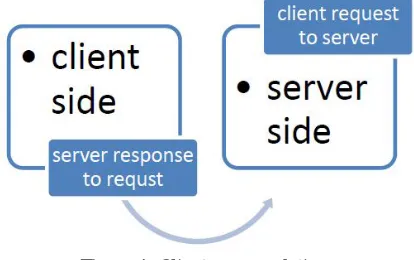
[image:2.612.204.411.452.582.2]Cloud computing [1, 2] is receiving a great deal of attention, both in publications and among users, from individuals at home to the U.S. government. Yet it is not explain in detailed many time. Cloud computing is a subscription-dependent service where we can access networked storage space and computer components. One way to think of cloud computing is to include our experience with email and other internet services. Our email client, if it is any one of these like Yahoo!, Gmail, Hotmail, and so on, takes care of supporting all of the hardware and software which required supporting our personal email account. When we try to get our email we open your any web browser, visit the email client, and sign in. The most necessary part of the equation is having internet service. Our email is not supported only on our physical computer; we can get it only through an internet connection, and we can work on it anywhere. If we are on a tour, at work, or down the street getting milk, we can visit our email as long as we have got to the internet. Our email is separate than software installed on our computer, such as a word processing application. When we make a document using word processing application, that document lives on the component we followed to make it unless we physically move it. An email client is as like to how cloud computing performs [3]. Except at place of accessing just our email, we can select what data we have access to within the cloud.
Figure 1: Client-server relation
II. TYPES OF CLOUDS
There are many types of clouds that we can register to base on our requirements. As a home user or small business owner, we will most likely use public cloud services.
A. Public Cloud - A public cloud can be used by any subscriber with an internet connection and get to the cloud space.
B. Private Cloud - A private cloud is issued for a particular group or organization and limits access to just that group.
C. Community Cloud - A community cloud is common among two or more companies that have similar cloud needs.
D. Hybrid Cloud - A hybrid cloud is essentially a hybrid of minimum two clouds, where the clouds considered are a mixture of public, private, or community.
III. ARCHITECTURAL COMPONENTS
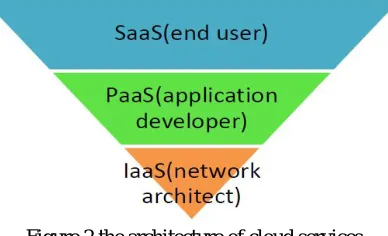
[image:3.612.209.403.252.370.2]Cloud service architecture are commonly categorized into SaaS, PaaS, and IaaS that exhibited by a given cloud model. It’s flexible to combine much structure to the service model stacks: Figure 2 represents a cloud service architecture [4] that provides the most important security-relevant cloud devices explicit and given an abstract overview of cloud computing for security issue analysis.
Figure 2 the architecture of cloud services
IV. LITRETURE SURVEY
Keqin Li [5] described the load balancing for the Meta computers. They describe that the load balancing in Meta computers is different than the other parallel computer Load Balancing or grid computing Load Balancing. They define that, in Meta computers the tasks are divided into sub tasks so that the server gets avoided from the overload. Also the paper describes briefly about the time consumption in the Load Balancing.
Kai Lu and Albert Y. Zomaya [6] extended the work done in [5]. The author describes a load balancing scheme in computational grids. They define the load balancing as a centralized approach and they focus their work on the fault tolerance of the computational grids. Their approach is helpful for large scale grids and their work is quite appreciable and can be used for the future aspects. J. Barbosa [7] involved DAG (dynamic acyclic graph) model for the processing of the tasks in heterogeneous work environment. They opted for two dag scheduler and compares their Load Balancing approach and results. Their work imparts a new knowledge area of the involvement of the DAG schedulers in the computational grids.
Yunqiang Yin [8] briefs about the computational cost in any scheduler. According to him the computational time is not only the time which an executer takes to complete the task but also it is dependent over the localization of the computational process. His contribution towards the time computation is remarkable and can be used for future references.
V. MOTIVATION
One need is that we have to an internet connection in order to get the cloud. This means that if we want to search at a specific data we have entered in the cloud, we must first create an internet connection it may be through a wireless or wired internet or a mobile broadband connection. The benefit is that we can get that same data from wherever we are with any component that can use the internet. These components could be a desktop, laptop, tablet, or phone. This can also benefit us in business to perform more reliably because anyone who can connect to the internet and our cloud can perform on that data, access software, and store data. Imagine taking up our smartphone and downloading any .pdf file to review at place of having to stop by the office to print it or upload it to our laptop. This is the freedom that the cloud can give for us or our company.
give complete security to get, compliance, data segregation, backup, recovery, etc. [9]
b. Data Ownership: What happens to our data when it exists in the cloud out of our company? Companies who step to the cloud probably will not fully lose line of their data but they are similarly to lose some part of ownership and control. It is necessary to understand who can get the data and for what motive.
c. Lock-in and Interoperability: Current days each service offering gives its own unique way for the cloud to interface with applications, information and clients. It can be very hard to use many vendors and to have consistent cloud services.
d. Standard Architecture: There is no standard open architecture being followed for cloud services. Each of the major cloud providers (Amazon Web Services, Sales force, Google App Engine and Microsoft Azure) includes different architectures that are dissimilar to the general structures currently followed for enterprise apps. Although a customer’s performance and technical needs may be satisfied, the lack of standards will adjust the customer’s ability to consistently migrate from one service provider to another and may require a fully rewrite of their software to do so.
VII. COMPARISON
The following table displays the comparison between all platforms that exist in market.
Table I: The Comparison of Server Cloud Computing Platforms [10]
VIII. CONCLUSION
In the present scenario, existing concepts like Web Services can be used effectively to obtain it. Typically every application built can be divided into three layers – the presentation; the business logic layer and the persistence layer. On the basis of this evaluation it can be also concluded that each algorithm working well and trying to provide superior performance as compared to other algorithms with respect to various parameters. With the graphs in comparative results it can be conclude that performance of each algorithm varies with the variation in input data. Database systems used in a cloud computing system face many new issues like handling with large scale operations. So finally we can conclude that scalability in DBMS of cloud computing is improved with use web service techniques.
REFERENCES
[1] Shuai Zhang, Shufen Zhang, Xuebin Chen, Xiuzhen Huo, "Cloud Computing Research and Development Trend", Second IEEE International Conference on Future Networks, 2010
[2] Rich Maggiani, solari communication, "cloud computing is changing how we communicate".
[3] Li, J., J. Peng and W. Zhang, “A scheduling algorithm for private clouds” J. Convergence Inform. Technol., 6: 1-9, 2011 [2] Tarun Agarwal, “How to Convert the Analog Signal to Digital Signal by ADC Converter”
[3] M. Madhavilatha, G. L. Madhumati and K. Rama Koteswara Rao, “Design of CMOS Comparators for FLASH ADC”, International Journal of Aerospace and Electronics Systems, Vol. 1, No. 1-2, Jan-Dec 2011.
[5]Keqin Li, "Load balancing for Grid Computing on Meta computers", Proceedings of the 19th IEEE International Parallel and Distributed Processing Symposium (IPDPS’05)
[6] Kai Lu and Albert Y. Zomaya, "A Hybrid Policy for Load balancing and Load Balancing in Heterogeneous Computational Grids" Sixth International Symposium on Parallel and Distributed Computing (ISPDC'07) 0-7695-2936-4/07 © 2013 IEEE
[7] J. Barbosa, "Dynamic load balancing on heterogeneous clusters" Eighth International Symposium on Parallel and Distributed Computing, IEEE DOI 10.1109/ISPDC.2009.19, 2013
[8] Yunqiang Yin, Min Liu, Member, IEEE, “Single-Machine Load balancing With Job-Position-Dependent Learning and Time-Dependent Deterioration” IEEE Transactions On Systems, Man, And Cybernetics—Part A: Systems And Humans, Vol. 42, No. 1, January 2013.
[9] Wentao liu, “research on cloud computing security, problem and strategy”, Published on April 2012