Creating smart and healthy cities by
exploring the potentials of emerging
technologies and social innovation for
urban efficiency : lessons from the
innovative city of Boston
Agbali, M, Trillo, C, Fernando, TP and Arayici, Y
Title
Creating smart and healthy cities by exploring the potentials of emerging
technologies and social innovation for urban efficiency : lessons from the
innovative city of Boston
Authors
Agbali, M, Trillo, C, Fernando, TP and Arayici, Y
Type
Article
URL
This version is available at: http://usir.salford.ac.uk/id/eprint/49898/
Published Date
2017
USIR is a digital collection of the research output of the University of Salford. Where copyright
permits, full text material held in the repository is made freely available online and can be read,
downloaded and copied for noncommercial private study or research purposes. Please check the
manuscript for any further copyright restrictions.
Abstract—The wide-spread adoption of the Smart City concept has introduced a new era of computing paradigm with opportunities for city administrators and stakeholders in various sectors to re-think the concept of urbanization and development of healthy cities. With the world population rapidly becoming urban-centric especially amongst the emerging economies, social innovation will assist greatly in deploying emerging technologies to address the development challenges in core sectors of the future cities. In this context, sustainable health-care delivery and improved quality of life of the people is considered at the heart of the healthy city agenda. This paper examines the Boston innovation landscape from the perspective of smart services and innovation ecosystem for sustainable development, especially in transportation and healthcare. It investigates the policy implementation process of the Healthy City agenda and eHealth economy innovation based on the experience of Massachusetts’s City of Boston initiatives. For this purpose, three emerging areas are emphasized, namely the eHealth concept, the innovation hubs, and the emerging technologies that drive innovation. This was carried out through empirical analysis on results of public sector and industry-wide interviews/survey about Boston’s current initiatives and the enabling environment. The paper highlights few potential research directions for service integration and social innovation for deploying emerging technologies in the healthy city agenda. The study therefore suggests the need to prioritize social innovation as an overarching strategy to build sustainable Smart Cities in order to avoid technology lock-in. Finally, it concludes that the Boston example of innovation economy is unique in view of the existing platforms for innovation and proper understanding of its dynamics, which is imperative in building smart and healthy cities where quality of life of the citizenry can be improved.
Keywords—Smart City, Social Innovation, eHealth, Innovation Hubs, Emerging Technologies, Equitable Healthcare, Healthy Cities.
I. INTRODUCTION
HE world is experiencing an unprecedented level of urbanization that introduces new challenges to stakeholders in academia, urban planning, as well as to service providers and city administrators alike, to embrace the concept of social
M. Agbali is with the University of Salford, The Crescent, M5 5WT, Manchester, UK (+447550541513: 0161-295-6652; fax: 0161-295-4522; e-mail: [email protected]).
C. Trillo is with the University of Salford, The Crescent, M5 5WT, Manchester, UK (e-mail: [email protected]).
innovation in the form of novel solutions as major drivers of 21st century development. According to [1], Smart and sustainable cities require “social innovation” to serve the needs of people as a result of new possibilities. In this context, the Smart City agenda has been identified as a formidable concept that will play a leading role in the development of core sectors such as education, transportation, energy, safety/security, health-care, and a host of others both at the regional and national economies [2].
In September 2015, the United Nations [3] adopted the 2030 Agenda for sustainable development aimed at transforming the world into a livable place [4]. The Sustainable Development Goals document addresses a number of strategic actions including making our cities inclusive, safe, resilient, and sustainable as core priorities. Available research findings [5] reveal that cities are being overwhelmed as 50% of the current global population reside in cities. According to this author, 50% of the world population generates 75% of the carbon emission which is now complicating the challenges of dealing with climate change resource utilization continues to increase drastically. Similarly, the Department for Business Innovations and Skills [6] further estimated that 80% of the current global GDP is generated in cities, 50% of which belongs to top 380 cities in the developed economies of Europe and America. In its detailed analysis, the report estimates a growth pattern that will shift to Asia and Africa by the year 2025, with China playing a major role in the upward trend of urbanization with an unprecedented rise in its urban population. In view of these developments, national and regional governments, especially in Europe and American, are leveraging emerging technologies through the concept of Smart City to address the development challenges in today’s cities.
This research builds and adopts a framework that allows for the systematic exploration of the innovative developments of selected critical sectors of Boston in the context of both
Y. Arayici was with the University of Salford, The Crescent, M5 5WK, Manchester, UK, and is now with Hasan Kalyoncu University, Gaziantep, Turkey (e-mail: yusuf.arayici@hku. Hasan Kalyoncu University, Gaziantep, TK).
T. Fernando is with the University of Salford, The Crescent, M5 5WT, Manchester, UK ([email protected]).
Creating Smart and Healthy Cities by Exploring
the Potentials of Emerging Technologies and
Social Innovation for Urban Efficiency: Lessons
from the Innovative City of Boston
First Mohammed Agbali
a, Second Claudia Trillo
band Third Yusuf Arayici
c, Fourth Terrence
Fernando
dtechnological and social innovation. The proposed framework for evaluation aims at measuring the performance of cities with a transferable and up-scalable approach. To achieve this goal, the research took note of ISO-37120 [7], [8] city indicators and Open Data and Big Data analytics in the context of Smart and Healthy Cities. These emerging areas are becoming very relevant in city and regional developments as the rapid increase in city population, climate change, and sustainable environment will remain at the forefront of the global quest for sustainable development.
The main aim of this paper is pursued by delivering case study-based empirical research, by exploring how Smart and Healthy City characteristics fit into the smart aspiration of Boston focusing on two (2) major clusters, i.e. transportation and health-care. The Boston case has been selected because of the leading role of this city on both technological and social innovation. In recognition of the innovative and creative healthy city developments, the U.S Conference of Mayors in 2015 named Boston as one of the “Most Livable” cities in America [9]. The study bridges some knowledge gaps in smart and healthy cities theories and practices especially from the perspective of analyzing Smart City policy implementation and smart services in critical sectors. By discussing issues (e.g. service provisioning) in critical city sub-sectors such as health-care, the paper recommends the adoption of innovative platforms for efficient service delivery systems in realizing the smart and healthy city goals. This suggestion reflects the fact that today social innovation and emerging technologies are mainly sought in the domain of Smart Cities as a requirement for providing robust interactions in an environmentally friendly manner. Finally, the conceptual framework is proposed as a guide for monitoring Smart City developments across key sectors based on smart innovation in cities for service delivery. The paper, therefore, provides some useful insights to stakeholders especially in developing regions adopting smart services in improving the quality of life and other aspects of urban life.
The remaining part of the paper is structured as follows. Section II presents some background from relevant literature on core components of smart and healthy cities. Section III discusses the conceptual framework. Section IV summarizes the research methodology and case selection/description. Empirical evidence from Boston is discussed in Section V, reflecting on general findings, while Section VI draws from the findings to provide the reader with some conclusions.
II.BACKGROUND
A. Towards a Generally Accepted Definition for Smart and Healthy Cities
Smart Cities represent an emerging area of research that is gaining a lot of attention. A number of definitions have been proposed and one such notable definition is given by Forrester [10] as “the use of smart computing technologies to make the critical infrastructure components and services of a city – which include city administration, education, healthcare, public safety, real estate, transportation, and utilities – more
intelligent, interconnected, and efficient”. Similarly, from an industry point of view, IBM sees a Smart City as one that uses technology to transform its core systems to optimize resource utilization. According to IBM [11], at the highest level of maturity, Smart City is a knowledge-based system that provides real-time insights to various stakeholders, therefore enabling decision-makers to proactively and effectively manage a city’s sub-system. In this view, effective information management is at the heart of this capability, and integration and analytics are seen as the key enablers.
According to Gartner [12], Smart City is based on intelligent interaction amongst the city’s subsystems. The information exchange in this scenario is analyzed to derive commercial benefits as well as services for the citizen. Gartner emphasizes that the Smart Cities act on this information flow to make their wider ecosystem more resource-efficient and sustainable. This paper emphasizes that such information exchange needs to be based on a smart governance framework designed for sustainability. The authors posited that Smart City is a concept that derives from a combination of definitions like those of information city, knowledge city, intelligent city, ubiquitous city, and digital city. After a critical evaluation of different characteristics of the Smart City concept, the authors conclude that Smart Cities create better, more sustainable cities, where quality of life is higher, environment more livable and economic prospects stronger for the citizens.
In addition, Harrisson [13], consider Smart City from the perspective of an urban environment connecting its core infrastructure components (i.e. physical, business, social, and Information Technology) for leveraging the collective intelligence of the city. Batty, Axhausen [3] acknowledge that Smart Cities are simply instruments for improving competitiveness in such a way that community and quality of life are enhanced. The International Telecommunications Union (ITU) analyzed over 100 publications with different definitions of Smart Cities through a focus group analysis [11] in an effort to come up with a standardized definition for Smart and Sustainable Cities. From ITU’s analysis, the over 100 definitions of ‘Smart City’ kept revolving around 50 keywords like quality of life, ICT, Technology, innovations, management, systems, integration, intelligent, etc., where the instance of about 726 of those keywords were analyzed to measure or compare the importance of those words on the subject matter.
From a health perspective, the World Health Organization [14] defines a Healthy City as a city that constantly creates and improves its physical and social environments while expanding the community resources that empowers the people to mutually support one another in the performance of functions of life altogether as well as their development to their full potentials [14], [15], [16].
well as transfer knowledge, social innovations and a host of other services using the emerging technologies in Cloud Computing and Big Data Analytics as a platform for solving environmental, ecological, social, and sustainability problems facing the ever-expanding cities today.
B. Emerging Technologies, Smart and Healthy City Initiatives
Ubiquitous technologies have changed the economic system with the growing powers of knowledge. Thus, innovation is expected to remain the key factor of technological advancement relating to the development of societies and knowledge distribution. In this direction, new technologies are gradually being integrated into virtually every facet of activities in cities resulting in streams of data availability. Emerging technologies have simplified real-time data collection greatly through the Internet of Things [17] and Internet Connection Devices (ICD) devices like RFID, sensors, cameras, and smartphones. Current estimates suggest that this initiative could increase Internet connectivity to about 50 billion devices by the year 2020 [18]. The “super-connected world” as described by Thomas has introduced innovative technologies that are now capable of assisting in the integration of cities subsystems and simplifying decision-making processes.
In healthcare, thanks to IT support it is now potentially achievable almost unlimited availability of accurate diagnosis, patient records and platform for quick response to emergency services, knowledge sharing amongst health worker, telemedicine facilities and remote medical services. Smart City allows, therefore, promoting the integration of sensing technologies to deliver real-time information to clinicians and care service providers [19]. For instance, technologies in Ambience Assisted Living (AAL) are evolving, as well as it is very useful in physiological signal monitoring to provide long-term sensing data as a major Smart City solution deployed for individual health monitoring in homes [19]. In addition, the Smart City concept is attracting a good number of innovative solutions for intelligent health-care (iHealth), mobile health (mHealth), and IoT-enabled systems for remote monitoring between doctors and their patients [20]-[23].
Similarly, by deploying smart infrastructure in the transport sector, cities can easily transform into a hub of vibrant and sustainable economic development using emerging technologies in improving safety and environment. For instance, Stockholm, Sweden as cited in Naphade, Banavar [24], implemented a system equipped with lasers and cameras that automatically charge drivers on a “pay as you go” basis, thereby reducing gas emission and congestion.
Recent developments revealed that emerging technologies such as IoT have taken the center stage in Smart City innovation [17], [21]. Modern cities are therefore taking advantages of the emerging technologies to become healthier by harnessing the benefits of service delivery geared towards improving the quality of care and well-being for the citizen. In this regard, Boston, for instance, is improving an interactive voice response (IVR) system, web and mobile app on 311 technologies for a wide variety of government services [25]. The key ingredients of Smart Cities are the need for a healthier environment, the
general well-being of the people, and most importantly, improved quality of life for the citizenry [15], [14]. With IoT, faster collection of voluminous health records of virtual patients is becoming possible with utmost speed and error free [20], [26]. Reference [20] proposed a sensor-based fuzzy rule with remote health monitoring that can monitor patients and alert doctors of any abnormal condition in real-time with innovative sustainability systems.
In all, depending on the challenges of the city and stakeholders’ priorities, cities around the world have launched smart initiatives in critical sectors including education, transportation, health, tourism, public administration, and energy. As cities become more intelligent in providing smart services there is a tendency for urban spaces to become greener and liveable in a manner that tends to improve the quality of life for people. These developments need to be measured. This paper argues that the metric for measuring the development of the Smart City concept need to be based on the specific experience of cities.
III. CONCEPTUAL FRAMEWORK
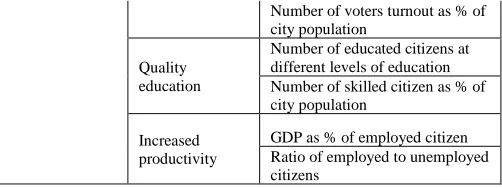
The recent concerns about the need to identify metrics and Key Performance Indicators (KPIs) that can measure the impact of Smart City solutions and platforms in order to measure and potentially improve city smartness characteristics, through well-articulated performance indicators, is gaining stakeholders’ attention. This paper draws from the literature on Smart and Healthy Cities in order to lay the theoretical foundation for the study. In details, it identifies three (3) core conceptual components and a number of factors/indicators as shown in Table 1. These core components form the main units of analysis to conceptualize the lessons learnt in literature and practice.
While some authors focus on the core components of Smart City development, others developed taxonomies based on the drivers. Among the latter, Nam and Pardo [27] developed a framework based on three (3) core components discussed earlier: technology, people, and institutions, while Lee, Hancock [12] represented the characteristics of Smart City though technological and institutional elements reflected by the following six taxonomies: urban openness, service innovation, partnerships formation, urban proactiveness, integration of Smart City infrastructure, and Smart City governance. Though Smart Infrastructure remain a pre-requisite for a Smart City, drawing from the previous literature the six characteristics can be summarised and discussed under three core dimensions/components of Smart Cities (i.e. Smart Infrastructure, Smart Institutions and Smart People).
The major contribution of this study to the current body of theoretical knowledge on Smart Cities relies on the suggestion of a comprehensive and all-inclusive framework for Smart City KPIs allowing measurement of smartness, factoring in the core universal indicators and meeting the major challenges of an emerging economy.
Building on existing knowledge in this field and the literature discussed earlier, this study attempts to analyse the Boston case based on the identified three core components of Smart Cities with selected key indicators to form the theoretical foundation for this analysis. The proposed core components include infrastructure, institution, and the people. Infrastructure is at the core of Smart City development. It is also the platform upon which Smart Economy, Smart Environment, Smart Mobility, Smart Living and other dimensions introduced in the previous research [28] are built.
In most emerging economies (e.g. developing countries in Sub-Saharan Africa) cities are faced with the challenges of infrastructure provisioning (e.g. power, ICT, transport, water, etc.) that need to be measured. The factors and the specific indicators that drive the infrastructure component, therefore, need further consideration in order to produce an all-inclusive framework that can be adopted in an emerging economy. There is limited literature that explains infrastructure as a component in this manner, and thus, the proposed three dimensions of classifying Smart City factors and indicators were validated through a focus group exercise. Table 1 presents the three dimensional frameworks for measuring impacts of Smart City planning with more consideration for infrastructure as the foundation.
[image:5.612.314.565.50.144.2]The infrastructural performance of a city cannot be taken for granted because Smart Economy, effective management and the technological advancement that drives smartness in all dimensions depends on the existence of Smart infrastructure, which as anticipated shall be considered also a pre-requisite and not just one component for smartness [29].
TABLE 1: THE PROPOSED FRAMEWORK FOR MEASURING IMPACTS OF SMART CITY
Components Factors Indicators
S
ma
rt
In
fr
a
st
ru
ct
u
re
Availability of smart grid/robust energy
Number of green energy sources and megawatts generated per inhabitant
Rate of uninterruptible power available per inhabitant Secured and
innovative transport system
Use of environmentally friendly vehicles
Efficient transport network per inhabitant
Availability of sustainable healthcare facilities
Increased life expectancy Number of hospital and hospital beds per inhabitant
Number of qualified doctors, nurses, and health attendants per inhabitant
S
ma
rt
In
st
it
u
ti
o
n
Innovative and proactive security system
% reduction in crime rate Number of crime profiled in real-time
Tourist potential
Number of visitors to tourist centres
Revenue generated in tourism as % of total revenue
Entrepreneurship
Increased number of new registered businesses
Increased number of innovation hubs
S
ma rt
Pe
o
p
le Social awareness Rate of participation in national debate and opinion poll
Number of voters turnout as % of city population
Quality education
Number of educated citizens at different levels of education Number of skilled citizen as % of city population
Increased productivity
GDP as % of employed citizen Ratio of employed to unemployed citizens
As a matter of priority, this paper will not dwell on the detailed discussion of the core components in the theoretical framework, since our previous efforts and other academic literature have sufficiently discussed them in different perspectives. Although in some of the literature institutional arrangements were discussed under governance and organization, the emphasis on institutional capabilities remains unchanged. We, therefore, summarize our contribution to fill the gap in the knowledge by streamlining all the factors and indicators for measuring smartness that are relevant globally.
1. Smart Infrastructure
Most of the existing literature on Smart City discussed the issue of infrastructure with a focus on ICT infrastructure. In other instances, infrastructure is seen as technological infrastructure or techno-ware [30]. Although the perception or the alignment of infrastructure component with ICT is understandable because of the critical role that ICT plays in making the dream of building a sustainable city a reality. In contrast, ICT infrastructure cannot be singled out as the most critical component in measuring the impact of Smart Cities in that ICT as a component of Smart City requires the existence of other infrastructure like energy (Smart Grid), utilities, security, etc. In addition, [31] look at infrastructure from a different perspective with the dimension of ICT and utilities introducing the concept of smart transportation, mobility and parking, broadband, embedded systems, energy and savings/smart grid, environmental monitoring, and safety.
In supporting the position of infrastructure as a critical component of Smart Cities, [10] posited that “Smart City is a collection of Smart Computing technologies applied to the seven critical infrastructure components and services”. The study further identified seven critical infrastructure components of Smart City and services which include education, healthcare, administration, public safety, transportation, real estate, and utilities. The authors presented these critical infrastructure components with real-life examples to assist stakeholders in visualizing Smartness of a city. This concept is well discussed in our previous research paper on Smart Cities KPIs [32]. See also [33].
2. Smart Institutions
RFID, etc.) for efficient service delivery (see also [31]). Further, [34] discussed extensively the component of Smart governance from the perspective of public-private partnership (PPP), leadership and effective collaboration for quality decision making. In summary, the Smart Institution component includes all the essential factors of institutional arrangements that strive to ensure improved quality of life for the citizenry and availability of all the factors highlighted above.
3. Smart People
In addition to the above two core components, the concept of Smart Cities includes the people as a third core component. Smart People as a core component of Smart Cities has been addressed extensively in both academic journals and industry reports within the domain of Smart Cities. The definition of the people component stresses the role of human capital and education in the innovative development in cities changing the patterns of citizen engagement from top-down to bottom-up [3]. According to Glaeser [35], one of the key characteristics of Smart Cities is the availability of skilled workforce. Similarly, the transformation to Smart City environment entails capabilities for vibrant R&D (knowledge-based) driven by educational institutions for urban diversity, social inclusion, crime-free society, and a host of other societal values [36]. The concept of Smart People is well discussed in a number of academic and industry-based Smart City journals (see for instance [28]. See also [29], [37]).
IV. METHODOLOGY
Some authors have proposed a conceptual framework for creating metrics for the measurement of Smart Cities. For instance, [28] have identified six components of Smart City with 17 factors and 23 indicators for measuring smartness of a city. In contrast, International Organization for Standardization [38] in its ISO 37120 identified 17 key measures (components) in similar Smart City wheel with 100 indicators. However, empirical results from this study highlight that there is currently no existing one model fits all in KPIs for Smart Cities, as noted by key participants in this study, since “different cities in different regions of the world are developed with different challenges” they require unique innovation/intervention for addressing their development challenges. By recognizing the challenges of infrastructure deficit that still exist amongst the emerging economies, this research improved on the previous framework that integrates from different sources of proposed KPI for Smart Cities and validates through three-stages of focus groups and interviews, mirroring: (1) industry perspectives in emerging economies (Nigeria), (2) experts’ opinion in academia (Europe) and (3) industry, academics and urban development perspectives in the US. To articulate the focus, the study received valid feedback from the stakeholders based on the core objective of the research. During this process, significant changes to the existing core components were made for honing the analysis and addressing the perceived interrelationships, while the factors/indicators were streamlined in line with the priority dimensions, since they differ from one region to the other. For instance, the need for Smart Infrastructure was emphasized/considered as a core component
of Smart City in emerging economy instead of “Smart Economy” as emphasized in the existing models. Based on the focus group inputs, Smart Infrastructure, Smart Institutions, and Smart People were prioritized as the core components of Smart Cities upon which Smart Economy can strive. In this arrangement, core factors/indicators for Smart living were considered very relevant to people, and hence, the three agreed core components were used to identify the core factors/indicators of Smart Cities that can be conveniently be used to analyze similar indicators used in Europe and America depending on the peculiarity of the city. It is also in line with the Smart City business model and urban information model [13] addressing issues of innovation, smart living, and resources.
A. Case Study Selection and Research Context
The City of Boston has launched a long-term Smart City strategy codenamed “GoBoston 2030” (now Imagine Boston 2030) comprising a number of strategic goals and targets. The key objective is to transform the city into a mobility innovation laboratory focusing on People -Teaching Hospital for Transportation, Places – Radically Programmable City, and Things - Data [39]. In addition, the State of Massachusetts has developed a statewide innovation strategy for deploying emerging technologies in health information technology (Health IT) in order to advance the quality, accuracy, efficiency, and availability of healthcare delivery while reducing cost [40]. In particular, Boston is involved in a number of initiatives such as setting up platforms for innovation ecosystems through the innovation hubs/districts as well as encouraging public-private partnership (PPP) like collaborating with key industry players (e.g. Verizon) to transform the city into a smart and healthy environment for competitiveness.
highlighting a number of parameters of KPIs as discussed above.
B. Transport Cluster -GoBoston 2030
GoBoston 2030 is the Smart City initiative of Boston that seeks to create and run mobility innovation lab focusing mainly on the transport sector and integrating research, practice and entrepreneurship with specific targets and smart goals to move the city towards zero deaths (accidents), zero injuries (safety on the roads), zero disparities (equity), and zero carbon emission [42]. GoBoston 2030 aims to achieve ambitious goals by aligning the city’s resources i.e. the people -Teaching Hospital for Transportation, the places – Radically programmable City, and the things –Data, in order to mobilize entrepreneurs, practitioners, and researchers to co-create for a smarter Boston. The project received boost and commitment with the introduction of the new Urban Mechanics initiative and the IBM Smarter Cities challenge engagement won by Boston. C. Healthcare Cluster -eHealth Plan
The eHealth Plan (Massachusetts Digital Health Initiative) is an emerging industry cluster identified by the Boston Commonwealth economic development since 2008 [40]. The Massachusetts Digital Health Initiative has evolved into eHealth program as “Health IT” adoption advancement driven as a priority project of the government. It is for the growth of e-Health economy innovation through incentives. The triple aim program is designed to achieve Improved Health, Better Care, and Low Cost is simultaneously pursued using advanced technologies that assist health-care providers in procedure/practice management, remote care and health analytics, telemedicine and digital/eHealth innovation to deepen domain expertise in the sector. The program is driven by a number of collaborating agencies such as MeHi, MassTech, Boston Children’s Hospital, MACP, etc. The core goal of the program is to promote innovation and the adoption of emerging technologies (e.g. Cloud-based Big Data technologies) for improved care.
D. Data Collection
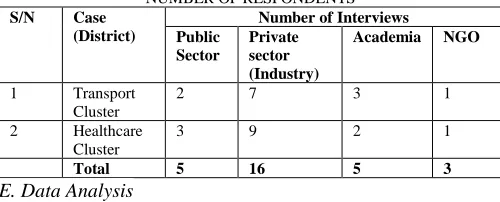
The study relied on in-depth interviews with stakeholders in both public and private sector in order to provide well organized overview of smart innovation shaping the pace of development in the Smart and Healthy City concept described in the literature above. The selection of experts was made by focusing on their degree on involvement in delivering the two clusters and by mapping them against the four key major stakeholders groups influencing Smart City development: Public Sector, Private Sector (Industry), Academia, NGOs, to allow full coverage of the different perspectives. Participants (interviewees) were asked about specific characteristics of the Smart and Healthy City that are influencing the innovation processes in two critical sectors of health-care and transportation. The research team conducted the in-depth interviews in Boston between August and December 2016. The experts’ interview sessions lasted 35-55 minutes with note taking and audio recording. To supplement the in-depth interviews, the study deployed a survey instrument with close ended questions to elicit information from stakeholders below the executive level. In this regard, the core indicators and characteristics of Smart Cities
themes extracted from theoretical literature and filtered through focus group sessions were transformed into statements asking respondents to rank the statements based on their importance to them. The instrument provided additional space in each set of questions for respondents to include any Smart City theme not included in the question and rank them accordingly. At the end of the survey, a total of 33 completed instruments were retrieved while 29 were processed (see Table 2).
The survey instrument gave the participants the ability to rank the given statements from the least to the most important based on the specific context. The instrument also provided space for participants to list their own important factors not covered in the questions and to rank them accordingly.
[image:7.612.314.564.234.335.2]
TABLE 2: SUMMARY OF PRIMARY DATA COLLECTION AND NUMBER OF RESPONDENTS
S/N Case (District)
Number of Interviews Public
Sector
Private sector (Industry)
Academia NGO
1 Transport Cluster
2 7 3 1
2 Healthcare Cluster
3 9 2 1
Total 5 16 5 3
E. Data Analysis
In line with the indicators highlighted in the conceptual framework, data relating to the two clusters were analyzed using 12 parameters and evaluated within the three core components (as shown in Table 2) based on qualitative data obtained through interviews and available credible documents relating to the clusters under consideration. Because the concept of Smart City is dynamic and can be interpreted in different ways, the analysis was restricted to the core components discussed in the literature with selected characteristics that can be tracked through interviews and survey [43]. In view of the relatively small number of returned survey instruments, a qualitative manual analysis was adopted for this empirical case study research.
V.EMPIRICAL EVIDENCE OF SMART AND HEALTHY
DEVELOPMENT FROM BOSTON
TABLE 3: COMPARATIVE ANALYSIS OF THE TRANSPORT AND THE HEALTHCARE CLUSTERS
Components Indicators
Transport Cluster
Health Cluster Smart
Infrastructure Improved Smart Grid High High Existence of
Connected Vehicles No No Availability of
Intelligent,
Sensor-based Infrastructure Medium Medium Safety (reduction in
accident rate) Low Low
Smart Institution
Access to Innovation
Hubs Very High Very High R&D Investment High High Opportunity to
Attract Venture
Capitals High High Improved Open
Data/Big Data
Initiatives Medium Low
Smart People Proximity to
Universities Very High Very High Increased Job
Opportunities High High Knowledge Sharing Medium Low
The stakeholders’ interviews revealed a major gap in communication and dissemination policies, since key stakeholders were not fully involved in the sensitization programme especially with respect to e-Health initiative. For instance, participants from NGOs claimed to be unaware of the Massachusetts Digital Health Initiative or any e-Health related programme in Boston.
A. Smart Infrastructure
As discussed in the literature review, Smart Infrastructure is both a core component and a pre-requisite for Smart City deployment. In this regard, the two clusters investigated demonstrated strong evidence for smart infrastructure deployment. Experts’ interviews highlighted for both clusters the importance of improved Smart Grid solutions in every segment of the city, through State- supported initiatives to allow customers managing their energy usage and achieving greater control and convenience. In this area, stakeholders cited the efforts by the Department of Public Utilities that mandated all major service providers in energy sector to put in place a 10-year Grid Modernization Plan (GMD) encouraging more investment in the sector to improve access to Smart Grid with improved communication between providers and customers, while increasing efficiency and cost reduction for citizens.
In Boston, smart services have started to extend into transport network to accelerate the smart aspiration and the healthy city vision in the form of innovative technologies for autonomous vehicles (connected-vehicle) for safety, improved environment, access and sustainability. Although respondent from both clusters indicated “No” (as shown in Table 3) to the survey question on the existence of “Connected Vehicles”, interviewees (top executives) in both public and private sectors interviewed agreed to the fact that serious innovative solutions have started in this area. These category of stakeholders further
revealed that, Boston has started experimenting with this concept by re-thinking of the future of transportation in the city. The Seaport Innovation Area has officially announced through the office of the Mayor, of the testing of the first set of autonomous cars at the former Boston Marine Park in December 2016. The innovation is part of the preparation for fully autonomous fleets that will involve ride-sharing services expected to be in full service by 2021. The initiative is part of the GoBoston 2030 driven by PPP arrangement through the Massachusetts Institute of Technology and NuTonomy as a private partner. Uber also launched a similar innovative initiative in September 2016. In accordance with our assumption on the transport and health nexus, core stakeholders interviewed around LMA cited the collaboration between Uber and Boston Children’s Hospital to provide on-demand services as a major medical intervention in this area.
In terms of deployment of intelligent sensor-based infrastructure, the findings of this research study reflect that in the two cases, smart infrastructure is already playing key roles at advanced stages of development. For instance, participants in academia and the core Smart City stakeholders cited the initiative expansion of the Downtown area into a mixed-use neighbourhood where people can live and work in order to encourage a more vibrant and productive downtown through arts and culture, programming, and quality retail for healthy citizens. The expansion includes the setting up of a Local Sense Laboratory through which a good number of Smart City projects such as Urban Smart Forest, Boston-area Sensor, Process Transparency and Citizen Engagement in Sensor Deployment, Public Drug Abuse Detection Systems, and Smart Parking have been implemented.
From the perspective of safety, although respondents across the two clusters ranked as “low” the deployment of smart technologies to reduce accidents in the city, the experts’ interviews revealed a major innovation in this area known as the “Boston Safest Driver App”. The safest driver app was launched in October 2016 to monitor and track drivers behaviours remotely in real-time. The project is a mobile-app developed to provide safety data on five metrics such as speed, acceleration, braking, cornering, and phone distraction amongst drivers around the city. The project has the office of the Boston-Mayor, New Urban Mechanics, Cambridge Mobile Telematics, and Boston’s Vision Zero Task Force as its partners.
Whereas smart infrastructure deployment can be considered as a key component for sustainable Smart and Healthy Cities, the social context of these smart developments need to be properly embedded to harness its potentials, especially the cross-sector benefits as highlighted in Boston’s IBM Smart City goals. For instance, the street-light infrastructure can be re-designed to provide more services across core sectors like security/safety monitoring. In one of the stakeholders’ interviews, it was noted that Smart City is not all about the deployment of technologies but social innovation and the experiences of the city need to be taken into account properly. B. Smart Institution
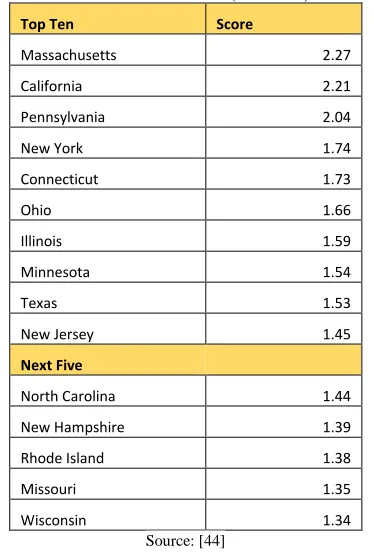
Cities. The sustainability of many components or characteristics of Smart Cities relies on the smartness of the institutions. Consensus among different actors exists on the two clusters being strongly related to innovation hubs in Boston. As indicated in Table 2, the two cases under consideration ranked access to innovation hubs “very high”. The State government and the city administration have setup robust and well organized innovation platforms such as the New Urban Mechanics and the PULSE/MassChallenge for interactive and participatory development. In addition, the city established vibrant innovation hubs such as Longwood Medical Area (LMA), Kendall Square, Seaport Innovation Area, and various innovation districts providing innovative solutions for entrepreneurs to increase proximity and density in sharing knowledge and technologies. For instance, our interview participants in health-care/LMA cited the example of “Second Opinion” e-health solution and the telemedicine solution at the Boston Children’s Hospital as major achievements resulting from vibrant innovation landscape in Boston. Similarly, the city is one of the most attractive destinations for venture capital (VC) in the United States of America closely followed by California (see for instance, secondary-data available as shown in Table 4). As a result of vibrant innovation hubs and academic R&D in science and engineering (S&E) in Boston, Massachusetts took the lead as a destination for R&D funding from the Federal Government in recent years [44].
TABLE 4: MEASURE OF THE ABSOLUTE SIZE OF INNOVATION ECONOMY OF THE US (2015/2016)
Top Ten Score
Massachusetts 2.27
California 2.21
Pennsylvania 2.04
New York 1.74
Connecticut 1.73
Ohio 1.66
Illinois 1.59
Minnesota 1.54
Texas 1.53
New Jersey 1.45
Next Five
North Carolina 1.44
New Hampshire 1.39
Rhode Island 1.38
Missouri 1.35
Wisconsin 1.34
Source: [44]
Boston tends to be the center of the “hardcore tech talent” in the United States. As shown in Table 3, the opportunity to attract VC is ranked as “high” in Boston. The two cases tend to have similar access to VC funding both from the local capitalist and the government. For instance, the PULSE/MassChallenge
platform conducts competitive awards for start-up innovators (in healthcare/LMA) on a monthly basis. In addition, available industry statistics [9] also reveal the good performance of Boston which recorded $272 million in 29 deals, a little below New York City and San-Francisco Bay Area in the top-10 US Metro Areas.
In terms of improved Big Data analytics/Open Data Initiatives, this empirical study revealed medium to moderate improvements amongst Smart City stakeholders in the strategic areas of transportation, as compared to the low ranking in healthcare. The interviewees in the transport cluster cited the example of Big Data analytics for providing “last-mile” information for timely decision on transportation routes and access leveraging high-connectivity with most vehicles equipped with on-board computers for GPS data processing and monitoring. Similarly, the Boston city’s efforts to release several applications for visualization of Big Data in a consumable manner according to these participants contributed to this feat. The prototype of an IBM initiative towards unlocking, sharing, and analyzing data for future benefit was also cited as a major factor for the improvement in this emerging sector. For the healthcare sector, one can ascribe the low ranking of improvement in tapping the economic opportunity in Big Data analytics/Open Data initiatives to the challenges of privacy as clearly expressed during the experts’ interviews in the sector.
The two clusters rely on different innovative platforms where key players in the industry come together to interact. Whereas the key actors in healthcare are concentrating on the use of technologies for managing health information and tele-medicine, the actors in transport/New Urban Mechanics, as well as in academia, understood the implications of Smart City concepts in healthcare systems as a crucial Smart City component, especially in terms of emergency management, air quality, and other health issues. Both sectors need proper synergy and integration of smart services including raising stakeholders’ awareness to promote cross-sector collaboration for sustainable development.
C. Smart People
behavior lives in our sewage. The “underworld” initiative is a unique innovation for stakeholders in Smart City deployment especially for improved quality of life, health and sustainable environment.
From the perspective of increased job opportunities, this empirical study reveals that job creation is high across cases. Our interviewees noted that most of the Smart City projects of Boston are based on PPP to encourage user-driven innovation. For instance, the Local Sense Laboratory is a form of partnership between the Mayor’s office (New Urban Mechanics) and the MIT. Similarly, the telemedicine project at the Boston’s Children Hospital is in collaboration with IBM, as noted by the key stakeholders. In addition to other government job creation incentives such as the Economic Development Incentive Program (EDIP), there are incentives for Life Science companies and a host of others creating job opportunities in and around the city.
As indicated in Table 3, knowledge sharing was ranked as “medium” amongst the respondents in transport cluster, as compared to “low” ranking in healthcare. Again, this can be explained using the frustration on privacy concern on health related data. Although privacy of individual is important, in open data knowledge sharing is a necessity since knowledge is useful only when it is accessible to end-users for solving a problem or in decision making. However, key participants cited the example of the open data policy of Boston as a good initiative to promote knowledge sharing. In addition, access to reliable transportation data through the IBM Smarter Cities initiative to enable citizen make intelligent decision on travel alternatives is also a good effort. The idea is being extended to other Smart City projects such as participatory Chinatown for social cohesion, BCH/IBM Watson for diagnose and cure for (kidney) rare diseases, the BITS city initiative, etc.
While protection of individual privacy is imperative, contrary to the fear on opening up health data, health information can be released or shared without releasing an individual’s personal information. In the same manner, a regulatory authority can be setup to prevent misuse of information shared across-sector platforms while ensuring the privacy of all citizens.
VI. CONCLUSION AND RESEARCH SUMMARY
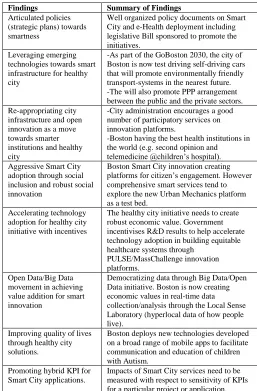
This study attempts to understand the provision of smart services from the perspectives of infrastructure, institution, and the people in the process of Smart and Healthy City developments described in literatures. The research study analyzed these perspectives through the instrument of our proposed framework of KPIs for monitoring Smart City development applied to a case study, i.e. two critical clusters in the Boston area. Findings from the study offer a novel contribution to knowledge on Smart Cities, especially as it relates to social innovation, and on Smart City implications in critical sectors such as healthcare and transport. As outlined in Table 5, the general findings are therefore summarized based on key facts from our in-depth interviews and survey results.
TABLE 5: SUMMARY OF KEY FINDINGS
Findings Summary of Findings
Articulated policies (strategic plans) towards smartness
Well organized policy documents on Smart City and e-Health deployment including legislative Bill sponsored to promote the initiatives.
Leveraging emerging technologies towards smart infrastructure for healthy city
-As part of the GoBoston 2030, the city of Boston is now test driving self-driving cars that will promote environmentally friendly transport-systems in the nearest future. -The will also promote PPP arrangement between the public and the private sectors. Re-appropriating city
infrastructure and open innovation as a move towards smarter institutions and healthy city
-City administration encourages a good number of participatory services on innovation platforms.
-Boston having the best health institutions in the world (e.g. second opinion and telemedicine @children’s hospital). Aggressive Smart City
adoption through social inclusion and robust social innovation
Boston Smart City innovation creating platforms for citizen’s engagement. However comprehensive smart services tend to explore the new Urban Mechanics platform as a test bed.
Accelerating technology adoption for healthy city initiative with incentives
The healthy city initiative needs to create robust economic value. Government incentivises R&D results to help accelerate technology adoption in building equitable healthcare systems through
PULSE/MassChallenge innovation platforms.
Open Data/Big Data movement in achieving value addition for smart innovation
Democratizing data through Big Data/Open Data initiative. Boston is now creating economic values in real-time data collection/analysis through the Local Sense Laboratory (hyperlocal data of how people live).
Improving quality of lives through healthy city solutions.
Boston deploys new technologies developed on a broad range of mobile apps to facilitate communication and education of children with Autism.
Promoting hybrid KPI for Smart City applications.
Impacts of Smart City services need to be measured with respect to sensitivity of KPIs for a particular project or application.
[image:10.612.311.568.48.439.2]being deployed on a larger scale for critical medical intervention in other countries around the world.
In the area of leveraging emerging technologies for improved services, it is a priority area of many cities setting overarching goals for smartness in order to open up services and economic opportunities. This empirical study reveals that it is one of the major goals of the GoBoston 2030. As part of the major steps, the city is re-thinking its transport infrastructure to improve access to transportation services and safety. Thus, the city is experimenting with the concept of autonomous (connected) vehicles in its fleet of pilot vehicles already released for testing. Other examples include the Street Bump app enabling the city to aggregate data on bad roads and fix them, Citizens Connect, and the Hub2 initiative engaging residents in planning neighborhood. In terms of re-appropriating city infrastructure for open innovation, a good number of participatory services are already rolling out through organized innovation platforms bringing together the next wave of innovation and entrepreneurial development.
Evidence from this study shows that aggressive Smart City adoption has the potential to leverage social inclusion for sustainability and realization of social cohesion. In this regard, the study reveals that the new Urban Mechanics platform has created a test-bed for smart solutions encouraging citizen engagement. Similarly, the government at the state level is incentivizing R&D results in order to accelerate technology adoption in building robust healthcare systems using the PULSE/MassChallenge innovation platform. Neglected, however, is the need for awareness. More work could be done in communicating and disseminating initiative results. Although Boston has embarked on aggressive development in mobilizing the core stakeholders for providing smart services, further stakeholders’ engagement is needed, especially through civil society, for raising awareness with regards to digital health initiatives. It is suggested that the healthcare sector would benefit from initiatives such as a participatory Chinatown, where the Smart City stakeholders and the city administration are experimenting with an approach of collecting data from citizens through neighbourhood planning processes.
With regard to the Open Data initiative, although some stakeholders raised the issue of resistance in some organization, especially in healthcare; however, Boston is already encouraging active the participation of developers rolling out apps for smart services across sectors through its Open Data policy. Another area not well emphasized is the open innovation on Big Data analytics being explored in Boston to create economic values for the city and to improve quality of life. Examples include the City Worker App to improve the city’s response time to services (request) and Pulse of the City – an interactive public-art installation for heartbeat monitoring. There are a good number of smart services for improving the quality of life in the two sectors investigated which include the integration of 311 technologies in Smart Traffic Lights for controlling traffic during rush hours, and Technology for Autism Now (TAN), a start-up dedicated to children living with autism, aimed at improving the quality of their lives at home, in school and in society.
In conclusion, evidence from this study show the importance of measuring the impacts of Smart Cities based on the experience of the city and the sensitivity of KPIs. In this regard, Boston is promoting hybrid KPIs for monitoring smart growths and services. Although Boston can be viewed to have setup an innovative and centralized governing structure for coordinating Smart City deployment through the instrument of the New Urban Mechanics, the developments of smart services in critical sectors such as healthcare (e-Health) has a different parallel governing structure which tends to encourage the duplication of efforts. There is need for a concerted effort towards services integration across the key sectors. Clearly, the e-health programs in Boston are highly concentrated on using technologies or ICTs for managing health information, telemedicine, telediagnosis, and so on, while the issues surrounding emergency management, air quality, and disease control are also crucial in healthcare delivery and can be addressed through the concept of Smart City or Smart Healthcare when carefully integrated.
As stated earlier, the Smart City concept is gaining wide-spread adoption among emerging economies (e.g. Nigeria). In the future, it is imperative to improve on the proposed framework for monitoring Smart City development in order to evaluate the critical sub-sectors of the cities based on the real experiences and the culture of cities at regional levels.
ACKNOWLEDGMENT
We acknowledge Marie Curie/MAPS-LED team for the exchange initiative that influenced this study. This research was conducted at the time the authors were part of the EU’s H2020 researchers based in Northeastern University Boston. Ben Eze offered useful contributions and guidance during the field work in Boston. The research results and conclusions expressed in this work were those of the authors and do not necessarily reflect the views of any organization mentioned in this paper.
REFERENCES
[1] Gaia Moretti, L., Social Innovation in Smart Cities, A good Practice from an European Project. LUMSAA -Libera Universita Maria Ss. Assunta Rome, Italy., 2015.
[2] Solanas, A., et al., Smart health: a context-aware health paradigm within smart cities. IEEE Communications Magazine, 2014. 52(8): p. 74-81. [3] Batty, M., et al., Smart cities of the future. The European Physical Journal
Special Topics, 2012. 214(1): p. 481-518.
[4] Colglazier, W., Sustainable development agenda: 2030. Science, 2015.
349(6252): p. 1048-1050.
[5] Arupt, Smart Solution for Cities. Available at www.barangoo.com retrived August 1, 2015. 2011.
[6] DBIS. Smart Cities: Background Paper. 2013 [cited 2016 March 29];
Available from:
www.gov.uk/government/uploads/system/uploads/attachment_data/file/ 246019/bis-13-1209-smart-cities-background-paper-digital.pdf. [7] Fox, M.S., A foundation ontology for global city indicators. University of
Toronto, Toronto, Global Cities Institute, 2013.
[8] Marsal-Llacuna, M.-L. Measuring the Standardized Definition of “smart city”: A Proposal on Global Metrics to Set the Terms of Reference for Urban “smartness”. in International Conference on Computational Science and Its Applications. 2015. Springer.
[9] Mayors' Office Boston Named One of the 'Most Livable' Cities in the United States. 2015. 2016.
[10] Washburn, D., et al., Helping CIOs understand “smart city” initiatives.
[11] Kondepudi, S., Smart Sustainable Cities Analysis of Definitions. The ITU-T Focus Group for Smart Sustainable Cities, 2014.
[12] Lee, J.H., M.G. Hancock, and M.-C. Hu, Towards an effective framework for building smart cities: Lessons from Seoul and San Francisco.
Technological Forecasting and Social Change, 2014. 89: p. 80-99. [13] Harrison, C. and I.A. Donnelly. A theory of smart cities. in Proceedings
of the 55th Annual Meeting of the ISSS-2011, Hull, UK. 2011.
[14] WHO; Available from ://www.who.int/healthy_settings/types/cities/en/. Retrieved September 22, 2016.
[15] Boulos, M.N.K. and N.M. Al-Shorbaji, On the Internet of Things, smart cities and the WHO Healthy Cities. International journal of health geographics, 2014. 13(1): p. 1.
[16] Corburn, J., Toward the healthy city: people, places, and the politics of urban planning. 2009: Mit Press.
[17] Schootman, M., et al., Emerging technologies to measure neighborhood conditions in public health: implications for interventions and next steps.
International Journal of Health Geographics, 2016. 15(1): p. 20. [18] Thoma, I., et al. Towards a Human Centric Intelligent Society: Using
Cloud and the Web of Everything to Facilitate New Social Infrastructures. in Innovative Mobile and Internet Services in Ubiquitous Computing (IMIS), 2015 9th International Conference on. 2015. IEEE.
[19] Zhu, N., et al., Bridging e-Health and the Internet of things: the SPHERE project. IEEE Intelligent Systems, 2015. 30(4): p. 39-46.
[20] Bhunia, S.S., S.K. Dhar, and N. Mukherjee. iHealth: A Fuzzy approach for provisioning Intelligent Health-care system in Smart City. in 2014 IEEE 10th International Conference on Wireless and Mobile Computing, Networking and Communications (WiMob). 2014. IEEE.
[21] Khoi, N.M., et al. IReHMo: An efficient IoT-based remote health monitoring system for smart regions. in 2015 17th International Conference on E-health Networking, Application & Services (HealthCom). 2015. IEEE.
[22] Alanazi, S., et al. On resilience of Wireless Mesh routing protocol against DoS attacks in IoT-based ambient assisted living applications. in 2015 17th International Conference on E-health Networking, Application & Services (HealthCom). 2015. IEEE.
[23] Sucasas, V., et al. An OAuth2-based protocol with strong user privacy preservation for smart city mobile e-Health apps. in Communications (ICC), 2016 IEEE International Conference on. 2016. IEEE.
[24] Naphade, M., et al., Smarter cities and their innovation challenges.
Computer, 2011. 44(6): p. 32-39.
[25] City of Boston. BOS 311. 2016 [cited 2016 December 29, 2016]; Available from: http://www.cityofboston.gov/311.
[26] Islam, S.R., et al., The internet of things for health care: a comprehensive survey. IEEE Access, 2015. 3: p. 678-708.
[27] Nam, T. and T.A. Pardo. Conceptualizing smart city with dimensions of technology, people, and institutions. in Proceedings of the 12th Annual International Digital Government Research Conference: Digital Government Innovation in Challenging Times. 2011. ACM.
[28] Giffinger, R., et al., Smart cities-Ranking of European medium-sized cities. 2007, Vienna University of Technology.
[29] Nam, T. and T.A. Pardo. Smart city as urban innovation: Focusing on management, policy, and context. in Proceedings of the 5th international conference on theory and practice of electronic governance. 2011. ACM. [30] Schaffers, H., et al., Smart Cities and the Future Internet: Towards Cooperation Frameworks for Open Innovation. Future Internet Assembly, 2011. 6656: p. 431-446.
[31] Komninos, N., M. Pallot, and H. Schaffers, Special issue on smart cities and the future internet in Europe. Journal of the Knowledge Economy, 2013. 4(2): p. 119-134.
[32] Agbali M., Y.A., C. Trillo, Developing a Conceptual Framework for Measuring Key Performance Indicators (KPIs) of the Impact of Smart Cities in Emerging Economies. 2016.
[33] Sarin, G., Developing Smart Cities Using Internet of Things: An Empirical Study. Available at SSRN 2780756, 2016.
[34] Chourabi, H., et al. Understanding smart cities: An integrative framework. in System Science (HICSS), 2012 45th Hawaii International Conference on. 2012. IEEE.
[35] Glaeser, E.L., Smart Growth: Education, skilled workers and the future of cold-weather cities. Cambridge (MA), Harvard University, Kennedy School, Policy Brief PB-2005-1, 2005.
[36] Yigitcanlar, T., K. O’connor, and C. Westerman, The making of knowledge cities: Melbourne’s knowledge-based urban development experience. Cities, 2008. 25(2): p. 63-72.
[37] Edvinsson, L., K-city and society entrepreneurship for intellectual capital. Carrillo, Francisco.(2006). Knowledge cities: approaches,
experiences, and perspectives. Elsevier Amsterdam, Boston, Heidelberg, London, New York, Oxford, Paris, San Diego, San Francisco, Singapore, Sydney, Tokyo, 2006: p. 59-73.
[38] International Organization for Standardization, ISO 37120:2014 - Sustainable development of communities -- Indicators for city services and quality of life. 2014.
[39] MiHe.MassTech, The Commonwealth of Massachusetts 2012 Health Information Exchange Strategic and Operational Plan. 2012.
[40] IBM, IBM Smarter Cities Challenge, Boston Report. 2012.
[41] City of Boston, Go Boston 2030. 2015. Available from
https://www.boston.gov/transportation/go-boston-2030 retrieved December 03, 2016.
[42] Yin, R., Case study research : Design and methods. 2014, Los Angeles, USA: SAGE.
[43] MassTech, Index of Massachusetts Innovation Economy 2015/2016 Edition. 2015.
[44] StartUp Health, L., Startup Health Insight: Digital Health Funding Rankings 2015 Midyear Report. 2015.