i
Table of Contents ... i
List of Figures ... xii
List of Tables ... xiv
List of Abbreviations ... xvii
Acknowledgements ... xviii
Dedication ... xix
Declaration ... xx
Abstract ... xxi
CHAPTER 1. Introduction ... 1
1.1. Research Background ... 1
1.2. Statement of the Research Problem ... 4
1.3. Research Questions ... 10
1.4. Research Aim ... 10
1.5. Research Objectives ... 10
1.6. Research Scope and Limitations ... 11
1.7. Research Methodology ... 12
1.8. Structure of the Thesis ... 14
1.9. Summary ... 16
CHAPTER 2. Literature Synthesis ... 17
2.1. Introduction ... 17
2.2. Construction Industry ... 17
2.2.1. The UK Construction Industry ... 19
2.2.2. Indonesian Construction Industry ... 20
2.3. Construction Projects ... 24
2.3.1. Residential Building ... 25
ii
2.3.4. Industrial Buildings ... 26
2.3.5. Justification on Commercial Building’s Focus ... 26
2.3.6. Importance of Project Overheads ... 27
2.4. Project Overheads ... 29
2.4.1. Definition of Overheads ... 29
2.4.2. Classification of Overheads ... 30
2.4.3. Identification of Site-Project Overheads ... 32
2.4.3.1. Unit-Level Overheads ... 33
2.4.3.2. Batch-Level Overheads ... 33
2.4.3.3. Project-Sustaining Overheads ... 34
2.4.3.4. Facility-Sustaining Overheads ... 34
2.5. Cost Management and Controlling Practices (CMCPs) of Project Overheads: the Potential Challenges ... 35
2.6. Identification of Critical Success Factors (CSFs) for the Management of Project Overheads ... 37
2.7. Preliminary Groups of Critical Success Factors (CSFs) for Cost Management and Controlling Practices (CMCPs) ... 43
2.7.1. Understanding the Market Conditions (MARCON) ... 45
2.7.2. Project Development Focus (DEVFOC) ... 47
2.7.3. Requirement of Investment and Technology (INVTEC) ... 49
2.7.4. Mapping Local Availability of Required Resources (LOCRES) ... 50
2.7.5. Managing the Company’s Interest and Project Benefit (INTBEN) ... 52
2.7.6. Managing the Nature of Project Complexity (PROCOM)... 53
2.7.7. Improving Contractors’ Current Roles in Practice (ROPRAC) ... 54
2.7.8. Requirement for a Robust Method and Tool (METOOL)... 56
2.8. The Most Important CSFs under Four Evaluation Criteria of Construction Projects ... 58
iii
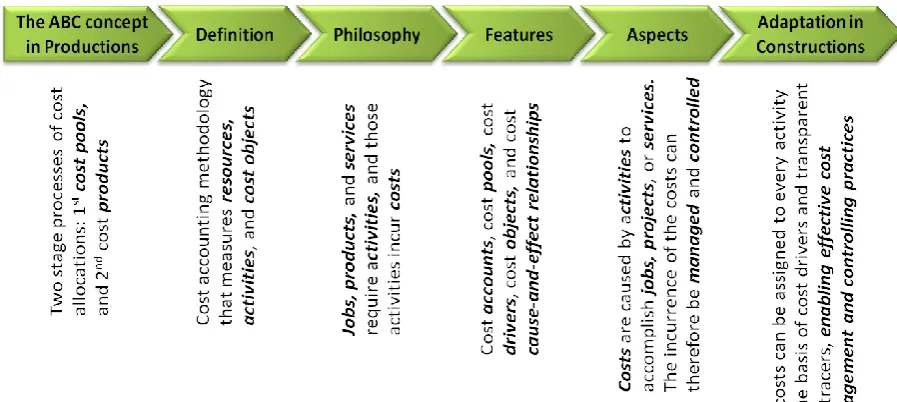
2.9.1.1. Concept of the ABC System ... 60
2.9.1.2. Definition of the ABC System ... 61
2.9.1.3. Philosophy of the ABC System ... 65
2.9.1.4. Cost Drivers ... 66
Unit Level ... 66
Batch Level ... 67
Project Sustaining ... 67
Facility Sustaining ... 68
2.9.2. The Traditional Costing versus the ABC System ... 68
2.9.2.1. Cost Allocation Process ... 68
2.9.2.2. Major Criteria for Different Costing Systems ... 69
2.9.3. Application of the ABC System in Construction Projects ... 71
2.9.3.1. Adaptation of the ABC system in Construction Companies ... 71
2.9.3.2. Application of the ABC System in Construction Projects ... 73
2.10. Summary ... 75
CHAPTER 3. Development of the Activity-Based Cost Controlling (ABCC) Model ... 76
3.1. Introduction ... 76
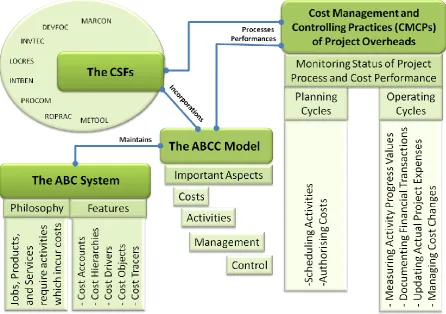
3.2. Conceptual Research Model ... 77
3.3. Structure of the Activity-Based Cost Controlling (ABCC) Model ... 79
3.4. Description of the Activity-Based Cost Controlling (ABCC) Model ... 81
3.5. Project Cost Measurement Model ... 86
3.6. Cost Management and Controlling Practices (CMCPs) ... 90
3.7. Summary ... 92
CHAPTER 4. Research Methodology ... 93
4.1. Introduction ... 93
4.2. Research Philosophy ... 94
iv
4.2.3. Axiology ... 99
4.2.4. Positioning the Research Stance ... 100
4.3. Research Strategy ... 101
4.4. Research Design ... 104
4.4.1. Literature Review ... 106
4.4.2. Questionnaire Survey ... 108
4.4.3. Project Documentation and Direct Observations ... 109
4.4.4. Semi-structured Interviews ... 110
4.4.5. Research Findings ... 110
4.5. Research Methods ... 111
4.5.1. Quantitative Methods ... 111
4.5.2. Qualitative Methods ... 112
4.5.3. Mixed Methods ... 112
4.6. Research Techniques and Procedures ... 114
4.6.1. Research Protocol ... 115
4.6.2. Research Activities ... 118
4.6.3. Justification of Research Techniques to the Aim and Objectives ... 120
4.6.3.1. The Aim of the Research ... 120
4.6.3.2. The First and Second Research Objectives ... 121
4.6.3.3. The Third Research Objective ... 121
4.6.3.4. The Fourth Research Objective ... 123
4.6.3.5. The Fifth Research Objective ... 123
4.7. Data Collection ... 124
4.7.1. Probability Sampling ... 125
4.7.2. Non-probability Sampling ... 125
4.7.3. Purposive Sampling ... 126
4.7.4. Justification of Data Collection to the Research Questions ... 127
v
4.7.4.3. The Third and Fifth Research Questions ... 129
4.7.5. Determination of Project Case Studies ... 130
4.7.6. Pilot Case Study ... 130
4.7.7. Indonesian Construction Projects ... 131
4.7.8. Project Cases ... 132
4.8. Data Analysis ... 136
4.8.1. Analysis of Questionnaire Data ... 137
4.8.1.1. Data Analysis for Identification of Project Overheads ... 138
4.8.1.2. Data Analysis for Prioritisation of Critical Success Factors (CSFs) . 140 4.8.2. Analysis of Case Study Data ... 146
4.8.2.1. Cost Measurement and Analysis of the Activity-Based Cost Controlling (ABCC) Model ... 146
4.8.2.2. Cost Management and Controlling Practices (CMCPs) of Project Overheads ... 148
4.8.3. Analysis of Interview Data ... 150
4.8.3.1. Content Analysis Techniques ... 151
4.8.3.2. Cognitive Mapping Techniques ... 152
4.8.4. Validation of Development of the Activity-Based Cost Controlling (ABCC) Model ... 153
4.8.5. Expert Interview Findings ... 153
4.8.6. Theme A - the Management of Project Overheads ... 157
4.8.7. Theme B - the Activity-Based Costing (ABC) System ... 160
4.8.8. Theme C - the Cost Management and Controlling Practices (CMCPs) of Project Overheads ... 161
4.9. Summary ... 163
CHAPTER 5. Findings and Analysis ... 165
5.1. Introduction ... 165
5.2. Analysis of Identification of Project Overheads during the Construction Stage ... 166
vi 5.2.3. Descriptive Statistical Analysis for Identification of Project Overheads 169 5.3. Analysis of Critical Success Factors (CSFs) for Improving the Management
of Project Overheads ... 172
5.3.1. Literature Review Findings of the CSFs ... 172
5.3.2. Questionnaire Survey Findings of the CSFs ... 172
5.3.3. Determining Relative Importance of the Evaluation-criteria ... 174
5.3.3.1. Pair-wise Comparisons of the Evaluation-criteria ... 175
5.3.3.2. Eigenvector Solution of the Evaluation-criteria ... 177
5.3.3.3. Consistency of the Evaluation-criteria ... 179
5.3.4. Determining Relative Importance of the CSF-alternatives... 180
5.3.5. The Solution through the AHP Tree ... 183
5.4. Analysis of the Activity-Based Cost Controlling (ABCC) Model for Improving the Management of Project Overheads ... 186
5.4.1. Literature Review Findings on the Development of the ABCC Model .. 187
5.4.2. Case Study Findings for Implementation of the ABCC Model ... 188
5.4.3. Cost Analysis and Procedures of the ABCC Model ... 188
5.4.3.1. Identification of Project Overheads and their Cost Accounts ... 190
5.4.3.2. Categorisation of Project Overhead Cost Pools Related to Activities ... 191
5.4.3.3. Idealisation of Quantity Drivers of Project Overheads ... 195
Calculation Example of Ideal Quantity Drivers ... 195
5.4.3.4. Analysis of Ideal Cost Drivers of Project Overheads ... 196
Calculation Example of Ideal Cost Drivers ... 197
5.4.3.5. Allocation of Project Overheads to Activity Cost Objects ... 197
Calculation Example of Activity Cost Objects ... 198
5.4.3.6. Determination of Activity Driver Rates of Project Overheads ... 198
Calculation Example of Activity Driver Rates ... 199
5.4.4. Summary of the Cost Analysis and Procedures of the ABCC Model .... 200
vii
5.4.5.2. Project Case Studies ... 205
Calculation Example of Overhead Cost Changes ... 206
Justification for Calculation Result of Cost Changes... 206
5.4.5.3. Project Cost Control ... 207
Calculation Example for Present Status of Cost Performance Ratio ... 208
Interpretation for the Calculation Result of Value and Schedule Ratio (VSR)208 Interpretation for the Calculation Result of Value and Expenses Ratio (VER)209 5.4.5.4. Future Forecast of Cost Performance Index ... 209
Calculation Example for Future Forecast of Cost Performance Index ... 210
Interpretation for Calculation Result of Estimate at Completion forecast-EAC ... 212
5.4.5.5. Worst Case Scenario (WCS) of the CMCPs’ Tools and Techniques 212 Calculation Example for the Worst Case Scenario (WCS) ... 213
Interpretation for Calculation Result of the Worst Case Scenario (WCS) ... 213
5.5. Validation of the ABCC Model through Content Analysis and Cognitive Mapping ... 216
5.5.1. Senior Management Perspectives of the Themes for Validation of the ABCC Model ... 217
5.5.1.1. Senior Management Perspectives on Management of Project Overheads for Development of the ABCC Model ... 218
5.5.1.2. Senior Management Perspectives on the ABC System for Development of the ABCC Model ... 220
5.5.1.3. Senior Management Perspectives on Development of the ABCC Model to Improve the CMCPs of Project Overheads ... 221
5.5.2. Operational Management Perspectives of the Themes for Validation of the ABCC Model ... 223
5.5.2.1. Operational Management Perspectives on Management of Project Overheads for Development of the ABCC Model ... 224
5.5.2.2. Operational Management Perspectives on the ABC System for Development of the ABCC Model ... 226
5.5.2.3. Operational Management Perspectives on Development of the ABCC Model to Improve the CMCPs of Project Overheads ... 228
viii
6.1. Introduction ... 234
6.2. The Management of Construction Project Overheads ... 236
6.2.1. Overview of Construction Project Overheads ... 236
6.2.2. Identification of Construction Project Overheads ... 237
6.2.3. Construction Project Overheads ... 238
6.3. The Most Critical Success Factors (CSFs) for Improving the Management of Construction Project Overheads ... 241
6.3.1. Overview of Critical Success Factors (CSFs) ... 241
6.3.2. Identification of Critical Success Factors (CSFs) ... 242
6.3.3. The Most Important CSFs for Improving the Management of Construction Project Overheads ... 245
6.3.3.1. Relative Importance of Four Evaluation-criteria ... 246
6.3.3.2. Relative Importance of Eight CSF-alternatives under Four Evaluation-criteria ... 248
6.3.3.3. Relative Importance Ranking of Eight CSF-alternatives through AHP Solution Tree ... 251
6.3.4. Implication of the Most Important CSFs ... 252
6.4. The Activity-Based Cost Controlling (ABCC) Model for Improving the Management of Construction Project Overheads ... 254
6.4.1. Overview of the ABCC Model... 254
6.4.2. Implementation of the ABCC model ... 255
6.5. The Cost Management and Controlling Practices (CMCPs) Tools and Techniques of Construction Project Overheads ... 255
6.5.1. Overview of the CMCPs ... 256
6.5.2. Implementation of the CMCPs ... 256
6.6. Summary ... 260
CHAPTER 7. Conclusion and Recommendations ... 262
7.1. Introduction ... 262
ix
7.1.3. Organisational Advantages ... 265
7.2. The Overview of the Research Aim and Objectives ... 266
7.2.1. The First Research Objective; Identification of project overheads ... 266
7.2.2. The Second Research Objective; Analysis of the Critical Success Factors (CSFs) ... 268
7.2.3. The Third Research Objective; Investigation of the Activity-Based Costing (ABC) System ... 270
7.2.4. The Fourth Research Objective; Development of the ABCC Model and implementation of the CMCPs’ Tools and Techniques ... 271
7.2.5. The Fifth Research Objective; Validation of the ABCC Model ... 273
7.3. Conclusions ... 274
7.4. Recommendations for Future Research ... 275
7.5. Summary ... 276
REFERENCES ... 277
APPENDICES ... 301
APPENDIX 1: An Example of Project Cost Measures ... 302
Appendix 1: The Ratio of Activity Progress Values (APV) and Actual Project Expenses (APE); an example ... 303
APPENDIX 2: Research Instrument ... 305
Appendix 2-a: Survey Questionnaire ... 306
Appendix 2-b: Interview Guide ... 313
APPENDIX 3: Descriptive Statistic Analysis of Project Overheads ... 314
Appendix 3-a: Descriptive Statistic Analyses for Identification and Availability of Project Overheads ... 315
x Appendix 4-d: Relative Importance of CSF-alternatives under the Project
Monitoring ... 320
Appendix 4-e: Relative Importance of CSF-alternatives under the Project Delivery ... 321
Appendix 4-f: The Solution Matrices through the AHP Tree ... 322
APPENDIX 5: Project Case Studies ... 323
Appendix 5-a: The Case Study Data of Project Overheads for the Resort Project (Basement/ Substructure) ... 324
Appendix 5-b: Cost Measurement and Analysis of the ABCC Model ... 326
Appendix 5-c: Cost Measurement and Analysis of the ABCC Model (continued) . 327 Appendix 5-d: The Cost Management and Controlling Practices (CMCPs) of Project Overheads ... 328
Appendix 5-e: The Cost Management and Controlling Practices (CMCPs) of Project Overheads (continued) ... 329
Appendix 5-f: The Case Study of the Hospital Project ... 330
Appendix 5-g: The Case Study of the Car-Park Project ... 342
Appendix 5-h: The Case Study of the Villa Project ... 354
Appendix 5-i: The Case Study of the Hotel Project ... 367
APPENDIX 6: Expert Interview Outcomes on Development of the ABCC Model ... 379
Appendix 6-a: Sample of Expert Interview Transcription ... 380
Appendix 6-b: Senior Management Perspectives for Validation of Development of the ABCC Model ... 383
Appendix 6-c: Operational Management Perspectives for Validation of Development of the ABCC model ... 384
xi
APPENDIX 8: Administration and Progress ... 388
Appendix 8-a: Internal Evaluation Confirmation ... 389
Appendix 8-b: The Most Innovative Methodology Award ... 390
xii
Figure 1-1: Overheads Allocation Problem in Construction Projects ... 6
Figure 1-2: Cost Accounting Management Problem in Construction Projects ... 8
Figure 2-1: Key Indicators to the Construction Industry ... 18
Figure 2-2: The Largest Economy of the Global GDP ... 20
Figure 2-3: Construction’s Economic Indicators in Indonesia ... 23
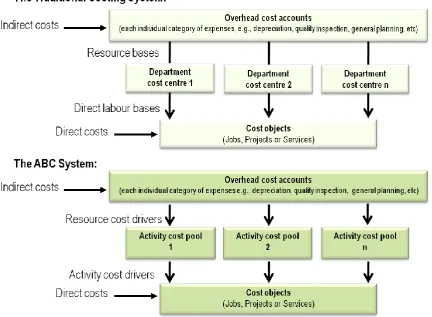
Figure 2-4: The Cost Allocation Process for the Traditional Costing versus the Activity-Based Costing System ... 69
Figure 2-5: Application of the ABC System in Construction Projects ... 73
Figure 3-1: The Conceptual Research Model ... 78
Figure 3-2: The Structure of the ABCC Model ... 80
Figure 3-3: The Project Phases ... 82
Figure 3-4 : Project Cost Measurement Model ... 88
Figure 4-1: The Systematic Research Process ‘Onion’... 93
Figure 4-2: Philosophical Positioning of the Research ... 95
Figure 4-3: Basic Type of Designs for Case Studies ... 105
Figure 4-4: Concurrent Activities of the Research ... 118
Figure 4-5: Sampling Techniques... 125
Figure 4-6: Integrated Resort Plan and View ... 134
Figure 4-7: Mobilisation and Substructure Activities ... 135
Figure 4-8: Range Statistic Analysis for Availability of Project Overheads ... 139
Figure 4-9: The Structure of Analytic Hierarchy Process ... 143
Figure 4-10: Project Cost Measurement and Analysis of the ABCC Model ... 147
xiii Figure 4-13: Relationship of the Converging Themes with advantages of the ABCC
Model ... 156
Figure 5-1: Weighted Scores of Forty-seven Items of Project Overheads ... 168
Figure 5-2: Range Scores of Forty-seven Items of Project Overheads ... 168
Figure 5-3: Range Statistics Analysis for the Availaility of Project Overheads ... 169
Figure 5-4: The Particular Members of Eight Group CSFs ... 173
Figure 5-5: Four Evaluation-criteria under the Decision Goal ... 174
Figure 5-6: AHP Solution Tree for CSF-alternatives under Evaluation-criteria ... 184
Figure 5-7: The Worst Case Scenario (WCS) in Percentage Budgets for the Cost Performance Indices ... 215
Figure 5-8: Cognitive Map of Senior Management Perspectives for Advantages of the ABCC Model ... 217
Figure 5-9: Cognitive Map of Operational Management Perspectives for Advantages of the ABCC Model ... 224
xiv
Table 2-1: Categories and Items of Site-Project Overheads ... 34
Table 2-2: Identification of Important CSFs for the Management of Project Overheads ... 40
Table 2-3: Activity Cost Drivers ... 67
Table 2-4: Major Differences between the Traditional Costing and the Activity-Based Costing System... 70
Table 3-1: RIBA Outline Plan of Work ... 82
Table 4-1: The Criteria for Different Research Strategies... 102
Table 4-2: Research Protocol ... 116
Table 4-3: Project Cases ... 133
Table 4-4: The Fundamental Scale of Saaty’s Absolute Numbers ... 141
Table 4-5: The List of Five Experts ... 144
Table 4-6: The List of Interviewees ... 154
Table 4-7: Summary of the Concepts from Senior and Operational Management Levels ... 158
Table 5-1: The List of Respondents ... 167
Table 5-2: Matrix Algebra of the Evaluation-criteria ... 177
Table 5-3: Iteration of Squared Matrices of the Evaluation-criteria ... 177
Table 5-4: Last Iteration of Squared Matrices of the Evaluation-criteria ... 178
Table 5-5: Random Inconsistency Index ... 180
Table 5-6: Matrix Algebra of CSF-alternatives under the Project Type ... 181
xv
Type ... 182
Table 5-9: Summary of Eigenvectors and Consistency Ratio (CR) ... 183
Table 5-10: AHP Solution Matrices of CSF-Alternatives under Evaluation-criteria ... 185
Table 5-11: The Ranking Importance of CSF-alternatives ... 185
Table 5-12: The Priority of Importance of CSF-Alternatives ... 186
Table 5-13: Actual Cost Data of Project Overheads ... 190
Table 5-14: Actual Progress Schedules of Substructure Activities ... 191
Table 5-15: Cost Measurement and Analysis of the ABCC Model ... 193
Table 5-16: Cost Management and Controlling Practices (CMCPs) ... 203
Table 5-17: The Worst Case Scenario (WCS) in IDR for the Cost Performance Indices ... 214
Table 5-18: The Worst Case Scenario (WCS) in Percentage Budgets for the Cost Performance Indices ... 214
Table 6-1: The 39 Items of Construction Project Overheads ... 240
Table 6-2: The Eight Groups of Important CSFs with the Focus Area of Construction Project Activities ... 243
Table 6-3: The Four Evaluation-criteria for the Most Important CSFs of Construction Projects ... 244
Table 6-4: The Best Eigenvector Solution of Evaluation-criteria for the Decision-goal ... 246
Table 6-5: Four Matrix Algebras of CSFs under Project Type ... 248
Table 6-6: Four Matrix Algebras of CSFs under Project Phase ... 249
Table 6-7: Four Matrix Algebras of CSFs under Project Monitoring ... 249
xvii ABC : Activity-Based Costing
ABCC : Activity-Based Cost Controlling AC : Actual Cost
AD : Activity Duration
AHP : Analytic Hierarchy Process APE : Actual Project Expenses APV : Activity Progress Value
BRICs : Brazil, Russia, India, and China CD : Cost Driver
CMCPs : Cost Management and Controlling Practices CO : Cost Object
CSFs : Critical Success Factors DR : Driver Rate
EACƒ : Estimate at Completion ƒorecast
EU : European Union
GDP : Gross Domestic Products GVA : Gross Value Added
ISO : International Organisation for Standardisation
LPJK-I : Lembaga Pengembangan Jasa Konstruksi-Indonesia (Indonesian Institute for Construction Service Development)
N-11 : Next Eleven Countries OCS : Overhead Cost Schedule
OECD : Organisation for Economic Cooperation and Development PPP : Purchasing Power Parity
QD : Quantity Driver UK : United Kingdom US : United States
VER : Value/Expenses Ratio
VISTA : Vietnam, Indonesia, South Africa, Turkey, and Argentina VSR : Value/Schedule Ratio
xviii I wish to express my hearty felt gratitude and thanks to many people who have supported and encouraged me throughout my PhD journey, and without whom I would not have been able to complete this thesis. First and foremost, my sincere thanks go to my supervisor Dr. Chaminda Pathirage, who enthusiastically supervised and guided me. I appreciate your continuous feedback, constructive criticism, insight and advice. I have learned diligence, perseverance, courage, patience, hard work and friendship from you, which has assisted me to finish the research as planned. I would like to extend my gratitude to Professor Vian Ahmed, Professor Dilanthi Amaratunga, Professor Charles Egbu, Dr. Monty Sutrisna, Dr. Jason Underwood, Mr. Mohan Siriwardena, Dr. Udayangani Kulatunga, Dr. Kaushal Keraminiyage, Dr. Bingunath Ingirige, Professor Mohammed Arif and Professor David Eaton for their knowledge, constructive criticism and advice, which has been a source of continual inspiration throughout the research.
I am grateful to the support staff in the School of the Built Environment, College of Science and Technology, the University of Salford. Their continuous help and support throughout the PhD process, in terms of providing excellent facilities and working environment, is very much appreciated. Issues of confidentiality prevent me from mentioning the participants by name. My special appreciation also goes to Ditjen Dikti - RI for the sponsorship and all the participants in this research for their invaluable time and information during the field survey and interviews.
My gratitude, with respect, goes to my deceased parents for their spirit and to my brothers, sisters and extended family for the continuous support given to me throughout my entire life and especially during the PhD process.
xx This thesis is submitted under the University of Salford roles and regulations for the award of a PhD degree by research. While the research was in progress, some research findings were published in conference papers, electronic book, poster, and refereed journals prior to this submission (refer to Appendix 7).
The researcher declares that no portion of the work referred to in this thesis has been submitted in support of an application for another degree of qualification of this, or any other university or institution of learning.
xxi The construction industry was considered very important as it contributed a significant part of the Gross Domestic Product (GDP) for the economic development of any country. Construction projects appeared to have high expenditures and complex processes that involved a wide range of participants, stakeholders, investments, and technologies. This continued to increase construction project overheads considerably. Project overheads were common to multiple cost objects, but cannot readily be allocated directly to particular construction activities.
The traditional costing system added project overheads to construction cost on a percentage basis, which often provided inaccurate distributions for most of the activities. The current cost accounting management approach focused too much on satisfying external standard requirements, consequently paying little attention to internal cost management improvements. This research proposed an Activity-Based Cost Controlling (ABCC) model through the identification of overheads in construction projects, the analysis of Critical Success Factors (CSFs), and application of the Activity-Based Costing (ABC) system for improving the Cost Management and Controlling Practices (CMCPs) of construction project overheads. The critical realist philosophical stance with multiple case studies was adopted for this research. Data collection used questionnaire survey, project documentation, observations, and interviews. Data analysis utilised descriptive statistics, Analytic Hierarchy Process (AHP), the ABC system and Earned Value Measurement System (EVMS), content analysis and cognitive mapping.
xxii top three priority CSFs were incorporated into the CMCPs’ tools and techniques for implementation of the ABCC model. The opinions of experts (senior and operational management levels) were used to validate the ABCC model, which generated 36 concepts that were incorporated into the model during the refinement stage. Therefore, the ABCC model was developed for improving the management of construction project overheads to increase the body of knowledge.
1
CHAPTER 1.
INTRODUCTION
1.1.
Research Background
The construction industry generally provides a wide range of opportunities for the development of an economy within the geographic area of any country, both regionally and globally. The global construction industry achieves a financial output of up to £2.95 trillion, and was responsible for 10 per cent of global GDP in the middle of the last decade (General UK Statistics, 2007). According to Hook (2011), recent construction output has been reported at approximately £4.62 trillion representing over 11 per cent of global GDP in the beginning of this decade, and is expected to grow by 67 per cent up to £7.69 trillion by the end of 2020, representing 13.2 per cent of world GDP. Total accumulated expenditures of the construction industry worldwide would be £62.65 trillion during this decade (Hook, 2011). This indicates that the world construction industry continues to grow, despite the current economic downturn.
2 The term ‘activities’ is defined in this research as actions involving many resources in order to accomplish jobs, projects or services during the construction stage of construction projects. This includes the various elements of substructure and superstructure activities of construction projects. Vast construction activities usually involve a wide range of project participants (e.g., clients, consultants, main contractors, subcontractors, and suppliers), and stakeholders (e.g., investors, creditors, regulators, public and private agencies, general communities, etc.).
Every project has the possibility to develop particular characteristics, uniqueness, and supply chains (Alarcón et al., 2009). Project complexities, the intricate nature, sophisticated clients, fragmented packages, and diversified activities require an integrated process and coordination with participants and stakeholders that are difficult activities during actual construction operations (CIOB, 2009). A project environment like this should involve organisations and may require higher investment and advanced technologies, together with knowledgeable and experienced human resources. These would inevitably increase the indirect costs of project overheads considerably compared to direct materials and labour costs.
3 cannot be distributed directly to individual activities and should not be included in compound costs (CIOB, 2009).
Project participants such as clients and main contractors often agree to incorporate outsourcing suppliers, specialist subcontractors, and specialist consultancy companies for a complex project to transfer project risks and to share project overheads (Kim and Ballard, 2002 and 2005). Construction projects become more complex related to project overheads due to involvement of many parties with their own particular interests (Ostwald, 2001; and Walker, 2007). Project overheads tend to increase more rapidly compared to the project direct costs with regard to project complexities (Assaf et al., 2001; Kim and Ballard, 2002 and 2005; and Enshassi et al., 2008). Project overheads therefore would appear to be one of the important cost components that require appropriate cost management, controlling methods, tools and techniques in practice, which cannot be satisfied by the traditional costing system (refer to Cockins, 2001; Daly, 2002; Giammalvo, 2007) and current cost management and accounting principles (refer to Horngren et al., 1997 and 2005; and Drury, 2008).
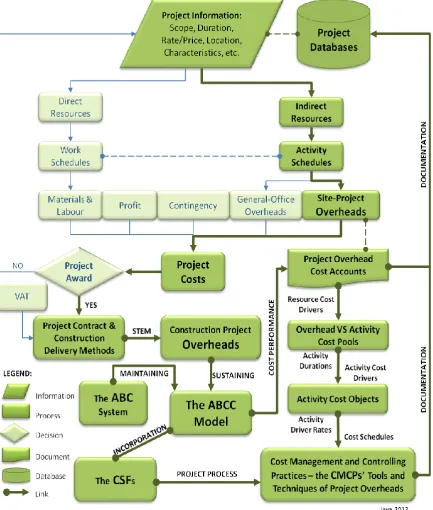
4 Controlling (ABCC) model for improving the management of project overheads and cost controlling practice during the construction stage of construction projects.
1.2.
Statement of the Research Problem
The Royal Institute of British Architects (RIBA) identified five discreet project phases, which include: (1) preparation, (2) design, (3) pre-construction, (4) construction, and (5) use. The project preparation phase includes two work stages, they are: appraisal and design brief. The project design phase represents three planning stages, which are: concept, design development, and technical design. The pre-construction phase includes three procurement processes: production information, tender documentation, and tender action. The construction phase incorporates two work activities: mobilisation and construction to practical completion. Finally, project use includes post practical completion (refer to Philips, 2009; and Cartlidge, 2009).
This research focuses on the project construction phase, and based on the conventional project delivery method and contract price between the client and main contractor. The role of the main contractor was limited to the construction delivery, and concerns project efficiency and effective costs during the construction stage, rather than the other project phases.
5 Moreover, pro-rata overhead allocations on a labour cost basis are criticised when contrasted with typical overhead cost behaviours which should be accurately attached on the basis of diverse cost drivers for the real price of specific products (e.g., Giammalvo, 2007). An explanation of this criticism can be illustrated by this example: every single unit of banana, apple, lettuce, and vegetable has different overheads related to storage, shelf life, water requirement, refrigeration, particular handling, and so on. When the green grocer deals with the retailer, they should consider the fair overheads per item-sold, similarly with each activity completed in construction projects’ to avoid cost distortions. The pro-rata overheads which are distributed to project activities on the labour cost bases represent unfair overheads for every particular activity completed (Giammalvo, 2007).
Furthermore, the traditional costing system remains an unclear definition of project overheads apropos activities, an arbitrary method of allocating overhead costs, and an inaccurate distribution of project overheads related to every element of construction activities. It would appear that there is a clear gap in knowledge on overhead cost accounts when implementing the traditional costing system for the management of project overheads.
6
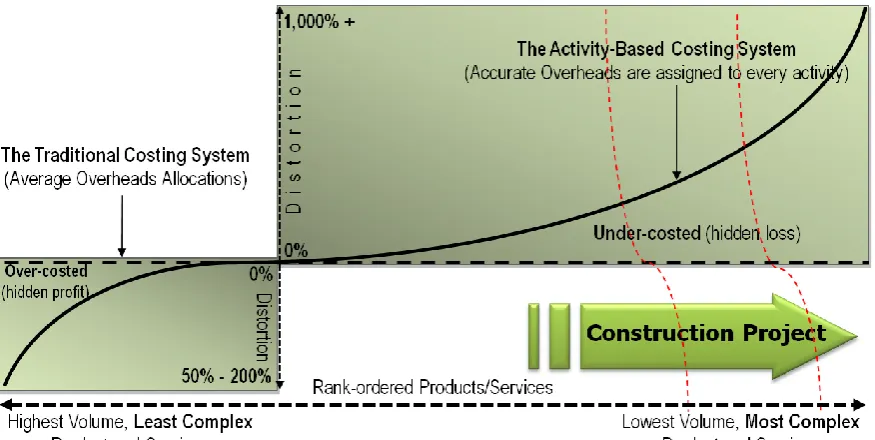
Figure 1-1: Overheads Allocation Problem in Construction Projects Source: Adapted from Cockins (2001)
The average allocation of overheads to products or services is illustrated with the dotted horizontal line in Figure 1-1. The curve shows clear evidence of a contemporary ABC system based on the provided volume of the products or services and the complexities of manufacturing production lines. The contemporary ABC system can assign more accurate overheads on the basis of diverse cost drivers to avoid hidden losses of cost distortions (Cockins, 2001), and consequently, this system can generate savings or profits (Daly, 2002; and Giammalvo, 2007).
7 under costing or potential losses on the traditional costing system in construction project practices.
The other problem related to construction project overheads is at operational levels (Kerzner, 2009); eliminating some components of project overheads seems to be the easiest way to reduce cost when the project budget is exceeded. On the other hand, project overheads tend to increase significantly (Assaf et al., 2001) and become very important cost components to maintain the entire construction activity (CIOB, 2009). Therefore, current project overheads are unclearly defined, inaccurately accounted, and have uncertain relationships to construction activities during the construction stage. These require an appropriate and effective overhead cost accounting management system.
8
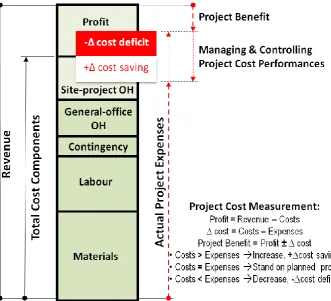
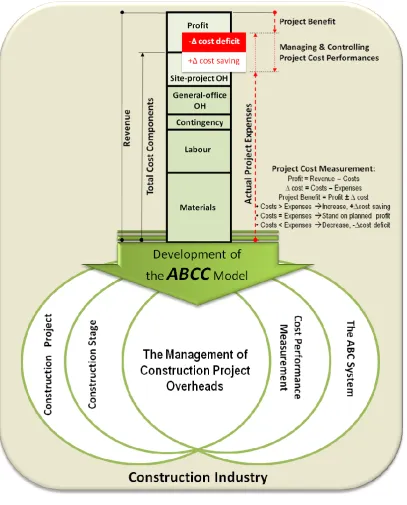
Figure 1-2: Cost Accounting Management Problem in Construction Projects Source: Adjusted from Jaya et al (2010b)
Most contractors usually prefer to obtain profits by carefully planning affordable costs below the project revenue (refer to Figure 1-2). Project participants such as general contractors and specialist subcontractors endeavour to increase profits or project benefits by retaining the excess revenue over costs through limiting the smallest possible expenses below the total cost during the construction stage. The creation of increasing project benefits through controlling overhead costs and managing cost performances carefully during construction operations, and enabling appropriate actions to be taken by the project managers (e.g., preventative, or corrective, or immediate actions) are becoming more and more important.
9 practices, such as planning costs, updating day-to-day project progress and expenditures for construction activities, and managing cost changes with regard to planned costs. The ABC system therefore could develop transparent links of resource costs to the insight of cause-and-effect relationships between the cost behaviour knowledge of project overheads with the practical knowledge of construction activities or a particular complexity of construction processes of the jobs in order to establish optimum costs and minimum expenses for generating maximum project benefits (refer to Figure 1-2). This highlights a problem in the cost accounting management approach in the construction project practice.
The need for the identification of the cost-cause relationship between project overheads and construction activities for improving the management of project overheads during the construction stage has identified two main problems:
The shortcoming of the traditional costing system, including unclearly defined, arbitrarily allocated, and mostly inaccurately distributed project overheads to particular construction activities. It requires appropriate cost accounting methods to enable accurate assigning of project overheads to every activity of construction projects.
The current cost accounting management approach pays little attention to project cost management and controlling practices. It requires appropriate models, tools and techniques to enable effective management and control of cost performances, for improving the management of construction project overheads.
10 techniques of Cost Management and Controlling Practices (CMCPs) on substructure activities of construction building projects.
1.3.
Research Questions
1. What overheads are included in construction projects?
2. What CSFs are important for improving the management of project overheads?
3. Why and how could an underpinning philosophy of the ABC system be adapted in construction projects?
4. How could the ABCC model be developed and implemented on substructure activities of construction building projects, for improving the management of project overheads?
5. How could the ABCC model be validated for improving the management of project overheads in construction projects?
1.4.
Research Aim
The aim of this research was to propose the ABCC model for improving the management of project overheads during the construction stage of construction projects. The specific focus was on implementation of the ABCC model through the CMCPs’ tools and techniques on the substructure activities of construction building projects. In order to achieve this aim, a series of objectives are identified.
1.5.
Research Objectives
11 2. To analyse Critical Success Factors (CSFs) for the management of
construction project overheads.
3. To investigate an underpinning philosophy of the ABC system in construction projects.
4. To propose the ABCC model and implement the CMCPs’ tools and techniques on substructure activities of construction building projects, for improving the management of project overheads.
5. To validate the ABCC model on improving the management of project overheads.
1.6.
Research Scope and Limitations
This research investigates the application of the ABC system in construction projects. The ABCC model is proposed to improve the management of project overheads during the construction stage of construction building projects.
The specific area of this research focuses on commercial building projects in both public and private sectors, such as office buildings, hospitals, villas, hotels, resorts, and so on. The commercial building project requires higher investment and technologies, effective cost management and tighter controls, because it is more sensitive to financial losses and also provides a greater opportunity for project benefits. Therefore, this research focuses on commercial buildings rather than other types of construction building projects (refer to Section 2.3.5 for a detail discussion).
12 ABCC model for this study focuses on substructure activities of construction building projects, due to limitations of the study duration and involvement of a number of activities.
Two types of project overheads: general-office overheads and site-project overheads are identified (refer to Section 2.4.2 for a detailed discussion). However, this research focuses on site-project overheads only, which include: unit level, batch level, project sustaining, and facility sustaining overheads (refer to Section 2.4.3). Site-project overheads related to substructure activities of commercial building projects are therefore examined with regard to the development of the ABCC model and implementation of the CMCPs’ tools and techniques.
1.7.
Research Methodology
The ABCC model was developed based on a literature review and empirical studies. Three domains of research philosophies were assessed (i.e., ontology, epistemology, and axiology). Ontology addressed about the nature of reality, epistemology considered the observable phenomena to the knowledge, and axiology considered the role of values in research (Saunders, et al., 2009). This philosophical assessment positioned the research into a critical realist stance (refer to Section 4.2.4).
13 With regard to data collection, both primary and secondary data were gathered during the literature review and field research. Most secondary data was collected during the review of literature and project databases or documents. Primary data was mostly collected during the field research of project case studies and direct observations in Indonesia. Quantitative data was collected through the questionnaire survey. Project case study databases and direct observation data were documented from actual projects that were accessible to the researcher. Qualitative data was collected through expert interviews. These multiple sources of evidence were triangulated in order to ensure the validity and reliability of the research.
During the data analysis, the construction project overheads and important CSFs were identified based on the literature review. Then, availability of construction project overheads was analysed using descriptive statistic techniques, and the most important CSFs through Analytic Hierarchy Process (AHP). The underpinning philosophy of the ABC system and its’ relevant features and important aspects were analysed during the literature review in order to develop the ABCC model. Project cost documents and observation data were examined using cost measurement systems such as the ABC accounting system and Earned Value Measurement System (EVMS) for a refinement and implementation of the ABCC model. The most important CSFs and the ABCC model were incorporated into the CMCPs’ tools and techniques for the implementation of the ABCC model within the project case studies, for improving the management of project overheads during the construction stage. The expert interview outcomes used content analysis and cognitive mapping to validate the identification of project overheads and application of the ABC system for the development of the ABCC model in order to enable an improvement of the CMCPs in construction projects.
14
1.8.
Structure of the Thesis
The seven chapters are outlined below to give an overview of all the contents of the thesis.
Chapter one introduces the research background and provides a statement of two research problems: the traditional costing system and current cost accounting management approaches. The research aim, objectives, and questions are outlined in this section, as well as research scope and limitations. A brief introduction of the research methodology and the structure of the thesis are provided before summarising this section.
Chapter two is devoted to synthesising the literature for organising the value of both references and ideas on the study area: the cost management and controlling practices of construction project overheads. It starts with a review of the construction industry and commercial building projects. Management of construction project overheads is the focus of the study area. Then, it identifies the important CSFs for improving the management of project overheads and investigates an underpinning philosophy of the ABC system in construction projects, in order to develop the ABCC model.
Chapter three presents the development of the ABCC model which includes chronological processes such as the conceptual research modelling, the ABCC model development, description of the ABCC model, the project cost measurement model, and cost management and controlling mechanisms in practice – the CMCPs of construction project overheads.
15 are described. Further, the chapter explains the data collection and analysis techniques in detail.
Chapter five presents research findings and data analysis. Research findings include literature review findings, questionnaire survey data findings, case study data findings, and expert interview outcomes. Data analysis involves several methods and techniques, such as descriptive statistics, Analytic Hierarchy Process (AHP), the ABC system, Earned Value Measurement System (EVMS), content analysis, and cognitive mapping. Descriptive statistics are used to analyse the identification and availability of project overheads in construction projects. The AHP techniques utilise multi level decision making to determine the highest priority of importance of CSFs. The ABC system and EVMS are implemented for the cost accounting, cost measurement, and cost performance analyses of the ABCC model and the CMCPs’ tools and techniques. Content analysis and cognitive mapping are used for assessing expert interview outcomes in order to ensure the validation of the ABCC model.
Chapter six of this thesis provides a discussion that integrates the significance of each of the particular elements of the research results which have been incorporated to illuminate their importance against the research aim and objectives. Particular elements of the discussion chapter include the identification of availability of construction project overheads, the highest three priorities of important CSFs, the application of the ABC system in construction projects for the development of the ABCC model, and implementation of the CMCPs’ tools and techniques, in order to improve the management of project overheads during the construction stage of construction building projects.
16 findings and analysis and the discussion. This section ends the thesis by highlighting some recommendations for further research.
1.9.
Summary
17
CHAPTER 2.
LITERATURE SYNTHESIS
2.1.
Introduction
This chapter starts with the literature review on the construction industry to give an overview of the research focus on the commercial building projects. Section 2.4 presents the identification of construction project overheads that discusses the importance, definition, classification and categorisation of project overheads in detail, and the important CSFs for improving the management of project overheads are identified in section 2.6. An application of the ABC system in construction projects is investigated, in order to propose the ABCC model and the implementation of the CMCPs’ tools and techniques on substructure activities of construction building projects.
2.2.
Construction Industry
18
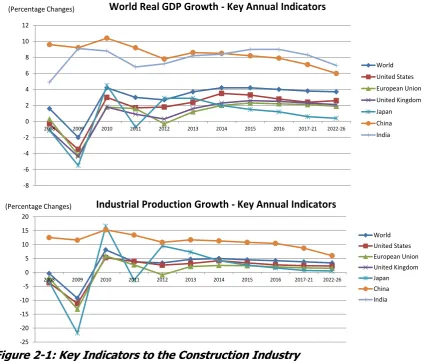
Figure 2-1: Key Indicators to the Construction Industry Sources: Amiel (2011)
Figure 2-1 indicates Asian emerging markets, on one hand, expected to develop its growth for both GDP and industrial productions during 2013, e.g., China’s GDP grows by 8.6 per cent with 11.7 per cent of industrial production and India by 8.2 per cent respectively. On the other hand, the on-going crisis in the US, the EU, and the UK is likely to continue. Their country’s GDP and industrial production growth are expected to come in below the world trends respectively, e.g., the world GDP grows at 3.7 per cent with 4.7 per cent of industrial production growths in 2013 (Amiel, 2011). The world economic downturn and especially in the US, the EU, and the UK would affect the construction industry worldwide.
-8 -6 -4 -2 0 2 4 6 8 10 12
2008 2009 2010 2011 2012 2013 2014 2015 2016 2017-21 2022-26
World United States European Union United Kingdom Japan China India (Percentage Changes) World Real GDP Growth - Key Annual Indicators
-25 -20 -15 -10 -5 0 5 10 15 20
2008 2009 2010 2011 2012 2013 2014 2015 2016 2017-21 2022-26
19 However, the database of the global construction industry has estimated growths of outputs in this decade up to 2020. In the middle of the previous decade, the construction industry provided estimated outputs of about £2.95 trillion and contributed up to 10 per cent of global GDP (General UK Statistics, 2007). The current output of the construction industry is estimated to be £4.62 trillion representing over 11 per cent of global GDP, and expected to grow by 67 per cent up to £7.69 trillion representing 13.2 per cent in 2020. During this decade to the end of the year 2020, total spending of construction globally has accumulated to £62.65 trillion (Hook, 2011). This output of the global construction industry has been reported regardless of current economic downturn.
2.2.1.
The UK Construction Industry
The UK economy was ranked in the ‘global top ten’ (Alley, 2004; and World Bank, 2010), and is inextricably linked with the construction industry contributing to GDP. The contribution of the UK’s construction industry accounted at 7.3 per cent of GDP in the middle of the 1990s, and increased to 7.4 per cent in 2000, and 8.0 per cent in 2005 (General UK Statistics, 2007). It continued to grow by 8.5 per cent in 2008 and rose to 10 per cent overall when it considered the entire value chains and drivers of GDP growth (Wates and Cridlan, 2009).
The UK is recognised as the second largest construction industry in the EU, after Germany, with contribution at about 8.2 per cent of the nation’s Gross Value Added - GVA (General UK Statistics, 2007). According to the ONS-Office for National Statistics (2010), total outputs of the construction industry in the UK increased by 6.6 per cent on the figure for the three previous years with nominal outputs accounting for up to £108.233 billion in 2007. Due to the global economic crisis in 2008 and 2009, the output of the UK construction industry suffered average declines of about 6.2 per cent per year. However, the 3rd quarter of 2010
20 be speculated that there will be a rise during the coming quarters, unless the economic crisis continues.
The UK based construction industry involves about three hundred (300) thousand construction companies running construction projects, and employs three (3) million people (representing 8 per cent of UK employment) of which more than 40 per cent are highly skilled labourers (Wates and Cridlan, 2009). Therefore, the UK construction industry will continue to play an important role behind the economic development of regional EU countries. The following section considers the attractiveness of the construction industry in Indonesia.
2.2.2.
Indonesian Construction Industry
Indonesia is a member of the G20 countries and was ranked 16th economically of
[image:42.595.109.535.448.702.2]world-GDP in 2009, based on Purchasing Power Parity (PPP) calculations (World Bank, 2010). Indonesia, as an emerging market economy, has recovered from the global recession of 2008 and early 2009 (Mussa, 2010).
Figure 2-2: The Largest Economy of the Global GDP Source: Wilson and Dragusanu (2008).
The World in 2007 The OECD Countries Domination
The World in 2050
The BRICs and N-11 Countries Domination
21 Figure 4-6 represents the leading ten countries of the Organisation for Economic Cooperation and Development (OECD), namely the US, Japan, Germany, the UK, France, Italy, Spain, Canada, Brazil, and Russia, which dominated the world economy in 2007. They are mostly recognised as developed countries and democratic governments. The BRICs – big four economies (Brazil, Russia, India, China) are recognised as great saving countries. The N.11- Next Eleven countries (Indonesia, Iran, Mexico, Nigeria, Pakistan, the Philippines, South Korea, Turkey, Vietnam, Bangladesh, and Egypt) continue to improve their purchasing power parity.
Three of the BRICs (Brazil, India, and China) and six of N-11 countries (Indonesia, Iran, Mexico, the Philippines, Vietnam, and Egypt) are expected to contribute up to 60 per cent of the world’s GDP in 2050 (Wilson and Dragusanu, 2008). It would make Indonesia the 7th strongest economy in the world together with China, the US, India, the EU-5, Brazil, and Russia (refer to Figure 4-6). This global economic figure indicates Indonesia should play an important role behind the development of the worldwide economy.
Moreover, emerging market groups of the VISTA block countries (Vietnam, Indonesia, South Africa, Turkey, and Argentina) would encourage the upward trend of many world investors to Indonesia; where these nations generally have shown political stability, a young growing labour force, and surging levels of consumption, beyond the BRIC countries (Dutram, 2011). This overview show the potential of the VISTA economic society and was investigated in more detail by Thomson (2012) as represented below:
22 Indonesia: Population (2010) 239 million; GDP (2010) US$706.5bn (£455.4bn); GDP annual growth (2010) 6 per cent; GDP per capita (2010) US$2,946 (£1,899); Population aged 15 to 64 years (per cent of total) 67 per cent.
South Africa: Population (2010) 49.9 million; GDP (2010) US$363.9bn (£234.5bn); GDP annual growth (2010) 3 per cent; GDP per capita (2010) US$7,280 (£4,630); Population aged 15 to 64 years (per cent of total) 65 per cent.
Thailand: Population (2010) 69 million; GDP (2010) US$318bn (£205bn); GDP annual growth (2010) 8per cent; GDP per capita (2010) US$4,608 (£2,931); Population aged 15 to 64 years (per cent of total) 71 per cent.
Argentina: Population (2010) 69 million; GDP (2010) US$318bn (£205bn); GDP annual growth (2010) 8 per cent; GDP per capita (2010) US$4,608 (£2,931); Population aged 15 to 64 years (per cent of total) 71 per cent.
23
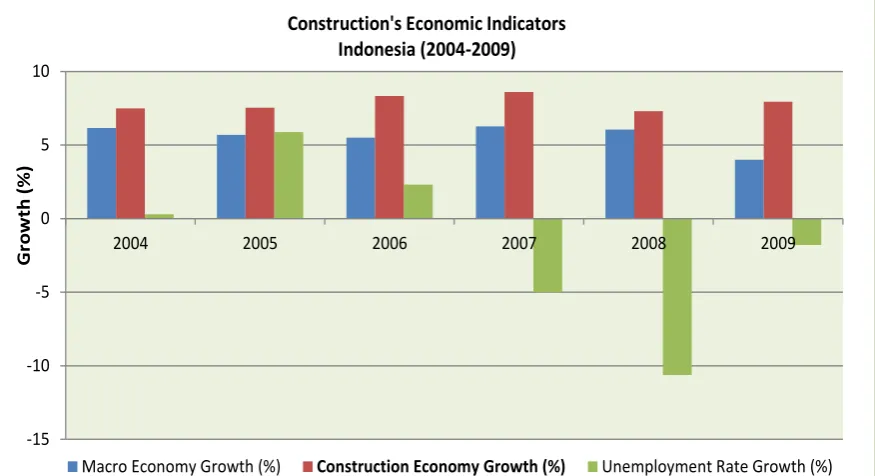
Figure 2-3: Construction’s Economic Indicators in Indonesia Source: Suraji (2010)
Indonesia maintains the second largest market after China for construction industry in Asia with the contribution at 8.2 per cent of GDP in 2004 (refer to Figure 4-7). The Indonesian construction industry increased significantly up to 8.9 per cent of GDP in 2007, and expects a constant growth of more than 9 per cent in the next few years (Suraji et al., 2010). Figure 4-7 shows that the construction industry grew relatively consistently with development in macro economies between the 2004 and 2009. Indonesia has improved employment rates with a significant increase of up to 10.5 per cent mostly through construction sector in 2008, despite global economic downturns in the same period (e.g., Mussa, 2010). The construction sector in Indonesia would seem to have an opportunity to cross-exchange the construction industry resources by exporting and importing with other countries around the globe.
The total output of the construction building sector in Indonesia (specified categories: government and private buildings) are expected to rise by 38 per cent
-15 -10 -5 0 5 10
2004 2005 2006 2007 2008 2009
Macro Economy Growth (%) Construction Economy Growth (%) Unemployment Rate Growth (%)
Construction's Economic Indicators Indonesia (2004-2009)
G
ro
w
th
(
24 per year in floor area, from 26 million square meters in 2009 to 36 million square meters in 2010 (Siswanto, 2010). The total monetary value of the construction building sector is estimated to increase 43.7 per cent from £8.46 billion in 2010 to £12.16 billion in 2011 (Dinar, 2010). These figures indicate that construction sector provides a significant contribution to the improving economic development in Indonesia.
These global and regional economic conditions of the construction industry growth can be considered as one of the key reasons for the attractiveness of construction projects, in addition to basic human need for shelter. Project complexities and the intricate nature of constructions typically cause increasing requirements of higher investments and advanced technologies, and lots of time and resources. The following section will discuss the types and complexity of construction projects.
2.3.
Construction Projects
Construction projects cannot simply be defined from the concept of production that it is assembling materials and products (Gould and Joyce, 2009). The construction process is fundamentally a different kind of production (Ballard and Howell, 1998). However, recognising a recent development of knowledge and technology, it would not be impossible that the process of construction activities may adapt the concept of production, where, the construction process should follow production procedures, such as ‘input, process, output, and evaluation’. Construction projects inevitably require ‘resources’ as an input, to support ‘activities’ where the process mainly occurs, for acquiring output such as ‘jobs, projects, or services’, and this construction cycle needs a proper ‘control’ as an evaluation.
25 facility: (1) residential housing construction, (2) institutional and commercial building construction, (3) infrastructure and heavy construction, and (4) special industrial construction. Ostwald (2001) breaks down construction projects into four types of different processes: (1) residential houses, (2) commercial buildings, (3) heavy engineering and infrastructure, and (4) industrial buildings. Further, Gould (2005); Sears et al (2008); and Gould and Joyce (2009) classified construction projects into four project types with similar meanings with what was introduced by Hendrickson and Au (1989) and Ostwald (2001), as: (1) residential projects, (2) building construction projects, (3) heavy construction projects, and (4) industrial projects. These four projects types are briefly discussed below.
2.3.1.
Residential Building
Residential buildings are affected by government roles on taxes, fiscal policies, and laws, and are developed for the living space of individual people or families; e.g., individual home, multifamily dwellings, condominium, small/ simple apartment, etc.
2.3.2.
Commercial Building
Commercial buildings tend to be technically complex which require tighter financial controls and a managerial practice during project planning and construction operations; e.g., government buildings, offices, sport stadia, hotels, resorts, large/ complex apartments, hospitals, universities, schools, churches, shopping malls, retail stores, theatres, and warehouses, etc.
2.3.3.
Infrastructure and Heavy Engineering
26 irrigation systems, storm-water collection, water treatment and distribution, and urban rapid-transit systems, etc.
2.3.4.
Industrial Buildings
Industrial buildings maintain production activities and are often privately funded (e.g., mills, mine development, petroleum refineries, petrochemical processing plants, automobile plants, nuclear plants, fossil-fuel plants, synthetic-fuel plants, oxygen-fuel plants, and heavy duty manufacturing plants, etc.).
2.3.5.
Justification on Commercial Building’s Focus
27 Construction projects are generally characterised by consuming a large number of materials and other resources (Clough et al., 2005). Project complexity and an intricate nature will result in a higher investment and spending of funds and time. Also, construction projects are critically linked, and are very much dependent on a wide variety of other sectors (Alarcón et al., 2009), such as material productions, consultancy and professional services. The increasing sophistication of construction clients and the complexity of their needs have caused their selection criteria for contractors to be based on the best value principles, instead of project costs (CIOB, 2009). Main contractors prefer to incorporate specialist subcontractors for multifaceted projects to share project overheads (Kim and Ballard, 2002 and 2005).
Project complexities, the intricate nature, sophisticated demands, fragmented project packages, and diversified activities cause a construction operation on site to become very difficult to manage, which involves other parties with different organisation interests, and which are also complex businesses in their own right. Project environments like this should involve good experienced organisations, and may require higher investments, advanced technologies, skilled human resources, and knowledgeable personnel. These considerations could affect the increasing importance of project overheads significantly.
2.3.6.
Importance of Project Overheads
28 project complexities during construction operations. These project complexities could result in increasing project overheads more rapidly compared to direct costs.
Assaf et al (2001) argued that the majority of contractors have had increased project overheads during recent years, based on a survey carried out among practitioners of 61 large building construction companies in Saudi Arabia. Up to 77 per cent of contractors had a significant increase in overheads, while 9.8 per cent remained unchanged, and only 13.2 per cent reported a decrease in overhead costs. Enshassi et al (2008) reported the outcome of a survey questionnaire among forty (40) building contractors in Palestine, which showed a much greater change in overheads than what Assaf et al (2001) reported. A significant increase in overheads has been claimed by the large number of these contractors. About 93 per cent of contractors in Palestine showed the increasing trend in overhead costs. This implies that project overheads contribute a considerable portion of the construction cost.
Relevant literature such as Ostwald (2001) and Enshassi et al (2008) describe that project overheads range between 8 per cent and 15 per cent of total construction costs depending on the project complexity. Project overheads are required to sustain the entire construction activity. Assaf et al (2001) suggested that project overheads are easily overlooked and extremely important in construction, and some contractors have been forced out of business (financial losses) due to neglecting project overheads.
29 Construction materials and labour are typically costed very close to the price of informed open-markets. Overheads are becoming an important component for being well planned and controlled to sustain project activities. The project overheads would therefore be considered as fundamental costs to be potentially manipulated in a total project price for generating real benefits during the construction stage of construction projects. The succeeding section discusses about project overheads in detail.
2.4.
Project Overheads
2.4.1.
Definition of Overheads
The general definition of overheads is very rare and uncommon in scientific literature, but it was initiated about eighty years ago. Bunbury (1931) defined overheads from the accounting viewpoint as ‘those expenses of production which cannot readily be allocated directly to particular units of production or particular productive processes’. This definition indicates that overheads are unclearly related to particular activities of construction projects. It could result in a significant cost misrepresentation if allowing overheads arbitrarily allocated to activities, jobs, and projects on the basis of direct materials or labour costs. This may lead to distorting the activity costing for related overheads during the construction operation, either one activity being budgeted too low or the other too high.
30
2.4.2.
Classification of Overheads
Numerous authors and professionals have discussed the differentiation between general-office and site-project overheads in construction projects in different ways (e.g., Kim and Ballard, 2001; Assaf et al., 2001; Aretoulis et al., 2006; Enshassi et al., 2008; Singh and Taam (2008); Beaulieu and Mikulecky, 2008; and Šiškina et al., 2009).
Kim and Ballard (2001) define office-related costs as general-office overheads which include general selling and administrative costs, while job-related overhead costs may be associated with site-project overheads for the projects being run on site. Whilst, Assaf et al (2001) investigated overheads in two categories: building company overheads may be defined as general-office overheads, and construction project overheads refer site-project overheads.
Similarly, Aretoulis et al (2006) described overheads from the contractor’s point of view with various cost categories included in construction projects for the contract price. The contract price should include direct costs, indirect costs, contingency funds, and profits. The indirect costs consist of general overheads and project overheads. General overheads can be associated with general-office overheads and project overheads related to site-project overheads.
31 and education, photocopying, entertainment, contributions, donations, postage, cost of preparing bids, review of submittals, taxes, advertising, insurance premiums, interest costs, data processing/ computer costs, and so on (Singh and Taam, 2008).
Beaulieu and Mikulecky (2008) indicated the complexity of construction processes related to activities and various types of resources. It appears that three types of cost terms related to construction activities are identified as: direct-variable costs (e.g., materials and labour costs); direct-fixed costs (e.g., safety shoes, helmets, hand tools, equipment rental, scaffolding, hiring consults/ experts, supervisions, general planning, resource planning, and cost scheduling, site-office rent, services, consumption costs, etc.); and indirect-fixed costs (e.g., general office and supplies, staff salaries, and general administration costs, etc.).
It is thought that indirect-fixed costs for projects may refer to indirect-project overheads (also known as general-office overheads). While, direct-fixed costs can be identified as direct-project overheads (also known as site-project overheads). Direct-variable costs have been well known as direct materials and labour costs, where these costs can be directly related to individual activities of construction projects. However, both general-office and site-project overheads are recognised as having indirect costs of cause-and-effect relationships with, and they cannot be directly allocated to particular activities of construction projects.
32 be directly associated to specific project activities, as the other term of site-project overheads.
Therefore, the general term ‘overheads’ in construction projects can be classified into two types as discussed in this section: general-office overheads (i.e., allocated costs for maintaining the entire business of the construction company), and site-project overheads (i.e., allocated costs for sustaining all activities of individual construction projects).
2.4.3.
Identification of Site-Project Overheads
This research will only consider the management of construction project overheads, and that identifies the overheads related to site-projects during the construction stage of project phases.
According to the Project Management Body of Knowledge (PMBOK), project monitoring and control includes the process of initiating, planning, executing, and closing processes (PMI, 2008). However, the construction stage could involve just three construction processes by excluding the ‘initiating’ process. Project overhead cost accounts can be stemmed from the project contract price during the ‘planning’ process, while monitoring and controlling the status of project progress and cost performance can be addressed during the ‘executing’ process to establish the project completion in the ‘closing’ process.
33 Site-project overheads are referred to as allocated costs that are not apportioned to particular activities and which should not be included in the composite rates (CIOB, 2009). However, site-project overheads can be identified typically and their hierarchy of occurrences may be associated to related activities which require overheads for supporting the completion of jobs, projects or services. Consequently, site project overheads can be assigned to particular activities on the basis of activity cost drivers of the Activity-Based Costing (ABC) system (refer to Section 2.9.1.4). Site-project overheads can be categorised on the basis of their occurrences on particular activities for the project completion, as: unit-level, batch-level, project-sustaining and facility-sustaining costs (Kim and Ballard, 2001 and Beaulieu and Mikulecky, 2008). Therefore, four categories of site-project overheads related to particular activities are defined below.
2.4.3.1. Unit-Level Overheads
Unit-level overheads are defined as activity costs which are assigned for by the unit of occurrence of product basis, where these overhead costs can be traced for every unit of activity output. For example: project helmets, safety shoes, hand tools, etc. can be categorised to unit-level overheads because every unit of their actual project expenses may occur during a particular activity, e.g., construction preparation activity.
2.4.3.2. Batch-Level Overheads