ScholarWorks @ Georgia State University
ScholarWorks @ Georgia State University
Psychology Dissertations Department of Psychology
Summer 8-18-2010
Reducing Automatic Stereotype Activation: Mechanisms and
Reducing Automatic Stereotype Activation: Mechanisms and
Moderators of Situational Attribution Training
Moderators of Situational Attribution Training
Ioana M. Latu
Georgia State University
Follow this and additional works at: https://scholarworks.gsu.edu/psych_diss
Part of the Psychology Commons
Recommended Citation Recommended Citation
Latu, Ioana M., "Reducing Automatic Stereotype Activation: Mechanisms and Moderators of Situational Attribution Training." Dissertation, Georgia State University, 2010.
https://scholarworks.gsu.edu/psych_diss/72
This Dissertation is brought to you for free and open access by the Department of Psychology at ScholarWorks @ Georgia State University. It has been accepted for inclusion in Psychology Dissertations by an authorized
administrator of ScholarWorks @ Georgia State University. For more information, please contact
MODERATORS OF SITUATIONAL ATTRIBUTION TRAINING
by
IOANA MARIA LATU
Under the Direction of Tracie L. Stewart
ABSTRACT
Individuals tend to underestimate situational causes and overly rely on trait causes in
explaining negative behaviors of outgroup members, a tendency named the ultimate attribution
error (Pettigrew, 1979). This attributional pattern is directly related to stereotyping, because
attributing negative behaviors to internal, stable causes tends to perpetuate negative stereotypes
of outgroup members. Recent research on implicit bias reduction revealed that circumventing
individuals’ tendency to engage in the ultimate attribution error led to reduced stereotyping.
More specifically, training White participants to consider situational factors in determining
Blacks’ negative stereotypic behaviors led to decreased automatic stereotype activation. This
2010). In the current studies, I investigated the mechanisms and moderators of Situational
Attribution Training. In Study 1, I investigated the effect of training on spontaneous situational
inferences. Findings revealed that training did not increase spontaneous situational inferences:
both training and control participants showed evidence of spontaneous situational inferences. In
Study 2, I investigated whether correcting trait inferences by taking into account situational
factors has become automatic after training. In addition, explicit prejudice, motivations to
control prejudice, and cognitive complexity variables (need for cognition, personal need for
structure) were investigated as moderators of training success. These findings revealed that
Situational Attribution Training works best for individuals high in need for cognition, under
conditions of no cognitive load, but not high cognitive load. Training increased implicit bias for
individuals high in modern racism, regardless of their cognitive load. Possible explanations of
these findings were discussed, including methodological limitations and theoretical
implications.
REDUCING AUTOMATIC STEREOTYPE ACTIVATION: MECHANISMS AND
MODERATORS OF SITUATIONAL ATTRIBUTION TRAINING
by
IOANA MARIA LATU
A Dissertation Submitted in Partial Fulfillment of the Requirements for the Degree of
Doctor of Philosophy
in the College of Arts and Sciences
Georgia State University
Copyright by
Ioana Maria Latu
REDUCING AUTOMATIC STEREOTYPE ACTIVATION: MECHANISMS AND
MODERATORS OF SITUATIONAL ATTRIBUTION TRAINING
by
IOANA MARIA LATU
Committee Chair: Tracie L. Stewart
Committee: Heather Kleider
Dominic Parrott
Ann Pearman
David Washburn
Electronic Version Approved: 07/08/2010
Office of Graduate Studies
College of Arts and Sciences
Georgia State University
I would like to dedicate this dissertation to my husband, Michael Triplett, who has been
with me for seven years, which coincide with the seven years I have been in graduate school. He
believed in me and supported me in every way possible through these years, including taking
care of our newborn twin daughters while I was finishing this dissertation. I am sure he’s
ACKNOWLEDGEMENTS
I would like to thank my mentor Tracie Stewart who has been an amazing advisor,
teacher, and role model. I wouldn’t have gotten here without her support. I would also like to
thank my committee members Heather Kleider, Ann Pearman, Dominic Parrott, and David
Washburn for offering their expertise in designing and conducting this research. Thank you to
Triman Kohli, Glenna Read, Robert Thomas, Erin McFry, and Kerstin Herrmann-Olczak for
TABLE OF CONTENTS
ACKNOWLEDGEMENTS ... v
LIST OF TABLES ... viii
CHAPTER 1: REVIEW ... 1
Implicit Bias ... 2
The Roots of Implicit Bias Research ... 2
Theoretical Models of Implicit Bias ... 5
Measures of Implicit Bias ... 8
Implicit Bias and Behavior ... 14
Implicit Bias Reduction ... 17
Automaticity and Social Inferences ... 26
Automatic and Controlled Processes in Social Cognition ... 26
Assessing Automaticity in Social Cognition ... 29
Spontaneous Inferences ... 33
Individual Differences and Implicit Bias ... 35
Explicit Prejudice ... 35
Motivations to Control Prejudice ... 36
Cognitive Complexity ... 37
The Present Research ... 39
Study 1 ... 40
Study 2 ... 42
Hypotheses Overview ... 47
Study 1 ... 50
Participants and Design ... 50
Procedure and Materials ... 51
Results ... 57
Discussion ... 58
Study 2 ... 62
Participants and Design ... 62
Procedure and Materials ... 63
Results ... 69
Discussion ... 89
CHAPTER 3: GENERAL DISCUSSION ... 98
Hypotheses Review ... 98
Overall Implications of Findings ... 99
Future Directions ... 105
Training Applications ... 108
Conclusion ... 109
ENDNOTES ... 112
REFERENCES ... 114
APPENDIX A - CONDITIONS ... 130
LIST OF TABLES
Table 1. Cognitive Load Manipulations in the Literature ... 31
Table 2. Behaviors Used in the Probe Recognition Task (Study 1), Associated Situations and
Traits, and Percentage of Pretest Participants Who Generated Each Situation (N = 22) and Trait
(N = 18) ... 53
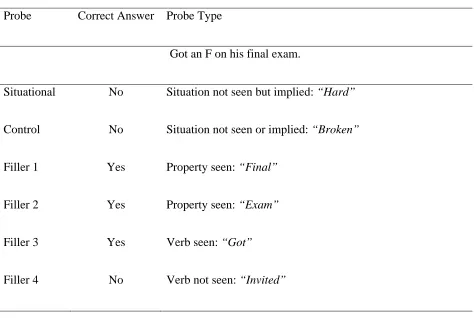
Table 3. Example of a behavior and associated probes used in Study 1 ... 56
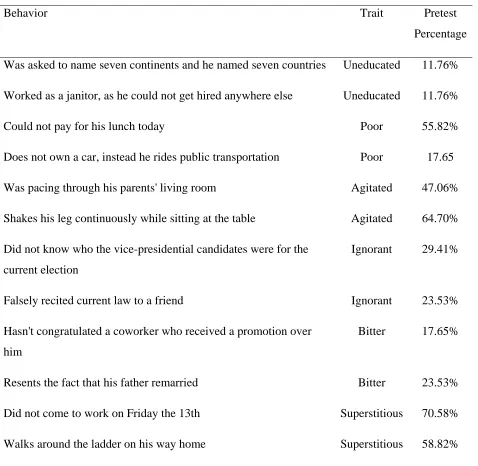
Table 4. Behaviors Used in the Probe Recognition Task (Study 2), Associated Traits, and
Percentage of Pretest Participants Who Generated Each Trait (N = 18) ... 67
Table 5. Example of a behavior and associated probes used in Study 2 ... 69
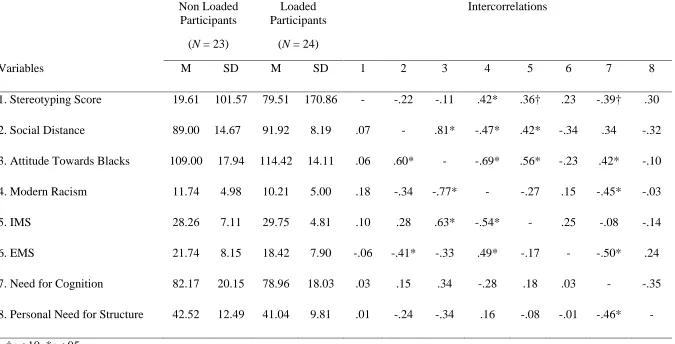
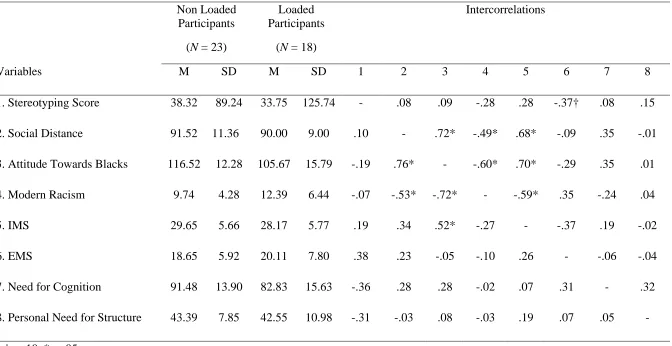
Table 6. Means, Standard Deviations, and Intercorrelations for Situational Attribution Training
Participants who completed the probe recognition task under No Cognitive Load (Above the
Diagonal) and Cognitive Load (Below the Diagonal) Conditions in Study 2, N = 47 ... 73
Table 7. Means, Standard Deviations, and Intercorrelations for Grammar Control Participants
who completed the probe recognition task under No Cognitive Load (Above the Diagonal) and
Cognitive Load (Below the Diagonal) Conditions in Study 2, N = 41 ... 74
Table 8. Summary of Hierarchical Regression Analyses for the Between-Subjects Model, with
Need for Cognition (NFC), Training Condition, and Load Condition Predicting the Sum
Between Response Times to Trait and Control Probes in Study 2 (N = 88) ... 76
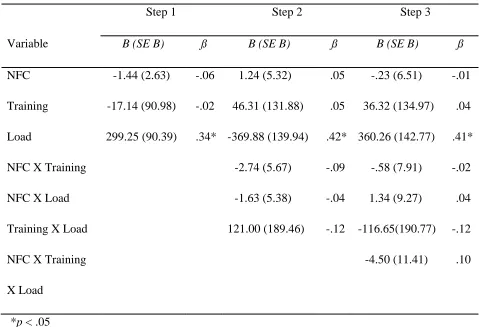
Table 9. Summary of Hierarchical Regression Analyses for the Within-Subjects Model, with
Need for Cognition (NFC), Training Condition, and Load Condition Predicting Stereotyping
Scores, the Difference Between Response Times to Trait and Control Probes in Study 2 (N =
Table 10. Summary of Hierarchical Regression Analyses for the Between-Subjects Model, with
Modern Racism (MRS), Training Condition, and Load Condition Predicting the Sum Between
Response Times to Trait and Control Probes in Study 2 (N = 88) ... 80
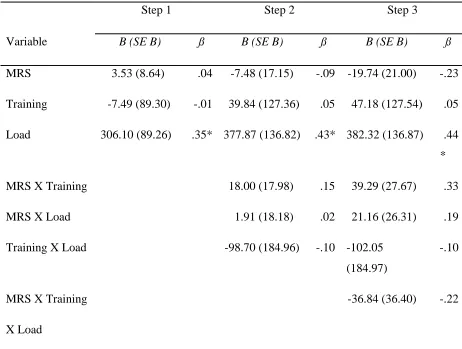
Table 11. Summary of Hierarchical Regression Analyses for the Within-Subjects Model, with
Modern Racism (MRS), Training Condition, and Load Condition Predicting the Difference
Between Response Times to Trait and Control Probes in Study 2 (N = 88) ... 82
Table 12. Summary of Hierarchical Regression Analyses for the Between-Subjects Model, with
Internal Motivation to Control Prejudice (IMS), External Motivation to Control Prejudice
(EMS), Training Condition, and Load Condition Predicting the Sum Between Response Times
to Trait and Control Probes in Study 2 (N = 88) ... 84
Table 13. Summary of Hierarchical Regression Analyses for the Within-Subjects Model, with
Internal Motivation to Control Prejudice (IMS), External Motivation to Control Prejudice
(EMS), Training Condition, and Load Condition Predicting the Sum Between Response Times
to Trait and Control Probes in Study 2 (N = 88) ... 87
Figure 1. Stereotyping Level by Level of Need for Cognition (NFC), Training and Load
Condition ... 96
Figure 2. Stereotyping Level by Training Condition and Initial Level of Modern Racism ... 97
CHAPTER 1: REVIEW
In the current research I investigated the effectiveness of a training technique designed
to reduce implicit racial bias. The Situational Attribution Training (Stewart, Latu, Kawakami, &
Myers, 2010) technique is an implicit bias reduction method rooted in the theory behind the
ultimate attribution error (Pettigrew, 1979) – the tendency to attribute negative stereotypic
behaviors of outgroup members to dispositional causes, while underestimating the impact of
situational causes. In two studies, Stewart and colleagues found that teaching White participants
to consider situational causes of Black men’s negative behaviors led to reduced implicit bias. In
the current research, I focused on three main research questions related to the effectiveness of
Situational Attribution Training: whether training has an effect on situational inferences,
whether the effects of training are automatic, and whether individual differences moderate the
effects of training on implicit bias reduction.
It is important to consider the mechanisms and moderators of Situational Attribution
Training in the context of the larger literature on implicit bias, automaticity in social cognition,
and individual differences. Thus, the current chapter discusses the theoretical grounds on which
research on Situational Attribution Training was built. In the first part I discuss issues
surrounding the concept of implicit bias, such as the roots of implicit bias research, theoretical
models and methodological paradigms used to measure implicit bias, the relationship between
implicit bias and discriminatory behavior, as well as the effectiveness of implicit bias reduction
techniques. In the second part of this chapter I discuss the issue of automaticity in social
cognition, including research on assessing automaticity through cognitive load tasks as well as
research on spontaneous inferences. In the third part of the chapter I define and present research
implicit bias reduction. This part includes a discussion of explicit prejudice, motivations to
control prejudice, and cognitive complexity variables such as need for cognition (NFC) and
personal need for structure (PNS). Finally, the present chapter ends with an overview of the
research questions, methods, and specific hypotheses of the current research.
Implicit Bias
For more than two decades, social psychologists focusing on stereotyping and prejudice
have been interested in the study of implicit bias – associating certain social groups (e.g.,
women, African Americans) with certain traits (e.g., incompetent, lazy) or words that are
negative in valence (e.g., filth, vomit). Despite some controversies (Fazio & Olson, 2003;
Gawronski, LeBel, & Peters, 2007), these implicit attitudes and stereotypes are generally seen
as automatic: they occur without the person’s awareness, intention, and control, and they are
highly efficient, in the sense that they require few attentional resources to be activated (Bargh,
1994).
The Roots of Implicit Bias Research
As suggested by Amodio and Menodza (in press), research on implicit attitudes in social
psychology has two main roots: practical concerns about self-report (explicit) attitudes not
being able to predict behavior, as well as theoretical and methodological advances in other
fields, particularly in cognitive psychology.
First, early in the stereotype and prejudice research, there seemed to be a disconnect
between attitudes and behavior. For example, the famous Princeton Trilogy, a series of three
suggested that negative racial stereotypes were on the decline. In 1933, 75% of Katz and
Braly’s sample explicitly stated that African Americans are lazy, followed by 31% in 1951 in
Gilbert’s sample, and 26% in 1969 in Karlins, Coffman, and Walter’s sample. In 2001 (Madon
et al.) these percentages decreased even more: 12.1 and 0% in two samples of European
American students. The same linear decrease was visible for other negative stereotypic traits
such as superstitious, ignorant, ostentatious, and stupid. Despite these encouraging findings,
instances of discriminatory behavior were still documented in research. For example, Kempf
and Austin (1986) found consistent evidence of racial discrimination in sentencing, based on an
analysis of 2,907 tried cases in Pennsylvania in 1977. Juni, Brannon, and Roth (1988) reported a
same-race bias in consumer interactions, with White customers preferring White to Black
cashiers. In a more direct test of the relationship between racial attitudes and behavior, Rankin
and Campbell (1955) revealed that White college students had more negative physiological
reactions to a Black compared to a White experimenter, as measured by galvanic
skin-responses, despite reporting similarly positive attitudes for Blacks and Whites. Given this
discrepancy between attitudes and behaviors, researchers began having a general skepticism
about self-report measures and proposed two possible explanations. First, it may be that
participants do not want to show their true attitudes about different social groups, due to social
desirability concerns (Paulhus, 1984). Alternatively, they may not be aware of their true
attitudes, because their introspective skills are limited and often guided by inaccurate naïve
theories of their own behavior. The use of implicit measures sought to address both of these
issues.
A second source of inspiration for the study of implicit attitudes and stereotypes came
Theoretically, cognitive psychologists advanced the idea that category processing may be
automatic, such that semantically related items are judged faster than non-related items.
Methodologically, new techniques were developed, such as the sequential priming technique,
which allowed for the measurement of semantic associations through reaction time tasks, as
opposed to self-report or explicit measures (Meyer & Schvaneveldt, 1971, 1976). For example,
in one early study, participants made faster same-different judgments of letter strings when the
letter strings formed words that were semantically related compared to when they formed
non-words or non-words that were not semantically related (Meyer & Schvaneveldt, 1971). This finding
is in line with predictions from spreading activation models: the activation of the prime spreads
to semantically related concepts, thus reducing the time required to activate them. These
semantic priming tasks inspired social psychologists to measure social attitudes without using
self-report, by measuring semantic associations between certain words (positive versus
negative, stereotypic versus non-stereotypic) and social groups. Although many different tasks
were later developed in the field of implicit bias, the underlying principle is the same: the more
two concepts are associated in a person’s mind, the faster the person is at responding to a
variety of quick decisions which pair those two concepts together.
It is important to note that there is some controversy in the literature about the terms
used to describe these implicit concepts and their measures. For example, Greenwald and Banaji
(1995) are very comprehensive in their definition of these terms and equate the explicit-implicit
dichotomy with terms such as conscious-unconscious, aware-unaware, direct-indirect, and
controlled-automatic. Other researchers contend that there is not enough evidence to call the
implicit measures unconscious, unaware, or automatic, and suggest that most of these measures
that participants are usually unaware that their attitudes are being measured, but not necessarily
unaware of their attitudes. In the remainder of this manuscript, I will use the terms “implicit,” as
it is widely used and accepted in the literature.
Theoretical Models of Implicit Bias
Despite Fazio and Olsen’s (2003) claim that the implicit bias literature is largely
non-theoretical, but methodologically and empirically driven, there are several theoretical models in
the literature that explain the relationship between implicit and explicit attitudes. In most part,
these are dual-processing models, which address the issues of automatic versus controlled
processing in forming attitudes about social groups.
One of the first dual-processing models and empirical studies in the field of stereotyping
and prejudice comes from Patricia Devine in 1989. Devine makes a distinction between
knowledge of stereotypes and endorsement of stereotypes. Knowledge of stereotypes is
associated with automatic processing and has its source in the unintentional activation of
well-learned associations derived from cultural stereotypes. Endorsement of stereotypes is associated
with controlled processing – a person can either consciously endorse or reject those cultural
stereotypic associations. As such, both low- and high-prejudice participants would show similar
levels of implicit bias. For both groups, whether they endorse it or not, the cultural stereotype of
Blacks would be activated when encountering a Black person. Thus, the difference between
high- and low-prejudice individuals lies in the overlap between their implicit and explicit
associations and beliefs. For low-prejudice individuals, there is little overlap between implicit
and explicit attitudes, as these individuals consciously reject the negative associations derived
overlap, as they consciously endorse the cultural stereotype. These hypotheses were supported
by several of Devine’s studies. For example, in one study, both high- and low-prejudice
participants rated a man’s ambiguous behavior as more hostile after being primed with the
Black stereotype of hostility compared to a condition in which they were not primed with this
stereotype. This finding suggests that stereotypes are automatically activated and used in
impression formation, regardless of participants’ level of explicit prejudice.
Devine’s model was later challenged by Fazio’s MODE model of attitude behavior
processes (Fazio & Towels-Schwen, 1999). Also a dual-processing model, this theoretical
framework differentiates between controlled, theory-driven processing and spontaneous,
data-driven processing. Fazio and his colleague propose that whether a person engages in automatic
or controlled processing depends on two factors: motivation and opportunity (hence the name of
the model: Motivation and Opportunity as DEterminants). Motivation refers to a personal
motivation to be accurate and to reduce negative consequences when processing social
information. Opportunity refers to the time and resources to deliberate. The greater the
motivation and opportunity, the more likely an individual is to engage in controlled, deliberate
processing. When applied to racial prejudice, the MODE model predicts that we not only differ
in the extent to which we explicitly endorse stereotypes, as Devine (1989) suggested, but we
also differ in the degree to which we have implicit stereotypes. Fazio and Towels-Schwen
regard these automatic structures as personal attitudes, and not shared attitudes and stereotypes,
as suggested by Devine. In a series of studies, Fazio and his colleagues investigated the
hypothesis that motivation and opportunity moderate the relationship between implicit and
explicit racial attitudes. Their finding show that as motivation to control prejudice decreased,
positive implicit racial attitudes, motivation mattered very little. However, for those with
negative automatic attitudes, motivation played a large role in determining their explicit
attitudes, such that they had impressively positive explicit attitudes towards Blacks. Thus,
contrary to Devine (1989), Fazio and his colleagues found that individuals not only differ in
their explicit, but also implicit attitudes.
More recently, Gawronski and Bodenhausen (2006) proposed a comprehensive model
that combines several characteristics of past models. According to their APE model, there are
two types of processing styles – Associative and Propositional Evaluations. Associative
evaluations are automatic affective reactions that do not require cognitive capacity or intention.
They are independent of the assignment of truth values and are not necessarily personally
endorsed. Propositional evaluations are cognitive judgments, which are superordinate to the
associative store, meaning that this propositional system can take associations and transform
them into propositional processes, subjecting them to validity checks. Gawronski and
Bodenhausen thus propose that associative judgments can be a source of evaluative judgments,
but, more importantly, that this relationship is bidirectional, such that propositions can be a
source of associations too. The mere knowledge of a proposition endorsed by other people, even
if it is deemed invalid by the person, can contribute to the activation of corresponding
associations in memory. This view is more consistent with Devine’s (1989) postulation that
negative stereotypes can be activated regardless of a person’s conscious endorsement of these
associations. Regarding the conscious-unconscious debate in explicit-implicit attitudes, the APE
model suggests that although explicit attitudes tend to be conscious, and implicit attitudes
unconscious, implicit affective associations can sometimes be in a person’s awareness. Finally,
constructions, such that they are not stable representations, but instead formed and modified
online depending on the context.
The theory behind dual-process models is not the only focus of the implicit bias
literature. Also of interest is the effort to differentiate between various types of implicit biases
and their measures. For example, Amodio and Devine (2006) suggest that commonly used
implicit measures usually assess two independent constructs: implicit stereotyping and implicit
evaluations (attitudes), and that this distinction has important consequences for these measures’
ability to predict behavior. Implicit stereotyping is a cognitive construct, based on semantic
learning and memory. It entails associating different social groups (e.g., African Americans)
with stereotypic traits (e.g., lazy, uneducated, athletic, religious). These semantic associations
are independent of affective or evaluative associations (positive or negative). Implicit evaluation
is an affective construct, based on reward and punishment cues. It entails associating social
groups (e.g., African Americans) with positive or negative evaluative words (e.g., cancer,
death), which are usually independent of semantic associations. Social neuroscience findings
support the independence of these two constructs (see Amodio, 2008, for a review). Implicit
stereotyping is usually localized in neocortical structures such as the prefrontal cortex, an area
usually associated with semantic processing. Implicit evaluations are localized in the amygdala,
an area usually associated with affective processes.
Measures of Implicit Bias
Sequentially primed decision tasks. Many implicitbias measures are computer-based
tasks that measure participants’ response time to a sequentially primed decision task. For
briefly with a trait (either positive or negative and either Black stereotypic or non-stereotypic),
followed by a photo of either a Black or a White man. Their task is to decide as quickly as
possible whether the person in the photo is Black or White, by pressing designated keys on the
keyboard. Their response time to this decision is recorded in milliseconds. Participants exhibit
automatic activation of negative Black stereotypes if they are faster at correctly categorizing
Black compared to White photos after being primed with negative Black stereotypic traits. In a
similar paradigm, the lexical decision task (Wittenbrink, Judd, & Park, 1997), the trait and
photo presentation is reversed, such that participants have to decide quickly whether certain
traits are words or non-words after being primed with Black and White-related stimuli, such as
words, symbols, or pictures. Faster response times to categorizing negative Black-stereotypic
traits after being primed with Black versus White photos suggests automatic activation of
negative Black stereotypes. For both of these tasks, the underlying logic is similar: faster
response times to categorization decisions suggest that the stereotypical trait and the target are
part of a common semantic network, which facilitates rapid decision making.
The opposite of facilitation, namely inhibition, is the underlying principle of a different
task, the modified Stroop task (Kawakami, Dovidio, Moll, Hermsen, & Russin, 2000).
Participants are presented with a category prime (e.g., “elderly” and “skinhead”) followed by
elderly and skinhead stereotypes, presented in different colors on the screen. Participants’ task
is to state the color of the word into a microphone. In the Kawakami and colleagues study,
several dependent measures were recorded, such as response time to naming the color and errors
in naming the color. The latter included stutters, mispronunciations, stating the wrong color, or
changes in voice characteristics. To the extent that the elderly stereotype was activated in
naming the color of the elderly-stereotypic word, due to inhibition coming from the activation
of the elderly stereotype.
By far, the most common implicit measure employed by social psychologists is the
Implicit Association Test (IAT; Greenwald, McGhee, & Schwartz, 1998). Similar to other tests,
the IAT assesses the degree of association between social groups (e.g., male/female) and certain
concepts (e.g., good/bad), by measuring participants’ reaction times to categorizing items of
each category. For example, the gender attitude IAT uses trials in which participants categorize
words (e.g., he, she, flower, filth) into pairs of categories displayed on each side of the screen,
such as “Male or Good” on the left side and “Female or Bad” on the right side. The more that
participants associate men with positive characteristics and women with negative
characteristics, the faster they are at categorizing the items, compared to other trials in which the
category pairings are switched on the computer screen.
A more specific task is the weapons identification task (Payne, 2001), designed to
measure the degree of association between racial groups and weapons. Participants categorize
pictures of weapons or hand tools after being primed with photos of Black and White
individuals. Both response time and accuracy measures showed racial bias in the perception of
weapons, such that participants who were primed with Black versus White photos were faster to
identify a gun and were more likely to misidentify a tool as a gun.
Correll and his colleagues (Correll, Park, Judd, & Wittenbrink, 2002) proposed a
similar, although more ecologically valid method of measuring racial bias in relation to
decisions to shoot. In their shooter task paradigm, participants are presented with pictures of
Their task is to press a button labeled “Shoot” whenever the target is carrying a gun and a
button labeled “Don’t shoot” whenever the target is carrying an object other than a gun. In
several studies, participants showed a racial shooter bias both in terms of hits (correctly
shooting an armed target) and false alarms (incorrectly shooting an unarmed target). In short,
participants were faster to shoot Black compared to White armed targets and more likely to
inaccurately shoot Black compared to White unarmed targets.
Memory tasks. Given that implicit bias means automatically associating social groups
with certain negative traits, one way to measure bias would be to measure spontaneous trait
inferences (STIs) - how people infer the causes of other’s behaviors, by using certain traits.
Several studies (Lupfer, Clark, Church, DePaola, McDonald, 1995; Stewart, Weeks, & Lupfer,
2003; Uleman, Hon, Roman, & Moskowitz, 1996a) showed that people tend to spontaneously
make trait inferences about others’ behaviors, especially when the behavior is consistent with
the stereotype of the group that the person belongs to (Wigboldus, Sherman, Franzese, & van
Knippenberg, 2004). One way to study STIs is the probe recognition task (McKoon & Ratcliff,
1986). In this task, participants are presented with several behavioral sentences, such as “Larry
lost his job.” After each sentence a probe word is presented on the screen. Participants’ task is
to decide whether the word appeared in the sentence or not. On the experimental trials, the
probe is a trait that was implied by the behavioral sentence, such as “incompetent.” This probe
did not actually appear in the sentence, so the correct answer is “NO.” Participants also respond
to a control probe, which did not appear and was not implied by the sentence. To the extent that
the trait inference was spontaneously activated when reading the behavioral sentence,
participants should have a harder time responding correctly to the trait compared to the control
inferences, as suggested by both accuracy data – being more likely to identify incorrectly that a
trait appeared in the sentence compared to a control (Lupfer et al., 1995; Stewart et al, 2003;
Uleman et al, 1996a) and reaction time data– being slower to reject a trait compared to a control
(Uleman et al, 1996a, Wigboldus et al., 2004).
Research also looked at whether people tend to spontaneously make situational
inferences (SSIs) of others’ behaviors. With some caveats, previous findings suggest that people
can spontaneously infer situational cues of behaviors (Duff & Newman, 1997, Lupfer et al.,
1995). In a more recent study, Ham and Vonk (2003) found that trait and situational inferences
can co-occur for the same behavior. They used an adaptation of the probe recognition task, in
which participants were tested not only on traits probes but also on situational probes that had
not been seen in the sentences. For example, a situational probe for “Larry lost his job” would
be “downsizing.” In one study, Ham and Vonk found that participants responded slower to both
trait and situational probes compared to control probes, thus suggesting co-occurring activation
of both trait and situational inferences.
Another implicit bias assessment paradigm is the “Who said what” paradigm, proposed
by Taylor, Fiske, Etcoff, and Ruderman (1978). Originally, this task was designed to measure
categorization processes in social perception. Participants were presented with a slide
containing a discussion of different topics. The slides featured six speakers, each of which
presumably made six statements. In one study (Taylor et al., Study 1), three of the speakers
were White and three were Black. After the presentation, participants were asked to match each
statement with the picture of the person who had made it. Two measures were assessed: the
extent to which participants made within-group errors (e.g., wrongfully attributing a statement
attributing a statement made by a White person to a Black person). Participants were more
likely to make within compared to between-group errors, thus showing categorization by race.
In a more recent study, Coats, Latu and Haydel (2006) adapted the “who said what” paradigm to
measure implicit racial bias. In one condition, the majority of the behaviors performed by the
Black targets were unfavorable, while the majority of the behaviors performed by White targets
were favorable. In a second condition, the favorability was reversed, with most Black targets
performing positive behaviors, and most White targets performing negative behaviors. Results
showed that participants made more within-group errors in the unfavorable Black condition
compared to the unfavorable White condition, thus supporting the idea that categorization was
facilitated by exposures to negative stereotypes of Blacks.
Affect Misattribution Procedure. Payne, Cheng, Govorun, and Stewart (2005)
developed the Affect Misattribution Procedure (AMP) to measure implicit affective bias
towards different groups and targets. Also a sequential priming task, this measure is different
than previous ones because it directly asks participants to state their feelings toward ambiguous
stimuli. For example, Payne and colleagues (Experiment 6) primed participants with Black and
White photos, before presenting them with Chinese ideographs. Participants’ task was to
evaluate the symbol as being pleasant or unpleasant, using different keys on the computer
keyboard. To the extent that participants experience negative affect in response to Black faces,
this affect should be misattributed to the ambiguous stimulus that follows it, thus influencing
judgments.
Psychophysiological Measures. Several physiological measures have been used to
detect implicit bias. These include fMRI to measure amygdala activation (Phelps, O’Connor,
faces (Amodio, Harmon-Jones, & Devine, 2002), and event-related potentials in response to
Black versus White faces (Ito & Caccioppo, 2000). However, probably the most commonly
used physiological measure of implicit racial bias is facial electromyography (EMG), which
involves measuring the activity of two facial muscles: the corrugator (frowning) muscle and the
zygomaticus (smiling) muscle. Greater zygomaticus and lesser corrugator activity indicate
positive affect and greater corrugator and lesser zygomaticus activity indicate negative affect. In
three studies, Vanman, Paul, Ito, & Miller (1997) found a discrepancy between White
participants’ self-reported attitudes towards Blacks and their EMG activity: while participants
generally reported positive attitudes on explicit measures, their EMG activity reflected negative
affective attitudes toward Black targets. Unlike other psychophysiological assessments, this
measure has the advantage of capturing both the valence and the intensity of the participant’s
reaction.
Implicit Bias and Behavior
The existence of implicit bias may only be important to the extent that it causes
negative, harmful behaviors toward certain groups. Thus, one important question is whether
implicit stereotyping and prejudice are able to predict discriminatory behavior. There are
numerous studies that investigate this question and most findings show that implicit measures
are more likely to predict subtle, nonverbal behaviors than overt discriminatory behaviors. For
example, McConnell and Leibold (2001) found that negative implicit attitudes toward Blacks
significantly correlated with a number of negative nonverbal behaviors exhibited towards a
Black experimenter compared to a White experimenter, such as speaking and smiling less,
displaying more speech errors and hesitations. Participants’ implicit attitudes and nonverbal
Dovidio, Kawakami, and Gaertner (2002) extended these findings and showed that in an
interaction with a Black confederate, White participants’ explicit attitudes predicted their verbal
friendliness, but not their nonverbal friendliness. However, participants’ implicit attitudes
predicted confederates’ ratings of the participants’ nonverbal friendliness. The predictive power
of implicit attitudes has been demonstrated not only for racial groups, but also other social
groups. For example, Bessenoff and Sherman (2000) showed that participants’ implicit
associations of fat people predicted how far they chose to sit near a fat person in a potential
interaction, such that more negative automatic attitudes were associated with sitting farther from
a fat woman’s belongings. Surprisingly, biased associations also seem to have an effect on
participants’ own behavior. For example, Dijksterhuis, Arts, Bargh, and van Knippenberg
(2000) found that associating elderly people with forgetfulness predicted participants’ own
memory impairment, regardless of their own age.
Although implicit measures are best known for predicting subtle, spontaneous outcomes
such as nonverbal behavior, some studies have found that they also predict overtly
discriminatory behavior. For example, in organizational contexts, a gender IAT predicted
budget cuts for racial and ethnic minority organizations (Rudman & Ashmore, 2007) and
discriminatory hiring recommendations for Black applicants (Ziegert & Hanges, 2005). Rudman
and Glick (2001) also found that associating men, more than women, with agentic
characteristics predicted workplace discrimination, such that agentic female, but not male
candidates, received negative evaluations when applying for a feminized job. In a more recent
study, Latu, Stewart, Myers, Lisco, Estes, and Donahue (in press) found that associating men,
more than women, with successful manager characteristics predicted higher salary
Overall, implicit measures seem to consistently show high predictive validity. One
important research question is whether implicit measures show significantly higher predictive
validity compared to self-report measures. Greenwald, Poehlman, Uhlmann, and Banji (2009)
sought to answer this question by conducting a meta-analysis on 184 published and unpublished
studies. Studies included in the meta-analysis investigated the relationship between IAT scores
and behaviors in different domains such as consumer preference, interracial behavior,
personality differences, alcohol and drug use, clinical phenomena, non-racial intergroup
behavior, gender and sexual orientation, close relationships and political preferences. Findings
showed that the predictive power of implicit versus explicit measure depended on the domain in
which the behavior occurred. Both implicit and explicit attitudes reliably predicted behaviors in
the domain of consumer and political preference. However, in the more sensitive domain of
racial and intergroup interaction, the IAT had significantly greater predictive validity compared
to explicit measures.
Another distinction relevant to the predictive power of implicit measures comes from
Amodio and Devine (2006), who suggested that implicit stereotyping and implicit evaluation
differentially predict behaviors in the domain of interracial interactions. Specifically, implicit
stereotyping primarily predicts stereotypic expectations that people have when encountering a
target. For example, in two studies, a racial stereotyping IAT significantly predicted the extent
to which participants rated an African American target using stereotypic traits, but it did not
predict approach-avoidance behaviors. On the contrary, a racial evaluative IAT significantly
predicted consumatory behaviors such as seating distance and ratings on a feeling thermometer,
Implicit Bias Reduction
Once researchers reliably documented implicit biases towards different social groups
and established that these biases can predict behavior, the focus of research shifted towards
identifying successful strategies of reducing implicit intergroup bias. These attempts were
initially met with skepticism, as it was assumed that these associations are hard to change
because they are automatic, deeply rooted, and outside a person’s control (Bargh, 1994; Devine,
1989). However, research conducted in the past twenty years has successfully identified several
strategies of reducing implicit bias.
Changing Associations. Given that implicit bias involves associating social groups with
negative stereotypic traits or words that are generally negative in valence, one strategy of
reducing this negativity involves changing these underlying associations, a strategy that has
become “the Holy Grail of implicit race bias research,” as Amodio and Mendoza (in press, p.
23) suggest. Techniques of changing these stereotypes include promoting positive
counterstereotypes and suppressing existing stereotypic associations.
Counterstereotypes. Exposing participants to counterstereotypes in order to reduce
negative intergroup bias was one of the first strategies attempted by researchers. For example, in
a series of studies Blair, Ma, and Lenton (2001) had participants engage in a mental imagery
task, in which they were instructed to imagine either a strong woman or, in control conditions, a
weak woman or a vacation in the Caribbean. Across several implicit gender bias measures,
participants who imagined a counterstereotypical strong woman, compared to those engaged in
a control imagery task, showed reduced automatic gender stereotyping, such that participants
In a later study, Dasgupta and Asgari (2004) found that imagining famous women in
high-status positions such as business leaders, scientists, and judges led to being more likely to
associate women with leadership characteristics compared to a control condition in which
participants were exposed to pictures of flowers. A second study conducted by Dasgupta and
Asgari looked at the role of counterstereoyptes in a naturalistic environment, by studying
implicit gender attitudes in students enrolled either in a coed college or a women’s college,
where women occupy most high-powered positions in the college hierarchy. Findings showed
that although women enrolled at a women’s college and coed college had the same implicit
gender attitudes when they enrolled, after a year, women’s college students had more positive
implicit attitudes compared to coed students, presumably because they have been exposed to
positive counterstereotypic models (e.g., female professors). Findings also showed that the
frequency of interaction with strong female role models moderated implicit bias reduction
effect, such that the more classes students attended, the larger was their reduction in implicit
gender bias.
The role of counterstereotypes has not only been studied in the realm of implicit gender
bias. In the domain of racial implicit bias, Dasgupta and Greenwald (2001) found less negativity
towards Black targets after participants were exposed to an admired Black person compared to a
disliked person or a control. These effects were maintained after a 24 hour delay.
Suppression of stereotypes. One strategy to reduce stereotyping is to train
participants to negate or suppress current stereotypic associations. Kawakami, Dovidio, Moll,
Hermsen, and Russin (2000) designed a negation training, in which participants’ task was to
repeatedly negate skinhead, elderly, or racial stereotypes. Compared to controls who either did
automatic stereotype activation, such that they no longer showed facilitation of categorizing
Black and White faces after being primed with Black and White stereotypes respectively.
Subsequently, Kawakami, Dovidio, and van Kamp (2005) showed that a variation of this
training led to reduced stereotype application in a resume evaluation task, as long as participants
were not deliberately trying to avoid being influenced by negation training.
Several criticisms were brought up in response to the Kawakami et al. (2000) negation
training. Gawronski, Deutsch, Mbirkou, Seibt, and Strack (2008) argued that the negated
stereotype (e.g., “Black NO loud”) can not be stored in memory at an automatic level as such,
and thus can actually lead to increased stereotype activation (“Black” was still repeatedly paired
with “loud”). Instead, Gawronski and colleagues argue, the reduced stereotype activation effects
of the Kawakami training technique are probably due to affirming the counterstereotype, thus
forming a new automatic association in participants’ minds (e.g. “Black quiet”). Another issue
to consider about negation training is the potentially antagonistic effect of stereotype
suppression. Several studies showed that stereotype negation might ironically lead to increased
stereotyping (Galinski & Moskowitz, 2000; Macrae, Bodenhausen, Milne, & Jetten, 1994). For
example, Macrae and colleagues found that compared to controls, participants who were asked
to suppress skinhead stereotypes while constructing a story about a skinhead showed more
automatic stereotype activation on a lexical decision task. The authors suggested that this
finding was due to a rebound effect – suppressing unwanted thoughts is likely to lead to an
increased chance of their reappearance later on. Although the training technique designed by
Kawakami and colleagues showed no such rebound effects after 24 hours, it is important to note
Changing motivation and goals.
Self-enhancement. One important motivation for social action is the
maintenance of a positive self-image. Research shows that such self-enhancement motives can
also affect the magnitude of implicit intergroup bias. Sinclair and Kunda (1999) conducted
several studies in which non-Black students completed implicit measures of racial stereotyping
after receiving either positive or negative feedback from either a Black or a White professional.
For example, in one study, participants received videotaped positive or negative evaluations
from either a Black or a White manager. Compared to participants who received positive
feedback from a White manager, participants who received positive feedback from a Black
manager showed reduced negativity towards Blacks. Presumably, these participants were
motivated to think highly of a manager who praised them, in order to maintain and validate a
positive image of themselves. On the contrary, participants who received negative feedback
from a Black target showed high levels of implicit racial bias, as they were motivated to
disparage an evaluator who threatened their image. Thus, the promotion of a positive
self-image does not only affect explicit bias, as predicted by the Social Identity Theory (Tajfel &
Turner, 1979), but it also affects intergroup bias at an automatic level.
Social tuning. Individuals’ need to belong in social groups and situations often
determines them to engage in social tuning– an attempt to adjust attitudes, beliefs, and even
memories, to fit with others’ perspective, in order to achieve a common ground. Lowery,
Hardin, and Sinclair (2001) were interested in how social tuning affects automatic racial
attitudes. In past research, social tuning was evident at an explicit prejudice level. For example,
participants expressed less explicit racial prejudice when interviewed by a Black compared to a
social desirability effects, and not necessarily to a true change in prejudiced feelings. Lowery
and colleagues challenged the social desirability view and showed that social tuning is also an
efficient strategy of reducing bias at an automatic level. In several experiments, White
participants showed less automatic negativity towards Black targets in the presence of a Black
experimenter compared to a White experimenter.
Later experiments suggested that individuals tend to tune not only to others’ mere
presence, but also to others’ attitudes. In one study, Sinclair, Lowery, Hardin, and Colangelo
(2005) revealed that female participants showed reduced automatic prejudice towards Blacks
when the experimenter was wearing a t-shirt that expressed social equality message, compared
to a neutral t-shirt. Further analyses suggested that this relationship was moderated by how
much participants liked the experimenter. Thus, it seems that affiliative motivation, especially
when encountering liked others, can reduce automatic bias. This finding was supported in a
second experiment conducted by Sinclair and colleagues. In this study, likability was directly
manipulated, by having the experimenter behave in either a likable or rude way towards the
participant. Findings revealed that participants were less likely to have anti-Black attitudes
when a likable experimenter was wearing an anti-racism t-shirt, compared to a neutral t-shirt.
This difference did not occur for participants exposed to a rude experimenter. Taken together,
these findings suggest that participants adjust their automatic attitudes when exposed to
egalitarian messages coming from liked individuals, as a way of social tuning, with the ultimate
Changing experience.
Contact with the target. For more than 50 years, social psychologists have been
interested in testing the hypothesis that intergroup contact decreases prejudice. These efforts
were initiated by Allport (1954), who proposed that contact between different social groups
could effectively reduce prejudice if four conditions are satisfied: the groups are of equal status
in the contact situation, the groups have common goals, the interaction is cooperative in nature,
and the interaction receives the support of authorities. Over 500 studies showed support for the
intergroup contact hypothesis, as suggested by Pettigrew and Tropp’s recent metaanalysis
(2006). Across a large range of groups and contact settings, intergroup contact decreased
explicit, self-reported intergroup bias. But does intergroup contact also have the power to
reduce implicit intergroup bias? Henry and Hardin (2006) conducted two studies to investigate
this hypothesis, and the results were somewhat optimistic. Their findings showed that contact
reduced implicit bias, but only for low-status groups. More contact was associated with less
implicit bias, but only for Black and not for White participants. The same pattern was found for
intergroup contact between Christians and Muslims in Beirut: more contact was associated with
less implicit prejudice for Muslims (low-status group), but not for Christians (high-status
group). These findings are probably due to low-status deference: low-status groups are
motivated to maintain positive (explicit and implicit) views of high status groups. Also,
differences in information processing may predict differential automatic stereotypes between
the two status groups. Individuals from high-status groups tend to be heuristic (and thus
stereotypical) when they encounter individuals from low-status groups. In contrast, low-status
thus more mindful and less stereotypical (Fiske, 1993, Keltner, Gruenfeld, and Anderson,
2003).
Perspective taking. Several studies suggested that taking the perspective of stigmatized
targets can reduce explicit negative attitudes towards the entire stigmatized group (Batson et al.,
1997; Dovidio et al., 2004; Galinsky & Moskowitz, 2000; Vescio, Sechrist, & Paolucci, 2003).
The effects of perspective taking seem to also extend to implicit intergroup bias. For example,
Galinsky and Moskowitz found that taking the perspective of others, by imagining what the
person feels, led to reduced automatic stereotype activation on a lexical decision task.
The context in which the target is perceived. True to the fundamental idea of the power
of the situation in social psychology, automatic stereotyping also depends on the context in
which the target person is perceived. Wittenbrink, Judd, and Park (2001) found reduced
automatic stereotype activation for participants who saw a clip of a Black person in a positive
context such as family barbecue, compared to a negative context such as a gang incident. In
another study, participants showed more positive associations of Blacks when pictures of Black
individuals were presented in a church background compared to a graffiti street corner.
Changing attributions. As early as 1954, Allport suggested that the ways in which we
explain others’ behaviors have important consequences for intergroup relations. His ideas were
later extended and refined by Pettigrew (1979), who was inspired by research on the
fundamental attribution error (Gilbert & Malone, 1995; Ross, 1977), which showed that people
tend to overly rely on internal, dispositional factors when explaining behaviors, while
underestimating situational factors that could explain the same behaviors. Pettigrew extended
error to describe an ethnocentric pattern of attributions, in which negative behaviors of
out-group members, especially if stereotype-consistent, are explained in terms of dispositional or
internal factors. This tendency to underestimate situational constraints for out-group members is
still pervasive in today’s society. For example, people who use this attribution pattern may
attribute Black people’s criminality rate to their innate aggressiveness, women’s professional
lack of success to their incompetence, and poor people’s unemployment to their unwillingness
to get a job. Individual’s tendency to engage in the ultimate attribution error has been supported
by empirical research. For example, Duncan (1976) found that White participants attributed the
same aggressive shove to dispositional factors when the actor was Black, and to situational
factors when the actor was White.
The ultimate attribution error is highly relevant for intergroup relations and stereotyping.
Consistent with Pettigrew’s predictions, this ethnocentric pattern of attribution tends to be
enhanced for highly prejudiced individuals (Greenberg & Rosenfield, 1979; Wittenbrink, Gist,
& Hilton, 1997) and for groups that have a history of conflict and stereotyped views of each
other (see Hewstone, 1990 for a review). The mechanism through which this pattern of
attributions perpetuates negative stereotypes is straightforward: when the negative behavior of
an out-group members is attributed to internal factors (e.g. He was fired from his job because he
is incompetent), while underestimating situational constraints (the declining job market), then it
is very likely that the negative stereotypes about the out-group are reinforced and perpetuated.
For example, Brescoll and Uhlmann (2008) showed that women who express anger are
accorded lower status than men, and this relationship was mediated by internal attributions of
anger expression (e.g., women express anger because they are out of control, men express anger
Existing research seems to indirectly suggest that situational attributions for out-group
members’ behaviors may underlie implicit bias reduction. Stewart et al. (2010) designed a novel
training technique aimed at reducing racial stereotyping by changing attributions – the basic
pillars on which stereotyping stands. This technique, called Situational Attribution Training, had
participants replace dispositional, stereotypic explanations with situational explanations of
undesirable behaviors of Black men. The findings of two experiments showed that repeated
training in making situational attributions for negative stereotypic behaviors of out-group
members led to decreased automatic stereotype activation. Across two experiments, participants
were randomly assigned to one of two conditions. In the Situational Attribution Training
condition participants repeatedly chose situational over dispositional explanations of stereotypic
negative behaviors presumably performed by Black males. Depending on the experiment,
control participants either did nothing (No Training Control condition) or completed a similar
task to Situational Attribution Training, but instead of choosing situational over dispositional
explanations, they had to count the number of nouns and verbs in the behavioral sentences
(Grammar Training Control condition). Finally, all participants completed the Person
Categorization Task (Blair & Banaji, 1996) as measure of automatic stereotype activation. This
task required participants to categorize quickly White and Black photos after being primed with
positive and negative traits that were stereotypic either of Blacks or of Whites. Across two
studies, control participants who did not undergo Situational Attribution Training categorized
Black photos significantly faster than White photos after being primed with a Black negative
stereotype, thus showing automatic stereotype activation of Blacks. However, experimental
participants who completed Situational Attribution Training no longer showed facilitation of
stereotypic traits. In other words, the two studies showed consistent evidence that extensive
training in making situational attributions for negative behaviors decreases the automatic
association between Black negative stereotypes and Black targets. In Allport’s words, the
Stewart et al. training technique “strenuously disciplined” individuals’ tendency to engage in
the ultimate attribution error and consistent with Allport’s suggestion, this strategy led to
reduced intergroup bias.
Although Stewart et al. (2010) was the first to document the causal relationship between
situational attributions and stereotype reduction, another study came close to accomplishing that
goal. Designed as a statistical training, Schaller, Asp, Rosell, and Heim (1996) taught
participants the logic behind analysis of covariance and how it applies to our explanation of
everyday outcomes. In one condition, participants learned how to take into account situational
factors that may determine the racial achievement gap on standardized tests. Compared to
controls, participants who underwent training were less likely to show stereotyping of minimal
groups in a subsequent task. However it should be noted that situational attributions were only
one of the components of the covariance training. In addition, the study did not document the
effects of training on implicit stereotypes, or on racial stereotypes, as did Stewart and colleagues
in the Situational Attribution Training studies.
Automaticity and Social Inferences
Automatic and Controlled Processes in Social Cognition
Any process, be it driving a car or making an impression of a new person we meet,
usually ranges between two poles: automatic and controlled. In controlled processes, the person
taken over by the environment, with little input from the person. According to Bargh (1994),
there are four characteristics that make a process automatic: unawareness, lack of intention,
efficiency, and lack of control. A person can be unaware of a certain mental process in several
ways. First, a person can be unaware of the presence of a certain stimulus, as is the case of
subliminal perception and priming. For example, Bargh and Pietromanco (1982) showed that
the more participants were primed subliminally with words related to hostility, the more likely
they were to interpret an ambiguous behavior as hostile. Second, even if a person is aware of a
stimulus, they can be unaware of how the stimulus influences certain mental processes, as is the
case in priming studies. For example, in the lexical decision task (Wittenbrink et al., 1997)
participants are unaware that the race of the photo they see on the screen may influence the
speed with which they decide whether subsequently presented (stereotypic) traits are words or
non-words. Finally, in automatic processes, individuals may be unaware of what exactly
determined a certain judgment or feeling, as is the case in the Affect Misattribution Procedure
(Payne et al., 2005), in which subjective judgments of ambiguous symbols are, without the
participants’ awareness, influenced by their feelings towards different racial groups to which
they have been exposed.
A second characteristic of automatic processes is their decreased intentionality, the
degree to which one is in control when it comes to initiating a certain process. A prime example
of unintentionality is automatic stereotype activation. For example, Devine’s famous studies
(1989) were among the first ones to show that Black stereotypes are unawarely activated by
exposure to African American traits, such that participants primed with these traits were more
likely to interpret ambiguous behaviors as hostile compared to participants who were not
Efficiency is the third characteristic of automatic processes. According to Bargh, a
process is efficient to the extent to which it does not require a great deal of attentional resources.
For example, trait (dispositional) inferences in person perception are generally more cognitively
efficient compared to situational inferences, which require cognitive resources to be completed.
Finally, automatic processes are characterized by a relative lack of control, the extent to
which the person is in control of ending a particular process. According to several researchers,
motivations play an important part in moderating the degree of control that a person has over a
mental process: motivations to control prejudice (Bargh, 1994; Devine, 1989), need for
cognition (Bargh, 1994; Fiske, Lin, & Neuberg, 1999), or personal need for structure (Fiske et
al., 1999). Higher levels of these motivations are likely to increase control over certain
processes.
Traditionally, mental processes have been viewed as either automatic or controlled.
However, more recently, researchers have emphasized the need to view automaticity as a
continuum. As such, a process can never be purely automatic or controlled. Instead, it varies in
the degree to which it has automatic and controlled components. For example, stereotype
activation has both automatic components (e.g., racial stereotypes are often unawarely activated
in the presence of a target person; Devine, 1989) and controlled components (e.g., stereotypes
require some attentional resources to be activated; Gilbert & Hixon, 1991). Related to person
perception, Fiske et al. (1999) proposed a continuum model, with category-based (automatic)
processes at one end of the continuum and individuating (controlled) processes at the other end.
Fiske and her colleagues maintain that perceivers give priority to category-based processes
factors, such as motivation and availability of information can attenuate this tendency, pushing
processes towards the more controlled end of this continuum.
Assessing Automaticity in Social Cognition
Cognitive load. A common way to study the degree to which a process is automatic is
to limit participants’ cognitive resources while performing the task of interest, by having them
engage in a competing cognitive task (Navon & Gopher, 1979). If the process is automatic, then
the competing cognitive task should not disrupt performance on the primary task. If the process
is not automatized, the cognitive task should disrupt individuals’ performance, suggesting that
the process requires some attentional resources. Several cognitive load tasks have been
employed in the cognitive and social literature. These include monitoring flashing lights
(Osterhaus & Brock, 1970) or Xs (Petty, Wells, & Brock, 1976) on a screen, with distraction
level being manipulated by increasing the rate of flashing stimuli. Another cognitive load task
involves engaging participants in competing listening tasks, such as tracking musical tone
changes (Skitka, Mullen, Griffin, Hutchinson & Chamberlin, 2002), listening to music and
keeping track of the number of songs played (Lalwani, 2009), indicating each time a particular
sequence of tones was played (Gilbert, Gill, & Wilson, 2002), and hearing and repeating a story
recorded on a tape (Mikulincer, Birnbaum, Woddis, & Nachmias, 2000). Another line of
cognitive business tasks simply restricted participants’ window of responding in a
decision-making task: Deutsch, Kordts-Freudinger, Gawronski, and Strack (2009) used the Affect
Missatribution Procedure and restricted participants’ response window to below 600ms (high
load) or above 600ms (low load). Gilbert and Gill (2000) also used time pressure in decision
making, by allowing participants either 2 seconds (high load) or 10 seconds (low load) to make
By far, the most popular cognitive load task in social cognition has been the Gilbert and
Hixon (1991) procedure of having participants memorize numbers while performing the task of
interest. In the high cognitive load conditions, participants are presented with five to eight digit
numbers at the beginning of the task, and asked to memorize the digits, because they would
have to recall them at the end of the task. In the low cognitive load condition, participants
memorize and recall one digit numbers. Presumably, participants silently rehearse the digits
while completing the main task, with more digits being associated with more cognitive
business. Although this is the main paradigm, several variations of this paradigm exist in the
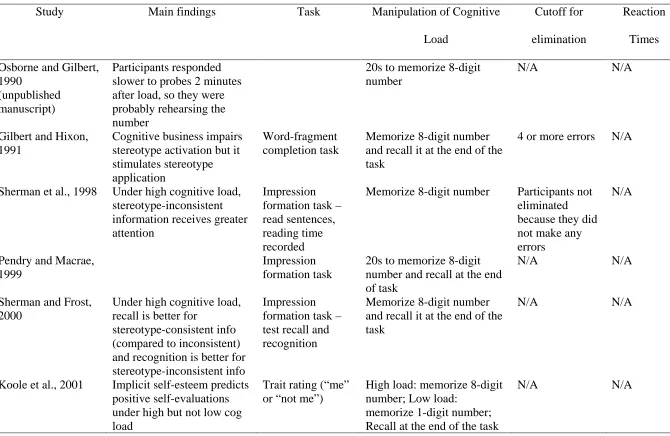
social cognition literature. A summary of cognitive load manipulations using the Gilbert and
Table 1. Cognitive Load Manipulations in the Literature
Study Main findings Task Manipulation of Cognitive
Load
Cutoff for
elimination
Reaction
Times
Osborne and Gilbert, 1990
(unpublished manuscript)
Participants responded slower to probes 2 minutes after load, so they were probably rehearsing the number
20s to memorize 8-digit number
N/A N/A
Gilbert and Hixon, 1991
Cognitive business impairs stereotype activation but it stimulates stereotype application
Word-fragment completion task
Memorize 8-digit number and recall it at the end of the task
4 or more errors N/A
Sherman et al., 1998 Under high cognitive load, stereotype-inconsistent information receives greater attention
Impression formation task – read sentences, reading time recorded
Memorize 8-digit number Participants not eliminated because they did not make any errors
N/A
Pendry and Macrae, 1999
Impression formation task
20s to memorize 8-digit number and recall at the end of task
N/A N/A
Sherman and Frost, 2000
Under high cognitive load, recall is better for
stereotype-consistent info (compared to inconsistent) and recognition is better for stereotype-inconsistent info
Impression formation task – test recall and recognition
Memorize 8-digit number and recall it at the end of the task
N/A N/A
Koole et al., 2001 Implicit self-esteem predicts positive self-evaluations under high but not low cog load
Trait rating (“me” or “not me”)
High load: memorize 8-digit number; Low load:
memorize 1-digit number; Recall at the end of the task