Georgia State University
ScholarWorks @ Georgia State University
Respiratory Therapy Theses Department of Respiratory Therapy
Summer 8-4-2015
A Needs and Value Assessment in Developing a
Saudi Board of Respiratory Therapy
Khalid S. Alwadeai
Follow this and additional works at:https://scholarworks.gsu.edu/rt_theses
Recommended Citation
Alwadeai, Khalid S., "A Needs and Value Assessment in Developing a Saudi Board of Respiratory Therapy." Thesis, Georgia State University, 2015.
ACCEPTANCE
This thesis, A NEEDS AND VALUE ASSESSMENT IN DEVELOPING A SAUDI BOARD OF RESPIRATORY THERAPY, by Khalid Alwadeai, RRT-NPS, was prepared under the direction of the Master’s Thesis Advisory Committee of the Respiratory Therapy department at Georgia State University. It is accepted by the committee in partial fulfillment of requirements for the Master’s of Science degree in Respiratory Therapy at Byrdine F. Lewis School of Nursing and Health Professions, Georgia State University.
The Master’s Thesis Advisory Committee, as representatives of the faculty, certifies that this thesis has met all standards of excellence and scholarship as determined by the faculty.
Date
Lynda T. Goodfellow, Ed.D., RRT, FAARC Committee Chair
Date
Dr. Douglas S. Gardenhire, Ed.D, RRT-NPS, FAARC
Committee Member
Date
AUTHOR’S STATEMENT
In presenting this thesis as partial fulfillment of the requirements for the advanced degree from Georgia State University, I agree that the library of Georgia State University shall make it available for inspection and circulation in accordance with its regulations governing materials of this type. I agree that permission to quote, to copy from, or to publish this thesis may be granted by the professor under whose direction it was written, by the Byrdine F. Lewis School of Nursing & Health Professions director of graduate studies and research, or by me. Such quoting, copying, or publishing must be solely for scholarly purposes and will not involve potential financial gain. It is understood that any copying from or publication of this thesis, which involves potential financial gain, will not be allowed without my written permission.
Author
NOTICE TO BORROWERS
All these deposited in the Georgia State University Library must be used in accordance with stipulations prescribed by the author in the preceding statement. The author of this
thesis is:
Khalid Alwadeai, RRT-NPS 488 Lindbergh PL NE
Atlanta, GA 30324 The director of this thesis is:
Lynda T. Goodfellow
Associate Dean for Academic Affairs
Byrdine F. Lewis School of Nursing and Health Professions Georgia State University
Atlanta, Georgia 30303-4019
Users of this thesis not regularly enrolled as students of Georgia State University are required to attest acceptance of the preceding stipulation by signing below. Libraries borrowing this thesis for use of their patrons are required to see that each user records here the information requested:
NAME OF USER ADDRESS DATE TYPE OF USE
ACKNOWLEDGEMENT
My sincere gratitude is to my thesis chair, Dr. Lynda Goodfellow, who offered her
continuous advice and encouragement throughout the course of this thesis. It was a
great honor and distinctive privilege to work under her guidance. I also would like
to thank my committee members, Dr. Doug Gardenhire and Prof. Ralph (Chip)
Zimmerman for their insightful comments. Additionally, I am thankful to Dr. Arzu
Ari for her recommendations. Many thanks go to Dr. Adnan Alwadie and Dr.
Mohammed Alahmari for their valuable comments and support offering. I would
like to thank my parents, siblings, and friends. They were always there cheering
me up and stood by me through the good times and bad. Special thanks goes to my
wife and my two daughters whom their patience and encouragement provide me
the strength to success.
Khalid Alwadeai
A NEEDS AND VALUE ASSESSMENT IN DEVELOPING A SAUDI BOARD OF RESPIRATORY THERAPY
By
Khalid S. Alwadeai, RRT-NPS A Thesis
Presented in Partial Fulfillment of the Requirement for the Degree of
Master of Science In
the Department of Respiratory Therapy Under the supervision of Dr. Lynda Goodfellow
In
Byrdine F. Lewis School of Nursing and Health Professions Georgia State University
A NEEDS AND VALUE ASSESSMENT IN DEVELOPING A SAUDI BOARD OF RESPIRATORY THERAPY
By
Khalid S. Alwadeai, BSRC, RRT-NPS (Under the Direction of Dr. Lynda T. Goodfellow)
ABSTRACT
BACKGROUND: RT was primarily introduced in Saudi Arabia by military hospitals beginning in the late 1970s. Currently, Saudi Arabia does not have a certification board for RT and,
therefore, all of the RTs in Saudi Arabia who graduated from national colleges do not have credentials. PURPOSE: The purpose of the study was to evaluate the need for developing a board for RT in Saudi Arabia, and also to determine how Saudi RTs perceived the value of certification board for RT. METHODS: Data were collected through a descriptive survey. The survey was used to examine the assessment of need to develop SBRT, and to determine how Saudi RTs perceived the value of certification. The web- link survey was e-mailed to all RTs who are member of the Saudi Society for Respiratory Care (SCRC), which has total of 750 members. The survey consisted of two parts: Assessment of need for SBRT, and perceived value certification tool (PVCT). RESULTS: two hundreds and forty responded with a response rate of 32%. Eighty percent of the participants were male, and 18% were female. Fifty three percent of the participants identified themselves as credentialed RTs, and 46% participants were non-credentialed RTs. The participants’ degree level reported was Associate degree (13%),
Bachelor’s degree (63%), Master’s degree (21%), and Doctoral degree (3%). Ninety percent of the participants work for the government institutions, whereas 10 % work for the private institutions. There was no statistically significant difference at the level of 0.05 between credentialed RTs and non-credentialed in terms of the perception towards the development of SBRT (z = -1.81, p= .071). There is also no statistically significant difference between
ABRIVIATIONS
RT: Respiratory Therapy
RTs: Respiratory Therapists
SRT/s: Saudi Respiratory Therapist/s
KSA: Kingdom of Saudi Arabia
SCHS: Saudi Commission for Health Sciences
SCRC: Saudi Society for Respiratory Care
SBRT: Saudi Board for Respiratory Therapy
WHO: World Health Organization
NBRC: National Board for Respiratory Care
PVCT: Perceived Value of Certification Tool
CCI: Competency and Credentialing Institute
Table of Content
ABSTRACT ... 6
ABRIVIATIONS ... 7
TABLE OF CONTENT ... 8
LIST OF TABLES ... 11
CHAPTER I ... 12
INTRODUCTION ... 12
BACKGROUND ... 14
PURPOSE ... 15
SIGNIFICANCE ... 16
Research Questions ... 16
Summary ... 16
CHAPTER II ... 18
REVIEWOFTHELITERATURE ... 18
INTRODUCTION... 18
Certification Boards in Nursing Profession ... 18
Certification Boards and Patient Outcomes ... 22
The Need for RT Certification Board in KSA ... 24
CONCLUSION ... 26
CHAPTER III ... 28
METHODOLOGY ... 28
Instrumentation ... 29
Participants and Survey administration ... 31
Data Analysis ... 31
Conclusion ... 32
CHAPTER IV ... 33
RESULTS... 33
INTRODUCTION... 33
Demographics ... 33
FINDINGS ... 36
Research Question One ... 36
Research Question Two ... 41
Research Question Three ... 42
CONCLUSION ... 45
CHAPTER V ... 47
DISCUSSION ... 47
INTRODUCTION... 47
Overview of the study ... 47
Assessment of need to develop SBRT ... 48
Perceived value of the certification ... 49
Implications ... 51
Recommendations for Future Research ... 51
Limitations of the Study ... 51
Conclusion ... 52
REFERENCES ... 53
APPENDIX A: SURVEY INSTRUMENTS ... 60
APPENDIX B: IRB ... 68
List of Tables
Table 1 Means, standard Deviation, and Cronbach's Alpha Reliability got the Needs
Assessment measure and the three composite scores of the PVCT ... 31
Table 2. Frequencies and Percentages for Sample Demographics ... 35
Table 3. Means, Standard Deviation, and Frequencies for the Desirability Composite ... 36
Table 4. Means, Standard Deviation, and Frequencies for the Preparation Composite ... 38
Table 5. Means, Standard Deviation, and Frequencies for the Requirements Composite ... 40
Table 6. Means, Standard Deviation, and Frequencies for the Attitudes Composite ... 41
Table 7. Independent T-tests for Credentialed Versus Non-Credentialed Perception of Need on the Development of Certification Board ... 42
Table 8. Mann-Whitney U Test for Credentialed Versus Non-Credentialed Perception of Needs on the Development of Certification Board ... 42
Table 9. Responses in Order of Agreement in PVCT Statements Between Credentialed and Non-Credentialed RTs ... 44
Table 10. Independent T-Tests for Credentialed Versus Non-Credentialed of PVCT ... 45
CHAPTER I
INTRODUCTION
The health care system in the Kingdom of Saudi Arabia (KSA) has improved in the last two decades. According to the World Health Organization (WHO), the Saudi Arabian health care system ranks 26th in the world (Almalki, Fitzgerald, & Clark, 2011). Today, allied health
professions, including respiratory therapy (RT), are vital components of the Saudi Arabian health care system. RT was primarily introduced in KSA by military hospitals beginning in the late 1970s (Alotaibi, 2015). Nowadays, there is a high demand in the health care system for RT services due to the importance of respiratory therapists (RTs) in the clinical setting. Thus, both the government and private sector have participated in RT education by establishing many new RT educational programs and thereby increasing the number of RT graduates in Saudi Arabia (Telmesani, Zaini, & Ghazi, 2011)
All RT educational programs in KSA have a curriculum committee. The committee has the authority to develop the curriculum structure, educational objectives and the methods of teaching, which are based on either conventional education [face to face] or problem-based learning approach (Telmesani et al., 2011). Furthermore, each educational program has its methods of evaluating the student’s knowledge and competency. However, the methods of evaluating the students are quite different from one school to another. These differences in curriculum structure, educational objectives, methods of teaching and methods of evaluation among the RT schools have led to differences in RTs graduates’ knowledge and skills. From this standpoint, each RT school has an obligation toward developing a curriculum that takes into consideration the essential knowledge, skills, and professional attitudes needed to meet the goals of the health care standards, and to achieve better clinical outcomes. (Telmesani et al., 2011). Therefore, the presence of a certification board for RT will help the RT programs to establish a curriculum that takes into consideration the knowledge and skills necessary for RT students. Moreover, the certification board exams will also provide guidance to what the RT curriculum needs to cover in order to meet the required standards to practice RT.
and patient care; and increases the responsibility and accountability of the RTs. Likewise, they are also coupled with a better appreciation and distinction inside the profession (Connor & Hamilton, 2010). Based on this notion, the credentialed healthcare worker is considered to be more knowledgeable in comparison to the non-credentialed; subsequently, the patient outcomes should be improved (Grosch, 2006)(Jeffe DB & Andriole DA, 2011). Therefore, RTs who gain the necessary knowledge by preparing for a board certification exam, can demonstrate their competency and qualifications to practice RT.
BACKGROUND
Respiratory therapy is recognized as an allied health profession providing assistance in the diagnosis, treatment, and health promotion of patients with respiratory diseases. The first integrated body of RTs was in the state of Illinois in 1946 at the University of Chicago, and in 1964 in Canada (Litwin, 2006; Mussa, 2008; Myers, 2013). According to Weilacher’s history of the American Association for Respiratory Care (AARC), before, 1974, the treatment modalities of respiratory care were not based on clinical studies, but rather it was based mainly on clinical impressions (Mussa, 2008). RTs are health care professionals whose responsibilities include diagnostic assessment, management, education, evaluation and rehabilitation of patients with disorders of the cardiopulmonary system (Harris et al. with Parker, Xinggang Liu, 2013). With that being said, RT is a profession that is distinct from medicine, and other healthcare
professions (Mussa, 2008). The RT profession has flourished on innovation and change in which it becomes a skilled practice that manages equipment such as life support devices for critically ill patients, and the provision of invasive and noninvasive mechanical ventilation in all care
In KSA, there are approximately 1,477 RTs (Alotaibi, 2015). Only 15% of them have the National Board for Respiratory Care (NBRC) credentials, and 70% of the total numbers are bachelor’s degree holders (Alotaibi, 2015). All Saudi RT students who graduated from United States (US) universities are eligible to attempt the NBRC exams, while the SRT students who graduated from KSA universities are not. In 1993, the Saudi Commission for Health Sciences (SCHS) was established by royal decree to control and regulate the registration process of all health care professionals, and to verify the credentials of the foreign health care workers.
However, it has limited responsibility for monitoring and supervising the health care professions and practitioners (Bahammam et al., 2013).
The demand for the RT profession is increasing all over the world. Many countries such as the United States and Canada have recognized RT as an essential department in clinical settings and at the educational level, whereas many countries have recognized it in different levels.
PURPOSE
The purpose of the study was to determine the need for developing a board for RT in KSA, and also to evaluate how Saudi RTs perceive the value of a certification board for RT. Certification board is an important tool to improve health care outcomes and to regulate the practice of RT profession. Implication of SBRT for RTs’ long term is to improve the RT profession in KSA.
SIGNIFICANCE
A certification board is needed for evaluating the competency of RT practice in KSA. A certification board of respiratory therapy is in response to the need for regulating the respiratory therapy profession in Saudi Arabia. The lack of a unified and dependable evaluation system in Saudi RT colleges is an area of great concern. This is significant because there is no known investigation of the need to develop a national board for respiratory therapy in KSA, and how the SRTs perceive the value of certification. This study aims to determine whether there is a need and desire for such a certification board or not. In addition, it was designed to determine the differences in perceived value of certification between credentialed RTs and non-credentialed RTs.
The following research questions were addressed to guide the acquisition of data required to meet the requirements of the purpose
Research Questions
1- What is the level of support and the attitudes of Saudi Respiratory Therapists for the development of RT certification board in Saudi Arabia?
2- Are there any differences in perception for the need of developing a Saudi RT certification board between credentialed RTs and non-credentialed RTs?
3- Are there any differences in valuing the certification board between credentialed RTs and non- credentialed RTs?
Summary
CHAPTER II
REVIEW OF THE LITERATURE
INTRODUCTION
The following literature review covered many aspects of the values of board certification in health care for the past two decades. A computerized search of databases accessed for this review includes: PubMed, CINHAL, CINHAL with full text, Ovid and EBSCOhost, MEDLINE, MEDLINE with full text, and the Georgia State University (GSU) computerized library catalog. Search keywords used were: respiratory care, board certification, healthcare board, perceived value for the board, board certification and nursing, board certification as predictive measure, board certification and clinical outcome, and difference between certified and noncertified. Results included a wide spectrum of articles that discussed the impact of the board in numerous health professions, references in the content of scholarly journals and research articles were followed as well. This review examined the literature related to certification boards in nursing, certification boards and patient outcomes, and the need for RT certification board in KSA.
Certification Boards in Nursing Profession
linked with a high sense of professionalism that can be described as attitudes of self-regulation and independence (Wynd, 2003).
Certification board in the nursing profession started in 1946 when the American Association of Nurse Anesthetists (AANA) created a method to acknowledge personal
accomplishment and skilled performance in nursing practice (Gaberson et al., 2003). Registered nurses have been shown to have greater job related power and more insight of empowerment (Piazza, Donahue, Dykes, Griffin, & Fitzpatrick, 2006). Coleman et al. (1999) recognized that the primary reasons for becoming registered are for pursuing a personal challenge, a craving to be recognized as a specialist, and for career advancement (E. A. Coleman et al., 1999).
Redd and Alexander (1997) conducted a study of 83 staff nurses in two different acute care hospitals to explore job performance and self-esteem levels of registered and non- registered staff nurses. A list of the subjects’ immediate supervisors was collected from the participants; consent forms and then the supervisors were asked to evaluate each subject’s performance. Participants’ supervisors evaluated nursing using the Schwirian six dimension scale: leadership, critical care, teaching or collaboration, planning or evaluation, interpersonal relations or
communication and professional development. The researchers found that results of the supervisors’ rating of staff performance showed no significant difference between the
performance scores of registered and non- registered nurses. Yet, the supervisors did score the registered nurses higher in performance scores for planning, evaluation and teaching,
nurses perform better than non- registered nurses, especially in teaching and collaboration, and planning and evaluation (Redd & Alexander, 1997).
Gaberson and her colleagues conducted a descriptive study of 1389 registered nurses selected from the Certification Board Perioperative Nursing (CBPN) to determine the perceived value of certification in perioperative nursing. They found that 90% or more of the registered perioperative nurses expressed agreement or strong agreement with Perceived Value of Certification Tool (PVCT) value statements related to personal accomplishment, professional satisfaction, specialized knowledge, professional growth, attainment of a practice standard, professional commitment, professional challenge, and credibility enhancement. Moreover, between 50% and 85% of registered nurses agreed or Strongly agreed with value statements related to confidence in clinical abilities, level of clinical competence, accountability, marketability, autonomy, consumer confidence, and recognition from peers, other health professionals, and employers. In addition, only 30.7% of registered nurses agreed or strongly agreed with the value statement that certification increases salary (Gaberson et al., 2003).
In a study by Fitzpatrick and her colleagues, they investigated the relationship between American Association of Critical-Care Nurses’ (AACNs’) specialty certification and
Additionally, certification promotes recognition of the expertise that will lead in turn is empowering. Moreover, health institutions that support and recognize these achievements of registered nurses, may experience less turnover and improved retention rate (Piazza et al., 2006). One survey study conducted by Cary surveyed 19,452 nurses from United States, Canada and US territories to examine how certification contributed to nurses’ personal and professional
development and to their practice and how registered nurses affect the work environment as viewed by employers. She found a large portion of the respondents (72%) received at least one or more benefits from their certification status such as recognition, promotion, increased pay, or job security. In addition, participants identified benefits of certification to be recognition of
colleagues, and public recognition of their certificate status, such as in awards ceremony. These nurses reported that certification provided autonomy and enhanced collaboration, as well as allowing them to assert control over their work (Cary, 2001).
nursing certification. They found that the nurse managers prefer to hire registered nurses. 85% of the participants indicated they would hire a registered nurse over a non-registered nurse.
Additionally, they would assign a patient with complicated problems to a registered nurse (47.6%). They found, in addition, that 58% of the nurse managers believe that they see
differences in performance of registered nurses; 29% did not. Interestingly, participants said, that 30% of patient and families are satisfied by the care provided by registered nurses as opposed to care provided by non- registered nurses (Stromborg et al., 2005).
However, in one study there was no difference between registered and non-registered in regards of nurses’ job perception (Hughes et al., 2001). Hughes et al. (2001) conducted a cross-sectional survey study of 1,217 staff nurses, 703 of which were registered, and 514 were non-registered, to examine relationships between oncology nursing certification and oncology nurses’ job perceptions. Hughes and her colleagues found that the job perception of oncology nurses was positive and did not differ on the basis of certification status. Yet, the decision to join a nursing organization, in itself, may reflect a sense of professional commitment and career orientation that is associated with positive job perception (Hughes et al., 2001). Nevertheless, no financial
benefits, a lack of institutional reward of the board certificate, lack of time and lack of
experience, were more likely to be the barrier for the nurses to obtain the credential (Bekemeier, 2007; Byrne et al., 2004; Cary, 2001; McClain, Richardson, & Wyatt, 2004).
Certification Boards and Patient Outcomes
patients (Kendall-Gallagher & Blegen, 2009). Many studies have attempted to document the relationship between board certification and patient outcomes.
Frank-Stromborg et al. (2002) used a retrospective chart review methodology of 20 oncology nurses (OCNs) in which 7 were registered and 13 non-registered, along with a review of 181 patients’ medical records, to investigate the effect of oncology nursing certification on sensitive patient outcomes of symptom management (pain and fatigue), adverse events such as infection, decubitus ulcers, and recurrent admission to the hospital. It was hypothesized that oncology registered nurses would have better outcomes in terms of patient care. The data did not, however, support this hypothesis. They concluded that there is no difference in terms of patient outcomes of symptom management between the oncology registered and non-registered nurses. The study, however, demonstrated valuable information regarding the need for additional studies in the association between patients care and board certification (Frank-Stromborg et al., 2002).
Coleman et al (2010) compared registered nurses with non-registered nurses for symptom management of pain, nausea and vomiting, nurse satisfaction, and patient satisfaction to examine the effect of oncology nursing certification on nursing-sensitive patient outcomes. They included 93 oncology nurses of which 54 were registered and 270 patients with cancer. Results showed that registered nurses recorded higher scores than non-registered on the instruments that
measured attitudes and knowledge of pain and nausea management. Moreover, by reviewing the medical records, registered nurses followed the National Comprehensive Cancer Network’s guidelines for chemotherapy-induced nausea and vomiting management more than non-registered nurses (E. Coleman et al., 2010).
patient events in a sample of 48 intensive care units from a random sample of 29 hospitals from across the United States. Data were collected regarding the number of registered nurses,
organizational and nurse characteristics (magnet status, certification, education, experience, skill mix and total hours of nursing care per patient day) and 6 adverse patient events (medication errors, falls, skin breakdown and 3 types of hospital-acquired infections). The authors found that the proportion of intensive care nurses who hold the certified critical nurse registry credential had an inverse relationship to patient safety (Kendall-Gallagher & Blegen, 2009). These findings indicate that registered nurses are associated with better patient care, and clinical outcome.
In a retrospective study done by Boltz et al. (2013) to explore the extent of nursing certification association with nursing sensitivity quality indicators in units that primarily serve older patients. They found a lower percentage of registered nurses in any nursing specialty were more likely to have falls (Boltz, Capezuti, Wagner, Rosenberg, & Secic, 2013). In another study, Newhouse and colleagues examined the effects of specialty certification and other factors on patient in terms of mortality rate, complication and length of stay. The estimated likelihood of complications decreased by eight percent for every ten percent increase in the proportion of nurses who were registered in perioperative nursing (Newhouse, Johantgen, Pronovost, & Johnson, 2010).
The Need for RT Certification Board in KSA
Professional certification programs have been established to determine if the practitioners have attained a level of knowledge and skills in a specific practice above the minimum
Certification board is one measure of validating the practioners’ knowledge in any particular area of healthcare. It also demonstrates predictive information in terms of the quality of care provided by the practioners (Kendall-Gallagher & Blegen, 2009; Silber et al., 2002). One of the goals of certification board and examinations is to ensure that new graduates are competent and able to provide treatment safely and effectively (Sharp, Bashook, Lipsky, Horowitz, & Miller, 2002).
For the RT profession, credentials provided by the NBRC such as the Registered
Respiratory Therapist (RRT) are acknowledged to be the” standard of excellence”. Barnes et al. (2011) conducted a survey study of 1,011 RT educational program directors, RT department directors, and deans of health science divisions. The study indicates that 81% of the RT department directors prefer the RRT credential being needed to practice RT, and 68% of RT educational program directors prefer the RRT to practice RT (Barnes, Kacmarek, Kageler, Morris, & Durbin, 2011). These findings indicated that credentials are preferred, and probably required by some institutions to practice RT.
Currently, Saudi Arabia does not have a RT certification board. Other countries,
however, are considering the successful passage of a board exam as a mandatory requirement to practice RT. Since board certification is recognized by most healthcare professions as a method to ensure patient’s access to competent practitioners, certification has become an obligatory requirement for many healthcare settings. Certification boards have become an assurance
indicator of quality for the healthcare institutions (Frank-Stromborg et al., 2002). In a descriptive study by Livingood and his colleagues, they investigated the feasibility and desirability of public health credentials with 374 public health leaders on credentialing of the public health workforce. Forty five percent of the participants supported national certification efforts, 30% were
leaders participating in the study were in favor of public health credentialing (Livingood Jr., Woodhouse, & Godin, 1995). Livingood et al. (2001) summarized the studies related to health education certification and found that a majority of the studies predicted a positive result from certification boards at the organizational level. Overall, employers are in favor of health education certification (Livingood & Auld, 2001).
Although many studies have shown the advantages of the certification board, one study has criticized certification boards. Criticisms of credentialing include disproving of the benefits and concerns about exclusiveness whereby qualified practioners might be excluded as a result of the inadequacies of testing (Thomas, 1987).
In spite of the absence of the RT certification board in KSA, the SCHS provides RT licensure examination for the new graduates. Licensure demonstrates a minimal professional practice standards and competencies that RTs should have before entry to the RT profession. The board certification implies a high level of knowledge by therapists who have shown skills in an area of practice. Moreover, credentialing is a voluntarily process, whereas licensing is mandatory (McClain et al., 2004; Niebuhr & Biel, 2007; Sechrist et al., 2006; Williams & Counts, 2013).
CONCLUSION
(Boltz et al., 2013; E. Coleman et al., 2010; Frank-Stromborg et al., 2002; Kendall-Gallagher & Blegen, 2009; Newhouse et al., 2010). Even though there is no difference in terms of patient outcomes of symptom management between registered and non-registered practitioners, registered practitioners have recorded higher than non-registered on the instruments that measured attitudes and knowledge of disease symptoms. Nonetheless, the association between patients care and certification board is still an area of great concern and in need for additional investigation (Boltz et al., 2013; E. Coleman et al., 2010; Frank-Stromborg et al., 2002; Kendall-Gallagher & Blegen, 2009). Correspondingly, most of the RT directors in the US are agreeable that the RRT credentials should be required to practice and considered entry into the profession
(Barnes, Gale, Kacmarek, & Kageler, 2010; Barnes et al., 2011; Kacmarek, Barnes, & Durbin,
CHAPTER III
METHODOLOGY
INTRODUCTION
This study will explore the need to develop a Saudi board for Respiratory Therapy, as well as
investigating how RTs in Saudi Arabia perceive the value of board certification in terms of
intrinsic values and extrinsic values. The intrinsic value includes validation of knowledge,
clinical competence, attainment of practice standards, professional credibility, professional
commitment, professional autonomy, accountability, confidence in clinical abilities, personal
satisfaction, professional challenge, and professional growth. The extrinsic value includes
recognition from employers, peers, and other health professionals, marketability, consumer
confidence, and salary. For this reason, the study was conducted by using an online survey to answer the research questions. The survey included two parts in which the first part will
determine the perception of the Saudi RTs to develop a certification board, and the second part is to measure the perceived value of the certification board.
Research Questions
In this study, the following questions will be addressed and answered.
1- What is the level of support and the attitudes of Saudi Respiratory Therapists for the development of RT certification board in Saudi Arabia?
2- Are there any differences in perception for the need of developing a Saudi RT certification board between credentialed RTs and non-credentialed RTs?
Instrumentation
Two instruments were used in this study. The first instrument was developed to measure the assessment of need for a respiratory therapy certification board in Saudi Arabia. A panel of respiratory therapy education experts consisting of three professors applied both face and content validity. The committee reviewed the tool for this study and made suggestions regarding wording format. The first instrument (Assessment of Needs) was reviewed and validated for both face and content validity (Appendix A).
The assessment of need consists of four category, Desirability, Preparation,
Requirements, and Attitudes. Desirability means to what extent both groups (credentialed and non-credentialed) are in favor of developing a SBRT. Preparation, is defined by how the certification board process will look like in terms of the availability of a study guide for the certification exam, including how the certification examination content will become part of the college education curriculum, who should write the certification exam, who should be
responsible to administer the test and to administer the credentials, and also the cost of the certification board exam. It also includes how often should SRTs to be recertified. Requirements
means who is going to be eligible to attempt the exam and what are the regulations for the certification exam. It includes which degree level should attempt the certification exam, and how much experience should the RTs have before attempting the certification exam, and whether the certification should be required for licensure. Attitude is how the SRTs feel that they will be recognized and awarded if they become credentialed.
survey instrument. After permission of use was granted, we used the PVCT that contains 18 items to evaluate how RTs in KSA perceive the value of certification board. The (PVCT) consists of two categories, intrinsic and extrinsic values. The intrinsic value includes validation of knowledge, clinical competence, attainment of practice standards, professional credibility,
professional commitment, professional autonomy, accountability, confidence in clinical abilities,
personal satisfaction, professional challenge, and professional growth. The extrinsic value
includes, recognition from employers, peers, and other health professionals, marketability,
consumer confidence, and salary. Respondents indicated their level of agreement or
disagreement with the items on a five-point Likert-type scale (4= strongly agree, 3= agree, 2=
disagree, 1= strongly disagree, 0= no opinion).
The reliability of the PVCT reflected good reliability in previous published studies with
an internal consistency reliability (Cronbach α) of 0.94 (Gaberson et al., 2003). Reliability refers to the consistency of the scores for each participants and if the test questions are consistent in meaning to all participants (Williams & Counts, 2013). While validity describes the extent to which an instrument tool measure what it was designed to measure (Williams & Counts, 2013). The Cronbach’s Alpha Reliability was calculated for this assessment and resulted in
Table 1 Means, standard Deviation, and Cronbach's Alpha Reliability got the Needs Assessment measure and the three composite scores of the PVCT
Score M SD No. of Items Alpha
Needs Assessment measure Total PCVT measure
39.70 55.90
7.29 11.55
15 18
.79 .96
Intrinsic 37.65 7.53 12 .95
Extrinsic 18.36 4.23 6 .82
Demographic characteristics were obtained through questions about age, gender, educational background, work position, type of institution employed, years of experience and types of credentials obtained.
Participants and Survey administration
The Georgia State University (GSU) Institutional Review Board reviewed this study for the protection of the rights of human participants (Appendix B). SRTs who are members of the Saudi Society for Respiratory Care (SCRC) were surveyed. However, RT students who had no experience to work as a respiratory therapist were excluded from the study. The on-line survey was e-mailed to the total of 750 SRTs through the SCRC database. The initial e-mail included a cover letter that explained the purpose of the study (Appendix C). The cover letter reflected a basic appeal for the respondents’ participation. The survey was available for completion for two weeks. After one week of the initial mailing of the survey, a follow-up e-mail reminder was sent to remind participants to complete the survey to maximize the response rate.
Data Analysis
Levene’s test for equality of variance was calculated as to whether responses were evenly distributed. Lastly, Mann-whitney U test was employed to determine the differences in
perception to develop SBRT between credentialed and non-credentialed. T-tests were calculated based on the mean of each group to determine the differences between credentialed and non-credentialed on how they perceive the value of certification. Frequency statistics were used to analyze responses to additional questions related to demographic information.
Conclusion
This chapter described the methodology used to conduct the study. Sample, instruments, and data analyses were explained. The study included two parts in which the first part was the assessment of need to develop SBRT, and the second part was the perceived value of
CHAPTER IV
RESULTS
INTRODUCTION
The purpose of this study was to evaluate the need for developing a board for RT in Saudi Arabia, and also to determine how SRTs perceived the value of certification board for RT. In this study, the difference in perceiving the value of the board certification in RT between credentialed RTs and non-credentialed RTs was investigated. The results of the study are presented based on the order of the following research questions
1- What is the level of support and the attitudes of Saudi Respiratory Therapists for the development of RT certification board in Saudi Arabia?
2- Are there any differences in perception for the need of developing a Saudi RT certification board between credentialed RTs and non-credentialed RTs?
3- Are there any differences in valuing the certification board between credentialed RTs and non- credentialed RTs?
Demographics
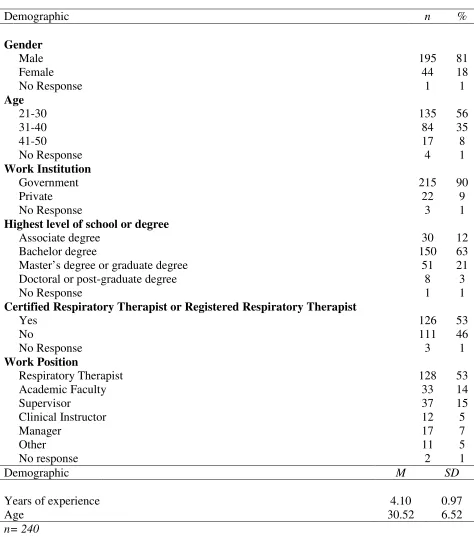
Data were collected from the respondents and screened for missing responses. Descriptive statistics were conducted to describe the demographics of the sample. The total sample size was 750 RTs, which included credentialed and non-credentialed RTs. From this sample, 240
female. The age of the respondents were: 56% 21-30, 35% 31-40, 8% 41-50, and the mean was 30.52 (SD 6.52) with 1.0% of respondents not reporting their age.
Most of the respondents were RTs 128 (53%). Fifteen percent of the respondents were supervisors (n=37), 14% were academic faculty (n=33), 7% were managers (n=17), 5% were clinical instructors (n=12), and 5% identified themselves with other. Respondents had an Associate degree or higher. Sixty three percent had Bachelor’s degrees (n=150), 51 of the respondents had Master’s degrees (21%), 30 of the respondents had Associate degrees (12%), and 8 of the respondents had Doctoral or post-graduate degrees (3%). The mean for the years of work experience reported was 4.1 years (SD 0.97). Students were excluded since they do not have any work experience.
Table 2. Frequencies and Percentages for Sample Demographics
Demographic n %
Gender
Male 195 81
Female No Response 44 1 18 1 Age
21-30 135 56
31-40 84 35
41-50 No Response 17 4 8 1 Work Institution
Government 215 90
Private No Response 22 3 9 1
Highest level of school or degree
Associate degree 30 12
Bachelor degree 150 63
Master’s degree or graduate degree 51 21
Doctoral or post-graduate degree No Response
8 1
3 1
Certified Respiratory Therapist or Registered Respiratory Therapist
Yes 126 53
No No Response 111 3 46 1 Work Position
Respiratory Therapist 128 53
Academic Faculty 33 14
Supervisor 37 15
Clinical Instructor 12 5
Manager Other No response 17 11 2 7 5 1
Demographic M SD
Years of experience 4.10 0.97
Age 30.52 6.52
FINDINGS
Research Question One
What is the level of support and attitudes to develop a respiratory therapy certification board in Saudi Arabia?
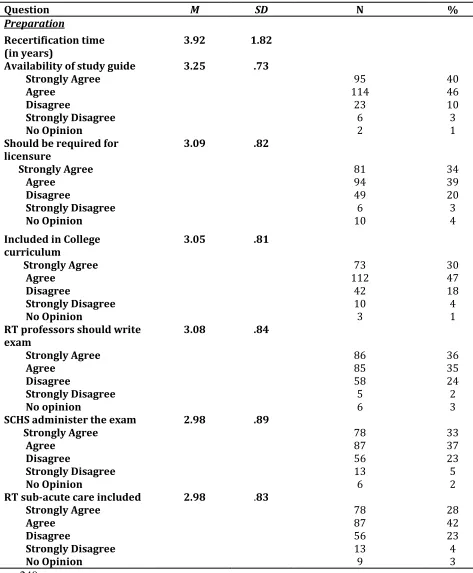
To determine the level of support to develop a SBRT, a descriptive analysis was conducted. Levels of support were determined through four sub categories: Desirability, Preparation, Requirements, and Attitudes.
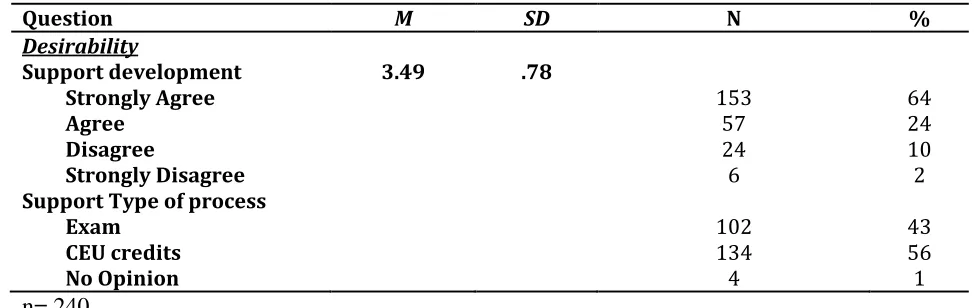
[image:37.612.61.548.385.539.2]Desirability: The majority of the respondents including credentialed RTs and non-credentialed RTs are in favor of developing a SBRT. A mean of 3.49 (SD =11.55) indicates the desirability level among the respondents (Table 3).
Table 3. Means, Standard Deviation, and Frequencies for the Desirability Composite
Question M SD N %
Desirability
Support development 3.49 .78 Strongly Agree
Agree Disagree
Strongly Disagree Support Type of process
153 57 24 6 64 24 10 2 Exam CEU credits No Opinion 102 134 4 43 56 1 n= 240
Table 4. Means, Standard Deviation, and Frequencies for the Preparation Composite
Question M SD N %
Preparation
Recertification time (in years)
3.92 1.82 Availability of study guide
Strongly Agree
Agree Disagree
Strongly Disagree No Opinion
3.25 .73
95 114 23 6 2 40 46 10 3 1
Should be required for licensure Strongly Agree Agree Disagree Strongly Disagree No Opinion
3.09 .82
81 94 49 6 10 34 39 20 3 4
Included in College curriculum Strongly Agree Agree Disagree Strongly Disagree No Opinion 3.05 .81 73 112 42 10 3 30 47 18 4 1
RT professors should write exam Strongly Agree Agree Disagree Strongly Disagree No opinion 3.08 .84 86 85 58 5 6 36 35 24 2 3
SCHS administer the exam Strongly Agree
Agree Disagree
Strongly Disagree No Opinion
2.98 .89
78 87 56 13 6 33 37 23 5 2
RT sub-acute care included Strongly Agree
Agree Disagree
Strongly Disagree
2.98 .83
78 87 56 13 28 42 23 4
No Opinion 9 3
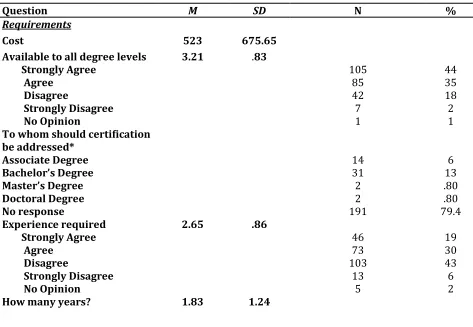
Table 5. Means, Standard Deviation, and Frequencies for the Requirements Composite
Question M SD N %
Requirements
Cost 523 675.65
Available to all degree levels Strongly Agree
Agree Disagree
Strongly Disagree No Opinion
3.21 .83
105 85 42 7 1 44 35 18 2 1
To whom should certification be addressed* Associate Degree Bachelor’s Degree Master’s Degree Doctoral Degree No response 14 31 2 2 191 6 13 .80 .80 79.4 Experience required Strongly Agree Agree Disagree Strongly Disagree No Opinion 2.65 .86 46 73 103 13 5 19 30 43 6 2
How many years? 1.83 1.24
n= 240
*Note: Only respondents who disagreed or strongly disagreed to “Should certification be available to all degree level?” answered, “To whom should certification be addressed”.
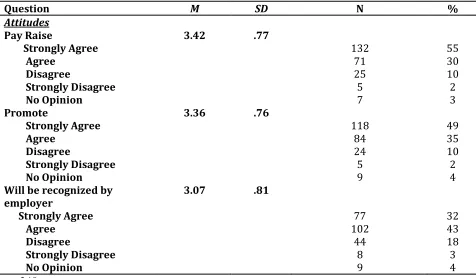
Attitudes: The majority of the respondents (M =3.07; SD =. 81) believed that their employer should recognize them, and believe that they should receive a pay raise for being certified (M=
Table 6. Means, Standard Deviation, and Frequencies for the Attitudes Composite
Question M SD N %
Attitudes Pay Raise Strongly Agree Agree Disagree Strongly Disagree No Opinion
3.42 .77
132 71 25 5 7 55 30 10 2 3 Promote Strongly Agree Agree Disagree Strongly Disagree No Opinion
3.36 .76
118 84 24 5 9 49 35 10 2 4
Will be recognized by employer Strongly Agree Agree Disagree Strongly Disagree No Opinion
3.07 .81
77 102 44 8 9 32 43 18 3 4 n= 240
Research Question Two
Are there any differences in perception for the need of respiratory therapy certification board between credentialed RTs and non-credentialed RTs?
Table 7. Independent T-tests for Credentialed Versus Non-Credentialed Perception of Need on the Development of Certification Board
Levene's Test for Equality of
Variances
t-test for Equality of Means
F Sig. t df Sig. (2-tailed) Mean Differenc e Std. Error Difference 95% Confidence Interval of the
Difference Lower Upper
Equal
variances
not assumed 9.546 .002 -2.35 171.29 .020 -2.04000 .86653 -3.75045 -.32955
[image:43.612.80.522.109.283.2]By applying Mann-whitney U test, there was no statistically significant difference between credentialed RTs and non-credentialed in terms of the perception towards the development of a SBRT (z = -1.81, p= .071). Credentialed RTs had a mean rank of 110.7, while non-credentialed had a mean rank of 95.80, indicating that credentialed RTs support the development of the SBRT more than the non- credentialed. However, it was not statically significant (Table 8).
Table 8. Mann-Whitney U Test for Credentialed Versus Non-Credentialed Perception of Needs on the Development of Certification Board
Certification Mean rank z p
Credentialed 110.77 -1.81 .071
Non-credentialed 95.80
Research Question Three
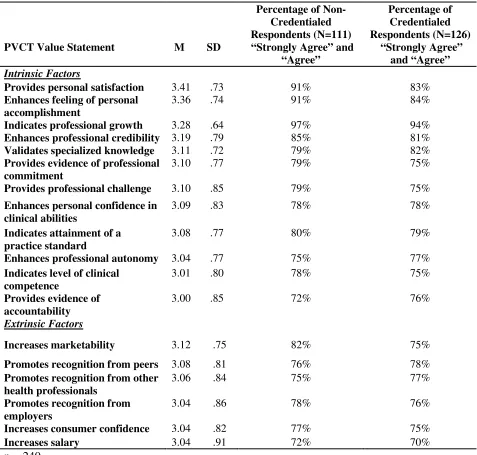
[image:43.612.72.536.513.572.2]Table 9. Responses in rank order of Agreement in PVCT Statements Between Credentialed and Non-Credentialed RTs
PVCT Value Statement M SD
Percentage of Non-Credentialed Respondents (N=111) “Strongly Agree” and
“Agree” Percentage of Credentialed Respondents (N=126) “Strongly Agree” and “Agree” Intrinsic Factors
Provides personal satisfaction 3.41 .73 91% 83%
Enhances feeling of personal accomplishment
3.36 .74 91% 84%
Indicates professional growth 3.28 .64 97% 94%
Enhances professional credibility 3.19 .79 85% 81%
Validates specialized knowledge 3.11 .72 79% 82%
Provides evidence of professional commitment
3.10 .77 79% 75%
Provides professional challenge 3.10 .85 79% 75%
Enhances personal confidence in clinical abilities
3.09 .83 78% 78%
Indicates attainment of a practice standard
3.08 .77 80% 79%
Enhances professional autonomy 3.04 .77 75% 77%
Indicates level of clinical competence
3.01 .80 78% 75%
Provides evidence of accountability
3.00 .85 72% 76%
Extrinsic Factors
Increases marketability 3.12 .75 82% 75%
Promotes recognition from peers 3.08 .81 76% 78%
Promotes recognition from other health professionals
3.06 .84 75% 77%
Promotes recognition from employers
3.04 .86 78% 76%
Increases consumer confidence 3.04 .82 77% 75%
Increases salary 3.04 .91 72% 70%
n = 240
Table 10. Independent T-Tests for Credentialed Versus Non-Credentialed of PVCT
Levene's Test for Equality of
Variances
t-test for Equality of Means
F Sig. t df Sig. Mean Difference
Std. Error Difference
95% Confidence Interval of the
Difference Lower Upper Equal
variances assumed
1.429 .233 -.281 201 .779 -.45809 1.63055 -3.67327 2.75709
Credentialed respondents (M= 56.04, SD= 12.35) had a higher PVCT scores than the non-credentialed respondents (M= 55.58, SD= 10.5) (Table 11). However, there was no statistically significant difference between the two groups at the level of 0.05.
T(201)= -281, P=0.779
Table 11. Results of T-Tests and Descriptive Statistics for PVCT by Credential Status
Credential Status 95% CI for Mean Difference Credentialed Non-Credentialed
M SD n M SD n t df
PVCT Score 56.05 12.36 111 55.58 10.53 99 -3.67, 2.76 -.281 201
CONCLUSION
SRTs have shown support to develop a SBRT, and their attitudes and expectations toward the certification board reveal that they want to be recognized and awarded. There were no
[image:46.612.68.571.467.527.2]CHAPTER V
DISCUSSION
INTRODUCTION
This study examined the assessment of need to develop a SBRT and also to determine how SRTs perceived the value of certification board. Moreover, the differences between
credentialed and non-credentialed in perception of supporting the development of the SBRT, and their perception in the value of the credentialing were examined. This chapter will discuss the findings to include an overview of the study, implications for research, recommendations for future research, limitations of the study, and conclusion.
Overview of the study
The purpose of the study was mainly to assess the need of devolving the SBRT, and to determine the perception of value certification for SRTs. Therefore; I will be overviewing those tow
elements of the study. However, this study was guided by the following questions:
1- What is the level of support and the attitudes of Saudi Respiratory Therapists for the development of RT certification board in Saudi Arabia?
2- Are there any differences in perception for the need of developing a Saudi RT certification board between credentialed RTs and non-credentialed RTs?
3- Are there any differences in valuing the certification board between credentialed RTs and non-credentialed RTs?
Two hundreds and forty SRTs participated in the study of which (53%) were credentialed and (46 %) were not credentialed. The majority of the respondents were male (81%). Fifty three percent of the respondents identified their work position as RTs (53%). The mean age of the respondents was approximately 30 years, and the mean for the length of experience was 4.10 years. We speculate that we might have different results if older, and experienced SRTs have participated in the study. Age and length of experience are correlated with professionalism (Wynd, 2003).
Assessment of need to develop SBRT
The first research question “what is the level of support and the attitudes of SRTs to develop a respiratory therapy certification board in Saudi Arabia?”
Since board certification is a method to evaluate practioners, certification boards are essential for many healthcare fields. It was clear that the majority (88%) of the respondents in this study were in favor of developing a SBRT regulated by the SCHS. For the credentialing preparation process, they believe that academic faculty should write the credentialing exam questions, and the exam should be monitored and regulated by the SCHS.
Seventy seven percent of the respondents believe the content of the exam questions should be incorporated into RT program curriculum. In terms of the recertification, the average recertification time should be 4 years. Yet, 56% were in favor of continuing education units (CEU) to recertify, while 43% of the respondents were in favor of recertification. These results are consistent with previous study that the large percent of respondents were in favor of
continuing education for recertification (Allen & Girard, 1992)
is an indication of their commitment. Respondents support all degree levels attempting the certification exam and do not specify the certification exam to a specific degree level. In a study by Allen and Girard, respondents disagreed with a baccalaureate degree only to be required for certification (Allen & Girard, 1992). This finding is consistent to this study.
The second research question” Are there any differences in perception for the need to develop a respiratory therapy certification board between credentialed RTs and
non-credentialed RTs? The results showed that there is no statistically significant difference between credentialed RTs and non-credentialed in terms of the perception towards the development of the SBRT. However, by looking at the mean for the credentialed and non-credentialed SRTs,
credentialed SRTs support the development of the SBRT more than the non-credentialed. This finding was found to be related to a previously published study where there was no differences between credentialed and non-credentialed nurses towards certification (Haskins, Hnatiuk, & Yoder, 2011).
Perceived value of the certification
statements “ Certification increases salary” had the lowest score of all value statements due to the unified salary scale that all governmental institutions in Saudi Arabia follow. However, private institutions are still paying more for those who are credentialed. This finding supports previously published studies on the value of certification (Byrne et al., 2004; Gaberson et al., 2003; Niebuhr & Biel, 2007; Sechrist et al., 2006).
The percentage of agreement with value statements of all respondents (credentialed and non-credentialed) in this study is parallel to the percentage of agreement in the study by
Gaberson et al. (2003) In both studies, more than 90% of respondents agreed with the value statement related to personal growth.
The extrinsic composite scores are lower in agreement than the intrinsic composite among all respondents. This finding supports previously published studies on the value of certification (Byrne et al., 2004; Gaberson et al., 2003; Niebuhr & Biel, 2007; Sechrist et al., 2006). Between 70% to 80% of credentialed and non-credentialed participants agreed with the extrinsic value statements related to recognition from employers, peers, and other health
professionals, increases consumer confidence, and increases salary. The non-credentialed SRTs (82%) scored higher than credentialed (75%) in the statement” increases marketability”. This finding is supported by a previously published study (Gaberson et al., 2003).
Implications
The results of this study assess the need to develop a SBRT, and work as a foundation for any future project to establish a certification board in Saudi Arabia. Moreover, it provides
information of how SRTs perceive the value of a certification board and consequently the value to develop a SBRT. In addition, it also increases the awareness of the value of certification in the RT profession for other international societies. The development of a certification board requires a systematic governmental approach with the assistance of relevant experts for development and implementation. This study adds to the literature on certification as related to both assessment of need for certification and the perception to the value of certification
Recommendations for Future Research
Furtherresearch is recommended. Replication of this study is recommended in order to generalize the findings of this study with a larger sample size and may include medical
administrators. In addition, the goals related to certification are connecting the value of
certification to the regulation the SRTs within the profession and health outcomes. Therefore, the relationship between certification and health outcomes is recommended.
Limitations of the Study
their e-mail. Moreover, there was a possibility that the survey was sent to the junk mail and therefore the response rate might have been affected.
Conclusion
There are no published studies that have specifically surveyed the SRTs population and reviewed issues related to certification. Notably, certification can be used as a standard for entry into the RT practice, validation of competence, recognition of excellence, and for regulation (Smolenski, 2005). The perception of SRTs presented many supportive characteristics related to the development of a certification board. The findings of this study increase the knowledge about what certification represents to the SRTs in both personal and professional levels, therefore, providing the insight into the need for certification board. These findings can provide SRTs the opportunity to promote and discuss the development of the KSA certification board within the field of RT.
Acknowledgement
References
Allen, D. E., & Girard, N. J. (1992). Attitudes Toward Certification: A Pilot Study. AORN Journal, 55(3), 817–829. http://doi.org/10.1016/S0001-2092(07)69451-4
Almalki, M., Fitzgerald, G., & Clark, M. (2011). Health care system in Saudi Arabia: an overview. Eastern Mediterranean Health Journal La Revue De Santé De La
Méditerranée Orientale = Al-Majallah Al- i īyah Li-Sharq Al-Mutawassi , 17(10),
784–793.
Alotaibi, G. (2015). Status of respiratory care profession in Saudi Arabia: A national survey.
Annals of Thoracic Medicine, 10(1), 55–60. http://doi.org/10.4103/1817-1737.146878 Bahammam, A. S., Jahdali, H. A., Alharbi, A. S., Alotaibi, G., Asiri, S. M., & Alsayegh, A.
(2013). Saudi regulations for the accreditation of sleep medicine physicians and technologists. Annals of Thoracic Medicine, 8(1), 3–7. http://doi.org/10.4103/1817-1737.105710
Bajammal, S., Zaini, R., Abuznadah, W., Al-Rukban, M., Aly, S. M., Boker, A., Donnon, T. (2008). The need for national medical licensing examination in Saudi Arabia. BMC Medical Education, 8, 53–53. http://doi.org/10.1186/1472-6920-8-53
Barnes, T. A., Gale, D. D., Kacmarek, R. M., & Kageler, W. V. (2010). Competencies Needed by Graduate Respiratory Therapists in 2015 and Beyond. Respiratory Care, 55(5), 601– 616.
Bekemeier, B. (2007). Credentialing for Public Health Nurses: Personally Valued ... But Not Well Recognized. Public Health Nursing, 24(5), 439–448. http://doi.org/10.1111/j.1525-1446.2007.00654.x
Boltz, M., Capezuti, E., Wagner, L., Rosenberg, M.-C., & Secic, M. (2013). Patient Safety in Medical-Surgical Units: Can Nurse Certification Make a Difference? MEDSURG Nursing, 22(1), 26–37.
Byrne, M., Valentine, W., & Carter, S. (2004). The Value of Certification-A Research Journey.
Association of Operating Room Nurses. AORN Journal, 79(4), 825–8, 831–5.
Cary, A. H. (2001). Original Research: Certified Registered Nurses: Results of the Study of the Certified Workforce. The American Journal of Nursing, (1), 44.
Coleman, E. A., Frank-Stromborg, M., Hughes, L. C., Grindel, C. G., Ward, S., Berry, D., Murphy, C. M. (1999). A national survey of certified, recertified, and noncertified oncology nurses: comparisons and contrasts. Oncology Nursing Forum, 26(5), 839–849. Coleman, E., Coon, S., Lockhart, K., Kennedy, R., Montgomery, R., Copeland, N., Stewart, C.
(2010). Effect of Certification in Oncology Nursing on Nursing-Sensitive Outcomes (Reprinted from Clinical Journal of Oncology Nursing, vol 13, pg 165-172, 2009).
JOURNAL OF NURSING ADMINISTRATION, 40(10), S35–S42.
Connor, K. A., & Hamilton, L. A. (2010). Pursuing Board of Pharmacy Specialties certification.
American Journal Of Health-System Pharmacy: AJHP: Official Journal Of The
Finch, A. J., Simon, N. P., & Nezu, C. M. (2006). The Future of Clinical Psychology: Board Certification. Clinical Psychology: Science & Practice, 13(3), 254–257.
http://doi.org/10.1111/j.1468-2850.2006.00033.x
Fitzpatrick, J., Campo, T., Graham, G., & Lavandero, R. (2010). Certification, empowerment, and intent to leave current position and the profession among critical care nurses.
American Journal of Critical Care, 19(3), 218–226. http://doi.org/10.4037/ajcc2010442 Frank-Stromborg, M., Ward, S., Hughes, L., Brown, K., Coleman, A., Grindel, C., & Murphy, C.
(2002). Does certification status of oncology nurses make a difference in patient outcomes? Oncology Nursing Forum, 29(4), 665–672.
http://doi.org/10.1188/02.ONF.665-672
Gaberson, K., Schroeter, K., Killen, A., & Valentine, W. (2003). The perceived value of certification by certified perioperative nurses. Nursing Outlook, 51(6), 272–276.
Grosch, E. N. (2006). Does specialty board certification influence clinical outcomes? Journal of Evaluation in Clinical Practice, 12(5), 473–481. http://doi.org/10.1111/j.1365-2753.2006.00556.x
Haskins, M., Hnatiuk, C., Nowicki, & Yoder, L., H. (2011). Medical-Surgical Nurses’ Perceived Value of Certification Study. MEDSURG Nursing, 20(2), 71–93.
Hughes, L., Ward, S., Grindel, C., Coleman, E., Berry, D., Hinds, P., Frank-Stromborg, M. (2001). Relationships between certification and job perceptions of oncology nurses.
Oncology Nursing Forum, 28(1), 99–106.
Kacmarek, R. M., Barnes, T. A., & Durbin, C. G. (2012). Survey of Directors of Respiratory Therapy Departments Regarding the Future Education and Credentialing of Respiratory Care Students and Staff. Respiratory Care, 57(5), 710–720.
http://doi.org/10.4187/respcare.01360
Kendall-Gallagher, D., & Blegen, M. (2009). Competence and certification of registered nurses and safety of patients in intensive care units. American Journal of Critical Care, 18(2), 106–114. http://doi.org/10.4037/ajcc2009487
Litwin, P. (2006). The application of the principle of informed consent to the profession of respiratory therapy. Canadian Journal of Respiratory Therapy, 42(1), 30–33.
Livingood Jr., W. C., Woodhouse, L. D., & Godin, S. W. (1995). The Feasibility and Desirability of Public Health Credentialing: A Survey of Public Health Leaders. American Journal of Public Health, 85(6), 765–770.
Livingood, W., & Auld, M. (2001). The credentialing of a population-based health profession: lessons learned from health education certification. Journal of Public Health
Management & Practice, 7(4), 38–45.
McClain, N., Richardson, B., & Wyatt, J. S. (2004). A Profile of Certification for Pediatric Nurses. Pediatric Nursing, 30(3), 207–211.
Mussa, C. (2008). Respiratory care informatics and the practice of respiratory care. Respiratory Care, 53(4), 488–499.
Myers, T., R. (2013). Thinking Outside the Box: Moving the Respiratory Care Profession Beyond the Hospital Walls. Respiratory Care, 58(8), 1377–1385.
Newhouse, R. P., Johantgen, M., Pronovost, P. J., & Johnson, E. (2010). Perioperative Nurses and Patient Outcomes-Mortality, Complications, and Length of Stay (Reprinted from AORN Journal, vol 81, pg 508-528, 2005). Journal of Nursing Administration, 40(10), S54–S67. http://doi.org/10.1097/NNA.0b013e3181f3804f
Niebuhr, B., & Biel, M. (2007). The value of specialty nursing certification. Nursing Outlook,
55(4), 176–181. http://doi.org/10.1016/j.outlook.2007.02.002
Parker, A., M., Xinggang Liu, Harris, A., D., Shanholtz, C., B., Smith, R., L., Hess, D., R., … Netzer, G. (2013). Respiratory Therapy Organizational Changes Are Associated With Increased Respiratory Care Utilization. Respiratory Care, 58(3), 438–449.
http://doi.org/10.4187/respcare.01562
Piazza, I., Donahue, M., Dykes, P., Griffin, M., & Fitzpatrick, J. (2006). Differences in perceptions of empowerment among nationally certified and noncertified nurses. Journal of Nursing Administration, 36(5), 277–283.
Redd, M. L., & Alexander, J. W. (1997). Does certification mean better performance? Nursing Management, 28(2), 45.
Robiner, W., Dixon, K., Miner, J., & Hong, B. (2012). Board Certification in Psychology: Insights from Medicine and Hospital Psychology. Journal of Clinical Psychology in Medical Settings, 19(1), 30–40. http://doi.org/10.1007/s10880-011-9280-1
Schroeter, K., Byrne, M., M., Klink, K., Beier, M., & McAndrew, N., S. (2012). The Impact of Certification on Certified Perioperative Nurses: A Qualitative Descriptive Survey.
Sechrist, K. R., Valentine, W., & Berlin, L. E. (2006). Perceived Value of Certification Among Certified, Noncertified, and Administrative Perioperative Nurses. Journal of Professional Nursing, 22(4), 242–247. http://doi.org/10.1016/j.profnurs.2005.11.001
Sharp, L. K., Bashook, P. G., Lipsky, M. S., Horowitz, S. D., & Miller, S. H. (2002). Specialty board certification and clinical outcomes: the missing link. Academic Medicine: Journal of the Association of American Medical Colleges, 77(6), 534–542.
Silber, J., Kennedy, S., Even-Shoshan, O., Chen, W., Mosher, R., Showan, A., & Longnecker, D. (2002). Anesthesiologist board certification and patient outcomes. ANESTHESIOLOGY,
96(5), 1044–1052.
Smolenski, M. C. (2005). Credentialing, certification, and competence: Issues for new and seasoned nurse practitioners. Journal of the American Academy of Nurse Practitioners,
17(6), 201–204.
Stromborg, M., Niebuhr, B., Prevost, S., Fabrey, L., Muenzen, P., Spence, C., Valentine, W. (2005). Specialty certification: more than a title. Nursing Management, 36(5), 36–36, 38, 40 passim.
Telmesani, A., Zaini, R. G., & Ghazi, H. O. (2011). Medical education in Saudi Arabia: a review of recent developments and future challenges. Eastern Mediterranean Health Journal = La Revue De Santé De La Méditerranée Orientale = Al-Majallah Al- i īyah Li-Sharq
Al-Mutawassi , 17(8), 703–707.
Thomas, K. R. (1987). Warning!: Certification and Accreditation May be Hazardous to Rehabilitation. Journal of Rehabilitation, 53(2). Retrieved from
Williams, H. F., & Counts, C. S. (2013). Certification 101: The Pathway To Excellence.
Nephrology Nursing Journal, 40(3), 197–253.
Appendix A: Survey Instruments
Dear Participant:This part of the survey aims to investigate the need to develop a Saudi Board for Respiratory Therapy. Please choose the answer based on your opinion. Your response is appreciated. We assure you the confidentiality of the data.
Part 1:
1- Do you support the development of RT certification in Saudi Arabia? Strongly agree
Agree Disagree
Strongly disagree No opinion
2- Should certification be available to all degree levels? Strongly agree
Agree Disagree
Strongly disagree No opinion
If disagree, to whom should certification be addressed? Associate degree holder