ScholarWorks @ Georgia State University
Anthropology Theses Department of Anthropology
Spring 5-9-2015
Isla Palenque Revisited: An Archaeological
Community Study
Johnny Bogle
Follow this and additional works at:https://scholarworks.gsu.edu/anthro_theses
This Thesis is brought to you for free and open access by the Department of Anthropology at ScholarWorks @ Georgia State University. It has been accepted for inclusion in Anthropology Theses by an authorized administrator of ScholarWorks @ Georgia State University. For more information, please [email protected].
Recommended Citation
by
JOHNNY BOGLE
Under the Direction of Dr. Jeffrey Glover
ABSTRACT
Isla Palenque is a small island located on the western coast of Panama’s Chiriquí
province. The island was part of a regional investigation in 1961 and 1971 by Dr. Olga Linares
who was analyzing distinctive patterns related to social developments in Panama’s diverse
ecology (Linares 1980). Given the regional focus of her research, she did not collect detailed,
community-level data on Isla Palenque. This investigation aims for that more detailed
understanding through a settlement study to elucidate aspects of the social complexity of this
site. This nuance is extremely important in trying to understand this part of Central America that
by
JOHNNY BOGLE
A Thesis Submitted in Partial Fulfillment of the Requirements for the Degree of
Master of Arts
in the College of Arts and Sciences
Georgia State University
Copyright by Johnny Albert Bogle
by
JOHNNY BOGLE
Committee Chair: Jeffrey B. Glover
Committee: Nicola Sharratt
Scott Palumbo
Electronic Version Approved:
Office of Graduate Studies
College of Arts and Sciences
Georgia State University
DEDICATION
This study is dedicated to three Panamanian women who loom large in my conception of
ACKNOWLEDGEMENTS
I would like to thank the Anthropology department at GSU. Each one of the faculty I
studied under, have impacted how I now view the world. In regards to the study, I would
sincerely like to thank Dr. Glover, Dr. Sharratt, and Dr. Palumbo for the advice and insistence on
rigor that has ultimately helped me to better understand the research process. I would like to
express my extra gratitude to Dr. Palumbo. He opened the door to help me to find an area to
study in the country, contributed his time and expertise on the region, and also helped me to
navigate the required administrative processes with the Panamanian government. I would also
like to thank several other researchers who work in the region and provided me with information
when I asked for help: Dr. Tom Wake, Dr. Karen Homberg, Dr. Mendizabal, Dr. Luz Graciela,
Dr. John Hoopes, Dr. John Griggs, and Dr. Laura Wingfield.
Additionally, I would like to thank some key people in Panama who helped me
significantly. Mr. Loomis and his staff at Isla Palenque supported me greatly during the
investigation on island. The study could not have happened without their support. Mrs. Yamitzel
Gutiérrez at INAH also helped me immensely with my request to study in the country.
Finally, I’d like to thank three friends who answered the call to help me with the study:
TABLE OF CONTENTS
ACKNOWLEDGEMENTS ... v
LIST OF TABLES ... ix
LIST OF FIGURES ... x
1 INTRODUCTION ... 1
2 THEORY ... 3
2.1 The “Chiefdom” Concept ... 3
2.2 The Neo-EvolutionaryView ... 4
2.3 Post-Processualist response and contemporary views ... 6
2.4 Influential reserachers in the region... 8
2.5 Contemporary Researchers: their changing approaches ... 17
3 CULTURE HISTORY ... 21
3.1 Spatial and Temporal aspects of culture area ... 21
3.2 Paleo-Indian Period (11,000-8000 BC) ... 24
3.3 Tropical Archaic Period (8000-1500 BC) ... 25
3.4 Formative Period (Frost 1500 BC- AD 750) ... 27
3.4.1 La Concepción Phase (300 BC–AD 400) ... 28
3.4.2 Aguas Buenas/Formative (AD 300- 900) ... 29
3.4.3 Chiriquí Phase (AD 1000 – 1500) ... 33
4 ARCHAEOLOGICAL HISTORY OF ISLA PALENQUE ... 38
5 SETTLEMENT PATTERN STUDIES ... 46
5.1 Settlement pattern on Isla Palenque ... 46
5.2 Western Panama ... 48
5.3 Southeastern Costa Rica ... 51
5.4 Synthesis ... 53
6 ISLA PALENQUE’S CURRENT STATE ... 54
6.1 Topography ... 55
6.2 Ecology ... 56
6.3 Development ... 57
7 METHODOLOGY ... 60
7.1 Relocate IS-3 ... 60
7.2 Unsystematic Pedestrian Surveys ... 62
7.3 Shovel Tests ... 63
7.4 Test Units ... 64
7.5 Artifact Analysis ... 65
8 RESULTS ... 69
8.1 Results of Pedestrian Surveys ... 69
8.2 Results of targeted shovel test pits ... 74
8.2.2 Hill Top 1Area ... 77
8.2.3 Hill Top 2 Area ... 78
8.2.4 Flood Plain Area ... 79
8.2.5 Pier Area ... 81
8.2.6 Way Point 50 Area ... 82
8.3 Unit sampling results ... 83
8.3.1 WP50 Unit Data (Unit 1) ... 84
8.3.2 HT2 Unit Data (Unit 2) ... 86
9 ARTIFACT ANALYSIS ... 91
9.1.1 Ceramics ... 91
9.1.2 Lithics ... 99
10 DISCUSSION AND CONCLUSION ... 104
LIST OF TABLES
LIST OF FIGURES
Figure 3.1 Linares' view of LCA archaeological region (after Linares 1979: Fig 1) ... 22
Figure 3.2 Culture area (after Corrales 2000: Fig. #3) ... 23
Figure 3.3 Burica (thin variety) phase pottery example (after Linares 1968: Fig #12) .... 30
Figure 3.4 San Lorenzo Phase Pottery examples (after Linares 1968: Figs. 15-24) ... 32
Figure 3.5 Chiriquí Phase Pottery example (after Linares 1968: Figs. 25-27) ... 35
Figure 4.1 Gulf region and its archaeological sites (after Linares 1968: Fig #2) ... 39
Figure 4.2 Linares' defined site area (footnote 1) ... 42
Figure 5.1 Idealized Settlement Model of Coto (after Corrales 2006: Fig 6) ... 51
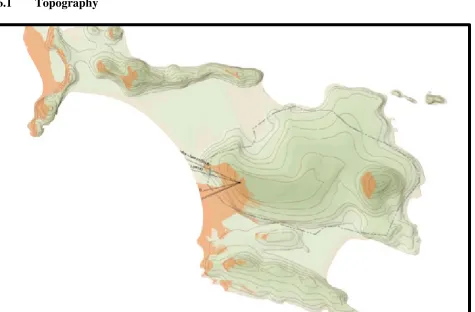
Figure 6.1 Elevation gradient (PES 2003) ... 55
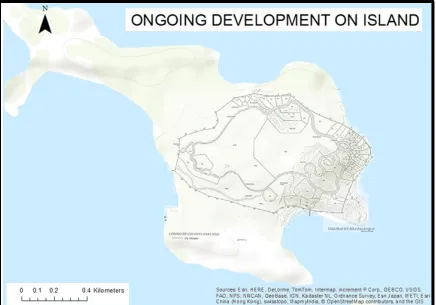
Figure 6.2 Planned Development ... 58
Figure 8.1 Pedestrian Survey – Blue highlighted lines are GPS tracks ... 69
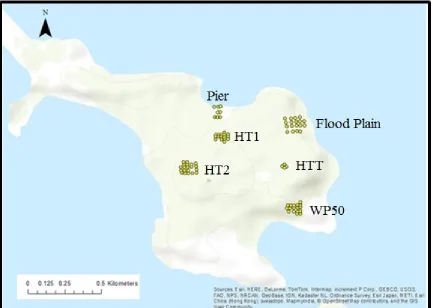
Figure 8.2 Shovel test pit locations on island ... 75
Figure 8.3 Picture of HTT area and # of artifacts per shovel test ... 76
Figure 8.4 Picture of Hill Top 1 area and # of artifacts per shovel test pit ... 77
Figure 8.5 Picture of Hill Top 2 area and # of artifacts per shovel test pit ... 78
Figure 8.6 Picture of Flood Plain area and # of artifacts per shovel test pit ... 79
Figure 8.7 Picture of Pier area and # of artifacts per shovel test pit ... 81
Figure 8.8 Picture of Waypoint 50 area and # of artifacts per shovel test pit ... 82
Figure 8.9 Picture of WP50 unit (S wall) ... 84
1 INTRODUCTION
Isla Palenque, located in Panama’s Chiriquí Province, contains a multi-component site
that is part of the Gran Chiriqui designated culture area that also includes much of southeastern
Pacific Costa Rica. Based on preliminary work by Dr. Linares (1963, 1980), the site was
occupied during the Formative period between AD 300-1500. Dr. Lineras described the site as an
8.5 hectare continuous nucleated settlement on the center of the island that included a cemetery.
The early research on the island, which mainly focused on regional questions, lacked a
comprehensive spatial study of the entire island to fully understand the actual degree of
nucleation of the settlement there. This has resulted in many unanswered question regarding the
nature of the people who inhabited the island during pre-Columbian times.
This study aims to better understand the entire island with a survey focusing on the areas
outside of the previously studied site. This allows me to better assess the possible organization of
the island’s settlements and how they may have changed over time. This is an important question
because it helps to elucidate Isla Palenque’s connection to the broader culture. The Gran Chiriquí
culture has demonstrated extreme diversity in cultural materials, but at the same time, it has been
argued to have been part of a similar regional culture which may have expressed dual
organizational settlement patterns, possibly indicative of “chiefdom” stratification (Frost 2009).
The study of external areas on the island for spatial comparison, become critical in the
assessment of this possibility.
Robert Frost’s (2009) recent studies on the Pacific side of Costa Rica have provided some
models of dual spatial distributions, associated with both cemeteries and settlements, which have
different models proposed for the region, it does provide a basis for the question I am addressing
through this settlement study. My question aims to understand what the spatial extent of the
island settlement was, and how it compares to the organizational models proposed by Frost and
others (Frost 2009, Helms 1979). The elucidation is important to understand the past
occupations, but the urgency of this study is also highlighted by the current construction on the
island. Ongoing development of the island is a reality, that despite the best efforts to preserve
the ecology and archaeology there, will impact the ability to understand the people of Isla
Palenque’s past.
Following this introduction, in chapter 2, I address the “chiefdom” concept from its
historical development to more contemporary notions. Chapters 3 and 4 cover the historical
aspects of the culture and the archaeology that has been done on the island. Chapter 5 describes
different sites that are used to understand various settlement patterns in the region for
comparison. Chapter 6 describes the island’s current state. Chapter 7 through 9 details the
2 THEORY
The following section discusses some of the major issues associated with the terminology
used in defining societies of lower Central America. It covers some of the major researchers who
were instrumental in the historical development of the “chiefdom” term, how it has been used,
and how theoretical models evolved over time. Following this, an overview of some
contemporary foreign and Central American researchers, details how the term is being
conceptualized in current research and the theoretical and methodological trends that are
developing.
2.1 The “Chiefdom” Concept
The term “Chiefdom” in modern archaeological discourse is one that elicits strong
responses and debates among researchers (e.g., Earle 1997, Pauketat 2007, Redmond 1994a).
The classification is laden with meanings and values that incorporate biases regarding political
and evolutionary concepts that have oscillated over time. The analysis of the theoretical position
relating to the concepts of “chiefdoms” is salient to my study because of the general association
of Panama with the term, and more specifically because Dr. Olga Linares’ interpreted Isla
Palenque as the probable seat of a "Paramount chiefdom" (Linares 1980:73). Due to these
2.2 The Neo-EvolutionaryView
Early typologies were initially developed as part of neo-evolutionary frameworks that
gained popularity in archaeology in the 1960s and 1970s. The resurgence of cultural
evolutionism in the period after World War II was the major factor that led to the development of
social typologies. This was a reaction to the “growing consensus that Boasian anthropology was
unable to explain cultural changes” (Trigger 2006: 387). This approach was taken on by a new
generation of American anthropologist such as Leslie White and Julian Steward. Although both
anthropologists shared a view that rejected the former paradigms particularism, their conceptual
frameworks differed in the causal factor determining what was considered progress. White’s
views, reflecting a positivistic generalization through his technological characterization, were
extremely deterministic. His equation for culture demonstrated the limited factors he considered
when defining culture: Culture =Energy X Technology (Trigger 2006:388). Julian Steward’s
views, on the other hand, while utilizing ecology as the driving force of multiple evolutionary
trajectories, still maintained that there were significant variations along cultural development
dictated by ecological constraints (Trigger 2006: 389).
Elman Service, influenced by both White and Steward, soon followed in the 1960s with a
model for evolutionary progress. He developed a four-fold classification of societies that was
associated with specific kinds of sites and settlements that he referred to as bands (mobile
hunter-gatherer groups), tribes (segmentary societies), chiefdoms and states (Sahlins and Service
1960). His model described the characteristics associated with these different groups in terms of
numbers, social organization, economic organization, settlement pattern, religious organization,
of 5000-20,000+,ranking of people based on kinship, lineage, and a warrior class; economy
based on central accumulation, redistribution and some craft specialization; settlement
representing fortified centers with ritual and ceremonial centers headed by a chief, and
architecture reflecting large scale monuments ( Renfrew and Bahn 2006:172).
The Neoevolutionist paradigm evolved through the 1980s, but became the focus of much
criticism. Even though researchers such as Kent Flannery, Joyce Marcus, and Timothy Earle
utilized a comparativist lens, a growing number of researchers critiqued the neo-evolutionary
approach as limited by reductionist unilinear models, and inadequate conceptualizations of
power and space (Trigger 2006). In response to these growing critiques, Timothy Earle and
Jonathan Haas organized an advanced seminar on chiefdoms to reanalyze the concept (Earle
1991). Participants, recognizing the inadequacies of earlier perspectives of analysis
(non-integration of specialized subsistence economies for redistribution, scale too small for regional
irrigation systems, low population densities, etc…), sought a new consensus on how to conceive
and study social evolution within chiefdoms (Earle 1991). Their aim was to try move and away
from a “preoccupation of formal characteristics to focus more on the dynamics of their political
institutions” (Earle 1991:2). Typologies were a central focus of the seminar. While the consensus
of seminar participants “rejected chiefdoms as a unilineal stage of evolution given the
considerable variation, some still held that it was a useful analytic category” (Earle 1991:2).
Some advocated for refinement of typologies. Earle himself had previously refined Services’
classifications in his book, “The Evolution of Human Societies” (Earle 1987). His model had
modified the typologies to: Family Level Societies, The Regional Group, Chiefdoms, and States
(Earle 1987). Earle’s aim, while noting the obvious differences, was more focused on
The acknowledgement of the complexity led seminar participants to consider different
schemes for understanding variability in terms of scale (simple vs. complex based on population
sizes), basis of finance (staple vs. wealth), and structure (group corporate labor vs.
individualizing special housing or burials) (Earle 1991:3). All these concepts helped in the
formulation of the seminar’s consensus that chiefdoms had to be understood as political systems
where differential strategies for the acquisition and control over economy, war, and ideology
were major factors. Another acknowledged factor was the environment’s impact. It was seen as
another reason for the variability due to the different opportunities for control and finance of
surplus that may have enabled differential trajectories. Earle and other seminar members
acknowledged that “all the [aforementioned] factors, among others, were constantly changing,
highly contested, and reflected the fractious cycling that occurred due to multifaceted opposing
forces of centralization and decentralization” (Earle 1991:13). The synthesis of the seminar was
described as both exciting and discouraging in their progress to understand chiefdoms. This
highlights the difficulty that Neoevolutionists continued to grapple with in their attempt to
understand the complexity associated with “chiefdoms” and how to study it.
2.3 Post-Processualist response and contemporary views
Scholars in the beginning of the 21st century continued the debate regarding typological
utility in relation the chiefdom concept. In opposition to the Neoevolutionist view, Tim Pauketat,
among others, promoted the post-processualist paradigm that aimed to completely discard
typological classifications to focus on descriptions of what people did, and how they experienced
(Pauketat 2007). Pauketat is an archaeologist who is known for his work at the Mississippian site
of Cahokia. He has been explicitly critical of Neoevolutionist as well as Processual
archaeologists in their attempt to understand change through long term regularities. The title of
his book, Chiefdoms and other Archaeological Delusions (2007), declares his position on the classification of chiefdoms quite obviously. In this book describing his analysis of Cahokia,
Pauketat brings up many of the issues with classification schemes due the incredible complexity
reflected at the site. Of Cahokia, he remarked that “while it is exceptional, Cahokia does not
seem to fit one’s expectations of a typical anything. It was too big, too early, and too far north to
fit easily within any explanatory framework” (Pauketat 2007:135-136). In demonstrating the
difficulty of trying to classify Cahokia, he highlighted some of the salient historical
interpretations of the site that changed over time. Through the 20th century, these changing
interpretations have included Cahokia as the natural remnants of Pleistocene age sandy terraces,
a series of simple hierarchical chiefdoms, and currently a city (Pauketat 2007). In his final
analysis, Pauketat considered the concept of “chiefdoms” an obstacle to the understanding of
what really happened in the ancient world (Pauketat 2007).
Through the debates, Neoevolutionists continued refinement of the concept. Some
contemporary archaeologists in the camp held to the belief that the “broad classifications” such
as “chiefdoms”, were still useful at the preliminary stage of analysis, “especially if they were not
seen as rigid divisions “(Renfrew and Bahn 2006: 170). Elsa Redmond is one of the
contemporary Neoevolutionist that continues to refine Seward, White and Carneiro’s early
concepts. As opposed to Pauketat, who sees no utility in any naming conventions or refined
descriptions associated with chiefdoms, Redmond adheres to this practice. She identifies a
1994a). Warfare is an integral part of the association that Redmond attributes to her model of
chiefdom societies: Through her analysis of Neotropical social groups, Redmond (1994a, 1994b)
emphasizes the role conflict and demographic change had as catalysts for the emergence of
hereditary leadership (Redmond 1994a). She attributes Carneiro’s models of population
pressures and circumscription as prime factors for warfare and eventual chiefdom ascendency
(Renfrew and Bahn 2006). Redmond has also done some work in Panama and has attempted to
apply some of her models in the central part of the country (Redmond 1994b). Her work has
been contested by other contemporary researchers on the grounds of a lack of evidence for
increased population densities as a factor for warfare (Haller 2004). There are other researchers
who have devoted more time studying the pre-historic societies in Panama and have developed
their own viewpoint regarding “chiefdoms”.
2.4 Influential reserachers in the region
A major figure in Panamanian archaeology is Dr. Richard Cooke. He is a staff
archaeologist from the Smithsonian Tropical Research Institute (STRI) who has been doing
research in the central part of the country since the 1970s. He received his PhD from the
Institute of Archaeology, UCL, England, in 1972 where his studies focused on the archaeology
of Coclé in central Panama. It is hard to ascertain his theoretical position, but maybe this reflects
a foreign perspective that does not dichotomize the concept. One of his publications covering
chiefdom societies (Cooke2005) demonstrates how he utilizes various ideas while not explicitly
adhering to any camp. In this work, he makes some salient points about the concept of chiefdoms
He begins by using a definition from Earle (1991) defining chiefdoms as a “kin-based,
moderately stratified societies, which lacked writing, did not live in cities, and were organized
into small, sometimes populous but not politically expansive territories” ( Cooke 2005:150). He
also notes how contemporary researchers (i.e., Drennan 1995) “now prefer multi-causal
compared to unicausal (prime mover) explanations for the formation and maintenance of
chiefdoms” (Cooke 2005:151). This is somewhat confusing because while he notes influential
Neoevolutionist, he also seems to reject the idea of “developmental schemes” or “lateral
dichotomization” through the analysis of pottery sequences:
Forcing these data into a progressive developmental scheme, i.e., from some kind of tribe into some kind of chiefdom or into a lateral dichotomization along the same lines obscures the coeval existence until Spanish contact of many types of communities, many levels of population density and nucleation, and different subsistence emphases, often in the same culture area or economic interaction sphere. [Cooke 2005:151]
When Cooke lists his features relating to chiefdoms, his description adds to my
uncertainty of his theoretical orientation. He characterizes the hierarchical typologies as being
proposed by notable Neoevolutionist, mentions how they have been the focus of disagreement,
and still admits that , “[e]ven so, one detects consilience with [the ethnohistorical record] in
regard to the commonality of the following features” (Cooke 2005:151). His list of features
includes (Cooke 2005:151-153):
(1) Chiefly power was deeply rooted in genealogical hierarchy and monopolized by males.
(3) Chiefs advertised their success by accumulative behavior akin to pot latching (involving a certain degree of control over food production in order to finance social gatherings).
(4) Chiefs and their entourages lived at special settlements, often moving back and forth among various sites (according to Spanish chroniclers they lived in special houses, which may have been confused for meeting houses). (5) At sites whose special features allude to their being centers of power, there
is a correlation between simple architecture and monolithic sculpture, and symbols of both aggressive behavior and fecundity (expressed by images of human females and maize).
(6) Frequent warfare focused on raids and skirmishes among rival chiefs in nearby territories and was accompanied by the mistreatment of prisoners, including forced labor, branding, mutilation, and loss of burial privileges. (7) A degree of resource redundancy among the most populous or richest
chiefdoms prevented the long-term political dominance of any one of them. (8) To acquire special sumptuary or ideologically significant badges of offices,
which were often exhibited at special places and during burials, chiefs controlled trade routes, especially those that led to distant lands or towards prestige items.
Cooke highlights an issue that is endemic to all research in the country. He emphasizes
the heavy reliance on ethnohistoric data that researchers continue to use to interpret Panama’s
pre-historic societies. He attributes this dependence on the difficulty of trying to understand
“[behavioral characteristics] that were easier to glean from the documentary than from the
archaeological record” (Cooke 2005:151). Even though researchers in Panama have started to
change their designs on how they are addressing questions about chiefdoms, the “descriptions
recorded in early sixteenth century Spanish documents and mortuary remains are still the most
used groups of data that provide information about the nature of Panamanian chiefdoms” (Haller
2004 :1).While ethnohistorical accounts have been instrumental in providing some insight into
indigenous groups in central Panama, they have also affected a bias that impacts how the
communities of the region have been conceptualized. The powerful influence of these accounts
have been protracted and generalized. Cooke’s (2003a) analysis of Spanish primary source
this imagery. While it does elucidate some aspects of the society, it is not representative of the
spatio-temporal complexity of the entire region.
Another influential researcher, who has relied heavily the ethnographic accounts to
develop her theories, is Mary Helms. She is an ethnohistorian who has done much analysis
centered on the concept of chiefdom societies. Her ideas, building on Carl Sauer’s work (1966),
demonstrate a theoretical divide among some researchers in Panama regarding high prestige
items associated with metallurgy. More specifically, in regards to whether gold was
independently sourced and processed in Panama. On one end of the debate Cooke (2003a) argues
for the independent sourcing, as opposed to Sauer (1966), who suggests that “during contact,
casting and processing of gold was not being practiced in Panama” (Helms 1979:3). Helm’s
(1979) work builds on this suggestion to argue “long-distance contacts for the acquisition of
esoteric knowledge were critical for establishing political power, as opposed to economic gain”
(Haller 2004:4). This in an important concept that has to be considered in the analysis of political
associations since the archaeological record could possibly provide evidence of long distance
trade and resultant stratification. This concept does not only apply to gold. This fact
demonstrates how diverse the patterns could be. For example, ceramic trade wares from the Gran
Nicoya in northern Costa Rica have been found in Panama’s Chiriquí region. But, the lack other
“prestige items” found in some specific sites there also highlights some important questions
regarding what constitutes chiefdoms, and how their political power is represented. The question
of what constitutes chiefdom is not easy to analyze, and there are continuing theoretical debates
about which markers should be used to classify these societies. The debate is not only concerned
with what to analyze, but also how to interpret these “prestige goods” from the limited sources in
archaeological source types, have generalized concepts that may not be fully representative of
the complexity:
Mortuary remains in Panama have also been a heavily utilized group of data that has led to chiefdoms being considered and archetypes of cultural development. The excavations during the 1930s and 1940s at the Sitio Conte site (central Panama) have been highly influential in establishing this concept [Haller 2004:1]
Earle (1991) describes much contention in the discussions regarding the overreliance of mortuary
data highlighted above. This is a key concern expressed in the struggle to understand how to
develop a consensus of classifications used for Lower Central America.
Another influential researcher in the area is Dr. John Hoopes. While he also analyzes
“prestige” items such as gold in the region, he asks different questions related to the material
record. In contrast to other researchers who try to understand the emergence of chiefdoms,
Hoopes (2005) focuses on elucidating a variety of phenomena relevant to the analysis of social
complexity. Although not as demonstrative as Pauketat, his focus does seem to deemphasize the
value of classifications. Hoopes explains how several contemporary researchers have changed
the theoretical focus away from “unilinear evolution, hierarchy, centralization, and chiefdoms to
include alternative dimensions such as heterarchy and dual processual strategies that challenge
the notion of centralized, chiefly authority at contact”(Hoopes 2005:3). According to Cooke
(2005), Hoopes popularized the concept of a Chibchan speaking culture evidenced in part by the
movement of gold artifacts from Columbia to Panama. He introduces some alternative concepts
(apart from traditional models relating to hierarchy, chiefdoms and leadership) to propose that
“corporate based strategies, among them decentralized, knowledge-based priesthoods should be
moving away from issues that had plagued the archeology of this region including the massive
typological confusion.
There have been more external researches defining the prehistoric domain in Panama
than native scholars. The list of external scholars includes British, German, Spanish and
American voices that still dominate the discourse today. But the region is not without its native
voice. To understand the viewpoint of some of the native scholars who have done research in
western Panama and southeastern Costa Rica, you have to consider the timeframe during their
investigations. Beginning with Dr. Olga Linares (Panamanian–American scholar from David,
Panama), her research in the region occurred during the early 1960s and 1970s. Linares initial
studies were done during the same period that Service’s neo-evolutionary models were being
developed. Although Linares made use of the “chiefdom” term in her dissertation, she made no
attempt to define it (Linares 1963). The focus of her PhD work was mainly related to defining
the cultural chronology for the Gulf region. Her work at this time seemed to mirror the
theoretical and methodological innovations developed by her advisor, Gordon Willey at Harvard
concerning culture history. Her PhD work was descriptive, inductive and interpretive of culture
development /migration based mostly on stylistic changes of the ceramic record of Gulf sites.
This was representative of the Cultural Historical approach that did not have human behavior and
complexity as it main focus (Trigger 2006).
Her subsequent work (Linares 1971), which involved more extensive study on Isla
Palenque, was broader than her PhD work, which was previously focused on just the Gulf region.
The new study focused on a broad comparative regional/bi coastal analysis that was aimed to
counter the “generalizations defining the tropical forest as macro-environments with limited
of earlier trends that many believed had pushed archeology towards processualism (Trigger
2006:392). It is hard to classify Linares in a certain camp during this period as she incorporates
concepts from both neo-evolutionary researchers such as Flannery as well as New Archaeology
proponents such as Binford (Linares 1980). Both approaches seemed to have been influential and
not mutually exclusive during this period. These paradigms affected the way she considered the
societies she studied. Her broad focus and use of terminology relating to “chiefdoms” defined the
concept as homogenous and static. She did not escape the critiques that were later placed on
other notable researchers who adhered to the conventions of these times. Many of these critiques
faulted the use of “simplistic, reductionist tendencies resulting from traditional New
Archaeologist comparisons’’ (Trigger 2005:28). Her focus has to be understood in the context as
it was also a reaction to even earlier cultural idiosyncratic models that were considered “old
fashioned and unscientific” (Trigger 2006:392). While much critique has been placed on
Linares’ studies, some contemporary researchers do note some positives. There was some
evidence in her work of changing archaeological paradigms that would later impact the field.
Holmberg (2009) describes Linares’ theoretical orientation as being mostly representative of the
New Archaeology but she also noted her nuance: “Linares made some exceptions in her work
relating to agency in how she clearly attributed the sources of human adaptation to individuals
and new intangible ideas or perceptions” (Holmberg 2009:94).
While Linares was one of earliest native archaeologist to study western Panama, other
native researchers across the border in Costa Rica have more recently contributed to the
understanding of the region. Dr. Francisco Corrales Ulloa is a Costa Rican researcher who has
done extensive analysis of the material record of the region. During his PhD studies, he mainly
trained in the US. He received his PhD from the University of Kansas in 2000 under the
direction of Dr. John Hoopes. His work centered on analyzing the extensive diversity in the
ceramic record to understand whether regional groups “evolved without major outside intrusions
throughout the pre-Columbian occupation sequence” (Corrales 2000:ii). Like more contemporary
researchers who are utilizing different frames of reference in their studies, Corrales used
different scales to analyze ceramics at the local level, regional level, and interaction spheres of
reference. Interaction spheres were described as a concept involving “cooperation without
domination” (Lange 1992) that has been used to counteract diffusionist models (Corrales
2000:86). The concept is used by other Costa Rican researchers, as evidenced by Quilter’s
(2004:195) references to the Coto and Turucaca spheres in his research. Like Linares, the overall
theme in his work seems to try to counter the notion that the overwhelming reason for change in
the region was external as opposed to internal dynamic influences. Corrales argued that it was
not new populations coming in to Diquis (a sub region bordering Chiriqui in Panama) that were
the reason for the change in ceramic traditions. To me, Corrales, Linares, and Cooke’s work
seems thematic in the attempt to promote the idea of the region as an “independent” area that
was able to develop on its own, and not a “backwater” that only developed because of outside
influence.
Through my research in the country I have been able to establish correspondence with
other contemporary anthropologists who have also helped me to understand the Panamanian
perspective regarding the concept of “chiefdoms”. The additional perspectives were important in
trying understanding the trends in the way the “chiefdom” term was used in relation to training,
background, and national identity. This was important, given that most of the researchers that
Dr. Luz Graciela teaches at Universidad Autónoma de Chiriquí (UNACHI) which is
located in David, Panama. David is the largest town in the western part of the country and is
approximately 55 km away from Boca Chica, which is the closest coastal village that provides
boat access to Isla Palenque. Her descriptions of indigenous leaders in contemporary
communities give insight to some of the possible characteristics of native leaders from the past.
She has done some archaeological work in the region and incorporates many of the
ethnohistorical characteristics observed from contemporary native communities in her concept of
chiefdoms. She describes the concept as a position, “usually occupied by a man who controls an
area economically or politically” (Graciela 2015, personal communication). The general term
given to this person is the Spanish name cacique, but other terms are used in different comarcas (name for the contemporary reservations in Panama), such as salia, suguias and guna to describe leaders of those communities. The characteristics described of these leaders are varied, but her
definition incorporates the notion that “not all systems of chiefdoms were based on possessing
material objects, like Mary Helms postulated” (Graciela 2015, personal communication). Some
of the valued characteristics included a charismatic personality and the ability to communicate to
help resolve community problems peacefully. This is also reflected in their described encounters
for political control that would “not be with arms but mental encounters like who could resist
defecating for several days, cause it to rain inside houses, cause fish in rivers to turn several
colors, or resist diarrhea after eating these fish” (Graciela 2015, personal communication). Dr.
Graciela also described some traditions from other groups where certain signs at birth and during
childhood were observed to see if that boy would be a future leader. Some of these signs
included being born with the amniotic sack over the face (a sign that he would be a diviner or see
is understandable as she is a cultural anthropologist, and while these attributes are extremely
difficult to discern in the archaeological record, they cannot be discounted in the interpretation.
Dr. Tomas Mendizabal is another important archaeologist that helped me understand the
Panamanian perspective on the “chiefdom” concept. Dr. Mendizabal currently focuses on
Cultural Resource Management (CRM) projects in Panama. He relates that, aside from what has
been theorized from North America, there is little that has been written in the country relating to
the concept of the term (Mendizabal 2015, personal communication). He relates that theoretical
practice is not utilized extensively in the country and within his focus of CRM specifically. But,
when he does apply the concepts, he uses Spanish chronicles that are, in his opinion, the best
approximation of what the chiefdom concept meant, at least in the 16th century. He describes
these “jerarquizadas” (a different name applied to these organizations), as non-egalitarian,
professionally specialized societies where a small number of elites exercise political, territorial,
and military control. He also describes chiefdoms as maintaining control over the distribution of
resources and the cosmological and religious worlds. Aside from this, he dislikes to further
generalize or “invent” given the uncertainties of the past.
2.5 Contemporary Researchers: their changing approaches
While the debates introduced by previous researchers continue, the changing questions
that are being asked represent the evolving theoretical and methodological paradigms that are
being incorporated in Panama and neighboring Costa Rica. For example, Earle (1987) considered
the different scales of analysis of major importance in understanding chiefdoms. He stated that
scales that were in competition for political control” (Earle 1987: 45). Contemporary researchers
in Panama (Palumbo 2009; Locascio 2010; Menzies 2012) have started to analyze these different
scales to address questions related to the emergence and development of social hierarchies.
Their multi-scalar approach recognizes that there is a different focus of spatial analyses that can
utilized for different question. For example, while Locascio (2010) studies inequality of a site
based on the household scale, Palumbo looks to address the chiefdom concepts based on “the
spatial distribution of production debris between different houselots at the village scale”
(Palumbo 2009:62). Their focus demonstrates an evolving methodology that depends on a finer
grain of analyses than what former researchers utilized in the region before. No longer just
focusing primarily on mortuary artifacts, these contemporary researchers have turned their
attention to craft production and distribution activities at the household/domestic level to assess
questions of social status difference (Palumbo 2009: 18). In trying to assess differential
consumption or the possibility of controlled domestic production, Palumbo (2009) analyzed
inter-spatial differences in:
(1) Proportions of tools (i.e. stone axes, spindle whorls, grinding stones) (2) Presence of high quality objects (i.e. fine decorated ceramics) (3) Presence of items made from non-local materials
(4) Diversity of artifact assemblages
(5) Proportions of jewelry and ornamentation (i.e. beads, earrings, necklaces) (6) Presence of rare imported goods (i.e. shell, jade, gold)
(7) Proportions of serving vessels (i.e. plates, dishes, chicha jars)
(8) Proportions of elaborate metates in association with celts and statues
In the Central valley of Costa Rica, researchers have incorporated the notion of duality to
assess the socio-political difference that they suggest is representative of the region. Roger Frost
area. He focuses on assessing the notion through investigations of settlement patterns at Rivas
and El Pateon de la Reina, both central Costa Rican sites (Frost 2009). Although Frost’s research
was primarily investigated through the spatially limited scale of cemetery excavations assessing
architectural patterns, his review of historical records associated with Palenques, supporting the
concept of duality in the region, were revealing of the nature of settlements during the Contact
period. He describes many historical examples of palenques in relation to surrounding pueblos
(towns) or other nearby palenques. Based on early historical accounts during the mid-16th
century, Frost lists six examples of dually organized palenque settlements stretching from Costa
Rica’s central valley all the way to the contemporary Panamanian border. Frost suggests that the
described differences related to size, elevation, and fortification, reflected an asymmetry that
indicated possible socio-political segregation (Frost 2009). I discuss these further below.
Discussion
In reviewing the theoretical debate regarding the “chiefdom” question, I have determined
that it is beneficial to go beyond the falsely dichotomized arguments that were debated between
Neoevolutionists and Post Processualists. Drawing aspects from both approaches allows one to
highlight and understand important differences and similarities. While characterization of social
structures is important for comparison, it cannot be considered static in terms of space or time.
The scales of focus are hugely important as well because while the ecological factors in some
regions may have contributed to a continued stratification, other ecological factors may have
hindered nucleation and resultant stratification. This highlights the fact that I believe
For my work, I am assessing Isla Palenque’s settlement distribution to assess the notion of
stratification which may or may not have been associated with a “chief.”
I believe this is critical because I do not want to put the pre-historic people of Isla
Palenque’s varied occupations in a “box” based on a paradigm that despite its refinement has a
way of assigning static and permanent meanings that cannot be divorced from past definitions.
This is important in Panama where these classifications have in effect defined native prehistoric
people for over 400 years. There is more to the people of the past than the caricature of constant
warfare and I do not believe in encapsulating the entirety of pre-history in the extremes of past
societies. I believe this is where using different terms helps in shedding these strong and
ultimately negative images of the people, but I am also aware that whatever terms we use today
3 CULTURE HISTORY
The following section will detail some of the issues that have impacted the temporal and
spatial understanding of the region. The highly complex and still debated chronologies will then
be discussed. The section will end with a description of the cultural phases that are specific to the
Gulf Coast region and specifically the area of this study.
3.1 Spatial and Temporal aspects of culture area
It is critical to know how Isla Palenque fits within its broader regional, social, political,
and economic networks. The broader factors must be addressed before finer scale analyses can
be fully understood. This is highly important in an area such as Lower Central America (loosely
defined as stretching from Honduras through western Columbia and Ecuador) where the research
Figure 3.1 Linares' view of LCA archaeological region (after Linares 1979: Fig 1)
The literature of the region is full of expressions reflecting the continuing difficulty in
trying to analyze the culture history for a region that is characterized by extreme variability. The
inability to establish a consensus has contributed to the myriad of naming conventions that have
been used to designate both culture areas as well as cultural sequences. These different labels
demonstrate the changing dynamics associated with the research questions regarding the region.
Some of these designations include: the Intermediate area, Lower Central America, southern
Central America, Northwestern South America, Area of Chibchoid, Chibchoid Historical
Region, and Isthmo-Colombian (Fonseca 1994, Hoopes 2005, Lange 1992). While the aim of
these designations was to present the region as more independent and not solely defined by “the
basis of intermediateness—its position between Mesoamerica and the central Andes”, no
consensus has yet been attained (Hoopes 2005: 5). This is reflective of a significant fact of the
region: “great geographical and cultural variability within a very limited land surface area is the
focus, the variability can be exemplified by
researchers in just Costa Rica and Panama alone
Highlands, Atlantic Watershed, Diquis, Chiriq
These culture area designations are not static
[image:36.612.72.359.235.441.2]current researchers (Corrales 2000,
Figure 3.2 Culture area (after Corrales 2000
The variability is a fact of the region, but other key factors continue to constrain and
hinder the goal of a synthesized chronological scheme.
the region. Another major factor is curr
constrained by finite resources, these divisions can prove to be overwhel
with the border between Panama and Costa Rica where the current political division has made it
difficult to study a region that has been considered a unified culture area
(Palumbo 2009). This culture area encompasses the western pacific portion of Pana
province) and the southern pacific side of Costa
focus, the variability can be exemplified by the many culture areas that are represented by
in just Costa Rica and Panama alone. These include Greater Nicoya, Central
atershed, Diquis, Chiriquí, Veraguas, Conte and Coclé (Quilter 2004: 9).
These culture area designations are not static by any means and continue to be contested by
s (Corrales 2000, Cooke 2005, Quilter 2004, e.g.).
Corrales 2000: Fig. #3)
The variability is a fact of the region, but other key factors continue to constrain and
synthesized chronological scheme. One major factor is the lack of study in
the region. Another major factor is current political divisions. In studies that are highly
, these divisions can prove to be overwhelming. Such is the case
Panama and Costa Rica where the current political division has made it
difficult to study a region that has been considered a unified culture area for part of its
culture area encompasses the western pacific portion of Pana
acific side of Costa Rica (Diquis subculture area). Together these that are represented by
include Greater Nicoya, Central
Quilter 2004: 9).
continue to be contested by
The variability is a fact of the region, but other key factors continue to constrain and
factor is the lack of study in
studies that are highly
Such is the case
Panama and Costa Rica where the current political division has made it
for part of its past
culture area encompasses the western pacific portion of Panamá (Chiriquí
sub regions define a larger archaeological culture called "Greater Chiriquí" (Frost 2009:15). The
boundaries of this region are still a “loose representation” that continues to be debated. For
example, current research being done in Panama continues to assess if Pacific and Atlantic
watersheds were a cultural unit despite the varied ecology (Wake, et al., 2004). Another example
from Costa Rica is Corrales’ (2010) proposed refinement of the Diquis sub region based on his
analysis of ceramic cultural similarities from western Panama.
Variation in temporal frameworks is another reality of the region. The variability
reflected in numerous chronological frameworks is significant. For example, while Linares’ 1963
classification adheres to six phases, the literature reflects many others who utilize their own
different chronologies (Lange 1984: 7). In trying to understand the Greater Chiriqui culture as a
whole, I considered both Linares’ (1968) and Frost’s (2009) sequences. I used them because my
question was focusing on Frost’s concept of duality in an area that was studied by Linares. I
combined the timeframes of both to consider western Panama and southeastern Pacific Costa
Rica. These periods are summarized below.
3.2 Paleo-Indian Period (11,000-8000 BC)
Early studies concerning this period focused on understanding the time depth of
habitation for the region. Salient questions included the possibility of long term habitation of
hunter gatherers vs. the intermittent use of this region to solely chase down game (Linares 1963).
While the regions ecology plays a major factor limiting the record of this period, researchers
discovered some artifacts that demonstrated “indisputable evidence for human occupation in
relating to this period was found in both Costa Rica and in portions of Panama (Ranere 1980,
Snarkis 1978). According to Cooke (2005), the evidence was important in demonstrating the
timeframe of early habitation in Panama. Additionally, “[a]rchaeological data from this [period]
… shows that people remained continuously in some areas of Panama after the Paleo-Indian
period (Holmberg 2009:7). Researchers have proposed that “small and highly mobile bands,
supposed big game hunters from the plains of North America, encountered and adapted to a
mosaic of different environments in Southern Central America (Palumbo 2009, Piperno and
Pearsall 1998). Cooke also highlighted how “pre-Columbian residents altered vegetation
immediately after first arrival, and began to add domesticated crops to their subsistence
inventory between 9000 and 7000 BP” (Cooke 2005:129). This is considered a characteristic of
the region.
3.3 Tropical Archaic Period (8000-1500 BC)
This period is characterized by several factors including changing ecology brought on by
the Holocene (Palumbo 2009), new subsistence patterns, and the introduction of new
technologies and beliefs that would impact later stratification. In the beginning of the phase,
changing ecosystems affected changes in former diets. While the changing ecology restricted
former sources of game, it also enabled a different broader subsistence to emerge. According to
Palumbo, “[t]his time frame in the highlands is thought to be characterized by small groups
making a living by hunting, gathering, and horticulture, all well-adapted to the tropical forest
environment” (Palumbo 2009:67). Subsistence evidence reflects that both external influence and
manioc, domesticated outside the land bridge, were introduced during the pre-ceramic period
between 7000 and 4500 BC”. On the other hand, Piperno’s (2011) study in the Chiriquí rock
shelter of Hornito shows evidence for independent cultivation. Root crops such as leren and
arrowroot were being incorporated into “horticulture” subsistence practices (Piperno 2011).
Piperno’s work with pollen, phytolyth and charcoal core sediments suggest beginning
agricultural intensification through forest clearance related to slash-and-burn cultivation in
central Panama during this period around 7600–7200 BP (Piperno et al. 2007).
The relation of lithics to the developing agriculture in the region also plays an important
role in trying to “tease out” the culture history during this phase. Limited archaeological
evidence of this association is mainly found in Panama (Lange 1992). Anthony Ranere
investigated rock shelters in the Chiriquí province that dated back to 5000 BC (Ranere 1980).
Ranere designated two sub phases (Talamanca [5000-2300 BC] and the Boquete [2300-1500
BC]) within the Tropical Archaic that corresponded to changing subsistence patterns evidenced
by the lithic record. He attributed the presence of celts, flake, and non-flake tools to hunter
gatherer populations that utilized them to produce wooden implements for their activities
(Ranere 1980). He marks a transition to his Boquete phase by the introduction of several new
tool types, such as ground and polished tools and mashers (Ranere 1980). Both Ranere and
Linares suggested these new tool types marked a transition to root crop cultivation,
supplemented by palm plant utilization (Linares 1980; Ranere 1980).
Another aspect of the lithic assemblages discovered in the region demonstrates the
relation of early religious ideology and its corresponding material record. A group of unusual
stones were unearthed in a rock shelter in the highlands of western Panama dating to
(2012:1), the unusual lithic types, the context of the cache, and the ethnographic evidence,
suggested that the “stones once belonged to a ritual specialist, such as a healer or shaman”. The
cache of stones recovered at the rock shelter may represent the earliest material evidence in
Central America of shamanistic practices (Dickau et al. 2012).
Towards the end of this period, human populations were increasing and the diversity in
material culture was expanding. Richard Cooke’s work in central Panama gives archaeological
evidence of these changes during the end of the period “that involved the interplay of population
growth, settlement nucleation, technological innovation, the increase of risk, and ultimately the
ascendency of ascribed social status” (Cooke 2005:129). The evidence suggested that large
regional centers with increased populations now inhabited the coastal plains; that cultivation
systems were now heavily maize dependent; and that the introduction of pottery around 4500 BP
marked a shift when different styles would become discernable over time (Cooke and Ranere
1992).
3.4 Formative Period (Frost 1500 BC- AD 750)
Throughout the culture area, the Formative period represented a shift towards sedentary
farming villages and developing social stratification (Frost 2009). Once maize became the staple
crop in the region, it largely replaced horticultural practices (Linares 1980). This led to “complex
processes that affected diversification of the region over time” (Linares 1980:13). The
diversification can be analyzed by the varying artifact technologies that were developing
differentially both spatially and temporally. The archaeological data represented by different
differences. According to Cooke (2005:129), the varied and distinct chronologies in this phase
begin to represent “hierarchies among regions, sites, social groups, and individuals that point to
the establishment of chiefdoms.” The Formative period marks the beginning of the ceramic
record representing the Chiriquí region where Isla Palenque is located. The following sections
will cover the La Concepcion, Aguas Buenas, San Lorenzo and Chiriquí ceramic phases
previously identified on Isla Palenque and/or neighboring areas.
3.4.1 La Concepción Phase (300 BC–AD 400)
La Conception ceramics share the decoration pattern of zoned bichroming (red slipped
areas alternating with unslipped zones) that was a general characteristic of ceramics from
western Panama all the way to Nicaragua (Corrales 2000: 45). A distinction of this phase is the
additional scarified decoration (Corrales 2000: 45). This phase is found more generally in the
foothills of western Panama, and in Costa Rica (Shelton 1984). Although this phase has not been
identified at Isla Palenque, the proximity to where it has been found makes this an important
phase to consider. In terms of settlement, this period represents the initial emergence of small,
scattered sedentary farming villages in the Gran Chiriquí (Palumbo 2009). Indications of
increased stratification have also been discovered as evidenced by a small number of
metate-lined tombs at sites such as Concepción (Haberland 1976). This is notable in an area that had not
yet been associated with highly stratified cemeteries (Hoopes 2005). Two different ceramic
chronologies were proposed for the same period by Haberland (1976), who classified by types,
by researchers to try to refine descriptions and classifications (i.e., Holmes 1888, McCurdy 1911,
Osgood 1935) that were constructed by previous researchers.
3.4.2 Aguas Buenas/Formative (AD 300- 900)
This phase is characterized by increasing demographic expansion, rapid technological
change, and the emergence of inequality in the region. Research by Palumbo (2009) in the
upland areas has indicated rapid demographic expansion by agricultural groups. Although
Linares attributes demographic expansion to population pressures, some researchers question
whether this was the case (e.g., Palumbo 2009). Despite the debated causal factors for the
expansion, examples of the variance and stratification in the material record provide the first
evidence for social ranking in western Panama during this period (Palumbo 2009). Hoopes
(2005:17-25) details several lines of evidence for the period that highlight the emergence of
social differentiation and inequality.
(1) While there are no clearly identifiable elite residences or cemeteries before
this period, these patterns are now widespread.
(2) The spread of metal technology into Central America is now seen with the
first jewelry fashioned from gold and gold-copper alloys.
(3) The expression of complex anthropomorphized animal iconography suggests
religious notions of shape-shifting or animal spirit companions associated with
the development of a priestly elite tradition across southern Central America.
(4) The spread of this tradition has also been suggested to be linked with a
upland Chiriquí region, has been proposed as an elite center relate to this tradition
(Hoopes 2005).
As a general description of the varied and debated ceramic sequences of this period in the
region, Corrales describes them as having a “zoned bichrome decoration sharing most of the
same diagnostic modes” (Corrales 2000:50). Focusing on western Panama, this period marks
different ceramic phases for the highlands as well as Gulf coast. In the highlands, two Bugaba
phases followed a Barriles phase that was associated with the area where its namesake is located
(Linares 1968). In the Gulf coast, the Burica Phase marks the first evidence for the occupational
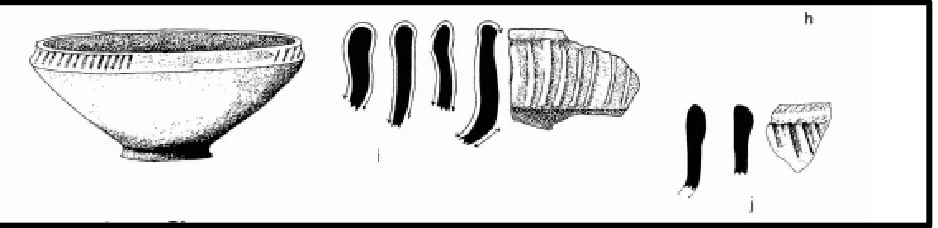
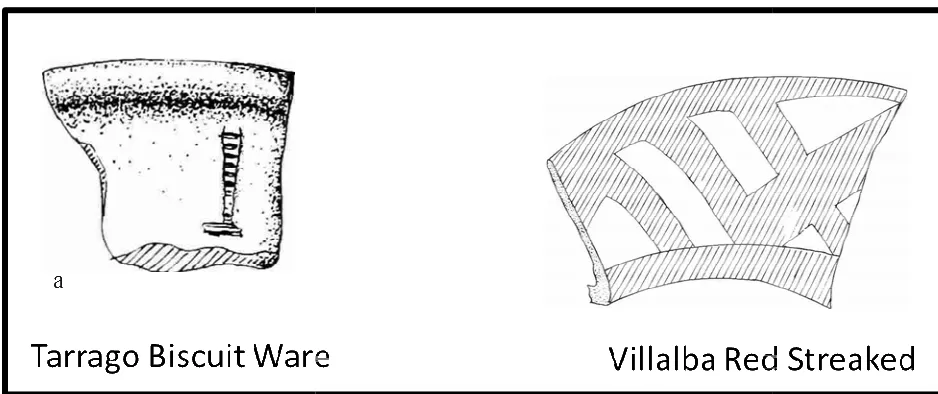
history of Isla Palenque at around AD 400-600 (Linares 1968a). Linares designated the Burica
phase by diagnostic pottery which included Isla Palenque Maroon Slipped and Plain Ware C
(Linares 1968). The pottery was generally characterized by slip and incisions (Linares 1968).
These pottery artifacts were found in the lowest levels of the Isla Palenque site and included
large urns, large jars, and bowls of many varying sizes. Her plain ware classification was only
[image:43.612.76.545.514.628.2]differentiated by the lack of slip (Linares 1968).
The association of this ceramic type with the Burica peninsula, on the western edge of
Panama, has led to suggestions that it was the initial source of migration to the island (Linares
1980). Ranere noted that this pottery type was “predominant and often exclusive in most of the
surface collections from hilltop sites along the shoreline of the Burica peninsula to the west of
Isla Palenque (Linares 1980:107-119). This is significant as the distance from Burica peninsula
to the Gulf islands is approximately 55km by sea (Linares 1963). In contrast, the ceramic record
from contemporary Bugaba sequence of the north does not indicate evidence of migration to Isla
Palenque. Linares noted that “while people may have moved from the highlands to coastal plains
during this phase, there was no evidence for assuming the same deliberate migration of people all
the way to Isla Palenque ” (Linares 1980:116). Another important characteristic of the material
record is the lack of lithics associated with this phase on the island. Linares’ (1963) early studies
attributed this to possible sampling methodologies, but her later work (1980) reconfirmed that
the Burica phase on the island was devoid of stone implements.
The San Lorenzo ceramic phase (AD 700-900) marks an increase in the material record
on the island. The phase is present on the Pacific coast, but not the Chiriquí highlands (Palumbo
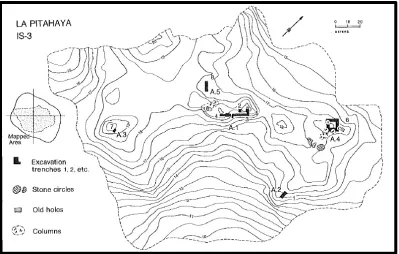
2015, personal communication). On Isla Palenque, the stratigraphic layers of IS-3 (site
designation on the island) reflect a possible abandonment between this phase and the previous
one (Linares 1980). The bi-chrome ceramics associated with this phase are characterized by
types painted with red bands, reds lines, or red slips (Corrales 2000). Some of the names of these
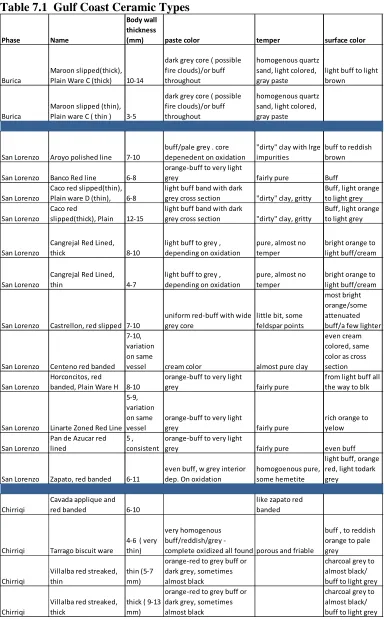
ceramics include: Arayo Polished Line, Banco Red Line, Caco Red Slipped, Cangrejal Red Line,
Castrellon Red Slipped, Centeno Red Banded, Horconcitos Red Banded, Pan de Azucar Red
Line, and Zapote Red Banded (Linares 1968a). There is no current consensus as to origin of the
attribute this phase to a migration from central Panama’s Veraguas region, but more
contemporary researchers propose t
development ( Corrales 2000:203).
decoration by painting, instead of the slip and incision used in the Bu
1968:91).
Figure 3.4 San Lorenzo Phase Pottery example
While origins of the population are in question, some estimates
to the size of the community during thi
compared to other phases does suggest Isla Palenque
period, probably around several hundred people
indicates possible trading and cultura
difficult to assess given that a limited amount of trade sherds were recovered on the island
(Linares 1980). Despite this, researchers have speculated that,
seems intuitive to think of the island
(Linares 1980:116). The evidence of lithic
previous occupation, were not definitively sourced
skilled workmanship were probably imported (
attribute this phase to a migration from central Panama’s Veraguas region, but more
contemporary researchers propose that the San Lorenzo sequence was strictly a Gulf region
:203). The San Lorenzo ceramic phase emphasized linear
decoration by painting, instead of the slip and incision used in the Burica phase (
San Lorenzo Phase Pottery examples (after Linares 1968: Figs. 15
While origins of the population are in question, some estimates do give an
to the size of the community during this phase on Isla Palenque: “The density of sherds
to other phases does suggest Isla Palenque was most intensively occupied during this
, probably around several hundred people” (Linares 1980:76). The ceramic record also
trading and cultural connections to central Panama. The question of trade is a
given that a limited amount of trade sherds were recovered on the island
(Linares 1980). Despite this, researchers have speculated that, given its maritime
sland as a possible “port of anchor, or a trading post of
The evidence of lithics in this phase, while marking a change from the
were not definitively sourced. Linares’ indicated that lithic tools
anship were probably imported (Linares 1980:11). Aside from the question of attribute this phase to a migration from central Panama’s Veraguas region, but more
Gulf region
The San Lorenzo ceramic phase emphasized linear
rica phase (Linares
15-24)
do give an indication as
he density of sherds
was most intensively occupied during this
” (Linares 1980:76). The ceramic record also
The question of trade is a
given that a limited amount of trade sherds were recovered on the island
given its maritime location, it
“port of anchor, or a trading post of some sort”
a change from the
that lithic tools requiring
trade, the lithics, while possibly indicating a lack of specialization on the island during this
period, where clearly associated with varied and changing subsistence practices. Stone tools
such as manos, metates, and net or line weights were all found toward the end of the phase and
into the next (Linares 1968).
3.4.3 Chiriquí Phase (AD 1000 – 1500)
The Chiriquí period can be characterized by a “strong cultural interaction sphere that
linked western Panamá and the Diquís region of Costa Rica” (Holmberg 2009:11). Significant
changes in site organization, social organization, material culture, and mortuary practices where
exemplified in many of the sites within these areas during the period (Drolet 1992). It is
important to understand that many of these changes were differential and indicative of much
complexity across the region. For example, the sites in the Chiriquí Gulf region did not reflect
the same magnitude of stratification as seen in some famous “elite” highland sites. For example,
while the highland sites of Barriles is famous for its large articulated sculptures and giant
ceremonial metates, Gulf sites have not demonstrated this level of stratification reflected in the
material record (Linares 1980). Isla Palenque, in comparison, is characterized more so by the
“high numbers of ceramics, stone utilitarian tools, and undecorated basalt columns, than by trade
pottery or fancy items” (Linares 1980: 312). To date, there is no record of gold found in
association with burials on Isla Palenque (Linares 1980). This stands in stark contrast to all the
historic records that indicate gold associated with highland burials. Additionally, many sites in