Energy Saving of the Domestic Housing Stocks: Application
Development as a Plug-In for Energy Simulation Software
Wei Shi, PROF. Hassan Abdalla, Dr. Heba Elsharkawy & Alan Chandler
Energy Saving of the Domestic Housing Stocks: Application
Development as a Plug-In for Energy Simulation Software
The research investigates energy conservation in the UK domestic housing sectors. The UK government has been dedicated to saving energies from domestic sectors through the implementation of low-carbon retrofit schemes. The paper focuses on the future of energy simulation software and its impacts on a more successful delivery of low-carbon retrofit with respect to the concept of ‘Parallelism’. An obvious problem in the current market is that, for Post-Occupancy Evaluations (POE), the simulated energy performance result does not reflect the actual energy performance. It is widely recognized that the energy conservation of the domestic stock is not only subject to housing physical improvements, but is also related to a series of social, financial and behavioural issues. Among those factors, occupants’ behaviour has the most significant impacts on housing energy performance. The overestimations of those issues decrease the efficiency of low-carbon retrofit in the UK. The solution could be the development of an application that addresses all/most aspects concerned with energy performance variables as a plug-in within a conventional energy simulation software – Standard Assessment Procedure (SAP).
To fulfil the research aim, Modelling has been created to examine the impacts of people’s lifestyle patterns, age groups, ethnic groups, etc., towards energy simulation results. A detailed questionnaire will be implemented into the research design. With the collaborations of Newham Council, survey questionnaires are expected to be carried out towards occupants’ behaviour, household profiles and housing conditions. The expected findings will conclude that people with different backgrounds will differently operate the dwellings differently. The collected data will be analysed in order to find the correlations between energy performance and the abovementioned social, financial and behavioural variables. The data analyses will be conducted by implementing Statistical Product and Service Solutions (SPSS).
Section 1: Introduction
Climate change as one of the primary environmental issues has been realized for few
decades, it is urgent to seek an efficient solution to change our current situation for all
mankind. The announcement of Kyoto Protocol sets out that by 2010, a 12.5% reduction
of 1990’s CO2 emission level needs to be achieved in the UK; the UK government sets
out a challenging target regarding cost effective renewable energy consumption: a 15%
reduction of energy on heating, transportation and electricity needs to be achieved by
2020 (UK Renewable Energy Roadmap, 2013); with collaboration of Royal Commission
on Environmental Pollution (RCEP), the UK government set out the target that 80% of
CO2 compared with 1990’s level need to be reduced by 2050. The research focuses on
the energy reduction of existing domestic housing stocks in the UK. Energy consumption
in the housing sector takes remarkable proportion (30%) among all types of energy
demand. Although government has been working towards policy aspects in order to
popularise retrofit schemes since the 1970s, householders are not keen on it due to lack
of knowledge, awareness, financial and technical supports. The growth of energy demand
is very fast in the housing sector. A recent report (Environmental Change Institute, 2005)
shows that the average energy growth in the UK energy demand is 7.3% in 1990 – 2003,
but energy demand growth in the housing sector is 17.5% in the same period. Since 1970,
the energy efficiency in the UK old existing dwellings has not improved too much. Due
to the fast growth of residential housing, the housing energy demand has increased by
32%. Heating is noted as the main energy consumption resource which takes 60% of all
housing energy demand.
One of the efficient approaches that saves the UK’s housing energy performance is the
implementation of low-carbon retrofit projects. The papers investigate the current
software. A numbers of issues were discussed in ‘Section 2: Background’ such as the
inaccuracy modelling of energy simulations, the implications of ‘hard-to-quantify’
factors and the influences of smart metering device on people’s behaviour. Among those
issues, occupants’ behaviour and its implication towards energy performance is the most
significant issue that has been discussed.
Section 2: Background
Comprehensive discussions have been carried out in research field. The initial
investigations were carried out towards recognised academic and specialist databases in
housing energy conservation and sustainability aspects, such as Construction Information
Service, JSTOR and RIBA Catalogue. All resources in databases were accessed through
the University’s online library facility, using a variety of research topics including the
terms: energy performance, low carbon retrofit, post-occupancy retrofit, traditional and
historical dwellings, social housing, energy efficiency, behavioural change, etc. A
number of journals and reports produced by authoritative professionals have been chosen
and used to inform the studies. Besides, websites of statutory organizations, institutions,
associations and other low-carbon retrofit related groups have been investigated. As part
of the adopted methodology, all references that have been reviewed so far have been
sorted and listed in alphabetic order. The following sections demonstrate a summary of
the literature review discussions and findings that have helped inform the research
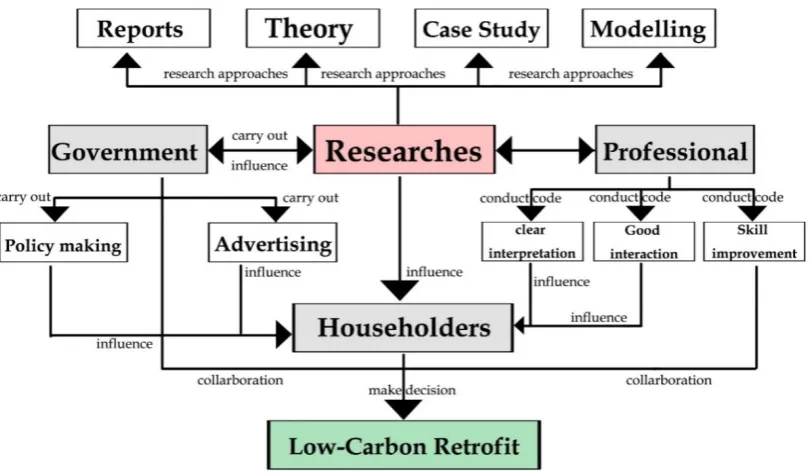
Figure 1: the framework of ‘low-carbon retrofit’ market
The paper focuses on the UK’s low-carbon retrofit market. As demonstrated in ‘Figure 1’, a successful delivery of low-carbon retrofit project requires collaborations between three parties: government, professionals and specialists, and the
householders/stakeholders. As the most powerful part, government identify target areas
and initiate low-carbon retrofit schemes. Through a series of policies and legislations,
occupants are financially supported and incentivised to carry out the project.
Householders/stakeholders is the party that decide whether the implementation of
low-carbon retrofit project is agreed. Researchers make their efforts on improving the
knowledge in the market. Professionals and specialists are responsible for consulting and
interacting with the society. The issues in current low-carbon retrofit market were
discussed and demonstrated in next sections.
The inaccuracy of energy performance
thermal retrofits. It is stated (Menezes, et al, 2012) that performance gap is one of the
major barriers that practitioners and specialists face nowadays in the energy market. The
reason for the performance gap is because of unrealistic input parameters of occupancy
behaviour and facility management in the energy performance model. Besides, the
communications between model designer and occupants with respect to occupants’
feedback are much less. A case study has been employed by focusing on its lighting, small
power and catering equipment to show that a combined data monitoring and predicating
modelling will improve the energy simulation result within 3% of actual electricity
performance. Besides, de Wilde (2014) classified the energy performance gap into 3
categories which are the gap between predication and measurement, gap between
machine recognizing and measurement, and gap between predication and display
certificates. It is believed that to fill up the energy performance gap, an integrated
approach combination needs to be implemented with respect to model validation,
improved data collection and improved forecasting. A recent report (Lu et al, 2014) also
argued that the three major conventional types of energy simulation models all have their
poor aspects: Physical models are good to be employed at planning stage but lack of
precise parameters; empirical models that developed completely relay on data are lack of
practical applicability. The principle shortfalls of both types of models are
over-parameterization and the lack of system mechanisms. The proposed innovative energy
simulation model requires simple operation and provides accurate result for indoor
environment by employing an open and closed loop system approach to dynamically
model the interactions and uncertainties in energy performance. The lead and lag time of
heating excitations are tackled simultaneously. Laplace transform technique was
It can be concluded that the inaccuracy of energy simulation tools is subject to unrealistic
data input and inaccurate energy modelling systems. To fill up the gap between actual
and simulated energy performance, a number of suggestions have been raised. All efforts
are made towards reaching a more realistic modelling system. It is to be noticed that even
the modelling system can completely imitate actual housing conditions, the lack of
consideration of a series of ‘hard-to-quantify’ factors may lead to the failure of the
software. Numbers of social, economic and behavioural factors that influences the actual
energy performance and the discussions on them will be demonstrated in the next two
sections.
Social and economic issues
It is also believed that the gap between predicated and actual energy performance is due
to complicated social factors such as occupants’ professions and the compositions of
households. The idea was supported by Rosenow & Galvin (2013) through the
investigation of pilot low-carbon retrofit programme in Germany and the UK in the
software’s financial aspect. As it is believed that the predictions from simulation software
are always overestimated compared with reality, the problems were pointed out that
“…but most evaluations of home retrofit energy efficiency programmes depend on calculated, rather than measured, levels of energy consumption…”. As a result, the gaps between simulated data and real performance are always ignored. It is suggested that more
social and behavioural issues need to be incorporated into these retrofit programmes such
as rebound effects, free rider effects, reduced savings due to insufficient technical quality
and discrepancies. The author’s point of view is widely recognized that the lack of
consideration of ‘hard-to-quantify’ factors will offset and impacts that low carbon retrofit
brings. The simulated energy performance without the impacts of those social, financial
This point of view was supported by Pelenur (2013). To test the implications between
actual energy performance and the ‘hard-to-quantify’, the research was carried out
through case studies. It’s stated that certain factors are hard to be quantified such as
occupants’ viewpoint and motivations. The concurrent mixed-methodologies have been
employed into the research. In order to explore the implications of those factors and
energy performance, thematic analysis was employed by carrying out semi-structured
interviews with respects to householders’ attitudes towards retrofit motivations, barriers
and energy consumptions. Since the design of interview is semi-structured with multiple
responses from single participants, the single-by-multiple response test was employed
instead of Pearson’s chi-square test of association.
To investigate the same issue, Chiu et al (2014) developed a novel socio-technical
approach in order to reconceptualise the relationship between dwelling and people by
employing the interactive adaption into a practical RftF programme. It was employed to
investigate the implications between social and technical issues, and their influences on
energy performance. The sample was selected by adopting maximum-variation (MV)
method to maximize the sample variety. Cross-case comparison framework was
employed by implementing matrices to juxtapose physical and behavioural data. It is
believed that by taking consideration of physical and social issues, it will help to inform
the policy making for more efficient energy conservation.
Behavioural issues
Apart from the distinct influences of energy performance in aspects of social and
economic issues, occupants’ energy-related behaviour is believed to be the most
significant factor in Post-Occupancy Evaluation (POE). The underestimation of potential
behavioural impacts does not only mislead the understanding of domestic energy
retrofit) by providing wrong project prospective. It has been realized for few decades that
the delivery of low-carbon retrofit projects do not meet the predicated energy
conservation target (simulated results). The major reason of it impacted by occupants’
energy-related behaviours is called ‘Rebound Effect’ (Galvin, 2014). Galvin (2014) also
pointed out that ‘rebound effect’ as a metric is not precise. 3 different types of rebound
effect have been classified in regards to different metrics and employed into empirical
studies of 3 30-apartment buildings in Germany. The results vary from each other. It is
suggested that each metric will be used to a specific condition in order to be precise.
Additionally, the latest report (TSB, 2014) has been published regarding to the progress
of ‘Retrofit for the Future’ Programme. Total investment of the program is £17 million
of which £20,000 was used to award the 194 best retrofit strategies. Due to high concerns
of ‘rebound effect’, the energy performance was monitored in the project in aspect of
energy and CO2 consumptions. The paragraphs below provide detailed discussions with
respect to the impacts of occupants’ behaviour.
The energy saving deficit (Rebound Effect) has been widely discussed (Greening, et al,
2000; Khazzoom, 1980; Saunders, 1992; Sorrell & Dimitropoulus, 2008). The issues that
lead to “Rebound Effect” is believed to be happening after ‘hand over’ stage of the
project. It is mostly related to the way that occupants are operating the retrofitted property
and their lifestyle patterns. In order to investigate the actual distance from expectation
and reality, Post-Occupancy Evaluation (POE) has been carried out by many researchers
(Hadjri & Crozier, 2009; Preiser, et al, 1988; Zimring & Reizenstein, 1980). Besides, the
latest report (Chiu, et al, 2004) states that the current POE method has limitations on its
implication with technical and occupants’ behaviour. A novel combined social-technical
‘interactive adoption’ has been developed and implemented through the RftF programme
Mark, et al. (2012) explores the relationship of retrofit and government policy making.
It’s believed that UK domestic retrofitting is not in a satisfactory condition as around half
of domestic retrofitting practices will not meet the energy conservation targets. The
in-depth reasons were analysed through exploring the relationship between policy making
(mainly Green Deal) and incentives of retrofit investors. It is believed that age and
occupancy methods significantly affects retrofit.
Sunikka-Blank and Galvin (2012) also carried out a case study in Germany to test the
difference between predicted data and reality. The research targeted 3,400 German
homes. Their simulated energy performance were compared with actual measured
consumptions. It is found out that energy rating system normally overestimates energy
savings but underestimates payback periods. In consequence, cost-effective measures
have been discouraged. More important, it is argued that the behavioural changes as
non-technical measures will play a much more important role in energy saving than it is
assumed in policies.
The occurrence of rebound effect is always here but has only been realized for decades.
The process of perfecting energy simulation is ongoing. Few approaches have been
defined such as taking into account occupants’ behaviour, providing suggestions on
policy aspects and employing a combined approach of actual data monitoring and
simulation. It is believed that the simulated data will be much more accurate in the future.
The ‘Rebound Effect’ has also been proofed in the Brunswick Centre project by Ben &
Steemers (2014). The authors examined the implication of people’s behaviour in
retrofitting listed buildings through a case study of the Brunswick Centre in London. To
explore the affection of householders’ behaviour, a physical Retrofit Model Framework
was developed at domestic level based on validated energy simulation tool – IESVE.
account. It is found that lower behaviour change effect is associated with higher retrofit
level; as there were certain degrees of retrofit restrictions on the listed buildings, the
behaviour change will be more obvious; heating and indoor temperature has the most
saving potential among other sector on behaviour change.
Wei, S., et al (2014) believe that occupant behaviour is one of the key issues of domestic
building energy performance. They found out only part of occupants’ behaviour related
factors have been suggested in previously studies such as age, gender, culture/race,
income, ownership and education level. The other part of factors only have been
mentioned in limited publications. They need to be further investigated. This point of
view has been supported by Mills & Schleich (2012) through a survey of 5000 households
in 11 European countries. It is found that age composition patterns of the household have
distinct effect on attitude of energy efficient adoption. Elsharkawy & Rutherford (2015)
carried out survey questionnaire to investigate householders’ awareness of the
relationship between behaviour changes and household energy efficiency through one of
the pilot areas of Community Energy Saving Programme (CESP), Aspley, Nottingham.
It is concluded that the majority of the participants have basic awareness of energy saving
actions but the big challenge is still addressing habitual energy consumptions. It is also
discussed that the policies and schemes need to be more transparent. It is also stated that
a “tenant considers using electricity appliances and heating systems to suit their lifestyle
and gain reasonable value more than utilising them at optimum efficiency.” (Elsharkawy
& Rutherford, 2015). Other researchers supporting the same point of view include Smith
& Pett (2005) and Pretlove & Kade (2015).
Based on the findings of “Rebound Effect”, Walker, et al (2014) discussed the
possibilities of regulating occupants’ behaviour in order to make retrofitted properties
implementing an interview withs the householders who have been involved in the
‘Retrofit Reality’ project. It is believed that habitual actions are not easily changed as “it
undermine attention to information of other possible courses of action”. It is suggested to
make use of a disrupting method such as making specific plans or making changes in
living environment (Verplanken, et al, 1997; Verplanken & Wood, 2006).
The implications of occupants’ behaviour and energy performance have been investigated
through a variety of approaches. Lowery (2012) carried out his research by following up
a practical low-carbon retrofit case study (social housing) in collaboration with Gentoo
Group who was responsible for the project construction and ownership. By applying the
qualitative approach of data collection, interviews have been carried out with local
householders in aspects of their lifestyle pattern and its impact on energy performance in
2 phases: before technical intervention and after technical intervention. Then the recorded
data was processed and organized by employing the template analysis. MAXqda has been
applied to analyse the frequency of each theme of occupants’ behaviour. At the end, the
energy-related lifestyle pattern has been identified and key energy-related behaviour have
been identified.
Smart metering and occupants’ behaviour
A smart grid system with bidirectional energy support consists of 3 components:
generation grid, transmission grid and distribution grid. The conventional energy
generation grid can be kept in a smart energy infrastructure to generate electricity. The
generated electricity will be transformed to desired values and transferred to transmission
grid. In transmission grid, the electricity will be delivered to distribution grid that is far
from the generation grid. It’s clearly stated by Kabalci (2016) that the biggest difference
between a smart grid system and conventional grid system is that ‘The SG is the most
the conventional grid in the 21st century.’ Smart metering system is what is installed in
the properties of the energy end user. It creates communication between individual end
users and central management system of energy suppliers.
Since the beginning of 2000s, the attention of smart metering has been widely attracted
as it promises a lot of benefits in energy saving. Smart metering projects originated from
USA and Europe. Pilot projects or large scale projects were started implementing at the
beginning of 21st century. Although its benefits are exciting, the implementation of smart
metering requires additional efforts on installation, management system and operators.
So it is a project that requires close participation with policy makers. The explanation of
smart metering system was given by Van Gerwen, et al. (2006) that ‘Smart metering
generally involves the installation of an intelligent meter at residential customers and the
regular reading, processing and feedback of consumption data to the customer.’ It’s stated
that a smart metering system will be able to register real-time or near-time electricity use,
offer the possibility to read the electricity usages, remotely manage the throughput of
electricity and offer the possibility to read other types of commodity meters. The
advantages of smart metering include lower installation cost, energy supply reliability,
energy saving and fraud detection. By implementing smart metering, the management
system will become more flexible. It’s also argued that a wide range of parties will benefit
from it including end users, distributors, grid companies, metering companies and the
government (van Gerwen, et al, 2006).
It’s recognized that the implementation of smart metering will dramatically increase
domestic energy efficiency. Energy users have a direct impression on how much money
is going to be spent while operating the house. As a result their behaviour will be
effectively changed mainly by financial reasons. The implications between users’
study in Shanghai, China. By taking t advantage of information and communication
technologies, the in-house display (IHD) as part of smart meter installation was set up in
2 apartment buildings with 76 apartments. The other 55 apartments in the buildings are
without the installation of IHD. There are 4 smart meters installed on each floor and 1
GPRS was installed for each building. The results show that the electricity consumption
for single householder with IHD is 91.0 kWh/month. On the other hand, it’s consumed
100.1 kWh/month for a single household without the installation of IHD. The daily
standby power for single household with IHD is 27 W but 31 W for an individual
household without IHD. It’s shown that households’ awareness, understanding and
willingness of energy saving have all been increased through the implementation of smart
meters and IHDs.
A separate models programme was developed by Kavousian, et al (2013) to examine
structural and behavioural determinants of domestic electricity consumption. The
separated models were designed to focus on daily maximum consumption and minimum
consumption. 1628 household’s data were analysed through this methodology. It’s found
out that the overall electricity consumption is mainly determined by weather, location and
floor area of the property. The major determinants for daily peak electricity consumption
are occupant number and high-consumption appliances; the determinants for daily
minimum electricity consumption are number of refrigerators and entertainment devices.
The age groups that have most awareness of climate change are over 55 and between 19
and 35. The findings are also include something in contrary with previous studies. It’s
Section 3: Findings and gaps in relevant fields
The literature review tackles two major barriers of low-carbon retrofit that relate to energy
simulation software: the inaccurate energy simulation and the role of energy simulation
software in regulating occupants’ behaviours. The reasons leading to the simulation
inaccuracy were interpreted in the first three sections. The reasons include the issues of
improving the energy simulation system and make it much closer to the real world.
Besides, the external ‘hard-to-quantify’ factors such as social, financial and behavioural
issues play a significant role on actual energy performance. Furthermore, the second
barrier or low-carbon retrofit was discussed and suggested with a combined system that
incorporates the function of smart metering device into the energy simulation software.
That helps to increase occupants’ awareness of energy conservation and regulate their
behaviours after the delivery of retrofit projects.
The paper identified gaps in current low-carbon retrofit market in the UK based on
comprehensive literature review. Then research questions and research design were raised
in order to fulfil the research aims. The research aims to increase occupants’ incentives
in implementing Low-Carbon Retrofit project. The research outcome will be in support
of the conventional government’s ‘up-bottom’ approach by informing a ‘bottom-up’
approach that focuses on end-users’ level through the implementation of an innovative
plug-in application for SAP. Besides, by investigating occupant’s energy-related
behaviours and its impact on actual energy performance, the research outcome will be
able to inform energy influential factors in different household profile and housing
typologies. The findings of these implications will help to improve the application. The
originalities of the research were listed as below:
• An innovative plug-in app for SAP will be developed as the manifestation of new
simplified tool will be easy to operate by ordinary people. Behaviour suggestions
will be given in the tool in order to fill the gaps of lack of communication between
the technical team and occupants. The tool will be able to monitor current energy
usage and connect to management system on upper level. Based on the finding of
implications between people’s behaviour and impacts on energy performance,
threshold and alerting parameters will be set up according to different household
profiles and housing typology. Technical interventions will be involved if the tool
alerts. That will improve the efficiency of project maintenance and actual energy
performance. The originalities of the research in relevant knowledge field are
listed as below:
• In the theoretical framework of Low-Carbon Retrofit, it provides an innovative
angle that boosts the implementation of the project through a ‘bottom-up’
approach by increasing occupants’ incentive at end-user’s level.
• It provides a knowledge framework for the energy simulation tool which is
adapted by ordinary people.
• The correlation between socio-economic factors and energy-related behaviour are
explored and applied in the modelling system of energy simulation software for a
more efficient Low-Carbon Retrofit project.
• It provides identifications of comfortable levels of internal temperature or energy
performance in aspects of particular household profiles and housing conditions.
The findings will be implanted into a smart metering device for monitoring and
alerting purposes. During project maintenance period, the technical team will act
swiftly if alerting produces in order to maintain a high-level of energy
• It provides a knowledge that fills in the gaps of lack of communication between
technical team and ordinary occupants. Occupant’s behaviour will be improved
during the experiencing of strategic decision making tool and its associated smart
metering device. Behaviour advice will also be given in the ‘outcome’ section of
the tool. For bulleted lists
Section 4: References
Ben, H & Steemers, K., 2014. Energy retrofit and occupant behaviour in protected housing: A case study of the Brunswick Centre in London, Energy and Buildings, 80 (2014), 120-130.
Chiu, L. F., Lowe, R., Raslan, R., Altamirano-Medina, H & Wingfield, J., 2014. A socio-technical approach to post-occupancy evaluation: interactive adaptability in domestic retrofit, Building Research & Information, 42 (5), 574-590.
De Wilde, P., 2014. The gap between predicted and measured energy performance of buildings: A framework for investigation, Automation in Construction, 41 (2014), 40-49.
Elsharkawy, H & Rutherford, P., 2015. Retrofitting social housing in the UK: Home energy use and performance in a pre-Community Energy Saving Programme (CESP), Energy and Buildings, 88 (2015), 25-33.
Galvin, R., 2014. Making the ‘rebound effect’ more useful for performance evaluation of thermal retrofits of existing homes: Defining the ‘energy savings deficit’ and the ‘energy performance gap’, Energy and Buildings, 69 (2014), 515-524.
Greening, L. A., Greene, D. L & Difiglio, C., 2000. Energy efficiency and consumption — the rebound effect — a survey, Energy Policy, 28 (2000), 389-401.
Kabalci, Y., 2016. A survey on smart metering and smart grid communication, Renewable and Sustainable Energy Reviews, 57 (2016), 302-318.
Kavousian, A., Rajagopal, R & Fischer, M., 2013. Determinants of residential electricity consumption: Using smart meter data to examine the effect of climate, building characteristics, appliance stock, and occupants’ behaviour, Energy, 55 (2013), 184-194.
Khazzoom, J.D., 1980. Economic Implications of Mandated Efficiency in Standards for Household Appliances, The Energy Journal, 1 (4), 21-40.
Lowery, D. M., 2012. Evaluation of a Social Housing Retrofit Project and Its Impact on Tenant Energy Use Behaviour. PhD. Northumbria University.
Lu, X., Lu, T., Kibert, C. J & Viljanen, M., 2014. A novel dynamic modeling approach for predicting building energy performance, Applied Energy, 114 (2014), 91-103.
Mark, D., Adam, P., David, H., & Gideon, S., 2012. Domestic UK retrofit challenge: Barriers, incentives and current performance leading into the Green Deal, Energy Policy, 50 (2012), 294-305.
Menezes, A.C., Cripps, A., Bouchlaghem, D & Buswell, R., 2012. Predicted vs. actual energy performance of non-domestic buildings: Using post-occupancy evaluation data to reduce the performance gap, Applied Energy, 97 (2012), 355-364.
Mills, B & Schleich, J., 2012. Residential energy-efficient technology adoption, energy conservation, knowledge, and attitudes: An analyse of European countries, Energy Policy, 49 (2012), 616-628.
Pretlove, S & Kade, Sidonie, 2015. Post occupancy evaluation of social housing
designed and built to Code for Sustainable Homes levels 3, 4 and 5, Energy and
Buildings, 110 (2016), 120-134.
Rosenow, J & Galvin, R., 2013. Evaluating the evaluations: Evidence from energy efficiency programmes in Germany and the UK, Energy and Buildings, 62 (2013), 450-458.
Saunders, H. D., 1992. The Khazzoom-Brookes Postulate and Neoclassical Growth, The Energy Journal, 4 (1992), 131-148.
Smith, W., & Pett, J. (2005). Energy efficiency refurbishment programmes help, but are the end-users doing their bit? eceee 2005 Summer Study proceedings: Energy savings— What works and who delivers? Panel, 5, 957–968.
Sorrell, S & Dimitropoulos, J., 2008. The rebound effect: Microeconomic definitions, limitations and extensions. Ecological Economics, 65 (3), 636-649.
Sunikka-Blank, M & Galvin R., 2012. Introducing the prebound effect: the gap between performance and actual energy consumption, building research & information (2012), 40 (3), 260-273.
Technology Strategy Board, 2014. RETROFIT FOR THE FUTURE – Reducing energy use in existing homes. Swindon: Technology Strategy Board.
Van Gerwen, R., Jaarsma, S & Wilhite, R., 2006. "Smart Metering", KEMA, The Netherlands.
Walker, S. L., Lowery, D & Theobald, K., 2014. Low-carbon retrofits in social housing: Interaction with occupant behaviour, Energy Research & Social Science, 2 (2014), 102-114.
Xu, P., Shen, J., Zhang, X., Zhao, X & Qian Y., 2015. Case Study of Smart Meter and In-home Display for Residential Behaviour Change in Shanghai, China, Energy Procedia, 75 (2015), 2694-2699.