Centre for Social Justice and Change
Research Report 11
Evaluation of Tottenham
Thinking Space Pilot:
Final Report
Heather Price and Alice Sampson
Published by the University of East London, June 2016
Please cite this report as:
Price, H. and Sampson, A., (2016) Evaluation of Tottenham Thinking Space Pilot: Final Report. London:
University of East London, Centre for Social Justice and Change. Research Report 11.
doi:
38%
Acknowledgements
We would like to thank participants of Thinking Space for agreeing to be observed and to those who we talked to individually. Without their cooperation, honesty and reflectivity this research could not have taken place. We would also like to thank Janet Campbell and Leila Maza for providing us with monitoring data and for all their hard work to produce information for the report when they were already over-stretched. We would also like to thank Frank Lowe and Vicki Lidchi, the Tavistock Clinic facilitators and initiators of Thinking Space, for their contributions to the evaluation and Andrew Meek and Tamara Djuretic, Haringey Local Authority, for their comments on draft reports. Heather Price and Alice Sampson
June 2016
Contents
Summary ... 4
1 Introduction ... 5
1.1 Background ... 5
1.2 Using a therapeutic approach or method ... 6
2 Research... 7
2.1 Evaluation approach ... 7
2.2 Data collected and collated ... 7
2.3 Evidence of need ... 8
3 Implementation ... 9
3.1 Reaching out to Tottenham residents: embedding TTS into local networks and engaging local people ... 9
3.2 Implementing a therapeutically informed approach ... 11
3.3 Developing a robust evidence base and evaluation method ... 17
4 Monitoring information ... 19
4.1 Attendance and attendees ... 19
4.2 Volunteers ... 20
5 How TTS worked and outcomes ... 21
5.1 Process outcomes arising from the method ... 21
5.2 Personal outcomes ... 22
5.3 Community outcomes ... 26
5.4 Health outcomes ... 28
5.5 Summary of key outcomes from self-completion questionnaire findings ... 30
6 Learning ... 33
7 References ... 34
Appendix A TTS Interim Report. Summary Findings ... 37
Summary
This reports summarises research that began in March 2014 and was completed in October 2015 by an experienced inter-disciplinary research team from the Centre for Social Justice and Change and Psycho-Social Research Group, School of Social Sciences, the University of East London (UEL) and included Dr Yang Li from the Centre for Geo-Information Studies, UEL, for the first phase of the study.
Tottenham ‘Thinking Space’ (TTS) was a pilot therapeutic initiative based in local communities and delivered by the Tavistock & Portman NHS Foundation Trust and funded by the London Borough of Haringey Directorate of Public Health. TTS aimed to improve mental health and enable and empower local communities.
TTS was situated within a mental health agenda that was integral to Haringey’s Health and Wellbeing Strategy 2012-2015 and aimed to encourage people to help themselves and each other and develop confident communities. On the one hand TTS was well-suited to this agenda, but, on the other, participants were resistant to, and were trying to free themselves from labelling that implied ‘mental health difficulties’.
A total of 243 meetings were held and 351 people attended 1,716 times. The majority of participants attended four times or less, and 33 people attended between 5 and 10 times and 39 people attended over 10 times. Attending a small number of times does not necessarily mean that the attendee was not helped.
Attendees reflected the ethnic diversity of Tottenham; 29 different ethnic groups attended. The opportunity to meet with people from different cultural backgrounds in a safe space was highly valued by attendees. Similarly, participants valued the wide age range represented and felt that they benefited from listening to inter-generational experiences.
The majority of participants were women (72%) and they were instrumental in initiating further Thinking Spaces, topic specific meetings, the summer programme of activities for mothers and young children and training to meet their needs.
The community development worker had a key role in implementing the initiative and sustaining its growth throughout the pilot period.
We observed that TTS attracted those whose life experiences were marked by personal struggle and trauma. Many participants felt safe enough to disclose mental health difficulties (85% of those who completed a questionnaire). Participants also came seeking a stronger sense of community in their local area.
Key features of the meetings are that they are democratic, non-judgemental, respectful, and focussed on encouraging everyone to listen and to try to understand.
We found that the therapeutic method was put in place by high quality facilitators and health and personal outcomes for participants were consistent with those predicted by the underpinning psychoanalytical and systemic theories. Outcomes included a reduction in anxieties and improved personal and social functioning; approximately two thirds of those who completed a questionnaire felt better understood, felt more motivated and more hopeful for the future. The overwhelming majority of survey respondents also felt good about contributing to their community, said that they were more able to cooperate with others and accepting of other cultures, and had made new friends.
Participants typically had a better understanding of their current situation and how to take positive action; of those who completed a questionnaire, over half felt more confident to seek support for a personal issue and to contact services.
Members of TTS supported each other and instilled hope and build community-mindedness that reduced social isolation.
1 Introduction
The University of East London (UEL) was appointed jointly by Haringey Directorate of Public Health and the Tavistock & Portman NHS Trust to independently evaluate the Tottenham Thinking Space Project. The research took place between March 2014 and October 2015 and included attending the launch event in October 2013.
Tottenham ‘Thinking Space’ (TTS) was a pilot community therapy initiative based in Tottenham, delivered by the Tavistock & Portman NHS Foundation Trust and funded by the London Borough of Haringey Directorate of Public Health.
TTS aimed to improve mental health and enable and empower local communities and had nine objectives.
TTS objectives
To provide a space where Tottenham residents can share and reflect on their difficulties and challenges and think together about what options they may wish to consider addressing problems.
The community begins to develop the capacity to collaborate and create their own self-defined solutions to their problems.
The community begins to develop solutions that will also be responsive to the varying needs of different individuals, families and communities within Tottenham.
The community develops improved capacity for dialogue and to work with tension and conflicting points of view.
The participants improve their capacities to manage their own lives and to advocate for themselves.
The participants develop self-understanding, relationships and skills that will help them to reduce self-defeating and destructive behaviours.
To develop a robust evidence base and evaluation method for the project.
To demonstrate the sustainability of the project, in terms of the longevity of the group.
The Community Development Worker develops the capacity to lead and facilitate with minimal supervision from practitioners.
1.1
Background
In 2012 the Communities and Victims Panel established after the August 2011 riots published a report presenting findings drawn from repeat visits to the worst-affected Haringey neighbourhoods (RVCP 2012). They reviewed data from face to face interviews, radio and TV interviews, public meetings, a Neighbourhood Survey of 1200 people in the local area and 340 written responses from local individuals. The Panel concluded that neighbourhoods who had suffered during the riots were more pessimistic about their local areas. The Panel spoke about these neighbourhoods as ‘challenged’ communities and noted that the local people they spoke to did not feel ‘…engaged, informed or involved by public services in finding and delivering the solutions’ (RVCP 2012:3). The report noted a ‘disconnect’ between individuals and their community, with 61% of the Panel’s Neighbourhood Survey disagreeing with the idea that theirs was a close, tight knit community and 59% agreeing that members of the community did not treat each other with respect.
The Panel recommended that the various governmental and public sector bodies responsible for quality of life in such communities should focus more on community involvement and engagement, and opportunities for local people to meet face to face and find common ground at neighbourhood level. In particular, they stressed the value of volunteering: ‘In addition to community cohesion benefits, community ownership empowers residents and ensures that there are more hands available to tackle shared concerns. The volunteers themselves enjoy making a difference and in some cases, the opportunity to study towards qualifications.’ (RVCP 2012: 112)
The Tottenham Community Panel also consulted widely in the local area before publishing its findings in February 2012 (TCP 2012). It too recommended increasing civic responsibility and community leadership in building on Tottenham’s strengths and overcoming its challenges. Specifically, it drew attention to the need to develop recognisable, regular forums or spaces where people could have their say and communicate between themselves, and concluded:
“There is a need to develop recognisable, regular forums or spaces where people can have their say, and communicate between themselves, and to use a range of means to speak to people and reach out”.(TCP 2012 Report (our italics))
Funding a Thinking Space was one response by the local authority to the findings and recommendations in reports on the 2011 riots (RVCP 2012; TCP 2012, for example). Thinking Space created a regular space for people to meet and discuss problems and issues of concern to them, an approach that addressed pessimism and feelings of despair, and provided volunteering opportunities.
1.2
Using a therapeutic approach or method
With its origins in a psychosocial perspective to mental health, the characteristics of connections between disturbed or troubled ‘inner states of mind’ and social relations are perceived both as problematic and part of the solution for nurturing healthy individuals and communities. By creating safe and mutually supportive spaces for groups to surface, explore and debate these connections it is anticipated that the group itself will contribute to improving neuroses, depression and pessimism of participants. Therapeutic relationships are present when these social processes and it is expected that participants will re-assess and give new meaning to their past and current traumatic experiences and develop a capacity to be emotionally understanding and be empathetic in their social relationships, and more positive and hopeful for the future. Further, these improvements have repercussions at a community level both structurally and for the everyday lives of those living in these communities (see for example, Grandesso and Barreto 2010; Borg 2004; Lowe 2014).
2
Research
Much has been written on the importance of evaluating new initiatives to inform policy making and practice to move away from a ‘muddling through’ approach to one where ‘systematic analysis’ is rigorous and able to explain outcomes (Puttick 2011; Stern et al 2012). In particular, closely monitored pilots can enable learning and improve the accountability of public funds (Jowell 2003; Stern at al 2012).
2.1
Evaluation approach
Our research design addresses key challenges associated with multi-dimensional and multi-causal initiatives implemented in complex and open communities. It identifies the issues an initiative is designed to address, and the theories which explain how it may work in principle to reduce these issues (Weiss 1995, 1997; Pawson and Tilley 1997; Sampson 2007). These theories are hypotheses which can be investigated and research findings are used to test the theories that inform the initiative to ascertain if the problems it sets out to address have been modified, and in the ways expected (Popper 1968; Weiss 1997; Hardie and Cartwright 2012). Where data best fits particular hypotheses these are selected to explain how the initiative works. This approach of identifying and testing theories that underpin initiatives negates the necessity of having control groups which are often unreliable in a real world setting and costly to evaluate (Weiss 1997; Pawson and Tilley 1997; Hardie and Cartwright 2012).
For our data analysis we use a ‘context, mechanism, outcome’ approach rooted in the realistic evaluation tradition to explain outcomes (Pawson and Tilley 1997). This identifies generative causal mechanisms that explain effects and recognises that these mechanisms are not always ‘active’ as the delivery of initiatives as well as community contexts affect causality. Thus, TTS is likely to positively affect some people in some situations and circumstances. It is possible that some hypotheses that generate outcomes are overlooked by researchers and those delivering an initiative and not all unanticipated outcomes are identified. Like many evaluations our scope was limited by the size of our budget and such oversights are possible. The pilot study focuses on finding out if a Thinking Space approach can work in Tottenham and achieve short-term outcomes for regular participants.
Our evaluation study gained ethics approval from the University of East London’s Ethics Committee which adheres to professional standards.
2.2
Data collected and collated
Information drawn on to evaluate TTS included academic literature, background TTS papers, TTS tender specification, and conversations with the originators of TTS and their presentations and academic papers.
The research includes an analysis of monitoring data collected and collated by the Tavistock delivery team, notes taken by the community development worker, observations of meetings (74) during the life-span of the pilot and totalling 138 hours of observations, face-to-face interviews with staff (4), partners (4), and regular participants (15), 10 of whom were women and five of whom were men. We asked about the implementation of TTS and the extent to which it was reaching local communities, and about their experiences of attending.
To gather information on possible changes in the everyday lives of those attending TTS and to collect data from as many participants as possible, towards the end of the pilot we co-constructed a self-completion questionnaire with the delivery team and some active participants. We drafted a questionnaire taking into account the suggestions and included questions on feelings about being understood, willingness to share life experiences, respecting those with different points of view and making friends. Designing a questionnaire in this way gave us more confidence that the questions reflected the processes of change that TTS contributed to, resulting in a more robust evaluation of the initiative. The Tavistock delivery team distributed as many questionnaires as possible to current and past attendees. During June and July 2015 members of the delivery team administered the questionnaire, either at the beginning or end of sessions held during these months. Almost all participants were willing to cooperate, giving a high response rate for current attendees; 41 questionnaires were completed. To reach those who did not attend during these months the CDW and administrator sent emails to all participants they had contact email addresses for, over 300 attendees.
Three people completed the questionnaire on line and returned it to the researchers, giving an extremely low response rate.
Of the 44 completed questionnaires, three were not included in the analysis; they were completed by new participants who were attending their first or second meeting and felt unable to answer many questions. Of the 41 included in the analysis, 61% were women, 32% men (3 unknown), they were mostly over 46 years and black Caribbean (44%), 19% were European and 12% black African, and where known, almost three quarters (73%) had attended for at least a year. Young people who attended two sessions at their college completed questionnaires and 10 volunteer trainee co-facilitators completed questionnaires on the quality and relevance of their training. These questionnaires were devised and administered by the Tavistock delivery team.
The monitoring data and self-completion questionnaires were analysed using the statistical package Social Statistics for Social Scientists (SPSS). Unless percentages are used for the monitoring data, they pertain to findings from the self-completion questionnaire.
To ensure that information from face-to-face interviews and observations remain anonymous we have disguised gender and ethnicity and labelled each interviewee numerically and each person observed with an alphabetically letter. The quotes were selected to represent an identified pattern of behaviour or trend and for illustrative purposes.
2.3
Evidence of need
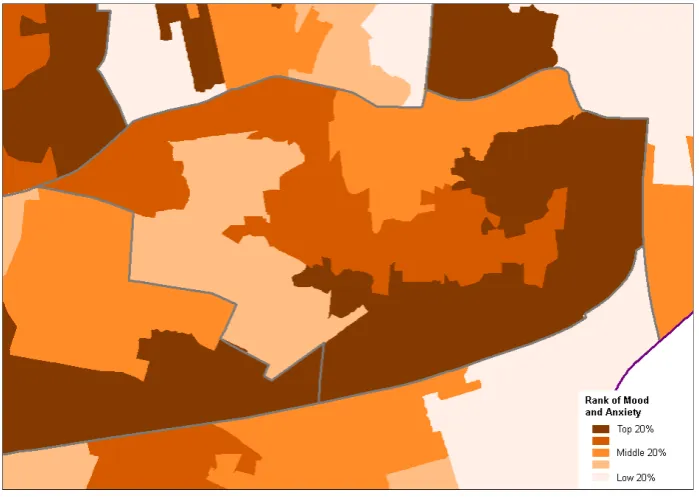
We used existing geographical, demographic, social and economic data to analyse the characteristics of neighbourhoods in Tottenham and to understand what type of area TTS was being introduced to.
We found strong reasons for believing that the intentions of TTS were well-suited to Tottenham. Data collated on social and economic indicators of stress suggested that TTS would be working in an area with levels of stress and anxiety, above the average for London (see Price, Li, Sampson 2014; the method and maps from the 2014 report are included in Appendix A at the end of this report). We developed a typology of stressed communities and social isolation that indicated TTS was introduced into an area where tensions were likely to be high.
Further, our profile of Tottenham shows that ethnic, language and religious indicators show no one dominant ethnic group, that many languages are spoken as a first language and Christians are the most common faith group but declining and Muslims are increasing, with enclaves of Muslim communities becoming apparent. In addition, many other faith groups exist in the area (see Appendix A). These data suggest that Tottenham Green is diverse and our findings from interviews and conversations observed during meetings have found that this diversity is described by residents as ‘living in a fragmented community’.
The mapped indicators and typologies show areas and pockets of stress/tensions that may contribute to these experiences of fragmentation. Some groups are considered to be vulnerable due to their social isolation and marginalisation, for example, young mothers, new migrants, and travellers. Cuts in benefits, unstable employment with zero hour contracts contribute to increasing poverty and are problems that cause anxieties. Violence and the fear of violence are also thought to contribute to mental health problems within families and in public places. A higher than expected level of violence is identified in the mapping research (see Appendix A).
3 Implementation
TTS was implemented by a community development worker (CDW) who worked 2.5 days a week, two trained and experienced facilitators from the Tavistock, and an assistant psychologist who assisted with the supervision of children and facilitated their play in community meetings for women with children, and with collating monitoring data.
Three aspects of implementing TTS are considered in this section. They are interrelated and follow a logical argument; if the initiative is robustly implemented then it is plausible that the approach will have contributed to changes in feelings, attitudes and behaviours as identified by the outcomes.
Firstly, the strategies and practices of the community development worker (CDW) used to inform, attract and retain attendees are described. These activities are the building blocks for any community development initiative and arguably who attends is more important than how many, as it is best to reach out to those with highest levels of need. Secondly, the use of a therapeutically informed approach in practice is discussed in this section. Thirdly, putting in place a robust monitoring and evaluation system is integral to assessing outcomes and for making decisions about if and in what form should the initiative continue. Each is discussed in turn.
3.1 Reaching out to Tottenham residents: embedding TTS into local networks and
engaging local people
Tottenham’s social, economic and cultural characteristics provide a challenging environment within which to introduce a new initiative (Price, Li and Sampson 2014; also see appendix A). Community development initiatives aiming to engage with those living with mental health issues face additional challenges; these people can experience periods of acute vulnerability when they have low levels of confidence, adding to their reluctance to participate in community activities (Seebohm and Gilchrist 2008). Further, in a fragmented community where there are tensions and indications of social isolation engaging local people in new initiatives is likely to take a lot of time, effort and patience.
It is within this context that the delivery team set about implementing Thinking Space. Typical approaches to informing local people about the initiative were used; widespread distribution of leaflets at community venues and at meetings, press releases, advertisements in local papers, setting up a webpage, use of social media, visiting local community venues and existing projects to give talks about Thinking Space. The community development worker (CDW) made considerable efforts to reach out to local people through a process of systematically ‘walking the streets’ and engaging those she met in conversations. Early on the CDW had the support of a volunteer and the assistant psychologist/administrator to assist delivering leaflets and they concentrated on N17 which is probably the most difficult area in which to engage people. This strategy paid dividends and of those who gave their postal codes (69%), 42% lived in N17 and 30% lived in neighbouring N15.
Once Thinking Space sessions began we found that influential approaches to engagement included: managers of venues used for Thinking Space meetings encouraging those who already used their facilities to attend, personal contacts of the community development worker as well as friends and acquaintances of participants. The significance of word-of-mouth as an effective means of recruitment cannot, according to our findings, be under-estimated. Interviewees also spoke about those attending ‘wanting to change’ and residents who had ‘started to look at areas of their lifetochange’. And we found that the majority of questionnaire respondents found the discussions interesting (74%) and such interest is likely to encourage people to return.
Venues for meetings were selected for their accessibility, high profile and high levels of usage by local people; a library situated in an area of high need where participants had a short walk to the venue and were familiar with library had regular attendees. To encourage attendance the delivery team experimented with different days and times for meetings. In the end it was found that routinely running meetings on the same day and at the same time was optimal and meetings with women were best held during the day and during school hours. Attendance after holiday periods usually dropped for a week or two before picking up again and regular attendees expressed how their routines had
been disrupted by breaks, a disruption that is a common experience for those attending therapeutic services or who are in therapy.
An important aspect of establishing and maintaining the profile of TTS within the local community were meetings with voluntary and community organisations, umbrella organisations, as well as statutory service providers. The benefits of these meetings included: improving the knowledge of the CDW about organisations that enabled her to make appropriate referrals and to encourage TTS participants to access community resources and services; a source of referrals to TTS; and, contributing to creating a coordinated and collaborative response by all services to Tottenham’s communities. The CDW’s monitoring reports recorded over sixty face to face meetings in the first six months of the project and the organisations she visited included: children’s centres, libraries, churches, schools and colleges, as well as mental health, drugs and alcohol services, housing associations, the local football team - Tottenham Hotspur, health networks and Age UK. This networking continued throughout the pilot although the number of meetings attended declined to fifteen during the last six months, due in part to other demands made on her time including giving one-to-one support to vulnerable participants and supporting and training volunteers.
These networking activities also enabled TTS to overcome initial hostilities towards the project. After years of experiencing new initiative after new initiative and ‘hit and run’ projects which promise a lot, do not deliver and then disappear, local people and community organisations in Tottenham have an understandable hostility and cynicism toward any new initiative.
The CDW was actively involved at a strategic level in Haringey and her presence further served to raise the profile of Thinking Space. She was a member of the newly formed Mental Health Reference Group. This provided an opportunity for local organisations within the voluntary sector to join together and ensure that their priorities were included in the borough’s mental health framework and the central commissioning group. The CDW was also a member of Haringey’s Health and Social Value Programme, run by Social Enterprise UK and the Institute for Voluntary Action Research, on behalf of the Department of Health. This initiative aims to ensure that concepts of ‘social value’ are understood across the borough and that a ‘social values’ framework informs how health and wellbeing services are provided.
The tireless work of the CDW and a multi-faceted approach to embedding Thinking Space in the Tottenham gave the initiative every opportunity of succeeding. She can best be described as the ‘glue’ that kept the pilot ‘on track’ and in our judgement, this role is crucial for understanding how TTS worked and its effectiveness. Through the outreach work TTS were able to engage with diverse groups and 29 different ethnicities and by successfully attracting these residents TTS was able to work through and understand difference and diversity, a key reason for introducing the initiative into Tottenham. Our research findings also show that those with mental health issues were attracted to TTS, and of those who completed a questionnaire six respondents said that they do not get depressed. We observed that those who attended typically experienced high levels of trauma, many felt hopeless and isolated, and/or may have had unsupportive, or few, social relationships and the monitoring data showed that many participants lived in the most disadvantaged neighbourhoods in Tottenham.
Two further objectives identified a future role for the CDW; that the CDW developed the capacity to lead a Thinking Space initiative, and to demonstrate the longer term viability of the initiative. We observed that the CDW took on more co-facilitating responsibilities as the pilot progressed and that her facilitation was well-received by participants. During the pilot volunteers were trained as co-facilitators but they had not started their co-facilitation duties by the end of the pilot. The use of volunteer co-facilitators was one of the intended continuity strategies for taking TTS beyond the pilot period.
3.2 Implementing a therapeutically informed approach
1Thinking Space is a therapeutic approach to, or method for, improving mental health and community development. It is a fusion of the Thinking Space model developed at the Tavistock Centre (Lowe 2014) and Community Therapy as developed by Adalberto Barreto in Brazil (Barreto and Grandesso 2010).
The following quote by an American psychoanalyst, Mark Borg, who contributed to a therapeutic community project in the Avalon Gardens neighbourhood, Los Angeles, USA, following civil unrest, captures the essence of this approach as follows:
…people who are struggling with the problems they face in everyday life, and whose personal resilience and well-being may be at risk need to feel that they have been listened to and empowered to effect change from the inside out (Borg 2004).
Our research set out to find out if this distinctive approach, used by the facilitators, could be considered as therapeutically-informed. Two clinical staff, one a psychoanalytic psychotherapist and the other a systemic psychotherapist, from the Tavistock Centre were the main facilitators and had many years of community mental health experience between them. The core delivery team had regular team meetings to check the progress of the initiative. At the beginning of the pilot, a consultant, funded by the Tavistock and Portman NHS Trust, met monthly with the core team to help them to reflect to reflect on how well they worked together and to assess the extent to which they were meeting their aims and objectives.
3.2.1 Using psychodynamic and systemic principles for promoting individual well-being and
community development
TTS arose out of taking ‘Thinking Space’, a monthly learning forum about psychotherapy and diversity, (which started in April 2002 by Frank Lowe at the Tavistock and Portman NHS Trust, Lowe 2014); to Tottenham in 2012 for residents to explore the psychological impact of the 2011 riots in Tottenham, one year on. Drawing on psychoanalytic theory, Thinking Space aimed to go beyond guarded, ‘politically correct’ discussions of diversity, to explore less visible emotions and thoughts associated with divisions and differences - of race, ethnicity, culture, religion, gender and age. According to this perspective, by acknowledging one’s own fears and anxieties and by working through them with the support of others, participants are more likely to be able to bring about changes in themselves and become more hopeful and constructive in working with diversity. The empathetic and challenging responses of others in a group enable feelings of depression and fear to be understandable and tolerable. This experience increases the capacity of participants to tolerate, understand and better deal with their anxiety and pain (see Lowe 2014; 21-44).
TTS draws on psychoanalytic perspectives that propose psychic injury or damage can result in ‘acting out’ destructive behaviours and become manifest as mental health problems or criminality (Gordon 2004; Fakhry Davids 2011; Lowe 2014). To change these behaviours it is thought necessary to understand motives for the expressions of such hatred of self and/or others. For psychoanalysts a therapeutic effect is achieved when a patient relives their painful emotions and traumatic events embedded in their life history and this retelling improves self-understanding and understanding of the demonised ‘other’. It is thought that this process has a cathartic effect that reduces the need to ‘act out’ destructive behaviours (Atkinson 2015). Thus, a damaged psyche creates barriers to thinking, personal understanding and constructive participation in community life. Further, communities have social anxieties about survival and dominant or more powerful groups have defences they use to protect themselves at the expense of others (Lowe 2014). Thus, inequalities and powerlessness within communities are thought to contribute to dysfunctional and fractured neighbourhoods (Lowe 2014; 21-44)
Systemic perspectives also inform the TTS approach and, according to this perspective, destructive behaviours are indicative of psychic injury arising from power relations that are socially, economically and political constructed and internalised as oppressive (Holland 1992; Watson and Williams 1992). The internalisation of the misery of the
1 Frank Lowe and Vicky Lidchi made significant contributions to this section and we appreciate their input on the beginnings and
theoretical origins of TTS.
environment and the pain of being disadvantaged and oppressed creates anxiety, fear and despair (Barreto and Grandesso 2010; Lowe 2014). The social justice approach to therapeutic conversations seeks to challenge dominant stories that shape people's lives in a destructive way. These stories reflect dominant social discourses and power relationships in society, and subjugate other stories that might offer a different understanding of people’s lived experience (Monk and Gerhart 2003).
TTS has been particularly inspired by the Community Therapy approach that was developed in Brazilian favelas by Dr Adalberto Barreto (Barreto and Grandesso 2010), rooted in Paulo Freire’s “Pedagogy for Liberation” (Shor and Freire 1987). Barreto identified that suffering and misery are internalised by those who are excluded and whose local knowledge and lived experiences of their neighbourhood are diminished by professionals, civil servants and politicians, using “academic knowledge”. People lose faith in their own knowledge and this is made worth when they seek assistance from those who only value academic knowledge. This loss of belief in their own knowledge is at the root of psychic misery. Community therapy meetings are structured using democratic principles and participants agree on what issues are discussed through telling stories about their lives. The aim is to create a sense of solidarity and compassion, a public space in which there is no conformist agenda and where submission to suffering is challenged. This approach is based on a belief that responsiveness to internalised or psychic misery can prevent suffering and that participatory solutions enhance solidarity networks (Barreto and Grandesso 2010).
The model has also been informed by the work of the psychoanalyst Mark Borg who was involved in a community mental health intervention team, following the 1992 riots in Los Angeles that were sparked by the excessive beating by police officers of Rodney King, an African American male. The team initiated a therapeutic approach in a neighbourhood where there were historically entrenched feelings of community hopelessness, depression and powerlessness. Immediately after the riots Borg observed that community responses mirrored the coping strategies of traumatised individuals (Borg et al 2001). After four years Borg and colleagues reported that residents ‘sense of personal change came from being listened to rather than having an imposed demand to change, and that an approach that surfaced and discussed defensive and destructive behaviours ‘increased interpersonal functioning’ (Borg 2001:151).
A wide range of factors, not just personal and developmental, but also social, economic and cultural, contribute to the structuring of the individual’s psyche and relationships, (Foulkes and Prince 1969, Foulkes 1975, Skynner 1976). It is well established that there are higher levels of mental and physical ill health in poor and deprived areas such as Tottenham. Residents in such environments are more likely to be affected by experiences such as stress and trauma, which can undermine their capacity to trust, collaborate and feel confident and hopeful about the future. Indeed, research studies have found that neighbourhood disadvantage affects rates of adult depression, independent of personal characteristics (Ross 2000). Further, research has found that rising social and economic inequalities increases loneliness and social isolation and conflictual relationships and has a detrimental effect on the mental health of those living in disadvantaged areas (Marmot 2009; Wilkinson and Pickett 2010; Mental Health Foundation 2015).
TTS draws on psychoanalytic and systemic principles and methods to provide a permissive but safe space for residents to share and reflect on their experience and to ensure that those who attend have an empathetic experience, of feeling listened to, understood, and responded to non-judgementally. Given the chronicity and complexity of difficulties faced, TTS was conceptualised as a long–term intervention to enable residents’ to increase their understanding of themselves, including their unconscious aspects, through dialogue and collaboration.
These principles are aligned with a grassroots perspective of community development that engages with despair and anger, with those living in poverty and which purports that prejudice and discrimination are embedded in political and social institutions (Gilchrist 2009; Taylor 2011). To address these issues, organising and running groups that provide an opportunity to share experiences, to be the giver as well as the recipient of support enables participants to see themselves differently has been found to have a positive impact on mental health (Seebohm and Gilchrist 2008).
3.2.2 Successfully implementing a therapeutically-informed approach in a community
setting
The psychodynamic and systemic principles described above were used to deliver Thinking Space. Findings from our research strongly suggests that this approach was successfully put into practice and these findings give us confidence that the approach contributed to outcomes reported by participants (Price and Sampson 2014).
Two themes are used to assess the implementation of the therapeutically-informed approach; the principles of equality and democratic participation and sharing and reflecting on difficulties. The former is the context that facilities, inhibits or has no discernible effect on the latter, sharing and reflecting, which are necessary for the approach to work. In the final section we describe how actions emerged from sessions to reflect the community development aspect of the initiative. Each are discussed in turn.
Principles of equality and democratic participation: Sessions were open to all, free of charge and there was no agenda. Participants could discuss any issue they chose and they decided on their preferred social actions. We observed that participants were warmly welcomed to meetings, a view shared by 85% of those who completed a questionnaire. Newcomers and returners were put at ease and these actions enabled participants to relax, speak conversationally to each other and raise personal issues in sessions.
From our attendance at sessions we observed that facilitators encouraged participants to freely associate which is thought to be the ‘gateway to the unconscious and opens up the possibility of greater engagement of the whole personality and of deeper psychic work’ (Lowe 2014; 25). The absence of an agenda and allowing ‘free association’ gave, in the words of one interviewee, each session its ‘own personality’ and this observation illustrates how each session was dynamic, participant-led and developed organically.
Another interviewee explained how one of the facilitators engaged as many participants as possible to ensure that they felt able to contribute, a practice we repeatedly observed, and which reinforced an ethos of equality:
Frank [facilitator] will invite people in, draw people in, ask them questions so they can give a little bit if they don’t want to give a lot. I think he does it quite seamlessly too. (Interviewee 4)
Interviewees were keen to stress that they valued the sense of equality amongst members. Other studies found that where equality exists then participants can adopt the role of ‘helper’ and receive support in the same session (Rapoport 1960). We found that participants felt good about this dual role; the overwhelming majority of questionnaire respondents felt more able to share their life experiences, 75%, and felt good about supporting others (81%) and found advice of others helpful ‘all or some of the time’ (90%). An interviewee explained how in a safe and respectful environment participants felt able to support each other:
It’s a free for all, it doesn’t matter who comes, everybody’s welcome and everybody’s safe and everyone’s respected at the same level, I really like that…there isn’t this professional that’s giving you advice, we’re looking after each other. I feel like I can say, ‘Hey, it’s alright,’ or give advice on areas that I might know about, I like that aspect of it a lot. (Interviewee 6)
We repeatedly observed a non-judgemental ethos and found that in these situations participants disclosed sensitive life stories and were willing to respectfully listen to others recount their experiences. Listening to others’ stories was described as ‘moving’ and ‘very, very interesting’ and ‘stimulating’ and ‘inspiring’. Some of these stories were told to help others and the following comments provide one example of participants taking responsibility to find their own solutions, one of the intentions of the method. This interviewee explained how she used her story to give participants hope:
…so you tell your experience to say to someone else, ‘You’re not lost, because I was there and look at me now,’ sort of thing and it gives them hope, it gives someone else hope. (Interviewee 13)
We also identified those occasions where participants breached or challenged the ethos of the approach and in these situations, therapeutically informed practice and its effects on participants, was made more evident. Our findings show that in some situations the context of equality and democratic participation was disrupted and some participants felt less safe and threatened or intimidated. From the interviews with participants and our observations of sessions these feelings occurred in situations when: participants felt discussions were judgemental, particularly about child rearing practices; discussions took place in a framework of a point of view or behaviour being ‘right’ or ‘wrong’; conversations were dominated by idealism and strong statements about what participants ‘ought to do’. We observed that these situations precluded participants from being receptive to new perspectives and any acceptance of difference became ‘shut down’. We noted that some participants stopped participating, felt inadequate and a ‘failure’. Comments by one participant summed up the experiences of others when they commented that when sessions were judgemental they were:
Safe up to a point. People close down when it’s judgemental. (H, observation)
These situations drew attention to the characteristics of a therapeutic method and how, when it worked well, participants felt able to express their inner feelings and to articulate different points of view. The skills of the facilitators to maintain a safe, therapeutically informed, space were integral to the approach working. Participants felt reassured when facilitators encouraged reflection and raised possibilities that some might be denying aspects of their life that they did not want to face up to. Participants felt that facilitators understood them and were reassured that they were speaking from an ‘educated point of view’.
Sharing and reflecting on difficulties: Nearly every interviewee mentioned that it was routine for members to disclose disturbing and damaging past or present personal circumstances suggesting that the facilitators successfully created a space where participants felt able to share painful intimate life experiences. During observations we heard stories from those who were traumatised by the murder of a child, child sexual abuse, family separation, and domestic violence. We heard about experiences of stigmatisation, racial prejudice and racist discrimination, and victimisation that created feelings of exclusion and alienation. Personal stories of living with mental health issues and caring for family members with psychosis, bipolar, and depression were common. Such disclosures were respected and interviewees thought that the process of sharing these experiences was extremely valuable:
They can offload themselves, yeah, I’ve seen as they speak they start to cry, because no one is willing to take their burdens and to hear. Sometimes it’s not always the doing of something, it’s just the fact that someone will hear you, and to hear sometimes is as good as to do, and I’ve seen that. (Interviewee 13)
We found a wide range of issues were discussed during Thinking Space meetings that touched on their everyday lives, further illustrating how facilitators allowed free-association to occur and for participants to shape discussions. Interestingly, we observed that participants frequently discussed themes which were health-related or had health implications. They included:
• Loneliness and social isolation
• Health and welfare of young people
• The importance of intergenerational communication
• A lack of social gathering spaces, affordable spaces, affordable child friendly spaces
• Need to make green spaces more attractive and ‘owned’ by the local community
• Worries about: Who you turn to when the system fails you; who will benefit from developments in Tottenham; and, making mistakes, making judgements and being judgemental
The flowing vignette describes participants discussing motherhood and gives an insight into how participants shared their difficulties. It illustrates how mothers felt able to express their worries, how they led the discussion and took the conversation in directions of their choice, and how the safe space also created opportunities for talking about positive experiences.
Vignette: Different sides to motherhood
This meeting was attended by sixteen people, in addition to the project team and childcare volunteers. Re-designed posters were outside and in the library, advertising the Tea and Coffee morning meeting. They had an attractive pink mosaic flower border. One of the participants had designed some cards and people asked her how she had done this. She explained and went on to show a range of cards she had designed. These had conventional pretty pictures of flowers and chocolates and stylish women but shocking captions with some of the darker facts about mothering – rates of postnatal depression, unfair dismissal, and domestic violence. Women looked at the cards and gradually spoke about some of the struggles associated with motherhood. One woman spoke about postnatal depression, how one could be hardly able to get out of bed and face the day and how quickly one could become socially isolated with a small child. Another spoke about not wanting to say if they had a problem – this is the borough in which Victoria Climbié and Baby P happened – people were afraid of having their baby taken away. Another spoke about how angry she was and how judgemental other women could be about ‘complaining’. They projected their own anger onto you if you spoke up.
Half way through the meeting another woman suggested that she had an activity for the group – to write down some of the best things about being a mother on post-it ‘thought bubbles’. Everyone could stick these onto a big poster – if they wanted to.
Women did complete bubbles and these expressed many positive feelings.
We observed how facilitators were able to ‘hold’ intense emotions such as anger and fear and to enable participants to tolerate hearing very disturbing stories. We assessed a session to be therapeutic where participants described the retelling of their stories as a ‘relief’ and as feeling ‘supported’. The following observational notes give an insight into how a participant benefited from sharing her distressing story and provides an example of the method working well in practice. The woman was a regular attendee but had not come for the past month or two. Her comments throughout the session illustrate how changes occur within a session and show how by the end of the meeting she felt better: At the beginning of a session she explained her absence by saying that she had been … thinking bad things and I got too low… I began to think I was hearing voices…
Midway through the session, after sharing her story, the woman said: It is good here, I can share the pain…
At the end of the session she thanked other participants and said: it’s been good, leaving will be better, a weight is off me, it’s been emotional, but better. (A, observation)
Information gathered from interviews with participants and from observations of sessions strongly suggests that the approach is reliant on participants’ willingness to share and reflect on their difficulties. Our research budget was particularly small over the final nine months and we were unable to re-interview those we had interviewed a year before to find out the extent to which participants were withholding information about their personal issues, and the reasons for this. We did observe, however, that some participants attended several times before they disclosed anything intimate to the group.
How participant-led action occurred: One of the aims of the Thinking Space approach was to contribute to community development in Tottenham. The following findings explain how plans and actions emerged from a therapeutically informed space.
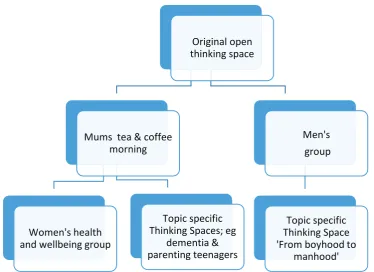
The figure below describes three types of actions that have arisen from TTS and illustrates the beginning of a process that galvanised activism.
Figure 3.1. How actions and plans emerged from Thinking Space meetings
As the diagram above shows TTS grew organically during the pilot. Women were the instigators of three ‘spin-off’ Thinking Spaces; from one original Thinking Space run once a week, activities increased to a fortnightly Men’s Group, a weekly Mothers tea and coffee morning, a fortnightly ‘Women’s Health and Well-being’ group. A range of special events and talks on topics raised by participants such as living with dementia, the effects of post-natal depression, women and domestic violence, and parenting teenagers were all organised with support from the CDW. She also enabled practical courses that arose from the women’s groups to be put in place; for example, food hygiene and dental hygiene courses as well as a summer programme of activities for mothers and their children. The diagram below depicts the evolution of the original Thinking Space to a programme of events and activities.
Figure 3.2. Tottenham Thinking Spaces
principle story teller
actions between group members eg share information, arrange to
meet
make plans for other thinking spaces eg a women only group
agree to invite speaker or arrange for an activity at the beginning of a session other similar stories
Original open thinking space
Mums tea & coffee morning
Women's health and wellbeing group
Topic specific Thinking Spaces; eg
dementia & parenting teenagers
Men's group
Topic specific Thinking Space 'From boyhood to
manhood'
[image:16.595.112.487.502.774.2]The setting up of the men’s Thinking Space was encouraged by women who thought that fathers often do not take an active role in raising their children and men should understand that women in relationships with men can feel lonely and isolated. This group discussed issues related to uncertainties about what it means ‘to be a man’, how men in Tottenham tend to be defensive and aggressive, and how faith plays a role in their understandings of ‘who they are’. Another theme was feelings of pain and loss associated with either an absent father, a father who was disinterested in them or rejected them when they were children. A topic specific session focussed a discussion on the relationship of a father with their baby and young child and the child’s mother and feelings of jealousy and aggression. Some participants spoke about difficult relationships with their teenage children and how they can be hurtful. We observed that this therapeutic space was supportive and enabled men to better understand themselves. Of those who attended the men’s group and completed a questionnaire (ten in total and one was a woman – women were allowed to attend the topic specific meeting), 90% said that they listened to others more, 80% said that they felt better understood, better able to share their life experiences, and found it easier to say how they were feeling, and 70% said that they felt better about themselves.
3.3 Developing a robust evidence base and evaluation method
Developing a robust monitoring and self-evaluation system proved to be challenging and a robust system was not fully put in place during the pilot. Arguably, at the heart of the problem were pressures experienced by the Tavistock delivery team to produce measurable outcomes consistent with the aims of the initiative and the public health strategic objectives of Haringey Local Authority. The delivery team felt under pressure to evidence significant numbers of attendees and recording attendance at ‘one off’ events was difficult when people were reluctant to complete forms asking for personal details. They tried several ways of collecting demographic and outcome data at each meeting, placing high demands on participants. As the summary of the monitoring data shows below collecting demographic data was difficult and data on ethnicity and age, for example was often incomplete. Routinely collecting more sensitive outcome data was even more challenging and these data were not collected consistently.
The local authority asked the Tavistock delivery team to consider using an evaluation tool used by other projects they were funding under the auspices of their Health and Wellbeing Strategy 2012-2015 in order to assess the outcomes of their programme that aimed to achieve a ‘Healthier Haringey’ (Haringey Council 2012; also see Haringey Council 2015 for 2015-2018 Strategy). The option chosen by the Tavistock delivery team was the Social Capital, Health and Wellbeing planning and evaluation toolkit constructed by the Edinburgh Health Inequalities Standing Group which required the questionnaire to be repeated, ‘before’ and ‘after’ an intervention (Edinburgh Health Inequalities Standing Group 2011). This proved difficult to implement. We observed that participants found even a shortened version of the questionnaire quite complex to complete, as well as provoking visible signs of nervousness, raising issues about the reliability of responses. Being invited to complete a questionnaire and to give personal information about their circumstances and how they felt when they first attended, may have been one contributing factor to the high numbers of residents attending only once. We also had concerns that the theories of change embedded in the therapeutically-informed approach was not well captured by the Edinburgh toolkit.
From the perspective of conducting a robust evaluation two issues seem relevant. Firstly, the toolkit assumes a linear progression towards improvement and our research findings strongly suggested that change was not a linear progression for most participants. Indeed studies show that oscillations during sessions and over time are characteristic of those attending therapeutically informed approaches; some sessions are very constructive whilst others are less so (Rapoport 1960). TTS participants described a difficult and rocky road with ‘stops and starts’ and in these circumstances outcomes are more likely to occur overtime. Secondly, whilst the toolkit may be applicable to many mental health initiatives, the distinctiveness of Thinking Space is its theories of change related to historical traumas, for example, and the expectation was, therefore, that Thinking Space may have generated outcomes that were not represented in a standardised toolkit.
be attributable to their attendance and included questions on self-expression, self-understanding, supporting others, and understanding others’ points of view, which are key mechanisms of change underpinning the Thinking Space approach.
[image:18.595.46.552.211.310.2]Thus, it was expected that the purposely designed questionnaire was more sensitive to capturing change than a standardised toolkit. The findings from our self-completion questionnaire, albeit from a small sample, suggested a clear trend towards improvement for some indicators but not others, implying some sensitivity to measuring change. The indicators which showed the greatest improvements are summarised in the table below:
Table 3.1. Indicators where improvements seem to get better over time: findings from the self-completion questionnaire
Indicator Total sample (41)
percentage 2013 & 2014 cohort (19 respondents) percentage
Felt good about supporting others 81 90
Felt good about contributing to the community 81 85
Felt better understood 67 74
Felt depressed less often 34 39
Felt better able to support others 70 79
For other indicators such trends were not discernible but these findings should also be treated cautiously; they included easier to tell people how they were feeling, life experiences have new meaning, respect different points of view.
We suggest that integrating evaluation into the TTS programme using an approach that reflects its ethos and activities is more likely to reliably assess its impact. As evaluators we recommended concentrating on collecting good quality demographic information to minimise the amount of missing data. In this way the monitoring data can be used to assess if an initiative is reaching out to, and engaging with those most in need. We also recommended administering self-completion questionnaires once a year to all those attending during a defined period, for two weeks in June, for example. However there were no easy answers to what and when to measure and these were not really resolved during the pilot.
4 Monitoring information
4.1 Attendance and attendees
The first community meeting was held on 1st October 2013 and by the end of the pilot in September 2015, 243
[image:19.595.152.445.163.304.2]meetings had been held. They are summarised by type of Thinking Space below:
Table 4.1. Number of Thinking Space sessions run between 1st October 2013 and 30th September 2015
Thinking Space Type Number of Sessions Mothers’ Tea and Coffee mornings 75
Open Thinking Space 74
Women’s Health and Well-being 30
Men’s Group 29
Volunteer co-facilitation training 20
Topic specific events 9
Summer programme 4
Local University Technical College 2
Total 243
[image:19.595.69.527.419.451.2]A total of 351 people attended with a total of 1,716 attendances. Of these 351, 78% were adult participants who were residents, 11% were professionals from a range of backgrounds including councillors, community group representatives, psychologists, social workers, 8% were children and 6% volunteers. The majority of participants attended between one and three meetings (74%) and 39 participants attended over 10 meetings. Details of attendance patterns were:
Table 4.2. Attendance
Once 2-3 times 4-10 times 11-20 times 21 times and over
45% 29% 14% 6% 5%
The majority of attendees were women (72%) and where data were available, most lived in the immediate neighbourhoods of N17 and N15.
Table 4.3. Postcodes of attendees
N17 N15 Other ‘N’ codes Other Not known
29% 21% 12% 8% 31%
Where ethnicity was recorded, attendees reflected the ethnic and cultural diversity of Tottenham with 29 different ethnic groups attending. Ethnicity was recorded for 56% of the records and these showed that most attendees were: African Caribbean (23%), British (22%), Black African (18%) and dual heritage (6%). Respondents were asked to self-identify their ethnic group and other ethnicities included, Irish, Spanish, Danish, Romanian, Kurdish, Turkish, Ethiopian, Sri Lankan, Asian, Latin American, and Chinese. Some preferred to identify themselves as travellers, Arab and Jewish. Where ages were recorded, attendees were from a wide age range although those under 25 years were less represented. Nevertheless, participants were very positive about sessions attended by a wide age range and enjoyed hearing about inter-generational perspectives.
Table 4.4. Age
Children under
10 years Under 25 years 26-39 years 40-59 years 60+ years Not known
8% 3% 26% 19% 8% 36%
[image:19.595.73.525.529.560.2] [image:19.595.73.529.736.779.2]Thus, despite the challenges of implementing a community development initiative in Tottenham’s fragmented and stressed neighbourhoods, TTS engaged with residents from diverse ethnic and cultural backgrounds and from across different ages. Many lived in the most disadvantaged areas of Tottenham.
We know little about those who attended once, the majority of participants. Some attendees (36) were professionals from agencies and it is reasonable to expect them to attend once to find out about Thinking Space and some may have attended a special interest ‘one-off’ Thinking Space. Follow-up calls to residents (25) by the Tavistock delivery team in December 2014 found that they felt positively about their TTS experience, but had other commitments and were unable to continue participating. A significant number attended between two and four times. An interview with one person indicated that attending a small number of times can have a significant effect on their lives but no systematic information about the impact of attending on this group were collected.
Following further informal follow up calls by the CDW, reasons for no longer attending included no longer being able to attend due to changes in shift work, finding full time work, personal situations, housing issues and having to move, and finding the meetings too informal.
Of those who attended over 10 times, 30 were women and 9 were men. They were most likely to be African Caribbean (40%), with 15 other ethnic groups represented including Nigerian, Black African, Irish, Greek Cypriot, Hungarian, Malaysian, British, and travellers.
4.2 Volunteers
At the beginning of the pilot a few participants volunteered informally and supported the CDW leafleting and visiting community groups. This became formalised in 2015 and fourteen participants started volunteer training in February; 11 women and three men who were predominately African-Caribbean (6) as well as Turkish, Kurdish, dual heritage, Irish, English, and Nigeria. Of these volunteers, two chose to have a general role in supporting the project by for example, leafleting and helping to set-up rooms for Thinking Space meeting spaces. Of the 12 who started the co-facilitation training nine completed the training in June 2015. Of these nine, eight are expected to start co-facilitating meetings. Thus, at the end of the pilot there were 10 active volunteers, one of whom is an assistant psychologist at the Tavistock. Reasons for withdrawing including finding employment, taking up a University place and mental health issues.
The co-facilitation training was delivered by the Tavistock and trainees were all very complimentary about the high standard of delivery, the quality of the content of the course, and its relevance to their tasks.
5 How TTS worked and outcomes
In this section how TTS worked, the mechanisms of change, and the extent to which TTS has achieved its objectives is described. We consider the generative causal mechanisms or practice principles integral to how TTS works and, if the pilot is transferred to a different setting, their presence will be integral to its success (Parmar and Sampson 2007).
During our research we collected and collated outcomes that were likely to be associated with the principles that informed TTS; firstly, personal outcomes that arise from the presumptions that surfacing inner states of mind and feelings, stimulates thinking, leading to psychic change and the development of new perspectives on the self. And secondly, social outcomes that hypothesize that engaging with internalised misery originating from historical experiences and from living in a disadvantaged and stressed environment can improve participants’ perceptions of others living in their neighbourhood and how they relate to them. By using this approach we were able to assess all possible outcomes and not limit our research to those outlined by the objectives.
The findings described in the previous section give us confidence that the robust implementation of the therapeutically informed method contributed to the observed outcomes. They have been categorised as follows: process outcomes associated with the method; personal outcomes; community outcomes; and, health outcomes. Each is discussed in turn
.
5.1 Process outcomes arising from the method
TTS objectives for outcomes specifically related to the method were:
To provide a space where Tottenham residents can share and reflect on their difficulties and challenges and think together about what options they may wish to consider addressing problems.
As described earlier in this report we found that the Tavistock delivery team routinely created a therapeutically informed safe space and meetings were typically democratic, non-judgemental, respectful, and focussed on encouraging everyone to listen and understand. We identified the following factors explain how outcomes were achieved:
Expression of inner feelings: We found that the skills of the facilitators to ‘hold’ the distress and anguish of the story teller was an important part of giving participants confidence to realise the value of expressing their inner feelings. One participant explained how they experienced this process:
…it’s helped me a lot you know, because I realised the importance of being able to actually vocalise my thinking, which is something I’m not good at…last week I think I was better at vocalising my feelings, my thoughts, and this week not so much, but now I realise the importance of being able to surface the blue thoughts that run around in my mind. You can let that out.” (Interviewee 10)
Dealing with tensions and conflict constructively: A number of participants expressed confidence in the facilitators’ capacity to handle conflicts. Interestingly, people also commented on the capacity of ‘the group’, or ‘us’, to manage tensions. The following reflection from a participant illustrates the dynamics of a therapeutic session:
I think what I observed is how the group sorts itself out...that is a very powerful tool to see happening right in front of you. You see a member of the group who may take up space personally and then in two minutes they’re sorting out a quarrel, or offering their view of what’s happened and reflecting on the process of what’s going on right now. ‘I noticed you got really angry in your tone of voice there’ - it’s really powerful to see people connecting on that ‘here and now level. (Interviewee 8)
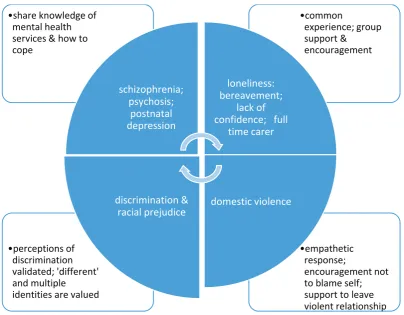
Sharing difficulties and challenges and finding solutions: The diagram below summaries key recurring themes, and for each type of social problem the actions taken by participants are summarised. From our observations of sessions and interviews with participants it was apparent that many experienced multiple difficulties, both historical and current; for example, those suffering domestic violence felt lonely; those who lacked confidence as a result of historical child
abuse also felt racially discriminated against, and so on. The multi-faceted nature of participants’ difficulties is depicted by the arrows at the centre of the diagram below.
[image:22.595.96.501.162.477.2]The diagram also summaries common responses by participants that they thought might help alleviate these problems. Of those who completed a questionnaire, mutual support and advice giving within the group was considered as ‘contributing to the community’ by the overwhelming majority, who felt good about doing this (81%).
Figure 5.1. Sharing difficulties and finding solutions
We considered the possibility that participants suffered harm as a result of attending TTS. Findings from the self-completion questionnaires show that one or two participants experienced negative effects; for example, they felt less confident or less able to express themselves. We also discussed these possibilities with interviewees and we found that participants have strategies to protect themselves and think carefully about what they will share, as this interviewee explained:
So in terms of my story, I think what I am hoping to keep on working on this …, ‘OK, should I share this?’ ‘No, I might share that part of the story.’ … I need to think a lot about what I want to say, in order to look after myself.
(Interviewee 1)
Several interviewees explained that Thinking Space was less likely to work when aggressive people attended or participants became aggressive; on these occasions participants felt neither comfortable nor safe to disclose personal issues. Participants felt that sessions were no longer relaxed and a relaxed atmosphere enabled them to talk about their inner feelings, and that aggression was a sign that the person had come with ‘some kind of shield’ and ‘a point to prove’ which was not appropriate frame of mind for a Thinking Space. Interviewees commented on how the facilitators effectively diffused these situations.
5.2 Personal outcomes
Two TTS objectives described personal outcomes and these were:
Participants improve their capacities to manage their own lives and to advocate for themselves. ͻempathetic
response;
encouragement not to blame self; support to leave violent relationship
ͻperceptions of discrimination validated; 'different' and multiple identities are valued
ͻcommon
experience; group support &
encouragement
ͻshare knowledge of mental health services & how to cope schizophrenia; psychosis; postnatal depression loneliness: bereavement; lack of confidence; full
time carer
domestic violence discrimination &
racial prejudice
Participants develop self-understanding, relationships and skills that will help them to reduce self-defeating and destructive behaviours.
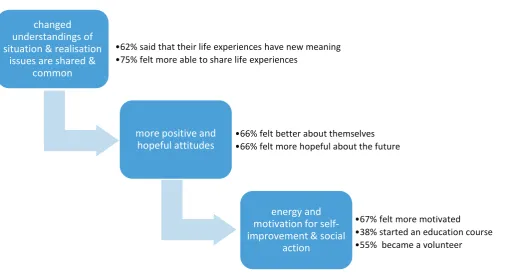
[image:23.595.72.509.176.388.2]From our research we identified numerous personal outcomes that arose from the theories embedded in the initiative and identified several mechanisms that explained changes and enabled the personal objectives outlined by TTS to be met. The diagram below summarises our findings to show how processes of change occurred to meet these objectives. The causal mechanisms – as depicted in the blue boxes - generated change:
Figure 5.2. Processes of change
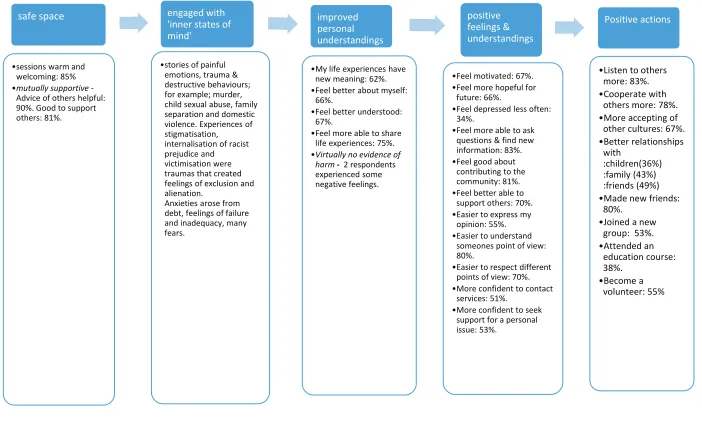
To illustrate the prevalence of the generative causal mechanisms in the diagram above they are shown in the diagram below with findings from the self-completion questionnaires. The diagram below also illustrates how change is a series of inter-linked processes and social action a product of altered understandings and self-perceptions. It is expected that TTS made a contribution to these changes and other factors may also account for the improvements. The findings presented below show that the majority of those who attended regularly gained personally:
Figure 5.3. Interconnected outcomes
ͻinternalised & private misery
ͻsharing stories, empathy, support
changed understandings of situation & realisation
issues are shared & common
ͻacquires new
information about useful local services
ͻstart process of losing destructive & inflexible coping strategies
more positive and
hopeful attitudes ͻ& better feel less isolated understood ͻreduced anxieties
& better able to communicate
energy and motivation for self-improvement
& social action
changed understandings of situation & realisation
issues are shared & common
ͻ62% said that their life experiences have new meaning
ͻ75% felt more able to share life experiences
more positive and hopeful attitudes
ͻ66% felt better about themselves
ͻ66% felt more hopeful about the future
energy and motivation for self-improvement & social
action
ͻ67% felt more motivated
ͻ38% started an education course
ͻ55% became a volunteer
[image:23.595.47.553.494.774.2]The findings presented in the diagram above can be further substantiated by additional factors that explain improved personal outcomes that enabled participants to manage their lives better and to reduce self-defeating behaviours. They provide further evidence of how processes of change were multi-faceted and numerous generative mechanisms and contexts explained personal outcomes. They included:
Supportive behaviour and the value of feeling supported: A group was perceived as supportive