© 2016, IRJET | Impact Factor value: 4.45 | ISO 9001:2008 Certified Journal
| Page
1065
Mathematical Functions C Code Generator
Vishal Limgire
1, Mahesh Nikam
1, Diksha Jadhav
1, Pooja Pawar
11
Department of Computer Engineering
Trinity Academy of Engineering Pune, Maharashtra, India
---***---Abstract -
The standard mathematical library known as libm offers a small set of functions in a small set of precisions. Performance of libm functions is of critical importance, in particular in scientific and financial computing libm for each new processor, a time-consuming and error-prone task. A first objective of this project is therefore to automate libm development, up to the point where libms generated in a fraction. Applications often require functions not present in the libm. In such case, a composition of libm functions may be very inefficient, or simply not possible (function defined by a differential equation or by interpolation of a set of data points for instance). Even the libm functions are offered in a limited choice of implementations which will most of the time poorly match the actual needs of an application in terms of range, accuracy, performance and resource consumption. The set of functions and contexts available to programmers. The process of implementing a mathematical function into code is composed of several steps; typically range reduction, approximation, evaluation (additions, multiplications, and pre-computed constant values). Approach of this project is therefore to unify the understanding of function, sharing common mathematical, methodological, and implementation tools. In particular this will lead to on-demand generation for the same breadth of targets and with the same guarantees on numerical quality.Key Words:Processors, Code generation, Elementary function approximation, Interfaces, Reusable Software, Reusable libraries.
1.INTRODUCTION
Mathematical function c code generation is concept in which directly c code will be generate on the given function when user will input. This will be more efficient to developer, mathematician, scientist and students for their respective use. It will help user reduce problem of time, effort and hand code error and also get more accurate result in digit and precision. This application will successfully overcome the drawbacks of previous application.
Mathematical function c code generation it helps save time, effort and also is a hand code error. We need to set up
some strategies to encourage user will easily handle tool that mean user friendly. These may include:
1. Input as mathematical function and given range.
2. Then it will search that function into library or
databases.
3. Generate mathematical c code for given function
and range[1].
© 2016, IRJET | Impact Factor value: 4.45 | ISO 9001:2008 Certified Journal
| Page
1066
old. As long as each function must be implemented manually, the set of functions available to programmers will be
limited [3]. Programmers, however, do need application-specific functions not present in the libm.
This implementation is likely to be much less accurate and much less efficient than that of an expert. We must insist
again on the accuracy issue this is not only a problem of performance, but also of the validity of the result [4].
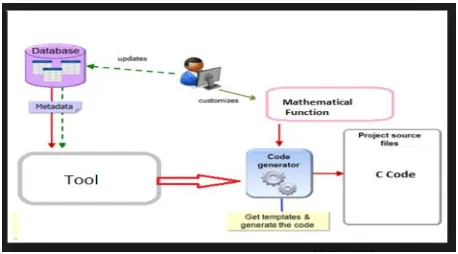
[image:2.595.183.412.511.638.2]1.1 SYSTEM DESIGN
Figure -1: The proposed tool suite
We are currently focusing on two main use cases where we need a libm generator, both illustrated by Figure 1. The first one targets the widest audience of programmers. It is a push-button approach that will try to generate code on a given domain and for a given precision for an arbitrary univariate function with continuous derivatives some order. The function may be provided as a mathematical expression, or even as an external library that is used as a black box. Call this approach the open-ended approach, in the sense that the function that can be input to the generator is arbitrary – which does not mean that the generator will always succeed in handling it. Section III will describe how this generator has evolved from simple polynomial approximations to the generation of more sophisticated evaluations schemes, including attempts to range reduction. Here, the criterion of success is that the generated code is better than whatever other approach the programmer would have to use (composition of libm function, numerical integration if the function is defined by an integral, etc). “Better” may mean faster, or more accurate, or better behaved in corner cases, etc [3].
1.2
BACK END PROCESSFigure2. Tool Back End Process
© 2016, IRJET | Impact Factor value: 4.45 | ISO 9001:2008 Certified Journal
| Page
1067
Our tool will contains a input screen where user will provide the mathematical functions with parameters such as angle and precision and this function is go in database and it will check whether that function is present in database or not. If that function is present in database then it will produce the code corresponding to the functions and if that function is not present in the database then it display the error message Incorrect function. This tool is easy to handle as compare to MATLAB .we tried to develop an tool which will help in giving small amount of code to the users as compare to MATLAB. The main aim or goal of our tool is to provide a code which will help to developers, researchers, mathematician and student
2. LITERATURE SURVEY
In our system we are generating the c code for mathematical functions. MATLAB is also used for mathematical purpose.
But the code produce in MATLAB is having following drawbacks: listed below:
1. Less Accuracy of code.
2. Little in speed of generation of code.
3. More Expensive.
4. Portability issues.
We regularly hear of people (and whole research groups) that transition from Matlab to Python. The scientific Python ecosystem is maturing fast and Python is an appealing alternative, because it’s free, open source, and becoming ever more powerful. This page tries to explain the differences between these two tools.
We do not intend to make Matlab look bad. We used to love Matlab ourselves! However, we think that Matlab has a few fundamental shortcomings. Most of these arise from its The algorithms are proprietary, which means you cannot see the code of most of the algorithms you are using and have to trust that they were implemented correctly. Matlab is quite expensive, which means that code that is written in Matlab can only be used by people with sufficient funds to buy a license. Naturally, the Mathworks puts restrictions on code portability, the ability to run your code on someone elses computer. You can run your “compiled” application using the Matlab Component Runtime (MCR), but your portable app must exactly match the version of the installed MCR, which can be a nuisance considering that Matlab releases a new version every 6 months. The proprietary nature also makes it difficult/impossible for 3th parties to extend the functionality of Matlab.
Furthermore, there are some other issues that stem from Matlabs origins as a matrix manipulation package:
© 2016, IRJET | Impact Factor value: 4.45 | ISO 9001:2008 Certified Journal
| Page
1068
PYTHON VS MATLAB
Python, by definition, is a programming language. The most common implementation is that in C (also known as CPython) and is what mostly refered to is as “Python”. Apart from the programming language and interpreter, Python also consists of an extensive standard library. This library is aimed at programming in general and contains modules for os specific stuff, threading, networking, databases, etc [2].
Matlab is a commercial numerical computing environment and programming language. The concept of Matlab refers to the whole package, including the IDE. The standard library does not contain as much generic programming functionality, but does include matrix algebra and an extensive library for data processing and plotting. For extra functionality the Mathworks provides toolkits (but these cose you extra).
Figure4. Differences between Python and Matlab in terms of their ecosystem.
ADVANTAGES OF PYTHON
Free: As in speech and as in beer. (It won’t cost you a thing, and you are allowed to view and modify the source.)
Beautiful programming language: Python was created to be a generic language that is easy to read, while Matlab started as a matrix manipulation package to which they added a programming language. As you become more familiar with Python, you will be amazed with how well it is designed. There is only one word for that: Beautiful.
Powerful: Because it’s so well designed, it’s easier than other languages to transform your ideas into code. Further, Python comes with extensive standard libraries, and has a powerful data types such as lists, sets and dictionaries. These really help to organize your data.
Namespaces: Matlab supports namespaces for the functions that you write, but the core of Matlab is without namespaces; every function is defined in the global namespace. Python works with modules, which you need to import if you want to use them. (For example from skimage import morphology.) Therefore Python starts up in under a second. Using namespaces gives structure to a program and keeps it clean and clear. In Python everything is an object, so each object has a namespace itself. This is one of the reasons Python is so good at introspection.
Portability: Because Python is for free, your code can run everywhere. Further, it works on Windows, Linux, and OS X.
Class and function definitions: Functions and classes can be defined anywhere. In one file (whether it is a module or a script) you can design as many functions and classes as you like. You can even define one in the command shell if you really want to.
Great GUI toolkits: With Python you can create a front-end for your application that looks good and works well. You can chose any of the major GUI toolkits like Wx or Qt. Pyzo comes with PySide (a wrapper for Qt) [2].
CONCLUSION
© 2016, IRJET | Impact Factor value: 4.45 | ISO 9001:2008 Certified Journal
| Page
1069
have a generator where we have a clear separation (as on Figure 1) between a front-end building an approximation scheme, and a back end implementing it on a given target technology.
References
[1] Nicolas Brunie, Olga Kupriianova “Code generators for mathematical functions” 2015 IEEE 22nd Symposium on Computer Arithmetic.
[2] M. Dukhan, “PeachPy: A Python framework for developing highperformance assembly kernels,” in Python for High Performance and Scientific Computing, 2013.
[3] C. S. Anderson, S. Story, and N. Astafiev, “Accurate math functions on the Intel IA-32 architecture: A performance- driven design,” in 7th Conference on Real Numbers and Computers, 2006, pp. 93–105.
[4] “IEEE standard for floating-point arithmetic,” IEEE 754-2008, also ISO/IEC/IEEE 60559:2011, Aug. 2008.
BIOGRAPHIES
Vishal Limgire currently pursuing BE Computer from Trinity Academy of Engineering Pune, Maharashtra. Currently working project is Mathematical Function C Code Generation. Research area will implementation of mathematical function, mathematical coding and mathematical coding. For any query contact given mail [email protected] and contact 8668335133.
Mahesh Nikam currently pursuing BE Computer from Trinity Academy of Engineering Pune, Maharashtra. Currently working project is Mathematical Function C Code Generation. Research area will implementation of mathematical function, mathematical coding and mathematical coding. For any query contact given mail [email protected] and contact 7276600570.
Diksha Jadhav currently pursuing BE Computer from Trinity Academy of Engineering Pune, Maharashtra. Currently working project is Mathematical Function C Code Generation. Research area will implementation of mathematical function, mathematical coding and mathematical coding. For any query contact given mail [email protected] and contact 7875843782.