© 2016, IRJET | Impact Factor value: 4.45 | ISO 9001:2008 Certified Journal
| Page 1284
Design Analysis and Performance evaluation of discrete moulded liner
buttons on band in terms of performance of brake as load fade and
speed fade.
Sayali S Adhav,
D V. Kushare
Department of Mechanical Engineering
NDMVP’S KBTCOE Nashik, Savitribai Phule Pune university
Maharashtra, India
---***---Abstract—- Fade is the term used to indicate a loss of braking effectiveness at elevated temperatures because of a reduction in the kinetic friction coefficient (μ). The fade phenomenon in friction materials represents a deviation from law of friction and its occurrence reduces braking efficiency and reliability. Three primary attributes governing brake fade have been identified as load fade, speed fade and temperature fade. High interfacial temperatures can lead to a decrease in shear strength of the pad and consequently a decrease in frictional force which induces fade. This paper deals with application of molded liner buttons to induce temperature reduction at the brake liner interface by increased air circulation. This is expected to improve brake torque; brake power absorbed and reduced brake wear. Material of brake liner for discrete molded liner buttons is FTL097.
Index Terms— air circulation, brake fade, discrete moulded liner buttons
INTRODUCTION
Brake
friction materials consist of four classes of ingredients viz., binder - a thermo-setting resin (mostly phenolic), fibers, fillers and friction modifiers. Each class of material significantly contributes towards effective braking performance. In the case of brakes operating temperature of the rotor drums and pads can go up to 200-250° and 370° C respectively due to severe and repetitive breakings. Such high interfacial temperatures lead to decrease in shear strength of the pad and consequently decrease in frictional force causing “Fade” [2]. Loss in braking effectiveness at elevated temperatures (300°C-400°C) because of reduction in friction coefficient and the revival of the same at lower temperatures is referred to as fade and recovery respectively. The temperature sensitivity of friction materials is a critical aspect while ensuring their smooth and reliable functioning.The temperature sensitivity of the friction materials influences the thermo-elastic-instabilities, which in turn alters the friction performance at the braking junctions.
The band for the band brake is prepared in a different form that allows overall cost reduction, ease liner replacement and lowered maintenance cost of brake.
LITERATURE REVIEW
Bouchetara Mostefa , Belhocine Ali (2014) this research work shows the analysis of thermo-mechanical behavior of dry contact between brake disc and pads during the braking phase.[1] Modeling of transient temperature in disk was done to install ventilation system in vehicles. This analysis further coupled to determine the Von-Misses stress, deformation and contact pressure distribution in pads. The results obtained were satisfactory when comparison was done with specialized literature survey.
Dr. S.B.Chikalthankar, Dr. V.M. Nandedkar this research work represents the study of frictional and wear characteristics of non-asbestos brake pad using Link chase machine. Parameters like coefficient of friction and wear were considered foe the work study. This study outlined a proposed work to develop a non-asbestos material which is expected to show a stable friction coefficient and wear rate. [2]
K.Sowjanya and S. Suresh (2013) this work explains the structural analysis of disk brake rotor and its effect on the brake disk design. Study was carried on the basis of strength and rigidity criteria. Materials like aluminum metal matrix composites were examined for thermal solution to structural analysis. Maximum Von-Misses stress was observed to be 50.334 MP a for CI and211.98MPa for AIMMCI and 566.7 MP a for AMMCII [3]. The design is found to be safe.
© 2016, IRJET | Impact Factor value: 4.45 | ISO 9001:2008 Certified Journal
| Page 1285
composite for automotive brake pad application. Properties like density, porosity, microstructures analyses, hardness and mechanical properties were examined using dens meter, UTM, hardness tester. Four new formulations were prepared by varying coconut fiber content from 0, 5, 10, 15% volume fractions. Results obtained were concluded that 5 & 10% volume fraction showed better physic-mechanical properties compared to other fractions [4]. And it verified that coconut fiber can be used as potential filler material.
A.M.Zaharudina, R.J.Talib (2012) studied Taguchi method for optimizing the manufacturing parameters of frictional materials like semi-metallic materials produced using powder metallurgy. Factors like physical properties like hardness, specific gravity and triblogical properties like wear, fade were considered as processing parameters. Results concluded that molding pressure has the strongest effect and impact on physical as well as triblogical properties. [5]
Zaid (2009) conducted study on ventilated disc brake rotor of normal passenger vehicle with full load capacity. [6] Study concerns with heat and temperature distribution on rotor. FEM approach was used and modeling was done in CATIA. For study purpose 10 cycles of braking and 10 idle cycle were taken into consideration. Material used was gray cast iron at a temperature of 530o.This study provide a better understanding on thermal behavior of gray cast iron and also helped to find and develop an optimum rotor system for automotive industry.
Ji-Hoon, Choi & Lee (2004) carried work on transient analysis for thermo elastic contact problem of disk brake. For this work material used was carbon, carbon composite and wear was assumed to be negligible. Two disks were considered one isotropic and other orthotropic. Pressure and temperature distributions were numerically computed at the disk surfaces at different braking conditions. The final results computed showed that orthotropic disc brakes provides mild pressure distribution and are therefore more better and optimum, performance level wise over the isotropic brake disc.[7]
Masahiro Kubota (2000) this paper represents the research work carried for achieving an optimum thermal, vibration and weight balance of brake disc rotor.[8] Analysis was done on the airflow through ventilation holes, thermal stress analysis and vibration analysis during braking. Computational fluid dynamics was used to analyze the actual performance. Substantial weight reduction was achieved without deteriorating cooling performance by obtaining
relationship between rotor weight, shape and other performance parameters.
Malcolm K. Stanford (2001)
This paper presented work on friction and wear behavior of four hard coatings using pin-on disk machine. The four coatings were of Ni, Cr, Fe, Si, and Metco. Cylindrical pins machined from non-asbestos organic compounds and coated and uncoated disks were slide over each other. Properties like hardness, porosity and corrosion resistance were processed. Lowest wear was observed when lining material slide against stellate coated disc. High friction coefficient was observed for Metco coated disc. [9]
EXPERIMENTATION
Design and analysis of the band brake individual liner.
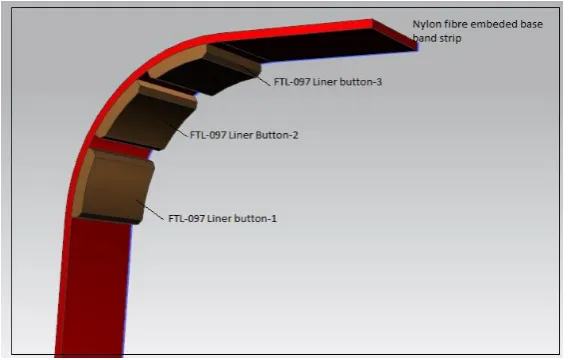
[image:2.595.308.593.362.542.2]Arrangement of brake band, material selection of brake liners and the layout of the band are as follows:
Figure 1: Discrete FTL-097 button liner
Base band is a nylon fibre based strip for holding purpose on which the liner buttons are mounted. Liner buttons are made of brake liner material in
© 2016, IRJET | Impact Factor value: 4.45 | ISO 9001:2008 Certified Journal
| Page 1286
[image:3.595.61.279.78.250.2]Figure 2: FTL-097 Liner
FTL-097 is a rigid material having a non-asbestos base. It is grey in color and incorporates a blend of selected friction modifying agents. This complex matrix of ingredients is consolidated with a specially developed binder system. FL-097 has a high friction coefficient which is combined with an excellent resistance to fade and wear. Its high performance characteristics are particularly suited to severe duty applications. This material although not intended to operate in oil is not physically damaged by moderate oil contamination. Material is certified to non-sparking. It has excellent resistance to fade and wear.
Applications: Brake pad for cranes, geared discs
Design and analysis of the band brake individual liner under given system of forces the input parameters for the same are shown below
[image:3.595.339.508.110.271.2]Figure 3: Geometry of discrete liner
Figure 4: FTL-097 liner
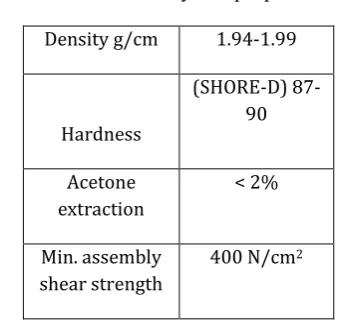
Table No. 1: Physical properties
Density g/cm 1.94-1.99
Hardness
(SHORE-D) 87-90
Acetone extraction
< 2%
Min. assembly shear strength
400 N/cm2
[image:3.595.308.556.330.508.2]Geometry was developed using UGNX-8 and STEP file was used to import geometry to ANSYS work bench
[image:3.595.42.553.338.750.2]Figure 5: Geometry
[image:3.595.305.558.536.739.2]© 2016, IRJET | Impact Factor value: 4.45 | ISO 9001:2008 Certified Journal
| Page 1287
Table No. 2: Free Meshing Parameters with tetrahedron elements
Nodes 2709
Elements 448
Mesh Metric None
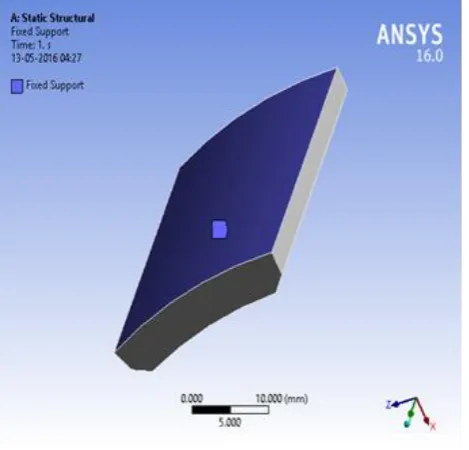
[image:4.595.314.560.156.358.2]Boundary conditions and loading for the analysis were applied as below:
Figure 7: Boundary conditions
Figure 8: Pressure intensity
[image:4.595.36.271.274.499.2]Maximum allowable press of 0.55 N/mm2 for the brake band on the cast iron wheel was taken to be 0.55 MP a
Figure 10:Equivalent Von-misses stress
Figure 9: Equivalent Von-Misses Stress
As the Equivalent Von-misses stress 0.5839 N/mm2
[image:4.595.308.540.437.636.2]Allowable stress of 4 N/mm2 the brake liner is safe.
Figure 10: Von-Misses stress
As the maximum stress intensity 0.598 N/mm2
allowable stress of 4 N/mm2 the brake liner is safe.
Test and Trial on the Brake Liner:
Procedure:
© 2016, IRJET | Impact Factor value: 4.45 | ISO 9001:2008 Certified Journal
| Page 1288
2. The motor is started and the no-load speed is measured and noted using a digital contact less tachometer.
3. The load pan is added with a load of 100 grams; speed of the load drum is measured again and noted.
4. The procedure is repeated with increment of 100 grams up to 800 gm. Load
[image:5.595.312.556.111.354.2]RESULT TABLE
Table No 2: Values obtained after test and trial
S r
n o
Lo ad
(kg )
Spe ed
(rp m)
Braki ng
Torqu e
(N-m %
Decelra tion
Fade dimens ion mm/10 000 cycles
Fade volume mm3/1000 0cycles
1 0.1 368
0.056 898
5.6410
2 0.01 3.103333
2 0.2 358 0.113796
8.2051
2 0.01 3.103333
3 0.3 344 0.170694
11.794
8 0.015 4.655
4 0.4 332 0.227592
14.871
7 0.015 4.655
5 0.5 310 0.28449
20.512
8 0.018 5.586
6 0.6 291 0.341388
25.384
6 0.02 6.206667
7 0.7 284 0.398286
27.179
49 0.02 6.206667
8 0.8 256 0.455184
34.358
97 0.022 6.827333
SPEED (RPM)
[image:5.595.27.550.205.715.2]LOAD (KG)
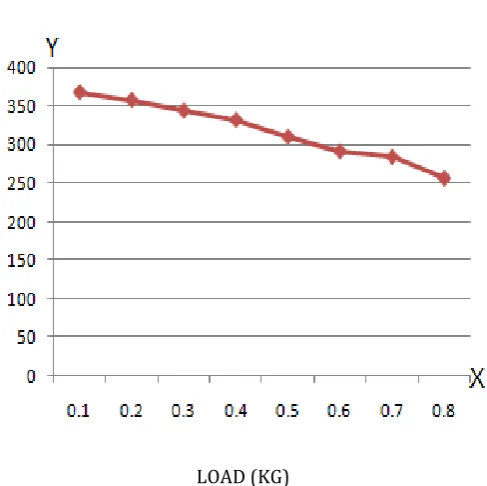
Figure 11: graph of speed vs brake load
Drum speed drops with increase in brake load.
BRAKE TORQUE (N-M)
[image:5.595.30.298.247.721.2]LOAD (KG)
© 2016, IRJET | Impact Factor value: 4.45 | ISO 9001:2008 Certified Journal
| Page 1289
%DECLERATION
[image:6.595.40.285.124.339.2]LOAD (KG)
Figure 13:graph of percentage deceleration vs brake load
The retardation / deceleration of drum increases with increase in brake load indicating the effectiveness of brake.
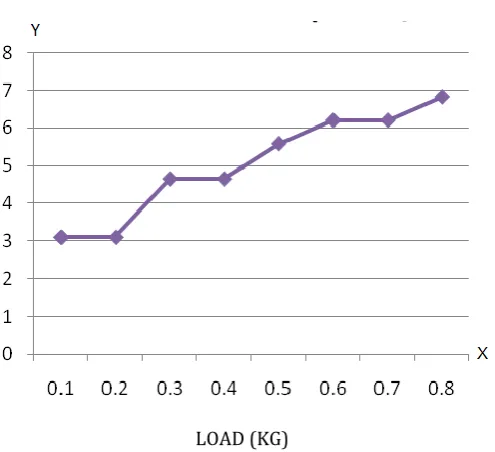
FADE VOLUME mm3/10000 cycles
LOAD (KG)
Figure 14:graph of fade volume/ 10000 cycles vs brake load
The fade volume /10000 cycles is limited to 6.8 mm3 which is far less than the allowable value of 40 mm3 for the FTL-097 material indicating excellent brake performance against fade by virtue of application of discrete brake liner button geometry.
FINAL RESULT AND DISCUSSION:
1. As the Equivalent Von-misses stress 0.5839 N/mm2 allowable stresses of 4 N/mm2 the brake liner is safe.
2. As the maximum stress intensity 0.598 N/mm2 allowable stress of 4 N/mm2 the brake liner is safe. Thus analytical design of the brake liner button is safe.
3. Drum speed drops with increase in brake load
4. The brake torque increases with increase in brake load
5. The retardation / deceleration of drum increases with increase in brake load indicating the effectiveness of brake.
6. The fade volume /10000 cycles is limited to 6.8 mm3 which is far less than the allowable value of 40 mm3 for the FTL-097 material indicating excellent brake performance against fade by virtue of application of discrete brake liner button geometry.
FUTURE SCOPE
The discrete brake liner with buttons in the present model will be fitted with graphite inserts to test the performance and comparative analysis of both arrangements will be done as future work in project and recommendations for various applications will be done on the basis of data derived from test and comparison.
ACKNOWLEDGMENT
I acknowledge and express my profound sense of gratitude and thanks to everybody being a source of inspiration during the experimentation.
First and foremost I am very thankful to Prof. A.B. Kakade, (H.O.D) Mechanical Engineering Department, NDMVP’s KBT COE, Nashik for providing help whenever needed.
The consistent guidance and support provided by Prof. D. V. Kushare is very thankfully acknowledged and appreciated for the key role played by him that enabled me in shaping the experimental work.
REFERENCES
[1] Bouchetara Mostefa, Belhocine Ali, Thermo elastic Analysis of Disk Brakes Rotor, American Journal of Mechanical Engineering, 2014; 2(4):103-113.
[image:6.595.40.288.435.661.2]© 2016, IRJET | Impact Factor value: 4.45 | ISO 9001:2008 Certified Journal
| Page 1290
[3] K. Sowjanya, Structural analysis of disk brake rotor, International Journal of compute trends and technology, July 2013;4(7)
[4] M.A. Maleque, A. Atiqah, New natural fiber reinforced aluminum composite for automotive Brake pad, International journal of mechanical and materials engineering, 2012; 7(2):166-170.
[5] A.M. Zaharudina, R.J. Talib, Taguchi method for optimizing the manufacturing parameters of Friction materials, International Journal of Mechanical and Materials Engineering, Vol. 7 2012;7(1) :83–88. [6] Zaid, An investigation of disc brake rotor by FEA, Wear
2009; (3)2
[7] Ji-Hoon Chio, Finite element Analysis of transient thermo elastic-behaviours in disk brakes, Wear, 2004; 257:47-58.
[8] Masahiro Kubota, Development of lightweight brake disc rotor: A design approach for achieving an optimum thermal, vibration and weight balance, JASE review 2000; 21:349-355.