Georgia State University
ScholarWorks @ Georgia State University
Economics Dissertations Department of Economics
Spring 8-1-2018
Essays on Public Health Insurance and Child
Health
Makayla Palmer
Follow this and additional works at:https://scholarworks.gsu.edu/econ_diss
This Dissertation is brought to you for free and open access by the Department of Economics at ScholarWorks @ Georgia State University. It has been accepted for inclusion in Economics Dissertations by an authorized administrator of ScholarWorks @ Georgia State University. For more information, please [email protected].
Recommended Citation
ABSTRACT
ESSAYS ON PUBLIC HEALTH INSURANCE AND CHILD HEALTH
BY
MAKAYLA PALMER
AUGUST 2018
Committee Chair: Dr. James Marton Major Department: Economics
This dissertation evaluates how publicly subsidized insurance programs impact fertility
decisions, maternity services, and the health of children. I focus on two types of subsidized
insurance: Medicaid, which is fully subsidized, and non-Medicaid subsidized insurance (NMSI)
plans, which are partially subsidized. The first two chapters uses variation from the Affordable
Care Act (ACA) to evaluate how eligibility for subsidized insurance affects birth related outcomes.
The first chapter examines changes to the birth rate and the second chapter evaluates prenatal care,
maternal health behaviors, delivery procedures, and birth outcomes. The third chapter focuses on
Medicaid and explores how a shift to managed care affected care utilization for foster children.
The ACA greatly expanded subsidized health insurance opportunities for low-income
childless women. This insurance provides better access to prescription-based contraception which
could reduce the number of births. At the same time, subsidized insurance creates an income effect
and lowers the price of childbirth for women who previously would not have qualified for
Medicaid-paid pregnancies. In the first chapter, I use simulated eligibility measures to examine
how Medicaid and NMSI policies impacted insurance enrollment and the birthrate for childless
effect on the birth rate, but that a 10 percentage point increase in NMSI eligibility increased the
birth rate between 0.6% and 1.5%, depending on the age group.
The second chapter focuses on maternity related health care utilization and outcomes.
While pregnancy-conditional Medicaid has covered maternity services for low-income pregnant
women since the 1980s, new eligibility for subsidized insurance prior to conception via the ACA
may improve timely prenatal visits and, in turn, pregnancy behaviors and outcomes. Additionally,
women eligible for subsidized Marketplace plans but not pregnancy-conditional Medicaid gained
access to subsidized maternity services. Overall, I find no changes in pregnancy and birth
outcomes from the Medicaid expansion, but do find evidence of reduced smoking behaviors and
increased breastfeeding arising from a higher share of women eligible for NMSI. Additionally, an
increase in the share of women eligible for NMSI and not pregnancy-conditional Medicaid reduced
the probability of Medicaid paid births.
The third chapter of this dissertation evaluates the impact of transitioning foster children
from fee-for-service Medicaid coverage to Medicaid managed care (MMC) on outpatient health
care utilization. A recent trend in state Medicaid programs is the transition of vulnerable
populations into MMC who were initially carved out of such coverage, such as foster children or
those with disabilities. There is very little empirical evidence on the impact of managed care on
the health care utilization of foster children because of the recent timing of these transitions as well
as challenges associated with finding datasets large enough to contain a sufficient number of foster
children for such analysis. Using administrative Medicaid data from Kentucky, a retrospective
difference-in-difference analysis compares the outpatient utilization of foster children transitioned
to MMC in one region of the state to foster children in the rest of the state who remained in
reduction in the probability of having any monthly outpatient utilization, as well as a reduction in
outpatient spending. This chapter is coauthored with James Marton, Aaron Yelowitz, and Jeffery
Talbert and is published in Inquiry. It is reproduced here under the creative commons
ESSAYS ON PUBLIC HEALTH INSURANCE AND CHILD HEALTH
BY
MAKAYLA PALMER
A Dissertation Submitted in Partial Fulfillment of the Requirements for the Degree
of
Doctor of Philosophy In the
Andrew Young School of Policy Studies
Copyright by Makayla Palmer
ACCEPTANCE
This dissertation was prepared under the direction of the candidate’s Dissertation
Committee. It has been approved and accepted by all members of that committee, and it has been accepted in partial fulfillment of the requirements for the degree of Doctor of Philosophy in Economics in the Andrew Young School of Policy Studies of Georgia State University.
Dissertation Chair:
Dr. James H. Marton
Committee: Dr. E. Kathleen Adams Dr. Charles Courtemanche Dr. Thomas Mroz
Electronic Version Approved:
Sally Wallace, Dean
Andrew Young School of Policy Studies Georgia State University
v
ACKNOWLEDGEMENTS
This process has been made possible, and far more enjoyable, thanks to all my wonderful
mentors, colleagues, friends, and family.
To my advisor, James Marton, you are were one of the reasons I came to Georgia State and
it has been such a pleasure to work with you. You are a true mentor-type and I have greatly
benefited from your technical expertise and your ability to communicate how to strategically
navigate through a range of professional situations. Thank you, Tom Mroz and Charles
Courtemanche, for your excellent feedback during each step of this process and instilling in me a
critical thoughtfulness to econometric methods. Thank you, Chuck, for getting me involved on
research early when I was your research assistant. Thanks, Tom, for the generous time you spent
brainstorming through problems with me. To Kathleen Adams, I am so grateful for your expertise
around Medicaid and pregnancy-related policies and your willingness to share it. Thank you,
Rusty Tchernis, for setting your expectations of me so high and making me scared to disappoint
you, while also making it clear how much you cared. I would like to broadly thank the Economics
Department, my professors and those I simply interacted with, for being so friendly and helpful. I
am very appreciative of the fellowships, internal grants, scholarships, and travel reimbursement
which the department provided. To Bess Blyler, thanks for always being on top of everything and
making my life so much easier administratively.
Thank you to my classmates who learned alongside me, shared advice and ideas, and let
me process thoughts out loud. Carycruz Bueno-Thorman, Augustine Denteh, Lindsay Allen, and
Elizabeth Case, you have been critical to my success and in particular I want to thank each of you
vi
transportation. To Honglin Ren, Yaqin Liu, Jarod Apperson, María Camila Morales, and Kalee
Burns, thanks for being good friends and great researchers. I am grateful to the large number of
thoughtful economists in Georgia State’s PhD program and I look forward to working with you
throughout the years to come.
Additionally, I have some of the most incredible friends who spent many hours working
alongside me in coffee shops or my apartment. When times were hardest, you all volunteered help
in such thoughtful ways and were there to encourage me and pray for me. I am deeply grateful for
you: Jim Grandits, Amber Wilson, Elisabeth Hooker, James Lavender, Casey Hawley, Cindy
Cocks, Chip Cocks, Rachel Thigpen, Chris Keating, Seth Rikard, Ben Johnson, Catherine
Aslinger, and Rebecca Roth.
To my intelligent and curious parents who inspire me and support all my endeavors, thank
you. I also thank you for raising my incredible siblings Nathan, Doug, and Rachael. To my siblings,
you three are each so uniquely accomplished and I have to work hard not to not fall behind you. I
love and appreciate you all and am so fortunate to call you my family.
Ultimately, I would like to thank God the Father, through whom all these gifts flow, for
abundantly providing me with all the things I needed to abound in this work. You have worked
some of the sweetest miracles for me during this time and I have been repeatedly touched by your
vii
TABLE OF CONTENTS
ACKNOWLEDGEMENTS v
LIST OF TABLES ix
LIST OF FIGURES x
LIST OF ABBREVIATIONS xi
INTRODUCTION 1
CHAPTER 1. EFFECT OF PUBLICLY SUBSIDIZED HEALTH INSURANCE
ON THE BIRTH RATE 5
1.1 Introduction 5
1.2 Policy Background 8
1.2.1 Before the Affordable Care Act 9
1.2.2 Affordable Care Act 11
1.3 How the ACA May Impact Births 15
1.3.1 Insurance and cheaper contraception 18
1.3.2 Insurance and cheaper maternity services 20
1.3.3 ACA and insurance take-up 22
1.4 Data 23
1.4.1 American Community Survey and Eligibility 23
1.4.2 Natality Records for Birth Data 27
1.5 Methods 30
1.5.1 Triple-Difference 31
1.5.2 Simulated Eligibility 33
1.5.3 Two-Stage Least Squares 38
1.5.4 Detailed Eligibility which includes pregnancy-conditional Medicaid 39
1.5.5 Validity Checks 40
1.6 Results 42
1.6.1 Insurance Enrollment Results 42
1.6.2 Birth Rate Results 45
1.6.3 Enrollment on the Birth Rate 48
1.6.4 Detailed Eligibility Measures: 50
1.6.5 Alternative Specification: DD and DDD 52
1.6.6 Validity Checks 55
1.7 Discussion and Policy Implications 57
CHAPTER 2. SUBSIDIZED INSURANCE AND PRENATAL CARE,
MATERNAL HEALTH AND BIRTH OUTCOMES 61
2.1 Introduction 61
2.2 Background 64
2.2.1 Pregnancy-conditional Medicaid 64
2.2.2 Private Insurance and Maternity Services 67
viii
2.2.4 Influencing Birth Outcomes 73
2.3 ACA’s Potential Impacts 75
2.4 Methods 79
2.4.1 Considering pregnancy-conditional Medicaid 82
2.4.2 Robustness Checks 83
2.5 Data 85
2.5.1 Eligibility and Control Variables 86
2.5.2 Pregnancy and Birth Outcomes from Vital Statistics 87
2.5.3 Birth variables 89
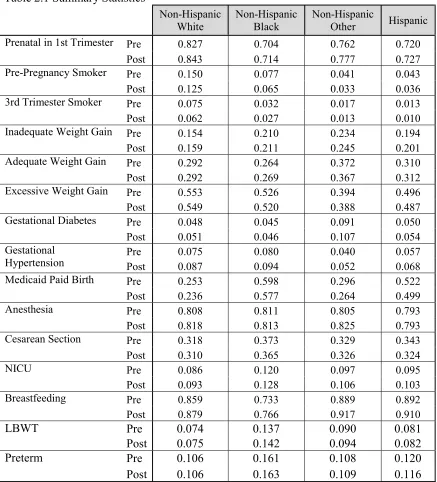
2.5.4 Summary Statistics and Racial Disparities 91
2.6 Results 92
2.6.1 Results Considering Policy Interactions 97
2.6.2 Robustness checks 100
2.7 Discussion 101
2.8 Conclusion 104
CHAPTER 3. MEDICAID MANAGED CARE AND THE HEALTH CARE
UTILIZATION OF FOSTER CHILDREN 107
3.1 Introduction 107
3.2 Data and Methods 110
3.2.1 Natural experiment 110
3.2.2 Data 113
3.2.3 Data Analysis 113
3.3 Results 115
3.3.1 Descriptive Results 115
3.3.2 Regression Results 117
3.4 Discussion 121
Supplemental Material for Chapter 1 124
A.1 Policies and Eligibility Groups Example 129
Supplemental Material for Chapter 2 134
B.1 Placebo Tests Robustness Checks 138
ix
LIST OF TABLES
Table 1.1 Summary Statistics 26
Table 1.2 Eligibility Effects on Enrollment 43
Table 1.3 Eligibility Effects on Monthly Birth Rate 46
Table 1.4 Enrollment Effects on the Annual Birth Rate 49
Table 1.5 Detailed Eligibility Results 51
Table 1.6 DD and DDD Results 54
Table 1.7 Teens as a Falsification Test 56
Table 2.1 Summary Statistics 90
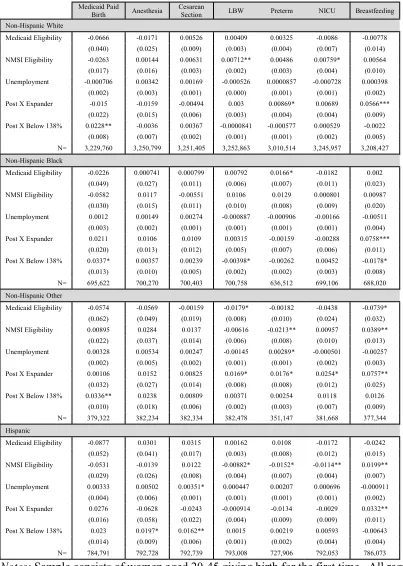
Table 2.2 Medicaid and Non-Medicaid Subsidized Eligibility on Pregnancy Outcomes
94
Table 2.3 Medicaid and Non-Medicaid Subsidized Eligibility on Delivery Outcomes
96
Table 2.4 Detailed Eligibility Interactions on Pregnancy Outcomes 98 Table 2.5 Detailed Eligibility Interactions on Delivery Outcomes 99
Table 3.1 Descriptive Statistics 116
Table 3.2 Regression Results 118
Table 3.3 Robustness Tests 120
Table A.1 Pre-ACA State Plans 126
Table A.2 Subsidized Insurance Program Policies in Nevada 129 Table A.3 Detailed Eligibility Groups for Medicaid in Nevada 129
Table A.4 Event Study 132
Table A.5 Placebo Test 133
Table B.1 Event Study of Pregnancy Outcomes 134
Table B.2 Event Study of Delivery Outcomes 136
Table B.3 Placebo Test--First Set of Outcomes 138
Table B.4 Placebo Test--Second Set of Outcomes 139
Table B.5 Placebo Test--Third Set of Outcomes 140
x
LIST OF FIGURES
Figure 1.1 Trends in the Monthly Birth Rate by Age Group 29
Figure 1.2 Medicaid and NMSI Eligibility Increases by State Expansion Date
35
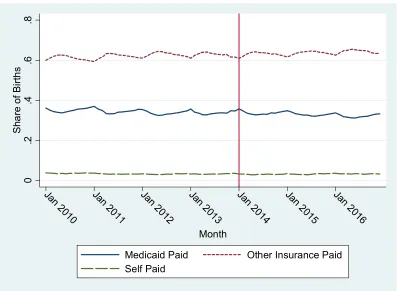
Figure 2.1 Payment Sources for Births 72
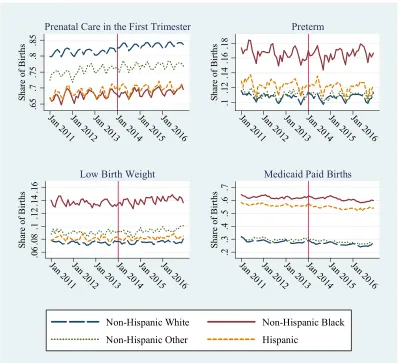
Figure 2.2 Pregnancy Related Outcomes by Race 91
Figure 3.1 Map of Kentucky Region and Country Share of Medicaid Foster Children in January 1999
111
Figure 3.2 Timing of Medicaid Managed Care Transitions for Children in the Louisville Region Kentucky
112
Figure 3.3 Kentucky Foster Care Utilization Trends in 1999 119
Figure A.1 Uninsurance Rate for Females by Age 124
Figure A.2 Flow Chart of Demographic Groups 125
Figure A.3 Insurance Enrollment by When States Expanded Medicaid 127 Figure A.4 Monthly Birth Rates by When States Expanded Medicaid 128
Figure A.5 Changes in Detailed Eligibility Measures 130
xi
LIST OF ABBREVIATIONS
AFDC Aid to Families with Dependent Children ACA Affordable Care Act
ACS American Community Survey BMI Body mass index
CMS Center for Medicaid and Medicare Services DD Difference-in-difference
ESI Employer sponsored insurance FFS Fee-for-service
IOM Institute of Medicine IV Instrumental Variable KFF Kaiser Family Foundation LBW Low birth weight
MCO Managed care organization MMC Medicaid managed care NICU Neonatal intensive care unit
NMSI Non-Medicaid subsidized insurance SSI Supplemental Security Income
TANF Temporary Assistance for Needy Families DDD Triple-Difference
1
INTRODUCTION
This dissertation analyzes how publicly subsidized health insurance impacts outcomes
related to populations with substantial medical costs: pregnant women, newborns, and foster
children. The first chapter addresses how subsidized insurance affects the birth rate, and the second
delves into health care utilization during pregnancy and delivery, maternal health behaviors, and
birth outcomes. The third chapter uses a natural experiment to measure how health care utilization
changes when foster children transition from fee-for-service (FFS) Medicaid to Medicaid managed
care (MMC).
In 2010, when the Affordable Care Act (ACA) was passed, affordable and comprehensive
insurance coverage for childless women was primarily limited to employer sponsored insurance
(ESI) plans. Medicaid covered low income adults who met both financial and categorical eligibility
requirements. Children, pregnant, parents, elderly, the blind, and disabled were categorically
eligible for Medicaid, but the majority of childless adults did not meet one of these categories and
were therefore ineligible for Medicaid regardless of their incomes. The non-group insurance
market frequently excluded maternity services, charged women higher premiums, and could
consider pregnancy a pre-existing condition (Garrett et al, 2012). Consequently, women
experienced the highest rates of uninsurance during their reproductive years which could have
important ramifications for maternity related outcomes such as the birth rate, prenatal care
utilization, behaviors during pregnancy, and birth outcomes.
Concern over the lack of insurance for soon-to-be mothers prompted the expansion of
Medicaid to low-income pregnant women in the late 1980s. The Institute of Medicine (IOM) found
2
insurance. Consequently, the IOM determined expanding Medicaid could help improve birth
outcomes and reduce racial disparities in prenatal care and birth outcomes (IOM, 1985). Starting
in 1989, all states have been required to cover pregnant women up to 133% of the federal poverty
line and many cover pregnant women to even higher income thresholds.
Medicaid coverage for low-income, pregnant women has been an important provider of
maternity services, paying for 43% of births to U.S. women of childbearing age in 2010 (author’s
calculation using VS data). However, several potential gaps remain. First, childless, non-pregnant
women who lack insurance coverage face difficulties accessing prescription birth control methods,
which are the most effective forms of contraception. Lack of contraception access may cause
higher rates of unintended pregnancies and more Medicaid-paid births, which is supported by
evidence from programs providing contraception to low-income individuals (Kearny & Levine,
2009; Lindrooth & McCullough, 2007; Sills, 2008; Adams et al., 2015). Additionally, women who
are ineligible for Medicaid until they are pregnant may experience delays in prenatal care because
of lack of awareness of their eligibility or difficulties in enrolling and making appointments using
an unfamiliar insurance plan. Prior to the ACA, women without ESI and incomes above the
pregnancy-conditional Medicaid thresholds may have lacked access to contraception services as
well. Even more importantly, these women likely lacked coverage for maternity services which
would make births incredibly costly medical events.
The first two chapters of this dissertation analyzes how access to subsidized health
insurance for childless women affects birth related outcomes which could be influenced by
improved access to contraception, cheaper maternity services, and an income effect. The first
3
other birth related outcomes such as the timeliness of prenatal care, maternal behaviors during
pregnancy, birth procedures, and birth outcomes.
These two chapters focus on subsidized insurance stratified into two types: Medicaid,
which is fully subsidized, and non-Medicaid subsidized insurance (NMSI) plans, which are
partially subsidized. The NMSI plans include some state-level plans prior to the ACA and
subsidized Marketplace plans. I measure the extent of eligibility for these two categories of
subsidized insurance using simulated eligibility measures and I structure the framework of my
analysis using a triple-difference approach. The data on births come from all U.S. birth records
from 2011-2016 provided by the National Center for Health Statistics. I utilize the American
Community Survey to create eligibility measures and estimate insurance related effects.
The first chapter finds that the Medicaid eligibility increased the share of women enrolled
in Medicaid while NMSI eligibility increased the share enrolled in non-Medicaid insurance. I find
no significant effects on the birth rate resulting from increased Medicaid eligibility, but I find that
NMSI eligibility increased the birth rate between 0.6% and 1.5%, depending on the age group. In
the second chapter, I find no significant impacts stemming from Medicaid eligibility, but find
improvements in birth related outcomes from NMSI eligibility concentrated in areas related to
preventative care, which benefited from additional ACA policies. I find NMSI eligibility reduced
pre-pregnancy smoking among mothers and produced small, but statistically significant,
improvements in the probability a baby is breastfeeding when leaving the hospital. I also find that
a higher share of women eligible for NMSI before and during pregnancy lead to reductions in the
probability that a birth was paid for by Medicaid.
The third chapter shifts the focus to foster children and changes within Medicaid. Foster
4
neglect. Medicaid provides health services for these children and has special policies to help insure
they receive adequate care. Medicaid experienced large movements towards MMC plans in the
1990s (Kaye et al, 1999); however, states often kept foster children in FFS plans due to concerns
that capitated rates and primary care gatekeepers may prevent foster children from accessing
necessary care. While states continue to move foster children to MMC plans, Kentucky
mandatorily moved foster children in part of the state into managed care in 1999.
Together with my coauthors, I use administrative data from Kentucky to analyze how the
transition from FFS to MMC affected utilization for foster children. We use a
difference-in-difference approach to model the Kentucky natural experiment by comparing foster children who
remained in FFS with those who were moved into MMC before and after the transition. We find
reductions in outpatient utilization at the extensive and intensive margins, however, the
magnitudes of these reductions were similar to ones found for non-foster children who previously
5
CHAPTER 1.
EFFECT OF PUBLICLY SUBSIDIZED HEALTH
INSURANCE ON THE BIRTH RATE
1.1 Introduction
The rate of uninsurance for women spikes during the late teens and remains high
throughout their reproductive years. In 2010, the share of female teenagers 13-18 years old without
health insurance was 10.74% while the share for women 19-45 was more than twice that at 22.25%
(ACS data). Lack of insurance brings two unique problems for reproductive aged women: avoiding
pregnancy and paying for pregnancy.
Low-income women are often employed in jobs without benefits such as health insurance.
In addition, premiums for non-group coverage have been prohibitively expensive, charged women
more than men, and rarely included maternity care (Garrett et al., 2012). Given the lack of
insurance access for low-income, reproductive-aged women, there have been several important
public health policy interventions aimed to improve coverage of maternity services over the past
several decades. In the late 1980s, Medicaid was expanded to provide coverage for low-income
pregnant women to fully cover health expenditures related to their prenatal care, deliveries, and
postpartum care. However, granting Medicaid eligibility to low-income pregnant women does not
provide assistance for low-income childless women trying to avoid becoming pregnant.
Prior to the Affordable Care Act (ACA), childless adults did not fit one of the federally
outlined categories for Medicaid eligibility: children, pregnant women, parents, elderly, the blind,
and/or disabled. This meant that childless adults were ineligible for Medicaid regardless of how
low their income was. Recognizing that low-income women struggled with obtaining
low-6
income populations in order to prevent Medicaid-paid births. Numerous studies (Adams et al.,
2015; Kearney & Levine, 2009; Lindrooth & McCullough, 2007; Sills, 2008) found that these
programs were effective at reducing births.
When the ACA passed in 2010, it created opportunities to provide all adults up to
400%FPL with some degree of subsidized health insurance. As written, the initial legislation
expanded Medicaid eligibility up to 138%FPL, while those between 139 and 400%FPL could
receive sliding scale subsidies for insurance purchased through the new, non-group insurance
exchange system called the Marketplace. However, a Supreme Court decision in 2012 made the
Medicaid expansion optional for states. In January 2014, subsidized Marketplace plans took effect
in all states and the Medicaid expansion took effect in states which chose to expand at that time.
In states that did not expand Medicaid, a “coverage gap” was created as childless adults with family
income below 100%FPL did not qualify for Medicaid but were also too poor to qualify for
Marketplace subsidies.
The purpose of this chapter is to determine whether subsidized insurance eligibility impacts
fertility for childless women. Since the subsidized ACA insurance programs provide women with
access to free contraception, women gaining coverage may increase the quantity and/or quality of
contraception consumed, which may lead to fewer births. On the other hand, subsidized insurance
reduces pregnancy-related expenses for women who had previously lacked insurance for maternity
services, which may lead to more births. Additionally, subsidized insurance creates an income
effect by freeing up family resources that were previously going towards insurance purchases
which could improve families’ ability to afford children.
This paper uses data based on birth certificate records for the universe of US births from
7
eligibility approach developed by Currie and Gruber (Currie & Gruber, 1996a, 1996b, 2001) where
I divide women into demographic groups and then measure the share of a nationally representative
sample of low-income women in each group eligible for subsidized insurance in each month and
in each state according to that state’s laws. This measure of access to publicly subsidized coverage
is created using the American Community Survey (ACS) and lagged for gestational age to measure
eligibility at the time of conception. I create eligibility measures for two types of insurance:
Medicaid and “non-Medicaid subsidized insurance” (NMSI). Medicaid insurance plans are
generally a fully-subsidized form of public insurance whereas NMSI plans may only be partially
subsidized. Non-Medicaid plans include publicly subsidized health insurance programs for
childless adults that existed in some states prior to the ACA expansion and subsidized Marketplace
plans.
I find eligibility has a significant impact on the birth rate, but the effects vary by type of
insurance. While I find no statistically significant effects on the birth rate as a result of increased
Medicaid eligibility, increases in NMSI eligibility increase the birth rate. I stratify the results by
age given the significantly different baseline birthrates and trends between age groups. I find a 10
percentage point increase in NMSI eligibility produces a 0.6% increase in the birth rate for women
20-24, 0.7% increase for women 25-34, and 1.46% increase for women 35-45. The differences in
effects of these two types of eligibility reflect the fact that women eligible for the Medicaid
expansion received a larger reduction in the price of contraception relative to maternity services
while women eligible for Marketplace subsidies received a larger relative reduction in the cost of
maternity services.
This paper makes several contributions to the literature. The primary contribution is that,
8
stemming from the Medicaid and Marketplace expansion of the ACA impacted the birth rate. To
do this, I build upon a triple-difference (DDD) methodology by using simulated eligibility
measures for Medicaid and NMSI eligibility. Since the simulated eligibility approach enables me
to use more sources of variation than a standard DDD, I can include information on state-level
subsidized health insurance plans that existed for childless adult prior to the ACA. I model the
effects of changes in Medicaid and NMSI eligibility simultaneously, which is important because
eligibility for these programs is interconnected since the size of the expansion of one effects the
size of the expansion of the other. Frean et al. (2017) also use simulated eligibility and DDD
methods to study how multiple aspects of the ACA affected insurance enrollment, but this appears
to be the first paper to use simulated eligibility to look at outcomes beyond enrollment. This paper
also adds to numerous studies on how the ACA impacted enrollment (Charles Courtemanche et
al., 2017; C. Courtemanche et al., 2016; Frean et al., 2017; Kaestner et al., 2017), though I focus
on a special population: reproductive-aged, childless women. Since insurance eligibility should
only affect the birth rate through insurance enrollment, I use the analysis of insurance enrollment
as a first step and later use a two-stage least squares method to estimate the effect of instrumented
enrollment on the birth rate.
1.2 Policy Background
To describe how the ACA overhauled the American health care system, it is necessary to
first outline how private and public health insurance operated before the ACA. This section will
describe some of the coverage challenges and health assistance policies related to childless adults.
It will then explain how the ACA affected this group with a particular focus on insurance issues
9 1.2.1 Before the Affordable Care Act
Among childbearing aged women (those 15-45 years old) in 2010, the majority (55.38%)
had employer sponsored insurance (ESI) (ACS data). Employers and employees split the cost of
this insurance and these plans must provide employees and their spouses with maternity services
(Andrews, 2012; Norris, 2017).
Individuals who did not have ESI could purchase insurance through the non-group market;
however, coverage was expensive and often excluded important services. A study done on the
best-selling non-group plans in 2012 found that 92% were gender-rated, meaning they charged
women more than men of the same age for identical coverage. The vast majority of non-group
insurance plans did not include maternity coverage. Among the plans studied in 2012, only 12%
included maternity coverage, but this varied widely by state and 25 states (of the 47 states and DC
studied) had no non-group providing maternity coverage. In some places, women could purchase
a “rider” for maternity coverage separately, but they were often prohibitively expensive, had wait
periods, and were limited in scope (Garrett et al., 2012). Paying for prenatal care, delivery, and
postpartum care out-of-pocket is expensive. Based on data from 2010, the average cost of
non-complicated vaginal birth exceeded $8000 and a non-non-complicated caesarean section was over
$14,000 (Childbirth Connection, 2012).
Medicaid coverage was available to people who met both financial and categorical
eligibility requirements. Medicaid is a federal and state partnership where each state administers
their own program according to certain federal policies and the federal government reimburses
states for part of the cost. Under the federal guidelines, eligible populations consisted of children,
pregnant women, parents, disabled, or elderly and each eligibility category had separate financial
10
for each eligibility categories, but states have the ability to choose their own income thresholds
within those bounds, creating inter-state variation. Medicaid typically has neither premiums nor
copays so beneficiaries receive fully subsidized health care.
During the 1980s, concerns about income-related birth outcome disparities motivated the
expansion of Medicaid to cover low-income pregnant women and their infants (Alexander &
Kotelchuck, 2001; Institute of Medicine, 1985; Lu & Halfon, 2003). By 1989, the federal
government required states to provide Medicaid to all pregnant women up to 133%FPL and
allowed states to expand eligibility for this group to even higher income thresholds (DeLeire et al.,
2011). In 2013, the median income threshold among states was 185%FPL and nationwide
Medicaid paid for over 43% of births to U.S. residents of childbearing age (Heberlein et al, 2013;
Vital Satistics (VS) data). Pregnancy-conditional Medicaid fully subsidizes pregnancy related
services including prenatal care, delivery, and 60 days of postpartum care.
In addition to pregnant women, all states are required to offer Medicaid to low-income
parents, though the income thresholds are sustainably lower. The federal minimum for the parent
eligibility category is the state’s 1996 Aid to Families with Dependent Children income threshold.
In 2013, the median Medicaid income threshold among states for working parents was 64%FPL,
about a third of the median threshold for pregnant women (Heberlein et al., 2013).
Prior to the ACA, standard Medicaid did not cover non-elderly, non-disabled, childless
adults regardless of their income because this population was not categorically eligible for
coverage. However, states could apply for a waiver from Center for Medicaid and Medicare
Services (CMS) to offer Medicaid to childless adults. In order to do this, it needed to be
cost-neutral at the federal budget level which was often done by reallocating disproportionate share
low-11
income adults that were state-funded plans which received no reimbursement from the federal
government. In 2013, 25 states had some type of publicly subsidized insurance program for
low-income childless adults; however nine of those states’ plans had reached the enrollment caps and
two more states’ plans were restricted to employees of small companies (Heberlein et al., 2013).
In the appendix, Table A.1 contains a list of plans that were available to childless adults based
solely on their income, meaning it excludes waitlisted programs and those that operate through
subsidies for participating employers. Insurance plans that I classified as “Medicaid” based on
information from the Kaiser Family Foundation (KFF) are denoted with an asterisk (KFF, 2017a).
New York’s “Family Health Plus” plan is an example of a waiver-funded Medicaid
program. It offered insurance to adults up to 100%FPL with modest copays but no premiums.
Alternatively, Pennsylvania’s “adultBasic” plan was state-funded, covered adults up to 200%FPL
before it reached capacity, and had copays as well as premiums (KFF, 2010)(KFF, 2010)(KFF,
2010)(KFF, 2010)(KFF, 2010)(KFF, 2010)(KFF, 2010)(KFF, 2010)(KFF, 2010)(KFF,
2010)(KFF, 2010)(KFF, 2010)(KFF, 2010). Although it is not feasible to model the intricacies of
what the plans’ premiums and copays were or the type of benefits covered, this paper does take
into account the income thresholds of these pre-ACA subsidized insurance plans for low-income,
childless adults.
1.2.2 Affordable Care Act
The ACA overhauled the American health care system with a goal of reducing the number
of Americans without comprehensive insurance. It reformed the non-group health insurance
market so people could not be denied coverage or charged more for preexisting conditions or
gender. To do this without drastically raising the prices of insurance, the ACA needed to
12
insurance pools. Thus, the ACA mandated that everyone have insurance and created penalties for
those without. In order to make the mandatory insurance affordable, the ACA drastically expanded
eligibility for publicly subsidized health insurance.
The ACA created a new, non-group health insurance system called the Marketplace.
Individuals between 100 and 400%FPL who lacked access to other insurance plans with minimum
essential coverage could receive subsidies for Marketplace plans ((26 U.S.C. § 36b (c)(1)(A); (26
U.S.C. § 36b (c)(2)(B)(i))). These subsidies decrease with an individual’s income, and those
ineligible for subsidies could purchase Marketplace plans at full price. Those with incomes at or
below 138%FPL, were eligible for fully subsidized insurance through Medicaid. This move away
from the historic categorical eligibility requirements meant that low-income childless adults could
now be Medicaid eligible.
However, in an unanticipated decision, the Supreme Court ruled in 2012 that requiring
states to expand Medicaid was unconstitutional. States were then given the option to expand
Medicaid or not. Five states and the District of Columbia chose to implement an early Medicaid
expansion before January 1, 2014, the original start date outlined in the ACA. On January 1, 2014,
Medicaid expansion became effective in another 19 states. Between February 2014 and February
2016, six more states expansions went into effect. As of February 2016, 30 states and the District
of Columbia had expanded their Medicaid program and 20 have not (KFF, 2017d).
The Supreme Court’s ruling did not affect the tax subsidies for Marketplace plans so these
subsidized plans became effective in all states January 1, 2014.1 Plans purchased on the
Marketplace can qualify for two types of subsidies: premium tax credits and cost sharing reduction
(CSR) subsidies. The premium tax credits cap the share of income that people pay on premiums.
13
The CSR subsidies lower a plan’s deductible, copays, and out of pocket maximum. The value of
these subsidies varies based on an individual’s income, what plans are available in their area, what
plan they choose, and how much care they use (Norris, 2018).
As a consequence of the Medicaid expansion being optional, subsidized insurance
opportunities available vary by state. In non-Medicaid expansion states, Medicaid maintained the
system of categorical and financial eligibility requirements under which childless adults remain
ineligible. Childless adults between 100 and 400%FPL became eligible for Marketplace subsidies.
In expansion states, adults up to 138%FPL became eligible for Medicaid and adults between 139
and 400%FPL became eligible for Marketplace subsidies. Since Medicaid meets the minimum
essential coverage requirements (26 U.S.C. § 5000A (f)(1)(A)(ii)), people eligible for Medicaid
are not eligible for Marketplace subsidies. This explains why the income threshold lower-bound
for Marketplace subsidies in expansion states is 138%FPL instead of 100%FPL. In expansions
states, all adults below 400%FPL are eligible for some form of subsidized health insurance, but in
non-expansion states those below 100%FPL fall into the coverage gap. Too poor to qualify for
Marketplace subsidies, but also ineligible for Medicaid unless they met pre-ACA Medicaid
eligibility requirements, the ACA did expand any form of subsidies for this group. In 2016, an
estimated 2.6 million adults were in this situation (Garfield & Damico, 2016).
In addition to the Marketplace subsidies, other aspects of ACA’s reforms to the non-group
improved the situation for women. Under the ACA, gender-rating is no longer allowed. Maternity
care and childbirth are considered essential health benefits and must be included in all qualified
health plans. Additionally, some pre and postnatal care services are considered preventive care
14
services must be provided without copayments or coinsurance even before the yearly deductible
is met (Healthcare.gov, 2017).
Beyond the Medicaid and Marketplace expansion, there were some additional aspects of
the ACA which are relevant for childbearing decisions. The first is the requirement that all new,
private health insurance plans provide at least one of all the 18 FDA-approved categories of female
contraception without a copay (Sobel et al., 2016).2 This provision took effect August, 2012 but
the changes were made to insurance plans when the contracts were renewed (Carlin et al., 2016;
Sobel et al., 2016).
While the contraception mandate is related to the larger question of how access to
affordable and effective contraception impacts the birth rate, this paper focuses on the effects of
eligibility for subsidized insurance rather than specifics of those plans. Medicaid does not have
copays, so people eligible for Medicaid have always had no cost sharing on contraception.
Marketplace plans where not established until after the contraception mandate took place and
therefore have also always had no-cost sharing for contraception.
Another provision allows young adults to stay on their parents’ ESI plans until they turned
26. This provision took effect September 2010 but some insurers voluntarily agreed to allow this
earlier (Akosa Antwi et al., 2013). This increased the number of young adults who had health
insurance by around 5 percentage points depending on the study (Akosa Antwi et al., 2013;
Barbaresco et al., 2015; Sommers et al., 2012). To avoid changes in coverage and childbearing
15
decisions due to the dependent coverage mandate, I start the analysis with data on 2011
conceptions.
1.3 How the ACA May Impact Births
Gaining access to insurance for women of reproductive health could affect the birth rate
through several different channels, and the overall direction will depend on which of these
channels dominates. This section will outline some of those channels and review related literature
to inform our understanding of the various channel’s effects from other contexts.
Subsidized insurance could reduce the birth rate by improving access and affordability of
the most effective forms of birth control. Improved contraception could lead to fewer unintended
pregnancies and births. Unintended pregnancies are classified as “unwanted,” meaning the mother
did not want to become pregnant any time in the future, or “mistimed” meaning the mother wanted
to become pregnant later than she did (Alan Guttmacher Institute, 2016; Kost, 2015). Focusing on
the short term effects of expanding insurance is beneficial because it has the potential to detect
reductions in both unwanted and mistimed births. As pregnancies that would have been mistimed
are delayed to their intended times, there could be some reversion.
Of course, not all unintended pregnancies result in births. Abortions could mitigate the
effects of eligibility on births. Every pregnancy results in one of three outcomes: a birth, an
abortion, or a loss. Holding losses constant, reductions in unintended pregnancies could manifest
themselves as fewer births or fewer abortions. If all unintended pregnancies resulted in abortions,
then improved access to contraception would reduce the number of abortions, but not the number
of births. In actuality, about 43% of unintended pregnancies result in abortions, which would
absorb a sizeable share of the effect of contraception on births (L. B. Finer & Zolna, 2011).
16
subsidized insurance affects unintended pregnancy rates, but given the longer delay on abortion
data, such an analysis now would be premature.
The effects of improved access to contraception are likely larger for women gaining
coverage through the Medicaid expansion and younger women. In 2010, the unintended pregnancy
rate was five times higher for women below the federal poverty line than those at 200%FPl and
higher (L. B. Finer & Zolna, 2011). Since the former group is eligible for Medicaid (in states which
expanded) and the latter is eligible for NMSI, there is more room to reduce unintended pregnancies
among the Medicaid eligible group. Additionally, while the share of pregnancies that are
unintended is highest among teens, the rate of unintended pregnancies (how many unintended
pregnancies there are per 1,000 women) is highest among 20-24 year olds (L. B. Finer & Zolna,
2011). Consequently, the effects of improved access to contraception (via an expansion in
coverage) may have the largest impact on births for women 20-24.
Subsidized insurance also subsidizes maternity services, which could financially enable
more women to have children. Prior to the ACA, low-income women could use Medicaid to pay
for prenatal, childbirth, and postnatal care. For women with incomes low enough to qualify for
Medicaid when pregnant, childbirth was essentially free. However, for women above the income
thresholds for Medicaid for pregnancy and without group health insurance, the costs were
substantial. Women under 138%FPL who qualify for Medicaid under the Medicaid expansion
would have qualified for Medicaid for pregnancy prior to the expansion in all states. For these
women, the expansion did not change the cost of childbirth. However, for women above their
state’s Medicaid threshold for pregnant women and below 400%FPL, insurance coverage greatly
reduced the cost of childbirth. The upward pressure on the birth rate which stems from cheaper
17
are more likely to have pregnancy complications which makes giving birth more expensive,
subsidized maternity services likely larger for older mothers. Older women may also have felt
more pent-up demand for a child or feel more urgency to have a child which could make this group
more responsive to subsidized maternity services.
At a more general level, both Medicaid and NMSI coverage contain an income effect. By
subsidizing the cost of health insurance prior to conception and foreseeably afterwards, women
have more money which can be spend on children, which could manifest through either a higher
quantity or quality of children. There is some evidence that children are “normal goods” (G. S.
Becker, 1960), implying more income from subsidizing insurance would lead to more children;
but the elasticity of quality is likely higher than the elasticity of quantity for children which
suggests that more of the income would go to increasing quality (G. S. Becker, 1960; G. S. Becker
& Lewis, 1973). While subsidies represent a new source of income for women who insurance
without the ACA expasion and Medicaid enrollees, the income effect is less clear for newly insured
women who take up NMSI plans. If these women purchased insurance because of the ACA, their
income less health expenditures may fall.
Insurance could also increase coverage for infertility treatments or abortions. However, the
majority of Medicaid and Marketplace plans do not cover infertility treatment (Devine et al., 2014;
Schwalberg et al., 2001). Federal funding cannot be used to fund abortions except for pregnancies
that endanger the mother’s life or are the result of rape or incest, and that applies to both Medicaid
and Marketplace plans. Medicaid covers abortions in 17 states using state funds (Guttmacher
Institute, 2018). Since state-funded abortions were part of Medicaid in those states for pregnant
women prior to the ACA, expanding Medicaid eligibility for childless adults does not expand
18
administrative complexity because the federally funded premium and cost sharing reduction
subsidies cannot help fund abortions. Plans must charge an additional premium to cover abortion
coverage (typically $1 per enrollee per month) and are subject to additional reporting and audit
requirements. In 2015, 25 states had laws prohibiting Marketplace plans from covering abortion
and another 6 states had no laws against abortion coverage but no Marketplace plans chose to offer
it. An estimated 62% of uninsured women eligible for subsidies could not choose a Marketplace
plan with abortion coverage (Salganicoff et al., 2016).
1.3.1 Insurance and cheaper contraception
Several different types of studies have shown that improving access and the cost of
contraception increases utilization and reduces births. This has shown to be true for Medicaid
family planning waivers in low-income populations, in private populations from state
contraception mandates, and also from the ACA’s contraception mandate.
States recognized that the lack of access to contraception for low-income populations
resulted in a number of unintended births which were likely paid for by Medicaid. Given the low
price of contraception relative to the cost of maternity services, contraception is highly cost
effective (Mavranezouli, 2009). States reasoned they could save money by using Medicaid funds
to pay for contraception for low-income adults if the program averted enough births among women
who would become Medicaid eligible if pregnant. In order to use Medicaid funds in this
non-standard way, a state needed a Section 1115 waiver approved by the CMS which required the
program to be cost neutral at the federal level.
Several evaluations of family planning waivers found they are effective at reducing births
(Kearney & Levine, 2009; Lindrooth & McCullough, 2007; Sills, 2008). One multi-state
19
4% (Kearney & Levine, 2009). Specifically, these programs seemed to reduce births from
unintended pregnancies. A study of Illinois and New York’s waivers found a reduction in the share
of Medicaid-paid births that stemmed from unwanted pregnancies by almost 5 percentage points,
and a waiver in Oregon reduced the share which were mistimed pregnancies by almost 9
percentage points (Adams et al., 2015). The reductions in births have made the waivers
consistently cost neutral or even cost savings at the federal level. With the cost effectiveness of
these programs established, the ACA included a provision for states to provide family planning
services in this way using a state plan amendment which does not have to be regularly renewed
like a waiver (Ranji et al., 2016). As of January 2014, thirty-one states had family planning
expansions programs funded using waivers, SPAs, or state-only funds.
Prior to the ACA’s federal contraception mandate, 30 states had their own contraception
mandates for employer-sponsored health insurance (Mulligan, 2015). The scope of these mandates
was limited because they did not apply to employers who self-insure since they are under federal,
rather than state, jurisdiction. Furthermore, while they mandated coverage of contraception, cost
sharing could still apply which differs from the no-cost sharing feature of the ACA mandate. States
contraception mandates were associated with more contraception use, with larger increases in use
among privately insured women (Atkins & Bradford, 2014; Magnusson et al., 2012; Mulligan,
2015) and more consistent use among privately insured women (Magnusson et al., 2012). Mulligan
(2015) and Dills and Grecu (2017) find an insignificant decrease in the birth rate, but the effect is
likely attenuated by the fact that they used all women rather than privately insured women.
Johnston and Adams (2017) found the mandates were associated with fewer mistimed births for
20
The ACA’s contraception mandate that insurers provide at least one form of contraception
without a copay in each of the 18 FDA-approved categories of female contraception went further
than state contraception mandates. Studies shows that it significantly reduced the price of
contraception, increased contraception use, and reduced births. As a result of the mandate, the
median cost of contraception fell to $0 (N. V. Becker & Polsky, 2015; Lawrence B Finer et al.,
2014; Pace et al., 2016a, 2016b). One study found the ACA contraception mandate led to a 2.3
percentage point increase in the use of any prescription contraception, and LARC methods in
particular, among women with ESI (Carlin et al., 2016). However, another study found no
significant increase in LARC use after 2013 (Pace et al., 2016b). For oral contraception, lower
copays were associated with less discontinuation and nonadherence (Pace et al., 2016a). Along
with an increase in prescription contraception, the ACA contraception mandate led to a decrease
in condom sales and a decrease in the birth rate (Willage, 2018).
The literature on family planning waivers and contraception coverage mandates indicates
that contraception use increases following price reductions and improved access, and that this in
turn can reduce births, particularly unintended ones. This suggests that the ACA may reduce the
birth rate and births resulting from unintended pregnancies.
1.3.2 Insurance and cheaper maternity services
Over time there have been several insurance expansions which provided cheaper maternity
services, and the effects of these programs on the birth rate have been mixed.
Two studies have found sizeable effects of private insurance on birth decisions. The RAND
Health Insurance Experiment randomized enrollment into different health insurance plans and then
measured various health outcomes and utilization measures, including births. Among women with
21
sharing, who still had a maximum out of pocket cost of $1,000 (Leibowitz, 1990). One
interpretation of these results is lowering the cost of maternity services can produce a sizeable
increase in births. However, given the temporary nature of this price reduction which for most
families was between three and five years, it is also possible that women who planned of giving
birth later shifted these births earlier to take advantage of the free medical care. Whether reducing
the cost of maternity services influences the timing of births more than the overall number, free
maternity services did have a large effect on births in the short term. Another study of an HMO
plan in California during the late 1970s found new enrollees had twice the number of births than
enrollees who had been enrolled longer than a year. This provides some evidence that women who
are pregnant or planning on becoming pregnant may choose insurance which provides maternity
benefits (Hudes et al., 1980).
States rolled out Medicaid coverage for low-income pregnant women in the 1980s,
dramatically reducing the cost of maternity services by making them essentially free. Unlike the
Health Insurance Experiment’s findings for no copay maternity services, the Medicaid expansion
did not lead to a major increase in the birth rate. The several studies examining this expansion
found no robust impact on the birth rate (DeLeire et al., 2011; Joyce et al., 1998; Zavodny & Bitler,
2010). DeLeire et al. (2011) and Joyce et al. (1998) find some indication of a positive effect for
white women, whereas DeLeire et al. (2011) initially find larger increases among blacks. This
difference could be due to women not being aware that they are eligible for Medicaid conditional
on pregnancy or because low-income women had less desire to become pregnant.
The Massachusetts health insurance expansion in 2006, after which the ACA was modeled,
22
Yelowitz (2018) find this increased the birthrate among married women by 1% but reduced the
birth rate for unmarried women around 8%.
Several studies found that the ACA’s dependent coverage mandate reduced the birth rate
by between 5 and 11% (Abramowitz, 2017; Heim et al., 2017; Ma, 2015). It is important to
mention, though overlooked in these papers, that while employers are legally required to provide
maternity services to employees and their spouses, maternity services have not been mandatory to
cover for employee’s dependents (Andrews, 2012; Insure, 2016; Norris, 2017; Palanker, 2015;
Santos, 2015). It is estimated that the majority of ESI plans do not provide these services for
dependents (Andrews, 2012). Guidance on the ACA issued in May 2015 clarified that preventative
care including prenatal care visits must be provided to dependents without cost sharing, though
other maternity services such as delivery expenses need not be covered (Palanker, 2015; Santos,
2015). Before this clarification was made, there were incidences where even prenatal care claims
were denied (Andrews, 2012; Insure, 2016). Given that maternity services are essential health
benefits and must be covered by Marketplace, dependents are now one of the only groups whose
insurance plans do not necessarily cover maternity services. The fact that the dependent coverage
expansion likely led to larger numbers of women gaining subsidized contraception than subsidized
maternity services helps explain the decrease in the birth rate that was found by studies on the
young adult provision.
1.3.3 ACA and insurance take-up
Eligibility for subsidized insurance should effect the birth rate through increased insurance
enrollment rather than directly; therefore, documenting that this eligibility expansion resulted in
an increase in insurance coverage is necessary. Several papers using a variety of data sources have
23
significant increases in insurance enrollment, with largest increases among samples of nonelderly
adults (Charles Courtemanche et al., 2017; C. Courtemanche et al., 2016; Frean et al., 2017;
Kaestner et al., 2017; Long et al., 2014; Smith & Medalia, 2015; Wherry & Miller, 2016). The
larger increase among nonelderly adults is expected given that elderly populations have been
eligible for Medicare and children have had generous Medicaid and CHIP eligibility, which makes
the ACA subsidized insurance expansions particularly relevant for reproductive aged women.
1.4 Data
1.4.1 American Community Survey and Eligibility
The first key source of data for this paper is the American Community Survey (ACS) from
the Census Bureau. I use the one-year sample of the Public Use Microdata Sample data from 2010
to 2016 for the main results. This a large survey that samples approximately 1% of the US
population each year and participants are legally obligated to participate. It contains demographic
information as well as information on insurance and income, allowing for estimates of eligibility
and how it affected enrollment into various types of health insurance plans.
The ACS asks respondents if they are insured through Medicaid, Medicare, directly
purchased health insurance, employer-sponsored health insurance (ESI), Tricare, VA, or Indian
Health Service. I aggregate these categories into two insurance groups: Medicaid and
non-Medicaid insurance. One reason for this is the concern whether individuals can accurately
differentiate their type of insurance among these finer categories (Abraham et al., 2013; Charles
Courtemanche et al., 2017). Another reason is that the non-Medicaid forms of health insurance are
relatively good substitutes for each other. Insurers who sell plans on the non-group market often
also have ESI plans, such as Anthem or Aetna. Medicaid differs from these other forms of
24
categories of Medicaid and non-Medicaid insurance partitions all insurance coverage in a way that
aligns with the Medicaid and NMSI eligibility measures.
In order to construct my policy eligibility measures, I collected detailed information on
eligibility for several health policies. I use information on childless adult plan eligibility prior to
the ACA, pregnancy-conditional Medicaid thresholds, and Medicaid and Marketplace eligibility
through the ACA. For Medicaid and non-Medicaid subsidized plans for childless adults prior to
January 2014, I used policy information from Kaiser Family Foundation (KFF) as a starting point
(Dorn et al., 2004; 2017; 2010, 2017a). I classify some of these childless adult plans as Medicaid
based on KFF’s classification (KFF, 2017a). When there were changes in the income thresholds
between years, I found the dates those changes were effective through documentation on CMS or
state websites.
While the structure of Medicaid and CHIP plans are fairly consistent across states, childless
adult plans varied greatly. Some of these programs had caps on the number of childless adults who
could be enrolled. When a program reached capacity, I no longer counted it as an eligibility option.
Between 2010 and 2013, Arizona and Colorado had plans that reached capacity and other states,
such as Pennsylvania, were always at capacity. Information on the rate of unintended pregnancies
for states in 2010 come from Kost (2015).
The data on which states expanded Medicaid and when comes from KFF (KFF, 2017b).
The ACA provided states with the opportunity to expand Medicaid early, and five states plus the
District of Columbia did this in various ways. Connecticut, DC, and Minnesota used the early
expansion to receive federal reimbursement for their already existing childless adult plans so there
were not large increases in enrollment in these states. Washington’s childless adult plan was at
25
New Jersey’s early expansion did create a new program, but it only covered childless adults with
income at or below 24%FPL.3 These early expansions highlight the importance of going beyond
the expansion dates to include additional information such as income thresholds and enrollment
caps. On January 1, 2014 Medicaid coverage for childless adults became effective in 19 more
states. Michigan and New Hampshire expanded Medicaid later in 2014; Pennsylvania, Indiana,
and Alaska expanded in early 2015; and Montana expanded in early 2016. There is no post
expansion data available in the 2016 birth records for expansions in Louisiana and Maine since
these did not occur before April 2016.4
Before 2013, states allowed income disregards for certain expenditures which made the
income thresholds on their Medicaid, CHIP, and waiver programs effectively higher than reported.
Two states could have the same income threshold, but one state could be more generous by
allowing for more income disregards, making it harder to compare the income thresholds across
states. To simplify this, the ACA removed income disregards for certain expenditures and moved
to a more standard system of Modified Adjusted Gross Income (MAGI) generally effective
January 1, 2014. In order to keep coverage levels constant during this change, the average amount
of disregards for people around the threshold in each category in each state were added to the
income eligibility threshold. Thus if the threshold had been 133%FPL and the average income
disregard was 6%FPL, the new threshold would be 139%FPL, though this would not be an
eligibility expansion in any practical sense. From the CMS website, I took state’s fillings about
their MAGI adjustments and added the average income disregard retroactively so 2014 would not
appear to have an increase in eligibility driven by the MAGI change. In addition to the MAGI
3 California’s early expansion roll out was done at the county level, and because of this finer level of geographic
variation I excluded California.
26 Table 1.1 Summary Statistics
Pre 2011-2013
Post 2014-2016
Pre vs Post P value Medicaid Eligibility
Aged 20-24 0.041 0.161 0.000
25-34 0.027 0.098 0.000
35-45 0.026 0.106 0.000
NMSI Eligibility
Aged 20-24 0.038 0.476 0.000
25-34 0.024 0.431 0.000
35-45 0.024 0.411 0.000
Share of Women with any Insurance
Aged 20-24 0.775 0.858 0.000
25-34 0.763 0.846 0.000
35-45 0.762 0.836 0.000
Share of Women Enrolled in Medicaid
Aged 20-24 0.092 0.123 0.000
25-34 0.081 0.117 0.000
35-45 0.085 0.125 0.000
Share of Women Enrolled in non-Medicaid Insurance
Aged 20-24 0.683 0.735 0.000
25-34 0.681 0.729 0.000
35-45 0.677 0.711 0.000
Share of Women Enrolled in ESI
Aged 20-24 0.558 0.591 0.000
25-34 0.582 0.599 0.074
35-45 0.573 0.576 0.749
Annual Birth Rate (Births per 1,000 Women)
Aged 20-24 50.699 47.109 0.072
25-34 66.790 64.771 0.610
35-45 15.872 17.125 0.260
27
adjustment, a standard 5%FPL income disregard was added which does represent an eligibility
expansion. For this reason the 5%FPL disregard was not retroactively added to my policy
eligibility measures (NH Department of Health & Human Services, 2015).
Table 1.1 presents the mean values for insurance and eligibility measures from the ACS
data pre and post 2014 for the sample by age groups. This table shows the increase in the insurance
eligibility measures for Medicaid and NMSI plans and the increase Medicaid and non-Medicaid
insurance enrollment. Following the trends for each age group, the birth rate fell for younger
woman and increased for older women.
1.4.2 Natality Records for Birth Data
Information on births comes from the vital statistics (VS) data from the National Center
for Health Statistics with restricted-access geographic identifiers. This dataset contains individual
level information taken from birth certificates on all live births in the United States. Having the
complete universe of births allows for accurate estimations of the birth rate and a large enough
sample to focus on small population groups. The dataset contains demographic, health care
utilization, and health outcome data for each baby and their mother. Specifically, the dataset
contains the mother’s race, age, education, marital status, and state of residency. However, it does
not include mother’s insurance at the time of conception or any income information. I use the birth
records which provide information on births with conceptions from 2011 to 2016. The data
contains 46 states and the District of Columbia. I drop Connecticut and Rhode Island due to
missing mother educational data.5 I also exclude Massachusetts and California. Massachusetts had
5 Some states are missing education information for their birth records. During the study period, most states missing
28
a major health insurance overhaul in 2006, making it substantially different from other states.
California expanded Medicaid early using a county-level roll out, which does not align with the
state-level observational approach used in this paper.
Given the different eligibility requirements for parents and childless adults, I focus on
childless women by restricting my sample to births which are a mother’s first live birth.6 Studies
on the birth rate typically use reproductive-aged women defined as ages 15 through 45. My study
will focus on adult women 20-45 and use teens 15-18 in a robustness check. Teens up to age 18
had fairly generous eligibility for Medicaid and CHIP plans prior to the ACA and did not
experience substantial changes in this eligibility. I exclude mothers who are 19 when they give
birth because it is unclear whether they were 18 or 19 at the time of conception, which has a large
impact on their eligibility for subsidized coverage. Since Marketplace plans and their subsidies
are available to women who are citizens or legally present, I use only women who are U.S.
residents in the sample (Siskin & Lunder, 2016).
Calculating birth rates at the demographic group-level requires several steps. First, I
calculate how many births there were at the group, state, month level in the natality data. Since the
natality records are the complete universe of US births, no births in a group-state-month represents
a true zero rather than unobserved information. I therefore set the birth rate equal to zero in those
cases which provides me with a perfectly balanced panel.
To create a birth rate, I need to divide the number of births by the number of women in that
state and demographic group. Census Bureau data gives yearly, state-level estimates of populations
by race, age, and sex.7 To break the population down further by education and marital status, I
6 This is an imperfect proxy for whether the woman is childless because it counts women who are mothers to
non-biological children as childless and counts mothers whose previous children died or were put up for adoption as having children. It is, however, the closest identification of mothers possible given the data.