Georgia State University
ScholarWorks @ Georgia State University
Educational Policy Studies Dissertations Department of Educational Policy Studies
1-8-2016
One Hundred and Sixteenth: One Family's
Education
Kelly Limes Taylor Henderson
Follow this and additional works at:https://scholarworks.gsu.edu/eps_diss
This Dissertation is brought to you for free and open access by the Department of Educational Policy Studies at ScholarWorks @ Georgia State University. It has been accepted for inclusion in Educational Policy Studies Dissertations by an authorized administrator of ScholarWorks @ Georgia State University. For more information, please [email protected].
Recommended Citation
ACCEPTANCE
This dissertation, ONE HUNDRED AND SIXTEENTH: ONE FAMILY’S EDUCATION, by
KELLY LIMES-TAYLOR HENDERSON, was prepared under the direction of the candidate’s Dissertation Advisory Committee. It is accepted by the committee members in partial fulfillment of the requirements for the degree, Doctor of Philosophy, in the College of Education, Georgia State University.
The Dissertation Advisory Committee and the student’s Department Chairperson, as
representatives of the faculty, certify that this dissertation has met all standards of excellence and scholarship as determined by the faculty.
_________________________________ Jennifer Esposito, Ph.D.
Committee Chair
_________________________________ Deron Boyles, Ph.D.
Committee Member
_________________________________ Philo Hutcheson, Ph.D.
Committee Member
_________________________________ Jodi Kaufmann, Ph.D.
Committee Member
_________________________________ Joyce King, Ph.D.
Committee Member _________________________________
October 13, 2015
_________________________________ William Curlette, Ph.D.
Chairperson, Department of Educational Policy Studies
_________________________________ Paul A. Alberto, Ph.D.
AUTHOR’S STATEMENT
By presenting this dissertation as a partial fulfillment of the requirements for the advanced degree from Georgia State University, I agree that the library of Georgia State University shall
make it available for inspection and circulation in accordance with its regulations governing materials of this type. I agree that permission to quote, to copy from, or to publish this dissertation may be granted by the professor under whose direction it was written, by the College
of Education and Human Development’s Director of Graduate Studies, or by me. Such quoting, copying, or publishing must be solely for scholarly purposes and will not involve potential financial gain. It is understood that any copying from or publication of this dissertation which
involves potential financial gain will not be allowed without my written permission.
NOTICE TO BORROWERS
All dissertations deposited in the Georgia State University library must be used in accordance with the stipulations prescribed by the author in the preceding statement. The author of this
dissertation is:
Kelly Janine Limes-Taylor Henderson Educational Policy Studies
College of Education and Human Development Georgia State University
The director of this dissertation is:
Jennifer Esposito, Ph.D.
Department of Educational Policy Studies College of Education and Human Development
CURRICULUM VITAE
Kelly Limes-Taylor Henderson
ADDRESS: P.O. Box 950
Luquillo, Puerto Rico 00773 EDUCATION:
PROFESSIONAL EXPERIENCE:
August, 2014 - present
June, 2014 – December, 2014
August, 2004 – May, 2012
Journalism Teacher, Georgia Virtual Schools Atlanta, Georgia
Teaching Assistant, Anthropology of Education and Qualitative Research Georgia State University
Atlanta, Georgia
Literature Teacher Salem High School Conyers, Georgia
PRESENTATIONS AND PUBLICATIONS:
Limes-Taylor, Kelly J. and Jodi Kaufmann. (June). An Autoethnography in Four Acts or a Bright Humiliation. Qualitative Inquiry20, 551 – 559.
Limes-Taylor, Kelly J. (June). Study of a Semester: A Book of Poems. Qualitative Inquiry20, 628-634.
Limes-Taylor, Kelly J. (2014, May). “Methodology and ‘A Glossary on Postmodernism (Written in the Age of Genocide-as-End).’” Paper presented at International Congress of
Ph.D. 2015 Georgia State University Educational Policy Studies Masters Degree 2003 Agnes Scott College
English Bachelors Degree 2001 Agnes Scott College
Qualitative Inquiry, Urbana-Champagne, Illinois.
Limes-Taylor, Kelly J. (2014, March). “School or Freedom? On United States Compulsory Schooling as a Colonizing Force [Historical/Legal].” Paper presented at the Southern History of Education Society’s Annual Meeting, Tuscaloosa, Alabama.
Limes-Taylor, Kelly J. (2014, February). “School or Freedom? On United States Compulsory Schooling as a Colonizing Force [Theoretical].” Paper presented at the Southeast Philosophy of Education Society’s Annual Meeting, Decatur, Georgia.
Limes-Taylor, Kelly J. (2014, February). “Compulsory Education as a Colonizing Force.” Paper discussion at Sudbury School of Atlanta, Decatur, Georgia.
Limes-Taylor, Kelly J. (2013, June). “Researcher, Participant, Daughter, Mother: Analyzing a Conversation.” Paper discussion with Georgia State University’s College of Education and Human Development class EPRS 8520 (Qualitative Research in Education), Atlanta, Georgia.
Limes-Taylor, Kelly J. (2013, May). “Researcher, Participant, Daughter, Mother: Analyzing a Conversation.”Paper presented at the Ninth International Congress of Qualitative Inquiry, Urbana-Champaign, Illinois.
Limes-Taylor, Kelly J. (2013, April). “‘A we that needed no other’: Black Women Writing Our Re-Creation.” Paper presented at the Southeast Women’s Studies Association Conference (“Outrage: Discourses, Practices, and Politics of Protest and Social Transformation”), Greensboro, North Carolina.
Limes-Taylor, Kelly J. (2013, March). “Making Education Safe for Business: Foreign Education and United States Education.” Paper (co-authored with Rosalyn Martin) presented at the Southern History of Education Society Annual Conference, Charleston, South Carolina.
Limes-Taylor, Kelly J. (2013, February). “‘To accept whiteness, to truly believe in it, is to
deform oneself’: On Sylvia Wynter and the Construction of Whiteness and Blackness.” Paper presented at the Southeast Philosophy of Education Society’s Annual Meeting, St. Petersburg, Florida.
Limes-Taylor, Kelly J. and Anthony Outler. (2012, February). “When You Don’t Know What You Don’t Know: A Review of the Literature and Autoethnographies on Non-Traditional Doctoral Student Socialization and Mentoring.” Paper (co-authored with Kim Ramsey White) presented at the Southeast Philosophy of Education Society’s Annual Meeting, St. Petersburg, Florida.
ONE HUNDRED AND SIXTEENTH: ONE FAMILY’S EDUCATION
by
KELLY LIMES-TAYLOR HENDERSON
Under the Direction of Jennifer Esposito, Ph.D.
ABSTRACT
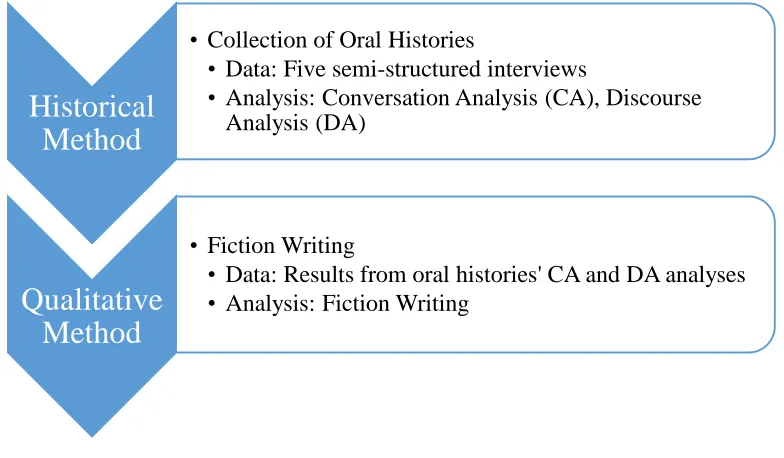
For this study, I employed oral history collection and fiction writing to investigate the
educational life history of Samenia Limes (1912-2000). While this life history features historical discussion of Georgetown, South Carolina and Harlem, New York – the areas in which Limes spent the better part of her life – the main focus of the study was on the ways Limes both learned and taught survival within a settler colonial context. Working from a Black-Indigenist paradigm, which privileges kinship/community and storytelling as sites of resistance to anti-Blackness, I conducted oral history interviews with Limes’ nine children. I then displayed the results in the form of a four-part novella. The results have been categorized as historical fiction, as fictional elements can fill in gaps left by transcripts and other historical documents, gaps that are part of a national history of Indigenous erasure and Black negation. The filling in of these gaps matters, as it represents an initial step in decolonizing practice, both in and outside of academia.
ONE HUNDRED AND SIXTEENTH: ONE FAMILY’S EDUCATION
by
KELLY LIMES-TAYLOR HENDERSON
A Dissertation
Presented in Partial Fulfillment of Requirements for the
Degree of
Doctor of Philosophy
in
Social Foundations of Education
in
Educational Policy Studies
in the
College of Education and Human Development Georgia State University
Copyright by
DEDICATION
For James, Samenia, and Ervin Limes.
ii
ACKNOWLEDGMENTS
First, this dissertation would not exist without the honesty, vulnerability, courage, and support of the Limes siblings – James Limes, Sadie Limes Green, Verna Limes Heard, Ronald Limes, Perry Limes, Terrell Robertson, Theodore Limes, Veronica Limes, and Sonia Kelly. They made this dissertation possible.
My advisor Jennifer Esposito has been a wonderful support throughout this process by both praising and critiquing my work, and by making herself available during what was sure to have been some very incovenient times. My committee – Deron Boyles, Philo Hutcheson, Jodi Kaufmann, and Joyce King – also provided great encouragement through the years, and it has been my honor to work with each of them. Dr. Esposito’s advising group and my Educational Policy Studies colleagues provided emotional support, and Jeffrey Stockwell was the ever-present, ever-helpful go-to for the departmental matters. Karen Gagne’s scholarship and support were instrumental to my own writing and thinking. Ellen Taylor and Michael Bartone
transcribed my interviews and critiqued early versions of this dissertation. I do not think this dissertation could have been completed without them, and I am grateful to them for their support and friendship.
Finally, I am thankful to the village involved in raising me:
To Veronica Limes, Barry Taylor, and Elliott Thomas for my childhood. To Altrazo and Tomeka Tiller for co-parenting with me.
To Dela Nai and Gloria Ross for always standing with me. To Christina Henderson for being all that she is.
iii
TABLE OF CONTENTS
LIST OF TABLES……….……….……vi
LIST OF FIGURES………..….vii
ABBREVIATIONS………..…viii
1. RESEARCH FOCUS……..……….……….1
Overview of the Study……..……….………1
Significance of the Study……….……….…………...4
The Euroversity……..……….………...4
On Race………..8
The Word………..…16
Assumptions and Limitations……..……….………..….23
2. LITERATURE REVIEW………25
A Different Paradigm……..……….………25
Indigenism……..……….………..………...27
Colonialisms……..……….………....33
Family, Community, Kin………...….36
Land/Space and the Indigenous Question………...……42
Narrative/the Story………..……47
Afropessimism……….…..……..……….………...55
My Positionality……..……….………...59
A Disguised Resistance……..……….………61
Toward a Black-Indigenist Paradigm……..……….………...72
iv
3. METHODOLOGY……….……….76
Why This Story……..……….……….76
Oral History……..……….………..78
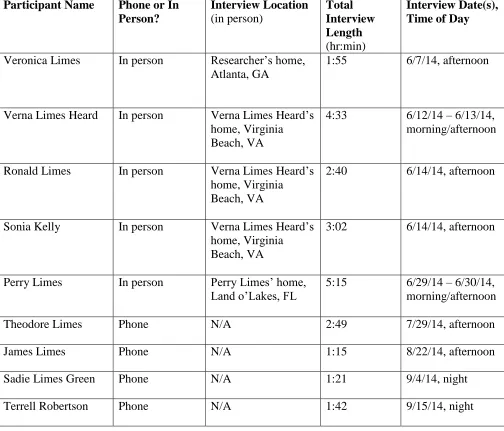
The Participants……..……….………...82
Interviewing Procedure……..……….………84
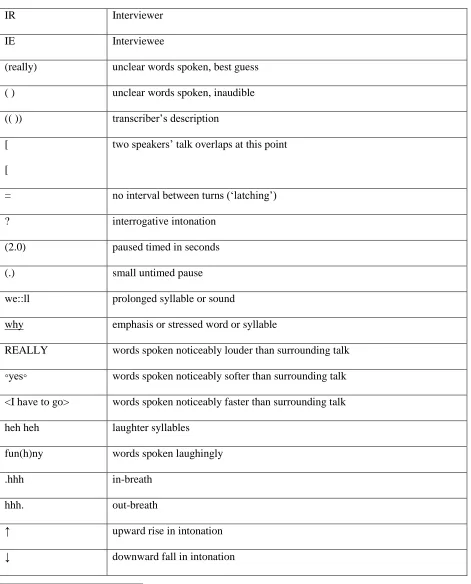
Transcription……..……….………87
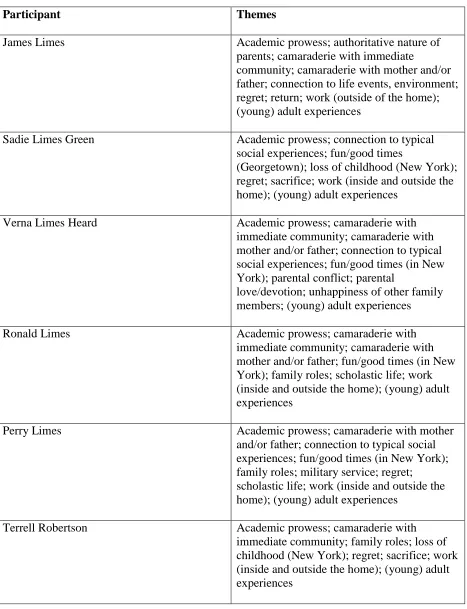
From Oral History to Fiction ……..……….………..92
Fiction……..……….………..96
Arts-Based Research and Fiction……..……….……….96
Creative Nonfiction……..……….………...……...98
Fiction……..……….………..…..100
Historical Fiction……..………...……….104
Fact and Fancy, Truth and Error……..……….………....112
The Novella……..……….………..………..115
The Work of Writing Fiction……..……….……….116
Expectations……..……….……….………….131
4. RESULTS ……….………...…….133
One Hundred and Sixteenth: A Novella...134
5. DISCUSSION………211
Oral History and Kinship Work: The Problems……..……….………….211
Transcribing……..……….………...211
Participant Review……..……….……….213
v
The Fiction: On Selectivity, Creative License……..……….………217
The Fiction: Reminders and Affirmations……..……….………..221
On Food and Work……..……….……….221
On the Immigrant……..……….………...224
On Women……..……….……….229
On Being Gifted and Black……..……….………237
Implications……..……….……….250
Misinformation, History, and the Story……..……….……….250
Community and Kin……..……….………...253
Land/Space……..……….……….254
REFERENCES……….………...259
vi
LIST OF TABLES
1. Interview Context……….83
vii
LIST OF FIGURES
viii
LIST OF ABBREVIATIONS
ABR Arts Based Research CA Conversation Analysis DA Discourse Analysis
1
Chapter 1
“IT’S WHAT WE DO FOR FAMILY”1: RESEARCH FOCUS
Overview of the Study
As a Black person in the United States, a settler colonial nation-state, I come from a line of people whose racial status designated them what Frank Wilderson and Saidiya Hartman call “a negation” and to a position of perpetual fungibility within the dominant Western ontology. I,
then, exist as negation and commodity in this land. My ignorance about my ancestral origins is due to more than oversight or forgetfulness on my elders’ part; it is the result of an intentional, centuries-long process to make a human into a machine, a commodity. By attempting to decimate the linguistic, familial, and land connections of the African, enslavers transformed him/her/them into a Black – a condition for which there is no reversal, only resistance.
While perhaps taking many forms, this resistance will be decolonizing in nature.
Decolonization, rather than being an innocuous rhetorical subject or a synonym for social justice initiatives, prioritizes 1) the deconstruction of present forms of enslavement/slaveability and 2) Indigenous sovereignty and the end of settler colonialism. While these goals undoubtedly require eventual (revolutionary) action, decolonization must begin with new understandings of self in relation to the colonized land on which we exist and of self in relation to our kin. These new understandings are a necessary first step in decolonizing practice, as land and kinship have been primary sites of White domination over Indigenous and Black life since the beginnings of the Western colonial era. Rather than a solipsistic exercise, then, the Black researcher’s study of
1 Daniel Heath Justice, “‘Go Away, Water!’: Kinship Criticism and the Decolonization Imperative,” in
2
self and kin adds to the body of knowledge 1) that troubles a Western ontology that requires Black enslavement and Indigenous erasure, and 2) whose goal is decolonization.
To these ends, this study investigated the educational life history of my grandmother, Samenia Limes (1912-2000). While this life history featured discussions of Georgetown, South Carolina and Harlem, New York – the areas in which Limes spent the better part of her life – the main focus of the historical study was on the ways Limes was educated and sought to educate her children within the context of the Western settler colonial ontology. To contribute to decolonial discussions already taking place both in and outside of the academy, this study followed the lead of Black and Indigenous traditions that self-consciously discuss and
incorporate kinship/community networks and storytelling as a means of survival and resistance. While the primary method of data collection was oral history interviews with nine of Limes’ children, the results combined the interviews’ content along with applicable fictional elements into a four-part novella. For those whose understanding of writing requires a differentiation between the real and the imaginary: the resulting novella should be categorized as historical fiction, as interview transcripts and other historical documents cannot always access hidden things – thought, intent, the true nature of relationships. These things matter, as they indicate a relationality that non-Western traditions have long understood connect us all.
And for those whose understanding of writing needs no such differentiation: if “all we are is stories,” then this story showed me a little more about where I am from, and thus, who I am. Such a story also resists the colonial legacy that Blacks in this country have experienced. Perhaps, through it and more stories like it, Blacks can come to terms with the legacy of
3
4
Significance of the Study
The Euroversity
As most of the rest of Medieval Europe was mired in illiteracy and feudalism, European clergy recopied texts by hand, and translated and stored books. As the printing press was invented and literacy became more widespread, the monasteries still remained warehouses of available knowledge, but a new class of intellectuals, not as intimately tied to the Church, began to grow. In Europe, the university – or, as Aman Sium and Eric Ritskes call it, the Euroversity2 – soon began to emerge around well-read men who tried to infuse the concept of reason into the
religion-based dominant thought. While not necessarily negating the existence of God, man assumed a place in the European narrative of the learned that he had not previously occupied.3
At the same time, outside the halls of learning, Europe was embarking on another adventure: imperialism, of which colonialism was a part.4 As European nations began to
2 Aman Sium and Eric Ritskes, “Speaking Truth to Power: Indigenous Storytelling as an Act of Living Resistance,” Decolonization: Indigeneity, Education and Society 2, no. 1 (2013): i.
While this discussion focuses on the European university, the concept of the university itself is neither a modern concept, nor an exclusively European one. For more discussion of universities before the European Enlightenment period, see Cheikh Anta Diop, Civilization or Barbarism: An Authentic Anthropology, ed. Harold J. Salemson and Marjolijn de Jager, trans. Yaa-Lengi Memma Ngemi (New York: Lawrence Hill, 1981/1991).
3 For a more extensive discussion of this development, see Sylvia Wynter, "Unsettling the Coloniality of Being/Power/Truth/Freedom: Towards the Human, after Man, Its Overrepresentation – An Argument," The New Centennial Review 3 (2003).
4 I adhere to Ngũgĩ wa Thiong’o’s and others’ assertions that we still find ourselves in the colonial/imperial era. While settler colonialism in the United States and its effects will be discussed in detail, other types of
colonialism and imperialism also continue to exist around the world. Describing colonialism in Africa as “total,” in that it has “economic, political, military, cultural and psychological consequences,” wa Thiong’o further defines imperialism as the “rule of consolidated finance capital” that has dominated African since the 1884 Berlin Conference. He notes that the imperialism of Africa continues today through the establishment of entities like the International Monetary Fund, which allows western financiers and transnational companies to “continue stealing” from Asia, Polynesia, Africa and Latin America, regions that have historically been victimized by European state imperial practice. See wa Thiong’o, Decolonising the Mind: The Politics of Language in African Literature
(Portsmouth, NH: Heinemann, 1986/2008), 2, 4. Here, wa Thiong’o argues that exogenous colonialism, a concept that will also be discussed later, is still happening. Based on this and other discussions on colonialism that will be detailed later, I use both the present and past tense when addressing the colonial era.
5
compete for trade routes, precious metal, and territory abroad, they looked for ways to justify their abuse of the Indigenous people that occupied these lands (and with whom they had
previously had friendlier relationships)5. Jamaican6 scholar Sylvia Wynter asserts that while the new lay intelligentsia of the Enlightenment period tried to usurp the position of the historically formidable Church as the constructor and perpetuator of knowledge, it assumed the dichotomous ontological structure that the Church had already established – a structure often and erroneously understood as strictly Cartesian, after René Descartes.7 Enlightenment-era science – as the new discipline that explained the facts of the world through experimentation and observation rather than proscribed, unquestioned doctrine – became the method through which the lay intelligentsia aimed to create, establish, and collect knowledge.
This ‘rupture’ of the Church’s control over knowledge and its dissemination had two
effects. First, and perhaps surprisingly, it melded certain religious ideas and certain scientific
Capitalism,” The Nation 280, no. 17 (2005); Pauline Lipman, The New Political Economy of Urban Education: Neoliberalism, Race, and the Right to the City (New York: Routledge, 2011); Kenneth J. Saltman, “Creative Associates International: Corporate Education and ‘Democracy Promotion’ in Iraq,” The Review of Education, Pedagogy, and Cultural Studies 28 (2006); Kenneth J. Saltman, “Schooling in Disaster Capitalism: How the
Political Right is Using Disaster to Privatize Public Schooling,” Teacher Education Quarterly (2007). 5 See Diop, Civilization or Barbarism.
6 In this and the next chapter, the national identification of each scholar will be noted as is possible in order to highlight the national identities of both Indigenous and non-Indigenous people, and to remind us that some nations exist ‘on top of’ others. This identification is based on each scholar’s self-identification.
7 In critiques of Western episteme and epistemology, René Descartes is often blamed for this system and
investigation of knowledge based on binaries and disconnection where other traditions have seen connections. While Descartes was influential, Wynter’s analysis shows that the Church’s influence on Western ontology and epistemology was influential as well.
6
ones; second, this melding was convenient for the European imperialists travelling the globe.8 While other ontologies (and the epistemologies that came from them) undoubtedly existed in Europe during the Medieval and Enlightenment periods, the Church and the academy, respectively, were the dominant knowledge-creating, -perpetuating, and -legitimizing
institutions. Colonization and imperialism introduced the European Church and, later, academy as the dominant knowledge-legitimizing institutions around the world. As the Church’s ontology included the concept of the inherently sinful and deviant juxtaposed against the inherently holy and pure, Wynter argues that the academy substituted the words but not the overall concept of inferiority and superiority: the sinner and deviant became the primitive and irrational, while the holy and pure became the civilized and rational. Such a substitution allowed for the religious and intellectual justification of European imperialism. The colonizer brought Christianity, civilization, and reason while taking the resources of primitive or deviant people. Unfortunately, rather than fundamentally troubling such a system, the academy perpetuated it.
Critiquing the present-day academy, Māori scholar Linda Tuhiwai Smith directly addresses colonialism’s and imperialism’s role in academia by pointing out that “the term
‘research’ is inextricably linked to European imperialism and colonialism,” and that the “ways in
which scientific research is implicated in the worst excesses of colonialism remains a powerful remembered history for many of the world’s colonized peoples.”9 Thus, the academy has simultaneously supported and been supported by Western interests, providing the intellectual justification for atrocities committed by European imperialists and colonialists while researching
8 See Wynter, “Unsettling the Coloniality.”
7
a world increasingly cowed under Western domination. While the West, then, is typically understood as the regions where European-descended people are in the majority, it more accurately represents the group whose members – albeit at varying levels – simultaneously perpetuate and profit from the past five centuries of European colonialism and imperialism.10 Within the Western academy, the non-Western subjects’ very beings correlate with the Western researchers’ presumptions of them by understanding them as objects of study and
experimentation.11 This understanding is based on the “‘code’ or ‘grammar’ of imperialism” that conceptualized non-Westerners as “not fully human,… not civilized enough to have systems,… not literate,… [with] languages and modes of thought [that] were inadequate.”12
Of course, the majority of today’s Western researchers would never explicitly characterize non-Westerners as “not fully human”; however, their work in a system that has historically reinscribed and perpetuated this characterization has established a research structure predisposed to reifying Western supremacy at the expense of the non-Western.13 This structure
10 As will be discussed, the latter definition allows for the present-day inclusion of non-European-descended people as Westerners. While these non-Europeans experience varying levels of marginalization in today’s West, their connections to the West may afford them advantages that others not similarly connected do not experience. This definition acknowledges that the line between “West” and “non-West” may seem a bit blurred at times, such as in cases of non-Europeans in the West. However, the domination of Western episteme and the results of that domination are not ambiguous and are not being questioned here.
11 For more discussion on the Black body’s existence solely for Whiteness, see Frantz Fanon, Black Skin,
White Masks (New York: Grove Press, 1952/2008).
12 L.T. Smith, Decolonizing Methodologies, 28. Here, Smith cites Ashis Nandy, The Intimate Enemy: Loss
and Recovery of Self under Colonialism (Delhi: Oxford University Press, 1989) and Albert Memmi, The Colonizer and the Colonized (Boston: Beacon Press, 1991), 83.
13 Joy James expounds upon a non-White person’s adaptation to a Western worldview: “In a society and
8
reflects the major theme of the episteme on which it is based: one of separation, compartmentalization, and dichotomy.
On Race
Within the past five hundred years, Black has come to define those in the global socio-economic hierarchy whose bodies and resources are permanently and perpetually at the disposal of Whites (whose bodies and resources are, paradoxically, at no one’s disposal but their own).14
Academic Industrial Complex, ed. Anthony Nocella, Steven Best, and Peter McLaren (Oakland: AK Press, 2010), 338-339.
14While I discuss racialization as a modern concept based on social and economic caste rather than
biological composition, Cheikh Anta Diop argued that the concept of race existed long before modernity, and that, since antiquity, Black as category ofhuman has referred to people with a particular phenotype or genetic makeup. Diop asserted that European anthropologists and scientists set about the task of erasing and denying Black origins of humanity and civilization by working to “whiten a Black or blacken a White by a tendentious interpretation of measurements and carefully selected partial analyses.” This not only entailed ignoring irrefutable physical anthropological discoveries that indicate Black origins of humanity, but actually creating fake ‘discoveries’ to support theories that Europeans came from anything other than Black ancestors.
Diop noted that Louis Leakey understood the “birthplace of humanity” to be around the Omo Valley in Ethiopia. He says that there are two important implications that emerge from this discovery: that the birthplace of humanity necessitates pigmentation, or, more specifically, Blackness; and that all other races come from the Black race at the Homo erectus and Homo sapiens stages of evolution, or 150,000 years ago. Diop asserted that the first human in Europe was the Grimaldi Man, a migrating Black person, and the first White person was the Cro-Magnon Man of 20,000 years ago. Diop said that the African origin of humans should not necessarily be a point of pride for Blacks, though, as the “cradle of humanity being in Africa… is just an accident. If the physical conditions of the planet had been otherwise, the origin of humanity would have been different.”
He addressed the Piltdown Man and other theories, such as that of the “polycentric origin of humanity.” To the end of exposing these theories as erroneous, Diop argued that race is actually a biological fact, contrary to the current academic discussion that it is a social construct. Diop noted that an easy proof against race’s being solely a social construct are genetic diseases based that tend to occur more in a specific racial group, such as the prevalence of sickle-cell anemia in Black people or thalassemia in Mediterranean Whites. There is a reason for the race-as-social-construct theory: if the academy can imagine that race does not actually physically exist, the physical proof that humans emerged from Africa does not automatically imply that the first humans were Black. In the same vein, if anthropologists can somehow prove that the Egyptian civilization was culturally and linguistically separate from Black Africa, it would be easier to deny that the most advanced civilization in antiquity was Black. Further, if anthropologists could ignore the proof that Greek philosophers, mathematicians and scientists trained in Egypt, they could concoct the theory that the Greek intellectual explosion was due to some superior European characteristic, rather than an African academic tradition that spanned centuries.
While I do not disagree with Diop’s findings that the concept of Blackness may be millennia-old rather than centuries old, Diop’s own examples show that the connotations of Blackness have undoubtedly changed over thousands of years, as Diop’s Blacks of antiquity represented architects and royalty, philosophers and
9
While Blackness as the antithesis of the norm makes it what Wynter calls a “liminal category” and will be discussed further, a discussion of Whiteness is important here, as the concept of Whiteness is connected to Europe and the West 15
In the current imperialist/colonial era, Whites’ representing their experiences as “normal” is not only the foundation for White supremacy, but makes all non-Whites the perpetual “other.” This delineation between White and non-White has not always existed, however, and has been a developing concept throughout the Western colonial era. In the case of the area that came to be called the United States, Africans and people of African descent did not initially represent only an enslaved and enslaveable caste. While 100 enslaved people from Africa were brought by Spanish colonials to present-day Virginia in 1526, Africans and African-descended people were also a substantial portion of the then-British colony’s indentured servant population in the region in the early seventeenth century, a time when, as Steven Martinot contends, the English had not “racialized the Africans, as evidenced by the fact that they had not racialized themselves.16 As
late as 1651, these Africans shared social standing with British indentured servants and laborers, and were awarded (what had likely been Indigenous) land and freedom from indenture after a specific term of service.17 As the growth of labor-intensive cash crops such as rice, cotton, and
SeeDiop, Civilization or Barbarism: An Authentic Anthropology, ed. Harold J. Salemson and Marjolijn de Jager, trans. Yaa-Lengi Memma Ngemi (New York: Lawrence Hill, 1981/1991), 2, 11, 15-17, 21-22, 26-68, 103-207, 231-379.
15 Sylvia Wynter and Joyce King, “Race and Our Biocentric Belief System: An Interview with Sylvia Wynter,” Black Education: A Transformative Research and Action Agenda for the New Century, ed. Joyce King, (Mahwah, NJ: Lawrence Erlbaum, 2005), 363.
16John Rickford and Russell Rickford, Spoken Soul: The Story of Black English (New York: John Wiley
and Sons, 2000), 130-131; SteveMartinot, The Machinery of Whiteness: Studies in the Structure of Racialization
(Philadelphia: Temple University Press, 2010), 45.
17Rickford and Rickford, Spoken Soul. 131. Steve Martinot presents an interesting discussion about the
10
tobacco began to increase, so did the growth of the enslavement industry, especially in the southern British colonies, where small African and African-descended populations doubled and continued to grow. By 1750, African-descended people made up 27%, 31%, and 44% of the population in North Carolina, Maryland, and Virginia, respectively; by the late eighteenth century, African-descended peoples outnumbered British-descended in South Carolina and Georgia.18 While European indentured servants were still present, the influx of
African-descended enslaved people shifted the legal and social practices in the colonies, where older laws regulating the enslaved were more regularly enforced. Thus, while there were laws
distinguishing the rights of the African-descended Blacks and British-descended Whites as early as 1639 (including the law of “lifetime service” in Virginia), the letter and adherence to these
laws hit a violent uptick in the early 1700s.19
As they were legally and socially establishing who Blacks could and could not be, the British-descended colonists were also developing what Whiteness was and was not. While Martinot notes that the 1662 act “Negro Women’s Children to Serve According to the Condition of the Mother” was what “marked the beginning of a process of social differentiation between the English and the Africans,” he also notes that this act did not make an immediate difference in
the lives of the European and African indentured servants, who together worked under and resisted the oppressions of their masters.20 Martinot echoes others that marked Bacon’s Rebellion in 1676 as the beginning of a more widely economically- and socially-influencing
Mother,” which negated the English tradition of a child’s social status being based on his/her father and set the stage for the future of “slave breeding.” See Martinot, The Machinery of Whiteness, 40.
18 Rickford and Rickford, Spoken Soul, 134. 19Ibid.,135.
11
racialization within the colonies. It was then that narratives describing African-descended peoples as dangerous, rebellious, and in need of White control encouraged impoverished, European-descended people to join the richer colonists in their domination over the Black population for financial gain.21 Martinot notes that this “emergence of whiteness” created a new identity and consciousness for the colonials: “[w]ith the birth of slavery, the English felt secure; with the birth of racialization, they could feel ‘civilized’ and genteel even about having
barbarically imposed themselves on the Africans.”22 In the centuries that followed and with the
creation of the United States, immigrants from various European nations, not initially understood as White, were able to gain “U.S. cultural membership (as white)” as they performed “acts of ‘nativism,’” and abandoned “the ethnic cohesion that attended their ‘alienation.’” 23 Martinot
notes that this performance often meant at least a “distancing” of the self from Black people, if not more overt expressions of anti-Black racism.24 In this way, White supremacy was
established and perpetuated through the United States’ colonial beginnings and its history as a
nation.
While understanding Africans as barely human was a vital concept in the perpetuation of African enslavement in the United States (an institution that Woods characterized as the ultimate expression of capitalism25), White supremacy has shifted in recent years: in this post-Civil Rights era, where public and explicit racist dialogue has been all but silenced, Whites are able to take
21Ibid., 50.
22Ibid. 23Ibid., 136.
24Ibid.
12
full advantage of the racial hierarchy without acknowledging it.26 This ability to take advantage while remaining ignorant of that advantage is one of the hallmarks of White supremacy.
American scholar Robert Jensen defines the near-invisibility of Whiteness to Whites themselves
26 While there are numerous examples of this, I will provide a two as they apply to academic situations, which incorporate the normalcy of Whiteness into knowledge-dissemination institutions.
David Newman discusses how White supremacy and the normalcy that undergirds it seem to take on humble, self-deprecating tones within the academic environment, particularly as they apply to the White gaze. Each year, Newman asks his group of mostly White, mostly wealthy students to describe the “typical” Latino, Black, and Asian family, and the group easily complies. When he asks them to describe a typical White family, however, the discussion invariably “grinds to a screeching halt.” Once students eventually assert that White families are “all different” and that “[t]here’s no way you can come up with common traits” for them, Newman notes that his point has been made. Newman acknowledges that, “when we think of our own group… we’re more inclined to highlight or at least pay heed to the diversity of individuals.”26 Whiteness, however, is in the peculiar position of dominance in our society. Because of this,
White families are simply “families.” In the absence of a modifying racial or ethnic adjective, they’re the default option. White families are assumed to be ordinary and regular. Consequently, they need no explaining, no special chapter devoted to their striking differences….
In a racially imbalanced society like ours, whiteness, in general, is the yardstick against which “non-white” racial groups are evaluated.
As Newman points out, despite a seemingly reverent, even celebratory discussion of how interesting, moving, or (dare I say it?) exotic some non-White groups/people may be, the problem still remains: this reverence, this celebration turns certain humans into objects of observation, full of problems to be explained by the observers, full of solutions to be expropriated by them. These objects do not have a frame of reference, a perspective, a way of knowing that is their own. Indeed, they exist for the sake of the Whites, and what’s an object of observation worth without the observer? David Newman, Identities and Inequalities: Exploring the Intersections of Race, Class, Gender, and Sexuality (Boston: McGraw Hill: 2007), 14, 15, 16.
More pressing than in-class discussions of normalcy and non-Whiteness, Gloria Ladson-Billings discusses the educational debt, which is what she calls the product of centuries of White legal and extra-legal exclusion of American Blacks from literacy and schooling. Though popular educational discussions of the so-called achievement gap focus on the poor performance of Blacks in schools compared to their White counterparts, Billings argues that Whites have had the advantages of literacy and schooling that Blacks in the United States had not been afforded, even after the nineteenth-century emancipation of enslaved people. Once Blacks began attending schools on parity with Whites in the late twentieth century, Ladson-Billings argues, Black students had to make up for centuries of lost time. Ladson-Billings’ argument is important in that Black ‘failures’ within school in comparison to their White counterparts are understood to be based upon Black deficit, rather than Black struggle in systems that have
historically excluded them and included and privileged Whites.
13
as part of White privilege – the privilege to ignore the reality of a White-supremacist society when it makes Whites uncomfortable, to rationalize why this supremacy is not really so bad, to deny one’s own role in it. It is the privilege of remaining ignorant because that ignorance is
protected.27 Both the privilege and normalcy accorded to Whiteness are indicators that this era of imperialism/colonialism has also been one of White supremacy.
Jensen defines a White supremacist society as one “whose founding is based in an
ideology of the inherent superiority of white Europeans over non-whites, an ideology that was used to justify the crimes against indigenous people and Africans that created the [United States].”28 Like Wynter, Jamaican scholar Charles Mills notes that such superiority ideologies are not necessarily abnormal; indeed, societies “structured by relations of domination and
subordination” will feature “conceptual apparatus…. shaped and inflected in various ways by the biases of the ruling group(s).”29 This ideology, however, often leads to the ruling group’s
tendency to “find the confirmation” for their supremacy “whether it is there or not.”30 This
ability to find confirmation of supremacy where there is none has important implications for the Western academy.
H. Alexander Welcome notes that White ontology establishes what is and is not an acceptable mode of being, and that Blackness is understood as inherently abnormal in the ways it deviates from Whiteness.31 In addition to Welcome’s analysis, Owen Dwyer and John Paul
27 Robert Jensen, The Heart of Whiteness: Confronting Race, Racism, and White Privilege (San Francisco: City Lights, 2005), 2.
28Ibid., 3-4.
29 Charles W. Mills, “White Ignorance,” in Race and Epistemologies of Ignorance, ed. Shannon Sullivan and Nancy Tuana (Albany: State University of New York Press, 2007), 25.
30Ibid.
14
Jones assert that White worldview assumes a separation between Whites and non-Whites (and, more specifically, between Whites and Blacks people) in terms of physical space, as well as social identity and position. Both types of “distance” allow Whites to “refus[e] the trace” that
will implicate the historical and current injustices that are required in order for Whiteness to exist.32 This distance encourages what Mills calls the “management of memory,” which allows Whites simply not to know or acknowledge (through what Mills has called “White ignorance”) the “crucial facts” that would trouble the concept of White supremacy.33 Such ignorance becomes part of the “social memory,” which is “then inscribed in textbooks, generated and
regenerated in ceremonies and official holidays, concretized in statues, parks, and monuments.”34
Meanwhile, the relegation of non-Whites by Whites to areas away from Whites -- physically and psychologically – encourages White gaze and judgment35:
[W]hiteness as an opaque façade that is at once apparent but whose depth is inscrutable – lest its true guilt be revealed. Likewise, whiteness does not represent its racialized Other as invisible but rather holds it in a state of
transparent obviousness…. These rationales for white privilege culminate in the
representation of the white center as opaque and unknowable and, ultimately,
of the Sociology of Self-Knowledge 4 (2007): 251-263; King and Wynter, “Race and Our Biocentric Belief System”; and Wynter, "Unsettling the Coloniality of Being/Power/Truth/Freedom.”
32 Owen J. Dwyer and John Paul Jones III, “White Socio-Spatial Epistemology,” Social & Cultural
Geography (1), 2000: 213.
33 Mills,“White Ignorance,” 28.
34Ibid., 29.
15
non-existent, while the racialized margins are presented as transparently obvious and ‘debased’ – and thus wholly responsible for their conditions. 36
This discussion of White normalcy and the White gaze also applies to the academy. Such a gaze allows, for example, researching the practices of another group, making its members visible while maintaining one’s own invisibility, all under the guise of objectivity. This
objectivity (read: White distance) in academia – what Welcome calls “the ‘white is right’ perspective” – uses White experience as “the backing for the construction of the warrant/rules that are employed as to evaluate black experiences,” thus pathologizing the experiences of people of African descent when they do not “conform to the parameters of white methods of navigating the social world.”37 Welcome addresses DuBois’ important question of “How does it feel to be a problem” by defining “problems” as “any deviations from the ‘typical’ white
experience that do not produce the benefits that are associated with the relevant white mode of behavior.”38 When non-White groups deviate from the White norm but experience
White-normed success, they are not seen as problematic. Non-White deviators that do not experience White-typified success, however, become problems; after all, if success is ‘normal,’ why can’t these ‘problem people’ be successful? Welcome discusses this further: “This process occurs
because the cause of the status of whites is falsely attributed to the white methods of navigating the social world, while the paramount influence of the privilege and power of whiteness are obscured.”39
36 Dwyer and Jones, “White Socio-Spatial Epistemology,” 215.
37 H. Alexander Welcome, “’White is Right’: The Utilization of an Improper Ontological Perspective in Analyses of Black Experiences,” Journal of African American Studies (8), 2004:61, 62.
16
It is also important to note that the Western researcher is not necessarily White, but must only be trained in and adhere to the ideas of European normalcy and dominance – even if that adherence is not a conscious one. 40 While the discussion of the disillusionment and alienation of the non-White student and researcher in the Western academic paradigm is an extensive one and will be given more attention later in this study, resistance to this paradigm can be found in Indigenous methodologies and in Indigenist paradigms, such as Black-Indigenism.
Understanding the oppression of Black and Indigenous people as the foundation for the United States’ version of settler colonialism, Black-Indigenism employs observation and analytical practices of these oppressed groups in order to trouble the dominance of Western
epistemological practice and resist its effects within the academy. The link between Indigenous and decolonizing research practice is an important one in that the employment of Indigenous-based practice is not only employment of practice that has operated before and can operate outside of the Western paradigms of separation and domination, but is practice employed for the purposes of imagining and creating restorative ways of knowing and being beyond those of the West.
The Word
This imagining and creating is not simply a theoretical enterprise; indeed, though it may
seem lofty, this new knowing of the universe is possible. While this new knowing can take
many forms, it will begin with new language. More specifically, it begins with a new Word.
While possibly interpreted as language, the Word is more specific: it indicates the moment that
40 For more discussion on White normalcy, see Jensen, The Heart of Whiteness; Sullivan and Tuana , ed.,
Race and Epistemologies of Ignorance; Welcome, “’White is Right’; Frantz Fanon, The Wretched of the Earth, trans. Richard Philcox (New York: Grove Press, 1961/2004); wa Thiong’o, Decolonising the Mind.
17
the human first created words, or verbal/visual representations of abstract thought. Wynter posits that, rather than thinking of humans as humans (as opposed to other animals) based on the particulars of biological and evolutionary processes, we must understand our humanity in terms of the Word. Wynter argues that it is the moment that humans created language – a moment that she calls the First Emergence – that marked the beginning of the human being, not a particular biological evolutionary turn. The moment that humans were able to think in abstraction pushed them out of “subordination to the genetic programs which prescribe the behaviors of purely organic life.” 41 While undoubtedly still affected by these genetic programs, humans then became subordinate to what Wynter calls “the Word/Myth.”
The discussion of language as it is more generally understood and within the scope of Western academic practice is also important. Kikuyu and Kenyan scholar Ngũgĩ wa Thiong’o’s analysis shows that language is not just a series of strung-together sounds or letters arranged on a page, but is a system of acknowledging or negating being, of establishing and reestablishing what is there… and what is not.42 Language sets ontological and epistemological precedent in
that the job of language is to refer to what is known and what can be known, even in the absence of physical proof. As language names the existence of things in the universe, it creates the universe for its speakers and listeners, writers and readers. Related to Wynter’s Word/Myth, by naming what can be known, humans are also telling the story of existence, of how what is known came to be. This naming is the primary tool of power in the colonial world, and one used within Western academic practice. Both the creation and dominance of the West have been based on the “control [of] people’s wealth,” from its production to its distribution, which wa Thiong’o
41 Wynter, as quoted in Gagne, 2007. See Karen Gagne, “On the Obsolescence of the Disciplines,” 259.
18
calls a people’s language of real life.43 Control of the language of real life is impossible, however, without the control of language-as-communication, which is inseparable from language-as-culture.
While language is used in the real-time transmission of ideas, it is a carrier of culture in that it also holds within it the culmination and evolution of its speakers. This aspect of language makes it “almost indistinguishable” from culture, as language allows cultural “genesis, growth,
banking, articulation and… transmission.”44 As the “collective memory banks of a people’s experience in history,” then, language-as-culture has three aspects. First, it is a product and reflection of a people’s history, in that culture represents a people’s “struggle to create wealth and to control it.” In addition to this, as language-as-culture uses words to represent what is (and
is not) in existence, it creates both a physical and social world in our minds through which humans see ourselves, each other, and our planet. This mental world may or may not be based on physical reality, but is the foundation for culture. Finally, while the meaning of language (as product of humans’ “struggle against nature” and with each other45) is universal for humans, the
languages that we speak are not. Thus, the final aspect of language-as-culture is that it encapsulates the experience of a “specific community with a specific history” within the “particularity of the sounds, the words, the word order into phrases and sentences, and the specific manner, or laws” of that community’s language.46 Embedded within language is a group’s story of how it came to be and what it knows about the world.
43Ibid., 16.
19
One of colonialism’s most vital areas of control, then, is the “mental universe of the colonized, the control, through culture, of how people perceiv[e] themselves and their relationship to the world.”47 Control of language means the control of the universe of the
colonized, what can and cannot exist, how one can relate to the world, another person, and oneself.48 This domination, in essence, rewrites colonized groups’ stories about their own existence. A very early step in resisting Western imperialism/colonialism and its effects, then, is to understand ourselves as something outside of the Western definition of human and humanity that requires the eliminations and enslavement of Indigenous and Black life – namely, as our being human because we have the ability to name ourselves and the world around us, and discuss (and, thus, decide) what and who we will be. Resistance requires us to tell new stories about ourselves, our histories, and our universe. While wa Thing’o argues for the use of indigenous language as resistance to colonial domination, such a solution is not available for the descendants of enslaved Africans who were generally prohibited from using their indigenous languages.
For many, the language of origin is the language of the Western colonializing nations. For those in this group interested in decolonization, the primary method of resistance is
transforming the creation stories that the colonizer’s language tells. This resistance entails two
forms: general storytelling that defies the colonial narrative; and a reshaping of the colonizer’s language, creating and recalling different worlds from the ones embedded within each word of the language.49 This creating and recalling is a multi-faceted endeavor, one that pulls from
47Ibid.
48 wa Thiong’o further discusses the disjuncture that a colonial language education causes in the colonized child as “colonial alienation.” See ibid.
20
Indigenous traditions that have survived despite attempts of Western colonial eradication as well as from the resilient and adaptive traditions of Blacks, who historically have been designated as non-human or sub-human, yet manage to affirm their humanity, even if only to themselves. In this study, I included wa Thiong’o’s analysis of language as a means of communication and carrier of culture within the larger analysis of Word/Myth, as the latter refers to the very ability for abstract thought, and for understanding and approaching the world outside of the strict matrix of biological urge and instinct.50 As the Word refers to how we know and understand the world around us, the Word also refers to how and what we understand ourselves to be. If humans create and inherit our understanding of ourselves and our universe through the Word, then, we are also able to recreate ourselves and our universe, recall and/or create ways of being outside of Western colonial ways.
Humanity through the Word, through a calling of ourselves into being, opens the door to solutions to the problems of colonization and White supremacy. American Karen Gagne cites Wynter when discussing this self-naming/self-creation, this autopoiesis51:
It was through ‘autopoiesis’ that another new mode of being human—that of the bourgeois man—was ignited from the 16th century onward to the present. And, it will be through an ‘autopoiesis’ of equal or greater magnitude that we will be able
50 It is important to note here that Wynter does assert that humans are bioevolutionarily wired for the creation and use of language: “[M]y proposal is that we are bioevolutionarily prepared by means of language to inscript and autoinstitute ourselves in this or that modality of the human, always in adaptive response to the ecological as well as to the geopolitical circumstances in which we find ourselves.” It is this creation and use, however, that moves humans out of the domination of the natural world and into the domination of their own mental one. See Joyce King and Sylvia Wynter, “Race and Our Biocentric Belief System: An Interview with Sylvia Wynter,” Black Education: A Transformative Research and Action Agenda for the New Century, ed. Joyce King (Mahwah, NJ: Lawrence Erlbaum, 2005), 361.
51I have found that Wynter’s works have variant spellings of poiesis and autopoiesis. For the sake of
21
to leave this mode of being human… By calling themselves into being, humans invent their “humanness.”.... To name the world is to conceptualize the world; and
to conceptualize the world is an expression of an active relation.52
Thus, in the same way that the imperialist/colonialist systems under which we continue to live came to be through the Word, emancipation from these systems must also be based in the Word, words that describe – and, thus, create – a new world. It is important that those interested in decolonizing practice take as a point of departure the example of Indigenous nations and Blacks the world over that continue to exist in the face of genocide, or name their humanity as the world calls them property. While some of these nations and groups have intentionally continued to employ their pre-colonial traditions of language use and storytelling throughout the era of Western colonialism, others, like American Blacks, have formed new languages and stories in the wake of its ravages.53 Both acts are examples of groups that are continuing to name their universes, and thus, themselves, in the face of a colonial power bent on doing the naming for them. This refusal to allow the colonial power to name them and their world – particularly when the naming involves dehumanizing or erasing Black and Indigenous peoples – allows oppressed people to tell their own stories about their world, and to situate themselves in it as humans that defy the destructive dehumanization that underpins this oppression.
52 Wynter, as cited in Gagne, 2006. See Karen Gagne, “Fighting Amnesia as a Guerilla Activity Poetics for a New Mode of Being Human,” Human Architecture: Journal of the Sociology of Self-Knowledge IV (Summer 2006): 260.
53For a discussion of Black linguistic creation within the United States, see Molefi Kete Asante, “African
22
This ‘taking as a point of departure,’ however, entails more than a momentary and
respectful nod to peoples with whom we academics may or may not have any contact, even when we share a group identity with them, and particularly when our languages of origin are languages of Western colonization. It entails thinking of people that we normally understand as oppressed and marginalized as actually holding clues to the solutions of a White supremacist society – in short, it entails a new narrative about these groups. It involves re-wording the questions in our research, and re-wording our paradigms. While Indigenous and Black peoples in the United States have undoubtedly experienced oppression, their continued understanding of their humanity in the face of a system that requires their erasure or inhumanity provides important clues for the decolonizing researcher. This study, which highlighted one impoverished Black family’s understanding of their own humanity in the face of violently dehumanizing
23
Assumptions and Limitations
One of the more important assumptions in this study is based on my definition of
education. I define education as a mental assimilation of information, with the potential of using that information to think or act in different ways than one would have without it. Education, then, can indeed happen in a school, but can also happen anywhere else there is information for the human being to assimilate.54 On the other hand, while called “formal education”55 or the like elsewhere, schooling indicates one’s attendance at an institution that has been designated as a school by a governing group and that makes available a specific type of information for assimilation. Conflation of schooling and education can lead to the assumption that the two mean the same thing, such as in colleges of education that tend to be focused on schooling and schools rather than all the ways and places that human beings learn about the world around them. It is because of this conflation that discussions of education and even educational policy often focus on what is happening in, to, or because of schools. I instead understand questions of education and educational policy to relate to learning and practices of learning, rather than the one place where learning is purportedly housed. I posit that such a shift in our understandings of education and educational policy can also help broaden their discussion beyond the Western paradigm, as perceptions of teaching, learning and schooling are not exclusive to the West.
The limitations of this project are based on my relation to the participants and my closeness to the subject matter. While I do not see these limitations as hindrances, I do
understand that the fact that the participants are my relatives caused me to approach this project
54 See more discussions on this assertion, see John Holt, How Children Learn (Cambridge, MA: Perseus Books, 1983), and, with Patrick Farenga, Teach Your Own: The John Holt Book of Homeschooling (Cambridge, MA: Perseus Publishing, 2003); Ivan Illich, Deschooling Society (London: Marion Boyars, 1970); David Orr, Earth in Mind: On Education, Environment, and the Human Prospect (Washington, D.C.: Island Press, 1994).
24
in a way that would have been different had the participants been strangers. Because the focus of this project is the story of my family – even if parts of it are fictionalized – I never felt complete ownership or license over the data or their product. The participants had the opportunity to edit their own transcripts – a practice that would be anathema to some oral historians.56 I submitted drafts of the fictional pieces to the participants for their critique, and they in turn allowed other family members to read it as well. There were relatively few instances, whether in data
collection or analysis, that I did not open this project up to the review of my family members. This opening up, while reflective of the importance of kin and community in Black-Indigenist research, means that each portion of this project is different than what it would have been had I completed the work without my family’s input. I will discuss this input and its effects in later
chapters.
Also, while I draw implications from my family’s experience, this study is not
generalizable: it addresses the experience of a specific group of people, place, and time that had not existed before and will never exist again in exactly the same way. So while the results are a historical fiction based on oral history accounts, they are also one unique story based on a group of unique stories. The stories told to me will never be told to me again verbatim, even if I interviewed the same participants in the same places. Thus, while I indicate some wider
conclusions from these stories, the stories represent just one moment in an immeasurable span of moments – one speaker, one hearer, one story amongst all the others. While the work here represents a story about a family that I believe relates to many stories of many families, I do not make the claim that this is everyfamily’sstory. It is not.
25
Chapter 2
“I HAD NEVER BEEN AT HOME IN THE WORLD.”57: LITERATURE REVIEW
A Different Paradigm
This study employed a research paradigm that I call Black-Indigenism. While
investigating various paradigms that could align with this study, I was troubled that I could not find one that intentionally and equally addressed the experiences of both Indigenous and Black groups in settler-colonial regions of the Western hemisphere. While my search led me to stances that privileged one or the other, I did not find one that incorporated both as a lens through which to see the world and do research. As the groups whose exploitation and elimination have been the bedrock of the establishment and perpetuation of the United States in particular, constructing a decolonizing theoretical stance based on both indigeneity and Blackness was important. In this chapter, Indigenism will be discussed, then Afropessimism, as both paradigms inform Black-Indigenism. Then I will discuss the Black-Indigenist paradigm.
As my participants did not discuss experiences with Native Americans, nor am I related to anyone that identifies as Native American, the data from this study did not include accounts of those that identify themselves as Native American. However, a priority of decolonizing research that takes place within and is about life in the United States is acknowledging that ours is a nation that has been violently established and continues to violently establish itself on top of other, Indigenous nations. As this violence is the foundational act of the United States, a
discussion of any aspect of U.S. history – even the history of oppression of Blacks in this country – should also include acknowledgement of this past and present violence as well. If the “United States is a nation defined by its original sin: the genocide of American Indians,” not
26
acknowledging the history of this genocide contributes to the U.S. practice of Indigenous
erasure.58 Thus, a discussion of the history and results of systematic Indigenous erasure are also part of this study.
58 Sandy Grande, “Competing Moral Visions: At the Crossroads of Democracy and Sovereignty,” in Red
27 Indigenism
While the particulars of their methods may shift based on the priorities of the groups implementing or involved in a particular research project, this study understood Indigenist researchers as those that acknowledge the imperialist/colonialist history of Western academic practice and counter it through research practice based on suppressed and/or ignored Indigenous ontological and epistemological standpoints.59 While decolonizing and Indigenist research may certainly include practices based on the ways of knowing of particular Indigenous groups, the overarching theme of these practices are resistance and existence in the face of a Western policy of Indigenous exploitation and erasure.60
Indigenist research practice can be situated within Indigenous research methodologies. In
Research is Ceremony: Indigenous Research Methods, Opaskwayak Cree scholar Shawn Wilson
argues two main points about the basis of Indigenous research methodologies:
1. The shared aspect of an Indigenous ontology and epistemology is relationality (relationships do not merely shape reality, they are reality). The shared aspect of an Indigenous axiology and methodology is accountability to relationships. 2. The shared aspects of relationality and relational accountability can be put into
59 See the following texts for discussions of Indigenist research and education: Sandy Grande, “Mapping the Terrain of Struggle: From Genocide, Colonization, and Resistance to Red Power and Red Pedagogy,” in Red Pedagogy, 15-34; Grande, “Competing Moral Visions: At the Crossroads of Democracy and Sovereignty,” in ibid., 49-78; John Tippeconnic III, “Critical Theory, Red Pedagogy, and Indigenous Knowledge: The Missing Links to Improving Education,” in Red Pedagogy; Shawn Wilson, Research is Ceremony: Indigenous Research Methods
(Halifax: Fernwood Publishing, 2008).
60 The following works and their treatment of Indigenism will be discussed later: M. Annette Jaimes, “The Stone Age Revisited: An Indigenist View of Primitivism, Industrialism and the Labor Process,” Wicazo Sa Review