S T U D Y P R O T O C O L
Open Access
A practice-based randomized controlled
trial to improve medication adherence
among Latinos with hypertension: study
protocol for a randomized controlled trial
Antoinette Schoenthaler
1*, Franzenith De La Calle
1, Miguel Barrios-Barrios
1, Aury Garcia
1, Maria Pitaro
2,
Audrey Lum
2and Milagros Rosal
3Abstract
Background:Latinos experience disproportionately higher rates of uncontrolled hypertension as compared to Blacks and Whites. While poor adherence is a major contributor to disparities in blood pressure control, data in Latino patients are scant. More importantly, translation of interventions to improve medication adherence in community-based primary care practices, where the majority of Latino patients receive their care is non-existent. Methods:Using a randomized controlled design, this study evaluates the effectiveness of a culturally tailored, practice-based intervention compared to usual care on medication adherence, among 148 Latino patients with uncontrolled hypertension who are non-adherent to their antihypertensive medications. Bilingual medical assistants trained as Health Coaches deliver the intervention using an electronic medical record system-embedded adherence script. Patients randomized to the intervention group receive patient-centered counseling with a Health Coach to develop individualized self-monitoring strategies to overcome barriers and improve adherence behaviors. Health Coach sessions are held biweekly for the first 3 months (6 sessions total) and then monthly for the remaining 3 months (3 sessions total). Patients randomized to the usual care group receive standard hypertension treatment recommendations as determined by their primary care providers. The primary outcome is the rate of medication adherence at 6 months. The secondary outcome is reduction in systolic and diastolic blood pressure at 6 months. Discussion:If successful, findings from this study will provide salient information on the translation of
culturallytailored, evidence-based interventions targeted at medication adherence and blood pressure control into practice-based settings for this high-risk population.
Trial registration:NCT01643473 on 16 July 2012.
Keywords:Medication adherence, Hypertension, Latinos, Health coach
Background
Latinos are the fastest growing ethnic group of the United States (US) and account for more than half of the total increase in the country’s population over the past decade [1]. This growth has been accompanied by a significant increase in cardiovascular disease
(CVD)-related morbidity and mortality [2]. Despite increasing trends in the awareness and treatment of hypertension (HTN) among all groups, Latinos have the lowest blood pressure (BP) control rates in the US [3]. Although barriers to optimal HTN control, such as poor access and low awareness, have been used to explain the dis-parities in BP control between Latinos and Whites, BP control rates remain lower among Latinos who receive treatment compared to Whites [4]. This enigma may be explained by the disproportionately poorer adherence to * Correspondence:[email protected]
1Department of Population Health, Center for Healthful Behavior Change,
New York University School of Medicine, 227 East 30th Street, 634, New York, NY 10016, USA
Full list of author information is available at the end of the article
prescribed antihypertensive medications among Latinos compared to Whites [5, 6].
Poor medication adherence is a major contributor to inadequate BP control, and is associated with 125,000 deaths annually [7]. While many interventions address poor adherence behaviors in hypertensive patients [8, 9], data in Latino patients are scant. More importantly, translation of adherence interventions to community-based primary care practices, where the majority of Latino patients receive care, is non-existent. Thus, the development of tailored interventions that target improving medication adherence in this high-risk popu-lation is needed in order to address the racial disparities in BP control between Latinos and Whites.
The Ayudando Latinos Hipertensos Para Mejorar Adherencia a los Medicamentos (ALMA) trial addresses this gap in the literature by evaluating the effect of a cul-turally tailored, practice-based intervention on medica-tion adherence in 148 Latino patients with uncontrolled HTN, who are non-adherent to their antihypertensive medications and followed in a medical clinic in New York City. To facilitate translation into routine practice, the intervention is embedded into the clinic’s electronic medical record (EMR) system, and bilingual medical
assistants (MAs) who are trained as Health Coaches de-liver the patient-centered counseling.
Study aims
The primary aim of the ALMA trial is to evaluate the ef-fect of a culturally tailored, evidence-based adherence intervention (AI), delivered by bilingual Health Coaches versus usual care (UC), on medication adherence at 6 months among 148 Latino patients with uncontrolled HTN, who are non-adherent to their anti-hypertensive medications. The secondary aim is to evaluate the effect of the AI versus UC on BP reduction at 6 months. We hypothesize that the AI group will have a higher propor-tion of patients who are adherent to their antihyperten-sive medication; and a greater reduction in systolic BP (SBP) and diastolic BP (DBP) at 6 months as compared to the UC group. ALMA is one of the first trials to evaluate the effect of a culturally tailored, practice-based AI for Latinos with uncontrolled HTN. Moreover, trained MAs who assume the role of a Health Coach, and who often are the frontline healthcare workers in primary care practices, deliver the intervention; thus maximizing the likelihood of translating the study into clinical practice.
[image:2.595.58.541.387.723.2]Methods
Study design
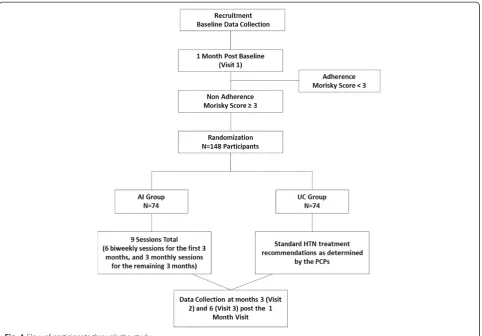
As depicted in Fig. 1, ALMA is a randomized controlled trial with 2 arms: a culturally tailored, practice-based AI arm, and a UC arm. Approximately 148 Latino patients with uncontrolled HTN and who are non-adherent to their antihypertensive medications are randomly assigned equally to either the AI or UC conditions. Patients ran-domized to the UC group receive standard HTN treat-ment recommendations as determined by their primary care providers (PCPs). Patients randomized to the AI group participate in 6 biweekly sessions with bilingual Health Coaches for the first 3 months and then 3 monthly sessions for the remaining 3 months (9 sessions total). Health Coaches utilize a culturallytailored adherence script to identify patient’s specific medication adherence barriers and to explore medication adherence facilitators. Based on the patients’responses, the Health Coach then engages in targeted patient-centered counseling to assist patients in developing individualized self-monitoring strat-egies to overcome these barriers and improve adherence behaviors. Brief motivational interviewing (MINT) strat-egies form the basis of the adherence counseling. MINT is a patient-centered counseling approach that encourages patients to express their concerns about, and barriers to, taking medications, connect their personal values and goals to their health behaviors, enhance their motivation and confidence for change, and make a commitment to change [10]. We have previously demonstrated the effectiveness of using brief MINT to improve medication adherence in Black hypertensive patients followed in community-based practices [11].
Study assessments are conducted at baseline, 1 month post-baseline (visit 1), 3 months post the 1-month sessment (visit 2), and 6 months post the 1-month as-sessment (visit 3). The primary and secondary outcomes are assessed at the 3-month (visit 2) and 6-month (visit 3) follow-up visit. Patients receive US$5 at baseline, US$10 at the 1-month visit, US$10 at the 3-month visit, and US$10 at the completion of the 6-month visit (total of US$35 over the 6-month study).
Study setting and patients
This study is conducted at a community-based medical clinic that serves predominantly Latino patients in New York City. The clinic employs 12 bilingual primary care providers, and 75 bilingual support and administrative staff (including 28 MAs and 7 Health Coaches). An Aca-demic Community Advisory (ACA) Board comprised of four members of the clinic, each representing a key stakeholder group (i.e., patients, clinic staff, and clinic administrators), provides input throughout the study on recruitment, delivery of the intervention and on how best to retain patients.
The target enrollment for the study is 148 patients who meet the following study eligibility criteria: a) have uncontrolled HTN defined as BP > 140/90 mmHg on at least 2 consecutive visits in the past year of receiving care at the clinic (or BP > 130/80 mmHg for those with diabetes or kidney disease) and at least 1 CVD risk fac-tor including hyperlipidemia or diabetes; b) take at least 1 antihypertensive medication; and c) self-identify as Latino and be ≥18 years of age. Patients are excluded if they: a) refuse or are unable to provide informed con-sent; b) currently participate in another HTN study; or c) have significant psychiatric comorbidity. The study protocol was reviewed and approved by the Institutional Review Board of New York University Langone Medical Center. All patients provide written informed consent to participate. The study is registered at www.clinicaltrials. gov: NCT01643473.
Recruitment
Potentially eligible patients are identified via three methods. First, PCPs and their MAs refer patients who meet the eligibility criteria to a research assistant (RA). Referrals are done via EMR flags, or by calling the RA. The RA then conducts an onsite screening and consent visit with the referred patients. Second, the RA reviews the EMR using the International Classification of
Dis-eases (ICD)-9 codes for the diagnosis of HTN (401– 401.9). The PCPs of patients are notified of their poten-tial eligibility and asked permission to enroll their patients into the study. Upon obtaining PCP consent, the RAs note the eligible patients’ appointment dates and approach the patients at their next clinic visit for screening and consent. Finally, flyers are also hung in the clinic waiting room.
Randomization
answers any additional questions. As is true for most be-havioral interventions, neither the patient nor the interventionists (Health Coaches) or study staff can be blinded to the group assignment. To mitigate the poten-tial for bias for the primary and secondary outcomes, an electronic monitoring device (EMD) is used to assess medication adherence and a validated automated BP device is used to assess BP.
Description of the intervention
Development of the Adherence Intervention (AI)
The Common Sense Model of Self-regulation (CSM) is the theoretical framework underlying the AI. The CSM incorporates patients’ illness beliefs about the cause, symptoms, consequences, controllability, and timeline (acute versus chronic) of their condition into the conceptualization of adherence behaviors [15]. More-over, given the dynamic nature of medication-taking be-haviors over time, the five CSM illness beliefs are further categorized using Vrijens et al. medications adherence taxonomy [16, 17] into: initiation, implementation, and discontinuation of the recommended treatment plan. Initiation refers to patients’ willingness to take their medications as well as the perceived benefits and risks of the medications. Implementation is a continuous process that assesses how well patients’ daily medication-taking behaviors correspond to the prescribed regimen. Finally, discontinuation refers to early termination of the medi-cation regimen by the patient.
These conceptual frameworks, in combination with a review of the published literature that examines the role of patients’illness beliefs on adherence behaviors among Latinos with chronic diseases (i.e., diabetes, HIV), and preliminary results from our previous studies, formed the initial basis of the illness beliefs and adherence barriers addressed by the AI.
A formative phase was conducted during the first 8 months of the study, prior to the initiation of the trial and subject recruitment, to further refine the AI. Specif-ically, data from the focus groups and cognitive patient interviews, as well as feedback from the ACA Board were obtained to gain an accurate understanding of the multiple determinants of medication adherence (i.e., cul-tural, cognitive, psychosocial, behavioral, logistical) dir-ectly from the target patient population as well as the key stakeholders that deliver services to them. Overall, the findings showed that Latino patients form their be-liefs about HTN and HTN medications with information received from family members, media, and to a lesser extent, physicians. Moreover, in spite of the fact that HTN was perceived as a treacherous and unpredictable disease, and medications were deemed an essential method to avoid adverse consequences, the need for medications was determined by the presence of perceived symptoms.
Symptom alleviation was used as a marker for treatment efficacy and HTN-related risk reduction. Based on the focus group findings, a rubric for adherence counseling was developed to assist the Health Coaches in delivering the intervention. Specifically, the AI script encompasses a set of guidelines for counseling patients based on changes in their adherence behaviors overtime (i.e., improving adherence, or no change/worse adherence) and barriers and facilitators to medication adherence informed by findings from the focus groups.
To ensure consistency in the delivery of the interven-tion across English-speaking and Spanish-speaking Latino patients, the AI was further translated into the Spanish language by a professional translation service. Three semi-structured interviews were then conducted with bilingual Latino patients to garner feedback on the clarity of the English and Spanish versions of the AI, and to elicit additional culture-specific norms regarding initi-ation and implementiniti-ation of the mediciniti-ation regimen, barriers to adherence, and specific strategies for develop-ing behavioral action plans for takdevelop-ing medications as pre-scribed. The interviews lasted approximately 30 minutes and patients receive US$15 for their time. Finally, the ACA Board provided feedback on the cultural appropri-ateness of the AI and offered insight into the logistical and administrative barriers that can impede adherence in this population. Together, these data were used to further refine the AI to match the literacy and cultural needs of the Latino patient population at the clinic, and to inform important intervention messages during the delivery of the counseling sessions.
Integration of the finalized AI into the EMR
In order to minimize contamination of the UC group, several quality control measures were embedded in the EMRs. Upon randomization, patients’ EMRs are marked according to their group assignment. Health Coaches are not able to access the EMR adherence script for patients randomized to the UC arm, thereby preventing the utilization of the intervention with these patients. Moreover, Health Coaches are required by the clinic to document everything discussed in their ses-sions; thus, we will be able to review their notes to de-termine whether medication adherence was discussed with patients in the UC group and to what extent. As a secondary measure, at follow-up visits, contamination is measured based on patients’: 1) awareness of both study arms, 2) direct exposure to the intervention activ-ities among those in the control arm, and 3) the nature of any contact and interaction with patients in the intervention arm.
Health coach training
As part of the standard of care at the participating clinic, all MAs undergo training in chronic disease manage-ment, development of effective communication skills, and principles of self-management and behavior change. The trainings include didactic and interactive sessions, direct observation, and skills assessment. Upon comple-tion of the training, the MAs are promoted to Health Coaches, at which point they can deliver individual ses-sions with patients. A Health Coach’s typical clinic re-sponsibilities include reviewing the daily panel of patients with the PCP in a morning huddle; scheduling appointments for telephone follow-up of test results; providing general health education; communicating to the patient, recommendations for treatment changes made by the PCP; seeing patients for BP checks and, if needed, referring the patient to the PCP for medication adjustment. Since patient visits with Health Coaches are
[image:5.595.61.538.88.463.2]standard of care at the clinic, regardless of group assign-ment; all patients have contact with a Health Coach.
For the purpose of this study, four of the seven Health Coaches employed at the clinic received additional train-ing in the delivery of the tailored AI and patient-cen-tered counseling techniques 1 month prior to initiation of the intervention. The 3-day interactive training in-cluded an overview of the project goals and study over-view; an introduction to the facilitators and barriers of medication adherence in Latinos; and overview of self-monitoring strategies (i.e., use of reminder systems) to improve adherence. In addition, Health Coaches re-ceived an introduction to the basic principles of MINT techniques and problem-solving strategies [10] and also had the opportunity to practice the MINT strategies that form the basis of the intervention through role-plays and self-modeling with feedback from members of the MINT International Network of Trainers. Finally, the Health Coaches received an in-depth education on the content of the AI materials and practice sessions on the use of the EMR AI template and how to develop action plans through structured goal setting.
Adherence Intervention (AI) contacts
Patients randomized to the AI group participate in 9 ses-sions (6 biweekly sesses-sions for the first 3 months, and then 3 monthly sessions for the remaining 3 months) with the trained bilingual Health Coaches who utilize
the culturally tailored AI to identify patient’s specific medication adherence barriers and facilitators. Patient’s patterns of non-adherence, which are assessed during the baseline and 1-month study visit are also provided to the Health Coaches prior to the start of the intervention. Each counseling session lasts approximately 15 minutes and is conducted via telephone or in-person.
Usual Care (UC) condition
Patients randomized to the UC group receive standard HTN treatment recommendations as determined by their PCP as well as the standard health coaching proce-dures followed at the clinic.
Outcomes assessments
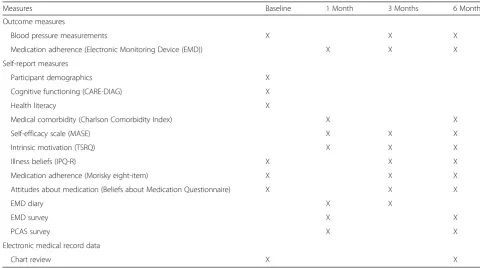
Study assessments for primary and secondary outcomes are completed at baseline, 3 months (post the 1-month visit), and 6 months (post the 1-month visit). All assess-ments are performed by trained RAs and include: (1) ob-jective measures; (2) physiological measures, (3) self-report measures, and (4) EMR chart data. Table 1 sum-marizes the measures according to their timeline.
Primary outcome
Medication adherence
[image:6.595.54.535.449.717.2]The primary outcome is the rate of medication adher-ence at the 6-month study visit, assessed using electronic drug monitoring devices (EMD; Information Mediary
Table 1Study measures by modality
Measures Baseline 1 Month 3 Months 6 Months
Outcome measures
Blood pressure measurements X X X
Medication adherence (Electronic Monitoring Device (EMD)) X X X
Self-report measures
Participant demographics X
Cognitive functioning (CARE-DIAG) X
Health literacy X
Medical comorbidity (Charlson Comorbidity Index) X X
Self-efficacy scale (MASE) X X X
Intrinsic motivation (TSRQ) X X X
Illness beliefs (IPQ-R) X X X
Medication adherence (Morisky eight-item) X X X
Attitudes about medication (Beliefs about Medication Questionnaire) X X X
EMD diary X X
EMD survey X X
PCAS survey X X
Electronic medical record data
Chart review X X
Co.). EMDs are designed as pill bottles with an elec-tronic chip in the cap that records a temporal history of the date, time, and interval between each dosing, thereby allowing for real-time tracking of adherence behaviors. Medication adherence rates by the EMD are calculated as the percent of prescribed doses removed by the pa-tient during the study monitoring period using the formula:
Number of doses removed=Number of doses prescribed
100
In essence, this metric (known as taking adherence), is the proportion of days on which the patient took his or her medication as prescribed, divided by the total num-ber of days that he or she is expected to take them (number of days in the assessed time period).
Detailed records of all patient emergency room visits and hospitalizations are kept to avoid erroneously penal-izing patients for missing values for days during the study when their EMD is not in use. Such days are re-moved from the denominator of the formula in estimat-ing the adherence rates for those patients. To control for the occurrence of“pocket dosing”(i.e., use of pill boxes, removing doses for travel), patients are asked to keep diaries of such periods, which will be accounted for in the analyses [18]. As in other trials, an EMD will be given to each patient to track the one antihypertensive medication taken most frequently and instructed on its use (without being told the primary purpose) [11, 19]. Although this does not reflect overall adherence rates, there is evidence that the pattern of adherence to one antihypertensive medication often reflects adherence to others [20]. In the event that patients are prescribed multiple medications, their PCP will be asked to identify the primary medication to be placed in the bottle.
In addition, medication adherence to prescribed anti-hypertensive medications is assessed with the well-validated eight-item self-report scale developed by Mor-isky that specifically addresses adherence to a prescribed mediation regimen [21]. The Morisky Adherence Scale is used to screen patients for their non-adherence during the first month of the study. Patients who are non-adherent at the 1-month study visit (score > 3) are con-sidered eligible to participate. The measure has accept-able reliability (α = 0.83), correlates well with the previously validated 4-item version [36] (r = 0.64, p < 0.05) and was found to be able to correctly categorize BP control status in 80 % of cases [22].
Secondary outcome
Blood pressure
The secondary outcome is the within-patient change in SBP and DBP from baseline to 6 months. BP is assessed
using a well-validated automated device (WatchBP Of-fice Device; Microlife; Golden, CO, USA) at all study visits, by trained RAs who take a series of BP readings after the patient has been seated for 5 minutes following American Heart Association guidelines. An average of three BP readings are used for each visit.
Self-report measures
Cognition
Cognition is assessed using the Comprehensive Assess-ment and Referral Evaluation DeAssess-mentia Diagnostic Scale (CDIAG) [23, 24]. This instrument was selected because it has been found to perform in a culture-fair manner [25] with better specificity among ethnically diverse groups, in comparison with other cognitive measures.
Patient demographic characteristics
The demographic data includes date of birth, place of birth, years in the US, primary language spoken as a child, primary language currently spoken at home, at work, and with friends and family, ethnicity, gender, household income, education level, marital status, reli-gious affiliation, employment status, family finances, sources of income, financial strain, health insurance sta-tus, smoking status and alcohol use.
Comorbidity
Comorbid medical conditions are assessed with the Charlson Comorbidity Index (CCI) [26]. The CCI is a weighted index for prospectively classifying comorbid conditions, which takes into account the number and seriousness of comorbid diseases.
Illness beliefs
Illness beliefs are assessed with the Illness Perceptions Questionnaire-revised (R) for HTN [27]. The IPQ-R is designed to assess the 5 illness beliefs and 6 emo-tional reactions to HTN based on the CSM, on a 5-point Likert type scale from strongly disagree to strongly agree (α range: 0.79 to 0.89). The IPQ-R has demonstrated good test-retest reliability and good predictive validity in patients with chronic disease [28].
Health literacy
Health literacy is assessed with the 36-item short-form Test of Functional Health Literacy in Adults (s-TOFHLA)-Spanish [29]. The s-TOFHLA is a reading comprehension test that has been linked to glycemic control in Spanish-speaking and English-speaking Latino patients with type 2 diabetes [30].
Self-efficacy
asked to rate their confidence in taking their antihyper-tensive medications under a variety of situations that may pose difficulties. Higher scores reflect high self-efficacy.
Intrinsic motivation
Intrinsic motivation is assessed with the 14-item Treat-ment Self-Regulation Questionnaire (TSRQ) [32]. The TSRQ has 2 subscales: autonomous motivation and controlled motivation (α= 0.86 for each scale).
Beliefs about Medication Questionnaire (BMQ)
The BMQ was designed to assess the patient’s personal reasons for taking their medications [33]. Questions ask patients to rate how much they agree or disagree about statements that reflect their personal views about their medicines prescribed. Responses are given on a 5-point Likert scale (range: strongly agree to strongly disagree).
The Primary Care Assessment Survey (PCAS)
The PCAS is a 51-item patient-completed questionnaire designed to operationalize formal definitions of primary care including the definition posted by the Institute of Medicine Committee on the Future of Primary Care [34]. The survey measures 7 defining characteristics of primary care through 11 summary scales, including de-tailed measurement of the doctor-patient relationship (communication quality, patient trust, physician know-ledge of patient, interpersonal treatment, relationship duration).
Electronic Monitoring Device (EMD) survey
Patient’s experience with the EMD will be assessed with a 17-item questionnaire from our previous studies [18]. The first 11 questions ask about patient’s use and com-fort with the bottle. Sample items include: “I felt com-fortable traveling with the pill bottle”and“I used the pill bottle every day.” Responses are given on a five-point Likert-type scale ranging from strongly agree to strongly disagree. The remaining six open-ended questions ask patients about the use of a pillbox, the number of medi-cations they lay out, and to report any problems with the bottle.
Chart extraction data
The study staff reviews all patients’ medical records at baseline and at 6months. Chart data extraction includes include duration of HTN, total number and classes of prescribed BP medications, as well as their doses and frequencies of ingestion, changes in dosages of BP cations, frequency of clinic visits; the use of other medi-cations known to affect BP such as NSAIDS and hormone replacement therapy, medical comorbidity and clinic BP readings.
Analysis
The power estimates are based on the primary aim using the basic comparisons of number (proportion) adherent in each group as the effect size. The nominal alpha value is set for a 2-sided test at theα= 0.05 level. Estimates of the hypothesized proportion of patients’adherent in the AI versus UC group at the final follow-up are derived from values in the study by Lai et al. [35], the only com-parable study with a Latino sample. Given the high pro-portion of adherent patients in the treatment group from that study, more conservative effect size estimates were used for the proposed study. Thus, the projected sample size is 148 patients (74 patients per group), which will provide 80 % power to detect a 0.20 differ-ence in the adherdiffer-ence rate for patients in the AI versus UC groups. All analyses will be performed under an intent-to-treat design; therefore, all patients, including those who drop out of the study, will be invited back for the final assessments.
While randomization is expected to produce well-balanced groups, analyses will be done to determine any baseline differences between the groups on demographic or prognostic variables, using chi-square analyses for categorical variables and analysis of variance (ANOVA) for continuous ones. If significant differences are found or there is scientific plausibility of an association with the outcome variable, these variables will be included in a logit model to predict group assignment. Data from the initial group comparisons on patient characteristics (including the baseline primary outcome and other pa-tient characteristics) will also allow for the estimation of a logit model of dropout. If the results indicate that at-trition is significantly related to one or more baseline characteristic, predicted values from the final logit model will be used as a covariate in all subsequent analyses, thereby controlling for differential attrition.
Analyses for the primary aim
The primary analysis will be a 2 (group) × 2 (adherence status) chi-square test of independence. The expectation is that the randomization of patients to treatment arm and the absence of significant selection and/or attrition biases will obviate the need for any covariates in the ana-lysis. However, in the unlikely event that imbalances are identified and covariates are added to the model, a gen-eralized linear model (logistic regression) will be used. In addition to two-sided tests of significance, the effects will be estimated with odds ratios.
Analyses for the secondary aim
treatment dummy coded as 0 = UC and 1 = AI. The critical test will be the time × treatment interaction. Time will be treated as a random effect. Mixed effects regression models have several advantages over trad-itional repeated measures multivariate analysis of vari-ance (MANOVA) models, including the ability to include all patients in the analysis rather than only those with complete data. The parameter estimates from the regression models will be reported and used to calculate predicted scores to describe the effect of the AI on these outcomes.
Exploratory analyses
Data on the self-report measures of self-efficacy, intrin-sic motivation, beliefs about medications, and illness beliefs at 3 time points will allow for the examination of these variables as possible mediators on the outcomes at 6 months. Moderating effects of acculturation and health literacy will also be evaluated. These data may contribute to understanding why the proposed intervention worked.
Discussion
Study implementation: challenges and lessons learned
We have encountered several “real world” barriers to implementation of the ALMA study protocol as origin-ally conceived. Several of the challenges we faced relate to the difficulties involved moving away from an inter-vention delivered by research staff to that of clinic staff with competing priorities. This implementation model adds a new level of complexity as researchers must con-tend with the need to uphold the methodological rigor of a randomized clinical trial while maintaining the flexibility to work with staff within a busy medical prac-tice. The two main barriers to date are patient recruit-ment and delivery of the intervention during times that fit both patients’and Health Coaches’schedules. Below, we summarize the strategies we have employed to ad-dress these challenges as a resource for other re-searchers who are interested in utilizing indigenous clinic staff for intervention delivery in community-based practices.
Recruitment challenges
Upon initiation of the trial, we experienced several challenges in patient recruitment. For example, we en-countered a higher than expected rate of patient re-fusal for study participation. The most common reasons for declining participation include long work schedules, inability to receive study calls while at work, competing priorities (i.e., being too sick, caring for a sick person), patient travel to their home country for long periods of time, and overall lack of interest in participating. Recruitment was also prolonged during the first months of the study due to technical
difficulties with the wireless EMDs that were originally selected to assess patient adherence. The main barrier to using the wireless EMDs was the frequent disrup-tions between the device and its communication hub, which led to transferring incomplete data to the re-search portal. In addition, some patients expressed dif-ficulty in understanding how to use the device, were dissatisfied with its use, and/or used the device incor-rectly. The combination of these factors paired with a higher than expected rate of physician turnover at the clinic has prolonged patient recruitment and reduced the overall pool of potentially eligible patients for recruitment.
Challenges with intervention delivery
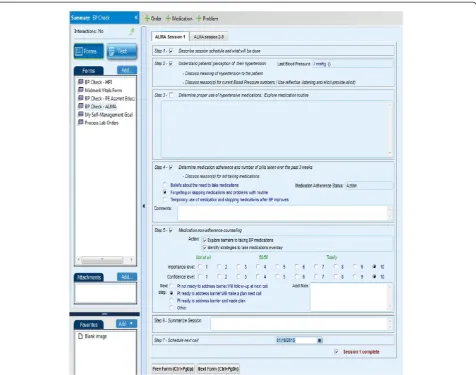
During the formative phase, several modifications were made to the design of the AI template embedded in the EMR. First, based upon beta-testing with the Health Coaches and feedback from key stakeholders, the study team refined the design of the AI template to improve its usability and flow during the delivery of the counsel-ing sessions. For example, interactive features were added such as command buttons to facilitate navigating through the AI template and accessing the built-in EMR goal-setting template, directly from the AI template. Additional checkboxes containing the adherence barriers and facilitators garnered from the focus groups were also added to minimize the amount of note-taking and facili-tate data collection. Finally, a comment box was added to prevent loss of data that was not captured in the checkboxes. These modifications improved the AI tem-plates ease of use as well as made key data from previous sessions easily accessible, which the Health Coaches use to familiarize themselves with patients’ most recent adherence behaviors.
We have also encountered several “real world” chal-lenges to the delivery of the intervention. One of the most frequent challenges is patients’ limited time avail-ability to receive the counseling calls. Patients who are employed often have a short window of availability (ap-proximately 1–2 hours) during their work schedule to receive the calls, and most are only available before their workday begins or after their shift has ended; times dur-ing which the Health Coaches are not at work. This time barrier paired with the competing clinic duties of the Health Coaches poses the greatest challenge to the deliv-ery of the intervention. For these reasons, the study protocol was modified to include having the study staff send periodic reminder flags to the Health Coaches (based upon Health Coaches’ request) regarding out-standing and/or upcoming counseling sessions as well as sending reminder postcards to patients they are unable to reach. Additional strategies to increase intervention attendance include: coordinating with the Health Coa-ches who work extended rotating hours in the morning and night (i.e., before 9:00 a.m., and after 5:00 p.m.) to prioritize calling efforts for those patients with limited availability; and increasing the amount of communica-tion, as early as after the first call attempt, between the study staff and the Health Coaches if they are unable to reach a patient. This allows the study staff to reach pa-tients with tight schedules beyond clinic hours and pro-actively arrange appointments with Health Coaches.
A second“real world”challenge relates to audiotaping the counseling sessions as a measure of treatment fidel-ity. While, all Health Coaches were provided with audio recorders and microphones to facilitate taping, they re-ported not being able to comply with the recordings due
to time constraints and the need to have the equipment stored in a location that was not readily accessible, which hindered the recording process. As a partial solu-tion to this challenge, Health Coaches receive numerous booster trainings to prevent skill decay as well as to maintain adherence to the study protocol. Moreover, the interactive AI template in the EMR facilitates collection of data on the content of each counseling session.
Retention challenges
Due to the patient time constraints discussed above, re-tention strategies were also modified to facilitate the completion of study questionnaires either on-site or over the phone. For patients who work full-time, this de-creased the time burden in terms of having to return to the clinic on days when they did not have a medical ap-pointment scheduled, or if they did not have time to complete the visit on the day they were at the clinic. A brief in-person visit is scheduled for patients who complete visit surveys over the phone to take their BP. Moreover, the assessment protocol was modified by moving several of the questionnaires from the baseline visit to the 1-month study visit to prevent patient fa-tigue. The health literacy questionnaire was also moved to the baseline visit (from the 1-month visit) in order to facilitate the administration of the 1-month visit by phone.
Additional strategies implemented to increase reten-tion include: (1) mailing appointment reminder post-cards, and/or informational postcards for patients who are difficult to reach, or have no medical appointments within a study visit time window to schedule the visit; (2) updating patients’ contact information during each study visit, and, (3) regularly checking patients’medical appointments to coordinate the study visits on the day that patients are already scheduled to come to the clinic. These changes have resulted in an overall average 87 % retention rate at the study follow-up visits.
Trail status
The ALMA trial began in October 2012. To date, we have randomized a total of 112 patients, of which 54 are in the AI group and 58 are in the UC group. Patient recruitment is still ongoing.
Abbreviations
ACA Board:Academic Community Advisory Board; AI: adherence
MINT: motivational interviewing; NSAIDs: non-steroidal anti-inflammatory drugs; PCAS: Primary Care Assessment Survey; PCP: primary care provider; RA: research assistant; SBP: systolic blood pressure; s-TOFHLA: short-form Test of Functional Health Literacy Assessment; TSRQ: Treatment Self-Regulation Questionnaire; UC: usual care; US: United States.
Competing interests
The authors declare that they have no competing interests.
Authors’contributions
AS conceived of the study and development of its design as well as prepared and finalized the manuscript. FDLC participated in the implementation and coordination of the study and helped prepare the manuscript. MBB was responsible for the acquisition of the data. AG was responsible for the acquisition of the data and daily implementation. MP contributed to implementation of the study and coordinated involvement of the clinic providers. AL contributed to implementation of the study and coordinated involvement of the clinic Health Coaches. MR contributed to the conception of the study and provided a critical review of the manuscript. All authors read and approved the final manuscript.
Acknowledgments
The authors would like to thank Drs. William Chaplin and Gbenga Ogedegbe for their support and critical feedback on this project. We would also like to thank the Health Coaches (Palmira Santiago, Cindy Ramos, Ana Gonzalez, and Jacqueline Camacho) at Union Health Center for their dedication to this project in the delivery of the intervention. This work was supported by grant R01HL092860 from the American Heart Association (PI: Schoenthaler). The funding organization played no role in the study conception; design, writing of the manuscript, or decision to submit the manuscript for publication.
Author details
1Department of Population Health, Center for Healthful Behavior Change,
New York University School of Medicine, 227 East 30th Street, 634, New York, NY 10016, USA.2Union Health Center, New York, NY 10001, USA.3Division of Preventive and Behavioral Medicine, Department of Medicine, University of Massachusetts Medical School, 55 Lake Avenue North, Worcester, MA 01655, USA.
Received: 5 February 2015 Accepted: 22 June 2015
References
1. Ennis SR, Ríos-Vargas M, Albert NG. The Hispanic population: 2010. Census Bureau: US; 2011.
2. American Heart Association Statistics Committee. Statistical fact sheet 2013 update. 2013.
3. Centers for Disease Control and Prevention. Racial/Ethnic disparities in the awareness, treatment, and control of hypertension. 62nd ed. United States: MMWR Morbidity and Mortality Weekly Report; 2013. p. 351–5.
4. Ong KL, Cheung BM, Man YB, Lau CP, Lam KS. Prevalence, awareness, treatment, and control of hypertension among United States adults 1999–2004. Hypertension. 2007;49:69–75.
5. Manias E, Williams A. Medication adherence in people of culturally and linguistically diverse backgrounds: a meta-analysis. Ann Pharmacother. 2010;44:964–82.
6. Sudano Jr JJ, Baker DW. Antihypertensive medication use in Hispanic adults: a comparison with black adults and white adults. Med Care. 2001;39:575–87. 7. Morris LS, Schulz RM. Patient compliance - an overview. J Clin Pharm Ther.
1992;17:283–95.
8. Haynes RB, Ackloo E, Sahota N, McDonald HP, Yao X. Interventions for enhancing medication adherence. Cochrane Database Syst Rev. 2008;16(2):CD000011. 9. McDonald HP, Garg AX, Haynes RB. Interventions to enhance patient adherence
to medication prescriptions: scientific review. JAMA. 2002;288:2868–79. 10. Rollnick S, Miller WR. What is motivational interviewing? Behav Cogn
Psychother. 1995;23:325–34.
11. Ogedegbe G, Chaplin W, Schoenthaler A, Statman D, Berger D, Richardson T, et al. A practice-based trial of motivational interviewing and adherence in hypertensive African Americans. Am J Hypertens. 2008;21:1137–43. 12. Gupta SK. Intention-to-treat concept: a review. Perspect Clin Res. 2011;2:109.
13. Bellg AJ, Borrelli B, Resnick B, Hecht J, Minicucci DS, Ory M, et al. Enhancing treatment fidelity in health behavior change studies: best practices and recommendations from the NIH Behavior Change Consortium. Health Psychol. 2004;23:443–51.
14. Resnick B, Bellg AJ, Borrelli B, Defrancesco C, Breger R, Hecht J, et al. Examples of implementation and evaluation of treatment fidelity in the BCC studies: where we are and where we need to go. Ann Behav Med. 2005;29(Suppl):46–54. 15. Leventhal H, Cameron LD. Behavioral theories and the problem of
compliance. Patient Educ Couns. 1987;10:117–38.
16. Vrijens B, Vincze G, Kristanto P, Urquhart J, Burnier M. Adherence to prescribed antihypertensive drug treatments: longitudinal study of electronically compiled dosing histories. BMJ. 2008;336:1114–7. 17. Vrijens B, De Geest S, Hughes DA, Przemyslaw K, Demonceau J, Ruppar T,
et al. A new taxonomy for describing and defining adherence to medications. Br J Clin Pharmacol. 2012;73:691–705.
18. Schoenthaler A, Ogedegbe G. Patients’perceptions of electronic monitoring devices affect medication adherence in hypertensive African Americans. Ann Pharmacother. 2008;42:647–52.
19. Rose AJ, Glickman ME, D’Amore MM, Orner MB, Berlowitz D, Kressin NR. Effects of daily adherence to antihypertensive medication on blood pressure control. J Clin Hypertens. 2011;13:416–21.
20. Eisen SA, Miller DK, Woodward RS, Spitznagel E, Przybeck TR. The effect of prescribed daily dose frequency on patient medication compliance. Arch Intern Med. 1990;150:1881–4.
21. Morisky DE, Green LW, Levine DM. Concurrent and predictive validity of a self-reported measure of medication adherence. Med Care. 1986;24:67–74. 22. Morisky DE, Ang A, Krousel-Wood M, Ward HJ. Predictive validity of a
medication adherence measure in an outpatient setting. J Clin Hypertens. 2008;10:348–54.
23. Gurland B, Kuriansky J, Sharpe L, Simon R, Stiller P, Birkett P. The Comprehensive Assessment and Referral Evaluation (CARE)–rationale, development and reliability. Int J Aging Hum Dev. 1977;8:9–42. 24. Golden RR, Teresi JA, Gurland BJ. Development of indicator scales for the
Comprehensive Assessment and Referral Evaluation (CARE) interview schedule. J Gerontol. 1984;39:138–46.
25. Teresi JA, Kleinman M, Ocepek-Welikson K, Ramirez M, Gurland B, Lantigua R, et al. Applications of item response theory to the examination of the psychometric properties and differential item functioning of the comprehensive assessment and referral evaluation dementia diagnostic scale among samples of Latino, African American, and white non-Latino elderly. Res Aging. 2000;22:738–73.
26. Charlson ME, Pompei P, Ales KL, MacKenzie CR. A new method of classifying prognostic comorbidity in longitudinal studies: development and validation. J Chronic Dis. 1987;40:373–83.
27. Moss-Morris R, Weinman R, Petrie K, Horne R, Cameron L, Buick D. The revised Illness Perception Questionnaire (IPQ-R). Psychol Health. 2002;17:1–16.
28. Giannousi Z, Manaras I, Georgoulias V, Samonis G. Illness perceptions in Greek patients with cancer: a validation of the Revised‐Illness Perception Questionnaire. Psychooncology. 2010;19:85–92.
29. Baker DW, Williams MV, Parker RM, Gazmararian JA, Nurss J. Development of a brief test to measure functional health literacy. Patient Educ Couns. 1999;38:33–42.
30. Schillinger D, Grumbach K, Piette J, Wang F, Osmond D, Daher C, et al. Association of health literacy with diabetes outcomes. JAMA. 2002;288:475–82. 31. Ogedegbe G, Mancuso CA, Allegrante JP, Charlson ME. Development and
evaluation of a medication adherence self-efficacy scale in hypertensive African-American patients. J Clin Epidemiol. 2003;56:520–9.
32. Levesque CS, Williams GC, Elliot D, Pickering MA, Bodenhamer B, Finley PJ. Validating the theoretical structure of the Treatment Self-Regulation Questionnaire (TSRQ) across three different health behaviors. Health Educ Res. 2007;22:691–702.
33. Horne R, Weinman J, Hankins M. The beliefs about medicines questionnaire: the development and evaluation of a new method for assessing the cognitive representation of medication. Psychol Health. 1999;14:1–24. 34. Safran DG, Kosinski M, Tarlov AR, Rogers WH, Taira DA, Lieberman N, et al.
The Primary Care Assessment Survey: tests of data quality and measurement performance. Med Care. 1998;36:728–39.
35. Lai LL. Community pharmacy-based hypertension disease-management pro-gram in a Latino/Hispanic-American population. Consult Pharm.