Journal of Chemical and Pharmaceutical Research, 2015, 7(12):898-904
Research Article
CODEN(USA) : JCPRC5
ISSN : 0975-7384
Evaluation of microalgae biomass, a convenient source of energy
Hasanzadeh Ghobad
1*and Sohrabi Asadollah
21Department of Plant science, PNU University Teachers and Teacher Education, Iran
2 Department of Plant Science, Teachers Education, Iran
_____________________________________________________________________________________________
ABSTRACT
A variety of species of green and blue algae from water and soil samples were enriched and isolated. The isolated strains were identified as Chlorella, Nostoc, Chlamydomonas Oscillitoria, Anabaena. Chlorella vulgaris a variant was cultivated under optimal conditions to produce biomass as laboratory as well as the site in both bioreactor and open pond systems. Dried biomass with 10% moisture was tested for calorific value by standard methods and the same were in a range of 3000-3500 kcal per kg. Biomass was subjected to recovery of oils as well as blended with coal and calorific values were 4200 to 5300 KC/KG.
Keywords: microalgae; biomass; chlorella; energy; mitigation.
_____________________________________________________________________________________________
INTRODUCTION
With the increase in shortage of electricity and constant increase in the cost of electricity, we are forced to look for alternative sources of generation of electricity to meet the present demand. Global warming induced by increase in the concentration of GHG in the atmosphere is a matter of great environmental concern. Annual emissions of CO2 are estimated to be 2 x 10¹⁰ tones primarily from combustion of fossil fuels, with an increasing population and industrialization. Attempts have been made to reduce atmospheric CO2 using physical and chemical treatments to separate and recover CO2. Micro-algal photosynthesis has increasingly received attention as a means of reducing the emission of CO2 from atmosphere [1][2][3]. Emissions from power plants, cement-producing factories & other industries can be controlled by growing photosynthetic micro-algae. It is possible to recycle CO2 to produce microalgae . Microalgal biomass generated can be used as a fuel to supplement coal in generation of electricity [4][5].
medium [13][14]. Strains were identified using up to genus level using microscopic techniques and Stain C-1 was identified using molecular methods using genetic markers by outside laboratory.
2.2. Cultivation in bioreactor and analysis of biomass
Chlorella species were grown in flasks containing enrichment culture medium for 7 days and the biomass separated was inoculated in 1 liter and 5 liter capacity rectangular open bioreactor and incubated at ambient temperature in chamber with light sources. Developed biomass was then cultivated in larger volumes in photobioreactor as well as open ponding system at thermocol molding factory using exhaust fume using same conditions.
Biomass was allowed to settle and the sediment collected was centrifuged and dried at 105oC. Dried biomass was analysed for TOC (Dichromate reflux method) Protein (colorimetric method), Lipid contents (Soxhlet extraction) and Calorific value (using Bomb calorimeter) as given in Standard Methods for Water and Waste Water Analysis 1989 [15].
Blending with coal was carried out to prepare mixture with 25 and 50% coal and calorific values were determined. Sample processing for determination of calorific value of Chlorella sp. was done by drying them at 8O 0C for 24 hours and recording their dry weight. The dried samples were then ground into a fine powder using a mortar and pastel, and placed in desiccators. The calorific content of dried samples was measured using a Phillipson Microbomb Calorimeter. Small pellets of dried sample (15-30 mg) were placed in the bomb chamber, pressurized to 425 psi with pure oxygen, combusted and amount of heat generated recorded. The calorimeter was calibrated against benzoic acid standards [16]. Dried biomass of Chlorella was subjected to hydrothermal liquefaction to recover oil and the same was analysed for oil contents along with GCMS and FTIR analysis to determine the chemical and physical properties of oil.
RESULTS AND DISCUSSION
The energy crisis of the 1970s was followed by increased concern for the environment, with particular emphasis on protection of the global ecosystem. The RAPAD established in Japan investigated the development of technologies for biomass conversion and utilization, in particular, the production of ethanol from cellulosic biomass. Various forms of biomass resources exist. Among these, sugar and starch crops are inappropriate for use as energy sources since they are primary food sources, and are unstable from the viewpoints of long-term supply and cost. Cellulosic resources, on the other hand, represent the most abundant global source of biomass, and have been largely unutilized [17].
[image:2.595.233.374.595.741.2]Development of technologies that efficiently produce biomass and convert it to more convenient forms of energy is therefore very important [18]. Microalgae have been investigated for the production of a number of different biofuels including bio-diesel, bio-oil, bio-syngas, and bio-hydrogen. The production of these bio-fuels can be coupled with flue gas CO2 mitigation, wastewater treatment, and the production of high-value chemicals. Developments in micro-algal cultivation and downstream processing (e.g., harvesting, drying, and thermo-chemical processing) are expected to further enhance the cost-effectiveness of the bio-fuel from micro-algae strategy [19]. Biofuel is a renewable energy source produced from biomass, which can be used as a substitute for petroleum fuels [20]. Biofuels are expected to play an increasingly important role throughout 21st century [21][22]. Algae based biofuels are considered as a viable option as the oil productivity of many algae exceeds that of oil crops.
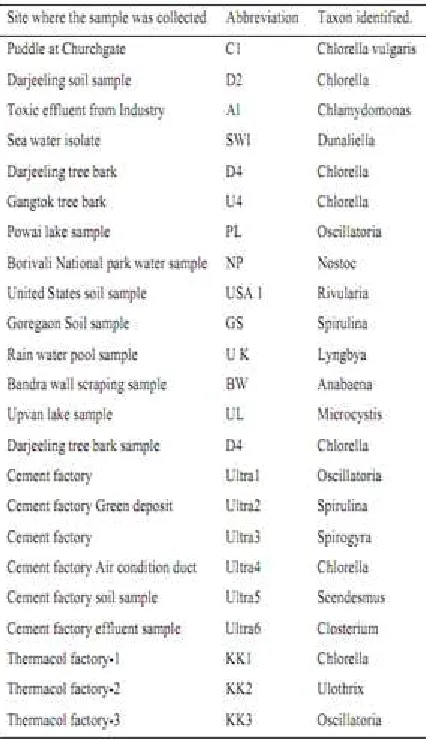
Table 2. Identification of isolated algal cultures
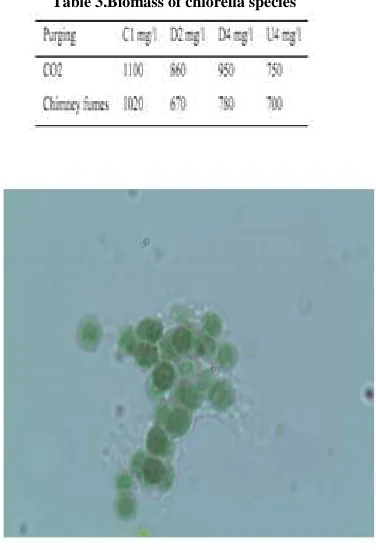
Four strains of Chlorella C-1, D-2, D-4 and U-4 were used for large scale cultivation at the site using Boiler exhaust fume. Growth in photobioreactor as well as open ponding system was excellent and gave promising results. Table 3 shows results of Biomass of Chlorella species.
C-1 grown in the presence of chimney fumes and CO2 in a photobioreactor showed better growth as compared to other strains including chimney fumes. Conditions of cultivation were same for both photobioreactor as well as ponding system. Increase in biomass indicated these cultures could grow in the presence of 9 % CO2, 2.66 kg/d of SO2 and 36.25 mg/nm3of N0x. This was average concentrations of chimney gases at the site. Growth rate was quite good in the modified medium and with changes in cultivation conditions it improved well. C-1 was with higher growth rate compared to other strains.
[image:4.595.219.407.246.521.2]Table 4 shows the biomass of C-1 strain produced in open pond and this cultivation was carried out in ponds with 10Kl to 30KL capacity and rate of growth was determined. Similar results were obtained in photobioreactor with 10lit capacity.
[image:4.595.232.384.568.657.2]Table 3.Biomass of chlorella species
Fig 1. The photograph shows morphology of C-1 (chlorella vulgaris)strain.
Fig 2.Photograph of photobioreactor and ponding system
3.1. Biomass analysis
Strains were grown on large scale in bioreactor with 10lit capacity. The biomass was allowed to settle and the collected sediment was centrifuged and dried in oven at 105oC. In a period of 7days the growth yields were in a range of 5-10gm/lit. The Protein content of these strains was in a range of 40-60% TOC 40-55% and lipid contents 12-18%.
3.2. Hydrothermal liquefaction
While the lipid content of microalgae, on a dry cellular weight basis varies between 20 and 40 %, lipid contents as high as 85 % have been reported for certain micro-algal strains. Botryococcus braunii, is a unique micro-algal strain, having a long-chain hydrocarbon content of between 30 and 40% (dry weight basis), which is directly extractable to yield crude oil substitutes. Both physical and chemical processes are applicable in the production of liquid fuels from algal strains of high lipid content. These processes include direct lipid extraction in the production of diesel-oil substitutes, trans-esterification in the formation of ester fuels, and hydrogenation in the production of hydrocarbons. Oily substances are also produced via liquefaction of micro-algal biomass through thermo-chemical reactions under conditions of high pressure and temperature.
Algal biomass collected during cultivation of Chlorella in open pond was subjected to hydrothermal liquefaction to get bio oil or bio crude. The hydrothermal liquefaction of Chlorella was performed using a hydrothermal reaction system which consisted of a 1.8 L batch stirred reactor (PARR Instruments Co.USA). HTL was done in stainless steel autoclave with mechanical mixing. 248 M.S.Ghayal and M.T.Pandya / Energy Procedia 32 ( 2013 ) 242-250
The products of liquefaction include gaseous, aqueous and solid phases [26]. Viscous tar-like matter attached to the cooling pipe and the inner wall of the autoclave, and some floated on the aqueous surface. Total amount of bio oil extracted from Chlorella C1 cells after HTL was 11.45 %.
3.3. Energy balance of the liquefaction process
biomass with about 10% moisture had calorific values in a range of 3000-3500Kcal/kg. Attempts were made to grow micro-algae on large scale economically. One kilogram of dry algal biomass utilizes up to 1.7 KG CO2
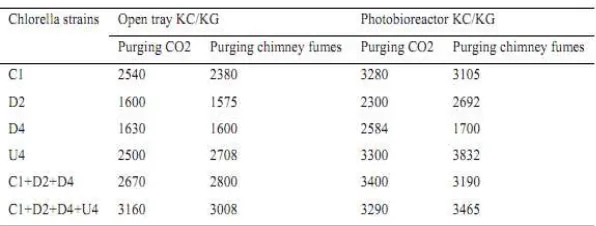
[image:6.595.173.471.171.284.2]Table 6 shows calorific values of Chlorella biomass mixed with coal in 25 and 50% levels. It can be seen that biomass blending can be one alternative to reduce coal usage as the even at 25% coal blending Calorific values are quite comparable although not as high as coal itself. It can be also blended with other renewable sources of energy.
[image:6.595.247.378.321.439.2]Table 5.Calorific values of various chlorella strains
Table 6.Calorific values of chlorella strains belended with coal
CONCLUSION
Different green algae, blue green bacteria and diatoms are isolated from various samples Concentration of CO2, which is a major greenhouse gas, can be reduced by generation of biomass for production of electricity. The algal species Diatoms, Chlorella, Chlamydomonas, Nostoc and Anabaena had good calorific values and lipid contents. Extensive studies carried out using C-1 strain which was identified as variant of Chlorella vulgaris showed excellent results and it has added advantage of separation making downstream process very easy. The oil contents were 11.45% with energy recovery of 29.531% with higher heating values as compared to other strains. C-1 could be easily blended with coal as solid fuel since the bled had calorific values comparable. The growth rate of C-1 was quite good in both photobioreactor as well as open ponding system and it could be easily cultivated using chimney fumes from the plant. Using these strains can develop biomass on large scale in photobioreactor as well as open ponding system which can be dried and used as a supplement for coal. Microalgae development can give tailor made solutions for industries with uninterrupted power supply at reasonable cost.
REFERENCES
[1] Kodama M, Ikemoto H, Miyachi S. J Mar Biotech 1993; 1:2125.
[2] Yang SS, Chang EH, Lee JY, Hong YY, Lan CR, Biol Fertil Soils 1997;25:245-251.
[3] Yang SS, Chang EH, Lee JY, Hong YY, Lan CR. Month. J Taipower’s Eng 2000;624:65-82. [4] Danielo, Olivier. An Algae based fuel. Biofutur 2005;No.255.
[5] Schulz, Thomas. The Economics of micro-algae production andprocessing into biodiesel. Farming Systems, Department of Agriculture and Food, Western Australia; 2006.
[6] Mauseth DJ. Botany an introduction to plant biology. Jones and Bartlett Publishers; 2003. [7] Sawayama S, Inoue S, Dote YD, Yokoyama SY. Energy Convers Mgmt 1995;36: 729-731. [8] KuranoN, Ikemoto H, Miyashita H, Hasegawa T, Miyachi S. J Mar Biotech 1995;3:108-110.
[9] Kurano N, Ikemoto H, Miyashita H, Hasegawa T, Hata H, Miyachi S.Energy Consers Mgmt 1995;36: 689-692. [10] Chang, Ed-Haun, Yang, Shang-Shyng. Bot Bull Acad Sin 2003;44:53-52.
[13] Sheldon A. Experimental microbial ecology. Academic Press; 1970.
[14] Vonshak A . Laroratory techniques for the cultivation of microalgae. In: Richmond A, editor. Handbook of Micro-algal mass culturesFL: CRC Press; 1986, p. 117-199.
[15] APHA. Standard Methods for the Examination of Water and Wastewater. 17th Edn, American Public Health Association,Washington, D.C.; 1989.
[16] Lamare DM, Wing RS. Calorific content of New Zealand marinemacrophytes. New Zealand Journal of Marine
and Fresh Water Research 2001;35:335-341.
[17] Hall DO, House JI. Biomass and Bioenergy 1994;6:11-30
[18] Borowitzka MA. In: Borowitzka MA, Borowitzka LJ, editors.Micro-algal biotechnology, Cambridge: Cambridge University Pres 1988, p. 257-287
[19] Li Y, Horsman M, Wu N, Lan CQ, Calero ND. Biotechnol Prog 2008; Article 10.1021/ 371-2.
[20] Demirbas A. Use of algae as biofuel sources. Energy conversion and management 2010;51:2738-2749. [21] Hoekman K. Biofuels in U.S.-challenges and opportunities. Renewable Energy 2009;34:14-22.
[22] Atadashi IM, Aroua MK , Abdul Aziz A. Renewable and SustainableEnergy Reviews 2010;14:1999-2008. [23] Pienkos PT. Potential for biofuels from algae. NREL/PR-510-42414. National Renewable Energy Laboratory (NREL), Golden, CO; 2007.
[24] Zeiler KG , Heacox DA, Toon ST, Kadam KL, Brown LM. Energy Convers Mgmt 1995;36:707-712. [25] Kadam KL, Sheehen JJ. World Resource Review 1996;8(4):493-504.
![Table 1.comparison of potential oil yields of algae and other oil seeds[23]](https://thumb-us.123doks.com/thumbv2/123dok_us/8747454.891128/2.595.233.374.595.741/table-comparison-potential-oil-yields-algae-oil-seeds.webp)