Durham E-Theses
Dynamic Capabilities Development: An Examination of
Exporting Small-to-Medium Enterprises (SMEs) in
Malaysia
RAMLEE, AFIFAH,ALWANI,BINTI
How to cite:
RAMLEE, AFIFAH,ALWANI,BINTI (2017) Dynamic Capabilities Development: An Examination of Exporting Small-to-Medium Enterprises (SMEs) in Malaysia , Durham theses, Durham University. Available at Durham E-Theses Online: http://etheses.dur.ac.uk/12011/
Use policy
The full-text may be used and/or reproduced, and given to third parties in any format or medium, without prior permission or charge, for personal research or study, educational, or not-for-prot purposes provided that:
• a full bibliographic reference is made to the original source • alinkis made to the metadata record in Durham E-Theses • the full-text is not changed in any way
The full-text must not be sold in any format or medium without the formal permission of the copyright holders. Please consult thefull Durham E-Theses policyfor further details.
Academic Support Oce, Durham University, University Oce, Old Elvet, Durham DH1 3HP e-mail: [email protected] Tel: +44 0191 334 6107
http://etheses.dur.ac.uk
i
Dynamic Capabilities Development: An Examination of Exporting Small-to-Medium Enterprises (SMEs) in Malaysia
Afifah Alwani Ramlee
ABSTRACT
As time has evolved, the business environment has become more dynamic and such that the original propositions of the resource based view (RBV) is being challenged for being static and neglecting the influence of market dynamism. This is particularly important for exporting small-to-medium sized firms (SMEs), firms that seek a significant competitive advantage from the use of their resources in pursuing international sales in one or multiple countries. The rapid growth of the dynamic capabilities literature and its diversity have led to a rich but still disconnected body of research pointing in dissimilar directions. Prior researchers reported that there is not much attention given to the process of how capabilities develop, emerge or evolve especially in SMEs that have limited resources, knowledge bases and expertise in building and integrating diverse capabilities. Thus, there is a question to ponder about how these small exporting firms could survive in a dynamic environment with a lack of resources and skills. Building on ideas of emerging and branching dynamic capability, this study uses a sample of 130 Malaysian exporting SMEs in manufacturing industries and hypotheses are tested using Structural Equation Modelling. A web-based survey questionnaire and return postal set of surveys were distributed to managers/founders/owners of selected exporting SMEs in Malaysian. The results suggest that operation slack has a strong positive moderation effect between learning exploration and emerging dynamic capability of sensing and moderation between innovation exploration and an emerging dynamic capability of learning. The other moderators, such as financial slack, past business performance and international diversity had resulted as negative moderators for the particular path. Furthermore, these study also proving the link between dynamic capabilities, substantive capabilities and business performance. The results show that, substantive capabilities do have direct effect towards business performance. Overall, the key finding of this study is to unpack the relationships between dynamic capabilities and business performance.
ii
ACKNOWLEDGEMENTS
First and foremost, my heartfelt thanks go to my greatest support and intellectual supervisor, Professor Mathew Hughes (Mat). He is a person I have admired for his academic strengths, his great personality and innovative research. Nevertheless, it has been a real honor and privilege to work under his supervision. His invaluable input and patience has kept me motivated and guided me to the end. There were many times in the process that I turned off, but he always brought me back to the center. A million thanks Mat, for always being there, ready to read and comment, to pinpoint the essentials when it is hard to see them.
I would like to extend my appreciation to my sponsors, Ministry of Higher Education in Malaysia (MoE) and University Utara Malaysia (UUM), without those funding I would not have survived. Not forgotten, an appreciation to Professor Paul Hughes, Professor Carlos, and all PhD members at Durham Business School, for their assistance and support during the research process.
Furthermore, I am deeply thankful to my family: my dear parents and siblings (Mama, Abah, Amalina, Anis and Afif) for always being there for me, my dear husband, Mikail for standing by me through good and bad times and for being patient enough throughout my study and my beloved in-laws family for their endless support and patience. I love you all and thank you so much!
Lastly, I am grateful to my fellow friends and colleagues both in Malaysia and England, especially for Dr. Tanvi, Dr. ‘Aala, Dr. Asma, Nicole, Eyda, Dr. Alisha Ismail, Cha Cha, Nektaria-Maria, Anisah, Nurulfizah, Amirul Haqeem and to all academic staff at School of International Studies (SOIS), for their unwavering support.
iii
ABBREVIATIONS
AGFI Adjusted Goodness of Fit Index AVE Average Variance Extracted
BDCC Branching Dynamic Capability of Coordinating BDCI Branching Dynamic Capability of Integrating CBP Current Business Performance
CEO Chief Executive Officer
CFA Confirmatory Factor Analysis
CFI Comparative Fit index
DC(s) Dynamic Capability(s)
EDCL Emerging Dynamic Capability of Learning EDCS Emerging Dynamic Capability of Sensing EFA
FDI
Exploratory Factor Analysis Foreign Direct Investment
FMM Federation of Malaysian Manufacturers
FS Financial Slack
GFI Goodness of Fit Index
ID International Diversity
IEXPLR Innovation Exploratory IEXPLT Innovation Exploitation LEXPLR Learning Exploratory LEXPLT Learning Exploitation
LISREL Linear Structural Relationships
MATRADE Malaysia External Trade Development Corporation
OS Operation Slack
PBP Past Business Performance
RBV Resource Based View
RMSEA Root Mean Square Error of Approximation
ROA Return on Assets
ROI Return On Investment
iv
SC(s) Substantive Capability(s)
SEM Structural Equation Model
SMEs Small Medium Enterprise(s)
SPI Speed of Innovation
SPM Speed of Marketing
SPSS Statistical Packages for Social Science
STI Stage of Innovation
v TABLE OF CONTENT ABSTRACT ... I ACKNOWLEDGEMENTS ... II ABBREVIATIONS ... III TABLE OF CONTENT ... V LIST OF TABLES ... X LIST OF FIGURES ... XI CHAPTER 1 : INTRODUCTION ... 1
1.1 Background of the Study ... 1
1.2 Scope of the Study ... 4
1.3 Research Problems and Gaps ... 6
1.4 Research Objectives ... 8
1.5 Research Questions (RQs) ... 9
1.6 Research Contributions ... 10
1.7 Thesis Outline ... 13
CHAPTER 2 : LITERATURE REVIEW ... 15
2.1 Introduction ... 15
2.2 Internationalisation of Small Medium Enterprises (SMEs) ... 16
2.2.1 The internalisation of Small Medium Enterprises (SMEs) ... 18
2.2.2 Learning Advantage of Newness (LAN) and the extension of the Liability of Newness (LON) in exporting SMEs ... 19
2.2.3 Liability of adolescence and Liability of obsolescence ... 21
2.3 Types of resources that exporting SMEs need ... 22
2.4 Resource-Based View (RBV): Critiques, Limitations and Theoretical Challenges… ... 23
vi
2.4.2 RBV: Managing the firm’s resources in dynamic environments... 28
2.4.3 RBV: Dynamic not static ... 29
2.5 Moving towards Dynamic Capabilities (DCs) ... 30
2.5.1 Dynamic Capability (DC): Definition ... 32
2.5.2 Types of Dynamic Capabilities (DCs) ... 36
2.6 Learning and Innovation as possible pathways to develop dynamic capabilities .. 40
2.7 Dynamic Capabilities Development: Emerging Capabilities and Branching Capabilities ... 43
2.7.1 Capability Emerging Process and Capability Branching Process... 43
2.8 Substantive capabilities ... 45
CHAPTER 3 : CONCEPTUAL MODEL AND HYPOTHESES ... 49
3.0 Introduction ... 49
3.1 Research Hypotheses Development ... 50
3.2 Learning, Innovation and Dynamic Capabilities ... 51
3.2.1 Direct Paths: Exploratory and Exploitative Learning and Innovation and Dynamic Capabilities ... 54
3.3 Moderating factors: Linking Resource Slack (RS), Learning and Innovation Exploration, Learning and Innovation Exploitation and Dynamic Capabilities Development ... 58
3.4 Moderating factor: Linking International Diversity, Innovation Exploration and Emerging Dynamic Capability of Learning ... 63
3.5 The link between Emerging DCs, Branching DCs and Substantive Capabilities .. 64
3.6 Direct Effect of Substantive Capabilities and Business Performance: Innovation capabilities and marketing capabilities ... 67
CHAPTER 4 : RESEARCH METHODOLOGY ... 70
4.0 Introduction ... 70
4.1 Research Objectives ... 71
4.2 Research Philosophy ... 72
4.2.1 Positivist ... 73
vii
4.3 Research Methodology ... 74
4.3.1 Quantitative versus Qualitative methodologies ... 74
4.3.2 Philosophical Position ... 76
4.3.3 Deductive versus Inductive Research ... 77
4.4 Research Design... 78
4.4.1 Selection of research design and its justification ... 79
4.5 Data Generation Techniques ... 80
4.5.1 Methods of generating data ... 80
4.6 Survey Instrument Methodology: The Questionnaire Design Process ... 81
4.7 Research Context: Information sought and appropriate informant: SMEs exporting in Malaysia ... 82
4.7.1 Justification of Malaysia as Study Setting ... 84
4. 8 Sample Definition ... 86
4.8.1 Sample frame ... 86
4.8.2 Key informants... 89
4.8.3 Unit and level of analysis ... 90
4.9 Various types of communication methods ... 90
4.10 Questions properties and operationalisation of key constructs ... 92
4.10.1 Operationalisation of key constructs ... 93
Independent Variables: Learning Exploration and Exploitation ... 93
Independent Variables: Innovation Exploration and Exploitation... 95
Moderators: Resource Slacks ... 96
Independent Variables and Control Variables: Dynamic Capabilities ... 98
Substantive Capabilities Development ... 99
Dependent Variable: Business Performance ... 100
Control Variables ... 101
4.10.2 Questionnaire Format/Design and Re-examination ... 102
4.10.3 Pre-test study ... 102
4.11 Response rate ... 104
4.11.1 Non-response bias ... 105
4.12 Main Survey Implementation: Tailored design method and means to enhance response rate... 106
viii
4.12.1 Ethical Considerations ... 109
4.13 Data Analysis Techniques: Structural Equation Model (SEM) as a Tool ... 110
4.13.1 Justification for selecting Covariance Based (CB-SEM) over PLS SEM ... 111
4.14 Summary ... 112
CHAPTER 5 : DATA ANALYSIS AND FINDINGS ... 113
5.0 Introduction ... 113
5.1 Sample Descriptive Analysis: General Characteristics of Respondents and SMEs 114 5.2 Exploratory Factor Analysis (EFA) ... 118
5.3 Confirmatory Factor Analysis (CFA) ... 126
5.4 Reliability of Study Construct and Validity... 136
5.4.1 Construct Reliability (CR) and Average Variance Extracted (AVE) ... 136
5.4.2 Discriminant validity and Face (content) validity ... 137
5.4.3 Common Method Bias/Variance (CMB/CMV) ... 140
5.5 Descriptive statistics for constructs ... 141
5.6 Structural Equation Model (SEM): Hypotheses testing and Key Findings ... 143
5.6.1 Model 1: Initial Direct Paths and Moderating Variables (SEM 1 and SEM 2) 143 5.6.2 Model 2: Dynamic capabilities, substantive capabilities and business performance (SEM 3 and SEM 4) ... 149
5.7 Summary ... 154
CHAPTER 6 : DISCUSSION AND CONCLUSIONS ... 155
6.1 Introduction ... 155
6.2 Discussion for Direct Paths ... 156
6.3 Discussion for Moderators ... 158
6.4 Discussion for DC, SC and CBP... 161
6.5 Research contributions ... 166
6.6 Managerial Implication ... 168
ix
6.8 Conclusion ... 172
REFERENCES ... 173
APPENDIX A: SURVEY ... 201
x
LIST OF TABLES
TABLE 2.1 DEFINITION OF DYNAMIC CAPABILITIES AND LINKS TO THE
DYNAMIC CAPABILITIES LITERATURE... 35
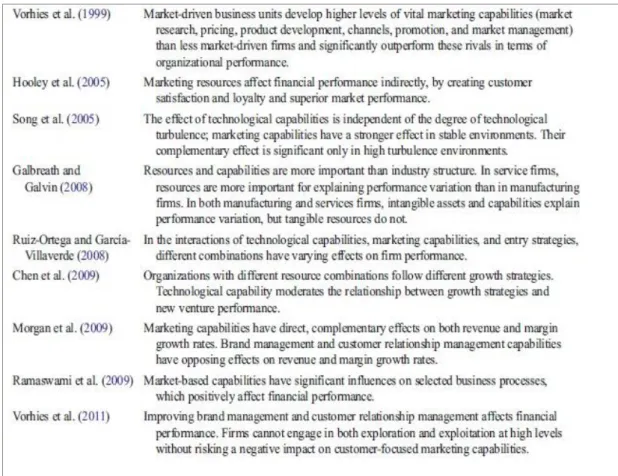
TABLE 2.2 MARKETING AND INNOVATION CAPABILITIES AND PERFORMANCE ... 48
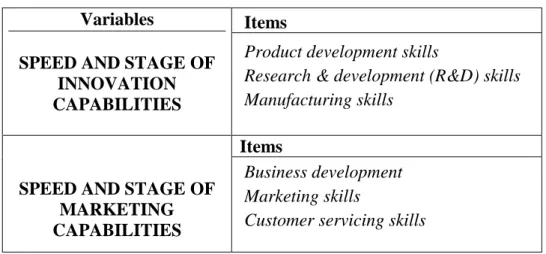
TABLE 3.1 INNOVATION CAPABILITIES AND MARKETING CAPABILITIES ... 65
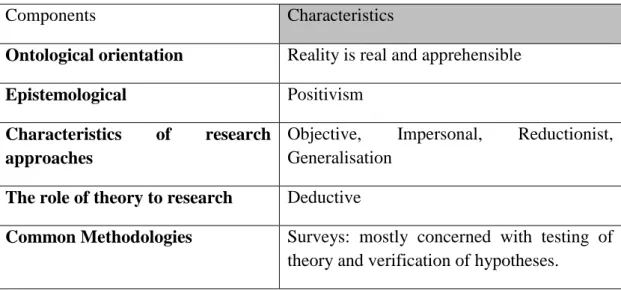
TABLE 4.1 CHARACTERISTICS OF THE QUANTITATIVE AND QUALITATIVE PARADIGMS ... 75
TABLE 4.2 SUMMARY OF THE RESEARCH APPROACH USED IN THIS STUDY ... 78
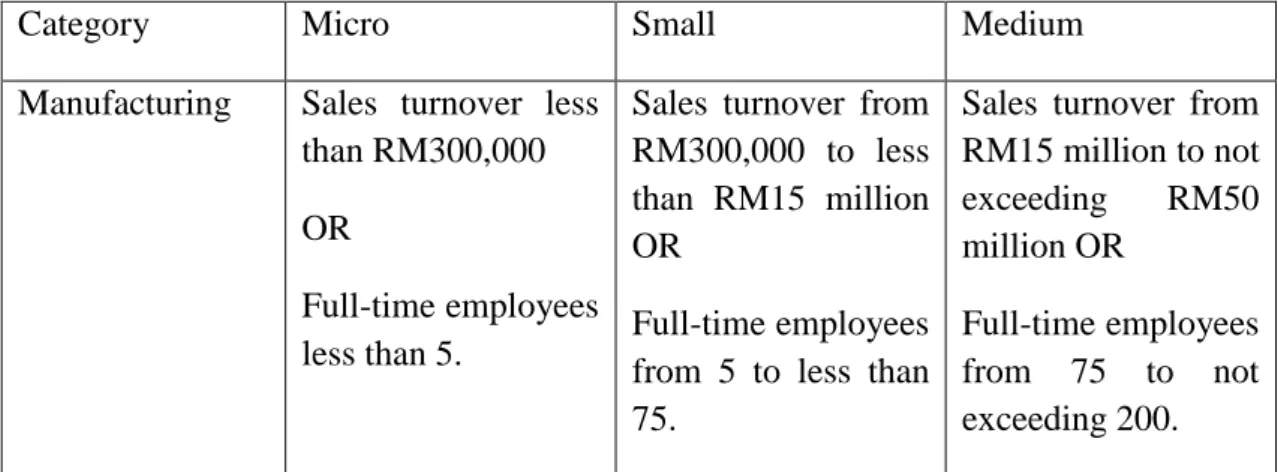
TABLE 4.3 DEFINITION OF SME ... 86
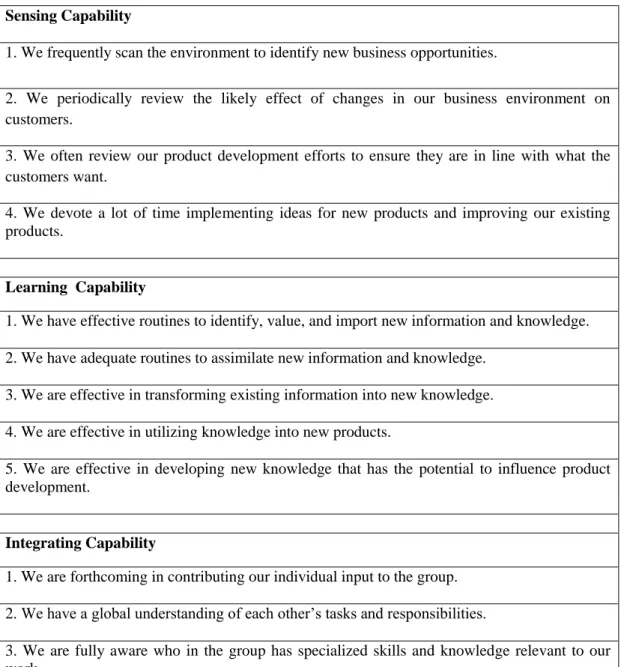
TABLE 4.4 DYNAMIC CAPABILITIES ... 98
TABLE 4.5 TOTAL RESPONDENTS THAT NOT AVAILABLE TO PARTICIPATE ... 104
TABLE 4.6 NON-RESPONSE BIAS TEST ... 105
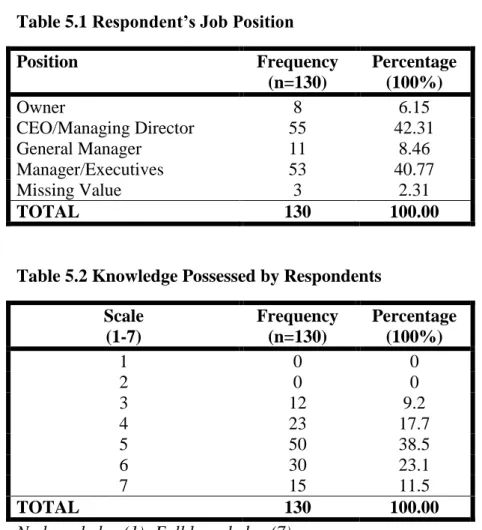
TABLE 5.1 RESPONDENT’S JOB POSITION ... 115
TABLE 5.2 KNOWLEDGE POSSESSED BY RESPONDENTS ... 115
TABLE 5.3 SMES PROFILE ... 117
TABLE 5.4 EFA FOR LEARNING EXPLORATORY AND INNOVATION EXPLORATORY ... 119
TABLE 5.5 EFA FOR LEARNING EXPLOITATION AND INNOVATION EXPLOITATION ... 120
TABLE 5.6 EFA FOR EMERGING DYNAMIC CAPABILITY AND BRANCHING DYNAMIC CAPABILITY ... 121
TABLE 5.7 EFA FOR RESOURCE SLACK ... 123
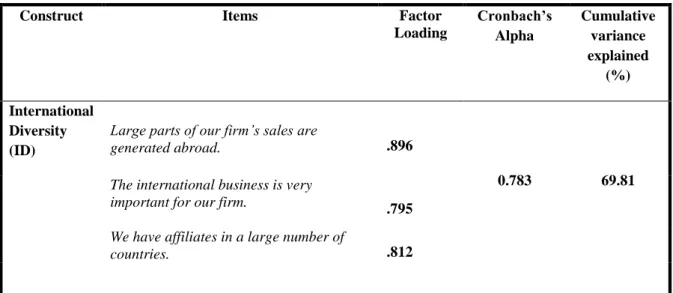
TABLE 5.8 EFA FOR INTERNATIONAL DIVERSITY ... 124
TABLE 5.9 EFA FOR SPEED OF INNOVATION AND MARKETING ... 124
TABLE 5.10 EFA FOR STAGE OF INNOVATION AND MARKETING ... 125
TABLE 5.11 EFA FOR CURRENT BUSINESS PERFORMANCE ... 125
TABLE 5.12 FINAL SOLUTION FOR CFA: ITEMS DROPPED AND REMAINED ... 127
TABLE 5.13 CONFIRMATORY FACTOR ANALYSIS (CFA) OF MEASUREMENT MODELS ... 133
TABLE 6.1 HYPOTHESES FOR DIRECT PATH ... 156
TABLE 6.2 HYPOTHESES FOR MODERATORS ... 158
xi
LIST OF FIGURES
FIGURE 3.1 CONCEPTUAL MODEL ... 50
FIGURE 3.2 FIRST HALF OF THE MODEL ... 64
FIGURE 3.3 SECOND HALF OF THE MODEL... 69
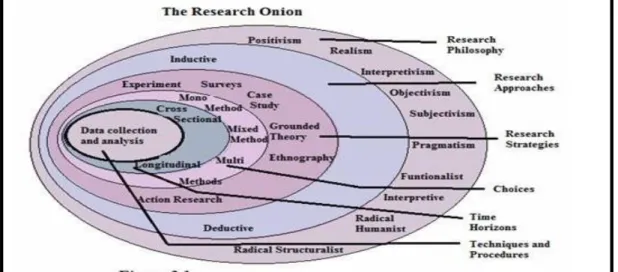
FIGURE 4.1 RESEARCH LAYERS ... 71
FIGURE 4.2 STAGES IN DEVELOPING QUESTIONNAIRE ... 82
1
CHAPTER 1 : INTRODUCTION
This chapter will:
Provide an overview of the research background and subject of interest.
Discuss the fundamental issues in the resource-based view of the firm and how this view interacts with the dynamic capabilities framework on which this study draws from.
Define the broad aims and objectives relating to dynamic capabilities development in exporting Small-to-Medium Enterprises (SMEs).
Elaborate on the research gaps and contributions to knowledge and managerial practice.
Provide an overview of the thesis structure and a brief description of each chapter.
1.1Background of the Study
Dynamic capabilities (DCs), which summarise the evolutionary nature of resources and capabilities, were developed to enhance the Resource-Based View (RBV) (Eisenhardt and Martin 2000; Helfat, 1997). In addition, the dynamic capabilities view (Teece, Pisano and Shuen, 1997) has attracted increasing attention within management literature in recent years. According to the ABI/INFORM database, between 1997 and 2007, at least 1,534 articles used the dynamic capabilities concept, encompassing not only its original field, strategic management, but also most of the main areas in business administration (Barreto, 2010). Using the Google Scholar database, the researcher then conducted a keyword search of ‘dynamic capability’ in order to conduct an additional search for scholarly work spanning the period between the years 2008 and 2016. A large number of hits reaching 265,000 results appeared, referring to dynamic capabilities studies. The concept of dynamic capabilities actually complements the foundation of the resource-based view of the firm, and has injected new dynamism into empirical research in the last decade (e.g., Ambrosini and Bowman, 2009; Di Stefano et al., 2010; Helfat and Martin, 2014; Wang and Ahmed, 2007). This is because the RBV itself does not explain how firms sustain
2
a competitive advantage in changing and uncertain environments, and thus the DC framework was introduced to address this. Hence, the combination of the RBV and the extension of the DC view is “adding unique value to the firm through
systematic change, particularly in industries characterised by rapid technological change” (Fainsmidt et al., 2016, p. 8). Nonetheless, several issues surrounding its conceptualisation remain uncertain. Specifically, scholars have argued that the “rapid growth of thedynamic capabilities literature and its diversity have led to a rich but still disconnected body of research pointing in dissimilar directions”. For instance, as Barreto (2010, p. 257) stated in his journal article:
“…some researchers have used firm performance as the relevant outcome, whereas others have explored processes or organizational outcomes instead. Some works have conceptualized dynamic capabilities as idiosyncratic factors, whereas others have accepted them also as commonalities across firms. Some articles have focused their attention on the existence of the dynamic capabilities, whereas others have attempted to uncover the development and maintenance of such capabilities….”
On top of that, the essence of the RBV lies in its emphasis on resources and capabilities as the origin of competitive advantage: resources are heterogeneously distributed across competing firms and are imperfectly mobile which, in turn, makes this heterogeneity persist over time (Barney, 1991). In addition, as cited by Wang and Ahmed (2007), the firm needs to possess distinctive capabilities to make better use of its resources (Penrose, 1959). As time evolves, the business environment becomes more dynamic and starts to challenge the original propositions of the RBV for being static and neglecting the influence of market dynamism (Eisenhardt and Martin, 2000). Moreover, the failure to address major environmental changes can negatively affect firms’ performance (Audia, Locke and Smith, 2000), and current economies seem to present more challenges than ever to efficient and effective management because of what some scholars have termed hypercompetitive environments (D’Aveni, 1994; D’Aveni et al., 2010).
3
Previous research shows that the average period for which firms are able to sustain a competitive advantage has decreased over time (Wiggins and Ruefli, 2005). This is because firms seem to find it difficult to maintain their competitive advantage due to the dynamic capability challenges. Hence, continuous strategic innovation and strategic change are recommended as essential for business success (D’Aveni et al., 2010). D’Aveni et al. (2010) also indicate that dynamic capabilities can sometimes be sources of sustainable advantage. It is also essential to understand the role of learning and innovations as possible pathways to develop DC. This is because, for a firm to be dynamic, it starts from the routine of their learning activities and innovation activities (Winter, 2003). Kuilavanen et al. (2010) suggest that learning is more suitable in order to focus on the dynamic processes (i.e. capabilities evolve and develop). Furthermore, learning is also the key resource for sustaining a competitive advantage as well as the most important strategic resource.
Interestingly, this current study differentiates itself from others by looking at different types of learning and innovation: explorative and exploitative forms of learning and innovation in the DC development processes. This is because, by having these specific forms of learning and innovation, it could provide a more robust understanding of the DC development model. In addition, Helfat and Raubitschek (2000) stated, “DCs are associated with learning, innovation, and change, and their value is greater in turbulent than in more stable environments. Furthermore, learning and innovation are important in order “to create time economies, i.e., to outpace competitors in the development and introduction of new products, the entering of new markets, or the adoption of new business models” (Karna et al., 2016, p. 1157).
Overall, this study aims to understand and examine the processes involved in dynamic capability and business performance, specifically in a middle-income country such as Malaysia because they consist of greater uncertainty and rate of change.
4
1.2 Scope of the Study
In detailing the scope of this study, the discussion is guided by four core areas of: learning and innovation; dynamic capabilities and their development; substantive capabilities; and business performance.
Firstly, although there has been tremendous work carried out on learning and innovation within the firm (e.g. Atuahene-Gima, 2007; Jansen et al., 2006; March, 1991), this study advances itself by segregating learning and innovation activities into exploration and exploitation. However, this is not a study of ambidexterity or even exploration and exploitation. This study is focusing on how different types of learning and innovation could then lead to a different form of dynamic capabilities development. In addition, the researcher argues that there are too many studies on ambidexterity, where, technically, ambidexterity can be achieved by having a moderate amount of exploration and exploitation on both sides. However, here, the researcher argues that it is better if firms (i.e. exporting Small to Medium Enterprises) are superior on one side, rather than being average on both. This is because SMEs operating in highly competitive international markets demand specialised resources, skills and capabilities (Kuivalainen et al., 2010). Furthermore, this is a study of capability development and it is framed around Teece’s logic of dynamic capabilities and Helfat and Peteraf’s (2003) logic of emerging and branching DCs. DC in this study is defined by “the capacity (1) to sense and shape opportunities and threats, (2) to seize opportunities, and (3) to maintain competitiveness through enhancing, combining, protecting, and, when necessary, reconfiguring the business enterprise’s intangible and tangible assets”
(Teece, 2007, p. 1319).
Next, the researcher’s scope of study is also focusing on how firms create new emerging capabilities and how they improve their existing capabilities. Hence, there are sets of moderating factors; consists of resource slacks and international diversity as well as sets of substantive capabilities as direct factors that are expected to affect the business performance. Resource slack in this study is defined as the excess resources that become important determinants of organisational structure, growth and performance (Penrose, 1959). Additionally, Nohria and Gulati (1996) added that slack resource refers to the firm’s stock of additional resources available during a given planning cycle.
5
For the international diversity, it refers to the SMEs’ international expansion across the borders of global regions and countries. To be more specific, it consists of the ways the SMEs use their resources to expand their international activities. According to Teece et al. (1997), DC does not involve production of goods and services. Instead, DC builds, integrates or reconfigures substantive capabilities. Teece (2014, p. 2) added that capabilities are untethered from specific purposes or products and, because they are untethered, how capabilities affect performance depends on what is actually done with those capabilities. Thus, DC in general does not directly affect the output however, in this study, DC through substantive capabilities would affect the business performance. Substantive capability (SC) in this study is defined by looking at the definition of Easterby-Smith and Prieto (2007, p. 237), who defined it as “operational capabilities or routines that are geared towards the operational functioning of the organisation”.
Finally, this study is shaped by way of its unit of analysis. Consistent with previous strategic management research, this research adopts the firm as its unit of analysis rather than the individual. This study is focusing on SMEs with an exporting activity. The exporting activity is defined as Malaysian manufacturing SMEs (using the definition approved by the National SMEs Development Council) that have an export activity in more than one foreign country. This is because exporting is a cost-effective way of penetrating new foreign markets quickly (Leonidou, 1995). Additionally, exporting is one of the most important strategies for a firm’s growth (He et al., 2013). Precisely, the scope of this study only focuses on the context of exporting SMEs and business performance in the Malaysian manufacturing sector. One of the reasons for this is because Malaysia is a fast-growing middle-income economy and relies on SMEs for its economic growth. This is supported by the statistic shown in 2015, that Malaysian SMEs now contribute 19.9% in total exports and the government wants to increase this to 25% by 2020, and these SME exporters are mainly located in the manufacturing sector (57.6%) (newspaper cut December, 2015).
6
1.3 Research Problems and Gaps
Generally, resources and capabilities are important to the development of exporting SMEs, especially in developing countries (Hughes et al., 2016; Perks and Hughes, 2008). This is because SMEs often lack financial resources and an internationally experienced and skilful workforce (Perks and Hughes, 2008). Specifically, Gnizy et al. (2014) stated that the RBV does not explain how firms sustain a competitive advantage in changing and uncertain environments, and thus the DC framework was developed to fill these gaps. Researchers also propose that firms must develop dynamic capabilities in order to renew, reconfigure and adapt existing firm-specific resources in response to the fast-changing environment (Teece et al., 1997), especially firms in emerging economies with a turbulent environment. Fainsmidt et al. (2016) also demonstrate that dynamic capabilities are more valuable in developing economies compared to developed economies. Thus, it is important to further investigate this phenomenon.
Not only that, there is also a conversation going on about the need to distinguish between dynamic capabilities and substantive capabilities (e.g. Ali et al., 2010; Pavlou and Elsawy, 2011), and there is still a lot of confusion concerning the categorisation of the two (Barr, 2004; Winter, 2003; Zahra et al., 2006). Based on Helfat and Winter (2011), the distinction between substantive and dynamic capabilities is an ambiguous one. Thus, in this study the substantive capability is treated by capturing the DC process, which is the aspects of sensing, learning, coordinating and integrating. Thus, in Teece’s perspective, he defines those components that allow substantive capabilities to change, while other literature (e.g. Zahra et al., 2006) confuses the terms by trying to label particular capabilities dynamic or substantive.
According to Winter (2000) and Teece et al. (1997), firms use dynamic capabilities, such as different levels of learning abilities, or different types of innovation, in order to create competitive advantages and to develop dynamic capabilities. Thus, it is also important to scrutinise what types of learning and innovation could help firms to enhance their dynamic capabilities development.
7
Furthermore, there is a series of criticisms about RBV (e.g., Kraaijenbrink et al., 2010; Makadok, 2001; Priem and Butler, 2001). These scholars have identified challenges related to generalisability, lack of applicability, and poor terminology and definitions. Another critique is that the RBV, dynamic capability and performance represent a tautology (Ali et al., 2010; Eisenhardt and Martin, 2000; Priem and Butler, 2001b). Generally, those firms that create DC will have an automatic advantage because they are renewing their capabilities. However, the researcher argues that how those capabilities may actually affect performance depends on what those firms choose to do with them. A tautology means something is inevitable and, if so, then there is no need to study this dynamic capability and business performance as the outcome was always certain. Therefore, this study aims to disprove the tautology between DC and performance.
Hence, Barney (2001) stated that it is essential that these issues (e.g. poor definition and generalisability of the RBV) be considered, in order to reduce the tautological reasoning. Additionally, Teece et al. (1997) also argue about how the dynamic capability framework could overcome the limitations of the RBV and develop a concept to fill the gaps in theories that attempt to explain competitive advantage via internal (e.g. Barney, 1991; Wernerfelt, 1984) or external (e.g. Porter, 1981) factors.
On top of that, the researcher also considers that there is still a gap in understanding how exporting SME develop dynamic capability in the emerging and refining stages and when it needs to improve on its resources, as well as in understanding how the firm branches out and refines its capabilities. This is the idea of a subset of DC – emerging and branching capabilities. Furthermore, there still remains an abundant unexplored opportunity to draw on entrepreneurship literature to build on exporting SMEs. Two such opportunities include looking beyond SMEs that sell internationally to also consider SMEs that rely on international combinations, and identify the impact that the creation of an international SME, as a form of entrepreneurship, has on markets and economic development. Therefore, this study provides related information regarding the firm’s dynamic capability development that helps the SMEs to improve their business success.
8
In addition, another gap is linked to the critical areas of liability of newness and liability of foreignness that exporting SMEs face, and this has become the main foundation for why exporting SMEs in particular need to develop their dynamic capability. Although there is evidence that a firm’s dynamic capabilities significantly affect its performance, very few theories investigate the way in which these dynamic capabilities impact firm performance (Ali et al., 2010). Moreover, this study is intended to fill the gap in the conversation on dynamic capability and substantive capability, as there is still little discussion about the distinctions between these two types of capabilities (Winter, 2003; Zahra et al., 2006). Thus, in response to this, the research objectives and research questions are constructed as follows in the next two sections.
1.4 Research Objectives
The broad research objective is to contribute to the conversation on dynamic capability and the processes of dynamic capabilities development in exporting Small-to-Medium Enterprises (SMEs) within the Resource-Based View (RBV). The research aims to contribute to the literature regarding the conversations on substantive capability and dynamic capability development in Malaysian SMEs, particularly in the manufacturing sector, which is dynamic in nature. This is because the significance of dynamic capabilities is more prominent in environments characterised by industries with rapid technological change (Teece, 2014b). Furthermore, manufacturing firms make up a large percentage of Malaysian SMEs; thus, it is more directly relevant to those groups and to the context of the study. In addition, manufacturing is a sector that needs to keep up with new knowledge and innovation, for instance, with the latest product innovation and design.
Specifically, this study focuses on the following objectives:
1. To examine the insight into how exploration and exploitation activities could lead to a different form of dynamic capabilities.
2. To identify the set of moderating key factors that affects the relationship between exploration, exploitation and the form of dynamic capabilities. 3. To examine the direct effects of the relationship between dynamic
9
The central critique is that the RBV represents a tautology, “a statement of relationship that is true by logic”,and that it therefore cannot be generalised to be a theory (Priem and Butler, 2001, p. 58). In addition, the main problem with using the RBV perspective is that it is static in nature and does not allow for explaining how the resources can be created, used, reconfigured and shared over time (Kuilavanen et al., 2010). Hence, the combination of RBV and the extension of DC lead to the view of “adding unique value to the firm through systematic
change, particularly in industries characterised by rapid technological change”
(Fainsmidt et al., 2016, p. 8; Peteraf et al., 2013; Teece et al., 1997).
Furthermore, empirical research concerning the RBV is still in an emergent stage of development (Michalisin et al., 2004). In conjunction with this and from the above explanations, the following research questions are developed.
1.5 Research Questions (RQs)
Three research questions have been established to pursue these research objectives.
The first research question is to reflect on the important aspect of dynamic capabilities development within exporting SMEs; thus, the research question aims to examine how learning and innovation activities of the firm make unique contributions to different forms of dynamic capabilities in exporting SMEs.
RQ1: In Malaysian exporting SMEs, in what ways do the exploration and exploitation activities of learning and innovation of a firm make unique contributions to the development of dynamic capabilities?
The second research question will identify the effects of DCs on the formation of more complex operational (substantive) capabilities and on the development of existing ones.
RQ2: In Malaysian exporting SMEs, what are the effects of dynamic capabilities on the formation of more complex operational capabilities and on the development of existing ones?
10
The third research question will build upon the first two research questions to examine how new and evolving operational capabilities affect Malaysian exporting SMEs’ business performance. These new and evolving operational capabilities are known as substantive capabilities. This is because “the effects of
dynamic capabilities on organizational performance work through the development substantive capabilities” (Ali et al., 2010, p. 367).
RQ3: Do new and evolving capabilities affect Malaysian exporting SMEs’ business performance?
Having explained the research problems and gaps relating to this study and introduced the research objectives and research questions, the next section looks at the relevant contributions of the study.
1.6 Research Contributions
Generally, this study aims to – at least partially – fill the gaps identified above. In order to do so, it uses an RBV perspective influenced by a dynamic capabilities framework to examine the processes that lead to dynamic capabilities development and business performance. In this study, business performance is measured by subjective performance (i.e. efficiency and profit).
Specifically, this study critically examines the concept of organisational dynamic capabilities and claims that existing contributions are still limited. The researcher aims to holistically examine the nature and process of dynamic capability development. According to Barney et al. (2011), there is little in the RBV literature regarding the process of resource development that links to sustainability and competitive advantage, and also links to other perspectives in strategic management. Hence, this study contributes to the knowledge-based gap by providing empirical data from exporting SMEs in respect of capabilities creation and development that will offer successful approaches to understanding the dynamic of a firm’s growth. In addition, the resource-based view (RBV) suggests that capabilities are a source of unique and sustainable competitive advantages to a firm, because they transform its resources into products or services superior to those of its competitors (Amit and Schoemaker, 1993; Barney, 1991; Grant, 1991; Makadok, 2001). This study indicates that activities such as acquiring, absorbing, coordinating, and integrating resources from external and partner organisations
11
can enhance capabilities (Ethiraj, Kale, Krishnan, and Singh, 2005; Priem and Butler, 2001; Sirmon, Hitt, and Ireland, 2007; Teece, Pisano, and Shuen, 1997). This study contributes to the body of knowledge in at least four areas. The first contribution concerns the study’s theories. The study focuses on the resource-based view (RBV) theory and the dynamic capability view. Zahra et al. (2006) reported that prior researchers have not given much attention to the process by which these capabilities develop, emerge or evolve, especially in small or younger firms (Perks and Hughes, 2008) that have limited resources, knowledge bases, and expertise in building and integrating diverse capabilities. This indicates that further conceptual work is needed to elevate the resource perspective to a theory. Thus, one of the contributions of this study is through two different types of learning and innovation activities. These activities are disaggregated into explorative and exploitative learning and innovations in order to understand the complexity of their implications on dynamic capabilities formation and business performance. Theoretically, the more exploratory activities would lead to different types of capabilities (emerging/new ones), while exploitative activities should lead to simply the improvement of an (existing) capability. However, if that was the case, then it is almost a tautology (Williamson, 1999). Therefore, this study argues that there is a black box between exploratory and exploitative (learning and innovation) activities and how those capabilities are developed; thus, it leads to a theoretical contribution. This is evidenced through the existence of the moderators between those activities and the dynamic capabilities.
The second contribution is to fill the gap in the conversation about the dynamic capability development problem and address the confusion surrounding this area. The researcher break down this issues by looking at relationship between dynamic capabilities, substantive capabilities and business performance. In particular, this study is unpacking the relationships between dynamic capabilities and business performance. At present, little research exists regarding the moderations or mediations that explain the formation of dynamic capabilities, or the causal mechanism by which they then affects the business performance. Resolving the problems requires consideration of the set of moderating factors within the RBV and sets of direct factors of the substantive capabilities (speed and stage (level) of innovation and marketing). Thus, the novelty of this study is when the researcher
12
proposes direct factors of substantive capabilities as crucial missing links in the research conversation on dynamic capabilities and business performance. This is supported by Arend and Bromiley (2009), where they argued that there is an urgent need for a coherent theory and model for dynamic capabilities (cited in Pavlou and Sawy, 2011).
Thirdly, regarding exporting SMEs research, this study makes a contribution to this area via the application of the resource-based view and dynamic capability. Generally, SMEs that operate internationally become more competitive, where managers will need to ensure that their organisations develop, produce, sell, market and distribute goods to customers as effectively and efficiently as possible. Therefore, SMEs in developing and emerging countries that are at a similar stage could use this information to focus on implementing dynamic capability processes in their organisations by adapting them locally as needed, and linking them globally. This study also examines how exporting SMEs should utilise the strength of their resources and capabilities, in an attempt to maximise their business performance. Thus, learning and innovation activities are intended to be treated according to the RBV and DC perspective as the source of a competitive advantage for exporting SME firms, which, if it is leveraged well, will lead to superior performance (Man et al., 2007).
Lastly, is the contribution from the perspectives of practice and policy development. For practising managers, particularly of resource-constrained small firms that operate internationally, this study’s finding provides a realistic path for the SMEs’ internationalisation. It provides specific insights for founders/owners or managers, to make them aware of the significant role that innovation and marketing capability could have in order to enhance the business performance of SMEs. This study will also demonstrate to managers that resources alone cannot assure a business’s success. Businesses need to develop their firm’s dynamic capabilities in terms of sensing capability, learning capability, coordinating capability as well as their integrating capability (discussed in Chapter 2). This means that firms must know how to mobilise and deploy knowledge-based resources in combination with their other resources and capabilities. Parkhe (1991), for instance, mentions that the fastest learner can gain a competitive advantage, and this is particularly true for the exporting SMEs because, relatively,
13
they are small and lack other resources. Thus, different types of learning and innovation will give them an advantage (Man et al., 2007). To be more specific, these firms should focus more on the different types of learning and innovation activities (exploration and exploitation) so that they could build and develop a different set of dynamic capabilities (emerging and branching) which then, with support from the stage and speed of innovation capability’s skills and marketing capability’s skills, could enhance their business performance. In other words, to enhancing business performance, managers should recognise that building the speed and stage of marketing capabilities and innovation capabilities are a critical factor in enhancing the dynamic capabilities and business performance.
1.7 Thesis Outline
The thesis is divided into six chapters.
Chapter One introduces the background of the study and structure of the study. Subsequently, it lays out the objectives of the study, and then it details the research questions. It also discusses the scope of the study, research problems, research gaps and contributions.
Chapter Two provides a context and justification in the form of a literature review for posing the three research questions. This will be carried out in the systematic literature review to ensure that the gaps presented have been identified thoroughly. It will develop the research framework, and review past and current work in the literature, and explore the RBV in the wider strategic management field. It begins with a brief classification of the types of resources that international SMEs hold and a discussion of the main characteristics of dynamic capability. A section on capability development is included because this study is concerned with how dynamic capabilities emerged or branched and later impacted the business performance through substantive capabilities.
Chapter Three presents the hypothesis development from the core theories upon which this thesis draws. The chapter starts with a discussion of specific types of learning and innovation and then moves on to an overview of the development of the RBV, dynamic capabilities and business performance. Later, the set of
14
hypotheses was built in order to develop the research/conceptual model. It then lays out the dynamic capabilities framework on which the study draws.
Chapter Four focuses on the research design strategy taken for the study. The ontological, epistemological, and methodology considerations are discussed and philosophical positions are taken for the study. The chapter outlines the approach taken in the study and the data collection and analysis techniques. Furthermore, this chapter discusses the research methods selected for this study. A quantitative approach is taken based on the philosophical influences of the study. The chapter justifies the rationale for this approach and further discusses the exact method used. It then justifies the rationale for the choice.
Chapter Five presents the findings from the analysis of the structural equation model (SEM). The results and findings are presented descriptively and inferentially to answer the research questions with the appropriate statistical tests.
Chapter Six discuss the findings of the study. It also draws together the conclusions of this study presenting recommendations for policy makers, study contributions, limitations and future directions for further research.
15
CHAPTER 2: LITERATURE REVIEW
2.1 Introduction
Dynamic capabilities have become a vital issue in management research, especially on how firms build and adapt their resources to fit the recent environment (Di Stefano, Peteraf, and Verona, 2010; Di Stefano, Peteraf, and Verona, 2014; Easterby-Smith, Lyles, and Peteraf, 2009; Schilke, 2014). This phenomenon not only is affecting large firms; it is also affecting small firms. In addition, the internationalisation literature has put considerable emphasis on promoting the theoretical understanding of the internationalisation process of large firms, but Fillis (2001) and Perks and Hughes (2008) demonstrate that smaller and medium sized firms are increasingly involved in international activities. Their findings discovered that cultural context, industry environment and resource constraints are not seen as significant barriers for an entrepreneurial manager’s decision to internationalise (Perks and Hughes, 2008). A study commissioned by the Organisation for Economic Cooperation and Development (OECD) (2009) on the globalisation of Small Medium Enterprise (SMEs) provided evidence from eighteen member countries, suggesting that there were a number of key motivating factors for SMEs to internationalise, including growth motives, knowledge-related motives, networks and also domestic/regional market factors. Perks and Hughes (2008) also added that tacit knowledge and vision and product-service complexity are also some of the strongest influences on the decision to internationalise. This is supported by Madsen and Servais’s (1997) discussion of new market conditions with advanced technology in production, transportation, and communication, as well as the capabilities of the founders and entrepreneurs who establish the new venture businesses.
In addition, resource demands on firms change over time and they keep growing, and that is more apparent when the firm is internationalizing. Thus, it is also worth giving attention to how SME firms from middle-income economies (i.e. Malaysia) experienced their internationalising process. According to Xavier and Ahmed (2012), SMEs in Malaysia contribute 30 per cent (National SME Development Council, 2009/2010) of the GDP. If compared to other SMEs in developed countries (which is above 50 per cent), it is considered lower. It is also reported that over the 2000-2008
16
period, skilled expatriates in Malaysia declined by 9 per cent. Only 25 per cent of Malaysian jobs are in the higher-skilled job bracket. In addition, the economy is dominated by nearly two million unskilled foreign workers. Moreover, Malaysia also lags behind in research and development as compared to its competitors, thus Malaysia needs to improve their foreign direct investment (FDI) flows into the economy and in productive activities (Xavier and Ahmed, 2012). Hence, there is an interesting point to ponder on how Malaysian firms can encourage the growth of small and medium scale enterprises in order to improve their GDP and FDI flows. This literature review chapter covers three main bodies of literature that attempt to describe the variables influencing business success: (i) Internationalisation of SMEs and theories on the resource-based view (RBV); (ii) the role of dynamic capabilities and their development, learning and innovation activities as a component to achieving DC; (iii) and last but not least, this literature also cover substantive capabilities.
2.2 Internationalisation of Small Medium Enterprises (SMEs)
The ability of a firm to export part of its sales abroad is increasingly regarded as an important measure of its competitive performance and is increasingly becoming a
trend in the internationalisation of SMEs (Kuivalainen et al., 2010; O’Farrell et al., 1996; Westhead et al., 2001), as well as being necessary to ensure the survival and growth of new and small firms (D’Souza and McDougall, 1989). The theory of firm internationalisation (Johanson and Vahlne, 1990) is the most relevant and appropriate theory to describe the firms that internationalise gradually. At this stage, firms prefer to go to the nearest regions which have a similar culture in their domestic markets and it is not necessary to be physically near, because they still lack experiential knowledge and hence, the decision to internationalise is considered to be risky (Johanson and Vahlne, 1977). The concept of ‘psychic distance’, which was introduced by Johanson and Vahlne (1977), describes the differences in the home country in terms of language, culture, political systems, business practice, industrial development, and educational systems. Hence, as the firms started to gain more knowledge about the market, these firms would then gradually enter other markets that were further away in psychic distance terms (Johanson and Wiedersheim-Paul, 1975). This phenomenon is believed to be the product of directive factors such as the changing of business environments into much more dynamic settings and entrepreneurial innovativeness by firms. This view is strongly supported by Oviatt and McDougal (1995, 2000). These
17
authors argue that after the mid-1970s, the flow of information from foreign markets has greatly increased, promoting greater international integration between markets. Oviatt and McDougal also stated that the cost of communication reduced to such a level that it became more possible to develop a firm’s ability to coordinate cross-border activities. Improvements in labour mobility have also made it easier to recruit individuals with international managerial experience while firms themselves are increasingly able to exploit their unique and valuable resources by mobilising additional external resources across national borders. Some suggest that this experience and exposure of the managers and having a good business network prior to the start of a new venture play a part in its early internationalisation decision (Madsen and Servais, 1997), whereas others suggest that the fast-paced learning of these resource-constrained, technology-oriented firms allows them the early internationalisation opportunity (Zahra and George, 2002).
Furthermore, in order to enter foreign markets, Bloodgood et al. (1996) agree that SMEs also need to accumulate tangible and intangible resource stocks and, as suggested by Barney (1991), these stocks must be valuable, inimitable and non-substitutable. Thus, firms with unique bundles and with a greater combination of resource stocks may have a greater tendency towards internationalisation. Initially, with the idea that SMEs are frequently faced with resource limitations, it makes sense that the fungibility in the resource exploitation had a powerful connection with the firm’s capability formation and growth (Autio et al., 2011). Autio et al. (2011) also state that resource fungibility is able to boost the tendency to engage in experimentation and experience transfer and learning through adaptation because it reduces the cost of deploying the same resource for alternative purposes. However, in some cases firms go international (i.e., exporting) in order to make more use of their resources and capabilities, and to potentially improve them, which leads us to the theory of internalisation.
18
2.2.1 The internalisation of Small Medium Enterprises (SMEs)
In general, internationalisation is the idea of going international, while internalisation is the reason why firms go international. However, in this study the researcher has decided to look solely at the internalisation point of view. This is because, firm’s focus is not only to capitalise on internationalisation, but to improve and extend its resources and capabilities. Two rationales for internalisation have been discussed in the works of Teece (2014). Here he looked at the multinational enterprises’ (MNE) point of view; however, in this study, the researcher is looking at SMEs that have gone international.
The first point is advanced by scholars (e.g. Buckley and Casson, 1976; Dunning, 1981; Teece, 1975, 1976, 1981; Williamson, 1981), as they perceive that the main reason for internalisation is due to a contractual issue and some associated market failures. This is followed by the second point, which emphasises the organisational culture of an integrated firm and the coordination inside the firm rather than coordination through the market.
“This integration is believed to open pathways to learning, and to sharing know-how and expertise through cross-border technology and know-how transfer within the firm. In this second point of the theory, facilitating opportunity identification, personnel exchanges, learning, integration, and assisting in technology transfer are likely to be very important…” (Teece, 2014, p. 10).
Moreover, Teece (2014) argues that the second rationale for internalisation (i.e., capabilities) also needs to be strengthened and improved with entrepreneurial considerations. Thus, the main point of the literature is about being entrepreneurial and effective in the development, transfer, and orchestration of differentiated organisational and technological capabilities (Teece, 1981). Similarly, Cantwell (1989) describes it as ‘industrial dynamics’, as the focus is more on industrial evolution. Furthermore, the growth of firm boundaries also requires internal knowledge transactions because of the lower resource costs of transferring knowledge internally vs. across markets (Tallman, 2003; Teece, 1976, 1977, cited in Teece, 2014).
19
Similarly, Perks and Hughes (2008) found that the strongest influences on the decision to internationalise were through the firm’s networking with the customer, tacit knowledge and vision, and product-service complexity. Not only that, they also agree that the locus of entrepreneurship is defined by opportunity and not by the size or age of the firm. Similarly, Stevenson and Jarillo (1990) discovered that the locus of entrepreneurial activity is defined by the act and not the firm’s current resources. On top of that, the notion is also matched with the study from Zahra and Garvis (2000), which focused on the potential for firm growth by leveraging resources and capabilities in foreign markets. However, when SMEs internalise their resources and capabilities in foreign markets, another issue that needs to be considered is a Learning Advantage of Newness (LAN), Liability of Newness (LON), Liability of Adolescence and Liability of Obsolescence. There are also questions concerning how firm performance varies with age. According to Henderson (1999), scholars have addressed this question primarily in terms of failure rates. Their research has used several labels to describe the relationship between age and failure, including: (1) the liability of newness (Stinchcombe, 1965; Hannan and Freeman, 1984), (2) the liability of adolescence (Levinthal and Fichman, 1988; Bruderl and Schussler, 1990), and (3) the liability of obsolescence (Baum, 1989; Ingram, 1993; Barron, West, and Hannan, 1994).
2.2.2 Learning Advantage of Newness (LAN) and the extension of the Liability of Newness (LON) in exporting SMEs
Learning advantage of newness (LAN) assumes that the earlier a firm enters an international market in its cycle, the better international performance it will achieve because of the greater opportunities for novel learning unhindered by legacies and artefacts from ‘prior’ experience and knowledge (Autio et al., 2000). At the early stage, a new firm can be quicker and more flexible in adapting to a changing environment compared to an established firm where routines and regulations for how the firm is ‘meant’ to interact with its environment have already been set up. This statement is supported by Autio et al. (2011), where they clearly state that, if the new venture’s management team has fewer prior shared experiences, it could search and test the market more broadly, as its responses would not be conditioned by previous and possibly incompatible experiences. Conversely, firms with the influence of previous shared experiences have the potential to slow down the formation of
20
capabilities. This is because they are unwilling to develop alternative solutions based on the current foreign market feedback, but rather intend to follow the schemas for action and legitimise these actions through storytelling and narratives (Lounsbury and Glynn, 2001).
The LAN thesis proposes that, while young firms lack prior knowledge of the current market and of the nature of international markets, their ability to learn new and unique insights to more effectively launch new international ventures is not constrained by either the presence or absence of prior knowledge or experience. The LAN originates precisely because young firms lack the prior knowledge and experience that would cloud their emerging understanding of their business and market conditions. The effect is that they can learn more novel information and undertake more novel action in response. Conversely, established firms are set to have disadvantages in LAN. In other words, an established firm’s ability to learn and to innovate is cloudy and compromised. Thus, established firms need an educated process like exploratory and exploitative learning. Therefore, the researcher argues that this study is more reliable on issues of resources, dynamic capabilities and learning and innovation processes. Another common issue encountered by SMEs concerns liabilities and difficulties. Some of these afflict an SME simply because of its size and age, like any new startup or young firm, but others are peculiar to its context. In general, these liabilities and difficulties arise from a lack of resources and capabilities. According to Cazura et al. (2007), these can be summarised as lack of complementary resources, which will result in crucial firm-specific difficulties. One of the complementary resources that the SMEs have is the liability of newness, where a firm requires some additional resources such as finding investors, land, materials, technology, equipment, facilities, employees, associates, and customers, either because it cannot transfer them across countries or because it has not developed them in order to compete in a new competitive environment.
According to Stinchcombe (1965), LON generally occurs in young organisations because they have not yet established the social acceptance required for stakeholders to support their survival through granting resources. In contrast, older or established organisations have an advantage over younger ones because it is easier to continue existing routines than to create new ones or borrow old ones (Nelson and Winter,
21
1982; Stinchcombe, 1965). Thus, there is significant pressure for SMEs to quickly establish legitimacy through their market entry decisions (Meyer and Rowan, 1977). As a result, some SMEs often make use of social networks for effective storytelling (discussed in section 2.3.2) to create an image of success that will in turn help them to attract resources (Brush et al., 2001). As a consequence, SMEs could easily expand their resource base and thus develop opportunities to grow quickly.
Moreover, as discussed by Perks and Hughes (2008), a manager’s past experience of operating internationally may bring problems, as a firm and its managers may have learned incorrect knowledge or developed inaccurate assumptions, such that past lessons learned may hinder future exploitation opportunities, as they may not necessarily be applicable in different or new contexts (Brannen, 2004). As a result, entrepreneurial managers must look for compensating, resource-based advantages (Leiblein and Reuer, 2004). Without this condition, entrepreneurial managers are unlikely to internationalise (Perks and Hughes, 2008). Additionally, these liability issues could then be extended to liability of adolescence and obsolescence.
2.2.3 Liability of adolescence and Liability of obsolescence
Liability of adolescence arguments suggest that organisations can survive for a time with little risk of failure because they can draw on the initial stock of assets they typically acquire at their early phase, so failure rates are predicted to have an inverted, U-shaped relationship with age (Bruderl and Schussler, 1990; Fichman and Levinthal, 1991). In contrast, according to liability of obsolescence arguments, when firm size is controlled, failure rates will increase with age (Perks and Hughes, 2008).
In sum, the liability of newness and adolescence perspectives focus on failure rates that eventually decline with a firm’s age. Later on, Ingram (1993) and other scholars concluded that firms suffer not from liability of newness or adolescence, but from liability of obsolescence. This is because older firms are so inertial that they become non-reactive to changes in the external environment. Thus, failure rates are expected to increase with age, and growth rates are expected to decline.
22
Here, the researcher argues that, as firms grow and age, they develop and the resources become more stuck on what the firms have been doing, which means that existing firms are more likely to need ways to overcome this danger of becoming rigid. Thus, firms need dynamic capability (discussed in section 2.6).
The next issue of concern is the types of resources that SMEs would specifically need in order to achieve a competitive advantage and the dynamic capabilities approach which has been proposed by Teece et al. (1997) as an extension of the RBV of the firm (Barney, 1986, 1991).
2.3 Types of resources that exporting SMEs need
There are many kinds of available resources. Conventionally, Wernerfelt (1984) describes physical, intangible and financial resources as distinct from each other. He argues that intangible resources can relate to human resources, technological resources, reputation and organisational assets. To be more precise, organisationally embedded intangible resources have been discussed with regard to tacit knowledge; experiences, reputation and goodwill; and organisational routines and skills (Anderson and Kheam, 1998). Autio et al. (2000) also support that a firm’s ability to enter foreign markets can be linked to its accumulated tangible and intangible resource stocks. On the other hand, Hall (1993, p. 608) classifies “intangible resources as assets or competencies”. Intangible assets include ‘having’ capabilities,
which typically are regulatory (e.g. patents) or positional (e.g. reputation) while intangible skills or competencies are related to ‘doing’ capabilities, which include the functional capability (e.g. know-how) and the cultural or organisational capability (e.g. routines).
In addition, Morgan et al. (2004) discuss four similar types of resources that have been used in the marketing area. There are; the experiential resources, such as market and process knowledge gained from the firm's overseas market operations experience (Daily, Certo, and Dalton, 2000; Morgan et al., 2003). Next are scale resources, which relate to the size and scope of the firm's operations and significantly affect cost structures and influence competitive strategy and performance (Cavusgil and Zou, 1994). Third are financial resources; financial resources regard to the availability of money in the form of cash, securities, creditors, loan facilities possessed by a firm and the fourth are physical resources such as modern equipment and access to
23
valuable supply sources that facilitate process efficiency and product effectiveness (Leonidou, Katsikeas, and Piercy, 1998).
2.4 Resource-Based View (RBV): Critiques, Limitations and Theoretical Challenges
One of the important theoretical supports for the internationalisation of the Small Medium Enterprises (SMEs) is their resources, which then will enable the generation of capabilities (Kocak and Abimbola, 2009; Perks and Hughes, 2008). Therefore, a resource-based view (RBV) can be considered as the best theoretical explanation for the exporting SMEs, as it helps to explain how resources and capabilities are developed and leveraged by SMEs (Knight and Cavusgil, 2004).
Generally, resources are the foundation of a firm and the basis for capabilities. Barney et al. (2011, p. 1300) defined resources as, “bundles of tangible and intangible assets, including a firm’s management skills, its organisational processes and routines, and the information and knowledge it controls that can be used by firms to help choose and implement strategies”. Similarly, Stalk, Evans and Shulman (1992) describe
capabilities as internal attributes that enable a firm to direct and utilise its other resources. In particular, the RBV assumes that firms can be conceptualised as bundles of resources that are heterogeneously distributed across firms (Barney, 1991). Therefore, based on that assumption, Barney (1991) argues that, when firms have resources that are valuable, rare, inimitable and non-substitutable, they can achieve a sustainable competitive advantage (SCA) that is difficult for rival firms to duplicate via capabilities.
Next, in order to move into a more genuinely dynamic framework, this research takes into account the recent critique by Kraaijenbrink et al. (2010), which can be summarised into eight categories:
(1) The RBV has no managerial implications: RBV lacks substantial managerial implications or “operational validity” (Priem and Butler, 2001a). Moreover, RBV never intended to provide managerial prescriptions (Barney, 2005).
(2) The RBV implies infinite regress: RBV proposes that firms should “strive to obtain second-order capability. The point of this critique is that this step can be extended ad infinitum, leading firms into an endless search for ever higher order