Final Report
Rounds 1 and 2
Prepared by Neil Mayer Peter A. Tatian Kenneth Temkin Charles A. Calhoun with Kaitlin Franks Matthew Piven Randy Rosso Prepared for NeighborWorks® America December 2011The Urban Institute 2100 M Street, NW Washington, DC 20037
Contents
Acknowledgments... v
Executive Summary ... vii
Introduction ... 1
Review of Evaluation Activities and Previous Reports ... 3
Process Study ... 3
Reconnaissance Interviews ... 4
Web Surveys ... 5
Case Studies ... 6
Modeling Analysis ... 7
Final Modeling Analysis ... 9
Overview of the Modeling Analysis ... 9
Data Used in the Analysis ...15
NFMC Program Production Data ...15
LPS Applied Analytics Loan Performance Data ...17
Home Mortgage Disclosure Act Data ...17
NFMC Analysis Sample ...18
Non-NFMC Analysis Sample ...19
Outcome Variables ...25
Control Variables ...29
Models of Program Effects ...36
Potential Modeling Issues ...37
Modeling Approach ...44
NFMC Program’s Effect on Loan Modifications ...47
NFMC Program’s Effect on Sustainability of Cures ...53
Findings and Lessons From the NFMC Program ... 103
Building National Capacity for Foreclosure Mitigation Counseling ... 103
Improving Outcomes for Troubled Homeowners ... 105
Challenges and Best Practices ... 109
Increasing Servicer Responsiveness ... 109
Dealing with Major Income Reductions... 110
Working Successfully with Clients ... 111
Conclusion ... 112
References ... 113
Appendices ... 117
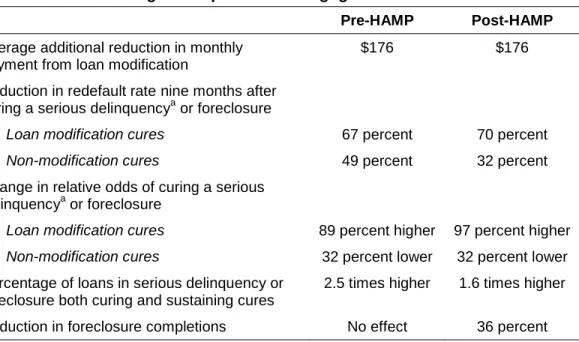
Tables Table ES-1: NFMC Program Impacts on Mortgage Outcomes ... ix
Table 1: NFMC Program Impacts on Mortgage Outcomes ...11
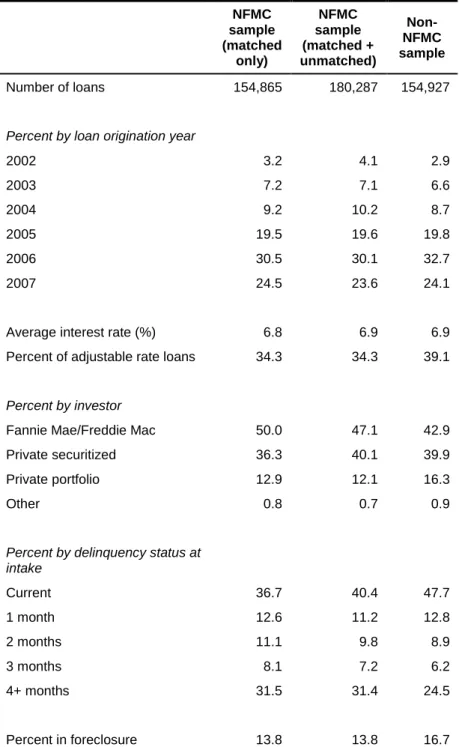
Table 2: Comparison of NFMC and Non-NFMC Analysis Samples by Loan Characteristics as of Counseling Intake Month ...23
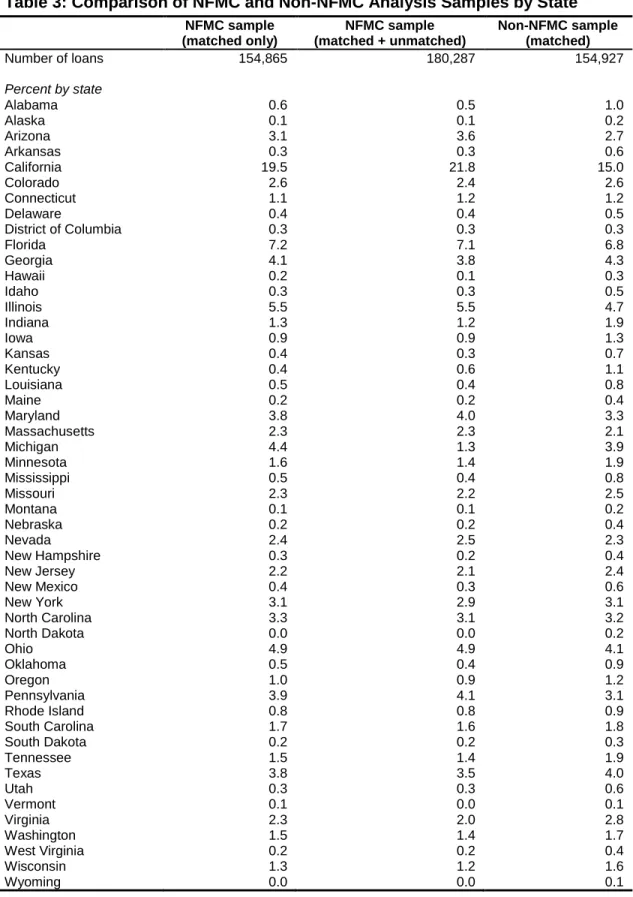
Table 3: Comparison of NFMC and Non-NFMC Analysis Samples by State ...24
Table 4: Explanatory Variables Used in All Models ...31
Table 5: Counseling and HAMP Variables Used in Outcome Models ...34
Table 6: OLS Regression Model Estimates for Counseling Effects on Dollar Reduction in Monthly Payment Resulting from Loan Modifications ...50
Table 7: OLS Regression Model Estimates for Counseling Effects on Percentage Reduction in Monthly Payment Resulting from Loan Modifications...51
Table 8: Summary of Interaction Effects of Counseling on Loan Modification Monthly Payment Reduction ...52
Table 9: Loans That Experienced a Serious Delinquency or Foreclosure in 2008 or 2009 by Counseling and Loan Cure Status, Rounds 1 and 2 NFMC and Non-NFMC Loans ...57
Table 10: OLS Regression Model Estimates for Counseling Effects on Reduction in Monthly Payment in Dollars Resulting from Loan Modifications That Cured a Serious Delinquency or Foreclosure ...64
Table 11: LOGIT Model Odds Ratio Estimates for Counseling Effects through Loan Modification
Size and Directly on Likelihood of Redefault ...69
Table 12: Summary of Interaction Effects of Counseling on Probability of Redefault After Loan Modification Cure ...74
Table 13: LOGIT Model Odds Ratio Estimates for Counseling Effects on Likelihood of Redefault of Non-Modification Cures, Rounds 1 and 2, NFMC and Non-NFMC Loans ...77
Table 14: Summary of Interaction Effects of Counseling on Probability of Redefault after Non-Modification Cure ...80
Table 15: LOGIT Model Odds Ratio Estimates for Counseling Effects on Likelihood of Modification, NFMC and non-NFMC ...84
Table 16: Interaction Effects of Counseling on Probability of a Loan Modification Cure ...87
Table 17: LOGIT Model Odds Ratio Estimates for Counseling Effects on Likelihood of Non-Modification Cure for Seriously Delinquent and Foreclosed Loans ...88
Table 18: Interaction Effects of Counseling on Probability of a Non- Modification Cure ...91
Table 19: Percentage of Loans Cured and Sustained With and Without Counseling ...94
Table 20: Calculation of NFMC Program Benefit/Cost Analysis ... 101
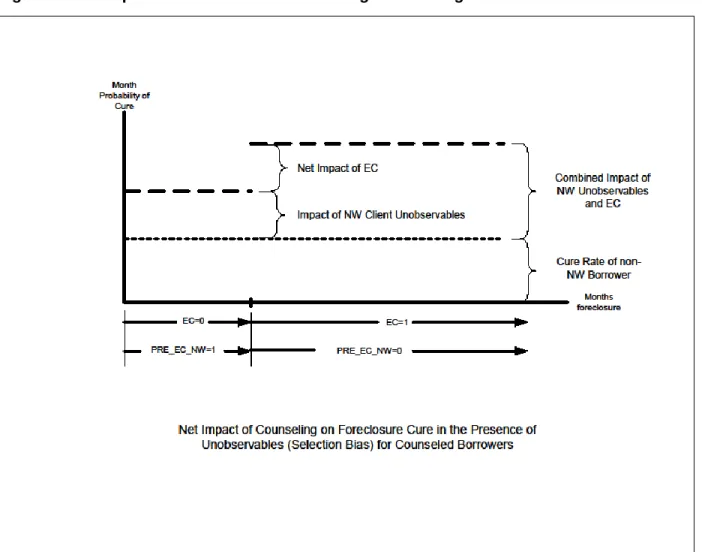
Figures Figure 1: Conceptual Framework for Estimating NFMC Program Effects ...39
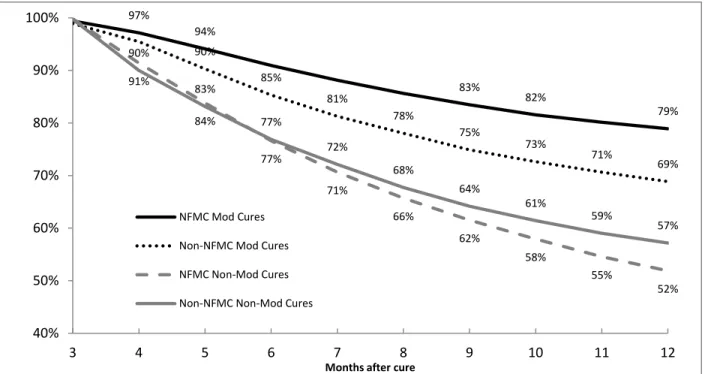
Figure 2: Cumulative Percentages of Cures Sustained, Modification and Non-Modification Cures ...58
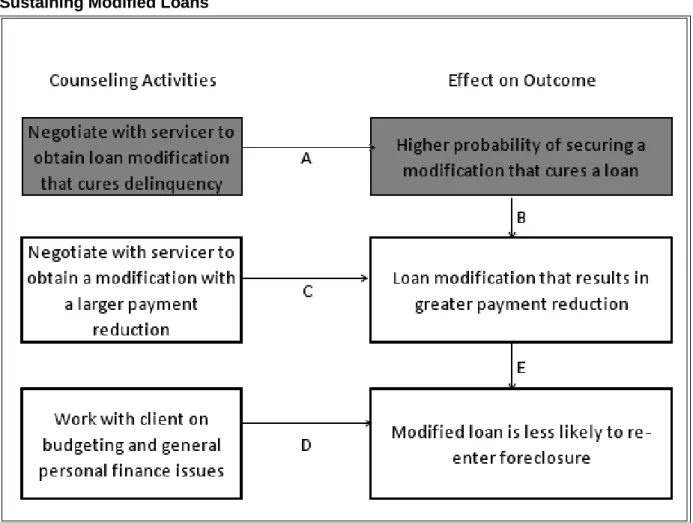
Figure 3: Framework of Counseling’s Effects on Loan Curing with Modification and Sustaining Modified Loans ...60
Figure 4: Framework of Counseling’s Effects on Loan Curing without Modification and Sustaining Outcomes ...61
Figure 5: Estimated Cumulative Rates for Avoiding Redefault of Curing Loan Modifications for Counseled and Non-Counseled Homeowners ...72
Figure 6: Estimated Cumulative Redefault Rates for Non-modification Cures for Counseled and Non-Counseled Homeowners ...78
Figure 7: Framework of Counseling’s Effects on Loan Curing through Modification and Sustaining Outcomes ...82
Figure 8: Framework of Counseling’s Effects on Loan Curing without Modification and
Sustaining Outcomes ...83 Figure 9: Estimated Differences in Cumulative Cures by Modification between
Counseled and Non-Counseled Homeowners ...85 Figure 10: Estimated Differences in Cumulative Non-Modification Cures between Counseled and Non-Counseled Homeowners ...89 Figure 11: Estimated Differences in Cumulative Total Cures between Counseled and Non-Counseled Homeowners ...92 Figure 12: Percentages of Cures With and Without Loan Modifications, With and Without
Counseling ...93 Figure 13: Estimated Share of Loans That Had a Foreclosure Completion, with and without Counseling, Pre-HAMP ...96 Figure 14: Estimated Share of Loans That Had a Foreclosure Completion, with and without Counseling, Post-HAMP ...97
ACKNOWLEDGMENTS
The authors would like to thank the following people for their help in preparing this report: Randy Rosso, Kaitlin Franks, Leah Hendey, and Elizabeth Guernsey of the Urban Institute, who
organized the NFMC and LPS data and carried out part of the analyses described in this report; Matthew Piven, who reviewed existing literature and analyzed data; Trey Barnes and Kostya Gradushy of LPS Applied Analytics, who matched the NFMC and LPS loan records; and Tim Ware, Fiona Blackshaw, and Amos Budde of the Urban Institute, who provided administrative support and helped format, set up, and copyedit this document.
EXECUTIVE SUMMARY
The National Foreclosure Mitigation Counseling (NFMC) program is a special federal appropriation, administered by NeighborWorks® (NW) America, to support a rapid expansion of foreclosure intervention counseling in response to the nationwide foreclosure crisis. As this is a federal appropriation, NW America must inform Congress and other entities of the NFMC program’s progress. The Urban Institute (UI) was selected by NW America to evaluate the NFMC program.
This report presents the final results from UI’s evaluation of the first two rounds of the NFMC program (people receiving counseling in 2008 and 2009), including a detailed analysis of program outcomes first described in preliminary reports of November 2009 (Mayer et al.) and December 2010 (Mayer et al.). According to those reports, homeowners receiving NFMC counseling avoided entering foreclosure, successfully cured existing foreclosures, and obtained more favorable loan modifications.
This report updates previous analyses and also includes revised models of several homeowner outcomes for NFMC clients counseled in 2008 and 2009. These new models use an improved comparison sample selection design, which addressed potential issues raised by reviewers of earlier analyses, and a better method for controlling for possible selection bias in the NFMC sample. The additional analyses in this report include models of non-modification cures, non-modification redefaults, and foreclosures avoided.
Modeling Findings
The multivariate statistical analyses are based on a sample of close to 335,000 loans and answer the following four questions about the NFMC program’s performance:
Did the NFMC program help homeowners receive loan modifications with lower monthly payments than homeowners would have otherwise received without counseling?
For homeowners that cured (i.e., brought to current) a serious delinquency or foreclosure through a loan modification or some other means, did NFMC counseling help them remain current on their loans longer and more frequently than they would have been without counseling?
For borrowers with seriously troubled loans, did NFMC counseling increase their chances of obtaining a cure and then sustaining that cure and avoiding redefault?
Did the NFMC program help reduce the number of completed foreclosures?1 The first three questions were examined in previous preliminary analyses of the NFMC program, although the questions of whether homeowners were more likely to remain current on their loans or cure serious delinquencies or foreclosures were looked at only in the context of loan modification cures. This final report expands the sustainability and cure analyses to include borrower self-cures not involving a loan modification. The fourth question, how the NFMC program influenced foreclosure completions, is evaluated for the first time here.
In addition, this report includes analyses that test whether NFMC program effects changed over two very different periods during this evaluation. The first is the period before the start of the Home Affordable Modification Program (HAMP), January 2008 through March 2009; the second is the period beginning in April 2009, when HAMP first became available. These analyses were meant to determine whether HAMP affected counseling impacts, either positively or negatively.
According to the evaluation of round 1 and 2 NFMC program effects, the answer to each of the four outcome questions above is “yes,” as summarized in table ES-1. In many cases, the program effects are very substantial. Further, NFMC counseling retained, or even increased, its effectiveness in helping troubled homeowners after HAMP began.
1 This analysis replaces previous models of foreclosure cures that measured the NFMC program’s effect on the
likelihood of a loan being taken out of the foreclosure process without going to a forced sale. That earlier analysis did not address whether the loan permanently avoided a foreclosure sale. Measuring whether a foreclosure is completed better indicates the program’s impact on helping owners avoid losing their homes.
Table ES-1: NFMC Program Impacts on Mortgage Outcomes
Pre-HAMP Post-HAMP
Average additional reduction in monthly payment from loan modification
$176 $176
Reduction in redefault rate nine months after curing a serious delinquencya or foreclosure
Loan modification cures 67 percent 70 percent Non-modification cures 49 percent 32 percent Change in relative odds of curing a serious
delinquencya or foreclosure
Loan modification cures 89 percent higher 97 percent higher Non-modification cures 32 percent lower 32 percent lower Percentage of loans in serious delinquency or
foreclosure both curing and sustaining cures
2.5 times higher 1.6 times higher Reduction in foreclosure completions No effect 36 percent a
Serious delinquency is three or more months of missed payments.
Loan Modifications
NFMC clients that had their loans modified in 2008 and 2009 and received counseling assistance paid $176 a month less, on average, than non-counseled clients that also received loan modifications. This average payment was 7.8 percent less than it would have been without counseling and translated into an annual savings of about $2,100 per counseled homeowner. The ability of counseling to obtain lower monthly payments for clients was the same both before and after the start of HAMP, indicating that counseling retained its positive benefits even with the existence of HAMP loan modification guidelines.
This average additional payment reduction of $176 is about $90 lower than the NFMC program effect reported in December 2010’s preliminary study. The final, lower estimate was based on models that included loan records missing information on a borrower’s debt-to-income (DTI) ratio and credit score at loan origination, which had been dropped from previous modeling analyses. While removing observations with incomplete data is standard practice, omitting those loans biased upward the estimated effects of the NFMC program on payment reductions from loan modifications.2 To avoid this problem, the DTI and credit score variables were transformed into categorical data, which included a “missing” category so all loans could be included in the
2
Loans with missing DTI ratios or credit scores were likewise included in the analysis of the other program outcomes discussed in this report.
model estimations. Retaining these loans significantly affected the final results because (1) they accounted for a large share of the total loans (about 40 percent) and (2) borrowers without reported credit scores or DTI ratios received, on average, loan modifications with lower payment reductions.
Sustainability of Modification Cures
The combined effect of counseling from both a larger payment reduction and other counseling assistance substantially reduced the relative odds that borrowers would redefault after receiving loan modifications bringing seriously delinquent mortgages (those with three or more months of missed payments) or foreclosures back to current status. Translated into percentage terms, counseling lowered redefault rates after a modification cure of a typical loan by 67 percent or more.
Although a small part of this effect (about a 3.5 percent decrease in the relative odds of redefault) was attributable to counseling’s effect on the size of monthly payment reductions, the great bulk of the sustainability benefit resulted from other impacts of counseling, such as helping borrowers improve their financial management skills, assisting them in managing relationships with servicers and investors, and providing other types of support. Nonetheless, although very few modifications included this feature, the relative odds of redefault were reduced by an additional 20 percent when the loan modification curing a serious delinquency or foreclosure included principal reduction.
Both before and after HAMP, redefault was a major problem for homeowners who did not receive counseling but a far reduced problem for borrowers who obtained NFMC counseling support. The impacts of counseling on sustainability differed very little before and after the start of HAMP, with counseling reducing the relative odds of redefault by 78 and 74 percent,
respectively. The effect of reducing loan payments through modifications was miniscule in both periods, with the other effects of counseling decreasing the relative odds of redefault by 77 percent before HAMP and 73 percent after HAMP. In percentage terms, the rate of redefault nine months after the modification cure was reduced by 67 percent pre-HAMP and 70 percent post-HAMP. Finally, the combination of the two federal interventions (NFMC counseling and the implementation of HAMP) lowered redefault rates for borrowers curing loans through
modifications from 66 to 11 percent (an impressive 83 percent reduction) over the course of nine months for a typical counseled loan.
Sustainability of Non-Modification Cures
NFMC counseling also increased sustainability substantially for loans cured without a loan modification. Though the sustainability effect was somewhat smaller than for counseling and cures with modifications, the impacts were still large for a single program intervention. Overall, counseling reduced the relative odds of redefault for non-modification cures of loans in serious delinquency or foreclosure by about half. The counseling impact was larger before
HAMP than after but still substantial in both periods. Before HAMP, counseling reduced the relative odds of redefault after a non-modification cure by 66 percent. After the start of HAMP, the relative odds of redefault for counseled borrowers were 39 percent lower than for non-counseled borrowers.
Measured by the probability of redefault, in the pre-HAMP period, counseling lowered the redefault rate for a typical NFMC-counseled loan cured without a loan modification from 71 to 36 percent, or 49 percent, over nine months. For non-modification cures obtained once HAMP was in place, borrowers that received counseling had a cumulative redefault rate of 26 percent after nine months, compared with 38 percent for those without counseling, meaning that counseling lowered recidivism for these cures by nearly 32 percent.
Modification Cures
In addition to increasing the sustainability of cures, NFMC counseling improved client outcomes by increasing the likelihood that a borrower would bring a loan in serious delinquency or foreclosure back to current status. NFMC counseling came close to doubling the odds of modification cures compared with those for non-counseled borrowers. For those entering counseling before HAMP, the relative odds of obtaining a modification cure from a serious delinquency or foreclosure increased by 89 percent, compared to the odds without counseling assistance; after HAMP, the odds increased by 97 percent.
Translating these relative odds to cumulative percentages of modification cures, after 12 months (the average observation period for loans after they became troubled), 8 percent of homeowners before HAMP receiving counseling assistance had modification cures, compared with 5 percent among borrowers without counseling—a 60 percent increase with counseling. After HAMP, 17 percent of homeowners with counseling assistance cured their serious
delinquencies or foreclosures after 12 months, compared with 9 percent without counseling—an 88 percent increase attributable to counseling.
Non-Modification Cures
The impacts of counseling on non-modification cureswere very different from those for modification cures. Counseling assistance was associated with fewer non-modification cures, overall and at all counseling levels. The relative odds of a non-modification cure decreased over 30 percent for counseled loans both before and after HAMP. A likely interpretation of this finding is that some people who would have obtained non-modification cures without counseling were, with counseling, able to obtain cures with modifications instead. This shift reduced
non-modification cures for people with counseling. The effect was especially strong once HAMP modifications became available (and set standards for other modifications), particularly among people who received more counseling, which was often needed to bring about successful modifications (according to the observers we interviewed).
Achieving and Sustaining Cures
A crucial outcome for borrowers is curing loans in serious delinquency or foreclosure combined with sustaining those cures (i.e., avoiding redefault). When the results of the sustainability and cure analyses are synthesized, they demonstrate that NFMC counseling nearly doubled the rate of curing and sustaining troubled loans. Among counseled borrowers, 12.7 percent of seriously delinquent or foreclosed loans were cured and sustained without redefault, compared with only 6.5 percent among non-counseled borrowers’ loans—a ratio of 1.96.
The ratio of counseled to non-counseled cure-and-sustain rates was higher before HAMP (2.5), but even after HAMP was under way, NFMC counseling boosted the rate of
sustained cures by 1.6 times. Counseling in both periods helped people become current on their loans and stay that way. NFMC counseling and the HAMP environment together raised the rate of sustained cures by a factor of five, compared with results achieved without counseling assistance before HAMP.
Although many homeowners that cured their serious delinquency or foreclosure stayed current, particularly those who received loan modifications through counseling, cures were generally very limited. Because of its opposite and thus partially offsetting effects on modification cures and non-modification cures, counseling affected total cures of seriously delinquent and foreclosed loans relatively modestly. In the post-HAMP period, even with counseling, modification plus non-modification cures totaled only 24 percent of significantly troubled loans. Therefore, while counseling and HAMP help homeowners in a number of ways, many homeowners’ problems persist.
Avoiding Foreclosure Completions and Cost-Benefit Analysis
According to the previous analyses, NFMC counseling had several benefits: it generated loan modifications with larger payment reductions, it helped homeowners cure seriously
delinquent loans, and it produced more sustainable cures. To determine if these effects helped clients remain in their homes, the latest analyses estimated the impact of counseling on the likelihood of foreclosure completion, which would result in the homeowner losing his or her home.
Between January 2008 and December 2010, 10.3 percent of round 1 and 2 NFMC clients had a foreclosure completion.3
Without counseling, this percentage would have been 1.15 times as great. Extrapolating the modeling results from the estimation sample to all clients who received counseling in rounds 1 and 2, the NFMC program resulted in 13,000 fewer foreclosure completions by the end of 2010. In other words, the NFMC program prevented
3
Foreclosure completion includes foreclosure sale, short sale, and other involuntary losses of a home through foreclosure-related actions.
nearly one in seven foreclosures that would have been completed without counseling. These results were driven by NFMC performance after HAMP, which reduced the total number of foreclosure completions by 36 percent. Before HAMP, there was no statistically measurable difference in foreclosure completion rates between counseled and non-counseled borrowers.
Since foreclosure sales create costs for homeowners, lenders, local governments, and society at large, avoiding foreclosures generates cost savings. Each foreclosure prevented by the NFMC program was estimated to have saved an average of $70,600 in avoided costs. These savings included $10,000 in moving costs, legal fees, and administrative charges for homeowners; $40,500 in deadweight lender loss to society, which represents 36 percent of the total lender loss; $6,500 in local government administrative and legal costs; and $13,900 in reduced neighboring property values.4
Assuming the 13,000 loans that avoided foreclosure through December 2010 because of counseling do not complete foreclosure at some point in the future, the NFMC program has helped save local governments, lenders, and homeowners $920 million, which is about $1,200 per client served by the NFMC program in 2008 and 2009. These savings translated to 3.0 times the total round 1 and 2 NFMC funding provided to support counseling services to these homeowners. When the full costs of providing counseling services to these clients, including funding from other sources, is accounted for, the savings represented a total counseling cost-benefit ratio of 2.4.
Findings and Lessons from the NFMC Program
This evaluation looked comprehensively at the NFMC program, its effects on improving outcomes for troubled homeowners, and its broader impact on foreclosures. The NFMC
program made key contributions to addressing the foreclosure crisis in four main areas, which are summarized below.
Improving Outcomes for Troubled Homeowners
The ultimate measure of success of the NFMC program was whether the assistance provided by NFMC-funded Grantees and Subgrantees actually helped troubled homeowners achieve better outcomes, such as avoiding a foreclosure sale or obtaining a mortgage modification that allowed them to remain in their homes. Determining whether the program helped homeowners attain positive outcomes, therefore, was the main focus of the NFMC evaluation.
As noted in the summary of the modeling findings above, the analysis of NFMC’s activities and the subsequent performance of counseled and non-counseled mortgages found
consistent, compelling, and robust evidence that the program has provided substantial benefits to homeowners facing foreclosure. In almost all cases, counseling has remained effective in obtaining positive outcomes, even after the Home Affordable Modification Program was introduced in April 2009.
Building National Capacity for Foreclosure Mitigation Counseling
The NFMC program also helped increase the nation’s capacity to assist troubled homeowners in several ways. First, and perhaps most important, by providing more funds to counseling organizations, the program increased national capacity to provide foreclosure counseling services. Based on the responses from two web-based surveys (included in appendices D and E), Round 1 NFMC program Grantees and Subgrantees saw nearly three times more clients between 2007 and 2008; round 2 Grantees and Subgrantees saw 76 percent more. Many NFMC-funded Grantees and Subgrantees also enlarged their geographic area of coverage.
In addition, the NFMC program helped build the national capacity of foreclosure
mitigation counseling by improving counselor training5 and by establishing a members’ web site and message board that has allowed counselors to share questions, best practices, and other information across a national network.
Challenges and Best Practices
As this report is being written, millions of homeowners in the United States are still facing the possibility of foreclosure and the loss of their homes. Counseling organizations across the country are still working with many of these homeowners to allow them to avoid foreclosure and, hopefully, keep their homes. Through the course of the NFMC program evaluation, researchers gathered extensive information from counseling agencies, through web surveys and interviews, on the challenges of obtaining good outcomes for their clients. This information has uncovered many strategies and best practices that the more successful counseling organizations have employed, providing valuable lessons for the housing counseling field.
Grantees and Subgrantees interviewed as case studies for the evaluation identified the two largest problems in achieving good outcomes for clients: (1) servicers were not sufficiently responsive and (2) clients, when entering counseling, were typically facing financial difficulties usually resulting from a loss in income. Successful counseling organizations have developed strategies to attempt to overcome these two main issues and to interact with clients so good outcomes are maximized.
5 The NFMC legislation specifically authorized a portion of the appropriation to be spent to “build the mortgage
foreclosure and default mitigation counseling capacity of counseling intermediaries through [NW America] training courses” (Housing and Economic Recovery Act of 2008).
Increasing servicer responsiveness
Counseling staff cited obtaining good servicer response to client efforts to resolve troubled loans more frequently than any other challenges and obstacles in their work (although by only a narrow margin over borrowers’ loss of income). Staff most frequently mentioned three challenges as severe: slow response or lack of response by servicers to applications for loan modifications, servicers losing documents submitted, and servicers switching clients’ cases from one staff person to another.
According to our case study interviews, successful counseling agencies responded to challenges in working with servicers in five ways.
Reducing the chaos and delay from lost documents. Difficulties transmitting the necessary documents for loan modifications and other solutions, confirming their receipt, avoiding their loss at the servicer end, and identifying missing documents so they can be re-submitted have been a major obstacle to effective foreclosure prevention. In nearly every case, well-performing counseling agencies have invested substantially in addressing this issue, including adopting HOPE LoanPortTM or their own electronic systems for tracking documents and negotiation.
Developing contacts and relationships with servicers and learning whom to go to for cooperation, escalation, and quick response. Successful counseling
organizations consider building contacts and relationships with servicers crucial. Organizations need to know the right people to call for cooperative problem-solving, finding non-foreclosure solutions, and moving stuck cases forward.
Knowing how servicers are likely to assess a proposed modification, forbearance, or other proposal. Assessing what servicers will approve and creating proposals that work for the client and the servicer are important counselor goals. Some counselors focus on getting there with their initial
proposal; others anticipate frequent negotiation. In both cases, a key ingredient is a counselor who understands how underwriting works so he or she can provide realistic options that the servicer will entertain.
Following up persistently. Counselor persistence is central to many aspects of preventing foreclosure, including submitting applications and proposals to servicers, monitoring progress, and pursuing solutions that work for their clients. But persistence also includes negotiating solutions creatively. Successful
counselors never take “no” for an answer, if analysis suggests that preventing or mitigating a foreclosure is at all feasible.
Structuring single-servicer events, live contact between servicers and clients, and live contact between servicers and counselors. Direct in-person contact between
servicers and counselors and homeowners can be valuable, if structured properly. The key is to put together the necessary pieces for actual loan modifications and other solutions to be reached on site, during the event. Dealing with major income reductions
Counselors indicated that most clients seek foreclosure prevention services because of a drop in income, often from a job loss. Although such cases are difficult to address, counselors use several strategies when working with clients with an income reduction.
Conducting a detailed crisis budgeting analysis. The first step when working with clients who have experienced an income reduction is to develop a crisis budget. One benefit of developing a crisis budget is that it acts as an opening to credit counseling by prioritizing expenses. By putting expenses and income down on paper, clients can easily see how they are spending their money, which they can continue to monitor even after their income increases.
Pursuing forbearances. Getting loan modifications approved for clients with no income is problematic. If a job or income loss is temporary, counselors can pursue forbearance agreements with servicers. In particular, a forbearance plan can work well for people who expect to be reemployed, but such an approach is not appropriate for clients on fixed incomes.
Working successfully with clients
Counselors can only be as effective as their clients. Given the demand for foreclosure prevention services, effective organizations get clients proactive and engaged in the process.
Ensuring that clients bring all required information to the initial one-on-one counseling session. Counselors stressed that servicers will not make any decision on a client’s proposed loss mitigation solution, which often include a request for a loan modification, directly. Rather, servicers often require authorization forms from lenders, budgets, and hardship letters, and these requirements can vary by servicer. Agencies have instituted strategies
(checklists, pre-counseling orientation meetings) to ensure that clients bring the required documents to their first counseling session so the counselor can contact a client’s servicer during that session.
Empowering clients so they successfully manage the foreclosure prevention process. Agencies do not have the resources to manage all aspects of a client’s
case. Therefore, counselors said that it is critical to work with a client who knows about getting loan modifications or other outcomes, has a realistic understanding of the options available given his or her circumstances, and will provide loan servicers with the documents and follow-up needed to reach a decision. Many
agencies, as a first step, provide details about the foreclosure process during an initial group counseling session. The group sessions helps clients start thinking about a preferred solution, which may not include retaining ownership of their home.
Conclusion
The National Foreclosure Mitigation Counseling program started in 2008 to help
homeowners facing foreclosure. To measure how well the program met this objective, the Urban Institute conducted a three-year evaluation of the program. The evaluation consisted of several activities to help understand the program’s effects, including interviews with mortgage industry and program participants, reviews of program reports and documents, surveys of foreclosure counseling organizations, and an in-depth analysis of outcomes for counseled mortgages.
The NFMC program has been an important and successful tool in addressing the record number of troubled homeowners who have faced, and continue to face, loss of their homes because of foreclosure. While counseling cannot solve to the foreclosure crisis, it nonetheless has helped homeowners achieve better outcomes, which in turn has benefited the country by reducing the numbers of nonperforming and failed mortgages, avoiding social costs associated with foreclosures, and allowing more people to retain their homes.
As the housing crisis continues to play out over the coming months and years, the information provided through this evaluation will help guide policymakers and practitioners toward solutions that will provide much-needed help to the nation’s struggling homeowners.
INTRODUCTION
The National Foreclosure Mitigation Counseling (NFMC) program is a special federal appropriation, administered by NeighborWorks® (NW) America, designed to support a rapid expansion of foreclosure intervention counseling in response to the nationwide foreclosure crisis. The NFMC program seeks to help homeowners facing foreclosure by providing them with much-needed foreclosure prevention and loss mitigation counseling. NW America distributes funds to competitively selected Grantee organizations, which in turn provide counseling, either directly or through Subgrantee organizations.
As this is a federal appropriation, NW America must inform Congress and other entities of the NFMC program’s progress. The Urban Institute (UI) was selected by NW America to evaluate rounds 1 and 2 of the NFMC program. This report presents final results of the
evaluation, including analyses of the program’s effects on its clients and the larger foreclosure crisis. It includes three main sections:
Review of Evaluation Activities and Previous Reports. A brief overview of the data collection and analysis activities undertaken as part of this evaluation and the preliminary reports.
Final Modeling Analysis. A complete discussion of the final quantitative analysis of mortgage outcomes for NFMC counseled loans.
Findings and Lessons from the NFMC Program. A summary of the most important results from the NFMC evaluation, along with lessons learned about best practices for foreclosure mitigation counseling.
Additional materials related to this report (copies of past reports, multivariate model results, etc.) are in appendices, which are provided as separate documents.
REVIEW OF EVALUATION ACTIVITIES AND PREVIOUS
REPORTS
The evaluation of the NFMC program began in June 2008 and, over the subsequent three years, involved a wide range of research activities to examine multiple aspects of the program and its impacts. The purposes of our analyses were not only to document whether counseling helped troubled homeowners, but also to explain how counselors were able to get good outcomes. Therefore, our evaluation consisted of qualitative and quantitative components that analyzed information collected about clients, Grantees, and Subgrantees. The combination of data and analyses allowed us to comprehensively assess the NFMC program’s impact on the foreclosure crisis.
Several earlier analyses have been published and are summarized briefly below.
Process Study
We conducted a process study of the methods used by NW America to select round 1 Grantees and to determine how transparently NW America administered round 1 of the NFMC program. To complete this study, we interviewed NW America staff that helped develop client-level and quarterly report databases and procedures to track funding in the organization's finance system. We also interviewed representatives of contractors engaged by NW America to assess whether Grantees are complying with program requirements and that counseling
services were provided to homeowners in a manner consistent with the national industry standards.
Based on the information provided by key informants interviewed for this study and our analysis of scoring data that NW America used to make NFMC program awards, we concluded that NW America used an objective system to review applications and implemented a robust process to monitor grantee performance that included collecting a wide range of quantitative and qualitative data. Reviewers scored applications only after they received extensive training from NW America staff about a scoring rubric that provided objective criteria for assessing each application. In addition, NW America determined award amounts using standard algorithm that was applied to each applicant. Finally, NW America collected quantitative and qualitative information from grantees and through its compliance and quality control contractors to ensure
that grantees spent the awards on appropriate activities and that grantees adhered to the award agreements executed with NW America.
The full process study report is included as appendix A.
Reconnaissance Interviews
We conducted two sets of reconnaissance interviews, one in summer 2008 and another in early 2010. In both rounds, we selected industry participants and observers of the mortgage lending and foreclosure counseling markets to gain an understanding of the context in which NFMC was operating. We asked key informants about the issues driving continued mortgage performance problems, challenges counselors faced when seeking outcomes preferable to foreclosure for their clients, changes servicers and counselors made to handle the demand for foreclosure counseling, and changes in the foreclosure environment. In the second round of interviews in 2010, we asked additional questions regarding the impact of the new federal Making Home Affordable Program, which includes the Home Affordable Modification Program (HAMP). The information collected in these interviews helped us determine topics asked in our web survey of Grantees and Subgrantees and to develop appropriate outcome measures of counseling’s effects on clients.
The two reports documented changes in the environment in which the NFMC program was operating in its early stages and after it had been in place for over a year. In the initial 2008 interviews, key informants said that mortgage performance issues were largely a function of
subprime loans granted (perhaps predatorily) to borrowers who could not afford payments, in part due to resetting interest rates. In the subsequent 2010 interviews, however, key informants reported that mortgage delinquencies were now driven by income losses resulting from higher unemployment or reductions in hours worked by people who still had jobs. This change
presented new challenges for NFMC counselors. Many delinquent borrowers had either little or no income because of unemployment or under-employment, making it difficult for them to afford even a modified mortgage. In addition, homeowners with large amounts of nonhousing-related debt or second liens might also be unable to afford even reduced mortgage payments. Further, declining house prices meant that borrowers with negative equity in their homes might be less willing to consider loan modifications, as renting may be less expensive than a modified mortgage.
In both sets of interviews, however, key informants highlighted consistent challenges that counselors faced because they were unable to meet the increasing demand for foreclosure counseling services. Another common challenge was the difficulty working with the mortgage industry to obtain loan modifications or other solutions that would allow homeowners to remain in their homes. Key informants saw little improvement in the responsiveness and capacity of the mortgage industry to help counseled homeowner over the two years.
Nonetheless, key informants in our 2010 interviews said that HAMP had an enormous impact on the mortgage industry by establishing national standards for loan modifications. One of the most positive effects of the program was that the loan modification target of reducing a payment to 31 percent of an owner’s gross income became a goal used by all participating servicers and counselors, even for many non-HAMP, or “private label,” loan modifications. Despite this and other improvements, key informants pointed out several problems with HAMP. Most notably, the 31 percent income standard, while addressing the issue of people having loans with interest rates that were too high, did little to help the growing numbers of troubled borrowers who had little or no income because of unemployment or underemployment. Key informants also cited problems getting HAMP modifications converted to permanent
modifications for borrowers who made all their mortgage payments during the trial period. The two reports summarizing our reconnaissance findings are included as appendices B and C.
Web Surveys
We administered web surveys in April 2009 to round 1 Grantees and Subgrantees and in August 2010 to round 2 Grantees and Subgrantees. The survey was designed to collect
information on the following topics:
Grantee perceptions of NW America as the NFMC program administrator; the impact of a grant on a recipient organization’s capacity to deliver foreclosure
counseling services;
the extent to which client-level reimbursements cover total foreclosure counseling costs;
the availability of financing for clients to help pay off arrearages or refinance their existing mortgages;
the obstacles organizations faced in serving expanded numbers of clients, and the mechanisms organizations employed to meet these obstacles; and
the challenges to obtaining successful outcomes for clients and the strategies respondents used to increase their ability to help borrowers obtain those positive results.
Findings from the two rounds of Grantee and Subgrantee surveys were very similar. Survey respondents in both rounds said that the NFMC program allowed their organizations to serve more clients and offer their services in a larger geographic area than they were able to before receiving NFMC funding. Survey respondents noted other benefits of being part of
NFMC, including NW America’s communication with Grantees and Subgrantees through WebEx sessions and a message board that were helpful in keeping staff informed about best practices.
The main obstacles cited by survey respondents that made it more difficult for them to obtain successful outcomes for their clients were similar in Rounds 1 and 2, but the order of importance changed. In Round 1, the single most frequently identified challenge to obtaining good outcomes was clients’ job loss or reduced wages/income. The second most frequently mentioned issues were servicer-related challenges, such communicating with loss mitigation staff in a timely and consistent way, exchanging documents and authorizations, and obtaining responses to loan modification requests. In Round 2, however, the order was reversed, with servicer responsiveness challenges rated as the most serious, followed by client economic challenges.
Survey respondents took various actions within their control to improve outcomes for their clients. The highest ranked strategies focused on relationships and working process with clients, especially at the start of counseling. Topping the list was being frank with clients about their options and managing expectations. Following closely behind were conducting one-on-one interviews with clients, establishing action plans for borrowers at the first meeting, and requiring clients to bring needed documents with them by not later than their first one-on-one session.
Other counseling strategies involved providing opportunities for counselors to exchange ideas and information, triaging clients to focus first on those with imminent foreclosures, and improving communication with servicers.
Summaries of the findings for each web survey are included in appendices D and E.
Case Studies
To supplement information collected through the web-based survey of Grantees and Subgrantees, we selected organizations based on their ability to achieve good outcomes for their clients to explore, in depth, the key factors that influenced their successes (and failures). Based on their ability to get loan modifications for their clients and the performance of their clients’ loans over time, we selected 17 organizations to conduct in-depth interviews with executive directors, staff who managed counselors, and, for some organizations, counselors who provided services to troubled homeowners. We conducted interviews with representatives of 13 organizations: two organizations participated in on-site interviews in the spring 2009, while the remaining 11 organizations were interviewed via telephone in spring 2011.
Not surprisingly, given the results of the web surveys, the counseling agencies in our case studies considered improving their interactions with servicers a very important part of achieving good results for their clients, and they put significant effort into this area. The counseling agencies worked to improve relations with servicers in several ways, including reducing the chaos and delay resulting from lost documents submitted to servicers; developing
contacts and relationships with servicers and learning whom to go to for good cooperation, escalation, and quick response; being able to assess how servicers were likely to respond to a proposed modification, forbearance, or other proposal; following up persistently; initiating or participating in single-servicer events; and having live contact between servicers, clients, and counselors.
Despite these efforts, most counseling agencies seem to believe that they cannot have much impact on servicer or lender decision-making, in terms of how the servicer evaluates a case. While good counselors do not easily take “no” for an answer, and will aggressively look for other decisionmakers, outside-the-box thinking, and additional options, they do not expect to affect the basic decision calculus of generally large, distant servicers.
Counseling agencies in our case studies also strongly emphasized their interactions with clients. Effective organizations encourage clients to be active and engaged in the process. This often starts with requiring clients to complete paperwork and send in documents before meeting with a counselor. In addition, successful organizations provide realistic evaluations to their clients regarding the chances of obtaining loan modifications and other retention solutions. These evaluations include a candid analysis of a client's income and expenses. The key objective is for the client to understand his or her financial situation, and the desirability under the client's circumstances to remain in the home. This is especially important for clients whose income has dropped sharply, such those who have lost a job.
Our findings from these interviews are summarized in two case study reports. The first is included in appendix F; the second in appendix G.
Modeling Analysis
While the above components of the evaluation were vital to better understand the NFMC program and explain its ability to help troubled homeowners, the quantitative modeling analysis was in many ways the central piece of the evaluation. In this analysis, we used data on loan performance to measure the impact of NFMC counseling on several important client outcomes, including receiving loan modifications with lower monthly payments; curing serious
delinquencies and foreclosures and sustaining those cures; and avoiding foreclosure completions. This analysis allowed us to quantify the benefits of the NFMC program for counseled homeowners.
We have issued two previous reports, in November 2009 and December 2010,
presenting preliminary findings based on our modeling analysis.6 These results are superseded by the final modeling analysis presented in this report. As with our preliminary findings, our final
6
These reports can be accessed on the Urban Institute web site at http://www.urban.org/url.cfm?ID=411982 and http://www.urban.org/url.cfm?ID=412276.
modeling analysis continues to show strong, positive impacts of the NFMC program on most client outcomes. We have, however, refined our models to include improved controls for possible selection effects, additional outcomes (sustainability of non-modification cures and avoidance of foreclosure completions), interaction analysis to measure counseling impacts on different subpopulations, and interactions to determine if the presence of HAMP has affected counseling outcomes.
FINAL MODELING ANALYSIS
This section summarizes the final modeling analysis of client outcomes for the NFMC program evaluation. The first part provides an overview of the objectives of the modeling analysis and briefly summarizes the key findings. The remainder of this section describes the data sources used in the analysis and how they were employed to create samples of counseled and non-counseled mortgages for the analysis. It also covers the creation of specific outcomes and the approach to modeling the impact of the NFMC program on each one. Finally, it details the results from the modeling analysis of NFMC mortgage outcomes.
Overview of the Modeling Analysis
If the NFMC program did not exist, presumably some NFMC clients would have not taken any action to avoid foreclosure. Others might have attempted to cure their delinquency themselves, contacted their mortgage servicer to negotiate a loan modification on their own, or used the services of other counseling agencies not funded by the NFMC program. Some people would have been successful in avoiding foreclosure, while others would not.
Even with NFMC-provided counseling, it is unreasonable to expect that all foreclosures could be avoided. For instance, some homeowners are in homes that they simply cannot afford. While counselors may be able to help some of these clients negotiate better outcomes, some foreclosures are likely inevitable.
Therefore, this evaluation supposes that the NFMC program has a positive effect if it results in better outcomes for clients than would have been achieved without the availability of services provided by NFMC Grantees. The NFMC program’s major objective is to help
homeowners avoid foreclosure. The multivariate statistical analyses presented in this report are based on a sample of close to 335,000 loans and answer the following questions about the NFMC program’s performance.
Did the NFMC program help homeowners receive loan modifications that with lower monthly payments than homeowners would have otherwise received without counseling?
For homeowners that cured (i.e., brought to current) a serious delinquency or foreclosure through a loan modification or some other means, did NFMC
counseling help them remain current on their loans longer and more frequently than they would have been without counseling?
For borrowers with seriously troubled loans, did NFMC counseling increase their chances of first obtaining a cure and then sustaining that cure and avoiding redefault?
Did the NFMC program help reduce the number of completed foreclosures?7 The first three questions had been examined in the preliminary analyses of the NFMC program (Mayer et al. 2009, 2010), although the questions of whether homeowners were more likely to remain current on their loans or cure an existing serious delinquency or foreclosure were looked at only in the context of loan modification cures. This final report expands the sustainability and cure analyses to include borrower self-cures not involving a loan modification. The fourth question, the impact of the NFMC program on reducing foreclosure completions, is evaluated for the first time in this report.
In addition, this report includes analyses that test whether NFMC program effects changed over two very different periods during this evaluation. The first is the period before HAMP began, January 2008 through March 2009; the second is the period beginning in April 2009, when HAMP first became available. The purpose of these analyses was to determine whether HAMP affected counseling impacts, either positively or negatively.
According to the evaluation of round 1 and 2 NFMC program effects, the answer to each of the four outcome questions above is “Yes.” These results are summarized in table 1. The magnitudes of the program effects are in many cases very substantial. Further, NFMC
counseling retained, or even increased, its effectiveness in helping troubled homeowners in the period after HAMP.
7 This analysis replaces previous models of foreclosure cures that measured the NFMC program’s effect on the
likelihood of a loan in foreclosure to stop being in foreclosure. That earlier analysis did not address whether the loan was permanently out of foreclosure as a result of the cure. Measuring whether foreclosure is completed a better indicates the program’s impact on helping owners avoids losing their homes.
Table 1: NFMC Program Impacts on Mortgage Outcomes
Pre-HAMP Post-HAMP
Average additional reduction in monthly payment from loan modification
$176 $176
Reduction in redefault rate nine months after curing a serious delinquencya or foreclosure
Loan modification cures 67 percent 70 percent Non-modification cures 49 percent 32 percent Change in relative odds of curing a serious
delinquencya or foreclosure
Loan modification cures 89 percent higher 97 percent higher Non-modification cures 32 percent lower 32 percent lower Percentage of loans in serious delinquency or
foreclosure both curing and sustaining cures
2.5 times higher 1.6 times higher Reduction in foreclosure completions No effect 36 percent a
Serious delinquency is three or more months of missed payments.
Loan Modifications
NFMC clients that had their loans modified in 2008 and 2009 and received counseling assistance paid $176 a month less, on average, than non-counseled clients that also received loan modifications. This average payment was 7.8 percent less than it would have been without counseling and translated into an annual savings of about $2,100 per counseled homeowner.
This average payment reduction is about $90 lower than the NFMC program effect reported in December 2010’s preliminary study. The final, lower estimate is based on models that include loan records missing information on a borrower’s debt-to-income (DTI) ratio and credit score at loan origination. Previously, loans without DTI ratios or credit scores were dropped from the modeling analysis. Omitting these loans biased upward the estimated effects of the NFMC program on payment reductions from loan modifications.8 For this final report, the variables were transformed into categorical data, which included a missing category so all loans could be included in the model estimations. Retaining these loans significantly affected the results because (1) they accounted for a large share of the total loans (about 40 percent) and (2) borrowers without a reported credit score or DTI ratio received, on average, loan
modifications with lower payment reductions.
8
Loans with missing DTI ratios or credit scores were likewise included in the analysis of the other program outcomes discussed in this report.
Sustainability of Modification Cures
The combined effect of counseling from a larger payment reduction and other counseling assistance substantially reduced (by approximately three-quarters) the relative odds that
borrowers would redefault after receiving loan modifications bringing seriously delinquent mortgages (those with three or more months of missed payments) or foreclosures back to current status. Translated into percentage terms, counseling lowered redefault rates after a modification cure of a typical loan by more than 66 percent.
Although a small part of this effect (about a 3.5 percent decrease in the relative odds of redefault) was attributable to counseling’s effect on the size of monthly payment reductions, the great bulk of the sustainability benefit resulted from other impacts of counseling, such as helping borrowers improve their financial management skills, assisting them in managing relationships with servicers and investors, and providing other types of support. Further, although very few modifications included this feature, the relative odds of redefault were reduced by an additional 20 percent when the loan modification curing a serious delinquency or foreclosure included principal reduction.
Both before and after HAMP, redefault was a major problem without counseling and a far reduced one with counseling support. The impacts of counseling on sustainability differed very little before and after the start of HAMP, with counseling reducing the relative odds of redefault by 78 and 74 percent, respectively. The effect of reducing loan payments through modifications was miniscule in both periods, with the other effects of counseling decreasing the relative odds of redefault by 77 percent before HAMP and 73 percent after HAMP. Finally, the combination of the two federal interventions (NFMC counseling and the implementation of HAMP) lowered redefault rates for borrowers curing loans through modifications from 66 to 11 percent (an impressive 83 percent reduction) over the course of nine months for a typical counseled loan.
Sustainability of Non-Modification Cures
NFMC counseling also increased sustainability substantially for loans cured without a loan modification. Though the sustainability effect was somewhat smaller than for counseling and cures with modifications, the impacts were still large for a single program intervention. Overall, counseling reduced the relative odds of redefault for non-modification cures of loans in serious delinquency or foreclosure by about half. The counseling impact was larger before HAMP than after but still substantial in both periods. Before HAMP, counseling reduced the relative odds of redefault after a non-modification cure by 66 percent. After the start of HAMP, the relative odds of redefault for counseled borrowers were 39 percent lower than for non-counseled borrowers.
Measured by the probability of redefault, in the pre-HAMP period, counseling lowered the redefault rate for a typical NFMC-counseled loan cured without a loan modification from 71
to 36 percent, or 49 percent, over nine months. For non-modification cures obtained once HAMP was in place, borrowers that received counseling had a cumulative redefault rate of 26 percent after nine months, compared with 38 percent for those without counseling, meaning that counseling lowered recidivism for these cures by nearly 32 percent.
Modification Cures
In addition to increasing the sustainability of cures, NFMC counseling improved client outcomes by increasing the likelihood that a borrow would bring a loan in serious delinquency or foreclosure back to current status. NFMC counseling came close to doubling the odds of
modification cures compared with those for non-counseled borrowers. For those entering counseling before HAMP, the relative odds of obtaining a modification cure from a serious delinquency or foreclosure increased by 89 percent, compared to the odds without counseling assistance; after HAMP, the odds increased to 97 percent.
Translating these relative odds to cumulative percentages of modification cures, after 12 months (the average observation period for loans after they became troubled), 8 percent of homeowners before HAMP receiving counseling assistance had modification cures, compared with 5 percent among borrowers without counseling—a 60 percent increase with counseling. After HAMP, 17 percent of homeowners with counseling assistance cured their serious
delinquencies or foreclosures after 12 months, compared with 9 percent without counseling—an 88 percent increase attributable to counseling.
Non-Modification Cures
The impacts of counseling on non-modification cureswere very different from those for modification cures. Counseling assistance was associated with fewer non-modification cures, overall and at all counseling levels. The relative odds of a non-modification cure decreased over 30 percent for counseled loans both before and after HAMP. A likely interpretation of this result is that some people who would have obtained non-modification cures without counseling were able to, with counseling, instead obtain cures with modifications. This shift reduced non-modification cures for people with counseling. The effect was especially strong once HAMP modifications became available (and set standards for other modifications), particularly among people who received more counseling, which was often needed to bring about successful modifications (according to the observers we interviewed).
Achieving and Sustaining Cures
A crucial outcome for borrowers is curing loans in serious delinquency or foreclosure combined with sustaining those cures (i.e., avoiding redefault). When the results of the sustainability and cure analyses are synthesized, they demonstrate that NFMC counseling nearly doubled the rate of curing and sustaining. Among counseled borrowers, 12.7 percent of
seriously delinquent or foreclosed loans were cured and sustained without redefault, compared with only 6.5 percent among non-counseled borrowers’ loans—a ratio of 1.96.
The ratio of counseled to non-counseled cure-and-sustain rates was higher before HAMP (2.5), but even after HAMP was under way, NFMC counseling boosted the rate of
sustained cures by 1.6 times. Counseling in both periods helped people become current on their loans and stay that way. NFMC counseling and the HAMP environment together raised the rate of sustained cures by a factor of five, compared with results achieved without counseling
assistance before HAMP.
Although many homeowners that cured their serious delinquency or foreclosure stayed current, particularly those who received loan modifications through counseling, cures were generally very limited. Because of its opposite and thus partially offsetting effects on modification cures and non-modification cures, counseling affected total cures of seriously delinquent and foreclosed loans relatively modestly. In the post-HAMP period, even with counseling, modification plus non-modification cures totaled only 24 percent of significantly troubled loans. Therefore, while counseling and HAMP help homeowners in a number of ways, many homeowners’ problems persist.
Avoiding Foreclosure Completions and Cost-Benefit Analysis
According to the previous analyses, NFMC counseling has several benefits: it generates loan modifications with larger payment reductions, it helps homeowners cure seriously
delinquent loans, and it produces more sustainable cures. To determine if these effects helped clients remain in their homes, the latest analyses estimated the impact of counseling on the likelihood of foreclosure completion, which would result in the homeowner losing his or her home.
Between January 2008 and December 2010, 10.3 percent of round 1 and 2 NFMC clients had a foreclosure completion.9 Without counseling, this percentage would have been 1.15 times as great; this translates into 13,000 fewer foreclosure completions for NFMC clients by the end of 2010. In other words, the NFMC program prevented nearly one in seven
foreclosures that would have been completed without counseling. These results are driven by NFMC performance after HAMP, which reduced the total number of foreclosure completions by 36 percent. Before HAMP, there was no statistically measurable difference in foreclosure completion rates between counseled and non-counseled borrowers.
Since foreclosures create costs for homeowners, lenders, local governments, and society at large, avoiding foreclosures generates cost savings. Each foreclosure avoided by the NFMC program is estimated to have saved $70,600. These savings include $10,000 in moving
9
Foreclosure completion includes foreclosure sale, short sale, and other involuntary losses of a home through foreclosure-related actions.
costs, legal fees, and administrative charges for homeowners; 36 percent of the total lender loss, which represents the deadweight loss to society; $6,500 in local government administrative and legal costs; and $13,900 in reduced neighboring property values.10
Assuming the 13,000 loans that avoided foreclosure through December 2010 because of counseling do not complete foreclosure at some point in the future, the NFMC program has helped save local governments, lenders, and homeowners $920 million, which is about $1,200 per client served by the NFMC program in 2008 and 2009. These savings translate to between 2.4 and 3.0 times the total round 1 and 2 NFMC funding plus other spending to provide
counseling services to these homeowners.
In rest of this section, we discuss how we obtained the results above. We describe the data sources used for the analysis and how the comparison group of non-NFMC loans, outcome variables, and control variables were created; discuss the methodological challenges inherent in a statistical study of this nature, how we compensated for these challenges, and the possible implications for our results; and, finally, present the modeling results and findings that were summarized above.
Data Used in the Analysis
Three main data sources were used in the outcomes modeling analysis. These sources include administrative data collected by NW America from NFMC program Grantees on
counseled homeowners, as well as two national data sources on U.S. mortgage loans and borrowers. This section describes these three data sources and explains how they were used to create a sample of NFMC-counseled homeowners and a comparison sample of non-counseled homeowners for the multivariate analysis. This section also describe the outcome variables (monthly payment reduction from loan modification, serious delinquency/foreclosure cure and sustainability, and foreclosure completion) and the other control variables used in the models, including an explanation of how they were constructed using the available data.
NFMC Program Production Data
NFMC program Grantees are required to provide client-level data (referred to as
production data), along with quarterly reports on aggregate activity toward overall goals established under the grant award. Grantees submit the production data on an ongoing basis through an electronic submission system. Production data consist of a record for each
“counseling unit” provided by the Grantee or Subgrantee to an individual homeowner.
The NFMC program recognizes three distinct levels of counseling services. In Level 1 counseling, the NFMC Grantee or Subgrantee conducts a client intake process and develops a
budget and a written action plan for the client. After Level 1 counseling is completed, it is up to the client to follow through with any activities on the action plan. In Level 2 counseling, the Grantee or Subgrantee verifies the client's budget and takes additional steps to obtain solutions outlined by the action plan. In Level 3 counseling, Level 1 and Level 2 counseling are completed in succession by the same Grantee or Subgrantee. Since an individual homeowner may receive both Level 1 and Level 2 counseling, these sessions are counted and referred to as separate units of counseling.11
The production data provide the list of homeowners that have received NFMC program counseling in some form and, therefore, constitute the treatment group for the analysis of program impacts. The data consist of information on the counseled homeowner, including identifying data (name, address), demographic characteristics, and household income;
information on the client’s mortgage loan, including the current servicer, loan terms, and current default status; and information on the type and amount of foreclosure mitigation counseling received. For this report, we used production data on approximately 960,000 clients counseled during Rounds 1 and 2 of the NFMC program in 2008 and 2009 and reported to NW America as of January 22, 2010.
Grantees also can report outcomes for each counseling unit, although individual
outcome reporting is not required for all counseling units in the production data. As a result, 13 percent of Level 1 counseling units in the first round of the program and 14 percent of Level 1 counseled households in the second round did not have a further reported outcome. Even for records with Grantee-reported outcomes, the outcome might be “currently in negotiation with servicer; outcome unknown” (35 percent of round 2 counseled households) or “initiated forbearance agreement” (10 percent), which still leaves open the question of whether the forbearance agreement was sufficient to avoid foreclosure.
Given these limitations on Grantee-reported outcomes, to model the impacts of the NFMC program on key outcomes of interest we needed to match the homeowners from the production data with external data on mortgage performance. In addition, to model the “what if” case of households that did not receive counseling, we needed an additional sample of loans for non-NFMC program participants, including their outcomes regarding foreclosure. We used data from LPS Applied Analytics, Inc., and from the Home Mortgage Disclosure Act to supplement the production data.
11
In round 2, a new counseling level (Level 4) was added for homeowner counseling services provided to fulfill HAMP requirements. Level 4 counseling units are not included in the analysis presented here as they constitute a very small share of reported clients.