INTERIM INVESTIGATION REPORT
CHEVRON RICHMOND REFINERY FIRE
C
HEVRON
R
ICHMOND
R
EFINERY
R
ICHMOND,
C
ALIFORNIAA
UGUST6,
2012
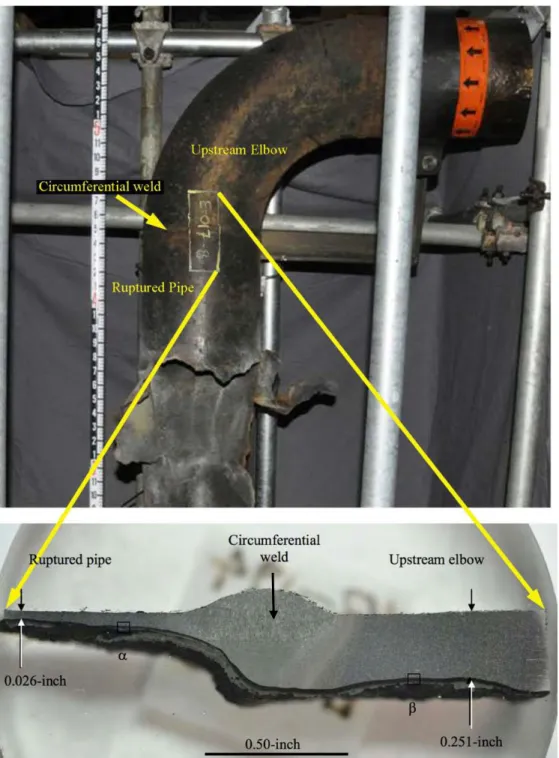
K
EY
I
SSUES
•
I
NHERENTLYS
AFERD
ESIGN•
D
AMAGEM
ECHANISMH
AZARDR
EVIEWSummary
On August 6, 2012, the Chevron U.S.A. Inc. Refinery in Richmond, California, experienced a catastrophic pipe failure in the #4 Crude Unit. The pipe ruptured, releasing flammable, hydrocarbon process fluid which partially vaporized into a large vapor cloud that engulfed nineteen Chevron
employees. All of the employees escaped, narrowly avoiding serious injury. The flammable portion of the vapor cloud ignited just over two minutes after the pipe ruptured. The ignition and subsequent continued burning of the hydrocarbon process fluid resulted in a large plume of unknown and unquantified particulates and vapor traveling across the Richmond, California, area. In the weeks following the incident, approximately 15,000 people from the surrounding area sought medical treatment due to the release. Testing commissioned by the U.S. Chemical Safety and Hazard Investigation Board (CSB) and the California Division of Occupational Safety and Health (Cal/OSHA) determined that the pipe failed due to thinning caused by sulfidation corrosion, a common damage mechanism in refineries. As a result of the incident, the Chevron Richmond Refinery crude unit remains out of commission over eight months later. In addition, Cal/OSHA issued the refinery 17 citations related to the incident and eight additional citations, with a total proposed fine of nearly one million dollars. In this interim report, the CSB is issuing recommendations to Chevron, the City of Richmond, Contra Costa County,
Cal/OSHA, the State of California, and the U.S. Environmental Protection Agency, addressing the need for inherently safer design, rigorous and documented damage mechanism hazard reviews, and thorough analyses of process safeguards.
This interim investigation report contains detailed analyses of and makes recommendations to Chevron and regulatory bodies at the local, state, and federal level. The CSB believes the findings and
recommendations presented in this report can be applied to refineries, chemical plants, and other industries nationwide to improve process safety.
The CSB plans to release a comprehensive Final Investigation Report later in 2013 that will include analyses and recommendations relating to technical and regulatory investigation findings which are not included in this interim report. The Final Investigation Report will cover topics including: the importance of having a competent, well-funded regulator and an adaptable regulatory regime; Chevron safety culture; process safety indicator data collection and reporting; emergency planning and response; stop work authority; and recommendations for improvement of petroleum industry standards and recommended practices. Some of these issues are previewed at the end of this interim report under Additional Issues Currently Under Investigation.
Table of Contents
Figures ... 5
Acronyms and Abbreviations ... 6
Background and Findings ... 8
Sulfidation Corrosion ...16
Sulfidation Corrosion Inspection Techniques ...21
Chevron Sulfidation Corrosion Knowledge and Expertise ...24
Other Significant Sulfidation Occurrences ...27
Process Hazard Analysis ...31
Operational Changes ...33
Chevron Sulfidation Corrosion Inspection and Mitigation ...36
Inherently Safer Systems ...40
Regulatory Oversight ...46
Recommendations ...53
Additional Issues Currently Under Investigation ...59
Regulatory Oversight ...59
Emergency Planning and Reporting ...61
Emergency Response ...62
Safety Culture ...62
Figures
Figure 1. The burned remains of the fire truck that was consumed by the fire. ... 9
Figure 2. Vapor cloud over Richmond area and smoke from Chevron Richmond Refinery fire ... 10
Figure 3. Initial vapor cloud formation and subsequent ignition ... 11
Figure 4. C-1100 Crude Unit Atmospheric Column and Upstream Process Equipment ... 12
Figure 5. Overhead view of the equipment in the #4 Crude Unit ... 13
Figure 6. 4-sidecut line configuration………...……..14
Figure 7. Photo of rupture on 4-sidecut 52-inch component ... 15
Figure 8. Graph showing how corrosion rates increase in carbon steel. ... 18
Figure 9. 4-sidecut piping sample ... 20
Figure 10. Modified McConomy Curves from API RP 939-C ... 23
Figure 11. Chevron’s key sulfidation events between 1974 and 2013. ... 24
Figure 12. Schematic of failed piping from the Chevron Salt Lake Refinery. ... 28
Figure 13. Failed piping component that resulted in the 2007 Richmond crude unit fire... 29
Figure 14. Percentage increase of the sulfur content in the 4-sidecut. ... 34
Figure 15. Key events at the Richmond refinery between 1998 and 2013. ... 36
Acronyms and Abbreviations
ALARP As Low As Reasonably Practicable API American Petroleum Institute
ASTM American Society for Testing and Materials BIN Business Improvement Network
bpd Barrels Per Day
BPTC BP Texas City
CAA Clean Air Act
Cal/OSHA California Division of Occupational Safety and Health CCPS Center for Chemical Process Safety
CCR California Code of Regulations
Chevron ETC Chevron Energy Technology Company CML Condition Monitoring Locations
CSB U.S. Chemical Safety and Hazard Investigation Board CSHO Compliance Safety and Health Officer
CWS Community Warning System EPA Environmental Protection Agency
°F degree Fahrenheit
HSE Health and Safety Executive ISO Industrial Safety Ordinance ISS Inherently Safer Systems IST Inherently Safer Technology KPI Key Process Indicator
LEPC Local Emergency Planning Committee LOPA Layers of Protection Analysis
MOC Management of Change NEP National Emphasis Program
OEM U.S. EPA Office of Emergency Management OSHA Occupational Safety and Health Administration P&P Policy and Procedures
PHA Process Hazard Analysis PMI Positive Materials Identification psig Pounds Per Square Inch Gauge PSM Process Safety Management
RISO City of Richmond Industrial Safety Ordinance RLOP Richmond Lube Oil Project
RMP Risk Management Plan
SIP Shelter-In-Place
TML Thickness Monitoring Location
UK United Kingdom
USW United Steelworker International Union wt. % Weight Percent
Background and Findings
1. On August 6, 2012, the Chevron U.S.A. Inc. Refinery in Richmond, California (Chevron Richmond Refinery), experienced a catastrophic pipe rupture in the #4 Crude Unit (crude unit). The ruptured pipe released a flammable hydrocarbon process fluid which then partially
vaporized into a large vapor cloud that engulfed nineteen Chevron U.S.A. Inc. (Chevron) employees. At 6:33 pm, approximately two minutes after the release, the flammable portion of the vapor cloud ignited.i
i
Surveillance footage provided by Chevron. Chevron clarified to CSB that video time is approximately 5 minutes out of sync. The video can be found a
Eighteen of the employees safely escaped from the cloud just before ignition; one employee, a firefighter, was inside a fire engine that caught fire when the vapor cloud ignited (Figure 1). Because he was wearing full body fire-fighting protective equipment, he was able to make his way to safety. Six Chevron employees suffered minor injuries during the incident and subsequent emergency response efforts.
2013).
Figure 1. The burned remains of the fire truck that was consumed by the fire. A firefighter was in the cab when the vapor cloud ignited. The fire truck was positioned approximately 65 feet from the leak location.
2. The ignition and subsequent continued burning of the hydrocarbon process fluid resulted in a large plume of unknown and unquantified particulates and vapor traveling across the Richmond, California, area (Figures 2 and 3). This resulted in a Community Warning System (CWS) Level 3 alert,i and a shelter-in-placeii (SIP) was issued at 6:38 pm1 for the cities of Richmond, San Pablo, and North Richmond. It was lifted later that night at 11:12 pm after the fire was fully under control. In the weeks following the incident, nearby medical facilities received over 15,000 members of the public seeking treatment for ailments including breathing problems, chest pain, shortness of breath, sore throat, and headaches. Approximately 20 people were admitted to local hospitals as inpatients for treatment.
Figure 2. Vapor cloud (white) over Richmond area and smoke (black) from Chevron Richmond Refinery fire as seen from San Rafael in Marin County.2
i A Community Warning System Level 3 alert indicates that a facility within Contra Costa County has had a release
that has offsite impact and is categorized by any of the following:
1. Off-site impact that may cause eye, skin, nose and/or respiratory irritation to the general population.
2. Fire, explosion, heat, or smoke with an off-site impact. Example: On a process unit/storage tank where
mutual aid is requested to mitigate the event and the fire will last longer than 15 minutes.
3. Hazardous material or fire incident where the incident commander or unified command, through
consultation with the Contra Costa Health Services Hazardous Material Incident Response Team, requests that sirens should be sounded.
See
ii Contra Costa County considers a shelter-in-place to include going inside a home or nearest building, closing doors
and windows, and turning off heating, ventilation, and air conditioning. S
Figure 3. Initial vapor cloud formation (white cloud) and subsequent ignition (black smoke) as seen from a pier in San Francisco, California.
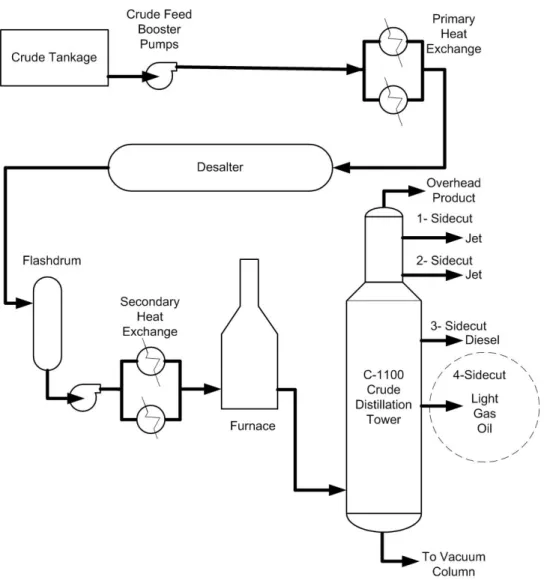
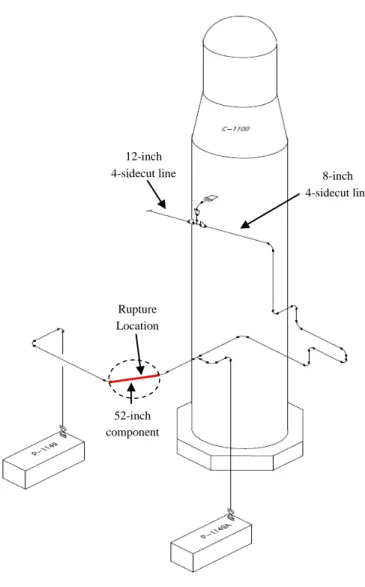
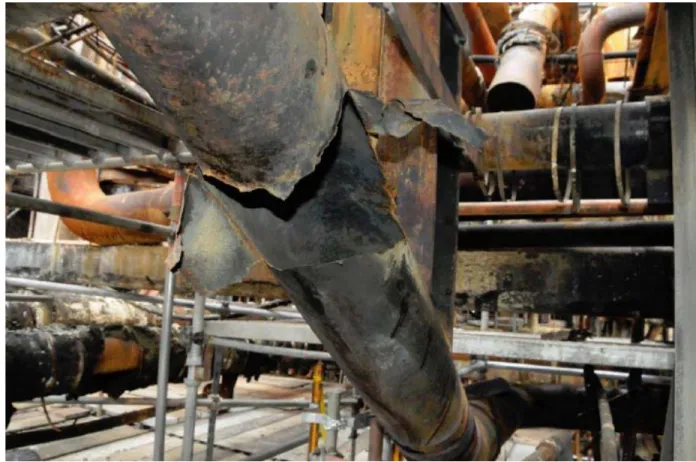
3. The incident occurred from the piping referred to as the “4-sidecut” stream, one of several process streams exiting the C-1100 Crude Unit Atmospheric Column (Figure 4).i A plot plan of the crude unit shows the leak location relative to C-1100 (Figure 5). As shown in Figure 6, light gas oil (the crude unit 4-sidecut process fluid) exits the atmospheric column via a 20-inch nozzle and is split into a 12-inch line and an 8-inch line. The August 6, 2012, pipe rupture (Figure 7) occurred on a 52-inch long componentii of the 4-sidecut 8-inch line (the 52-inch component). The line operated at a temperature of 640 degrees Fahrenheit (°F)iii
i The atmospheric column separates crude oil feed into different streams through distillation. These streams are
further processed in other units in the refinery.
and had an operating
pressure of approximately 55 pounds per square inch gauge (psig) at the rupture location. At the
ii The term “component” refers to a portion of piping between welds or flanges. It includes straight run piping and
pipe fittings.
iii The auto-ignition temperature for this process, the temperature at which a material will combust in the presence of
sufficient oxygen without an ignition source, was also 640 °F. This number is based on the Chevron Light Gas Oil Material Safety Data Sheet. Chemical testing of 4-sidecut samples following the incident indicated lower auto-ignition temperatures; however, these samples may not have been representative of typical 4-sidecut process fluid.
time of the incident, light gas oil was flowing through the 8-inch line at a rate of approximately 10,800 barrels per day (bpd).i
Figure 4. C-1100 Crude Unit Atmospheric Column and Upstream Process Equipment.
Figure 5. Overhead view of the equipment in the #4 Crude Unit showing the leak location, commonly referred to as a plot plan.
Figure 6. 4-sidecut line configuration and rupture location. 8-inch 4-sidecut line 12-inch 4-sidecut line 52-inch component Rupture Location
4. The CSB commissioned Anamet, Inc., a materials engineering and laboratory testing company, to conduct testing of the 4-sidecut pipe, including the failed 52-inch component. The testing concluded that the rupture was due to pipe wall thinning caused by sulfidation corrosion,3
5. Anamet’s metallurgical analysis found that the 52-inch component where the rupture occurred had experienced extreme thinning; the average wall thickness near the rupture location was approximately 40 percent thinner than a dime
which is discussed below.
i (the thinnest American coin). Between 1976 and
2012, the 52-inch piping component had lost, on average, 90 percent of its original wall
thickness in the area near the rupture. The piping had an initial nominal wall thickness of 0.322-inchii when it was installed in 1976.
Figure 7. Photo of rupture on 4-sidecut 52-inch component.
i
The U.S. Mint reports that a dime has a thickness of 1.35 mm, or 0.053 inches. Information can be found at
Sulfidation Corrosion
6. Sulfidation corrosion is a damage mechanismi that is well understood in the refining industry. The sulfidation corrosion industry guidance document, American Petroleum Institute (API) Recommended Practice (RP) 939-C Guidelines for Avoiding Sulfidation (Sulfidic) Corrosion Failures in Oil Refineriesii
[Sulfidation] …is not a new phenomenon, but was first observed in the late 1800s in a pipe still (crude separation) unit, due to the naturally occurring sulfur compounds found in crude oil. When heated for
separation, the various fractions in the crude were found to contain sulfur compounds that corroded the steel equipment.
notes:
4
7. Sulfidation corrosion, also known as sulfidic corrosion,5 is a damage mechanism that causes thinning in iron-containing materials, such as steel, due to the reaction between sulfur
compounds and iron at temperatures ranging from 450 °F to 800 °F.6 This damage mechanism causes pipe walls to gradually thin over time. Sulfidation corrosion is common in crude oil distillationiii where naturally occurring sulfur and sulfur compounds found in crude oil feed, such as hydrogen sulfide,iv
8. The reaction between sulfur and iron produces a layer of iron sulfide scale
are available to react with steel piping and equipment. Process variables that affect corrosion rates include the total sulfur content of the oil, the sulfur species present, flow conditions, and the temperature of the system. Virtually all crude oil feeds contain sulfur compounds and, as a result, sulfidation corrosion is a damage mechanism present at every refinery that processes crude oil. Sulfidation corrosion can cause thinning to the point of pipe failure when not properly monitored and controlled.
v
on the inside surface of piping.7
i
Piping damage mechanisms are any type of deterioration encountered in the refining and chemical process industry that can result in flaws/defects that can affect the integrity of piping (e.g. corrosion, cracking, erosion, dents, and
other mechanical, physical or chemical impacts). See API 570. "Piping Inspection Code: In-Service Inspection,
Rating, Repair, and Alteration of Piping Systems." 3rd ed., Section 3.1.1.5, November 2009.
This reaction can be compared to that of oxygen and iron which also produces a scale, commonly known as rust. The type of scale formed by sulfidation corrosion is dependent upon the components contained in the steel. Certain scales formed are protective and actually reduce the reaction rate between sulfur compounds and iron, minimizing sulfidation corrosion
ii API RP 939-C is one of several relevant American Petroleum Institute recommended practices and standards under
evaluation by the CSB as part of this investigation. To the casual observer API RP 939-C appears to obligate the industry to take significant actions. However, the CSB concluded it was written to be permissive so that industry compliance with specific provisions would not be required. The complete findings from this evaluation will be included in the CSB’s Final Report.
iii Distillation separates mixtures into broad categories of its components by heating the mixture in a distillation
column where different products boil off and are recovered at different temperatures. See
iv
Hydrogen sulfide is the most aggressive sulfur compound that causes sulfidation corrosion.
rates. For instance, sulfidation corrosion affecting steel alloys containing greater than two weight percent (wt. %) chromium produces a protective scale that inhibits the reaction between the iron and sulfur compounds, thereby reducing corrosion rates.i With increasing percentages of chromium, the reaction is further slowed, greatly diminishing corrosion rates.8,ii For example, stainless steel (an 18 wt. % chromium alloy) is nearly 15 times more resistant to sulfidation corrosion than 9-Chrome (a 9 wt. % chromium alloy).9 Conversely, sulfidation corrosion rates are significantly higher in steels containing very little chromium. Carbon steel, the Chevron 4-sidecut line material of construction, was manufactured with a maximum concentration of 0.40 % chromium.10 The scale formed on carbon steel is less protective and allows continued reaction between the sulfur compounds and iron.11
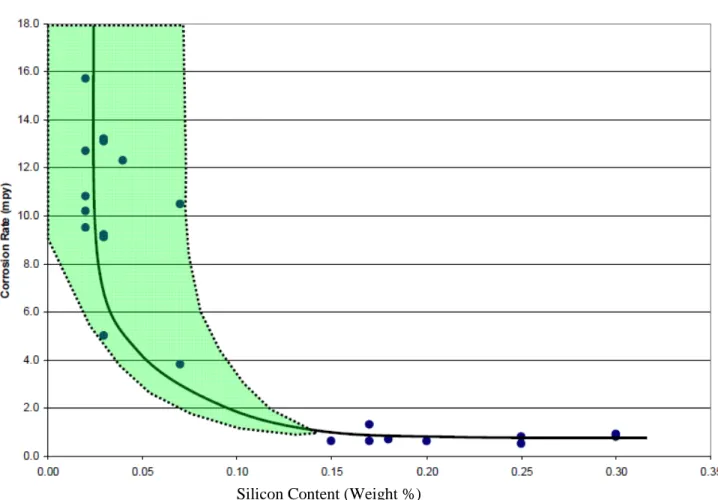
9. In addition to its inherently faster rate of sulfidation corrosion when compared with higher chromium steels, carbon steel also experiences significant variation in corrosion rates due to variances in silicon content, a component used in the steel manufacturing process. Carbon steel piping containing silicon content less than 0.10 wt. % can corrode at accelerated rates,
Thus, carbon steel corrodes at a rate that is significantly faster than other materials of construction, such as high chromium steels.
12
i
At greater than two wt. % chromium, sulfur compounds react with the steel to form FeCr2S4 scale. This scale
provides more protection than the FeS scale that forms on carbon steel piping. See Niccolls, E. H., J. M.
Stankiewicz, J. E. McLaughlin, and K. Yamamoto. "High Temperature Sulfidation Corrosion in Refining." 17th
International Corrosion Congress. Las Vegas: NACE International, 2008.
up to sixteen times faster than carbon steel piping containing higher percentages of silicon as shown in Figure 8. This figure shows how carbon steel corrosion rates can greatly vary depending on silicon content.
ii
It has also been found that chromium “poisons” the decomposition of sulfur compounds to hydrogen sulfide which
also slows down the sulfidation corrosion rate. See Couper, A.S. “High Temperature Mercaptan Corrosion of
Steels.” 19th Annual Conference of the National Association of Corrosion Engineers. Pages 396t-401t, New York:
Figure 8. This graph shows how corrosion rates increase in carbon steel containing
decreasing percentages of silicon. This information can be found in Annex C of API RP 939-C.i
10. The refining industry has been aware of increased rates of sulfidation corrosion in low-silicon carbon steel piping since as early as 1974,
13
Sulfidation corrosion has caused severe fires and fatalities in the refining industry, primarily because it causes corrosion over a relatively large area, so failures tend to involve ruptures or large leaks rather than pinhole leaks. It can be insidious in that moderately high corrosion rates can go undetected for years before failure. Finally, process changes that increase the temperature or sulfur content can creep up over time and
nearly 40 years before the August 6, 2012, incident and two years before the Chevron crude unit was constructed. Prior to the incident, Chevron documented its understanding of the significant consequences of sulfidation corrosion. This is reflected in Chevron’s Corrosion Prevention and Metallurgy Manual, which states:
i The y-axis of this figure is in units of mils per year (mpy). A “mil” is 1/1000 inch.
multiply corrosion rates so that what was thought to be a low corrosion rate system becomes corrosive enough to fail before the increased corrosion rate is recognized.
11. Carbon steel piping is manufactured to meet certain specifications, including American Society for Testing and Materials (ASTM) A53B,14 ASTM A106,15 and API 5L.16 ASTM A53B and API 5L do not contain minimum silicon content requirements for carbon steel piping,17
12. In the mid 1980s, pipe manufacturers began to simultaneously comply with all three
manufacturing specifications (ASTM A53B, ASTM A106, and API 5L) when manufacturing carbon steel piping. The majority of carbon steel piping purchased following this time period likely has a minimum of 0.10 wt. % silicon content. However, piping purchased and installed prior to the mid-1980s could still contain low silicon components that are susceptible to high, variable sulfidation corrosion rates.
while ASTM A106 requires the piping to be manufactured with a minimum silicon content of 0.10 wt. %. As a result, manufacturers have used different levels of silicon in the carbon steel pipe manufacturing process. Thus, depending on the manufacturing specification for carbon steel susceptible to sulfidation corrosion, corrosion rates could vary depending on the silicon content within the steel.
13. Over 95 percent of the 144 refineries in operation in the U.S., including the Chevron Richmond Refinery,i were built before 1985,18
14. The Chevron Richmond Refinery 4-sidecut piping circuit containing the 52-inch component that failed was constructed of ASTM A53B carbon steel, which had no minimum specification for silicon content. Post-incident testing of samples of the 4-sidecut piping from the Chevron Richmond Refinery identified silicon content ranging from 0.01 wt. % to 0.2 wt. %. Of twelve samples taken from the 8-inch and 12-inch 4-sidecut line, six had a silicon concentration of less than 0.10 wt. %. The 52-inch pipe component that ruptured on the day of the incident had a silicon content of only 0.01 wt. %. The elbow component directly upstream of the 52-inch component that failed had a silicon concentration of 0.16 wt. % and showed considerably less thinning (Figure 9).
and thus before piping manufacturers began producing carbon steel in compliance with all three manufacturing specifications. Therefore, the original carbon steel piping in these refineries is likely to contain varying percentages of silicon content and may experience highly variable sulfidation corrosion rates.
Figure 9. 4-sidecut piping sample (E-017-8) analyzed by Anamet Labs showing the relative thickness of low silicon piping on the left and the high silicon piping on the right. The ruptured pipe component (left) contained 0.01 % silicon and the upstream elbow component (right) contained 0.16 % silicon.19 The initial nominal thickness of this piping was 0.322-inch.
Sulfidation Corrosion Inspection Techniques
15. As evidenced by the chemical analysis performed on the Chevron 4-sidecut piping post-incident, carbon steel piping components within a single circuiti can contain varying percentages of silicon, resulting in a large variation in sulfidation corrosion rates by component. Historically, sulfidation corrosion monitoring techniques required the measurement of pipe thickness at only a minimal number of permanent Condition Monitoring Locations (CMLs)ii along the piping. These CMLs are most frequently placed on elbows and fittings.iii However, due to details of the manufacturing process, carbon steel pipe fittings generally contain high percentages of silicon.20 When measurements are only taken at high-silicon containing fittings, the measurements can fail to identify high corrosion rates within a pipe circuit caused by low-silicon components. At the Chevron Richmond Refinery, the 4-sidecut piping had a total of 24 CMLsiv
16. Determining silicon content in existing carbon steel piping and equipment in the field is a difficult undertaking. To properly characterize the silicon content in each component in a piping circuit, every component must be inspected. This is known as 100 percent component
inspection. Two techniques are currently used to determine silicon content in existing carbon steel piping circuits with unknown chemical composition: performing chemical analysis and pipe wall thickness measurements of every component.
on piping and fittings. The CSB found that there were no CMLs placed on the low silicon piping component that failed. Chevron identified accelerated corrosion in the 52-inch component in a 2002 inspection. However, no CML was added to ensure future monitoring, and the 52-inch component was not inspected again. Instead, the CSB found that Chevron relied on inspection data gained primarily from high silicon pipe-fitting components, such as elbow components. This inspection data did not reflect the corrosion rates of the lower-silicon components of the 4-sidecut piping. Relying on the limited inspection data from the CMLs on the high silicon components, Chevron management denied multiple recommendations to replace the 4-sidecut line. As illustrated by the Chevron incident, inspection techniques alone may not accurately identify the most aggressive corrosion rates throughout an entire circuit of carbon steel piping. Low-silicon components can remain uninspected and unidentified until failures such as the August 6, 2012, Chevron incident occur. As will be discussed below, upgrading metallurgy is a more effective means of managing sulfidation corrosion.
i A piping circuit is a length of pipe and the fittings associated with a particular process service that operate at
similar conditions. A circuit usually begins and ends at either a branch or a piece of process equipment such as a vessel or a pump. Reference to piping by circuits allows piping to be grouped conveniently by proximity and operating service. Piping circuits may also be referred to as piping runs.
ii A condition monitoring location (CML) is a designated area where periodic thickness examinations are conducted.
Each CML represents as many as four inspection locations located circumferentially around the pipe. CMLs are also referred to as thickness monitoring locations (TMLs). CML was historically referred to as corrosion monitoring locations (CMLs) and that terminology is sometimes still used within the industry.
iii
A fitting is a piping component usually associated with a change in direction or diameter.
17. Many field-portable instruments used for positive material identification cannot adequately identify silicon content.21 If original manufacturing quality assurance datai are not available, as is generally the case with older plants, then chemical verification requires destructive testing. Metal shavings must be taken from each carbon steel piping component for chemical analysis in a laboratory.22
18. Carbon steel components containing low concentrations of silicon can also potentially be identified by performing thickness measurements of every component within a carbon steel circuit.
This method requires that the insulation be removed for access to the piping so that each individual piping component can be sampled and verified.
23
This practice is only useful if the piping circuit has been exposed to sulfidation corrosion for a long enough time period so that variances in corrosion rate caused by differences in silicon content may be detected. Chemical analysis is therefore the most accurate technique to identify low-silicon carbon steel components. As with chemical analysis, the thickness measurement method requires that each individual piping component be identified by removing insulation (so every weld seam can be located), a time consuming and costly undertaking, or by using non-destructive examination techniques. Thickness measurements on high temperature piping typically can only be done accurately and safely during unit turnarounds.ii
19. API Recommended Practice 939-C Guidelines for Avoiding Sulfidation (Sulfidic) Corrosion Failures in Oil Refineries describes the challenges faced when attempting to thoroughly inspect carbon steel lines susceptible to sulfidation corrosion. The recommended practice states that older ASTM A53 piping, such as the Chevron piping that failed on August 6th, creates a “major inspection challenge”
Although these various methods were available to detect the location of the field welds, Chevron had not used them to identify the 4-sidecut pipe segment locations.
24
and that “unless the refinery is fortunate enough to have located an inspection point on that particular [low silicon] section of pipe or fitting, it is very difficult to detect the thinning component.”25 It states that in some applications, carbon steel will appear to be adequate based on measured corrosion rates until failure occurs at some undocumented or unidentified low-silicon component.26
20. Unlike silicon concentration, the chromium concentration of steel can easily be verified in the field using portable positive material identification instruments. In addition, steel alloys containing at least 9 wt. % chromium are more resistant to sulfidation corrosion and do not run the risk of extreme variations in corrosion rates within components in the same piping circuit.
iii
i Manufacturing quality assurance data, also known as mill data, provides the chemical composition of the steel.
This makes alloys with higher chromium content an inherently safer choice in high temperature
ii
A “turnaround” is a scheduled shutdown of a process unit to perform maintenance, repairs, upgrades, and inspection of process equipment.
iii The protective scale, FeCr
2S4, begins to be the dominant scale formed in steels containing a chromium content of
five wt. %. The 5Cr steel alloy can be manufactured to contain anywhere from 4% to 6% chromium. Thus, “the
sulfidation corrosion rate can vary dramatically in 5Cr steels even in the same operating environment.” See
Niccolls, E. H., J. M. Stankiewicz, J. E. McLaughlin, and K. Yamamoto. "High Temperature Sulfidation Corrosion
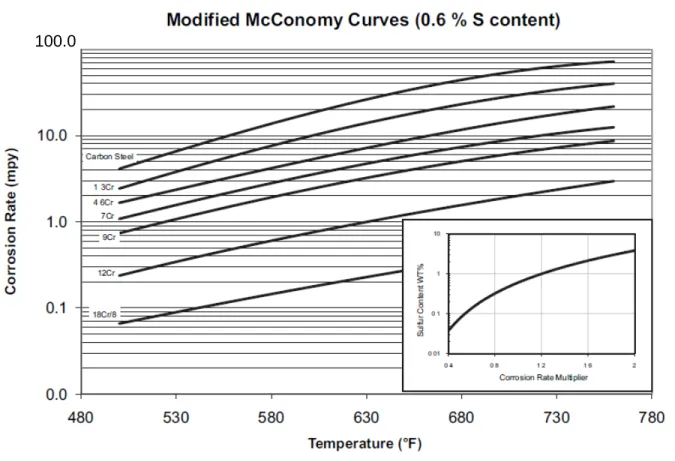
sulfidation corrosion environments.i As shown in the Modified McConomy Curvesii from API RP 939-C (Figure 10), 9-Chromeiii corrodes 15 times faster than stainless steel,iv and carbon steelv corrodes 125 times faster than stainless steel.27
Figure 10. Modified McConomy Curves from API RP 939-C.
i
Steels with higher chromium content are inherently safer than carbon steel with respect to sulfidation corrosion. However, analysis is still required to ensure that the best material of construction is selected.
ii Modified McConomy Curves are the set of curves API RP 939-C uses to predict sulfidation corrosion rates versus
temperature for several steel alloys. iii
9-Chrome contains 9 wt. % chromium. iv
Stainless steel contains 18 wt. % chromium.
v ASTM A53B carbon steel contains a maximum of 0.40 wt. % chromium.
Chevron Sulfidation Corrosion Knowledge and Expertise
21.Figure 11 shows a timeline of Chevron’s key sulfidation events. Chevron technical staff hasconsiderable knowledge and expertise regarding sulfidation corrosion, specifically with respect to corrosion rate variations caused by differing silicon concentration in carbon steel piping. Chevron employees have authored industry papers on sulfidation corrosion and had significant influence in the development of the industry sulfidation corrosion recommended practice, API RP 939-C. This recommended practice, first published in 2009, was developed under Chevron leadership. At the approximate time of publication of API RP 939-C, Chevron Energy Technology Company (Chevron ETC)i created an internal document on the subject of sulfidation corrosion. Chevron ETC metallurgists released a formal report dated September 30, 2009 (nearly 3 years prior to the incident) to Chevron refinery-based reliability managers and chief inspectors entitled Updated Inspection Strategies for Preventing Sulfidation Corrosion Failures in Chevron Refineries.
Figure 11. Chevron’s key sulfidation events between 1974 and 2013.
i
The Chevron Energy Technology Company is a separate business unit within the Chevron Corporation that
provides technology solutions and technical expertise for Chevron operations worldwide. See
22. Sulfidation experts acknowledged in the Chevron ETC report that, “Until now, Chevron has not directly addressed the risk of low Si[licon] carbon steel…”i
Sulfidation corrosion failures are not common in Chevron or in the industry but they are of great concern because of the comparatively high likelihood of blowout or catastrophic failure […] . This can happen because corrosion occurs at a relatively uniform rate over a broad area so a pipe can get progressively thinner until it actually bursts rather than leaking at a pit or local thin area. In addition the process fluid is often above its autoignition temperature. The combination of these factors means that sulfidation corrosion failures frequently result in large fires. […] [S]everal case histories of sulfidation corrosion failures that have occurred in Chevron or in the industry several of which are blowouts.
and that the report lays out a program that “seeks to close these gaps, and to maximize the effectiveness of our inspection.” The report clearly indicates that Chevron understood both the potential consequence and the high likelihood of a rupture or catastrophic failure from sulfidation corrosion and calls out Chevron’s need for action:
This Chevron ETC report specifically recommends that inspectors perform 100 percent component inspection on high temperature carbon steel piping susceptible to sulfidation corrosion. However, this 100 percent component inspection program was not implemented at the Richmond refinery prior to the August 6, 2012 incident. The Chevron ETC report defines a priority ranking system to help focus the inspection implementation efforts. The process conditions of the 4-sidecut stream placed it in the highest priority for inspection.
23. Chevron ETC technical experts issued a corporate newsletter in 2010 that again warned of the potential consequence of sulfidation failures. In this newsletter, the 100 percent component inspection recommendation from the 2009 report was reiterated for piping systems such as the crude unit 4-sidecut piping. The newsletter states:
Sulfidation corrosion failures … are of great concern because of the comparatively high likelihood of “blowout” or catastrophic failure. This typically happens because corrosion occurs at a relatively uniform rate over a broad area, so a pipe can get progressively thinner until it actually bursts rather than leaking at a pit or local thin area. In addition, the process fluid is often above its autoignition temperature. The
combination of these factors means that sulfidation corrosion failures frequently result in large fires. Chevron and the industry have
experienced numerous failures from this mechanism and recent incidents have reinforced the need for revised inspection strategies and a robust PMI (Positive Materials Identification) program.
i
A 2003 corporate technical newsletter recommended 100 percent component inspection of carbon steel piping susceptible to sulfidation corrosion following a 2002 Chevron Salt Lake City sulfidation corrosion incident.
The Chevron ETC 100 percent component inspection recommendation for high risk piping systems, established in 2009, was not implemented at Richmond; therefore, the thin-walled low silicon 4-sidecut piping component remained in service until it catastrophically failed on August 6, 2012. 24. Chevron and Chevron ETC metallurgists, materials engineers, and piping inspectors had expertise
regarding sulfidation corrosion. They educated personnel and advocated for identification and control of damage mechanisms, including sulfidation corrosion. However, they had limited practical influence to implement their recommendations. These individuals did not participate in the crude unit Process Hazard Analysis (PHA)i and did not affect decisions concerning control of sulfidation corrosion during the crude unit turnaround process.ii
i
A process hazard analysis is a hazard evaluation to identify, evaluate, and control the hazards involved in a process. Facilities that process a threshold quantity of hazardous materials, such as the Chevron Richmond refinery, are required to conduct a process hazard analysis per the California Code of Regulations Title 8 Section 5189. Process Safety Management of Acutely Hazardous Materials (1992). PHAs are also required by the California Accidental Release Prevention Program and the federal EPA Risk Management Program.
ii
The turnaround process includes both the planning stage prior to the shutdown and the activities staged during the shutdown.
Other Significant Sulfidation Occurrences
25. The refining industry has experienced numerous sulfidation corrosion failures, primarily in piping.28 API RP 939-C identifies 45 sulfidation corrosion failures, one third of which were found to have occurred in carbon steel piping containing low levels of silicon.29
26. The August 6, 2012, Chevron Richmond Refinery 4-sidecut pipe rupture was not the first sulfidation corrosion-related incident to occur at a Chevron refinery. In 1988, a low silicon carbon steel (0.02 wt. % silicon) piping component failed at the Chevron’s former El Paso Refinery
i
27. In 2002, the Chevron Salt Lake City Refinery experienced a fire when process piping failed as a result of sulfidation corrosion in a low silicon ASTM A53 carbon steel piping component. Chevron communicated the incident throughout the company in a technical newsletter. Chevron experts found that despite regular monitoring of the line for 30 years in compliance with industry standards, their inspection program failed to prevent the failure. Corrosion rates at the
unmonitored failure location were found to be five times greater than corrosion rates at the monitored piping locations. The monitored locations were constructed of high silicon ASTM A106 piping (Figure 12). Chevron also found that in the years preceding the failure, both the temperature
in El Paso, Texas. In addition, two sulfidation corrosion incidents occurred at the Chevron Pascagoula refinery in Pascagoula, Mississippi: one in 1993 and one in 1988 on a low-silicon carbon steel component.
ii
i The El Paso Refinery is now owned by Western Refining.
and hydrogen sulfide concentration in the process had been increasing. Each of these factors increased corrosion rates and contributed to the failure. In 2003, following this incident, Chevron experts recommended that refineries inspect every piping component (100 % component inspection) in all high-risk piping systems: those operating above 550 °F and containing hydrogen sulfide.
ii
The temperature in the line had been increased by over 170 °F throughout the life of the unit. During the two years prior to failure, temperatures of the line exceeded the measurement capabilities of the temperature measurement device and so the actual temperature increase cannot be determined.
Figure 12. Schematic of failed piping from the Chevron Salt Lake Refinery. Similar to the Chevron Richmond Refinery incident, the failed piping contained low amounts of silicon and corroded significantly faster than adjacent piping components.
28. In January 2007, a failure due to sulfidation corrosion caused a serious fire in the Chevron Richmond Refinery crude unit resulting in a CWS Level 3 alert, initiating a shelter-in-place for the surrounding community. A carbon steel piping spooli failed catastrophically during operation (Figure 13). The carbon steel piping contained a low percentage of silicon (<0.005 wt. %). The process fluid ignited, injuring a nearby worker. Chevron informed Contra Costa Health Services’ Hazardous Materials Programii
i A piping spool is a small, removable section of piping. In some cases, a piping spool is installed or removed in
order to provide a temporary connection or complete disconnection between two piping circuits.
(Contra Costa County) in a letter that the metallurgy had been upgraded following this incident as an inherently safer solution. However, the CSB learned that this upgrade was limited to only the immediate piping spool that failed. The inherently safer, more corrosion resistant metallurgy was not implemented more broadly in crude unit high temperature service as a result of this incident.
ii
Contra Costa Health Services’ Hazardous Materials program is designed to respond to emergencies and monitor
Figure 13. Failed piping component that resulted in the 2007 Richmond crude unit fire. This carbon steel piping was found to contain less than 0.005 percent silicon.
29. Following the August 6, 2012, incident, personnel at the Chevron El Segundo, California, refinery, a near duplicate of the Richmond refinery, inspected their refinery’s crude unit 4-sidecut piping. Significant thinning was discovered in the line; the piping from the atmospheric crude column to the pumps was removed and substituted with 9-Chrome, an upgraded and inherently safer material of construction.
30. On November 9, 2009, the Silver Eagle refinery in Woods Cross, Utah, experienced a catastrophic piping failure due to sulfidation corrosion in a 10-inch pipe, while conducting a temporary operation at higher than normal operating temperature. The pipe was located on the
bottom of a reactor in the de-waxing unit. The failed pipe released hydrogen which subsequently exploded, damaging over 100 homes in the nearby neighborhood.
31. On October 6, 2011, an explosion and fire resulted from a catastrophic piping failure at a Canadian refinery in Regina, Saskatchewan, injuring 52 workers. The piping component that failed was substantially thinner than neighboring components. Prior to the incident, the
company’s inspection data indicated that wall thickness in the overall piping system was within acceptable limits. However, the specific component that failed was not inspected. Although Canadian authorities are still investigating, metallurgical testing has indicated that hydrogen sulfide corrosion contributed to the catastrophic failure.
32. In February 2012, the BP refinery crude unit in Cherry Point, Washington, suffered a failure due to sulfidation corrosion, causing a large fire. This incident demonstrates that even when
applying inherently safer concepts to reduce the potential for major hazards, it is still vital to fully understand all processes and piping configurations and incorporate a rigorous inspection program. The piping that failed was constructed of 9-Chrome. The line was used only during start-up operations and otherwise remained in-service and non-flowing. Such lines that do not have regular process flow yet remain in contact with process fluids are commonly referred to as “dead legs.” The failure location was a high-point in the piping connected to the top of an operating process line. Hydrogen sulfide evolved from the process fluid and collected in the Chrome piping. The concentrated vapor-phase hydrogen sulfide severely corroded the 9-Chrome, causing the failure. CMLs were located on adjacent elbow components; however, no CMLs were placed on the straight-run piping component where the failure occurred. The Cherry Point sulfidation failure demonstrates that even with more corrosion-resistant, inherently safer metallurgy, failure from sulfidation corrosion still may occur if piping is not effectively inspected or piping configurations are not adequately evaluated. In addition it is important to conduct a thorough analysis to determine the best material of construction for the process conditions.
Process Hazard Analysis
33. Chevron personnel analyze numerous deviationsi34. Sometimes referred to as a corrosion review, a damage mechanism hazard review analyzes risks presented by all process failure mechanisms such as corrosion and cracking. Common process failure mechanisms are described in API 571: Damage Mechanisms Affecting Fixed Equipment in the Refining and Petrochemical Industries.
for each portion of a process when conducting a Process Hazard Analysis (PHA). These include conditions such as changes in flow and temperature and pressure extremes. Specifically of interest, one of the deviations analyzed was “leak/rupture” of the particular vessel or pipe. For each deviation, the team’s responsibility was to identify causes, consequences, safeguards, and recommendations. The 4-sidecut line was analyzed in the most recent crude unit PHA. Corrosion was not identified as a potential cause of a leak/rupture in the piping (emphasis added).
30
Such a review ensures that potential hazards caused by process conditions, process materials, and external mechanisms are properly identified, analyzed, and systems are put in place to control or eliminate the hazard. Despite Chevron knowledge and expertise of potential damage mechanisms (such as sulfidation corrosion), the CSB found these hazards are only identified in a PHA if the participants conducting the PHA happen to have personal knowledge of the relevant mechanism. The Chevron PHA teams do not typically seek assistance from corrosion experts.ii The inclusion of a damage mechanism hazard review as part of the PHA is not required by the state of California, the California Division of Occupational Safety and Health (Cal/OSHA),iii Contra Costa County, the City of Richmond,iv
i Deviations using guide words (such as no, more, less, as well as) and process parameters (such as flow, pressure,
temperature) are analyzed in PHAs. See Center for Chemical Process Safety (CCPS). “Guidelines for Hazard
Evaluation Procedures.” 2nd ed., Page 132, 1992.
or Chevron standards. Because Chevron does not conduct, and is not required to conduct, a formal damage mechanism hazard review, damage mechanisms are only identified when the PHA team happens to have some knowledge of the mechanism. As a result, many damage mechanisms which occur in various processes are not properly addressed.
ii
The Crude Unit Business Improvement Network (BIN) Leader, a crude unit expert, reviews portions of the PHA with the PHA team. However, this review did not identify the potential for sulfidation corrosion failures in the 4-sidecut piping. A rigorous review of corrosion and damage mechanisms present in the crude unit was not performed during the PHA process.
iii
The state of California, under an agreement with the federal Occupational Safety and Health Administration, or OSHA, operates an occupational safety and health program in accordance with Section 18 of the Occupational
Safety and Health Act of 1970. S
2013). The Department of Industrial Relations administers the California Occupational Safety and Health Program, commonly referred to as Cal/OSHA. The program applies to all public and private sector places of employment in
the state, with some exceptions. S
iv The City of Richmond adopted an ordinance on Industrial Safety, Richmond Municipal Code Chapter 6.43 (also
known as the RISO), on December 18, 2001, “for the purposes of protecting public health and safety by prevention of accidental release of hazardous materials and to assure protection of the environment.” Richmond Municipal Code §6.43.040 (February 5, 2013). There are two facilities, including Chevron, that are located in the City of Richmond and subject to this ordinance. More information about the RISO is provided later in the report.
35. During a hazard analysis process such as a PHA, the evaluation team has to determine the likelihood of a hazardous consequence occurring. Then the team must identify safeguards which will reduce the risk of the hazard to an acceptable level. A recognized methodology for
consistently and objectively making these determinations could include the use of quantitative, semi-quantitative, or qualitative tools.31 Chevron does not employ a prescribed methodology for determining the likelihood that an incident will occur or whether a safeguard will be effective. Instead, Chevron relies upon the judgment of the people on the PHA team, who base their conclusions upon their collective experiences, beliefs, and areas of expertise. In its 2009 crude unit PHA, Chevron simply cited non-specific, judgment-based qualitative safeguards such as: utilizing metallurgy to minimize corrosion, having effective maintenance and inspection programs, and providing pipe wall corrosion allowances.i
36. Following the August 6th incident, Cal/OSHA inspected the Chevron facility and issued citations. Only one citation related to PHAs, and it was not associated with evaluating the effectiveness of safeguards. Rather, the emphasis was that Chevron’s PHA did not adequately account for hazards caused by other units associated with the crude unit. The citation stated “The Employer [Chevron] failed to perform an effective Process Hazard Analysis [PHA] of the crude unit. Specifically, it failed to identify, evaluate, and control potential hazards caused by upstream and downstream units that provide and receive feed from the crude unit.”
The effectiveness of these safeguards was neither evaluated nor documented; instead the safeguards were merely listed in the PHA. Had the adequacy of these safeguards been verified, improved safeguards intended to protect against sulfidation-induced failure of carbon steel piping could have been recommended.
32
i Corrosion allowance refers to extra wall thickness added as a safety factor to the design of a piece of equipment
beyond that needed solely for mechanical considerations such as design temperature and pressure. This extra thickness is provided to accommodate for expected loss of wall thickness due to corrosion over the life of the equipment.
Had the Cal/OSHA regulation required documentation of the effectiveness of safeguards, Chevron would have been obligated to conduct this analysis and Cal/OSHA inspectors could rely on the
Operational Changes
37. The original design of the 4-sidecut circuit included equipment which had the effect of removing dissolved hydrogen sulfide, the most aggressive sulfur compound associated with sulfidation corrosion, from the 4-sidecut light gas oil process fluid. As a result, the 4-sidecut equipment was effective in reducing the sulfidation corrosion rate. This allowed the 4-sidecut equipment to be constructed of carbon steel. In 1991, this 4-sidecut equipment was taken out of service. No management of changei
38. Crude oil feedstock used at the Chevron Richmond Refinery is obtained from a variety of different sources that are blended before processing. These various crudes have different compositions, such as varying sulfur compounds and concentrations. These crudes can have differing corrosion effects on process equipment and piping. There is an increasing trend in crude oil refining to process less expensive “opportunity crudes” because they can provide significant cost savings to the company.
(MOC) was performed to analyze the effect of the elimination of this hydrogen sulfide-removing equipment on 4-sidecut corrosion rates. Such an MOC would have ensured that the increase in sulfur concentration on the carbon steel 4-sidecut piping was reviewed prior to removing the equipment.
ii
However, these crudes may contain more undesirable characteristics such as high sulfur content, high naphthenic acid content, or very heavy
hydrocarbons33
i Management of change requires that employers have procedures to manage changes to process chemicals,
technology, equipment, and procedures. The procedures must address the technical basis for the change, the impact on safety and health, and training required for employees affected by the change.
that a refinery may not have been originally designed to process. Refinery equipment may not be the proper material of construction to achieve the design life of the equipment when exposed to the different operating conditions. Additional mitigation may be needed to reduce risk. In 1984, the Chevron Richmond Refinery crude oil feed contained approximately 85 volume % Alaskan North Slope (1 wt. %) crude oil. As the refinery began running more high-sulfur content crudes, the sulfur content in the 4-sidecut line steadily increased (Figure 14), as discussed below.
ii
Crude oil costs can account for up to 90% of the operating costs in a refinery. See Qu, Dingrong, Xiaohui Liu, Xiu
Jiang, Zhenggui Lan, and Guangbin Shan. “Setting Critical Operational TAN and Sulfur Level for Crude
Figure 14. Graph shows the percentage increase from 1984 values of the sulfur content in the 4-sidecut.
39. When Chevron introduces a new crude, an MOC is generated to evaluate the potential impact on the refinery.i
40. The CSB found that increased Chevron Richmond usage of non-domestic crude feed stock over time resulted in higher sulfur content in the process fluid passing through the 4-sidecut piping. Specifically, the percentage of sulfur in the Richmond refinery crudes increased nearly 85% between 1984 and 2012, including a significant jump of 32% from 1998 to 1999. This increase in sulfur content corresponded with a simultaneous increase in the usage of non-domestic crude feed at the Richmond refinery.
While Chevron stayed under its established crude unit design basis for total wt. % sulfur of the blended feed to the crude unit, the sulfur composition significantly increased over time. Historic data indicates that the sulfur in the 4-sidecut stream has increased from 0.8 to 1.6 wt%. This increase in sulfur composition likely increased corrosion rates in the 4-sidecut line. Chevron did not conduct an MOC analyzing the impact that increases in sulfur composition would have on corrosion in the crude unit. Chevron also did not change its corrosion monitoring programs in response to the increased sulfur content.
i
Chevron MOCs on new crudes considered general operational issues but did not analyze corrosion effects from sulfidation corrosion.
41. Sulfidation corrosion rates increase in piping circuits as temperature and sulfur content increase. Accordingly, the 4-sidecut sulfidation corrosion rate increased between 1984 and 2012 due to the increase in sulfur content in the line. The CSB found that for the 26-year period from the installation of the piping in 1976 through 2002, the 52-inch 4-sidecut component had lost approximately 33 percent of its wall thickness. From the single inspection of the 52-inch component in 2002 to the incident in 2012 – just ten years – an additional 57 percent of the original component nominal wall thickness was lost near the rupture location due to sulfidation corrosion.i
42. API RP 939-C states that refinery feed stock changes reduce the relevance of past inspection data when predicting future corrosion rates:
In addition to the sulfur content increase, the 4-sidecut draw temperature increased from 625 °F in 1992 to 680 °F in 2002. Corrosion rates and remaining life calculations based on past sulfur content and temperatures may not accurately reflect current corrosion rates if process conditions have changed. Inspection based on historical corrosion rates may be too infrequent to detect an increase in corrosion caused by adverse changes in process conditions, potentially leading to equipment failure.
Oil refineries that processed a consistent diet of a particular crude oil or crude blend could often base future predictions on past experience. However, over the past 20+ years, global economics have resulted in many refineries processing tens of different crudes in any given year; thus, minimizing the accuracy, or even feasibility, of predictions based on historical data. Additionally, the verification of the actual corrosion rate experienced while processing a specific crude oil is very difficult.34
43. API 570 Piping Inspection Code: In-service Inspection, Rating, Repair, and Alteration of Piping Systems, the API standard for inspecting piping, recommends companies to incorporate process changes into inspection programs. The standard states:
The owner/user is … responsible for implementing an effective MOC process that will review and control changes to the process and to the hardware. An effective MOC process is vital to the success of any piping integrity management program in order that the inspection group will be able to anticipate changes in corrosion or other deterioration variables and alter the inspection plan to account for those changes. The MOC process shall include the appropriate materials/corrosion
experience and expertise in order to effectively forecast what changes might affect piping integrity. The inspection group shall be involved in the approval process for changes that may affect piping integrity.
i
The 4-sidecut 52-inch component had an original wall thickness of 0.322 inches. Metallurgical analysis found the thinnest portion of the 52-inch 4-sidecut component was 0.03 inches.
Changes to the hardware and the process shall be included in the MOC process to ensure its effectiveness [emphasis added].35
Chevron failed to comply with the requirements of API 570 when it did not conduct an MOC to thoroughly evaluate the change of increasing sulfur weight percentage in crude oil feed and to assess how it might affect corrosion rates within the 4-sidecut piping circuit. After the August 6, 2012, incident, Cal/OSHA inspected the Chevron Richmond Refinery and issued citations.
i
Chevron Sulfidation Corrosion Inspection and Mitigation
However, Cal/OSHA did not issue anycitations for failing to perform an MOC when sulfur composition in the crude oil feed was increased.
44. In the ten years prior to the incident, a small number of Chevron personnel with knowledge and understanding of sulfidation corrosion made at least six recommendations (listed in the
following six paragraphs and included in Figure 15) to increase inspections or upgrade the metallurgy in the 4-sidecut piping. The recommendations made by these personnel were not implemented by Chevron management.
Figure 15. Key events at the Richmond refinery between 1998 and 2013.
45. In August 2002, a Chevron Richmond Refinery employee performed a study analyzing sulfidation corrosion rates in the crude unit and identifying potentially vulnerable areas. The employee discovered that the 4-sidecut operating temperature had been increased and concluded that this increase would cause more hydrogen sulfide to evolve, leading to increased sulfidation corrosion rates. As a result of these findings, the employee recommended increased inspection of the 4-sidecut piping and noted that this piping might need to be upgraded from carbon steel to 5-Chrome, a steel alloy that is more resistant to sulfidation corrosion. In 2002, proactively following up on this study, the crude unit inspector conducted additional piping inspection and identified accelerated corrosion in the 52-inch 4-sidecut component. The inspector
recommended upgrading this piping during the next shutdown in 2007. In the inspector’s 2002 accomplishments, Chevron management acknowledged this effort to prevent a significant incident; it was characterized as “a save.” However, during the 2007 turnaround the
recommendation was not implemented, and because a CML was not added to the inspection program, the 52-inch component was not inspected after 2002.
46. In February 2006, a team consisting of a materials and corrosion engineer, an inspector, a process engineer, a metallurgist, and a design engineer issued a Corrosion Mitigation Plan for the Chevron Richmond Refinery crude unit. The report specifically identified the 4-sidecut piping to be at risk for high temperature sulfidation corrosion. The report described that low silicon carbon steel can corrode faster than carbon steel manufactured with higher silicon content, and recommended that 100 percent inspection be performed on the 4-sidecut line using continuous monitoring technology. During the 2007 crude unit turnaround, continuous
monitoring probes were only installed on a segment of the 4-sidecut line that did not include the 52-inch component that ultimately failed. The 100 percent inspection recommended in the 2006 Corrosion Mitigation Plan was not performed.
47. During the 2007 turnaround, the crude unit inspector recommended that the refinery upgrade the entire 4-sidecut piping with 5-Chrome. The recommendation was based on findings obtained during the 2002 crude unit turnaround, where the crude unit inspector found that the 52-inch 4-sidecut component had lost one-third of its wall thickness due to corrosion. However, after evaluation, this recommendation was not accepted by the turnaround planning team. Basing its decision on limited inspection data, Chevron determined that the 8-inch portion of the 4-sidecut piping that ran from the atmospheric column to the pump, the portion which included the 52-inch component, had sufficient wall thickness to last to the next turnaround scheduled for Fall 2011.i
i
This decision was made without reinspecting or evaluating the thickness of the thinned 52-inch component identified in 2002 that prompted the recommendation.
The piping downstream of the pump, which operates at a higher pressure, was
determined not to have sufficient wall thickness to last to the next turnaround. This piping was removed and replaced with 9-Chrome, an upgraded and inherently safer metallurgy. The 52-inch component of the 8-52-inch piping between the atmospheric column and the pump was not replaced during the 2007 turnaround even though it had been identified as thinned in 2002.
Furthermore, a permanent CML was not placed on the 52-inch component, and it was not entered into the inspection database. As a result, the component was not inspected again.
48. In September 2009, Chevron ETC corrosion experts released a formal technical report
discussing sulfidation corrosion and the specific issues associated with carbon steel, including the potential for high corrosion rates in carbon steel piping containing low percentages of silicon. In its report, Chevron ETC issued recommendations for inspection and provided guidelines for prioritizing piping circuits susceptible to sulfidation corrosion so that high-risk lines could be evaluated first. It was recommended that 100 percent component thickness testing be completed on all high priority lines one time to identify thin, low-silicon components to establish a baseline of corrosion rate and risk for failure. Following the release of the report, the Chevron Richmond Refinery materials group completed the risk-ranking of the carbon steel piping in the Richmond Lube Oil Project (RLOP) and in the crude unit, two units known to be susceptible to sulfidation corrosion. The group identified the crude unit 4-sidecut line as a high risk line per the report ranking guidance. Instead of completing the 100 percent component inspection, the 4-sidecut was recommended for replacement with 9-Chrome. However, the replacement recommendation was denied because the available, limited inspection data indicated the piping would last until the next turnaround. Subsequently, the alternative 100 percent component inspection was also never performed.
49. Five months prior to the incident in March 2012, a Chevron corporate review of Richmond identified that inspection of all carbon steel components susceptible to sulfidation corrosion was not being performed at the Richmond refinery. In addition to identifying that CMLs were not in the proper locations, this corporate review found that critical inspection recommendations were being submitted to the shutdown planning process, but were being denied. Chevron corporate identified that Richmond refinery leadership needed to review and implement the 2009 Chevron ETC report recommendations.
50. Chevron conducts “Intensive Process Reviews” prior to turnarounds. This process involves knowledgeable individuals including Business Improvement Network leaders, process engineers, metallurgical engineers, design engineers, and turnaround planners. The purpose of the review is to identify key unit issues that should be addressed and repaired during the unit turnaround. Prior to the 2011 crude unit turnaround, Chevron personnel conducted an Intensive Process Review of the crude unit and specifically recommended that the 4-sidecut carbon steel piping “should be upgraded to 5 Cr [5-Chrome]… due to sulfidation.” Although the Intensive Process Review identified sulfidation problems in the 4-sidecut line, this activity was ineffective. The 4-sidecut piping was not upgraded during the 2011 crude unit turnaround.
51. In preparation of the work list for the 2011 crude unit turnaround, the crude unit inspector and crude unit metallurgist recommended that the 4-sidecut line be replaced with an upgraded metallurgy, 9-chrome, the metallurgy recommended in the Chevron new construction guidelines for piping in high temperature and high sulfur service. The recommendation was based on the
high priority ranking of the 4-sidecut line, corrosion history, and both Chevron and industry recommended best practice. However, the turnaround management team determined that the inspection data available for the 4-sidecut piping, from CMLs on elbow components which are less prone to sulfidation corrosion, did not support a material upgrade during the 2011
turnaround.i, ii
i This decision was made without reinspecting or evaluating the thickness of the 52-inch component identified in
2002.
The lack of data on the more susceptible 4-sidecut straight-run piping components was not considered.
ii
A portion of the 4-sidecut 12-inch line was replaced during the 2011 turnaround with carbon steel due to thinning caused by sulfidation corrosion.
Inherently Safer Systems
52. The Center for Chemical Process Safety (CCPS) is a corporate membership organization that identifies and addresses process safety needs within the chemical, pharmaceutical, and
petroleum industries.36 Chevron is a corporate member of CCPS.37 The CCPS book Inherently
Safer Chemical Processes, 2nd ed. defines inherently safer design as the process of identifying and implementing inherent safety in a specific context that is permanent and inseparable.38 In the book Guidelines for Engineering Design for Process Safety, 2nd ed.,CCPS states “inherently safer design solutions eliminate or mitigate the hazard by using materials and process conditions that are less hazardous.”39
53. Inherently safer technologies are relative; a technology can only be described as inherently safer when compared to a different technology with regard to a specific hazard or risk.40 A
technology may be inherently safer with respect to one risk but not safer from another risk. For this reason, it is important to carry out a comprehensive, documented hazard analysis to
determine the individual and overall risks in a process and assess how the risks can be effectively minimized to control hazards. An inherently safer systems review details a list of choices offering various degrees of inherently safer implementation. The review should include risks of personal injury, environmental harm, and lost production, as well as evaluating
economic feasibility.41
54. It is simpler, less expensive, and more effective to introduce inherently safer features during the design process of a facility rather than after the process is already operating.42
55. After a 2007 incident caused by a pipe failure in the Richmond refinery crude unit, Chevron implemented an “Inherently Safer Solution” by upgrading the piping to metallurgy that was less susceptible to sulfidation corrosion. However, the change was implemented intuitively without a supporting inherent safety review or failure mechanism hazard review to provide a detailed documented technical rationale for the metallurgy selection. Without such a review, the material selected cannot be analyzed to determine if it is the best inherently safer solution for the process in order to minimize risk.
Process upgrades, rebuilds, and repairs are additional opportunities to implement inherent safety concepts.
Conducting a comprehensive hazard review to determine risks and identify ways to eliminate or reduce risks is an important step in implementing an inherently safer process. Chevron training programs on inherently safer systems reflect this approach, stating “we have the greatest opportunity to eliminate or minimize hazards during the development phase of new projects or major revamps of existing facilities.”