San Jose State University San Jose State University
SJSU ScholarWorks
SJSU ScholarWorks
Doctoral Projects Master's Theses and Graduate Research
Spring 5-2020
Patient-Centered EMR Communication
Patient-Centered EMR Communication
Christi Lynn CamarenaFollow this and additional works at: https://scholarworks.sjsu.edu/etd_doctoral
Part of the Critical Care Nursing Commons, Geriatric Nursing Commons, Maternal, Child Health and Neonatal Nursing Commons, Pediatric Nursing Commons, and the Psychiatric and Mental Health Nursing Commons
PATIENT-CENTERED EMR COMMUNICATION
The electronic medical record (EMR) has become the standard in health care documentation. The EMR has been shown to improve the availability of medical records, provide tools to facilitate communication, and improve patient safety. Because of the absence of standardized training and EMR research, there is a gap in understanding the relationship between the EMR and the provider-patient relationship. The EMR requires the provider to use purposeful and deliberate patient-centered EMR communications behaviors to facilitate a meaningful, engaging, and educational dialogue with patients. These behaviors have been studied in physician populations and standardized tools have been developed to assist in the training and evaluation of physician EMR use in the outpatient setting. The purpose of this project was to take the tools developed for physicians and adapt them for use with nurses in the hospital setting. A small pilot study was conducted to determine whether or not a simulation-based curriculum could improve the EMR communication behaviors of novice nurses. The
preliminary results provide initial evidence that a simulation-based, patient-centered EMR communication behavior curriculum could significantly improve the communication between nurses and patients at the bedside, and indicate a need for further research to evaluate the impact of patient-centered EMR
communications behaviors on the nurse-patient relationship. Christi Lynn Camarena
by
Christi Lynn Camarena
A project submitted in partial
fulfillment of the requirements for the degree of Doctor of Nursing Practice
California State University, Northern Consortium Doctor of Nursing Practice
APPROVED
For the California State University, Northern Consortium Doctor of Nursing Practice:
We, the undersigned, certify that the project of the following student meets the required standards of scholarship, format, and style of the university and the student's graduate degree program for the
awarding of the master's degree.
Christi Lynn Camarena Project Author
Dr. Jordan Rose(Chair) CSU Sonoma, Nursing Department
Dr. Debra Brady CSU Sacramento, School of Nursing
OF DOCTORAL PROJECT
CC I grant permission for the reproduction of this project in part or in its entirety without further authorization from me, on the
condition that the person or agency requesting reproduction absorbs the cost and provides proper acknowledgment of authorship.
Permission to reproduce this project in part or in its entirety must be obtained from me.
ACKNOWLEDGMENTS
First and foremost, I must thank my family for their unconditional love, patience, and understanding over the past two years. My husband, Jarrod, and my children, Emma, Cody, and Camryn, sacrificed so that I could obtain this goal. My mother, Marilyn, has supported me in all of my educational endeavors and I will be forever in her debt. Additionally, I could not have completed this project without the guidance and support of my project chair, Dr. Jordan Rose, and my project committee, Dr. Debra Brady and Dr. Katherine Kelly. I could not have asked for a better team to assist me in the completion of my doctoral project.
Page
LIST OF TABLES ... vi
CHAPTER 1: INTRODUCTION ... 1
CHAPTER 2: LITERATURE REVIEW ... 7
CHAPTER 3: METHODOLOGY ... 15
CHAPTER 4: RESULTS AND DISCUSSION ... 21
CHAPTER 5: CONCLUSION ... 26
REFERENCES ... 30
APPENDICES ... 36
APPENDIX A: HUMAN LEVEL MNEUMONIC TOOL ... 37
APPENDIX B: E-CEX 10 ITEM TOOL ... 39
APPENDIX C: CONSENT ... 42
Note: The Table of Contents, List of Tables, and List of Figures are automatic. There is no need to type anything into them. When you have finished adding all text to the template, simply single-click in the Table of Contents to select it, then right-click to open the menu options. Select the option “Update Field” and fill in the circle “Update Entire Table,” then click “OK.” If you have applied the appropriate style (e.g., 1st -Level Centered Hdg) to your headings in the text, headings and page numbers will update in the TOC without you having to do anything. Delete this text box when you are finished.
LIST OF TABLES
Page Table 1.Independent Two-Sample t-test ... 22
CHAPTER 1: INTRODUCTION
The Health Information Technology for Economic and Clinical Health (HITECH) Act of 2009 led to the widespread establishment of electronic medical records in an effort to improve quality and efficiency in healthcare (Hunt, Bell, Baker, & Howard, 2017). The electronic medical record (EMR) has known benefits to patient safety. Physicians report that, overall, the EMR enhances patient care with capabilities including; remote access to patient charts,
availability of records from multiple providers, and tools that facilitate patient communication (King, Patel, Jamoom, & Furukawa, 2014). Increased sharing of medical information has the potential to improve patients’ understanding of their health conditions, treatments options, and encourages participation in decision making (Patel, Smith, Leo, Hao, & Zheng, 2019). Clinical benefits of an EMR include medication error alerts, critical lab value notifications, and clinical decision support tools which guide providers in care recommendations (King et al., 2014).
Despite the potential of the EMR to improve communication, bedside computer documentation has created a physical obstruction, which can adversely affect the patient-provider relationship (White & Danis, 2013). Bedside
documentation can negatively impact the patient-provider relationship by
decreasing eye contact, increasing silence, shifting the conversation from patient-centered topics to EMR activities, and provider multitasking (Eysenbach et al., 2018). Multitasking leads to increased cognitive burden, missed communication cues, and provider distraction, which results in patients who are less satisfied with their overall care (Eysenbach et al., 2018). Nurses have reported that computers at the bedside may result in missed opportunities to connect with patients, and nurses
often find themselves apologizing for documenting at the bedside (Misto, Padula, Bryand, & Nadeau, 2018)
In response to the challenges of EMRs, many organizations have set goals and objectives to improve the integration of the EMR into patient-centered care. The World Health Organization (WHO) has called for improved patient-centered care that incorporates technology effectively and efficiently to empower, engage, and educate patients (Alkureishi et al., 2018). Specifically, the WHO recommends strengthening information systems and knowledge management as a strategic approach to achieving integrated patient-centered health care. These strategic approaches create an environment that enables the health care provider to practice patient-centered care (WHO, 2017).
Additionally, Healthy People 2020 has identified a specific goal and associated objectives related to communication and information technology. The health communication and health information technology goal, and associated objectives, aim to improve the many ways health communication and information technology impact health, health care, and health equity (Healthy People 2020, 2019). Effective use of communication and health information technology by health care providers can lead to improved patient-centered care. Continual feedback from providers, productive patient-provider interactions, and access to evidence-based treatments and interventions are methods to transform the patient-provider relationship that are targeted by the Healthy People 2020 communication and information technology objectives and incorporated into EMR communication best practices (Healthy People 2020, 2019).
Despite the existence of best practices and competencies, most health care providers do not receive any training on patient-centered EMR communication behaviors (Alkureishi et al., 2018). Without formal education, training, and
3 competencies for patient-centered EMR communication, health care providers fail to communicate effectively with their patients, patient data is not captured, and opportunities are missed to enhance patient relationships through the use of the EMR (Alkureishi et al., 2018). Evidence-based EMR communication curriculum and simulation-based learning are needed to facilitate nurses in developing patient-centered EMR communication behaviors to the bedside (Helitzer et al., 2011).
The American Association of Colleges of Nursing, the National League for Nursing, and the Technology Informatics Guiding Education Reform (TIGER) initiative have identified essential informatics competencies as essential for every nursing graduate (Hunter, McGonigle, & Hebda, 2013). Despite these mandates, informatics curriculum is inconsistent among all levels of nursing educational programs resulting in competency gaps in for nurses. Inconsistent education negatively impacts patient care and therapeutic communication. Therefore, training is required to improve the nursing use of technology and information management (Hunter et al., 2013). Most often, nurses rely on basic EMR
orientations and preceptors to learn how to incorporate the EMR into their practice and do not receive the didactic content and clinical experience necessary to
prepare them to enter a technology-saturated health care environment (Strahan, 2017).
In response to the identified need for improved patient-centered EMR communication, curriculum has been developed and validated for physicians based on EMR communication best practices. This curriculum is often introduced
during residency to improve physician EMR communication behaviors in the outpatient setting to foster positive patient-provider relationships (Alkureishi et al., 2018). Several studies have validated EMR communication curricula and
agree that future work is necessary in additional clinical settings with other provider groups (Alkureishi et al., 2018).
While the physician-patient relationship has seen improvement with formal curricula, there is untapped potential within the EMR to improve communication during the bedside nursing assessment (White & Danis, 2013). Modification of nursing workflows to include explaining the EMR, dialogue during
documentation, and involving patients in reviewing their health care data can improve communication and the patient-provider relationship (White & Danis, 2013). Patient-centered EMR communication curriculum adapted for nursing encounters has the potential to improve nursing EMR communication behaviors and foster positive patient relationships based on communication and trust.
Effective patient-centered EMR communication within a technology saturated environment must be meaningful, engaging, and educational. Meaningful EMR communication facilitates the collection of accurate data,
engaging EMR communication enhances the provider-patient relationship through respect and trust, and educational EMR communication empowers the patient to take an active role in the plan of care (Alkureishi et al., 2018). A patient-centered EMR communication curriculum introduced in a simulation-based learning
environment has the potential facilitate successful communication between nurses and patients, which is required for effective nursing care (Strauss, 2013).
Alkureishi et al. (2018) developed a mnemonic-based educational tool as part of a simulation-based learning curriculum to enhance patient-provider communication. Nurses can educate patients on the benefits of the EMR and engage patients in their care by utilizing the components of Alkureishi et al.’s HUMAN LEVEL mnemonic tool (Appendix A). Patient-centered EMR
5 by introducing oneself before approaching the computer, creating a “triangle of trust” where the patient can see the nurse and view the data on the computer screen, disengaging from the screen when discussing sensitive information, maintaining eye contact as much as possible throughout the patient interaction, and logging out of the computer to reassure patients that their data is secure (Alkureishi et al., 2018, p. 483).
Patient-centered EMR communication is important during all patient
encounters, and is essential when discussing sensitive topics such as patient health risk behaviors (Helitzer et al., 2011). Communication skills are a key practice competency and providers must be sensitive when communicating with vulnerable populations (Chen, 2011). Suicide risk assessment is a Joint Commission required National Patent Safety Goal (NPSG) and example of a sensitive subject providers must discuss with at risk patient populations. Suicide is the 10th leading cause of death in the United States, prompting The Joint Commission to revise NPSG 15.01.01 to include seven new elements of performance (EPs). NPSG 15.01.01, EP 2 requires that all individuals be screened for suicidal ideation using a
standardized, validated tool (The Joint Commission, 2018).
Brief screening tools are an effective method in identifying individuals at risk for suicide. The Columbia-Suicide Severity Rating Scale is a validated screening and in-depth assessment tool utilized by many hospital organizations and incorporated into EMR admission assessments. Patients often have
unrecognized risk accompanying their primary complaint upon admission and universal risk screening has been shown to effectively increase risk detection (Boudreaux et al., 2016). Unfortunately, many nurses do not receive the education and training needed for clinical communication techniques required to navigate the complex and varied situations they will encounter in clinical practice. Sensitive
subject risk assessments and the complexities of the EMR compound each other to create situations where nurses lack the proficiency to handle a situation where sensitive communication and electronic documentation is required (Chen, 2011).
The EMR has the potential to empower, engage, and educate patients. When utilized at the patient bedside with patient-centered communication behaviors, the EMR improves the health of patients, health care delivery, and health equity within communities. Universal suicide risk screening is an example of standardized tool incorporated into the EMR which enables practitioners to effectively screen patients and improve patient outcomes. When used in conjunction, standardized screening tools and the EMR have the potential to ensure every patient receives the necessary standard of care for effective treatment (Mathias et al., 2012). However, current standardized training of EMR screening tools does not exist within the nursing profession.
CHAPTER 2: LITERATURE REVIEW
Research on the effects of EMR documentation on communication has been historically conducted with physicians in the outpatient setting (Misto et al., 2018). However, the development of EMR communication best practices and validated tools to evaluate physician-patient EMR interactions has paved the way for similar research to be conducted with nurses in the acute care setting. Current literature supports the need for nursing research to explore the effects of the EMR on the nurse-patient relationship, and to study ways to improve nursing communication behaviors that enhance the patient’s experience of EMR use in the inpatient acute care setting (Alkureishi et al., 2018).
The nurse-patient interaction in a healthcare setting is a human experience that bonds, or creates a relational link between the nurse and patient (Tejero, 2012). Research has shown that treatment alone does not improve patient
outcomes. Interpersonal communication and the interchange of nurse and patient characteristics play a major role in patient outcomes. The goal of a nursing interaction is to be therapeutic, with the nurse demonstrating competence and availability, providing information, and interacting with verbal and non-verbal communication to develop a synergistic nurse-patient relationship (Tejero, 2012). In a study aimed at examining the relationship between nurse and patient
characteristics to patient satisfaction, Tejero (2012) found that the nurse’s enablement of patient learning positively impacted nurse-patient dyad bonding, which along with patient predictability, had a direct effect on patient satisfaction.
While the nurse-patient relationship has been explored for over 60 years, Dr. Beth Strauss’s (2013) qualitative research design with a phenomenological approach, was one of the first to explore patients’ perceptions of the EMR’s effect
on the nurse-patient relationship. Data was collected through surveys and open-ended question interviews. After data analysis, researchers identified presence, respect, knowledge, and safety and trust as the four predominant themes of the research (Strauss, 2013). These themes are incorporated into best practices for patient-centered EMR communication behaviors.
Although participants recognized the EMR as an essential tool for a nurse, patients identified the importance of engagement, such as nurse-patient
introductions before computer tasks, and computer interchange, which includes the patient as an active partner during documentation, as key behaviors in a creating a positive nurse-patient relationship (Strauss, 2013). Knowledge was described by patients as the nurses’ ability to navigate the computer and the EMR. Participants expected nurses to be more knowledgeable about health information because of their complete access to medical records and expect nurses to articulate a patient’s full clinical picture (Strauss, 2013).
Participants also valued respect as a morally important component of the nurse-patient relationship, and some patients perceived being treated as an
information bank instead of a human being (Strauss, 2013). Additionally, privacy of personal health information is a concern for patients when multiple providers have access to patient records. In this study, participants expressed a sense of vulnerability when data was easily accessible and valued an explanation of how their personal health information was kept safe and secure (Strauss, 2013). Overall, each participant recognized the safety advantages of the EMR and the increased time at the computer the EMR requires. Patients were willing to accept the changes EMRs make to nursing workflows as long as the nurses continued to make patient needs a priority (Strauss, 2013). These themes are seen in current EMR communication best practices.
9 Misto et al. (2018) used a similar approach to survey nurses’ perceptions about the EMR’s impact on the nurse-patient relationship using a mixed-method design. The researchers developed a 38-item survey to assess the impact of
bedside electronic documentation on communication, the nurse-patient therapeutic relationship, interactions, and workflows. In addition to the surveys, they
interviewed novice and expert nurses using open-ended questions (Misto et al., 2018). Overall, Misto et al. (2018) found that bedside EMR documentation presents opportunities and challenges for nurses. Nurses reported the EMR improved access to data but documenting at the bedside with their backs to patients had a negative impact on the nurse-patient relationship and
communication (Misto et al., 2018).
To overcome the obstacles that bedside documentation creates, nurses in this study utilized strategies to enhance communication and maintain a connection with their patients. Nurses reported apologizing for documenting with their backs to their patients, making an effort to maintain eye contact, and turning around from the computer as strategies to enhance the nurse-patient therapeutic
relationship (Misto et al., 2018). These strategies are similar to current patient-centered EMR best practices. Misto et al. (2018) suggests that nursing would benefit from research aimed at exploring the challenges of the EMR and developing strategies to enhance nurse-patient relationships. The authors recognized the limited nursing research in this area and recommend the use of curricula that has been incorporated into medical schools.
Physicians have conducted significant research on improving provider-patient EMR interactions and effects of the EMR on the provider-provider-patient
relationship. Street et al. (2018) studied the effect a provider’s use of a computer has on patient participation and communication during a clinical encounter. In a
cross-sectional observational study, the researchers analyzed video recordings of physician-patient encounters and EMR activity. Physician mouse clicks,
keystrokes, and gaze were measured as a variable of physician interaction (Street et al., 2018). Researchers found an association between physician keyboarding activities and less active patient participation, and increased physician gaze was associated with more encounter silence (Street et al., 2018). Patient-centered EMR best practice behaviors include maximizing patient interaction by
disengaging from computer activities to allow time for questions and verify patient understanding. Sharing the screen and demonstrating transparency in EMR
activities are other ways to engage the patient and encourage active participation (Alkureishi et al., 2018).
Alkureishi et al. (2018) summarized evidence-based best practices for EMR communication into ten tips to enhance patient-centered EMR use and developed and validated an electronic-clinical evaluation exercise (e-CEX) 10-item tool to assess EMR communication skills (Appendix B). Using a quasi-experimental design, researchers studied a convenience sample of second-year medical students (MS2) trained in EMR communication best practices and untrained third-year medical students (MS3). Students were videotaped in a simulation environment performing clinical examinations with standardized patients and evaluated by the researchers using the e-CEX tool. Alkureishi et al. (2018) found evidence of discriminant validity of the e-CEX tool using a two-sample t-test (e-CEX score MS2 55(10.7) vs. MS3 44.9(12.7), p=0.003), and internal consistency of the individual items were shown to be good (Cronbach’s alpha=0.89). This study established the validity and internal consistency of the e-CEX tool, however, researchers identified the gap in teaching best practices in a provider’s formative
11 years and the need for further research with other health care providers in a variety of patient care settings (Alkureishi et al., 2018).
Alkureishi et al. (2018) are not the only researchers to utilize simulation-based learning environments to evaluate the transfer of learning from the classroom to the clinical environment. Extensive research exists in simulation-based learning, including a longitudinal simulation study by the National Council of State Boards of Nursing which concluded that substituting simulation-based learning for up to 50% of clinical hours produced similar readiness for practice (Miles, 2018). Simulation-based learning integrates the principles of social cognitive theory (SCT) into a framework that allows researchers and educators to implement activities which optimize content and skill mastery while supporting learner self-analysis (Burke & Mancuso, 2012). Simulation-based nursing assists learners in solving problems in various situations and settings (Miles, 2018).
Psychologist Dr. Albert Bandura is credited with the development of SCT. His synthesis of cognitive processes and social learning theory separated his approach from other behaviorists. SCT explains human behavior in a dynamic and reciprocal model of personal, environmental, and behavioral factors (Glanz, Burke, & Rimer, 2018). Key constructs of SCT include observational learning, self-regulation, self-reflection, and self-efficacy (Glanz et al., 2018). These principles work together to make simulation based learning a valuable method to enhance nursing curriculum by using motor-retention to create observational learning experiences and a learning environment which allows students to apply forethought and modify actions through self-regulation (Burke & Mancuso, 2012). Additionally, the post-simulation debriefing process allows for self-reflection and promotes self-efficacy through critical thinking and achievement of learning outcomes (Burke & Mancuso, 2012).
The principles of SCT have been used extensively in nursing simulation research. The simulation environment promotes learning in a social context where learners can observe techniques, skills, and behaviors in a life-like environment. Instructors role model expected behaviors, mentor participants, and guide post-simulation debriefing. Learners use post-simulation scenarios as an opportunity to emulate these role-modeled behaviors, practice techniques, and utilize newly-acquired skills in a simulated environment where there is little risk to patients and learners (Rutherford-Hemming, 2012).
Miles (2018) studied how experiential learning through simulation transfers to the clinical environment. Miles (2018) interviewed 25 fourth-year nursing students as part of a classical grounded theory study, and collected data using open-ended questions about simulation and clinical experiences. Data were coded and analyzed using the constant comparative method, and the category of “Acting Like a Nurse emerged from the data as the basic social process” that student nurses engaged in during simulation-based learning activities (Miles, 2018, p. 348). The basic social process of simulation included being in simulation which exposed students to knowledge and skills relevant to being in the clinical setting. Students reported that being in simulation allowed them to practice skills and behaviors needed to provide safe and quality patient care, while receiving frequent feedback necessary to help them make sense of their learning and gain confidence in knowing what to do in the role of a nurse (Miles, 2018).
Simulation-based learning incorporates principles of SCT to offer an experiential learning opportunity where learners respond to the emotional tone of the simulation and identify cues for desired responses and learn how predict outcomes of similar clinical situations (Burke & Mancuso, 2012). These
13 of patient-centered EMR communication behaviors and their application to suicide risk screening. Simulation scenarios should be designed to engage students in communication and responsiveness to the situation and help them to recognize that certain types of communication are more difficult and complex than is often
anticipated (Chen, 2011).
The communication necessary to complete a suicide risk assessment can be difficult, complex, and highly unpredictable. It is because of this fact that nurses often avoid fully engaging in a complete suicide risk assessment, despite the fact that it is required admission documentation. A myth exists in healthcare that repeated assessment of suicide ideation will result in an iatrogenic increase of suicidal thoughts (Mathias et al., 2012). Mathias et al. (2012) found that this is not the case and in fact repeated assessments of suicidal ideation were inversely related to the number of assessments with a large reduction between the initial and the last assessment. Boudreaux et al. (2016) also conducted research on suicide risk screening and found that universal screening in the emergency department led to a twofold increase in risk detection. With suicide screening occurring almost exclusively within the EMR, nurses must be able and willing to utilize patient-centered EMR communication behaviors to engage patients in this important assessment.
Research has concluded that although patients understand the importance of the EMR and its role in patient safety, they continue to highly value respect and privacy in a technology-saturated health care environment. Nursing studies have found that nurses have similar experiences with the EMR, finding it difficult to navigate data entry while still meeting the needs of patients. Physicians have attempted to fill in the gap between the patient and the computer by studying the EMR in the outpatient setting and developing best practices in patient-centered
EMR communication. The next step is for nursing to research these best practices in a simulation-based learning environment to develop EMR communication strategies that enhance the nurse-patient relationship in the inpatient environment.
CHAPTER 3: METHODOLOGY
The intent of this project is to study the impact of patient-centered EMR communication behaviors on the nurse-patient relationship when asking sensitive patient assessment questions. This is a topic of research that is currently lacking in nursing, but is a critical area of study as nurses are the primary clinicians in the hospital using the EMR at the patient bedside. A quantitative quasi-experimental pilot study was conducted to evaluate the use of a patient-centered EMR
communication curriculum in a simulation-based learning environment. Because improved communication, both verbal and non-verbal, have been correlated with a therapeutic nurse-patient relationship and an improved patient experience, the hypothesis was that if this curriculum is implemented, then nurses’ patient-centered EMR communication behaviors at the bedside will improve in a simulation-based learning scenario (Tejero, 2012).
The population of the study was a convenience sample of new graduates (novice nurses) in the nurse residency program at University of California, Davis, Medical Center (UCDMC) in Sacramento, California. The UCDMC serves 33 counties and six million residents across Northern and Central California. UCDMC is a Magnet® recognized, 625-bed acute-care teaching hospital which offers a formal, structured new graduate program for post-baccalaureate and masters-prepared nurses (UCDMC, 2019). The study occurred at the UCDMC’s Center for Professional Practice of Nursing education and simulation facilities in Sacramento, CA. The setting was designed to mimic the inpatient acute-care environment (including standard bedside technology and a workstation on
wheels), and a standardized patient was utilized to improve the authenticity of the scenario.
Participants were included in the sample based upon the conditions of their hiring and admission into the nurse residency program. The size of each cohort was determined by the staffing needs at UCDMC. The intervention group had ten potential participants, and the volunteer control group had 20 potential
participants. The sample consisted of exclusively novice nurses. However, their cultural, ethnic, socio-economic, and educational backgrounds were variable and not evaluated as part of this pilot study. Eight of the nurse residents in the cohorts (three of the participants) were recent graduates of the California State University, Sacramento (CSUS) School of nursing and were former students of the
researchers.
The UCDMC Nurse Residency program requires that all members within each nurse residency cohort receive the same curriculum, therefore; randomization into intervention and control groups was not possible. For this study the previous cohort was utilized as the control group, and a quantitative, quasi-experimental methodology was utilized. Informed consent was obtained through a letter of information which was approved by the UCDMC’s Institutional Review Board (IRB)and modified to include a participant signature in accordance with Fresno State University’s IRB requirement (Appendix C). Participants read and signed the consent prior to participation in the educational modules or the simulation scenario. Participants were informed that they would not be compensated for their involvement, and by declining to participate they would not incur any penalties, nor would it affect their standing as an employee.
All ten members of the October 2019 cohort (Cohort 30) were invited to participate in the intervention group. Two nurses declined, resulting in a total of eight participants who completed the patient-centered EMR communication curriculum based on Alkureishi et al.’s., HUMAN LEVEL mnemonic tool of
17 EMR communication best practices. Additionally, the didactic content included an educational module on suicide risk assessment and the required documentation in UCDMC’s EMR (Epic). Suicide risk assessment screening was an identified area of need by UCDMC leadership, and a requested component of this project’s curriculum. The control group of five participants was obtained on a volunteer basis from Cohort 29 and was recruited by the nurse residency coordinators at the Center for Professional Practice of Nursing. While the control group received the same suicide risk assessment educational module as a placebo intervention, they did not receive patient-centered EMR communication education.
Upon completion of the didactic content, the nurse residents from the intervention and control groups were invited to participate in recorded simulation scenarios on October 15th and 16th, 2019. Each simulation participant had the option to decline having their recorded simulation evaluated using the e-CEX tool, however; all simulation participants consented to the recording and evaluation of their simulation scenarios. A total of five participants from the intervention group and five participants from the control group chose to have their simulation
scenarios recorded and evaluated.
The simulation scenario was developed and scripted using the California Simulation Alliance (CSA) Simulation Scenario Template. The template included a scenario overview, evidence-based references, learning objectives, a detailed script for the standardized patient, and a debriefing guide. All simulation
components were submitted and approved by the UCDMC and Fresno State IRBs. The scenario was beta-tested using the hire standardized patient and CSUS fourth semester nursing student volunteers, and feedback from the CSUS Simulation Learning Center Coordinator was incorporated into the final script. The
standardized patient was hired using a grant from the California State University Chancellor's Doctoral Incentive Program (CDIP).
On the day of the simulation, each participant received a randomized name to use during the scenario and a number to be used for any project statistical
analyses. Each recorded scenario was transferred to a password protected external storage device which was transported to the investigator’s office and stored in a locked drawer in a locked office. Raw data will be kept for three years and then be destroyed as per the IRB requirement.
Quantitative data from each group were collected using the modified e-CEX tool, which has been shown to be a reliable and valid tool to measure patient-centered EMR communication behaviors in medical students. The original e-CEX tool was developed to measure ten patient-centered EMR communication
practices. Each of the ten-items was evaluated on a nine-point Likert scale resulting in a max score of 90 points (Alkureishi et al., 2018). Alkureishi et al.’s (2018) e-CEX tool has demonstrated high internal consistency, discriminant validity, and concurrent validity with the e-CEX scores and standardized patient scores having a high correlation.
The modified three-item e-CEX tool was utilized for this study because of its similar explanatory power, and item reduction was more feasible for data collection and analysis in this project (Alkureishi et al., 2018). Specifically, items two, four, and five were used as the modified e-CEX tool and assessed the
participants’ preparation (triangle of trust), communication (introduce and explain), and integration of the EMR in a patient-centered manner (Alkureishi et al., 2018). Permission to use the tool was obtained by personal email from Dr. Maria Alcocer Alkureishi and data were collected in a similar fashion as her original research which validated the modified e-CEX tool. Additionally, item
19 three (honor the golden minute) was evaluated by the researchers as it was
determined to be a crucial part of patient-centered care for patients in the hospital setting. A patient need, such as a change of position or assistance to the bathroom, distracts from the assessment and effective communication.
In correspondence with Dr. Alkureishi, she stated that the researchers met prior to the evaluation of recorded simulations to review the tool and to discuss the different behavioral anchors for each item. For this study, the primary investigator and two simulation nurse experts met to discuss the key behaviors for each item of the modified e-CEX tool before viewing the recorded simulation scenarios. After consensus was met on scoring using the ninpoint Likert scale of the modified e-CEX tool (with the addition of item three), each investigator independently evaluated and scored all ten recorded simulations and discussed each rating as a group to resolve any major discrepancies. The two simulation nurse experts were blind to whether or not a participant from the control of the intervention group, however; the primary investigator had knowledge of participant status.
The primary investigator collated the data in an Excel spreadsheet to prepare the data for analysis using IBM SPSS Statistics 25. Data were organized by cohort based on the participants’ randomly assigned number, and their scores from each evaluator for items two through five were recorded in the spreadsheet. For each participant, the e-CEX item’s score from each evaluator was averaged to obtain a final item value to be entered into SPSS. Additionally, basic cohort demographic data (age, gender, and terminal nursing degree) were obtained from the UCDMC nurse residency coordinators and anonymous participant feedback was collected as an element of the simulation debriefing process. The hypothesis was that participants who received the patient-centered EMR communication education would have higher modified e-CEX scores on their simulations than
those participants that did not receive the didactic content, which would indicate improved patient-centered EMR communication.
CHAPTER 4:RESULTS AND DISCUSSION
The total number of potential participants in the two cohorts was 30 nurse residents; seven self-identified as male and 23 as female. The average age of the UCDMC nurse residents in Cohort 29 and 30 was 28 years-old with an age range of 22 to 42 years-old. Twenty-two of the potential participants had a bachelor’s of science degree in nursing as their terminal degree, six had master’s degrees, and two had associates degrees in nursing.
A two independent sample, two-tail t-test was used to analyze the EMR communication data obtained from the modified e-CEX tool. Analysis was completed using IBM SPSS Statistics 25. The two sample t-test was an
appropriate method of data analysis for experimental research because it compared the means (mean e-CEX scores) from two independent groups (intervention and control) to determine if the means were statistically different (Heavey, 2015). A two-tail t-test was utilized to determine if there was any difference (positive or negative) between the two cohorts. The hypothesized mean difference was zero, equal variances were not assumed, and the alpha (confidence level) was set at 0.05 for the t-test calculation.
The null hypothesis was the mean e-CEX score for the intervention group (received patient-centered EMR communication curriculum) would not
statistically differ for the control group (who did not receive the curriculum). The alternative hypothesis was that the mean e-CEX score of the intervention group would statically differ from the control group, meaning the difference is more than that is expected by chance. Mean modified e-CEX scores from Cohort 29 (control group) were compared to the mean scores from Cohort 30 (intervention group). Additionally, the mean scores from each items two, three, four, and five were
independently compared between cohorts, as well as the composite score of items two through five.
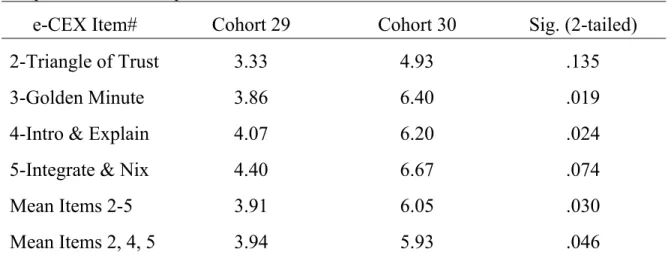
Table 1 shows a summary of the SPSS results of an independent samples t-test for equality of means. The pilot study sample was ten participants, with a sample size of five in each cohort (n=5). In Table 1, the average cohort score (based on the e-CEX tool’s nine-point Likert Scale) is listed per e-CEX item, and the significance based on a two-tailed t-test equality of means is reported.
Additionally, the mean scores for the modified e-CEX (items 2, 4, 5) and for items two through five (modified e-CEX with the addition of item 3) are listed for each cohort with the calculated significance.
Table 1
Independent Two-Sample t-test: Cohort 29 and Cohort 30 e-CEX Scores
e-CEX Item# Cohort 29 Cohort 30 Sig. (2-tailed)
2-Triangle of Trust 3.33 4.93 .135
3-Golden Minute 3.86 6.40 .019
4-Intro & Explain 4.07 6.20 .024
5-Integrate & Nix 4.40 6.67 .074
Mean Items 2-5 Mean Items 2, 4, 5 3.91 3.94 6.05 5.93 .030 .046 Item two in the e-CEX tool evaluated provider preparation and the
participant’s ability to implement the “Triangle of Trust” (Alkureishi et al., 2018). Key behaviors of this item included preparing for the patient encounter, setting the stage, and positioning the computer screen so that the provider, patient, and
23 facing the patient and the patient can see the computer screen which maximizes patient-provider collaboration.
For Cohort 29 (control) the mean item two score was 3.33 (Standard Deviation (SD)=1.25) and for Cohort 30 (intervention) the mean item score was 4.93 (SD=0.77). Using an independent two sample t-test, with 7.3 degrees of freedom (df), there was a p value of 0.135, which was not statistically significant using an alpha level of 0.05. Therefore, the null hypothesis was not rejected and there was no statistical difference between Cohort 29 and Cohort 30’s mean score for item two.
Item three in the e-CEX tool evaluated communication, specifically whether or not the provider was able to “Honor the Golden Minute” and allow patients to begin encounters with their concerns (Alkureishi et al., 2018). Key behaviors evaluated in this item included allowing at least 30 to 60 seconds of patient interaction without the provider engaging in any technology at the bedside and inquiring if the patient has any needs to be addressed before beginning the assessment. Although this item was not included in Alkureishi et al.’s modified e-CEX tool validated with medical students, it was deemed an important component of a patient-centered bedside nursing assessment and was evaluated as part of this pilot study.
For Cohort 29 the mean item three score was 3.86 (SD=1.56) and for Cohort 30 the mean item score was 6.40 (SD=0.55). Using an independent two sample t-test, with 5.0 df, there was a p value of 0.019, which was statistically significant using an alpha level of 0.05. Therefore, the null hypothesis was rejected and there was a statistical difference between Cohort 29 and Cohort 30’s mean score for item three. In this pilot study, the patient-centered EMR
of the e-CEX tool, which evaluated the communication during the initial minute of the provider-patient encounter.
Item four of the e-CEX tool also evaluated communication behaviors, explicitly whether or not the participant introduced and explained the technology to the standardized patient. For Cohort 29 the mean item four score was 4.07 (SD=1.09) and for Cohort 30 the mean item score was 6.20 (SD=1.30). Using an independent two sample t-test, with 7.8 df, there was a p value of 0.024, which was statistically significant using an alpha level of 0.05. Therefore, the null hypothesis was rejected and there was a statistical difference between Cohort 29 and Cohort 30’s mean score for item four. In this pilot study, the patient-centered EMR communication curriculum was associated with an increased score for item four of the e-CEX tool, which evaluated the communication behaviors associated with introducing and explaining the EMR technology.
Additionally, item five of the e-CEX tool evaluated the participant behaviors that demonstrated the integration of technology in a patient-centered manner. For Cohort 29 the mean item five score was 4.40 (SD=2.07) and for Cohort 30 the mean item score was 6.67 (SD=1.11). Using an independent two sample t-test, with 6.1 df, there was a p value of 0.074, which was not statistically significant using an alpha level of 0.05. Therefore, the null hypothesis was not rejected and there was no statistical difference between Cohort 29 and Cohort 30’s mean score for item five.
Alkureishi et al. (2018) concluded that using a modified e-CEX tool (items 2, 4, and 5) was comparable in validity and reliability to the longer (ten item) e-CEX tool. This meant that the three-item modified tool, had similar explanatory power in terms of correlation with the capstone item, item 10, which assessed the participant’s overall ability to use the EMR in a patient-centered manner (p. 487).
25 Due to limitations in resources, the modified three item e-CEX tool was used for this pilot study.
The modified e-CEX mean score for Cohort 29 (control) was 3.94
(SD=1.45) and the mean score for Cohort 30 (intervention) was 5.93 (SD= 1.18). Using an independent two sample t-test, with 7.7 df, there was a p value of 0.046, which was statistically significant using an alpha level of 0.05. Therefore, the null hypothesis was rejected and there was a statistical difference between Cohort 29 and Cohort 30’s mean score for the modified e-CEX. In this pilot study, the patient-centered EMR communication curriculum was associated with an increased modified e-CEX score which was correlated with the participant’s overall ability to use the EMR in a patient-centered manner.
Additionally, this pilot study included item three from the e-CEX tool and when item three was added to the modified e-CEX tool (items 2, 4 & 5), the p
value of the independent two sample t-test decreased to 0.030. The mean score of items two through five of Cohort 29 was 3.92 (SD=1.45) and the mean score of Cohort 30 was 6.05 (SD=1.02). This finding supports the need for additional research of the e-CEX tool in the nursing population.
CHAPTER 5:CONCLUSION
Novice nurses are entering a rapidly changing, technically complex healthcare environment. They often do not receive the necessary preparation to navigate demanding nursing workflows while maintaining therapeutic nurse-patient relationships. This results in multitasking, missed communication cues, and provider distraction, which influences patient satisfaction and outcomes. Research indicates that patients value the EMR’s role in patient safety, but continue to expect to have their needs met with respect and compassion (Strauss, 2013).
In this pilot study, the intervention group of nurse residents received a curriculum developed specifically to improve communication behaviors related to EMR use during bedside nursing assessments and an education module related to suicide risk screening. The control group of nursing residents only received information on bedside suicide risk assessment and screening. The nursing residents who received the patient-centered EMR communication curriculum demonstrated statistically significant higher modified three-item e-CEX scores when compared to the control group who did not receive the EMR communication education.
Specific patient-centered EMR communication behaviors, which were shown to have statistically significant higher scores in the intervention group, included honoring the golden minute and introducing and explaining the EMR. These patient-centered behaviors demonstrate to the patient that the nurse
addresses patient needs before engaging in the EMR and enables patient learning through explanation of the EMR. Both behaviors have been shown to have a direct impact on patient satisfaction, and in turn can improve patient outcomes
27 (Tejero, 2012). Including education and training on these EMR communication behaviors has the potential to improve nurse-patient relationships, patient
satisfaction, and health outcomes.
Two e-CEX items, the triangle of trust and integrating technology while disengaging from the EMR during sensitive topics, did not show a statistically significant difference between the two groups of nursing residents. One reason for this could be the simulation environment. It was explained to participants that the workstation on wheels (WOW), which housed the computer, monitor screen, keyboard and mouse, could be moved and adjusted as needed. However, the simulated patient room was small and it was difficult to maneuver around the patient bed and make room for a stool to sit next to the patient’s bedside. Future research should evaluate the size and configuration of the room and the mobility of the workstation as potential confounding factors.
Additionally, the simulation scenarios required the use of the EMR training environment and training user accounts. This made it difficult for participants to navigate the EMR and led to technical difficulties in selecting the correct training patient and locating the appropriate EMR flowsheet. Participants reported in their feedback during debriefing that they were nervous and uncomfortable, and the technical difficulties in the training environment also made them feel awkward during their assessment. Participants also reported that, as nurse residents and new employees, they had little experience with admission assessments and the suicide-risk assessment policy. Despite viewing the suicide screening questions in the education module, participants consistently reported during debriefing that they were unfamiliar with the suicide risk screening questions and would like to have more education to these sensitive questions during the orientation process.
Alkureishi et al.’s (2018) research validated e-CEX items; two, four, and five as a modified evaluation tool to assess patient-centered EMR communication skills. It was hypothesized by the researchers in this pilot study that item three (honoring the golden minute), is a key EMR communication behavior for inpatient nurses. Therefore, item three’s score on the e-CEX was included with items two, four, and five, and the resulting score was statistically significant when comparing Cohort 29 (the control group) to Cohort 30 (the intervention group). Without the inclusion of item 3, Cohort 30 still had a statistically significant modified e-CEX score compared to Cohort 29. Further research is indicated in this area to
determine the validity and reliability of including item three when using the modified e-CEX tool to assess nursing patient-centered EMR communication skills.
Limitations of this pilot study included; a small sample size, one learning environment (a large university teaching hospital), and various confounding
factors. Confounding factors included educational and demographic differences in the cohorts that were not measured and whether or not the cohort had begun to work in the hospital setting. While both cohorts included exclusively novice nurses, Cohort 29 had begun to work with preceptors and had some experience in the hospital environment. Additionally, the primary researcher and the
standardized patient had an affiliation with one of the local nursing programs. Several of the participants were new graduates from the nursing school in which the researcher and standardized patient were affiliated. It is unknown whether or not this had an effect on the participants’ behaviors during simulation or their willingness to participate. These factors and the limited size of the study could limit generalization of the results.
29 This small pilot study was the first step in filling the gap in existing
literature regarding nursing communication, the EMR, and the patient experience in the inpatient hospital setting. The promising results indicate a need for
additional research to validate the e-CEX tool with non-physician healthcare providers. The author recommends further research with a larger population sample in order to determine whether or not the e-CEX tool can reliably assess patient-centered EMR communication behaviors in the nursing population in all settings. Currently, the curriculum and simulation scenario used for this pilot study is being integrated into first and fourth semester courses at a pre-licensure bachelors of science nursing program in northern California.
Because research has shown that patient-centered EMR communication can improve the patient’s experience with the use of the EMR in their health care, further research could include the patient’s perception of care after nurses receive simulation training and the potential correlation with patient satisfaction and outcomes. Nurses are the primary caregivers in the inpatient healthcare setting and improved EMR communication skills could have a significant impact on patient satisfaction in the hospital, improved patient engagement with the plan of care, and an overall improvement in patient health outcomes. This study provides initial evidence that a simulation-based, patient-centered EMR communication behavior curriculum could significantly improve the communication between nurses and patients at the bedside.
REFERENCES
Alkureishi, M. A., Lee, W. W., Lyons, M., Wroblewski, K., Farnan, J. M., & Arora, V. M. (2018). Electronic-clinical evaluation exercise (e-CEX): A new patient-centered EHR use tool. Patient Education and Counseling, 101(3), 481-489. doi:10.1016/j.pec.2017.10.005
Boudreaux, E. D., Camargo, C. A., Arias, S. A., Sullivan, A. F., Allen, M. H., Goldstein, A. B., . . . Miller, I. W. (2016). Improving Suicide Risk Screening and Detection in the Emergency Department. American Journal of
Preventive Medicine, 50(4), 445-453. doi:10.1016/j.amepre.2015.09.029 Burke, H., & Mancuso, L. (2012). Social Cognitive Theory, Metacognition, and
Simulation Learning in Nursing Education. Journal of Nursing Education, 51(10), 543-548. doi:10.3928/01484834-20120820-02
Chen, R. (2011). Moral imagniation in simulation-based communication skills training. Nursing Ethics, 18(1), 102-111. doi:10.1177/0969733010386163 Eysenbach, G., Georgiou, A., Church, V., Blondon, K., Matta, G. Y., Khoong, E.
C., . . . Ratanawongsa, N. (2018). Finding Meaning in Medication
Reconciliation Using Electronic Health Records: Qualitative Analysis in Safety Net Primary and Specialty Care. JMIR Medical Informatics, 6(2). doi:10.2196/10167
Glanz, K., Burke, L., & Rimer, B. (2018). Health Behavior Theories. In Butts, J., and Rich, K. (3rd ed.). Philosophies and theories for advanced nursing practice (pp. 241-265). Burlington, MA: Jones & Bartlett Learning.
Healthy People 2020. (2019). Health Communication and Health Information Technology: Overview. Retrieved from:
https://www.healthypeople.gov/2020/topics-objectives/topic/health-communication-and-health-information-technology
Heavey, E. (2015). Statistics for Nursing: A Practical Approach (2nd ed.). Burlington, MA: Jones & Bartlett Learning.
Helitzer, D. L., Lanoue, M., Wilson, B., de Hernandez, B. U., Warner, T., & Roter, D. (2011). A randomized controlled trial of communication training with primary care providers to improve patient-centeredness and health risk communication. Patient Education and Counseling, 82(1), 21-29.
doi:10.1016/j.pec.2010.01.021
Hunt, L. M., Bell, H. S., Baker, A. M., & Howard, H. A. (2017). Electronic Health Records and the Disappearing Patient. Medical Anthropology Quarterly, 31(3), 403-421. doi:10.1111/maq.12375
Hunter, K., McGonigle, D., & Hebda, T. (2013). The Integration of Informatics Content in Baccalaureate and Graduate Nursing Education A Status Report.
Nurs. Educ., 38(3), 110-113. doi:10.1097/NNE.0b013e31828dc292
King, J., Patel, V., Jamoom, E. W., & Furukawa, M. F. (2014). Clinical Benefits of Electronic Health Record Use: National Findings. Health Services Research, 49(1pt2), 392-404. doi:10.1111/1475-6773.12135
33 Mathias, C. W., Michael Furr, R., Sheftall, A. H., Hill-Kapturczak, N., Crum, P.,
& Dougherty, D. M. (2012). What’s the Harm in Asking About Suicidal Ideation?: What’s the Harm in Asking About Suicidal Ideation? Suicide and Life-Threatening Behavior, 42(3), 341-351.
doi:10.1111/j.1943-278X.2012.0095.x
Miles, D. (2018). Simulation Learning and Transfer in Undergraduate Nursing Education: A Grounded Theory Study. Journal of Nursing Education, 57(6), 347-353. doi:10.3928/01484834-20180522-05
Misto, K., Padula, C., Bryand, E., & Nadeau, K. (2018). Nurses' perception of the impact of electronic documentation on the nurse-patient relationship. Journal of Nursing Care Quality, 34(2), 163-168.
doi:10.1097/NCQ.0000000000000339
Patel, M. R., Smith, A., Leo, H., Hao, W., & Zheng, K. (2019). Improving Patient–Provider Communication and Therapeutic Practice Through Better Integration of Electronic Health Records in the Exam Room: A Pilot Study.
Health Education & Behavior, 46(3), 484-493. doi:10.1177/1090198118796879
Rutherford-Hemming, T. (2012). Simulation methodology in nursing education and adult learning theory. Adult Learning, 23(3), 129-137.
doi:10.1177/1045159512452848
Strahan, B. (2017). Self-assessment of nursing informatics competencies for pre-licensure nursing students. Journa of Informatics Nursing, 2(4), 14-18.
Strauss, B. (2013). The patient perception of the nurse-patient relationship when nurses utilize an electronic health record within a hospital setting. CIN: Computers, Informatics, Nursing, 31(12), 596-604.
doi:10.1097/CIN.0000000000000014
Street, R. L., Liu, L., Farber, N. J., Chen, Y., Calvitti, A., Weibel, N., . . . Agha, Z. (2018). Keystrokes, Mouse Clicks, and Gazing at the Computer: How
Physician Interaction with the EHR Affects Patient Participation. Journal of General Internal Medicine, 33(4), 423-428. doi:10.1007/s11606-017-4228-2 Tejero, L. M. S. (2012). The mediating role of the nurse–patient dyad bonding in
bringing about patient satisfaction. Journal of Advanced Nursing, 68(5), 994-1002. doi:10.1111/j.1365-2648.2011.05795.x
The Joint Commission. (2018). R3 Report: Requirement, Rational, Reference.
National Patient Safety Goal for suicide prevention. Retrieved from:
https://www.jointcommission.org/assets/1/18/R3_18_Suicide_prevention_H AP_BHC_5_6_19_Rev5.pdf
UC Davis Health: Medical Center (UCDMC). (2019). About Us: Fast Facts. Retrieved from:https://health.ucdavis.edu/medicalcenter/aboutus/about.html White, A., & Danis, M. (2013). Enhancing Patient-Centered Communication and
Collaboration by Using the Electronic Health Record in the Examination Room. JAMA, 309(22), 2327-2328. doi:10.1001/jama.2013.6030
35 World Health Organization (WHO). (2017) Framework on integrated
people-centered health services: An overview. Retrieved from:
https://www.who.int/servicedeliverysafety/areas/people-centred-care/Overview_IPCHS_final.pdf?ua=1
43
PermissiontoTakePartinaHumanResearchStudy
Titleofresearchstudy:Patient‐CenteredEMRCommunication
Investigator:ChristiCamarena,MSN/INF,RNC‐OB,C‐EFM WhyamIbeinginvitedtotakepartinaresearchstudy?
We invite you to take part in a research study as a member of a UCDMC nurse residency cohort. This study is being conducted on behalf of UC Davis, Fresno State, and CSU Sacramento. If you agree to participate in this research, you will be asked to participate in a simulation scenario with a standardized patient. This proposed project will involve observation, videotaping, and evaluation of nurse residents and nurse resident volunteers during simulated patient encounters.
Whataremyrightsasaresearchsubject?
(Experimental Subject's Bill of Rights)
Someone will explain this research study to you, including:
o The nature and purpose of the research study.
o The procedures to be followed.
o Any common or important discomforts and risks.
o Any benefits you might expect.
Whether or not you take part is up to you.
You can choose without force, fraud, deceit, duress, coercion, or undue influence.
You can choose not to take part.
You can agree to take part now and later change your mind.
Whatever you decide it will not be held against you.
You can ask all the questions you want before you decide.
If you agree to take part, you will be given a copy of this document.
WhocanItalkto?
If you have any questions about this research, please feel free to contact the investigator at: 530-219-4126 or [email protected].
This research has been reviewed by an Institutional Review Board (IRB). Information to help you understand research is on-line at
https://research.ucdavis.edu/policiescompliance/irb-admin.You may talk to a IRB staff member at (916) 703-9151, [email protected], or 2921 Stockton Blvd, Suite 1400, Room 1429, Sacramento, CA 95817 for any of the following:
Your questions, concerns, or complaints are not being answered by the research team.
You cannot reach the research team.
You want to talk to someone besides the research team.
You have questions about your rights as a research subject.
You want to get information or provide input about this research.
Whyisthisresearchbeingdone?
During simulation you will communicate with your patient, complete a suicide risk assessment, and document in the electronic medical record at the patient’s bedside. All of these activities will be recorded and studied by the researchers. Research sometimes requires that information regarding its purpose not be shared with the research participants because its knowledge could impact the results of the research. Note that none of the aspects of the research being withheld are reasonably expected to affect your willingness to participate. While the tasks you will be asked to perform for the recorded simulation have been explained, the full intent of the research will not be provided until the completion of your
participation in the study. At that time, there will be a debriefing where you will have the opportunity to ask questions, including about the purpose of the study and the procedures used.
Howlongwilltheresearchlast?
Your participation in this research should take about ten minutes to record your simulation scenario.
45
Howmanypeoplewillbestudied?
We expect about 20 to 40 people to be in this research study
WhathappensifIsayyes,Iwanttobeinthisresearch?
When you participate in this research as a member of the intervention group you will receive a brief educational module, and your simulation will be video
recorded and evaluated using a standardize tool by the primary investigator and two additional simulation experts who are faculty at CSU Sacramento. If you are part of the control group you will also receive an education module as part of your regular curriculum, and the video-recording of your simulation will be evaluated using a standardize tool by the primary investigator and two additional simulation experts who are faculty at CSU Sacramento. You will be assigned a name and number as part of the simulation scenario, therefore; there will not be any identify information as part of the video recording.
WhathappensifIdonotwanttobeinthisresearch?
You may decide not to take part in the research and it will not be held against you. Participation in research is completely voluntary. If you are in the intervention group, you are free to decline the educational module and/or you may decline to have your video recorded simulation scenario evaluated and your recording will be immediately erased. If you are in the control group, you are fee to decline to have your video recorded simulation scenario evaluated and your recording will be immediately erased. Whether or not you choose to participate, or answer any question, or stop participating in the project, there will be no penalty to you or loss of benefits to which you are otherwise entitled.
WhathappensifIsayyes,butIchangemymindlater?
You can leave the research at any time and it will not be held against you. You may contact the primary investigator and request that your data be removed from the study and your video recorded simulation will be erased.
Isthereanywaybeinginthisstudycouldbebadforme?
A simulation learning environment may pose a minimal psychological risk . Anxiety and stress may occur in participants related to recorded simulation-based learning.
Willbeinginthisstudyhelpmeinanyway?
You will not be compensated for taking part in this study. We cannot promise any benefits to you or others from your taking part in this research. However, possible benefits include improved patient-centered communication, nurse-patient
relationships, and suicide-risk assessment documentation.
Whathappenstotheinformationcollectedfortheresearch?
Efforts will be made to limit use or disclosure of your personal information, name, basic demographic data, and video recorded simulation, to people who have a need to review this information. We cannot promise complete confidentiality.
Organizations that may inspect and copy your information include the IRB, other University of California representatives, Fresno State and CSU Sacramento faculty who are responsible for the oversight of this study.
Each participant will receive a randomized name and number to use during the simulation scenario. The participant’s number will be used when evaluating the video recorded simulation experiences using the modified three item e-CEX tool.
47 The privacy interest of the subjects will be protected by a simulation-based
learning environment and the associated simulation contract of confidentiality, which states that simulation experiences are not discussed outside of the
simulation debriefing setting. The research team will only have access to the video recorded data for the purpose of evaluating the simulation scenarios using the modified e-CEX tool. No identifying data will be collected except basic demographic participant information, which will be managed by the primary investigator and only associated with the participants assigned randomized name and number.
The video recordings will be evaluated using the modified e-CEX tool by the primary investigator and two additional EMR and simulation experts. Each recorded scenario will be transferred to a password protected external storage device which will be transported to the investigator’s office and kept in a locked drawer in a locked office for no more than three years.
Signature Block for Capable Adult
Your signature documents your permission to take part in this research.
Signature of subject Date
Printed name of subject
Signature of person obtaining consent Date