INTERACTION AND LEARNING IN AN EXTENSIVE READING BOOK CLUB
A DISSERTATION SUBMITTED TO THE GRADUATE DIVISION OF THE UNIVERSITY OF HAWAI‘I AT MĀNOA IN PARTIAL FULFILLMENT OF THE
REQUIREMENTS FOR THE DEGREE OF
DOCTOR OF PHILOSOPHY
IN
SECOND LANGUAGE STUDIES
DECEMBER 2017
By Eunseok Ro
Dissertation Committee: Gabriele Kasper, Chair
Richard Day Betsy Gilliland
Hanh Nguyen
Mary Shin Kim, University Representative
ACKNOWLEDGEMENTS
This dissertation would not have been possible without the support, guidance, and love of many people. First and foremost, I would like to thank Professor Gabriele Kasper, and
committee members Professors Richard Day, Elizabeth Gilliland, Hahn Thi Nguyen, and Mary Shin Kim. I am forever indebted to my advisor, Gabriele Kasper. This dissertation would not have been possible without her insightful comments and warm supports. Her seminar course in Conversation Analysis for Second Language Acquisition (CA-SLA) offered in Spring 2014 as well as her Qualitative Research course in Fall 2014 made me interested in the analytical approach of CA and inspired me to pursue my interest in learning through extensive reading (ER) within the framework of CA. She is not only one of the most intelligent and articulate people I have ever met in my life but also a true guide on how to be a scholar and a well-rounded individual. She has taught me how to further myself professionally and personally, and for that, I cannot thank her enough. It was truly an honor being one of her PhD students, and I look forward to our collaborations in the future.
I would also like to express my sincere gratitude to Dr. Richard Day. I would not have had the great opportunity to study at UHM or to work at Reading in a Foreign Language if it were not for Dr. Day. He was always there for me at both my best and worst times. I learned so much from him; he is a true inspiration not only as a scholar, a teacher, and an editor-in-chief but also as a person who showed us that anything can be done with persistent effort. Dr. Elizabeth Gilliland, Dr. Hahn Nguyen, and Dr. Mary Shin Kim have constantly provided warm
encouragement along with helpful comments for the dissertation. I truly appreciate their detailed feedback and their interest in my research. Learning from them was a great honor.
My sincere thanks also go out to other professors at UH in whose courses I have learned so much throughout my PhD studies: Drs. Jack Bilmes, JD Brown, Graham Crookes, Theres Grüter, Thom Hudson, and Christina Higgins. I would also like to thank Drs. Hosung Choe, Kwangsup Kim, Soohyun Park, Howard Williams, Vivian Lindhardsen, Judy Yin, and Jayoung Song for their support and encouragement to continue my studies after college and an MA program. My special thanks also go to Dr. Carsten Roever, who has been my mentor and friend ever since we met at Teachers College, Columbia University in 2012. His course on quantitative research methods and his work on L2 pragmatics assessment have been an inspiration to me. Whenever we meet at conferences, he always finds time in his busy schedule to provide me with more inspiration and support.
Of course, none of my dissertation work would have been possible without the
cooperation of “Hailey” (pseudonym) and all of her book club participants. Hailey, in particular, had to spend extra time and effort setting up the video and audio recorders and saving and sending the files to me. Despite her busy life as a teacher, she willingly contributed her time and efforts to help her friend. Hailey’s students were also very cooperative in the process of
collecting data and welcomed me with warm friendship when we met in person. I have learned so much from the kindness of Hailey and her students as well as from our conversations.
In addition, I would not have been able to gain the insight I did in this dissertation study without the work of previous researchers on CA in L2 context. I would like to particularly thank Drs. John Hellermann, Simona Pekarek Doehler, Eric Hauser, Tim Greer, Olcay Sert, Leila Kääntä, Gudrún Theodórsdóttir, Mori Ishida, Matthew Prior, Everlyne Berger, Silvia Kunitz,and Hansun Waring. They all helped me to broaden my academic scope, and I appreciate every chance I have had to work with and learn from them. I would also like to thank Drs. Atsuko
Takase and Mitsue Tabata-Sandom for their warm support and encouragement throughout my PhD study as well as for sharing their expertise on ER.
I extend my gratitude and warmest aloha to my colleagues and friends I met in Hawai‘i. Kenny Harsh, Priscilla Faucette, Joel Weaver, Chris Guro, Dennis Chase, Cindy Brantmeier, Julio Rodriguez, Jim Yoshioka, Dan Tom, Emily Lee, Julie Muraoka, and Karen Matsumoto all supported me in various ways. I am fortunate to have met them and had the chance to work with them. Many thanks as well go out to my friends with whom I have made this long journey of graduate life: in Hawai‘i, Hanbyul Jung, Hyoungsik Jin, Sangki Kim, Yeonju Kim, Hyunwoo Kim, Jihyun Kim, Josephine Lee, Minyoung Cho, Rue Burch, Jeongyeon Park, Hyunah Ahn, Jaerim Yoon, Hami Suzuki, Shirley Hsu, Haerim Hwang, Gyu-ho Shin, Hye Young Jung, Gordon West, Jay Tanaka, Prem Phyak, Elham Monfaredi, Parvaneh Rezaee, Yuka Matsutani, Junichi Yagi, Yuhan Lin, Orn Pat, Jing Zhou, Hiroaki Izumi, Ding Wang, Rachel Jun, Chloe Park, Hyun-Jung An, Aurora Tsai, Justin Cubilo, Erika Lessien, Jayson Parba, Monica Vidal, Gerriet Janssen, Gavin Lamb, Chris Hunter, Fred Zenker, Bal Sharma, Chie Fukuda, Soo Jung Youn, Daniel Jackson, Reed Riggs, Angela Haeusler, Jonny Kim, Mike Misner, George Smith, Gina Ha, Mari Miyao, Matthew Jun, Subin Jun, and Laurie Durand; in New York: Alice Chen, Kuo-Hsun Hung, Hyewon Shin, Ryu Jin, Rhea Park, Lisa Kang, Hannah Yoon, Heidi Liu, Saerim Oh, Yuna Seong, Nadja Tadic, Hazelin Ngan, Kahye Song, Moon Cho, Sangmoon Park, Ju Yeon Park, Rosa Choi, Yae Ji Chun, Binna Lee, Mark David, Fred Tsutagawa, Heesung Kim, Heejun Kim, and Sam Ahn; and elsewhere: Seungyong Lee, Seonmin Park, Keira Park, Rayoung Song, Ji-Young Shin, and Yohan Hwang. It has been a blessing to be surrounded by such smart, funny, and warm-hearted people. I especially thank Hanbyul and Hyoungsik, Sangki and Yeonju, Hyunwoo and Jihyun, and Josephine and Minyoung for being a big part of Heejeong’s and my
life. We could not have had the life we had in Hawai‘i without them. I also must additionally thank Rue for being my CA sensei and sempai. I learned a great deal from him. Rue, Hanbyul, Sangki, and Josephine have all influenced my research, helped me frame my research ideas for this dissertation, and more.
Finally, I would like to express my deepest love and appreciation to my family. I thank my parents for their endless love and support as well as their encouragement even when they were not sure what I was doing. I owe them so much for their unquestioning faith in me throughout my entire journey in academia. I am extremely blessed to be their son. I also thank my parents-in-law and my sister-in-law (and her soon-to-be husband) for the very same reason. Lastly, I wish to express my deepest appreciation to my wife Heejeong Lee who came all the way to New York and Honolulu just to support me. She was the key to my doing and finishing my PhD. No words are enough to express my love and how grateful I am to have her and my parents in my life, and I dedicate this dissertation to them.
ABSTRACT
As a pedagogical approach to second language (L2) learning, Extensive Reading (ER) has been practiced in various contexts of foreign and second language learning. Evidence for the benefits of ER has accumulated in an extensive body of research (Jeon & Day, 2016; Nakanishi, 2015 for reviews) that documents the effects of individual reading on various L2 learning
outcomes. Although ER is often implemented through pedagogical activities that associate individual reading with talk (e.g., S-K. Jung, 2017; Shelton-Strong, 2012; Song & Sardegna, 2014; Suk, 2016), there is a lack of empirical studies that examine how ER activities evolve as social interaction and whether and how students benefit from participating in them.
To fill this gap, this dissertation examines students’ long-term development of literacy practices in a book club designed in accordance with ER principles (Day & Bamford, 1998, 2002; Green, 2005). Using multimodal conversation analysis, the study addresses three main topics.
(1) It explicates the interactional organization of the book club and the multimodal practices through which the participants accomplish the institutional agenda.
(2) It tracks how the students become interactionally competent participants over the course of two terms (18 weeks). Specifically, it describes how the students improve the recipient design of their contributions when they talk about a book to the group and more effectively align themselves as recipients.
(3) The dissertation reveals how the facilitator’s instructions work as a catalyst for transforming the students’ participation practices and evolve the institutional norms. The
findings suggest directions for providing ER with an interactional footing and for conducting ER book clubs specifically.
TABLE OF CONTENTS
ACKNOWLEDGEMENTS ... iii
ABSTRACT ... vii
LIST OF TABLES ... x
LIST OF EXCERPTS ... xi
TRANSCRIPTION CONVENTIONS ... xii
CHAPTER 1: INTRODUCTION ... 1 1.1. Objectives ... 1 1.2. Organization ... 3 CHAPTER 2: BACKGROUND ... 5 2.1. Introduction ... 5 2.2. Extensive Reading ... 5
2.2.1. General Trends in ER Studies ... 6
2.2.2. ER in Educational Contexts Other Than Classrooms ... 8
2.3. Institutional Interaction ... 13
2.4. Literacy Practices ... 16
2.5. Interactional Competence and Methodological Issues for Longitudinal CA ... 20
2.6. Research Questions ... 23
CHAPTER 3: DATA AND METHOD ... 24
3.1. Introduction ... 24
3.2. Book Clubs ... 24
3.3. Setting and Participants ... 25
3.3.1. Setting ... 25
3.3.2. Participants ... 26
3.4. Data ... 27
3.5. Transcription ... 30
CHAPTER 4: THE SOCIAL ORGANIZATION OF AN EXTENSIVE READING BOOK CLUB ... 32
4.1. Introduction ... 32
4.2. Analysis ... 35
4.2.1. The Reading Period ... 35
4.2.2. The Writing Period ... 40
4.2.3. The Talking Period ... 48
4.3. Summary ... 74
CHAPTER 5: TALKING ABOUT BOOKS: CHANGING PRACTICES ... 77
5.1. Introduction ... 77
5.2. Analysis ... 79
5.2.1. Before Instruction to Ask More Questions ... 79
5.2.2. Instruction to Ask More Questions ... 90
5.2.3. After Instruction to Ask More Questions ... 93
CHAPTER 6: USING NOTES FOR TASK REPORT: CHANGING PRACTICES ... 105
6.1. Introduction ... 105
6.2. Interaction with Objects ... 106
6.3. Analysis ... 109
6.3.1. Before Instruction to Use No Notes for Task Report ... 110
6.3.2. Instruction to Use No Notes for Task Report ... 121
6.3.3. After Instruction to Use No Notes for Task Report ... 124
6.4. Summary ... 132
CHAPTER 7: DISCUSSION AND CONCLUSION ... 136
7.1. Introduction ... 136
7.2. Summary of Findings ... 136
7.3. Implications ... 137
7.3.1. Literacy Practices ... 138
7.3.2. Interactional Practices in L2 Educational Contexts ... 139
7.3.3. Development of Interactional Competence ... 141
7.3.4. ER Research ... 142
7.3.5. Teacher Education ... 144
7.4. Directions for Further Research ... 145
CONSENT FORM ... 148
APPENDICES ... 150
LIST OF TABLES
TABLE 3.1. PARTICIPANTS ... 27 TABLE 3.2. OVERVIEW OF DATA ... 29
LIST OF EXCERPTS
EXCERPT 4.1. OPENING OF THE READING ACTIVITY ... 36
EXCERPT 4.2. CLOSING OF THE READING ACTIVITY ... 39
EXCERPT 4.3. OPENING OF THE WRITING ACTIVITY ... 41
EXCERPT 4.4. CLOSING OF THE WRITING ACTIVITY ... 45
EXCERPT 4.5. TURN ALLOCATION: FACILITATOR SOLICITATION ... 49
EXCERPT 4.6. TURN ALLOCATION: FACILITATOR NOMINATION ... 51
EXCERPT 4.7. TASK TYPE 1 ... 55
EXCERPT 4.8. TASK TYPE 2 ... 60
EXCERPT 4.9. POST-EXPANSION ... 65
EXCERPT 4.10. CLOSING OF A TALKING PHASE WITHOUT POST-EXPANSION ... 67
EXCERPT 4.11. TURN ALLOCATION: STUDENT NOMINATION ... 69
EXCERPT 4.12. CLOSING OF THE BOOK CLUB ... 72
EXCERPT 5.1. ANNE: RAYIN’S 3RD BOOK TALK ... 79
EXCERPT 5.2. BUCK: HARIM’S 3RD BOOK TALK ... 82
EXCERPT 5.3. KING KONG: HARIM’S 4TH BOOK TALK ... 85
EXCERPT 5.4. INSTRUCTION TO ASK MORE QUESTIONS ... 90
EXCERPT 5.5. MONGOOSE: RAYIN’S 8TH BOOK TALK ... 94
EXCERPT 5.6. JOHN: HARIM’S 9TH BOOK TALK ... 99
EXCERPT 6.1. WAX: RAYIN’S 2ND TASK REPORT ... 110
EXCERPT 6.2. ANNE: RAYIN’S 3RD TASK REPORT ... 114
EXCERPT 6.3. NELSON MANDELA: RAYIN’S 5TH TASK REPORT ... 118
EXCERPT 6.4. INSTRUCTION TO USE NO NOTES FOR TASK REPORT ... 121
EXCERPT 6.5. CHARLEY: RAYIN’S 7TH TASK REPORT ... 125
TRANSCRIPTION CONVENTIONS
Based on the system developed by Jefferson (2004)
, continuing intonation
. final intonation
? rising intonation
¿ raised pitch
↓ word abruptly falling intonation
↑ word abruptly rising intonation
⤴ inflected rising intonation contour ⤵ inflected falling intonation contour wo:rd lengthening of the previous sound
= latching (no space between sound before and after)
[ overlap
0.7 pause timed in tenths of seconds (.) micropause, shorter than 0.2 seconds
°word° speech which is quieter than the surrounding talk WORD speech which is louder than the surrounding talk Underlining Signals vocal emphasis
Italics mispronunciation or for pseudonym names
(xx) guessed meaning of the mispronunciation (xxx) Cannot be guessed
/IPA/ International Phonetic Alphabet http://lingorado.com/ipi/
hhh Aspiration (out-breaths) .hhh Inspiration (in-breaths) >he said< Quicker than surrounding talk <he said> Slower than surrounding talk heh heh Voiced laughter
sto(h)p Laughter within speech £ £ Laughing voice
(( )) Other details
ADDITIONAL TRANSCRIPTION CONVENTIONS FOR NONVOCAL DETAILS
Adapted from Burch (2014) and Lamb (2016)
H hand(s) F finger R right IF index finger L left B both C center
GZ gaze (starting at the point of the time) GZing continuously gazing
-- holding gesture or gaze in place
+ place where action begins, description of action
+ place where described action begins in relation to talk * place where action begins, numbered figure of action * place where figured action begins in relation to talk
> “to” (direction of gaze shift or movement)
bold embodiments
# mimicking with lips without making sound
↑↓ up and down movement
right and left movement gaze movement
CHAPTER 1
INTRODUCTION
1.1 Objectives
What does it mean to read or be a reader? What does it mean to share what you read and to talk about books? My analytic interests start with these questions, which I began to consider after observing second language (L2) students’ participation in an extensive reading (ER) book club setting. I wondered how it was that the students were participating in such an activity type and how and whether that participation might change over time. These questions are, in brief, the motivation for this study. They led me in turn to notice two assumptions in the current ER
literature that deserve further examination.
First, most ER research has treated the ER approach as an activity that occurs primarily inside the classroom, where teachers can implement ER as a course requirement. Reflecting this reality, few ER studies have been done in voluntary educational contexts outside of classrooms. In this sense, how ER is established and sustained outside of classroom contexts remains an empirical question. One of the goals of this dissertation is, therefore, to understand how ER is implemented outside of classroom contexts, particularly in a voluntary book club setting. There is a need for research into how book clubs for L2 educational purposes are socially organized, and how the overall organization of such a club’s recurrent activities is designed. To fill this gap, this study investigates the social organization of ER in a voluntary book club as a participant-organized activity. As the type of conversation that takes place at book clubs is increasingly happening in real life for both educational and social purposes (Daniels, 2002; Peplow, 2016), a systematic review of book club conversation is warranted.
The second assumption is that reading is a silent and solitary activity. Yet the popularity of book clubs and of the integrated skills approach in educational contexts implies that reading is indeed a social practice (see, e.g., Allington & Swann, 2009; Fister, 2005; Hellermann, 2006, 2017; Hellermann, Thorne, & Fodor, 2017; Kooy & Colarusso, 2012; Long, 1992; Parr & Maguiness, 2005; Peplow, 2011, 2016). In fact, in his seminal book on reading, McHoul (1982) showed how reading might be reconceptualized as a social and interactional achievement. Ever since, studies that investigates reading as a social practice expanded (see the list of references in Hellermann et al., 2017, pp. 100–101). For instance, Hellermann et al. (2017) showed how “reading is a process of negotiation between readers” (p. 101) by demonstrating how students play mobile game as an L2 learning task outside of classroom context. The students
collaboratively oriented to the instructions in the mobile device via various interactional practices such as public reading and co-reading. In addition, Peplow (2011, 2016) showed how people talk about books they read before the meeting in book club contexts. Although ER is often implemented with associated pedagogical activities that bring talk into the activity of individual reading (see, e.g., S-K. Jung, 2017; Shelton-Strong, 2012; Song & Sardegna, 2014; Suk, 2016), there is still a lack of empirical studies that examine how ER activities evolve as social interaction and how and whether the participants can benefit from participating in them, with one exception (Ro, 2017).
My dissertation, therefore, has two aims. I first explicate the underlying structure and interactional relevancies that enable the participants in an ER book club to accomplish
institution-specific agenda. Then, I track the developmental trajectories of interactional practices over time. The longitudinal data collected from the same participants over two terms (18 weeks) allows us to observe changing institutional practices in this literacy event. Following multimodal
and longitudinal studies in CA, particularly those undertaken by Hellermann (2008, 2017), Nguyen (2011a, 2012a,b), and Pekarek Doehler and Berger (2015, 2016), I investigate how the participants develop their interactional competence in the ER book club by focusing on the participants’ changes in their interactional practices during the book club activity (see Chapter 4) over time. By meeting these objectives, this study contributes to at least four areas in the field of second language studies: research on institutional interaction, research on literacy and L2
education in general, ER research, and longitudinal studies of L2 development.
1.2 Organization
The dissertation is organized as follows.
Chapter 2 reviews the literature that directed the focus of the study, which includes (a) literature that discusses the theoretical assumptions and methodologies used in extensive reading studies, (b) literature that discusses the principles of CA with a focus on institutional interaction, (c) CA studies on literacy practices, and (d) CA studies on interactional competence and
methodological issues confronting the investigation of development through longitudinal CA studies. The research questions are presented at the end of the chapter.
Chapter 3 describes the research context, participants, data, and transcription procedures. Chapters 4 through 6 present findings of this dissertation. Chapter 4 identifies activity phases that are pervasive in the book club practice, how they are sequentially positioned, and how they emerge and end in the course of the interaction. Then, by focusing on the participants’ interactional conduct during one of the focal book club activities, Chapter 5 documents how the participants talk about a book to the group, and how their participation during the talk changes from less to more engaged and complex over time. Chapter 6 is a case study that shows how one
participant’s practices of using notes during his task reports (i.e., reporting on his responses to the task for the writing activity of the day; see Chapter 4 for more details) changes over time.
Finally, in Chapter 7, the main findings are summarized and their implications are discussed. Directions for further research are also suggested.
CHAPTER 2
BACKGROUND
2.1 Introduction
This chapter first presents an overview of general trends in extensive reading (ER)
studies and provides a brief review of ER research in educational contexts outside of classrooms. Secondly, the chapter outlines the key characteristics of institutional interaction. Thirdly, it discusses CA studies on literacy practices. Fourthly, it describes the concept of interactional competence (IC) and discusses some of the methodological issues confronting the investigation of development through longitudinal CA studies. Finally, it presents the research questions, which address the interactional organization of the ER book club and the development of IC in relation to ER activities.
2.2 Extensive Reading
Harold Palmer is claimed to have been the first practitioner of ER who used the term
extensive reading in a foreign language teaching context (Day, 2015; Kelly, 1969; Palmer,
1964). He defined ER as an act of reading quickly and a great deal, with a focus on both language study and gaining information. As Day (2015) noted, these elements—reading many books in a speedy manner for the purposes of learning and gaining information—are still recognized and utilized in the practice of ER.
To further support foreign/second language teachers, Day and Bamford (1998, 2002) offered 10 principles for teaching ER (see Appendix A), which often have been used as
see also Day & Bamford, 2002, as well as the appendix in Day 2015 for further publications that refer to these principles). In fact, Day (2015) shows, by investigating 44 reports of ER programs that used the term extensive reading in their titles or keywords, how ER practitioners in general value and utilize the principles when they implement ER in their own educational contexts (see also the April and October 2015 discussion forum issues on ER in Reading in a Foreign
Language Journal for more detailed discussions on Day and Bamford’s ER principles).
Furthermore, Day (2015, p. 298) found that “the top three core principles” most used in the 44 ER studies were: (a) learners choose what they want to read (38/44), (b) learners read as
much as possible (36/44), and (c) a variety of reading material on a wide range of topics is
available (35/44), which correspond to three of the four principles he had indicated as the most
important of the 10 in an earlier article (Day, 2003). Although it is true that there is “no single approach to the practice of extensive reading” (Day, 2015, p. 296) and that the principles should be “guidelines rather than commandments” (Macalister, 2015, p. 126), these three principles are particularly valued by most ER researchers, and it is these principles that make ER different from other reading approaches (e.g., intensive reading, grammar translation).
2.2.1. General Trends in ER Studies
Extensive reading as a pedagogical approach to L2 learning has been implemented and researched in various foreign/second language learning contexts, and studies reported many positive learning outcomes for more than fifty years. In fact, annotated bibliographies of ER that appeared in 1999 and 2000 list over a hundred studies (Jacobs, Renandya, & Bamford, 1999, 2000), and the number of ER studies has continued to grow. With the belief that students learn to read better by reading more (Day & Bamford, 1998; Grabe, 2009; Grabe & Stoller, 2011;
Krashen, 2011), ER scholars have paid particular attention to the effects of reading (as an activity done by individuals) on various L2 learning outcomes.
As noted by many eminent scholars in the field, it is important not to disregard the fact that ER’s aim is not only to develop L2 skills, but also to help students build a life-long reading habitus (Day & Bamford, 1998; Jacobs & Farrell, 2012; Rodrigo, Greenberg, & Segal, 2014; Takase, 2007). In fact, the general pedagogical framework of ER is that students read easy texts for pleasure, read a lot, improve their reading fluency and confidence, enjoy reading, and read more, thus creating a virtuous cycle of effective reading habitus (Day & Bamford, 1998; Jacobs & Farrell, 2012; Nuttall, 2005). This framework of ER is also in line with Rodrigo et al.’s (2014, p. 86) model for the development of a reading habitus, which suggests that when students have access to a variety of books and the freedom to read any material that they want to read, they are more likely to develop positive reading attitudes (which may be due to a sense of
accomplishment as well as enjoyment) and the motivation to read. This, in turn, leads them to develop a reading habitus (and maybe even to become autonomous readers), which leads to language improvement.
Many studies that take this pleasure reading perspective have documented diverse impacts of ER on many different areas of language learning:
1. Reading fluency (e.g., Beglar & Hunt, 2014; Beglar, Hunt, & Kite, 2012; Bell, 2001;
Fujita & Noro, 2009; Huffman, 2014; Iwahori, 2008; Lao & Krashen, 2000; Matsui & Noro, 2010; Taguchi, Takayasu-Maass, & Gorsuch, 2004)
2. Reading comprehension (e.g., Bell, 2001; Elley & Mangubhai, 1983; Fujimori, 2006;
Hafiz & Tudor, 1989, 1990; Nakanishi & Ueda, 2011; Tudor & Hafiz, 1989; Yamashita, 2008)
3. Vocabulary (e.g., Grabe & Stoller, 1997; Horst, 2005, 2009; Kweon & Kim, 2008; Lao
4. Grammar (e.g., Elley & Mangubhai, 1983; Lee, Schallert, & Kim, 2015; Rodrigo, Krashen, & Gribbons, 2004; Song & Sardegna, 2014; Yang, 2001)
5. Writing (e.g., Elley & Mangubhai, 1983; Hafiz & Tudor, 1989, 1990; Lee & Schallert,
2016; Mermelstein, 2015; Park, 2016; Tsang, 1996; Tudor & Hafiz, 1989)
6. Reading motivation (e.g., de Burgh-Hirabe & Feryok, 2013; Judge, 2011; Komiyama,
2013; S. Mori, 2002; Nishino, 2007; Ro, 2013, 2016; Takase, 2007)
7. Attitude (e.g., Ro & Chen, 2014; Ro & Park, 2016; Rodrigo et al., 2014; Yamashita,
2007, 2013)
8. General L2 proficiency (e.g., Jeon & Day, 2016; Mason & Krashen, 1997; Nakanishi,
2015; Sakurai, 2015; Yamashita, 2008)
Considering the large amount of empirical evidence for ER’s positive effects on language
learning, it is no surprise that Mori (2015) commented: “There is no shortage of studies that have reported the beneficial effects of [ER] on various aspects of second/foreign language acquisition” (p. 129). Using either (quasi-)experimental designs or qualitative interviews, these studies
provide plentiful empirical evidence that ER benefits students’ language learning and improves their affective disposition towards reading. At the same time, they also illustrate the major trends in ER research over the past three decades.
2.2.2. ER in Educational Contexts Other Than Classrooms
The studies mentioned above have mostly been implemented in classroom contexts, and they report the positive learning outcomes from the ER approach. These studies mostly
implement ER as a course requirement, although this inherently undermines Day and Bamford’s (1998, 2002) sixth principle (i.e., “reading is its own reward”). Many ER scholars found in the importance of intrinsic motivation (and hence in the sixth principle) when it comes to building good reading habitus. Among these scholars is Mori (2015); she also argues, however, that in reality, there are few presumably low proficient L2 readers who are intrinsically motivated to
read in their L2 without extrinsic incentives. Reflecting this reality, few ER studies have been implemented in a voluntary educational context outside of classrooms. In this section, I will review the few studies that have implemented ER in nonclassroom contexts. The discussion will focus on how the authors conceptualized, implemented, and investigated ER, and on the studies’ pedagogical implications.
I focus on the following five published studies: Leung’s (2002) self-study on learning Japanese, Nishino’s (2007) case study of two Japanese middle-school girls in EFL tutoring sessions, Ro’s (2013) case study with an unmotivated Korean adult L2-English reader in private reading sessions, Pigada and Schmitt’s (2006) case study on a Greek speaker’s French
vocabulary acquisition, and Song and Sardegna’s (2014) study on Korean middle-school students’ learning of English prepositions in an afterschool program.
First, Leung (2002), as a native English-speaking learner of Japanese and a researcher, investigated the influence of ER on her own vocabulary acquisition, reading comprehension ability, and attitude towards reading in Japanese. She used her diary as a primary source of data, along with a vocabulary test designed for this particular study. In the diary, she reflected on what she learned and noticed while doing ER every day. The study highlights five characteristics of the ER approach that she claimed to have followed: (a) reading as much as possible; (b) reading
a variety of materials of interest; (c) reading materials that are well within the reader’s
linguistic competence; (d) choosing one’s own reading for the purposes of pleasure, information,
and general understanding; (e) doing simple, encouraging, and reading-related follow-up tasks
in a low-anxiety environment. For 20 weeks, she spent an hour every day studying and reading
Japanese texts. In addition, after the ninth week, she began having weekly one-hour sessions with a Japanese friend to talk about the books she read. She reported that, at the end of the 20
weeks, ER had had a positive influence on her vocabulary and reading comprehension skills, as well as on her attitude towards reading in Japanese.
Next, Nishino (2007) conducted a case study on her daughter and niece, both native Japanese speakers, to investigate the effects of ER on their L2 English reading strategies and reading motivation. This study is one of the rare longitudinal ER studies, having lasted more than two years. The tutoring sessions were motivated by the pedagogical purposes of developing the two participants’ reading fluency and providing them an opportunity to enjoy the “natural pleasure of reading” (p. 81). Though Nishino does not clearly state whether the learners’ participation in the tutoring sessions was initially voluntary or not, she does say that they were free to quit any time they wished. Although the time and frequency of their meetings were pre-organized (15-minute reading sessions four times a week), the girls were free to attend or not. Nishino (2007) conceptualized ER in terms of four characteristics: (a) readers have the
freedom to select their own books; (b) they have the freedom to stop reading a book if it is not
interesting; (c) they do not look up words in the dictionary; and (d) they read for pleasure. These
characteristics imply that she valued affective dimensions in her implementation of ER. During the 15-minute sessions, all participants including the researcher silently read their own books; occasionally, the girls asked the researcher a few questions regarding the story or word meanings. By taking field notes during the reading sessions and doing four semi-structured interviews during the 2.5-year study, the author documented various reading strategies that the readers used during the ER as well as the characteristics and dynamic changes of their reading motivation.
Similarly, I did a case study to investigate changes in an unmotivated L2 reader’s reading motivation and anxiety during eight weeks of pedagogically oriented ER sessions (Ro, 2013).
Although I did not specifically indicate how I conceptualized ER in the study, my emphasis on pleasure reading as well as my role as a mentor in the reading sessions, where I “sat close by reading [my] own English books and responded to her questions about the storyline, word or phrase meanings, and grammatical structures” (p. 218) suggest how I saw ER and that I valued the affective dimensions of reading. The participant and I decided together to do these reading sessions, and we negotiated how to do them before the onset of the study. We arranged to hold 30-minute reading sessions three times a week for eight weeks. During the sessions, we silently read our own books except when the participant had questions related to her book. In order to track the participant’s reading anxiety and motivation, I took field notes during and after each session. I also gave the participant a questionnaire and interviewed her three times during the study. I concluded that pleasure reading reduced the participant’s anxiety and increased her motivation towards reading in English, and I also suggested several factors that contributed to these changes (e.g., comfort, ease, and enjoyment).
Another case study conducted outside of a classroom setting was Pigada and Schmitt’s (2006) study on the word knowledge development of a 27-year old Greek learner of French during a month-long ER treatment. The ER used four participant-chosen books. The learner took a pretest and a posttest and participated in an interview at the end of the month. The tests
assessed spelling ability, meaning knowledge, and grammatical knowledge (by asking for the words to be used with prepositions and articles). The authors found a strong positive effect of ER on spelling but less effect on the participant’s knowledge of meaning and grammar.
Pigada and Schmitt (2006) conceptualized ER by adding the aspect of pleasurein
reading to Grabe and Stoller’s (2002) definition of ER, which is to read “large quantities of
emphasized the fact that the learner read a “sufficient amount” (a book per week; see Day & Bamford, 2002; Nation & Wang, 1999) of simplified books that were easy enough for the participant to comprehend without the aid of other resources. Although the authors did not specifically indicate how they implemented ER or found the participant, the article implies that the learner read alone and read one book per week without receiving any explicit instruction related to the content of the reading.
Similarly, Song and Sardegna (2014) investigated the effects of ER on learners’
incidental acquisition of grammatical knowledge; in this case, English preposition use. Song and Sardegna, using what they called “enhanced ER” (i.e., ER with associated activities), conducted the study with 12 Korean secondary school students in an afterschool English program. Although the authors do not explain whether the students voluntarily joined the program, they do clearly describe how they implemented ER. For one semester, the students spent an hour and a half reading and doing reading-related activities twice a week after school. The 90-minute group meeting was divided into 60 minutes of individual silent reading and 30 minutes of moderated group discussion (for the first half of the program) or postreading activities such as book sharing or book poster presentations (for the second half of the program).
In their conceptualization of ER, Song and Sardegna’s (2014) study highlighted the importance of having students freely choose what they want to read, but they also emphasized the potentially significant impacts of communicative output activities. They administered pre- and posttests and conducted interviews with the participants. The tests showed that the enhanced ER treatment improved the students’ ability to notice and correct wrong prepositions as well as to produce correct prepositions. Based on these results, they claimed that “reading plus activities leads to more incidental gains in both receptive and productive knowledge” (p. 76).
The ER studies discussed in this section were all conducted in educational contexts outside of classrooms, and they all report positive outcomes from doing ER as well as innovative ways to implement ER in diverse educational environments. The results imply that ER can be implemented in a more voluntary (or “ideal”; Day & Bamford, 1998) context, in which reading really is its own reward. The key pedagogical implication of these studies is that students benefit not only from reading interesting materials, but also from being engaged in social activities in which they share and talk about their books during (Nishino, 2007; Song & Sardegna, 2014) and after reading sessions (Ro, 2013), as well as in tutoring sessions (Leung, 2002) and perhaps even when being interviewed (Pigada & Schmitt, 2006). Although it is natural to talk about books when people get together for the purpose of reading, few researchers have focused on these social aspects of ER (e.g., S-K. Jung, 2017; Ro, 2017; Shelton-Strong, 2012; Song & Sardegna, 2014; Suk, 2016). This dissertation extends this small body of research. It investigates how L2 students participate in an ER book club as a social activity and whether they benefit from participating in it. The study advocates for ER book club interactions to be acknowledged and analyzed as orderly social activities. I conduct detailed investigations of contextualized
interactional data to provide comprehensive illustrations of how the ER book club is constructed and how the students develop their literacy practices over time. The study contributes to the area of institutional CA, and to research on literacy practices specifically and interactional
competence in general, which I outline in the next sections of this chapter.
2.3 Institutional Interaction
According to Heritage and Clayman (2010), there are two research traditions in CA:
While the first focuses on an ordinary conversation in daily lives, studies of institutional
interaction focus on environments where “the goal of participants is more limited and institution-specific” (p. 15). In other words, this body of work aims to investigate social interaction in which the interaction is understood in terms of institution-specific inferential frameworks (Drew & Heritage, 1992; Heritage & Clayman, 2010). In fact, CA has been interested in interaction in institutional settings for more than forty years. Seminal studies on courtroom interaction
(Atkinson & Drew, 1979), classroom interaction (McHoul, 1978), medical consultations (Heath, 1981, 1986), and news interviews (Clayman & Whalen, 1988; Greatbatch, 1988) are still
influential in the field of institutional CA. In particular, Atkinson’s (1984) work on political speeches—“an unusually colorful landmark” study (Antaki, 2011, p. 7)—along with two edited volumes on institutional interaction from the early 1990s (Boden & Zimmerman, 1991; Drew & Heritage, 1992) laid the groundwork for a growing amount of research in this area (see, e.g., Heritage & Clayman, 2010; Richards & Seedhouse, 2005).
The institutionality of institutional interaction becomes apparent when it is compared to ordinary conversation. In ordinary conversation, structurally, conversations are open-ended and participants jointly negotiate the topic and share the responsibility for managing the progress of the interaction; in other words, the organization of interaction as a system provides for equal access to turns (Sacks et al., 1974). Ordinary conversation participants often have different rights and obligations that do not come from the interaction. In addition, there are often cultural and other restrictions on acceptable topics.
Conversation analysts consider ordinary conversation as the basic form of interaction, as it is the most pervasive and fundamental medium through which people conduct various
the interaction is oriented to accomplishing institutional business (Drew & Heritage, 1992; Heritage, 2004). Clearly, ordinary conversations can take place in any institutional context, with participants talking about daily topics, for example. It is the participants themselves addressing an institution-specific agenda that makes interaction institutional, not where it takes place or who the participants are.
Drew and Heritage (1992) and Heritage and Clayman (2010) highlighted the following three key features that are shared across various kinds of institutional interaction: (a) goal-orientation (i.e., participants’ goal-orientation to their relevant identities in a particular situation), (b) special constraints on allowable contributions (i.e., the speech exchange systems that are contingent on institutional activities), and (c) institution-specific inferential frameworks and procedures (i.e., the context-specific interactional conduct that may generate different inferences in ordinary conversation and other institutions). CA of institutional interaction observes how participants orient to these institutional properties of the interaction. In order to investigate how these properties work, analysts inspect the following five areas for whether and how participants organize their conduct in institution-specific ways (Drew & Heritage, 1992; Heritage &
Clayman, 2010; Kasper & Wagner, 2014): (1) turn-taking organization (e.g., is turn allocation tied to institutional identities?), (2) overall structural organization (e.g., does the activity progress in particular ordered phases?), (3) sequence organization (e.g., are there activity-specific
sequences?), (4) turn design (e.g., what actions are done in the turns that are specific to the institutional context?), (5) lexical choices or institution-specific registers that are associated with institutional identities (e.g., how do participants make selections from institution-specific
registers?). On top of these five areas for probing institutionality, Kasper and Wagner (2014) indicated the need to investigate nonvocal resources (e.g., gaze, gesture, body movement, facial
expression, and the use of objects), as these devices also do specific institutional work that requires analytic attention. By focusing on these six areas to study institutionality in an empirically rigorous manner, we can understand how institutions are “talked into being” (Heritage, 1984b, p. 290). This dissertation demonstrates how an ER book club is talked into being by analyzing how participants orient to their construction of the institutional businesses during the literacy events at hand. The following section discusses studies on literacy practices. Focusing on studies that take a conversation-analytic approach to literacy practices, I will discuss the research tradition that takes literacy as social perspective. I will also briefly review
Hellermann’s (2006) L2 literacy study to illustrate how literacy events are socially constituted in an L2 classroom context and to what extent participants learn from participating the literacy events.
2.4 Literacy Practices
Reading research typically focuses on reading as an individual and solitary act, and this is the approach taken by scholars in the cognitive field. A parallel research tradition highlights that reading is necessarily social (Allington & Swann, 2009; Long, 1992), and that reading practices in which spoken interaction is used for various interactional and institutional purposes involve public and observable behavior (see Hellermann, Thorne, & Fodor, 2017 for a review). For instance, Hellermann et al. (2017) showed how students used mobile texts and read-aloud practices to manage L2 tasks during mobile game activities outside of the classroom context; Church (2010) showed how teachers responded to children’s questions and comments during shared book-reading activities at a preschool; and Peplow (2016) showed how the members in four different book club contexts conducted their own institutional affairs and drew on shared
repertoires (such as mimetic reading practices). As noted by Hellermann (2017), “Although much reading research focuses on the individual, internal cognitive processes involved in reading, research in ethnomethodology and conversation analysis [EMCA] has re-framed the study of reading on how it is engaged with and co-constructed in social interaction” (p. 2).
There is also a CA tradition of writing research that views writing as a social practice. For example, Nguyen (2012b) showed how an L2 student over time learned to better collaborate with a teacher to accomplish the transition from social chat to writing talk, which was the
business of their meeting, in an office hour context. Young and Miller (2004) documented an L2 student’s change from peripheral to fuller participation in revision talk with his teacher during ESL writing conferences over time. Moreover, in a series of studies on peer tutoring in a
graduate writing center, Waring showed how a tutee resisted a tutor’s writing advice (2005), how tutees accepted tutors’ advice while managing asymmetries (2007a), and how tutors used
accounts in their advice giving to validate and promote an agenda of saving face, managing resistance, and doing pedagogy (2007b).
This line of literacy research from a social perspective further includes examinations of reading in classroom lessons (e.g., Church, 2010; Freebody & Freiberg, 2001; Heap, 1985, 1990, 1991; Hellermann, 2006, 2017), everyday literacy practices inside and outside of school (e.g., Freebody, Ludwig & Gunn, 1995), book clubs (e.g., Peplow, 2011, 2016; Ro, 2017, in press), writing lessons (e.g., Davidson, 2005, 2007a, 2007b, 2009a), writing conferences and tutorials (Koshik, 2002; Nguyen, 2012b; Waring, 2005, 2007a, 2007b; Young & Miller, 2004), studies of literacy practices with digital technologies (e.g., Davidson, 2009b, 2012; Heap, 1992;
understanding of literacy as a social practice, and they remind us that literacy is neither context-free nor value-context-free (Heap, 1991).
To illustrate how literacy events are constituted and to what extent students learn from participating in them, in what follows, Hellermann’s (2006) L2 classroom literacy study is briefly reviewed. Hellermann analyzed the following three literacy events in a sustained silent reading classroom context: (a) book selection and silent reading; (b) practices for opening pair interaction for story re-telling; and (c) filling in and filing reading logs. By using EMCA, Hellermann traced the change of one of the students’ (Eduardo’s) participation in his book selection practice from less to more proactive over time. At the beginning of the first term, Eduardo selected a book without looking at it, displaying little proactiveness. However, by the fourth week of the silent reading activity, Eduardo began not only to show a change in his participation practices by spending time in the process of selecting his book and being the first student to stand up and select a book, but also to display expertness by taking the initiative to explain to a new member what book selection and the silent reading activity entailed (see Excerpt 1, pp. 383–384). The study also showed how Eduardo’s participation changed in opening re-tells (with the emergence of verbally active participation) and filing reading logs (e.g., from dependent to independent filing). Hellermann argued that the changes show how “learning is a situated practice accomplished through repeated interactions with the entire classroom community” (p. 398). Hellermann also documented the different developmental trajectories of participation of another student (Abby) within the same literacy events. For example, unlike Eduardo, Abby showed a change in the initiation of pre-activity talk (e.g., checking her peer’s readiness to do a task) from less to more proactive over time. Hellermann
argued that such differences were due to the students’ different levels of familiarity with various literacy practices.
As this example and other studies of literacy practices show, literacy in institutional settings where spoken interaction is used for institutional purposes is indeed a social practice, and learning can occur through participating in such literacy events. What it means to read or write, what it is that a reader reads and a writer writes, how the participants interpret their reading and literacy-related interactions, what the context and goals for reading and writing are, and how or whether learning can occur by participating in such literacy events are in many cases empirical questions that can be answered through observation. Drawing on these CA studies on literacy, this dissertation aims to further expand understanding of literacy as a social practice by focusing on an underresearched educational site, the ER book club. The dissertation
demonstrates how an ER book club is socially organized by the participants—that is, howthe members situate literacy practices on the occasion of their use and how this reflexively constitutes the practice as what it is—and how or whether their changes of literacy practices occur during their participation in the events over time. As mentioned above, the pedagogical rationale for ER is to promote students’ reading. Unlike many other L2 activities in other literacy contexts, provoking motivation to read is at the heart of ER activities. This dissertation shows how the book club members construct their joint affairs while accomplishing this institutional agenda. Specifically, my purpose in this study is to investigate the participants’ interactional methods in the doing of ER book club activities, and their changing practices over time. By doing so, this study attempts to show how members conduct their joint affairs while achieving the ER agenda in an efficient and timely manner and how the changes enable them to better meet that agenda over time.
2.5 Interactional Competence and Methodological Issues for Longitudinal CA
From an evolutionary perspective, as Levinson (2006) noted, humans did not evolve language and then become involved in social life, but, rather, the reverse. The primacy of
interaction over language is the focal aspect when conceptualizing interactional competence (IC). As noted by Kasper and Burch (2016), IC comprises socially and culturally available practices that people use to interact in diverse social settings. This competence is socially grounded in that its components are locally constructed in interaction and shared with members in specific
communicative contexts. First proposed as a concept by Schmidt (1983) and others (Kramsch, 1986; Wells, 1981) and further elaborated by Hall (1993, 1995, 1999) and Young (2000, 2003), IC, in this sense, is concerned with the utilization (and identification) of interactional resources, and the co-constructive nature of interactions. IC is available in interaction (Mehan, 1979) and is “authentic” (Kasper & Burch, 2016) in that it is real and consequential for the participants in the ongoing interaction. IC is thus a procedural competence, and therefore can only be studied by observing interaction locally (see also Nguyen, 2017).
In the last few years, CA, as applied to L2 interaction, learning, and development, has made further advances in IC research, particularly by providing theoretical and methodological ways to specify the process of how participants accomplish competence in situ,and how developmental changes are occasioned and can be traced in situated contexts (e.g., Hall, Hellermann, & Pekarek Doehler, 2011; Pekarek Doehler & Berger, 2016; Pekarek Doehler, González-Martínez, & Wagner, 2017, and much more). In this line of research, IC is not only viewed as a fundamental condition for learning but also as an object for learning. For instance, in a series of studies of long-term development, Nguyen (2006, 2008, 2012a) traced how two pharmacy interns developed their expertness and interactional competencies in patient
consultations. Nguyen showed how the interns over time became more efficient in managing patient consultations as well as how their talk became more recipient-designed and more responsive to contingent demands in interaction. Moreover, in a pioneering longitudinal CA study, Hellermann (2006, 2007, 2008, 2011, 2017) described the development of interactional competence in L2 by investigating various interactional practices associated with postreading literacy events and dyadic task interaction such as task openings and endings, story openings, and repair. The findings indicated that the development of interactional competence comprises, among other things, changes in experienced practices and the development of sensitivity for recipient design and preference organization of talk. There are also Ishida’s works on Japanese learners in study abroad (2006, 2009, 2011), and more recent works by Kim (2017) and Hauser (2017) on learners of English in conversation-for-learning contexts. This line of research has shown how learning can be traced longitudinally as changes in practices for actions performed in classrooms (Hellermann, 2008) as well as changes in practices for social actions outside of classrooms (or “in the wild”; Wagner, 2015) such as service encounters (Nguyen, 2012a). By bringing a longitudinal element to CA (i.e., “vertical comparison”; Zimmerman, 1999), these studies demonstrate that the development of interactional competence is socially observable, relevant to the participants, and consequential to how interactions unfold.
In investigations of longitudinal data, a central methodological issue is how to warrant its consistency. What appears to be change could be due to differences in various factors that might vary across time and settings (Brouwer & Wagner, 2004; Nguyen, 2016). For instance, Nguyen (2016) recently found that the different demands and goals of two different social settings (role-play and workplace) had a “strong influence on how [her focal participant] reproduced, removed, or reshaped her interactional practices” (p. 18). Tracing the development of an interactional
object requires that the object be observed in comparable sequential contexts and in activities with comparable actions (Hall & Pekarek Doehler, 2011; Lee & Hellermann, 2014; Markee, 2008; Sanders, 2003, Zimmerman, 1999). Each episode needs to be analyzed in its own right first, only after which it may be possible to track how the members’ methods change across different periods of time “within specifiable and comparable (or, if possible, identical) sequential environments, speech exchange systems, and more generally social settings” (Pekarek Doehler & Berger, 2016, p. 4) through longitudinal comparison (or “episodic analysis” Nguyen, 2012a; and see also Nguyen, 2017).
By taking this line of research, this dissertation views interactional competence as (a) involving the students’ ability to participate in the book club interaction and (b) an object for them to develop over time to be better capable of participating in the book club. Becoming a more competent member in the practices and community of the club’s literacy events entails learning how to employ particular knowledge contingently in interaction as well as how to participate to better meet the general goal of the meeting, which is to promote reading and to practice English.
In sum, this chapter’s discussion supports the conclusion that CA has made important advances in literacy and IC research, particularly by providing theoretical and methodological ways to specify the process of how developmental changes are occasioned and how they can be traced in situated contexts of language use. The development of language forms is intertwined with the development of perspective, identity, and social relationships, and CA provides a way to see how this actually happens, at the level of turns at interaction. Also, as noted by Lee and Hellermann (2014),
CA’s attention to sequential organization of nonnative discourse can provide TESOL professionals with important insights into what matters in performing particular actions in L2 use and how changes of L2 use are occasioned and acted on by nonnative speakers of English. (p. 782)
The purpose of dissertation is to show how CA could contribute further to the ER field by demonstrating the participants’ interactional practices in ER book club activities and their development thereof.
2.6 Research Questions
Guided by the theoretical and methodological framework of CA, this dissertation
investigates an underresearched educational site, the extensive reading book club. The following research questions frame the study:
1. What is the interactional organization of the ER book club as a social activity? 2. What changes occur in the participants’ literacy practices over time?
To be more specific, this dissertation first investigates how the members use shared common-sense knowledge and shared methods of reasoning in the conduct of their joint affairs. The study then examines how the participants develop their literacy practices during a particular phase (talking phase, see Chapter 4 for more details) of the ER activity over time. Considering the importance of understanding multimodal resources in analyzing turn construction
(Deppermann, 2013), this study pays particular attention to how the participants manage their interaction with such multisemiotic resources as gaze, gesture, facial expression, bodily posture, movement in space, and manipulation of artifacts when participating in the ER book club activities.
CHAPTER 3
DATA AND METHOD
3.1 Introduction
In this chapter, I start out by providing some background on book clubs. I then introduce the research setting and the participants. Next, I briefly describe the data and the data collection procedures. Finally, I discuss how the data were transcribed.
3.2 Book Clubs
Common definitions of “book club” are “a club organized for the discussion and
reviewing of books” (www.dictionary.com) and “a group of people who meet to discuss a book or books that they have read” (www.wikipedia.org); in other words, book clubs are places where people gather to talk about their reading. Book club members meet in various places including but not limited to public libraries, cafés, workplaces, and so on, and they usually discuss a book that they (should) have read. There are several different types of book clubs such as “all-male, all-female or mixed groups; fiction or non-fiction groups; crime, romance or contemporary literary fiction groups” (Peplow, 2016, p. 1). In the majority of cases, the meetings take place regularly and are attended by the same individuals, who may have various purposes but mostly meet to derive pleasure from sharing their responses to texts, producing collaborative
interpretations, and hearing about other members’ thoughts and experiences associated with the readings (Peplow, 2016).
In educational contexts, however, book clubs are considered more than just a gathering for sharing opinions about a book or two. They are viewed as a “non-school-like” (Lattanizi,
2014, p. 19) afterschool or extracurricular activity with various educational purposes, such as enhancing students’ cultural identity (Criss, 2013), cultivating lifelong readers (Littlejohn, 2011), and developing general discussion ability through talking about books (Daniels, 2002). In other words, book clubs in educational contexts have different or additional institutional goals. It is important to note in this regard that, compared to the typical book club settings mentioned above, the ER book club in this study differs in at least four ways: (a) the institutional agenda of the club is to promote students to read more and to practice English; (b) the participants in the ER book club read different books of their choice (as opposed to reading the same assigned book) following the generally accepted ER teaching principles; (c) the participants are required to write and report on a response to a writing task prepared by the facilitator in advance; and (d) expertise in the target language (English) varies among them, which becomes relevant in their interaction time to time (Ro, 2017). The ER book club is thus a unique educational site that deserves further investigation.
3.3 Setting and Participants 3.3.1. Setting
The book club meetings were voluntary, with no credit or any other benefit (or penalty) for attending (or not attending). The meetings were conducted informally as an extracurricular activity in the context of an intensive English program (IEP) and an English for academic
purposes (EAP) program at a university in the United States. To be more specific, the institution, which uses a quarter system (10 weeks a quarter), runs three programs for second language students: the General English Program (GEP), the Academic English Program (AEP), and the Pathways Program (PP). Both the GEP and the AEP are equivalent to an IEP in that the students
are not (yet) enrolled in the university. Most of the students in the GEP are in fact study-abroad students whose goals are typically to learn English and gain cultural experience rather than to enter the university, while most of the students in the AEP aim to get into the university and move into the PP. The PP is equivalent to an EAP program in that it provides supplementary English language courses for students who are enrolled in the university.
3.3.2. Participants
One of the instructors at the institution, Hailey1 (L1 Japanese; fluent in English), facilitated the book club as an extracurricular activity for some of her previous students in the program; its purposes were language learning, building good reading habitus, and socializing.2 Hailey, who has a master’s degree in Second Language Studies, has taught English in diverse international language programs using the ER approach in the US and Japan since 2008.
However, leading an informal ER book club while being a participant herself was a new practice for her as well as for the students.
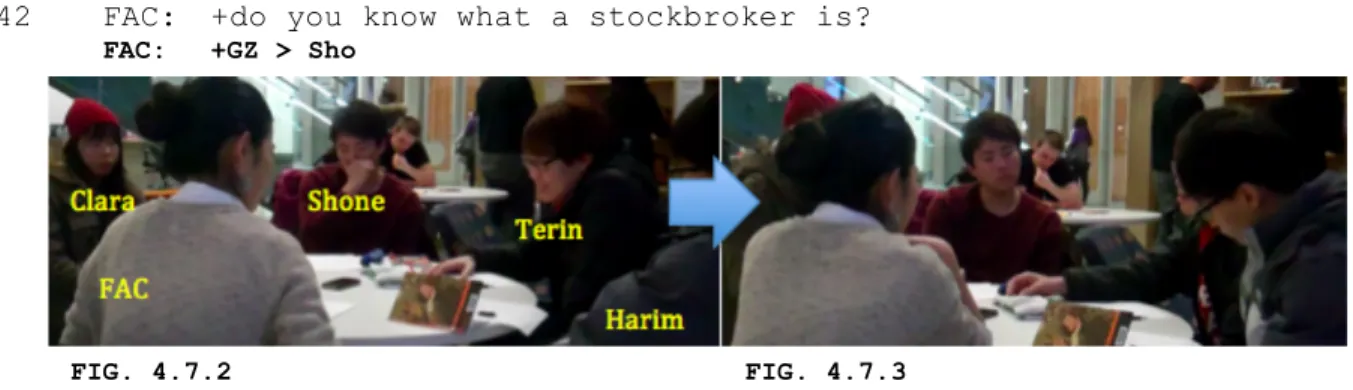
The six members of the book club came from different programs at the institution: Harim (Taiwanese, 26 years old) and Terin (Thai, 25) were in the GEP (equivalent to intermediate-level IEP), whereas Shone (Japanese, 23), Clara (Chinese, 20), Tombo (Chinese, 25), and Rayin (Chinese, 24) were in the AEP (advanced-level IEP) at the onset of the study (winter quarter). Later, in the spring quarter, Clara moved up to the PP (EAP) and Shone left the institution to go back to Japan, leaving five members (excluding the facilitator) in the book club. Some of the students knew each other from before the book club because they had taken the same classes: Rayin and Harim had taken a class together, and Tombo, Clara, Terin, and Shone had all been in
1 Participant names are all pseudonyms.
a class that the facilitator had taught in Fall 2014, the quarter before the book club began. Students also read different amounts of texts and had different attendance rates (see Table 3.1 below).
Table 3.1: Participants
Students Reading amount Attendance (n/18) Harim 15B (168,118W) 18 Rayin 9B (118,803 W) 12 Terin 6B (74,424W) 11 Shone 4B (64,807W) 8 Clara 5B (55,754W) 11 Tombo 2½B (13,221W) 6
Notes. B = books; W = words
3.4 Data
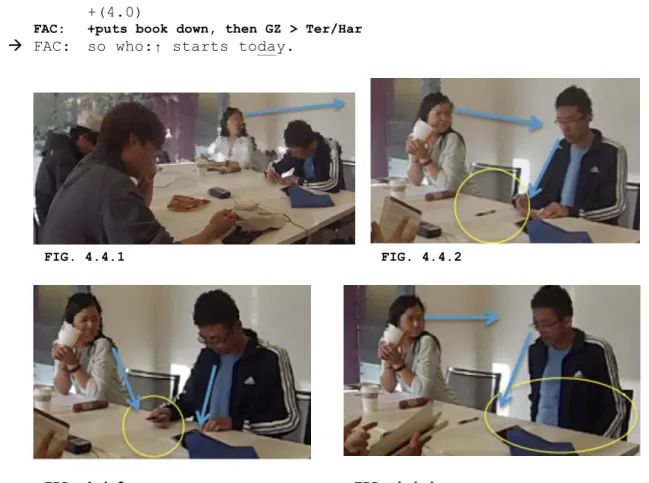
The data of the current study consist of approximately 16 hours of audio and video recorded extensive reading book club meetings, which took place once a week for 18 weeks (across two quarters). Each meeting lasted approximately 30 to 90 minutes. The recruiting process was done through personal emailing with a flyer made by the facilitator (Appendix B). The facilitator contacted five of her previous students (Harim, Terin, Shone, Clara, and Rayin) who she thought would be interested in attending, and they all ended up joining the book club. Tombo joined later (in the third week of the 1st quarter) after hearing about the club from Shone and Clara. The participants agreed to be video and audio recorded for research purposes. Two cameras were set at different angles mostly either front and back or left and right to better capture the participants’ actions, gestures, and facial expressions. The audio recorders were usually located near the students.
For each quarter, the facilitator led an orientation on the first day, so only 16 of the meetings were actual book club sessions where the students discussed their books. During the first orientation, the facilitator instructed the students to find L2 books from the large collection
of graded readers (simplified books for L2 students) kept in a student lounge at the language institute that are easy enough for them to comprehend and that they would like to read during and outside of the book club. They were also asked to freely borrow more books when they finish reading and to be prepared to talk about them during the sessions. She also laid out the activity structure of the book club where the students will read, write, and talk about what they read and wrote. During the second orientation, the facilitator provided more specific instructions than she had so far. Unlike the first orientation, the second orientation had interventional
purposes: to make organizational changes that would help the book club better meet the institutional goals. I conducted a focus group with the students after the first quarter to learn about their perceptions of their book club experiences. Then I reported back to the facilitator, summarizing what the students had discussed with me. She used some of this report to decide on organizational changes such as reducing reading time, expanding writing time, and instructing the students to ask each other more questions about their books, and she introduced these changes and instructions at the second orientation. At the same time, she also provided some specific instructions of her own, which were not based on my report of the students’ perceptions but on her observations over the past quarter. In particular, she told the students to rely less on their notes when talking about their books and presenting their responses to the writing task. This instruction became relevant in the participants’ interaction and their changing practices during the book club activities. Change in their practices and how such change comes about is one of the focal analytic points of this dissertation (see Chapters 5 and 6). The facilitator, as a
professional ESL teacher trained in ER, designed the book club in accordance with ER principles (Day & Bamford, 1998, 2002). In contrast to a prevalent teaching approach that focuses on reading as an individual activity, she adopted Green’s (2005) interactional approach to reading.
The activities she implemented were intended to help the students to read and practice English more, and to gain language benefits as a consequence.
Two out of 16 meetings were not recorded due to equipment failure, resulting in 14 recordings of book club sessions. For analytic consistency I also exclude three dyadic or triadic (i.e., when only 1 or 2 students showed up) book club sessions, resulting in 11 sessions. Most of the meetings in the 1st quarter were conducted in a student lounge which provided the graded readers that the facilitator mainly used for the book club. At the end of the 1st quarter, the club moved to a classroom because the student lounge was often noisy and their meetings were sometimes disturbed by other people coming and going. Table 3.2 provides an overview of the data and excerpts I use for this dissertation.
Table 3.2: Overview of Data
Dates Sessions Extracts Locations Participants
01.14.15 BC 1.1 1st Orientation (FAC, H, R, Tr, C, S) 01.21.15 BC 1.2 Ex. 4.7 SL FAC, C, S, Tr, H 01.28.15 BC 1.3 No recording 02.04.15 BC 1.4 Ex. 5.1; 6.2 SL FAC, H, R, C, S 02.11.15 BC 1.5 Ex. 4.5; 4.8; 5.2; 6.1; 6.3 SL FAC, Tm, R, Tr, C, S, H 02.25.15 BC 1.6 Ex. 4.10 SL FAC, S, H, Tm, R, Tr, C 03.04.15 BC 1.7 Ex. 5.3 SL FAC, S, Tr, H, R 03.11.15 BC 1.8 SL FAC, C, Tm, S, Tr, H 03.20.15 BC 1.9 Ex. 4.6; 4.11; 4.12 CR FAC, C, R, H 04.08.15 BC 2.1 2nd Orientation (FAC, H, R, C, Tm) 04.15.15 BC 2.2 Ex. 5.5 CR FAC, Tr, H, Tm, R 04.22.15 BC 2.3 Ex. 6.5; 6.6 CR FAC, H, C, Tm, R
04.29.15 BC 2.4 Not a multi-party setting (FAC, H, Tr)
05.06.15 BC 2.5 Ex. 4.1; 4.9 CR FAC, H, R, C, Tr
05.15.15 BC 2.6 No recording
05.20.15 BC 2.7 Not a multi-party setting (FAC, H)
05.27.15 BC 2.8 Not a multi-party setting (FAC, H, Tr)
06.03.15 BC 2.9 Ex. 4.2; 4.3; 4.4; 5.6 CR FAC, R, Tr, H
Notes. BC = book club; SL = student lounge; CR = classroom; Ex. = Extracts;
FAC = facilitator; H = Harim; R = Rayin; Tr = Terin; C = Clara; S = Shone;
Tm = Tombo