1
Enhancing the learning of student nurses in
a community “sign off” placement:
implications for students, health services and higher
education
A project submitted to Middlesex
University in partial fulfilment of the
requirements for the degree of
Doctor of Professional Studies.
Catherine (Kate) Brown
Student Number: 2234785
Module Number: DPS 5140
Institute for Work Based learning
Middlesex University
2
Acknowledgements
Thank you to all the students, NHS Staff and education
colleagues who participated in this project.
Thank you to Barbara Workman, my supervisor, who
provided the perfect balance of encouragement and prodding
to ensure that I crossed the finishing line.
Thank you to my long suffering family and friends who have
been supportive in my DProf endeavour and especially to my
husband Roger for his unique combination of practical
3
Contents
Abstract ... 7
Chapter 1: Introduction... 9
1.0 Introduction ... 9
1.1 The London Context ... 10
1.2 My background and the community of practice ... 14
1.3 An Insider Researcher ... 17
1.3 Relationship of Recognition of Prior Learning to this project... 18
1.4 Rationale for the project ... 19
1.5 Impact of early collaboration on focus of project ... 20
1.6 Terms of Reference ... 22
1.7 Gaining Access ... 23
Chapter 2: The historical context ... 24
2.0 Introduction ... 24
2.1 The historical context: 1986-2000 ... 24
2.2 The historical context 2000 – 2004 ... 26
2.3 Historical context 2004 to commencement of project activity ... 28
Conclusion ... 38
Chapter 3 Methodology ... 39
3.0 Introduction ... 39
3.1 The research approach... 39
3.2 Action Research ... 40
3.3 The research process and action research cycles ... 46
3.4 Data Collection ... 47
3.5 The research process: Data analysis ... 49
3.6 Ensuring rigour and trustworthiness ... 51
3.7 Generalisation ... 53
3.8 The research process: gaining access and ethics committee approval ... 53
3.9 Early ethical considerations ... 54
3.10 Conclusion ... 55
Chapter 4 Project Activity ... 56
4.0 Introduction ... 56
4.1 Diagnosing ... 57
4.2 Planning action ... 60
4
4.3 Ethical Issues ... 63
4.4 Taking Action: cycle 1 ... 64
4.5 Evaluation phase ... 65
4.6 Dissemination of findings in Cycle 1 ... 65
4.7 Cycle 2 ... 66
4.8 Taking action in cycle 2: November 2010 to March 2011 ... 67
4.9 Evaluation Phase ... 67
4.10 Dissemination of findings in Cycle 2 ... 68
4.11 Cycle 3 ... 70
4.12 Conclusion ... 71
Chapter 5 – A critical review of the emerging literature on the sign off mentor ... 72
5.0 Introduction ... 72
5.1 The Search ... 72
5.2 Inclusion and Exclusion criteria ... 73
5.3 Difficulties encountered with the progress of the search ... 73
5.4 The literature review ... 74
5.5 The sign off concept-implementation challenges ... 74
5.6 Approaches to sign off mentor preparation ... 77
5.7 A third year experience in the community ... 80
5.8 Impact of placement patterns on employability ... 84
5.9 Conclusion ... 86
Chapter 6 Project findings and discussion ... 88
6.0 Introduction ... 88
6.1The learning from cycle 1 ... 89
Placement Period November 2009-March 2010 ... 94
The Interviews ... 95
The impact of practical considerations ... 97
Opportunity for skill development ... 100
Future employment in the community ... 103
Conclusion of Cycle 1 ... 103
Dissemination of cycle 1 ... 105
6.2 Cycle 2 July 2010 to March 2011 ... 107
The interview data ... 107
Differences between hospital and community working ... 109
5
Employment in the community ... 120
The process of sign off ... 128
Dissemination in Cycle 2 ... 134
6.3 Cycle 3-the “long thin cycle” ... 136
The HEI perspective... 137
The future and sustainability of the process ... 140
Outcomes in the workplace ... 142
6.4 Conclusion ... 143
Chapter 7 Conclusion and recommendations... 144
7.0 Introduction ... 144
7.1 Design and implement a sustainable structure to support sign off mentorship in the community ... 144
7.2 Sustainability – the wider context ... 145
7.3 Evaluation of the student experience and the process- the implications from the perspective of student, provider organisations and higher education. ... 147
The student experience – key outcomes ... 147
The student experience: practical considerations ... 150
The service provider experience ... 151
The Higher Education Experience ... 153
7.4 Limitations of this study ... 154
7.5 Recommendations for the local context ... 156
7.6 Recommendations for the wider context ... 157
Chapter 8: Reflection and Learning ... 158
8.0 Introduction ... 158
8.1 Research can do good as well as harm ... 158
8.2 Valuing of District Nursing ... 160
8.3 The research objectives: should I have set an objective about employability/employment?... 162
8.4 The fragile system ... 165
8.5 The journey without an end point? ... 168
8.6 Summary ... 169
References ... 171
Appendix 1: Application to research ethics ... 178
Appendix 2: approval from Research Ethics Sub-Committee ... 180
Appendix 3: Participant Information Sheet and consent form ... 181
6 Appendix 5: Report to Framework management Team with identifying names of
people and services redacted. ... 189
Appendix 6: Advertising flyer for local dissemination meeting ... 194
Appendix 7: Interview with Hema 7th Jan 2011 Site 1 ... 195
Appendix 8: An example of a published output demonstrating on going developments... 197
Tables Table 1 NMC Expectations of "sign off" mentor (NMC 2008) ... 34
Table 2 Extract from table in Modernising Nursing Careers (DH 2006) ... 35
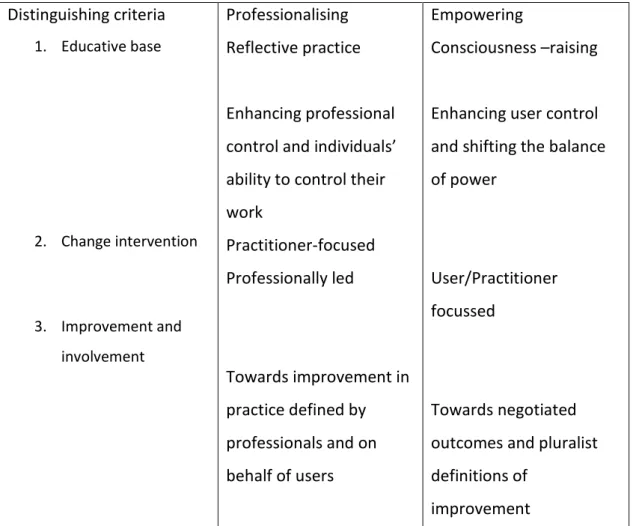
Table 3: Comparison of professionalising and empowering action research typologies (based on Hart and Bond 1995:383) ... 42
Table 4: A basic action research routine. Reference: Stringer 2007 ... 46
Table 5: Sources of data for cycle one and cycle two ... 47
Table 6: Sources of data for cycle three ... 48
Table 7: Phases of thematic coding analysis (based on Robson 2007:476) ... 51
Table 8: timeline for cycle 1 ... 62
Table 9: Evaluation phase in Cycle 1 ... 65
Table 10 Timeline for Cycle 2 ... 67
Table 11: Timeline for cycle 3 ... 71
Table 12: Timeline for cycle 1 ... 89
Table 13: Evaluation of Cycle 1 ... 90
Table 14: Timeline for Cycle 2 ... 108
Table 15: Timeline for cycle 3 ... 137
Table 16: Summary of Outcomes in relation to the objectives ... 156
Figures Figure 1 Current roles related to this project ... 15
Figure 2 Coghlan and Brannick's (2007) diagram of focus of researcher and system ... 17
7
Abstract
This action research project explored the implications for student nurses, health services and Higher Education Institutions (HEIs) of placing students for their final “sign off” placement prior to registration with district nursing teams who nurse patients at home. The placing of students with District Nursing teams for the “sign off” period is unusual in the London area. The stated aim of the Department of Health is that students should have more experience outside of the hospital setting (DH 2006) and the Nursing and Midwifery Council has a specific standard that students acquire practice experience in the home setting (NMC 2010). The
literature review highlighted a tension between those aims and a national trend of reduced district nursing numbers and fragility in the student nurse mentorship preparation system in the London area.
Data was obtained over a two year period from interviews with ten students, their mentors in practice, NHS managers and educationalists and the researcher’s own learning log. Key findings from the data were that despite the initial concerns expressed in the HEI that students could be disadvantaged compared to their hospital based peers, the students placed with District Nursing teams successfully completed the placement gaining the requisite skills and management experience. The objective of designing a sustainable process at the author’s institution to support these placements was achieved and the resource implications explored. Although not explicitly stated as an objective of the research intervention, the students felt competent and confident to apply for staff nurse posts in District Nursing teams and most were successfully appointed.
Arising from the reflexive analysis of action research, a recommendation is made that the NMC should reconsider a standard that all students should gain experience in the home setting (NMC 2010) and consider developing a more realistic standard which would allow some students to focus on the home setting and others to explore other settings outside of hospital.
8 Recommendations for the local context are made to maintain and develop the processes which were put in place as a result of this action research intervention to support students and practitioners during the sign off period of the pre-registration nursing programme.
9
Chapter 1: Introduction
1.0 Introduction
This action research report tells the story of how I collaborated with others to provide positive learning experiences in community settings for student nurses in their final 12 weeks of practice experience at the end of their educational
programme. During this period the student must be supervised and assessed by a practitioner know as their “sign off mentor” (NMC 2006) and if successful, the student will then proceed to join the UK nursing register. After a significant “false start” which will be explored, the question for this project became:
“How can we enhance the learning of student nurses undertaking community based practice placements with District Nursing teams in their final twelve weeks prior to registration?”
The professional and regulatory body for nursing, The Nursing and Midwifery Council (NMC) sets standards for pre-registration nursing education (NMC 2010) including the role of mentor. A mentor is a nurse who has successfully completed a Nursing and Midwifery Council (NMC) approved preparation programme to be able to facilitate and assess the learning of a nursing student in practice (NMC 2008). The NMC has a requirement that the preparation of student nurses should involve 4,600 hours of learning and that those hours of learning be equally divided between theory and practice (NMC 2010). The mentor guides the student’s practice and assesses their progress. The “sign off” mentor is an experienced mentor who, in addition to the roles of facilitating learning and assessment, ultimately makes the judgement that the student at the completion of their programme can join the UK nursing register (NMC 2006). In order to take on the role of sign off mentor, the practitioner must be offered additional preparation and support (NMC 2006). The mentors in this study all worked as part of District Nursing teams who provide nursing care in patients’ homes.
10 As Robinson et al (2012) have pointed out, mentorship has long been regarded as the cornerstone of nurse education and therefore the experience of mentor and mentee has been the focus of considerable research. In contrast they argue the considerable work and complex relationships involved in identifying placements and maintaining the relationships between Higher Education Institutions (HEIs) and service providers is under-researched and they describe it as a “hinterland” that enables delivery to take place (Robinson et al 2012:2). This project is a contribution to that under- researched hinterland with specific reference to learning outside of the hospital setting.
The Nursing and Midwifery Council (NMC 2010) require that students be provided with consistent clinical supervision in a supportive environment during all practice learning. The NMC standards (2010) refer to students undertaking “practice learning experiences” in different settings and the focus of this project is on the requirement that towards the end of the undergraduate programme there must be a continuous period of at least 12 weeks of practice learning (NMC 2010). Although the NMC uses the term “practice learning experience” students, practitioners, managers and educationalists refer to these experiences as “placements” and discuss “placement capacity”( Baglin and Rugg 2011, Robison 2012). This study is focussed on students undertaking a community based practice placement, namely a continuous period of learning in practice under the supervision of a mentor, in their final twelve weeks prior to registration.
1.1 The London Context
This project, which commenced in 2009, was located in a HEI in North London which is involved in the educational preparation of student nurses. The HEI had access to community nursing placements in three London Boroughs. Each of the London Boroughs had a population of approximately 300,000 and the large populations, social economic characteristics and ethnic diversity offered learning opportunities and provided logistical challenges for the students. As will be seen in the literature review there appears to be fewer descriptions of learning in the community setting in the London area compared to outside of London. This report therefore brings a
11 particular geographical focus and some insight into the logistics involved in inner-city placements.
This story is important for the participants but it also has a wider significance because it was conducted at a time of growing anxiety about the nature of the educational preparation of student nurses (Willis 2012). My concern is in effect a “subset” of the more general concerns about how student nurses are prepared for the world of work: namely that the Department of Health in the UK is increasingly arguing that the whole of the National Health Service should become “primary care led” (DH 2009) and that more care should be delivered outside of hospitals. This project worked towards addressing the concern that student nurses do not spend enough time with patients outside of the in-patient ward environment.
As part of the NHS London readiness to work project, Robinson et al (2012)
reviewed the sustainability and management of nursing mentorship in London and highlighted that identifying and maintaining practice placements for nursing students in London is problematic and resource intensive and especially so in relation to community placements. A range of factors contribute to the complexity in the London area.
London has a wide range of hospitals with some serving a local population, others offering a regional service and others meeting specialist needs (NHS England 2013). Many patients treated in London hospitals will be discharged to community services outside of the capital; however London universities only have access to their local community services. There is therefore an immediate imbalance between acute placement availability and community placement availability.
This imbalance has led to a real tension and sense of competition for placements. London has nine Higher Educational Institutions who offer pre-registration nursing programmes, some of which are geographically very close to each other and whilst each has a number of acute units they relate to, patients from those hospitals can be drawn from, and discharged to, the same geographical areas. In the 1990s I worked closely with placement providers especially in inner London to rationalise
12 arrangements and improve the management arrangements. These research
projects formed part of my APEL application (Camden Primary Care Trust and Islington Primary Care Trusts 2000). In practical terms this is best illustrated by my first experience of liaising with a clinic in Camden where I found students from three universities, Middlesex, City and London South Bank, all placed with the same service attending at the same time with three different sets of assessment
documentation. The solution devised in the 1990s and continuing to the current day is for Middlesex students to be placed in Camden community placements and the other two institutions use neighbouring Islington for some of their community placements. It has taken until 2014 for a pan London assessment document ( Fish et al 2014) to be brought into use which means that regardless of the student’s
institution, the mentor will at least be dealing with the same assessment documentation.
Another aspect of the London context is that, compared to elsewhere in the UK, primary care services are underdeveloped (NHS England 2013). Recent years have seen significant improvement in health outcomes for some hospital services in London such as stroke services and cardiac care (NHS England 2013); however the standard of primary and community care has remained an area of concern. Patient satisfaction with primary care has been shown to be 7% below the national average (NHS London 2007). Recent work on the medical General Practitioner (GP)
workforce in London has shown that 16% of London’s GPs are over 60 years of age, compared to 10% nationally (RCGP 2013). Many GP services continue to operate from very small premises with little space for accommodating any extra staff including students. The Royal College of General Practitioners have said that approximately 30% of primary care estate will not be fit for purpose in 10 years time (RCGP 2013). These pressures on General Practice services in London have meant that attempts to place student nurses with practice nurses in health centres as an alternative to district nursing placements have been very limited. In my own institution the use of practice nurse placements continues to be very marginal with GPs in smaller practices expressing concerns about premises and staffing
13 students and which receive funding as teaching practices, have declined to take nursing students as they do not attract the same funding.
The age profile of GPs is also reflected in the age profile of nursing staff working in community settings. In 2010 a scoping exercise was undertaken by NHS London (Fergy 2011) to assess the readiness of London NHS Trusts in relation to
modernising nursing careers with a particular focus on the issues raised by the move towards an all-graduate nursing workforce. In the data collected from senior nurses Fergy (2011) highlighted their support for the move to an all-graduate profession but also highlighted concerns. The report contains an illustrative quote from a nurse manager in a community setting;
“Some registered nurses do not want to be developed. We have a big problem with existing staff in the community who are 50+. How much pressure should we put on them? (Fergy 2011: 6)”
Although not explicit in the quotation, the manager’s reference to “pressure” is indicative of the impact of organisation change and service reconfiguration on frontline staff (DH 2008) which is another factor which has impacted on community placements in London.
Organisational change has been a consistent thread throughout the period of this project. Management re-organisation of community health services in London has been even more complicated than in the hospital sector. At the outset of the study, the three services where the students were placed were community trusts in their own right. Following NHS reorganisation London’s 18 community health care providers were integrated with other types of provision. Nine are now integrated with an Acute Trust, five integrated with a Mental Health Trust, two are social enterprises and two are aspiring Community Foundation Trusts (NHS England 2013). In the local context, our partners for community placements are now integrated with a Mental Health Trust in two instances and with an Acute Trust in another instance. As this project report was being written the potential for more coherent planning of practice placements in London continued to seem very challenging
14 (Robinson et al 2012). Following the changes of the NHS Act 2010 and for the first time since the NHS was founded; there is no strategic health authority for London. However the NHS England regional office has produced its document “London: a call to action” which sets out its plan to “provide more care in community settings” (NHS England 2013: 5). For nursing education the successful conclusion of the pan London assessment documentation project is an indicator of how universities and health care providers can work together to provide a more coherent approach to placement issues.
In summary the provision of undergraduate nursing placements in the community setting in London are affected by a range of historical and current factors including an imbalance between hospital and community provision, underdevelopment of primary care services, an aging workforce profile and service reconfiguration.
1.2 My background and the community of practice
My role in this project is embedded in a nearly a working lifetime of experience from the perspective of one or other of the stakeholders in this project. I have been a student nurse and as a qualified nurse I have taught students in practice in the community setting. However since 1988 I have worked as an educationalist
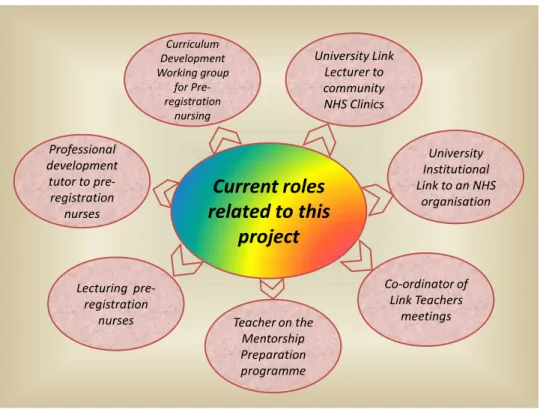
concerned with the learning of student nurses originally in a School of Nursing, then in a College of Health Studies and now as a lecturer in a Higher Education Institution (HEI). During the study period I undertook a number of roles that assist my “ways of knowing” (Carper 1978) about the learning of student nurses in the community setting. Apart from the time- limited curriculum development group, I continue in the other roles.
15 The figure below seeks to illustrate these roles:
Current roles
related to this
project
Lecturing pre-registration nurses Professional development tutor to pre-registration nurses University Link Lecturer to community NHS Clinics University Institutional Link to an NHS organisation Co-ordinator of Link Teachers meetings Teacher on the Mentorship Preparation programme Curriculum Development Working group for Pre-registration nursingFigure 1 Current roles related to this project
As can be seen from figure 1, I am involved in teaching and the personal and professional development of the students. I am also involved in teaching the professional programme which prepares the practitioners who facilitate and assess the students in practice (The NMC approved “Mentorship Preparation Programme” NMC 2008), and I am thus involved in “teaching the teachers”.
In addition to the teaching roles, I am involved in several roles in the University which directly support those practitioners. I am the link lecturer to several clinics which means that I offer the practitioners support in their role with students, but I also work strategically with the management of NHS organisations to oversee the systems for the placement of students in these settings. I formally chair Quarterly Review Meetings with one of those partners to review placement issues:
availability, quality and development for one London Borough. Internally at the University I act as co-ordinator of the Community Link teachers’ forum where all the colleagues who do the same role across the three boroughs come to share their concerns and issues.
16 My links with colleagues in practice and education means that I have ready access to a community of practice. Wenger (2002:13) offered a definition of community of practice:
“Communities of practice are formed by people who engage in a process of collective learning in a shared domain of human endeavour……… In a nutshell: Communities of practice are groups of people who share a concern or a passion for something they do and learn how to do it better as they interact regularly (Wenger 2002:1).
In my case the community of practice shared a concern about the availability of community placement but were also passionate about the need for students to have the opportunity to learn in the community. We were a group of District Nurse mentors, nursing academic staff who liaised with community placements, academic staff with specific responsibility for placements and nursing managers involved in education and the recruitment of newly qualified students. As the project
progressed this passion extended to a growing concern about District Nursing and the need to replenish the nursing expertise in the community setting.
The extensive NHS reorganisation (DH 2008) during the period of this project has meant that all the NHS stakeholders who were part of the community of practice have had to move to new organisations (and in some instances reapply for their jobs) during the project period and several are now working in different job roles compared to when the project was commenced. It was very fortunate that none of them lost their job in the process and although several of them now have additional responsibilities, all did maintain a work interest related to community placements and apart from one exception, all remained connected to the project. Ironically this project which entailed implementing a change has been a point of continuity for the participants in the community of practice.
17
1.3 An Insider Researcher
I came to this project as “insider researcher” (Coghlan and Brannick 2010) as someone who would be undertaking a number of working roles and who would be deliberately studying herself and those roles and studying the system of which they were a part. In this case I was part of one complex system, a Higher Educational Institution, which in turn was interacting with a much more complex system the National Health Service. Coghlan and Brannick (2007) have designed a diagram which illustrates the intended focus for both the researcher and the system.
No intended self-study in action
1. Traditional research approaches; Collection of survey data ethnography and case study
2. Pragmatic action research: internal consulting action learning
SYSTEM No intended self-study in action Intended self-study in action
3. Individual engaged in reflective study of professional practice
4. Large scale transformational change
Intended self-study in action
Source; Doing Action research in your own organisation (2ndEd) Coghlan, D. and Brannick, T.
Sage Publications, London 2007
Figure 2 Coghlan and Brannick's (2007) diagram of focus of researcher and system
When I first saw this diagram I had no difficulty in placing myself in Quadrant 3 in that I was an individual engaged in a reflective study of professional practice. However I was also an individual hoping to effect change on the system but at the outset there was no conscious call from the system to change. In this report I hope to illustrate how the focus of research shifted over time to Quadrant 4.
18
1.3 Relationship of Recognition of Prior Learning to this project
In addition to the current roles I am undertaking, I brought to this project a range of expertise accumulated from other projects related to student nurses learning in the community setting. I had submitted these projects with reflective commentaries as part of the Recognition of Prior Learning (RAL) claims for this Doctorate in Work Based learning. I therefore found it fitting that this final project was underpinned by that earlier work and this project is therefore another step in a journey of
developing expertise. One element of the RAL claim was about methods of learning in this setting .I reflected on the three editions of an open learning text that I had written for students learning in the community which were part of the Nursing Times Open Learning course for conversion of enrolled nurses to registered status (Brown and Johnston1989, Brown and Brindle1991, Brown and Elliot1993).The claim also involved my first experience of action research where I had worked with a colleague to address a problem of student learning as identified by community practitioners; we had envisaged an intervention and then studied the application of that intervention in practice.
Another element of the RAL claim was about my participation in research projects funded by the NHS which were led by a Community NHS Trust. In these situations I had not been the lead researcher but a very active member of either the steering or working groups of the projects (Camden PCT and Islington PCT 2000, 2003). These projects were very much focussed on getting the “system” right. For example one of the projects looked at how placements were measured in the community and came to the conclusion that the placement of a student for very short placements of two to three days a week was often as demanding for the practitioner as to have the student placed for a whole week. Out of this project came a common agreement that all placements agreed between the University and the Trust would be counted in “placement units” with a unit being “the placement of a student for one week or part thereof.” To someone external to the system this conclusion may seem so mundane as to be irrelevant. In the original study this conclusion became very important in terms of all parties to the educational process sharing common
19 understanding. Little did I understand at the time how over a decade later I would be reflecting further on the emotional work involved in supporting a student in the workplace and how much of the energy involved in that work has to be invested early and how much more of this energy is therefore conserved in a longer placement.
1.4 Rationale for the project
In 2009 at the outset of this project the HEI annually recruited a cohort of 330 student nurses. These students shared all their learning in year one of their three year programme and then divided into Adult branch, Mental Health branch and Child branch as students became more specialised in those branches of nursing. This project is exclusively focussed on Adult branch students which was the larger branch with 252 students. When the curriculum had been devised in 2005 the university had responded to the Department of Health NHS Plan (DH 2000) which envisaged more care being delivered in community settings. Although it was acknowledged at the design stage of the 2005 curriculum that finding sufficient community placements would be challenging, the curriculum was designed with an 8 week placement in a community setting, typically with nursing teams who cared for patients in their own homes. In the local boroughs these teams were variously known as District Nursing Teams and Adult Community Nursing Teams.
In 2009 due to reconfiguration of NHS services the actual availability of community nursing placements had reduced despite the continuing emphasis in health policy on provision of care outside of hospitals. In fact by 2009 the length of placement in the home setting had been reduced to 4 weeks. Therefore at the outset of the project the HEI was seeking to place over 200 adult branch students for 4 week placements and even that shorter period of time was becoming a challenge.
In view of my interests and responsibilities, senior staff at the university asked me to “look at what could be done” to resolve the “problem” which was defined as one of “shortage of placements”. I therefore decided to tackle this work based problem as my final project for my D Prof studies. This decision was met with some concern
20 by colleagues who thought it would be a dull topic. However I saw it as truly work based dilemma: all the policy documents were exhorting educational providers to increase learning opportunities in the community setting but in practice this was proving exceptionally difficult. There was great tension between the policy rhetoric and the reality of implementation, and moreover no educational providers seemed to want to admit to the problem for fear of being seen as not able to deliver the curriculum.
1.5 Impact of early collaboration on focus of project
This was a problem which could only be solved in collaboration with other
stakeholders. It is not a university which decides the number of student nurses it will recruit rather the decision is taken by the providers of health service in an area acting collectively who in turn, communicate that decision to a the strategic health authority which at the time was the London Strategic Health Authority. Therefore when the curriculum had been devised health providers had assured the university and the professional body that there were sufficient community placements. However since that time an increasing number of service configurations had decreased the availability to 50% of what had been assured at the curriculum validation. Even that reduced availability now appeared to be threatened.
Following an internal discussion with immediate colleagues, the next step in the project was therefore to explore the issue with one placement provider. This early meeting in turn became crucial for the focus of the project. This stakeholder provided one third of the community placements accessed by my organisation and therefore their perspective had a crucial impact on the development of the project.
Together with the Head of Practice Based Learning at the university I approached the managers in the local community provider service to discuss how we might increase the number of placements available to our students. They agreed that it was not easy to identify the placements but they wanted to ask entirely different questions. They asked questions such “why did the university only place students in the community in the second year of their three year programme or early in the
21 third year?” “Why did we never place students in the community for their final three month placement immediately prior to qualification?”
Initially we were very taken aback by their line of questioning and pointed out that it was difficult enough to find sufficient one month placements. However they went on to explain their rationale, namely, that they were aware that students were not likely to apply for posts on qualification in the community because they had not undertaken work there in the final months of their programme. Secondly they were aware of students who had the courage to apply and been appointed but those students had found it a “great culture shock” and many had resigned and re applied to work in the hospital setting and some , they thought, had stopped nursing
altogether. One manager then put forward a proposal that they would maintain the existing placement numbers but offer in addition, as a pilot, two students a three month placement at the conclusion of their three year programme. As the strategic health authority counts placement units as a week of placement, this meant that this interaction had increased placement units by 24. It would only alleviate a small amount of pressure on our placements; however the question raised by the
placement provider was a much more telling one than that which I had been initially exploring. As the Head of Practice Based Learning at my institution was present when this offer was made and I made it clear that I would be prepared to explore this initiative, a decision was made on the spot to undertake the pilot as the key stakeholders were all present. There was a sense that it was an offer that could not be refused. At the time we didn’t know whether students would come forward but I was confident that they would as I knew from my other roles that evaluations of community placements frequently included student requests to be placed for longer in the community environment.
As an insider researcher I was therefore in a rather strange position. I had not designed any particular intervention but I had already partially achieved the original aim which was an increase in placement units (albeit at this stage on a pilot basis) and I therefore needed to refocus. However I had unearthed a much more serious problem which was the employer’s view that short one month placements were not
22 meeting the curriculum requirement of preparing the students to work in the
community setting. I therefore reformulated my research question as
“How can we enhance the learning of student nurses undertaking community based practice placements with District Nursing teams in their final twelve weeks prior to registration?”
Internally the Head of Practice Based Learning and the Placement Manager were asking how will this affect the students, will there be any adverse consequences? Will there be issues of equity; we clearly cannot offer this opportunity to everyone. How shall we select the students? The professional body has particular
requirements of those who mentor students in their final twelve weeks, how shall we prepare the practice based mentors? What is known about undertaking a placement in this setting?
The placement provider who first made this suggestion and offer of placement displayed a quiet confidence that the outcome would be beneficial and lead to students applying to work in the settings. Would this confidence become a reality?
These were the questions which needed answers and I had to find a research approach which could address them.
1.6 Terms of Reference
My overall aim for this project became:
“In collaboration with NHS partners, students and my own colleagues, consider how the introduction of a sign off finalist placement in a community setting could
contribute to the wider preparation of student nurses, their fitness for practice and how this process would inform future curriculum development.”
My objectives were as follows:
1. Design and implement a sustainable structure at my own institution and with stakeholders to support sign off placements in a community setting.
23 2. Evaluate the process and the student placement experience and identify the implications for students, provider organisations and Higher Education Institutions and utilise this information to inform the process of curriculum development for the new graduate programme of September 2011.
3. Critically review the emerging literature on the sign off period to identify important issues for the partners in the process, the planned curriculum
development and the employability of student nurses in the community setting.
4. Disseminate the learning from Objectives 1-3 and contribute this learning to the understanding of the factors that impact on employability of student nurses in community settings, the process of curriculum development and the development of sign off placements in other new areas.
1.7 Gaining Access
Gaining access to address my objectives was uncomplicated as in my university role as the university institutional link to the area which was offering itself as a pilot for study, I had responsibilities and access in my work role. Likewise in my work role at the university, I would be identifying the students who would be undertaking the pilot. In addition my institution was formally obliged, for commissioning purposes with the London Strategic Health Authority, to undertake regular evaluation of any new initiative and in particular was obliged to report about employability of
students.
Although all stakeholders were aware of these requirements, and access to
evaluative data was part of an on-going agreement, it would be vital to gain consent from any individual participating in the project so that they would be aware that the reports could be more widely disseminated. In addition, as with all research
projects, there would need to be fully informed individual consent for reporting of individual comments as research data. I therefore approached the university ethics committee (Appendix 1) and the ethical considerations are more fully explored in Chapters 3 and 4 which look at the methodology and project activity.
24
Chapter 2: The historical context
2.0 Introduction
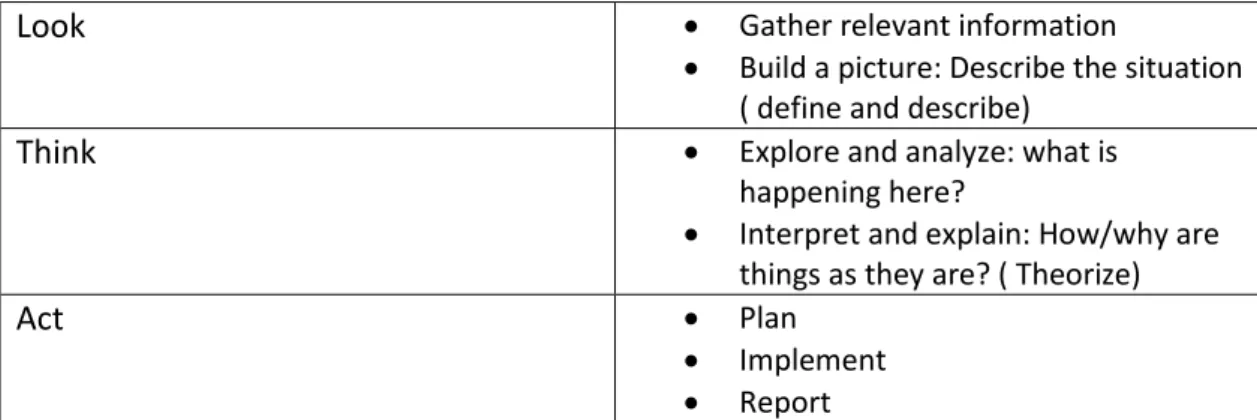
This chapter on the historical context is included to reflect the discussion in the community of practice about the requirements for community placement, the planned curriculum development and the project objective about seeking a sustainable process. There was a strong sense in the community of practice that they did not want to waste energy developing a project which did not “fit in” with what was being asked of us by the professional body and the health service. Although the members of the community of practice felt on the basis of their own knowledge that the planned intervention was a good fit with those requirements, they wanted to see their “tacit knowing” (Grant 2007) confirmed by explicit reference to those requirements. Coghlan and Brannick (2007) argue that the dynamics of doing research in your own organization involves building on the insider knowledge you have already and this project included insider knowledge of both the Higher Education sector and the NHS. Stringer (2007) argues that the first stage of action research – which he calls the “Look” stage of the process -is to gather information to extend the participants understanding of the experience and perspective of various stakeholders. I was therefore tasked to enhance the existing knowledge of the group by undertaking a chronological review of relevant
documentation which would clarify the expectations and requirements in relation to community placement. As this project was being undertaken at a point when the nursing profession in England was being moved to all graduate profession (Willis 2012), it seemed appropriate to begin that chronology with the previous major restructuring of nurse education in 1986 (UKCC 1986).
2.1 The historical context: 1986-2000
In 1986 the professional body for nursing, the United Kingdom Central Council (UKCC), proposed to change the employment status of student nurses in the UK
25 from hospital employee to a predominantly supernumerary student as part of the major restructuring of nurse education entitled Project 2000: a new preparation for practice (UKCC 1986). Although this document did not address community
placements directly it signalled the following policy direction by the nursing professional body:
“We feel the time has come for a break with the hospitals as the basis for so much initial preparation and for new thinking about how placements and practice experience could be developed in relation to a whole range of care settings” (UKCC 1986:19).
This policy direction was not accompanied by any detailed implementation plan. Ten years later the English National Board (ENB) for Nursing, Midwifery and Health Visiting, which was the English part of the UKCC, reported on a major national research project (Thomson et al 1996) which explored the demands being made on community practitioners by their responsibilities for teaching students. In order to address their wider aim, this study also asked questions about the time spent by students on placement outside of hospital. At this time nursing degree
programmes were delivered in higher education setting and the nursing diploma programmes were typically delivered in schools of nursing and of the 95 centres (a mixture of HEIs and Schools of Nursing) who responded to the question there was huge variation from 5 to 105 days spent on community placements. A key finding of the report was that there appeared to be “no obvious rationale for this variation other than the availability of placements to a particular centre” (Thomson et al 1996:3). Therefore despite the aspiration by the UKCC in 1986 to develop placements in a wide range of settings, the reality ten years later was a hugely uneven picture. The report also called for further work to be done “so that accurate information on the effects of student placement on practitioners’ work patterns can be assessed” (Thomson et al 1996:3).
Jones and Akehurst (2000) undertook a study to look at the economic impact to health care providers of providing clinical placements. Their conclusion was that
26 despite being supernumerary the average second or third year student benefitted a hospital by on average £3.46 for every hour spent on placement because of their ability to contribute to the workload. They concluded that community based clinical placements could not free staff time in the same way and they calculated that there was a cost of £0.48 for each hour students spend in the placement area. This
economic disadvantage of students may therefore be one explanation of why identifying community placements continues to be challenging.
In 1998, ten years after the introduction of Project 2000 (UKCC 1986) there was considerable public and professional debate about nurse education which often was expressed as a concern that nursing had become too academic (DH 1999). The UKCC responded by appointing a commission to review pre-registration nursing and midwifery which produced a report entitled “Fitness for Practice” (DH 1999) which highlighted problems with the organisation and supervision of practice placements. This review contained a specific recommendation in relation to length of placement at the end of the student’s programme:
“To enable nursing and midwifery students to consolidate their education and their competence in practice, there should be a period of supervised clinical practice of at least three months towards the end of the pre-registration programme.” (UKCC 1999: 58)
However none of the thirty three recommendations specifically referred to the balance of placements between the hospital and community sectors.
2.2 The historical context 2000 – 2004
In 2002 the UKCC was replaced by the current professional body the Nursing and Midwifery Council (NMC). One of the last actions undertaken by the English
National Board (as part of the UKCC) was the production of a document jointly with the Department of Health called “Placements in focus” (ENB and DH 2001). In spring 2000 the Department of Health established a clinical placements working group with the aim of identifying ways to increase the supply of practice
27 placements and ensuring national consistency in their standards and quality. The remit of working group was wider than nursing and included all health professions and many of the principles it established continue to underpin the quality review process of educational placements in the health professions. One of the specific aims of the working group was to share ideas about the identification and development of new opportunities for practice experience (ENB and DH 2001:7) and development of more practice placement opportunities ( ENB and DH 2001:11).
There were two specific references to community placements in the ENB/ DH document. At this historical juncture the provision of community services were being re-organised into new health care provider organisations called Primary Care Trusts and the “ Placements in Focus” report (ENB and DH 2001) called on the new bodies to “work with local education commissioners and partner HEIs to enable the development of more practice placement opportunities (ENB and DH 2001:11). The other reference to community placements was less directive and more an
“Primary care packages of learning could be developed whereby students would be based with a practice mentor/assessor but would undertake a variety of experience with different people (DH and ENB 2001:21)”
This type of placement design often referred to as a “hub and spoke” (Roxburgh et al 2012) has become more common in community settings and documented examples will be included in the second section of this literature review.
A year later MacLellan and Leyshon (2002) based in an inner London Primary Care Trust discussed the challenge of providing the type of high quality placements envisaged by Placements in Focus (ENB and DH 2001). They developed an interprofessional project across the trust to produce learning materials and
mechanisms of support. Interestingly the need to attract nurses to start their career in the community and the challenges faced by inner city trusts where there are multiple hospital employer competitors for newly qualified staff was a key part of their motivation: “Our ability to provide students with high quality clinical
28 placements is seen as a significant recruitment opportunity that we must capitalize on if we are to maintain optimum staffing levels.” (MacLellan and Leyshon 2002).
A similar vein of thinking in my local community of practice moved the focus of this project from being a general concern about community placements, to a specific intervention to place finalist students in a community setting.
2.3 Historical context 2004 to commencement of project activity
The level of concern about the preparedness of students for practice did not abate following the recommendations of Placements in Focus (DH and ENB 2001). In 2003, and funded by a scholarship from the NMC , a qualitative research study by Duffy ( 2003) involving a sample of lecturers and mentors associated with three universities in Scotland aimed to explore their perceptions that some students nurse were being passed in placement despite concerns about their competence. Her findings were that students were being given the “benefit of the doubt” and being allowed to progress despite mentor concerns. Duffy (2003) documented how some students performed poorly from the first year but somehow scraped a pass in practice and then the final mentor lacked the confidence to fail also.
The NMC responded to the growing concern about nursing education by publishing national standards for pre-registration nurse education (NMC 2004) and these were subsequently updated in 2010 (NMC 2010). These standards contain a number of key references to learning in community settings which inform this project.
The NMC is legally required under the Nursing and Midwifery Order to establish standards; minimum requirements by which programme providers determine programme content, learning outcomes and assessment criteria. The programme of students participating in this project is underpinned by the previous version of the standards (NMC 2004) and the curriculum development was informed by the new standards (NMC 2010). In terms of the requirements for community experience there is no substantive difference between the two versions. However the 2010
29 version places even more emphasis on learning in a community setting and the salient points for this project and for future practice will be highlighted.
The NMC 2010 document is clearly divided into elements which are requirements, (mandatory), guidance (best practice but not mandatory) and advice.
The law underpinning pre-registration nursing across the UK is based on a European Commission (2005) directive on “the recognition of professional qualifications”. The relevant article 31 is set out in the recent NMC document in Annexe 1 – Directive 2005/36/EC (NMC 2010 p 93). It states that “training shall take place in hospitals and other health institutions and in the community...” This directive in turn has an annexe which applies to Adult Nurses (NMC 2010: 95) which specifies where Clinical instruction (what in UK would be called “practice based learning”) should occur and is as follows:
• General and specialist medicine • General and specialist surgery • Child care and paediatrics • Maternity care
• Mental health and psychiatry • Care of the old and geriatrics • Home Nursing
Statements emanating from an EC directive are clearly requirements and therefore mandatory. As the list includes “home nursing” the implication is that every student should have a practice placement in the home setting.
However the list above does not specify hours in each area and it also has two important qualifying statements at the end of the list:
“One or more of these subjects may be taught in the context of the other disciplines or in conjunction therewith.” And:
30 “The theoretical instruction must be weighted and coordinated with the clinical instruction in such a way that the knowledge and skills referred to in this Annex can be acquired in an adequate fashion (NMC 2010 :95).
Higher Education Institutions (HEIs) have therefore a clear list of where practice experiences are meant to be provided but the qualifying statements allow for some ambiguity. On the one hand it is easy to see how “Care of the old” could be “taught in the context of the other disciplines” as the majority of patients/clients are elderly. It is harder to see how “clinical instruction” in “home nursing” could be taught other than in the home. In the UK this would require each student to have a placement with a community nursing team.
The second qualifying statement with its reference to knowledge and skills being acquired “in an adequate fashion” (NMC 2010: 96) again allows for significant variation in interpretation.
In summary, the legal basis of the place of community placements in pre-registration nursing is therefore ambiguous. On the one hand there is an EC directive which specifies a requirement for adult branch nurses to have placement experience in “home nursing”. However the hours of experience are not specified and the qualifying statements allow this experience to be “taught in the context of other disciplines”. However the spirit of the directive is clear in that there is an expectation that all adult students will have knowledge and skills related to home nursing.
To further complicate matters, apart from the annexe of the EC directive the term “home nursing” is not used as a phrase elsewhere in the NMC document (NMC 2010). Rather the document uses a different term, namely “community practice learning”. Helpfully this term is clearly defined in the glossary:
31 “Community Practice Learning
This refers to the student’s experience of care delivered outside the hospital setting. This type of care delivery is designed to put the needs of service users first, giving them easy access to care at their convenience, rather than concentrating on the practicalities of service delivery. It could include a range of community settings outside of major hospitals, such as caring for people in their own homes, general practice, local in patient units, nursing homes and other residential facilities, walk in centres, schools and the person’s workplace. It also gives students a chance to gain experience in NHS, Independent and third sector services.” (Taken from glossary NMC 2010:135)
As can be seen from this glossary description a whole range of practice areas are envisaged of which care “in the home” is but one option. At this point HEIs and placement providers might relax and view the challenge as a manageable one as the glossary list provides a range of options. In terms of the three levels of requirements, guidance and advice it is not clear what the status of a glossary definition might be but one might assume that it has the status of “guidance”. However within the NMC documentation there is a further reference which is pertinent to this study. The documentation comes complete with a competency framework and the domain Nursing Practice and Decision making includes the statement:
“Adult nurses must also be able to carry out accurate health, clinical and nursing assessments across all ages and show the right diagnostic and decision making skills. They must have confidence to provided effective adult nursing care in the home, the community and in hospital settings to individuals and communities. They must be able to respond to a range of health care needs and levels of dependency including: intermediate care, critical care, acute care, long term conditions, palliative care and end of life care.” (NMC 2010:17)
32 Here it can be seen that not only is there an expectation that students should have some experience of home nursing but indeed that students “must have the
confidence to provide effective adult nursing care in the home.” This is the competency statement for what is expected at the end of their three years of education and therefore it could be read that the outcome of the education is that the student should be competent to provide this care as a qualified practitioner. This is indeed a high expectation.
The information from the professional body is therefore arguably confusing and contradictory. In particular the competency statement does not sit easily with the reality of the student learning experiences in the home that can be provided for all students. If the competency statement was altered slightly to omit the specific reference to home but to include community, then the expectation would be realistic. In my professional role I made this point forcibly within my own
institution during the consultation on the NMC 2010 standards and asked for it to be included in our institutional response to that consultation. However the final version of the competency statement continues to have the explicit reference to the home setting rather than the wider community settings, (non institutional settings such as GP surgeries and clinics).
In addition to the NMC pre-registration nursing standards (NMC 2004, 2010) the other key professional body which informs this project is a set of standards to support learning and assessment (NMC 2006). These remain the current standards with some minor additions made in 2008 (NMC 2008) but do not contain any explicit reference to pre-registration learning in the community setting. However these standards introduced the concept of a “sign off” mentor into UK nursing.
The Standards to Support Learning and Assessment in Practice (NMC 2006) outline the standards expected of practitioners who act as mentors for pre-registration nursing and midwifery students and they provide guidance for individual mentors and for their employing organisations. In response to the concern about mentor consistency and the concerns exposed by Duffy ( 2003) about the potential for
33 unsuitable individuals to join the nursing register, the standards identified an enhanced role for the practitioner who would act as mentor for the student in their final placement prior to registration as a nurse. This enhanced role was given the name of “sign off mentor” (NMC 2006: 6). In 2008 a new edition of the standards were produced (NMC 2008) with minor amendments and therefore references to the standards are now typically referenced as 2008.
Initially the term led to some confusion amongst practitioners with many believing that as anyone who has completed the Mentorship Preparation Programme can assess a student (and therefore sign the assessment documentation), that all mentors come under the heading of being a “sign off mentor”. However, the NMC uses the term in a very specific way in the nursing programme to refer to the final placement in the student’s third year and the obligation of the sign off mentor is
“…to make a judgement about whether a student has achieved the required standards of proficiency for safe and effective practice for entry to the NMC register” (NMC 2008:6).
These mentors are therefore typically those who have had some years’ experience of mentoring. There is an NMC requirement that the local register of mentors held by provider services must be annotated to note which mentors have “sign off status”.
Students who commenced their programme of study after September 2007 have had to meet additional requirements when undertaking the final 12 weeks of continuous placement immediately prior to registration. These students must be supervised by a sign off mentor who in turn must satisfy the NMC requirements as outlined in Table 1 below.
34 Expectation of a sign off mentor
Clinical currency and capability in the field in which the student is being assessed An understanding of the NMC registration requirements and the contribution they make to the achievement of these requirements
An in-depth understanding of their accountability to the NMC for the decision they must make to pass or fail a student when assessing proficiency requirements at the end of a programme
A working knowledge of current programme requirements, practice assessment strategies and relevant changes in the education and practice for the student they are assessing
A working knowledge of current programme requirements, practice assessment strategies and relevant changes in the education and practice for the student they are assessing
Table 1 NMC Expectations of "sign off" mentor (NMC 2008)
The key difference between mentors and sign off mentors is around the final assessment of practice. Individual mentors who assess students as they progress during their typical pre-registration programme are accountable for assessing their practice. The sign off mentor is not only responsible for the assessment decision on their longest placement (a minimum of 12 weeks of placement), they also have responsibility for confirming all practice requirements and therefore entry to the professional register (NMC 2008). In recognition of this responsibility the NMC recommends that all sign off mentors need protected time for undertaking the role and recommend that this is one hour per week,. This is in addition to their
recommendation for all mentors that they need to spend 40% of their time in direct or indirect supervision of the student (NMC 2008).
The preparation of mentors in District Nursing teams in relation to these standards became an integral part of the project activity. The NMC standards ( 2006)
specified that sign off mentors would in the future need to be prepared by being supervised on at least three occasions by an existing sign –off mentor or practice
35 teacher ( NMC 2006; section 2.1.3). However the 2006 standards said preparation of the first wave sign off mentors could be decided by placement providers in a local process. In devising the local process I needed to ensure not only the
robustness of the arrangement for the current wave of mentors and students but also that this preparation would form part of a cascade effect which could impact on future mentors.
The impact of health policy on pre-registration learning in the community
This final section on the historical context will refer to the search of two key health policy documents rather than educational policy documents for reference to learning the community. The first document addressed the nursing workforce and the second addressed the government’s vision for primary and community care. Finally reference will be made to significant trends in the district nursing workforce which have impacted on learning in the community.
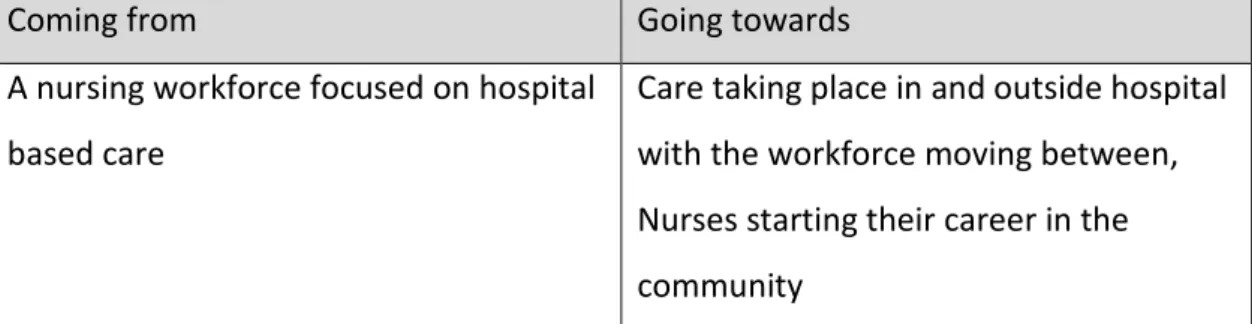
In 2006 the Department of Health published a workforce policy document called Modernising Nursing Careers and included a chart about how the profession would change which included the extract below:
Coming from Going towards
A nursing workforce focused on hospital based care
Care taking place in and outside hospital with the workforce moving between, Nurses starting their career in the community
Table 2 Extract from table in Modernising Nursing Careers (DH 2006)
The key sentence in the chart was the reference to nurses starting their working lives in a community setting which by implication suggests a preparation which allows newly qualified staff to feel equally at home in a hospital or community setting. The same policy document contained a series of actions including a pledge to “work with others” to explore whether changes are needed to the content of the
36 pre-registration programme. When the modernising nursing careers programme concluded in 2011 (DH 2011), it did not report on a specific work stream in relation to the pledge and referred the reader to the NMC 2010 standards as the outcome of the action.
The second key health policy document during this period outlined how
community services would adapt to meet the government’s wider vision about the NHS as a whole. In July 2008 as part of a major review of the NHS the then Labour government had produced their policy document “NHS Next Stage Review: our vision for primary and community care (DH 2008). This vision explicitly committed the government to “encourage more healthcare to be provided in community settings” (DH 2008:8) but included only two paragraphs on “training tomorrow’s clinicians.” The document acknowledged that the growing demand for primary and community care would “have important implications for how we train the primary and community clinicians of the future” (DH 2008:8) but did not specify what these would be.
In contrast to the policy documents about the nursing workforce and the vision for the NHS, the practitioner members of the community practice were frequently raising concerns about decline in district nursing numbers which seemed to run contrary to the policy aspiration. The higher education stakeholders in particular were concerned about the anecdotal information from practitioners who were complaining about decreases in staff numbers, and particularly a decline in the more experienced team members who had previously been at the forefront of mentoring students. These concerns were therefore investigated by reference to the NHS workforce statistics data and the decline in district nursing numbers in the UK during the previous decade was stark:
37 Ref Community Nursing Workforce in England (RCN 2012)
The picture in relation to the total community nursing workforce was less clear initially with an overall rise in nursing staffing levels in the community for most of the previous decade indicating a substitution of less qualified staff for the
experienced district nurses who had been lost to the profession. However as I continued to monitor the figures during the timeline of the project, the anecdotal concern about reduction in staffing was replicated in the national figures with the total numbers of staff showing a reduction at a point when the government’s policy document was arguing for expansion (DH 2008).
38 These concerns felt by local practitioners also found a national voice in the
professional organisations representing district nursing including The Queens Nursing Institute (QNI) and the Royal College of Nursing (RCN). The QNI trained district nurses in the UK until the 1960s and it is now a campaigning organisation dedicated to improve the nursing care of people in their own homes. In 2003 it had published a report entitled “District Nursing - the invisible workforce” (QNI and ENB 2003) highlighting both the decline in nursing numbers and the mismatch between the growing need for the service as the population aged and the actual resource made available. This was followed by further reports in (QNI 2009, QNI 2011a, 2011b) urging policy makers and educationalists to act to address the growing need for a skilled workforce in the community setting. The RCN published their vision for community nursing in 2010 highlighting similar concerns and setting out 27 core conditions to ensure services survived and became more efficient (RCN 2010). One of the core conditions was that community nursing should be reinvigorated as a career choice and this was particularly pertinent to this project.
Conclusion
This chapter on the historical context has chartered the troubled history of community placements since the major changes to nurse education in the 1980s (UKCC 1986). It has highlighted that educationists and practitioners have sought to ensure that more of the practice hours in the pre-registration curriculum be spent on community placements but that progress in this aspiration has been limited and that even the national standards for pre-registration nursing ( NMC 2010) contain contradictory message about community placements. The origins and requirements of the sign off mentor concept have been introduced. Finally reference had been made to recent health policy (DH 2006, DH 2008) which set the practice context for this project and to the decline in the District Nursing workforce which was not signalled in any policy document but which has led to a loss of experienced staff from the community setting.
39
Chapter 3 Methodology
3.0 Introduction
This chapter outlines the methodology chosen for this project. Firstly I outline how this project was well suited to an action research methodology and give a rationale for choosing community based action research which is a participatory and
emancipatory approach to action research.
Secondly I outline how this approach led to decisions about the participants and to the data collection methods. Finally I explore the techniques of data analysis and how I ensured rigour and trustworthiness in this study.
3.1 The research approach
As the project developed the collaborative nature of the project became
increasingly explicit. All of the objectives set out in Chapter 1 were reliant on joint working between the stakeholders. The overarching research question remained:
“How can we enhance the learning of student nurses undertaking community based practice placements with District Nursing teams in their final twelve weeks prior to registration?
Additional research questions became:
What does the emerging literature on the sign off period identify as important issues for the parties in the process?
How can students and mentors best be prepared for a sign off placement?
Does undertaking a sign off period in the community impact on the employment and employability of students in that setting?
What are the features of a sustainable process for the continued placement of finalist students in the community setting?
40 Apart from the review of the literature these were all questions which needed to be addressed by a research approach which clearly focussed on social processes and which ideally facilitated the social interaction between the relevant stakeholders. The intent of qualitative research is to understand a particular social situation and it is often employed to gain understanding of how groups interact (Robson 2011). My concern was how two major organisations – higher education and the national health service – worked together to provide educational experiences for students. I therefore adopted an interpretative inquiry approach which would allow me to understand what was happening in the real world. An interpretative paradigm allows the researcher to understand individuals’ experiences by focusing on actions and interactions and thus investigate the experience and explore the multiple realities of all participants, their perceptions and experience (Friedman 2001:162). In the early stages of the project consideration had been given to adopting a case study design as this type of descriptive research looks intently at a specific context and assist in gaining a holistic understanding of an event or situation (Gomm et al 2000). However once it became clear that a change intervention was going to be put in place and moreover there was the possibility of studying the same change intervention over a period of time and in different locations, I decided that an action research design would be the most fitting as it is ideally suited to studying change and typically studying change over a number of cycles (Williamson et al 2012, Baumfield et al 2008). Although some approaches to action research