A Systematic Review of One-to-One Access to Laptop Computing in K-12 Classrooms: An Investigation of Factors That Influence Program Impact
Edward C. Bethel
A Thesis In the Department
Of Education
Presented in Partial Fulfillment of the Requirements for the Degree of Doctor of Philosophy (Educational Technology)
at
Concordia University Montreal, Quebec, Canada
December 2014
CONCORDIA UNIVERSITY
School of Graduate Studies
This is to certify that the thesis prepared By: Edward Clement Bethel
Entitled: A Systematic Review of One-to-One Access to Laptop Computing in K-12 Classrooms: An Investigation of Factors that Influence Program Impact and submitted in partial fulfillment of the requirements for the degree of
DOCTOR OF PHILOSOPHY (Educational Technology)
complies with the regulations of the University and meets the accepted standards with respect to originality and quality.
Final examining committee:
Dr. Ailie Cleghorn, Chair
Dr. Richard Schmid, Examiner Dr. Steven Shaw, Examiner
Dr. Gary Morrison, External Examiner Dr. Ann-Marie Croteau, External to Program Dr. Robert Bernard, Supervisor
Approved February 16, 2015 by
Dr. Richard Schmid, Department Chair Dr. André Roy, Dean of Faculty
ABSTRACT
A Systematic Review of One-to-One Access to Laptop Computing in K-12 Classrooms: An Investigation of Factors That Influence Program Impact
Edward C. Bethel, Ph.D. Concordia University, 2014
In 2005, Nicholas Negroponte stepped onto the stage at TED and challenged the audience: “What would happen if we gave every student a laptop computer?” Ten years later, and twenty-five years after the first laptop program, this dissertation attempts to answer that question using two systematic review procedures, case survey analysis and mixed effects meta-analysis. Literature searches and review resulted in 162 primary studies being included in the case survey of which 88 studies yielding 231 effect sizes and representing approximately
116,150 participants, were selected for the meta-analysis. The case survey analysis revealed that typically, programs were co-educational, involving public middle schools, and conducted at the board or district levels. Program theories, whether stated or inferred clustered around three main themes: technology-enhanced environments, technology-enhanced instruction, and computers as mind tools or learning tools. Program goals were numerous and varied, but centered on
technology use and proficiency, achievement, questions of technology equity, and improved instruction. The meta-analysis revealed that one-to-one computing had an impact on five of the six outcomes tested: technology use (mean effect size 0.53), technology proficiency (0.29), student achievement (0.23), student engagement (0.15), and student satisfaction (0.26). Attendance was not significant (0.00). The general effects were moderated in expected and unexpected ways – technology use was moderated by program theory and year, technology proficiency was moderated by technology use and duration, and achievement was moderated by
program size, participant age, program year, technology integration, duration, and teacher-centered instruction. Explanations were proposed for these findings, and new directions for future research outlined.
ACKNOWLEDGEMENTS
I would like to thank the following people without whom this project would not have been possible.
Robert Bernard, for your wisdom, knowledge, guidance, and feedback; and for continuing to believe in this project even when I had doubts myself.
Evgueni Borokhovski, for your support, encouragement and advice on the methods of meta-analysis, and life in general.
Phil Abrami, for introducing me to one-to-one computing and the systematic review team at Concordia University.
Anne Wade, for your guidance on information retrieval and your continuing support. Steven Shaw, for your critical eye from day one; your endless questions have made me a better researcher and writer.
Saul Carliner, for your advice on academic writing and qualitative methods.
Richard Schmid, for inspiring me to be open-minded always, and to always be sensitive to alternative viewpoints.
Jonathan Woods, for your assistance in coding and extracting effect sizes.
Tasha & Jaxon, for your willingness to share my time with this project and for your unconditional support and love.
DEDICATION
I dedicate this dissertation to my wife, Tasha, my son, Jaxon, and to the memory of my late parents, E. Clement Bethel and Dr. Keva Bethel.
TABLE OF CONTENTS
LIST OF FIGURES ... xi
LIST OF TABLES ... xii
CHAPTER 1 – INTRODUCTION ... 1
General Introduction ... 1
Problem Statement ... 4
Objectives of the Study ... 6
CHAPTER 2 – REVIEW OF THE LITERATURE ... 9
Technology in Education ... 9
Technology Integration and Student Achievement ... 10
One-to-One Computer Implementations... 14
Why One to One?... 16
One-to-One Computing Will Transform Learning ... 17
It’s Not About The Laptops ... 22
The One-to-One Continuum and Guided/Unguided Instruction ... 25
Theoretical Frameworks ... 26
Program Theory, Implementation Fidelity and Technology Integration ... 26
Other Theoretical Approaches: Comprehensive School Reform and Cost Analysis ... 30
Research Synthesis and Systematic Reviews ... 34
Challenges to the Synthesis of Diverse Evidence ... 36
Epistemological Issues ... 36
Methodological Challenges ... 38
Summary ... 45
Objectives of this Study ... 47
CHAPTER 3 – METHODOLOGY ... 50
Problem Statement ... 52
Statement of the Research Question ... 52
Terms and Definitions ... 53
Search, Retrieval and Selection of Studies ... 55
Search Strategy ... 55
Selection of Studies: Inclusion/Exclusion Criteria ... 56
Analysis of Data ... 58
Case Survey Analysis ... 58
Mixed Effects Meta-analysis ... 64
CHAPTER 4 – RESULTS ... 79 Searches ... 79 Case Survey ... 80 Demographics ... 80 Program Theory ... 82 Program goals ... 86 Types of Learning ... 88
Instrumentation and Measurement of Goals ... 90
Program Preparation ... 91
Program Implementation/Technology Integration ... 91
Mixed Effects Meta-Analysis ... 95 Included Studies ... 95 General Effects ... 95 Study Quality ... 97 Publication Bias ... 99 Sensitivity Analysis ... 100 Technology Use ... 100 Technology Proficiency ... 103 Achievement ... 106
Student Attendance, Engagement and Satisfaction ...113
Factors Moderating Student Engagement and Satisfaction With Technology ...115
Summary Of Mixed Meta-Analysis Results ...115
CHAPTER 5 – DISCUSSION ...116
General Effects ...117
General Effects - Achievement ...118
Demographics ...118
Study Features ... 121
Program Theory ... 121
Program Goals ... 123
Program Preparation, Implementation and Technology Integration ... 123
Program Duration... 124
Technology Use as a Moderator ... 126
CHAPTER 6 – CONCLUSION ... 128
Limitations of This Study ... 130
Quality... 130
Coding and Technology Integration ... 131
Final Remarks ... 131
REFERENCES ... 133
APPENDIX A ... 166
Codebook ... 166
APPENDIX B ... 179
Documents included in the case survey ... 179
APPENDIX C ... 190
LIST OF FIGURES
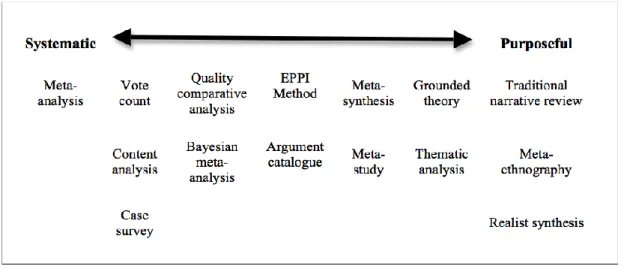
Figure 1. Continuum of synthesis methods (Bethel & Bernard, 2010) ... 37
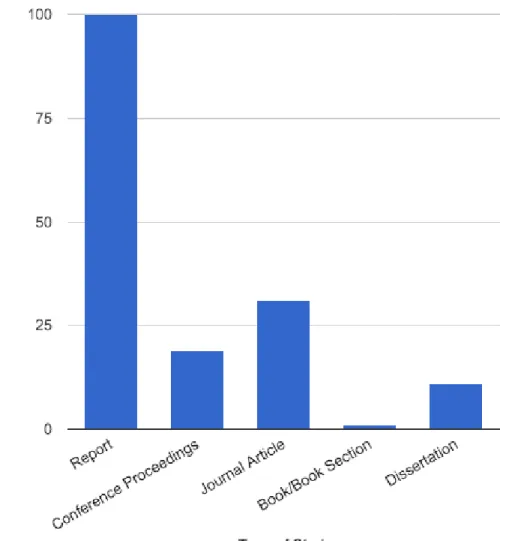
Figure 2. Case survey included studies by type ... 80
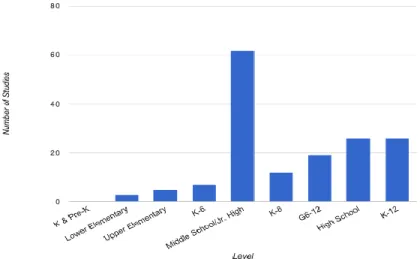
Figure 3. Grade levels of learners in laptop programs ... 81
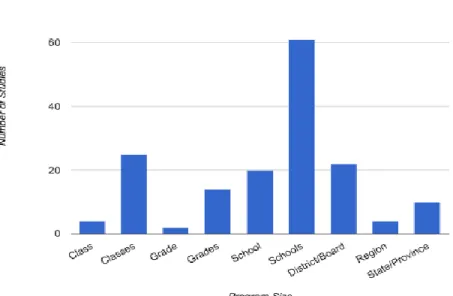
Figure 4. Size of program ... 82
Figure 5. Frequency of program goal categories ... 88
Figure 6. Frequencies of measurement instruments ... 90
Figure 7. Distribution of degree of technology integration scores ... 93
Figure 8. Meta-analysis included studies by type ... 96
Figure 9. Effect size Categories ... 96
Figure 10. Histogram of technology use effects ... 102
Figure 11. Histogram of technology proficiency effects ... 104
Figure 12. Histogram of achievement effect size estimates ... 106
Figure 13. Histogram of engagement effect size estimates ...114
LIST OF TABLES
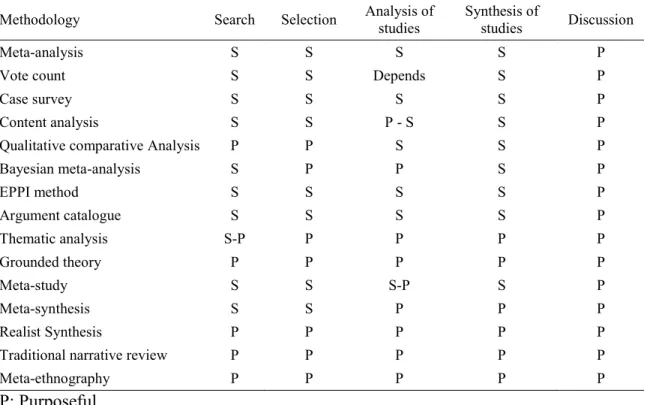
Table 1. Steps of different synthesis methodologies ... 39
Table 2. Gender of program participants ... 81
Table 3. Types of educational institutions implementing laptop programs ... 81
Table 4. Articulation of program theory ... 83
Table 5. Program theories ... 84
Table 6. Program theories collapsed ... 84
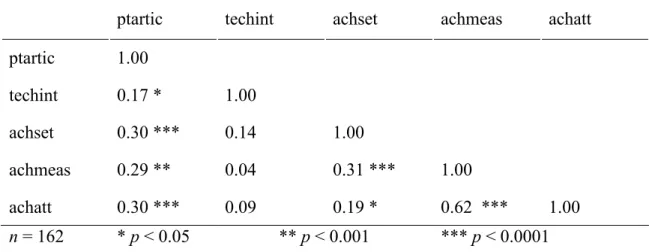
Table 7. Program theory correlations ... 85
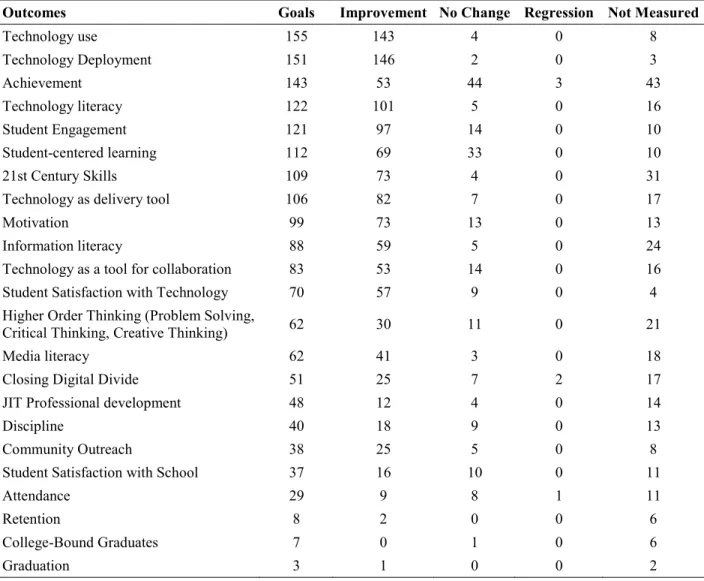
Table 8. Program goals ... 86
Table 9. Frequencies of types of learning activities ... 89
Table 10. Chi-squared goodness of fit test for Autonomous v Mentored learning ... 89
Table 11. Degree of program preparation ... 91
Table 12. Degree of program implementation and technology integration ... 92
Table 13. General effect by categories ... 97
Table 14. Technology use by year code (categorical) ... 102
Table 15. Technology use by year code (continuous) ... 102
Table 16. Technology use by program theory (categorical) ... 102
Table 17. Technology proficiency by technology use (categorical) ... 104
Table 18. Technology proficiency by technology use (continuous) ... 104
Table 19. Technology proficiency by duration (categorical) ... 105
Table 20. Technology proficiency by duration (continuous) ... 105
Table 21. Technology proficiency by technology use and duration... 106
Table 23. Achievement by size of program (categorical) ... 108
Table 24. Achievement by participant age (categorical) ... 109
Table 25. Achievement by participant age (continuous) ... 109
Table 26. Achievement by year category (categorical) ...110
Table 27. Achievement by implementation/technology integration (categorical) ... 111
Table 28. Achievement by implementation/technology integration (continuous) ... 111
Table 29. Achievement by duration (categorical) ...112
Table 30. Achievement by duration (continuous) ...112
Table 31. Achievement by technology integration and duration ...113
CHAPTER 1 – INTRODUCTION General Introduction
On a wet summer night in 1989, when a bedraggled and unshaven man arrived at the launch party of the experimental Sunrise School in Melbourne, Australia, organizers took him for a street person looking for a bite to eat and shelter from the incessant rain. Being
philanthropist types, the organizers accommodated the man, and to their surprise he seemed less interested in the cocktail sandwiches than the students working at their computers. Inauspicious beginnings for what would become a worldwide educational experiment. The “homeless man” was in fact David Loader, Principal of the Methodist Ladies’ College (MLC), a nearby private day school for girls. Inspired by what he saw that evening, Loader had a vision of a school where each student had her own computer. Within a year, MLC piloted what would become the world’s first school-wide one-to-one laptop program (Johnstone, 2003). Today, 25 years later, one-to-one laptop programs have spread and continue to spread throughout the world, fueled by an
unflagging faith in the potential of digital technologies to impact a variety of educational goals. New technologies, digital or otherwise, have always played a prominent role in
education. Every technological advance has been followed closely by educational reformers championing the “transformational potential” of the new technology. Attempts at educational transformation through technology have been followed by frustration, disappointment, disillusionment, and, inevitably, teacher bashing (Cuban, 1986). The cycle repeats itself with every new technological advance. Clark's (1994) explanation for this vexing state of affairs is simple and irresistible: media attributes are neither unique nor necessary to affect learning gains. Rather, the technological medium is a substitutable delivery mechanism. Learning gains are the result of skillful teaching, instructional design, or some combination thereof (Clark, 1983, 1994).
For Clark it is no surprise that new technologies have repeatedly failed to live up to their billing. Because they are inherently interchangeable, choices of instructional technology and media ultimately should be determined by cost and efficiency. Reform aimed at “technology integration” is misguided and potentially wasteful of precious educational resources. All the same, the use of digital technology and media in education continues to increase.
In a rebuttal to Clark, Cobb (1997) points out that Clark’s requirement that an
instructional medium must be both unique and necessary for learning, could equally be applied to instructional methods. There is no instructional method that is unique or necessary –
methodology choices come down to efficiency as do technology choices. Moreover, Cobb points out that in fact instructional efficiency is exactly what we should be considering if we are
looking to maximize learning gains. The interaction between media and method is natural and should not present an obstacle to research much the same way as in medical research, both method (drug used to treat an ailment) and medium (form in which the drug is administered), are considered to be crucial variables. Media should once again be considered an essential part of the learning equation (Kozma, 1994a).
Perhaps Clark’s thesis is better understood as a critique of a media-centric focus as opposed to a critique of media themselves. Learning never happens through direct osmosis – there are always some intervening mechanisms that make up the learning environment, that can facilitate or hinder the learning process. The key question is no longer should media be
incorporated, but rather which media should be incorporated into the learning environment, when, and how.
Clark's objections notwithstanding, as more and more evidence is collected, the reformers' faith in the educative potential of learning technology seems justified to a degree.
Aggregating the findings of 37 meta-analyses of studies on the impact of technology in education, Tamim, Bernard, Borokhovski, Abrami & Schmid (2011) found a small but significant effect of technology-enhanced learning. This finding is important, as each meta-analysis included in Tamim et al. is itself an aggregation of primary studies of technology in education. When all these aggregate studies are themselves aggregated in a “second-order meta-analysis” results are that much more robust. Tamim et al. does appear to settle the issue of
whether technology can have a positive impact on learning. Although Clark's reply would be that these findings are conflating medium with method, the volume and variety of studies included in Tamim et al. would tend to suggest an underlying media effect, regardless of method, however.
The earliest attempts to integrate technology into the classroom were hampered by a lack of access. Those schools fortunate enough to have technology programs would typically follow one of two models: a set of computers would be deployed to a central lab or classrooms would have a few computers for students to share. In neither case could the benefits of technology integration truly be realized as students’ technology exposure would be limited at best. As laptop computers became more affordable and the machines themselves became more portable,
ubiquitous technology access was at last possible. In 1990, when Methodist Ladies’ College launched the first one-to-one laptop program, the world took notice and followed suit. Programs have ranged from individual schools, to school boards, to districts, regions, states and most recently to international organizations with One Laptop per Child (OLPC).
Nonetheless, technology integration proceeds at a snail’s pace. In a world of 3D printers, smartphones, and wearable technology, our classrooms are still based on the same “sage on a stage” model so harshly criticized by many. Technology integration has always come with the assumption and promise of a new paradigm of student-centered learning. In the classrooms of the
technological future, where each student has their own device, students will direct their own learning and technology-supported instruction will be tailored to the needs of each student.
Problem Statement
In many ways, the pace of development has outstripped our knowledge base about the effectiveness of the programs. Has it all been worth it? While there have been positive signs and success stories, there have also been criticisms and failures. How do we determine whether this experiment has made any difference at all? Certainly the lack of definitive answers does not reflect a lack of study. Well over a thousand pieces of research, evaluation, advocacy, commentary, and criticism, and over forty reviews all chime in on the impact of one-to-one computing. No strong unison message emerges, however, not even pleasing harmony. Instead is heard a cacophony of clashing sounds that confuse rather than clarify. To resolve it all a more systematic approach is required. The main purpose of a systematic review is to locate whatever research is available about a particular question or idea, and use systematic methods to determine what conclusions or inferences can be drawn reliably from this data (EPPI-Centre, 2009). This study will sift through the diverse evidence using established systematic review methodologies in an attempt to bring clarity to and to quantify the impact of one-to-one computing in K-12
settings.
Meta-analysis is perhaps the most well-known and well-developed of the review
methodologies (Bethel & Bernard, 2010). Meta-analysis was developed as a systematic method to bring order to and reconcile varied research findings on a single research question. By treating individual studies like participants in a primary study, the meta-analyst extracts “effect sizes” or estimates of the actual or standardized impact of the intervention. The effect sizes are averaged to estimate the “true” effect of the intervention – the point estimate of the population effect size,
formally. It is assumed that study effect sizes will converge around the point estimate, much the way that sample scores converge around the sample mean. When studies are similar in design, research question, and treatment, meta-analysis can yield robust estimates of intervention effect (Bethel & Bernard, 2010). Unfortunately the evidence base of one-to-one computing is anything but - rather than similarity, one-to-one studies are characterized by diversity.
In his essay “Open Secrets,” Malcolm Gladwell (2007) explains the difference between puzzles and mysteries. A puzzle is a question for which we have too little information to answer, whereas a mystery is a question for which we have information, but we do not know what the information means. The approach to solving puzzles as opposed to mysteries is different. To solve a puzzle, we simply get more information – collect more data. For a mystery, more data may not help, and may even obscure the answers even further. In this case, we need methods that enable us to make sense of masses of diverse and frequently contradictory data. The contrast between methods to solve puzzles and mysteries exactly parallels the contrast between primary and secondary research. The role of primary research, both qualitative and quantitative, is to collect data to answer questions for which there is too little information, presently. The role of secondary research – systematic review – is to synthesize multitudinous and diverse data to answer questions for which there is too much information.
As noted earlier, the evidence base of one-to-one computing is diverse. A minority of studies lend themselves to effect size extraction. If strict meta-analytic protocols were followed, only a small proportion of the evidence would be included in the review. This study must incorporate a systematic methodology or methodologies to synthesize diverse studies that are as faithful as possible to the traditions of both quantitative synthesis (meta-analysis) and qualitative synthesis (narrative synthesis, meta-ethnography, and others).
Objectives of the Study
The proliferation of diverse, sometimes conflicting one-to-one computing research calls out for systematic analysis. This dissertation attempts to bring order to this diversity of
information through a three-fold analysis. The first component is exploratory and uses the case study methodology to categorize and draw general themes from as broad a selection of studies as possible. The second component is inferential and attempts to answer the following substantive questions regarding the impact of one-to-one computing in K-12 environments using meta-analytic methods:
1. Are there general laptop effects on the variables of student achievement,
technology use, technology proficiency, engagement, attendance, attitudes toward technology and discipline?
2. Are the general effects moderated by study characteristics: quality of design, type/level of measurement used, type of study in relationship to the program (internal, external or published study)?
3. Are the general effects moderated by other variables as predicted in the literature, namely: does technology use moderate technology proficiency; do any or all of the following moderate achievement: technology use, technology integration, program theory, program implementation?
The third component is explanatory and uses the findings of the first component to attempt to explain the findings of the second component in a synthesis of syntheses.
In this study, one-to-one computing is defined as educational settings in which each student has a computer to use for educational purposes in every class, every day for no less than 6 weeks. This definition incorporates two of Penuel’s (2006) core characteristics of one-to-one
programs, but does not include his requirement that programs involve access to the Internet. This study is looking at one-to-one laptop programs since the early 1990’s when wireless access to the Internet was rare. Wireless access was coded as a study feature. In terms of program duration, there is a degree of disagreement. On the one hand Slavin and Lake (2008) suggest that one complete semester (12 weeks) is the minimum duration to see the benefit or otherwise of an educational intervention, while on the other, Bernard et al. (2009) suggest that 15 hours for a course is sufficient. Falling between these two, this study uses half a semester (6 weeks) as the minimum program duration and codes for program duration as a study feature.
While there is fertile data for research in both K-12 and post-secondary schooling, this study is limited to one-to-one computing in K-12 environments for the sake of limiting scope. A parallel study focusing on postsecondary environments would be equally important. In some one-to-one programs students have full time access to the computers: that is they are allowed to take them home; in others, students can only use the computers at school. Fuchs and Wößmann (2005) demonstrated that computer home use can prove harmful or beneficial to learning
outcomes. These two types of one-to-one programs – school and home as opposed to school only – may exhibit unique characteristics, for the purpose of this study they are both be classified as one-to-one programs and coded for whether they whether students had laptop access at school and home or just school only. Given the need for portability, one-to-one computing initiatives involve students being issued with or purchasing laptop computers. Some programs refer to portable computers as laptops, while some call them notebooks. This study uses the term “laptops” to refer to laptop or notebook computers. Initiatives where students use handheld computers as opposed to laptops are not included in this study. This study asks how, to what extent, and under what circumstances does one-to-one computing in K-12 settings impact
educational goals including but not limited to student achievement, technology use, technology proficiency, and attitudes toward technology, through a systematic review of primary
CHAPTER 2 – REVIEW OF THE LITERATURE Technology in Education
Welcomed or spurned, then, technology use in education is increasing. Portable computers with Internet access are only the most recent of a long list of popular technology interventions meant to transform educational practice. Technology champions see this transformation happening in several ways. For some, computers can improve learning by transforming and enhancing the learning environment (Bransford, Brown & Cocking, 1999; Jonassen, Howland, Moor & Marra, 2003; Kuh & Vesper, 2001; McCombs, 2001; Siemens, 2005; United States. Web-based Education Commission, Kerrey, & Isakson, 2000). Learning environments can be transformed and enhanced in several ways: increasing access to information (Bransford, Brown & Cocking 1999); providing access to a richer learning experiences (Bagui, 1998; Brown, 2006; Caplan & Graham, 2008; Craig, 2001); making learning more situated (Bransford et al. 1999); increasing opportunities for active learning and inter-connectivity (Laurillard, 2002; Shuell & Farber, 2001; Yazon, Mayer-Smith & Redfield, 2002); enhancing student motivation to learn (Abrami, 2001); and increasing opportunities for feedback (Jonassen, Howland, Moore & Marra, 2003; Laurillard, 2002). Others see computers as powerful learning tools (Hannafin & Land, 1997; Harasim, Hiltz, Teles & Turoff, 1995; Jonassen, Carr, & Yueh, 1998; Lou, Abrami & d’Apollonia, 2001; Scardamalia & Bereiter, 1996). Others still see computers as gateways to online virtual learning communities (Jonassen, 2007; Paloff & Pratt, 2005; Swan, 2002). Of particular interest are new, rigorously designed studies reporting the success of web-based basic literacy tools (Savage, Abrami, Piquette-Tomei, Wood, & Deleveaux, 2008; Savage & Abrami, 2007; Schmid, Miodrag, Di Francesco, 2008), and the impact of
Warschauer, 2007; Warschauer, Grant, Del Real, & Rousseau, 2004). Indeed, there is sufficient optimism for technology’s positive impact that governments have established committees, formed task forces, and dedicated substantial funds to the delivery or enhancement of technology-based instruction (CMEC, 2001).
At the same time, some commentators have expressed concern and criticism (Clark & Sugrue, 1995; Cuban, 2001; Healy, 1998; Noble, Shneiderman, Herman, Agre, & Denning, 1998) about the use of technology to improve learning, including suggestions that it represents a threat to formal education, from kindergarten through university. For example, it may create an imbalance between computer skills and essential academic and thinking skills, foster technology dependencies and isolation rather than independent and interdependent learners, and erode the joy and motivation to learn, replacing them with frustration because of underused, failing equipment. Some teachers hold beliefs concerning the usefulness of information and
communication technologies (ICT) that parallel their attitudes towards any change to teaching and learning, be it through government mandated reform or societal pressure. “If the computer can accomplish the task better than other materials or experiences, we will use it. If it doesn’t clearly do the job better, we will save the money and use methods that have already proven their worth” (Healy, 1998, p. 218). As noted earlier, Clark and Sugrue (1995) famously point out that the most likely explanation for increased learning with computer technology is instructional method differences, content differences, or novelty effects, and not the technology itself.
Technology Integration and Student Achievement
No one doubts that introducing technology into the learning equation changes the
environment and learning process. The question is whether technology produces unique changes that result in learning gains. Narrative and quantitative reviews of primary research have
addressed the question of technology integration and student achievement. The findings are mixed. While many have reported positive effects of technology integration, others reviews have found that such a conclusion is not supported.
Reporting the findings of several different meta-analyses of technology integration, Kulik and Kulik (1989) reported that several found positive average technology effects on learning ranging from 0.22 standard deviations to 0.57 standard deviations improvement compared to control participants. Several studies reported by Schacter (1999) found higher achievement, motivation, and engagement for students in technology-enriched environments. In their meta-analysis, Waxman, Lin, and Michko (2003) found small but positive technology effects on student outcomes. Gains in language arts and reading, mathematics, science and medicine, social studies, foreign and second language acquisition, and programming languages such as LOGO were found in studies cited by Sivin-Kachala and Bialo (2000). Kulik (2003) cited studies reporting positive impacts of word processor use on student writing skills, as well as on teaching programs in math, and in the natural and social sciences. Bangert-Drowns (1993) similarly found a positive effect of the impacts of word processing on student writing. Students improved the quality of their writing and wrote longer documents, but did not have more positive attitudes towards the technology (Bangert-Drowns, 1993). In a meta-analysis of studies from 1992 to 2002, Goldberg, Russell and Cook (2003) found a positive technology effect of 0.50 standard deviations on quantity of writing, and 0.41 on quality of writing for students who learned writing using computers.
Other reviews are less enthusiastic. Though Coley, Cradler and Engel (1997) report achievement gains for drill-and-practice computer-assisted instruction, they found studies of more pedagogically complex uses of technology have been less convincing, reporting only
interesting anecdotes. More concerning, while Fuchs & Wößmann (2005) initially found mathematics achievement gains for home computer use, adjusting for family background and school characteristics, they found “the mere availability of computers at home is negatively related to student performance in math and reading, and the availability of computers at school is unrelated to student performance” (p. 17). Reviewing mostly Canadian research, Ungerleider and Burns (2002) found few methodologically rigorous studies reporting positive technology effects on student achievement, motivation, and meta-cognitive learning and on instruction in content areas in elementary and secondary schools. They also emphasized that access to computers in the classroom will not improve student academic achievement without concurrent changes to
instruction. Methodologically sound studies must be undertaken with proper experimental and statistical controls.
In their meta-analysis of technology use in post-secondary education, Schmid et al. (2014) underscore an important distinction in technology studies, those comparing technology to no technology, and those comparing technology to some technology. Studies of the first type sought only to establish proof of concept: does technology work? Studies of the second type asked a more interesting and perhaps more informative question: how will differing levels of technology impact student performance? For all intents and purposes, the first question has been answered in the affirmative by Tamim et al. (2011) and similar studies. Nonetheless, this
approach still informs many technology studies. For certain, many one-to-one studies take this approach even when there is evidence that the control group has access to some technology. In answering the second question Schmid et al. (2014) found that levels of technology matter. Low (effect size = 0.28) to medium (0.34) uses significantly outstripped high uses of technology (0.07), suggesting that there is a saturation point beyond which technology becomes a hindrance.
In addition to examining levels of technology use, Schmid et al. compare the impact of different types of technology use.
Schmid et al. (2014) further refine the discussion about the merits of technology and media in education. Their findings support Clark’s argument to a degree. Technologies that are used as educational content delivery mechanisms, like PowerPoint or other presentation
platforms, are unlikely to have much of an impact. These content delivery uses produced a small average effect size of between 0.10 and 0.20. While significant, these effects are small enough to provide support for Clark’s argument (Schmid et al., 2014). When technologies were used as tools to support learning, for example as cognitive supports (effect size between 0.30 and 0.45), as information retrieval tools (effect size 0.5 to 0.75), or as communication tools (0.2 to 0.3), stronger effects may be realized, however.
Bernard, Borokhovski, Schmid, Tamim, & Abrami (2014) use a similar framework to meta-analyze studies comparing technology supported blended learning with classroom instruction. Their findings echo those of Schmid et al. (2014). They find a general “blended learning” effect (0.33), but again, that general effect is moderated by types of technology applications. Once again, different models of technology use had differential learning impacts. Where technologies were used as learning tools such as cognitive supports (0.59),
communication supports (0.31) and search and retrieval tools (0.54 – not significant) larger effects were found than when technologies were used as content delivery mechanisms (0.24). It should be noted also that in both meta-analyses, although technology used as delivery
mechanisms resulted in the smallest gains, these gains were significant nonetheless. Media influence learning after all, small though that influence might be.
These findings are significant for one-to-one programs not only because they suggest appropriate ways that technology can be deployed to greatest impact, but also because they suggest that there may be a technology saturation point beyond which there are diminishing returns. One of the justifications of one-to-one programs is that prior technology interventions suffered from inadequate technology saturation (Zucker, 2004). When implementing one-to-one computing, care must be taken not to exceed productive levels of technology integration.
One-to-One Computer Implementations
Until recently, studies of technology integration in schools have reported limited student access to technology in a variety of configurations including:
Dedicated computer labs for select periods during the week;
Classroom computers where computers are available but at ratios of several students per computer;
“Laptop carts” where a cart with enough laptops for a one-to-one ratio is shared by several classrooms so that students can use their own computer in their own classroom for select periods during the week.
Now, interest is shifting to a model of more widespread and ubiquitous technology use, that is, when each student is provided with a computer for use throughout the day. Underpinning this interest is the belief that increased access to technology will lead to increased technology use, which will in turn lead to improvements in a variety of educational outcomes (Russell, Bebell & Higgins, 2004).
One-to-one computer implementations that provide students with Internet access and laptop computers for use at school and at home, are rapidly increasing in number. Decreasing costs, increased portability, and availability of wireless networking all contribute to making
broad implementations feasible (Penuel, 2006). This cheap technology is seen as the key to achieving a number of educational goals, including bridging the “digital divide,” increasing technology use, facilitating the acquisition of 21st century skills, improving student achievement, improving students attitudes, behavior, and increasing student attendance and retention rates (Zucker, 2004). Evidence is beginning to emerge linking laptops to improvements in student writing and literacy (Gulek & Demirtas, 2004; Silvernail & Gritter, 2007; Warschauer, Grant, Real & Rousseau, 2004), though quality research on the impact of laptops on other learning goals is mixed as best. In a synthesis of studies, Penuel (2006) reports that not only does research lag behind such rapid expansion, but of the research studies that have been done, few analyze implementation outcomes in a rigorous manner. Concurring, Zucker (2004) states that research has not provided policy makers with enough concrete evidence of the costs and benefits of one-to-one computing, nor has research identified the appropriate mix of factors to maximize intervention benefit.
This is not to say that one-to-one technology has no effect on student achievement. The studies reporting increases in student achievement all report these increases in particular areas. In their evaluation of the Laptop Immersion Program at Harvest Park Middle School in Pleasanton, CA, Gulek and Demirtas (2005) found that when achievement results were controlled for prior performance, only differences in Language Arts and Writing remained statistically significant. Similarly, Lowther, Ross, and Morrison (2003) report substantial increases in writing and critical thinking achievement in their evaluation of a one-to-one technology integration using the
iNtegrating Technology for inQiry (NTeQ) model (Morrison & Lowther, 2002). Trimmel and Bachmann (2004), in their comparison of 27 laptop and 22 non-laptop students, report that significant differences in student achievement could be accounted for by differences found in
achievement on one sub-category of the testing measure used – spatial intelligence. Particularly interesting is that in at several studies (Bernard et al., 2008; CRF & Assoc., 2003; Mitchell Institute, 2004; Stevenson, 1999), even though overall gains for the treatment group as a whole were minimal, the authors report that within the treatment groups, low-performing students gained disproportionately.
Russell and Higgins (2003) raise another issue. They question whether standardized paper and pencil tests accurately measure the particular learning that might take place in a one-to-one classroom. In particular, they report research where two groups of students, a one-one-to-one group and a control group, take two versions of the same writing test, a computerized version and paper and pencil version. Predictably, the one-to-one group did better on the computerized version than they did on the paper and pencil test, while the control group did better on the paper and pencil test. In other words, the familiar format over-predicts and the unfamiliar test format under-predicts the performance of both groups. Moreover, Russell and Higgins (2003) repeat the oft-heard argument that standardized tests do not measure the kinds of skills that one-to-one learning may be developing, for example technological literacy, spatial reasoning and problem solving (Davies, 2004; Grimes & Warschauer, 2008; Warschauer, 2007). Though care must be taken with arguments of this sort, the findings of Trimmel and Bachmann (2004) and Lowther et al. (2003) seem to support this line of reasoning.
Why One to One?
There are two things always heard in a debate over one-to-one laptop programs: “One-to-one computing will transform learning” and “It's not about the laptops.” And the responses can only be “How?” and “Really?” In truth, these two refrains reflect a division in the one-to-one community that dates back to the very earliest implementations and can be thought of as
endpoints on a spectrum of beliefs about the role that technology in general and personal laptops in particular should play in the classroom. For the first group, computers are the solution, while for the second group, computers are part of the solution. In many ways this debate is a reflection of a much broader debate in education between the proponents of guided and unguided learning (rekindled by Kirschner, Sweller, & Clark, 2006).
One-to-One Computing Will Transform Learning
What Loader saw that summer night at the Sunrise School was a classroom of engaged and excited students using computers to build things, draw diagrams, operate a mechanical turtle, and solve mathematical problems without any direct instruction from teachers (Johnstone, 2003). In fact, to the degree that teachers were involved at all, they acted in a supporting role, becoming involved when it was clear the students could not work their way out of a problem. In short Loader saw, and fell in love with, the prototypical “constructionist” classroom (Johnstone, 2003). When MLC piloted a laptop program the following year, this was the model from which they drew inspiration.
Student-centered learning. Constructionism or some version of student-centered constructivism were the pedagogical models upon which the very first laptop programs were based. The idea was that meaningful learning – students' knowledge construction as opposed to the transfer of knowledge from teachers or textbooks to students – happened when students were not being taught abstract concepts about artificial subjects, but rather when they were actively constructing some sort of learning artifact, whether it be a computer program, a scale model of a building, an anthology of poetry, or a concrete solution to a challenging real-world problem (Papert, 1980, 1993). The computers were seen as the medium that enabled this shift from “instructionism” to “constructionism” (Papert, n.d.). Note that several “minimally guided”
approaches to learning, for example, problem-based learning, project-based learning, discovery and inquiry learning, constructionism, and some forms of student centered constructivism, share the general idea that learning by doing engages students, and gives abstract concepts tangible forms from which students can build knowledge. These ideas have inspired and continue to inspire one-to-one laptop programs to a greater or lesser degree (see for example Davies, 2004).
“Teacherless learning.” In many ways, the turn towards constructionism represents a desire to untether the student from the direct instruction of the teacher and the teacher-dominated classroom where knowledge flows in one direction, from the teacher or textbook, to the student (Harel & Papert, 1991). The laptops here are seen not only as a tool for artifact and hence knowledge construction, but also as cognitive support, information source, and communication device that enables radical new forms of student-centered, “teacherless” learning. This radical reformulation of the constructionist ideals has resurfaced with the global deployment of “$100 laptops” in the One Laptop per Child (OLPC) initiative (Negroponte, 2005, 2006a; Rowell, 2007).
One Laptop per Child. The premise behind The One Laptop per Child (OLPC) project is that given the perceived capacity of emerging technologies to facilitate learning, and given Clark’s questions about economics and cost, if personal computers can be produced for an extremely low unit cost and distributed widely, we must consider substituting laptops for
classrooms where none exist, or are functioning poorly. The idea is that this revolutionary “$100 Laptop” has the capacity be the centerpiece of a newly imagined learning environment. The laptop itself is seen as the primary vehicle that will facilitate students’ learning through research, construction, peer-to-peer collaboration, and problem solving (Negroponte, 2006a, 2006b). Some even argue that the emergence of free or low cost technology combined with open educational
resources expands educational access far more broadly than classroom based learning (Caswell, Henson, Jensen & Wiley, 2008). Critics argue that improving educational access is not that simple. Criticisms warn about the potential for social disruption and dislocation that inevitably results from exposing traditional communities to modern technologies and practices, hidden costs, and lack of needed infrastructure for distribution or implementation, all of which limit the potential educational benefits (Kraemer, Dedrick & Sharma, 2009; Warschauer, 2009; and Warschauer & Ames, 2010).
The idea of teacherless learning with computers is not without precedent. In the late 1990s the “Hole-in-the-Wall” experiment was conducted in several remote villages in India. The brainchild of Sugata Mitra, in this experiment computer terminals were placed in kiosks in remote communities so that the public – particularly children – had access to the screens, a modified joystick, and other navigational controls. The computers were connected to the Internet and were on 24 hours a day. No instruction was given on how to operate the machines.
Researchers then observed what happened. And indeed teacherless learning did take place in combinations of discovery, trial and error, collaborative and peer-led learning (Hole-in-the-Wall Education Ltd., 2009; Inamdar, 2004; Inamdar & Kulkarni, 2007; Mitra, 2000; Mitra et al., 2005; Mitra & Rana, 2001).
The Hole-in-the-Wall project was described as an experiment in “minimally invasive education,” which had its roots in earlier teacherless (and non-technological) projects, like “Summerhill” (Neill, 1960). The researchers wanted to see what if anything children could learn if given free, unsupervised access to computers. The experiment was a success – not only did children learn computer literacy, they also demonstrated improved performance in mathematics as well (Inamdar, 2004; Inamdar & Kulkarni, 2007; Mitra & Rana, 2001). It follows that if
students learn from a 24-hour public access terminal with no instruction, how much more could they learn if they have their own computers? The idea that access to computers alone is sufficient to stimulate student learning is one of the cornerstones of the OLPC project. Its founder,
Nicholas Negroponte, is famous for his pronouncements that although the essence of the project is to provide specially designed laptops to all the children of the world, it is an education project not a laptop project (Diodato, 2007). In fact, by giving students the tools and raw materials needed for productive discovery-learning, the OLPC project as originally conceived could possibly subvert existing hierarchical school structures and sidestep direct teacher influence altogether (Negroponte, 2005, 2006a; Rowell, 2007). This is not seen as a bad thing. The underlying rationale of the OLPC assumes that essential learning occurs by experimentation, exploration and collaboration – always by doing – and not by instruction and training for standardized measures (Korman, 2007).
Technology saturation. For proponents of ubiquitous computing what makes the OLPC and all the one-to-one laptop programs special is that through these programs everyone has access to technology all the time. Prior to one-to-one, technology interventions depended on limited student access to technology. Technology proponents could always use the lack of saturation argument to explain why technology implementation did not deliver expected results (Kozma, 1994b; Penuel, 2006; Zucker, 2004). One-to-one computing is the “full technology condition.” Every student has access to all the affordances of the technology all the time. If there are in fact benefits to be realized from technology-enhanced learning, then one-to-one
classrooms have the best chance of realizing those benefits. At the same time, Schmid et al. (2014) highlight the fact that there may be an upper limit to the degree to which saturation is
beneficial. Care must be taken to ensure that enthusiasm for widespread use does not in fact hinder learning.
Bridging the “digital divide.” Technology access for all has its own rationale. Every new innovation in technology and digital connectivity widens and deepens the “digital divide” – the gap between those who have access to information and communication technologies and those who do not. By providing laptops and wireless internet to all students policy makers hope to narrow the gap and bring a new generation of technologically disadvantaged students into the digital age (e.g., Davis, Garas, Hopstock, Kellum, & Stephenson, 2005; Gravelle, 2003; The Greaves Group, The Hayes Connection, 2006; Lane, 2003; Rowell, 2007; Shapley et al., 2006a). Essentially, in addition to educational goals, one-to-one laptop programs are implemented to meet technology goals as well. This goal is reflected in the program objectives: many of the laptop programs include “technology use” and “technology literacy” among their main objectives (Davis, Garas, Hopstock, Kellum & Stephenson, 2005; Gravelle, 2003; Lowther, Ross, Strahl, Inan and Pollard 2005; Stevenson, 1999). The argument is that being on the wrong side of the digital divide has consequences for the educational well-being of students, so
interventions that reduce the technology gap are justified in and of themselves. Ubiquitous technology use is believed to have direct or indirect educational benefits whether they are observable and measurable or not.
Social impact of one-to-one interventions. If we are to discuss the digital divide, we must also acknowledge that technology interventions such as one-to-one laptop computing have impacts beyond the classroom. Particularly in communities where technology is scarce, where a child’s computer may be the only technology in a household, that computer will be shared among family members (Helmersen, 2006). Moreover, while laptop interventions assume a western
notion of individual ownership, many societies at which the one-to-one interventions are aimed have more communal notions of ownership. A student’s computer may be treated as a
community asset and used accordingly (Lowes & Luhr, 2008). Although formal evaluations available do not report in detail about these indirect impacts of one-to-one interventions, stories are emerging about how computers are transforming family and community life. The broader social impact of laptops in the classroom, particularly in traditionally low-technology societies, is a fertile area for study for future evaluations.
It’s Not About The Laptops
Perhaps the harshest critics of the technology-first approach taken by the OLPC and other similar one-to-one programs come from within the one-to-one community itself. Lively
discussions of why laptop programs in general and OLPC in particular are anything from a regrettable waste of money to a revolutionary step to bridging the digital divide can be found in educational technology journals, websites, blogs, and news forums (Canuel, 2009; Ploskonka, 2009; Warschauer, 2009). Warschauer (2009) says it best, lamenting the OLPC approach of giving children laptops and getting out of the way. Instead what is needed is a balanced approach that plans for curriculum development, teacher training, funds set aside for development of wireless networks and other supporting devices, and laptop maintenance (Warschauer, 2009). Involving all stakeholders is essential to program success as is gradual, staged deployments that take advantage of ongoing evaluation. Not only are these all missing from OLPC, but in some cases they are actively discouraged (Educational Technology Debate, 2009; Lessons Learned and future challenges, 2009).
Central to the debate over one-to-one laptops is the role to be played by the teacher in a laptop classroom. Those who see the computers as the solution propose scaling back the role of
the teacher – consistent with the principles of constructionism or radical constructivism. At best, the teacher's role is one of support or guide. Those, like Warschauer, who see the computers as a part of the solution, propose a central role for the teacher. In fact, they argue that appropriate teacher orientation and professional development are two of the most important components of a successful one-to-one laptop program (Lowther, Ross, & Morrison, 2003; Shapley et al., 2006a; Warschauer, 2006, 2009; Warschauer et al., 2004). This second approach to one-to-one programs that emphasizes building the right environment for the laptops to have their expected impact fits well with Clark’s (1994) argument: the expected impact is largely due to the support systems in place. He would argue that laptops can only be justified if their replacement value outstrips other possible interventions. In other words, assume that the same effort was made to support an alternative, perhaps non-technology based, intervention to the point where that intervention could have the expected effect. Laptops would only be justified as a replacement for the
alternative intervention if they represent the better value (less cost for the same expected gains). To be clear, however, Warschauer and others like him (Lowther et al., 2003; Shapley et al., 2006a; Warschauer, 2006, 2009; Warschauer et al., 2004) agree that there will be a
transformation when one-to-one laptop programs are introduced. They take issue with the idea that by simply adding computers to the equation, the learning transformation will be realized. Rather, they contend that while those radical experiments do lead to learning, this learning is of the technology itself. At the same time, existing educational, family, and social relationships are undermined as the technology plays a larger and larger role in students' lives (Warschauer, 2002, 2004). Instead they propose a planned, balanced, sustainable transformation, where learning environments are re-vamped to make maximum use of the affordances offered by the new technology, where provisions are made for the continued maintenance and updating of hardware
and software; where teachers are trained to make the most of digital devices and content; and where pedagogies and curricula incorporate the information management and communication capabilities of the new machines (Warschauer, 2006). In short, they believe in an evolution of the present system into a new digitally enhanced learning environment. The technology-first
proponents, on the other hand, see little in the present system worth saving and see the laptops serving as catalysts of an educational revolution where laptop-supported students direct their own learning.
Finally, despite all of this, technology-first proponents would contend that their approach is still justified because the Internet-ready laptops allow the students to cross the digital divide that threatens to cleave the world into digital haves and have-nots (Yang et al., 2013). Access to technology has become as reliable an indicator of socioeconomic advantage or otherwise as wealth, education, or healthcare. Added to which, like the other three, the digital divide acts as a multiplier, allowing digital haves better access to wealth, education and healthcare, and thereby causing the divide to deepen and widen (McKinsey & Co., 2014).
The critics would argue that this view of Internet connectivity and access may be too simplistic. The term “digital divide” itself may be too simplistic as it implies a dichotomous categorization of access with the determinant variable being the presence or absence of the requisite technology (DiMaggio & Hargittai, 2001; Hargittai, 2002, 2003; Jarboe, 2001; Selwyn, 2004; Vigdor & Ladd, 2010; Warschauer, 2002, 2004). The reality is that differences in access can be better described as a “digital inequality continuum” with access varying from little to no access to almost continuous access (Warschauer, 2004). But even this is insufficient to describe the factors at play. Although actual access to the Internet is obviously an important part of digital inequality, universal Internet access will not necessarily close the digital inequality gap. In fact,
digital inequality reflects and is influenced by existing societal inequalities. Even if we look only at those who already have access, online skills and Internet usage patterns are not equally
distributed, and the inequalities that are found reflect broader social inequalities (DiMaggio & Hargittai, 2001; DiMaggio, Hargittai, Celeste & Shafer, 2004; Hargittai, 2002, 2003; Jarboe, 2001; Selwyn, 2004; Vigdor & Ladd, 2010; Warschauer, 2002, 2004). The “digital divide” is better described as a multi-dimensional “digital inequality” continuum. There is no reason to expect that providing internet-connected machines will close the gap on any dimension other than that of connectivity. In order to close the so-called digital divide, what is needed is a balanced, multi-faceted approach where the new technologies are a part of a much broader plan to maximize the value of new connectivity to the new users through productive use of the technology's information retrieval and communication capabilities.
The One-to-One Continuum and Guided/Unguided Instruction
From the above we see that there is a continuum of opinions concerning how and why one-to-one computing will have maximum educational impact. On the one end of the spectrum (the “balanced approach”) we have those who argue that teachers must lead the way by adapting curricula and by finding pedagogically sound ways to integrate the laptops into classroom practice. At the other end of the spectrum, the technology-first advocates argue that laptops will enable true student-centered learning and transform the traditional teacher role of direct
instruction to one of support and guidance. This spectrum parallels and is analogous with the continuum of instructional practices with guided instruction on one end and unguided learning on the other (for an exhaustive debate on the merits of the different types of instruction see: Hmelo-Silver, Duncan & Chinn 2007; Kirschner, Sweller & Clark, 2006; Kuhn, 2007; Mayer, 2004; Schmidt, Loyens, Van Gog & Paas, 2007; Strobel & van Barneveld, 2009; Sweller,
Kirschner & Clark, 2007; Tobias & Duffy, 2009). Not only will the arguments presented in the debate inform the discussion of the best ways to approach one-to-one computing in schools, the guided/unguided continuum can provide another way to classify one-to-one interventions.
Theoretical Frameworks
Program Theory, Implementation Fidelity and Technology Integration
Clark's (1994) arguments notwithstanding, one-to-one laptop programs are first and foremost about getting technology into the hands of every student. The justification for such a program is based on certain beliefs and assumptions that underlie an expected sequence of mechanisms, processes and contingencies through which the laptops are hoped to impact learning outcomes. Together, these make up the program theory (Fitz-Gibbon & Morris, 1996; Rogers & Weiss, 2007; Weiss, 1997). For example, if the program theory holds that learning will be enhanced because students will have much more access to accurate, up-to-date information, then that laptop program should be characterized by continuous Internet access, instruction on the use of browsers and browser-based tools for information search and retrieval, instruction in digital rights and copyrights and related matters, information search and retrieval activities, evidence of students evaluating the quality and veracity of sources, evidence of students incorporating retrieved information into their work, and other activities that link computers to information retrieval, information retrieval to learning activities, and those activities to actual learning.
Understanding program theory allows for a more complete understanding of complex causal networks, in this case, whether, why, and how a laptop program is successful. Programs can then be assessed according to how successfully they fulfill the expectations of the given theory. This approach, known as theory-based evaluation (TBE) allows the researcher to evaluate
the mechanisms – the participants' responses to the program – through which change, in our example actual learning, takes place (Fitz-Gibbon & Morris, 1996; Rogers & Weiss, 2007; Weiss, 1997).
Theory-based evaluation makes a clear distinction between implementation theory and program theory. Implementation theory tests the degree to which the program is carried out as planned. Successful outcomes are the result of faithful implementation. Program theory, on the other hand, examines the mechanisms of actual change. That is program theory first makes explicit the expected impacts that program will have on the participants, then second, evaluates whether the program impact has resulted in the expected change and outcomes (Rogers & Weiss, 2007).
While the central focus of TBE is the program theory, without evidence about program implementation, it is not sensible to attempt to describe program mechanisms. Methods for assessing implementation fidelity are needed. The assessment of implementation fidelity is the process of measuring the degree to which actual program implementation reflects the program model or design (Leinhardt, 1980; Mowbray, Holter, Teague & Bybee, 2003; O'Donnell, 2008; Scheirer & Rezmovic, 1983). If expected outcomes are not realized, measures of implementation fidelity help determine whether this reflects theory failure or implementation failure.
Fidelity measures can be grouped into two broad categories, fidelity to structure (presence, strength, and duration of treatment), and fidelity to process (quality of treatment, differentiation of treatment delivery mechanisms) (Mowbray et al., 2003; O'Donnell, 2008). Clearly, implementation fidelity will be easiest when all facets of program implementation are explicit. When they are not, the researcher must first describe a complete implementation theory
from both the implicit and explicit implementation information. Fidelity to this framework can then be tested (O'Donnell, 2008).
One-to-one laptop program evaluations rarely report explicit implementation or program theories though they may describe implementation activities and report evaluation data on a number of different variables without clearly linking one to the other. Implementation success for one to one programs is usually judged by the degree to which technology is integrated in
teaching and learning activities. Several studies have explicitly identified factors influencing technology integration (Dalgarno, 2009; Inan & Lowther, 2010a, 2010b; Lowther et al., 2007; Shapley et al., 2010). Inan and Lowther (2010a) propose a path model where three primary variables, professional development, technical support and overall support, impact two secondary variables, teacher beliefs and teacher readiness, which in turn impact technology integration. Wozney, Venkatesh and Abrami (2006), on the other hand have proposed a model of integration that is dependent on teachers’ beliefs. They found that technology integration was dependent on teachers’ expectations for technology (expectancy), how they valued technology (value) and the costs in terms of time, effort, personnel and resources of technology integration (costs). For Ertmer (2005) and Ertmer, Ottenbreit-Leftwich, Sadik, Sendurur & Sendurur (2012), teachers’ pedagogical beliefs, their beliefs about how they teach best, how their students learn best and what are the most appropriate approaches to teaching and learning, underpin decisions on whether or not to commit to technology integration in the classroom. These beliefs are strongly held, deeply ingrained and difficult to change, as they are frequently the result of experience with classroom success and failure, lessons learned, and ideas confirmed in practice. Letting go of these requires leaps of faith that teachers are not usually prepared to take especially when it puts at risk their and their students’ success. Shapley et al. (2006a & b, 2007, 2008,
2009), evaluating the Texas Technology Immersion Pilot found that school and board level factors played a significant role in technology integration. They found that strong leadership at all levels from the district to school, support structures that encouraged all stakeholders including administrators, teachers, parents and students, technology support at every level, continual professional development opportunities, and teachers’ and students’ beliefs all contributed to successful integration. Several themes emerge: (a) teachers’ beliefs on several levels play a critical role in determining integration success; (b) professional development is an essential ingredient and must be designed to impact these beliefs in addition to teaching new skills; and (c) support structures are central to program success to ensure not only that things work the way they should, but also to provide comfort to teachers, students, parents and administrators as they let go of tried and true methods and commit to the new and unknown.
Assessment of implementation fidelity has proven particularly useful for systematic review and meta-analysis (Mowbray et al., 2003). In health and medicine, very specific research questions are tested in randomized controlled trials. Even so, for findings to be accepted
generally, studies must be replicated as often as possible in a variety of contexts to increase generalizability. When these studies are aggregated and meta-analyzed, implementation fidelity measures can be used as potential moderating variables. That is, researchers can investigate whether the degree to which program administrators followed the prescribed program had an impact on outcomes. In fact, implementation fidelity does predict treatment success in many instances (Mowbray et al., 2003). On the other hand, in social science reviews and meta-analysis, even when researchers are studying the same construct, research questions and
treatments are diverse. In these cases, reviewers must posit a construct that defines this particular set of studies and treatments and derive from that construct ideal program characteristics against
which fidelity can be evaluated. Implementation fidelity measures can then be used in one of three ways: as inclusion criteria where studies not meeting a certain degree of fidelity are excluded from the review; grouping variables where constructs can take on different values and fidelity measures are used to assign studies to one of several groups (for example, in Bernard et al., 2009, the construct of interest was interaction, studies were grouped according to whether they primarily considered student interaction, teacher interaction, or student-content interaction); or as moderating variables of treatment effectiveness as discussed above.
As noted above, for one-to-one computing, technology integration has been used as a yardstick for program implementation fidelity. Although technology integration has been measured in several studies, attempts to directly link integration levels to hoped-for outcomes have been rare. Even more rare are attempts to articulate program theory and its relationship to integration and to outcomes. This study will attempt to do just that - to link program theory and technology integration to program goals and to measured outcomes.
Other Theoretical Approaches: Comprehensive School Reform and Cost Analysis Given the nature of the evidence base and the need to limit scope, the theoretical approaches discussed above guide the analysis in this study. At least two others are worthy of consideration and fertile ground for future exploration and study: Comprehensive School Reform (CSR) and Cost Effectiveness Analysis.
Comprehensive School Reform. One-to-one proponents are quick to point out that these programs are not only about technology. They also describe school-wide and even board-wide changes that impact the entire school community. The laptops are seen as one important
component of a much larger educational transformation (Canuel, 2009; Davis et al., 2005; Hill & Reeves, 2004; Morrison, Ross, & Lowther, 2009; Shakeshaft, Mann, & Tinsley, 2009; Silvernail
& Lane, 2004), usually centering on themes of bridging the digital divide, the transformative power of educational technology, and student-centered learning. As such, one-to-one programs are much broader than classroom-based interventions, though little emphasis has been placed on how the change management outside the classroom will affect program impact (Zucker, 2004).
In many ways, one-to-one laptop implementations closely resemble the whole-school transformational approach of comprehensive school reform (CSR) models. The mechanisms of organizational change have been researched more extensively in the CSR literature. Clear parallels between one-to-one laptop implementations and CSR can be identified. Perhaps new insights can be gained by incorporating theoretical frameworks developed in the CSR literature for understanding how organizational and implementation dynamics can determine one-to-one program impact (Borman, Carter, Aladjem, & LeFloch, 2004; Borman, Hewes, Overman, & Brown, 2003; Ross Rowan & Miller, 2007; Gil, & Cross, 2004; Vernez, Karam, Mariano, & DeMartini, 2006).
That said, there is an important difference between the CSR approach and one-to-one laptop program approach: although both reforms are systemic overhauls. CSR models provide explicit guidelines for program implementation and procedures from the roles of the
administrators to the actual lesson plans teachers will carry out. One-to-one laptop programs are rarely as explicit in their systemic models. Instead, implicit models of implementation and program theory are inferred from reported intentions and activities.
Technology integration and costs. Hattie (2009) raises another issue. In his book, Visible Learning, he aggregates over 800 meta-analyses of educational interventions to determine which interventions are actually successful in improving student learning (Hattie, 2009). These comparisons raise an important issue in evaluating intervention utility−that of opportunity cost.