Masters Theses & Doctoral Dissertations
Spring 3-2018
A Holistic Methodology for Profiling Ransomware
Through Endpoint Detection
Stefani K. Hobratsch Dakota State University
Follow this and additional works at:https://scholar.dsu.edu/theses Part of theInformation Security Commons
This Dissertation is brought to you for free and open access by Beadle Scholar. It has been accepted for inclusion in Masters Theses & Doctoral Dissertations by an authorized administrator of Beadle Scholar. For more information, please [email protected].
Recommended Citation
Hobratsch, Stefani K., "A Holistic Methodology for Profiling Ransomware Through Endpoint Detection" (2018).Masters Theses & Doctoral Dissertations. 325.
A HOLISTIC METHODOLOGY FOR PROFILING
RANSOMWARE THROUGH ENDPOINT DETECTION
A dissertation submitted to Dakota State University in partial fulfillment of the requirements for the degree of
Doctor of Philosophy in Cyber Operations March 2018 by Stefani K. Hobratsch Dissertation Committee: Dr. Joshua J. Pauli Dr. Wayne E. Pauli Dr. Joshua A. Stroschein
© Copyright 2018 by Stefani K. Hobratsch ALL RIGHTS RESERVED
DISSERTATION APPROVAL FORM
This dissertation is approved as a credible and independent investigation by a candidate for the Doctor of Philosophy in Cyber Operations degree and is acceptable for meeting the dissertation requirements for this degree. Acceptance of this dissertation does not imply that the conclusions reached by the candidate are necessarily the conclusions of the major department or university.
Student Name: Stefani K. Hobratsch
Dissertation Title: A HOLISTIC METHODOLOGY FOR PROFILING RANSOMWARE THROUGH ENDPOINT DETECTION
Dissertation Chair: Date:
Dr. Joshua J. Pauli
Committee Member: Date:
Dr. Wayne E. Pauli
Committee Member Date:
ACKNOWLEDGMENT
This dissertation was made possible by the support of numerous family members, friends, and colleagues. I am forever grateful to the people and experiences that have enabled me to complete this accomplishment.
To my husband, thank you for your love and support. You are the best husband in the world!
To my parents, thank you for instilling in me the importance of faith, family, and a strong work ethic. Thank you for encouraging me to study computer science and urging me to pursue
advanced degrees. I’ve come a long way since learning to type on our Apple IIGS!
To my dissertation committee, thank you for guiding me through this research, spurring me forward with ideas, and driving me to develop relevant results. Dr. Josh Pauli, I was always impressed by your lightning fast feedback! Thank you for your support, enthusiasm, and guidance both academically and professionally. Dr. Wayne Pauli, you have done an excellent job directing this degree program. Thank you for keeping me on schedule and helping me navigate the requirements involved in getting to the finish line. Dr. Josh
Stroschein, your malware expertise was essential in helping me formulate this project. Thank you for always sharing new ideas and tools with me to keep my technical skills sharp. I could not have asked for a better committee!
To my many professors over the years at various academic institutions, thank you for sharing your knowledge with me and inspiring me to be curious.
To Dakota State University and all those involved in creating this degree program, thank you for being forward thinking and identifying a need for highly-trained cyber security professionals. This degree program fills a critical gap in academia by providing advanced technical classes and relevant applied research. I am proud to be a graduate of this degree program from Dakota State University.
Most of all, thank you to my Lord and Savior Jesus Christ for the many blessings in my life.
ABSTRACT
Computer security incident response is a critical capability in light of the growing threat of malware infecting endpoint systems today. Ransomware is one type of malware that is causing increasing harm to organizations. Ransomware infects an endpoint system by encrypting files until a ransom is paid. Ransomware can have a negative impact on an
organization’s daily functions if critical business files are encrypted and are not backed up properly.
Many tools exist that claim to detect and respond to malware. Organizations and small businesses are often short-staffed and lack the technical expertise to properly configure security tools. One such endpoint detection tool is Sysmon, which logs critical events to the Windows event log. Sysmon is free to download on the Internet. The details contained in Sysmon events can be extremely helpful during an incident response. The author of Sysmon states that the Sysmon configuration needs be iteratively assessed to determine which Sysmon events are most effective. Unfortunately, an organization may not have the time, knowledge, or infrastructure to properly configure and analyze Sysmon events. If configured incorrectly, the organization may have a false sense of security or lack the logs necessary to respond quickly and accurately during a malware incident.
This research seeks to answer the question “What methodology can an organization follow to determine which Sysmon events should be analyzed to identify ransomware in a
Windows environment?” The answer to this question helps organizations make informed decisions regarding how to configure Sysmon and analyze Sysmon logs. This study uses design science research methods to create three artifacts: a method, an instantiation, and a tool. The artifacts are used to analyze Sysmon logs against a ransomware dataset consisting of publicly available samples from three ransomware families that were major threats in 2017 according to Symantec. The artifacts are built using software that is free to download on the Internet. Step-by-step instructions, source code, and configuration files are provided so that other researchers can replicate and expand on the results. The end goal provides concrete results that organizations can apply directly to their environment to begin leveraging the benefits of Sysmon and understand the analytics needed to identify suspicious activity during an incident response.
DECLARATION
I hereby certify that this dissertation constitutes my own product, that where the language of others is set forth, quotation marks so indicate, and that appropriate credit is given where I have used the language, ideas, expressions or writings of another.
I declare that the dissertation describes original work that has not previously been presented for the award of any other degree of any institution.
Signed,
Stefani K. Hobratsch
Stefani K. HobratschTABLE OF CONTENTS
ACKNOWLEDGMENT ... IV ABSTRACT ... V DECLARATION ... VI TABLE OF CONTENTS ... VII LIST OF TABLES ... IX LIST OF FIGURES ... X
INTRODUCTION ... 1
BACKGROUND OF THE PROBLEM ... 1
STATEMENT OF THE PROBLEM ... 2
OBJECTIVES OF THE RESEARCH ... 2
SUMMARY ... 3
LITERATURE REVIEW ... 4
SYSMON CAPABILITIES ... 4
SYSMON DURING INCIDENT RESPONSE ... 5
ANALYZING SYSMON RESULTS ... 6
RANSOMWARE ... 7
SUMMARY ... 9
RESEARCH METHODOLOGY ... 10
RESEARCH METHODOLOGY JUSTIFICATION ... 10
RESEARCH MODEL ... 12
ARTIFACTS OF DESIGN SCIENCE ... 13
ADVANTAGES AND SHORTCOMINGS OF DESIGN SCIENCE RESEARCH ... 15
VALIDATION OF DESIGN SCIENCE RESEARCH ... 16
RESULTS AND ANALYSIS... 20
RANSOMWARE DATASET ... 20
ARTIFACT 1:AMETHOD TO ANALYZE SYSMON EVENT LOGGING ... 27
ARTIFACT 2:AN INSTANTIATION OF THE METHOD ... 30
ARTIFACT 3:ATOOL TO TRIGGER ALL SYSMON EVENTS ... 49
CONCLUSIONS AND RECOMMENDATIONS ... 58 CONTRIBUTIONS ... 58 LIMITATIONS ... 60 RECOMMENDATIONS ... 61 FUTURE RESEARCH ... 62 SUMMARY ... 64 REFERENCES ... 66
APPENDIX A: SYSMON VERSION 6.20 EVENTS ... 78
APPENDIX B: SYSMON CONFIGURATION (SYSMONCONFIG-MODIFIED.XML) ... 79
APPENDIX C: TRIGGER TOOL PYTHON SCRIPT (TRIGGER.PY) ... 107
APPENDIX D: TRIGGER MANIFEST FILE (TRIGGER.MOF) ... 125
APPENDIX E: WINLOGBEAT CONFIGURATION (WINLOGBEAT.YML) ... 126
APPENDIX F: LOGSTASH PIPELINE (BEATS.CONF) ... 127
APPENDIX G: LOGSTASH DICTIONARY (SYSMON_EVENT_IDS.YAML)... 130
APPENDIX H: LOGSTASH DICTIONARY (RANSOMWARE_EXTENSIONS.YAML) ... 131
APPENDIX I: LOGSTASH DICTIONARY (WHITELIST.YAML) ... 132
APPENDIX J: LOGSTASH CONFIGURATION (LOGSTASH.YML) ... 136
APPENDIX K: ELASTICSEARCH CONFIGURATION (ELASTICSEARCH.YML) ... 137
APPENDIX L: KIBANA CONFIGURATION (KIBANA.YML)... 138
APPENDIX M: KIBANA INDEX FOR WINLOGBEAT LOGS ... 139
APPENDIX N: WATCHER ALERT FOR VIRUSTOTAL HITS ... 196
APPENDIX O: WATCHER ALERT FOR SUSPICIOUS FILE EXTENSIONS ... 198
APPENDIX P: WATCHER ALERT FOR CHANGES TO FILE CREATION TIMES ... 201
APPENDIX Q: WATCHER ALERT FOR FILES CREATED WITHIN SHORT TIMEFRAME ... 203
APPENDIX R. SCREENSHOTS OF RANSOMWARE NOTIFICATION MESSAGES ... 205
LIST OF TABLES
Table 1. Requirements for Instantiation Artifact ... 14
Table 2. Requirements for Trigger Tool Artifact ... 15
Table 3. GlobeImposter Ransomware Samples ... 24
Table 4. Cerber Ransomware Samples ... 25
Table 5. Locky Ransomware Samples ... 25
Table 6. Observed Effects of Ransomware Samples ... 26
Table 7. Detailed Method for Utilizing Sysmon Event Logging ... 28
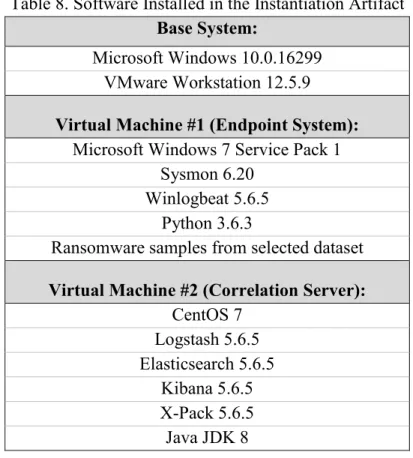
Table 8. Software Installed in the Instantiation Artifact ... 34
Table 9. External Dependencies for Trigger Tool Artifact ... 50
LIST OF FIGURES
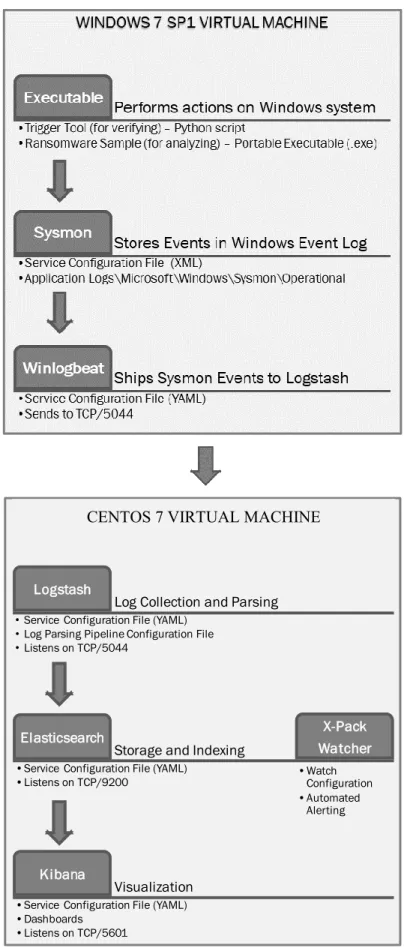
Figure 1. Architecture Diagram for Instantiation Artifact ... 31
Figure 2. Command to Install Sysmon ... 35
Figure 3. Email Alert for Process Labeled Malicious by VirusTotal (Sample G1) ... 39
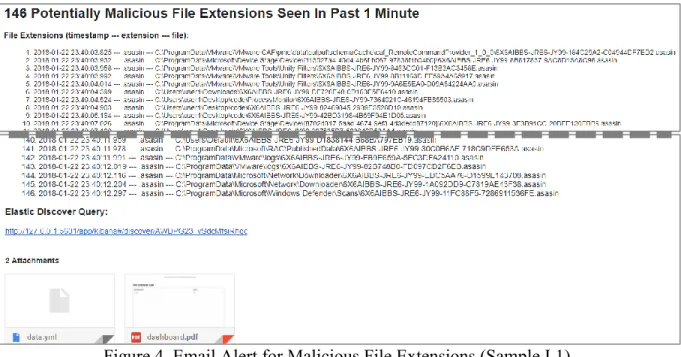
Figure 4. Email Alert for Malicious File Extensions (Sample L1) ... 40
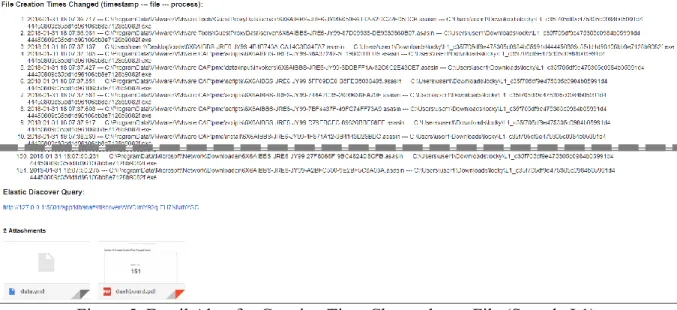
Figure 5. Email Alert for Creation Time Changed on a File (Sample L1) ... 41
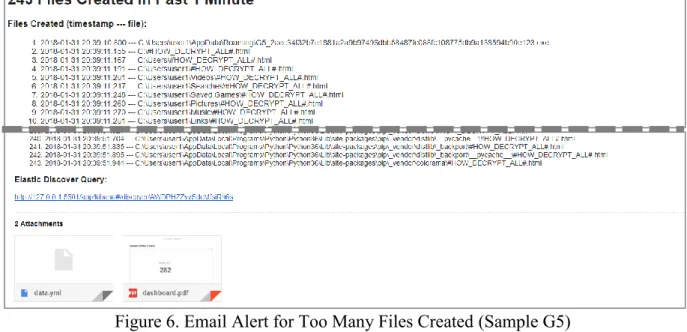
Figure 6. Email Alert for Too Many Files Created (Sample G5) ... 42
Figure 7. Dashboard for Viewing Processes Labeled Malicious by VirusTotal (Sample C1) 43 Figure 8. Dashboard for Viewing Network Connections (Sample C1) ... 43
Figure 9. Dashboard for Viewing Sysmon Events Word Cloud (Sample C1)... 44
Figure 10. Dashboard for Viewing Sysmon Events Histogram (Sample C1)... 44
Figure 11. Dashboard for Viewing Ransomware File Extensions (Sample L1) ... 45
Figure 12. Dashboard for Viewing Changes to File Creation Time (Sample L1) ... 45
Figure 13. Dashboard for Viewing Created Files (Sample L1) ... 46
Figure 14. Query to Analyze Process Creation and Termination Events (Sample L1) ... 47
Figure 15. Query to Analyze File Creations (Sample C1) ... 48
Figure 16. Query to Analyze Ransomware File Extensions (Sample L1) ... 48
Figure 17. Query to Analyze Ransomware File Extensions (Sample C1) ... 48
Figure 18. Output of the Tool Artifact ... 51
Figure 19. Dashboard of Sysmon Events Generated by the Tool Artifact... 53
Figure 20. Screenshot of Ransomware Sample G1 ... 205
Figure 21. Screenshot of Ransomware Sample G2 ... 206
Figure 22. Screenshot of Ransomware Sample G3 ... 206
Figure 23. Screenshot of Ransomware Sample C1 ... 207
Figure 24. Screenshot of Ransomware Sample C2 ... 207
Figure 25. Screenshot of Ransomware Sample C3 ... 208
Figure 26. Screenshot of Ransomware Sample L1 ... 209
Figure 27. Screenshot of Ransomware Sample L2 ... 209
Figure 28. Screenshot of Ransomware Sample L3 ... 210
Figure 30. Histogram of Sysmon Events for Sample G2 ... 212
Figure 31. Histogram of Sysmon Events for Sample G3 ... 213
Figure 32. Histogram of Sysmon Events for Sample C1 ... 214
Figure 33. Histogram of Sysmon Events for Sample C2 ... 215
Figure 34. Histogram of Sysmon Events for Sample C3 ... 216
Figure 35. Histogram of Sysmon Events for Sample L1 ... 217
Figure 36. Histogram of Sysmon Events for Sample L2 ... 218
CHAPTER 1
INTRODUCTION
Background of the Problem
This research focuses on computer security incident response and provides rigorous results that help organizations make informed decisions about the tools and techniques used to identify suspicious activity on computer systems during an incident response. The Verizon “2017 Data Breach Investigations Report” defines an incident as “a security event that compromises the integrity, confidentiality or availability of an information asset”. Computer incident response, which is the act of responding to an incident, is an increasingly critical skill for all Information Technology (IT) professionals. In 2004, the National Institute of Science and Technology (NIST) stated that a computer security incident response capability is
“necessary for rapidly detecting incidents, minimizing loss and destruction, mitigating the
weaknesses that were exploited, and restoring IT services.” (Grance, Kent & Kim, 2004). A recent CSO Online article predicted that the growing impact of cybercrime has made every IT position a cybersecurity position (Morgan, 2018).
Logging important data from computers and networks is essential to facilitate incident
response efforts. In 2006, NIST recommended that “organizations be proactive in collecting
useful data” to aid incident response effectiveness (Kent, Chevalier, Grance & Dang, 2006). Specific recommendations included auditing operating system behavior and implementing centralized logging so that data is available during forensic events. One month later, NIST published recommended guidelines for how to manage computer security logs, including how to generate, transmit, store, analyze, and dispose of computer security log data (Kent & Souppaya, 2006). In the years since this NIST guidance was published, computer security incidents have increased dramatically. An information security survey conducted by PwC concluded that the number of reported security incidents averaged 117,339 attacks per day in 2014 and the growth rate of detected incidents has increased 66% each year since 2009 (PwC, 2015). In this rapidly growing environment of security incidents and cybercrime,
Statement of the Problem
Organizations must be prepared to respond to computer security incidents. Many tools and techniques exist to provide insight into what events took place on a system during an incident response. The Sysinternals Suite provides a bundle of tools to gain insight into Microsoft Windows systems (Russinovich & Garnier, 2016). Sysmon is a tool in the
Sysinternals Suite that logs specific system activity to the Windows event log to help record and identify malicious or anomalous activity (Russinovich & Garnier, 2017). The Symon author Mark Russinovich has given numerous talks showing how he used Sysmon to identify malware running on a Windows system (Russinovich, 2014, 2015, 2016, 2017). Sysmon provides logging only; the tool does not analyze events. Sysmon documentation states that Sysmon should be used with a Security Information & Event Management (SIEM) system to provide event correlation for analysis (Russinovich & Garnier, 2017).
The Sysmon tool is useful for logging Windows system activity, but there is little guidance concerning which Sysmon events are most likely to indicate suspicious activity. Russinovich has stated that creating a good configuration file is an iterative process consisting of a cycle that involves editing the configuration, deploying it, and assessing it (Russinovich, 2017a). Unfortunately, many organizations do not have the knowledge or the infrastructure to perform detailed testing of security tools such as Sysmon. In addition, when faced with so many Sysmon configuration options, many organizations do not have the time or the expertise to configure the tool effectively or analyze the results properly.
Objectives of the Research
This research strives to answer the question “What methodology can an organization
follow to determine which Sysmon events should be analyzed to identify ransomware in a
Windows environment?” The objective of this research is to develop a practical and relevant
method that organizations can utilize to analyze Sysmon events in their Windows
environments to aid incident response procedures. The purpose of this research is to prove the effectiveness and value of Sysmon event logging by creating a comprehensive
implementation of the method and demonstrating how to analyze Sysmon events. The
publicly available ransomware dataset to provide guidance regarding which Sysmon events are most useful in detecting ransomware.
Summary
This research study explores how to analyze Sysmon logs to identify ransomware and improve incident response procedures. This paper presents the resulting research in a manner that can be applied and implemented by other organizations and researchers. Chapter 1
provides an introduction to the problem statement and describes the importance and relevance of the research question. Chapter 2 explores prior work regarding related software, analytic approaches, and datasets. A gap in existing literature is identified regarding analyzing Sysmon events with ransomware. The gap will be addressed by this research. Chapter 3 explains the design science research methodology that is followed to answer the research question. Three artifacts developed by the research are introduced and requirements for the artifacts are defined. Chapter 4 contains the results of the conducting the iterative research.
Implementation details are provided regarding the developed artifacts and results are evaluated to demonstrate the effectiveness of profiling ransomware using Sysmon events. Chapter 5 summarizes the unique contributions provided by this research, including
limitations, recommendations, and future work. References and Appendices are provided to augment the results and provide further details to organizations seeking to replicate the results obtained by this research.
CHAPTER 2
LITERATURE REVIEW
Endpoint Detection and Response (EDR) is a category of computer security tools that detect and respond to suspicious activity observed on hosts, as opposed to activity observed on network segments (Chuvakin, 2013). EDR solutions are popular because endpoint devices are often the target of exploitation (Reis, 2016). More than 30 EDR vendors existed in 2015 and EDR marketplace was expected to double in 2016 (Higgins, 2015). Although EDR tools are robust, they cannot stop every attack. Users might have a false sense of security if they do
not fully understand an EDR tool’s capabilities and limitations. In addition, while EDR tools
provide detailed incident response information, the technical details may only be understood by the most experienced security professionals (Chuvakin, 2016). Smaller companies and less experienced security teams may not be able to leverage the capabilities and data insight that EDR tools provide. Sysinternals Sysmon is a tool that performs endpoint detection only, not response. This literature review explores previous research and open source contributions regarding the endpoint detection tool Sysmon. Specifically, existing literature is examined to determine how Sysmon has been used to identify ransomware during an incident response.
Sysmon Capabilities
Sysmon is an endpoint detection tool that logs specific Microsoft Windows system events to the Windows event log (Russinovich & Garnier, 2017). Sysmon was written by Mark Russinovich and Thomas Garnier (Perez, 2014). Sysmon was originally released in 2014, and the tool is frequently updated. Sysmon version 6.20 was released on November 22, 2017 (Russinovich & Garnier, 2017). Sysmon provides documentation online and from the command line tool. An additional resource developed by Michael Haag provides numerous references to online sources with Sysmon details, including configuration, deployment, and analysis examples (Haag, 2017a). Sysmon only operates on Microsoft Windows systems. Microsoft Windows is the most popular desktop operating system worldwide, consisting of 82.68% of the market share as of December 2017 (StatCounter, 2017). Therefore, studying
Microsoft Windows desktop endpoints is extremely relevant and useful to a large majority of organizations.
Each Sysmon event records various types of system activity information in descriptive fields to help an incident responder understand what happened during an event. Sysmon version 6.20 is capable of logging 21 event types, which are enumerated in Appendix A. Sysmon logging can be filtered by providing an Extensible Markup Language (XML) configuration file to specify which events to include and which events to filter out. The full Sysmon schema can be accessed from the command line to understand the type of details that are recorded by Sysmon (Russinovich & Garnier, 2017). SwiftOnSecurity (2017) provides a Sysmon configuration file that provides a good starting point for deploying Sysmon. The configuration is very well documented and provides great insight into various Sysmon filtering options. The SwiftOnSecurity configuration file is licensed with a Creative
Commons Attribution 4.0 license, which allows others to “privatize, fork, edit, teach, publish,
or deploy for commercial use - with attribution in the text” (SwiftOnSecurity, 2017).
This research builds upon the SwiftOnSecurity Sysmon configuration file because the configuration is thorough and robust and the license allows such usage. Creating a Sysmon configuration file from scratch would be duplicating efforts that the community has already completed. In addition, the SwiftOnSecurity configuration file is still an actively developed project, so updates provided by SwiftOnSecurity can be leveraged by this study. The SwiftOnSecurity configuration file specifies which Sysmon events to log, but there is no existing mechanism to verify that the desired Sysmon events are being logged as expected. A review of existing literature did not identify a tool available to trigger all the Sysmon events and confirm that the configuration file is working as expected.
Sysmon During Incident Response
Several existing efforts have leveraged Sysmon during incident response. In 2016,
Mark Russinovich presented “Tracking Hackers on Your Network with Sysinternals Sysmon”
at the RSA Conference, a highly-respected computer security conference (Russinovich, 2016). In the presentation, Russinovich discussed how he used Sysmon to detect malware running as a scheduled task, as well as malware escaping from restricted environments. In 2017,
and demonstrated how to use Sysmon to hunt a phishing email and identify credential stealing (Russinovich, 2017a). Others, such as Jerome Quentin, have said that Sysmon is a good tool for threat hunting and incident response (Quentin, 2017). Lenny Zeltser of SANS, a popular
cybersecurity training organization, pointed out that Sysmon is helpful for “system
administrators, incident responders and forensic investigators” because it records interesting events for log collection (Zeltser, 2014). These efforts demonstrate that Sysmon is an appropriate tool to use during incident response, which gives credence to this study.
Analyzing Sysmon Results
Sysmon provides logging only; the tool does not analyze events or respond to alerts.
Sysmon documentation explicitly states that “Sysmon does not provide analysis of the events
it generates, nor does it attempt to protect or hide itself from attackers” (Russinovich &
Garnier, 2017). Sysmon documentation recommends using a Security Information & Event Management (SIEM) system to provide event correlation (Russinovich & Garnier, 2017).
One popular SIEM system is Splunk. There are discussions online about using Splunk to analyze Sysmon logs (ncis0x007, 2016; Haag, 2017b; Hall, 2016; Hayes, 2016; Splunk, 2017; Crypsisgroup, 2016), but Splunk is an expensive corporate tool and may not be a feasible solution for individuals or small businesses due to high costs (Dreyfuss, 2015). Another popular SIEM is LogRhythm (LogRhythm, 2018). LogRhythm released a webcast to demonstrate how to use LogRhythm to collect and investigate Sysmon logs (Reynolds & Smith, 2017). LogRhythm may also be priced out of the reach of many organizations, with the LogRhythm appliance solution starting at $35,000 (Stephenson, 2017).
Unlike Splunk and LogRhythm, which are commercial data analysis tools, the Elastic Stack is an open source collection of tools to perform data analysis. The Elastic Stack,
formerly referred to as the ELK stack, consists primarily of the open source software products Elasticsearch, Logstash, and Kibana (Langlois, 2016). Elasticsearch provides an open source, high-speed, near real-time, distributed search engine. (Banon, 2010). Elasticsearch is currently the most popular search engine (solid IT gmbh, 2018). Logstash performs data collection and parsing (Elastic, n.d.). Kibana is a visual front-end for Elasticsearch (Langlois, 2016).
The Elastic Stack is a promising tool to use during the analysis portion of this study. In 2017, Elastic announced that the Elastic Stack had been downloaded over 100 million times (Elastic, 2017). Elastic products are rising in popularity to monitor and analyze security logs (adm, 2015). There is a precedence for using Elastic to examine security event logs. Mozilla uses Elastic to analyze their security logs (Bryner, 2015). The CyberSponse Security Operations Platform has integrated Elastic into their platform (CyberSponse, 2015). Informal tutorials are available online that discuss using Sysmon logs and Elastic products during incident response (Bandos, 2016; Churchill, 2015; Lewis, 2015), but no rigorous academic studies exist to explore using the two tools together.
In addition, many of the online discussions do not provide access to all of the
configuration files used to create the Elastic environment. This makes it difficult to replicate and implement similar results. Some of the studies that do provide source code only provide basic implementations. For example, two web articles have published Logstash pipelines to support the parsing of Sysmon events (Andy, 2017; Delgado, 2017). However, the pipelines are simplistic. They provide a good starting point for organizations getting started with Sysmon, but they do not implement data enrichment and customized parsing to suit the needs of detailed incident response analytics. There is a need for robust, open source guidance to help organizations implement their own Elastic environment to analyze Sysmon logs.
Ransomware
Ransomware is affecting users and businesses worldwide. Ransomware is a type of malware that restricts access to an infected system until the ransom is paid (US-CERT, 2016). Crypto-ransomware uses an algorithm to encrypt files on an infected machine to prevent access to the files until payment is received (F-Secure, 2018). Encrypted files are usually
renamed with a new file extension (Dubey, 2016). Since the attacker’s goal is to be paid a
ransom, the user is typically notified via a text document or webpage that files have been encrypted. The notification document contains instructions on how to pay the ransom to recover and decrypt the files (Trend Micro, n.d.). Although there are different types of ransomware besides crypto-ransomware (Steinberg, 2018), this research will use the simplified term ransomware to refer to crypto-ransomware.
The threat of ransomware has increased over the past few years. The Federal Bureau of Investigation (FBI) stated that law enforcement observed an increase in ransomware attacks against organizations during 2015 (FBI, 2016). Check Point reported that ransomware attacks consisted of 10.5% of all worldwide malware attacks in the second half of 2016 (Check Point, 2017a, 2017b). Studies show that ransomware is a growing threat to
organizations (Schulze, 2017; O’Brien, 2017). Sometimes paying the ransom is an
organization’s only option, due to lack of backups and ransomware detection tools (Palmer, 2017).
Due to the increasing threat and impact of ransomware, this research explores the usefulness of analyzing Sysmon events to identify ransomware. Splunk posted an article in 2016 on how to use Splunk to find ransomware in Sysmon logs by searching for a large number of files being created in a short time (Hayes, 2016). Hayes only demonstrated the analytic using one ransomware sample, and the name of the ransomware sample was not mentioned. This article provides good ideas for Sysmon analytics, but it does not provide a repeatable environment that organizations can implement on their own. As previously mentioned, Splunk is not a feasible solution for all organizations due to cost. There is a need to expand the analytics presented by Hayes into an open source solution, with detailed guidance and advanced customization to profile multiple ransomware samples.
LogRhythm posted an online article on analyzing WannaCry ransomware activity in Sysmon logs using the LogRhythm software (Costis, 2016). The article only focused on two Sysmon events, instead of all possible Sysmon events. In addition, details about the
WannaCry sample used were not disclosed. As previously mentioned, LogRhythm may be too expensive for some organizations. Once again, existing efforts have discussed using Sysmon to investigate ransomware, but an open source, repeatable solution is not available. There is a need to expand existing analytics into a robust solution that leverages all Sysmon event logs and that an organization can implement fully to perform their own analytics.
Elastic posted a blog entry on how to detect WannaCry ransomware using Sysmon with an Elastic Stack (McDiarmid, 2017). McDiarmid looked specifically for activity related to WannaCry downloading, executing, spreading, and terminating. McDiarmid investigated only one WannaCry sample executable, and he focused specifically on searching for
over multiple ransomware families to compare how different samples behave. In addition, a generic approach is needed to profile ransomware behavior, instead of looking for specific, known behaviors. The results need to be presented in a repeatable manner that organizations can leverage in their own environments.
The articles discussed above confirm that the community is interested in using Sysmon events during incident response, indicating that this topic is relevant and timely. Existing work has been performed with Elastic and Sysmon, but gaps have been identified to promote further understanding of how Sysmon logs can be used to investigate ransomware.
Summary
This research explored previous research conducted using the endpoint detection tool Sysmon. Sysmon documentation states that Sysmon does not provide analysis of events, and that any analysis must be done in another tool. Some researchers have used Splunk and LogRhythm to analyze Symon events, but commercial tools are expensive and not viable for many organizations. Elastic Stack is an open source solution that provides storage and
searching of distributed data. A gap was identified in existing literature regarding the analysis of Sysmon events to identify ransomware in a generic, repeatable manner. Solutions to fill this gap need to provide configuration files and ransomware samples so that results can be repeated and enhanced by the incident response community. The remainder of this paper describes a research study that was conducted to fill the identified research gap and answer
the question “What methodology can an organization follow to determine which Sysmon
events should be analyzed to identify ransomware in a Windows environment?” Details
regarding the methods followed to construct this research study are found in Chapter 3. Results and design documents created by the study are found in Chapter 4. A summary of contributions provided by this research to address the identified research question, including limitations, recommendations, and future work, is found in Chapter 5.
CHAPTER 3
RESEARCH METHODOLOGY
The literature review identified a gap in the availability of detailed guidance for organizations desiring to analyze Sysmon events to identify ransomware. This gap led to the
development of the research question “What methodology can an organization follow to
determine which Sysmon events should be analyzed to identify ransomware in a Windows
environment?” Selecting an appropriate research methodology provides guidance and
techniques to answer the research question (Kumar, 2014). Due to the nature of the research question, a design science research methodology was selected to provide a framework for this study. This chapter describes why a design science methodology was selected to address the research question. Advantages and shortcomings of using design science methods to conduct this study are discussed. The research model and artifact requirements that directed the execution of the study are described in detail. Validation that the research conducted by this study conformed to design science principles is also presented. Chapter 4 contains the results that were obtained by performing the study. Chapter 5 contains a detailed summary of contributions produced as an outcome of this research.
Research Methodology Justification
Three research methodologies were originally considered for this study: quantitative, qualitative, and design science.
Quantitative research methods are typically used to measure relationships between two variables to explain an observation (USC, 2018). Quantitative research commonly explores observable facts and typically results in numerical outcomes and objective outcomes.
Quantitative research was not appropriate for this study because the research goal was not to measure the performance of Sysmon, but rather to develop useful tools and techniques to produce a deeper understanding of how to leverage Sysmon events to identify ransomware. Thus, quantitative methods were not appropriate to develop tools to analyze Sysmon events. However, once tools and techniques are fully developed, quantitative methods would be very
appropriate in future research to compare and study the efficiency of the resulting tools and techniques to identify the solution that has the best performance or maximizes resource utilization.
Qualitative research methods are commonly used to study behaviors and subjective research questions that require inductive reasoning (Creswell & Creswell, 2018). Qualitative studies typically employ questionnaires and interviews to collect relevant data to answer a qualitative research question. Qualitative research was not appropriate for this study because the research goal was not to understand behavior related to Sysmon or study why users do or do not prefer using Sysmon. The goals of this study were to develop tangible procedures that could be used by organizations desiring to use Sysmon to detect ransomware. Thus,
qualitative methods were not appropriate to address this research problem. However, once a solution is developed by design science, qualitative methods would be quite appropriate in future research to study human-computer interaction of the resulting tools and to understand what an organization finds most beneficial when using the outcomes of this study.
A design science research methodology was selected to conduct this study. Design science research seeks to create useful artifacts that solve an unknown problem or improve an existing solution (Hevner et al., 2004). Sysmon and Elastic products are existing, freely available tools. However, the literature review identified a gap in guidance on analyzing Sysmon events to identify ransomware using Elastic. This study will improve upon existing ideas that have been implemented in other tools, as well as add new capabilities to use Sysmon logging to investigate and profile ransomware.
Design science produces new knowledge relevant to the community (Vaishnavi & Kuechler, 2004). This study produced new knowledge in the form of a comprehensive environment to analyze Sysmon events that will be useful to the computer security incident response community. The environment can be implemented by organizations seeking to
address the identified research question “What methodology can an organization follow to determine which Sysmon events should be analyzed to identify ransomware in a Windows
environment?”
The primary driver behind selecting design science research methods was to iteratively develop a solution that organizations could apply directly and immediately to leverage
evaluation for research is the question “What are the new and interesting contributions?” By
following design science methods, this study ensured utility of the research contributions because development was performed in a cyclical manner enabling rapid improvements and adjustments. Design science methods led directly to the development of artifacts that can be leveraged by organizations to identify ransomware using Sysmon log analysis.
Research Model
This section describes the research steps that were planned and executed using a
design science research methodology to answer the research question “What methodology can
an organization follow to determine which Sysmon events should be analyzed to identify
ransomware in a Windows environment?” Design science methods allowed for iterative
research, which enabled the development of research artifacts by implementing incremental improvements throughout the research study to properly address the research question.
The following steps were conducted to implement this research. The results obtained after conducting the research steps below are found in Chapter 4.
1. Compile a corpus of ransomware to use during testing.
2. Develop a method to analyze Sysmon events.
3. Develop a virtual environment to apply the method.
4. Develop a tool to trigger all Sysmon events and verify that the virtual environment
logs Sysmon events as expected.
5. Execute ransomware samples in the virtual environment and analyze results.
6. Develop dashboards, alerts, and queries to aid in automating Sysmon analysis.
7. Repeated Steps 2-6 iteratively as needed to profile ransomware and answer the
research question “What methodology can an organization follow to determine which
Sysmon events should be analyzed to identify ransomware in a Windows
environment?”
8. Make results, configuration files, and code available for usage by the community to
Artifacts of Design Science
Artifacts are the primary contribution created by design science research (March & Storey, 2008). A design science research artifact is a useful product developed as part of the research process to help answer the research question. This study used a design science research methodology to create innovative and useful artifacts that can be leveraged by the cyber security community during an incident response. The purpose of the artifacts developed by this research was to help organizations utilize Sysmon for event logging and ransomware detection. The artifacts can be used to make educated decisions about which Sysmon events to enable and to guide the analysis of Sysmon events to determine what occurred on an infected system during an incident response.
This research identified three artifacts that were needed to explore the research question: a method, an instantiation, and a tool. This section documents the requirements of the three artifacts developed by this study. Accurate requirements help ensure that the resulting artifacts are useful and applicable to the research domain. Details regarding the resulting development of the artifacts are found in Chapter 4.
A Method. A method is needed to help organizations leverage Sysmon during
incident response in Windows environments. In design science, a method is “a set of steps (an
algorithm or guideline) used to perform a task” (March & Smith, 1995). The method created
by this research will document the key steps needed to deploy and analyze Sysmon logging to investigate ransomware. The Sysmon tool is freely available, but there is little guidance on how to fine-tune the configuration files and analyze the results. The method will serve as a guideline to organizations who wish to use Sysmon but do not know where to start. The only
requirement is that the method must provide guidance to answer the research question, “What
methodology can an organization follow to determine which Sysmon events should be
analyzed to identify ransomware in a Windows environment?” The method will be generic so that it can be applied to various types of ransomware.
An Instantiation. The most critical artifact needed for this research is an instantiation
that implements the method designed above. In design science, an instantiation is “the
realization of an artifact in its environment” (March & Smith, 1995). Instantiations can
operationalize a method and can help articulate a method further (March & Smith, 1995). In this research, the method guided the development of the instantiation, and the instantiation
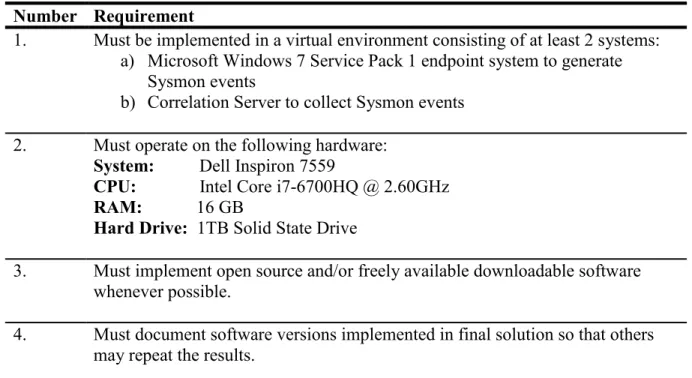
helped formalize the steps in the method. The instantiation will be used to analyze which Sysmon events are triggered most frequently by ransomware. The instantiation will prove that the method can be implemented and used by organizations seeking to leverage Sysmon to identify ransomware. The instantiation is a tangible example of how to apply the method to answer the research question. The requirements for the instantiation artifact are introduced in Table 1. Hardware specifications are included as a requirement to demonstrate the relevance of the solution to an average user due to the use of low cost and commodity hardware and software. The completed instantiation can be implemented by anyone desiring to setup an infrastructure and begin exploring Sysmon data.
Table 1. Requirements for Instantiation Artifact
Number Requirement
1. Must be implemented in a virtual environment consisting of at least 2 systems:
a) Microsoft Windows 7 Service Pack 1 endpoint system to generate
Sysmon events
b) Correlation Server to collect Sysmon events
2. Must operate on the following hardware:
System: Dell Inspiron 7559
CPU: Intel Core i7-6700HQ @ 2.60GHz
RAM: 16 GB
Hard Drive: 1TB Solid State Drive
3. Must implement open source and/or freely available downloadable software
whenever possible.
4. Must document software versions implemented in final solution so that others
may repeat the results.
A Tool. A third artifact is needed to verify Sysmon logging. A tool will be created to trigger every Sysmon event. This tool is technically considered a design science instantiation, but this research refers to the artifact as a tool to distinguish it from the instantiation artifact described above. This tool will be used to ensure that the test environment is properly configured by verifying the logging of all Sysmon events. No capability of this nature was identified while reviewing existing literature. The requirements used to develop the trigger tool artifact are introduced in Table 2.
Table 2. Requirements for Trigger Tool Artifact
Number Requirement
1. Must run on Microsoft Windows 7 Service Pack 1 operating system.
2. Must be run with administrative privileges.
3. Must be written in an interpreted language so users can easily confirm that the
tool contains no malicious behavior.
4. Must trigger all 21 of the Sysmon events. Does not need to trigger the Sysmon
error event (event ID 255).
5. Must execute fully without requiring a reboot.
6. Must limit external dependencies as much as possible. If dependencies on other
software or libraries cannot be avoided, those dependencies must be fully documented.
Advantages and Shortcomings of Design Science Research
Every research methodology has advantages and shortcomings. Design science is advantageous in this research scenario because it provides utility to organizations desiring to use Sysmon effectively to identify ransomware. Utility is the main advantage of design science research. The output of this research is three artifacts designed to help organizations and system administrators leverage Sysmon during an incident response. The resulting artifacts are useful to organizations, even though an organization may not fully understand every aspect of Sysmon. Another benefit to design science is the iterative approach that allows the researcher to evaluate if progress is being made toward the research goal. If the research is not leading to an artifact that is useful to the problem statement, the research can be adjusted and modified to ensure that research results are useful. Continuous iterations that are constantly critiqued against the research question enable the development of useful artifacts that are immediately relevant to the incident response community.
In this research scenario, design science has a few shortcomings when compared to quantitative and qualitative methodologies. Design science results in the creation of artifacts, but not in an understanding of how or why Sysmon or ransomware performs in a certain
manner. This research study provides guidance to organizations regarding Sysmon analysis, but it does not provide in-depth understanding of how Sysmon works or how ransomware triggers specific Sysmon events. Another shortcoming is that design science results can be perishable because the cybersecurity domain changes so quickly. Resulting artifacts could become obsolete before they are effectively implemented in an organization (Hevner et al., 2004). Throughout the duration of this research, both the Sysmon and the Elastic Stack software versions were regularly updated. Fortunately, backwards compatibility was maintained, and the updated software did not break any functionality during this research. However, newer versions of Sysmon and Elastic have already been released prior to the publication of this research. Another drawback to design science is that artifacts are customized to a specific environment (Hevner et al., 2004). This research is customized to Sysmon version 6.20 running on Windows 7 using a specific ransomware dataset. Results may not be applicable to other environments, including other operating systems, software versions, or malware samples. These shortcomings are reduced during this research by producing a repeatable method that can be applied to other tools and datasets. Overall, the advantages of design science far exceeded the shortcomings when applied to this research question.
Validation of Design Science Research
To validate that the resulting research followed design science principles, the research goals and outcomes are dissected below into the five steps of the Vaishnavi and Kuechler (2004) design science research process.
Awareness of Problem. This research identified that endpoint detection logging is critical for effective incident response. The Sysmon tool was identified as a tool used to log critical Microsoft Windows events, but there were no existing academic studies to measure the effectiveness of Sysmon at recording malicious activity. Because there was no rigorous guidance on how to configure Sysmon, users could not ensure that they were monitoring their Windows systems in the most effective manner to log potential ransomware activity. This left users without confidence in their Sysmon implementations and incident response readiness.
Suggestion. This research suggested and explored a solution to the identified research question through the creation of three design science artifacts. The research investigates the
effectiveness of Sysmon at logging malicious activity and provides empirical evidence regarding which Sysmon events are triggered most frequently by ransomware.
Development. This research developed three useful design science artifacts: a method, an instantiation, and a tool. The method documented a process to follow to identify
ransomware using Sysmon logging. The instantiation implemented the method to allow tangible research on the effectiveness of Sysmon logging against the selected ransomware dataset. The trigger tool verified Sysmon logging in the instantiation. All of the artifacts could be further modified to test other endpoint detection tools or other malware samples.
Evaluation. The artifacts were evaluated to determine the effectiveness of the Sysmon configuration. The method was tested by implementing an instantiation to verify that the method was sound. Results were analyzed to determine which Sysmon events were triggered most frequently by the ransomware dataset. Regardless of the outcome of the tests, the artifacts deliver utility to the incident response community by providing insight into how Sysmon performs against the selected ransomware dataset. By providing tangible results, this research contributed to the body of knowledge by enabling organizations evaluate the
usefulness of Sysmon logging in Microsoft Windows environments.
Conclusion. This research provided conclusions regarding the results of the research, including conclusions regarding the effectiveness of using Sysmon to identify ransomware. The usefulness of the developed artifacts was articulated and provided the community with a greater understanding of Sysmon logging. Source code and configuration files were made available for the community to download and reuse in their own environments to replicate this research. Future work is documented so that other researchers may continue to expand the field.
If there is any remaining doubt that this research followed sound design science principles, the seven design science guidelines offered by Hevner et al. (2004) are evaluated in the following sections.
Design as an Artifact. The research resulted in the design of a method, an
instantiation, and a tool. The creation of the artifacts was the primary focus of the research to
answer the identified research question “What methodology can an organization follow to
environment?” All of the artifacts worked together to allow an organization to evaluate the effectiveness of Sysmon at logging ransomware activity.
Problem Relevance. The research addressed a relevant and important business problem: the lack of guidance regarding how to use Sysmon to analyze malicious events, leaving organizations on their own to configure, deploy, and assess the effectiveness of Sysmon event logging, an especially difficult task for small organizations without dedicated computer security personnel. The use of a current ransomware dataset added to the relevance of this research.
Design Evaluation. The three developed artifacts helped evaluate the research results. The method artifact was used to define how to leverage Sysmon events during incident response. The instantiation artifact was used to evaluate the effectiveness of the method at identifying ransomware. The trigger tool artifact confirmed that Sysmon logging was behaving as expected in the instantiation. The Sysmon events were analyzed with observational methods and experimental methods. Histograms were generated to make conclusions regarding which Sysmon events are triggered most frequently by the selected ransomware dataset.
Research Contributions. This research provided valuable contributions to the incident response community and organizations desiring to use Sysmon logging to identify ransomware. The developed artifacts were well-documented for others to understand, use, and enhance for their own needs. The method provided guidance on the steps to take during Sysmon log analysis. The instantiation provided a realistic environment to implement. The tool allowed verification and validation of a Sysmon implementation. Source code and configuration files were made available for others to reuse and modify for their own environment. More details regarding the contributions of this research can be found in Chapter 5.
Research Rigor. A rigorous experimental evaluation of the instantiation was presented to profile ransomware. Data analysis of Sysmon logging was performed using statistical analysis through Elastic Stack dashboards and queries.
Design as a Search Process. The research process sought to find the best way to leverage Sysmon events during incident response to identify ransomware. The artifacts were developed using an iterative approach. Satisficing was used to identify a satisfactory solution
to the research question without needing to answer every question about how and why Sysmon performed a certain way (March & Storey, 2008).
Communication of Research. The results were presented as a formal dissertation. The resulting artifacts were made available to the community, including code and
configuration files that can be found in the Appendices. The content of this research was appropriately technical so that other researchers may replicate the study. The results were presented in an actionable manner so that organizations without deep technical knowledge can apply the results within their own environment and get started using Sysmon to identify ransomware.
CHAPTER 4
RESULTS AND ANALYSIS
The goal of this research was to provide academically sound results to help organizations leverage Sysmon logging during incident response. The specific research
question studied was “What methodology can an organization follow to determine which
Sysmon events should be analyzed to identify ransomware in a Windows environment?” A
review of existing literature indicated a lack of rigorous research studies involving the analysis of Sysmon events to identify ransomware. A design science research study was conducted to answer the research question and to develop unique and useful artifacts as a result of the research. This chapter discusses the details of the results obtained from carrying out the design science research study proposed in Chapter 3. An overview of research contributions, limitations, and future work are found in Chapter 5.
Ransomware Dataset
As discussed in Chapter 2, studies show that ransomware is a growing threat to
organizations (Schulze, 2017; O’Brien, 2017). To achieve relevant and repeatable research results, a ransomware dataset was needed in this research to demonstrate the effectiveness of the developed artifacts at profiling ransomware in Sysmon logs. The use of modern, relevant, freely-accessible ransomware samples was the most important consideration in selecting the dataset.
Sample size was considered when compiling the ransomware dataset. This study was based on design science methods, not quantitative or qualitative methods. Therefore, the dataset served as a proof of concept to exhibit the usefulness of the research results. This research did not rely on statistical methods to measure relationships or derive numerical truths. The sample size of the ransomware dataset used in this design science research study was not as critical as it would have been in a statistical study. The purpose of the dataset was to prove the effectiveness of the developed artifacts. This research study deemed the content of the dataset to be more important than the size of the dataset. A dataset consisting of a few
high-ranking ransomware threats would provide more valuable results in this study than a dataset consisting of a thousand out-of-date or unfamiliar ransomware samples.
For the purpose of this study, three samples were considered sufficient to represent a ransomware family. One sample was deemed insufficient to represent an entire ransomware family. Two samples would not provide a means to determine which results are more accurate if discrepancies are found. Three samples were deemed to provide a reasonable comparison to prove the concepts developed by this design science research study. Malware samples change frequently to avoid detection, which can make it challenging to obtain current malware samples. Therefore, requiring more than three samples could prove difficult to find enough samples of a given ransomware family.
Design science research excels at providing relevant results. The first step in selecting the ransomware dataset was to identify ransomware families to study. To ensure that the results of this study were relevant to organizations today, relevant ransomware samples were
required. In July 2017, Symantec published a “Ransomware 2017” report which identified six major ransomware threats seen in 2017 (O’Brien, 2017). The six ransomware threats
identified by Symantec were Cerber, Jaff, Sage, GlobeImposter, Locky, and Mamba. The samples selected for the dataset used in this research were limited to those six ransomware families due to their significance in 2017. All six of these ransomware families are considered crypto-ransomware (Abrams, 2017; Ducklin, 2016; Hasherezade, 2016; MalwareBytes, 2017; MalwareBytes, n.d.; Trend Micro, 2017). Details regarding crypto-ransomware behavior is found in Chapter 2.
The second step was to identify specific samples within the six major ransomware threats identified by Symantec in 2017. Only publicly available ransomware samples were used in this study to ensure that others could repeat, verify, and expand the results of this research. VirusTotal provided three months of student access to VirusTotal Intelligence during the early stages of this research (VirusTotal, 2018a), but that service was not used to collect samples for this study because the service is not freely available to everyone. Several online malware repositories exist that provide free access to malware samples for researchers (Zeltser, 2018). Hybrid Analysis is a web-based malware analysis service that allows users to upload samples for free and obtain an analysis report (Hybrid Analysis, 2018). If the user marked the uploaded sample as public, then other Hybrid Analysis users could download the
sample from the Hybrid Analysis website. The Hybrid Analysis website provides a robust searching capability to identify malware samples based on specific criteria such as file type and hashtag. All of the malware samples used in this research were downloaded from the Hybrid Analysis website due to the search features offered by the website and due to the fact that samples could be downloaded for free from the website (Hybrid Analysis, 2018). Using only one source for the ransomware samples allowed other researchers to obtain the samples more easily without having to register for multiple accounts on multiples repositories.
The third step was to select current ransomware samples to ensure that the samples used in this research were representative of ransomware that an organization might likely encounter today. In order to ensure the ransomware samples were current, only samples dated between July 2017 and December 2017 on the Hybrid Analysis website were considered for the dataset. In addition, only samples that were clearly and only tagged as one of the
Symantec-identified ransomware families was considered to ensure that the labeling of the samples was accurate. Some samples in Hybrid Analysis were tagged with multiple
ransomware families, which created ambiguity as to how to properly label the ransomware. Such samples were discarded and not used in this study.
The fourth and final step in selecting the ransomware dataset was to confirm that the samples executed properly on a Microsoft Windows 7 Service Pack 1 system without any additional software. Therefore, only Portable Executable (PE) files were considered because PE files are the native executable format used by Windows (Microsoft, n.d.). This
requirement ensured that all samples in the dataset would be compatible with the artifacts developed by this study. Proper execution was defined as files getting encrypted, file extensions being renamed, and notification provided to the user regarding how to pay the ransom to decrypt the files. Some samples downloaded from Hybrid Analysis did not execute properly on the test endpoint system. Such samples were discarded and not used in this research because they did not simulate a ransomware infection.
The Hybrid Analysis website was searched for ransomware samples based on the restrictions identified in the steps above. No Sage ransomware samples were available on the Hybrid Analysis website that met the criteria. Only one Mamba ransomware sample and one Jaff ransomware sample was available on the Hybrid Analysis website that met the criteria. Although sample size is not critical in this study, one sample was not sufficient to represent an
entire ransomware family. Therefore, Sage, Mamba, and Jaff ransomware families were not considered for this study. Only GlobeImposter, Cerber, and Locky ransomware families were selected for the dataset compiled by this research study due to availability of acceptable samples on the Hybrid Analysis website. Three samples each of GlobeImposter, Cerber, and Locky ransomware were selected from the Hybrid Analysis webpage that met the criteria above. For the purposes of this design science research study, where the samples are used to prove the conceptual ideas developed in this study, not to prove statistical truths, three ransomware samples were deemed sufficient to represent a ransomware family.
The use of recent and prevalent ransomware samples made this research applicable and relevant to organizations. In summary, a dataset consisting of three samples each from three prevalent ransomware families was compiled for this study. GlobeImposter, Cerber, and Locky ransomware families were selected because they were among the list of six major
ransomware threats identified in the Symantec 2017 ransomware report (O’Brien, 2017) and public samples were available to download from the Hybrid Analysis website (Hybrid Analysis, 2018). Different ransomware families were used so that this research could investigate if all ransomware families triggered the same Sysmon events or if different ransomware families interacted with Sysmon in a different way.
Overall, nine samples were selected to form the ransomware dataset. Details regarding the dataset samples are provided to assist other researchers in understanding the behavior of the samples without having the execute the samples in their own environment. In addition, the samples are uniquely identified so that other can download the samples and replicate these results in their own environment if desired. A cryptographic hash of each sample is provided to uniquely identify each sample. A cryptographic hash is computed by a cryptographic hash function, which takes an arbitrary number of bytes as input (in this case, the bytes that comprise a ransomware sample) and output a unique fixed length hash value (Gilbert &
Handschuh, 2003). In this study, the Secure Hash Algorithm called “SHA-256” was used to
generate 256-bit hashes of the ransomware samples (Dang, 2015). Cryptographic hashes are commonly used to uniquely identify files in digital forensics (Roussev, 2009). SHA-256 hashes are available when viewing samples on the Hybrid Analysis website.
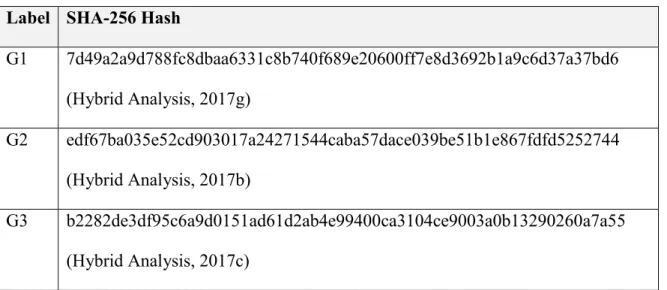
Three GlobeImposter ransomware samples were selected for the dataset. The SHA-256 hash of each sample, the reference citation, and the label this research used to refer to
each sample are introduced in Table 3. All three samples were executed in the research environment to confirm that the ransomware was functional. The GlobeImposter samples
used file extensions “.crypt”, “.STN”, and “.coded” to encrypt files. The samples
created the notification files “how_to_back_files.html” and
“0_HELP_DECRYPT_FILE.html” to instruct the user on how to pay the ransom and
decrypt the files.
Table 3. GlobeImposter Ransomware Samples
Label SHA-256 Hash
G1 7d49a2a9d788fc8dbaa6331c8b740f689e20600ff7e8d3692b1a9c6d37a37bd6 (Hybrid Analysis, 2017g) G2 edf67ba035e52cd903017a24271544caba57dace039be51b1e867fdfd5252744 (Hybrid Analysis, 2017b) G3 b2282de3df95c6a9d0151ad61d2ab4e99400ca3104ce9003a0b13290260a7a55 (Hybrid Analysis, 2017c)
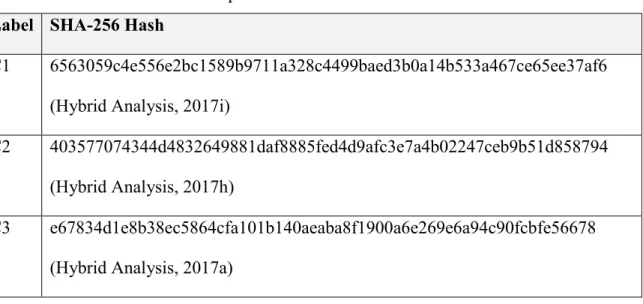
Three Cerber ransomware samples were selected for the dataset. The SHA-256 hash of the sample, the reference citation, and the label this research used to refer to each sample are
introduced in Table 4. The Cerber samples used file extensions “.cerber3” and “.8899”
to encrypt files. The samples created notification files “@[email protected]”,
“@[email protected]”, “_R_E_A_D__T_H_I_S_######.txt”, and
“_R_E_A_D__T_H_I_S_######.txt” to instruct the user on how to pay the ransom and
Table 4. Cerber Ransomware Samples
Label SHA-256 Hash
C1 6563059c4e556e2bc1589b9711a328c4499baed3b0a14b533a467ce65ee37af6
(Hybrid Analysis, 2017i)
C2 403577074344d4832649881daf8885fed4d9afc3e7a4b02247ceb9b51d858794
(Hybrid Analysis, 2017h)
C3 e67834d1e8b38ec5864cfa101b140aeaba8f1900a6e269e6a94c90fcbfe56678
(Hybrid Analysis, 2017a)
Three Locky samples were selected for the dataset. The SHA-256 hash of the sample, the reference citation, and the label this research used to refer to each sample are introduced in
Table 5. All three Locky samples used the file extension “.asasin” to encrypt files. All the
samples created notification files “asasin.html”and “asasin.bmp” to instruct the user
on how to pay the ransom and restore their files. Table 5. Locky Ransomware Samples
Label SHA-256 Hash
L1 c35f705df9e475305c0984b05991d444450809c35dd1d96106bb8e7128b9082f (Hybrid-Analysis, 2017l) L2 294f55a28930c8afed9b95d2af108a6916eeb2c79967e91f4dde48026bab15ce (Hybrid-Analysis, 2017e) L3 4c054127056fb400acbab7825aa2754942121e6c49b0f82ae20e65422abdee4f (Hybrid-Analysis, 2017d)
An interesting feature of ransomware is that it needs to inform the user that the system is infected so that the user will know to pay the ransom. Other types of malware may want to run silently so that users do not know the malware is present. This is not the case with
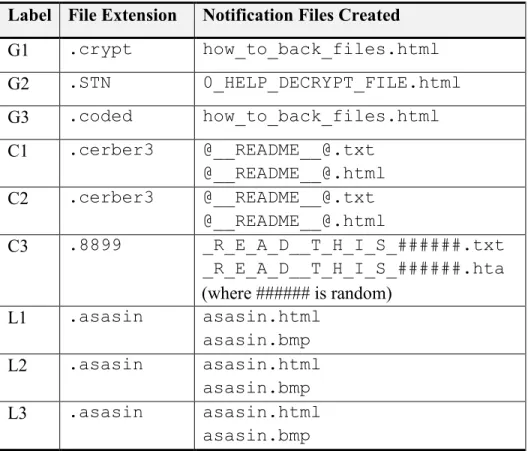
ransomware. While executing the malware, the key effects of the ransomware samples were observed and documented. The observed effects were discussed in the paragraphs above. The file extensions used by each ransomware sample and the notification files created by each sample are introduced in Table 6. This information is useful because it helps incident responders identify infected systems in their environment and identify which ransomware family caused the incident. Screenshots of the notification files created by the samples to demand ransom payment are found in Appendix R. It is important for incident responders to be familiar with how ransomware behaves and what it looks like so that they can act promptly when an incident occurs. The rest of this study used the compiled ransomware dataset to demonstrate the usefulness of the developed artifacts at effectively identifying and analyzing ransomware.
Table 6. Observed Effects of Ransomware Samples
Label File Extension Notification Files Created
G1 .crypt how_to_back_files.html G2 .STN 0_HELP_DECRYPT_FILE.html G3 .coded how_to_back_files.html C1 .cerber3 @[email protected] @[email protected] C2 .cerber3 @[email protected] @[email protected] C3 .8899 _R_E_A_D__T_H_I_S_######.txt _R_E_A_D__T_H_I_S_######.hta (where ###### is random) L1 .asasin asasin.html asasin.bmp L2 .asasin asasin.html asasin.bmp L3 .asasin asasin.html asasin.bmp
Artifact 1: A Method to Analyze Sysmon Event Logging
This research iteratively created a method that organizations can follow to analyze Sysmon events in Windows environments to identify ransomware. The literature review identified a gap in guidance regarding how to analyze Sysmon events. This method was created to be a guideline for organizations needing to analyze Sysmon events. The method was developed iteratively based on the research study designed in Chapter 3. The method was constructed specifically for this research to identify and document the steps needed to analyze Sysmon logs. The resulting method is introduced in Table 7 and summarized in the
paragraphs below.
The method is an overview of steps an organization can take to analyze Sysmon events. The method was used to guide the development of the instantiation and trigger tool artifacts discussed later. The instantiation and trigger tool artifacts also helped improve the method and gave credence to the worthiness of the method. Although the method is straight-forward, it took time to develop and iteratively improve the steps of the method to ensure the results were valuable to organizations and the incident response community. The method was developed according to the design and requirements set forth in Chapter 4.
Table 7. Detailed Method for Utilizing Sysmon Event Logging
Step Description
1. Update Sysmon configuration to collect events of interest on the endpoint
2. Collect Sysmon events into a centralized Security Information & Event
Management (SIEM) server. Concrete example: instantiation artifact.
3. Verify Sysmon logging on the endpoint. Concrete example: trigger tool artifact.
4. Execute ransomware samples on the endpoint, to simulate an incident.
5. Analyze the Sysmon events to identify suspicious activity:
a. Alert automatically if known suspicious activity is seen.
1. Look for malicious VirusTotal hashes.
2. Look for files created with file extensions commonly used by ransomware.
3. Look for processes that changed file creation times.
4. Look for large number of files created in a short amount of time.
b. Review dashboards for suspicious activity:
1. Inspect malicious VirusTotal hashes.
2. Look for network connections to suspicious countries.
3. Review word cloud to see the most common Sysmon event triggered during
a given timeframe.
4. Identify the start time and end time of any suspicious activity.
c. Query other Sysmon events that occurred around the same timeframe of any
suspicious events identified to investigate.
d. Create a histogram of Sysmon events triggered by the ransomware samples
based on the timeframe of start and end times of the ransomware process.
6. Automate the identification of the suspicious activity identified in Step 5 by
creating new queries, dashboards, and alerts.
7. Repeat this cyclical method to improve the Sysmon configuration and to implement
additional analytics in order to identify suspicious activity more quickly and effectively to answer the research question.
The first step in the method was to install and configure Sysmon on the endpoint system. Next, a correlation server was setup to receive and consolidate the Sysmon logs for analysis. The implementation was verified to confirm that Sysmon was logging the desired