Attachment A, Page 17
Proposed Collaborative Nurse Practitioner Program (CNPP) Leading to the Degree
Master of Nursing - Nurse Practitioner
Faculty of Nursing - University of Regina In Collaboration with the
Nursing Division - SIAST As of April 4, 2013
Attachment A, Page 18
Preface ... 21
Overview ... 21
Objectives of the Program... 21
CNPP Development Team ... 21
Collaborative Contributions ... 21
University of Regina ... 22
Saskatchewan Institute of Applied Science and Technology (SIAST) ... 22
Building on Our Collaborative Relationship ... 22
Collaborative Partnership Agreements ... 22
Efficient Resource Utilization ... 22
Rationale for the Program: Contextual Factors ... 23
What is a Nurse Practitioner? ... 23
Nurse Practitioners: Their Vital Role in Saskatchewan Health Care ... 23
Improving Health Care Outcomes: The NP Role ... 23
NPs in Saskatchewan ... 24
Support for the Program ... 25
Nurse Practitioner Education ... 25
Program Description ... 26
Program Name ... 26
Name of Academic Unit ... 26
Degree to be Awarded ... 26
Distinctive Features of the Program ... 26
Curriculum ... 27
Physical Location ... 28
Admission Requirements ... 29
Graduate Studies Committee – CNPP ... 30
Intake ... 30
Full Time Option ... 30
Residency Week... 30
Major Research Paper ... 30
Strategies to Foster Student Success among CNPP Students ... 31
Prior learning expectations ... 31
Student workload mapping ... 31
Figure 2. Student workload ... 32
Semester 1 course work ... 32
Attachment A, Page 19
Digital portfolio ... 33
Library Resources Introduction ... 33
Written work and clinical evaluation tools ... 34
Faculty Expertise ... 35
University of Regina ... 35
SIAST ... 35
Clinical Placements ... 36
Clientele to be Served ... 37
Program Evaluation Strategies ... 37
Student Financial Assistance ... 38
Saskatchewan Health Bursary Program ... 38
Ministry of Health Rural/Remote Clinical Placement Bursary ... 38
Saskatchewan Student Loan Forgiveness Program ... 38
Saskatchewan Graduate Retention Program ... 38
SIAST Scholarship Bursaries and Awards ... 38
University of Regina Graduate Studies and Research Scholarships ... 38
Evidence of Demand for the Program ... 39
Business Plan ... 39
Anticipated Tuition ... 39
Implementation Plan ... 41
Employment Possibilities for Graduates ... 41
Resources Required ... 42
Impact on Undergraduate and Other Graduate Programs ... 42
Compatibility of the CNPP with U of R and SIAST Missions ... 42
Comparison with Similar Programs at other Universities ... 43
Nurse Practitioner Programs in Canada with a Primary Health Care Specialty ... 43
Athabasca University ... 44
Ontario Primary Health Care NP Program ... 44
University of Manitoba ... 44
University of British Columbia ... 44
University of Saskatchewan ... 45
Compatibility of Proposed Curriculum with Standards and Competencies ... 45
Governance ... 45
Sunset Clause ... 47
References ... 48
Attachment A, Page 20
Appendix B: CNPP Development Committee ... 58
Appendix C: Historical and Projected Implementation Timelines ... 59
Appendix D: Letters of Support for the CNPP program ... 62
Appendix E: External Reviews ... 69
Reviewer 1 ... 69
Reviewer 2 ... 74
Reviewer 3 ... 80
Appendix F: Comprehensive Response to the Reviewers’ Comments ... 87
Appendix G: Course Descriptions ... 94
Masters of Nursing – Nurse Practitioner ... 94
Course Schedule: Full time 2 years for completion ... 94
Course Schedule: Part Time 4 years for completion ... 96
Appendix H: Saskatchewan Nursing Advanced Practice (SNAP) Model (DRAFT) ... 97
Appendix I: Description of Library Resources ... 98
Appendix I: Description of Library Resources ... 98
Appendix J : Evaluation Rubrics ... 102
Written work evaluation tool ... 102
Evaluation Tool for Clinical Practicum... 106
Attachment A, Page 21
Preface
The organizing structures of the nursing profession, its regulatory organizations and academic accreditation bodies are complex. Many acronyms are used in this profession. As a result a Glossary of Terms is available at Appendix A to assist you in reading this text.
Overview
The graduate level Collaborative Nurse Practitioner Program (CNPP) will further augment graduate programming at the University of Regina (U of R) and in the Faculty of Nursing (FoN). Nurse Practitioner (NP) educational programs have increased in the last decade as consensus documents (Canadian Nurses Association 2005; 2008; 2009; 2010) have articulated the need for graduate prepared advanced practice nurses. Primary Care Nurse Practitioners (NPs) are members of this advanced practice nursing group. NPs are vital members of the health care team as envisioned by the government’s framework for achieving a high-performance primary care health care system in Saskatchewan (Saskatchewan Ministry of Health, 2013).
The Collaborative Nurse Practitioner Program (CNPP) offers an innovative approach to Canadian primary care NP education. The proposed program is designed and delivered through a partnership between the
Saskatchewan Institute of Applied Science and Technology (SIAST), and the University of Regina, Faculty of Nursing. Building upon the success of the collaboration of these institutions for the delivery of the Saskatchewan Collaborative Bachelor of Science in Nursing (SCBScN) program and SIAST’s expertise in delivering an
approved Primary Care Nurse Practitioner advanced post-undergraduate certificate program, the CNPP is proposed.
Objectives of the Program
The CNPP will prepare primary care nurse practitioners (NPs) at the graduate level enabling them to contribute and support improved access to quality primary health care in Saskatchewan. Graduates of the program will have both academic and clinical preparation in the knowledge, skills, judgements and essential competencies that are required for the Canadian NP examination.
CNPP Development Team
The Dean of the FoN at the University of Regina and Dean of SIAST’s Nursing Division struck a committee to develop a proposal for the delivery of a graduate level, collaborative nurse practitioner program. The CNPP development team was formed (see Appendix B) and is comprised of academic administrators, teaching faculty, nursing faculty and instructional designers from the U of R and SIAST. As well, external consultants and
specialists in NP education delivery came to Regina and met with the team as a way of ensuring a robust program. See Appendix C for the historical and projected implementation timelines for the program. Collaborative Contributions
The proposed CNPP will enable both SIAST and the U of R to capitalize on shared human and capital resources.
Attachment A, Page 22
University of Regina
The University of Regina, home to Canada’s newest Faculty of Nursing (FoN), is currently engaged in a partnership with SIAST to deliver the Saskatchewan Collaborative Bachelor of Science in Nursing (SCBScN) program. The FoN has been successful in attracting experienced PhD prepared nursing educators from Saskatchewan, Alberta and Ontario, with expertise in providing undergraduate, graduate and nurse practitioner education. Instructional designers, affiliated with the FoN and working with faculty, are assigned to the CNPP and contribute expertise to the delivery of the curriculum in an online format.
Saskatchewan Institute of Applied Science and Technology (SIAST)
SIAST Nursing Division has more than 40 years of experience in the delivery of high quality nursing education. Nursing faculty at SIAST are experienced in delivering a range of programming, including baccalaureate education, in partnership with the University of Regina’s FoN, and online advanced education for registered nurses (RNs) through programs such as the provincially approved NP program. The faculty involved in the NP program are masters prepared NPs who maintain currency in their practice by caring for clients in clinics. As well, the infrastructure to support a successful NP program, such as a clinical coordinator, advisory committees, linkages with regional health authorities and NP employers, are well established.
Building on Our Collaborative Relationship
External factors such as government priorities and national nursing recommendations have resulted in the need for this Collaborative Nurse Practitioner Program (CNPP). Governments across Canada support a primary health care model for health care service delivery. Sustainable primary health care will provide “superior patient experience and results in exceptional health for the Saskatchewan population” (Saskatchewan Ministry of Health, 2013, p. 6). Given the extensive knowledge and skills needed for a nurse practitioner to care for individuals, families, and the community, the Canadian Nurses Association (CNA 2009; 2010), the
Saskatchewan Registered Nurses Association (SRNA), and the Canadian Association of Schools of Nursing (CASN), recommend that nurse practitioners have graduate level academic preparation. Capitalizing on the success and synergy of the current FoN and SIAST partnership in the delivery of undergraduate education, SIAST’s expertise in the delivery of nurse practitioner education within Saskatchewan, and the University of Regina’s Faculty of Graduate Studies and Research (FGSR), the Collaborative Nurse Practitioner Program (CNPP) is proposed.
Collaborative Partnership Agreements
1. Memorandum of Agreement between the U of R and SIAST 2. Tuition and Fee Sharing Agreement
Both documents are currently in development. Efficient Resource Utilization
A partnership arrangement with shared resources expedites offering an innovative graduate nursing degree with limited demands on U of R resources and supports. SIAST’s 20 years of experience with NP education and its well-resourced post baccalaureate Advanced NP certificate provides an invaluable foundation to develop the CNPP.
Attachment A, Page 23
Rationale for the Program: Contextual Factors
What is a Nurse Practitioner?
The Canadian Nurses Association (2006a, 2006b, ) defines a nurse practitioner as a registered nurse with advanced educational preparation at a graduate level. These specialized nursing professionals possess advanced clinical knowledge and can: autonomously assess; order, and interpret diagnostic tests; diagnose; prescribe pharmaceuticals; and perform specific medical procedures, such as suturing, within their legislated scope of practice (CNA, 2008). Hence, the NP’s role is derived from blending clinical diagnostic and therapeutic knowledge, skills and abilities within a nursing framework that emphasizes holism, health promotion and
partnership with individuals and families, as well as communities. The process for becoming a NP is illustrated in Figure 1 below.
Figure 1. Process for becoming a NP
Nurse Practitioners: Their Vital Role in Saskatchewan Health Care
The Executive Director of the SRNA called for more nurse practitioners to promote primary health care in the province (Eisler, 2013). Primary Health Care Nurse Practitioners (PHCNP) are effective, safe practitioners who positively influence patient, provider and health system outcomes (Dierick-van Daele et al. 2010; Horrocks, Anderson & Salisbury 2002). Internationally, nationally and provincially, governments, physicians, nursing regulatory bodies and advocates call for major primary healthcare reforms, and the utilization of NPs with skills in the delivery of primary health care as essential to improve patient access to high-quality health care services (Canadian Institute for Health Information, 2010b; Canadian Medical Protective Association and Canadian Nurse Protective Society, 2005; Caprio, 2006; Centre for Rural and Northern Health Research, 2006; College of Registered Nurses of British Columbia, 2010; College of Registered Nurses of Nova Scotia. 2010;
Gouvernement du Québec, 2005; Health Canada, & Federal, Provincial, Territorial Advisory Committee on Health Delivery and Human Resources, 2006; International Council of Nurses, 2008; Kirby, 2002; Laguë, 2008; Nova Scotia Department of Health, 2004; Ontario Medical Association, 2008).
Improving Health Care Outcomes: The NP Role
The Canadian Nurses Association (CNA) recognizes that NPs help to improve access to health care services, reduce wait times, and alleviate pressures in the health-care system by providing clients with a diagnosis and
Attachment A, Page 24
curative interventions, wellness strategies and early interventions. NPs provide client education, support health promotion, involve clients in care and follow practice guidelines. They manage patient care from birth to end of life both autonomously and in collaboration with other members of the health care team.
NP care has been found to prevent admission of clients in acute care settings and influence staff confidence (DiCenso, et al. 2012a; Ducharme, Alder, Pelletier, Murray and Tepper, 2009). Current evidence indicates that clients are extremely satisfied with the care provided by NPs across all sectors in achieving positive health outcomes for patients (Dierick-van Daele, et al, 2010). NPs are uniquely qualified to care for vulnerable at risk populations and those not linked to a care provider. NPs care for populations with greater needs and risks for illness and co-morbidities, such as people with chronic illnesses (Horrocks, et al., 2002; Russell, et al.a, 2009). The education and experience of NPs uniquely position them to function both independently and collaboratively with other health care team members in a variety of settings and across the patient’s continuum of care
(Canadian Nurses Association and Canadian Association of Schools of Nursing, 2004; Martin-Misener, et al., 2010). NPs provide leadership, act as consultants, researchers and educators, and incorporate new knowledge from research studies and other evidence sources into their practice. Hence, the NP plays a vital role in
improving health care outcomes, community/organizational development and capacity building, as well as health policy development.
NPs in Saskatchewan
Nursing regulatory bodies, such as the Saskatchewan Registered Nurses’ Association (SRNA), have the responsibility of setting the entry-to-practice competencies, standards of practice, and licensure requirements; approving educational programs; and setting the continuing competence requirements for NPs in Canada. To demonstrate such competencies, NP candidates must successfully: a) complete an approved nurse practitioner education program which includes both didactic and clinical practice curriculum; b) pass a national licensure examination; and c) meet provincial standards of the nursing regulatory body.
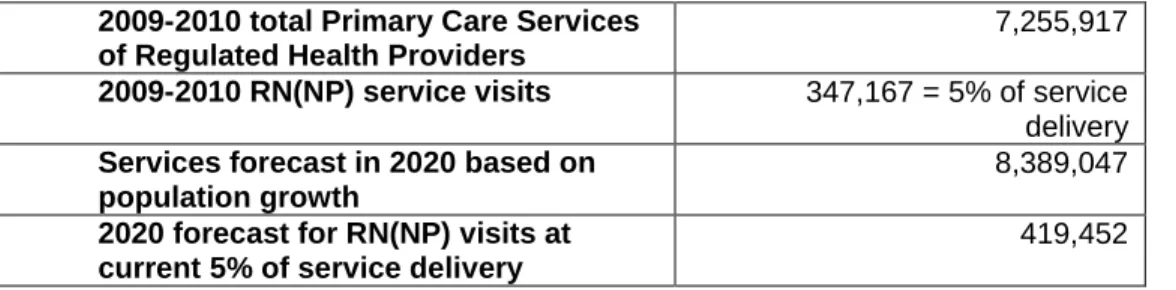
Data from the Saskatchewan’s Health Human Resources Plan (2011), illustrates the need for more NPs in the province. Currently, in this province, there are 155 RN(NP)s licensed with the SRNA. Recruitment and retention strategies are underway to create and maintain an adequate supply of NPs in the province. The CNPP will support the recruitment of new NPs within the province. In 2009-10, NPs provided 347,167 primary care service visits. A modest forecast made for the government is that NPs will provide 419,452 service visits by 2020. While the specific number of NPs needed to provide this service has not been calculated, clearly more NPs must be recruited and retained in Saskatchewan to meet Primary Health Care service needs.
2009-2010 total Primary Care Services of Regulated Health Providers
7,255,917 2009-2010 RN(NP) service visits 347,167 = 5% of service delivery Services forecast in 2020 based on
population growth
8,389,047 2020 forecast for RN(NP) visits at
current 5% of service delivery
419,452
Table is based on data from the December 2011 Saskatchewan’s Health Human Resources Plan (p. 41) If there is an increased utilization of RN(NP)s by various health regions in the years to come, there will be an even greater need for RN(NP) health care providers.
Attachment A, Page 25
Support for the Program
Members of the Saskatchewan health care and nursing communities are supportive of the CNPP initiative. Letters of support can be found at Appendix D. Organizations include: Saskatchewan Registered Nurses Association; Saskatchewan Association of Nurse Practitioners; Saskatchewan Medical Association; Five Hills Health Region; and the Saskatoon Health Region.
Nurse Practitioner Education Rationale for Online Format
In June 2004, the Canadian Nurses Association (CNA) received 8.9 million dollars to support the development of the NP role in Canada. Extensive research was completed and recommendations were made regarding various aspects of the NP role including education. The final report called for flexible curriculum delivery as a means to increase access to education where courses need to be developed and delivered using technology, particularly for rural and remote nurses. Practicing professionals engaged in asynchronous online education cite an
appreciation for reflection time; the opportunity for interactive collegial dialogue; and, relevant real life professional experiences—as advantages for this type of program delivery (Duncan, 2005).
With the exception of a week-long residency expectation in the first year, this program will be delivered entirely online, and primarily asynchronously. Hrasktinski (2008) believes that asynchronicity allows for more thoughtful communication than a synchronous learning situation, because students may spend more time refining their thoughts before posting. SIAST, like the U of R, is recognized for providing educational opportunities for students where they live using innovative technology. The CNA and the Canadian Association of Schools of Nursing’s (CASN) advocate for flexible education programs that promote access to, and provide opportunities for
knowledge acquisition, skill development, evidence-informed care, given the vastness of Canada’s geography. In addition, flexible online learning creates the opportunity to balance family, work, and education commitments. Rationale for Graduate Level Preparation
The CNA’s, Nurse Practitioner Education in Canada: A Final Report (2011), calls for NP exit credentials to be at the graduate level by 2010 but no later than 2015. The SRNA, the regulatory body responsible for approving nursing education programs, indicates that in order to meet the present and emerging health care needs in Saskatchewan, “the master of nursing degree must be the minimum education level of entry for RN(NP)” (2013). The education of NPs must address the issues of dynamic practice settings, expanded technologies,
transformation of health care, political environments, population needs, inter-professional practice, and the complexity of health care (CASN, 2011). The RN(NP) role requires in-depth nursing knowledge and expertise to maximize health care outcomes for individuals, families, groups, communities and populations(CNA, 2008). RN(NP)s must be able to analyze and synthesize knowledge, interpret and apply theories, and engage in research so as to develop and advance nursing knowledge and the profession as a whole (CNA, 2008). In partnership with SIAST, the U of R FoN can deliver an innovative, responsive NP curriculum that will meet the health care needs in Saskatchewan. In addition, the proposed program will provide advanced graduate level NP education as called for by the CNA, CASN, and the SRNA. A partnership between the Nursing Division (SIAST) and the Faculty of Nursing (U of R) meets the need for flexible education by building a new curriculum, pooling resources, and providing registered nurses in Saskatchewan with access to online graduate education.
Attachment A, Page 26
Program Description
As clinicians, leaders and role models, nurse practitioners bring a holistic approach to care that directly impacts the lives of individuals, families and communities. The CNPP will offer RNs an opportunity to achieve advanced competencies required for nurse practitioner registration and licensure.
Building on baccalaureate RN practice, the program blends in-depth knowledge of nursing theory and practice with legal authority and autonomy. Students will develop enhanced skills in health assessment, diagnosis, planning, intervention and evaluation within the framework of primary health care. Community development, health promotion and collaboration with interprofessional health care providers are essential components of the CNPP. Students will critically appraise and apply research, best practice guidelines and theory relevant to advanced nursing practice.
Program Name
Collaborative Nurse Practitioner Program (CNPP).
Name of Academic Unit
Faculty of Nursing (FoN) - University of Regina (U of R) in collaboration with the Nursing Division - Saskatchewan Institute of Applied Science and Technology (SIAST).
Degree to be Awarded
Master of Nursing - Nurse Practitioner (MN-NP).
Distinctive Features of the Program
The CNPP is distinctive in the following ways:
1. The program brings together a college and a university for the development and delivery of a highly specialized graduate nursing program that is efficient in the utilization of human, physical and educational resources.
2. The development committee comprised of faculty and instructional designers has worked with
consultants, external reviewers and considered official documents specific to nursing education standards in proposing this innovative program.
3. The entrance requirements and curriculum are designed to foster student success and the development of a CNPP student identity.
Attachment A, Page 27
4. Evaluation strategies and academic content are designed to promote student success with the provincial NP licensure examination.
5. Internal and external program evaluation mechanisms are built into the program design.
6. Responsiveness to the need of students in rural and remote areas is addressed through distributive teaching and learning methodologies.
Curriculum
The original proposal to FGSR outlined the merging and re-conceptualization of courses from both SIAST and U of R as an efficient and expedient method of providing graduate level education for nurse practitioners, given the tight deadlines for the program launch. In subsequent planning and development, and importantly after considering the external reviewers’ comments (see Appendix E for External Reviewers’ Comments and Appendix F for
Comprehensive Response to the Reviewers’ Comments), the CNPP development committee further refined the program plan. The forthcoming section, Strategies to Foster Student Success among CNPP Students, incorporates appropriate recommendations as suggested by the reviewers.
The re-conceptualization of the original proposed curriculum is illustrative of the truly collaborative nature of this program development. The revised curriculum in this document is more than a simple revision of the SIAST Primary Care NP Advanced Certificate program and the addition of U of R courses. Rather, the revised curriculum represents course blueprinting that the CNPP development committee undertook to ensure advanced practice nursing content and graduate level education for nurse practitioners.
The CNPP development committee identified the need for eleven new courses. Content from existing SIAST NP courses was reviewed, synthesized and aggregated with advanced nursing practice, theory, and research. Importantly, the reviewers’ comments shaped the development of the CNPP. Consequently, the
re-conceptualization of the CNPP ensures alignment of the curriculum with both NP standards and competencies, and the expectations of graduate level education.
The initial proposal utilized KHS 871(Introduction to Epidemiology) to teach concepts in population health. In response to feedback from the FoN and SIAST faculty, and the need to re-develop KHS 871 for online delivery, (from the traditional in - class lecture format) the committee decided that designing a new course, Global Health and Advanced Practice Nursing, with a nursing focus would have long term viability not only for the CNPP, but for future Masters of Nursing options.
In designing the CNPP, attention has been devoted to satisfying the academic standards and requirements of the FoN, SIAST, the FGSR, and the professional and educational requirements of nursing bodies including: Canadian Nurses Association;
Current CNA Code of Ethics;
Canadian Association of Schools of Nursing; SRNA RN(NP) Standards and Competencies 2011; SRNA Clinical Expectations for RN(NP)s;
SRNA Nursing Education Program Approval Process for RN(NP); Current Bylaws of the SRNA; and
Attachment A, Page 28
The CNPP is comprised of 33 credit hours (reduced by 3 credit hours from the original proposal to FGSR), to address sustainable human and other resource requirements. Courses will be taught by both the U of R and SIAST faculty (the CNPP faculty) with the appropriate knowledge and experience (for example, licensed Nurse Practitioners holding graduate degrees will teach courses specific to NP related content). A description of the each course and relevant objectives can be found at Appendix G.
The curriculum is designed to provide strong academic and theoretical foundations. The initial two courses foster understanding of the nursing discipline, advanced nursing practice, and research methods used in the study of nursing problems, while at the same time developing skills in critical appraisal, academic writing and knowledge synthesis.
Curriculum Model
The philosophical underpinnings of the program are articulated through a curriculum model called Saskatchewan Nursing Advanced Practice (SNAP) Model, in development (see Appendix H). This conceptual model was adapted from the “Strong Model of Advanced Practice Nursing” which has been recognized as a valid
and reliable model for depicting the dimensions of the advanced practice role in an international contemporary health service context (Chang et al, 2010; Chang et al, 2011). One limitation of the Strong model is that the primary focus is on practice education. As a result, the CNPP development committee adapted Strong’s model with particular attention to the current contextual factors of the Canadian health care system. This context informed the inclusion of patient and cultural safety and a change from research to a focus on evidence-informed practice. Hence, the SNAP model is an educational framework for the curricular and program design of the CNPP.
The SNAP model focuses on care provided to the individual patient, family, community and health care system. The model combines the clinical skills of the nurse practitioner with systems acumen, educational commitment and leadership (Spross & Lawson, 2009). The SRNA nurse practitioner competencies are clustered into five domains: (1) direct comprehensive care, (2) evidence-informed practice, (3) support of systems, (4) educative practice and, (5) professional leadership. Course objectives link directly to the five domains. The unifying processes of advanced practice nursing—collaboration; scholarship; relational ethics; cultural safety and patient safety—are depicted in the model (Ackerman Norsen, Martin, Wiedrich & Kitzman, 1996; Canadian Association Schools of Nursing, 2004; Canadian Interprofessional Health Collaborative, 2010a; Canadian Patient Safety Institute, 2013; Smye & Browne, 2002; Winnipeg Health Sciences Centre, 2008) and exert influence on each domain of practice. The unifying processes are themed across the curriculum. The development of expertise is built into the model and links directly to the digital portfolio strategy to illustrate competency development throughout the program.
Use of the SNAP model will meet the SRNA approval standard criterion requiring “evidence that the philosophy, conceptual framework and curriculum are congruent” (SRNA, 2011, p.22). The model provides a template against which the program was developed and will be evaluated; students and CNPP faculty can understand, examine and improve their practice; and knowledge and behaviours can be measured for program approval purposes using a competency-based assessment tool.
Physical Location
The CNPP is a distance education program taught entirely over the Internet using the University of Regina’s URCourses (a Moodle-based platform), with clinical practice/work experience in approved community settings
Attachment A, Page 29
under the guidance of a NP preceptor. It is designed to enable completion on a full-time basis in two years. The program will be administratively supported by the FoN (U of R), the Nursing Division, SIAST, and the FGSR. The online nature of course delivery enables students to learn where they live and to complete their clinical placements in appropriate proximal communities. NP faculty at SIAST and the U of R (as approved by FGSR) will collaboratively teach courses within the CNPP. Clinical practice education experiences will be arranged by coordinators, fostered by SIAST’s linkages with health authorities and employers providing the necessary relationships to arrange clinical placements for NP students.
Admission Requirements
Admission will open to candidates who meet minimum requirements.
Grade Point Average (GPA) has been identified by external consultants as a strong indicator of student success in an intensive program like the CNPP. As a result, in addition to the FGSR of a 70% average as the minimum requirement for admission, students must meet these additional requirements:
1. A minimum 75% in all third and fourth year nursing courses taken at a Canadian accredited or provincially approved baccalaureate nursing education program.
Rationale: This criterion will ensure that candidates are strong in nursing academics. Internationally baccalaureate level nursing programs will be evaluated for content in pathophysiology, pharmacology, research, statistics and health assessment.
2. Proof of current licensure as a registered nurse in a Canadian province or territory.
Rationale: This documentation (combined with successful completion of this program) will ensure that candidates can meet licensure requirements for Nurse Practitioner status. Registered nurses who reside in Canada will be eligible to apply for admission; preference will be accorded to Saskatchewan residents. 3. Submit a current Curriculum Vitae verifying completion of a minimum of two years of clinical practice
experience as a registered nurse within the last five years.
Rationale: This document will ensure that candidates have current clinical practice experience. 4. Submit three letters of reference: professional; academic and clinical.
Rationale: These documents will he used to assess the overall quality of the candidate.
5. Submit a written profile stating motivation for becoming a nurse practitioner in primary care, evidence of clinical experience, and plan for maintaining success in the program.
Rationale: This document will be used to assess candidates’ writing abilities and understanding of the considerable demands that the pursuit of this type of degree can have on students.
6. Applicants must submit the results of a criminal record check (vulnerable sector search), current CPR-BLS Health Care Provider C and an up-to-date immunization record prior to the commencement of the program. Rationale: This requirement is to protect vulnerable populations that a student may work with in a practice setting.
7. The language of instruction in the CNPP is English. All applicants to the program must demonstrate an appropriate level of proficiency in English as required by U of R.
Attachment A, Page 30
Rationale: This is a demanding professional program. Proficiency in oral and written English language skills are essential.
Graduate Studies Committee – CNPP
Once candidates have met the U of R FGSR requirements, the Graduate Studies Committee (see governance structure section, p 30) will review the applications to ensure that the most qualified candidates are offered seats in the program. Each application will be scored independently by at least three committee members to ensure inter-rater reliability and ranked. Scoring will assess the application for: GPA; relevant and current practice experience; referee comments and ability to achieve success in this professional program.
Intake
Applications are due January 15, 2014. Offers of admission will be sent out March 1, 2014. Full time students (N=15) will be admitted to the CNPP each year starting September 2014.
Full Time Option Year 1
(18 Credit hours)
MNUR 800 Foundations for Advanced Practice Nursing MNUR 801 Research in Advanced Practice Nursing
MNUR 802 Advanced Health Assessment and Diagnostic Reasoning MNUR 803 Advanced Pathophysiology and Pharmacology I
MNUR 804 Global Health and Advanced Practice Nursing MNUR 805 Advanced Pathophysiology and Pharmacology II Year 2
(15 Credit Hours)
MNUR 806 Health and Illness Across the Lifespan I MNUR 807 Health and Illness Across the Lifespan II MNUR 808 Health and Illness Across the Lifespan III MNUR 809 Transition to Advanced Practice Nursing I MNUR 810 Transition to Advanced Practice Nursing II Residency Week
A mandatory residency week will be held at the end of the course MNUR 802 Advanced Health Assessment and Diagnostic Reasoning. The rationale for this requirement is to allow:
1) students to come to the U of R and SIAST campuses and develop their CNPP identities; 2) students to meet and network with peers and CNPP faculty and staff;
3) students to gain experience with high-fidelity simulations; and 4) evaluation of students’ health assessment skills.
Major Research Paper
The culminating activity for students will be a major research paper in the courses MNUR 809(Transition to Advanced Practice Nursing I) and MNUR 810(Transition to Advanced Practice Nursing II). U of R faculty members will work with two or three graduate students, as appropriate, and mentor them accordingly. In writing of this paper, students will use their knowledge and skills gleaned throughout the CNPP toward a focused project, such as a paper of publication quality, a health promotion program, a practice change initiative,
Attachment A, Page 31
a small scale research project, an academic oral presentation, or other appropriate initiatives. Such initiatives will be commensurate with graduate level standards, NP knowledge, and research methodologies. These papers will be of value to both academic and nursing audiences. In MNUR 809 students will begin to
conceptualize and plan their paper. To engage in this development process, students will need to conduct an extensive literature related to their topic of interest. In MNUR 810 the paper will be brought to fruition
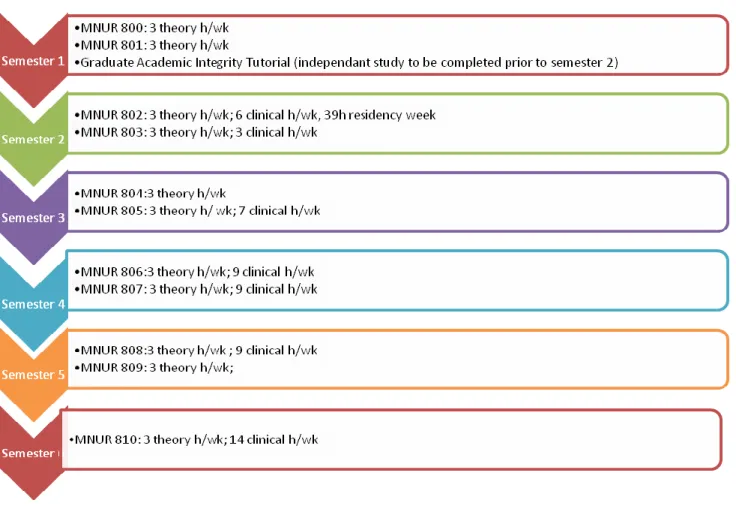
concurrently while the student is engaged in 14 hours of clinical practice per week. Part Time Option
It is anticipated that only full time students will be admitted during the first two intakes of the CNPP. Following a focused program review, a part-time option may be implemented.
Students admitted to the part-time option would progress as follows: Year 1
(9 Credit Hours)
MNUR 800 Foundations for Advanced Practice Nursing
MNUR 802 Advanced Health Assessment and Diagnostic Reasoning MNUR 804 Global Health and Advanced Practice Nursing
Year 2
(9 Credit hours)
MNUR 801 Research in Advanced Practice Nursing MNUR 803 Advanced Pathophysiology and Pharmacology I MNUR 805 Advanced Pathophysiology and Pharmacology II Year 3
(6 credit hours)
MNUR 806 Health and Illness Across the Lifespan I MNUR 808 Health and Illness Across the Lifespan III Year 4
(9 Credit hours)
MNUR 807 Health and Illness Across the Lifespan II MNUR 809 Transition to Advanced Practice Nursing I MNUR 810 Transition to Advanced Practice Nursing II
Strategies to Foster Student Success among CNPP Students
Prior learning expectations
Students will be provided with an outline of the base line knowledge required for each of their graduate courses. This strategy will ensure that the student has the prerequisite undergraduate knowledge to be successful in the course, and allow provide them with opportunities to review/gain requisite knowledge prior to engaging a graduate level course. Reputable online resources will enable the student to assess and refine his/her knowledge.
Student workload mapping
The academic and clinical demands of CNPP were considered. The CNPP development committee mapped out the academic and clinical workload demands for students. The weekly workload for CNPP students is presented in Figure 2.
Attachment A, Page 32
Figure 2. Student workload
Semester 1 course work
Two foundational courses in the first semester (MNUR 800 - Foundations for Advanced Practice Nursing, and MNUR 801 - Research in Advanced Practice Nursing) provide students with an understanding of advanced practice nursing in Canada and strategies to appraise evidence and to conduct research. In addition, students will complete the online Graduate Academic Integrity Tutorial, an online course that is compulsory for all incoming graduate students. This course must be successfully completed in order to register for second semester courses.
There are no clinical practicum requirements associated with these two foundational courses. This is an
intentional strategy to familiarize students with graduate level academic expectations. These courses will provide future programming options within the masters of nursing degree. All students would take these foundational courses before entering into their specialization curriculum pathway.
Student evaluation strategies
At the completion of the CNPP, students will be expected to write a national multiple-choice examination to gain licensure. While multiple-choice testing is not a common evaluation approach used in graduate studies, students in the CNPP will have many opportunities to practice this testing approach throughout the program. A
culminating comprehensive multiple-choice test, similar to the national exam, will be conducted. Importantly, each course will incorporate other student evaluation strategies, e.g., focused research papers, case studies, online presentations, literature reviews, graded discussion forums, group assignments, etc.
Attachment A, Page 33
Digital portfolio
Each student will maintain an digital portfolio throughout the program. This tool is a method for tracking and monitoring clinical hours (minimum of 700) and placements to ensure that each student engages in clinical practice in a variety of clinical settings with specific client/patient groups across the life span. In addition, the digital portfolio demands reflection about practice. This reflection process is vital to the growth of nurse practitioner students.
Based on research outcomes conducted on the use of digital portfolios in the SIAST Primary Care Nurse Practitioner (PCNP) Program, several software programs addressing student clinical progress are currently under review. The selection criteria include:
Access post-graduation to demonstrate continuing professional competency;
Awareness of the impact on both instruction and learning, and appropriate integration concerning course development:
Cost effectiveness, ease of use for graduate students, CNPP faculty and preceptors alike; and Ongoing access to technical support for all users;
The digital collection of data will include the following:
Record keeping of clinical practice education including; o Number of hours;
o Types of experiences;
o Comparison of clinical settings and patient contact across the lifespan;
o Confirmation of numbers of hours and types/quality of care provided by the graduate student in accordance with standards, preceptors and instructor recommendations.
Collection and storage of other records will also be integrated into the digital portfolio as appropriate.
Library Resources Introduction
SIAST has and continues to offer a nurse practitioner program and has more than adequate resources to support the proposed online CNPP. In addition, students in this program will also have access to the University of Regina library resources (see Appendix I for a description of specifics of SIAST and U of R library resources available).
The following is an excerpt from the library consultation:
Recommendation: Overall, the Archer Library has adequate resources for a course of this nature and will compliment the resources already at SIAST.
Collections gap(s): None identified. One-time funding required: ($ _0__)
Permanent additional funding required: ($ ___0_) Prepared by: Mary Chipanshi
Attachment A, Page 34
Written work and clinical evaluation tools
Standardized rubrics for the evaluation of written work and practicum experiences, similar to those found in Appendix J, will be designed. Rubrics will foster consistency in the expectations and the grading of student work. These documents were recommended by one of the external reviewers.
Attachment A, Page 35
Faculty Expertise
University of Regina
The U of R FoN will dedicate 1.5 full-time equivalent faculty positions to cover its share of courses in the program. Dr. Laurie Clune RN, PhD, Associate Dean of Graduate Programs and Research, has 5 years of experience teaching nurse practitioners at the graduate level. Dr. Glenn Donnelly has agreed to teach Advanced Pathophysiology and Pharmacology, and as an Advance Practice nurse, is more than duly qualified to teach in this program.
University of Regina, Faculty of Nursing Faculty
Dr. david Gregory, RN, PhD,Professor and Dean
Dr. Robin Evans, RN, PhD, PNC(C) Associate Dean, Undergraduate Program Dr. Laurie Clune, RN, PhD, Associate Dean Graduate Programs and Research Dr. Liz Domm, RN, PhD
Dr. Florence Luhanga, RN, PhD Dr. Glenn Donnelly, RN, ENC, PhD Dr. Ann-Marie Urban, RN, PhD Dr. Joan Wagner, RN, PhD Ms. Kari Greenwood RN (NP), MN
SIAST
There are three SIAST faculty who will teach in the CNPP. SIAST has existing financial and program resources to deliver the primary care NP program for 15 full-time students annually. These resources, including a
placement coordinator, will be utilized in the proposed program. SIAST Nursing Division Faculty
Dr. Netha Dyck, RN, EdD Dean
Joyce Bruce, RN (NP), MSA, MN AGD: ANP Maureen Klenk, RN(NP) MHS (ANP)
Dr. Lynn Miller, MN(NP), DNP
SIAST faculty who have teaching and grading responsibilities in the CNPP will become Adjunct faculty. Adjunct faculty will the academic and professional credentials necessary to teach, supervise and evaluate students in the academic and clinical setting including:
A) Proof of professional registration with the Saskatchewan Nurses Registered Nurses Association (or another Canadian provincial jurisdiction) as RN (Nurse Practitioner);
B) A graduate or doctoral degree in nursing or a related field; and
C) A nomination to the FGSR by the FoN and Dean. The nomination will include: a memo to the Dean of FGSR
an up-to-date CV
a statement/rationale of the benefits to the graduate activities (graduate teaching and co-supervision of graduate students) of the department/faculty.
Attachment A, Page 36
The appointment will be for a five year period (July through June) and renewable subject to a mutual agreement and ongoing eligibility.
Hence, CNPP faculty will serve as the most responsible clinical supervisor and evaluator of graduate students. They will assign a grade for a student in theoretical and clinical experiences based on the student’s performance. In clinical type courses feedback from the preceptor will be considered in the assignment of grades.
Appendix K includes faculty CVs. Clinical Placements
Site suitability
Determining site suitability includes two assessments: 1) the suitability of the practice site and 2) the availability and suitability of a preceptor. Prior to assigning a student to a placement site the following process will take place under the scrutiny of the co-chairs of the Graduate Studies Committee – CNPP:
The suitability of the practice site will be assessed to ensure that it is an appropriate site that will support student learning. This assessment may be done through a site visit or discussion with senior nursing administration at the setting.
Preceptors
Students will be linked to a preceptor (a RN NP employed at the practice site who will give practical experiences and training to students).
The suitability of the preceptor will be evaluated by:
a. Proof of professional registration with the Saskatchewan Nurses Registered Nurses Association (or another Canadian provincial jurisdiction) as RN (Nurse Practitioner)
b. A review of a current CV
c. A reference from the clinical practice site.
All preceptors, who are licensed NPs, must participate in an online preceptorship orientation program before they will be assigned a CNPP student.
Preceptors do not have the authority to pass or fail a student in a course. They will provide ongoing feedback to the adjunct faculty and student on their mastery of professional competencies needed to practice as an RN(NP).
Attachment A, Page 37
Clientele to be Served
The CNPP is designed for practicing registered nurses who wish to advance their education and obtain NP licensure. The primary care focus of this NP program will prepare candidates ready to serve all populations including vulnerable, rural, and remote populations of Saskatchewan and beyond.
Program Evaluation Strategies
In addition to institutional evaluation strategies, specific CNPP evaluation tools are being incorporated into each course. Exit surveys will be sent to all graduates at the completion of the program to evaluate their experiences in the program. Exit interviews will be conducted with students who choose to leave the program and attrition rates will be monitored.
Satisfaction surveys will be sent to student preceptors at the completion of a course and to NP employers to ascertain the quality and readiness of students and graduates.
The collaboration between the FoN and the Nursing Division (SIAST) provides flexibility to deliver NP education to meet a number of constituent needs. Once the program has successfully completed the approval process at each academic institution, program approval from the SRNA and the Nursing Education Program Approval Committee are required. The criteria for program evaluation can be found at
http://www.srna.org/images/stories/pdfs/nurse_practitioner/nursing_education_program_approval_process_rnnp _2011.pdf (see pages 8 – 11).
Nursing standards to be evaluated are in the areas of a) curriculum; b) resources (human, physical and clinical); c) students; and d) graduates. Preliminary program approval will be sought in June, 2013 for the program start in September, 2014.
Attachment A, Page 38
To date a notification of intent has been sent to the SRNA and following academic approval from U of R and SIAST, a self-evaluation report will be submitted to the SRNA. The SRNA approval process will take place in November, 2013.
Student Financial Assistance
Saskatchewan Health Bursary Program
In an effort to enhance the recruitment and retention of needed health professions to rural and remote parts of the province and to expedite the linkages between prospective students and public employers, the following changes are being made to the Saskatchewan Health Bursary Program:
Each of the Regional Health Authorities (RHAs) and the Saskatchewan Cancer Agency (SCA) (public employers) has received a dedicated budget to engage in health professions return-in-service bursaries with Saskatchewan residents.
Interested applicants are asked to make applications directly to the RHA/SCA. Should applicants be successful in receiving a return-in-service bursary from a prospective employer, they can expect to sign a return-in-service agreement with that employer
Please see the Saskatchewan Health Regions and Saskatchewan Cancer Agency Contact Information: http://www.health.gov.sk.ca/bursaries-current-year
Ministry of Health Rural/Remote Clinical Placement Bursary
The purpose of the Ministry of Health’s Bursary Program is to recruit and retain needed health care
professionals to meet the needs of the people of Saskatchewan. The Ministry of Health Clinical Placement Bursary is offered to students in an eligible nursing program or eligible health discipline that requires the completion of a final clinical placement as part of education prior to licensure.
For more information http://www.health.gov.sk.ca/bursary-application-processs Saskatchewan Student Loan Forgiveness Program
The new Saskatchewan Student Loan Forgiveness Program for physicians, nurses and nurse practitioners encourages health professionals to work in rural and remote areas of the province. The Program will forgive up to $120,000 in Saskatchewan Student Loans for physicians and $20,000 in Saskatchewan Student Loans for nurses and nurse practitioners over a five year period. The definition of rural that is being considered for the program is population of 10,000 or less. The Canada Student Loans Program announced a similar program in 2011 and is in the final design phase of t h e program. Saskatchewan is working with the federal government to collaborate on program design and administration to ensure that maximum benefits are available to Saskatchewan residents. It is expected that the new program will be in place in early 2013. Our Ministry will continue to consult with the federal government, health regions and health professionals to determine the final design parameters of the program. We will inform Health Regions and the public as soon as a launch date has been established. http://www.actionplan.gc.ca/eng/media.asp?id=4122
Saskatchewan Graduate Retention Program http://www.aeei.gov.sk.ca/grpc
SIAST Scholarship Bursaries and Awards
http://www.gosiast.com/admissions/scholarships_awards.shtml
Attachment A, Page 39
http://dev.www.uregina.ca/gradstudies/scholarships/index.shtml
Evidence of Demand for the Program
There is a high demand for online nursing education, whereby Canadian nurses are seeking programs internationally for NP studies. At present, in the Athabasca University Centre for Nursing and Health Studies Master of Nursing NP graduate program there are 13 Saskatchewan registered nurses admitted to the program (personal communication, February 11, 2013). In each of the past five years, SIAST has received 25 to 30 applications for its Nurse Practitioner Advanced Certificate Program; such applications have not translated into admissions because students have indicated a preference for the master’s credential. The College of Nursing, University of Saskatchewan has 22-24 registered nurses on a wait list for the Master of Nursing-Primary Health Care Nurse Practitioner Program (personal communication, February 11, 2013).
This CNPP will provide 15 seats annually that will be filled by: (a) registered nurses from Saskatchewan; and (b) registered nurses from other Canadian jurisdictions. Preference will be accorded to Saskatchewan residents. Ten percent of the seats (2) will be designated as equity seats to be representative of the Aboriginal population of Saskatchewan. Like all other applicants in the program, Aboriginal students must fully meet the admission criteria. Unfilled equity seats will become available to other applicants.
Business Plan
Anticipated Tuition
A Fee Sharing Agreement will be established between the U of R and SIAST. It is our recommendation that initial tuition be split 30% SIAST / 70% U of R, as SIAST receives baseline funding for this program and the university is covering expenses from its existing budget. We recommend that any additional baseline monies directed toward the CNPP by the government will be split 50/50. Tuition rates are based on a program fee of $11,000 (plus student fees) converted to a credit hour cost. Cost for each 3 credit hour course will be $1000.00 plus student fees.
NOTE: Informally, the Ministry of Advanced Education has signalled that the additional NP seats (n=up to 10 for U of R/SIAST) will be funded at approximately $30,000 to $35,000 per seat. Thus, another $300,000 to $350,000 in baseline funding may become available to the CNPP.
Annual Budget – Faculty of Nursing
Item Annual Intake of 15 Students Annual Intake of 20 Students Annual Intake of 25 Students
2014-15 2015-16 2016-17 2014-15 2015-16 2016-17 2014-15 2015-16 2016-17 Tuitio n Reve nue 90,000 165,000 165,000 120,000 220,000 220,000 150,000 275,000 275,000
Attachment A, Page 40
UR Basel ine Reve nue ↑ 75,000 150,000 150,000 150,000 300,000 300,000 Tuitio n to SIAS T (27,000) (49,500) (49,500) (36,000) (66,000) (66,000) (45,000) (135,000) (135,000) Teac hing Costs * * * ** (200,00 0) ** (200,000) ** (200,000) *** (250,000) *** (250,000) *** (250,000) Instru ctiona l Desig ner (37,500) (37,500) (37,500) (37,500) (37,500) (37,500) (37,500) (37,500) (37,500) Mark eting (2,500) (2,500) (2,500) (2,500) (2,500) (2,500) (2,500) (2,500) (2,500) Net UR Reve nue 23,000 75,500 75,500 (81,000) 64,000 64,000 (35,000) 150,000 150,000*program offered using 1.5 FTE current resources **requires addition of 2.0 FTE faculty
***requires addition of 2.5 FTE faculty Budget Notes
Baseline revenue increase based on $30,000 per seat (50% split between U of R and SIAST).
Tuition to SIAST illustrates a 70% U of R / 30% SIAST split, except for the last two years of the intake of 25 students, where tuition is a 50/50 split. Tuition sharing agreement would need to be negotiated, be dependent on actual enrollment and ensure academic and administrative costs of the U of R are met.
Instructional designer required to implement online program – will use existing resources to continue program after initial setup.
Marketing based on a budget of $5,000 per annum (split equally with SIAST). Projections based on domestic students.
Projections based on domestic students.
Attachment A, Page 41
Athabasca University (online, master’s NP) charges $1,300 per course/11 courses = $14,300 (does not include application ($150), admission ($200), or AUGSA fees ($12/credit). Students in AU’s MN (NP) are also
charged: Lab fee ($850) and the course (NURS 720; 12 credit course; thesis) is four times the regular Course Registration Fee.
Implementation Plan
This proposal will be presented to several key stakeholders in order to secure academic approval. The timeline below provides monthly targets and plans
February 2013 Presentation of the CNPP program proposal for Faculty of Nursing Council for approval in principle.
Development of marketing strategies for the CNPP with U of R and SIAST. March 2013 Presentation of CNPP program proposal to the Faculty of Graduate Studies
and Research.
Develop a schedule for the completion of development of CNPP year one courses.
April 2013 Conditional Approval from the Faculty of Graduate Studies and Research.(anticipated)
May 2013 Submission of the CNPP program proposal to Senate, University of Regina. Presentation of proposal to SIAST Deans’ Council to discontinue the Primary Care Nurse Practitioner program at SIAST and notification of the proposal to deliver the CNPP program in September 2014.
Development of draft SRNA self-evaluation of nursing education program document
June 2013 Approval from SIAST Dean’s Council of the partnership and the offering of the CNPP. (anticipated)
Approval by U of R Senate (anticpated)
Review and revision to SRNA self-evaluation of nursing education program document.
September 2013 Submission of CNPP program approval to the SRNA.
November 2013 SRNA program approval site visit. Applications open for CNPP program. January 2014 CNPP program application deadline for acceptance Jan 15
March 2014 Notification of student acceptance to applicants to the CNPP program September 2014 First offering of the CNPP program.
Employment Possibilities for Graduates
Under the auspices of Primary Health Care Renewal, there is an increased demand for NPs in Saskatchewan. Presently, there are many vacant NP positions in Saskatchewan (Ministry of Health Saskatchewan, Health Careers, 2013). The number of NPs in Canada has more than doubled between 2005 and 2009 and increased
Attachment A, Page 42
by 22% between 2008 and 2009 (CIHI, 2010). Recent government announcements of increased NP positions in BC and Alberta show that this trend will continue. Based on the Saskatchewan Health Human Resources Plan (2013, p. 3), Saskatchewan does not have adequate NP human resources to keep in line with the Primary Health Care plan, and population growth needs.
Resources Required
Minimal human or physical resources are required for the implementation of this program. A range of student services are offered at both SIAST and the U of R. The U of R has the Student Success center that provides resources such as academic writing and time management workshops. Many services, such as academic writing, are offered online. SIAST student support center has similar services that the CNPP students will be able to utilize.
The online bookstores services are available with texts being shipped directly to students. Libraries on both campuses have electronic resources that are accessible to the students in the program.
The Faculty of Nursing can absorb and use existing office infrastructure (and equipment) to deliver courses via distributed learning for the CNPP.
Impact on Undergraduate and Other Graduate Programs
There should be no impact on existing undergraduate programs at the U of R. Nor should other graduate programs be affected by the CNPP. The online research methods course will be constructed through a disciplinary lens specific to nursing and will not compete with other graduate level research methods courses offered at the U of R.
The online course offerings MNUR 800 (Foundations for Advanced Practice Nursing), MNUR 801 (Research in Advanced Practice Nursing), and MNUR 804 (Global Health and Advanced Practice Nursing) are courses planned for integration with future Masters of Nursing options.
Compatibility of the CNPP with U of R and SIAST Missions
The U of R FoN and SIAST, through an affiliation agreement, are collaborating to offer an innovative nursing education program at the undergraduate level, i.e., the SCBScN. A graduate nursing program developed on the same collaborative model advances the momentum for health programming offered at the U of R. The proposed CNPP is congruent with the competencies and standards required by the SRNA and the need for graduate level NP education.
Further, the program meets the needs of the province to build capacity and expertise in order to deliver accessible competent health care in rural, remote, and urban locations.
Specifically, the CNPP is congruent with these priorities of the U of R as follows: Commitment to be accessible to all learners;
Attachment A, Page 43
Serve and enrich Saskatchewan communities with accessible and appropriate health care providers by developing expertise through delivery of the CNPP;
Respond to learning needs by offering education that can be accessed where one lives, particularly for First Nations and Métis peoples; and
Serve local and provincial communities by striving for sustainability and efficiency of the health workforce. The CNPP is congruent with these SIAST’s strategic priorities:
Building successful careers;
Responding aggressively to evolving program opportunities (SIAST, 2010); Facilitating seamless career transitions and lifelong learning;
Advancing innovative partnerships and strategic alliances; Expanding education in select global markets;
Enhancing program quality; and
Using creative solutions to enhance and expand the learning experience.
Comparison with Similar Programs at other Universities
Nurse Practitioner Programs in Canada with a Primary Health Care Specialty
There are 12 Nurse Practitioner Programs in Canada with a Primary Health Care speciality including: Athabasca University, Dalhousie University, Newfoundland Centre for Nursing Studies, Ontario Primary Health Care NP Program (a consortium of 9 universities), University of Alberta, University of British Columbia, University of Manitoba, University of New Brunswick, University of Northern British Columbia, University of Victoria, University of Saskatchewan and SIAST (Saskatchewan Institute of Applied Science and Technology). For comparison, five programs were reviewed in depth.
Attachment A, Page 44
Athabasca University
Degree Master of Nursing – Nurse Practitioner
Credit hours 33-credit hours, eleven, 3-credit courses: 2 core courses and 9 NP courses
Prerequisites BScN
Program delivery Online, and clinical practice
Comment 450 students per year
High attrition rates
Students must find their own placements
Ontario Primary Health Care NP Program (Lakehead University, Laurentian University, McMaster University, Queens University Satellite site: Trent University, Ryerson University, University of Ottawa, University of Western Ontario, University of Windsor , York University)
Degree Master of Nursing - Nurse Practitioner
Credit 33 credit hours: 3 core courses, 7 NP courses, 1 MRP (Major Research Paper)
Prerequisites BScN minimum B+, references (3) – professional, clinical, academic, essay, current CV, immunization record, police check, current registration as a registered nurse
Program delivery 30 seats per year (150 apply) In - class and online format
Clinical Practice Placements are coordinated by the university
Comment Highly competitive
Student success in the program correlates with entrance GPA University of Manitoba
Degree MN - nurse practitioner stream
Credit hours 36 credit hours and a minimum of 700 clinical hours
Prerequisites Baccalaureate degree in nursing from an approved or accredited university B average, CV, statement of intent, immunization record, interview may be required
3 letters of reference
Format In - class based program
Practicum in Manitoba University of British Columbia
Degree Master of Nursing - Nurse Practitioner
Credit 56 credit hours
Prerequisites Registered nurse with a bachelor’s degree (preferably in Nursing_ with a GPA of B+ in the third and fourth year, first class standing (above 80%) in 12 credits or more in nursing courses, registration with the College of Registered Nurses of BC, 2 – 3 years clinical practice experience, letters of reference
Format Practicum in locations throughout British Columbia 5 semesters
Attachment A, Page 45
University of Saskatchewan
Degree Master of Nursing – Nurse Practitioner
Credit hours 36 credit units with additional 3 required non credit course
Prerequisites BScN, Cumulative weighed average of 70% on last 60 credit units of study Program delivery Online, and clinical practice
Comment Video-conference, online, and lecture format Clinical coordinator to facilitate student placements Limited NP faculty (1 FT and sessional instructors) 20 seats
As a result of reviewing these programs, the proposed CNPP is reasonable in terms of credit hours (N=33), admission criteria and program delivery modality, e.g., online.
Compatibility of Proposed Curriculum with Standards and Competencies
The curriculum content was mapped with standards and competencies from the SRNA and the CASN to ensure that all content meets provincial and national standards.
Governance
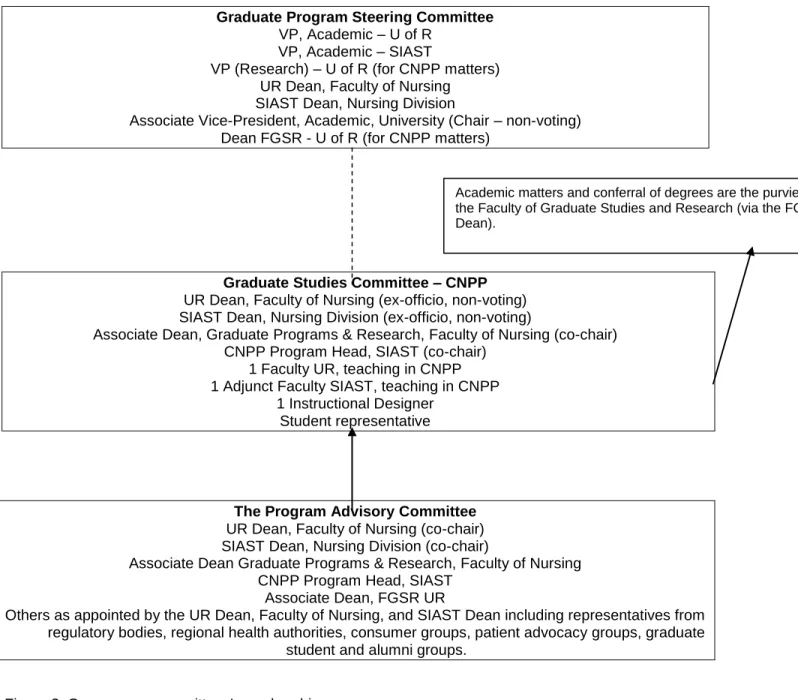
Three committees support the CNPP. They are: 1) Graduate Program Steering Committee; 2) Graduate Studies Committee – CNPP; and 3) The Program Advisory Comittee.
Membership on each committee is noted in Figure 3.
The Graduate Program Steering Committee is comprised of senior administrators from each partner institution. The role is to attend to respective concerns regarding the CNPP. For example, finalizing the tuition fee sharing agreement.
Graduate Studies Committee – CNPP will deal with admissions, curriculum changes and the day-to-day operations of the CNPP. This committee will be co-chaired by the CNPP Program Head (SIAST) and the Associate Dean Graduate Programs and Research (FoN / U of R). A student representative is a member of this committee.
A Program Advisory Committee will be established to obtain feedback from external constituents regarding program curriculum relevancy and quality and enhanced clinical practice education opportunities.
As per the Memorandum of Agreement (in development), the Dean of the FGSR shall have the final authority over all academic matters.
Attachment A, Page 46
Graduate Program Steering Committee VP, Academic – U of R
VP, Academic – SIAST
VP (Research) – U of R (for CNPP matters) UR Dean, Faculty of Nursing SIAST Dean, Nursing Division
Associate Vice-President, Academic, University (Chair – non-voting) Dean FGSR - U of R (for CNPP matters)
Graduate Studies Committee – CNPP UR Dean, Faculty of Nursing (ex-officio, non-voting) SIAST Dean, Nursing Division (ex-officio, non-voting)
Associate Dean, Graduate Programs & Research, Faculty of Nursing (co-chair) CNPP Program Head, SIAST (co-chair)
1 Faculty UR, teaching in CNPP 1 Adjunct Faculty SIAST, teaching in CNPP
1 Instructional Designer Student representative
The Program Advisory Committee UR Dean, Faculty of Nursing (co-chair) SIAST Dean, Nursing Division (co-chair)
Associate Dean Graduate Programs & Research, Faculty of Nursing CNPP Program Head, SIAST
Associate Dean, FGSR UR
Others as appointed by the UR Dean, Faculty of Nursing, and SIAST Dean including representatives from regulatory bodies, regional health authorities, consumer groups, patient advocacy groups, graduate
student and alumni groups.
Figure 3. Governance committees' memberships
Academic matters and conferral of degrees are the purview of the Faculty of Graduate Studies and Research (via the FGSR Dean).
Attachment A, Page 47
Sunset Clause
A five year “sunset” clause impacts the CNPP. A formal, external review of the program will occur during the fifth year of operation to determine whether program goals have been reasonably met and the program should be continued. Review criteria will be appropriate to the CNPP, e.g., annual admissions over the five year period; number of graduates; and annual costs of operating the program, including those costs incurred in the fifth year. Appropriate performance indicators will be established in consultation with the FGSR during the 2014/2015 academic year.
Enrollments will be suspended after the fifth year unless the FGSR and the FoN concur that the program is both academically and fiscally viable, and contributes adequately to the overall missions of the FoN, the FGSR, and the University proper.
The FoN and SIAST would develop and implement a program completion plan for enrolled students in the event the program is discontinued based on this initial review. Students enrolled in the CNPP will be permitted to complete their work within a reasonable time frame. The SRNA would require a termination plan for all students enrolled in the CNPP should it be discontinued.
A positive review, beyond the "sunset" of five years, will result in subsequent reviews initiated by the FGSR in conjunction with the FoN. Regular reviews will involve an external review team, and will be scheduled at regular intervals of approximately seven years. Note that the SRNA also requires formal program review on a regular basis.