1
Selection Process of Auto-ID Technology in
Warehouse Management: A Delphi Study
A thesis submitted in fulfilment of the requirement for the degree
of Doctor of Philosophy
By
Mayadah Hassan
Brunel Business School
Brunel University
London, United Kingdom
2
ABSTRACT
In a supply chain, a warehouse is a crucial component for linking all chain parties. Automatic identification and data capture (auto-ID) technology, e.g. RFID and barcodes are among the essential technologies in the 21st century knowledge-based economy. Selecting an auto-ID technology is a long term investment and it contributes to improving operational efficiency, achieving cost savings and creating opportunities for higher revenues. The interest in auto-ID research for warehouse management is rather stagnant and relatively small in comparison to other research domains such as transport, logistics and supply chain. However, although there are some previous studies that explored factors for the auto-ID selection decision in a warehouse environment, those factors (e.g., operational factors) have been examined separately and researchers have paid no attention to all key factors that may potentially affect this decision. In fact, yet there is no comprehensive framework in the literature that comprehensively investigates the critical factors influencing the auto-ID selection decision and how the factors should be combined to produce a successful auto-ID selection process in warehouse management.
Therefore, the main aim of this research is to investigate empirically the auto-ID technology-selection process and to determine the key factors that influence decision makers when selecting auto-ID technology in the warehouse environment. This research is preceded by a comprehensive and systematic review of the relevant literature to identify the set of factors that may affect the technology selection decision. The Technology-Organisation-Environment (TOE) framework has been used as lens to categorise the identified factors (Tornatzky & Fleischer, 1990). Data were collected by conducting first a modified (mixed-method) two-round Delphi study with a worldwide panel of experts (107) including academics, industry practitioners and consultants in auto-ID technologies. The results of the Delphi study were then verified via follow-up interviews, both face-to-face and telephone, carried out with 19 experts across the world. This research in nature is positivist, exploratory/descriptive, deductive/inductive and quantitative/qualitative. The quantitative data were analysed using the statistical package for social sciences, SPSS V.18, while the qualitative data of the Delphi study and the interviews were analysed
3
manually using quantitative content analysis approach and thematic content analysis approach respectively.
The findings of this research are reported on the motivations/reasons of warehouses in seeking to use auto-ID technologies, the challenges in making an auto-ID decision, the recommendations to address the challenges, the key steps that should be followed in making auto-ID selection decision, the key factors and their relative importance that influence auto-ID selection decision in a warehouse. The results of the Delphi study show that the six major factors affecting the auto-ID selection decision in warehouse management are: organisational, operational, structural, resources, external environmental and technological factors (in decreasing order of importance). In addition, 54 key sub-factors have been identified from the list of each of the major sub-factors and ranked in decreasing order of the importance mean scores. However, the importance of these factors depends on the objectives and strategic motivations of warehouse; size of warehouse; type of business; nature of business environment; sectors; market types; products and countries.
Based on the Delphi study and the interviews findings, a comprehensive multi-stage framework for auto-ID technology selection process has been developed. This research indicates that the selection process is complex and needs support and closer collaboration from all participants involved in the process such as the IT team, top management, warehouse manager, functional managers, experts, stockholders and vendors. Moreover, warehouse managers should have this process for collaboration before adopting the technology in order to reduce the high risks involved and achieve successful implementation.
This research makes several contributions for both academic and practitioners with auto-ID selection in a warehouse environment. Academically, it provides a holistic multi-stage framework that explains the critical issues within the decision making process of auto-ID technology in warehouse management. Moreover, it contributes to the body of auto-ID and warehouse management literature by synthesising the literature on key dimensions of auto-ID (RFID/barcode) selection decision in the warehouse field. This research also provides a theoretical basis upon which future research on auto-ID selection and implementation can be built. Practically, the findings provide valuable insights for warehouse managers and executives associated with auto-ID selection and advance their
4
understanding of the issues involved in the technology selection process that need to be considered.
Keywords
Auto-Identification Technology, Radio Frequency Identification (RFID), Barcode, Warehouse Management, Selection Process, Delphi Study
5
ACKNOWLEDGEMENT
FIRST
All Praise be unto ALLAH, the Almighty, the Glorious.
And to his final messenger MUHAMMED (Peace be upon him, his family and his
companions)
SECOND
I would like to acknowledge the contributions and my gratitude to the following:
My supervisors Dr. Maged Ali and Dr. Emel Aktas for their guidance, advice and support during my PhD Studies.
All the members of the Business School at Brunel University for their support throughout this journey.
All my friends, especially, Mr. Mohamed Assaad, and Dr. Aws Hasan, for their moral support and believing in me.
All the PhD Students in the Business School at Brunel University.
My Sponsor “Damascus University-Syria” and “The British Council-Manchester” for their continued support.
Dr. Rami M. Ayoubi at Faculty of Economics - Damascus University – Syria – as my Internal Supervisor.
I extend my gratitude to all the Delphi Panel for their co-operation and constructive comments.
Last but not least, I would like to thank all the Families of Syrian Martyrs and all the honest Syrian People who are still suffering to protect our Lovely Country “SYRIA”.
6
Dedications
Finally, this thesis is dedicated to: The Soul of My Dearly Departed Dad, Aziz Hassan: I Love You So Much.
My Amazing Mother, Dalal Mohamed, I Love You So Much, May ALLAH Always Bless you.
My Dear Husband “ My Love - My Best Friend”, Abdulkarim Shahoud and “My Kids - My - Angels”, Nourma امرون and Khder Alex رضخ– my ray of sunshine and my little moonbeam.
My Fabulous Brothers, Halim, Nawaaf, Yahia, and Ali and my Wonderful Sisters, Halimah, Maysoun, and Ghadah.
My Father & My Mother in law, My Brothers and My Sisters in law, and all my relatives – with love and gratitude.
My Grandfather and Grandmother, who are no longer with us.
The Soul of all Syrian Martyrs, especially My Dear Cousin, Mousa Mouneer Daood, who was martyred 06th March 2014.
7
Author’s Declaration
I, Mayadah Hassan, declare that the ideas, research work, analyses and conclusions reported in my PhD thesis “A Development Framework for the Selection Decision Process of Auto - Identification Technologies in Warehouse Management: An International Delphi Study” are entirely my effort, except where otherwise acknowledged. Also, I certify that this thesis contains no material that has been submitted previously, in whole or in part, for the award of any other academic degree or diploma. Except where otherwise indicated, this thesis is my own work.
8
Publications Associated with this
Thesis
Journal Paper
Accepted
1. Hassan, M., Ali, M., Ektas, E., Alkayid, K. (2014). Factors Affecting Selection Decision of Auto-Identification Technology in Warehouse Management: An International Delphi Study. Accepted for publication at Production Planning & Control (PP&C).
Conference Papers
Published
1. Hassan, M., Ali, M., and Aktas, E. (2013). Key Factors for Selection Decision of Auto- Identification Technology in Warehouse Management: A Delphi Study. The 27th Annual British Academy of Management Conference (BAM). Liverpool, UK, September.
2. Hassan, M., Ali, M., and Aktas, E. (2012). Radio Frequency Identification (RFID) Technologies for Locating Warehouse Resources: A Conceptual Framework. SysTech 2012 - European Conference on Smart Objects, Systems and Technologies. Osnabrück, Germany, June.
3. Hassan, M., Ali, M., and Aktas, E. (2011). An Experimental Study for Evaluating The Reading Performance of Semi-Passive RFID Tags To Enhance Locating of Warehouse Resources. European, Mediterranean & Middle Eastern Conference on Information Systems (EMCIS), Athens, Greece, May.
9
Doctoral Symposium
Extended Abstract
1. Hassan, M., Ali, M., and Aktas, E. (2014). A Developed Framework of the Key Factors Affecting Selection Decision of Auto-Identification Technology in Warehouse Environment: An International Delphi Study. Brunel Business School Doctoral Symposium. 25th& 26th March, Brunel University, London, United Kingdom.
2. Hassan, M., Ali, M., and Aktas, E. (2013). Factors Affecting Selection Decisions of Auto-Identification Technologies in Warehouse Environment: An International Delphi Study. Brunel Business School Doctoral Symposium. 20th& 21st March, Brunel University, London, United Kingdom.
3. Hassan, M., Ali, M., and Aktas, E. (2012). Experimental Evaluation of Semi-Passive RFID Performance in Warehouse Environment. Brunel Business School Doctoral Symposium. 27th& 28th March, Brunel University, London, United Kingdom.
4. Hassan, M., Ali, M., and Aktas, E. (2011). An Experimental Study for Evaluating the Reading Performance of Semi-Passive RFID Tags to Enhance Locating of Warehouse Resources. Brunel Business School Doctoral Symposium.28th& 29th March, Brunel University, London, United Kingdom.
10
TABLE OF CONTENT
CHAPTER 1 ... 17
INTRODUCTION ... 17
1.1 Introduction ... 17
1.3 Background and Motivation of the Research ... 19
1.5 Research Aim and Objectives ... 21
1.6 Research Questions ... 22 1.7 Research Methodology ... 24 1.8 Thesis Outline ... 25 CHAPTER 2 ... 30 LITERATURE REVIEW ... 30 2.1 Introduction ... 30
2.2 The process of Reviewing the Literature ... 31
2.2.1 Stage I: Planning the Review ... 32
2.2.2 Stage II: Conducting the Review Planning ... 33
2.2.3 Stage III: Reporting and Dissemination ... 37
2.2.4 Literature Review Limitations ... 42
2.3 Review of the Warehouse Roles in Logistics and Supply Chain Management ... 42
2.3.1 Types of Warehouses ... 43
2.3.2 Purpose of Warehouses ... 43
2.3.3 Roles of Warehouses ... 44
2.3.4 Roles of Distribution Centres ... 45
2.4 Review of Warehouse Characteristics ... 46
2.4.1 Warehouse Operations ... 46
2.4.2 Warehouse Resources ... 48
2.5 Current Warehouse Resource Management Tools ... 49
2.5.1 Automatic Identification and Data Capture (Auto-ID) Technologies ... 51
2.6 Models of IT Adoption ... 63
2.6.1 Diffusion of Innovation (DOI) Theory ... 63
11
2.7 Factors Relevant to Auto-ID Selection Decision in a Warehouse Environment ... 68
2.8 Summary ... 74
CHAPTER 3 ... 79
CONCEPTUAL FRAMEWORK ... 79
3.1 Introduction ... 79
3.2 Framework Build-up ... 81
3.3 Conceptual Framework of Key Factors Influencing Auto-ID Selection Decision in Warehouse Management ... 84 3.3.1 Structural Factors ... 87 3.3.2 Operational Factors ... 93 3.3.3 Resources-Related Factors ... 98 3.3.4 Organisational Factors ... 102 3.3.5 Technological Factors ... 104
3.3.6 External Environmental Factors ... 115
3.4 Summary ... 117
RESEARCH METHODOLOGY ... 120
4.1 Introduction ... 120
4.2 Philosophical Underpinnings of the Study ... 121
4.3 Research Approaches ... 122
4.3.1 Non-Empirical/Empirical Research ... 122
4.3.2 Quantitative/Qualitative Approach ... 123
4.3.3 Deductive/Inductive ... 125
4.4 Empirical Research Methodology ... 126
4.4.1 Research Design ... 126
4.4.2 Data Collection ... 130
4.4.3 Delphi Study ... 130
4.4.4 Characteristics of the Delphi Technique ... 131
4.4.5 Delphi’s Suitability for Doctoral Studies ... 133
4.4.6 Applicability of the Delphi Technique for the Research Questions ... 134
4.4.7 Types of Delphi Design ... 136
4.4.8 Advantages of the Delphi ... 138
4.4.9 Disadvantages of the Delphi ... 139
4.4.10 Delphi Process ... 140
12
4.4.12 Pilot Delphi Study – Round 1 ... 144
4.4.13 Actual Delphi Study – Round 1 ... 145
4.4.14 Pilot Delphi Study – Round 2 ... 146
4.4.15 Actual Delphi Study – Round 2 ... 146
4.4.16 Interviews ... 147
4.4.17 Selection of Participants for the Interviews ... 148
4.4.18 Interview Process ... 148
4.4.19 Data Analysis ... 149
4.5 Reliability and Validity of Delphi Study ... 152
4.5.1 Reliability ... 152
4.5.2 Validity ... 156
4.6 Trustworthiness of the Delphi Study ... 159
4.7 Ethics in the Research ... 159
4.8 Summary ... 160
CHAPTER 5 ... 162
FINDINGS AND EMPIRICAL DATA ... 162
5.1 Introduction ... 162
5.2 Findings from the Delphi Study ... 164
5.2.1 Part A of the Questionnaire ... 164
5.2.2 Part B of the Questionnaire ... 173
5.3 Findings from the Interviews ... 183
5.3.1 Motivations of Warehouses that Seek to Use Auto-ID Technology ... 183
5.3.2 Key Steps in the Auto- ID Selection Process in Warehouse Environment ... 186
5.3.3 The Most Difficult Problem in Making an Auto-ID Decision in Warehouse Environment and Recommendations to Overcome the Problem ... 188
5.4 Challenges and Lessons Learned From the Empirical Research ... 193
5.5 Summary ... 194
CHAPTER 6 ... 196
DISCUSSION AND REFLECTION ... 196
6.1 Introduction ... 196
6.2 Discussion of Delphi Findings ... 197
6.2.1 Motivations for Auto-ID Technology in Warehouse Management ... 197
6.2.2 Key Steps for Auto-ID Selection Decision Process ... 197
13
6.2.4 Recommendations on the Ways to Overcome the Problem ... 199
6.2.5 Major Factors and Sub-Factors Influencing Auto-ID Selection Decision in Warehouse Management ... 200
6.3 Verification of the Delphi Study Results through Interviews ... 204
6.4 Framework for Auto-ID Selection Process in Warehouse Management ... 206
6.4.1 Stage 1: Organisational Analysis ... 206
6.4.2 Stage 2: Operational Analysis ... 209
6.4.3 Stage 3: Structural Analysis ... 210
6.4.4 Stage 4: Resources Analysis ... 211
6.4.5 Stage 5: External Environmental Analysis ... 212
6.4.6 Stage 6: Technological Analysis ... 213
6.4.7 Stage 7: Decision-Making ... 213 6.5 Summary ... 214 CHAPTER 7 ... 216 CONCLUSIONS... 216 7.1 Introduction ... 216 7.2 Key Findings ... 218
7.3 Contributions of the Research ... 222
7.3.1 Contribution 1: Theoretical Contribution ... 222
7.3.2 Contribution 2: Practical Contribution ... 224
7.3.3 Contribution 3: Methodological Contribution ... 227
7.4 Limitations of the Research ... 227
7.5 Recommendations and Future Research Directions ... 229
7.6 Summary ... 229
References ... 231
Appendices ... 259
Appendix 1: E-Mail Invitation to Delphi Participants ... 259
Appendix 2: Participant Information Sheet ... 261
Appendix 3: Participant Consent Form ... 262
Appendix 4: Delphi Study – Round 1 Questionnaire... 263
Background ... 263
Appendix 5: Delphi Study – Round 2 Questionnaire... 270
Appendix 6: E-Mail Invitation to Interviews Participants ... 284
14
LIST OF FIGURES
Figure 1.1 Research Design ... 25
Figure 1.2 Thesis Outline ... 28
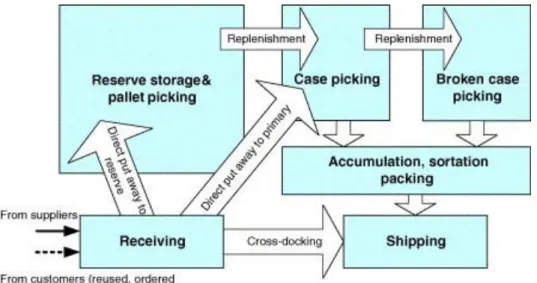
Figure 2.1 Typical warehouse operations and flow ... 48
Figure 2.2 Current operation processes in warehouse ... 50
Figure 2.3 Traditional one-dimensional barcode ... 52
Figure 2.4 Two-dimensional barcode ... 52
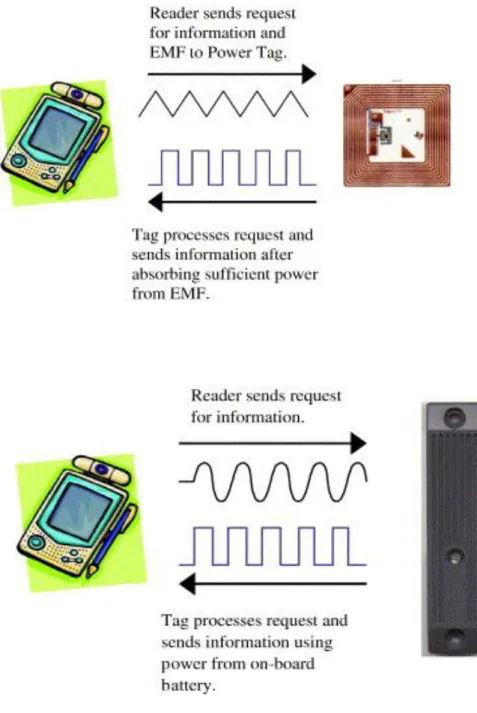
Figure 2.5 Passive RFID power scheme (A), and Active RFID power scheme (B) ... 54
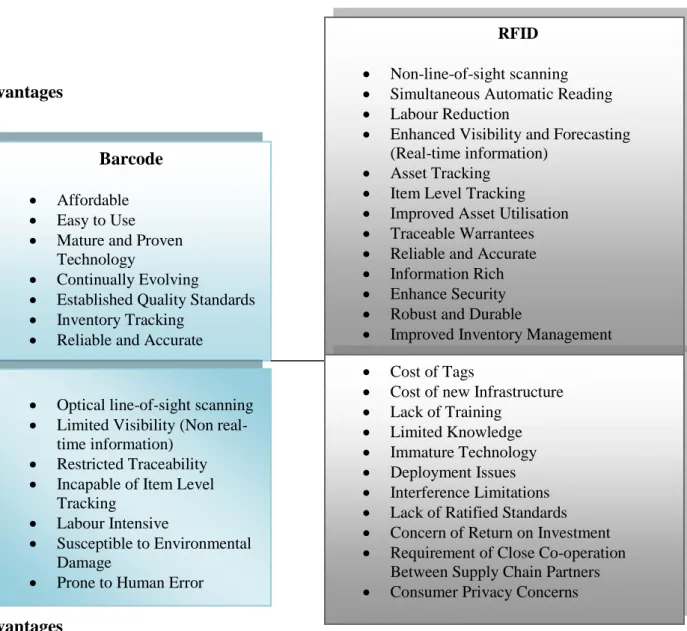
Figure 2.6 Dis (advantages) of Barcode and RFID ... 55
Figure 2.7 Technology, organisation, and environment (TOE) framework ... 65
Figure 3.1 Conceptual framework of key factors influencing auto-ID selection decision in the warehouse management ... 86
Figure 4.1 Empirical Research Methodology ... 129
Figure 4.2 Delphi Process ... 141
Figure 4.3 Level of expertise of respondents ... 144
15
LIST OF TABLES
Table 2.1 The process and total number of articles reviewed ... 35
Table 2.2 Auto-ID in warehouse management studies published between 1990 and 2014 ... 38
Table 2.3 Auto-ID in warehouse management studies according to source titles/journals ... 39
Table 2.4 Auto-ID in warehouse management studies according to country ... 40
Table 2.5 Auto-ID and warehouse management studies according to publication type ... 40
Table 2.6 Research methods employed in auto-ID and warehouse management research ... 41
Table 2.7 Types of auto-ID technologies adopted in warehouse management research ... 41
Table 2.8 Comparison between Barcode and RFID systems ... 59
Table 2.9 Differences among active, passive, and semi-passive RFID tags ... 62
Table 2.10 Some studies using the TOE framework in investigation of the adoption of technological innovations ... 68
Table 2.11 Summary of criteria of auto-ID selection decision in the warehouse management ... 71
Table 2.12 key research issues extracted from analysing the pre-existing literature review ... 76
Table 3.1 Identified factors and sub-factors arranged under the TOE framework ... 87
Table 4.1 Research philosophical paradigms ... 121
Table 4.2 Types of Delphi design ... 138
Table 4.3 Demographic characteristics of the Delphi panel members ... 143
Table 4.4Cronbach’s Alpha for both rounds of the Delphi study ... 155
Table 5.1 Warehouse management motivations for using auto-ID technology ... 165
Table 5.2 Key steps in the auto- ID selection process obtained from round 1 (N=107) and the agreement obtained from round 2 (N=102) ... 168
Table 5.3 The most difficult problem in selecting an auto-ID technology... 170
Table 5.4 Recommendations to overcome problems in auto-ID technology selection ... 173
Table 5.5 The importance of the major factors influencing auto-ID decision ... 174
Table 5.6 The relative importance of the organisational sub-factors ... 176
Table 5.7 The relative importance of the operational sub-factors ... 176
Table 5.8 The relative importance of the structure sub-factors ... 178
Table 5.9 The relative importance of the resources-related sub-factors ... 179
Table 5.10 The relative importance of the external environmental sub-factors ... 180
Table 5.11The relative importance of the technological sub-factors ... 181
Table 5.12 Motivations of warehouses that seek to use auto-ID technology, quotes from interviews ... 185
Table 5.13 Key steps in the auto- ID selection process in warehouse environment, quotes from interviews ... 187
Table 5.14 Problems in auto-ID selection decisions and recommendations to overcome, quotes from interviews ... 191
16
LIST OF APPREVIATIONS
Auto-ID Automatic IdentificationWMSs Warehouse Management Systems
RFID Radio Frequency Identification
SKU Stock Keeping Units
ERP Enterprise Resource Planning
TOE Technology Organisation Environment
DOI Diffusion of Innovation
TAM Technology Acceptance Model
TPB Theory of Planned Behaviour
UTAUT Unified Theory of Acceptance and Use of Technology
BITA Business/IT-Alignment
GSL Group Sense Limited
IT Information Technology
IS Information System
17
CHAPTER 1
INTRODUCTION
1.1 Introduction
A supply chain is an important channel for supporting flow of goods, money and sharing information among all chain parties including, suppliers, manufacturing and storage facilities, distributors and customers for facilitating the core business functions of the production, sale, and delivery of a particular product (Kaihara, 2003; Liu et al., 2005). Due to the effects of globalisation, many companies have expanded their businesses to global locations. Logistics experts have to deal with many channel partners who may be spread over longer distances and demand greater variety of products, more statutory requirements and documentation (Vogt et al., 2005). Enterprises (e.g., manufacturing) have changed their production mode from the traditional mass production to mass customisation in order to facilitate increasing global market competition. Thus, the current supply chain networks are getting increasingly complicated. Supply chain management (SCM) has become one of the key success factors for effectively integrating material flows, money and related information between upstream and downstream entities (Soroor & Tarokh, 2006). In this globalised demand and supply environment, effective supply chain management (SCM) enhances both productivity and customer service (Soroor & Tarokh, 2006).
Supply chain functions including warehousing are essential for linking and integrating all supply chain parties and for ensuring smooth materials flows within the network (Gu et al., 2007). A warehouse is a crucial component for linking the upstream (production) and downstream (distribution) partners in a supply chain. Warehouse operations are either labour or capital-intensive and their performance affects the productivity and the operational costs of a warehouse as well as the entire supply chain (Harmon, 1993; Gu et al., 2007). With such an arrangement, it is necessary to facilitate data sharing and provide the location information of the warehouse resources such as stock-keeping units (SKUs), pallets and racks, pallet trucks and forklifts and warehouse staff members (labour). This
18
will lead to facilitate manufacturing operations, minimise inventory levels, reduce order processing, storage, and transhipment costs, and enhance productivity within facilities (Vogt et al., 2005). Therefore, information systems such as warehouse management systems (WMSs), which use different automatic identification and data capture (auto-ID) technologies, e.g. barcode and radio frequency identification (RFID), have been implemented for handling warehouse resources and monitoring operations (Faber et al., 2002).
Automatic Identification and Data Capture (auto-ID) technologies are a wide category of information collection techniques that are used to automatically identify objects, humans and animals, retrieve information carried by the objects, enter information into a database, and update the stored information about objects (Waldner, 2008). The major categories of Auto-ID technologies are: barcode technology, optical character recognition (OCR) systems, voice recognition, biometric systems, smart cards, and radio frequency identification (RFID) technology, (Finkenzeller, 1999; Wyld, 2006). Among these technologies, barcode technology is mature and is the most commonly used in a warehouse environment, while RFID technology is considered as a substitute for barcode technology in the warehouse field (Lu & Sy, 2009; Guo et al., 2009). On the other hand, optical character recognition (OCR) systems, voice recognition, biometric systems and smart cards are not widely used in the warehousing industry (Lu and Sy, 2009).
Deciding on the type of auto-identification (auto-ID) technology is a key aspect of strategic decision-making for warehousing companies or manufacturers operating large warehouses (Karagiannaki et al., 2011; Lim et al., 2013). The optimum auto-ID technology may offer and sustain the competitive advantage of a company (Poon et al., 2009; Ilie-Zudor et al., 2011). The number of warehousing companies considering auto-ID technology continues to increase (Sarac et al., 2010), but they there is a wide range of factors potentially affecting the decision to use auto-ID technologies. Also, auto-ID selection decisions eventually face the barrier on what to consider for ROI evaluation. Therefore, a study of the key factors/issues faced by warehouse managers seems necessary in both practical and theoretical terms. Also, it is crucial to understand how the critical factors should be combined in order to produce a successful auto-ID selection process.
19
1.3 Background and Motivation of the Research
In a supply chain, a warehouse is an essential component linking all chain parties. The performance of the warehouse operations, which are either labour or capital-intensive, not only influences the productivity and operation costs of a warehouse, but also the whole supply chain (Gu et al., 2007). In today's business environment, a warehouse can be as simple as a garage-like area at a self-storage facility or as complex as a massive facility that not only stores items, but also simultaneously supports different value-adding activities (Karagiannaki et al., 2011). Warehouse operations are no longer confined to inventory storage and protection of goods, but include various operations ranging from receiving, put away, order picking, packaging of items and after sales services, to light assembly and inspection (Farzelle, 2002b; Higginson & Bookbinder, 2005; Maltz &
DeHoratious, 2004; Van Den Berg, 2007; Poon et al., 2011b). Given such diversity, and despite
some similarities, each warehouse differs from the others in many ways.
Automatic identification (auto-ID) technologies such as barcode and radio frequency identification (RFID) are among the essential technologies in the 21st century knowledge-based economy (Lim et al., 2013). Auto-ID technologies have been adopted to facilitate the collection and sharing of data in a warehouse environment. The number of warehousing companies considering auto-ID technology continues to increase (Sarac et al., 2010). An auto-ID technology is a long-term investment and it contributes to improving operational efficiency, achieving cost savings and creating opportunities for higher revenues (Ilie-Zudor et al., 2011; and Lim et al., 2013). There is no doubt about the increasing popularity of auto-ID technologies in the business world. However, it can also be seen that the interest in auto-ID research for warehouse management has been less prominent than in other application domains such as transport, logistics and the supply chain (Sarac et al., 2010; Karagiannaki et al., 2011; Lim et al., 2013).
Deciding on the type of auto-ID technology is a long term investment for warehousing companies or manufacturers operating large warehouses (Karagiannaki et al., 2011; and Lim et al., 2013). Auto-ID selection decisions eventually face the barrier on what to consider for the economic impact/ (ROI) analyse (Fleisch & Tellkamp, 2005; Sarac et al. 2010). Choosing the right auto-ID technology for a warehouse environment is a key
20
decision factor for warehouse managers in order to (Poon et al., 2009; and Ilie-Zudor et al., 2011):
locate warehouse resources efficiently; support warehouse operations effectively; achieve cost savings;
create opportunities for higher revenues;
achieve an acceptable/positive rate of return on investment (ROI); and sustain the competitive advantage of a warehouse.
In the context of making the auto-ID selection decision, many researchers have explored criteria/factors of the auto-ID selection decision in the supply chain (Brown & Bakhru., 2007; Kang & Koh, 2002; Fontanella, 2004; Lee et al., 2004; Fleisch & Tellkamp, 2005; Angeles, 2005; Lahiri, 2005; Rekik et al., 2006; Wyld, 2006; Lefebvre et al., 2006; Wamba et al. 2007; Goel, 2007; Huber et al., 2007; Lin & Lin, 2007; Miller, 2007; Lee and Ozer, 2007; Leung et al., 2007, White et al., 2008; Bottani & Rizzi, 2008; Sarac et al., 2010; Ilie-Zudor et al., 2011; Pfahl & Moxham 2012; Laosirihongthong et al., 2013). They have examined these factors separately to help decision makers to obtain the optimum auto-ID technologies. However, the literature on the decision about auto-ID selection in the warehouse environment is limited, with few studies that discuss the factors affecting decisions in this context (Porter et al., 2004; Vijayaraman & Osyk, 2006; Van De Wijngaert et al., 2008; Liviu et al., 2009; Poon et al., 2009; Karagiannaki et al., 2011; and Osyk et al., 2012).
Previous studies have not considered the key factors affecting the process of making the selection of auto-ID in warehouse management as a whole. The choice of barcode or RFID is not straightforward, but a number of issues/factors influence the selection that comprises a series of decisions (Poon et al., 2011a; and Ilie-Zudor et al., 2011). Different auto-ID technologies and warehouses have different characteristics and that might affect the value of ID in the warehouse context (Karagiannaki et al., 2011). To understand the auto-ID technology-selection process in a warehouse context, it is important to take heed of all key factors that influence this decision (Ilie-Zudor et al., 2011; Pero & Rossi 2013). However, warehouse managers and/or auto-ID project managers may find it difficult to
21
consider the large number of factors that would affect the selection decision. In addition, they may find that identifying the factors will not be enough without understanding how the factors should be combined to produce a successful auto-ID selection process (Poon et al., 2009; Ilie-Zudor et al., 2011; Pero & Rossi 2013). Pero and Rossi (2013) have stated that warehouse managers should follow several steps before any auto-ID technology is selected for implementation.
Some of the key IS theories on technology adoption are the Technology Acceptance Model (TAM) (Davis Jr, 1986), Theory of Planned Behaviour (TPB) (Ajzen, 1985), Unified Theory of Acceptance and Use of Technology (UTAUT) (Venkatesh et al., 2003), Diffusion of Innovation (DOI) (Rogers, 1995) and Technology–Organisation– Environment (TOE) (Tornatzky & Fleischer, 1990). However, in this research, only the DOI and the TOE have been discussed because they are used at the organisation level, while TAM, TPB and UTAUT are used at the individual level (Oliveira and Martins 2011).
Consistent with recent studies (e.g. Ilie-Zudor et al., 2011; Pero & Rossi 2013) and based on the review of the literature, this research finds a need to fill a knowledge gap stemming from the absence of a comprehensive framework that collectively investigates the critical factors influencing the auto-ID selection decision and how the factors should be combined to produce a successful auto-ID selection process in warehouse management. This provides a theoretical basis upon which future research on auto-ID selection and implementation could be built. In addition, the proposed framework should give practitioners a better understanding of the various phases involved so that the whole auto-ID selection process can be easily understood and applied in a warehouse environment.
1.5 Research Aim and Objectives
Selecting an auto-ID technology is a long term investment and it contributes to improving operational efficiency, achieving cost savings and creating opportunities for higher revenues. Auto-ID selection decisions eventually face the barrier on what to consider for ROI evaluation. The choice of auto-ID is not straightforward, but a number of key factors influence the selection which comprises a series of decisions. Therefore, understanding the auto-ID technology-selection process in a warehouse field requires that all key factors that influence this decision are taken into account. Also, it is essential to understand how
22
those factors should be combined in order to produce a successful auto-ID selection process.
Therefore, the main aim of this research is to determine the key factors that influence decision makers when selecting auto-ID technologies in the warehouse environment and to investigate empirically the auto-ID technology-selection process.
In order to achieve the research aim, these are the objectives of this study:
To identify the critical factors that influence the auto-ID selection decision by reviewing the existing literature.
To design an appropriate conceptual research framework.
To conduct an international Delphi study to investigate the key factors and their relative importance affecting the auto-ID selection decision.
To conduct in-depth interviews in order to refine and verify the Delphi results. To develop a comprehensive framework for the selection process of auto-ID
technology in the warehouse field.
Finally, based on empirically verified results, the researcher describes the implications that emerge from the study for practice and future academic research in auto-ID technology and warehouse management.
1.6 Research Questions
In order to achieve these objectives, this research addresses four questions. The justification/explanation for each research question is presented below:
Auto-ID technologies have been adopted to facilitate the collection and sharing of data in a warehouse environment. Although previous research indicates that the number of warehousing companies considering auto-ID technology continues to increase (Sarac et al., 2010; Poon et al., 2011; Lim et al., 2013), there has been little work done on warehouse management motivations for using auto-ID technologies. Therefore, the first question of this research is as follow:
RQ1. What are the motivations/reasons of warehouses that seek to use auto-ID technologies?
23
According to Ilie-Zudor et al. (2011), the choice of auto-ID (barcode/RFID) is not a single choice, but a number of issues/challenges influence the selection that is comprised of a series of decisions. Previous studies did not pay attention to problems in auto-ID selection decisions and recommendations to overcome them. Therefore, this research attempts to address this gap and answering the following question:
RQ2. What are the challenges in making an auto-ID decision and the recommendations to address the challenges?
Some researchers such as Adhiarna et al. (2011) have stated that the importance of the various factors that influence the auto-ID selection decisions may change significantly over time. Thus, in this research the relative importance of major factors ad sub-factors will be investigated in order to determine the chronological order of these factors. As a result, these factors and other key activities will be arranged according to their chronological order and that will help to understand the entire auto-ID selection process in warehouse management (Pettigrew, 1997; Aladwani, 2001; Robey et al., 2002; Adhiarna et al., 2011). Therefore, this research addresses the following question:
RQ3. What is the relative importance of major factors and sub-factors affecting auto-ID selection decisions in the warehouse field?
Finally, scholars such as Ilie-Zudor et al. (2011); and Poon et al. (2011a) mention that the choice of auto-ID is not a straightforward, but a wide range of factors affect the selection decision, and they call for more investigation of a number of factors influencing auto-ID adoption to provide a step-by-step guide for choosing the right auto-ID system for a particular organisation's needs. In addition, Poon et al. (2009); Ilie-Zudor et al. (2011); and Pero and Rossi (2013) have indicated that warehouse managers and/or auto-ID project managers may find it difficult to consider the large number of factors that would affect the selection decision without understanding how the factors should be combined to produce a successful auto-ID selection process. Moreover, Porter et al. (2004); Poon et al. (2009); and Sarac et al. (2010) comment that the warehouse managers should follow several steps before any auto-ID technology is selected for implementation. Therefore, this research
24
addresses the following question in order to investigate the auto-ID selection process from its inception to its completion.
RQ4. What are the key steps in the selection process of auto- ID technologies in a warehouse environment?
1.7 Research Methodology
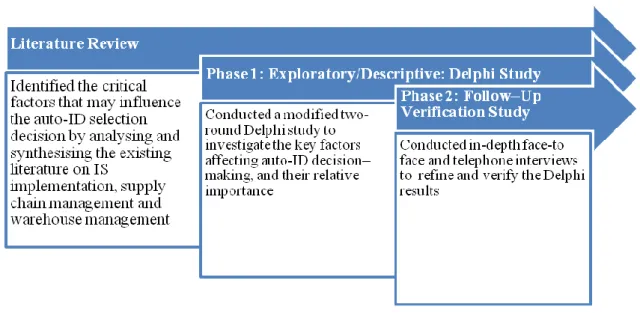
To achieve the research objectives, the research design relied on two phases, as shown in Figure 1.1. After reviewing and analysing the existing literature review, a modified (mixed-method) two-round Delphi study (Dalkey & Helmer, 1963; McKenna, 1994) was conducted in the first phase using a worldwide panel of 107 experts including academics, industry practitioners and consultants in auto-ID technologies. This was a combination of exploratory and descriptive research (Cunliffe & Australia, 2002). The objective was to identify key factors and their relative importance that influence auto-ID selection decisions in warehouse management.
The second phase incorporated follow-up interviews, both face-to-face and by telephone, using 19 experts across the world for verification (Skulmoski et al., 2007; Hasson & Keeney, 2011). The objective was to discuss in-depth to verify and refine the results of the Delphi study. The two-round Delphi study and the follow-up interviews were sufficient for providing enough data to develop a comprehensive framework for the selection process of auto-ID technology in warehouse management.
25
Figure 1.1 Research Design
An international Delphi study was used in this research because the importance of the various factors affecting the selection decision may vary significantly among different countries (Adhiarna et al., 2011). In addition, a mixed-method research approach has been utilised in this research in order to benefit from the strength of both quantitative and qualitative methods (Creswell, 2003). The analysis resulted in key activities that were combined to form the framework of the auto-ID selection process in warehouse management.
1.8 Thesis Outline
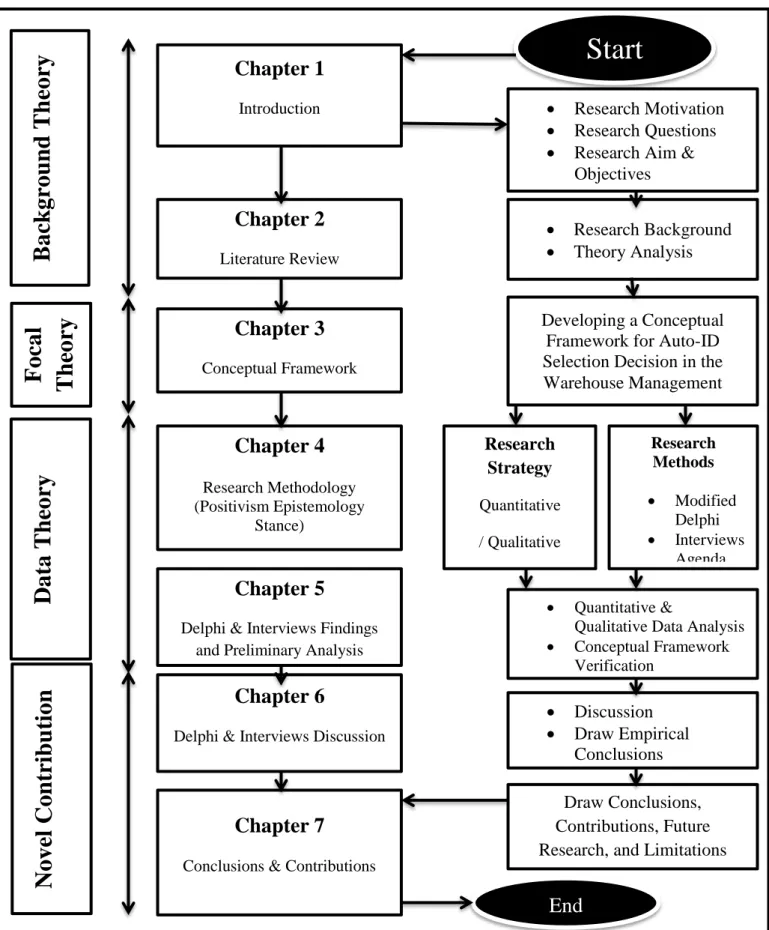
The outline of this thesis is based on the methodology developed by Phillips and Pugh, (2010) which includes four elements: (a) background theory; (b) focal theory; (c) data theory; and (d) contribution. The background theory, which is presented in Chapter 2, discusses the research area based on a comprehensive literature review. Next, the focal theory develops an overall conceptual framework which is introduced in Chapter 3. Then, the data theory is concerned with issues such as: (a) developing a suitable research strategy for this study (b) selecting an appropriate research method and (c) developing a research protocol. These issues are discussed in Chapter 4. In Chapter 5, the data theory
26
also deals with the process of collecting and analysing the data. Finally, the result of this research is the novel contribution, presented in Chapters 6 and 7.
Each of the seven chapters in this thesis addresses a specific part of the study. The outline of the thesis is shown in Figure 1.2 below, followed by brief explanations of each chapter in the thesis.
Chapter 1: Introduction (Background Theory)
This chapter begins by offering a general introduction to the nature and intent of the research problem. It starts by providing the background to the research topic which is auto – ID selection decision in the warehouse management. Then, the aim and objectives of the research are set and the research questions are presented. Thereafter, a summary of the research methodology is given and a justification for the research through its main contributions is provided along with a brief description of each chapter.
Chapter 2: Literature Review (Background Theory)
This chapter starts by providing a general overview of the literature on the warehouse roles and characterisations. It also provides a valuable comparative analysis of different auto- ID technologies which have been used in a warehouse environment such as barcode, active RFID, passive RFID and semi-passive RFID systems. Moreover, details about the main factors and sub-factors relevant to the auto-ID selection decision in a warehouse environment are presented. This chapter then focuses on the decision making process and concludes that there is a lack of studies in the literature regarding the selection process of auto-ID technology in the warehouse management.
Chapter 3: Developing a Conceptual Framework (Focal Theory)
The aim of this chapter is to present an overall theoretical conceptual framework for the diverse factors affecting the selection decision of auto - ID Technology for warehouse management which arose from the literature review in Chapter. 2. The technology– organization–environment (TOE) framework derived by Tornatzky and Fleischer (1990) was used as a lens to categorise the identified factors into six categories: structural, operational, resources, organisational, technological, and external environment. This conceptual framework can be used as a tool to help practitioners and decision-makers with
27
auto-ID selection in the warehouse environment. It can also benefit researchers in understanding the selection process of RFID and barcode systems in the warehouse management.
Chapter 4: Research Methodology (Data Theory - One)
After completing the theoretical part, Chapters 2 and 3, this chapter presents the practical arena to test and validate the proposed conceptual framework. In order to achieve the aim and objectives of the research, this chapter presents the research methodology and design employed in this study. It provides the underpinnings of the research philosophy, strategies, methods, Delphi study process, interview protocol, and units of analysis used in this research. A detailed empirical research process roadmap is described in Chapter 4. Finally, the chapter discusses validity and reliability issues as well as the trustworthiness of this study.
28
Figure 1.2 Thesis Outline
Start
Chapter 1
IntroductionChapter 2
Literature Review Research Motivation Research Questions Research Aim &Objectives Research Background Theory Analysis
Chapter 3
Conceptual FrameworkChapter 4
Research Methodology (Positivism Epistemology Stance)Chapter 5
Delphi & Interviews Findings and Preliminary Analysis
Chapter 6
Delphi & Interviews Discussion
Chapter 7
Conclusions & Contributions
Ba
ck
g
ro
und Th
e
o
ry
Foca
l
Theo
ry
Da
ta Theo
ry
No
v
el Contribu
ti
o
n
Developing a Conceptual Framework for Auto-ID Selection Decision in the Warehouse Management Research Strategy Quantitative / Qualitative Research Methods Modified Delphi Interviews Agenda Quantitative &Qualitative Data Analysis
Conceptual Framework Verification Discussion Draw Empirical Conclusions Draw Conclusions, Contributions, Future Research, and Limitations
29
Chapter 5: Delphi Study, Interviews and Research Findings (Data Theory - Two)
This chapter then provides a description of the findings of the Delphi study and the interviews that have been conducted with a worldwide panel of experts. This chapter offers an empirical analysis of these studies on the main issues of this research including: (a) the motivations of warehouses that seek to use auto-ID technology (b) the key steps in the selection process of auto- ID technology in the warehouse environment (c) the most difficult problem in making an auto-ID decision and the ways to overcome the problem as well as (d) the importance of major factors and sub-factors affecting auto-ID selection decision in the warehouse field.
Chapter 6: Discussion (Novel Contribution - One)
All the findings from the primary data collected in the Delphi study and the interviews were analysed and presented with discussion in this chapter. The outcomes derived from the empirical data analysis helped to develop a comprehensive framework for the selection process. This chapter describes the multi-stage framework for auto-ID selection process for warehouse management and concludes the findings.
Chapter 7: Conclusions, Contributions, Future Research and Limitations (Novel Contribution - Two)
This chapter presents the conclusion of the study. Significant summaries and reflective conclusions bring together background, focal and data theory in tandem with critical empirical research findings. Thereafter, based upon the empirical data and research findings, the statement of the research contributions and implications are outlined. Finally, recommendations that can benefit decision-makers including research limitations as well as potential future research perspectives and endeavours are considered.
30
CHAPTER 2
LITERATURE REVIEW
2.1
IntroductionIn this chapter, the literature on the warehouse roles and characterisations, automatic identification and data capture (auto-ID) technologies for locating warehouse resources are presented. A comparative analysis of different auto- ID technologies that have been used in a warehouse environment such as barcode, active RFID, passive RFID and semi-passive RFID systems, is provided. Moreover, this literature review has outlined and discussed the key models/theories of IT adoption especially, Diffusion of Innovation (DOI) theory, and the Technology–Organization–Environment (TOE) framework because they are the only ones that are at the organisation level. Details about the main factors and sub-factors relevant to the auto-ID selection decision in a warehouse environment are also reviewed. This chapter then focuses on the process of the selection decision and concludes that there is a lack of studies in the literature regarding the selection process framework of auto-ID technology in warehouse management. The chapter is divided into eight sections. In Section 1; the process of reviewing the literature is explained. A literature review of the role of the warehouse in logistics and supply chain management is presented in Section 2. Next, literature on warehouse characterisations has been reviewed in Section 3. In Section 4; current warehouse resource management tools are presented. Existing real-time location tracking technologies in a warehouse environment are shown in Section 5. In Section 6; Models of IT adoption are outlined and discussed. Factors relevant to auto-ID selection decisions in the warehouse environment are discussed in Section 7. Finally, Section 8 is devoted to a summary of this chapter.
31
2.2
The process of Reviewing the LiteratureReviewing the relevant literature is an essential part of any research project. In the management field, Tranfield et al. (2003) have suggested that researchers need to review the relevant literature before conducting any empirical research in order to formulate a research question, which leads to appropriate empirical work and enhances pre-existing knowledge. The literature relevant to warehouse, barcode, and RFID technologies has been reviewed. The main purpose of the review is to develop an effective overview, provide a comparative analysis and cover potential benefits and challenges related to different auto- ID technologies in a warehouse context. Also, to identify the key factors relevant to the auto-ID selection decision in the warehouse field. The literature has been analysed according to the following criteria: the warehouse roles and characterisations (resources and operations); the current warehouse resources management technologies (barcode and RFID) used to track warehouse resources location; key models of IT adoption and the factors relevant to auto-ID selection decision in the warehouse environment.
In order to fully map the prior research in the field of “auto-ID in warehouse management”, a systematic literature review was conducted in this research. This systematic review followed the three stages outlined by Tranfield et al. (2003) as follows:
Stage I -Planning the review
Phase 1 - Identifying the need for a review
Phase 2- Preparing a proposal for a review
Phase 3 - Developing a review protocol
Stage II- Conducting a review
Phase 1 - Identification of research
Phase 2 - Selection of studies
Phase 3 - Study quality assessment
32 Phase 5 - Data synthesis
Stage III- Reporting and dissemination
Phase 1 - The report and recommendations
Phase 2 - Getting evidence into practice
These stages and phases are described in detail below.
2.2.1 Stage I: Planning the Review
According to Tranfield et al. (2003), prior to the beginning of the review, a review panel should be formed with experts in the areas of both methodology and theory. However, due to the nature of this research (PhD/doctoral research), only the researcher and the researcher's supervisors were involved in this systematic literature review. The researcher and the researcher's supervisors helped to direct the systematic literature review process through regular meetings and resolved upcoming disputes over the inclusion and exclusion of studies. Planning the review contains three phases (Tranfield et al., 2003) as follows:
2.2.1.1 Phase 1- Identifying the Need for a Review
At the beginning of the systematic literature review, it is important to identify the objectives and the need for a review. Therefore, the main purpose of the review was identified in the initial stages of the review, which is to fully map the prior research in the field of “auto-ID in warehouse management” and identify the critical factors relevant to auto-ID selection decision in the warehouse management.
2.2.1.2 Phase 2– Preparing a Proposal for a Review
Clarke and Oxman (2001) have stated that the initial stages of systematic literature review may be an iterative process of definition, clarification and refinement. Tranfield et al. (2003) have suggested that within management research, it is important to conduct scoping studies in order to evaluate the relevance and size of the literature and to specify the subject area or research topic. Therefore, in this research, it was necessary to consider cross-disciplinary perspectives and alternative ways in which a subject area has previously been tackled. Also, the scoping study included a brief summary of the theoretical, practical
33
and methodological history debates surrounding the field of “auto-ID in warehouse management”.
2.2.1.3 Phase 3– Developing a Review Protocol
According to Tranfield et al. (2003), the protocol for any management literature review may include a conceptual discussion of the research problem and the problem significance rather than a defined research question. In addition, management reviews are usually considered as a process of exploration, discovery and development. Therefore, Tranfield et al. (2003) have stated that it is often considered unacceptable to plan the literature review activities closely and they have suggested that it is important to produce a protocol that does not compromise the researcher’s ability to be creative in the literature review process. However, it is necessary to ensure that the review is less open to researcher bias than is the more traditional narrative review (Tranfield et al., 2003). Thus, in this research, a flexible protocol was developed which enabled the researcher to state explicitly what changes have been made and the rationale for doing so (e.g., reasons for including/excluding articles).
2.2.2 Stage II: Conducting the Review Planning
According to Tranfield et al. (2003), this stage contains five phases as follows:
2.2.2.1 Phase 1– Identification of Research
The systematic literature review conducted in this research began with the identification of keywords and search terms (e.g. warehouse, warehousing, RFID, Barcode), which are built from the scoping study, the literature and discussion within the review team (the researcher and the researcher's supervisors). Then, the search string: "warehouse" OR "warehousing" AND "RFID" OR "Barcode" was considered to be the most appropriate for this research and employed in all search fields.
2.2.2.2 Phase 2– Selection of Studies
The literature was mainly collected from Google Scholar and five key bibliographical databases namely: Science Direct, EBSCO, Emerald, Scopus and Sage. The reason for selecting multiple data sources is that the majority of journals across disciplines are
34
included within all these databases. Therefore, it is possible to search for and locate a significant proportion of the published material (Stuck et al., 1999).
2.2.2.3 Phase 3– Study Quality Assessment
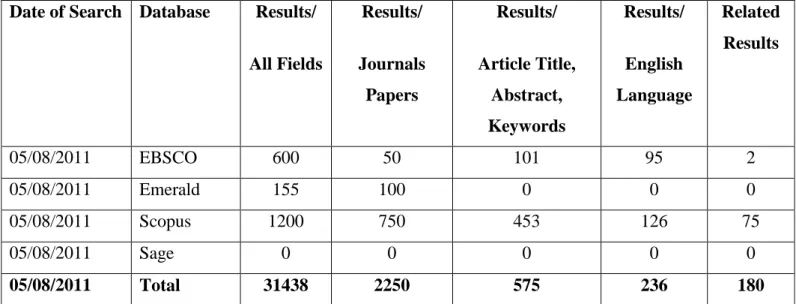
The first search using this search string resulted in 31,438 (on 05/08/2011) articles which included research conference papers, articles, reviews, book chapters and many other categories of document. However, in order to retrieve relevant sources/literature for a more detailed evaluation of the full text, the scope of the literature review process have to be defined by other factors. In this regard, Tranfield et al. (2003) have stated that: “…management researchers usually rely on the implicit quality rating of a particular journal, rather than formally applying any quality assessment criteria to the articles they include in their reviews (i.e. refereed journals are 'better' than practitioner journals)…”. Therefore, the initial assessment criteria for including studies into the literature review were: the focus on auto-ID in warehouse management, theoretical and empirical studies, quantitative and qualitative studies and studies which were published in high quality academic/leading journals.
The conducted search elicited 2250 hits. By restricting the search string to “Article Title, Abstract, Keyword”, this substantially reduced the number of records to just 575 (on 05/08/2011). The research output has been further refined by discarding the articles published in languages other than English, which resulted in a final list of 236 articles published in 95 peer-reviewed journals between 1990 and 2011.
The selection process and total number of articles relevant to “auto-ID in warehouse management” are presented below in Table 2.1.
Date of Search Database Results/ All Fields Results/ Journals Papers Results/ Article Title, Abstract, Keywords Results/ English Language Related Results 05/08/2011 Google Scholar 28768 850 N/A N/A 98 05/08/2011 ScinceDirect 715 500 21 15 5
35
Date of Search Database Results/ All Fields Results/ Journals Papers Results/ Article Title, Abstract, Keywords Results/ English Language Related Results 05/08/2011 EBSCO 600 50 101 95 2 05/08/2011 Emerald 155 100 0 0 0 05/08/2011 Scopus 1200 750 453 126 75 05/08/2011 Sage 0 0 0 0 0 05/08/2011 Total 31438 2250 575 236 180
Table 2.1 The process and total number of articles reviewed
However, in order to find as many articles as possible and to cross-check the search results, another search using the previous search string was conducted in each of the leading journals within the following areas: Supply Chain Management, Operations Research, Information Systems, and Production Economics, namely: Research Journal of Applied Sciences, Engineering and Technology; International Journal of RF Technologies: Research and Applications; International Journal of Production Research; International Journal of Information Technology and Management (IJITM); Computers & Industrial Engineering; Expert Systems with Applications; Management Research Review; Information Systems Frontiers; Industrial Management and Data Systems; International Journal of Manufacturing Technology and Management; International Journal of Physical Distribution & Logistics Management; International Journal of Logistics Systems and Management; Journal of Cases on Information Technology; Packaging Technology and Science; European Journal of Information Systems; European Journal of Operational Research; International Journal of Logistics Research and Applications; International Journal of Value Chain Management; International Journal of Production Economics; Supply Chain Systems Magazine; Material Handling Engineering; and Computers and Industrial Engineering. This additional search improved the numbers of articles found by 7 to 243 articles.
All 243 items were then examined in order to cross-check and confirm the relevance of the search results (Irani et al., 2010). As a result, 63 articles were rejected because they matched the search but did not focus on auto-ID research work for warehouse
36
management (i.e. they only mentioned the warehouse as an example of RFID/barcode application, however they did not actually conduct research in the domain). This left only 180 articles to be analysed in this review. In order to keep up-to-date with the published literature, the same methodology was applied until this dissertation was completed.
The literature reviews are covered from 1990 up to 2014 because the role of warehousing in supply chain management has started to change since 1990s (Harmon, 1993). For example, warehouse operations are no longer confined to inventory storage and protection of materials, but they include different operations ranging from receiving, put away, order-picking, packaging of items and after sales services, to light assembly and inspection (Poon et al., 2011b).
2.2.2.4 Phase 4– Data Extraction and Monitoring Progress
Systematic reviews employ data-extraction forms in order to reduce human error and bias. These usually include general information (title, author, journal, and publication details), research features and specific information (details and methods), identification of emergent themes, key results and additional notes (Tranfield et al., 2003). Data-extraction can be paper based or computer based. The development of the data-extraction sheets may depend on the nature of the research (Tranfield et al., 2003). In this research, data-extraction was computer based (excel sheet) and included (title, author, journal, publication details, methods, emergent themes, key results, additional notes).
2.2.2.5 Phase 5– Data Synthesis
Research synthesis is the collective term for a family of approaches that seeks to summarise, integrate, and, where possible, accumulate the findings of different studies on a subject area or research question (Mulrow, 1994). According to Greenhalgh (1997), a narrative review is the simplest and best-known form of research synthesis that aims to identify what has been written on a subject area or topic. In this research, a narrative review (textual descriptions of studies, tabulation, content analysis) was used in order to identify, summarise and synthesis the existing literature review on " auto-ID technology in warehouse management".
37
2.2.3 Stage III: Reporting and Dissemination
According to Tranfield et al. (2003), this stage includes two phases as follows:
2.2.3.1 Phase 1– The Report and Recommendations
Tranfield et al. (2003) have mentioned that a full report (rough-cut and detailed) 'descriptive analysis' of the field may be produced within management research. This can be performed using a simple set of categories with the use of the extraction forms. In this research, analysis of the articles according to the year of publication, country of core contributions, journal, publication type, research methods and type of auto-ID technologies is reported below in the following sub-sections (Section 2.2.3.1.1– Sub-Section 2.2.3.1.6).
Moreover, Trenfield et al. (2003) have stated that researchers also need to report the key emerging themes and research question(s) from the synthesis and to link themes across the various core contributions. In this research, therefore, the key emerging themes have been reported, linked and presented (see Tables 2.8, 2.9, 2.12, and 3.1). Also, the research questions have been developed and presented in Chapter 1 (Sub-Section 1.6).
2.2.3.1.1 Auto-ID and Warehouse Management Studies According to Year of Publication
The research findings (illustrated in Table 2.2) reveal that the number of articles published on auto-ID and warehouse management has constantly increased from 1990 (C=0) to 2013 (C=16). To date, the largest number of articles (25) appeared in 2011, followed by 2012 with a total count of 23 articles.
Year Count % of Total Year Count % of Total 2011 25 13.89 2003 8 4.44 2012 23 12.78 2007 7 3.89 2006 19 12.67 2002 5 2.78 2009 18 10 1999 3 1.67 2010 17 9.44 1996 1 0.56 2013 16 8.89 1995 1 0.56 2008 14 7.78 1994 1 0.56 2004 12 6.67 1990 0 0
38
2005 10 5.56 2014 0 0
Total 180 100
Table 2.2 Auto-ID in warehouse management studies published between 1990 and 2014
Prior to 1990 no articles at all appeared in the search of the Scopus Database. It may be argued that the increasing number of publications appearing post 2002 illustrates increasing levels of interest and research activity in the subject area.
2.2.3.1.2 Auto-ID and Warehouse Management Studies According to Journals
A total of 95 journals published 180 articles on auto-ID in warehouse management. Table 2.3 presents the list of the search output according to the journals (only the top 16 journals with two or more articles) in which the articles on auto-ID and warehouse management appeared. Table 2.3 illustrates that the largest number of articles (9) on auto-ID and warehouse management appeared in the International Journal of RF Technologies: Research and Applications. This is followed by the Expert Systems with Applications (7), and then the four outlets namely International Journal of Production Economics, Supply Chain Systems Magazine, IEEE Transactions on Antennas and Propagation, and Industrial Management and Data Systems, with 3 publications each. The top 16 list also includes 10 journals with only two publications each such as International Journal of Logistics Research and Applications; International Arab Journal of Information Technology; International Journal of Electronics; Journal of Manufacturing Systems; International Journal of Production Research; Journal of Theoretical and; Applied Electronic Commerce Research; Packaging Technology and Science; Research Journal of Applied Sciences, Engineering and Technology; Wireless Personal Communications; and World Academy of Science, Engineering and Technology.
Source Title/Journal Count % of total
International Journal of RF Technologies: Research and Applications 9 5.1
Expert Systems with Applications 7 3.89
International Journal of Production Economics 3 1.67
Supply Chain Systems Magazine 3 1.67
IEEE Transactions on Antennas and Propagation 3 1.67
Industrial Management and Data Systems 3 1.67
International Journal of Logistics Research and Applications 2 1.11
International Arab Journal of Information Technology 2 1.11
International Journal of Electronics 2 1.11
39
Source Title/Journal Count % of total
International Journal of Production Research 2 1.11
Journal of Theoretical and Applied Electronic Commerce Research 2 1.11
Packaging Technology and Science 2 1.11
Research Journal of Applied Sciences, Engineering and Technology 2 1.11
Wireless Personal Communications 2 1.11
World Academy of Science, Engineering and Technology 2 1.11
Table 2.3 Auto-ID in warehouse management studies according to source titles/journals The findings further show that of the journals publishing the highest numbers of articles on auto-ID in warehouse management, only few related with ‘Operations and Management’, ‘Information Systems’ and other business and management related areas, while all the publications mainly related with engineering and other technical disciplines. This might be due to the fact that a large number of early publications on auto-ID in warehouse management addressed technology development and engineering aspects of auto-ID technologies. Also, it could be the case that the journals from engineering and other technical disciplines are comparatively more sympathetic to such material.
2.2.3.1.3 Auto-ID and Warehouse Management Studies According to Country
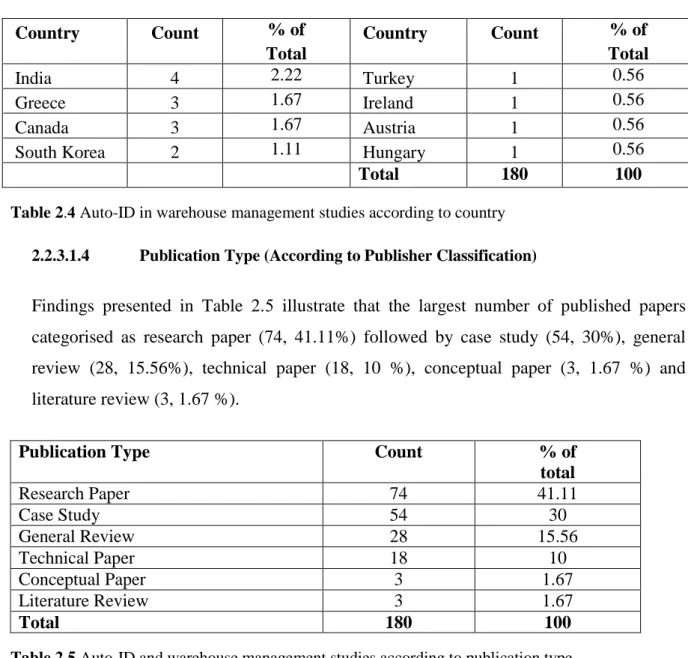
The research findings (illustrated in Table 2.4) disclose that the research presented in the 180 publications we identified on “Auto-ID and warehouse management” was conducted in 26 countries. By far the largest number of contributors were located in the USA (52, 28.89%), which was followed by with a number of other countries such as Hong Kong (25, 13.89). The third largest category (18, 10%) was formed by the UK and China authors and then Taiwan (15, 8.33%) at fourth place. Table 2.4 illustrates the proportion of contributors from the 26 countries.
Country Count % of
Total
Country Count % of
Total
USA 52 28.89 Germany 2 1.11
Hong Kong 25 13.89 France 1 0.56
China 18 10 Iran 1 0.56 UK 18 10 Macau 1 0.56 Taiwan 15 8.33 Netherlands 1 0.56 Australia 10 5.56 Portugal 1 0.56 Italy 6 3.33 Romania 1 0.56 Japan 6 3.33 Slovakia 1 0.56 Malaysia 4 2.22 Spain 1 0.56