Diffusion Tensor Analysis With Invariant Gradients
and Rotation Tangents
Gordon Kindlmann*, Daniel B. Ennis, Ross T. Whitaker
, Member, IEEE
, and Carl-Fredrik Westin
Abstract—Guided by empirically established connections be-tween clinically important tissue properties and diffusion tensor parameters, we introduce a framework for decomposing varia-tions in diffusion tensors into changes in shapeandorientation. Tensor shape and orientation both have three degrees-of-freedom, spanned by invariant gradients and rotation tangents, respec-tively. As an initial demonstration of the framework, we create a tunable measure of tensor difference that can selectively respond to shape and orientation. Second, to analyze the spatial gradient in a tensor volume (a third-order tensor), our framework generates edge strength measures that can discriminate between different neuroanatomical boundaries, as well as creating a novel detector of white matter tracts that are adjacent yet distinctly oriented. Finally, we apply the framework to decompose the fourth-order diffusion covariance tensor into individual and aggregate mea-sures of shape and orientation covariance, including a direct approximation for the variance of tensor invariants such as frac-tional anisotropy.
Index Terms—Diffusion tensor magnetic resonance imaging (MRI), fourth-order covariance tensor, tensor feature detection, tensor invariants, third-order gradient tensor.
I. INTRODUCTION
D
IFFUSION tensor imaging (DTI) enables noninvasive measurements of microstructural orientation and organi-zation in biological tissue, such as the central nervous system or cardiac muscle [1], [2], and has found numerous applications in neuroscience, medicine, and bioengineering [3]–[10]. Research in tensor-valued image processing takes on greater significance in DTI, given the empirically established connections between mathematical properties of diffusion tensors, and biological properties of tissue. For example, the average of the tensor eigenvalues indicates bulk mean diffusivity, used in ischemic stroke detection [11], [12]. Dissimilarity among the eigen-values (anisotropy) indicates the strength of microstructural organization [13], [14]. The principal eigenvector (the direction of greatest diffusivity) indicates the approximate direction ofManuscript received June 12 2007; revised August 16, 2007. This work was supported by the National Institutes of Health (NIH) under Grants NIBIB T32-EB002177 (GK), Grant K99-HL087614 (DBE), Grant U41-RR019703 (CFW), Grant R01-MH074794 (CFW, GK), Grant NCRR P41-RR13218 (CFW), and Grant U54-EB005149 (RTW).Asterisk indicates corresponding author.
*G. Kindlmann is with the Department of Radiology, Brigham and Womens Hospital, Harvard Medical School, Cambridge, MA 02139 USA (e-mail: [email protected]).
D. B. Ennis is with the Department of Cardiothoracic Surgery, Stanford Uni-versity, Stanford, CA 94305 USA.
R. T. Whitaker is with the School of Computing, University of Utah, Salt Lake City, UT 84112 USA.
C.-F. Westin is with the Department of Radiology, Brigham and Womens Hospital, Harvard Medical School, Cambridge, MA 02139 USA.
Digital Object Identifier 10.1109/TMI.2007.907277
axonal pathways and muscle myofibers [15]–[18]. Ideally, the same biological connections can inform and enhance research in diffusion tensor image processing, which uses mathematical methods of increasing sophistication and abstraction.
A common theme in DTI processing is quantifying
differ-ence and variationof tensors. This includes difference
mea-sures (or equivalently, similarity meamea-sures) between two ten-sors, as well as structure tensors. Difference measures play a role in a variety of DTI algorithms, for example image registra-tion [19], [20], edge-preserving filtering [21]–[23], and segmen-tation [24]–[26]. Local differential structure can also be mea-sured with a second-orderstructure tensor, a sum of tensor prod-ucts of gradients [27]–[29]. Structure tensors of diffusion tensor components have been used for visually detecting tissue inter-faces [30], anisotropic interpolation [31], and edge-preserving filtering [32].
Local variation in diffusion tensor fields can also be measured by higher-order tensors. The gradient of a smooth second-order diffusion tensor field is a third-order tensor [33], introduced in DTI by Pajevicet al.as part of their spline-based tensor interpo-lation [34]. Such gradients can also figure in tensor-based reg-istration, to analytically compute the derivative of the optimiza-tion funcoptimiza-tion [20], [35], and in DTI segmentaoptimiza-tion, as an edge strength measure [36]. Alternatively, the covariance of a set of second-order tensors is a fourth-order tensor, recently used by Basser and Pajevic to describe tensor distributions from noisy diffusion-weighted images (DWIs) [37], [38], and by Lengletet al.for modeling distributions of tensors on a Riemannian man-ifold [39].
In our view, some of the previous work above quantifies tensor differences, gradients, or covariance in an overly broad manner, by not distinguishing between the different tensor parameters that make DTI a uniquely powerful modality. Based upon empirically established connections between diffusion tensor parameters and underlying tissue attributes, we present in Section II a novel framework by which diffusion tensor analysis can be expressed and refined in terms of biologically mean-ingful quantities. The framework generates an orthonormal coordinate system around each tensor value, decomposing the tensor’s six degrees-of-freedom into shape and orientation. Tensor shape includes mean diffusivity and anisotropy, and orientation includes the principal diffusion direction. The three
invariant gradients(gradients of invariants) in our framework
describe variations in tensor shape, and the three rotation
tangentscapture variations in tensor orientation.
Our framework enables novel decompositions of third-order diffusion gradient tensors and fourth-order diffusion covariance tensors, as described in Section III. Specific contributions, demonstrated in Section IV, include the ability to isolate
TABLE I
MATHEMATICALCONVENTIONS ANDNOTATION
boundaries in tensor shape and orientation, a detector (“ad-jacent orthogonality”) of ad(“ad-jacent but orthogonal fiber tracts, the intuitive visualization of fourth-order diffusion covariance tensor fields as a 6 6 image matrix, and aggregate measures of the variance and covariance of tensor shape and orientation. This paper is a simplified exposition and expanded application of the framework initially described in [40], leveraging our previous work on orthogonal invariant sets [41].
II. THEORETICAL ANDBIOLOGICALBACKGROUND
Our notational conventions are as follows (see Table I for ref-erence). is the set of second-order tensors in three-di-mensional space [42]. In a basis for , a typical vector or tensor has matrix representation
or , respectively, or simply or when the basis is assumed. Our work considers only orthonormal bases : all of our tensors are Cartesian, with no dis-tinction between covariant and contravariant indices. The con-traction of two tensors, analogous to a vector dot product, is . Tensor norm is the Frobe-nius norm of matrix . Tensor is decomposed into isotropic
and deviatoric parts, and ,
respec-tively. We use Einstein notation: a repeated index within a term implies summation over that index, e.g., ;
and .
Our framework is based upon the recognition that tensors are linear transforms, and that linear transforms constitute a vector space. Linear transforms from to form a vector space isomorphic to [43]. The tensor product is a linear
transform defined by for all in [33].
Any linear transform can be expressed as a linear combination of tensor products of orthonormal basis vectors , according
to and . Tensor contraction
is an inner product on , and we say and are
orthogonal when .
denotes the set of symmetric tensors in . A diffusion tensor is a symmetric linear trans-form that maps (by Fick’s first law) from concentration gradient vector to diffusive flux vector [1], [44]. Sym-metric tensors have real eigenvalues and three orthogonal real eigenvectors. A principal frame is an orthonormal basis of eigenvectors of tensor , which diagonalizes the
matrix . Thespectral decomposition
is a coordinate-free expression of a tensor in terms of its eigensystem. Diffusion tensors are also positive-def-inite [1], the significance of which for diffusion tensor image processing is discussed in Section V-B.
is a six-dimensional vector space. To demonstrate, we
form an orthonormal basis for from an
orthonormal basis for .
(1)
Tensors in can be decomposed into vector components
by and . We use bold subscripts
to index components of considered as vectors rather than tensors. We define to serve as a point of comparison for our framework, and to convert between the components of matrix and the components of six-vector
The tensor norm of equals the vector length of
(3) Our basic strategy in this work is to createat each tensor
a local orthonormal basis, with basis vectors (or “basis tensors”) aligned with biologically meaningful de-grees-of-freedom. These includeshapeandorientation, which we distinguish by considering tensor rotation. Given a rotation
in , the group of rotations on , the group action defines a mapping on by
(4) The orbit of a tensor is the set of all possible values of , which is all possible reorientations of
(5) The group properties of ensure that orbits of partition into equivalence classes [45]: every tensor is on some orbit, and two orbits are either disjoint or equal. Orbits of contain all tensor orientations, so we say that tensors and
have the sameshapeif they are on the same orbit of . An invariant is a scalar-valued function of tensors that is constant on orbits of
. Trace and determinant are common examples. Invariants are fundamental to DTI analysis because they measure intrinsic diffusive properties, irrespective of the coordinate frame of the acquisition. The gradients of invariants are perpendicular to the orbits, and thus span local variations in tensor shape, the first half of our frame-work (Section II-A). The tangents to orbits, which we term
rotation tangents, span local variations in tensor orientation,
the second half of our framework (Section II-B).
A. Invariant Gradients
The gradient of invariant is a second-order tensor representing the local linear variation of , used in the first-order Taylor expansion of around [33]
(6) We use to denote the gradient of a function with respect to its tensor-valued argument (while gradients with respect to position in are denoted by the usual )
(7) (8) (9)
We use “invariant gradient” to refer generally to the gradient of an invariant, rather than to some gradient which is invariant. Formulae for invariant gradients are found by transforming the expression into the form of (6) [33]. Two invariants
and are orthogonal if for
all . Geometrically, level-sets of two orthogonal invariants are everywhere perpendicular.
Second-order three-dimensional tensors have three indepen-dent invariants [46]. There are various ways to parameterize tensor shape with threeorthogonalinvariants. We build on our previous work that advocated two particular sets of three orthog-onal invariants, notated and [41]
(10) The mode invariant is [47]
(11) The and invariant sets are analogous to either cylindrical or spherical coordinate systems for the three-dimen-sional space of diagonal matrices [41]. We adopt these invariant sets because they naturally isolate biologically significant tensor attributes of size, amount of anisotropy, and type of anisotropy, as described below. Individual eigenvalues also form an orthog-onal set, but fail to isolate size and anisotropy. Bahn also de-scribed an orthogonal coordinate system of tensor invariants, but used trigonometric functions of eigenvalues rather than standard tensor analysis [48].
In both invariant sets, the first invariant ( or ) parameter-izes over-all tensor size, in units of diffusivity. is the trace (three times bulk mean diffusivity or “ADC”). is the tensor norm, equal to . Either or readily distinguishes between the cerebral-spinal fluid (CSF) and the brain parenchyma, an important anatomical boundary, because their mean diffusivities differ by a factor of about four [2]. Rapid detection of ischemic stroke is the most common application of diffusion-weighted imaging, based on observing elevated bulk mean diffusivity (that is, changes in ) in the parenchyma [11], [12].
The second invariant ( or ) parameterizes the amount of anisotropy. is proportional to the standard deviation of the eigenvalues (with units of diffusivity) [41]. is the popular fractional anisotropy (FA) measure, which is dimensionless and varies between zero and one [13]. FA is fundamental to DTI ap-plications because differences in diffusive properties attributed to disease (or other biological processes) are so consistently re-ported in terms of changes in FA [3], [5], [8], [49]–[52]. It is thus appropriate to align one axis of a tensor coordinate system along variation of FA.
The third invariant in both sets is termedmodeby Criscioneet al.in a continuum mechanics context [47]. Mode is a dimensionless parameter of anisotropytype, varying between
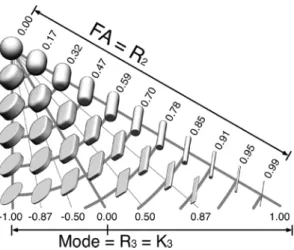
Fig. 1. Illustration of the bivariate space ofFA = R andMode = R = K for tensors of fixed normR . The space is properly arranged as a right triangle; this creates orthogonality between the isocontours of FA and Mode.
1 and 1, proportional to eigenvalue skewness [41].1Negative mode indicates planar anisotropy (oblateness, two large eigen-values and one small eigenvalue); positive mode indicates linear anisotropy (prolateness, one large eigenvalue and two small). Fig. 1 illustrates the space spanned by tensor mode and FA, using superquadric tensor glyphs [53], [54]. Mode becomes less meaningful when or is low.
Tensor mode is significant in at least two contexts. Anal-ysis of DTI partial voluming shows how adjacent regions of linear anisotropy along orthogonal orientations can create planar anisotropy [55], [56]. Planar anisotropy can also arise in populations of differently-oriented fibers mixing at a scale below imaging resolution [57]–[59]. Tensor mode may be more sensitive to noise than other invariants [60], though this also suggests the value of isolating tensor mode in our framework, so that it may be selectively utilized or ignored.
The tensor-valued gradients of and form the first half of our framework. They are derived in [41]
(12)
where . Orthogonality was proven in [41]
(13) (14)
Note that [41].
That is, the two most popular invariants, bulk mean diffusivity
1Skewness is the third standardized moment = , where is the third
central moment and = p is the standard deviation. In the DTI literature, however, skewness sometimes refers to .
(“ADC”) and FA, are not orthogonal measures, despite their fre-quent paired use. The choice between and may de-pend on the application, though our initial experience suggests that results are similar with either set. Detecting white matter structures in the healthy brain, for example, may benefit from the empirical constancy of bulk mean diffusivity in the parenchyma [2], [60], leaving and to capture remaining anisotropy information. If some pathology is indicated by re-duced , then the set may be more effective.
To create elements of an orthonormal basis, we al-ways normalize invariant gradients. denotes the unit-norm tensor-valued gradient of invariant
(15) A consequence of this normalization for our framework is that invariants are effectively insensitive to changes in parameter-ization. For example, relative anisotropy (RA) [13] is in fact a monotonic reparameterization of FA [48], which implies . The role of an invariant in our framework is thus to parameterize some degree-of-freedom in tensor shape (represented locally by the direction of the invariant gradient), while the specifics of that parameterization (encoded in the magnitude of the gradient) are immaterial.
B. Rotation Tangents
In contrast to our definition of invariant gradients (without reference to tensor eigenvalues), the rotation tangents in the second half of our framework are defined explicitly in terms of the tensor eigenvectors , due to their importance in DTI applications. In nervous tissue, the principal eigenvector is aligned with the direction of the white matter fiber tracts [2], [14], [16], which is the basis of most deterministic fiber tracking algorithms [61], [62].
Let be rotation by angle around . We define
the rotation tangent associated with eigenvector of
as the change in tensor value due to infinitesimal rotations around . In terms of the group action (4)
(16) Manipulating matrix representations in the principal frame leads to a coordinate-free expression for , as shown in (17) at the bottom of the next page.The other rotation tangents are similarly derived
(18) (19) Like the eigenvectors with which they are defined, the func-tions have no intrinsic sign. Tensor field measures created with the (Sections III-A and III-B) must, therefore, be invariant with respect to the sign of .
The rotation tangents are mutually orthogonal, and all are orthogonal to all invariant gradients (see Ap-pendix A). Unit-norm rotation tangents are defined as
(20) (21) (22) Our framework for tensor analysis is the combination of nor-malized invariant gradients (either or ) and rotation tangents . The six mutually orthogonal unit-norm tensors constitute an orthonormal basis. Unlike the basis in (1), however, our framework decomposes local tensor variations in terms of biologically meaningful attributes. Ap-pendix B describes some subtleties in distinguishing shape and orientation variation near rotationally symmetric tensors.
C. Example Application: Tunable Difference Measures
Although our primary focus is higher-order tensors, we can also decompose discrete tensor differences into shape and ro-tation components. Measuring large-scale differences between tensor values is a topic addressed in a Riemannian context by nu-merous authors [39], [63]–[66], although Euclidean differences also have precedent [19], [25]. A common difference measure of and is the Frobenius norm of the difference, , which can also be expressed via projections of onto the basis, using (3)
Around the mean , invariant gradients
(or ) and rotation tangents
form a basis to decompose tensor differences. Similar to the ap-proach of Schultzet al.[67], six weights can tune the signifi-cance of differences in shape and orientation , shown in (23) at the bottom of the page. When and for
all then . The values of the weights
can be determined by the biological context of the processing task. For example, the normalized tensor scalar product (NTSP) measure of Jonassonet al.[25] is akin to setting (and other weights to 1), in that it removes sensitivity to differences in tensor size. Alternatively, the difference measure can be made more robust by tuning the weights according to the noise sen-sitivity of the tensor parameters, given the experimental design [68]. In any case, we note that because the invariant gradients and rotation tangents are defined locally around the tensor mean, their suitability diminishes as the tensor difference increases.
III. GRADIENT ANDCOVARIANCEANALYSISMETHODS
Our framework permits novel decompositions of third-order gradient tensors (Section III-A) and fourth-order covariance ten-sors (Section III-B). Section III-C reviews spline-based tensor field reconstruction and differentiation. Section III-D describes two datasets designed to illustrate these methods.
A. Third-Order Diffusion Gradient Tensors
Let be a smooth tensor-valued image, or tensor field
(17)
The spatial gradient of is a third-order tensor [33]
(24) Spatial gradients of tensor fields were first applied to DTI by Pajevicet al., as part of their spline-based reconstruction [34]. Edges and boundaries in the tensor field may be detected by increases in the over-all gradient magnitude
(25) The tensor field gradient can also be decomposed into the gra-dients of the isotropic and the deviatoric parts, to measure the magnitude of each separately [34].
Note that given a fixed tensor in , the contraction is the vector-valued gradient of the scalar
(26) Thus, contractions of the gradient tensor can access the dif-ferential structure of attributes of . Invariant gradients and ro-tation tangents provide the second-order tensors with which we contract , generating three spatial gradient vectors of tensor shape, and three spatial gradients of tensor orientation.
The composition of tensor field and
invariant is a scalar field. With the chain rule
(27) Using normalized invariant gradients from the first half of our framework, we define the projected gradientof invariant in tensor field as contracting with the unit-norm
(28) is an abuse of notation to indicate normalization by tensor norm , not vector length ; i.e., .
Using the rotation tangents from the second half of our frame-work, we define three spatial gradients of orientation, one for each of the tensor eigenvectors
(29)
Fig. 2. Continuous variation between linear, planar, and linear anisotropy char-acterizes interfaces between orthogonally oriented fiber tracts. Together,rR andr can detect these variations.
Note that is also an abuse of notation: there is no scalar field in which we can measure the spatial gradient. Rather, indicates the direction (in ) along which the tensor orientation “ ” around eigenvector varies fastest.
Appendix B describes how and become inter-changeable near planar anisotropy. This suggests that and are complementary gradient measures that could be usefully combined to highlight particular features. Fig. 2 schematically illustrates a configuration that can arise between two adjacent white matter fiber tracts with orthogonal orien-tation. With the band-limited nature of MRI enforcing some partial voluming of tissue boundaries, this configuration creates intermediate planar anisotropy [55], [56]. As illustrated in Fig. 2, this configuration is characterized by variations in both tensor mode and orientation around the minor eigenvector , quantified with and , respectively.
We introduce a measure to detect interfaces of orthogonally oriented anisotropy, calledadjacent orthogonality(AO)
(30) AO responds mostly strongly to interfaces of anisotropy with orthogonal orientation, but any distinct orientation leads to nonzero , and some AO response. AO is defined and demonstrated herein only with gradient magnitudes, but the and vectors define the interface orientation.
B. Fourth-Order Diffusion Covariance Tensors
The fourth-order covariance tensor of a set of second-order tensors is a compact description of the shape of the dis-tribution of . Fourth-order tensors can be understood by analogy to second-order tensor products of vectors. Recall (Table I) that the tensor product of two vectors and is
a second-order tensor in for which .
Similarly, for tensors and in , the tensor product is a fourth-order tensor in for which . The diffusion covariance tensor is a weighted sum of tensor products of tensors from the set
(31)
where and . We use
covariance tensors here to summarize a weighted set of given tensors, rather than to parametrically model a continuous distri-bution [38], or to generate new tensor samples [39].
Building on elasticity methods of continuum mechanics [46], Basser and Pajevic model distributions of tensors from noisy DWIs with fourth-order covariance tensors, to characterize diffusion-weighted imaging (DWI) experimental design [37]. More recent work assesses covariance tensor structure with spectral decomposition, and quantifies and visualizes the vari-ance of mean diffusivity [38]. Given a noise model for DWIs, the experimental design, and a tensor estimation method, accu-rately calculating the fourth-order covariance tensor is a central problem in error propagation analysis in DTI, recently studied in the context of weighted linear least-squares tensor estimation [68]. Related work estimates tensor variability according to the Hessian of the objective function minimized in nonlinear least-squares tensor estimation [69]. Other work focuses on determining (without the fourth-order covariance tensor ) the variances of the tensor eigenvalues [70], shape invariants [71], or the full eigensystem [72], from which variances of other tensor attributes (such as FA) are computed.
Our preliminary work in covariance tensor analysis is based upon the recognition thatassumingthe covariance tensor is known, some of its important properties can be isolated simply by expressing it in the basis from our framework. Some details of tensor contraction are first reviewed. Analogous to the scalar contraction of a second-order tensor with vectors and , the double contraction of a fourth-order tensor with second-order tensors and is
. Contraction determines the individual coefficients
of given a basis for
(32)
By the symmetry of , for in we have
(33) However, knowing that is itself a six-dimensional vector space (Section II), we can more directly define the coefficients of relative to a basis, such as defined in (1)
(34) Recall (Section II) that we use bold subscripts for indices rel-ative to a basis for , rather than for . Fourth-order ten-sors in can thus be represented as 6 6 ma-trices. The various and 2 scalings involved in converting from to (fully detailed in [38]) are an auto-matic consequence of (34) and the definition, as were the scalings in converting between and in (2). As a linear combination of symmetric tensor products (31), also has the symmetry [in addition to that of (33)]
(35) Thus, is represented by a symmetric 6 6 matrix, with 21 degrees-of-freedom.
We express the covariance tensor in a basis at generated by our framework
(36) Basis is similarly defined with the invariant gradients. We stress that these bases are defined around the mean foreachdistribution . Individual components of the covariance matrix are then [compare to (34)]
(37) The basis from our framework naturally isolates salient properties of the distribution, in that the components measure the variances and covariances of all possible shape and orientation parameters. In particular, certain covariance tensor components directly estimate the variance of parameters such as FA. This is based on the Taylor expansion (6) of around :
(38) Then, contracting the covariance tensor of with in-variant gradient approximates the variance of
(39) In the basis, the covariance tensor component approx-imates the variance of standard anisotropy measures
(40) (41) Our framework organizes analysis along degrees-of-freedom parameterized by invariants (represented by ), while fac-toring out the parameterization rate (represented by ). Thus, the same covariance component underlies the ap-proximate variance of both RA (40) and FA (41). Contracting along invariant gradient to estimate the variance of
an arbitrary generalizes previous covariance tensor analysis that focuses on the variance of ADC [38], and is more straightforward than using the covariance tensor to find the vari-ances of individual eigenvalues, from which varivari-ances of invari-ants (such as RA and FA) are then determined [68].
We can further decompose the fourth-order covariance tensor into novel aggregate measures of overall shape variance , ori-entation variance , as well as shape and orientation covari-ance , defined as follows:
(42)
(43)
(44)
The covariance components can be measured in either the or the basis from (36). The aggregate covariance mea-sures maintain total covariance magnitude as
(45)
C. Convolution-Based Reconstruction and Differentiation
We adopt the B-spline tensor interpolation method of Pa-jevicet al.[34], [73], briefly reviewed here. The interpolation creates a continuous and differentiable tensor field by convolving discrete tensor samples with the separable uniform
cubic B-spline kernel , where
(46)
The tensors samples are prefiltered per-component (in the basis of the scanner), so that subsequent convolution with
interpolates through the tensors originally estimated from the DWIs [74], [75]. By the linearity of convolution and differentiation, the partial derivatives of the reconstructed tensor field are found by convolving with the partial derivatives of . The reconstructed values and gra-dients can be computed at arbitrary locations in the field by evaluating (or its partial derivatives) to determine weights for corresponding tensor sample locations, within the
sample support of the kernel.
D. Synthetic Datasets
Carefully designed synthetic datasets help illustrate the be-havior of our tensor analysis methods, and give insight into their potential applications. We describe two datasets that exhibit par-ticular features in tensor shape and orientation.
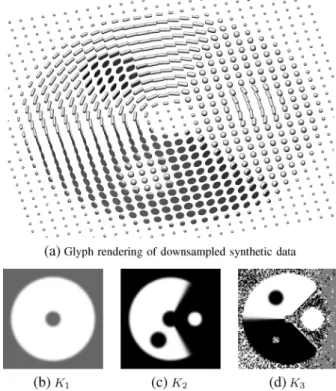
Fig. 3 depicts a synthetic tensor image constructed to demon-strate edge detection with invariant gradients . There are four distinct materials: isotropic with low diffusivity, isotropic with
Fig. 3. Synthetic data with tensor shape boundaries. Glyph rendering (of down-sampled data) in (a) shows the variety of size, anisotropy, and orientation; (b), (d), (d) show theK invariants.K is essentially noise whenK is at or near zero (regardless of the value ofK); the important structure ofK in (d) is the contrast between low and high values ofK whereK is high. (a) Glyph ren-dering of downsampled synthetic data; (b)K; (c)K ; (d)K .
high diffusivity, linear anisotropic, and planar anisotropic. As seen in Fig. 3(a), the orientation of the tensors also changes smoothly within the anisotropic regions. Interfaces exist be-tween every pair of materials.
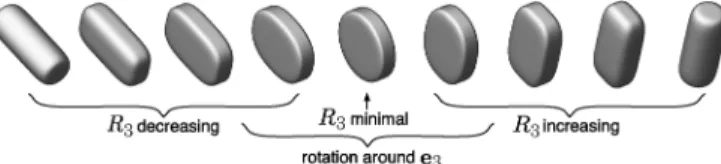
Fig. 4 depicts a synthetic tensor image with gradients in tensor orientation. The image is divided horizontally into three regions of rotation, one for each eigenvector. Fig. 4(a) renders the dataset with glyphs. The glyphs illustrate an implication of (17)– (19): the effect of rotation on a tensor is modulated by its symmetries (e.g., rotation around has no effect when ). Eigenvalue mean is held constant throughout the image, and variance is constant except for isotropic bands at the top and bottom. Tensor mode varies smoothly from top to bottom, covering the full range from planar to linear anisotropy.
IV. RESULTS
Section IV-A presents our results in third-order gradient tensor analysis, and Section IV-B gives fourth-order tensor analysis results. Examples use either the or invariants, but both produce similar results. After Fig. 5, all grayscale images are inverted for visual clarity.
Besides the synthetic datasets described above, results are also shown with a DTI scan of a healthy human volunteer. Single-shot EPI diffusion-weighted images (DWIs) along 30 gradient directions , and five nondiffu-sion-weighted images, were acquired on a 1.5-T Philips scanner with parallel imaging (SENSE factor 2.5). The field-of-view, size of the acquisition matrix, and slice thickness are 240 mm
Fig. 4. Synthetic data with tensor orientation boundaries. Glyphs in (a) show the range of anisotropy type and the three regions of rotation, as diagrammed in (b). (c) and (d) showK andK ;K is constant. (a) Glyph rendering of downsampled synthetic data; (b) synthetic image layout;( ; ; )triples shown by RGB color; (c)K; (d)K .
Fig. 5. Slice of scan of healthy volunteer, shown with principal eigenvector colormap (a), and theR invariants (b), (c), and (d), for which the numerical ranges are[0; 0:006] 2 mm =s, [0,1], and [01,1], respectively. Image pixels correspond one-to-one with DTI volume samples. The map of tensor mode (d) appears noisy because mode is not well-defined in isotropic regions. (a)
RGB(e ); (b)R = jDj; (c)R = FA; (d)R = mode(D).
240 mm, 96 96, and 2.5 mm, respectively. In-plane reso-lution was zero-fill interpolated to 128 128. Tensors were fit by linear least-squares to logarithms of DWIs [1]. Fig. 5 shows an axial slice of the data with maps of the principal eigenvector [76] and the invariants. The units of diffusivity
determine the units of gradient strength in Section IV-A (dif-fusivity over length, mm/s) and covariance in Section IV-B (diffusivity squared, ).
A. Gradient Tensor Results
Fig. 6 shows gradient magnitudes in the first synthetic dataset of Section III-D. Previous work decomposes the tensor field
gra-Fig. 6. Gradient magnitudes in first synthetic image. Previous work [34] detects the deviatoric gradient magnitude (b). Our framework isolates boundaries in shape (c), as well as in diffusivity (d), amount of anisotropy (e), and type of anisotropy (f). Numerical ranges on all images are equal. (a)jrFj; (b)jrFj; (c) 6 jrK j ; (d)jrFj = jrK j; (e)jrK j; (f)jrK j.
dient into gradients of the deviatoric and isotropic components [34]. However, and respond to changes in both orientation and shape, manifested by a smooth gray level in the anisotropic material interiors in Fig. 6(a) and (b). Our frame-work detects shape change independently of orientation change [Fig. 6(c)], and decomposes shape change according to mean diffusivity [Fig. 6(d)], amount of anisotropy [Fig. 6(e)], and type of anisotropy [Fig. 6(f)]. Isolating different boundaries in tensor shape, in terms of biologically meaningful quantities (the or invariants), while excluding variations in orientation, has not been previously described.
Fig. 7 shows gradient magnitudes in the second synthetic dataset. Both shape and orientation changes contribute to in Fig. 7(a), and shape changes are decomposed into and in Fig. 7(b) and (c). Fig. 7(d)–(f) illustrates how
, , and successfully isolate rotations around the individual eigenvectors. This selectivity is not possible with previous analyses of the tensor field gradient. Note that smoothly decreases with increasing symmetry around eigenvector , which is not captured by direct measurements of eigenvector angles.
Although not used elsewhere in this work, a consequence of (27) and our measurement (Section III-C) is the ability to
analyticallycompute the gradient of an invariant in the
continuoustensor field. For non-linear invariants such as FA,
this can differ significantly from pre-computing a scalar field of the invariant values, and then measuring gradients. Fig. 8 demonstrates analytic gradient measurements of the invari-ants. The image shows ringing (false edges) around the ventricles, perhaps the response of the scanner’s zero-fill inter-polation to the large change in diffusivity (and hence the DWI value) between CSF and parenchyma.
Fig. 9 demonstrates in acquired DTI data the gradient tensor analysis with our framework. From the decomposition of the total gradient magnitude [Fig. 9(a)] into all shape gradi-ents [Fig. 9(b)] and all orientation gradigradi-ents [Fig. 9(c)], we see
Fig. 7 Gradient magnitudes in second synthetic tensor image. The three dif-ferent bands in (d), (e), and (f) indicate how thejr jisolates different changes in orientation. Numerical ranges for (a), (d), (e), and (f) are equal. (a)jrFj; (b)
jrK j; (c)jrK j; (d)jr j; (e)jr j; (f)jr j.
Fig. 8. Analytic evaluation ofrR in the continuous tensor field, sampled at eight times the original data resolution. Numerical ranges for (a), (b), and (c) are [0,0.0015] mm/s, [0,0.35]mm , and [0,8]mm , respectively. (a)
jrR j = jrjDjj; (b)jrR j = jrFAj; (c)jrR j = jrmodej.
that the shape gradients contribute more than the orientation gra-dients to the total magnitude, especially at the ventricle (CSF) boundary. Fig. 9(d) reveals that the CSF edge is well delineated by , and that variations in dominate the other shape gradients. Low values inside the parenchyma confirm that tensor norm is fairly constant across white and gray matter, mirroring known behavior of bulk mean diffusivity [2], [60]. The other edge measure of obvious anatomic significance is in Fig. 9(e), similar to in Fig. 8(b). The difference is that Fig. 8(b) depicts the gradient of a particular invariant, FA, whereas Fig. 9(e) more generally depicts the component of the tensor gradient aligned with variations in FA, or any other invariant parameterizing the same degree-of-freedom (e.g., RA).
The gradient magnitudes along the first two rotation tangents, [Fig. 9(g)] and [Fig. 9(h)], lack similarly obvious anatomical significance. This suggests either removing these components of the third-order gradient tensor to increase its anatomic specificity, or isolating them as indicators of tensor field noise. Also, the reliance of these measures on sorted eigen-values (unlike the invariant gradients), combined with noise-induced sorting bias, may disrupt the depiction of underlying coherent patterns of orientation change. Space here does not
Fig. 9. Decomposition ofjrFjalong invariant gradients and rotation tangents. (a) through (c) have numerical range[0; 1:4] 2 10 mm=s; better visual con-trast for (d) through (i) is given by a smaller range[0; 0:58] 2 10 mm=s. (a)
jrFj; (b) 6 jrR j ; (c) 6 jr j ; (d)jrR j; (e)jrR j; (f)jrR j; (g)jr j; (h)jr j; (i)jr j.
permit a comparison, but for some purposes it may be better
to measure rather than ,
be-cause implicit in the pair-wise eigenvalue differences [in the definition in (17), –(19)] is an anisotropy measure that may use-fully mask out isotropic areas.
On the other hand, the complementary structure of [Fig. 9(f)] and [Fig. 9(i)] contribute to the AO measure (Section III-A), illustrated in Fig. 10. The RGB colormap [Fig. 10(a)] of the principal diffusion direction depicts multiple sites of adjacency between distinctly or orthogonally oriented fiber tracts. Two such locations are highlighted, between the corpus callosum and cingulum bundle, and in the sequential arrangement of the tapetum of the corpus callosum, the pos-terior corona radiata, and the superior longitudinal fasciculus [77]. Both [Fig. 10(b)] and [Fig. 10(c)] respond to these interfaces, but each has discontinuities. By combining and , AO (Fig. 10(d)) successfully delineates the interfaces between tracts in the indicated regions. Note that these tissue configurations cannot be described in terms of tensor shape or orientation alone. Tensor invariant gradients detect boundaries between different materials, and tensor
Fig. 10. Adjacent Orthogonality (AO) detects interfaces between orthogonally oriented tracts. The highlighted regions in theRGB(e )map (a) are the in-terface between the corpus callosum (red) and cingulum bundle (blue), indi-cated with the circle, and between the tapetum (purple), posterior corona radiata (green), and superior longitudinal fasciculus (blue), indicated with the box on the right. Each ofjrR j(b) andjr j(c) detect such configurations to some extent, but AO (d) has more consistent response. (b), (c), and (d) use numerical range[0; 0:58] 2 10 mm=s.
Fig. 11. Relative magnitudes of spatial gradients of shape(jrR j)and orien-tation(jr j), after averaging over DTI brain dataset, and relative magnitudes of all shape versus orientation gradients.
eigenvectors can detect anisotropy orientation. Our framework puts shape and orientation into a common coordinate frame, allowing functions like AO to draw on both, delineating white matter regions that internally have comparable anisotropy characteristics.
Fig. 11 gives quantitative information about the relative mag-nitudes of the gradients mapped in Fig. 9. The numbers were computed by sampling the spatial gradients of shape and orientation throughout the brain DTI dataset (used pre-viously) at three times data resolution, averaging the gradient norms over the field, and then normalizing. On average, the gra-dient of accounts for about 40% of gradient tensor magnitude, the gradient of is about 16%, and the other gradients were all about 10%. The shape and orientation gradients account for about two thirds and one third of the total gradient strength, respectively. These statistics quantify the rel-ative magnitudes visualized in Fig. 9. Also, as discussed in Sec-tion V-A, this type of summary informaSec-tion can inform how our framework is applied to DTI analysis.
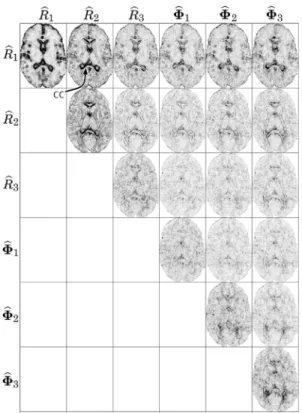
Fig. 12. Matrix of images of components6 of covariance tensor , using the localAAA basis. Components are identified by basis tensors across the top and left side. Numerical ranges on all components are equal.
B. Covariance Tensor Results
We first analyze covariance tensors with pixel neighborhoods from DTI datasets, to illustrate the basic properties of our co-variance tensor decomposition, and to explore the novel met-rics , , and . Covariance matrices are computed over sample neighborhoods, weighted by the (noninter-polating) cubicB-spline (46). Fig. 12 displays the covariance tensor components in the first synthetic dataset. For simplicity, only the absolute value of the components is shown; the rotation tangent components have ambiguous sign. We believe this is the first visual depiction of a field of fourth-order diffusion covari-ance tensors. The varicovari-ances (along the diagonal) of the in-variants agree with edge measures seen in Fig. 6, but the off-di-agonal elements show additional structure.
, for example, highlights points where eigenvalue mean and variance co-vary, as confirmed by Fig. 3(a).
Likewise, highlights points where
co-varies with rotation around eigenvector . The rotation variances , , and indicate continuous orientation change. The individual covariance components are combined to form the aggregate covariance measures , , and , illus-trated in Fig. 13. The map of [Fig. 13(c)], for example, dis-plays all locations where tensor shape and orientation co-vary.
Fig. 14 measures covariance tensors (with the invariants) in the DTI slice used for previous figures, although to improve resolution, the data was up-sampled (Section III-C) by a factor of three in each axis. The images are not as clean as with the synthetic data, but some results are worth noting. The on-diag-onal elements and generally agree with the images of the gradient magnitudes of and in Fig. 8, which high-light the border between parenchyma and CSF, and the border
Fig. 13. Shape variance (a), orientation variance (b), and shape and orientation covariance (c) evaluated on synthetic data. Comparison to Fig. 3. implies the functions are indeed measuring what their names suggest.
Fig. 14. Covariance tensors measured in DTI data slice, displayed using same layout as in Fig. 12. “CC” annotation in6 points to the boundary highlighted between CSF and corpus callosum, whereR andR do co-vary. Numerical range of6 is[0; 5:6] 2 10 mm =s , range for all other components is
[0; 1:4] 2 10 mm =s .
between white and gray matter, respectively. The “CC” annota-tion in the image points out the boundary of white matter and CSF in the corpus callosum, a location where diffusivity and anisotropy should in fact co-vary.
The aggregate covariance measures in Fig. 15 reveal other structural properties. Shape variance [Fig. 15(a)] shows the major tissue boundaries (black line between CSF and parenchyma, light gray borders between white and gray matter), similar to the analogous quantity from the gradient,
[Fig. 9(b)]. Intriguingly, orientation variance [Fig. 15(b)] faintly indicates [analogously to Fig. 13(b)] the white matter tract interiors, by the orientation change inside high curvature paths (such as the genu of the corpus callosum (“GCC”). Tract interfaces previously highlighted by the AO measure [Fig. 10(d)] are also clearly marked. For reasons not yet clear to us, the shape and orientation covariance
Fig. 15. Aggregate covariance measures evaluated on DTI slice: shape variance
(a), orientation variance (b), and shape and orientation covariance (c). The orientation variance (b) faintly shows the presence of curved fiber tracts such as the genu of the corpus callosum (“GCC”), as well (more vividly) the tract interfaces previously detected with Adjacent Orthogonality (AO) measure (Fig. 10(d)). Numerical ranges for (a), (b), and (c) are [0,6.0], [0,1.8], and[0; 1:9] 2
10 mm =s , respectively.
Fig. 16. Synthetic data for noise covariance analysis.R = jDjis fixed, FA (a) and mode (b) vary through [0,1] and [01,1], respectively. (c) Is a scatterplot of the brain dataset (in previous figures) in the same tensor shape domain. (a)
R = FA; (b)R = mode; (c) brain scatterplot.
[Fig. 15(c)] also indicates major features like the white and gray matter interface.
We also apply our covariance tensor analysis to distributions of tensors estimated from noisy DWIs, and determine general patterns of covariance via a synthetic dataset sampling all pos-sible tensor shapes, shown in Fig. 16. Similar to Fig. 1, this dataset has fixed at 0.0015 (consistent with eigenvalues in the brain parenchyma [2]), with a constant base-line T2 value, and and vary over their full ranges. Fig. 16(c) maps the brain dataset used in previous fig-ures to a scatterplot spanning the same tensor shape domain, to illustrate the broad diversity of tensor shapes that constitute typ-ical datasets. DWIs were simulated using a single baseline and six icosahedral gradient directions [78] at . Complex-valued Gaussian noise ( in the baseline image) was added to the real values synthesized from the
stan-dard single-tensor model [1].
Mea-surements were simulated 30 000 times and tensors were esti-mated by log-linear least squares fitting of the magnitude images [1], generating for each pixel a fourth-order covariance tensor , and variances of and . The gradients were ran-domly rotated (as a rigid set) for each measurement, to remove directional bias [79].
Fig. 17 depicts the results from our experiment. Only the (shape-related) upper-left corner of the covariance matrix is shown; orientation-related portions will be presented in future work. With our experimental design, the variance along
is generally larger than the variance along
or . Note also that and have comparable values. That is, for all possible tensor shapes (recall Fig. 1),
Fig. 17. Experimental results for shape-related covariance tensor compo-nents 6 . Notably, the variance along tensor mode(R ) is generally no larger than the variance along FA(R ). Color scale for6 shown on right.
Var(R )is similar to6 , but theVar(R )diverges from6 because of largejrrrR (hDi)jnear isotropy.Var(R )andVar(R )use separate (and dimensionless) color scales than those used for the6 .
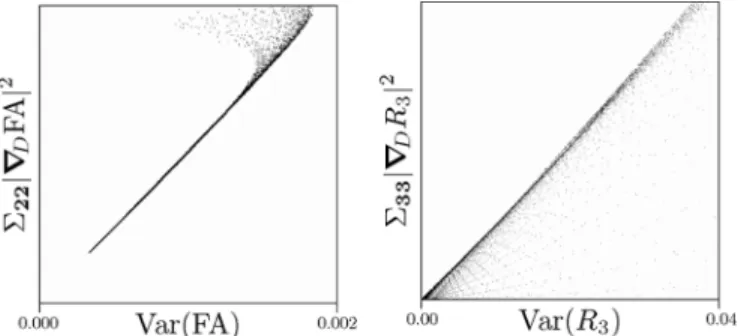
Fig. 18. Experimental accuracy of invariant variance approximation (39). The approximation is worst near isotropic tensors, where the directions ofrrrR and
r r
rR vary most rapidly.
the variancealong is similar to that along . The parameterization of , however, makes its variance much larger than that of [recall (39)], consistent with earlier descriptions of noise sensitivity in eigenvalue skewness
[60]. Scatterplots of and for
invari-ants and (Fig. 18) illustrate the accuracy of our direct approximation to the variance of an invariant. The accuracy of the approximation is entirely determined by the accuracy of the first-order Taylor expansion. For example, the approximation fails for FA near isotropic tensors where the FA isocontours have high curvature [Fig. 16(a)].
V. DISCUSSION
Our framework of invariant gradients and rotation tangents gives mathematical representation (as an orthonormal coordi-nate system) to intuitive notions of tensor shapeand orienta-tion, effectively converting questions about shape and orien-tation into tensor contractions with particular basis tensors in . For example, the aggregate measure of shape and ori-entation covariance [(44), Fig. 15(c)] converts the question “How much are tensor shape and orientation changing simulta-neously?” to tensor contractions along particular pairs of axes, creating a direct way to assess a meaningful property of the otherwise unwieldy fourth-order covariance tensor . With a
multitude of tensor contractions and measures possible, Sec-tion V-A gives some guidance on various applicaSec-tions. Finally, Section V-B considers the significance of positive-definiteness in DTI processing, and the relationship between our work and recent Riemannian approaches.
A. Future Directions for Application
The quantitative summary in Fig. 11 of the normalized average gradient strengths throughout the brain is a starting point for considering applications of our framework. Knowing from Fig. 5(b) and Fig. 9(b) that indicates primarily the CSF boundary (not internal white matter structure), yet knowing from Fig. 11 that creates on average about 40% of the total gradient magnitude , one may consider omitting from DTI processing for studying white matter architecture. A similar argument could be made regarding and . Some work already employs this strategy of leaving overall tensor size out of algorithmic processing, such as the normalized tensor scalar product (NTSP) difference measure of Jonasson
et al.[25], or the use of the tensor deviatoric by Zhanget al.in
tensor registration [35].
More generally, our work provides the means of modulating the role of tensor size, or any other tensor attribute, in the context of tensor differences [Section II-C], gradients [Sec-tion III-A], and covariance [Sec[Sec-tion III-B], as informed by anatomical specificity (Fig. 9), overall strength (Fig. 11), or noise sensitivity (Fig. 17). For example, in many approaches to nonlinear edge-preserving filtering, some measure of gradient strength controls the amount of local diffusive smoothing [80]. Fig. 9 suggests a possible way to scale the relative contribu-tions of the six components of , as decomposed by our framework: can be scaled down to be comparable to in magnitude, and could be projected out entirely, and and could be combined into AO (Fig. 10). Along these same lines, Schultzet al.leverage our framework (as described in [40]) to tune the gradient components for computing structure tensors in DTI, improving the anatomical relevance of both level-set segmentation and edge-preserving filtering [67]. Alternatively, in the context of tuning a tensor difference measure for registering different datasets in a group study, it may be better to increase the relative significance of tensor orientation (as parameterized by the rotation tangents), so that tensor shape differences do not influence registration in a way that could confound the subsequent comparison of tissue organization (usually parameterized by anisotropy measures such as FA).
There are other possible applications of our gradient tensor analysis. Analytically measuring spatial derivatives of tensor invariants permits computer vision methods to extract the anisotropic structure of the tensor field in the continuous
domain. Wherever edge detection or other feature extraction algorithms call for the image gradient, (27) and Section III-C provide the means of accurately calculating, for example, or . Early work along these lines shows that crease features (ridge and valley surfaces) of FA delimit the major white matter structures [81]. Also, with some refinements, the AO measure may help extract anatomical landmarks around the tract boundaries highlighted in Fig. 10(d). This could
guide nonrigid registration, given the importance of correctly registering neighboring yet distinct fiber tracts.
The ability to modulate the relative significance of different tensor attributes can also help in applications of the fourth-order covariance tensor. For example, Lengletet al.[26] use the co-variance tensor (on a Riemannian manifold) to characterize regions in level-set DTI segmentation. It may be beneficial to de-crease the significance of orientation variance relative to shape variance [measured by (37)], since tensors with sim-ilar shape but slightly differing orientations can belong to the same tract. Here too, AO can help detect distinctly oriented neighboring tracts so that they are not segmented together. Our image neighborhood covariance measurements (Figs. 12 and 14) may also have utility in brain tumor characterization and segmentation, where pathology can be characterized by simul-taneous reductions in anisotropy (due to nervous tissue damage) and increases in diffusivity (due to edema) [51]; this covariance is captured exactly by .
We plan to use our covariance decomposition to explore the effect of noise on tensor estimation, and to study DWI exper-imental design, as preliminarily demonstrated in Fig. 17. Pre-vious work studies variances of specific tensor attributes [68], [69], [71], or the full fourth-order covariance tensor [37], [38]. Our framework blends these approaches by looking at compo-nents of the covariance tensor along the axes (in ) spanned by variations in tensor attributes, while avoiding the influence of the parameterization of those attributes. We can thus more fundamentally compare relative noise sensitivities along (measured by ) and tensor mode , independent of the parameterizations of and . Fig. 17 shows that for the chosen experimental design, and are not drastically different, even though the variance of mode can be an order of magnitude greater than the variance of FA. This suggests that, properly analyzed, tensor mode could play as significant a role as FA in quantitative DTI studies. Space does not permit similar exploration of orientation variance due to noise [measured separately by (37) or collectively by (43)], but we are currently developing measures of orientation variance comparable to those developed for individual eigen-vectors [68], [72].
B. Relationship to Riemannian Approaches
Our framework is “Euclidean” in that we consider diffusion tensors as elements of vector space , even though this over-looks the positive-definiteness of diffusion. This simplifying as-sumption has established precedent in the DTI literature [37], [38], [62], even in the context of reconstructing tensors from dis-crete samples [34], [73]. In an alternative approach to DTI anal-ysis, tensors are located either implicitly or explicitly on a Rie-mannian manifold endowed with some metric that effectively creates an infinite distance between valid tensors and those with zero determinant [26], [63], [64], [66], [82], [83]. The rela-tive merit of these approaches (Euclidean versus Riemannian) is not addressed here, as doing so would require a lengthier treatment of both Riemannian geometry theory and image pro-cessing practice than space allows. However, some basic points bear consideration.
On one hand, tensor invariants can be defined on Riemannian manifolds, and their gradients can be measured with respect to the local metric tensor, as can the angles between gradients [84]. In this sense, it is theoretically possible to redefine our frame-work entirely in a Riemannian context, which is a current topic of interest for us. On the other hand, the difference between Euclidean and Riemannian approaches may be viewed simply as a difference in choosing whether to enforce positive-defi-niteness solely during data acquisition, or also during analysis. Positive-definiteness is a fundamental property of Riemannian tensor analysis, enforced by a particular choice of the man-ifold metric. Euclidean approaches assume that positive-defi-niteness has already been enforced after acquisition, and may use measures that are defined without regard to positive-defi-niteness. Our tensor data is positive-definite mainly due to high signal-to-noise imaging, but also by clamping the rare nega-tive eigenvalue to a machine-precision posinega-tive number during tensor estimation. More sophisticated approaches to positive-definite tensor estimation have been studied [85]–[88]. We also note that metrics like trace and FA are defined without respect to positive-definiteness [both are positive for
], which has apparently not hindered their clin-ical utility. Finally, apart from the spline-based tensor interpo-lation [34] (which does not enforce positive-definiteness), our method focuses entirely on describing differences, gradients, and sample covariance of given tensors, rather than generating new tensors, which may mitigate the urgency of enforcing pos-itive-definiteness.
APPENDIXA
ORTHOGONALITY OF ANDINVARIANTGRADIENTS
The rotation tangents (Section II-B) are mutually
or-thogonal: if . For example
This uses the easily verified identity
(47) To show that invariant gradients are orthogonal to rotation tan-gents, we first derive an expression for the gradient of an eigen-value. A related analysis appears in Appendix A of [72]. The eigenvalues are unsorted in the following. From the spectral de-composition and (47), for a fixed
thus
(49) Then, assuming afixedeigenvector , with the product rule
(50) We can then express the gradient of any invariant by applying the chain rule to the spectral decomposition
(51) Then (17)–(19), (47), and (51) imply
(52) APPENDIXB
SHAPE ANDORIENTATIONNEARROTATIONALSYMMETRY
The framework of invariant gradients and rotation tangents is well defined when the tensor eigenvalues are unequal, as is al-ways the case in numerical measured data. Certain distinctions between shape and orientation, however, gradually become am-biguous as rotational symmetry develops. A two-dimensional example illustrates this.
Two-dimensional symmetric tensors have three degrees-of-freedom. The definitions of and in (10) also apply to two-dimensional tensors, giving two orthogonal invariants that parameterize tensor shape in terms of size and 2-D anisotropy. In two dimensions, reduces to
(53) and then (50) implies
(54) where is the eigensystem of , and . The rotation tangent for the single axis of rotation is, as in (22)
(55) Let be a two-dimensional tensor with eigenvalues
and eigenvectors , which form basis
(56)
Let be the rotation of by
(57) As the diagonalization of , (57) implies that the
eigenvec-tors of are and .
Then, from (55)
(58) That is, the invariant gradient at is parallel to the rotation tangent at . However, by (56) and (57), the distance between
and is arbitrarily small
(59) In summary, the number of degrees-of-freedom in the tensor never changes, but near rotational symmetry , the otherwise clear distinction between variation in shape (along
) and orientation (along ) becomes ambiguous. Analogous situations arise in three dimensions when tensor mode [(11) and Fig. 1] approaches its extrema. Invariant gra-dient and rotation tangent become interchangeable as tensor mode approaches 1 ( ; rotational symmetry of planar anisotropy around ). and still span two degrees-of-freedom, but the orientation of and within their span is essentially arbitrary. This ambiguity is actually leveraged in Section III-A for defining the AO measure. Sim-ilarly, and become interchangeable as tensor mode approaches 1 ( ; rotational symmetry of linear anisotropy around ). In addition, when or approaches
zero , and remain stable, though
all other invariant gradients and rotation tangents become inter-changeable. is constant, but becomes un-stable when approaches zero (which never happens in diffu-sive tissue).
ACKNOWLEDGMENT
The authors would like to thank the anonymous reviewers for their feedback, and discussion with R. San José Estépar, L. O’Donnell, Dr. A. Golby, and Dr. I.-F. Talos. DWI data courtesy of Dr. S. Mori, Johns Hopkins University, Baltimore, MD.
REFERENCES
[1] P. J. Basser, J. Mattiello, and D. LeBihan, “Estimation of the effective self-diffusion tensor from the NMR spin-echo,”J. Magn. Reson., Series B, vol. 103, no. 3, pp. 247–254, 1994.
[2] C. Pierpaoli, P. Jezzard, P. J. Basser, A. Barnett, and G. DiChiro, “Dif-fusion tensor MR imaging of the human brain,”Radiology, vol. 201, no. 3, pp. 637–648, Dec 1996.
[3] T. Klingberg, M. Hedehus, E. Temple, T. Salz, J. D. E. Gabrielli, M. E. Moseley, and R. A. Poldrack, “Microstructure of temporo-parietal white matter as a basis for reading ability: Evidence from diffusion tensor magnetic resonance imaging,”Neuron, vol. 25, pp. 493–500, 2000.
[4] R. A. A. Kanaan, J.-S. Kim, W. E. Kaufmann, G. D. Pearlson, G. J. Barker, and P. K. McGuire, “Diffusion tensor imaging in schizophrenia,”Biol. Psychiatry, vol. 58, pp. 921–929, Dec. 2005. [5] D. H. Salat, D. S. Tuch, N. D. Hevelone, B. Fischl, S. Corkin, H. D.
Rosas, and A. M. Dale, “Age-related changes in prefrontal white matter measured by diffusion tensor imaging,”Ann. NY Acad. Sci., vol. 1064, pp. 37–49, 2005.
[6] A. S. Field, Y.-C. Wu, and A. L. Alexander, “Principal diffusion di-rection in peritumoral fiber tracts,”Ann. NY Acad. Sci., vol. 1064, pp. 193–201, 2005.
[7] R. F. Dougherty, M. Ben-Shachar, G. Deutsch, P. Potanina, R. Bammer, and B. A. Wandell, “Occipital-callosal pathways in children: Validation and atlas development,”Ann. NY Acad. Sci., vol. 1064, pp. 98–112, 2005.
[8] D. S. Tuch, D. H. Salat, J. J. Wisco, A. K. Zaleta, N. D. Hevelone, and H. D. Rosas, “Choice reaction time performance correlates with diffusion anisotropy in white matter pathways supporting visuospatial attention,”Proc. Nat. Acad. Sci., vol. 102, no. 34, pp. 12212–12217, 2005.
[9] J. C. Walker, J. M. Guccione, Y. Jiang, P. Zhang, A. W. Wallace, E. W. Hsu, and M. B. Ratcliffe, “Helical myofiber orientation after my-ocardial infarction and left ventricular surgical restoration in sheep,”J. Thoracic Cardiovascular Surg., vol. 129, no. 2, pp. 382–390, 2005. [10] P. A. Helm, L. Younes, M. F. Beg, D. B. Ennis, C. Leclercq, O. P. Faris,
E. McVeigh, D. Kass, M. I. Miller, and R. L. Winslow, “Evidence of structural remodeling in the dyssynchronous failing heart,”Circulation Res., vol. 98, no. 1, pp. 125–132, 2006.
[11] M. E. Moseley, Y. Cohen, J. Mintorovitch, L. Chileuitt, H. Shimizu, J. Kucharczyk, M. F. Wendland, and P. R. Weinstein, “Early detection of regional cerebral ischemia in cats: Comparison of diffusion- and T2-weighted MRI and spectroscopy,”Magn. Reson. Med., vol. 14, no. 2, pp. 330–346, May 1990.
[12] C. H. Sotak, “The role of diffusion tensor imaging in the evaluation of ischemic brain injury—A review,”Nucl. Magn. Reson. Biomed., vol. 15, pp. 561–569, 2002.
[13] P. J. Basser, “Inferring microstructural features and the physiological state of tissues from diffusion-weighted images,”Nucl. Magn. Reson. Biomed., vol. 8, pp. 333–344, 1995.
[14] C. Beaulieu, “The basis of anisotropic water diffusion in the nervous system—A technical review,”Nucl. Magn. Reson. Biomed., vol. 15, pp. 435–455, 2002.
[15] C.-P. Lin, W.-Y. I. Tseng, H.-C. Cheng, and J.-H. Chen, “Validation of diffusion tensor magnetic resonance axonal fiber imaging with reg-istered manganese-enhanced optic tracts,”NeuroImage, vol. 14, pp. 1035–1047, 2001.
[16] J. Dauguet, S. Peled, V. Berezovskii, T. Delzescaux, S. K. Warfield, R. Born, and C.-F. Westin, “3D histological reconstruction of fiber tracts and direct comparison with diffusion tensor MRI tractography,” in
Proc. MICCAI 2006, Copenhagen, Denmark, Oct. 2006, pp. 109–116. [17] E. W. Hsu, A. L. Muzikant, S. A. Matulevicius, R. C. Penland, and C. S. Henriquez, “Magnetic resonance myocardial fiber-orientation mapping with direct histological correlation,”Amer. J. Physiol., vol. 274, pp. 1627–1634, 1998.
[18] D. F. Scollan, A. Holmes, R. Winslow, and J. Forder, “Histological validation of myocardial microstructure obtained from diffusion tensor magnetic resonance imaging,”Amer. J. Physiol., vol. 275, pp. 2308–2318, 1998.
[19] D. Alexander, J. Gee, and R. Bajcsy, “Similarity measures for matching diffusion tensor images,” inProc. Brit. Mach. Vis. Conf. (BMVC), Not-tingham, U.K., Sep. 1999, pp. 93–102.
[20] H. Zhang, P. A. Yushkevich, and J. C. Gee, “Registration of diffusion tensor images,” inProc. CVPR 2004, Jun. 2004, vol. 1, pp. 842–847. [21] C. Chefd’hotel, D. Tschumperlé, R. Deriche, and O. Faugeras,
“Con-strained flows of matrix-valued functions: Application to diffusion tensor regularization,” inProc. 7th Eur. Conf. Comput. Vis.-Part I (ECCV ’02), London, U.K., 2002, pp. 251–265.
[22] Z. Wang and B. C. Vemuri, “An affine invariant tensor dissimilarity measure and its applications to tensor-valued image segmentation,” in
Proc. CVPR 2004, 2004, vol. 1, pp. 228–233.
[23] M. Welk, J. Weickert, F. Becker, C. Schnörr, C. Feddern, and B. Bur-geth, “Median and related local filters for tensor-valued images,”Signal Process., vol. 87, pp. 291–308, 2007.
[24] M. R. Wiegell, D. S. Tuch, H. B. W. Larsson, and V. J. Wedeen, “Auto-matic segmentation of thalamic nuclei from diffusion tensor magnetic resonance imaging,”NeuroImage, vol. 19, pp. 391–401, Jun. 2003. [25] L. Jonasson, X. Bresson, P. Hagmann, O. Cuisenaire, R. Meuli, and
J.-P. Thiran, “White matter fiber tract segmentation in DT-MRI using geometric flows,”Med. Image Anal., vol. 9, pp. 223–236, 2005. [26] C. Lenglet, M. Rousson, and R. Deriche, “DTI segmentation by
sta-tistical surface evolution,”IEEE Trans. Med. Imag., vol. 25, no. 6, pp. 685–700, Jun. 2006.
[27] H. Knutsson, “A tensor representation of 3-D structures,” in5th IEEE-ASSP EURASIP Workshop Multidimensional Signal Process., Noord-wijkerhout, The Netherlands, Sep. 1987.
[28] W. Förstner and E. Gülch, “A fast operator for detection and precise location of distinct points, corners and centres of cicular features,” in
Proc. ISPRS Intercommission Conf. Fast Process. Photogrammetric Data, Interlaken, Switzerland, Jun. 1987, pp. 281–305.
[29] J. Bigün and G. H. Granlund, “Optimal orientation detection of linear symmetry,” inProc. IEEE 1st Int. Conf. Comput. Vision, London, U.K., Jun. 1987, pp. 433–438.
[30] L. O’Donnell, W. E. L. Grimson, and C.-F. Westin, “Interface detection in diffusion tensor MRI,” inProc. MICCAI 2004, 2004, pp. 360–367. [31] C. A. Castaño-Moraga, M. A. Rodrigues-Florido, L. Alvarez, C.-F.
Westin, and J. Ruiz-Alzola, “Anisotropic interpolation of DT-MRI,” inProceedings MICCAI 2004, Rennes-Saint Malo, France, Sep. 2004. [32] C. Feddern, J. Weickert, B. Burgeth, and M. Welk, “Curvature-driven PDE methods for matrix-valued images,”Int. J. Comput. Vis., vol. 69, no. 1, pp. 93–107, Aug. 2006.
[33] G. A. Holzapfel, Nonlinear Solid Mechanics. New York: Wiley, 2000.
[34] S. Pajevic, A. Aldroubi, and P. J. Basser, “A continuous tensor field approximation of discrete DT-MRI data for extracting microstructural and architectural features of tissue,”J. Magn. Reson., vol. 154, pp. 85–100, 2002.
[35] H. Zhang, P. A. Yushkevich, D. C. Alexander, and J. C. Gee, “De-formable registration of diffusion tensor MR images with explicit ori-entation optimization,”Med. Image Anal., vol. 10, no. 5, pp. 764–785, Oct. 2006.
[36] C. Lenglet, M. Rousson, R. Deriche, O. D. Faugeras, S. Lehericy, and K. Ugurbil, “A riemannian approach to diffusion tensor images seg-mentation,” inProc. IPMI 2005, Glenwood Springs, CO, Jul. 2005, pp. 591–602.
[37] P. J. Basser and S. Pajavic, “A normal distribution for tensor-valued random variables: Applications to diffusion tensor MRI,”IEEE Trans. Med. Imag., vol. 22, no. 7, pp. 785–794, Jul. 2003.
[38] P. J. Basser and S. Pajevic, “Spectral decomposition of a 4th-order covariance tensor: Applications to diffusion tensor MRI,” Signal Process., vol. 87, pp. 220–236, 2007.
[39] C. Lenglet, M. Rousson, R. Deriche, and O. Faugeras, “Statistics on the manifold of multivariate normal distributions: Theory and application to diffusion tensor MRI processing,”J. Math. Imag. Vis., vol. 25, no. 3, pp. 423–444, 2006.
[40] G. L. Kindlmann, “Visualization and analysis of diffusion tensor fields” Ph.D. dissertation, Univ. Utah, , Sep. 2004 [Online]. Available: http://www.cs.utah.edu/research/techreports/2004/ab-stracts/UUCS-04-014a.pdf
[41] D. B. Ennis and G. Kindlmann, “Orthogonal tensor invariants and the analysis of diffusion tensor magnetic resonance images,”Magn. Reson. Med., vol. 55, no. 1, pp. 136–146, 2006.
[42] D. E. Bourne and P. C. Kendall, Vector Analysis and Cartesian Tensors, 3rd ed. Boca Raton, FL: CRC, 1992.
[43] K. Hoffman and R. Kunze, Linear Algebra. Englewood Cliffs, NJ: Prentice-Hall, 1971.
[44] J. Crank, The Mathematics of Diffusion. Oxford, U.K.: Oxford Univ., 1975.
[45] D. S. Dummit and R. M. Foote, Abstract Algebra. Englewood Cliffs, NJ: Prentice-Hall, 1991.
[46] A. J. M. Spencer, Continuum Mechanics, 5th ed. New York: Wiley, 1992.
[47] J. C. Criscione, J. D. Humphrey, A. S. Douglas, and W. C. Hunter, “An invariant basis for natural strain which yields orthogonal stress response terms in isotropic hyperelasticity,”J. Mechan. Phys. Solids, vol. 48, pp. 2445–2465, 2000.
[48] M. M. Bahn, “Invariant and orthonormal scalar measures derived from magnetic resonance diffusion tensor imaging,”J. Magn. Reson., vol. 141, pp. 68–77, 1999.
![Fig. 5. Slice of scan of healthy volunteer, shown with principal eigenvector colormap (a), and the R invariants (b), (c), and (d), for which the numerical ranges are [0; 0:006] 2 mm =s, [0,1], and [01,1], respectively](https://thumb-us.123doks.com/thumbv2/123dok_us/1769496.2751538/9.891.463.817.98.364/healthy-volunteer-principal-eigenvector-colormap-invariants-numerical-respectively.webp)