United States Department of Agriculture Marketing and Regulatory Programs
Animal and Plant Health Inspection Service
Oriental Fruit Fly
Cooperative Eradication
Program
Miami-Dade County, Florida
Environmental Assessment
September 2015
Oriental Fruit Fly Cooperative
Eradication Program
Miami-Dade County, Florida
Environmental Assessment,
September 2015
Agency Contact: John C. Stewart
National Fruit Fly Policy Manager
Center for Plant Health Science and Technology Plant Protection and Quarantine
Animal and Plant Health Inspection Service U.S. Department of Agriculture
1730 Varsity Drive, Suite 400 Raleigh, NC 27606
Non-Discrimination Policy
The U.S. Department of Agriculture (USDA) prohibits discrimination against its customers, employees, and applicants for employment on the bases of race, color, national origin, age, disability, sex, gender identity, religion, reprisal, and where applicable, political beliefs, marital status, familial or parental status, sexual orientation, or all or part of an individual's income is derived from any public assistance program, or protected genetic information in employment or in any program or activity conducted or funded by the Department. (Not all prohibited bases will apply to all programs and/or employment activities.)
To File an Employment Complaint
If you wish to file an employment complaint, you must contact your agency's EEO Counselor (PDF) within 45 days of the date of the alleged discriminatory act, event, or in the case of a personnel action. Additional information can be found online at
http://www.ascr.usda.gov/complaint_filing_file.html. To File a Program Complaint
If you wish to file a Civil Rights program complaint of discrimination, complete the USDA Program Discrimination Complaint Form (PDF), found online at
http://www.ascr.usda.gov/complaint_filing_cust.html, or at any USDA office, or call (866) 632-9992 to request the form. You may also write a letter containing all of the information requested in the form. Send your completed complaint form or letter to us by mail at U.S. Department of Agriculture, Director, Office of Adjudication, 1400 Independence Avenue, S.W., Washington, D.C. 20250-9410, by fax (202) 690-7442 or email at [email protected].
Persons With Disabilities
Individuals who are deaf, hard of hearing, or have speech disabilities and you wish to file either an EEO or program complaint please contact USDA through the Federal Relay Service at (800) 877- 8339 or (800) 845-6136 (in Spanish).
Persons with disabilities who wish to file a program complaint, please see information above on how to contact us by mail directly or by email. If you require alternative means of communication for program information (e.g., Braille, large print, audiotape, etc.) please contact USDA's TARGET Center at (202) 720-2600 (voice and TDD).
Mention of companies or commercial products in this report does not imply recommendation or endorsement by USDA over others not mentioned. USDA neither guarantees nor warrants the standard of any product mentioned. Product names are mentioned to report factually on available data and to provide specific information.
This publication reports research involving pesticides. All uses of pesticides must be registered by appropriate State and/or Federal agencies before they can be recommended.
CAUTION: Pesticides can be injurious to humans, domestic animals, desirable plants, and fish and other wildlife—if they are not handled or applied properly. Use all pesticides selectively and carefully. Follow recommended label practices for the use and disposal of pesticides and pesticide containers.
Table of Contents
I. Need for the Proposal ... 1
II. Alternatives ... 3
A. No Action ... 3
B. Eradication Using an IPM Approach (Preferred Alternative) ... 4
1. Delimitation ... 4
2. Treatment ... 5
III. Potential Environmental Consequences ... 7
A. No Action... 7
B. Preferred Alternative ... 8
1. Affected Environment ... 8
2. Human Health ... 14
3. Other Aspects of the Human Environment ... 18
4. Nontarget Species ... 20
5. Environmental Quality ... 23
6. Cumulative Impacts ... 26
IV. Agencies Consulted ... 30
V. References Cited ... 31
Appendix A. OFF Program in Miami-Dade County, Florida as of August 28, 2015
Appendix B. Outside-APHIS Spatial Data Resources Used to Prepare this Document
I. Need for the Proposal
The Oriental fruit fly (OFF), Bactrocera dorsalis (Hendel) (Dacus
dorsalis Hendel), is a destructive agricultural pest in many parts of the
world. It has a long history of being a serious pest of tropical and subtropical fruits in Southwest Asia and most of the Pacific Islands. Following introduction into the Hawaiian Islands in the 1940s (NAPIS, 2015), this fly multiplied rapidly and currently is known to infest more than 125 different host fruits in the State of Hawaii. Worldwide, OFF has been recorded infesting more than 400 kinds of fruit and vegetables, including citrus, guava, mango, papaya, avocado, banana, loquat, tomato, Surinam cherry, rose apple, passion fruit, persimmon, pineapple, peach, pear, apricot, fig, and coffee berries.
OFF adults can travel 30 miles in search of food and breeding sites; one female OFF can lay 1,000 to 3,000 eggs. These abilities allow OFF to infest new areas quickly and make OFF establishment potentially
disastrous to agricultural production in States where host plants are grown (Weems et al., 2012; CDFA, 2006 and 2008). Although OFF is not known to be established in the conterminous United States, new infestations are detected on almost an annual basis since it was first identified in California in 1960. Reintroduction is most often due to infected fruits and vegetables that are brought across the U.S. border without inspection.
On Monday, August 17, 2015, one male adult OFF was found in a trap baited with the male attractant methyl eugenol (ME) placed in a tropical almond tree in the Cutler/Kendall region of the City of Miami.
Confirmation of this find triggered a delimitation area of 52 square miles around the detection site (FDACS, 2015a). On August 27, 2015, 45 adult male OFF were discovered in a detection trap placed in a mamey sapote tree in the Redland region of Miami. Confirmation of this detection on August 28 triggered Federal participation in a new regulatory quarantine and eradication program for Miami-Dade County (FDACS, 2015b). Between August 26 and August 31, a total of 99 OFF adult males were collected from ME traps, and a total of 8 OFF larvae were discovered inside mango fruit, in more than a dozen Redland locations (pers. comm.: Stewart to Shalom, 8/31/15 and 9/1/15).
The U.S. Department of Agriculture’s (USDA) Animal and Plant Health Inspection Service (APHIS) and the Florida Department of Agriculture and Consumer Services (FDACS) are proposing a cooperative program to eradicate the OFF infestation and prevent the spread of OFF to
noninfested areas of the United States. As of September 7, 2015, the area inside the quarantine boundary encloses approximately 85.6 square miles
(FDACS, 2015c). A map of the proposed program area1 is provided in appendix A. APHIS’ authority for cooperation in the program is the Plant Protection Act (Title 4 of the Agricultural Risk Protection Act of 2000), which authorizes the Secretary of Agriculture to carry out operations to eradicate insect pests, and to use emergency measures to prevent the dissemination of plant pests new to, or not widely distributed throughout, the United States.
Working cooperatively with States, APHIS identifies and eradicates OFF infestations. APHIS has cooperated with the California, Florida, Puerto Rico, and Texas Departments of Agriculture on fruit fly eradication programs since 1984. To date, every fruit fly population targeted by APHIS cooperative programs was successfully eradicated.
APHIS and the State of Florida initiate Bactrocera spp. delimitation and eradication programs in locations where the types and number of
detections are not yet triggering quarantine regulatory actions. APHIS and the State of Florida intensify surveys for OFF in the neighborhood of each confirmed OFF detection. OFF detections in Miami-Dade County did not reach federally actionable levels until August 27, 2015. Monitoring for OFF continues throughout all susceptible counties of Florida.
Many OFF-host plant species are grown in Miami-Dade County and adjacent regions, which increases the potential environmental impact of the current infestations. The proposed program area includes commercial cultivation of OFF-host crops, and OFF-host plantings on public and private properties. As of August 31, 2015, the regulated area includes 687 registered nurseries and 12 registered plant stock dealers (FDACS, 2015c). There are also packing houses, organic farms, and farmers markets within the proposed program area.
APHIS and its cooperating partners have discussed and comprehensively analyzed alternatives for OFF eradication since 1984. APHIS first
evaluated the environmental impacts of fruit fly control technologies in the
Fruit Fly Cooperative Control Program, Final Environmental Impact
Statement—2001 (EIS1) (APHIS, 2001). APHIS reexamined its findings
and introduced an additional tool for eradication in the Use of Genetically Engineered Fruit Fly and Pink Bollworm in APHIS Plant Pest Control
Programs, Final Environmental Impact Statement—2008 (EIS2) (APHIS,
2008). Both EIS1 and EIS2 consider fruit fly risks and mitigations at the programmatic level. This case-specific EA incorporates the findings of EIS1 and EIS2 by reference.
1 For the purposes of this document, “program area” refers to everywhere inside the quarantine
This environmental assessment (EA) analyzes the environmental
consequences of alternatives considered for OFF eradication, and analyzes from a site-specific perspective, environmental issues relevant to this particular program. The eradication measures being considered for this program were discussed and comprehensively analyzed within APHIS’ fruit fly chemical risk assessments (APHIS, 2015a, 2014a, 2003, 1999, 1998a, and 1998b). These documents are incorporated by reference and summarized within this EA. Environmental documentation for APHIS fruit fly control programs may be viewed online via the following links: APHIS
fruit fly control program environmental documentation and APHIS GE
control applications for plant health.
II. Alternatives
Alternatives considered for this proposed program include (A) no Federal action, and (B) the preferred alternative, eradication using an integrated pest management (IPM) approach. Component techniques of alternative B include the use of regulatory controls, high density trapping, host larval survey, and chemical pesticides to facilitate the timely elimination of the current OFF infestation. These alternatives and their component
techniques were discussed and comprehensively analyzed within EIS1 and EIS2 (APHIS, 2001 and 2008), and are incorporated by reference and summarized within this EA.
A. No Action
Under the no action alternative, there would be no Federal efforts to eradicate OFF or restrict expansion of the OFF population from the infested area. In the absence of a Federal effort, quarantine and control would remain with the State and local government, grower groups, and individuals. Expansion of the infestation would be influenced by any controls exerted over it, by the proximity of host plants, and by climatic conditions.
“No treatment” might be the only reasonable alternative for some sensitive sites. In such cases, lack of treatment could lead to a continuing and expanding infestation. An expansion of the infestation would likely result in substantial economic losses to growers in the United States, as well as the loss of U.S. export agricultural markets.
Under the no action alternative, APHIS would continue cooperative practices to support FDACS’ detection trapping program and research. (For details about the Florida State program to control OFF, please use the following link: Florida Oriental Fruit Fly Information.)
B. Eradication Using an IPM Approach (Preferred
Alternative)
APHIS’ preferred alternative for the proposed OFF program is eradication using an IPM approach. This alternative combines quarantine and
commodity certification with eradication treatments, and is designed to be biologically effective while minimizing impacts to the environment, public intrusiveness, and program operating costs. Successful eradication of OFF infestations in two California counties, using a similar IPM strategy, were declared in May 2014 and in August 2015 (APHIS, 2014b and 2015b). Program eradication efforts may employ any or a combination of the following:
no action,
regulatory quarantine treatment and control of host materials and regulated articles,
host survey for evidence of breeding OFF,
host removal,
eradication chemical applications, and
mass trapping to delimit the infestation and monitor post- treatment OFF populations.
The quarantine area for the OFF infestation includes those portions of Miami-Dade County which fall within the 4.5 mile radius around each property on which an OFF has been detected (see map in appendix A). The current boundary may be expanded to include other properties if additional adult flies or life stages are found.
Bactrocera spp. can produce many generations in 1 year (Weeks et al.,
2012). The OFF progresses through a four-stage life cycle: egg, larva, pupa, and adult. Breeding is continuous, with several annual generations. Adults live 90 days on average; developmental stages may be extended by periods of cool weather (CDFA, 2008; Weems et al., 2012). APHIS’ cooperative programs to eradicate OFF infestations in the United States use established procedures and treatments designed with the species’ life stages in mind:
1. Delimitation McPhail food bait traps and Jackson pheromone lure traps, which target
female and male OFFs, respectively, are placed in varying densities throughout the program area to delimit the infestation and to monitor
post-treatment fly populations. These traps are serviced on a regular schedule for a period equal to three OFF generations beyond the date of the last fly find. The food bait (torula yeast) attracts OFF into the McPhail trap, where they drown. The pheromone lure in the Jackson traps is methyl eugenol (ME), a naturally occurring plant compound; OFF males attracted to the lure become stuck to the adhesive coating inside the trap.
Surveys for immature OFF stages (via fruit sampling) are conducted 100 meters around a site where OFF is detected and on adjacent properties (APHIS, 2015c). The current delimitation area covers approximately 81 square miles, and the current quarantine boundary encloses 85.6 square miles (APHIS, 2015d).
2. Treatment Evidence of a breeding population (immature life stages, mated female
OFF, or multiple adult captures within a certain distance and timeframe) leads to stripping and removal of all host fruit within a 100-meter radius of each detection site (APHIS, 2015c).
A lambda cyhalothrin soil drench may be applied around larval detection sites, or in OFF-host production nurseries under quarantine. No other insecticides are currently available for soil treatments in the fruit fly cooperative eradication program. Lambda cyhalothrin is a synthetic pyrethroid insecticide and acaricide. Applications of lambda cyhalothrin could occur in the following locations: (a) within the drip line of fruit-bearing fruit fly host plants that are located within a 400- meter radius from an non-native mated female fruit fly, fruit fly larvae, egg or pupae detection, and (b) as a regulatory treatment on host containerized nursery stock, and to soil around nursery stock to allow nursery stock to move out of the quarantine area (APHIS 2015a and 2015c; pers. comm.: Fox to Willard, August 31, 2015).
Male attractant technique (MAT) is the standard eradication treatment practice for Bactrocera spp., including OFF. MAT is deployed in a 1.5-mile radius around each OFF detection site. Bait stations, consisting of a waxy or gel-like mixture of lure and insecticide, are applied to sites where it is not readily accessible to the general public (e.g., the upper portions of telephone and utility poles, fences, other inanimate objects, non-crop tree trunks or limbs, non-edible foliage). Small dollops or large droplets of the formulation are applied using a spatula or other spreading implement, or with a pneumatic meter-jet capable of
delivering large droplets. Traps may be used where there are no suitable inanimate surfaces to place bait stations. The application will continue for one life cycle of the fly; current data for the program area projects a cycle of 32–47 days; an OFF life cycle can take up to 90 days to complete. These bait stations and traps contain a male attractant (ME)
that is mixed with a small amount of the pesticide naled or the pesticide spinosad. The formulation is designed to attract and kill male OFF looking for an opportunity to breed and feed on the attractant. The females go unmated and, therefore, offspring are not produced, effectively eradicating the population (APHIS 2015c and 2014a;
FDACS, 2015d; review comment: Fox to Shalom, September 9, 2015). Should evidence of a breeding OFF population be confirmed, a targeted, ground-based foliar bait treatment also will be applied. Host trees and plants within a 200-meter radius of each find site are treated with highly localized spray that consists of an organic formulation of the pesticide spinosad and protein hydrolysate, a food bait (APHIS, 2015c). Protein hydrolysate is a common attractant used in fruit fly treatments,
increasing the efficacy of chemical applications, and reducing the area of pesticide treatments needed for control (Prokopy et al., 1992). Pest fruit flies are attracted to the protein hydrolysate (which can be derived from plants or yeast) where they then receive a lethal dose of the pesticide that is mixed with the attractant.
A quarantine boundary will be established to ensure any host material that leaves the program area is free of OFF. Host material may be treated in enclosed areas or containers by cold treatment, vapor heat treatment, irradiation, or fumigation with methyl bromide (MB (APHIS, 2001 and 2004)). Should the OFF quarantine spread to federally
protected historical sites, wilderness, or tribal lands, program treatments will be restricted to those approved for the type of site in question. There is a large variety of commercial agricultural production within a 4.5-mile radius of the OFF infestation in Miami-Dade County. Crops currently under cultivation (APHIS, 2015c) include OFF-host
commodities, such as
avocado—68 groves
guava—5 groves and approx. 70 acres
banana—25 locations and approximately 25 acres
annona—approximately 10–20 acres mamey—approximately 100 acres sapodilla—approximately 40 acres papaya—approximately 50 acres lychee—approximately 100 acres longan—approximately 100 acres
dragon fruit—approximately 100 acres
Growers will be able to move their harvested fruit out of the quarantined area, under a limited permit, to enclosed facilities for processing into juice or for packing, after the fruit receives APHIS-approved MB
treatment in the field or at the packing shed. Growers of host fruits may also treat their production areas using approved program treatments (field and/or premise treatment) and, under compliance agreement, have crops certified for movement to packing sheds (APHIS, 2015d; FDACS, 2015e).
Before taking action, program officials are to inform the public and impacted industry via press releases, meetings, and other forms of communication appropriate for the recipients. Residents whose property will be treated or whose fruit will be removed are to be notified at least 48 hours in advance. Notification letters will be sent to trading partners as they are identified. Given the potential impacts to commercial production, grove owners, packing sheds, nurseries, vendors, and other industry operations handling OFF host material will be notified of the OFF quarantine location and treatment schedule.
For more detailed information regarding the alternatives considered for OFF control and their component methods, refer to the previously mentioned fruit fly risk assessments (APHIS, 2015a, 2014a, 2003, 1999, 1998a, and 1998b).
III. Potential Environmental
Consequences
This EA analyzes the potential environmental consequences of alternatives considered for OFF control. The site-specific characteristics of the OFF program area were considered with respect to the preferred alternative’s potential to affect human health, nontarget species (including threatened and endangered species), and environmental quality. Potentially sensitive sites were identified, considered, and accommodated through special selection of eradication methods and use of specific mitigation measures. APHIS will conduct any necessary additional environmental analyses if OFF detections lead to an expansion of the program boundary.
A. No Action
Lack of Federal action would place the burden of eradication on the State of Florida. It is reasonable to expect OFF populations would continue to expand in size and area, leading to increased quarantine efforts. Any failure of those efforts could lead to the establishment of this pest within the conterminous United States. If eradication attempts are unsuccessful, APHIS expects substantial economic losses to growers in the United States. Crop loss is likely to lead to commodity scarcity, higher costs for U.S. consumers, and the temporary or permanent loss of valuable U.S. export markets.
B. Preferred Alternative
This section considers to what extent implementation of the preferred alternative might affect the human environment. It begins with a brief description of the physical aspects of the region and its residents, both within and near the proposed program area. The preferred alternative, eradication using an IPM approach, may employ any or a combination of the following:
no action,
regulatory quarantine treatment and movement control of host materials and regulated articles,
host survey for evidence of breeding OFF,
host removal,
eradication chemical applications (MAT and/or foliar spray spot treatment and/or soil drench), and
mass trapping using pheromone lures or food bait as an attractant. The pheromone attractant used in the OFF MAT poses a slight risk to certain terrestrial invertebrates that are attracted to the bait due to the presence of ME as they could receive a lethal dose of naled or spinosad. However, based on the selective nature and targeted application of the attractant, such impacts are expected to be localized and transient for sensitive taxa populations, including beneficial arthropods (APHIS, 2014a).
Pheromone lures, such as ME, present little or no risk to human health or to the general environment, based on their low toxicity in animal testing, high target specificity, and low exposure to humans and the environment (NAFTA, 2003). Review of the treatment protocols by APHIS indicates none of the naled and spinosad formulations used for OFF MAT and trapping is likely to cause adverse environmental or human health risks (APHIS, 2014a, 2003, 1999, 1998a, and 1998b). Therefore, the discussion in this section will focus on the other eradication measures of the preferred alternative.
1. Affected Environment
a. Land Characteristics and Demographics
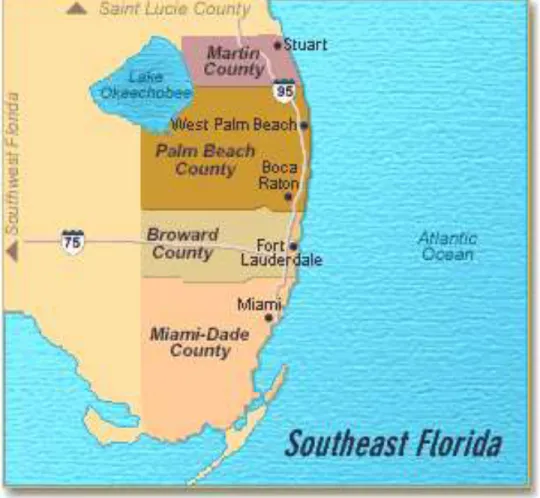
Miami-Dade County covers nearly 2,000 square miles of the southeastern tip of Florida (see map in figure 1) (USCB, 2015a). Most of the county consists of managed conservation lands and aquatic areas; however, there
are also approximately 100 square miles of agricultural cultivation and about 500 square miles of highly-developed towns, and cities along the eastern shore (Miami-Dade DEP, 2010). Approximately 2.5 million residents live there year-round (USCB, 201). The City of Miami is located in the northeast region of the county, on the Miami River between the Florida Everglades and the Atlantic Ocean (City of Miami, 2014). The city occupies over 35 square miles with an estimated a resident population of 430,332 in 2014, up from the 399,457 reported in 2010 (USCB, 2015a). Redland lies within the Miami metropolitan area, about 20 miles south of downtown Miami. (Figure 2 charts the different types of land use across the county.)
Figure 1. Counties and cities in southeastern Florida. (Source:
Figure 2. A variety of land uses reported by the county in 2010. (Miami-Dade DEP, 2010)
Tourism is the principal industry in the Miami metropolitan area, but trade is increasingly vital to the local economy. Miami’s close proximity to Latin America and the Caribbean make it the center of international trade with those areas. Because hundreds of multinational corporations have established their Latin American headquarters in southern Florida, Miami-Dade County is known as the "Gateway to the Americas." Miami International Airport is the United States’ highest-earning airport for international freight, and the third-highest for international passengers. The Port of Miami, which contributes billions of dollars annually to the local economy, ranks first among the State's containerized ports, and ninth in the United States (City-Data.com, 2009a).
Miami-Dade County is internationally recognized for its beaches. Other sensitive ecosystems include coral reefs, Biscayne Bay, coastal wetlands, Everglades marshes, hardwood hammocks and globally-imperiled pine forests. These are so unique that two national parks, a national marine sanctuary, and Florida State aquatic preserves and water conservation areas have all been established within the county, a circumstance that occurs nowhere else in the United States (Miami-Dade County, 2015; FDEP, 2015a). Once pine and palmetto flatlands, the city of Miami contains sandy beaches in its coastal precincts, and gives way to sparsely wooded outlying areas. A man-made canal connects the city to Lake Okeechobee, located 90 miles northwest of Miami. The Redland region is a historical agricultural area with protected land uses and zoning
restrictions, blending tropical agrotourism and ecotourism with a rural residential lifestyle. Redland was named for the pockets of red clay
originally found in the region; it sits atop a massive layer of oolite rock, similar to coral (Veciana-Suarez, 2014; Allison, n.d.).
The Redland portion of the OFF infestation occurs less than 2 miles from Everglades National Park, and within 5 miles of Biscayne National Park, which preserves Biscayne Bay and its offshore barrier reefs. A railroad and a system of canals cross the proposed program area. Based on 2014 data, an estimated 12,678 acres of cropland are under production within the proposed OFF treatment zones (see appendix A for program area map and appendix B for crop data source). OFF has been detected on both commercial and residential property (APHIS, 2015c).
South Florida continues to experience drought, broken to a limited extent by storms bearing unusually heavy rainfall. Miami historically has a year- round semi-tropical climate, with a long, warm summer and abundant rainfall followed by a mild, dry winter. High humidity during the day in summer makes Miami the second most humid city in the United States. The city has an elevation of 12 feet above sea level. Hurricanes
occasionally affect the area—usually in September and October.
Tornadoes are rare; waterspouts are sometimes sighted from the beaches in the summer, but significant damage seldom occurs (City-Data.com, 2015b).
Major roadways in the proposed OFF program area include Interstate Routes 1 and 95, State Routes 989, 992, 994, 997, and the Florida Turnpike. The OFF infestation is currently concentrated in rural
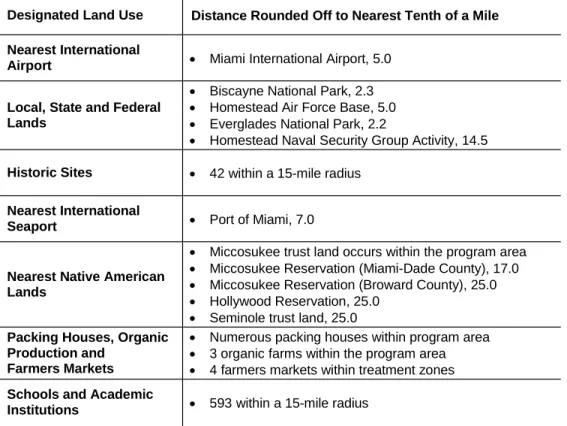
residential neighborhoods which include schools, municipal parks, biking and hiking trails, and golf courses. Other public and private recreational facilities also occur within or near the program area. OFF-host vegetation in the proposed program area occurs on both private and public property. Table 1 shows distances from the center of the program area to sites of potential concern.
b. Water Resources
Bordered by two oceans, Florida has the longest coastline in the continental United States, the second largest lake in the nation—Lake Okeechobee—and 50,000 miles of rivers, streams, and waterways. Yet, Florida is still susceptible to drought, resulting in crop damage and/or water supply shortages (FDEP, 2009). The Biscayne Aquifer is located just below land surface in South Florida, and is replenished by rainfall. Miami-Dade County's sole source for drinking water is ground water from wells. The wells feed the Hialeah and John E. Preston, and Alexander Orr regional water treatment plants, and the South Dade Water Supply System. The South Florida Water Management District directs the water various ways: to urban communities, to agriculture, and to meet the water needs
Table 1. Distance from Core of OFF Detections to Certain Land Sites.*
Designated Land Use Distance Rounded Off to Nearest Tenth of a Mile
Nearest International
Airport Miami International Airport, 5.0 Local, State and Federal
Lands
Biscayne National Park, 2.3
Homestead Air Force Base, 5.0
Everglades National Park, 2.2
Homestead Naval Security Group Activity, 14.5
Historic Sites 42 within a 15-mile radius
Nearest International
Seaport Port of Miami, 7.0
Nearest Native American Lands
Miccosukee trust land occurs within the program area
Miccosukee Reservation (Miami-Dade County), 17.0
Miccosukee Reservation (Broward County), 25.0
Hollywood Reservation, 25.0
Seminole trust land, 25.0
Packing Houses, Organic Production and
Farmers Markets
Numerous packing houses within program area
3 organic farms within the program area
4 farmers markets within treatment zones
Schools and Academic
Institutions 593 within a 15-mile radius
* See APHIS, 2015c and appendix B for data sources.
of the Everglades. Approximately 330 million gallons per day are
withdrawn from the Biscayne Aquifer via wells to the surface to meet the needs of the county. Because this drinking water supply is so close to the surface (barely a few feet down in most places), it is especially prone to contamination. Miami-Dade County, in cooperation with other local, State, and Federal agencies, works to safeguard its supply source for clean, potable water. Environmental regulations and usage restrictions in south Florida are stringent, in times of flood and in times of drought, to protect the health of water users (Miami-Dade County, 2014).
Water reuse plays an important role in water resource, wastewater
management, and ecosystem sustainability in Florida. It reduces demands on surface and ground water sources needed for drinking water.
Reclaimed water also reduces discharges to surface waters, recharges ground water, and postpones costly investment for the development of new water sources and supplies. Water reuse has allowed some communities to continue to grow where the availability of historically used freshwater sources has become extremely limited. Alternative water sources, including aquifer storage recovery and reverse osmosis of heavily-mineralized and salt water, help supply water for Miami-Dade’s irrigation, and urban and industrial needs, as well (Miami-Dade County, 2014).
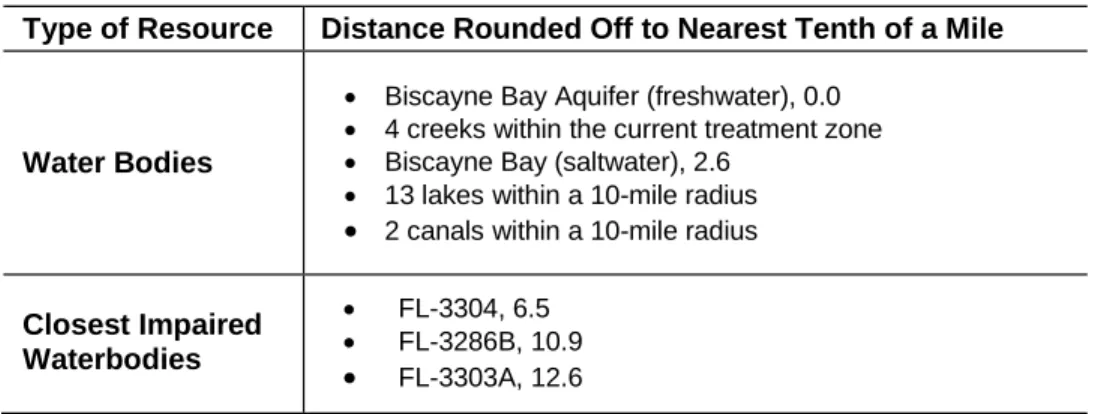
Water located beneath the proposed treatment area for the OFF program, or surface water that drains off of it, may enter the Everglades Watershed (hydrologic unit 03090202). Freshwater emergent, forested/shrub, pond, and riverine of wetland occupy about 56,110 acres of the proposed OFF treatment zone (data sources in appendix B). Table 2 shows the distance between the current OFF program and other water resources.
Table 2. Distance from Core of OFF Detections to Certain Water Resources.*
Type of Resource Distance Rounded Off to Nearest Tenth of a Mile
Water Bodies
Biscayne Bay Aquifer (freshwater), 0.0
4 creeks within the current treatment zone
Biscayne Bay (saltwater), 2.6
13 lakes within a 10-mile radius
2 canals within a 10-mile radius
Closest Impaired Waterbodies
FL-3304, 6.5
FL-3286B, 10.9
FL-3303A, 12.6 * See appendix B for data sources.
Thus far, 2015 has been a much drier year than usual in southeastern Florida. Severe to extreme drought conditions extend throughout Miami- Dade and Broward Counties; wetlands are drying out and the salinity is rising in Biscayne Bay and Florida Bay (Staletovich, 2015). The affected region has expanded northward, due to increasingly low water levels in the Everglades, in the largest hydrologic unit that feeds into it (Water
Conservation Area 3), and in agricultural areas where ground water levels are rapidly falling. Both short-term (i.e., less than 6 months’ duration) and long-term adverse impacts are predicted for Florida’s agriculture, ecology, and hydrology (Artusa, 2015). (See figure 3 for a map of drought
intensity.)
The Florida State government enacted regulations to protect the potability of its ground and surface water; potential contaminants are identified and pesticide use restrictions are implemented for vulnerable areas. In Florida the ground water standards are equivalent to the drinking water standards. By definition, a violation of any ground water standard or criterion
constitutes pollution (FDEP, 2015b). Ongoing surveys of Florida’s waters continue to show substantial pollutant and toxicity levels in certain
locations; however, the overall quality of the State’s ground water was reported good in 2014. Florida’s surface water management programs were reported successful in preventing and minimizing pollution from new sources, especially from new non-point sources of pollution, and in
reducing existing pollutant loadings, especially from point sources of pollution (FDEP, 2014).
Figure 3. Drought status in Florida as of August 25, 2015. (Artusa, 2015)
The OFF eradication program calls for highly localized chemical applications in designated properties and no-spray buffers around all sensitive areas, including all waterbodies. This method of application is designed to minimize the potential for introduction of program chemicals to local water resources.
2. Human Health
The three major factors influencing the human health risk associated with pesticide use include the fate of the pesticides in the environment, their toxicity to humans, and their exposure to humans. The principal concerns for human health are related to the program use of chemical pesticides including naled lure, spinosad protein bait, lambda
cyhalothrin (a soil drench), and MB (a fumigant). The ME attractant, used as a lure, is considered low hazard to human health (APHIS, 2014a). Limited data exists regarding the toxicity of the protein hydrolysate; the available data suggests low acute toxicity to human health.
Exposure to program pesticides can vary, depending on the pesticide and the use pattern. The OFF eradication program may employ naled lure or spinosad bait stations and traps, ground-based targeted applications of spinosad bait, lambda cyalothrin soil drenches, and MB as a fumigant. Naled is toxic to humans, birds, and invertebrates. Potential exposure to naled is expected to be low because treatments are limited to spot
applications of the pesticide formulation to areas of non-food plants, fence posts, utility poles, and other inanimate surfaces that are not readily accessible to the general public. Commercial applications, should they become necessary, will be applied to properties owned by commercial growers and producers where exposure to the general public is unlikely. Spinosad is toxic to specific invertebrate species but is considered to be nontoxic to humans and other animals. If spinosad bait application is restricted to target surfaces and made in accordance with U.S.
Environmental Protection Agency (EPA) label instructions, effects to human health and the environment are expected to be incrementally negligible; in cases where spinosad is used as a replacement for naled, effects to human health and the environment are likely to be beneficial (Vargas et al., 2009).
The use of ME lure or torula yeast and protein hydrolysate food baits in the OFF program is also expected to present a low risk to human health. ME is a yellowish, oily, naturally occurring liquid with a clove-like aroma and a bitter, burning taste. ME is mutagenic in animals and is reasonably anticipated to be a human carcinogen based on evidence of carcinogenicity in animals (NCBI, n.d.) The two types of food baits have low toxicity to humans. The California Department of Pesticide Regulation monitored ME vapor released from baits and found the levels were very low; it estimated that the exposure is much less than amounts currently allowed as food additives (OEHHA, 2013). The proposed program method of
application for all three attractants is designed to result in a low probability of exposure and risk to workers and the general public.
Lambda cyhalothrin is not expected to have significant impacts on human health from the proposed use pattern. Toxicity from oral, dermal, and inhalation exposures is considered low to moderate; its primary acute toxic effect is neurotoxicity. In toxicity studies including subchronic and
chronic exposures, lambda cyhalothrin has not been shown to be
mutagenic, carcinogenic, or to cause developmental or reproductive effects at relevent doses. The pesticide applicators have the highest potential to exposure to lambda cyhalothrin. However, pesticide risk to applicators is minimal with the proper use of personal protective equipm ent and adherence to EPA-approved label instructions. The general population is not likely to be exposed to program applications of
lambda cyhalothrin. Proper notification of residents prior to any soil drench treatment on their property will reduce their potential risk of exposure to lambda cyhalothrin.
Application of lambda cyhalothrin will be targeted and ground-based, delivering large coarse droplets directly to the soil or to a containerized host plant, which minimizes the potential for offsite transport. Dietary consumption of fruit from the treated fruit-bearing trees is not a concern because of the destruction of fruit in the treated areas. Risk to residential children from potential exposure to lambda cyhalothrin in the treatment area is minimal because of application procedures to prevent the pesticide mixture from leaving the surface of the treated area, as required by the label, such that applicators will remain onsite until the application has been absorbed into the soil. The risk evaluation of a conservative scenario on the pica behaviors for children also indicated minimal risk from
potential exposure to lambda cyhalothrin remaining in soil (APHIS, 2015a). Lambda cyhalothrin exhibits chemical fate properties that suggest it would not be mobile and subject to transport to surface or ground water that would serve as a source for drinking water. Label restrictions
regarding application buffers and vegetative filter strips adjacent to aquatic habitats will further reduce the potential for any contamination to any surface drinking water (APHIS, 2015a).
Should treatment by MB fumigation be indicated, adherence to EPA label restrictions and application in enclosed areas or containers will protect applicators and the general public from risk of exposure to the fumigant (APHIS, 2007 and 2002).
The analyses and data of EIS1 and EIS2 and the associated human health risk assessments indicate exposures to pesticides from normal program operations are not likely to result in substantial adverse human health effects. (Refer to EIS1 and EIS2 (APHIS, 2001 and 2008) and the human health risk assessments (APHIS, 2015a, 2014a, 1999 and 1998a) for more detailed information relative to human health risk.)
A standard mitigation measure designed to minimize exposure of humans to program pesticides is the program requirement for public notification. Information concerning the OFF eradication project will be shared via press releases and media announcements to the general public. Either the county agricultural commissioner or public information officer will serve as the primary contact to the media. Any resident with property to be treated will be notified in writing at least 48 hours prior to treatment. Following the treatment, notices will be left with homeowners detailing precautions to take and safe intervals of time that should elapse before harvesting fruit on the property. Treatments are repeated at 7 to 14 day
intervals for two life cycles of the fly (typically 4 to 6 months, sometimes longer dependent on temperature).
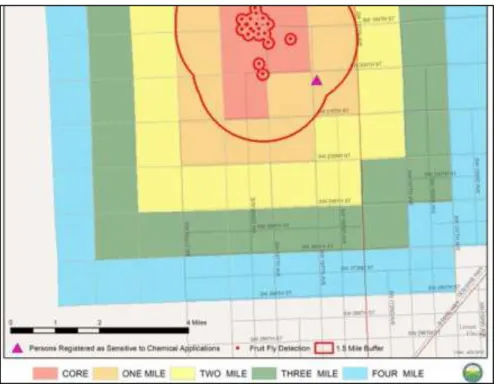
APHIS recognizes a small portion of the population may have greater than usual sensitivity to certain chemicals, and program treatments may pose higher risk for these individuals. Chemically sensitive individuals have been identified in the Redland program quarantine area based on maps provided by the State of Florida (see figure 4). Special communication strategies to mitigate this risk are discussed in detail in appendix C of EIS1 (APHIS, 2001).
Figure 4. Chemical sensitivity in the Redland OFF program area. (FDACS, 2015c)
Trap placement and chemical applications may be rescheduled if strong winds or rainfall is forecast for the program area. Site inspections will continue to ensure existing program treatments are not likely to affect
humans. The destruction or relocation of traps and treatments due to weather events is unlikely to result in adverse impacts to the human environment because the potential pesticide toxicity is reduced by dilution during the storm’s water and air movement.
Of the two alternatives considered, a well-coordinated eradication program using IPM technologies results in the least use of chemical pesticides and minimizes their potential to adversely affect human health. The no action alternative is not expected to eliminate OFF as readily or as effectively as the preferred alternative. Over a protracted period of no action, there
would likely be broader and more widespread use of pesticides by homeowners and commercial growers, with correspondingly greater potential for adverse impacts to human health.
3. Other Aspects of the Human Environment
APHIS summarizes its findings on the potential environmental impacts of implementing the action alternatives on historic sites, minority and/or low- income communities, and tribal interactions in the proposed quarantine program area in this section.
The National Historic Preservation Act of 1966, as amended (16 U.S. Code § 470 et seq.), requires Federal agencies to consider the impact on properties included in, or eligible for inclusion in the National Register of Historic Places (36 Code of Federal Regulations §§ 63 and 800). APHIS determined its fruit fly eradication programs are undertakings with no potential to affect historic properties. In project number 2015–0789 on February 18, 2015, the Florida State Historical Preservation Office (SHPO) concurred with the APHIS finding that the Fruit Fly Cooperative Eradication Program activities do not constitute an “undertaking” pursuant to Section 106 of the National Historic Preservation Act of 1966. This SHPO office did not request notification of newly established quarantine and treatment zones as they arise. Consequently, APHIS will not pursue additional consultation.
In general, APHIS’ fruit fly eradication programs are compatible with the preservation of historic sites because control activities are inconspicuously integrated into the site, do not disturb the ground, do not affect human- made structures, and APHIS restricts program treatments and activities to an as-needed basis.
In this program, APHIS intends to use bait treatments and, when necessary, fruit stripping by hand. Produce at farmer’s markets will be inspected, and infested fruit may be confiscated and destroyed. APHIS will conduct chemical applications that are ground-based and are targeted directly to foliage. This may include hand spraying with a backpack sprayer. All of these methods are designed to minimize pesticide release. If APHIS discovers any archaeological resources, the appropriate
individuals will be notified.
Federal agencies identify and address disproportionately high and adverse human health or environmental effects of its proposed activities, as described in Executive Order 12898, Federal Actions to Address Environmental Justice in Minority Populations and Low-Income
Populations. Using the 2010 Census Bureau estimates, in the 15-mile area
around the new quarantine zone, approximately 50 percent of residents report a household income base of $50,000 per year or less; 46 percent report educational attainment at or less than a high school diploma. The
population reporting their race as Hispanic is about 75 percent and Black is reported at approximately 10 percent. Approximately 73 percent of the population identified itself as speaking English “not at all,” “not well,” “less than well,” or “less than very well” (USCB, 2015b). About
75 percent of individuals report speaking a language other than English at home (USCB, 2015b). To meet the needs of these individuals, APHIS will provide advance notice of program activities and potential exposure hazards in Spanish to members of non-English-speaking populations. APHIS will provide similar advanced notice to people in areas that lack access to news media. Because the preferred method of bait/pesticide application is to use poles above the height humans can reach unassisted, these segments of the population are not likely to be disproportionately adversely affected by the bait/pesticide treatments or their methods of application.
Federal agencies comply with Executive Order 13045, Protection of
Children from Environmental Health Risks and Safety Risks. The
preferred alternative does not pose any disproportionate adverse effects to children because maintenance of traps and any pesticide applications would not occur when children are present in the immediate area. There are nearly 600 schools listed as being within the 15-mile area associated with the quarantine zone. Bait stations will not be placed on school
property. Any exposure of children to applied products is negligible based on the program’s application methods and the product formulations. Executive Order 13175, Consultation and Coordination with Indian Tribal
Governments, calls for agency communication and collaboration with
tribal officials when proposed Federal actions have potential tribal implications. According to the Native American Graves Protection and Repatriation Act Online Databases (NPS, 2015; USGS, 2015; USGWA, 2008; 25 U.S. Code § 3001 et seq.), the Seminole Tribe of Florida has ceded land in both the treatment and quarantine zones and in Broward County. The Seminole Tribe of Florida Hollywood Reservation is located in Broward County and is approximately 25 miles from this fruit fly outbreak. The Miccosukee Tribe of Indians of Florida has ceded land in the treatment and quarantine areas, and they have a reservation in Miami- Dade County approximately 20 miles from the outbreak. They also have a reservation in neighboring Broward County approximately 25 miles from the outbreak. Individual tribal members living within the quarantine zone will not be disproportionately affected in comparison to other individuals in the area because eradication treatments are applied to poles above the unassisted reach of most humans, and foliar canopy spraying is highly targeted. The proposed action will not disturb the ground, so it is unlikely to affect Native American sites or artifacts. For these reasons, APHIS does not expect any tribal members to be directly affected by program activities. However, based on the proximity and size of this fruit fly outbreak to tribal reservations, APHIS is contacting the Tribal Historic
Preservation Officers to discuss the fruit fly eradication program. If appropriate, APHIS will initiate consultation.
A lack of Federal action could result in adverse economic and health impacts on affected producers and consumers, such as decreased harvests, higher consumer prices, loss of local employment, reduced nutritional options, loss of market share, compromised mental and physical health, loss of property, and so on. These indirect impacts are expected to occur to a lesser extent under the quarantine and commodity certification alternative. Adverse effects are not anticipated as a result of carrying out the preferred alternative’s surveillance activities, trapping, MAT, or program chemical applications.
4. Nontarget Species
The principal concerns for nontarget species, including threatened and endangered species, relate to potential harm from the use of program pesticides to eradicate OFF populations. Paralleling human health risk, the risk to nontarget species is related to the pesticides’ fate in the environment, their toxicity, and exposure to nontarget species. APHIS’ OFF programs are designed to prevent the introduction of program chemicals into nontarget areas.
All of the pesticides considered in this EA are highly toxic to
invertebrates, even though the likelihood of exposure (and any ensuing impacts) varies among the pesticides and with the specified use pattern (APHIS, 2015b; 2014a; 2003). In general, a well-coordinated OFF eradication program using IPM technologies would result in the least use of chemical pesticides, overall, with minimal adverse impacts to nontarget species. The no action alternative is less likely to be effective at
eliminating OFF, and would be expected to result in broader and more widespread use of pesticides by homeowners and commercial growers, with a correspondingly greater potential for adverse impacts.
Trap placement and chemical applications may be rescheduled if strong winds and rain storms are forecast for the program area. Site inspections will continue to ensure existing program treatments are not likely to affect
nontarget organisms. The destruction or relocation of traps and treatments due to weather events is unlikely to result in adverse impacts to animal species and their habitats, as the potential toxicity should be greatly reduced by dilution of the program materials in water and air.
The MAT portion of the OFF eradication program will employ a naled formulation. The pesticide naled is practically nonpersistent in the environment, with reported field half-lives of less than 1 day. It rapidly degrades in the presence of sunlight and is not strongly bound to soils. It is rapidly broken down if wet (a reported half-life of about 2 days), and it is moderately volatile (Extoxnet, 1996a). Potential exposure of nontarget species to naled is expected to be low because treatments are limited to
spot applications of pesticide to areas of non-food plants, fence posts, utility poles, and other inanimate surfaces that are not readily accessible to most nontarget species.
ME, the lure ingredient in the MAT formulation, is considered moderately toxic to mammals if ingested, and can attract certain nontarget
invertebrates (APHIS, 2014a). The attractant used in the OFF bait stations poses a slight risk to certain terrestrial invertebrates that are attracted to the bait due to the presence of ME, and they could receive a lethal dose of naled. However, based on the selective nature of the attractant, the impacts would be localized and transient, and are not anticipated to result in population level effects to sensitive taxa, including beneficial
arthropods.
The eradication program will also apply a targeted, ground-based foliar bait treatment where OFF is detected. For this, host trees and plants within a 200-meter radius of the OFF find site are treated with a highly localized spray that consists of an organic formulation of the pesticide spinosad combined with protein hydrolysate bait.
Protein hydrolysate is a common attractant used in fruit fly treatments, increasing the efficacy of chemical applications and reducing the area of pesticide treatments needed for control (Prokopy et al., 1992). OFF are attracted to the protein hydrolysate where they then receive a lethal dose of the pesticide (spinosad) that is mixed with the attractant. Protein hydrolysate alone is expected to have minimal impacts to environmental quality and nontarget species because of its low toxicity.
The pesticide spinosad has low to moderate toxicity to wild mammals and birds. Spinosad toxicity to fish is moderate while aquatic invertebrates are more sensitive in acute and chronic exposures. Toxicity to terrestrial invertebrates is variable; however, spinosad is considered highly toxic to honey bees. The spinosad/protein hydrosolate product is also attractive and toxic to parasitoid wasps and lacewings (Michaud, 2003). However, risks to nontarget fish and wildlife, including beneficial insect species, are anticipated to be negligible based on the proposed use pattern that would result in a low potential for exposure to most taxa. A favorable
environmental fate profile and low toxicity to most nontarget organisms further reduces the risk to terrestrial and aquatic animals (APHIS, 2014a). Lambda cyhalothrin has low to moderate toxicity to terrestrial wildlife such as birds and mammals (APHIS, 2015b). Lambda cyhalothrin is highly toxic to most terrestrial invertebrates, including pollinators. However, the method of application to soils at the drip line of select host trees within a 200-meter radius of an OFF detection minimizes the impacts to sensitive terrestrial invertebrates that may consume treated plant
material, or occur in soil at the application site (APHIS, 2015a). The low frequency and method of these applications suggest that any impacts to sensitive terrestrial invertebrates would be localized to the treatment area, and would be transient (APHIS, 2015a).
For the fumigant MB, the sealed methods for its application are designed to protect nontarget species by preventing their exposure to the pesticide (APHIS, 2007 and 2002). Potential cumulative impacts of MB released to the global environment are considered in section 6 of this chapter.
a. Migratory Birds
The Migratory Bird Treaty Act of 1918 (16 U.S. Code §§ 703–712) established a Federal prohibition, unless permitted by regulations, to pursue, hunt, take, capture, kill, attempt to take, capture or kill, possess, offer for sale, sell, offer to purchase, purchase, deliver for shipment, ship, cause to be shipped, deliver for transportation, transport, cause to be transported, carry, or cause to be carried by any means whatever, receive for shipment, transportation or carriage, or export, at any time, or in any manner, any migratory bird or any part, nest, or egg of any such bird. Executive Order 13186, Responsibilities of Federal Agencies to Protect
Migratory Birds, directs Federal agencies taking actions with a measurable
negative effect on migratory bird populations to develop and implement a memorandum of understanding (MOU) with the U.S. Fish and Wildlife Service (FWS) that promotes the conservation of migratory bird
populations. On August 2, 2012, APHIS and FWS signed an MOU to facilitate the implementation of this Executive order.
Miami-Dade County is part of the Atlantic Flyway, an important migration corridor providing suitable habitat for many bird species.
Migratory birds of conservation concern within the proposed program area that occur year-round include the American kestrel, American
oystercatcher, black skimmer, Chuck-will’s-widow, common ground- dove, least bittern, limpkin, loggerhead shrike, prairie warbler, reddish egret, roseate spoonbill, seaside sparrow, smooth-billed ani, Wilson’s plover, and short-tailed hawk (FWS, 2015). APHIS evaluated the proposed OFF program in terms of potential impact on migratory avian species. Given the methods of application, implementation of the preferred alternative is not expected to have any adverse effect on
migratory birds or their flight corridors. The proposed program would not involve removal or disturbance of any trees, shrubs, or other vegetation on the project site that could be used by birds. In addition, birds would not be exposed to program treatments because of the targeted nature of the
b. Endangered Species Act
Section 7 of the Endangered Species Act (ESA) and ESA’s implementing regulations require Federal agencies to consult with FWS and/or the National Marine Fisheries Service to ensure that their actions are not likely to jeopardize the continued existence of threatened or endangered species, or result in the destruction or adverse modification of critical habitat.
APHIS requested emergency consultation with FWS, South Florida Ecological Services Field Office, in Vero Beach, Florida on August 31, 2015. APHIS determined that the proposed program may affect, but is not likely to adversely affect the following federally listed butterfly species: Schaus swallowtail butterfly (Heraclides (=Papilio) aristodemus
ponceanus), Miami blue butterfly (Cyclargus thomasi bethunebakeri),
Florida leafwing butterfly (Anaea troglodyta floridalis), and Bartram’s scrub hairstreak (Strymon acis bartrami). No critical habitat for these species occurs in the program area. As part of the emergency
consultation, APHIS and FWS held a conference call to discuss these determinations and to consider necessary protection measures for butterfly species. FWS provided an e-mail concurrence dated September 3, 2015. Should the program area expand, or a new species or critical habitat be listed that may occur in the program area, APHIS will reinitiate
consultation with FWS, as necessary.
(Refer to EIS1 and EIS2 (APHIS, 2001 and 2008) and the supporting nontarget risk assessments (APHIS, 2015a, 2014a, 2003 and 1998b) for more information on risks to all classes of nontarget species.)
5. Environmental Quality
The principal environmental quality concerns are for the protection of air quality, water quality, and the minimization of the potential for
environmental contamination. In relation to preserving environmental quality, program pesticides remain the major concern for the public and the program. Although program pesticide use is limited, especially in comparison to other agricultural pesticide use, the proposed action would result in a controlled release of chemicals into the environment. The fate of those chemicals varies with respect to the environmental component (air, water, or other substrate) and its characteristics (temperature, pH, dilution, etc.). The environmental fates of naled, spinosad, ME, and MB are outlined below. (Refer to EIS1 and EIS2 (APHIS, 2001 and 2008) and the risk assessments (APHIS, 2015a, 2014a, 2003, 1998a and 1998b) for a more detailed consideration of program pesticides' environmental fates.) Attractant ingredients, such as pheromone lures, torula yeast, and protein hydrolysate, have minimal effects on environmental quality, based on EPA-approved use patterns and the ingredients’ rapid degradation. Use of
these attractants in OFF program treatments is not expected to result in impacts to environmental quality beyond those described for the below chemicals (NCBI, n.d.; NAFTA, 2003; Prokopy et al., 1992).
Naled is practically nonpersistent in the environment, with reported field half-lives of less than 1 day. It rapidly degrades in the presence of sunlight. Naled is not strongly bound to soils. It is rapidly broken down if wet (a reported half-life of about 2 days), and it is
moderately volatile. Soil microbes break down most of the naled in the soil; therefore, it should not present a hazard to ground water. The half-life of naled on foliage ranges from 2.3 to 2.5 days. Plants remove bromine from naled to form dichlorvos, which may
evaporate or be further metabolized (Extoxnet, 1996a).
Spinosad is not considered mobile in soil; it adsorbs strongly to soil particles and is unlikely to leach to great depths. Dissipation half- lives for spinosad in the field may last 0.3 to 0.5 day. It is
photodegraded quickly on soil exposed to sunlight. Spinosad is quickly metabolized by soil micro-organisms under aerobic conditions, and has a half-life of 9.4 to 17.3 days. Spinosad is not sensitive to hydrolysis, but aqueous photolysis is rapid in natural sunlight (half-life of less than 1.0 to 1.6 days), and is the primary route of degradation in aquatic systems exposed to sunlight. Under anaerobic conditions, the degradation rate is slower, between 161 and 250 days. Spinosad has a half-life of 2.0 to 11.7 days on plant surfaces. After initial photodegradation, residues are available for metabolism by plant biochemical processes. Effects from residues of individual treatments are no longer detectable in
environmental substrates within a few weeks of application (APHIS, 2014a; Kollman, 2003).
Methyl eugenol (ME) is a volatile compound. In the atmosphere, ME is degraded by reaction with hydroxyl radicals. ME is not expected to undergo hydrolysis in the environment. In water, it adsorbs moderately well to suspended solids and sediment. ME is expected to have high mobility in soil. Dissipation of ME from soil and from water is slower in colder temperatures. Half-lives of ME are estimated to be 5 hours in the atmosphere, 8 days in soil, 8 days in water, and 32 days in sediment (APHIS, 2014a).
Lambda cyhalothrin is not mobile and tends to strongly sorb/adsorb to organic matter in soil. A 28-day leaching study showed that a majority of lambda cyhalothrin residues were
recovered within the top 15 cm of the soil. Lambda cyhalothrin has a low potential to leach as dissolved residues in percolating water; in the water column, lambda cyhalothrin tends to adsorb to suspended
particulate materials (e.g., clay particles and organic matter), transport with the suspended particulates through aquatic systems, and settle in the sediments. Lambda cyhalothrin is considered nonvolatile; however, volatilization from foliage occurs more rapidly than from soil and water because of the reduced surface area.
Lambda cyhalothrin is moderately persistent in the environment and degrades through a combination of biotic and abiotic mechanisms (photolysis, hydrolysis, and microbial biodegradation). Studies show that lambda cyhalothrin half-lives in aerobic soil and anaerobic aquatic conditions are 42.6 days and 21.9 days, respectively. Lambda cyhalothrin in soil is not easily taken up by the roots of vascular plants because it strongly adsorbs to soil; aquatic
macrophytes can take up lambda cyhalothrin in water from roots. Through translocation, lambda cyhalothrin uptake partitions into upper plant biomass. Lambda cyhalothrin in water and soil, when exposed to sunlight, photodegrades with half-lives of 24.5 days and 53.7 days, respectively. Lambda cyhalothrin hydrolysis does not occur at a pH below 8. Lambda cyhalothrin partitions to lipids suggesting a high potential to bioconcentrate and low water
solubility. Lambda cyhalothrin biodegrades at moderate rates (half- lives ranging from 12 to 72 days) under both aerobic and anaerobic soil metabolism conditions. Lambda cyhalothrin aquatic
biodegradation is slow with metabolism half-lives ranging from 113–142 days (APHIS, 2015a).
Methyl bromide (MB) will not be used as an eradication treatment but may be employed as a regulatory treatment. MB volatilizes into air from soil and water, and is known to contribute to stratospheric ozone depletion. The volatilization half-life for MB from surface water ranges from 3.1 hours to 5 days. The degradation half-life of MB in water ranges from 20 to 38 days, depending on temperature and pH. Volatilization of MB from surface soil is rapid, with a half- life ranging from 0.2 to 0.5 days. The degradation half-life of MB in soil ranges from 31 to 55 days. MB has a low affinity to bind to soils, but is not considered a major contaminant of ground water (NPIC, 2000). The small quantities used to treat for OFF disperse when fumigation chambers are vented. (See section 6 of this chapter regarding MB’s potential cumulative impacts to the environment.) Urban and agricultural runoff may flow directly into local waters, picking up trash, dirt, chemicals, and other contaminants along the way. If treatment is indicated in close proximity to a body of water where pesticides might be directly discharged into the water, FDACS will analyze the environmental setting, and establish and follow site-specific best management practices. The prescribed method of spray application directly to host plants is designed to minimize drift and runoff. Mitigation
measures will be applied to protect marine and freshwater resources. Personnel will maintain a minimum distance of 98 feet (30 meters) from surface water. Personnel applying pesticides will adhere to label
directions, State and Federal laws, and recommendations of the
environmental compliance staff associated with the program. Waterbody contact is not anticipated due to the targeted application measures and the environmental fate of the pesticides used in Bactrocera spp. cooperative eradication programs.
The alternatives were compared with respect to their potential to affect environmental quality. Risk to environmental quality is considered minimal for the preferred alternative. Again, a well-coordinated
eradication program using IPM technologies would result in the least use of chemical pesticides overall, with minimal adverse impacts on
environmental quality. The no action alternative would likely result in broader and more widespread use of pesticides by homeowners and commercial growers, with correspondingly greater potential for adverse impacts.
The proposed program area was examined to identify characteristics that would tend to influence the effects of program operations. Potentially sensitive areas were identified, considered, and accommodated, as necessary, through special selection of control methods and use of specific mitigation measures. Allowances were made for the special site-specific characteristics that would require a departure from the standard operating procedures. The approaches used to mitigate for adverse impacts to bodies of water are described in EIS1 (APHIS, 2001).
6. Cumulative Impacts
This section considers the potential of the alternatives to cause cumulative impacts on the human environment. Not taking Federal action is expected to result in the cumulative impacts that arise from tolerating uncontrolled OFF infestations in the United States. Imposed quarantine and commodity certification would likely place the burden of control efforts and expense on producers already engaged in complying with other quarantine and commodity certification requirements. Federal non-action may increase the time it takes for commodities to reach their intended markets, or may prevent them from reaching consumers at all, which may contribute to negative public perception of the affected industry.
Current and future in-State OFF programs potentially could merge into one larger program area. When OFF eradication programs are combined with trapping and eradication actions across Florida counties, APHIS expects a beneficial cumulative impact on the environment from reduced
OFF populations causing damage to fruit combined with overall fewer chemical treatments.
The OFF program for the Miami region was examined for potential synergistic and cumulative environmental impacts. Program pesticides approved for use against OFF are also prescribed treatments for other
Bactrocera spp. programs. As of September 1, 2015, there are four
other active quarantines in the United States targeted at Bactrocera
spp.—specifically, at guava fruit fly and OFF infestations in two California counties (CDFA, 2015). At present there are no active
Bactrocera spp. cooperative eradication programs in Florida apart from
the OFF program proposed for the Redland region of Miami-Dade County.
Care should be taken when multiple pest species in the same area are targeted for treatment using the same chemical. Spinosad, lambda cyhalothrin, naled, ME, and MB formulations may be used in Florida to eradicate other invasive fruit fly species in addition to OFF. Use of program pesticides in an OFF program that overlaps with another non- native fruit fly program are monitored and adjusted, where necessary, to minimize environmental impacts. Due to the passage of time and the prevailing weather conditions in southern Florida during 2015, no chemical residues are believed to remain from previous pest control programs that could result in additive or synergistic chemical effects with previous program chemical applications.
Spinosad, lambda cyhalothrin, naled, ME, and MB formulations may also be used in Florida for other purposes than fruit fly eradication; APHIS considered implementation of the preferred alternative in the context of, and in conjunction with, other pest insect eradication and quarantine projects in the proposed program area (e.g., ongoing statewide efforts to control boll weevil and Asian citrus psyllid).
Spinosad has other labeled food and non-food uses and is currently used in a variety of pest control efforts, including the control of termites and European grapevine moth (APHIS, 2014a).
Lambda cyhalothrin is used to control a wide range of pests in a variety of applications (NPIC, 2001):
o agricultural insecticides for food and non-food crops
o insecticides used indoors and outdoors for homes, hospitals, and other buildings