35
Differences in Total Yield and Physicochemical Attributes of Virgin Coconut Oil from Coconut Milk Demulsification using Direct Heating and Microwave Heating
Nur Diyanna Mohd Yusof and Wan Anwar Fahmi Wan Mohamad* School of Food Industry, Faculty of Bioresources and Food Industry,
Universiti Sultan Zainal Abidin, Besut, Terengganu *Corresponding author: [email protected]
Received: 05/08/2019, Accepted: 06/10/2019, Available online: 31/10/2019
ABSTRACT
The objective of the present study is to determine the total yield and physicochemical properties of virgin coconut oil (VCO) extracted from coconut milk using controlled direct heating and microwave heating. The heating temperature for the controlled direct heating method was 90 ˚C for the first hour of heating and maintained at 60 ˚C once the oil began to separate from the coconut protein until the demulsification was over. In the microwave heating method, coconut milk was heated at medium microwave power level (500W) for 30 minutes at 5 minutes intervals. The heating process for both methods was stopped before the proteinaceous latik turned brown. The recovered oils were subjected to four standard analyses for accessing the quality of VCO, which are moisture content (MC), iodine value (IV), peroxide value (PV) and acid value (%FFA). The percentage of oil yield and time taken during heating process for the controlled direct heating and microwave heating methods showed significant differences where the highest oil recovery (23.83%) with the shortest time taken (15.33 minutes) was given by the microwave heating method. There were no significant differences in the physicochemical properties of VCO extracted from both heating methods. By comparing the quality of the experimental VCOs to a commercial VCO, the VCO extracted from the controlled direct heating and microwave heating methods had no significant differences (p >0.05) than the commercial VCO. The present obtained results would be useful for micro and small-scale enterprises to correctly apply the heating methods in producing a high quality VCO commercially.
Keywords: Virgin coconut oil, coconut milk, demulsification, direct heating, microwave heating JOURNAL OF AGROBIOTECHNOLOGY 2019, VOL 10(1S):35-45
e-ISSN:2180-1983
36 INTRODUCTION
Virgin coconut oil (VCO) is a well-known product worldwide. The increasing public awareness towards healthy lifestyles and diets is driving the demand for VCO in the market especially in South East Asia involving Malaysia, Philippine, Thailand and Indonesia. The term VCO refers to an oil that is obtained from fresh, mature kernel of the coconut by mechanical or natural means, with or without the use of heat and without undergoing chemical refining (Villarino et al., 2007). There is no specific requirement established for producing VCO, and based on the definition itself, it is understood that as long as the oil does not go through the refining, bleaching and deodorizing (RBD) process that leads the alteration of the nature of oil, the oil can be considered virgin (Marina et al., 2009). VCO is different from coconut oil in terms of processing, where VCO does not have to go through the RBD process. VCO have almost no trans fatty acid because it is contained a major in saturated fatty acid and rich in lauric acid (medium chain fatty acid component) that acting as antimicrobial. It also has good cholesterol that can reduce low-density lipoprotein (LDL) cholesterol in human blood and making them less prone to having a heart attack or stroke (Philipine Coconut Authority, 2014).
The extraction of virgin coconut oil from coconut milk emulsion that consists of two immiscible liquids, which is coconut oil and water is called a demulsification or emulsion breaking process. The unfavourable contact between coconut oil droplets and water molecules causes coconut milk emulsion to be thermodynamically unstable and readily separates into two distinct phases – a heavy aqueous phase and a lighter cream phase (Abdurahman et al., 2009). The main components of coconut milk are water and fats, with carbohydrates, proteins and ash as minor components (Tansakul & Chaisawang, 2005). A lot of methods have been developed to extract coconut oil, either through dry or wet processing (Marina et al., 2009). In wet processing, VCO is extracted through coconut milk with or without heat. In heating processing, coconut milk is directly heated to extract the oil whereas, in non-heating process, the oil is extracted through fermentation, enzymatic and solvent extraction (Agarwal & Bosco, 2017). This current study revealed the effect of wet extraction methods of VCO using direct heating and microwave heating on its total yield and physicochemical properties.
MATERIALS AND METHODS Materials
Pure and fresh coconut milk was obtained from a local market in Jerteh, Terengganu, Malaysia. A sample of commercial VCO acting as the control in this study was purchased from a local market. All the chemicals and solvents were used is analytical grade.
Preparation of coconut milk
The preparation of coconut milk was performed according to Bawalan (20011) with a slight alteration. The coconut milk was allowed to settle in the freezer at -17 ˚C for 24 hr. Then, the coconut milk was thawed at room temperature until the coconut milk reached 25 ˚C.
The controlled direct heating method
The direct heating method was performed according to Bawalan and Chapman (2006) with a slight alteration. The coconut cream was placed in a wok and heated very slowly to coagulate the protein and release the oil. This process used slow heating for about 2 to 2.5 hr. For the first hour of heating, the temperature was allowed to reach 90 ˚C. After this time, the temperature was controlled below than 80 ˚C until the protein begins to coagulate. When the oil started to separate from the coagulated protein, the temperature was lowered to 60 ˚C. The heating process was stopped before the proteinaceous latik turned brown. Then, the oil was separated from the coconut protein (latik) by straining the mixture through a muslin cloth. The oil was prepared in duplicate
37
and kept refrigerated afterwards until further use. The time taken for the whole heating process was recorded in minute. The yield of oil recovery was calculated using this formula:
% Yield = Weight of oil recovery (g) × 100 Eqn. 1 Weight of cream (g)
Microwave heating method
Extraction of virgin coconut oil using microwave heating was performed according to Khalid et al. (2008) with a slight alteration. In this study, Panasonic NN-CD997S inverter convection microwave oven 42 Liter was used in heating coconut milk. The rated power output for microwave is 1000 Watt (W). The coconut cream was placed in a glass container and put into a convection microwave oven. The oven was set as Micro Power program with medium micro power level (500 W) for 30 min at a 5 min interval. The temperature of sample was checked every 5 min using a digital food thermometer. The heating process was stopped before the proteinaceous latik turned brown. Then, the oil was separated from the coconut protein (latik) by straining the mixture through a muslin cloth. The oil was prepared in duplicate and kept refrigerated until further use. The time taken for the whole heating process was recorded in minute. The yield of oil recovery was calculated using the Eqn. 1.
Analyses of VCO quality
Moisture content
Moisture can contaminate fats and oils in many different ways, either during condensation, coils breaking or intentional addition during processing. The presence of moisture will increase free fatty acid and lead to off-flavours and aromas (rancid). Determination of moisture content was according to Rohyami et al. (2017) with a slight alteration. Porcelain dish or crucible was heated in an oven at 105 ˚C for 1 hr and let it cool in the desiccator until the temperature equal to room temperature. The crucible with lid was weighed (W1). Then, the sample was weighed 5.0±0.2 g into the crucible (W2) and heated at uniform temperature of 105 ˚C in the oven for 4 hr. Then, the crucible with the sample inside was cooled in a desiccator for 30 min until its temperature is equal to room temperature and weighed until constant readings were gathered (W3). The moisture content of oil recovery was calculated using the Eqn. 2.
% Moisture content = W2 – W3 × 100 Eqn. 2 W2 – W1
W1 = Weight of container with lid (g)
W2 = Weight of container with lid and sample before drying (g) W3 = Weight of container with lid and sample after drying (g)
Iodine value (IV)
Determination of iodine value (IV) was carried out according to the PORIM p3.2 (1995). The sample was weighed 0.2 g-0.5 g accurately and put into a 500 mL flask. Then, 200 mL of cyclohexane wias added to dissolve the sample. The flask was warmed slightly if necessary. 25 mL of Wijs solution was added and the flask was covered with aluminium foil, before being shaken gently and placed in the dark. After standing for 1 hr, 20 mL of the potassium iodide (KI) solution and 100 mL of distilled water were added into the flask. The sample was titrated with 0.1 N sodium thiosulphate solution until yellow colour appeared due to the disappearance of iodine. Then, 1 mL of starch was added as an indicator solution and the titration was resumed until the blue colour disappeared after vigorous shaking. The IV was determined in duplicate. The same steps were repeated for blank with no sample added. The IV was calculated using Eqn. 3.
38
Iodine value = 12.69 × N × (V2-V1) Eqn. 3 W
N = normality of sodium thiosulphate (Na2S2O3) V2 = volume of Na2S2O3 solution in mL used for blank V1 = volume of Na2S2O3 solution in mL used for sample W = weight of sample in grams
12.69 = used to convert from meq. thiosulphate to grams iodine. (MW of iodine is 126.9)
Peroxide value (PV)
Determination of peroxide value (PV) was carried out according to the PORIM p2.3 (1995). The sample was weighed 5 g ± 0.05 g and put into the 250 mL flask. 30 mL of the acetic acid- chloroform solution was added into the sample. Then, the flask was swirled until the sample is dissolved in the solution. 0.5 mL of saturated potassium iodide (KI) was added with a graduated pipette. The solution was swirled for 1 minute and then 30 mL of distilled water was added. Next, a few drops of starch solution was added for freshly produced oils. The sample was titrated with 0.01N sodium thiosulphate solution and was added gradually with constant and vigorous shaking. The titration was continued with shaking the flask vigorously near to the end point to liberate all the iodine from the chloroform layer. The thiosulphate dropwise was added into the solution until the blue colour just disappears. The PV was determined in duplicate. The same steps were repeated for blank with no sample added. The PV was calculated using Eqn. 4.
Peroxide value = (Vs – Vb) N × 1000 Eqn. 4 W
N = normality of sodium thiosulphate (Na2S2O3) Vs = volume of Na2S2O3 solution in mL used for sample Vb = volume of Na2S2O3 solution in mL used for blank W = weight of sample in grams
1000 = conversion of unit (g/kg)
Acid value (% Free fatty acid)
The acid value (AV) was determined according to PORIM test methods p2.5 (1995). The sample was weighed 5 ± 0.1 g into Erlemeyer flask. 100 mL of 95% ethanol was added in a flask and the solution was boiled over a hot plate to about 40 ˚C. Then, 0.5 mL of phenolphthalein was added and neutralized by dropwise addition of 0.5N sodium hydroxide (NaOH) till a faint, but the permanent pink colour is obtained. The AV was determined in duplicate. Expression of result: % free fatty acid (FFA) as lauric acid.
Acid value = 56 × N × V Eqn. 5 W
N= normality of NaOH solution
V = volume of NaOH solution in mL used for sample W = weight of sample in grams
39
Statistical Analysis
In this study, statistical analysis was conducted by using SPSS Statistics 17.0 software. All data were reported as mean ± standard deviation using Analysis of Variance (ANOVA) method. The significant difference of experiment samples and control were compared using ANOVA at significant level (p<0.05).
RESULTS AND DISCUSSION
Effect of heating methods on total yield of VCO
Total yield or oil recovery gives a quantitative measurement on the effectiveness of different method of extractions in terms of amount of oil produced and time duration for the heating process. Table 1 shows the percentage of oil yield and time taken in minutes of VCO extracted by direct heating and microwave heating.
Table 1. The total yield and time taken of VCO extracted from direct heating and microwave heating.
Analysis Extraction method
Direct heating Microwave heating
Total yield (%) 19.67 ± 1.53a 23.83 ± 0.76b
Time taken (mins) 75.00 ± 2.50a 15.33 ± 0.76b
*Means in the same row with different superscripts are significantly different at p <0.05. **Values are means ± standard deviation.
The different extraction methods of VCO resulted in significant difference in the quantity of oil extracted and time taken. Microwave heating method gives the highest yield compared to the direct heating method with 23.83 ± 0.76% and 19.67 ± 1.53% oil recovery respectively. The shortest time taken was given by microwave heating method with 15.33 ± 0.76 minutes and followed by direct heating method with 75.00 ± 2.50 minutes. The heating process was stopped before the proteinaceous latik turned brown as according to Bawalan and Chapman (2006) if the heating process is continued until the proteinaceous latik turned brown, the recovered oil will have a yellow and low quality.
The highest oil yield recovery given by microwave heating method is correlated with the mechanism of microwave radiation demulsification in terms of generation, propagation and interaction of microwaves with emulsion. According to Fortuny et al. (2007), the efficiency of the microwave irradiation in oil-in-water emulsion separation is attributed by the reduction of the stability of the emulsion as a result of microwave radiation breaks the hydrogen bonds between surfactant molecules and water molecules to reduce the resistance between molecules. By contrast, direct heating gave the lowest oil yield recovery which may due to poor ability to fully demulsify the emulsion in coconut milk within controlled temperature compared with microwave radiation which resulting the oil is remain entrapped in latik. According to Bawalan and Chapman (2006), this method will produce VCO with intense coconut aroma but has the lowest total yield recovery as a large proportion of oil remains entrapped in coconut protein (latik). Hence, it is evident that the microwave heating method of VCO extraction is more effective than the controlled direct heating method.
In addition, microwave heating method gave the shortest time taken in VCO extraction, which could be explained that the method of heating occurs primarily by dipole polarization and ionic conduction (Fortuny et al., 2007). The rearrangement and high-speed rotation of the polarized molecules of material in a high frequency electric field component, will generate heat due to the friction between molecules (Sun et al., 2017), while ionic conduction dissolved ions under the influence of an electric field which increases collision rate and heat conversion (Emeka, 2013). In addition, dipole polarization can neutralize the potential of the oil-droplet surface (Martinez et al., 2013) which facilitated the redistribution of ions in the interfacial area and increasing the number
40
of counter-ions (Sun et al., 2017). All of these gave the result in higher demulsification efficiency during VCO extraction process under microwave heating method.
By contrast, direct heating involved conduction and convection process in the initial stage as it transmits heat only to the surface of coconut milk, and then the temperature at the centre gradually increases due to conduction which is non-uniform (Sun et al., 2017), it may result in a temperature gradient between the surface and interior of coconut milk. Thus, in result, the direct heating method requires higher energy consumption and relatively long processing time to breakdown the emulsion in coconut milk compared to the microwave heating method. The similarities on both methods are due to the heating concept and low cost and easy to operate, but then both have different in demulsification efficiency ability. According to Khalid (2008), the microwave heating method is chemical free, a faster method, easier to operate and give a high yield of oil recovery about 300ml/kg of coconut milk. However, the temperature of coconut milk is not easily controlled manually during VCO extraction compared with the direct heating method. This because the model of microwave used in this study is not equipped with automatic infrared temperature controller detector ‘IRTC’ or fiber optic temperature sensor to control the temperature in the microwave. Meanwhile, using the heating concept in VCO extraction gave the biggest misconception toward the oil recovery of being virgin oil. According to Bawalan and Chapman (2006), VCO extraction can be done by heating as long as the smoke point of the oil is not reached and discolour the oil into yellow as well as does not diminish the health benefits in it.
Comparison of VCO quality between experimental and commercial products
High quality production of VCO is very important to ensure the oil have a longer shelf life, low in moisture content and rich in nutrition values. According to Ngando et al. (2011), physicochemical parameters are commonly used as an indicator for quality of dietary oils and fats. In analysing the quality of edible oil, the following parameters can be used: moisture content, iodine value, peroxide value and acid value.
Analyses that have been performed are moisture content, iodine value, peroxide value and acid value. Both extraction methods, direct heating and microwave heating resulted no significant different on all physicochemical analyses, which could be explained that both extraction methods using the same concept which is heating. Thus, the quality between direct heating and microwave heating were not significantly different.
Moisture content
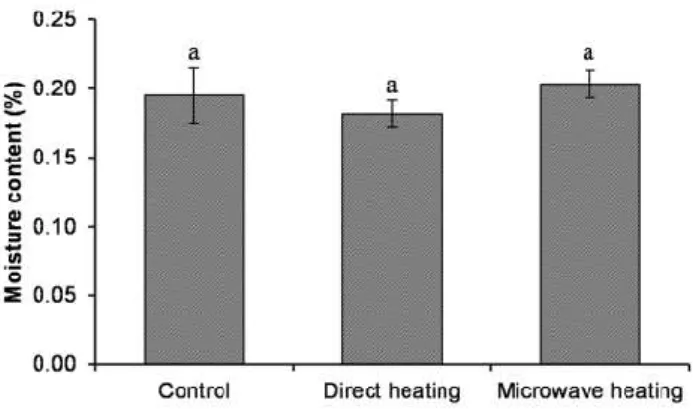
Fig. 1. The moisture content of VCO extracted from direct heating and microwave heating.
It is important to keep the moisture content low, as it will increase the shelf life by preventing rancidity and oxidation to occur (Mansor et al., 2012). According to Asian and Pacific Coconut Community standards for VCO (APCC, 2006), the permitted moisture should be less and equal than 0.1 %. From Fig. 1, the measurement of the moisture content in this study ranged from 0.18 – 0.21 %, in which the lowest was from direct heating
41
method and the highest was from microwave heating method. Although the values were higher than the standard by APCC, they were not significantly different from that of the commercial VCO and thus considered acceptable. According to Bawalan and Chpaman (2006), the moisture content of oil can be reduced below than 0.2% by proceeding with drying the oil using double boiler method. Moisture content for microwave heating method is slightly higher compared with direct heating, which could be explained that the removal of residual moisture in coconut milk for the microwave heating method is poor than the direct heating method.
Iodine value (IV)
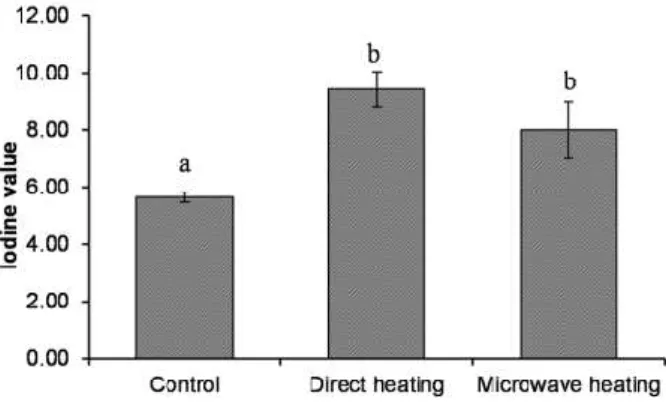
Fig. 2. The iodine value of VCO extracted from direct heating and microwave heating
Iodine value indicates the number of grams of iodine absorbed by 100 grams of fats or oils (Anonymous, 2011). It measured the degree of unsaturation of fatty acids in an oil or fat (Anonymous, 2011). Saturated fatty acids will have lower iodine value but for unsaturated fatty acids, the iodine value increases as the degree of unsaturation of fatty acids increases. When the iodine value is higher, the oil tends to become more reactive, less stable and more susceptible to oxidation and rancidity.
According to Fig. 2, the range of IV of all the samples was 5.66 – 9.43. The lowest IV was obtained from the control with 5.66 ± 0.18 and the highest was from the direct heating method with 9.43 ± 0.61. IV from both methods, direct heating and microwave heating have no significant difference, however, IV between control and VCO extracted from the heating method have significant difference. The slight differences in the values could be reasoned by the titration precision on each measurement (Mansor et al., 2012). Even though the IV between control and VCO extracted showed significant difference, but still, the values were within the range of Asian and Pacific Coconut Community (APCC, 2006) Standard which is 4.1 – 11.0. The IV of VCO can be categorized as low because it is saturated fatty acid with mostly have medium chain fatty acids (MCFA) with a range of carbon 6 – 12 in their chains (Chan, 2016).
Peroxide value (PV)
Peroxide value measures the degree of oxidation in early stages which is related to the shelf life of oil before the oil goes rancid through oxidative rancidity (Kong & Singh, 2011). The most contributing factors to oxidation are temperature, light, moisture and oxygen (Ricardo et al., 2011). Hydroperoxyde is a product formed from unsaturated fatty acids during the first oxidative stages which then make the PV as an indicator of the extension of lipid oxidation (second stage). Secondary oxidation products that will be formed due to unstable peroxide are aldehydes, alcohols, ketones and volatile compounds which responsible for off-flavour and odour in oils and fats. Thus, the lower the PV obtained, the lower the tendency of oil to rancid during storage.
42
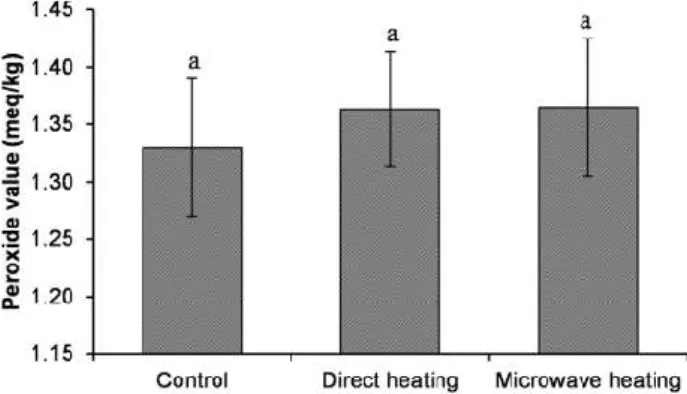
Fig. 3. The peroxide value of VCO extracted from direct heating and microwave heating.
Based on Fig. 3, the PV for both methods showed no significant difference. The PV for direct heating and microwave heating methods are 1.37 ± 0.06. This could be explained that both methods were used the same concept in VCO extraction which is heating. The PV of VCO from different extraction methods were compared with the control in order to claim the recovered oil from heating method is virgin, and the result showed that the PV for both extraction methods and control have no significant difference. From this result, it is evident to prove that the VCO extracted from the heating methods have the same quality as the commercial VCO.
Acid value (% FFA)
Fig. 4. The percentage of free fatty acids of VCO extracted from direct heating and microwave heating.
Acid value (AV) is an indirect measure of the free fatty acid (FFA) present in fats and oils and it is defined as the number of miligrams (mg) of potassium hydroxide needed to neutralize the free fatty acids present in 1g of fat (Ed Vitz et al., 2017). The FFA of VCO is expressed as lauric acid according to the nature of its fat. These FFA are formed from the hydrolysis of an ester by lipase or moisture (Osawa et al., 2007) and then lead in the present of rancid odour and flavour.
Hydrolytic rancidity is also called hydrolysis or enzymatic oxidation that occurs in presence of moisture and accelerated by heat, where enzymes found naturally in plant oils (i.e., lipoxygenase, cyclooxygenase) can catalyze reactions between water and oil, in result the triglycerides in the oil will produce FFA and glycerol (Robin Koon, 2009). Thus, FFA in VCO should be lower to reduce the possibility of occurring hydrolytic rancidity which leads in the present of off-flavour and degrade the quality of oils.
The value of FFA is depending on the PV as FFA increase with increasing of PV. According to Fig. 4, the FFA of VCO extracted from direct heating and microwave heating methods showed no significant difference with a
43
value of 0.66 ± 0.11%. Several studies investigated the effect of microwave heating on fatty acid fractions of vegetable oils which reporting a higher nutritional quality loss with microwave heating compared to conventional heating, but saturated fatty acids fraction did not suffer significant changes after heating (Caponio et al., 2003). The FFA of VCO extracted from both methods quite higher as it is above 0.5%, however, the FFA obtained in this study showed no significant difference from the control. This could be concluded that the quality of VCO extracted from the heating methods has no significant difference from the commercial VCO.
CONCLUSION
In conclusion, the microwave heating method showed a higher oil recovery in a shorter period as compared to the direct heating method. Microwave radiation reduces the stability of the coconut milk emulsion by breaking down the hydrogen bonds between surfactant and water molecules, which results in faster separation of oil from the water. The physicochemical properties of VCO extracted from the controlled direct heating and microwave heating showed no significant differences (p >0.05). In addition, the quality of experimented VCO from the two heating methods had no significant difference from the commercial VCO, thus countering the misconceptions that claim the use of heat will make coconut oil lose the attributes of being virgin and have low quality. For further studies, it is recommended to conduct fatty acid methyl esters (FAME) compositional analysis, triacylglycerol (TAG) analysis and sensory evaluation to prove the VCO extracted from heating methods meet the Asian and Pacific Coconut Community (APCC)standards.
ACKNOWLEDGMENTS
We would like to thank the laboratory staffs of Faculty of Bioresources and Food Industry UniSZA for their guidance and assistance throughout this study.
REFERENCES
Abdurahman, N.H., Mohammed, F.S., Yunus, R.M., & Aman, A. (2009). Demulsification of Virgin Coconut Oil by Centrifugation Method: A Feasibility Study. International Journal of Chemical Technology, 1(2), 59-64.
Agarwal, R.K., & Bosco, SJD. (2017). Extraction processes of virgin coconut oil. MOJ Food Processing & Technology, 4(2), 54-56.
Anonymous. (2011). Estimation of iodine value of fats and oils. Downloaded from
http://vlab.amrita.edu/?sub=3&brch=63&sim=1111&cnt=1. Accessed on 07 November 2018.
Asian and Pacific Coconut Community. (2006). Downloaded from http://www.apccsec.org/standards.htm. Accessed on 07 November 2018.
Bawalan, D.D. (2011). Understanding coconut oil and its quality parameters. Processing Manual for Virgin Coconut Oil, its Products and By-products for Pacific Island Countries and Territories (p. 15). New Caledonia: Secretariat of the Pacific Community.
Bawalan, D.D., & Chapman, K.R. (2006). Virgin Coconut Oil: Production manual for micro- and village-scale production. In FAO Regional Office for Asia and the pacific. Thammada Press Co. Ltd., Bangkok, Thailand.
Caponio, F., Pasqualone, A., & Gomes, T. (2003). Changes in the fatty acids composition of vegetable oils in model doughs submitted to conventional and microwave heating. International Journal of Food Science and Technology, 38: 481-486.
44
Chan, S.Y. (2016). Coconut food production. Coconut Handbook (p. 64-68). Singapore: Tetra Pak South East Asia Pte Ltd. Downloaded from https://www.scribd.com/document/357006695/Coconut-Handbook. Accessed on 12 November 2018.
Ed Vitz, Moore, J.W., Shorb, J., Prat-Resina, X., Wendorff, T.,& Hahn, A. (2017). Foods: acid value and the quality of fats
and oils. Downloaded from
https://chem.libretexts.org/Textbook_Maps/General_Chemistry/Book%3A_ChemPRIME_(Moore_et_al.)/14I onic_Equilibria_in_Aqueous_Solutions/14.09%3A_Titration_Curves/Foods%3A_Acid_Value_and_the_Quality _of_Fats_and_Oils#title. Accessed on 12 November 2018.
Emeka, N.H. (2013). Effects of microwave irradiation on the characteristic of water-oil emulsions. Master Thesis. Dalhousie University Halifax, Nova Scotia.
Fortuny, M., Oliviera, C.B.Z., & Melo, R.L.F.V. (2007). Effecr of salinity, temperature, water content and pH on the microwave demulsification of crude oil emulsions. Energy & Fuels, 21(3): 1358-1364.
Khalid, K., Nurdin, R., Basri, I.H., Che, M.Y., & Ramli, I. (2008). Process for producing virgin coconut oil, coconut cooking oil and raw material for coconut biodiesel
Kong, F., & Singh, R.P. (2011). Advances in instrumental methods to determine food quality deterioration. In David Kilcast & Persis Subramaniam (Eds.). Food and Beverage Stability and Shelf life (p. 381-404).
Mansor, T.S.T., Che Man, Y.B., Shuhaimi, M., Abdul Afiq, M.J., & Ku Nurul, F.K.M. (2012). Physicochemical properties of virgin coconut oil extracted from different processing methods. International Food Research Journal, 19(3), 837-845.
Marina, A.M., Che Man, Y.B., & Amin, I. (2009). Virgin coconut oil: emerging functional food oil. Trends in Food Science & Technology, 20, 481-487
Marina, A., Man, Y.C., Nazimah, S., & Amin, I. (2009). Chemical properties of virgin coconut oil. Journal of the American Oil Chemists' Society, 86: 301-307.
Martinez, P.R., Ceron, C.R., & Chavez, B. (2013). Demulsification of heavy-crude oil-in-water emulsions: A comparative study between microwave and thermal heating. Fuel, 113:407-414.
Ngando, E. G. F., Mpondo, M. E. A., Dikotto, E. E. L., & Koona, P. (2011). Assessment of crude palm oil from small holders in Cameroon. Journal of Stored products and Postharvest research, 2(3):52-58.
Osawa, C.C., Goncalves, L.A.G., & Ragazzi, S. (2007). Correlation between free fatty acids of vegetable oils evaluated by rapid tests and by official method. Journal of Food Composition and Analysis, 20: 523-528.
Philipine Coconut Authority. (2014). Virgin Coconut Processing. Downloaded from
http://pca.da.gov.ph/pdf/techno/virgin_coconut_oil.pdf. Accessed on 22 October 2018.
PORIM Test Methods. 1995. Published by Palm Oil Research Institute of Malaysia. Downloaded from http://www.ifrj.upm.edu.my/21%20(01)%202014/42%20IFRJ%2021%20(01)%202014%20Zarinah%20169.pdf. Accessed on 22 October 2018.
Ricardo, M., Susana, C., Elsa, R., & Jose, A.P. (2011). Microwave Heating: A time saving technology or a way to induce vegetable oils oxidation?. Download from http://www.intercheon.com/books/advances-in-induction-and- microwave-heating-of-mineral-and-organic-materials/microwave-heating-a-time-saving-technology-or-a-way-to-induce-vegetable-oils-oxidation. Accessed on 09 April 2019.
Robin Koon. (2009). Understanding rancidity of nutritional lipids. Downloaded from
https://www.naturalproductsinsider.com/regulatory/understanding-rancidity-nutritional-lipids. Accessed on 12 November 2018.
45
Rohyami, Y., Anjani, R.D., & Purwanti, N.P. (2017). The influence of Saccharomyces cerevisiae enzyme ratio on preparation virgin coconut oil for candidate in-house reference materials.
Sun, N.N., Jiang, H.Y., Wang, Y.L., & Qi, A.J. (2017). A comparative research of microwave, convectional-heating and microwave/chemical demulsification of Tahe heavy-oil-water emulsion. SPE Production & Operation,33(02): 371-381.
Tansakul, A., & Chaisawang, P. (2005). Thermophysical properties of coconut milk. Journal of Food Engineering, 73(3), 276-280.
Villarino, B.J., Dy, L.M., & Lizada, C.C. (2007). Descriptive sensory evaluation of virgin coconut oil and refined, bleached and deodorized coconut oil. Food Science and Technology, 40, 193-199.
Wong, P.W. (2010). Production of virgin coconut oil (VCO) via combination of microwave and centrifugation method. Downloaded from http://umpir.ump.edu.my/id/eprint/3362/1/CD5632_WONG_PEI_WEN.pdf. Accessed on 12 November 2018.
How to cite this paper:
Mohd Yusof, N.D. & Wan Mohamad, W.A.F. (2019). Difference in total yield and physicochemical attributes of virgin cononut oil from coconut milk demulsification using direct heating and microwave heating. Journal of Agrobiotechnology, 10(1S), 35-45