Integrating LSVT BIG with Drama Therapy: Improving Motor Coordination in Adults with Autism Spectrum Disorder
Lauren Ebidia
A Research Paper in The Department of Creative Arts Therapies
Presented in Partial Fulfillment of the Requirements for the Degree of Master of Arts Concordia University Montreal, Quebec, Canada
July 2, 2019
CONCORDIA UNIVERSITY School of Graduate Studies This research paper prepared
By: Lauren Ebidia
Entitled: Integrating LSVT BIG with Drama Therapy: Improving Motor Coordination in Adults with Autism Spectrum Disorder
and submitted in partial fulfillment of the requirements for the degree of
Master of Arts (Creative Arts Therapies; Drama Therapy Option)
Complies with the regulations of the University and meets the accepted standards with respect to originality and quality as approved by the research advisor.
Research Advisor:
Yehudit Silverman, MA, R-DMT, RDT Department Chair:
Guylaine Vaillancourt, PhD, MTA
ABSTRACT
INTEGRATING LSVT BIG WITH DRAMA THERAPY: IMPROVING MOTOR COORDINATION IN ADULTS WITH AUTISM SPECTRUM DISORDER
LAUREN EBIDIA
This research paper employs the first two stages of intervention research to conceptualize a theoretical intervention that addresses a lack of research in terms of demographic (adults) and impairment (motor deficits) for people with autism spectrum disorder. The resulting intervention is an integration of LSVT BIG with drama therapy to improve motor functioning for adults with autism spectrum disorder, in the hopes of also improving the participants’ quality of life as a result. The data that informs the intervention is collected via an integrative literature review which looks at motor functioning in autism spectrum disorder, the use of LSVT BIG to improve the identified motor deficits, and the integration of drama therapy to improve the adaptability of the intervention and address both physical and emotional well-being. Implications for this population, the field of drama therapy, and future research is discussed, as are the limitations of this research. A consensus from the literature is that there is a lack of services available to adults with autism spectrum disorder, leaving them with fewer opportunities for improving their quality of life. This intervention research seeks to highlight this issue, and provide examples of
programming that can be easily adapted to meet the needs of this population and inspire the creation of more diverse programming in the future.
Acknowledgements
Thank you to my research adviser, Yehudit Silverman. Your feedback and support were greatly appreciated.
Table of Contents
Introduction ... 6
Methodology ... 8
Intervention Design Methods ... 8
Data Collection and Procedure ... 9
Data Analysis ... 10
Position of the Researcher ... 11
Literature Review ... 12
Autism Spectrum Disorder ... 12
Lee Silverman Voice Treatment Program - BIG ... 14
Drama Therapy ... 17
Findings from the Literature Review ... 23
Discussion ... 24
Intervention: Integrating LSVT BIG with Drama Therapy to Improve Motor Coordination in Adults with Autism Spectrum Disorder ... 25
Problem Theory ... 25
Program Theory ... 25
Purpose and Design ... 26
Interventions ... 30
Conclusion ... 35
Implications ... 36
Limitations ... 37
Introduction
According to the National Autism Spectrum Disorder Surveillance System (NASS) 2018 Report, approximately 1 in 66 children and youth are diagnosed with an autism spectrum
disorder (ASD) in Canada (Ofner et al., 2018). Males are often diagnosed four times more frequently than females (Ofner et al., 2018). According to the survey, a majority of children received a diagnosis by the age of eight years old (Ofner et al., 2018). ASD is a developmental disorder as it affects brain development, which results in language and communication
impairments, social impairments, and restricted and repetitive patterns of behaviours (e.g., hand flapping) or interests (Autism Canada, 2018; Ofner et al., 2018). It is referred to as a “spectrum” as each individual is unique in the symptoms he presents (Ofner et al., 2018). Approximately 40% of individuals with an ASD may also experience an intellectual disability (ID), though there are others who maintain an average or even superior intelligence quotient (IQ) (Perkins &
Berkman, 2012).
According to the 2018 NASS report, the prevalence of ASD increased between 2003 and 2015 (Ofner et al., 2018). It is unknown whether this increase is due to environmental factors that could be contributing to the development of the disorder, or if there has been an increase in awareness of ASD among society which has led to better and earlier detection and diagnosis of the disorder (Perkins & Berkman, 2012). Regardless, while the number of individuals with ASD continues to grow, there is a substantial lack of support in terms of resources and programming to meet the needs of these individuals (Autism Ontario, 2019). What is more, most research and program development is focused towards children and youth on the spectrum, leaving the adult population under-researched and with even fewer resources, despite the fact that it is important to continue to provide opportunities for development even in adulthood (Happé and Charlton, 2011; Shattuck, Roux, Hudson, Taylor, Maenner, & Trani, 2012). This has, in turn, led to a challenging transition from childhood to adulthood (18 years of age and older) for individuals with ASD, as they may suddenly experience a lack of available support and resources (Happé and Charlton, 2011). There is a significant need for more services that can support adults with ASD.
In terms of the services that are already out there, most interventions created for individuals with ASD are geared towards addressing the social deficits they may experience, as these are
characteristic that is often overlooked but should be addressed in more interventions is motor functioning (Bhat, Landa, & Galloway, 2011). Both children and adults with ASD may experience the following challenges with their motor functioning:
▪ Poor upper- and lower-limb coordination in terms of bilateral movements and eye hand
coordination
▪ Poor fine motor skills, such as grasping objects
▪ Stereotyped and repetitive movements, such as rocking back and forth or hand flapping ▪ Poor postural control, which can affect the individual’s gait and balance
▪ Impairment in the ability to imitate movements and sequences of movements
(Bhat, Landa, & Galloway, 2011). Bhat, Landa, & Galloway (2011) identify the need for more embodied interventions for this population that can address these motor deficits through movement-based learning. The 2018 Canadian consensus guidelines on the appropriate primary care for adults with intellectual and developmental disabilities offer recommendations for individuals with an intellectual or developmental disability (IDD) on the types of health care that would be most beneficial for them (as well as can be adapted to meet their needs) (Sullivan, et al., 2018). The guidelines advocate for the need for more physical activity interventions, as physical inactivity is prevalent among this population (Sullivan et al., 2018). Likewise, Happé and Charlton (2011) report through their review of literature that maintaining physical health and agency may lead to healthier agency, and they apply this philosophy to individuals with ASD. Physically active programming could prove to be beneficial in helping individuals to further develop their motor skills, as well as provide benefits in other areas, such as mental health.
Anxiety and stress have been identified as being highly prevalent in adults with ASD, likely because, due to the nature of ASD, these individuals lack the coping skills to be able to manage these challenges (Gillot & Standen, 2007). Anxiety disorders specifically identified include panic and agoraphobia, separation anxiety, obsessive-compulsive disorder, and
generalized anxiety disorder (Gillot & Standen, 2007). Anxiety among this population may also be linked with their motor functioning, as they may worry about their balance and falling, and having to rely on others to help them move means a loss of independence. The 2018 Canadian consensus guidelines on the appropriate primary care for adults with IDD also reports on mental
health, stating that poor mental health for this population is often attributed to sensory
impairments, negative life experiences, and a lack of support and coping skills (Sullivan, et al., 2018). In response, these guidelines provide a number of recommendations, one of which is the use of alternative therapeutic interventions, which include art, music, and drama therapies, due to their holistic nature (Sullivan, et al., 2018).
In response to the need for more interventions that address the motor functioning and mental health of adults with ASD, this author proposes a theoretical intervention that is
movement-based. This intervention will work as a combination of a physically active program which is designed for helping adults to develop their motor skills, with drama therapy, an embodied therapy that is holistic in its approach to treatment.
Methodology
The framework of intervention research will be used to examine how the principles of the Lee Silverman Voice Training BIG program and the therapeutic core processes of drama therapy might integrate to form an intervention that may help to improve the motor functioning, and therefore, quality of life in adults with Autism Spectrum Disorder (ASD). Intervention research provides a basis for addressing the gaps in literature regarding the treatment of motor deficits in adults with ASD, as identified by Starkstein, Gellar, Parlier, Payne, and Piven (2015).
Intervention research involves identifying a problem theory (i.e., risk factors), and uses further research to inform a possible treatment program that acts as a change strategy for the risk factors and can potentially benefit this population (Fraser & Galinsky, 2010). The purpose here is to create change that seeks to have a positive impact on, in the case of this study, the motor functioning and quality of life in adults with ASD (Fraser & Galinsky, 2010). This creation and implementation of a “change strategy” is the foundation of intervention research (Fraser & Galinsky, 2010)
Intervention Design Methods
This intervention research will address the first two steps as outlined by Fraser and Galinsky (2010). The first step is to develop problem and program theories, which involves identifying risk factors and malleable mediators (Fraser & Galinsky, 2010). This research looks at how motor deficits in adults with ASD may be a risk factor for experiencing a lower quality of
influenced or changed through the intervention process (Fraser & Galinsky, 2010). For example, the malleable mediators of this intervention may include working towards improving specific qualities related to motor functioning, such as balance, or self-esteem and social competencies. The first step also includes identifying the intervention level, such as at the group level, and intervention agents, such as a certified LSVT BIG clinician and a registered drama therapist working cooperatively. This information is then organized into a model that will inform the actual design of the intervention and individual sessions.
The second step of intervention research deals with the design of the intervention. This involves identifying the goals, structure, and content of the actual sessions. The design is very much informed by previous interventions examined through the literature review, specifically those involving LSVT BIG, and drama therapy for adults with ASD. This may help to ensure reliability and validity, as by following only the first two steps of intervention research, this intervention remains untested and therefore theoretical. The insight gained from coding the data from the literature and integrating it with theory, such as the therapeutic core processes, may also help to ensure validity, as the intervention will be grounded in theory. The process of the
intervention and guidelines for sessions are described so that this intervention is made accessible for interested practitioners and to inspire much-needed further research.
Data Collection and Procedure
In intervention research, much of the data that supports the intervention is produced from previously published research and theory (Fraser & Galinsky, 2010). Therefore, an integrated literature review will provide the data that will inform the design of the intervention program. An integrated literature review involves critiquing existing literature, making connections, and developing new ideas about the topic so as to provide a direction for future research (Toracco, 2016). The structure of an integrated literature review is similar to that of telling a story in how it begins with critique and ends with the researcher drawing her own conclusions (Toracco, 2016). The literature consists mainly of online and printed works. The majority of online sources are comprised of peer-reviewed journal articles, including quantitative and qualitative research such as case studies and literature reviews. These resources were searched through online databases such as those linked with the Concordia University Library and Google Scholar. This included Scopus, ProQuest, and PsycINFO. Resources are searched by using a “funneling”
motor functioning and ASD, therapeutic core processes in drama therapy, and quality of life are the most general terms relating to the research question that provide a beginning direction for the literature review. The common themes revealed during this process then inform further, more specific research. Resources are collected based on their relevance to the research question, i.e., if they contain the aforementioned key words or phrases, and if the themes provide evidence for how the literature might inform the conceptualization of this intervention program. This is further explained in data analysis.
Data Analysis
Bullet-point notes are taken of each of the resources collected. Summaries are then created from these notes. These summaries are written in a way that allows the author to reflect on the information presented, and to draw connections. These summaries, therefore, act as analytic memos for the author, linking coded data and helping to create insight (Marshall & Rossman, 2016). This allows themes to emerge more easily through an open coding process (see Table 1). Themes will be identified using a coding scheme based on different colours
highlighting the overarching categories (see Table 2). Table 1.
Emerging Themes
Main Topic Resulting Themes
LSVT BIG Amplitude
Exaggerating Movements Habitual Practice/assimilation
Motor Functioning Biological links between ASD and
Parkinson’s disease (PD) Gait, balance
Drama Therapy Core Processes Play Role
Quality of Life Physical and emotional well-being Importance of support system
Table 2.
Coding Scheme
Colour Main Topic
Orange Therapeutic core processes of drama
therapy
Green Motor functioning and LSVT BIG
Yellow Links between motor functioning in ASD
and Parkinson’s disease (PD)
Pink Quality of life
Position of the Researcher
As the researcher, I acknowledge my own biases, assumptions, and experiences that influence my research into this topic, such as how I perceive the data, and the decisions made regarding the design of the intervention. I must first acknowledge the most significant
assumption that I have, which is that having a motor deficit means experiencing a lower quality of life. I also acknowledge my assumption that the principles of LSVT BIG are adaptable and teachable to other populations. My perception of this topic is very much influenced by my own experiences working with adults with ASD and other developmental disabilities. I have
witnessed how motor deficits within this population, such as challenges with balance or walking in a toe-heel pattern, have led to a loss in confidence, feeling of safety, and independence. I am also influenced by my educational background and personal experiences in theatre. I
acknowledge that I hold beliefs in theatre’s ability to heal, and the positive contributions that theatre can make to individuals, communities, and society.
Literature Review
The main themes explored by the researcher throughout the literature include motor symptoms in Autism Spectrum Disorder and the links with Parkinson’s disease, the Lee
Silverman Voice Treatment – BIG program as an intervention for treating motor symptoms, and the therapeutic core processes in drama therapy that may prove useful for an integrated
intervention program. Autism Spectrum Disorder
Definition of Autism Spectrum Disorder. Autism Spectrum Disorder (ASD) is defined as a pervasive developmental disorder involving deficits in areas such as social interaction, communication, learning, and sensory processing (Chasen, 2014). Stereotyped and repetitive behaviours and interests are often associated with ASD (Lubetsky, Handen, & McGonigle, 2011). As this is a spectrum, other diagnoses that are categorized under this umbrella term include autism, Asperger’s disorder, and pervasive developmental disorder – not otherwise specified (PDD-NOS) (Lubetsky, Handen, & McGonigle, 2011). Diagnosis of an ASD usually occurs between the ages of four and six, with symptoms appearing as early as infancy (Lubetsky, Handen, & McGonigle, 2011). Many interventions for ASD involve addressing the social and communication aspects of the disorder, as seen in the treatment models of Chasen (2014) and Lubetsky, Handen, and McGonigle (2011).As a result, a characteristic of this disorder that is often overlooked is motor functioning (Bhat, Landa, & Galloway, 2011). Bhat, Landa, & Galloway (2011) argue that motor learning principles should be incorporated more into interventions designed for ASD, as deficits in this area are prominent for this population (Fournier, Hass, Naik, Lodha, & Cauraugh, 2010).
Motor functioning in Autism Spectrum Disorder. Noterdaeme, Wriedt, and Höhne (2009) examined the cognitive, language, and motor profiles of children with Asperger’s disorder and high-functioning autism. The motor profile assessment was based upon fine motor skills, gross motor skills, coordination, balance, and oral motor skills (Noterdaeme, Wriedt, & Höhne, 2009). The results showed a similar motor profile shared between the two autism spectrum disorders, with deficits experienced by 53% of children with Asperger’s disorder, and by 43% of children with high-functioning autism (Noterdaeme, Wriedt, & Höhne, 2009). The results of a previous study, which looked at motor coordination in these populations, were also
cited, showing motor deficits to be present in 50% of people with Asperger’s disorder, and in 66.7% of people with high-functioning autism (Noterdaeme, Wriedt, & Höhne, 2009). These results show a clear need for interventions geared towards motor functioning in this population. Yet, Noterdaeme, Wriedt, and Höhne (2009) did not further analyze the motor profile in the discussion section of their study, as they did with the cognitive and language profiles. In not doing so, the need for further research into the motor functioning of this population was once again overlooked, and an opportunity for further recommendations was unfortunately missed.
Fournier, Hass, Naik, Lodha, and Cauraugh (2010) do identify, through a meta-analysis of different studies surrounding ASD and motor functioning, that deficits in motor skills should be considered as a significant characteristic of this disorder. Due to inconsistencies in results from different studies, motor functioning has often been overlooked, but by performing this meta-analysis, the researchers prove that the prevalence of motor skills deficits in this population is significant enough for it to deserve more attention (Fournier, Hass, Naik, Lodha, & Cauraugh, 2010). Further recommendations for potential future interventions included focusing on
improving gait, balance, arm functions, and movement planning (Fournier, Hass, Naik, Lodha, & Cauraugh, 2010). In their discussion, the researchers mention similarities in gait that have been found between Parkinson’s disease (PD) and autism in previous research (Fournier, Hass, Naik, Lodha, & Cauraugh, 2010). This suggests that interventions designed for improving motor functioning in individuals with PD may be useful as well for those with ASD.
Bhat, Landa, and Galloway (2011) identify the similarity in gait between PD and ASD as the “Parkinsonian gait”. They identify the similarities as including a longer stance duration, shorter stride lengths, lack of heel-toe pattern, and reduced upper-limb movement (Bhat, Landa, & Galloway, 2011). They hypothesize that these similarities are due to similar impairments in the basal ganglia, which facilitates motor functioning, or a mutation of the PARK2 gene associated with PD being present in ASD as well (Bhat, Landa, & Galloway, 2011). Again, the importance of including more interventions that address motor deficits in adults with ASD is stressed by these researchers (Bhat, Landa, & Galloway, 2011).
Starkstein, Gellar, Parlier, Payne, and Piven (2015) also identify this “Parkinsonian gait” seen in adults with ASD. As well, they identify that high rates of PD exist among individuals with ASD over the age of 39 (Starkstein, Gellar, Parlier, Payne, & Piven, 2015). PD often goes undiagnosed in this population due to types of medication consumed, lack of verbal
communication, or motor deficits being regarded as a symptom of the ASD (Starkstein, Gellar, Parlier, Payne, & Piven, 2015). Again, these researchers recommend that future interventions take into account the similarities between PD and ASD, and that those with ASD may also experience symptoms of PD (Starkstein, Gellar, Parlier, Payne, & Piven, 2015). An intervention such as the Lee Silverman Voice Treatment - BIG program, designed for adults with PD, may therefore prove to be an efficient intervention program for adults with ASD experiencing those symptoms targeted by this program.
Lee Silverman Voice Treatment Program - BIG
The Lee Silverman Voice Treatment (LSVT) program was initially developed for the treatment of speech and vocal functioning in individuals with PD, and expanded to include motor functioning as well (LSVT BIG) (Fox, Ebersbach, Ramig, & Spair, 2012). Individuals with PD often exhibit hesitant, slow, and small movements (Fox, Ebersbach, Ramig, & Spair, 2012). The main focus of the LSVT BIG program is amplitude rather than speed, to develop bigger and more precise movements which will naturally lead to increased speed (Fox, Ebersbach, Ramig, & Spair, 2012). The program works to change the individual’s perception of his movements, as individuals with PD often do not notice that their movements are small (Janssens, Malfroid, Nyffeler, Bohlhalter, & Vanbellingen, 2014). The exercises are high in intensity and are repetitive, increasing the individual’s awareness to the effort required to produce the larger movements (Fox, Ebersbach, Ramig, & Spair, 2012). This in turn is believed to help the individual assimilate this kind of movement into his life, which would ultimately lead to more long-term benefits (Fox, Ebersbach, Ramig, & Spair, 2012). The program takes place for one hour, four days a week, over a four-week period (Janssens, Malfroid, Nyffeler, Bohlhalter, & Vanbellingen, 2014). Even with the high-intensity nature of the program, it does seem
questionable whether or not participants are able to successfully make these movements more habitual over such a short period of time.
Janssens, Malfroid, Nyffeler, Bohlhalter, and Vanbellingen (2014) present three case studies incorporating LSVT BIG, specifically targeting gait, balance, bed mobility, and dexterity, for individuals with PD. The effects of LSVT BIG on these specific aspects of motor functioning had not previously been examined, and as they may influence quality of life, Janssens, Malfroid, Nyffeler, Bohlhalter, and Vanbellingen (2014) argue for the importance of looking at these
improvements in gait, balance, and bed mobility (Janssens, Malfroid, Nyffeler, Bohlhalter, & Vanbellingen, 2014). Challenges with gait and balance are also observed in individuals with ASD, suggesting that LSVT BIG may be a beneficial treatment program, if it can be adapted.
Is LSVT BIG adaptable for individuals with ASD? Participation in the LSVT BIG program ultimately depends on the individual’s ability to follow the movements of the instructor, essentially imitating them. This may prove difficult for individuals with ASD, specifically those with autism. Rogers, Cook, and Meryl (2005) claim that individuals with autism have an
impairment in their ability to imitate the body movements of others. They suggest that this may be due to impaired functioning of the mirror neuron system, which is involved in the imitation and understanding of movements and actions (Rogers, Cook, & Meryl, 2005). Hamilton, Brindley, and Frith (2007) disagree, refuting the hypothesis that individuals with ASD have an impaired mirror neuron system. However, they did exclusively examine hand gestures as
opposed to full body movements, and suggest that different types of imitation may be linked with different neural systems as opposed to just mirror neurons (Hamilton, Brindley, & Frith, 2007). Therefore, it is still unclear whether or not individuals with ASD would find it challenging to imitate the movements of the program instructor, and also have an understanding of the
importance of these movements. Understanding the purpose of the exercises and the importance of generalizing them to their daily lives is important in order for participants to experience more long-term effects of the program.
Chasen (2014) claims that mirror neurons do play an important role in an individual’s ability to imitate the movements of others as well as identify the goals and intentions of those movements. Chasen (2014) does write about reports of an impairment in the mirror neuron system of individuals with ASD, and how this may also be the reason for impaired social interactions. However, Chasen (2014) suggests that drama therapy may be a useful method for engaging the mirror neuron system due to its holistic approach, and that drama therapy and the mirror neuron system are similar in that they work to develop better understanding (of the self and others) through imitation and re-enactments. The end-goal for both is preparing the
individual to “act” in the real world (Chasen, 2014). While Chasen (2014) uses this connection to focus on developing treatment plans for addressing social competencies, the same principle could possibly be applied to this intervention research. Drama therapy, when combined with the
LSVT – BIG program, may improve the adaptability of the program for working with individuals with ASD.
Another method that may be useful in making the program more adaptable is one used by Bishop, Nichols, McIntire, and Block (2018) in their suggested programming that works to overcome barriers that may be faced by adults with ASD, enabling them to participate in more physical activity programming. Bishop, Nichols, McIntire, and Block (2018) work from the International Classification of Function, Disability, and Health (ICF model) framework, which essentially helps caregivers identify any challenges that an individual with ASD may face when participating in physical activities. This framework then helps to develop a more tailored
program that overcomes these challenges so that the individual may participate (Bishop, Nichols, McIntire, and Block, 2018). The IFC model looks at three dimensions – body functions and structures, activities, and participation (Bishop, Nichols, McIntire, and Block, 2018).
Body functions and structures includes those physical, cognitive, or sensory impairments that may make it difficult for an individual to participate in daily activities or programming (Bishop, Nichols, McIntire, and Block, 2018). Activities are those that the individual can perform on their own, such as those that are part of everyday living (Bishop, Nichols, McIntire, and Block, 2018). Participation includes the access that the individual has to programming and their engagement in these programs if they are available (Bishop, Nichols, McIntire, and Block, 2018). These three dimensions are then affected by environmental and personal factors, such as accessibility barriers or financial strain (Bishop, Nichols, McIntire, and Block, 2018).
The IFC model looks at the interaction of all of these different components, and from there, solutions to any barriers may be formed and a successful program addressing these barriers can be developed (Bishop, Nichols, McIntire, and Block, 2018). Bishop, Nichols, McIntire, and Block (2018) provide an example, where an individual with ASD participating in an exercise program may have difficulty following the verbal and non-verbal cues of the instructor. This is overcome by providing the individual with a picture chart of the routine, where the different steps are outlined for them, and they can practice the routine at home (Bishop, Nichols, McIntire, and Block, 2018). A similar process can be done for the LSVT BIG program.
The IFC model will be a useful tool in the development of this intervention program, as it will ensure that the program is accessible and can be tailored to the needs of each participant, which is helpful in addressing the fact that ASD is a spectrum disorder.
Drama Therapy
Drama therapy involves the use of dramatic processes and exercises in order to achieve personal growth (Emunah, 1994). It follows a psychotherapeutic framework while employing theatre techniques such as puppets, masks, improvisation, role-play, etc. to explore the therapeutic material (Emunah, 1994). The nature of drama therapy makes it both flexible and adaptable for all populations. Drama therapy is a holistic and developmental process, integrating the multiple aspects of an individual’s well-being, allowing the client to make connections and achieve new insight which she may apply to life outside the therapeutic space (Chasen, 2014).
Drama therapy is an embodied therapy, meaning it looks at how the mind and body interact with each other to influence the well-being of the client (Koch & Fuchs, 2011). Embodiment is a common form of expression in drama therapy, where the body is seen as a more “direct and immediate medium of communication than speech” (Milioni, 2008, p. 5). When the body becomes involved in the therapeutic work, the way that the client experiences and explores her personal material may change, as it adds a new dimension to the process (Milioni, 2008).
Koch and Fuchs (2011) suggest a bi-directional link between the mind and body, meaning that they each affect one another. Motor functioning may influence the perception of emotions, as well as attitudes and behaviours (Koch and Fuchs, 2011). For example, taking on a dominant versus a submissive posture can influence how one views herself, thereby affecting self-esteem (Koch and Fuchs, 2011). Working from this framework, it is suggested that how the participants of the LSVT BIG program perceive themselves and their situations could affect how successful they are in the program, specifically regarding their motivation to participate and their belief in positive change being achievable. Drama therapy could help the participants regarding their attitude towards the program and their progress. As well, combining a physically active program like LSVT BIG with an embodied therapy like drama therapy would be better suited for the clients as it allows them to stay in their bodies. Working in one medium and then having to switch to another exclusively, such as talk therapy, would be disadvantageous for the participants as it disregards the holistic quality of the process (Milioni, 2008).
Benefits of drama therapy. Modugno, Iaconelli, Fiorilli, Lrna, Kusch, and Mirabella (2010) performed a pilot study where theatre was used as a complementary therapy to physiotherapy for individuals with PD. The theatre techniques used included role play through improvisation and sketch work (Modugno et al., 2010). The rationale was that through role play
and taking on a new character, the individual becomes more aware of his own movements, and how to control and adapt these movements to represent the character’s (Modugno et al., 2010). This program also allowed for the rehearsal of situations on stage that could occur in real life (Modugno et al., 2010). This use of role play and improvisation could be integrated with LSVT – BIG so that participants in the program could practice larger movements in different situations, which could help with assimilating these movements into their daily lives.
While this pilot study was not using drama therapy specifically, these techniques are often employed by it, and so this suggests that drama therapy can be integrated with a program like LSVT BIG to help improve motor functioning. The pilot study did show positive improvement in terms of both psychological and physical symptoms, but these results were not seen until two to three years into the program (Modugno et al., 2010). LSVT BIG is designed as a four-week program, which suggests that the high-intensity nature may help to speed up the process and achieve faster results. As previously stated, it is still questionable whether long-term effects are maintained after only a month-long program, but drama therapy may improve participant engagement with the exercises, helping them to become more habitual within this short amount of time.
In looking at drama therapy specifically for individuals with ASD, research has shown benefits in areas such as social skills development, emotional expression, reduction in anxiety, and confidence and self-esteem (Godfrey & Haythorne, 2013). While this does not specifically address motor functioning, it does not mean that it is entirely unrelated. Modugno et al. (2010) outlines the connection between those psychological symptoms that are often associated with motor impairments, such as anxiety and depression. Individuals who are dependent upon others to help them with movement tend to lose their full range of motion, but in drama therapy, clients are encouraged to move creatively and interact with their environment and the therapist, and the benefits can be physical, emotional, and social (Chesner, 1995). This leads to the assumption that by using drama therapy, theatre techniques can be employed to help improve motor functioning, and a therapeutic space is also provided to discuss or also explore through theatre those psychological symptoms.
Modugno et al. (2010) also identifies the importance of having a support system and how not having one can be detrimental towards one’s psychological health when dealing with
therapy in a group setting for adults with developmental disabilities benefited their self-esteem and allowed them to support one another. The group therapy setting reinforces the idea that these individuals are not alone in their experiences, and provides them with a support system if they did not have one (Waite, 1993). Waite (1993) also found that many participants expressed feelings of shame surrounding the ways they talk, walk, and act, and so movement exercises were used in sessions to bring them back into their bodies in a playful and non-judgmental space, allowing them to experience themselves in new ways. This is related to the change in perspective that the LSVT – BIG program tries to instil in its participants – encouraging them to challenge their views on how they move. Waite found that after using these movement exercises as warm-ups, the participants felt more comfortable in their bodies (1993).
The therapeutic core processes. Phil Jones (2007) identifies those core processes that work in combination to make drama therapy effective. Through the coding process, those core processes that were most apparent in the literature were play, role, and the life-drama connection.
Play. Jones (2007) describes play as the method by which individuals in drama therapy can take their personal experiences and bring them into the dramatic space to manipulate them, test them, and master them. Using play in the therapeutic context is beneficial for mastery of a skill or experience as it allows for exploration without the fear of doing wrong or making a mistake (Ward-Wimmer, 2003). Play is an alternative and creative method for dealing with personal conflicts, and interacting with one’s personal experiences through play in therapy allows him to reflect on them, which could result in finding new meaning and perspective (Jones, 2007). A change in perspective is again an important theme in the LSVT BIG program. Play allows the participant to take a step back from reality and create his own “alternative reality”, which, in doing so, allows for safer exploration and a greater sense of control (Ward-Wimmer, 2003, p. 31).
Interacting with the material in this proposed integrated program through play may encourage a stronger connection; rather than just imitating exercises, using play to engage with the learned movements could help participants acquire a better understanding for why these movements are important. The intervention would support the function of the mirror neuron system as it would integrate the body and mind as a whole, which is the nature of play (Ward-Wimmer, 2003). Play also encourages spontaneity, which may allow for participants to engage with the learned movements in a more natural way (Jones, 2007). Play would also benefit the
participants’ mental health, as it can increase self-esteem and reduce stress, in addition to the aforementioned therapeutic benefits (Ward-Wimmer, 2003). Developing self-esteem and managing stress levels are important elements in ensuring participation in this intervention.
Role. “Roles can be played to rehearse life situations, to practice or develop skills or personal qualities…” (Jones, 2007, p. 192). This quote explains how role can be used to help with the assimilation of the learned movements in LSVT BIG into daily life. Role is one of the primary mediums of expression in drama therapy (Landy, 1990). It acts as a “container” for those characteristics that make up the self and may be explored in the therapy space (Landy, 1990, p. 223). Individuals with developmental disabilities tend to have very limited role repertoires in their life, and so in the context of drama therapy, different forms of expressions and new opportunities for exploration can be achieved through playing out a variety of different roles (Chesner, 1995).
Landy (1990) writes of Stanislavski’s proposed planes of a role, and how the influences of these different planes integrate to form a role. The psychological and physical planes, for example, look at how internal feelings and emotions as well as physicality can influence the characterization of a role (Landy, 1990). This is again representative of the holistic nature of drama therapy. Characterization of a role based on one plane, such as physical, may influence another plane, such as psychological, and vice versa. Landy (1990) provides an example of a client exploring a role where his internal feelings of isolation and of feeling small influence the physical characterization of the role through the client’s gait. How one feels and how one moves are inextricably linked, which is why it is beneficial to include an embodied therapy, such as drama therapy, as part of a program that focuses on improving motor functioning.
Role encourages playfulness and improvisation, and taking on a role could encourage one to be more aware of her movements, thereby gaining more control of them (Jones, 2007;
Modugno et al., 2010). Role may also be useful in addressing the participants’ emotional well-being which may be linked to their motor functioning, such as by allowing them to embody and practice skills like confidence (Jones, 2007). Confidence is an example of a quality that can be both seen and felt, as feeling confident tends to be associated with bigger movements, such as those that are taught in LSVT BIG. This could help improve self-esteem, and make the
participant more aware of how she is holding herself (Jones, 2007). Improving the participants’ body awareness is key in helping them to change their habits. In the context of drama therapy,
the therapeutic work comes from being able to reflect upon the role and consider what was learned, and how this might apply to life outside the therapeutic space (Jones, 2007). This could help with assimilating what is learned in LSVT BIG into the participants’ daily lives.
Life-drama connection. Jones does not afford the same in-depth discussion regarding this core process as he does with play and role, but this may be the most significant process involved in therapeutic change. The life-drama connection involves the individual being able to draw connections between what is happening in the dramatic reality and her own life (Jones, 2007). This allows the individual to apply any new insight she may have gained in the therapeutic space to her life outside of the therapy – this is how the therapeutic change and personal growth happens. Play and role, while providing some distance between the client and the material he is exploring, may end with the client discussing the process with the therapist and noticing those qualities or instances that are reflective of himself or his experiences (Landy, 1990). This usually takes place during the closure of the session, where the client de-roles from the play. One of the goals during this time is to assist the client in recognizing and applying the insight gained throughout the session to his own life outside of the therapy space (Emunah, 1994). It is a time for review, sharing, reflection, and validation, which can be more beneficial in a group therapy setting (Emunah, 1994).
However, this is dependent upon the client’s ability to make those connections for herself. If she is unable to do so, then any insight she might have gained remains in the therapeutic space, and change cannot occur (Jones, 2007). The life-drama connection is an important step for helping clients of the integrated LSVT BIG and drama therapy program to gain a better understanding of their movements and how their motor functioning has affected their mental well-being. This would support the end-goal of making these learned movements, which should in turn have a positive effect on the participants’ mental health, more habitual for the participants, but it does depend on their ability to make those connections for themselves.
Drama therapy and quality of life. The quality of life in adults with ASD is defined as the extent of opportunities they have in life based on the limitations they experience (Sicile-Kira & Sicile-Kira, 2012). A research study conducted from the Quality of Life Research Unity at the University of Toronto also found that the quality of life of people with developmental disabilities is directly related to how independent they are and how much agency they have (Sicile-Kira & Sicile-Kira, 2012). These characteristics of quality of life are broken down further through eight
domains: emotional well-being, interpersonal relationship, material well-being, personal development, physical well-being, self-determination, social inclusion, and rights (Renty & Roeyers, 2006). A majority of these domains could be addressed through LSVT BIG and drama therapy together. There is a connection between one’s physical and emotional well-being. An issue with the body will most likely have a negative impact on the mind, and vice versa (Young & Wood, 2017). By integrating drama therapy with LSVT BIG, a more holistic approach in treating both the motor and non-motor symptoms in adults with ASD is achieved. For example, it is more constructive to improve quality of life when working on both posture and confidence at the same time rather than separately.
Renty and Roeyrs also identify the importance of a support system and the role it plays in an individual with ASD’s quality of life (2006). They further claim that it is not the extent one’s disability that affects their quality of life, but rather his interactions with his external
environment (2006). Sicile-Kira and Sicile-Kira (2012) also claim that quality of life is
influenced by both personal and environmental factors, and that quality of life can be enhanced by providing individuals with more practical and emotional support. This could be addressed through the offering of a group therapy setting.
Drama therapy has been shown to effectively improve the quality of life in adults with physical limitations. Mechaeil, Graybow and Cobham (2010) saw how the positive effects of drama therapy were sustained throughout the sessions when working with people with dementia, such as in posture. Yuen, Mueller, Mayor and Azuero (2011) also saw how incorporating theatre techniques into treatment improved the physical and mental well-being of adults with chronic conditions. However, the long-term effects are not noted, as Yuen, Mueller, Mayor and Azuero recommend a three-month follow-up for future researchers (2011). It is difficult to say with certainty whether or not drama therapy can lead to more prolonged benefits from the
intervention, but the hypothesis is that drama therapy techniques will encourage individuals to engage with their physicality in new ways, which may improve the probability of experiencing positive therapeutic change.
Drama therapy is effective with populations experiencing physical or cognitive limitations because it is a holistic process that can be easily adapted to meet the needs and abilities of the population. The literature has shown that when drama therapy techniques are incorporated into a treatment program, they have led to positive results. Therefore, integrating
drama therapy with LSVT BIG programs to treat the motor symptoms of adults with ASD may be beneficial in creating more long-term effects, while addressing the mental and emotional well-being of the participants as well.
Findings from the Literature Review
There is a consensus among the studies that further interventions need to be developed for adults with ASD that address challenges they experience other than in the social context (Bhat, Landa, & Galloway, 2011; (Fournier, Hass, Naik, Lodha, & Cauraugh, 2010). Motor functioning in adults with ASD is often overlooked and under-researched, but deficits are common, specifically in terms of gait, balance, posture, and movement coordination and planning (Fournier, Hass, Naik, Lodha, & Cauraugh, 2010). Similarities have been found between the motor deficits experience by people with ASD and people with PD, specifically in their gait, which had lead to this deficit in people with ASD as being labelled the “Parkinsonian gait” (Bhat, Landa, & Galloway, 2011; (Fournier, Hass, Naik, Lodha, & Cauraugh, 2010). This suggests that the LSVT BIG program, designed to improve motor functioning in people with PD, can be beneficial for adults with ASD experiencing similar motor deficits as well. This raises the question of whether or not the LSVT BIG program can be adapted for adults with ASD so that they may benefit.
The literature suggests that when combined with drama therapy, LSVT BIG may be more adaptable. This is because the holistic and flexible nature of drama therapy makes it easier to overcome barriers faced by the participants (Chasen, 2014). Likewise, drama therapy engages the mirror neuron system, which may help to ease the challenge of imitating movements that people with ASD may experience (Chasen, 2014). Drama therapy would serve as a beneficial complementary therapy to LSVT BIG with its use of play, role, and work towards making the life-drama connection, helping to make the learned movements of the LSVT BIG program more habitual and normalized. Incorporating therapy with LSVT BIG is also beneficial as the literature suggests a strong connection between the mind and body (Koch and Fuchs, 2011). As a result, the combination of LSVT BIG and drama therapy as an intervention may help to improve the overall quality of life of adults with ASD.
Discussion
The literature review identifies the risk factor (motor deficits) faced by this population, which could be addressed by the formation of a new intervention. This intervention will be working under the assumption that poor motor functioning leads to a lower quality of life, and therefore the hypothesis is that by improving motor functioning in adults with ASD, their quality of life will improve as well. By identifying the mind-body connection as being significant in the holistic treatment of an individual, the literature suggests that a strong intervention would be one that addresses both the mental and physical experiences of the participants. The intervention would also work under the assumption that by incorporating drama therapy, participants could potentially be able to more easily imitate the movements of the LSVT BIG program.
The findings suggest that drama therapy could potentially be beneficial as a
complementary therapy to LSVT BIG, meaning that the overall structure of the intervention would follow that of an LSVT BIG program, while mostly incorporating drama therapy exercises and principles into the individual sessions. While following the LSVT BIG outline, certain structural aspects could be unique to this intervention, such as the length of sessions (i.e., will need to be longer to accommodate for more play time in the drama therapy context), and using a group setting as opposed to an individual setting. Again, this is because of the benefits of group therapy identified in the literature (Waite, 1993). Drama therapy exercises that emphasize the core processes of play and role will be suggested, as the literature suggests these to be the most beneficial in the therapeutic process in the context of this intervention. Likewise, time will need to be set aside in each session for discussion and reflection, so as to strengthen the life-drama connection, which was explained in the literature review to be most beneficial in helping to normalize and make habitual what was learned in the intervention, which could in turn make it more easily applicable to the participants’ daily lives.
Intervention: Integrating LSVT BIG with Drama Therapy to Improve Motor Coordination in Adults with Autism Spectrum Disorder
A proposed, theoretical intervention integrating drama therapy with LSVT BIG is outlined in the following section. As stated in the methodology section of this research paper, this intervention is theoretical as it only addresses the first two steps of intervention research, and has not yet been pilot-tested (Fraser & Galinsky, 2010). The first two steps involve identifying problem and program theories, and the design of the program (Fraser & Galinsky, 2010). Problem Theory
Problem theory in intervention research involves identifying risk factors that may be experienced by the population that the intervention is targeted towards (Fraser & Galinsky, 2010). These risk factors are specifically identified based on whether they can be changed through the intervention (Fraser & Galinsky, 2010). The main risk factor identified for this intervention is that motor function deficits are experienced by a large number of individuals with a diagnosis of ASD, specifically regarding gain, balance, upper-body movements, and movement planning (Fournier, Hass, Naik, Lodha, & Cauraugh, 2010). These motor function deficits are similar to those experienced by individuals diagnosed with PD. These deficits may be a risk factor for a lower quality of life for the affected individuals with ASD, affecting such domains as emotional well-being and social inclusion. This intervention research assumes this risk factor to be “malleable”, as it assumes that motor functioning in this population can be improved, thereby improving quality of life.
Program Theory
Program theory in intervention research involves pairing the identified risk factors with possible change strategies – that is, those actions in the intervention design that may help
participants to achieve positive results (Fraser & Galinsky, 2010). In the case of this intervention research, the change strategy being examined is the application of a program (LSVT BIG) that has been used to improve the motor deficits in individuals with PD, to improve the motor deficits in individuals with ASD through the use of intensive and high-effort exercises that focus on increasing amplitude of movement, which in turn improves speed and posture (Gusé, 2016).
The second part of this change strategy is to use the principles of drama therapy to help participants with the integration of the techniques used in LSVT BIG into their daily movements. Drama therapy will also be used to further examine how the motor functioning of the participants
has affected the other domains of their quality of life, and how this might be improved in a therapeutic context. The integrative literature review outlines the benefits that play, role, and the life-drama connection in drama therapy can have on both the physical and mental well-being of participants due to its focus on the mind-body connection.
Purpose and Design
The purpose of this intervention is to fill the gaps in the available literature on the subject of motor functioning in individuals with ASD, and answer the call for more interventions for this population that deal specifically with this deficit. As discussed in the integrative literature
review, motor functioning in adults with ASD is often overlooked in research, as more focus is spent on other aspects of the diagnosis, such as social competencies. Studies examined in the literature review have shown motor functioning to also be a prominent factor for adults with ASD, and therefore deserving of more attention and research. Ultimately, the purpose of this proposed intervention is to provide positive benefits for adults with ASD, both in terms of their motor functioning and their quality of life. In doing so, this could lead to further development of similar interventions.
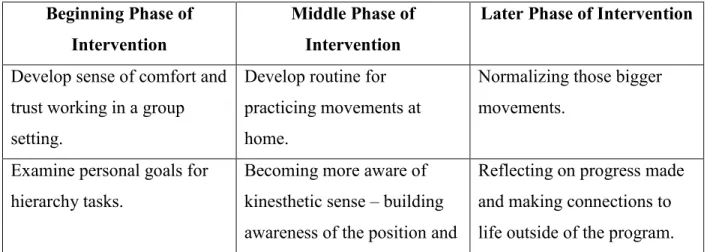
Intervention goals. A long-term goal of this intervention is for participants to integrate the techniques practiced through the LSVT BIG portion of the program into their daily lives, making the learned movements more habitual. Another long-term goal would be for participants to increase their confidence and self-esteem, which will hopefully result in greater autonomy and improved quality of life. Short-term goals of this intervention are outline in Table 3.
Table 3. Short-term goals. Beginning Phase of Intervention Middle Phase of Intervention
Later Phase of Intervention Develop sense of comfort and
trust working in a group setting.
Develop routine for practicing movements at home.
Normalizing those bigger movements.
Examine personal goals for hierarchy tasks.
Becoming more aware of kinesthetic sense – building awareness of the position and
Reflecting on progress made and making connections to life outside of the program.
movement of the body (Farnell, 2003).
Moving in to dramatic play. Moving into role play for practicing hierarchy tasks.
The therapists. This intervention program requires the collaboration between a drama therapist and a certified LSVT BIG clinician. A drama therapist has received a Master’s level education involving coursework in psychology and drama therapy, as well as practical
experience through internships (North American Drama Therapy Association, 2019). A registered drama therapist is one who is certified by the North American Drama Therapy
Association (NADTA) by achieving the requirements in both education and client-contact hours, and adheres to the NADTA Code of Ethics (North American Drama Therapy Association, 2019). A certified LSVT BIG clinician is a physical or occupational therapist that has undergone the certification program in LSVT BIG, trained in the LSVT BIG principles (Gusé, 2016).
The role of the therapists is to first and foremost, support each other when leading the specialized interventions. When the LSVT BIG clinician is leading exercises, the drama therapist should be observing the participants and assisting with modelling the exercises. Likewise, when the drama therapist is leading an intervention, the LSVT BIG clinician should be observing and participating as well. This is relevant to the next role of the therapists, which is to provide good modelling for the participants, and clear instructions supported by this modelling. This is especially important when working with individuals with ASD, as the research outline in the literature review suggests there may or may not be an impairment in the mirror neuron system for this population. This in turn may make it more challenging for them to copy the movements of others and understand the purpose of these movements and what they may convey (i.e., how movements can be used to convey emotional expression or characteristics such as confidence) (Chasen, 2014). Participation by the therapists may also be helpful in motivating the participants, but it is important to afford the participants some autonomy throughout the process, especially in the therapeutic context. Personal growth comes from the participants’ ability to reflect and make connections on their own.
As this is a collaborative process, the LSVT BIG clinician and drama therapist must plan the sessions together. Since this is a developmental process for the participants, the interventions used by the drama therapist must be relevant to and incorporate the LSVT BIG exercises that are being taught in the same session. This will support the long-term goal of making the learned techniques from LSVT BIG more habitual for the participants.
The client. This intervention program is designed for adults with ASD who experience difficulties with their motor functioning; this may include challenges with their gait, posture, balance, etc. A diagnosis for PD is not necessary, as it often goes undiagnosed in this population, and would therefore limit the accessibility of this intervention program (Starkstein, Gellar, Parlier, Payne, & Piven, 2015). As motor deficits commonly associated with PD become most prominent for the individual at around age 39 years, this intervention program is specifically for adults (Starkstein, Gellar, Parlier, Payne, & Piven, 2015). However, there may be young adults between the ages of 18-30 who are experiencing motor deficits that are having a significant negative impact on other aspects of their well-being, and so this program’s availability should be based on individual case severity as opposed to age requirements.
The client may be referred to the program by a health care professional or social worker; part of the basis for this referral is that the client needs to be able to do the exercises, meaning there are no medical conditions present that could prevent them from participating (LSVT Global, 2019). The drama therapist and LSVT BIG clinician should have final say on whether or not the program is appropriate for the individual. The individual should be able to participate in a group-setting and not be aggressive towards others. Participants who may require extra support from a personal support worker (PSW) should be allowed to have their PSW accompany them in session. The structure of this program will be similar to that of a regular LSVT BIG program, which requires a commitment from the participants as it takes place four days a week for four weeks (Janssens, Malfroid, Nyffeler, Bohlhalter, & Vanbellingen, 2014).
Because there are therapeutic interventions being used, informed, written consent will need to be given by the participant before the start of the program. An ethical consideration is that for those participants unable to give informed consent based on literacy skills, should the written consent of their caregiver be accepted instead? Gillot and Standen (2007) accepted caregiver consent on behalf of some participants in their study, and claimed that the participants’
rescinding their consent to participate. As this intervention deals greatly with movement, another ethical consideration would be how to address touch in sessions. Participants may need hands-on guidance, so a contract on how touch may be used in sessions, such as to help participants, would have to be negotiated by the group with the clinicians.
Setting and materials. The sessions should take place in a large, open space that allows for moving around the room with ease. The space should also be large enough so that the personal space of each participant will be respected, and each participant can easily perform the exercises without colliding with one another. LSVT BIG does not often utilize many materials, but providing a chair for each participant is required so as to practice functional component tasks (i.e., everyday tasks the client does) such as moving from a sitting position to a standing position (Gusé, 2016). Providing chairs also makes the programming more customizable to the abilities of a client, as the exercises can be done from a seated position at the beginning (Gusé, 2016).
The drama therapist may use materials that will assist the participants in their play and practice of their skills learned through the LSVT BIG portion of the session. For example, scarves or fabric may be used by the participants to help them with practicing to move “bigger” as they can swing them around. Introducing masks and taking on characters through role play may help raise the awareness of the participants to their own bodies and how they need to adjust their movements to match the role they are trying to portray. Everyday items may be used as props so that the participants may practice a daily activity while applying their learned skills. For example, providing kitchenware as props could be helpful for a participant whose goal is to be able to prepare a meal (Gusé, 2016). The materials that the drama therapist should provide will be very much based on the goals of the participants and what it is they want to improve on specifically.
Session structure. The program will respect the structure of LSVT BIG sessions but will integrate drama therapy techniques into the session and exercises. Sessions will take place four consecutive days a week for four weeks. LSVT BIG sessions normally run for one hour, but as a therapeutic component is being integrated into the program, the integrated sessions will run for an hour and a half so as to allow time for reflection and closure. The group should consist of a maximum of eight clients, with the two therapists leading the group. This number ensures that all participants are seen and have the space to contribute to the session, making this time more
of a warm-up, main enactment, and closure, and it may also be helpful to use arrival and departure rituals when working with adults with ASD (Chesner, 1995). Arrival and departure rituals help the participants know what to expect and where to go, as the times before and after the group are often unstructured and have loose boundaries (Chesner, 1995). This structure can be incorporated with LSVT BIG, as the exercises will take place as the main enactment of the session.
The first session should provide time for developing a group contract that is agreed to by all members. The group contract will ensure that all members feel safe and respected by
outlining rules or boundaries. Confidentiality is an important aspect of therapy, so including this on the contract will help ensure that whatever personal material someone brings to the group will stay within the therapy space. Touch is also a factor, as some people may be uncomfortable with others touching them and perceive touch to be invasive (Milioni, 2008). This is especially true for vulnerable populations or for people who have little control over their own bodies (Milioni, 2008). Boundaries would need to be set regarding what kind of touch is allowed, if at all.
The last three sessions should provide time for processing the end of the program, helping the participants to transition from the group and apply what they have learned to their lives outside of the program (Emunah, 1994). It is a time for celebrating the accomplishments of the participants in regards to the work they did to help themselves and improve their lives (Emunah, 1994). It is also a time for review and discussion of progress made towards goals (Emunah, 1994). Using a therapeutic framework to address the termination of the program will be especially important, as this period tends to bring up difficult emotions and may also result in some participants regressing (Kleinberg, 2012).
Interventions
Arrival and departure rituals. These rituals are a small way of providing structure when participants arrive at or leave the session in order to make transitions easier and reduce anxiety (Chesner, 1995). These rituals can be simple, such as the Circle Link for arrivals and
Goodbye Shout for departures (Chesner, 1995). The Circle Link involves coming together as a
group and holding hands (if the group contract permits it; an alternative would be to connect the group by each person holding a piece of fabric between themselves and the person next to them), making eye contact to acknowledge who is there (Chesner, 1995). This also provides a nice transition into the check-in activity, Sound and Movement. Making eye contact may be difficult
for some individuals, but it will still be effective for them to join the circle with the rest of the group. The group comes together again in the same way for the Goodbye Shout at the end of the session, where everyone shouts “goodbye” together while raising their arms. This reflects the principles of LSVT BIG, as it encourages big movements from the group in raising their arms.
Check-in. Sessions should open with a short check-in activity so the clinicians may get a sense of how each individual in the group is feeling, and what the overall energy of the group is. A good check-in for this physically active program would be the Sound and Movement check-in. It is advantageous because it does not require verbal communication and it starts to move the participants more into their bodies, preparing them for the rest of the session. For this check-in, the group may sit or stand in a circle, and, one at a time, each participant will produce a short sound and movement that represents how they are feeling (Chesner, 1995). The rest of the group can then mirror this sound and movement back to the person, which builds group cohesion and validates how each person is feeling (Emunah, 1994; Jones, 2007). It can create insight for the individual, seeing his expression reflected back to him (Jones, 2007).
Warm-up. LSVT BIG sessions usually begin with maximal daily exercises (Gusé, 2016). These exercises act as the foundation for producing movements that are higher in amplitude, and work to improve the participant’s mobility in all planes of movement (i.e., forwards, backwards, sideways, and diagonally) (Gusé, 2016). These exercises may involve, for example, a forward step, reach to the side, or reaching from floor to ceiling, and are usually performed in repetitions of eight, though this can be adjusted to accommodate the ability of the participant (Gusé, 2016). These exercises usually begin as sustained movements, meaning that the posture is held for about ten seconds (Gusé, 2016). For example, when reaching to the side, the participant would hold that reaching position for ten seconds. This encourages “bigger” posture, as well as helping with stretching (Gusé, 2016). These exercises then move into more repetitive movements, which encourage participants to develop their directional changes, starting and stopping of movements, and completion of movements (Gusé, 2016). These repetitions last for ten seconds (Gusé, 2016). Maximal daily exercises end with rocking and reaching movements, which work to improve balance and range of motion, as the participant may change their weight distribution from one foot to the other, as well as do twisting movements (Gusé, 2016).
An activity that is used in drama therapy that works very similarly to this is Statues, which emphasizes balance and motor control (Chesner, 1995). This incorporates the core process
of play, as it involves using music and dance, and freezing in a characteristic and playful
position. As the music plays, the participants move or dance around the room, and then when the music stops, they must freeze into a pose (Chesner, 1995). By encouraging playfulness here, the participants may feel more comfortable creating bigger, more exaggerated poses to match the energy of the game. Statues incorporates the principles of the maximal daily exercises, by encouraging the sustainment of big postures, maintaining one’s balance, and starting and stopping movements.
Main enactment. The next focus in the LSVT BIG sessions is on functional component
tasks. These are everyday tasks that the participant does, usually a sequence of movements, such
as moving from a sitting to a standing position, or walking and turning around (Gusé, 2016). These tasks are performed in session using more amplitude, making them bigger, and practiced multiple times to try and normalize these bigger movements for the participant (Gusé, 2016). Play can be used to assist with this, as it provides context for exaggeration. For example, the therapist could use an imaginary remote that may control the movements of the participant like it would a television. The therapist could ask the participant to complete a functional component task as if they were in the slow-motion sequence of an action movie, or use the remote to “pause” the participant in their movements, or speed up or slow down the participant’s movements. Introducing character masks into the session may also help the participants to become more aware of their body and their movements, as they try to embody a role that the mask may prompt. This encourages participants to think more about how their character would move, and therefore adjust their own movements in the process. To prep participants for getting into the role, Landy (1991) would ask participants to focus on one part of their body, and from that part extend a movement, and then allow that movement to grow further until a character emerges. This could assist with improving the participants’ kinesthetic sense, as it encourages them to be more aware of each of their body parts, as well as how they are being moved.
Hierarchy tasks are the last activity of the main action of the session (Gusé, 2016). These
are the long-term goals for the participants – the activity that they would like to be able to do by the end of the program, such as prepare a meal or walk the dog (Gusé, 2016). These tasks develop throughout the sessions, usually split into smaller steps, increasing in complexity as the sessions progress (Gusé, 2016). Clients could role play these scenarios, allowing them to practice their movements and play out how they would overcome any challenges. It may also be helpful