BARRIERS TO GROWTH AND DEVELOPMENT OF LOWER CIDB
GRADE CONTRACTORS
Research Report
Submitted by: Adetayo Kuju - 923381
Supervisor: Professor David Root
A research report submitted to the Faculty of Engineering and the Built
Environment, University of the Witwatersrand, Johannesburg, in partial
fulfilment of the requirements for the degree of Master of Science in Building.
i
Declaration
This research report (course code BUQS 7027) is submitted as part of meeting the requirement to fulfill Master of Science in Building (Construction Project Management) at the Witwatersrand University.
I declare that this report is entirely my own work except for specified acknowledged references to the published work of others.
I confirm that no part of this report has been submitted to any other institution for academic award of any kind.
Signed at Johannesburg
______________________ _______________________ Date Adetayo Kuju
ii
Acknowledgement
A research at this level and of this nature cannot be complete without proper support, as such, many thanks goes to the course convener, Prof. Sam Laryea and members of staff at the School of Construction Economic and Management for their contribution in the form of lectures, class discussion and assignments leading up to submission of proposal for this research report. My supervisor – Prof. David Root‟s guidance, assistance and contribution was pivotal to the completion of this report, thank you sir.
Worthy of note was the support from my employer as represented by Victor and Dickson, your encouragement is duly appreciated. To my friends and family - Boipelo, Yemi and Damilola thank you for making room for me to complete this work - this was for you, may you all surpass this level. Last but not least, to Jesus Christ my lord and saviour, thank you for making everything perfect in your time.
iii
Abstract
Literature is replete with what constitutes barriers and challenges to the development of small, mid-sized and micro enterprise (SMME) contractors, often referred to as emerging contractors. The International Labour Organization (1987) proposed three solutions geared towards contractor development in developing countries. This research alludes to the importance of understanding the South African context wherein these proposed solutions are operational. The research begins with efforts made by the new democratic government, post 1994, to addressing the institutionalised inequalities - legacies of the previous regimes (colonization and apartheid) - via black economic empowerment, preferential procurement and construction industry development board (CIDB) legislations amongst others. The CIDB was instituted to promote amongst others the sustainable participation of emerging contractors in the construction industry; it is in this context that the national contractor development programme emerged. This research concerns itself with matters of knowledge or lack thereof as the underlying factor responsible for underdevelopment of emerging contractors. To do this, it looks at knowledge theories including its creation and transfer mechanism vis a vis organizational learning in an attempt to answer the question of nature and characteristics of learning in a specified contractor development programme (CDP).
This research is a cross-sectional study that lends itself to an interpretivist paradigm and inductive logic with qualitative methods (semi-structure interviews). This research does not cover mentorship and its theories. It also does not cover issues of improvements to knowledge transfer between emerging contractors and mentor-engineers.
The research concluded that much as knowledge transfer was observed within the contractor development programming, it occurred within a context and was content specific. However it is difficult to describe knowledge transfers in its entirety as it is multi-layered in nature and complexity of the make-up of emerging contractors and their interactions
iv
Table of Contents
Declaration...i
Acknowledgement ... ii
Abstract ... iii
Table of Contents ...iv
List of Tables ...vi
List of Figures ...vi
List of Acronyms ... vii
1 Introduction ... 1
1.1 Background and context of study ... 1
1.2 Problem statement... 5
1.2.1 Substantiation ... 5
1.3 Research aim and specific objectives ... 6
1.4 Limitations and assumptions ... 7
1.5 Structure ... 8
2 Literature Review ... 9
2.1 Objectives of literature review ... 9
2.2 Introduction ... 9
2.3 Contractors in South Africa ... 10
2.3.1 Background ... 10
2.3.2 Construction Industry... 11
2.3.3 Established & Emerging Contractors Features ... 11
2.4 Empowerment... 13
2.5 Construction Industry Development Board ... 14
2.5.1 Contractor Development Programme ... 15
2.6 Consultant Mentor-Engineer ... 16
2.7 Knowledge ... 17
2.7.1 Knowledge Creation & Typologies ... 17
2.7.2 Organizational learning ... 21
2.7.3 Knowledge transfer & sharing ... 22
v
3 Research design and methodology ... 25
3.1 Research paradigm ... 25
3.1.1 Positivism ... 26
3.1.2 Interpretivist ... 26
3.1.3 Justification ... 30
3.2 Research Methodology ... 30
3.2.1 Selection of Interpretivist methodology... 33
3.2.2 Protocol for data collection ... 34
3.2.3 Summary ... 35
3.2.4 Ethical Considerations ... 35
4 Data Presentation and Analysis ... 37
4.1 Emerging contractors and their context ... 37
4.2 Characteristic of Sample Respondents ... 37
4.2.1 Interactions within Contractor Development Programme ... 41
4.3 Transfer mechanism ... 45
4.3.1 Vereeniging Regional Area... 45
4.3.2 Krugersdorp Regional Area ... 47
4.3.3 Benoni Regional Area ... 48
4.3.5 Pretoria Regional Area ... 52
4.4 SECI model ... 53
4.5 Summary ... 55
5 Conclusion and Recommendations ... 58
5.1 Introduction ... 58
5.2 Work conducted vs aim and objectives ... 59
5.3 Summary and Conclusion ... 60
5.4 Recommendation for future work ... 62
References ... 63
Appendix A - Survey instrument ... 68
Appendix B – Invitation to Participate ... 71
vi
List of Tables
Table 1 National Small Business Amendment Act, 2003... 12
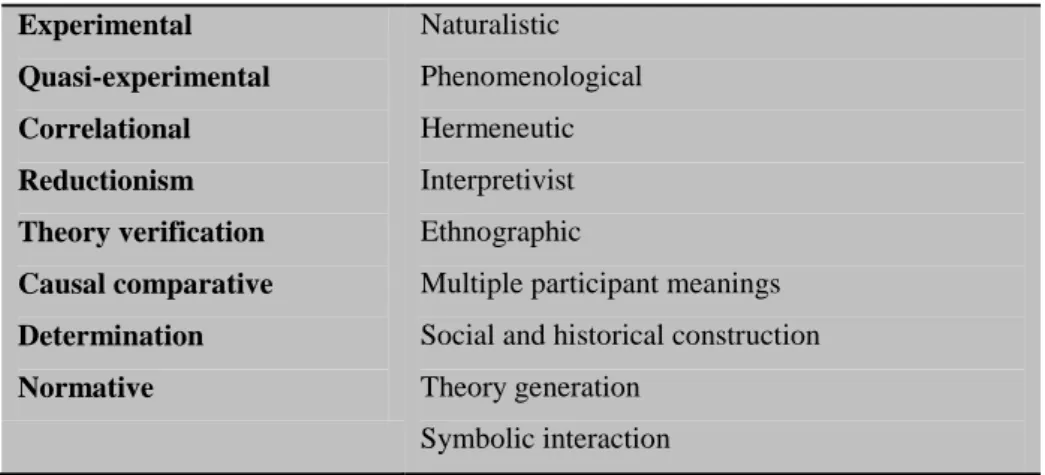
Table 2 Language commonly associated with major research philosophy (Mackenzie &Knipe 2006) ... 27
Table 3 Paradigm, methods and tools (Mackenzie &Knipe 2006) ... 31
Table 4 Race and gender of respondents (contractors & supervisors) ... 37
Table 5 Training received by respondents ... 38
Table 6 Knowledge levels- self evaluation ... 39
Table 7 Character of learner contractors ... 39
Table 8 SMME Classification and responses (classification according to National Small Business Amendment Act) ... 40
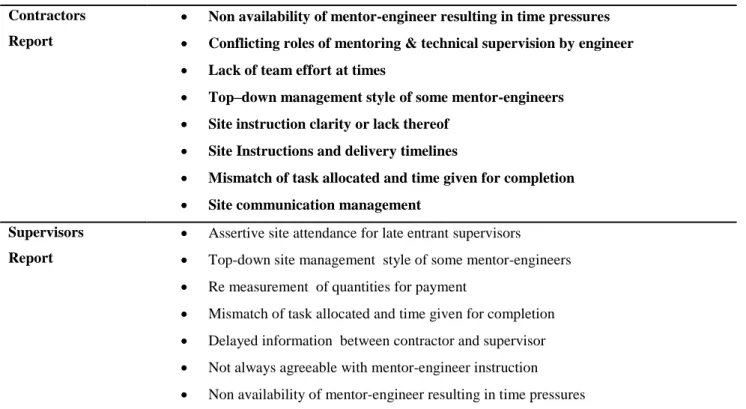
Table 9 Common cause of problem with mentor-engineer ... 42
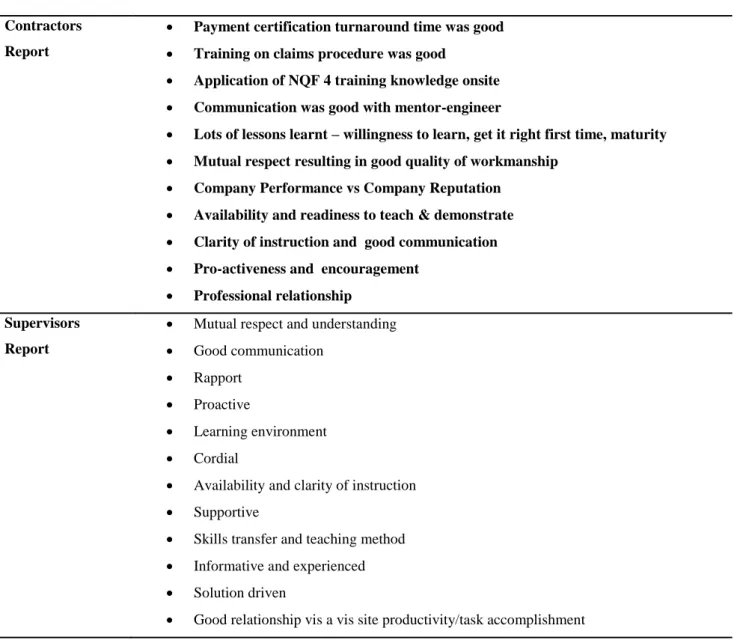
Table 10 Good relation with mentor-engineer ... 43
Table 11 Common cause of problem with contractors‟ organization ... 44
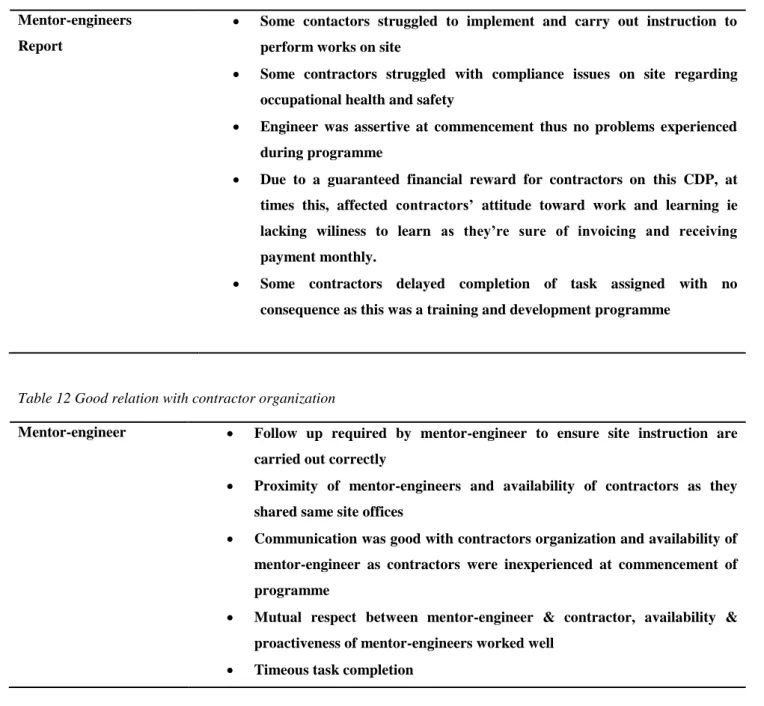
Table 12 Good relation with contractor organization ... 44
List of Figures
Figure 1 Showing Components of NCDP ... 15vii
List of Acronyms
BBBEE Broad-Based Black Economic Empowerment
BCI Black Construction Industry
BER Bureau of Economic Research
CDP Contractor Development Programme
CETA Construction Education and Training Authority CIDB Construction Industry Development Board
GEAR Growth Employment And Redistribution
GDRT Gauteng Department Of Roads and Transport HDI Historically Disadvantaged Individual
ILO International Labour Organisation
IMF International Monetary Fund
LIC Labour Intensive Construction
MIN-MEC Minister-Member of Executive Committee NCDP National Contractor Development Programme
NQF National Qualification Framework
PE Potentially Emerging
POE Portfolio of Evidence
PPPF Preferential Procurement Policy Framework
RBT Resource Based Theory
RISFSA Road Infrastructure Strategic Framework for South Africa
SA South Africa
SACPCMP South African Council for the Project and Construction Management Professions
SECI Socialization Externalization Combination Internalization
SMME Small Medium Micro Enterprise
StatsSA Statistics South Africa
TDP Targeted Development Programme
1
1
Introduction
1.1
Background and context of study
This research examines the contractor development programme of the Gauteng Department of Roads and Transport with a view to reviewing the programme components, currently experienced nature of knowledge transfer (between learner contractor and consultant mentor-engineers) to better understanding, in other to achieve desired results of growth and development of emerging contractors in the construction industry with an emphasis on the civil engineering sub-sector.
The South African economy has, post 2009, been on a slow economic recovery following the 2008 global financial meltdown, with an economic growth rate of 1,3 % reported by Stats SA for 2015 and less than 1 % projected for 2016 (BER, 2016). This is a sharp decline compared to the 4, 8 % average growth achieved from 2003 - 2008 (Martin, 2010). It is within this economic context that the construction industry is located. Subsequent to the attainment of the post-1994 democratic dispensation, the South African government has tried to address racially based inequalities (in income, education & training, social services etc.) - a characteristic of the society which was a legacy of the past apartheid government - through legislation, policies, and regulations, (Construction Charter BBBEE 2007). Individuals previously marginalised by the apartheid regime referred under post-1994 legislation as Historically Disadvantaged Individual (HDI) consist of non-white racial groups, peoples with disability and women with low skills levels (Martin, 2010), to this effect the South African Constitution gives effect to redressing historical inequalities (via provisions of Section 9) and preferential procurement (Section 217). The Preferential Procurement Policy Framework Act (PPPF Act 2000) allows for 90:10 or 80:20 points scoring system on public procurement where 90 or 80 points are for price and 10 or 20 points for preferential points subject to the value of the public project, and more recently preferential points were amended (in 2011) by the Broad Based Black Economic Empowerment (BBBEE) Scorecard - as envisaged under the PPPF Act 2000 and BBBEE Act 2003.
Freund (2007) indicated that consequent upon governments‟ development initiatives post 1994 including but not limited to Growth, Employment and Redistribution-GEAR 1996 and its willingness to use fiscal benefits and generous budgets to address problems of poverty in the country, many new small and mid-sized (SMME) construction entities emerged. Around 2000 the Construction Industry Development Board (CIDB) was established under act of parliament to provide strategy for growth and development in the construction industry, as many of these small
2 entities struggled to develop (CIDB 2004). To further strengthen its capacity to deliver, the CIDB more recently was charged with monitoring and assessing levels of expenditure (through main contracts) on black, women and youth-owned construction enterprises (CIDB Compliance Monitor, 2014).
The importance of small and mid-sized contracting entities (such as „emerging contractors‟) to the socio-economic development of any country cannot be over emphasized; as such literature is replete with consequences of a lack of development of small and mid-sized contractors and factors responsible for such underdevelopment (e.g. Eyiah and Cook, 2003). Adams (1997), Ofori &Chan (2001), Eyiah & Cook (2003), Martin (2010), and CIDB (2012), further list some of these factors as lack of knowledge in terms of managerial skill and technical capacity; inability to obtain contracts; persistent delayed payment by major clients; lack of access to finance / deliberate refusal to repay loans. The ILO (1987) cited in Adams (1997) suggested three proposals necessary for small contractor development in developing countries:-
Policies promoting access to work;
Policies promoting favourable work environment;
Programme and policies for training and technical advice.
Much of the first two proposals has been alluded to previously. The CIDB‟s Contractor Development Programme seeks to address the third; however it‟s important to state the context of the development programme. In order to tender in South Africa for public projects, contracting companies must register with the CIDB. The CIDB register is divided into work categories (civil, building, electrical, mechanical etc.) and groups‟ contractors in these categories under nine grades according to project size and complexity expressed in Rand value such that only contractors on a particular grade may tender for projects identified for that grade or lower. Thanks to low entry barrier to the industry as initiated by CIDB the number of CIDB grade 1-2‟s registered contractors is substantially greater when compared to higher grade registered contractors of grade 8-9 (CIDB, 2012). Martin & Root (2012) allude to the reasons why shortage of skills persist in the South Africa construction sector on the one hand, and, the effects of the ravages of economic meltdown post 2009 resulting in liquidations / insolvency and inactive entities – all of which speaks to the sustainability or lack thereof of emerging contractors, on the other hand. Consequently in 2008 the Public Works MIN-MEC (Minister-MEC forum) mandated the CIDB to design and implement a National Contractor Development Framework applicable to all registered contractors in the country.
3 In 2011 the National Contractor Development Programme (NCDP) framework was established by CIDB in conjunction with National Public Works Department.
The NCDP Summary Framework 2011 defines Contractor Development as a deliberate and managed process to achieve targeted developmental outcomes that improve contractors;
Grading status;
Performance and quality; Equity and targeted ownership.
The objectives of the programme are to promote equity ownership of contracting entities (across the grades and categories) and improve skill and performance in the delivery and maintenance of capital projects in the public sector. The main components of NCDP consist of:
Learnership programme for new entrants or start-up targeted at grade 1-2 contractors; Enterprise Development targeted at grade 2-6 contractors, and;
Performance improvement targeted at grade 4-7 contractors.
In partnership with National Public Works Department, the Gauteng Department of Roads and Transport‟s (GDRT) Contractor Development Programme (Vukuphile Learnership Programme) commenced in October 2013 upon selection of pairs of 29 learner supervisors and learner contractors entities on CIDB 1 and 2 CE for a 36 months duration, (27 nos. on grade 1 and 2nos. on grade 2) for routine road maintenance activities on provincial RISFSA Class 5 & 6 roads. (TRH 26, 2012).
The contractor development programme aimed to:
Provide class room training and construction site assessment (in the first 12 months of the programme) with a view to obtaining CETA approved NQF level 4 certificate upon completion;
Achieve higher grading status for all participants with a view to exiting programme at CIDB grade 4 - 6 by embarking on multiple projects in the last 24 months of programme, and; Profit saving for entire programme duration to be shared between each pair of learner
supervisor and contractor on completion.
To this end; the following services were procured as additional capacity to the Department‟s to ensure implementation of programme:-
4 Civil Engineers appointed by GDRT act as principal agent for quality works supervision; Consultant Mentors to be appointed by public works department as mentors to impart
knowledge and transfer skills to each learner contracting entity (managerial and technical). These consulting mentors were eventually not appointed to mentor the learner contractors, resulting in civil engineers appointed to supervise performing mentorship duties;
Training service provider appointed by public works to conduct classroom training and subsequent on-site assessment, and;
Nedbank in partnership with programme to provide initial capital (for site establishment) and profit savings investment product.
Martin (2010) reported in his research that the pervasive and persistent lack of knowledge was underlying most of the factors listed earlier as causing underdevelopment amongst emerging contractors, thus resulting in business failures. These lacks of knowledge includes amongst others, pricing knowledge, contractual rights and obligation, law, management techniques and technical deficiency etc. As such any meaningful effort (such as the NCDP) at capacity building of emerging contractors intended to transform the industry must address the issue of knowledge.
Gould & Powell (2004) indicated in their paper that knowledge is best described in terms of its characteristics rather than by definition that expresses the value and characteristics that make it difficult to manage: “fluid mix of framed experience, values, contextual information and expert insight that provides a framework for evaluating and incorporating new experiences and information. It originates and is applied in the mind of the knowers. In organizations, its often becomes embedded not only in documents or repositories but also in organizational routines, processes, practices and norms.” (page185).
Explicit and tacit knowledge as explained by Nonaka & Takeuchi (1995) popularised the understanding of how knowledge is managed. Explicit knowledge is formal and can be specified in rules and procedures and can be easily communicated. Tacit knowledge is less specifiable and is held by individuals or collectively as shared experiences – the nature of tacit knowledge makes it less easy to transfer. The theory of knowledge creation as explained by Nonaka & Takeuchi‟s SECI model will be further discussed under literature review – it essentially explains people sharing tacit knowledge which is converted and combined into individual tacit knowledge through “learning by doing”. The content and context of learning are important to consider when investigating how knowledge is created (Lang, 2001). Nonaka & Takeuchi‟s use of explicit and tacit knowledge is one of many of characteristic used to define knowledge (Gould & Powell, 2004).
5 Martin (2010) surmised that literature around knowledge and its creation can be divided into four major groups of organizational learning; learning organization; organization knowledge and knowledge management. Emerging contractor companies are by definition at the start of their organizational development often lacking not only knowledge, but also resources – being typically understood to be small start-up entities with the owner as core member – organizational learning becomes key for them to survive.
1.2
Problem statement
Substantiation
Much of the discussions in the preceding paragraphs alludes to steps taken by the South African government towards transforming the construction industry - from the PPPF Act & BBBEE Act which allows for preferential points on public construction tenders for HDI‟s, to the CIDB mandate of compliance monitoring. According to CIDB (2012) report on Contractor Development and Transformation:
The industry is characterised by few large (Grade 7-9) companies with substantive financial and technical resources and thanks to low barrier to entry, a host of smaller enterprises (Grade 1-6) who often face financial and managerial difficulties;
Over 70% of cidb registered contractors are located in the lower level of Grade 2-4 with project value of R650, 000 – R4m;
Over 80% of government infrastructure spend is on Grade 7 and higher (with project value of R13m and larger) and about 30% of which is on Grade 9 (R130m and larger) -these projects are typically larger, complex, requiring financial resources, technical and management skills;
Only 20% is spent on projects less than R13m (Grade 6 and lower) and 6% of which is spent on projects less than R4m (Grade 4 and lower), and;
Whilst majority of enterprise are black owned (75% of Grade 1-6 and 55% of 7-8) in the lower grades, less than 20 % is black owned in the Grade 9) suggesting the problem of development or lack thereof of emerging contractors still persist.
It‟s important to acknowledge that studies have been done on contractor development including studies on cooperation and mentorship between emerging contractors and established contractors as a means of transferring knowledge and skills. However cooperation between established and emerging contractors might also just be a business relationship where no sustainable knowledge is
6 gained (Martin, 2010). Not much has been documented and written in terms of the knowledge transfer within a specific intervention programme such as the contractor development programme in South Africa. As such, possessing a description of current knowledge transfer would contribute to the better understanding of the interaction (between consultant mentor-engineers and emerging contractors) and their potential to advance emerging contractors. Descriptions and understanding of knowledge transfers could then be used to develop more suitable contexts for knowledge transfers, by capitalizing on the already existing interactions (Martin, 2010).
It is an accepted fact that emerging contractors are faced with varying challenges, wherein training and development is identified as one required and necessary intervention amongst many. The Contractor Development Programme„s targeted vehicle for delivery of learnership programme - direct incubator - allows for consultant „mentors‟ – who‟s practitioners are regulated by the statutory body; SACPCMP. Consultant mentors were not appointed under the GDRT contractor development programme. Consequently it is vital to know what is the nature of knowledge transfers as its might hold interesting insight on how it‟s currently being transferred.
The following is thus the question for this research:-
What is the nature and characteristics of learning (knowledge transfer) under the contractor development programme and how can the learning experience be enhanced?
1.3
Research aim and specific objectives
By adding to the body of knowledge and in consideration of the South African context of emerging contractors (Martin, 2010) this research aims to:
Describe the context of knowledge transfer between learner contractors and consultant mentors-engineers and actual transfers of knowledge thereof (ie to contribute to a better understanding of currently experienced knowledge transfers).
Ofori & Chan (2001) assert that literature suggests the process of contractor development should include various initiatives that range from those relating to the contractors entities themselves, their resources and rest of industry to contractors operation environment. The bulk of earlier discussion centres on emerging contractors prevalent HDI status, persistent lack of resources, and CIDB‟s regulatory environment. CIDB 2012 report suggests not much gain is made towards objective of attaining status of „serious industry players‟ for emerging contractors. With knowledge been
7 identified as one key problem areas the following objectives assist in asserting the aim of this research.
Describe the characteristics of participating learner contractors entities;
Outline the organizational interactions of the participating learner contractors‟ entities; Identify and describe nature of actual learning experience (knowledge transfer) under the
programme, and;
Description of the characteristic of organizational interactions wherein knowledge transfer occurred.
1.4
Limitations and assumptions
This study examines the contractor development programme of the Gauteng Department of Roads and Transport with a view to reviewing the programme components, currently experienced nature of knowledge transfer (between learner contractor and consultant mentor-engineers) to better understanding, in order to achieve desired results of growth and development of emerging contractors in the construction industry; as such:
The study is limited to the 29 pairs of participating learner contractors and supervisors of the Gauteng Department of Roads and Transport‟s Contractor Development Programme – CDP - (Incubator Model);
The nature of works undertaken under the CDP was civil engineering related (routine road maintenance activities) as such less complex when compared to building. Additionally the lines of communications, and thus opportunities to interact, are expected to be less layered in the civil engineering as opposed to the building sector. The civil engineering sector poses a clearer demarcation of the respective roles within contracts and interaction thus appears to be simpler allowing the knowledge transfers to be more easily isolated for description. Possible extrapolations of reported research findings to the building sector must be carefully scrutinized for their validity and applicability. (Martin, 2010);
Consultant mentors were not appointed, resulting in appointed supervising engineers performing some mentorship duties;
Actual improvement to knowledge transfer needed between emerging contractors and consultants mentor-engineers in a CDP is beyond the scope of this study. This research also does not cover mentorship and its theories, and;
8 It is assumed that some form of selection criteria was embarked on, in choosing participants
at start of CDP, thus alluding to characteristic of participating learner contractors entities.
1.5
Structure
This research will be presented in 5 Chapters:
Chapter 1 consists of the introduction to the study alluding to the background and context of the study, the research problem and research question including aim and objectives.
Chapter 2 entails the literature review with the objective of reviewing existing literature and theoretical framework in research that underscores the topic of knowledge creation and organizational learning such that its findings are affirmed in the conclusion. (Nkojo, 2012). It reviews literature regarding South Africa‟s construction industry constituent (established / emerging contractors / cidb / consultant mentor), its background, history, current legislation and status quo.
Chapter 3 describes and justifies the research paradigm, research design and methodology, including ethical considerations.
9
2
Literature Review
2.1
Objectives of literature review
The main objective of this section is to review existing literature and theoretical framework in research that underscores the topic of knowledge creation and organizational learning such that its findings are affirmed in the conclusion. (Nkojo, 2012). Initially this research would review literature regarding South Africa‟s construction industry constituent (established / emerging contractors / cidb / consultant mentor/engineer), its background, history, current legislation and status quo.
Grant (1996) hinted that knowledge is central to the research tradition of organizational learning (amongst others), as such, this review will move to further address knowledge creation and transfer mechanisms vis a vis organizational learning and its applicability thereof to the emerging contractors, consultant mentor-engineer construct, bearing in mind its unique characteristics. Concepts of knowledge creation; knowledge application; knowledge transfer & sharing leading up to a summary of the varying views espoused by scholars will be reviewed, in an attempt to show the import and necessity of knowledge creation, transfer and organizational learning to the research problem discuss.
2.2
Introduction
Martin (2010) posited that the South African construction industry needs to be viewed within a historical background. This background consist previous Apartheid Government‟s systemic disenfranchisement of the majority black population resulting in lack of opportunities in education & training, income & finance and social services. The dawn of the new constitutional democracy in 1994 ushered in change and transformation via economic empowerment of HDI‟s. Construction industry development and the drive to transform the construction sector are part of an ongoing transformation and expansion process across the whole of South Africa‟s economy. Economic empowerment of HDIs companies is at the core of this process, in an effort to address the wrongs of the past; this however might not be sustainable without addressing systemic „carry overs‟ of the past, such as lack of knowledge and skill base of the empowered HDI companies. The research problem area is thus located within this background.
The literature review was done by narrowing in on particular subject areas via journals in search for relevant contribution. Access to these sources was sought through online catalogues and databases
10 available through the libraries of the University of Witwatersrand. In cases in which direct access to sources was not possible inter-library loans were requested. The internet served as a secondary source of information. From here access to South Africa-specific information, such as government publications, was achieved.
2.3
Contractors in South Africa
Background
Martin (2010) suggested that it was important to delve into a brief history of South Africa that has relevant bearing on the research. To this end, it was narrated that in 1652 western societies (Dutch East India employees) set up a station in today‟s Cape Town, eventually colonising the Cape in their bid to sail around the Cape of Good Hope on their journey to the east. Along with colonization by the first European settlers came the concerted effort to segregate the various races in the Cape by the planting of the almond and thorn-bush hedge “to ensure safety”. Gevisser (2007) indicated that the subsequent Native Land Act of 1913 forbade tenant farming and did away with individual tenure, thus forcing black people into cheap and manipulative migrant labour system – setting the tone for decades of economic disenfranchisement.
Formalised racial segregation began after 1948 when apartheid was institutionalized by the coming into power of the National Party (Gevisser, 2007). Non-whites such as Native Africans, Coloureds and Indians were classed in different groups, and land for their respective settlements was allocated through the Group Areas Act (South Africa, 1950). Alongside segregation came pass laws. Building upon pass laws already designed in colonial times these laws were designed to foster and manage a pool of cheap black labour and control the flow of this labour (Siebert, 1986). Although Apartheid ideology tried to find justification by referring to racial differences, economic reasons to advance the white minority are seen as key drivers of Apartheid policies (ibid.). Martin (2010) indicated that laws were designed to exclude non-white entrepreneurs from the formal economy – enforced through the pass laws – making the labour force exclusively available to the white economy. It was only in 1979 that black people were again allowed to manufacture goods, albeit restricted to their designated areas.
Education was another cogent policy of the Apartheid state, through the Bantu Education Act 47 of 1953 (South Africa 1953) the then Minister of Native Affairs, HF Verwoerd, introduced an education system which would see differing levels of education and funding of schools for the different races in South Africa - 6 times more funding was provided for white schools. (Gevisser
11 2007, Southall 2016). Bantu Education was opposed by the non-white population, and by some non-racist whites, throughout its existence. This resistance as suggested by Martin (2010) resulted in strikes and turmoil across the country, which further enhanced the mal-education of the masses as often no teaching took place at all. These education laws were only fully repealed through the introduction of a single education system in 1995. Thus their legacy is still part of many South Africans‟ lives with a divide in educational levels amongst the various races. The years of racial segregation, racial oppression and racism have left behind a country with enormous inequalities Construction Industry
Post 2008 global financial crisis, the South African economy like many developing countries‟ economies is currently confronted by severe difficulties owing to a combination of lower commodity prices, higher energy costs, falling exchange rates and rising inflation. At the same time the country is faced with immense social problems (inequality, poverty and youth unemployment) putting pressure on the nations resources and capabilities. The construction industry in SA is facing reduced level of demand post 2010 world Cup infrastructure build, due to slowdown in government infrastructure projects. The challenge is that construction industry should do well despite the severe constraints in its operation environment. Moreover the industry must help the SA economy recover and contribute to easing the social problems (Ofori, 2000). This fact is not lost on Gordhan (2016), when he stated in his article that yet again the IMF and World Bank have lowered economic growth forecasts for major economies and the global economy, highlighting just how challenging the global growth climate is. Prompting the IMF & World Bank to develop a multi-pronged potential solution – one of which includes; implementation of structural reforms needed to lift economic growth. These include investment in infrastructure – to this effect, over the medium term R180 billion is budgeted for energy investment. This includes the build programme of Medupi, Kusile, and Ingula power plants alongside strengthening transmission and distribution grid. Ofori (2000) suggested that avenues must be found to take advantage of the special features of construction which offers unique opportunities to create jobs, stimulate growth and development Established & Emerging Contractors Features
Murray & Appiah-Baiden (2000) observed that globalization of the South African economy and improvement in transport and communication; large international contractors are able to operate in any country. This evidently is not helpful to the economies of the developing countries as it means bleeding off of scarce foreign currency, on one hand and local established contractors been unable to compete with the large international contractors due to their superior human, material and
12 financial resources. They described a contracting entity in two extremes - one, as a former artisan who organises a group of colleagues to build a house and the other as an international organization that employs 100,000 people with an annual turnover of US$ 15billion. Either way, all contractors should have knowledge (know-how) of management, personnel, materials, plant & equipment, and finance. International contractors often leverage this exposure for advantageous prices. They further reiterated that a number of well-established South Africa contractors existed and expanded in a closed, booming home market which was not exposed to external competition, but are now sourcing work outside South Africa in competition with larger international contractors, albeit with its own set of challenges.
Emerging contractors fall under the wider, often used description of Small Micro Medium Enterprises (SMME). The National Small Business Amendment Act of 2003 classifies Small Micro Medium Enterprises (SMMEs). Table 1 illustrates how SMMEs in the South African construction industry are classified based on employee numbers and turnover.
Table 1 National Small Business Amendment Act, 2003
Size Total Full time, Equivalent of Paid Employees
Total Annual Turnover
Less than Less than
Medium 200 R26 m
Small 50 R6 m
Very small 20 R3 m
Micro` 5 R0.2 m
Martin (2010) argued that an industry which traditionally has a high number of small businesses, a differentiation based on size, expressed by number of employees and/or turnover, is insufficient to make a judgement on the established or emerging character of the organization, a view reflected in the CIDB (2014), Construction Industry Development Board Regulations attempt to identify potentially emerging (PE) contractors according to the following criteria:
Ownership (previously disadvantaged individuals);
Equity (majority held with previously disadvantaged individuals – minimum 50 per cent); Level of authority of previously disadvantaged individuals in daily operations, and;
Level of authority of previously disadvantaged individuals in directing the general operations of the company regarding financial and managerial.
13 As stated earlier emerging contractors globally are faced with similar diverse challenges as enunciated by Adams (1997), Carradine & Logie (2000), Murray & Appiah-Baiden (2000), Ofori & Chan (2001), Eyiah & Cook (2003), Martin (2010), and CIDB (2012), these include but not limited to, lack of knowledge in terms of managerial skill and technical capacity; lack of experience, inability to obtain contracts; persistent delayed payment by major clients; lack of access to finance / deliberate refusal to repay loans. The ILO (1987, cited in Adams, 1997), suggested the following proposals necessary for small contractor development in developing countries:-
Policies promoting access to work;
Policies promoting favourable work environment, and; Programme and policies for training and technical advice.
Earlier in 1996 the Black Construction Industry (BCI) - an organization of emerging contractors formed in 1995 carried out a national survey (1500 sample size), to ascertain the make-up of its members and challenges faced at the dawn of new democracy. The report can be seen as a snap shot of the status of emerging black contractors at the time. It indicated amongst others that levels of formal education were low with only 13% of emerging contractors had matriculated, and 30% had a Standard 5 (Grd 7) education. (BCI, 1996)
The new SA has encouraged the development of SMME contractors by HDI entrepreneurs, who are mainly non-whites that was marginalised under the Apartheid regime and excluded from participating in the main stream of construction industry. The advent of a new democratic government ushered in transformation policies that encouraged development of emerging contractors. (Murray & Appiah-Baiden, 2000). Martin & Root (2012) allude to the reasons why shortage of skills persist in the South Africa construction sector and the effects of the ravages of economic meltdown post 2008 resulting in liquidations / insolvency and inactive entities – all of which speaks to the sustainability or lack thereof of emerging contractors.
2.4
Empowerment
It‟s vital to highlight current empowerment and affirmative action legislation environment in SA in light of the foregoing discuss. Equality for all was the major tenet of new SA democratic government ushered in 1995 (South Africa 1996a). The Constitution allowed for correcting inequalities and injustices of the past by making provisions for preferential procurement (Section 217 of Constitution relates to the procurement policies for any organ of state and specifies that governmental procurement needs to be “fair, equitable, transparent, competitive and
cost-14 effective”). The Preferential Procurement Policy Framework Act (PPPF Act 2000) derived from Section 217 makes provision for 90:10 or 80:20 points scoring system on public procurement where 90 or 80 points for price and 10 or 20 for preferential points subject to the value of the public project. Individuals previously marginalised by the Apartheid regime referred to as Historically Disadvantaged Individual (HDI) consist non-white racial groups, peoples with disability and women with low skills levels. The South African Government has subsequently implemented the Broad-Based Black Economic Empowerment (BBBEE) Act of 2003. Together with this Act various affiliated documents were promulgated; documents such as codes of conduct published by the Department of Trade and Industry, as well as various industry charters. (Martin, 2010). At the heart of BBBEE is the intent to implement “…economic transformation in order to enable a meaningful participation of black people in the economy…” (South Africa, 2003a). While both the PPPF Act and the BBBEE Act are designed to address the inequalities existing within South Africa, their combination is the main tool used by the South African government for addressing this issue.
2.5
Construction Industry Development Board
The Construction Industry Development Board is a Schedule 3a of the Public Finance Management Act 1 of 1999 (South Africa, 1999) public entity. The Board is appointed by the Minister of Public Works on the basis of their knowledge and expertise with the objectives as defined in the CIDB Act 38 of 2000 to provide strategic leadership in the construction industry, provide regulatory framework for social and economic development and promote sustainable participation of the emerging sector in the industry amongst others. (South Africa, 2000). To this end, as stated earlier a register of contractors is maintained - since 2005 all contractors engaging in public contracts are by law compelled to register with the CIDB. However some exemptions exist, such as registered homebuilders, and contractors who predominantly supply labour only services. The CIDB register is divided into work categories (civil, building, electrical, mechanical etc.) and groups‟ contractors in these categories into nine grades according to project size and complexity expressed in Rand value. Thanks to low entry barrier to the industry as initiated by CIDB the number of CIDB grade 1-2‟s registered contractors is substantially greater when compared to higher grade registered contractors of grade 8-9 (CIDB, 2012). The registration of contractors per grade however is not fixed, as they can move to a higher grade designation subject to their proven track record on existing grade. Martin (2010) suggested this system makes room for targeting of contractors with requisite knowledge and experience by public agencies, resulting in a more reliable and efficient public procurement. .
15 Contractor Development Programme
As indicated earlier the Public Works MINMEC (Minister-MEC forum) mandated CIDB in 2008 to design and implement National Contractor Development Framework applicable to all registered contractor in the country. In 2011 a National Contractor Development Programme (NCDP) framework was established by CIDB in conjunction will National Public Works Department. NCDP Summary framework 2011, defines Contractor Development as a deliberate and managed process to achieve targeted developmental outcomes that improve contractors;
Grading status;
Performance and quality;
Equity and targeted ownership.
The objectives of the programme are to promote equity ownership of contracting entities (across the grades and categories) and improve skill and performance in the delivery and maintenance of capital projects in the public sector. The main components of NCDP consist:-
Learnership programme for new entrants or start-up targeted at grade 1-2 contractors; Enterprise Development targeted at grade 2-6 contractors, and;
Performance improvement targeted at grade 4-7 contractors
Figure 1:-Showing Components of NCDP (Source: CIDB)
Two models for delivery of CDP are recommended by the CIDB (2014). The first is the Direct Targeting Model (incubator) and is the Contractor Development Programme (of GDRT) under review. The second is the Indirect Target Model wherein under the Targeted Development Programme (TDP) potentially emerging status contractor are procured via open tender for a project
LEARNERSHIP Grd 1-2 ENTERPRISE/CONTRACTOR DEVELOPMENT Grd 2-6 PERFOMANCE IMPROVEMENT Grd 4-7
16 one grade above their current status. The common denominator between the two models is the provision of support mechanism to emerging contractors in the form of training and mentorship. It is within this context of CDP that emerging contractors interact with mentor-engineer.
2.6
Consultant Mentor-Engineer
To get an understanding of “mentorship”, a brief intro into what constitutes mentorship will be dealt with in this paragraph, without going into detail of mentorship theories and school of thought as this is not what this research is primarily concerned with.
Njoko (2012) traced the roots of mentorship to the ancient Greece, as an honourable duty leading up to the medieval trade guilds, where guild masters were responsible for the professional skills of protégés including social, religious and personal habits. He surmised that mentorship is a theme prevalent in human resource management used to serve different purpose – career development to affirmative action, usually related to situations in which formal learning outcomes are neither absent nor unstated.
Kleovoulou (2007) defined mentoring as the process that is about enabling and supporting major change in people‟s life and work. This process should encourage new perspectives, changed ways of thinking and deeper self-knowledge. Stanz & Mosoeunyane cited in Njoko (2012) defined mentoring as a process involving a dynamic and reciprocal relationship in a work environment, whereby more advanced and wiser career incumbent assists a less experienced person to develop in some specified category. Furthermore, mentors guide, support and counsel. Parsloe cited in Njoko (2012) views the purpose of mentoring as that of helping and supporting people to manage their own learning in order to maximise their potential, develop their skills, improve their performance and become who they want to be. The common thread in the above definitions is the emphasis on knowledge transfer, motivation, support, level of trust and communication with mentees.
It is against the foregoing backdrop that the consultant mentor under this Contractor Development Programme was designed to function. As allude to earlier, the consultant mentors were eventually not appointed by the client bodies that undertook the CDP, consultant civil engineers and training service providers were however appointed and performed duties as highlighted previously - as such this research shall show the nature and characteristics of learning that persisted under the 3 year Contractor Development Programme. Suffice to state that the South African Council for Projects and Construction Management Profession maintains and updates a register of Professional
17 Construction Mentors legally permitted to render the construction mentorship service (SACPCMP Act 48, 2000).
2.7
Knowledge
Stenmark (2000) indicated that the managing of knowledge has been employed by masters training their apprentice and parents teaching their children from long ago and that knowledge in recent times has become more important to business and industry, shifting from being one resource amongst many to being the primary resource, ever since man first shared the knowledge of how to make fire with his fellow human beings, as such knowledge management as a concept has become a hotly debated topic. Gould & Powell (2004) alludes to the value in organisations‟ stocks of knowledge and a need for researchers to step back and try to understand the nature of organisational knowledge. Spender cited in Stenmark (2000) stated that in the knowledge management discourse the positivistic view of knowledge as an objectified and monistic absolute truth have been abandoned for a pluralistic epistemology, acknowledging that there are many forms or types of human knowledge.
Knowledge Creation & Typologies
Davenport et al cited in Gould & Powell (2004) offer a description of knowledge in terms of its characteristics rather than by definition that expresses the value and the characteristics that make it difficult to manage: “fluid mix of framed experience, values, contextual information and expert insight that provides a framework for evaluating and incorporating new experiences and information. It originates and is applied in the mind of the knowers. In organizations, its often becomes embedded not only in documents or repositories but also in organizational routines, processes, practices and norms.”(ibid:185)
Grant (1996) explains that understanding the characteristics of knowledge and their implications for management is more important than a definition of knowledge. Machlup cited in Grant (1996) listed thirteen different „elements of knowing‟ including; being acquainted with, being familiar with, being aware of, remembering, recollecting, recognizing, distinguishing, understanding, interpreting, being able to explain, being able to demonstrate, being able to talk about, and being able to perform.
The „knowledge-based‟ theory of the firm derives from resource-based theory (RBT). RBT emphasises the role of capabilities and competences and attempts to explain why some firms are able to gain competitive advantage. RBT perceives the firm as a collection of resources and
18 capabilities. Those that are inimitable, offer access to markets and add value to the product are source of sustainable competitive advantage. Exponents of RBT agree that knowledge is strategically a most important resource as it is scarce, difficult to replicate and transfer, and gives rise to complex appropriability issues (Grant, 1998). Grant (1996) argued further that the issues with which the knowledge-based theory concerns itself are to address some other fundamental concerns of the theory of the firm, notably the nature of coordination within the firm, organizational structure, the role of management and the allocation of decision-making rights, determinants of firm boundaries, and the theory of innovation.
Meng & Gao (2003) observed that the knowledge dichotomy of explicit and tacit dimension was proposed by Polanyi in the 1950s, Nonaka in 1991 made use of the concept in his theory of knowledge creating company that highlighted role of tacit dimension of knowledge in the process of organizational knowledge creation in Japanese companies. Nonaka (1994) and Nonaka & Takeuchi (1995) contend that the theory of organization has long been dominated with a view that organization processes information or solves problems imposed by the environment i.e. „input – output process sequence of hierarchical information process – in terms of what is given to the organization, without consideration for what is created (information and knowledge) by the organization. Otherwise how do we explain innovation (which is organizational knowledge creation) in light of the information processing or problem solving view point? They further described innovation as a process in which organization create and defines problems and then actively develops new knowledge to solve them – buttressing that organization should be viewed from how it creates information and knowledge rather than how it processes it.
Nonaka & Takeuchi (1995) indicated that organizational knowledge creation is a continuous spiral process of interaction between knowledge building blocks of explicit and tactic knowledge. Explicit knowledge articulated in formal language including grammatical statements, specifications, manuals etc. This type of knowledge can be transmitted across individuals formally and easily and has been the dominate form of knowledge in western tradition. A more important knowledge type responsible for Japanese companies competitiveness is Tacit knowledge, this kind of knowledge is hard to articulate with formal language. It‟s a personal knowledge embedded in individual experience and involves intangible factors such as personal belief, perspective and value system. They further surmised that knowledge creation takes place at three levels: the individual, the group and the organizational level. Organizational knowledge creation consists of two components, a) form of knowledge interaction b) levels of knowledge creation. Two forms of knowledge
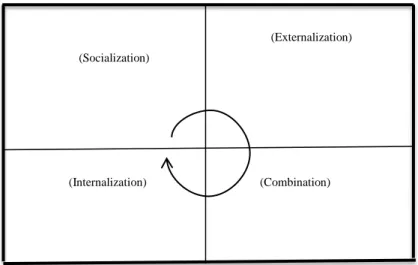
19 interaction (between tacit & explicit and between individual & organization) bring about four major process of knowledge conversion, all of which constitute knowledge creation. 1) tacit to explicit, 2) explicit to explicit , 3) explicit to tacit and 4) tacit to tacit – the basis of the SECI model of organizational knowledge creation.
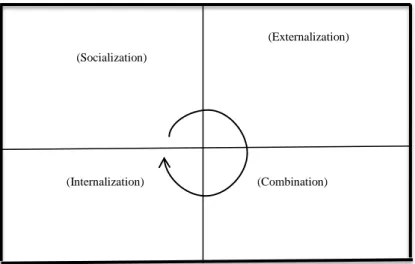
The SECI model of knowledge conversion as developed by Nonaka & Takeuchi (1995) entails explicit and tacit forms of knowledge in a continuous spiral as follows;
Socialization (from Tacit to Tacit) is the process of sharing experiences and thereby creating tacit knowledge such as technical skills ie. learning by observation, imitation and practice. An individual can acquire tacit knowledge directly from others without using language. The key to acquiring tacit knowledge is experience.
Externalization (from Tacit to Explicit) is a process of articulating tacit knowledge into explicit concept. It is a typical knowledge creation process in that tacit knowledge becomes explicit taking the shapes of concept, metaphors, models, analogies etc. When attempt is made to conceptualise an image, its essence is mostly expressed in language - writing is an act of converting tacit knowledge into articulable knowledge. Amongst the four modes of knowledge conversion, externalization holds the key to knowledge creation in that it creates new explicit concept from tacit knowledge. Combination (from Explicit to Explicit) is a process of systemizing concepts into knowledge system. This involves combining different bodied of explicit knowledge. Individuals exchange and combine knowledge through such media as document, meeting. Knowledge creation carried out in formal education and training at schools is another good example.
Internalization (from Explicit to Tacit) is a process of embodying explicit knowledge into tacit knowledge – it is closely related to learning by doing. When experiences through socialization, externalization and combination are internalised into individuals tacit knowledge bases in the form of shared technical know-how, they become valuable assets. For organizational knowledge creation to take place, however, the tacit knowledge accumulated at the individual level needs to be socialized with other organizational members, thereby starting a new spiral of knowledge creation.
20 Tacit knowledge To Explicit knowledge
(Externalization) (Socialization) Tacit knowledge From (Internalization) (Combination) Explicit knowledge
Figure 2 : Content of knowledge created by four modes (Source : Nonaka & Takeuchi 1995)
Grant (1996) argues that knowledge creation is an individual activity and that concentrating on organisational knowledge obscures the processes by which individuals create, store and utilise it. Production requires the input of a wide range of specialised knowledge and co-ordination, rather than co-operation, is the firm task. Efficient production is not achieved by the transfer of knowledge through cross-learning of individuals, but by integrating the knowledge of individuals through interaction.
The SECI model has received criticism for using categories that are not discrete, separable and stable (Tsoukas, 1996). For example, it is argued that tacit knowledge is a foundation of explicit knowledge and the latter cannot be separated from the former. Similarly, an individual cannot be separated from the collective, since we are products of our social environments. Gourlay (2006) further flawed Nonaka‟s proposition that knowledge is created through the interaction of tacit and explicit knowledge involving four modes of knowledge conversion. He opined that three of the modes appear plausible but none are supported by evidence that cannot be explained more simply. The conceptual framework omits inherently tacit knowledge, and uses a radically subjective definition of knowledge: knowledge is in effect created by managers. A new framework was proposed suggesting that different kinds of knowledge are created by different kinds of behaviour. In contrast to Nonaka & Takeuchi (1995), Polanyi cited by Stenmark (2000), does not make such a distinction between tacit and explicit knowledge. Instead, he envisions tacit knowledge as the backdrop against which all understanding is distinguished. Tacit knowledge is thus a cultural, emotional, and cognitive background, of which we are only marginally aware. Polanyi‟s view has
21 sometimes been criticized for being overly concerned with the tacit aspects and thus becoming almost monistic (ibid.). On the other hand, Polanyi‟s opinion that the tacit and the explicit are mutually constituted and should thus not be treated as two separate types of knowledge is supported by, Tsoukas (1996) who argues that trying to split these two inseparably related entities is to miss the point. Although acknowledging the many nuances that exist between these two stances. Spender (1996) provides a matrix of different types of organisational knowledge that combines explicit and tacit (implicit) with the individual and social forms to produce four types of knowledge - automatic, collective, conscious and objectified.
Matusik & Hill (1998) provide a taxonomy of knowledge that includes tacit and explicit; individual and collective; private versus public; and component versus architectural. Individually held knowledge is simply the total of individuals‟ knowledge. Collective knowledge is principles and routines widely diffused and held in consensus. Private knowledge is unique to a firm and can lead to competitive advantage, whereas public knowledge resides in the public domain. Public knowledge cannot be a source of competitive advantage. Component knowledge relates to discrete parts of an organisation often defined by subroutines, held individually or collectively by a subgroup. Further, it can be private or public. Architectural knowledge relates to the whole and is contained in organisation-wide routines. It is collective, and since no two firms are the same, it is private. It is tacit, since it is difficult to articulate and imitate. Architectural knowledge is most likely to lead to a sustainable competitive advantage.
Organizational learning
Zhao et al (2009) contend that organizational learning involves both individual and collective learning and that innovation occurs at both levels. The need for organizations to change continuously has long been the central concern of organizational learning theorist. The need for organizations, just as humans to confront aspects of their circumstance is growing especially in an era of turbulent economy and swift technological change. It is widely agreed that learning consist of two kinds of activity. The first kind of learning is obtaining know-how in order to solve specific problems based upon existing premises. The second kind of learning is establishing new premises (i.e. paradigms, perspective, mental model, schemata) to override the existing ones. These two kinds of learning have been referred to as single-loop learning and double-loop learning (Argyris & Schon cited in Nonaka & Takeuchi, 1995). The creation of knowledge certainly involves interaction between these two kinds of learning. Many organizations suffer from „learning disabilities‟. To cure this disease a „learning organization‟ is proposed as a practical model – the learning organization
22 has the capacity for both generative learning (active) and adaptive learning (passive) as a source of competitive advantaged. Five steps must be taken to build a learning organization:
Adopt systems thinking;
Encourage personal mastery of own lives;
Bring prevailing mental models to surface and challenge them; Build a shared vision, and;
Facilitate team learning.
Organizational learning theories is not without its limitation found in literature, Nonaka & Takeuchi(1995) contend that most of them are trapped in behavioural concept of stimulus-response, the use of metaphor of individual learning etc.
Martin (2010) surmised that organizational learning is a complex mechanism within organizations, which connects the individual‟s learning and its outcomes to the organization. Organizational learning is thus a social phenomenon. It sees information processed at the level of individuals, shared with others and stored – transformed to knowledge – in the collective. Learning can occur as reactions to arising needs or circumstances, and it can be fostered through interventions.
Knowledge transfer & sharing
Zhang & Ng (2012) surmised that the unique (temporary) nature of construction projects make recording and sharing personal tacit knowledge, lesson learnt and good practices difficult. Temporary alliance, deadline pressures, pursuit of short term goals, knowledgeable client and project complexities are impacting negatively on innovative activities in construction. It is agreed that huge amount of valuable knowledge is embedded in the construction team members who create and apply knowledge in the construction processes. Researchers have increasing awareness that promoting knowledge sharing would significantly contribute to the improvements of project performance and organizational performance in the construction industry. However, there are few studies that explore how to motivate people to engage in knowledge sharing within the construction industry. This knowledge gap makes organizations in the construction industry uninformed about how they should manage employees‟ knowledge sharing practice. Foss et al cited in Zhang & Ng (2012) comprehensively review recent knowledge sharing research, and claim that existing knowledge sharing literature is preoccupied with constructs, processes and phenomena defined as macro (collective, organizational) level and pay comparatively little attention to micro (individual) level constructs.
23 From an organisation perspective the willingness or unwillingness of individuals to share information and knowledge has been documented many times. Unwillingness to share information, as indicated by Martin (2010) creates a learning vacuum. Not sharing information leaves organizational members in a situation in which they cannot confront policies and procedures in the same manner due to a lack of information available to some. This unwillingness to share can also be related to the arduousness of the relationships needed for learning.
Zhao et al (2009) opined that knowledge transfer is prevalent and critical to a firm‟s survival and competitiveness. Existing empirical studies of knowledge transfer generally adopt one of three approaches: archival research with patent data, survey research and case study. Those that use patent data focus mostly on the transfer of explicit knowledge, whereas those studies that adopt survey and case methods have more flexibility to study the transfer of implicit knowledge and provide richer details in the process of knowledge transfer, albeit often with the restriction of limited samples. Zhao et al (2009) opined further that research has established that a firm‟s capabilities involve both individual and collective knowledge. Two gaps in the extent of knowledge transfer research were thus found:
1. Lack of empirical studies on the transfer of individual and collective knowledge as two distinct, yet parallel, outcomes. Collective knowledge is more valuable because it recombines individual knowledge and is the key to the value creation process. However, because collective knowledge is predominantly implicit and embedded among the norms and routines of multiple organizational members (Spender, 1996), it‟s transfer is more challenging and prone to failure. There is a difference in the nature, importance, and level of transfer difficulty of collective versus individual knowledge, as such, it is imperative to study the transfer of these two types of knowledge separately.
2. The lack of studies pertaining to the key influencing factors of knowledge transfer such as teaching and absorptive capacity, which needs to be studied at both the individual and collective levels. To fill these two gaps, Zhao et al (2009) studied both the outcome of knowledge transfer and the factors, such as teaching and absorptive capacity, that affect knowledge transfer.
They found that collective teaching activities and collective absorptive capacity are more effective than their individual counterparts in ensuring the transfer of both collective and individual knowledge
24
2.8
Summary
In summary the literature review began with an introductory contextualization of the history of South Africa pre and post colonization including its apartheid past and the legacies thereof, current economic realities and role of construction, the distinctive feature of established and emerging contractors with their peculiarities. Consequent empowerment legislation enacted to bridge the gap due to apartheid legacy issues, including setting up of the construction industry development board (CIDB). It proceeded to review the resultant NCDP framework and its components, the consultant mentors-engineer make up and finally wrapped up with the knowledge management debate.
The knowledge management debate spanned issues around characteristics vs definition of knowledge, knowledge base theory vs knowledge creation theory and SECI model of knowledge conversion, organizational learning and knowledge sharing peculiarities to construction projects.
25
3
Research design and methodology
3.1
Research paradigm
With the number of research methods increasing particularly in the social and applied science field in the last couple of years, it has become relatively more complex to define research argued O‟Leary (cited in Mackenzie & Knipe, 2006). Consequently, Mackenzie & Knipe (2006) describe research as a systematic investigation or inquiry whereby data are collected, analysed and interpreted in some way in an effort to “understand, describe, predict or control an educational or psychological phenomenon or to empower individuals in such context”. Mertens cited in Mackenzie & Knipe (2006) suggested however, that the “exact nature of the definition of research is influenced by the researcher‟s theoretical framework”, with theory being used to establish relationships between or among constructs that describe or explain a phenomenon by going beyond the local event and trying to connect it with similar events. It is this theoretical framework as distinct from theory that is sometimes referred to as paradigm. Paradigm influences the way knowledge is studied and interpreted. It is the choice of paradigm that sets down the intent, motivation and expectation for the research. Without nomination a paradigm as the first step, there is no basis for subsequent choices regarding methodology, methods, literature or research design. The important issue as indicated by Saunders et al (2012) is not whether or not this research is philosophically informed, but the defendable reasons for making a philosophical choice amongst alternatives is important, to this end, it will be wrong to think that one research philosophy is better that another – because research philosophy are „suited‟ to achieving different things i.e. to align with research question(s). Saunders et al (2012) surmised that the research philosophy adopted in a research underpins the research strategy and methods chosen. Through the choice of research strategy, a commitment is made to a particular philosophy or paradigm.
Literature confirms there exists a number of perspectives in which research philosophy can be examined as discussed by Easterby - Smith et al (2006) - these include ontology, epistemology and methodology - Saunders et al (2012) enunciated on these further as follows:-
Ontology is concerned with the nature of reality, it raises questions of the