MOBILE NETWORK AND CLOUD
BASED PRIVACY-PRESERVING DATA
AGGREGATION AND PROCESSING
MOHD RIZUAN BAHARON
A thesis submitted in partial fulfilment of the requirements of Liverpool John Moores University for the degree of Doctor of Philosophy
iii
Table of Contents ... iii
Acknowledgements ... ix
Abstract ... x
Publications Resulting from this Thesis ... xiii
Journal ... xiii
Conference Proceedings ... xiii
Poster ... xiv
List of Symbols and Acronyms ... xv
List of Figures ... xvii
List of Tables... xix
Chapter 1 ... 1
Introduction ... 1
1.1 Foreword ... 1
1.2 Mobile Computing ... 2
1.2.1 Mobile Sensing Systems ... 3
1.2.2 Mobile Cloud Computing ... 3
1.3 Data Outsourcing ... 4
1.3.1 Data Aggregation Technique ... 4
1.3.2 Offloading Technique ... 4
1.4 Motivations ... 5
1.4.1 User Privacy and Data Security ... 5
1.4.2 Problem on Homomorphic Encryption ... 6
1.4.3 Limitation on Mobile Devices ... 6
1.4.4 Accountability ... 6
iv
1.7 Novel Contributions ... 9
1.8 Thesis Structure ... 11
1.9 Summary ... 12
Chapter 2 ... 13
Mobile Sensing Systems and Mobile Cloud Computing ... 13
2.1 Introduction ... 13
2.2 Mobile Sensing Systems ... 14
2.2.1 System Approach ... 15
2.2.2 Benefits ... 17
2.2.3 Challenges and Limitations ... 18
2.2.4 Existing Solutions and Limitations ... 19
2.3 Mobile Cloud Computing ... 22
2.3.1 Architecture ... 23
2.3.2 Benefits ... 23
2.3.3 Challenges and Limitations ... 24
2.3.4 Existing Solutions and Their Limitations ... 25
2.4 Summary ... 27
Chapter 3 ... 29
Mathematical Foundations ... 29
3.1 Introduction ... 29
3.2 Algebraic Number Theory ... 29
3.2.1 Groups ... 30
3.2.2 Modulo Arithmetic ... 31
3.2.3 Prime Fields ... 31
3.2.4 Primes ... 32
v
3.2.7 Discrete Logarithm Problem ... 34
3.2.8 Homomorphism ... 34
3.3 Homomorphic Encryption Schemes ... 34
3.3.1 Introduction ... 35
3.3.2 Lattice Based Schemes and Related Problems... 36
3.3.3 Integer Based Schemes and Related Problems ... 40
3.4 Research Methodology... 41
3.4.1 The Rationale of Selected Methods ... 41
3.4.2 The Proposed Methods ... 43
3.4.3 Validation Techniques ... 45
3.5 Summary ... 46
Chapter 4 ... 47
Accountable Privacy-preserving Data Aggregation in MSSs ... 47
4.1 Introduction ... 47
4.2 Threat Model ... 50
4.2.1 Internal Threat ... 50
4.2.2 External Threats ... 51
4.3 Design goal ... 51
4.4 Privacy-Preserving Data Aggregation with Weak Accountability (APDAW) ... 53
4.4.1 Aggregated Data Encryption ... 54
4.4.2 Aggregated Data Recovery ... 58
4.4.3 Misbehaved Node Tracking ... 59
4.4.4 Privacy Improvements ... 65
4.5 Accountability Enhancement ... 67
4.5.1 APDAS for Strong Accountability ... 67
vi
4.6.1 Maximal Value Finding ... 83
4.6.2 Efficient Maximal Value Finding ... 85
4.6.3 Hybrid Approach ... 89
4.7 Summary ... 89
Chapter 5 ... 91
Security Analysis and Performance Evaluation of APDA and Max Methods... 91
5.1 Introduction ... 91
5.2 Security Analysis ... 91
5.2.1 A Curious AS ... 92
5.2.2 Malicious MNs ... 96
5.2.3 Public Communication Devices ... 97
5.3 A Comparison with Existing Solutions ... 98
5.3.1 Scheme Applicability ... 98
5.3.2 Data Security and Users’ Privacy ... 98
5.3.3 Data Integrity ... 99 5.3.4 Scheme’s Functionality ... 99 5.3.5 Users’ accountability ... 100 5.4 Performance Evaluation ... 101 5.4.1 Experimental Setups ... 102 5.4.2 Parameter settings ... 105
5.4.3 Results and Discussions ... 106
5.5 Summary ... 120
Chapter 6 ... 121
A New Lightweight Homomorphic Encryption Scheme ... 121
6.1 Introduction ... 121
vii
6.2.2 External Threats ... 125
6.3 Design Goal ... 125
6.4 The Proposed LHE Scheme ... 126
6.4.1 Key Generation ... 126
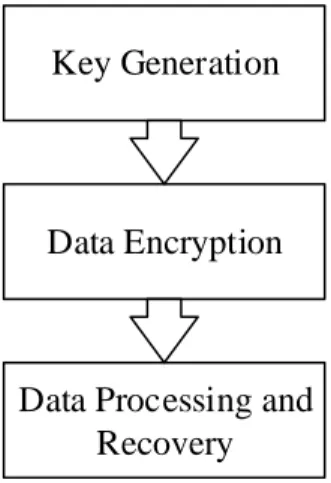
6.4.2 Data Encryption ... 128
6.4.3 Data Processing and Recovery ... 129
6.5 Security Analysis ... 132
6.5.1 Brute Force Attack on the Master Keys ... 132
6.5.2 Brute Force Attack on the Secret Keys ... 134
6.5.3 A Many Time Pad Attack ... 135
6.6 A Comparison with Existing Solutions ... 136
6.6.1 Bits-based Encryption Schemes ... 137
6.6.2 Mixed-based Encryption Schemes ... 137
6.6.3 Integer-based Encryption Schemes ... 138
6.7 Application Settings ... 138
6.8 Performance Evaluation ... 141
6.8.1 Experimental Setup ... 141
6.8.2 Parameters Settings ... 141
6.8.3 Results and Discussion ... 142
6.9 Summary ... 147
Chapter 7 ... 148
Conclusions and Further Development ... 148
7.1 Introduction ... 148
7.2 Thesis Summary ... 149
7.2.1 Overviews on the Previous Chapters ... 150
viii
7.3 The Proposed Schemes Applicability ... 155
7.4 Future Directions ... 156
7.4.1 Searchable Encryption ... 156
7.4.2 Parent Nodes Selection ... 156
7.4.3 Public Key Distribution ... 157
7.4.4 Physical Threats ... 157
7.4.5 FHE Based on Integers ... 157
7.4.6 Functional FHE ... 158
7.5 Concluding Remarks ... 160
ix I would like to thank my director of study, Professor Qi Shi, for his supportand guidance of this thesis. He has been providing invaluable suggestions and encouragement from the beginning of my research. This completed thesis would never be possible without his help and support.
Furthermore, I would like to thank my co-supervisors Dr. David Llewellyn-Jones and Professor Madjid Merabti for their continuous guidance in the process of conducting this research.
I am also grateful to the Department of Computer Science, Liverpool John Moores University for giving me an opportunity to further my PhD study and Universiti Teknikal Malaysia Melaka, Malaysia for their scholarship that helped me to achieve my goals. Last but not least, I would like to thank my wife and my four daughters for their love, patience, understanding and encouragement in completing this thesis.
x The emerging technology of mobile devices and cloud computing has brought a new and efficient way for data to be collected, processed and stored by mobile users. With improved specifications of mobile devices and various mobile applications provided by cloud servers, mobile users can enjoy tremendous advantages to manage their daily life through those applications instantaneously, conveniently and productively. However, using such applications may lead to the exposure of user data to unauthorised access when the data is outsourced for processing and storing purposes. Furthermore, such a setting raises the privacy breach and security issue to mobile users. As a result, mobile users would be reluctant to accept those applications without any guarantee on the safety of their data.
The recent breakthrough of Fully Homomorphic Encryption (FHE) has brought a new solution for data processing in a secure motion. Several variants and improvements on the existing methods have been developed due to efficiency problems. Experience of such problems has led us to explore two areas of studies, Mobile Sensing Systems (MSS) and Mobile Cloud Computing (MCC). In MSS, the functionality of smartphones has been extended to sense and aggregate surrounding data for processing by an Aggregation Server (AS) that may be operated by a Cloud Service Provider (CSP). On the other hand, MCC allows resource-constraint devices like smartphones to fully leverage services provided by powerful and massive servers of CSPs for data processing.
To support the above two application scenarios, this thesis proposes two novel schemes: an Accountable Privacy-preserving Data Aggregation (APDA) scheme and a Lightweight Homomorphic Encryption (LHE) scheme.
MSS is a kind of WSNs, which implements a data aggregation approach for saving the battery lifetime of mobile devices. Furthermore, such an approach could improve the security of the outsourced data by mixing the data prior to be transmitted to an AS, so as to prevent the collusion between mobile users and the AS (or its CSP). The exposure of users’ data to other mobile users leads to a privacy breach and existing methods on preserving users’ privacy only provide an integrity check on the aggregated data without being able to identify any misbehaved nodes once the integrity check has failed. Thus, to
xi privacy and support accountability of mobile users during the data aggregation. Furthermore, APDA is designed with three versions to provide balanced solutions in terms of misbehaved node detection and data aggregation efficiency for different application scenarios.
In addition, the successfully aggregated data also needs to be accompanied by some summary information based on necessary additive and non-additive functions. To preserve the privacy of mobile users, such summary could be executed by implementing existing privacy-preserving data aggregation techniques. Nevertheless, those techniques have limitations in terms of applicability, efficiency and functionality. Thus, our APDA has been extended to allow maximal value finding to be computed on the ciphertext data so as to preserve user privacy with good efficiency. Furthermore, such a solution could also be developed for other comparative operations like Average, Percentile and Histogram. Three versions of Maximal value finding (Max) are introduced and analysed in order to differentiate their efficiency and capability to determine the maximum value in a privacy-preserving manner. Moreover, the formal security proof and extensive performance evaluation of our proposed schemes demonstrate that APDA and its extended version can achieve stronger security with an optimised efficiency advantage over the state-of-the-art in terms of both computational and communication overheads. In the MCC environment, the new LHE scheme is proposed with a significant difference so as to allow arbitrary functions to be executed on ciphertext data. Such a scheme will enable rich-mobile applications provided by CSPs to be leveraged by resource-constraint devices in a privacy-preserving manner. The scheme works well as long as noise (a random number attached to the plaintext for security reasons) is less than the encryption key, which makes it flexible. The flexibility of the key size enables the scheme to incorporate with any computation functions in order to produce an accurate result. In addition, this scheme encrypts integers rather than individual bits so as to improve the scheme’s efficiency. With a proposed process that allows three or more parties to communicate securely, this scheme is suited to the MCC environment due to its lightweight property and strong security. Furthermore, the efficacy and efficiency of this scheme are thoroughly evaluated and compared with other schemes. The result shows that this scheme can achieve stronger security under a reasonable cost.
xii Fully Homomorphic Encryption, Partially Homomorphic Encryption, Mobile Cloud Computing, Mobile Sensing System, Privacy-preserving Data Aggregation, Data Security and Integrity, Users Accountability, Approximate-Greatest Common Divisor Problem, Discrete Logarithm Problem, Modular Arithmetic, Additive and Non-Additive Statistical Functions, Maximal Value Finding.
xiii
JOURNAL
Baharon, M. R., Shi, Q., Llewellyn-Jones, D., Merabti, M., “Secure Remote Data Processing in Cloud Computing”, International Journal of Computer Theory and Engineering, Vol. 5, No. 6, Dec 2013.
CONFERENCE PROCEEDINGS
Baharon, M. R., Shi, Q., Llewellyn-Jones, D., Merabti, M., “Enhancing Security of Data and Their Related Processing in Cloud Computing”, Proceeding of the 13th Annual Postgraduate Symposium on the Convergence of Telecommunications, Networking and Broadcasting, pp. 22-26, 2012. Liverpool, United Kingdom.
Baharon, M. R., Shi, Q., Llewellyn-Jones, D., Merabti, M., “Secure Remote Data Processing in Cloud Computing”, 3rd International Conference on Computer and Communication Devices (ICCCD 2013), June 2013. Kuala Lumpur, Malaysia.
Baharon, M. R., Shi, Q., Llewellyn-Jones, D., Merabti, M., “Efficient and Secure Remote Data Storing and Processing”, 12th European Conference on Information Warfare and Security ECIW-2013, 11 – 12 July 2013. Jyväskylä, Finland.
Baharon, M. R., Shi, Q., Llewellyn-Jones, D., Merabti, M., “Secure Rendering Process in Cloud Computing”, Eleventh Annual Conference on Privacy, Security and Trust
PST2013, 10 July 2013 – 12 July 2013 Tarragona, Spain.
Baharon, M. R., Shi, Q., Llewellyn-Jones, D., Merabti, M., “Secure Video Transcoding in Cloud Computing”, 2nd International Conference in Cloud Security Management, 23 – 24 October 2014, Reading, United Kingdom.
Baharon, M., R., Shi, Q., Llewellyn-Jones, D., “A New Lightweight Homomorphic Encryption Scheme for Mobile Cloud Computing”, 15th IEEE International
Conference in Computer and Information Technology (CIT 2015), 26 – 28 October 2015, Liverpool, United Kingdom
xiv Baharon, M. R., Shi, Q., Llewellyn-Jones, D., Merabti, M., “Efficient and Secure Remote Data Storing and Processing”, 12th European Conference on Information Warfare and Security ECIW-2013, 11 – 12 July 2013. Jyväskylä, Finland.
xv LHE Lightweight Homomorphic Encryption
APDA Accountable Privacy-preserving Data Aggregation
FHE Fully Homomorphic Encryption
HE Homomorphic Encryption
FE Functional Encryption
FFHE Fully Functional Homomorphic Encryption
MCC Mobile Cloud Computing
MSS Mobile Sensing System
WSN Wireless Sensor Network
PC-USSs People Centric-Urban Sensing Systems
𝜆 Security parameter
ℤ𝑞 Finite field of integers of modulo 𝑞
〈𝑎〉 A generator
|| Concatenation
⌈𝑛⌉ Round-up to the nearest integer greater than or equal to n
GCD Greatest Common Divisor
CSP/CS Cloud Service Provider or Cloud Server
AS Aggregation Server
DC or 𝑢𝑖 Data Contributors or Mobile users
DU Data Users
DA Data Authority
MaxC Count based Maximal Value Finding
xvi Finding
log2(𝑥) Logarithm of x with base 2
𝐾𝑒𝑦𝐺𝑒𝑛(𝑝, 𝑟) Key generation algorithm based on a prime 𝑝 and a random key 𝑟 𝐸𝑛𝑐(𝑐𝑖, 𝑒𝑖) A symmetric encryption algorithm of input 𝑒𝑖 using a secret key 𝑐𝑖 𝐷𝑒𝑐(𝑐𝑖, 𝑒𝑖) A symmetric decryption algorithm of input 𝑒𝑖 using a secret key 𝑐𝑖
𝑛 Number of mobile users
𝜏 Length of data item 𝑑𝑖
𝑆𝑘𝑓 A functional secret key
xvii
Figure 1: Cluster-based Networks ... 16
Figure 2: Chain-based Networks ... 16
Figure 3: Tree-based Networks ... 17
Figure 4: Mobile Cloud Computing Architecture ... 23
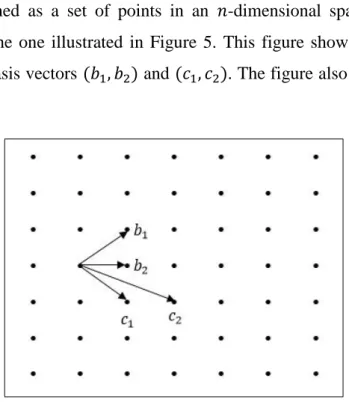
Figure 5: A two-dimensional lattice and two possible bases ... 37
Figure 6: APDA Research Processes in MSS ... 44
Figure 7: LHE Research Process in MCC ... 45
Figure 8: A MSS setting ... 53
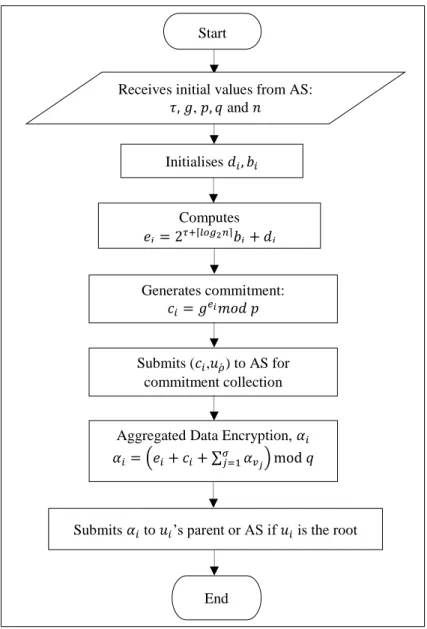
Figure 9: Commitment Generation and Aggregated Data Encryption by each node using APDAW ... 55
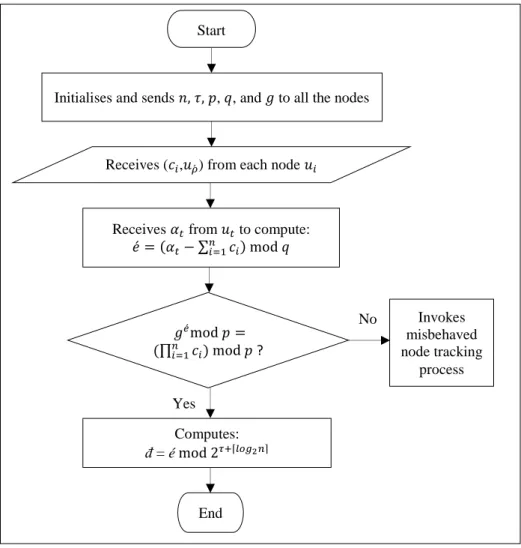
Figure 10: Commitment Collection, Aggregated Data Recovery and Integrity Checking by AS using APDAW... 56
Figure 11: The Misbehaviour Nodes Tracking Process by AS using APDAW ... 62
Figure 12: Commitment Generation, Aggregated Data Encryption and Integrity Checking by each node using APDAS ... 70
Figure 13: Commitment Collection, Aggregated Data Recovery and Integrity Checking by AS using APDAS ... 70
Figure 14: The Misbehaviour Nodes Tracking Process by AS using APDAS ... 76
Figure 15: The simulation setting of a network that consists of 103 nodes ... 103
Figure 16: Simulation attributes settings ... 104
Figure 17: Total execution times for the process only up to integrity checking using APDAW, APDAS and VPA+. ... 109
Figure 18: Total execution times for the whole process up to misbehaved node detection using the two versions of APDA in various sizes of networks. ... 110
Figure 19: Total execution time for the whole process including misbehaved node detection in one cell, 50% and 25% of cells using APDAW, APDAS and APDAH. ... 114
Figure 20: Probabilities for MaxB to get a correct maximum using different numbers of strings. ... 116
Figure 21: Total execution times for maximal value finding. ... 119
xviii Figure 24: Total execution times for one round of data processing (summing) in the ciphertext form ... 145 Figure 25: Total execution times for one round of data processing (mixed operation) 146 Figure 26: The proposed protocol with added Data Authority (DA) ... 159
xix
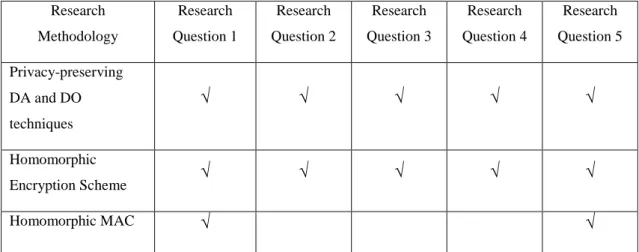
Table 1: Research Methodology versus Research Questions ... 43
Table 2: The Compared Scheme based on the selected Criteria ... 101
Table 3: Parameter Settings for APDAW, APDAS and VPA+ for the process up to integrity checking ... 105
Table 4: Parameter Settings for APDAW, APDAS and APDAH for the whole process including misbehaved node detection ... 106
Table 5: Total execution time for the whole process up to integrity checking in one round data aggregation using APDAW and VPA+ ... 107
Table 6: Results of t-Test for 2 samples of APDAW and VPA+ in Table 5 ... 108
Table 7: Total execution time for the whole process up to the integrity checking in one round data aggregation using APDAW, APDAS and VPA+ ... 108
Table 8: Total execution times for the whole process including misbehaved node detection using two versions of APDA in various sizes of networks ... 110
Table 9: Total execution times for the whole process using the combined TD and BU approach. ... 112
Table 10: Probabilities from our experimental result and Equation 4.26 for MaxB to get a correct maximum using different numbers of strings ... 115
Table 11: t-Test result for 2 samples in Table 10... 117
Table 12: The Parameter Setting for implementing MaxC, MaxB and VPA⊕ ... 117
Table 13: Total execution times for the maximal value finding using MaxC and VPA⊕ for t-Test evaluation ... 118
Table 14: t-Test result for 2 samples in Table 13... 118
Table 15: Total execution times for the maximal value finding using MaxC, MaxB, MaxH and VPA⊕ ... 119
Table 16: Selected Existing Schemes ... 136
Table 17: Simulation attribute settings ... 141
Table 18 : The parameter settings ... 142
Table 19: Research Objectives achieved by the Proposed and Existing Schemes ... 152
1
C
HAPTER
1
I
NTRODUCTION
1.1FOREWORD
The role of society has emerged to depend on a number of key sensing systems due to rapid technology advance over recent decades. In sensing systems, mobile users are becoming the main contributors to the data creation as they are actively contributing to data generating and processing via the use of mobile devices such as smartphones and tablets. With the emerging technology of mobile devices, more sensors can be embedded in the devices to collect, process and distribute data among people. As data is shared and distributed among people and processed by arbitrary applications, there is a serious risk of unattended leakage of personal sensitive information such as personal health information, user locations and sensitive personal images and videos. Such a scenario has led to the rise of concerns about user privacy and data security in mobile applications [1], [2].
To overcome such concerns, secure communication is required to protect user privacy and data security. One solution to this concern is to use an encryption scheme that enables data to be protected against unauthorised users and also allows the encrypted data to be processed by arbitrary applications without any need for decryption. Thus, in this chapter,
2 MSS and MCC are introduced, along with a discussion on the motivation behind the research in this thesis. The contributions to knowledge are also presented, in addition to the aims and objectives of the work, the methodology taken and the thesis structure.
1.2MOBILE COMPUTING
Nowadays, mobile devices like smartphones and tablets are the most effective and convenient communication tools that are not bounded by time and place. Mobile devices are quickly gaining popularity due to the support for a wide range of applications like gaming, image processing, video processing and online social network services. According to International Data Corporation (IDC)’s statistics, the worldwide smartphones market grew 13% year over year in 2015, with totalling encompassing 341.5 million shipments of these devices. Furthermore, the revenue of mobile app stores was near $40 billion in 2015 and expected to reach $100 billion in 2020 [2]–[6].
Mobile users can enjoy various services from mobile applications like iPhone and Google apps. Such rapid progress of the mobile computing is achieved via the great advance of the smartphones in terms of computing resources in the past few years. The latest smartphones are equipped with high performance processors, RAM, sensors and data storage. According to [7], Sony Xperia S comes with a 1.5GHz Dual Core processor, 1GB RAM, 32GB data storage support and 1750mAh battery. Similarly, HTC One X has a 1.5GHz Quad-core processor, 1GB RAM, 32GB data storage support and 1800mAh battery.
However, according to [8], though mobile devices have significantly increased their capabilities, those devices still have serious limitations to execute complicated computations. This limitation can be shown by comparing mobile devices to desktop machines. Devices like iPhones, Android Series and Mobile Window Series have slightly lower processing capabilities and significantly reduced memory capacities. Furthermore, their storage capacities are at 5 to 10 times smaller as well as their network bandwidth. In some cases, mobile services or applications require extensive computing power and massive storage spaces to run on mobile devices [9]. Thus, the mobile devices with low resources compared to desktop machines will suffer from a negative effect on the service operation and quality [5].
3
1.2.1MOBILE SENSING SYSTEMS
MSS has received a great deal of attention due to the rapid development in mobile phones via extending their capabilities to sense and process urban information. MSS may be composed of thousands of mobile nodes like smartphones and an aggregator like a CSP that are connected through the wireless medium. In MSS, mobile devices are embedded with sensors to sense surrounding data like health information in a distributed manner. The sensing data is collected and transmitted using a technique called data aggregation to increase the battery lifetime of mobile devices. Such an aggregation technique also increases the network lifetime by reducing the bandwidth size of data to be transmitted and battery energy usage [1], [10]–[12]. The collected data is transmitted to the aggregator for further process in order to generate some useful information, which benefits to the mobile users.
1.2.2MOBILE CLOUD COMPUTING
The emerging technology in mobile devices mainly in terms of computing resources and storage spaces has led MCC to receive a great deal of attention for further exploration and enhancement. On the one hand, such enhancements allow initial processing on the data such as encryption and decryption by mobile devices before outsourcing the data to the CSPs. Those processing are essential to protect the data and preserve the privacy of mobile users against the CSPs. On the other hand, as cloud computing services have emerged to suit the mobile devices implementation, rich-mobile applications have been developed to attract billions mobile users to leverage those services in a very convenient way with very minimal efforts through wireless connections and mobile devices [13]. The widespread Internet infrastructure like Wi-Fi and high-speed mobile Internet access like 4G allow those applications provided by the CSPs (e.g. Amazon, Google and Microsoft Azure) to be widely available and reliable to be accessed and leveraged by mobile users [14] .
In the next section, we describe data outsourcing techniques that allow data to be gathered and processed by the AS like a CSP. Those techniques allow mobile devices, which have limited capabilities mainly in term of battery lifetime, to reduce their battery consumption by outsourcing the data and their related processing to the AS.
4
1.3DATA OUTSOURCING
Data outsourcing is one of the best solutions, which allows data to be processed remotely in an efficient and secure manner. This data outsourcing is crucial particularly for resource-constrained devices like smartphones and tablets, by leveraging tremendous benefits provided by powerful and massive servers of CSPs. Furthermore, such a technique could improve the battery lifetime of mobile devices as they can avoid intensive data processing by themselves. In this thesis, two techniques of data outsourcing will be exploited, namely, data offloading and data aggregation.
1.3.1DATA AGGREGATION TECHNIQUE
In MSS, data aggregation is a good technique for allowing useful data, which has been generated or sensed by mobile devices, to be gathered and processed efficiently by an AS for statistical analysis purposes. Such a technique is proposed to increase the battery lifetime of mobile nodes as the aggregated data reduces the number of bits transmitted, so as to reduce the bandwidth usage in the data transmission [15]–[17]. Reducing the bandwidth in the data transmission increases the battery lifetime of mobile devices [18]. Furthermore, this technique could improve users or data contributors’ privacy and security against a malicious AS due to this technique mixing the collected data prior to the transmission to the AS so that it is difficult for the AS to identify the data from any particular individual contributor [11], [19], [20]. However, the technique does not preserve privacy among the data contributors as the data could be distributed from one distributor to another in a plaintext form [21]. Such an issue has received a great attention from researchers to propose privacy-preserving data aggregation techniques based on homomorphic properties [18], [22]–[25]. Such properties allow data to be processed in its ciphertext form without the need for decryption, so as to hide personal information of the data owner from the processor. Having a scheme with lightweight properties (i.e. demanding less resources from mobile devices for the encryption) would enable the concern to be addressed efficiently and securely.
1.3.2OFFLOADING TECHNIQUE
In MCC, the battery lifetime of mobile devices can be extended by offloading their large tasks like complex mathematical calculations, search functions, image processing,
5 gaming applications, downloading files and security applications to powerful and massive servers [26]. The work in [5] shows that portable computers that execute their large tasks remotely can save significant amounts of battery power by up to 51%. Furthermore, a computation offloading technique avoids taking a long application execution time on mobile devices, which requires a large amount of power consumption [5], [27]. To apply this offloading technique, some previous works have been carried out to evaluate the effectiveness of the technique through experiments. The results demonstrate that the remote application execution can save energy significantly [28]. However, offloading may not be always the best option as some factors like the network connectivity, communication bandwidth, utilisation cost and mobile device energy have to be considered. Furthermore, security is one of the most prominent bottlenecks in the adoption of the offloading technique [7].
1.4MOTIVATIONS
1.4.1USER PRIVACY AND DATA SECURITY
The data shifted to other parties for storing and processing purposes can have implications on its privacy and security [29], [30]. Since the data is processed by the other parties, all the information about the data is disclosed to them. Such a factor makes it evident that all the data cannot be outsourced without considering the privacy and security implications [31]–[34]. One possible solution to outsourcing data is to transform it into an encrypted form. This solution can prevent unauthorized access to the data. However, if the data is encrypted, then it normally needs to be decrypted by a third party in order to perform operations on the data [34]–[40]. Such decryption allows the third party to gain some or all of the information about the data [41]–[43]. To overcome this problem, Fully Homomorphic Encryption (FHE) that supports arbitrary functions on ciphertext data seems to be one of the best solutions because of its properties for encrypted data to be processed without decryption [44], [45], [46]–[49]. Thus, a new lightweight HE scheme needs to be proposed to allow ciphertext data to be processed securely and efficiently by CSPs.
6
1.4.2PROBLEM ON HOMOMORPHIC ENCRYPTION
A lot of FHE schemes have been proposed and improved upon but efficiency is still a big obstacle for their implementation. This efficiency is due to the fact that the complexity of the FHE schemes is normally high, which makes them not suitable to be implemented especially on small devices like smartphones, tablets, etc. [36], [37], [46], [48], [49]. Furthermore, performing data encryption before outsourcing the data requires additional processing by the mobile device and hence consumes extra energy [50]. Also the resource limitation of mobile devises means that security algorithms proposed for desktop machine environments may not directly work on the mobile devices. Therefore, a scheme with lower complexity is really needed to execute the encryption process on small devices without much resource degradation [51].
1.4.3LIMITATION ON MOBILE DEVICES
Mobile devices nowadays have evolved in their specifications and technology. However, they still have a limited amount of processing power compared to desktop machines. To encrypt using a FHE scheme, the devices require a large amount of processing power [25], [52]. Furthermore, mobile devices need to be charged regularly as higher computation in generating the ciphertext can quickly decrease the lifetime of the battery. Moreover, a large ciphertext size produced by the encryption scheme requires a large bandwidth for transmitting the data that leads to decreasing the battery lifetime even further [1], [4], [7], [12], [50], [53]. Therefore, a lightweight scheme is demanded to allow ciphertext data to be generated by mobile devices resource-efficiently and can be processed by other parties without sacrificing the privacy of user data and disclosing its information [52], [53].
1.4.4ACCOUNTABILITY
As the privacy of mobile users is becoming a major concern in data outsourcing, preserving their privacy is really crucial. However, this privacy-preserving leads to another difficulty of supporting the accountability of the users’ behaviour in order to deter some users from misbehaving, who could misuse the privacy preservation property to hide users’ identities for malicious purposes. The accountability here is referring to holding mobile users involved in collecting and processing the data in a network
7 responsible for their behaviour. This accountability is important because the data collected must be genuine and processed correctly to ensure the integrity of the final result.
In mobile networks, participating users could consist of both well-behaved and misbehaved users [54]. The misbehaved users are those who have a specific interest outside their responsibility [55] for providing the requested data to an AS. They might want to discover other users’ sensor data and use it for their own purposes. Furthermore, the misbehaved users may contribute fake data [56] that leads to a wrong result at the end of the process [57]. Identifying such users in the data aggregation process is very challenging. An appropriate technique needs to be proposed to detect and hold the misbehaved users accountable for their misbehaviour, while minimising device performance degradation.
1.5RESEARCH QUESTIONS
The motivations stated above have led us to list some research questions that need appropriate solutions to be figured out from this research work. Those questions are listed as below:
1.5.1 In MSS, the integrity of aggregated data received from mobile users could be verified if the data is in a plaintext form. However, such a form of data reveals the data content as well as the privacy of the data contributors to the aggregator. Thus, how can a scheme be provided to verify the integrity of the aggregated data without revealing the content and the privacy of the data contributors as well as reducing energy consumption of mobile devices?
1.5.2 In MSS, data contributors may consist of both well-behaved and misbehaved nodes. Tracking such misbehaved nodes in a privacy-preserving environment is crucial and challenging due to the inherent limitations of mobile devices. Thus, how can we track down those misbehaved nodes in such an environment without increasing the energy consumption of mobile devices?
1.5.3 In MSS, the aggregated data needs further processing to produce some meaningful results to the data users. Thus, how can a scheme be provided to support additive
8 and non-additive functions without revealing the data content and increasing the energy consumption of mobile devices?
1.5.4 In MCC, the generated data is transmitted directly by mobile users to a Cloud Server (CS) for data processing. As MCC uses a different structure and computational functions compared to MSS, a different encryption scheme needs to be implemented. Thus, how can we provide a scheme that allows a CS to process the data arbitrarily without revealing the data content, compromising the privacy of mobile users and increasing the energy consumption of mobile devices? 1.5.5 All the aforementioned schemes must be secured against potential threats and attacks in both MSS and MCC environments. Thus, how can it be proved that the proposed schemes are secured against those threats and attacks?
1.6AIM AND OBJECTIVES
The research questions stated above have led us to propose the development of two novel schemes for the MSS and MCC application scenarios. The key aim of the schemes is to enable data to be collected, stored and processed in its ciphertext form efficiently and securely by mobile devices. This needs to provide strong data security and preserve user privacy while holding the users accountable for their behaviour.
This research aim is achieved through the completion of multiple research objectives, including:
1.6.1 To develop a novel scheme, which can verify the integrity of aggregated data in MSS while preserving mobile users’ privacy. This objective has been achieved by using an extensive literature survey on privacy-preserving data aggregation techniques to provide the proposed novel APDA, which is able to verify the integrity of aggregated data without disclosing any information related to mobile users to the CSPs as to be described in Chapter 2 and 4.
1.6.2 To propose an innovative scheme that can detect any misbehaved nodes in a data aggregation process in MSS without compromising individual nodes’ data privacy. Such an objective has been achieved by using the proposed APDA with various versions to detect any misbehaved nodes in the aggregation process
9 certainly and efficiently as to be described in Chapter 4. In addition, we have evaluated those versions to fulfil this objective as to be described in Chapter 5. 1.6.3 To extend the functionality of the above proposed scheme to support additive and
non-additive statistical functions over encrypted data certainly and efficiently. We have developed an extended APDA by introducing three versions of a maximal value function in Chapter 4 and evaluated those versions in Chapter 5 to fulfil this objective.
1.6.4 To design a new FHE scheme, which has a lightweight property applicable to resource-constrained devices in MCC. This objective has been achieved by the proposed new LHE scheme that supports both addition and multiplication in an encrypted form as to be described in Chapter 6. Furthermore, we have evaluated this scheme to fulfil this objective and described it at end of this chapter.
1.6.5 To design secure schemes without scarifying the privacy of mobile users during data outsourcing. This objective has been fulfilled by the extensive security analyses provided on the proposed schemes against several attacks launched by a curious AS or malicious devices as well as attacks on the schemes themselves such as key recovery attacks and a many time pad attack. We have shown in Chapter 5 and 6 that our schemes are secured against those attacks.
1.7NOVEL CONTRIBUTIONS
This thesis offers two kinds of homomorphic encryption schemes, which have some essential characteristics that are desired by many applications on processing data in an encrypted form. The main novel contributions of our research work are as follows: 1.7.1 In MSS, mobile users or their devices may consist of both well-behaved and
misbehaved ones [21], [54], [58]–[65]. Holding a device accountable for its behaviour in such an environment is a very challenging task as the data is encrypted to preserve the users’ privacy. Therefore, our first contribution is to propose a novel privacy-preserving data aggregation technique called APDA. This scheme allows data to be aggregated in a privacy-preserving manner with an improved functionality that enables misbehaved nodes to be detected by an AS. Three approaches are introduced with varying capabilities. APDAW is proposed
10 to efficiently determine misbehaved nodes with less certainty. It offers lower computation and communication as there is no digital signature included in the ciphertext data. Conversely, APDAS is proposed to certainly pinpoint which nodes
have misbehaved, but its efficiency is lower. It requires high computation and communication as signatures are involved to detect misbehaved nodes with certainty. To take advantage of the strengths of these two methods and rectify their weaknesses, APDAH is proposed by mixing both versions to certainly pinpoint the misbehaved nodes with better efficiency.
1.7.2 In data aggregation, the purpose of having aggregated data is to generate additive and non-additive statistical results like Count, Sum, Average, Min/Max and Percentile. A number of researchers have proposed schemes to allow such functions to be executed on ciphertext data. Nevertheless, their limitations on efficiency and functionality are still the major challenges for their implementation [19], [21], [23], [66]–[73]. Thus, our second contribution is to propose an extended version of ADPA to support maximal value finding with better security and efficiency. Such an extended version could be developed for other comparative operations but is excluded from this thesis. Three modes of the scheme for determining a maximum value with different capabilities are proposed. MaxC is designed to accurately determine the maximum value, but its efficiency
is lower. Conversely, MaxB is developed to efficiently determine the maximum
value with less certainty. To take advantage of both methods, MaxH is proposed
as a mixed version of the methods to more efficiently determine the maximum value with certainty.
1.7.3 The existing FHE schemes cannot be directly implemented by resource-constrained devices as complexity and efficiency are the big obstacles for their implementation [34], [37], [44], [47], [48], [58], [74], [75]. The main reason of such complexity and inefficiency is that those schemes encrypt every individual bit and require a large public key size for each encryption [35], [76]. These conditions rapidly reduce the battery lifetime of mobile devices during encrypting the data. Thus, implementing such schemes requires extra computing resources to encrypt and decrypt the data, more bandwidth for transmitting the data and more
11 storage spaces for storing the data [1], [11], [38], [46], [59]. Therefore, our third contribution is to propose a new LHE scheme with less complexity but remains strong security to be implemented in MCC, so as to extend the battery lifetime of mobile devices. This scheme supports arbitrary functions on ciphertext data and it works well as long as the size of noise is less than that of the encryption key. This flexibility of the key size selection enables the scheme to incorporate any computation functions with better efficiency. As a result, such a scheme allows mobile devices, which have limited computing resources and storage spaces, to leverage rich mobile applications provided by CSPs in an efficient and secure manner.
1.8THESIS STRUCTURE
The research detailed in this thesis is divided into six (6) chapters. An overview for each of the remaining chapters is provided as below.
Chapter 2 – Mobile Sensing Systems and Mobile Cloud Computing: This chapter investigates associated research into processing data in an encrypted form. Furthermore, we define what MSS are, how they function, what weaknesses they tend to have and how they are currently protected against threats using data aggregation and partially HE schemes. Moreover, MCC is also explored to give an overview of how mobile applications could benefit from the emerging technology of cloud computing.
Chapter 3 – Mathematical Foundation: This chapter will draw some of the mathematical concepts that have been used and utilised throughout this thesis. Furthermore, this chapter will give an overview into the fundamental concepts and the development of FHE schemes. In addition, research methodology will be presented at the end of this chapter. Chapter 4 – Accountable Privacy-preserving Data Aggregation: In this chapter, the design of APDA and its extended version to support maximal value finding on aggregated data will be presented. It will entail an outline of its specification, a detailed discussion on its architecture and an explanation of its operation.
Chapter 5 – Security Analysis and Performance Evaluation of APDA and Max Methods. This chapter provides security analysis and performance evaluation on the proposed schemes. This chapter also describes a detailed analysis of the data aggregation results.
12 A visual interpretation of the data aggregation process and a justification of the results obtained will also be put forward in this chapter.
Chapter 6 – A New Lightweight Homomorphic Encryption Scheme: In this chapter, we propose a new LHE scheme that allows mobile users to leverage rich mobile applications provided by CSPs. The scheme will be compared with other schemes to demonstrate its efficiency. Furthermore, an in-depth security analysis will be provided to show that although the scheme has lightweight features, it can still provide stronger security to protect the encrypted data.
Chapter 7 – Conclusions and Future Work: In the final chapter of this thesis, the research presented here will be concluded by discussing the accomplishments of this research work. This chapter will also highlight how future work can be built on for research purposes.
1.9SUMMARY
This chapter has provided an overview of the thesis related to MSS and MCC. The issues of user privacy and accountability as well as data security and integrity, which are becoming major concerns in both MSS and MCC, have motivated us to conduct the research presented in this thesis for better solutions. To achieve this, five project objectives have been set out and the accomplishment of these objectives has resulted in three novel research contributions, which are the APDA scheme, its extended version and the LHE scheme. APDA is proposed to support the accountability of users’ behaviours, while its extended version is devised to allow some statistical calculations to be executed efficiently in a privacy-preserving manner. Furthermore, the new LHE scheme is developed to suit MCC needs on lightweight and strong security properties. Also the thesis structure is provided at the end of this chapter to briefly describe the following chapters in this thesis. The next chapter will thoroughly describe how both MSS and MCC are implemented and figure out all benefits and limitations inherent in both paradigms.
13
C
HAPTER
2
M
OBILE
S
ENSING
S
YSTEMS AND
M
OBILE
C
LOUD
C
OMPUTING
2.1INTRODUCTION
The emerging technology of computing paradigms has opened up a new way for data to be shared and benefited among mobile users. Support from cloud computing has also signified the rise of MSS and MCC to mobile users as all burdens of heavy computations are taken and managed by the cloud server. In addition, the wide spread of network communication links such as Wi-Fi access and high-speed technology like 3G/4G have contributed to this achievement. Nevertheless, as data is user-generated content, it may consist of sensitive information related to mobile users. Sharing and disclosing such data to other parties like other mobile users or a cloud server can lead to a disaster for the data contributors as such parties are assumed to be untrusted. They may misuse the data for their own benefits. Experiencing security issues such as privacy, confidentiality, accountability and integrity of the shared data has prevented mobile users from contributing their data into such systems as there is no guarantee how their data will be protected. Thus, this chapter introduces and explores two areas of studies, which are MSS and MCC.
14 MSS is gaining more popularity as more sensors can be embedded in the mobile devices so that the devices can provide better sensing functionality than wireless sensor nodes [1], [23], [67], [71]. Sensors that are built into mobile phones on the one hand, are more powerful than traditional sensor nodes as they can be conveniently recharged. Furthermore, such sensing systems can not only sense a surrounding environment like road congestion and crowd in an event but also information related to mobile users like health information and locations. In an urban area, the sensed data can be collected on a massive scale by leveraging thousands of individual mobile phones and a near-pervasive wireless-network infrastructure like Wi-Fi access [56].
On the other hand, some mobile applications like gaming and complex mathematical algorithms require extensive computing resources and massive storage spaces to be executed by mobile devices. Running such applications on mobile devices is not practical as it reduces the battery lifetime rapidly. Thus, MCC is introduced to mobile devices in order to leverage the tremendous advantages provided by cloud computing to resolve such limitations. MCC is one of the interesting research areas in cloud computing. This is due to the main objectives of cloud computing, which are to facilitate access to ample computing resources by small and resource-constrained devices like smartphones and tablets. Furthermore, mobile users can experience with rich mobile applications through the widespread third/fourth generation (3G/4G) mobile networks and Wi-Fi access. According to [53], MCC can be defined as “a rich mobile computing technology that leverages unified elastic resources of varied clouds and network technologies toward unrestricted functionality, storage and mobility to serve a multitude of mobile devices anywhere, anytime through the channel of Ethernet or Internet regardless of heterogeneous environments and platforms based on the pay-as-you-use principle”.
In the following sub-sections, service models, benefits and limitations inherent within both MSS and MCC will be explained. Such explanations are essential to understand the issues in both areas of studies in order to provide solutions to their existing problems.
2.2MOBILE SENSING SYSTEMS
MSSs differ significantly from traditional WSNs that focus on urban environments for sensing and collecting data. In MSSs, sensing devices belong to individuals with diverse
15 interests, while in WSNs, the sensor nodes are owned and managed by a single authority. Furthermore, mobile devices have better computing resources and storage spaces than sensor nodes and can be recharged regularly. Moreover, MSSs feature dynamic node mobility, while WSNs mostly consist of static sensing elements, which are either physically placed or randomly distributed across a target area of interest [77].
On the other hand, mobile sensing data is more related to personal information rather than environmental, agricultural or industrial monitoring data in WSNs. In MSSs, humans act as data contributors, while in WSNs, sensor nodes are responsible for sensing and generating data to be collected and processed by an AS [78]. Though both MSSs and WSNs have significant differences, both types of application may gather sensed data using the same approach called data aggregation as it can increase the overall lifetime of the applications. The reason is that, such an approach requires less bandwidth for transmitting the aggregated data and uses less battery energy.
2.2.1SYSTEM APPROACH
A MSS leverages a data aggregation approach in order to increase its overall network lifetime. For example, in hierarchical networks, special nodes are used to aggregate the sensed data in order to decrease the number of data packets transmitted to the root node like a CSP. As a result, the energy efficiency of the whole network can be improved as less bandwidth requires for data transmission. Such networks consist of several categories like cluster-based, chain-based and tree-based networks. In brief, each category of hierarchical networks can be described as follows.
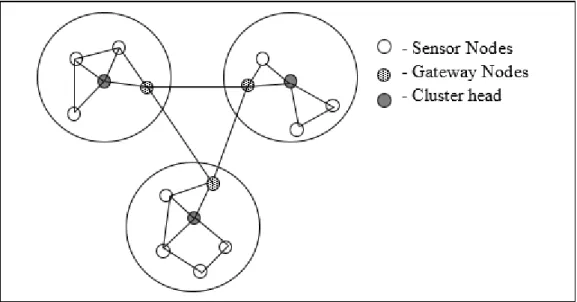
Cluster-based networks consist of a cluster head, gateway nodes and ordinary sensor nodes as shown in Figure 1. In this network, sensor nodes are divided into clusters and the data that is sensed by sensor nodes is sent to a high end sensor called a cluster head in each cluster. A cluster head aggregates all the data and transmits the aggregated data via a tree structure to the base station. In addition, the gateway nodes link adjacent clusters. On the other hand, chain-based networks comprise of sensor nodes, leader heads and a sink node as illustrated in Figure 2. In such networks, each sensor node communicates and transmits the sensed data only to the closer neighbour to form a chain using an algorithm like a greedy algorithm [79]. This formed chain will lead to the leader
16 node, which collects and submits the data to the sink node [80]. Such a setting reduces the distance of data transmission so as to decrease the energy dissipation per round [81].
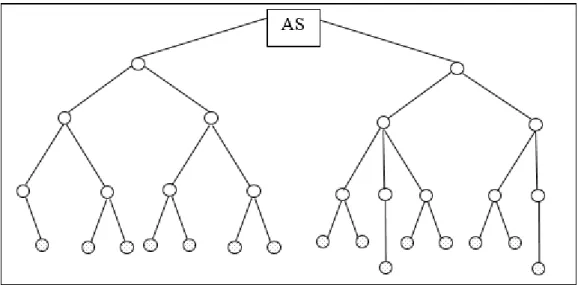
In tree-based networks, all nodes are organized into a tree or in a hierarchical form as shown in Figure 3. The intermediary nodes help to perform data aggregation and transmit the aggregated data upwards towards the root node [21].
Figure 1: Cluster-based Networks
17 - Leaf nodes (children): resource-limited sensor nodes/data collecting sensors.
- Intermediary nodes (parent/grandparent): act as intermediary data aggregators, aggregating the data received from their child nodes and forwarding the aggregated results to their parents.
- Tree root: a resource-enhanced server.
2.2.2BENEFITS
A MSS implements data aggregation to gather useful data and expresses the result in a summary form such as additive and non-additive statistical calculations. It has become one of the fundamental processing procedures for saving the energy in WSNs. The main goal of data aggregation algorithms is to gather and aggregate data in an energy efficient manner so that the network lifetime will be prolonged and reduce the latency of receiving data by the sink. The overall network lifetime is increased because the data aggregation implementation reduces redundancy in the transmitted data. Furthermore, such a technique can solve the implosion and overlap problems in data centric routing.
Data aggregation also reduces the number of data transmissions and retransmissions. As a result, this technique will directly decrease energy consumption and hence increase the overall network lifetime [131]. Moreover, this technique reduces the number of bits
Figure 3: Tree-based Networks
18 transmitted, thereby decreasing the bandwidth usage. In addition to reducing the number of data transmissions and retransmissions, data aggregation will directly reduce the number of collisions and the wastage of time. Finally, the data aggregation increases robustness and accuracy of information obtained from the network [16]. Nevertheless, such an approach still has some major issues related to the aspects of data security and integrity as well as user privacy and accountability.
2.2.3CHALLENGES AND LIMITATIONS
Data aggregation offers great advantages to prolong a network lifetime especially in WSNs and MSS. Nevertheless, this technique also presents significant challenges to the data and mobile users. One of the major challenges is the security of the sensed data itself as the data is tied to specific individuals. For instance, an adversary wishes to discover the data in order to reveal some information that can be used to identify a user’s location. Furthermore, the integrity of the sensed data is also important. The data that has been aggregated must be genuine to ensure that some statistical results could be correctly generated. CarTel [8] and VTrack [3] are the examples of data integrity breaches that use traffic statistics such as an average speed as an indicator of congestion to help system users to do route planning. A malicious driver may manipulate the aggregate result to prevent other users from choosing its current road.
Moreover, in a MSS, mobile data is shared among users to allow data to be aggregated and processed by an AS (or a CSP). Nevertheless, users are reluctant to share their data as their privacy like personal and location information could be disclosed to the system. In [77], a study of the relationship between air quality and public health is one of the examples, where the study required some information related to personal health data such as heart rates, blood pressure levels and weights at different sections of an urban area. Mobile users were reluctant to reveal their personal data if their data would be used to invade their privacy. In addition, as such data is very crucial to determine the health condition of the data owner, the data should be genuine and reliable. Such examples highlight the necessity for verifiable privacy-preserving data aggregation techniques that can ensure strong user privacy and also aggregation integrity [23], [56].
19 Finally, the system may consist of well-behaved and misbehaved users with an easy access to wireless networks that may have a weak security control. A node could misbehave by refusing to forward necessary data packets in order to save its energy (selfishness) or simply degrade network performance (maliciousness). Furthermore, this node may modify their devices in terms of software or hardware to increase their individual network benefit while expending less resources. To prevent such concerns, every network device can be equipped with a tamper-proof hardware. However, this accessory requires extra costs as such a hardware is not cheap [8]. Hence, the network must be able to detect instances of misbehaviour, identify the misbehaving nodes and revoke them from the aggregation process [55]. Such challenges provide a new research area of study to propose solutions to the stated problems.
2.2.4EXISTING SOLUTIONS AND LIMITATIONS
Some contributions have been made through several projects like MetroTrack [82] and SensorPlanet [12] to accelerate the rise of MSSs. For example, SensorPlanet is a Nokia initiated global research framework for mobile device-centric WSNs [12]. These projects have attracted several universities and companies to work together to facilitate research on data analysis and mining, visualization and machine learning.
The UCLA Urban Sensing initiative is proposed to compose a sensor-based recording of users’ experiences and environments [12]. Furthermore, the Intel-sponsored Urban Atmospheres project is proposed to explore the human condition by using embedded sensors in mobile devices. Also the Massachusetts Institute of Technology Cartel project provides a mobile communications infrastructure based on car-mounted communication platforms exploiting open Wi-Fi access points in a city, and it provides urban-sensing information such as traffic conditions [23]. Moreover, the CitySense project involving Harvard University, the city of Cambridge (Massachusetts, USA) and BBN Technologies provides a static sensor mesh offering similar types of urban sensing data feeds [31]. Though such projects have facilitated the rise of MSSs, the key issue of how to preserve the privacy of mobile users is still a big challenge on the urban sensing implementation. Thus, a number of solutions have been proposed to deal with the issue as described in Sub-section 2.2.3. AnonySense is a privacy-aware architecture for realising pervasive
20 applications that is based on collaborative and opportunistic sensing by personal devices. This solution has focused on protecting the privacy of participants of sensing data while allowing their devices to reliably contribute high-quality data to the large-scale applications. This scheme incorporates new privacy-aware techniques into secure tasking and reporting, and demonstrates that their solution consumes minimum device resources. The scheme can also protect privacy against outside eavesdroppers and other mobile nodes [59]. However, according to Ziling, E., et al., such a solution does not protect privacy against other ASs. The scheme also does not support additive and non-additive aggregation functions on ciphertext data. Furthermore, the scheme does not support node failure and data loss resilience, which refers to whether the AS can compute a correct aggregate result when a few mobile nodes become offline or a few messages get lost [67]. To overcome the disadvantages of AnonySense, PriSense has been proposed to provide a novel solution to privacy-preserving data aggregation in People-Centric Urban Sensing Systems (PC-USSs) [77]. This scheme is based on the concept of data slicing and mixing to preserve the privacy of mobile users against any curious ASs. It also supports a wide range of statistical additive and non-additive aggregation functions on ciphertext data. Furthermore, the scheme protects privacy against outside eavesdroppers, other mobile nodes or the ASs. Nevertheless, according to Ziling, E., et al., this scheme does not support node failure and data loss resilience [67].
To improve the weaknesses of PriSense, PDA has been proposed in [77]. It is a novel privacy-preserving robust data aggregation scheme in PC-USSs. The scheme is designed based on 𝐾-anonymity, homomorphic encryption and secret sharing. This scheme also supports a wide range of statistical additive functions without leaking individual sensed data. Furthermore, PDA is robust to node failure and data loss. Moreover, the scheme protects privacy against outside eavesdroppers, other mobile nodes or the ASs [67]. However, such a scheme does not support non-additive functions and provides an integrity check to the aggregated data, thus preventing the non-genuine data to be aggregated.
In another work, VPA has been proposed to provide a novel peer-to-peer based solution to verifiable privacy-preserving data aggregation in PC-USSs [23]. It achieves strong user privacy by letting each user exchange random shares of its data with other peers, while
21 ensuring data integrity through a combination of Trusted Platform Module and homomorphic encryption Message Authentication Code (MAC). VPA leverages the same technique as in PDA, which is the slicing technique to provide data privacy in the aggregation process. Furthermore, VPA can support a wide range of statistical additives using VPA+ and non-additive aggregation results by implementing VPA⊕.
However, VPA has to accept that the Max/Min aggregation functions naturally disclose some information about a user’s data: any user’s data will be smaller than or equal to the maximum value 𝑑𝑚𝑎𝑥 and larger than or equal to the minimum value 𝑑𝑚𝑖𝑛. The reason
why the VPA cannot prevent this kind of privacy breach is due to the aggregate functions themselves. As a result, VPA ignores such a natural privacy breach and focuses on the loss of privacy occurring in the query process [23]. On the other hand, VPA implements a signature for each data encryption and thus requires more computing resources to compute the signature, i.e. hash values. Furthermore, VPA also provides an integrity check on the aggregated data as in PDA. However, if the integrity check has failed, the scheme is not able to detect which nodes have misbehaved, and this limitation does not allow the scheme to revoke such misbehaved nodes from a further aggregation process. As a conclusion, though all the aforementioned schemes guarantee mobile users’ privacy while some can securely support statistical analyses on the aggregated data, their scheme efficiency still can be improved to prolong the network lifetime of MSS. Furthermore, the most essential flaw of the proposed schemes is that, they cannot support the accountability of the participating users for their behaviour. Such a limitation prevents the system from detecting the misbehaviour instantly, identifying the misbehaving nodes and revoking them from a further aggregation procedure. These reasons have led us to propose a novel technique that can support participating users’ accountability in a privacy-preserving manner.
On the one hand, the emerging technology of mobile devices has allowed rich-mobile applications provided by CSPs to be accessed and leveraged by mobile users via wireless links. On the other hand, such improvements allow security elements like encryption and decryption processes to be executed by mobile devices to improve the security of the outsourcing data. Thus, the next section describes the implementation of mobile devices in MCC and how such devices could be benefited by cloud technology to facilitate mobile
22 users to utilise all services provided by CSPs in a privacy-prserving manner with less resources degradation.
2.3MOBILE CLOUD COMPUTING
Mobile devices are becoming the major computing component nowadays thanks to their prevalence of ubiquitous connection via the high-speed network technology such as 3G/4G and Wi-Fi access. Nevertheless, limitations on computing resources, storage spaces and battery lifetime lead to the need for external support architecture like cloud computing as it can provide elastic resources to applications on those devices. The implementation of cloud computing by mobile devices has led to the emergence of several computing paradigms such as Mobile Cloud Computing (MCC) [26], Fog Computing [83]–[88] and Mobile-edge Computing (MEC) [89]–[93]. Such paradigms share the same concepts and promise better solutions to mobile devices by alleviating all the burdens of heavy computations and complex tasks to the cloud servers. Nevertheless, those paradigms have specific structures that may only suitable for particular services requested by mobile users. Moreover, such paradigms may face other limitations such as security issues that need further improvements.
For instance, Fog computing and MEC provide some advantages mainly in providing low latency and improving Quality-of-Service (QoS) for streaming and real-time applications as they provide processing and storage resources to lower layers of the computing architecture [84], [88], [92]. However, such paradigms introduce other drawbacks in term of reliability, as the lower layer devices are not reliable compared to a cloud server [83], [93]. In addition, those devices’ connectivity cannot be guaranteed, which implies the requested service cannot be fulfilled even its computational hardware is working [83], [92]. Furthermore, the edge nodes usually consist of end devices, which are smaller and less powerful than a massive and powerful cloud server [85], [94], [95]. Thus, applications demanding heavy computations need to be processed by cloud servers. Such requirements lead to the need for MCC implementation and its detail is provided in the sub-sequent sub-section.
23
2.3.1ARCHITECTURE
MCC is designed on a standard cloud service model. Gartner [33] has defined cloud computing as a style of computing where massively scalable IT-enabled capabilities are delivered ‘as a service’ to external customers using Internet technologies. According to National Institute of Standards and Technology (NIST) USA, cloud computing is a model for enabling ubiquitous, convenient, on-demand network access to a shared pool of configurable computing resources like networks, servers, storage, applications and services that can be rapidly provisioned and released with minimal management effort or service provider interaction [53].
Figure 4: Mobile Cloud Computing Architecture
In MCC, mobile devices obtain services from a centralized cloud like Amazon Web Services (AWS) and Google [72]. The cloud is located in a remote centralized cloud infrastructure as illustrated in Figure 4. Mobile devices can access the data centre resources through a near-pervasive network infrastructure such as Wi-Fi Access Points (APs) or 3G/4G cellular networks. In this setting, the cloud represents a third party to provide services to the original content providers and mobile devices. By using the cloud, a mobile device can offload part or all of its workload to the cloud in order to process its data by utilising the massive cloud resources [14].
2.3.2BENEFITS
24 Even though the capability of mobile devices has been improved, certain facilities like wireless communication appear to be highly power-consumptive. Several techniques in [96] have been introduced to reduce the power consumption and save energy during communication. Furthermore, the battery lifetime can be extended by offloading large tasks for remote processing. The work in [96] shows that the portable computers executing their large tasks remotely can save up to 51% of battery power. Dinh, H., T., et al. [27] proposed a computation offloading technique to outsource large computations and complex processing from resource-limited devices to massive resource machines like servers in clouds. Such a technique prevents taking long application execution time on mobile devices that requires a considerable amount of power consumption on the devices.
(ii) An improvement on a capacity of data storage
Mobile devices suffer from limitations on storage capacity. Thus, MCC is developed to enable mobile users to store or access a large amount of data on the cloud through wireless networks. The Amazon Simple Storage is one of the services provided to facilitate the data storage of mobile users. Another example is the Image Exchange which utilizes the large storage space in clouds to serve mobile users. By using the cloud storage as a service, the users can save significantly their mobile devices’ energy and storage space due to all data being stored and processed in the clouds [27].
(iii) Cost saving
In MCC, the costs like time, energy and fees need to be considered carefully prior to offloading mobile data to the clouds. This silent commitment can ensure that mobile users enjoy all services provided by the clouds under a reasonable cost without degrading their mobile device performance. Furthermore, Walker et al. [4] have proposed a model that highlights the advantages of leveraging storage from the cloud rather than to buy extra computing resources and spend more on the software [9].
2.3.3CHALLENGES AND LIMITATIONS
In MCC, mobile users leverage all services provided by the clouds through web applications. The data that has been outsourced to the cloud can have implications on privacy and security as the data is going out of users’ control into the public domain. Furthermore, as the data is stored and managed in the cloud, security and privacy settings
25 depend on the IT management provided by the cloud. On the other hand, the CSP typically works with many third party vendors, so there is no guarantee how these vendors may safeguard the data. Moreover, data on the cloud may be stored at multiple locations across different states and countries. Thus, the security of the data depends on its location, and regulations for accessing the data might differ from one country to another [50]. As a result, the implications on security and privacy of the data need to be considered prior to the data being outsourced to the cloud.
To remedy such concerns, an encryption technique is one of the possible solutions to protect data in the cloud. This technique prevents

![Figure 8 provides an overview of MSS setting and inherent security flaws of MSS. Such flaws could be remedied by appropriate techniques such as privacy-preserving methods proposed in [21], [23], [25], [36], [67]](https://thumb-us.123doks.com/thumbv2/123dok_us/420286.2548209/72.892.220.770.472.834/provides-overview-inherent-security-remedied-appropriate-techniques-preserving.webp)