Regional
Strategic Plan for
Immunization
AFRO Library Cataloguing-in-Publication Data Regional Strategic Plan for Immunization 2014-2020
1. Vaccination – trends
2. Immunization Programs – organization and administration 3. Child Mortality – prevention and control
4. Communicable Diseases – prevention and control 5. Healthcare Disparities
6. Regional Health Planning 7. Strategic planning
I. World Health Organization. Regional Office for Africa
ISBN: 978 929 023 2780 (NLM Classification: WA 115)
© WHO Regional Office for Africa, 2015
Publications of the World Health Organization enjoy copyright protection in accordance with the provisions of Protocol 2 of the Universal Copyright Convention. All rights reserved. Copies of this publication may be obtained from the Library, WHO Regional Office for Africa, P.O. Box 6, Brazzaville, Republic of Congo (Tel: +47 241 39100; Fax: +47 241 39507; E-mail: [email protected]). Requests for permission to reproduce or translate this publication, whether for sale or for non-commercial distribution, should be sent to the same address.
The designations employed and the presentation of the material in this publication do not imply the expression of any opinion whatsoever on the part of the World Health Organization concerning the legal status of any country, territory, city or area or of its authorities, or concerning the delimitation of its frontiers or boundaries. Dotted lines on maps represent approximate border lines for which there may not yet be full agreement.
The mention of specific companies or of certain manufacturers’ products does not imply that they are endorsed or recommended by the World Health Organization in preference to others of a similar nature that are not mentioned. Errors and omissions excepted, the names of proprietary products are distinguished by initial capital letters.
All reasonable precautions have been taken by the World Health Organization to verify the information contained in this publication. However, the published material is being distributed without warranty of any kind, either express or implied. The responsibility for the interpretation and use of the material lies with the reader. In no event shall the World Health Organization or its Regional Office for Africa be liable for damages arising from its use.
2014 - 2020
Regional
Strategic Plan for
Immunization
TABLE OF CONTENTS
Acronyms ...IV
Executive summary ...V
1. Introduction ...8
2. Situation analysis and justification ...14
3. Formulation of the strategy ...20
3.1Priority setting ...22 3.2 Aim ...25 3.3 Objectives ...25 3.4 Targets ...26 3.5 Guiding principles ...27 3.6 Strategic directions ...32 3.7 Key approaches ...45
4. Implementation of the strategy ...48
4.1 Key approaches for implementation...51
4.2Roles and responsibilities of stakeholders ...52
5. Resource implications ...60
6. Monitoring and evaluation framework ...66
7. Conclusions ...70
8. Annexes ...76
Annex 1: Transitioning from GIVS to GVAP ...78
Annex 2: Immunization as a component of the human right of health...79
Annex 3: Costing and financing estimates...81
Regional Strategic Plan for Immunization 2014–2020
IV
ACRONYMS
AEFI Adverse events following immunization
AFP Acute flaccid paralysis
CCS Country Cooperation Strategy
cMYPs comprehensive multiyear plans
cVDPV circulating vaccine-derived poliovirus
DTP Diphtheria-tetanus-pertussis vaccine
EPI Expanded Programme on Immunization
FBO Faiths-based organizations
GVAP Global Vaccine Action Plan
GIVS Global Immunization, Vision and Strategy
HIV Human immunodeficiency virus
HMIS Health management information system
HPV Human papillomavirus Vaccin
HSS Health systems strengthening
ICC interagency coordinating committee
IDSR integrated disease surveillance and response
IHR International Health Regulations (2005)
IPV inactivated polio vaccine
JRF joint reporting form
MCV measles-containing vaccine
Men A meningitis type A
MenAfriVac© meningococcal meningitis A conjugate vaccine
NGO nongovernmental organization
NITAG national immunization technical advisory group
NRA national regulatory authority
OPV oral polio vaccine
PCV pneumococcal conjugate vaccine
PEI Polio Eradication Initiative
REC Reaching every child
RED Reaching every district
SIA supplementary immunization activity
TB tuberculosis bacilli
TT tetanus toxoid vaccine
UNICEF United Nations Children’s Fund
USAID United States Agency for International Development
VDPV Vaccine-derived polioviruses
WHA World Health Assembly
WHO World Health Organization
EXECUTIVE SUMMARY
Immunization has been the mainstay of national and regional public health strategies in the African Region for the past four decades. By overcoming many structural, financial, geographical and managerial obstacles to providing universal access to immunization, the Region has achieved coverage levels of about 70% for three doses of the diphtheria-tetanus-pertussis (DTP3) vaccine and the first dose of the measles vaccine. Measles mortality has declined by 88% since 2000, and only one country in the Region remains endemic for wild poliovirus. The development of a new vaccine against meningococcal meningitis type A and its introduction among millions of children and young adults has protected populations living in the so-called meningitis belt of sub-Saharan Africa from an eruption of that disease.These are just some of the achievements that have led to the dramatic reduction in infant and under-five mortality in Africa in the last few decades. Yet, regional vaccination coverage seems to have stalled over the past three years. Gaps in organization, coordination and management of immunization activities; inadequate vaccine supplies and cold storage capacity; limited service delivery points; heavy dependency on international funding; and inappropriate communication strategies that have resulted in low community awareness and participation are obstacles to achieving equity in access to safe and effective immunization for all targeted populations in the Region.
To respond to these and other challenges and in the spirit of global solidarity, the World Health Organization (WHO) endorsed a Global Vaccine Action Plan (GVAP) in 2012. That plan was formulated through a broad-based
consultative process in which African countries and many partners and relevant institutions played an active role. This strategic document addresses the challenges countries in the WHO African Region and their partners need to overcome to provide universal access to immunization for all eligible populations by 2020. It builds on lessons learned during 2009–2013 when the Global Immunization Vision and Strategy (GIVS) served as the framework for global and regional responses to address immunization gaps. It is a call for an unprecedented coalition of minds and means to ensure that every child born in the African Region has the chance to be protected against deadly diseases for which safe and effective vaccines exist or will be brought to the market between 2014 and 2020, bearing in mind that sustainable access to immunization requires strong and durable linkages to primary health care. The strategy also covers other population groups that require immunization.
The aim of this strategic plan is to ensure achievement of universal immunization coverage within the WHO African Region. To accomplish that aim, the following objectives have been defined:
■to improve immunization coverage beyond the
current levels
■to complete interruption of poliovirus transmission and ensure virus containment
■to attain elimination of measles and make progress in elimination of rubella and congenital rubella syndrome
■to attain and maintain elimination/control of other vaccine-preventable diseases
Regional Strategic Plan for Immunization 2014–2020
VI
The transition from GIVS – which inspired the formulation of the 2009–2013 African Region Strategic Plan – to GVAP in the current decade will require strategic adjustments, notably:
■Moving from supply-driven to demand-driven
community immunization approaches with Member States mobilizing local communities;
■Moving from globally driven immunization agendas to nationally owned immunization programmes with increased national budget allocations;
■Going from single-stream programme structures to integrated health systems’ approaches with routine immunization seen as the bedrock of all immunization activities situated within a robust primary health care system; and
■Giving stronger emphasis to the life-cycle approach to immunization.
This strategic plan is intended to help shape national strategic plans so as to improve (i) harmonization in eliminating inequities in access to immunization services both within countries and across the Region, (ii) equity in access to human and financial resources needed to achieve this goal, and (iii) mutual accountability between governments and their domestic and international partners. The monitoring and evaluation framework appended to this strategic plan provides national, regional and global standards for accountability goals.
Introduction
Regional Strategic Plan for Immunization 2014–2020
10
The African Regional Immunization Strategic Plan 2009–2013 provided significant impetus for immunization in the Region. Reports from countries, through the 2013 joint reporting form (JRF), showed DTP3 coverage at 90% in 25 countries, above 80% in 35 countries, above 50% in 45 countries, and below 50% in only two countries. However, estimates based on WHO/UNICEF immunization coverage data were significantly lower than JRF data, in some cases by as much as 10 points. Significant progress has been reported in polio eradication, notwithstanding the re-emergence of this disease in the Horn of Africa and Central Africa. There has been a steady introduction of new vaccines, with the high coverage of the MenA vaccine in the African meningitis belt being noteworthy. Coverage of DTP3 vaccine and the first dose of the measles containing vaccine (MCV1), though, have stagnated since 2009, and results have been mixed in the efforts to eliminate maternal and neonatal tetanus. Challenges still exist such as planning and leadership gaps, scarcity of service and outreach points, inadequacy in stocks of vaccines and cold chain capacity, insufficient
funding, human resource deficiencies, and poor data management and communication strategies.
This African Regional Immunization Strategic Plan 2014–2020 affords the opportunity for Member States and their partners, together with the WHO African Regional Office, to redefine their vision for the Region in the context of the 2011–2020 Decade of Vaccines. The Region has been instrumental in contributing to global progress in immunization through a series of resolutions by the WHO Regional Committee for Africa and the World Health Assembly. Also, since 2012 the Region has been engaged in the development of the Global Vaccine Action Plan (GVAP) for the Decade, consulting with and getting inputs from its Member States and their partners. In 2012, the World Health Assembly endorsed GVAP with its five goals of eradicating polio; meeting global and regional elimination targets; meeting vaccine coverage targets in every region, country and community; developing, introducing and improving vaccines and technologies; and exceeding the Millennium Development Goal (MDG) 4 target for child mortality reduction.
Selected resolutions by the WHO Regional Committee for Africa and the World Health Assembly specific to immunization
■ Resolution AFR/RC63/14, Immunization in the African Region: progress report on the African Regional Immunization Strategic Plan 2009–2013; global vaccine action plan and polio endgame.
■ Resolution AFR/RC61/R1, Measles elimination by 2020: a strategy for the African Region
■ Resolution AFR/RC61/R4, Poliomyelitis eradication in the African Region.
■ Resolution AFR/RC60/R4, Current status of routine immunization and polio eradication in the African Region: challenges and recommendations.
■ Resolution WHA65.17, Global Vaccine Action Plan.
■ Resolution WHA65.5, Poliomyelitis: intensification of the global eradication initiative.
The transition from the Global Immunization Vision and Strategy (GIVS), which inspired the formulation of the African Regional Strategic Plan 2009–2013, to the GVAP process in the current decade will require strategic adjustments, notably:
■Moving from supply-driven to demand-driven
community immunization with Member States mobilizing local communities;1, 2
■Moving from globally driven immunization agendas to national ownership of immunization programmes with increased national budget allocations for immunization;3 ■Going from single-stream programme structures to
integrated health systems’ approaches with routine 1 WHO Regional Committee for Africa. Immunization in the African Region: Progress report on
the African Regional Immunization Strategic Plan, 2009–2013. Global Vaccine Action Plan and Polio Endgame, AFR/RC63/14, 23 September 2013.
2 Public health programmes designed to improve coverage of childhood immunization should
address people and the communities and societies in which they live (Wiysonge CS, Individual and contextual factors associated with low childhood immunization coverage in sub-Saharan Africa: A multilevel analysis, PloS ONE, May 2012, vol. 7, Issue 5, e37905).
3 Statistical analysis has shown that donor assistance to governments has had a negative and
significant effect on domestic government spending for 12 countries in the Region between 2000 and 2010 experiencing a negative growth rate in expenditure on health as a percentage of GDP (Lu C et al. Public financing of health in developing countries: a cross-national systematic analysis. The Lancet, vol. 375, April 17, 2010; WHO Regional Office for Africa, Atlas of African Health Statistics 2012).
immunization4 as the bedrock of all immunization
activities situated within robust primary health care systems; and
■Stronger emphasis on the life-cycle approach
to immunization.
This regional immunization strategic plan is being developed at a time when Africa’s economies have been experiencing annual growth rates well above 5% for over a decade, there is widespread optimism about the Region’s prospects for continued steady growth, and growing international attention is focused on Africa as an investment destination. Entrepreneurship across the Region is strong in spite of difficulties in access to credit, and mobile technology is penetrating the Region rapidly, even in distant villages.5 These factors indicate that Africa
is at a crossroads in terms of the decisions it will need to 4 If African countries are to make full use of immunization services and restore them to the central
stage, national programmes must ensure the elements of routine immunization (management, capacity building, finance, vaccine supply and quality, cold chain, logistics, service delivery, supervision, community partnership, advocacy and communication, as well as monitoring and evaluation) are in place and functioning properly (Nshimirimana D, Mihigo R and Clements CJ. Routine immunization services in Africa: back to basics. J. Vaccines Immun 2013;1(1): 6–12).
Regional Strategic Plan for Immunization 2014–2020
12
make and actions it will need to take to determine its long-term development path, and suggest that this is a critical time for seeking and ensuring national commitment to addressing the gaps in provision of primary health care in general and immunization in particular as one of the leading services to the population.
There are clear opportunities for innovation. Social research can examine the interplay of political, social, economic and technological forces that influence the
demand for immunization6 and, more specifically,
identify the determinants of or barriers to vaccination coverage, such as birth order, home location and mother’s education, which are important factors in the failure to be immunized.7 In addition, there is need to better
understand the roles that mothers and traditional leaders, as well as other opinion leaders, play in decision-making on vaccination of children. Information and communication technologies, including mobile phones, are promoting rapid access to, and use of, information and data. Social media are becoming principal channels for communication, as well as for creating new sets of local and global influencers with positive and negative influences on immunization, for example lobbyists against vaccination. Such connectivity provides for dynamic peer learning networks such as the newly created International Association of Immunization Managers run by the Sabin Vaccine Institute, where programme managers can share ideas, experiences and best practices.
6 Rwashana AS, Williams DWA and Neema S. System dynamics approach to immunization healthcare
issues in developing countries: a case study of Uganda, Health Informatics Journal, 2009; 15(2): 95–107.
7 Munthali AC. Determinants of vaccine coverage in Malawi: evidence from the demographic and
health surveys. Malawi Medical Journal, 2007; 19-20; 79–82, June 2007.
This document is intended as a framework that Member States of the WHO African Region can use as they develop their national strategic plans for immunization for 2014– 2020. Given that the environment in which immunization services are implemented is changing rapidly and technology and innovation are evolving fast, this framework will benefit from periodic enrichment with input from all stakeholders in immunization.
Situation analysis
and justification
Regional Strategic Plan for Immunization 2014–2020
16
Immunization in Africa has come a very long way over the last few decades from the days when routine infant immunization practically did not exist to the point where every country in the Region has an ongoing national immunization programme with basic immunization covering seven out of every 10 infants born annually. The Regional Immunization Strategic Plan 2009–2013 was modelled after GIVS, which was launched by WHO
in 2005. It was supplemented by country comprehensive multiyear plans (cMYPs). The Regional Strategic Plan for Immunization 2014–2020 builds on the experience gained from implementation of its predecessor and aligns with GVAP, which was launched in 2012 after endorsement by the countries and regional and global level stakeholders. Specific important points to take into account for smooth and effective transition from GIVS to GVAP are presented in Annex 1.
The evaluation of the 2009–2013 strategic plan8 in July
2013 concluded that efforts deployed in the African Region had been rewarded with tremendous progress in some programme areas and countries, but only modest progress had been made in others. There were also several 8 Report on the External Evaluation of the Regional Immunization and Vaccine Development
Strategic Plan, 2006–3013, WHO Regional Office for Africa, Brazzaville, 4 July 2013
setbacks and programmatic gaps during 2009–2013 that will require special attention, effort and resources during the next strategic phase. The achievements have been mixed:
■Immunization coverage with three doses of DTP vaccine9 and the first dose of the measles vaccine
(MCV1)9 in the Region stalled at around 70% during the last three years of the plan. Inequities in the use of immunization are seen in the countries where the reach every district (RED) strategy, which can be credited with bringing into strong focus districts in greatest immunization need, was not sufficient to give every child the chance to access immunization.
■Twenty-three10 of the 31 countries at risk for yellow
fever introduced the yellow fever vaccine, and four countries11 attained 90% coverage with that vaccine
in 2012.
■Polio eradication has assumed a prominent position in the regional and national political agendas. There was a significant decline in wild poliovirus occurrence in the Region, with only 274 cases reported in 2013 compared with 691 in 2009. The polio eradication goal is nearing achievement, but the resurgence of epidemic polio in the Horn of Africa and the Central African sub-region in 2013 with 194 cases and the high frequency and persistence of circulating vaccine-derived poliovirus (cVDPV) in several other countries are jeopardizing the goal of interruption of polio transmission by 2014. In addition, the persisting low routine polio immunization coverage, combined with the below-standard quality supplementary immunization activities (SIAs) for polio in several countries, increases their vulnerability to the reintroduction of wild poliovirus from countries where it currently exists and/or the emergence and spread of polio vaccine-derived pathogenic viruses.
■The introduction of MenA vaccine in the African
meningitis belt through SIAs had a considerable impact on annual meningitis epidemics. More than 150 million
9 WHO-UNICEF national immunization coverage estimates
10 Angola, Benin, Burkina Faso, Cameroon, Central African Republic, Chad, Congo, Côte d’Ivoire,
Democratic Republic of the Congo, Gabon, Gambia, Ghana, Guinea, Guinea-Bissau, Kenya, Liberia, Mali, Niger, Nigeria, Sao Tome and Principe, Senegal, Sierra Leone, Togo.
11 Côte d’Ivoire, Gambia, Ghana, Sao Tome and Principe.
people in 12 countries12 have received the MenAfriVac©
in campaigns since 2010 and no meningitis A case has been confirmed in the vaccinated populations.13
■All but one country had introduced hepatitis B
(Hep B) and Haemophilus influenzae type b (Hib b) vaccines by December 2013. Pneumococcal conjugate vaccines (PCV) were introduced by 27 countries14 and
rotavirus vaccines by 11 countries,15 while the human
papillomavirus (HPV) vaccine was introduced in only Lesotho, Rwanda and South Africa. Introduction of new vaccines has been constrained by vaccine unavailability, poor timing of funding, procurement inefficiencies and cost.
■In 2013, a total of 87.8 million children in 16 countries were vaccinated against measles through SIAs.16 Four17
of these countries conducted the follow-up SIAs using the measles-rubella vaccine and targeting children from 9 months to 14 years of age. Between 2001 and the end of 2013, a total of 682.5 million children were reached through measles SIAs, and routine immunization coverage with the measles vaccine had risen from 53% to 73%, according to WHO and UNICEF estimates. The cumulative effect of these interventions saw the African Region achieve an estimated 88% reduction in measles deaths between 2000 and 2012.18 But the
resurgence of measles outbreaks is a signal that the coverage of measles-containing vaccines is not being sustained at a sufficiently high level.
12 Benin, Burkina Faso, Cameroon, Chad, Ethiopia, Gambia, Ghana, Mali, Niger, Nigeria, Senegal,
Sudan.
13 Data from the enhanced meningitis surveillance system.
14 PCV: Angola, Benin, Botswana, Burundi, Burkina Faso, Cameroon, Congo, Central African
Republic, Democratic Republic of the Congo, Ethiopia, Gambia, Ghana, Kenya, Madagascar, Malawi, Mali, Mauritania, Mozambique, Rwanda, Sao Tome and Principe, Senegal, Sierra Leone, South Africa, Tanzania, Uganda, Zambia, Zimbabwe.
15 Rota vaccines: Botswana, Burkina Faso, Burundi, Ethiopia, Gambia, Ghana, Malawi, Rwanda,
South Africa, Tanzania, Zambia.
16 Botswana, Cape Verde, Comoros, Congo, Democratic Republic of the Congo, Ethiopia, Ghana,
Lesotho, Madagascar, Malawi, Nigeria, Rwanda, Senegal, South Africa, Swaziland, Togo.
17 Cape Verde, Ghana, Rwanda, Senegal.
18 Regional Strategic Plan for Immunization 2014–2020
■Elimination of maternal and neonatal tetanus had been validated in 30 countries19 as of December 2013.
Seventeen countries are yet to achieve that status.
■Integrated surveillance and support from the regional laboratory are becoming stronger and better coordinated. Surveillance networks targeting vaccine-preventable diseases (VPDs) have been established in 47 countries in line with the requirements for integrated disease surveillance and response and the International Health Regulations (2005).
■The number, quality and deployment of national staff have grown considerably across the Region, and human resources management, performance monitoring and accountability have improved. The absence of coherent plans for education, training and deployment of human resources or attractive career development opportunities has meant that turnover and attrition of skilled human resources are significant.
■The flow of financial resources has become smoother and the frequency of vaccine stockouts has declined.
As of December 2012, 41 countries20 had reported
including specific budget allocations for immunization in their national health sector budgets. Government funding for routine immunization increased from 43% in 2006 to 52% in 2010.
■Humanitarian emergencies that erupt periodically in the Region21 regardless of the type or cause have been
associated with epidemics of measles, meningitis, cholera or other diseases that can be prevented though early vaccination and/or effective case management. Responses to most of these emergencies by public health programmes have included targeted vaccination.
19 Algeria, Benin, Botswana, Burkina Faso, Burundi, Cameroon, Cape Verde, Comoros, Congo,
Eritrea, Ethiopia, Gambia, Ghana, Guinea-Bissau, Lesotho, Liberia, Malawi, Mauritius, Mozambique, Namibia, Rwanda, Senegal, Seychelles, South Africa, Swaziland, Tanzania, Togo, Uganda, Zambia, Zimbabwe.
20 www.who.int/immunization/programmes_systems/financing/analyses/jrf_analysis/en/ (accessed
13 March 2014).
21 Central African Republic, Mali, South Sudan.
■Data production, quality and timeliness have improved, but many problems remain regarding data reliability and practical use at both the local and national levels.
■The Region is strengthening capacity in biomedical, operational and social/behavioural research and development.
Overall, the picture of immunization in the African Region is a mosaic of fragmented and uneven achievements threatened by insufficient national capability for self-reliance and weak sustainability. Certain gaps deserve focused attention in the 2014–2020 strategic plan:
■Polio eradication calls for sustained efforts to expand immunization coverage, enhance surveillance and sustain resource investment in the campaign, and political will, adopting a cautious approach to the transition to the post-polio eradication era.
■In practice, national ownership of routine
immunization programmes remains weak in spite of stated commitments.
■Because they are poor and ill conceived,
the communication strategies used have not succeeded in triggering wide acceptance of immunization let alone community demand for it, and the planning and delivery of immunization services often are not based on community inputs or needs related to convenience, reliability and quality of services.
■Integration of immunization with other primary health care components remains haphazard and piecemeal. And when new antigens are introduced, PCV and rotavirus in particular, the integrated management of childhood illnesses has not been sufficiently strengthened to manage pneumonia and diarrhoeal diseases that are not prevented by these vaccines, jeopardizing the community’s trust in immunization services.
■Procurement and supply chain management remain
■Yellow fever vaccination coverage is strikingly suboptimal, creating epidemic risks in both previously and newly infected countries.
■The maternal and neonatal tetanus elimination agenda suffers from neglect and underfinancing.
The overall recommendation from the 2013 regional evaluation is that utmost priority be accorded to strengthening of routine immunization, ensuring that it is:
■integrated into a revitalized and universal primary health care service;
■tailored to meet community demand to address their health needs;
■founded on committed national and subnational
ownership; and
■implemented through multiyear national plans that all stakeholders adhere to and support.
Formulation of
the strategy
22 Regional Strategic Plan for Immunization 2014–2020
3.1 PRIORIT Y SET TING
Reaching unserved or underserved children presents the greatest challenge for the Region and may be the most expensive target to achieve. Some of these children may be living in remote, hard-to-reach areas, have parents who are unaware of or are opposed to immunization, or are living in communities whose entitlement to health services is neglected or denied by health staff on the grounds that they are transient populations, noncitizens or undocumented migrants. Others may be in populations living close to health centres but are overlooked by the local health staff when microplans for community coverage are drawn up.The RED strategy is no longer sufficient. It is essential to be able to identify and reach every child, going beyond reaching every community (Table 1). This will require considerable effort to implement and will include developing and implementing specific strategies for specially targeted populations such as nomadic, transient, border and neglected urban groups. Governments will need to commit the additional funding required for health facilities to offer quality and reliable services to reach the unreached.
Table 1: Extending the RED approach to Reaching Every Child approach (REC)
RED approach22 REC approach
■Effective planning and management of resources: ensuring effective management of human, financial and material resources at every governing level.
■Reaching all target populations: reaching out to underserved, unreached communities in giving support and access to services.
■Supportive supervision: providing local staff with on-site training by supervisors.
■Monitoring for action: promoting the use of data for action through utilization of data quality self-assessment tools at all governing levels.
■Linking services with communities: linking communities with health services through regular meetings between communities and health staff.
REC strengthens and builds on RED approaches by:
■Adding emphasis on micro planning of immunization services under the oversight of local health, civil, political, traditional and religious authorities and leaders.
■Ensuring that immunization, along with other primary health care services, is available, accessible, acceptable and of optimal quality.
■Providing local staff with orientation training on the process to shift from supply-driven to demand-driven services through greater advocacy, community awareness and trust building, and service provider responsiveness.
■Within each district, enumerating, mapping and targeting families and communities with insufficiently immunized children.
■Devoting maximum attention and resources to
unimmunized children while reaching and sustaining the highest attainable immunization coverage in the whole children’s population.
The very concept of “routine immunization” is changing and broadening in perspective. It no longer is limited to the delivery of just six antigens as was the case in the 1980s. The national schedule now contains many more vaccines, and still others are in the pipeline. There is an urgent need, therefore, to increase the scope of immunization in the Region by:
■Reaching those who have not been reached using new approaches and technologies where appropriate;
■Ensuring that those who were under immunized get full immunization;
■Reaching older groups who are targeted for new vaccines or extra doses of current vaccines;
22 WHO Regional Office for Africa. Immunization and vaccination development: reach every district
(RED) approach (http://www.who.int/immunization/funding/03_WHO_AFRO_IVD_RED.pdf)
■Delivering more antigens considering affordability and epidemiological appropriateness for each country,23
including administering certain vaccines within 24 hours of birth;
■Appropriately adapting and fine-tuning the national immunization schedule to meet these demands. Routine immunization should go beyond offering vaccination at heath facilities to include regular planned and announced outreach sessions in the communities, schools, workplaces and other sites where children, adolescents and adults congregate and which are conducive to conducting immunization sessions.
23 Decision-making on the introduction of new vaccines has to consider the impact on the immunization
programme and the overall health system (WHO, Department of Immunization, Vaccines and Biologicals. Principles and considerations for adding a vaccine to the national immunization programme: from decision to implementation and monitoring, Geneva, April 2014).
24 Regional Strategic Plan for Immunization 2014–2020
Immunization should be seen as the cornerstone of primary health care in which systems will need to be reorganized so as to bring immunization closer to other elements of the health care service and for contacts between health care providers and families to become more frequent and inclusive. Health staff need to be retrained to provide the population they care for with a bundle of prevention and care services that are appealing to them and planned with them, taking account of the local context. Most importantly, health staff have to act as agents of change, stimulating members of the communities to seek primary health care services, in particular immunization, as an entitlement – in fact, as a human right and not as a favour. Health staff’s attitudes and behaviour are especially important factors in addressing individual or community fatigue or resistance to immunization, or actions by antivaccine lobbies. Immunization is a national priority that is directed and collaboratively formulated and implemented by governments working in partnership with public and private stakeholders and civil society. One of the potential
challenges to greater national ownership of immunization programmes is the standardization requirements built into the comprehensive multiyear plans (cMYPs) that provide a useful framework for domestic budgeting and funding and whose use is required for funding support from the GAVI Alliance and certain other entities. The cMYPs include exhaustive situation analyses but little clarity on country idiosyncrasies relating to constraints and assets or drivers at the level of delivery of immunization services, or precision on the corrective measures needed. More concise national strategic plans should be developed aligned with country requirements for collaborating with each stakeholder, including the community, to secure increased national investment in immunization that comes with greater national ownership and commitment. This should also provide sufficient rationale for resource mobilization from external sources. A move to country internalization of immunization would allow much more emphasis to be placed on developing and continuously improving monitoring tools for effective and real-time data generation, which will permit decision-makers to take immediate corrective action, including on allocation of resources.
3.2 AIM
The aim of this strategic plan is to ensure that the goal to provide universal immunization coverage within the WHO African Region is achieved.
3.3 OBJECTIVES
The objectives are formulated to reflect the outcomes and impacts of immunization on both disease-specific and general mortality, morbidity and disability. Each of these objectives can be achieved through various actions a set of which has been recommended and included with this document to serve as a guide for Member States as they
formulate their next national strategic plan. The specific objectives are:
■to improve immunization coverage beyond the
current levels
■to complete interruption of poliovirus transmission and ensure virus containment24
■to attain the elimination of measles and make
progress in the elimination of rubella and congenital rubella syndrome25
■to attain and maintain elimination/control of other vaccine-preventable diseases.
24 WHO, CDC and UNICEF. Polio Eradication and Endgame Strategic Plan 2013–2018. 25 WHO. Global Measles and Rubella Strategic Plan, 2012-2020.
Regional Strategic Plan for Immunization 2014–2020
26
3.4 TARGETS
The targets specific to each of the four objectives of the strategy are as follows:
Objective 1: To improve immunization coverage beyond the current levels
■DTP vaccine coverage to reach 90% region-wide by the end of 2020
■All countries to introduce PCV by the end of 2020
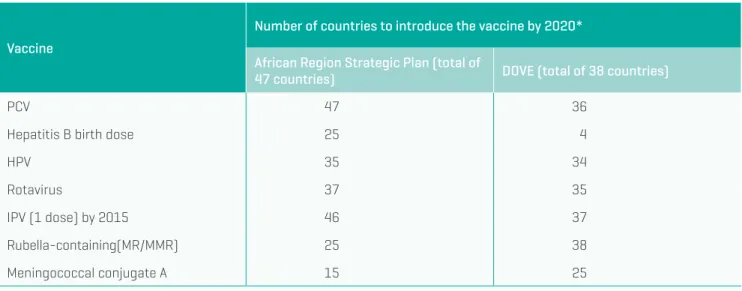
■At least 37 countries to introduce the rotavirus vaccine by 2020
■At least 35 countries to introduce HPV by the end of 2020
■At least 25 countries to introduce a birth dose of Hep B by the end of 2020
■All countries to regularly report adverse events following immunization by the end of 2020
Objective 2: To complete interruption of poliovirus transmission and ensure virus containment
■All countries to interrupt transmission of wild poliovirus by 2014
■All OPV-using countries to introduce at least one dose of inactivated polio vaccine by 2015
■All polioviruses to be laboratory contained and the Region certified polio free by the end of 2018.
■A regional polio legacy plan to be finalized by the end of 2015.
Objective 3: To attain the elimination of measles and make progress in the elimination of rubella and congenital rubella syndrome
■All countries to achieve an incidence of confirmed measles of less than 1 case per million population by 2020
■MCV1 coverage to be at least 95% at the national and district levels and SIA coverage to be 95% in all districts
■At least 25 countries to introduce rubella-containing vaccine by 2020
Objective 4: To attain and maintain elimination/control of other vaccine-preventable diseases
■All countries to attain and validate elimination of maternal and neonatal tetanus by 2020
■All high-risk countries to attain yellow fever
immunization coverage of 90% or higher by 2020
■All countries within the meningitis belt to introduce
MenAfriVac© through campaigns, and 15 of them to
have the vaccine in routine immunization by 2020
■Seroprevalence of HbsAg among children younger
3.5 GUIDING PRINCIPLES
The guiding principles26 that will direct action in expandingimmunization services in the Region to achieve the objectives and meet the targets are country ownership and leadership; shared responsibility, partnership, and mutual accountability; equitable health outcomes; integration; sustainability; and innovation.
3.5.1 Country ownership
and leadership
Consolidating immunization into the health system will require strong leadership and governance to persuade the many immunization advocates and workers to depart from what is often called a silo approach to recognize the importance of complementarity of actions to tackle the disease burden. Support for this from the highest levels of government will be necessary. External stakeholders also will need to support this consolidation and national ownership of immunization, which is the bedrock of GVAP.
Governments will have to bring other local stakeholders on board if they are not already involved, including legislators, non-health ministries and local government authorities. Academic and private research organizations will be important partners for evidence gathering to enhance decision-making.
Good stewardship of human, financial and material resources is central in building trust of the public in the predictability and reliability of immunization services and also to help to maximize financial backing from national authorities and external stakeholders.
26 These guiding principles are fully consistent with those of the GVAP. The drivers that link the
transition from GIVS to GVAP (Annex 1), namely, leadership and governance, demand creation and communication, vaccines, cold chain and logistics, costing and financing, immunization services, human resources management and surveillance and reporting, are clearly identified in the guiding principles.
3.5.2 Sharing responsibility,
partnership, and mutual
accountability
A central tenet of this strategic plan is that it is essential to move to demand-driven immunization, where demand creation and communication ensure everyone recognizes the right and responsibility to be immunized and understands the risks and benefits of vaccines and immunization. This puts a great emphasis on the need to broaden communication efforts across all available channels. Social communication and marketing approaches based on in-depth understanding of research on the barriers to and drivers of immunization need to be used. For child immunization, effective communication and service also are important during vaccination so that mothers or caregivers understand the schedule to follow and remain motivated to complete the set of vaccinations. Civil society organizations have an important role not only as the voice of the public in holding the government to its obligations, but also as mobilizers of the communities for immunization services. Their participation in national committees would benefit the immunization programmes. Accountability for immunization rests with individuals, communities, health workers, institutions, the government and partners. National strategic plans will define the commitment and responsibility of each stakeholder for immunization. Country ownership puts the responsibility for holding all stakeholders accountable for their declared commitment to immunization squarely on the shoulders of the government. The government may require additional capacity to fulfil this role.
28 Regional Strategic Plan for Immunization 2014–2020
3.5.3 Equitable health outcomes
A clear picture of the excluded populations will be necessary to formulate, as will be an understanding of the barriers to their inclusion. This calls for strong focus on the improvement of data quality and use to identify excluded populations and for surveillance and reporting. Of paramount importance in the Region is the integration of immunization workers into comprehensive disease-control interventions including immunization, capitalizing on their experience to address inequities in immunization delivery.
Evaluations have shown the importance of community health workers in outreach and in mobilizing communities behind vaccination and complementary actions, especially in hard-to-reach areas. Performance-based monitoring also has had a positive effect on outcomes, but does require accurate and timely data collection and processing.
3.5.4 Integration
The success of immunization services is closely linked to the perceived quality of health services by the public. Health workers engaged in vaccination need to be skilled in all aspects of vaccine administration, cold chain and logistics. Regular training and supervision should emphasize these. High quality case management and reliable availability of medicines are necessary for actions that complement immunization, such as the control of pneumonia and diarrhoea. Other illness-preventive elements such as improved sources of water also have to be in place.
To expand immunization services, private sector and nongovernmental providers have to be brought fully on board. These can be important allies for example in neglected urban areas where migrant or unregistered populations live and who are missed out in routine
vaccination sessions and outreach owing to their unavailability during the day. Outsourcing services to the private sector may be one option to deal with vaccination logistics.
3.5.5 Sustainability
The cost of vaccination has been rising rapidly with the introduction of new vaccines and will grow even further with the strategies introduced to address inequities. To secure additional funding, greater attention to costing and financing will be required not for only national budgets but also decentralized budgets that cover recurrent operational costs vital to the success of immunization. The value and cost-effectiveness of vaccines and vaccination need to be established and regularly updated, for example when a new vaccine is being considered for introduction, in order to ensure long-term resource availability for both the vaccines and the associated operational costs.
Governments will have to carefully weigh future costs of immunization services, which, ultimately, will be financed nationally. Some of these costs are directly attributable, for example vaccine costs, but others are embedded in the health system’s costs and in the various health interventions that complement immunization at all levels in the country. The long-term sustainability of external stakeholder support will also have to be assessed. Capacity enhancement needs are evident for all the recommended actions. This requires attention to human resources management for both the numbers and quality of staff engaged in immunization services in the public, private and nongovernmental sectors. The challenge is to achieve technical self-sufficiency, a prerequisite for long-term sustainability and growth of immunization services.
3.5.6 Innovation
Innovative financing approaches are required to increase the funding available for immunization. There is need for the countries to benefit from the lessons learnt elsewhere in immunization financing if they are assessed as applicable to the country situation in question. This will lead to greater self-reliance in delivering immunization services. Mobile technology27 and the Internet have facilitated data
management, and their use potential in the future appears 27 mHealth projects demonstrate that positive health-related outcomes and their success are based
on the accessibility, acceptability and low cost of the technology and its adaptability to different situations (Aranda-Jan CB, Mohutsiwa-Dibe N, Loukanova S. Systematic review on what works, what does not work and why of implementation of mobile (mHealth) projects in Africa, BMC Public Health, 2014;14:188.
to be strong given the penetration of mobile phones in the Region. The use of these technologies should be adopted where they are assessed as advantageous, with health workers trained accordingly.
In terms of evidence generation more broadly, a concerted effort is warranted for research relevant to the national and local situation, especially to help decision-makers with policy and operational issues. In addition, evaluations can allow for lessons learnt to be widely disseminated within and among the countries.
30 Regional Strategic Plan for Immunization 2014–2020
A number of critical assumptions underlie these guiding principles:
■Government stability and absence of human-made
emergencies are factors that will facilitate good governance and leadership, strengthening national commitment to sustaining of immunization services.
■A proactive approach to political issues, including the involvement of regional or subregional political, economic or health bodies when necessary and relevant will anticipate and resolve challenges likely to hinder good governance and the delivery of immunization services.28
■Demand-driven immunization can be geared
towards breaking down social and cultural barriers and used to improve the convenience, quality and reliability of services, aided by the use of all available communication channels.
■Introduction of new vaccines will be founded on
country-based evidence on the burden of disease and cost-effectiveness and will take into account the country’s agreements on global programmes.
■Major vaccine supply breakdowns will be mitigated by engaging multiple vaccine manufacturers with ability to deliver vaccines in a timely fashion.
28 Methodologies are available to identify potential long-term risks (Ref: Humanitarian Futures
Programme, Beyond 2020: crisis drivers in West Africa’s future. Report to ECOWAS, King’s College, London, UK, 2008).
■Lower middle-income countries, which are falling behind low-income countries in access to new vaccines due principally to a dearth of financial resources and lack of external support, can benefit from pooled procurement mechanisms linking countries to increase purchasing power and supporting countries transitioning from low-income to lower middle-income status. Such mechanisms will need to be managed by expert subregional, regional or global bodies.
■The private sector is qualified to provide immunization services or related logistics or research expertise at levels and of quality acceptable to consumers or governments. The hallmarks of the immunization strategy for Africa may be summed up as follows.
■equity in access to and use of life-saving immunization
■responsiveness of a quality and timely immunization service delivery system to informed public demand
■national commitment informed by evidence and
demonstrated by growing capacity and resources
■immunization serving as the backbone of a strengthened primary health care service
■high data quality and use, with increasing use of information and communication technology for data exchange and health worker information provision and training
32 Regional Strategic Plan for Immunization 2014–2020
3.6 STRATEGIC DIRECTIONS
The strategic directions described in this section areintended to frame the processes required for the attainment of the set objectives. The strategic directions are informed by assessments of the immunization service performance in selected countries in the Region that have identified the factors that contribute to the achievement of good immunization performance. Besides broad national commitment, these factors include community health workers who are locally recruited and supported, active community participation in immunization and health,
partnership between health staff and local government authorities, focus on accountability and performance monitoring, and the existence of essential immunization infrastructure at all levels.29
Each strategic direction is supported by a list of recommended actions that will guide Member States as they formulate their national strategic plan.
29 Justice J et al. Study of the drivers of routine immunization system performance in Ethiopia, JSI
Research and Training Institute Inc., ARISE Project for the Bill and Melinda Gates Foundation, 2012.
3.6.1 Strategic direction 1: All countries
commit to immunization as a
priority
State obligations grounded in national and international law to protect children’s health, growth and development and, in particular, to allow their access to immunization, should be reflected in national policies, legislation, plans and budgets and other instruments and be based on evidence. These instruments should commit all sectors of the government, the private sector, academia, civil society, social networks and community leaders to become effective partners in immunization advocacy, development implementation, monitoring and support. Immunization needs to be aligned with national health strategic plans, which requires access to and reliance on a clearly identified national regulatory platform and processes. National advisory groups such as national immunization technical advisory groups (NITAGs), interagency coordinating committees (ICCs) and technical advisory groups, need to be streamlined and made accountable for their output in support of the national immunization programme.
National strategic plans will have to be developed and continuously updated or reformulated based on the best evidence on the burden of disease and resource availability from both domestic and external sources, and in line with GVAP as endorsed by governments at the World Health Assembly and the Regional Committee.
New national partners – such as at the private sector; civil society organizations; faith-based organizations; traditional health practitioners; African philanthropists; government bodies such as the ministries of health, education, finance, interior, communication and women’s affairs; and political bodies, as well as the ministry of agriculture’s extension workers – should be brought on board by the government to secure collaboration, commitment and support.
Capacity implications
The overall thrust to secure national commitment and ownership of immunization must rest on the abilities and competence of the national staff, who need to strive for self-reliance in technical and managerial skills and excellence in communication. Both domestic and external stakeholders should take the goal of self-reliance of immunization staff as a common feature to support in immunization services, mobilizing resources as needed to achieve this goal.
Good stewardship of resources requires sound management practices and financial regulations and rules, together with oversight by an independent agency. Engagement with audit bodies can be helpful in advancing their understanding of immunization objectives and the strategies that drive funds disbursement decisions. Sharing of experiences on research, legislation, stewardship, stakeholder relations and operational issues should be enhanced through peer learning networks to enable the countries to benefit from best practices and avoid pitfalls in these areas. Mobilizing leaders to be a voice for immunization requires continuous updating of their knowledge through highly condensed, relevant briefings with talking points. Some briefing materials can be developed at the regional level such as those on the specifications, expected impact and costs of new vaccines.
Recommended actions
■Determine the value of immunization for individuals, households, communities and the nation in terms of health, equity and economic returns, updating and disseminating this information periodically through the Internet and all societal channels.
■Advocate systematically and continuously with
government, elected, civic, FBO and private sector leaders on the benefits of immunization and solicit their support as advocates and policy-makers.
34 Regional Strategic Plan for Immunization 2014–2020
■Develop and update policies, legislation and regulations that are consistent with available evidence, allocate responsibility for developing national immunization plans integrated into the national health plan, give provision for a national budget line dedicated to immunization, and include a framework for monitoring and reporting on progress by all state and non-state actors.
■Institute mechanisms to ensure good stewardship
of national, local and donor-provided resources with clear checks and balances in disbursement and procurement operations.
■Organize regular working sessions among the
ministries of health, education, finance and local government plus any other indicated government body or nongovernmental partner to identify what works and why, and bottlenecks and practical solutions to them.
■Maximize the use of independent bodies such as the national immunization technical advisory groups in providing advice on scientific and technical issues in the national context in order to best inform national decision-makers and secure commitment at the highest levels of leadership.
■Provide a national forum for capturing and disseminating information on progress and challenges to serve as a medium for continuous dialogue with interested stakeholders, including professional associations, regulatory authorities, civil society organizations and academics, sharing lessons learnt with other countries facing similar situations.
■Proactively use social media and other communication means to inform the public of the rationale for and benefits of vaccines and immunization.
3.6.2 Strategic direction 2: Individuals
and communities understand the
value of vaccines and demand
immunization as both their right
and responsibility
With the significant widening of the scope of vaccination associated with availability of new vaccines, the right messages and incentives are needed for individuals and communities to understand their responsibility for immunization and to have easy access to vaccination. Health workers should have the right tools and incentives to secure the population’s trust in the health system to facilitate delivery of vaccination. Awareness raising through communication – which increasingly is reaching higher numbers of the population owing to the proliferation of different types mass media tools such as radio, television, Internet and mobile telephony30
in addition to the more traditional means – needs to underscore the human rights basis for vaccination, as well as the positive economic returns for families and the society. Civil society organizations can play a critical role in reinforcing messages through awareness creation. Appropriate social research should help to understand the needs of communities and to match those needs with the capacity of the programmes to deliver them. This research may show that communities want additional health interventions, basic infrastructure or services such as sanitation and schooling.
The potential role of monetary or other incentives to stimulate demand for vaccination should be assessed, recognizing the current lack of evidence on their effectiveness, the challenges of their sustainability and the ability to measure their impact.
30 Given the rise of social media, especially among the youth, this population group should be
Capacity implications
To understand consumer perception, use or non-use of immunization services requires well-designed qualitative research with interviewers who are able to access households and converse in the local language. Academia or the private sector would be the likely sources of expertise for this work. Similarly, the private sector should be mobilized to provide expertise in social marketing, as well as in managing social media and mobile telephone communication. Community health workers and community leaders, as well as the new leaders emerging from the social media, need to be mobilized as advocates of immunization.
The school system, which has seen increasing enrolment rates across Africa, provides a setting with a captive audience of the next generation members and is a key element in ensuring a sustainable demand for vaccination. The ministry of education with its network of teachers needs to be nurtured to become a close partner in immunization, to educate students on immunization and to allow the school facilities to serve as sites for administration of vaccines such as HPV and booster shots.31
The capacity and opportunity costs of households for using immunization services have to be assessed. In some cases, incentives for households may have to be considered, as long as they are affordable and sustainable.
Recommended actions
■Conduct social research to identify persistent barriers to and positive drivers of immunization, and determine with community groups the best community-based advocates for immunization;
■Leverage the position and reach of civil society
organizations to communicate the value of vaccination and the responsibility of every individual, and especially 31 Schools can be successfully used as venues for HPV vaccination, and adding HPV vaccination
to an existing school health programme can reduce the incremental costs of including the HPV vaccine in the national immunization schedule (PATH, HPV Vaccination in Africa: Lessons Learnt from a Pilot Programme in Uganda, January 2011).
parents of young children, to ensure that everyone is protected through vaccination;
■Customize messages on immunization to address its barriers and drivers and for the distinct audiences targeted, using social marketing methods as appropriate;
■Use the most appropriate communication tools for immunization messages, such as radio, television, social media, cell phone texting, community dialogue, etc.
■Work with the school system to train teachers and educate students about immunization through specific lessons as part of the curriculum and also during special events, for example activities that would accompany HPV vaccination or boosters such as Td;
■Where appropriate provide incentives for households to seek immunization services, ensuring affordability, sustainability and availability of the incentives.
3.6.3 Strategic direction 3: The benefits
of immunization are equitably
extended to all people
The scope of immunization has broadened to cover all age groups from children to the elderly. The move of the focus from the district to the community and the individual means that it is of paramount importance for the health system to intimately know the population it covers and who is reached from each health facility and by each vaccinator. Microplanning down to the community and household levels heightens inclusion and minimizes missed opportunities for vaccination whether at the facility level or during outreach in the communities and other sites.
Regular monitoring of coverage and performance in access to and utilization of vaccination should be in place for formerly unreached populations, together with assessment of technical, systemic, societal, cultural, financial and other barriers to accessing quality services. A strong push for birth registration would facilitate reaching and monitoring all population groups.
Regional Strategic Plan for Immunization 2014–2020
36
The immunization system must be able to prepare for and respond to natural, human-made and complex emergencies, given the likelihood of disease outbreaks accompanying natural or human-made disasters. Preparedness plans for epidemics should be put in place with ready access to vaccine stockpiles.
Capacity implications
Reaching every population group involves a significant step-up in resource requirements. Microplanning and outreach capacities have to be increased. Contracting this work to nongovernmental and private organizations will require their close monitoring and management.
Less than half of the children in the Region are registered at birth. This is one area where health workers, together with community leaders and local governments, can play a proactive role by registering births in the community and providing new-borns with unique medical identification to aid data collection and reporting.32,33 This first right of
a child, which is enshrined in both the UN Convention 32 Only 40% of newborns in the Region are registered at birth. The level for the richest quintile is 2.4
times greater than for the poorest quintile (UNICEF, State of the world’s children, 2013).
33 Incorporation of birth registration into community health care, health campaigns and mobile
registration activities can reduce the indirect costs of birth registration, especially in the poorer communities, and yield substantial increases in birth registration rates (Fagernās S, Odame J. Birth registration and access to health care: an assessment of Ghana’s campaign success. Bull. World Health Organ., 2013;91:459-464).
on the Rights of the Child and the African Charter on the Rights and Welfare of the Child, remains unfulfilled for the majority of Africa’s children.34
Minimum stocks of vaccines and injection materials for emergency use should be maintained as a normal practice in supply management at the central level, where stock rotation is most frequent.
34 Civil registration of children is integral part of the child protection strategy promoted by UNICEF.
Monitoring and evaluation systems need to be enhanced to track progress in reaching the unreached and new population groups. Mobile technology, including rapid SMS, can facilitate data exchange, but health workers will need cell phones, training and incentives to do the work involved.
Recommended actions
■Employ microplanning universally to reach every
community and population group, including those in urban and peri-urban areas, following a life-course approach for accurate forecasting of immunization service requirements and related comprehensive disease- control needs.
■Increase the regular planned and announced
outreach services to provide immunization services to unreached populations.
■Enlist or contract nongovernmental and private
organizations that reach or have the potential to reach unreached populations such as out-of-school children, adolescents and communities in peri-urban settlements.
■Enhance birth registration mechanisms and medical identification methods including using electronic records.
■Coordinate activities with national emergency
preparedness response mechanisms to ensure that vaccine-preventable diseases are included in monitoring and surveillance of complex emergencies and immunization is treated as a priority intervention.
■Maintain the necessary minimum stock levels of vaccines and injection supplies for emergency preparedness, rotating the stock continuously to ensure the stocks are valid.
■Respond to vaccine-derived poliovirus disease
outbreaks, humanitarian crises and conflicts when they occur, re-establishing immunization services as part of the rehabilitation of the health services.
■Document lessons learnt during activities to reach unreached people and other unique groups such as adolescents, adults and the elderly so that strategies can be adjusted accordingly.
3.6.4 Strategic direction 4: Strong
immunization systems are an
integral part of a well-functioning
health system
Member States in the WHO African Region have adopted a primary health care strategy that recognizes the diverse but interrelated parts of the health system35 and in
which immunization is considered a leading part of the health system. Vaccines are only one component of the disease-control package, which makes coordinated and complementary actions across the health sector critical for success. At the same time, immunization outreach has the capability to provide other services to the population such as deworming, vitamin supplementation, treatment of common illnesses and health promotion.
Complementary preventive, curative and promotional interventions should be implemented together using all the appropriate contacts involved in health, nutrition, water sanitation and hygiene health, education and social service to promote, provide and monitor immunization, as well as involving private and nongovernmental providers. Evidence-based decision-making processes should be set up for new vaccine introduction and related disease-control interventions.
The numbers and quality36 of human resources have
to be carefully monitored, paying close attention to immunization needs, capacity building opportunities, and worker availability, deployment, incentives, supervision, turnover etc. Frontline workers are a key component for immunization success, meaning that there is a requirement for trained and motivated on-the-ground staff who understand the community, speak the local language and are socially acceptable to deliver 35 Barry SP et al. The Ouagadougou Declaration on Primary Health Care and Health Systems in
Africa: Achieving better health for africa in the new millennium, WHO Regional Office for Africa, 2008.
36 With mobile phone access as high as 80% among community health workers in some countries,
mobile technology could do much more for training and informal learning (Patel KD. www. mhealthed.org).
Regional Strategic Plan for Immunization 2014–2020
38
immunization and interact with mothers, families, communities and local leaders. Community health workers can be powerful in aiding immunization outreach, mobilizing the population and providing feedback to the health system on community expectations.
The imperative of the immunization system is to reach all target populations, ensuring coverage while guaranteeing the security and safety of the vaccinators. Human resources, supplies, logistics and data management are the critical areas of convergence of immunization services and the health system.
Capacity implications
To move from the silo approach to immunization to an integrated, comprehensive, disease-control approach will mean a change in the culture of operation of those dedicated to immunization. It will require considerable attention from health leaders and continuous advocacy and follow-up. However, this has to dovetail with the polio eradication and measles elimination initiatives. Careful development and dissemination of messages will be essential, and the messages will need to be common across the Region.
Coordination mechanisms will need to be in place within the ministries of health and at all levels of the health system to ensure joint planning for and implementation of programmes, including those for training of health staff. Sharing of resources between programmes can be problematic from accounting and impact assessment perspectives, but suitable mechanisms will need to be found. Stakeholders providing resources may have to modify their accounting and reporting requirements.
Attention to human resources is critical for successful immunization services. Human resources numbers and knowledge and skill capacity building require a significant level of investment, including for the transfer to the health system of qualified staff currently dedicated to polio eradication efforts. For eradication and elimination goals, introduction of new vaccines, and the greater emphasis on complementarity between immunization and other disease-control activities, it will be inevitable to increase human resources and ensure sustainability of their levels. Hard choices will have to be made as to what is achievable in each given context, based on the projected long-term sustainability of resources.
The widespread use of mobile technology to aid health workers in data exchange and reporting should be given priority, especially given the extensive use of cell phones in the Region and the increasing presence of smart phones that can access the Internet. Attention also has to be given to health worker mobility, given that their work involves outreach and conducting of special events.
Broadening the reach of health sys